Military

House Passes Transportation, Military Bills

The House voted Friday to spend more than $41 billion on dams, highways, airports and various military and university projects.

In a rush to finish its work next week and avoid having to return after the November elections, House members voted overwhelmingly in favor of a transportation spending bill and another energy and water spending bill, together amounting to $33 billion.

Also passed by voice vote was an $8.4-billion appropriations bill for military construction projects, including $3.3 billion to build new housing for families of military personnel and nearly $1 billion as the second installment in closing more than 80 military bases over the next few years.

The bills were produced by House-Senate conference committees that reconciled versions passed earlier by each chamber.

Rep. Robert S. Walker (R-Pa.), a member of the House Science and Technology Committee, complained that members of Senate and House appropriations committees had included about $90 million in projects paid for by the Energy Department for home-state universities.

“Eight of those 10 projects happen to be in states or districts of people who happen to be on the conference committee,” he said. “We’re allocating money not based on anything other than who’s in the room divvying up the money.”

But his motion to eliminate the projects was defeated, 308 to 108, as the chairman and top Republican on the House Appropriations Committee’s energy and water subcommittee said all the projects are justified.

“There’s nothing unusual about this,” Rep. Tom Bevill (D-Ala.), the panel’s chairman, said. “We need more labs; we need more scientists; we need more emphasis put on these programs.”

Among the 10 recipients of the funds are research centers at the University of Alabama and the University of Indiana.

Among the projects hurt in the deficit-cutting effort was one of President Bush’s favorites–the proposed $8-billion super collider atom smasher in Texas.

Bush’s request of $318 million to begin construction of the giant particle accelerator had been approved earlier by both the House and the Senate. But it was slashed to $243 billion by their negotiators last week.

Source link

Iran war’s big winners: Wall Street, weapons firms, AI and green energy | Business and Economy News

The International Monetary Fund has downgraded its global growth forecast for 2026 from 3.3 to 3.1 percent, citing the impact of the United States-Israeli war on Iran and the shutdown of the Strait of Hormuz on the world economy.

The war has damaged energy infrastructure across the Gulf, while critical exports like oil, gas, chemicals and fertiliser remain largely stranded by Iran’s shutdown of the strait and the subsequent US naval blockade of Iranian ports.

Recommended Stories

list of 4 itemsend of list

In the worst-case scenario of a prolonged war, the IMF said global growth could fall to 2.5 percent in 2026, with low-income and developing economies hit the hardest by soaring commodity and energy prices. The global shipping and logistics industry is facing a separate crisis.

But every economic crisis also has beneficiaries: despite the dire macroeconomic outlook, some corners of the global economy are thriving on the uncertainty.

Here’s a look at five industries that are doing well either despite – or because of – the darkening economic outlook.

Wall Street investment banks

Global investors have been on a rollercoaster since the start of US President Donald Trump’s second term last year. The president’s erratic decision-making, where he often issues an ultimatum one day and then changes it the next, has led traders to coin the term “TACO trade”, where TACO stands for “Trump Always Chickens Out”.

The recent volatility has made some investors anxious, but it’s been a boon to investment banks, which make millions in commissions and revenue from the surging volume of trade, according to Sean Dunlap, a director of equity research at Morningstar Research Services.

“Clients want to reposition, so they trade frequently,” he told Al Jazeera. “Spreads tend to increase, which increases the profitability for trade intermediaries like banks.”

First-quarter results for 2026 – released this week – showed that Morgan Stanley reported a profit of $5.57bn, up 29 percent year on year, while Goldman Sachs reported a profit of $5.63bn, up 19 percent year on year.

JP Morgan Chase also reported major gains, with first-quarter earnings of $16.49bn, up 13 percent year on year. The banks all cited high levels of trading, deal-making, and “robust client engagement” as the reasons behind surging profits.

The boomtime for banks could reverse course, however, if volatility persists for too long, Dunlap warned, because investors may become increasingly cautious and less willing to borrow money to make trades.

Prediction markets

As mainstream Wall Street banks reap profits, the crypto-based prediction platform Polymarket has been earning upwards of $1m a day since the start of the month by letting users make peer-to-peer bets on everything from sports tournaments to elections.

Polymarket has been doing well since the start of the war, but it revised its fee structure on March 30 to cash in even more on its popularity.

Rival platforms like Kalshi, Novig and Robinhood also follow the same business model, but Polymarket has been the standout winner of 2026 because it controversially allows users to bet on the outcome of conflicts like the Iran war.

Polymarket revised its fee structure on March 30 to cash in on its popularity. The change has already netted the platform more than $21m in fees since April 1, up from $11.6m for all of March and $6.23m for all of February, according to DefiLlama, a website that provides data analysis for decentralised finance platforms.

If the current trend continues, Polymarket could make $342m in fees this year alone, according to DefiLlama’s analysis.

Anonymous users have also made millions correctly predicting the dates of major events like the US-Iran ceasefire, but the outcomes for rank-and-file users are typically less impressive.

Researchers found that the top 1 percent of Polymarket users captured 84 percent of all trading gains, according to a new report released this month analysing 70 million trades from 2022 to 2025. The returns are so high that US federal regulators have pledged to crack down on insider trading in prediction markets following suspiciously well-timed bets on Iran war outcomes.

Aerospace and defence

Unsurprisingly, the aerospace and defence industries are booming this year due to major conflicts in Ukraine, Iran, Sudan, Gaza and Lebanon and a surge in global defence spending.

About half of the world’s countries have increased their military budgets over the past five years, according to an April report from the IMF, which means they are also buying everything from drones to missiles — more than ever before. Demand is growing particularly fast in Europe, where NATO countries have committed to raising defence spending to 5 percent of gross domestic product (GDP) by 2035.

The defence industry has, in turn, seen major gains on the stock market. The MSCI World Aerospace and Defence Index – which tracks aerospace and defence stocks across 23 global markets – reported net returns of 32 percent year on year at the end of March.

The defence index outpaced the MSCI World Index, which tracks 1,300 large and mid-cap companies across the same 23 markets. The index, which gives a broader overview of global stock markets, reported net returns of 18.9 percent over the same period.

Artificial intelligence

Last year, the United Nations Trade and Development (UNCTAD) office predicted that the AI industry would grow from $189bn in 2023 to $4.8 trillion by 2033, and the Iran war does not seem to have dented the outlook.

“Despite the shocks from the Iran war, we’re still seeing resilience in a lot of sectors like artificial intelligence and renewable energy,” said Nick Marro, lead analyst for global trade at the Economist Intelligence Unit.

One metric for the AI boom has been the high volume of semiconductor chips still being exported out of East Asia, he said. At the top of the chart is chipmaking powerhouse Taiwan, which reported record-breaking merchandise exports of $80.2bn in March, up 61.8 percent year on year, according to EIU analysis.

The surge was led by exports to the US, which grew by 124 percent year on year, the EIU said.

Taiwan Semiconductor Manufacturing Company, the world’s top chipmaker better known by its acronym “TSMC,” on Thursday posted a net income of 572.8 billion New Taiwan Dollars (NTD) ($18.1bn) for the first three months of 2026 – up 58 percent year on year in NTD.

Another metric, initial public offerings or “IPOs,” also shows that the industry is confident for the moment, with industry leaders Anthropic and OpenAI both planning to go public this year.

Renewable energy

The Iran war has highlighted the need to transition from fossil fuels not only for environmental reasons, but also for reasons of energy security. The war marks the third major energy shock this decade, following the COVID-19 pandemic and the 2022 Russian invasion of Ukraine.

The Iran war has “boosted” renewable energy “given the urgency to switch away from fossil fuels and diversify towards renewable sources,” Marro of the EIU said.

Even before the Iran war began, the International Energy Agency reported that global governments were already taking active measures to invest in renewable energy for geopolitical reasons.

According to an IEA report released this month, “150 countries have active policies to advance renewable and nuclear deployment, 130 have energy efficiency and electrification policies, and 32 have policies to incentivise supply chain resilience and diversification across critical minerals and clean energy technologies.”

The Iran war has triggered another flurry of policymaking in Asia, which typically buys 80 to 90 percent of the oil and gas that transits through the Strait of Hormuz. Since the shutdown, the region has been struggling to find alternative sources of energy, forcing governments to deploy emergency measures like fuel rationing and price caps.

South Korea, Thailand, India, Cambodia, Indonesia, Vietnam and the Philippines have all announced a variety of measures from tax breaks for at-home solar panels to commissioning new renewable energy projects – and even restarting nuclear reactors.

The surge in policymaking has been good for the renewable industry. The S&P Global Clean Energy Transition Index, which tracks 100 companies that produce solar, wind, hydro, biomass and other renewable energy across emerging and developed markets, is up 70.92 percent year on year.

Source link

Trump’s budget director defends White House plan for massive boost in military spending

An effort to ramp up U.S. weapons production and build more ships, planes and drones will require a massive upfront investment, President Trump’s budget director told a House committee Wednesday.

The testimony from Russell Vought jump-starts the White House’s push to increase defense spending to nearly $1.5 trillion in the next budget year, up from nearly $1 trillion this year, while cutting health research, heating assistance and scores of other domestic programs by about 10% overall. Such cuts do not cover mandatory spending, which includes such programs as Social Security and Medicare.

The debate over Trump’s proposal underscored the sharp divide that will shape some of the most significant policy debates going into a midterm election that will give voters the ultimate say on the direction of the country.

“For the industrial base to double or triple and build more facilities, not just add shifts, it requires multiyear agreements to purchase into the future,” Vought told lawmakers. “That cost has to be booked in this first year.”

The White House is calling for about $1.1 trillion for defense through the regular appropriations process, which typically requires support from both parties for approval. An additional $350 billion would come through a separate bill that Republicans can accomplish on their own, through party-line majority votes.

Rep. Brendan Boyle of Pennsylvania, the ranking Democratic member of the committee, said he believes in a strong national defense. But he said the idea of increasing defense by more than 40% while cutting programs that people need shows that the Republican administration’s priorities are “out of whack.”

The committee chairman, Rep. Jodey Arrington (R-Texas), predicted the hearing would be more “amped up” than usual, and that proved to be true, beginning with his opening statement focused on criticizing Democrat Joe Biden’s presidency. Arrington said he did not know of any president in his lifetime who “inherited such a complete and utter mess as President Trump did in January of last year.”

Since then, Arrington said, Trump has secured the border, cut taxes and constrained nondefense spending.

It was the beginning of several back-and-forths at the hearing.

“You know how bad this economy is when we hear Joe Biden being invoked, we hear trans people being invoked. I was waiting for Jimmy Carter to be blamed next,” Boyle said in response to Arrington’s opening remarks.

Boyle said consumer confidence is plummeting under Trump and noted a gas station he passed in Philadelphia recently was selling gas at $4.11 a gallon versus less than $3 a gallon some six weeks ago because of Trump’s “war of choice in Iran.”

Rep. Becca Balint (D-Vt.) called the proposed defense spending increase shocking.

“We’ve never in the history of this country seen spending like this, paid for by slashing healthcare, education and housing,” Balint said. “Mr. Vought, yes or no, is $350 billion for the war in Iran lowering costs for Americans?”

“It is certainly not defunding child care. We fully fund child care in this budget,” Vought said, not directly answering the question.

Balint went on to incorporate Trump’s “America first” mantra in her questioning.

She said that $350 billion could pay for an enhanced health insurance tax credit for 10 years and that her constituents are asking how the country can continue to spend money on wars and not find a solution to helping people afford healthcare.

Vought said the president has made clear he was not going to let Iran have nuclear weapons, missiles and a navy that affect U.S. national security.

“He is doing what is necessary to keep us safe, while at the same time trying to pursue diplomacy so that we can get out of wars and lower those costs over time,” Vought said.

Vought said it was unclear how much the administration would seek to fund the war during the current budget year, which ends Sept. 30. That money would be part of an emergency supplemental spending bill and would be on top of the funds the White House is seeking to boost defense spending next year.

“Would it be more than $50 billion?” asked Rep. Veronica Escobar (D-Texas).

“We’re still working on it,” Vought said. “I don’t have a ballpark for you.”

Freking writes for the Associated Press.

Source link

Turkiye’s Roketsan eyes top 10 exporter rank amid Middle East conflict | Business and Economy News

Modern warfare has dramatically changed as we have seen from the Russia-Ukraine war, conflicts involving Gaza, India and Pakistan, and the recent US-Israeli strikes on Iran. At the centre of this shift is a surging global reliance on drone and missile technology as well as advanced air defence systems.

Turkiye, one of the largest military powers in the Middle East, is increasingly positioning itself as a major supplier in the global defence sector. Central to this effort is Roketsan, a company founded in 1988 to supply the Turkish Armed Forces, which has since evolved into the country’s primary manufacturer of missile and rocket systems.

Recommended Stories

list of 3 itemsend of list

Currently exporting to approximately 50 countries, the firm is one of the fastest-growing defence companies globally.

So how did Roketsan secure a large share of the global arms trade?

Bypassing Western embargoes

Turkiye’s defence expansion was largely accelerated by restrictions placed upon it. Western embargoes aimed at halting its military advancement meant Ankara could not acquire the necessary technical systems or components.

In 2020, the United States imposed Countering America’s Adversaries Through Sanctions Act (CAATSA) restrictions on Turkiye – a key member of the transatlantic military alliance NATO. These sanctions targeted Turkiye’s military procurement agency, its chief Ismail Demir, and three other senior officials. Washington also ejected Ankara from the F-35 stealth jet programme in July 2019.

The measures came after Ankara purchased Russia’s S-400 missile defence system, which was seen as a potential threat to NATO security. The European Union also prepared limited sanctions and discussed restricting arms exports following energy exploration disputes in the Eastern Mediterranean.

To circumvent this, the country built an integrated, domestic defence ecosystem. Today, Turkiye relies on a vast supply chain of nearly 4,000 small and medium-sized enterprises (SMEs) scattered across the country. As a result, the Turkish defence industry now operates with a local production rate exceeding 90 percent.

Türkiye's defense industry now operates with a local production rate exceeding 90 percent, bypassing long-standing Western embargoes. [Al Jazeera]
Türkiye’s defence industry now operates with a local production rate exceeding 90 percent, bypassing long-standing Western embargoes [Al Jazeera]

This shift has yielded significant financial returns for Ankara. In 2025, Turkiye’s defence industry reported $10bn in exports. Roketsan’s General Manager Murat Ikinci told Al Jazeera that the company currently ranks 71st among global defence firms, with ambitions to break into the top 50, then the top 20, and ultimately the top 10.

To support this expansion, Turkish President Recep Tayyip Erdogan inaugurated several large-scale facilities last week, including:

  • Europe’s largest warhead facility.
  • new research and development (R&D) centre housing 1,000 engineers.
  • the “Kirikkale” facility dedicated to rocket fuel technology.
  • new infrastructure for the mass production of ballistic and cruise missiles.

These projects represent a $1bn investment, with the company planning to inject an additional $2bn to expand mass production capabilities.

The ‘Tayfun’ and modern warfare

Roketsan’s R&D strategy – which employs 3,200 engineers and makes the company the third-largest R&D institution in Turkiye – is heavily influenced by data gathered from ongoing global conflicts.

According to Ikinci, the war in Ukraine highlighted the impact of cheap, first-person view (FPV) and kamikaze drones supported by artificial intelligence. In response, Roketsan developed air defence systems like “ALKA” and “BURC,” alongside the “CIRIT” laser-guided missile.

The regional landscape was further complicated during the US-Israel war on Iran, as cheap Iranian-designed Shahed drones – recently upgraded by Russia with “Kometa-B” anti-jamming modules – overwhelmed defences and even struck a British base in Cyprus in March 2026. During the same month, NATO air defences were forced to intercept three Iranian ballistic missiles that entered Turkish airspace.

Meanwhile, the recent conflict between Israel and Iran showcased the use of complex attacks combining ballistic missiles with “swarms” of kamikaze drones designed to overwhelm air defences. This environment makes hypersonic technology a critical asset.

This brings the Tayfun (Typhoon) project into focus. Tayfun is a developing family of long-range ballistic missiles. Its most advanced iteration, the Tayfun Block 4, is a hypersonic missile engineered to penetrate advanced air defence systems by travelling at extreme speeds.

When Al Jazeera asked for specific details regarding the Tayfun’s exact operational range, Ikinci was elusive. “We avoid mentioning its range; we just say its range is sufficient,” he noted.

Similarly, historical Western sanctions have pushed Turkiye to form new cooperation initiatives, effectively accelerating an “Eastern shift” away from Western defence dependence. Turkish drones are now being used by a growing number of countries, including by Pakistan during its war against India last May.

Based on these threat assessments, Roketsan has prioritised five key areas of production:

  1. long-range ballistic and cruise missiles.
  2. air defence systems, including the “Steel Dome”, Hisar-A, Hisar-O, and Siper.
  3. submarine-launched cruise missiles, utilising the AKYA system to leverage Turkiye’s large submarine fleet.
  4. smart micro-munitions designed specifically for armed drones.
  5. long-range air-to-air missiles, a need highlighted by the brief India-Pakistan skirmish.

A strategic export model

Unlike traditional arms procurement, Turkiye is marketing its defence industry to international buyers as a strategic partnership.

“Our offer to our partners… is as follows: Let’s produce together, let’s develop technology together,” Ikinci stated.

İkinci emphasizes that Roketsan's international strategy is based on "partnership models" rather than simple sales. [Al Jazeera]
Rokestan’s General Manager Murat İkinci, right, emphasises that Roketsan’s international strategy is based on ‘partnership models’ rather than simple sales [Al Jazeera]


By establishing joint facilities and R&D centres in allied nations across the Middle East, the Far East, and Europe, Turkiye is attempting to secure long-term geopolitical alliances rather than purely transactional sales. Ikinci highlighted Qatar as a prime example of this model, describing it as a benchmark for technological, military, and security cooperation in the region.

Filling the global stockpile gap

This rapid expansion comes at a critical time for the global arms trade. Ongoing wars have severely depleted the stockpiles of advanced weapon systems worldwide.

During the recent US-Israel war on Iran, Washington relied heavily on multimillion-dollar Patriot and Terminal High Altitude Area Defense (THAAD) systems to intercept cheap Iranian drones targeting US assets across Qatar, Kuwait, Bahrain, Saudi Arabia, and the United Arab Emirates. With growing concerns that US interceptor supplies could run low, Gulf states – which have collectively detected over 1,000 drones in their airspace – are actively seeking alternative defence technologies, creating a highly lucrative opening for Turkiye’s missile industry.

Defence analyses indicate that even military superpowers like the US will require significant time to replenish their current air defence inventories due to the complexity and massive infrastructure required to build them.

Turkish defence officials view this shortage as a strategic opening. Having localised its supply chain, Turkiye claims it can manufacture and export these highly sought-after complex systems independently.

As global demand for air defence and ballistic technologies rises, Roketsan is aggressively reinvesting its revenues into production infrastructure to expand its footprint in the international arms market.

Source link

‘Sent to be killed’: How Russia forces migrants to fight in Ukraine | Russia-Ukraine war News

Kharkiv, Ukraine – Hushruzjon Salohidinov, 26, was working as a courier in Saint Petersburg, Russia’s second-largest city and President Vladimir Putin’s hometown.

But last year, the Tajik man and practising Muslim says he was arrested while picking up a parcel which police claimed contained money stolen from elderly women.

Salohidinov says he never interacted with the alleged criminals, but nevertheless spent nine months in the Kresty-2 pre-trial detention centre about 32km (20 miles) from the city, while a judge refused to start his trial because of the “weak evidence” against him.

But instead of releasing him after that, prison wardens threatened to place him in a cell with HIV-infected inmates who, they said, would gang-rape him – unless he “volunteered” to fight in Ukraine.

“They said, ‘Oh, you’ll put on a skirt now, you’ll be raped,’” Salohidinov, who has raven black hair and a messy full beard, told Al Jazeera at a centre for war prisoners in northeastern Ukraine, where he is now being held, having been captured in January this year by Ukrainian forces.

Using a carrot-and-stick tactic, the wardens also promised him a sign-up bonus of 2 million rubles ($26,200), a monthly salary of 200,000 rubles ($2,620) and an amnesty from all convictions.

So, in the autumn of 2025, Salohidinov signed up as he “saw no other way out”.

Officials in Kresty-2, St Petersburg’s prosecutors’ office and Russia’s Ministry of Defence did not respond to any of Al Jazeera’s requests for comment.

Russia migrants
Hushruzjon Salohidinov, 26, a Tajik man forced to fight for Russia, at a prisoner of war facility [Mansur Mirovalev/ Al Jazeera]

‘Catching migrants’

Salohidinov is just one of tens of thousands of labour migrants from Central Asia coerced by Russia to become soldiers as part of the Kremlin’s nationwide campaign, according to human rights groups, media reports and Russian officials.

Hochu Jit, a Ukrainian group that helps Russian soldiers surrender, has published verified lists of thousands of Central Asian soldiers like Salohidinov.

“They are literally sent to be killed, no one considers them soldiers that need to be saved,” the group wrote in a 2025 post on Telegram. These soldiers’ life expectancy on the front line is about four months. “Losses among them are catastrophic,” the group reported.

With its low birthrate and large oil wealth, Russia has for years been a magnet for millions of labour migrants from ex-Soviet Central Asia, especially Tajikistan, Uzbekistan and Kyrgyzstan.

The campaign by the Kremlin to force Central Asians to fight in Ukraine dates back to 2023 – the year after Russia’s invasion of Ukraine – when police began rounding up anyone who didn’t look Slavic and charging them with real or imagined transgressions such as a lack of registration, expired or “fake” permits or blurred stamps on their documents. Sometimes, migrants are simply bused straight to conscription offices.

In 2025, Al Jazeera interviewed another Tajik man who said he had been detained with an expired work permit and was then tortured into “volunteering” while being subjected to countless xenophobic and Islamophobic slurs from his officers.

Migrants say they are abused, tortured and threatened with jail or having their entire families deported.

“The main way of recruiting as many migrants as possible is pressure on them with threats of deportation,” Alisher Ilkhamov, the Uzbekistan-born head of the London-based Central Asia Due Diligence think tank, told Al Jazeera.

Sometimes, migrants are simply duped.

Salohidinov said one serviceman in his squad was an Uzbek who “didn’t speak a word of Russian” and was fooled into “volunteering” while signing papers at a migration centre.

In their reports about “catching” migrants, officials frequently use derogatory terms about them, and also when they describe men who have obtained Russian passports but skipped registration at conscription offices. Since the Soviet era, such registration has been obligatory for all men and, since 2024, a newly naturalised Russian national can lose his citizenship if he fails to do it.

“We’ve caught 80,000 such Russian citizens, who don’t just want to go to the front line, they don’t even want to go to a conscription office,” chief prosecutor Alexander Bastrykin said in May 2025, referring to the migrants’ alleged patriotic sentiments.

He boasted that 20,000 Central Asians with Russian passports were herded to the front line in 2025.

The year before, he said 10,000 Central Asians had been sent to Ukraine.

Such remarks resonate with the Russian public that lives with “a high level of xenophobia in the stage of fear and helplessness,” Sergey Biziyukin, an exiled opposition activist from the western city of Ryazan, told Al Jazeera.

“For them, such phrases from Bastrykin are a form of sedative.”

What makes Central Asians easy targets is that they hail from police states, which depend on Moscow politically and economically, observers say.

“While the migrants are frightened into signing contracts, their motherland doesn’t really pay any attention,” Galiya Ibragimova, an Uzbekistan-born, Moldova-based regional expert, told Al Jazeera.

Despite hefty signup bonuses and relentless propaganda, the number of Russians who want to fight in Ukraine fell by at least one-fifth this year, and Moscow will strive to recruit more Central Asians, she said.

Russia conscripts
Russian conscripts called up for military service attend a ceremony marking their departure for garrisons from a recruitment centre in Saint Petersburg, Russia, on October 15, 2025 [Anton Vaganov/Reuters]

‘We’ll have our fingers broken’

After signing the contract and leaving his debit card with his sign-up bonus with his parents, Salohidinov was sent to the western city of Voronezh for three weeks of training that did little to prepare him for the war.

“We just kept running back and forth with guns,” he said.

Their drill sergeants, he says, told the conscripts that the standard-issue flak jackets, helmets, boots and flashlights were of subpar quality and urged them to pitch in a million rubles ($13,100) each for “better” gear.

The incident corroborates reports on dozens of similar cases in Russian military units.

Salohidinov was ordered to work in a kitchen – and was verbally abused and beaten for the slightest transgression.

Of 28 men in his unit, 21 were Muslims – but their ethnic Russian officers ignored their pleas not to have pork in meals, repeating a decades-old practice of ignoring religion-related dietary restrictions dating back to the Soviet army.

The commanders demonised Ukrainians, telling them “that if we surrender, we’d be tortured, have our fingers broken, maimed, get [construction] foam up our a**, have our teeth yanked out one by one, have our arms broken”, Salohidinov says.

In early January this year, the conscripts were bused to the Russia-occupied Ukrainian region of Luhansk.

Salohidinov says he was tired, frightened and disoriented – Ukrainian drones were “always” above them and a grenade explosion nearby damaged his left eardrum.

Ukraine prisoner swap
A woman waits for news about a missing loved one as some Ukrainian soldiers return during a prisoner of war (POW) swap, amid Russia’s attacks on Ukraine, in an undisclosed location in Ukraine, on April 11, 2026 [Thomas Peter/Reuters]

‘Glad I got captured’

On the fourth day of his service, Salohidinov was ordered to run beyond Ukrainian positions as part of Russia’s new tactic to send two or three servicemen to infiltrate the porous front line.

The mission was suicidal because the terrain was open, dotted with landmines and the bodies of dead Russian soldiers, while Ukrainians were firing machineguns and flew drones above them.

“I ran and ran and saw we were being shot at,” he said. “Me and my commander decided to surrender voluntarily instead of dying for nothing.”

They detached their assault rifles’ magazines, raised their hands and yelled they were surrendering.

What followed was “a calm feeling, beautiful”, he said. “They fed us, let us have a smoke, gave us food and water and even cake.”

Now, Salohidinov hopes to return to Tajikistan and panics at the thought of being made part of a prisoner swap – these have taken place several times each year – and returning to Russia because he would be sent back to the front line.

Tajikistan and other Central Asian nations have never endorsed Russia’s war in Ukraine, but nor have they openly criticised it.

In August 2025, Tajikistan’s Prosecutor General Habibullo Vohidzoda declared that no Tajik national would be charged for fighting in Ukraine.

So, what Salohidinov needs right now is an extradition request.

“I’m even glad that I got captured, because I’m not fighting anyone now, not risking anything,” he said. “I’ll even say thanks to Ukraine for taking me prisoner.”

The Tajik embassy in Kyiv did not respond to Al Jazeera’s request for comment.

Source link

Israeli army says soldiers accused of abusing Palestinian to return to duty | Israel-Palestine conflict News

Some of the reservists accused of sexually assaulting a detainee have already started combat roles, reports Israeli Army Radio.

Israeli military chief Eyal Zamir has authorised five soldiers accused of sexually assaulting a Palestinian inmate in the notorious Sde Teiman detention camp to return to reserve service after charges against them were dropped, according to Israeli media reports.

The soldiers, all from the Force 100 unit assigned to guard military prisons, are being reinstated despite an ongoing, internal military inquiry into their conduct.

Recommended Stories

list of 3 itemsend of list

Israeli Army Radio reported that some of the reservists have already returned to active duty, including deployment to combat roles.

An Israeli army statement, cited by Israel’s Haaretz newspaper, said: “The investigation does not prevent them from continuing to serve … the command-level investigation will be completed as soon as possible.”

The reinstatement comes after Israel’s top military lawyer dropped all charges against the soldiers last month, closing a case that had been among the most divisive in Israel’s recent history.

The soldiers had been charged with aggravated assault and causing severe injury, after footage broadcast by Israeli television showed them abusing a Palestinian man in Sde Teiman. The military’s own indictment described soldiers stabbing the detainee with a sharp object near his rectum, causing cracked ribs, a punctured lung and an internal tear.

A doctor at the facility, Yoel Donchin, told Haaretz he was so shocked by the Palestinian inmate’s condition that he initially assumed it was the work of a rival armed group.

Military Advocate General Itay Offir said the indictments were scrapped partly because of “complexities in the evidentiary structure” and “difficulties” arising from the detainee’s release to the Gaza Strip.

Rights groups condemned the decision as a legal injustice, with Amnesty International calling it “yet another unconscionable chapter in the Israeli legal system’s long-standing history of granting impunity to perpetrators of grave crimes against Palestinians”.

“Since the start of Israel’s genocide against Palestinians in the occupied Gaza Strip, and despite overwhelming evidence of widespread torture and abuse, including sexual violence, against Palestinians in Israeli detention centers, only one Israeli soldier has so far been sentenced over torturing a Palestinian detainee,” said the rights group in a statement.

Palestinians released from Israeli detention have reported suffering widespread abuse while in custody.

A February report by the Committee to Protect Journalists also cited dozens of formerly detained Palestinian journalists describing “routine beatings, starvation and sexual assault” in Israeli custody.

Source link

Iran war: What is happening on day 48 of the US-Iran conflict? | US-Israel war on Iran News

US–Iran talks gain pace as Pakistan mediates, with fresh optimism for a new round of talks in Islamabad.

Efforts to revive US-Iran negotiations are gathering pace, with Pakistan again having an important mediating role as its leaders hold high-level talks in Tehran and the Gulf.

Amid a renewed push to end the war, a Pakistani delegation, led by army chief Field Marshal Asim Munir is in Tehran. He is expected to relay messages from the United States, while Pakistan’s Prime Minister, Shehbaz Sharif, arrived in Saudi Arabia as part of a regional tour that includes Qatar and Turkiye.

Recommended Stories

list of 4 itemsend of list

Iran’s Foreign Ministry spokesman, Esmael Baghaei, said Tehran and Washington have remained in contact since talks in Islamabad ended on Sunday. On Wednesday, Washington signalled optimism about a new round of talks in the Pakistani capital.

But the diplomatic push comes amid increasing tension, as Iran warns it could expand its response to the US naval blockade beyond its own waters.

Divisions in Washington persist, with the US Senate rejecting a measure to limit the war without congressional approval.

Here is what we know:

In Iran

  • Hormuz tensions remain high: Adviser Mohsen Rezaei warned that Iran could target US ships, if Washington continues to enforce its naval blockade in the Strait of Hormuz. The warning comes as the US tightens restrictions on vessels linked to Iranian ports, with ships already being turned back amid the standoff.
  • Nuclear issue shows potential breakthrough: Analyst Abas Aslani says Tehran is open to nuclear transparency if Washington is serious about a deal, but new US sanctions and the blockade of Iranian ports are fuelling distrust.
  • “There is a sense of distrust, and at the moment, Iran is ready for every possible scenario, either progress in the negotiations or returning to the military conflict,” he told Al Jazeera.
  • Iran’s Foreign Minister Abbas Araghchi warned of consequences over US “provocative actions” in the Gulf and the Strait of Hormuz during a call with his Chinese counterpart Wang Yi.

War diplomacy

  • Round two of talks: The US is discussing holding a second round of peace talks with Iran and is optimistic about reaching a deal, the White House said.
  • China supports ‘momentum’ of peace talks: China’s Foreign Minister, Wang Yi, told his Iranian counterpart that Beijing “supports maintaining the momentum of the ceasefire and peace talks”.
  • Saudi crown prince, Pakistan PM meet: Crown Prince Mohammed bin Salman and Shehbaz Sharif met in Jeddah to discuss regional issues, including US-Iran negotiations. Talks hosted by Pakistan were a key focus, said the Saudi Press Agency.
  • US and Qatar: US President Trump discussed regional developments and energy concerns, specifically regarding the oil market and gas prices, with Qatari Emir Sheikh Tamim bin Hamad Al Thani.
Saudi Crown Prince Mohammed bin Salman meets with Pakistan's Prime Minister Shehbaz Sharif in Jeddah
Saudi Crown Prince Mohammed bin Salman and Pakistan’s Prime Minister Shehbaz Sharif in Jeddah, Saudi Arabia [Saudi Press Agency/Reuters]

In the US

  • US President Donald Trump has announced that Israeli and Lebanese leaders will hold direct talks later today – their first such contact in 34 years.
  • New oil sanctions: US officials targeted more than two dozen individuals, along with companies and vessels linked to the oil transport network of Iranian shipping magnate Mohammad Hossein Shamkhani.
  • US says 10 vessels blocked from Iranian ports: The US military’s Middle East command (CENTCOM) said 10 ships were stopped or redirected within the first 48 hours of a naval blockade, with none leaving Iranian ports.
  • US Congress divisions: The Senate rejected efforts to limit US involvement in the war and blocked measures targeting arms sales to Israel, though growing opposition signals shifting political pressure.

In Israel

  • ‘Identical’ goals: Israeli Prime Minister Benjamin Netanyahu said that Israel and the US are fully aligned in their objectives to contain Iran.
  • Ceasefire pressure, no halt in fighting: Despite pressure, Netanyahu said Israel would continue military operations.
  • End of Hezbollah: The Israeli prime minister said the country’s top priority in Lebanon was to secure the “dismantling” of Hezbollah, in its first direct talks with the country in decades.
  • “There are two central objectives: first, the dismantling of Hezbollah; second, a sustainable peace… achieved through strength,” he said.

In Lebanon

  • Relentless strikes continue: Air raids and shelling hit southern and eastern Lebanon, including Kafr Sir and Nabatieh, while a “triple-tap” strike in Mayfadoun killed four paramedics. Israeli vehicles and bulldozers remain active.
  • Lebanon’s Minister for Administrative Reform Fadi Makki said an Israeli attack that killed four paramedics in southern Lebanon was “a new war crime”.
  • Rising toll: Israeli strikes have killed at least 2,167 and injured more than 7,000 people, according to the Lebanese Health Ministry. About 1.2 million people have been displaced since March 2. Israel has been accused of destroying homes in southern Lebanon, as happened in Gaza.
  • ‘Homes that no longer exist’: “Even if a ceasefire is reached, the reality on the ground is devastating.. entire communities along the border have been destroyed,” Al Jazeera’s Malcolm Webb reported from Beirut. He added that Israel has yet to secure its objective of controlling territory up to the Litani River.
  • Balakrishnan Rajagopal, the UN special rapporteur on the right to housing, has joined other UN human rights experts, calling for Israel to immediately stop its bombing of Lebanon. Rajagopal wrote on social media that the Israeli military is using the “same strategy” in southern Lebanon as in Gaza or the occupied West Bank.
  • Diplomatic tensions grow: Hezbollah has condemned US-hosted Israel-Lebanon talks as “shameful,” while a failed Senate vote to block bulldozer sales to Israel highlights increasing concern over civilian harm.
An armoured Israeli military vehicle operates inside Israel, near the Israel-Lebanon border
An armoured Israeli military vehicle near the Lebanon border [Florion Goga/Reuters]

Global economy

  • Growing hunger fears: The war could push millions more towards hunger as its economic fallout reverberates around the globe, the World Bank’s chief economist told AFP.
  • “You have about 300 million people who suffer from acute food insecurity already,” Indermit Gill said.  “That’ll go up by about 20 percent very, very quickly,” as knock-on effects grow.
  • Wall Street records: Major Wall Street stock indices finished at record highs on Wednesday following optimism about an accord in the US-Iran conflict.

Source link

Why has Italy’s Giorgia Meloni suspended a defence pact with Israel? | US-Israel war on Iran News

Italy’s decision to suspend a defence agreement with Israel has more symbolic value than concrete consequences, but it is an unprecedented move by the Italian government and reflects deep unease over its longtime ally’s actions in the Middle East, analysts say.

On Monday, Prime Minister Giorgia Meloni said Italy would not renew a memorandum of understanding – signed in 2003 and ratified in 2005 – between the two countries’ ministries of defence. The accord provided a framework for cooperation in “defence industry and procurement policy” and “import, export and transit of defence and military equipment”, among other things.

Recommended Stories

list of 3 itemsend of list

The memorandum was set to automatically renew every five years “unless a written notice of intention to denounce is given” by one of the two countries to the other.

That notice arrived on Monday in a letter written by Italian Defence Minister Guido Crosetto to his Israeli counterpart, Israel Katz.

The Israeli government has downplayed the move. Foreign Minister Gideon Saar said it was a deal that “never materialised” and did not have “substantial content”. “Israel’s security will not be harmed,” he wrote on X.

It is true that the Italy-Israel agreement constituted more of a political framework than a series of operational commitments between the two countries. Furthermore, the Italian government’s decision does not cancel it outright, as opposition parties and human rights advocates have long demanded, but merely suspends it.

Still, the move is a sharp reversal for a right-wing government that has been one of Europe’s staunchest allies of Israel.

Along with Germany, Italy has been one of the strongest opponents of calls to suspend a trade agreement between Israel and the European Union. Italy has largely supported Israel’s war on Gaza, which a United Nations inquiry says amounts to genocide, and it has refused to recognise Palestinian statehood. 

But relations between Israel and Italy have soured recently.

On Monday, the Italian ambassador to Tel Aviv, Luca Ferrari, was summoned after Italy’s Foreign Minister Antonio Tajani condemned Israel for its “unacceptable attacks against the civilian population” in Lebanon during a visit there. And last week, the Italian government accused Israeli forces of firing warning shots at a convoy of Italian peacekeepers in southern Lebanon, prompting Tajani to summon the Israeli ambassador.

Israel also launched a massive attack across Lebanon last week, bombing 100 targets in 10 minutes on Wednesday, shortly after a two-week truce between Iran and the US was called. That series of strikes killed hundreds of people in one of the country’s worst mass slaughters since the end of the country’s civil war in 1990. Observers say the attack on Lebanon was an unwelcome disruptor to efforts to de-escalate tensions in the region.

De-escalating Middle East tensions

The Italian government’s decision to suspend its defence agreement with Israel “must be seen within a broader effort to progressively stabilise the region, including by reducing tensions in Lebanon”, said Michele Valensise, president of the Institute for International Affairs and former secretary-general of Italy’s Ministry of Foreign Affairs.

“Israel’s military operation there objectively constitutes an irritant, complicating negotiations with the Iranians,” said Valensise. “If the Lebanese front can be part of a deal with Iran, then everyone has an interest in de-escalation there.”

European governments, including Italy, have been watching nervously as the United States-Israeli war on Iran has unfolded. Following initial joint Israel-US strikes on Tehran on February 28, Iranian forces brought shipping traffic in the Strait of Hormuz to a near-total halt, causing the paralysis of the one-fifth of global oil and liquefied natural gas (LNG) exports that pass through the narrow waterway in peacetime.

Following a first failed round of high-stakes Iran-US talks in Islamabad last weekend – amid a fragile two-week truce – Washington imposed a naval blockade on Iranian ports, further aggravating fears of a protracted energy crisis. Italy heavily relies on gas imports.

‘Stop the genocide’

Possibly more importantly, Italy’s government and prime minister are preparing for elections next year.

“There is a general discontent over the war in Iran and the crisis in the Strait of Hormuz – a crisis that’s impacting Italian growth and, if it continues, could have a significant impact on citizens, something Meloni worries about in a pre-election year,” said Arturo Varvelli, a political scientist and senior policy fellow at the European Council on Foreign Relations.

Italian public opinion also has a strong pro-Palestinian component. Last October, more than two million Italians took to the streets as part of a general strike in solidarity with the Global Sumud Flotilla, which was intercepted by Israel while trying to bring aid to Palestinians in Gaza. The flotilla had been carrying 40 Italians among its passengers, calling on Israel to “stop the genocide”.

“There’s a concern that this will be a long agony, between an increasingly unmanageable Trump and the economic problems he and Netanyahu have caused with the war in the Middle East,” Varvelli said.

After years of efforts to emerge as US President Donald Trump’s “whisperer” in Europe, Meloni has been pushed by the war in Iran to put some distance between herself and Trump. Rome refused the US president’s request to join a naval coalition to force the opening of the Strait of Hormuz and to allow US bombers to refuel at a military base in southern Italy.

Trump had not commented on those decisions until yesterday, when, in an interview with Italian newspaper Corriere della Sera, he took aim at Meloni. The Italian PM had leapt to defend Pope Leo XIV after he became embroiled in a feud with Trump. Pope Leo had condemned the US president’s threat that Iran’s “civilisation will die” if it didn’t re-open the Strait of Hormuz. In response to that, Trump unleashed a storm of criticism at Leo, calling him “weak on crime” and “terrible for foreign policy”. He said he does not “want a Pope who criticises the President of the United States”.

Trump also posted a bizarre image of himself as a Christ-like figure healing the sick on social media. He has since claimed it was meant to depict him as a doctor, following widespread criticism.

Of Meloni, who he once affectionately called “a real live wire”, Trump said, “I’m shocked at her” during an interview with Corriere della Sera on Tuesday.

“Do people like her? I can’t believe it,” he said in the interview, adding, “I thought she had courage. I was wrong.”

Source link

US forces kill 4 people in latest strike on vessels in eastern Pacific | Donald Trump News

The killings mark the fourth US deadly strike in the past four days on vessels in the eastern Pacific Ocean.

The US military has killed four more people in its fourth deadly attack on vessels in the eastern Pacific Ocean over the past four days.

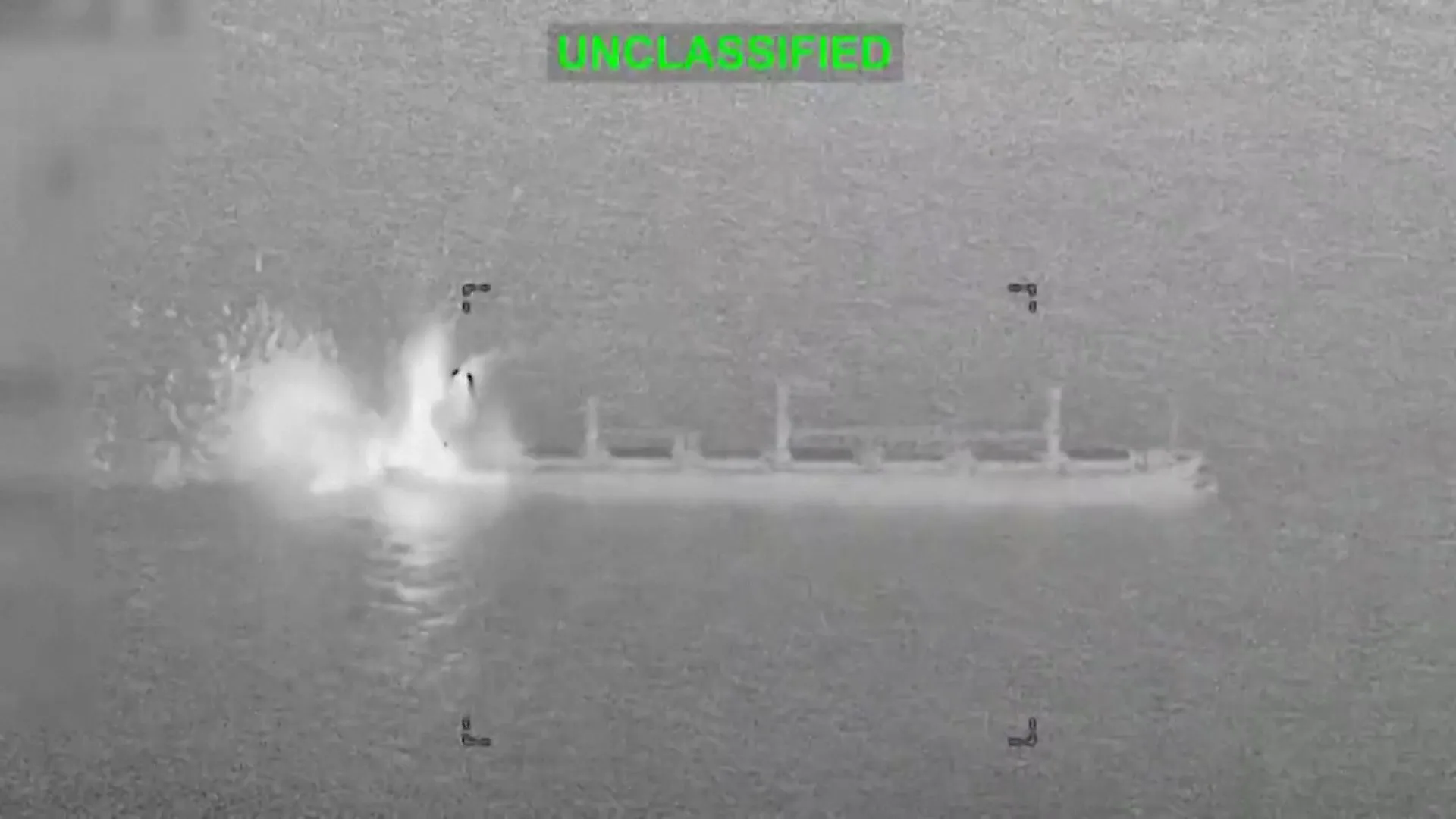
US Southern Command (SOUTHCOM) announced the attack in a social media post on Tuesday, alongside a video that showed a stationary boat with outboard engines being hit by a missile and exploding into a huge ball of flames.

Recommended Stories

list of 4 itemsend of list

SOUTHCOM, which is responsible for US military operations in Latin America and the Caribbean, claimed that the four people killed were “narco-terrorists”, but provided no evidence to support its claims.

Justification for the lethal attack, according to SOUTHCOM, was due to intelligence – details of which were not provided – that confirmed that “the vessel was transiting along known narco-trafficking routes in the eastern Pacific and was engaged in narco-trafficking operations”.

The latest killing of people on board vessels in international waters in the eastern Pacific Ocean and Caribbean brings the overall death toll to at least 175 since early September, when US President Donald Trump ordered the attacks to stop what the White House claims are Latin American cartels transporting drugs to the US.

Tuesday’s killings came after two people were killed in a US strike on Monday, and five people were killed in two separate strikes on Saturday, also in the eastern Pacific.

The Associated Press news agency reported that the US coastguard has suspended a search for one survivor from the two attacks reported on Saturday.

International legal experts and rights groups say the US military campaign amounts to “extrajudicial killings” in international waters and that the attacks have targeted civilian fishing boats.

Legal experts have said that if some vessels were involved in drug trafficking, those on board should face the law, rather than deadly attacks.

Critics have also questioned the effectiveness of the US military operation in part because the fentanyl behind many fatal overdoses in the US, which Trump has used to justify his campaign, is typically trafficked to the US over land from Mexico, where it is produced with chemicals imported from China and India.

Source link

Historic but not enough? Colombia’s Gustavo Petro defends cocaine seizures | Drugs News

Pushing back on Washington

Petro, however, has highlighted his interdiction efforts as a means of refuting Trump’s claims that he has allowed cocaine to flow unchecked.

The subject reportedly came up during a call between the two heads of state in January. Petro suggested that Trump had been unfamiliar with the amounts of cocaine Colombia has seized.

“The United States doesn’t know anything about that,” he told CBS News after the call.

At other times, Petro has leaned on his interdiction record to push back on Trump’s hardline anti-narcotics policy.

In September, Trump and his allies announced a campaign to bomb boats suspected of carrying drugs, arguing the strategy was more efficient than interdiction.

“Interdiction doesn’t work,” US Secretary of State Marco Rubio said. “What will stop them is when you blow them up, when you get rid of them.”

Since then, the US military has bombed 47 boats, killing at least 163 people. Petro has condemned the strikes as “murders”, arguing they violate due process and international law.

He has also held up his own interdiction strategy as a more effective model.

When Colombia and the US led a joint maritime operation in February that resulted in nearly 10 tonnes of cocaine seized, Petro touted the outcome as proof that anti-narcotics efforts need not be lethal.

“The Colombian Navy seized the submarine without killing anyone,” Petro said during a cabinet meeting.

Still, experts have pointed out that Petro has bent to US demands in other areas.

While Petro had pledged not to target coca farmers, he announced in December that security forces would deploy drones to spray crops with glyphosate, an herbicide.

That plan — to forcibly eradicate coca crops by air — faced strong local opposition due to concerns over the herbicide’s health and environmental impacts.

Rueda said the move, which has yet to be implemented, signalled that Petro, like many presidents before him, had yielded to US pressure.

“The US government always wins,” said Rueda. “It always has more power over us, and we end up having to give in — and so does Petro.”

Whether Petro’s decision holds weight with his electoral base is less certain. While protests initially erupted in coca-growing regions, they subsided after meetings with his administration.

Rueda suspects officials reassured protesters they wouldn’t carry out the fumigations, which could have cost Petro in the upcoming elections.

“Petro’s decision highlights his inconsistencies when it comes to the policy he put forward,” Rueda said. “But in the end, the fumigations never happened, so the political impact likely wasn’t as significant as it could have been.”

Source link

Iran war: What is happening on day 46 of the US-Iran conflict? | US-Israel war on Iran News

The US started a blockade on Iranian ports, but Trump said there is still a chance for Tehran to reach a deal.

President Donald Trump said there is still room for Iran to strike a deal, despite the US blockade of Iranian ports, as Israel intensified its invasion of southern Lebanon.

Iran has accused Washington of “piracy” as thousands rally in Tehran against the move, which targets shipping through the Strait of Hormuz.

Recommended Stories

list of 1 itemend of list

The Associated Press news agency reported on Tuesday that diplomatic efforts to revive US-Iran talks are continuing, with Pakistan offering to host a second round of negotiations in Islamabad this week.

Here is what we know:

In Iran

  • US blockade and protests: The US measures are now being enforced, prompting Iranian accusations of “piracy” and demonstrations in Tehran against the restrictions on maritime traffic.
  • Tehran calls blockade ‘illegal’: Iran’s armed forces condemned the move as unlawful, warning that targeting its ports could put shipping across the Gulf at risk.
  • IRGC warns of escalation: A Revolutionary Guard spokesperson said Iran still has “unused capabilities” and could deploy new tactics if the conflict deepens.
  • Tehran backs pope: Iran’s Parliament Speaker Mohammad Bagher Ghalibaf praised Pope Leo XIV for condemning the war, calling his stance “fearless”.
  • Russia withdraws nuclear staff: Russia has pulled most of its personnel from Iran’s only nuclear power plant, built with Moscow’s support, according to the head of the country’s atomic energy agency.

War diplomacy

  • Qatar urges mediation: Qatar’s Foreign Minister Sheikh Mohammed bin Abdulrahman bin Jassim Al Thani urged Iran and the US to engage constructively in mediation efforts.
  • Pakistan says truce ‘holding’: Prime Minister Shehbaz Sharif said the ceasefire between the US and Iran was “holding”, with efforts ongoing to reach a deal after weekend talks failed.
  • Shipping disruption grows: A UN spokesperson said there is “no military solution”, warning that instability in the Strait of Hormuz is worsening global economic fragility. About 20,000 vessels are reported stranded, with supply chains, including fertiliser, under strain.
  • Push to include Lebanon: The United Kingdom urged Lebanon’s inclusion in a broader US-Iran ceasefire framework, which currently excludes fighting involving Hezbollah.
  • Talks planned with Lebanon despite fighting: Israeli and Lebanese ambassadors will hold talks on Tuesday in Washington, DC, aimed at halting the war.
  • Hezbollah rejects negotiations: Hezbollah leader Naim Qassem on Monday urged Lebanon to cancel the planned meeting in Washington, reiterating his group’s opposition to any direct engagement with Israel.
  • Russia to accept Iran’s uranium: The Kremlin has repeated an offer to accept Iran’s enriched uranium as part of a potential agreement with the US. In comments carried by Russia’s state-owned RIA Novosti news agency, Kremlin spokesman Dmitry Peskov said the proposal “was voiced by President [Vladimir] Putin in contacts with both the United States and regional states”.

INTERACTIVE_LIVETRACKER_IRAN_US_ISRAEL_MIDDLEEAST_ATTACKS_April 13_2026_GMT1645-1776099548

In the US

  • Iran ‘wants a deal’: Trump said Iranian representatives had reached out to pursue a peace agreement after talks in Pakistan ended without a breakthrough. “They’d like to make a deal. Very badly,” he told reporters, without specifying who made contact.
  • No apology over pope remarks: Trump said he had “nothing to apologise for” after criticising Pope Leo XIV for calling for an end to the conflict. He described the pope as “weak” on key issues, including Iran.
  • Warning over Iranian vessels: Trump said US forces would destroy any Iranian “fast attack ships” approaching the naval blockade now in effect.
  • Domestic politics and war powers: Senate Democrats, led by Chuck Schumer, are pushing for another vote to curb Trump’s authority to wage war on Iran. Schumer criticised the campaign as an “epic fail”, citing rising US fuel prices, while previous efforts have been blocked by Republicans.
  • Arrests of protesters: Police in New York City have arrested about 90 protesters in Manhattan as they stopped traffic to protest against the war on Iran and the US’s arms sales to Israel. Jewish Voice for Peace, the group leading the protest, said those taken into custody included whistleblower Chelsea Manning, actor Hari Nef and New York City Council Member Alexa Aviles.
  • Trump rails at pope: Trump has doubled down on his criticism of Pope Leo XIV, saying the pontiff’s opposition to the war in Iran was “wrong” and accusing him of being “weak on crime”.

In Israel

  • Israel pushes ‘buffer zone’: Israel’s military is continuing ground operations and air raids across southern Lebanon, bulldozing buildings in border towns such as Naqoura as part of efforts to create a “buffer zone”.
  • Hezbollah steps up attacks: Fighters have launched rockets and drones at Israeli troops and vehicles in areas including Bint Jbeil and Biyyada.
  • Accusations against Israel: Hezbollah chief Qassem accused Israeli Prime Minister Benjamin Netanyahu of pursuing a “Greater Israel” agenda with US backing.
  • Tensions with Italy: Israel summoned Italy’s ambassador after Foreign Minister Antonio Tajani condemned attacks on Beirut as “unacceptable”, following reports of more than 300 deaths.
  • The Israeli military said one soldier has been killed and three others have been wounded during battle in southern Lebanon.

In Lebanon

  • Israel continues to attack Lebanon: Israel has intensified its invasion of southern Lebanon, as the death toll from Israeli attacks since March 2 rises to at least 2,089.
  • An Israeli drone attack has hit a car travelling near southern Lebanon’s Nabatieh, killing at least two people, the National News Agency reported on Tuesday. Our colleagues at Al Jazeera Arabic say Israeli forces have launched two raids on the towns of Machgharah and Sohmor in the eastern Bekaa Valley.
  • Public opinion divided: Lebanese citizens appear split about negotiations, with some expressing fatigue from the war and hoping for a diplomatic breakthrough, while others remain sceptical of Israel’s intentions and doubt any deal will hold.
  • Canadian Foreign Minister Anita Anand confirmed in a statement posted on X that a Canadian national has died in southern Lebanon. The minister did not provide details on the events that led to the Canadian’s death.

Strait of Hormuz and energy crisis

  • The Reuters news agency is reporting that a Chinese tanker sanctioned ⁠by Washington has passed through the Strait of Hormuz despite a ⁠US blockade on the waterway. The tanker and its ‌owner, Shanghai Xuanrun Shipping Co Ltd, were previously sanctioned by the US for dealing with Iran.
  • US Energy Secretary Chris Wright said oil prices could keep rising until “we get meaningful ship traffic through the Strait of Hormuz”.

Source link

US military kills two men in new strike on vessel in eastern Pacific | Crimes Against Humanity News

Latest attack brings death toll from US strikes on vessels in the Pacific and Caribbean to at least 170 since September.

The ⁠United States military has ⁠carried out another attack on a vessel in the eastern Pacific, killing two people, in the latest deadly strike by US forces on boats that Washington alleges have links to Latin American drug trafficking cartels.

US Southern Command (SOUTHCOM), which is responsible for Washington’s military operations in Latin America and the Caribbean, confirmed the attack in a post on social media late on Monday, claiming to have killed two “male narco-terrorists”, without providing any evidence.

Recommended Stories

list of 4 itemsend of list

SOUTHCOM claimed that, based on intelligence reports, the boat was “⁠transiting along known narco-trafficking routes ⁠in the ⁠Eastern Pacific” and was targeted with “a lethal kinetic strike” on the orders of US Commander General Francis L Donovan.

A grainy video clip released with the statement shows a stationary boat with outboard engines and what appear to be floats from fishing nets nearby. The boat comes under attack from the air and explodes into flames.

The attack marked the second day in a row that SOUTHCOM announced a deadly strike on boats in the Pacific. On Sunday, the US military said it blew up two boats in the eastern Pacific a day earlier, killing five people and leaving one survivor. It was not immediately clear what happened to the person who survived the attack, though SOUTHCOM said the US coastguard was notified.

With the attack on Monday, the US military has now killed at least 170 people in dozens of strikes on vessels in the eastern Pacific and Caribbean Ocean since September.

International law experts, human rights groups and regional governments have accused the administration of US President Donald Trump of carrying out extrajudicial killings in international waters, which have likely targeted civilians, often fishing crews, who do not pose an immediate threat to the US.

The Trump administration claims that such attacks are part of its war on drug trafficking cartels in Latin America, but has provided no solid evidence that any of the vessels targeted since last year have been involved in drug trafficking.

Source link

South Korea boosts military fuel readiness amid energy risks

President Lee Jae Myung (3-L, rear) attends a meeting of top commanders of the Army, Air Force and Navy at the defense ministry in Seoul, South Korea, 27 March 2026. Photo by YONHAP / EPA

April 13 (Asia Today) — South Korea’s Defense Ministry said Monday it is strengthening fuel procurement and management to ensure military readiness as global energy supply uncertainty rises.

Vice Minister of Defense Lee Doo-hee visited an Army corps unit to inspect fuel storage operations and energy conservation measures, urging tighter management of military fuel reserves.

The visit came as concerns grow over global energy disruptions linked to the Middle East conflict, prompting the government to emphasize stable fuel supplies as a key element of military preparedness.

Lee said effective fuel management is essential to maintaining operational capability in both peacetime and wartime, calling on units to ensure they can carry out missions immediately under any circumstances.

He also stressed the need to strengthen safety management and emergency response systems at military fuel storage facilities.

The government recently raised its resource security alert level for crude oil from “caution” to “alert,” reflecting heightened concerns over supply stability.

Lee urged commanders to improve efficiency in unit operations and promote energy-saving practices across military bases to conserve resources.

— Reported by Asia Today; translated by UPI

© Asia Today. Unauthorized reproduction or redistribution prohibited.

Original Korean report: https://www.asiatoday.co.kr/kn/view.php?key=20260413010003913

Source link

Starmer says UK will not support US blockade of Strait of Hormuz | US-Israel war on Iran News

Other US allies criticise Trump’s move, including France, Spain and Turkiye, and China also condemns the plan.

British Prime Minister Keir Starmer says his country will not join the blockade of the Strait of Hormuz announced by United States President Donald Trump, a move also criticised by other US allies.

“We are not supporting the blockade,” Starmer told BBC radio on Monday, adding that the United Kingdom “is not getting dragged in” to the US-Israel war on Iran.

Recommended Stories

list of 4 itemsend of list

Starmer said it was vital to get the strait reopened. In peacetime, about 20 percent of the world’s oil supplies pass through the strategic waterway that links the Gulf to the Indian Ocean.

“It is in my view vital that we get the strait open and fully open, and that’s where we’ve put all of our efforts in the last few weeks, and we’ll continue to do so,” he said.

Al Jazeera’s Rory Challands, reporting from London, said Starmer has continued to “maintain a delicate balancing act” of saying the UK will not be joining the war while being careful not to level any criticism directly at Trump regarding his actions in the war.

Traffic through the strait has been heavily restricted since the start of the war. Iran has allowed through only some vessels serving friendly countries, such as China.

Starmer made his statement as the US military announced it would block all maritime traffic entering and exiting Iranian ports starting from 14:00 GMT. It was unclear, however, how the US military would enforce the blockade.

“The blockade will be enforced impartially against vessels of all nations entering or departing Iranian ports and coastal areas, including all Iranian ports on the Arabian Gulf and Gulf of Oman,” the US military’s Central Command said.

US forces would not impede vessels transiting the Strait of Hormuz to and from non-Iranian ports, it added.

A map of the Strait of Hormuz
A map of the Strait of Hormuz [Courtesy of Roudi Baroudi]


In a lengthy social media post on Sunday, Trump said his goal was to clear the strait of mines and reopen it to all shipping and Iran must not be allowed to profit from controlling the waterway.

Meanwhile, French President Emmanuel Macron announced that France and the UK would hold a conference in the coming days aimed at restoring freedom of navigation in the strait.

Macron reiterated that no diplomatic effort be spared in reaching a lasting end to the US-Israel war on Iran.

Nicole Grajewski, assistant professor at the Center for International Research at the Paris Institute of Political Studies, said a US blockade was “not a minor coercive signal” but could rather be considered essentially a resumption of the war.

Other US allies also criticised Trump’s move, including Spanish Defence Minister Margarita Robles, who said the planned naval blockade “makes no sense”.

“It’s one more episode in this whole downward spiral into which we’ve been dragged,” she said.

Fellow NATO ally Turkiye said the Strait of Hormuz should open “as soon as possible”.

“Negotiations with Iran should be conducted, persuasion methods should be used and the strait should be opened as soon as possible,” Turkish Foreign Minister Hakan Fidan told the state-run Anadolu news agency.

China, Washington’s great power rival and a big importer of Iranian oil, also criticised the plan.

“The Strait of Hormuz is an important international trade route for goods and energy, and maintaining its security, stability and unimpeded flow is in the common interest of the international community,” Ministry of Foreign Affairs spokesman Guo Jiakun said, urging Iran and the US not to reignite the war.

Source link

Australia appoints female army chief for the first time in history | Military News

Lieutenant General Susan Coyle has held several senior command roles over her nearly 40-year military career, including during operations in Afghanistan and the Middle East.

Australia has announced that its army will be led by a woman for the first time in its 125-year history, as part of a reshuffle of the country’s defence force leadership.

Lieutenant General Susan Coyle, the current chief of joint capabilities, will become the chief of army in July, the government said in a statement on Monday. She will replace Lieutenant General Simon Stuart, who assumed the post in July 2022.

Recommended Stories

list of 3 itemsend of list

Coyle’s career spans nearly four decades, during which she has held several senior command roles, including during operations in Afghanistan and the Middle East.

Her appointment comes as the Australian military seeks to boost the number of female officers in its ranks. It is facing a wave of allegations of systemic sexual harassment and discrimination.

“From July, we will have the first ever female chief of army in the Australian Army’s 125-year history,” Prime Minister Anthony Albanese said in a statement.

Defence Minister Richard Marles called Coyle’s appointment a “deeply historic moment”.

“As Susan said to me, you cannot be what you cannot see,” Marles said.

“Susan’s achievement will be deeply significant to women who are serving in the Australian Defence Force today and women who are thinking about serving in the Australian Defence Force in the future.”

Australia’s army is undergoing a major transformation, equipping itself with long-range firepower, drones and other modern combat tools.

Coyle, 55, stressed her experience in areas such as cyber-warfare. “This breadth of experience provides a strong foundation for the responsibilities of command and the trust placed in me,” she said.

Women currently make up about 21 percent of the Australian defence forces, or ADF, and 18.5 percent of senior leadership roles. The ADF has set a target of 25 percent of overall participation for women by 2030.

Last October, a class action lawsuit was filed against the ADF alleging it failed to protect thousands of women officers from systematic sexual assault, harassment and discrimination.

The government on Monday also appointed Vice Admiral Mark Hammond, the current chief of the navy, as the head of the ADF, succeeding Admiral David Johnston.

The current deputy chief of the navy, Rear Admiral Matthew Buckley, will replace Hammond as head of the branch.

Source link

US military threatens to blockade all Iranian ports starting on Monday | US-Israel war on Iran News

Vessels will still be able to transit Strait of Hormuz to and from non-Iranian ports, says CENTCOM; Iran warns any approaching military vessels will be breaching ceasefire.

The United States military has announced it will begin blockading all Iranian ports on Monday, its latest move to exert pressure on Tehran after marathon peace talks in Pakistan concluded without a deal.

In a statement on Sunday evening, US Central Command (CENTCOM) said the blockade would apply to “all maritime traffic entering and exiting Iranian ports” from 10am Eastern Time (14:00 GMT) on April 13. That includes “vessels of all nations entering or departing Iranian ports and coastal areas”, including those on the Gulf and the Gulf of Oman.

Recommended Stories

list of 3 itemsend of list

However, US forces “will not impede freedom of ⁠navigation for vessels transiting the Strait ⁠of Hormuz to and ⁠from non-Iranian ports,” CENTCOM said, in an apparent scaling back from President Donald Trump’s earlier threat to blockade the entire strait and pursue ships paying tolls to Iran.

“There are a lot of questions here,” said Al Jazeera’s Heidi Zhou-Castro from Washington, DC, pointing to “conflicting information” coming out of the US side.

“Trump said the blockade would target any and all ships trying to enter or leave the Strait of Hormuz. But CENTCOM is saying this would only target ships going to or from Iranian ports.”

The price of US crude oil jumped 8 percent to $104.24 a barrel after the US blockade threat. Brent crude oil, the international standard, increased 7 percent to $102.29.

Iran has essentially taken control over the Strait of Hormuz, a vital chokepoint for the global energy market, since the US and Israel launched a war against the country on February 28. Traffic through the waterway has since slowed to a trickle, nearly paralysing about one-fifth of the world’s oil and liquefied natural gas shipments.

Iran has continued to move its own vessels through the strait, while allowing limited passage of ships from other countries. Iranian officials have discussed setting up a toll system after the fighting ends.

In a statement responding to Trump’s blockade threat, Iran’s Islamic Revolutionary Guard Corps said any approaching military vessels would be in breach of a US-Iran ceasefire – meant to be in effect until April 22 – and “will be dealt with severely”.

The US-declared blockade appears to be triggered by the failure of the talks in Pakistan’s capital, Islamabad, raising fears of renewed fighting.

Iranian officials blamed the US side for failing to reach a deal, with Minister of Foreign Affairs Abbas Araghchi saying US negotiators shifted the “goalposts” and obstructed efforts when a memorandum of understanding was “just inches away”.

Zohreh Kharazmi, an associate professor at the University of Tehran, said the US “is not in a position to dictate” to Iranians how to behave, or “to choose which vessels may pass”.

“If this blockade becomes a contest between the resilience of the Islamic Republic and the resilience of global markets, it will not take long to see who is losing,” she said, adding that Iran “is ready for a prolonged war”.

“Technically, they [the US] cannot control the situation. With Hollywood-style strategies, they cannot prevail in this battleground.”

Source link

Bush and Kerry See Openings in Military Vote

Kevin Dellicker stays away from politics when he reports for duty at the National Guard armory in Harrisburg, Pa. But out of uniform, the captain in the Pennsylvania National Guard does everything he can to persuade the people he served with in Iraq to reelect President Bush.

Shaking some of the same hands as Dellicker is Jonathan Soltz, a former Army captain recently returned from Iraq who spends his days pleading with soldiers to vote for Sen. John F. Kerry of Massachusetts, the Democratic presidential nominee.

In the swing state of Pennsylvania, where both live, the votes of those in the military — including more than 15,000 reservists — who are serving or have served in Iraq or Afghanistan are much in demand.

But which way the people fighting the war will vote in Pennsylvania and elsewhere is anybody’s guess.

Tight restrictions on seeking the votes of active-duty military personnel, along with taboos in the military culture against the open expression of political views, make it tough for candidates to target military voters — and make it tough for pollsters to figure them out.

Historically, military turnout in elections has been low.

With more than 400,000 troops overseas now, many living in difficult and dangerous conditions, it is not clear whether those who want to vote this fall will succeed. A Pentagon initiative meant to make it easier for troops to cast absentee ballots via the Internet and by fax is being criticized as vulnerable to tampering.

All that has left the Bush and Kerry campaigns working the edges of a potential voting bloc that could be significant in a tight election.

“It’s very hard to get a read on how the active-duty personnel are reacting to the war politically, because they are so busy reacting on the ground,” Soltz said. “So what I do — I talk to my friends, tell them to e-mail their friends about Kerry; I talk to people like me who are out of the service now. I’m not going to go give a speech to a group of soldiers. It’s not the thing they want to hear while they’re just trying to keep their lives together.”

Political activity in the military is — like much else — strictly regulated.

Troops are not prohibited from expressing political opinions, but they are not allowed to work for partisan political organizations while in the military. Campaigning is prohibited at military facilities, and the rules for conducting polls among active-duty troops are so cumbersome that pollsters have generally given up.

“As a society, we rely on the apolitical loyalties and professionalism of the military — we entrust them with capabilities that we don’t give anyone else — and in exchange for that we demand total political neutrality from them,” said Peter Feaver, a political science professor at Duke University who studies military voting patterns.

“We seek to avoid creating a partisan voting bloc in the military that is wooed or courted the way that soccer moms are. So for that reason the government doesn’t ask questions itself, and they restrict the access of anyone else to do so.”

More is known about how veterans lean politically: Polls show they tend to vote Republican.

Because of that, it has long been presumed that the active military also leans Republican. A poll by Army Times of its readers in December found that more supported the administration than did not. But the poll did not ask respondents for whom they would vote. Its pollsters acknowledged that its readers tended to be older, career soldiers, rather than enlisted personnel, 35% of whom are black and Latino — groups that among civilians tend to vote Democratic.

This year, both presidential campaigns have infused their efforts with military imagery, and the experience of both Bush and Kerry during the Vietnam War era is under scrutiny.

A parade of retired generals at the Democratic and Republican conventions endorsed one candidate or the other. Kerry opened his speech with a salute. Bush and Vice President Dick Cheney have regularly visited military bases, and Kerry meets with veterans, reservists and military families. Elizabeth Edwards, the wife of Democratic vice presidential nominee John Edwards, parlays her background as the daughter of a career soldier into regular chats with military families.

“The political appeals to this broad category of people somehow associated with the military [have] not been this overt in decades,” said Carroll Doherty of the Pew Research Center for the People and the Press. “But of the leanings of active-duty military, the people in the fight, the candidates are as stumped as the pollsters.”

Both parties are pushing overseas voter registration, including that of military personnel. The Bush campaign is deeply aware that military absentee ballots may have helped swing Florida — and the election — for Bush in 2000. Democrats, meanwhile, are predicting that more of the military vote will go their way this November because long tours of duty and heavy casualties have antagonized a growing number of military families.

“This time around, the Democrats are convinced that the advantage among military voters won’t be nearly as big for the GOP,” said Curtis Gans, director of the Committee for the Study of the American Electorate. “They also think that in a post- 9/11 election, how can the Democrats show that they’re tough on national security? If they can win the military and veterans endorsement race, then that can serve symbolically as proof that they are good on national security.”

Pentagon attempts to improve voter turnout among soldiers overseas have generated considerable controversy.

In February, the Pentagon dropped a $22-million plan to test Internet voting for 100,000 military workers and civilians overseas. After a panel of experts cited security concerns, the agency said it could not ensure the legitimacy of online votes.

Subsequently, the Defense Department said that members of the military would be allowed to vote by faxing or e-mailing their vote, but only after waiving their right to a secret ballot. Under the Pentagon plan, a contractor, Omega Technologies, will accept the ballots on a toll-free line, then send them to appropriate local elections offices.

But under that system, the contractor, the Pentagon and county officials would all know which candidates individual military voters had chosen.

Critics have pointed out that Omega’s chief executive, Patricia Williams, has donated $6,000 in this election cycle to the National Republican Congressional Committee and serves on the committee’s business advisory council. They say such partisanship leaves open the possibility that votes will be tampered with, as does the nonsecret ballot.

Missouri and North Dakota will allow e-mail voting by the military. Twenty other states will permit faxed ballots, also to be handled by Omega.

In Pennsylvania, which has sent more reservists to Afghanistan and Iraq than all but five other states, and which has had more war deaths than any other presidential swing state, the Bush and Kerry campaigns are pulling hard for the military vote.

Dellicker, the guardsman, said the local Bush campaign organization he volunteers for had compiled an extensive e-mail list, primarily through word of mouth, of active-duty troops. The campaign uses the list to send regular updates on campaign events and issues.

“I don’t pester my colleagues at my base, because that would be inappropriate. But if I have colleagues, you’d better believe that I’m going to talk to them about [the election] when out of uniform and in an appropriate setting,” Dellicker said.

Soltz, the Army veteran, said he arranged for Iraq veterans in Pennsylvania to speak in favor of Kerry at veterans halls.

“I talk all the time to these guys. I have friends who aren’t even back from Iraq yet who wish they could get back and tell people what they’ve seen, what they know,” Soltz said. “I know there are people like me working for Bush driving these roads too. The question is, who are soldiers listening to?”

Source link