PHOENIX — For decades, all that separated the U.S. from Mexico was barbed wire.
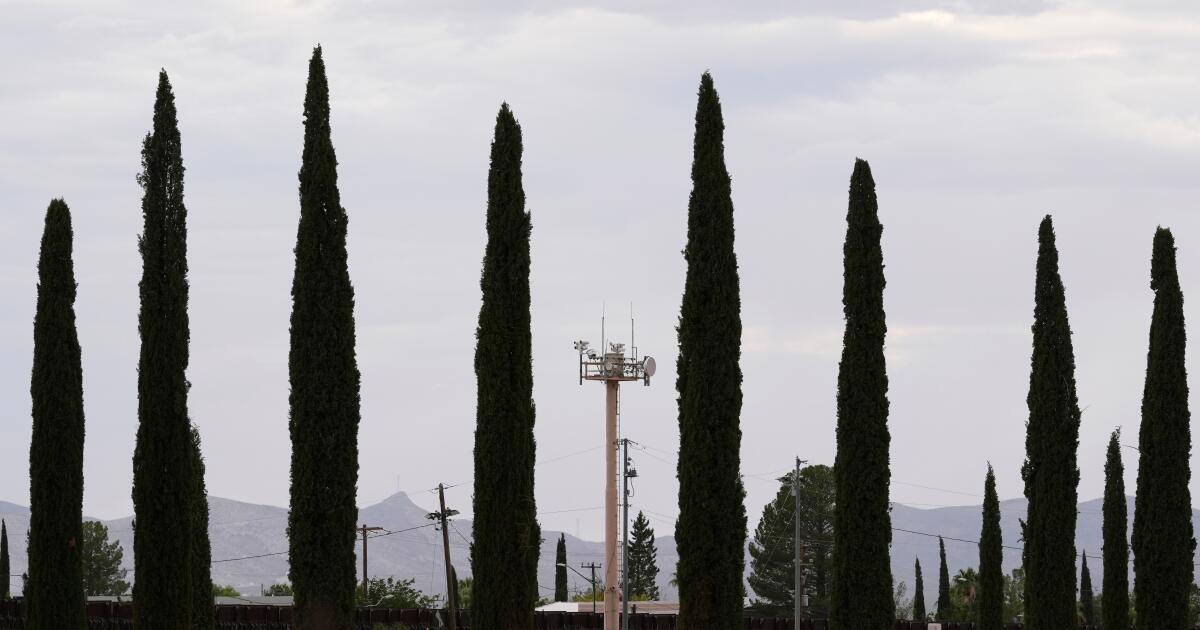
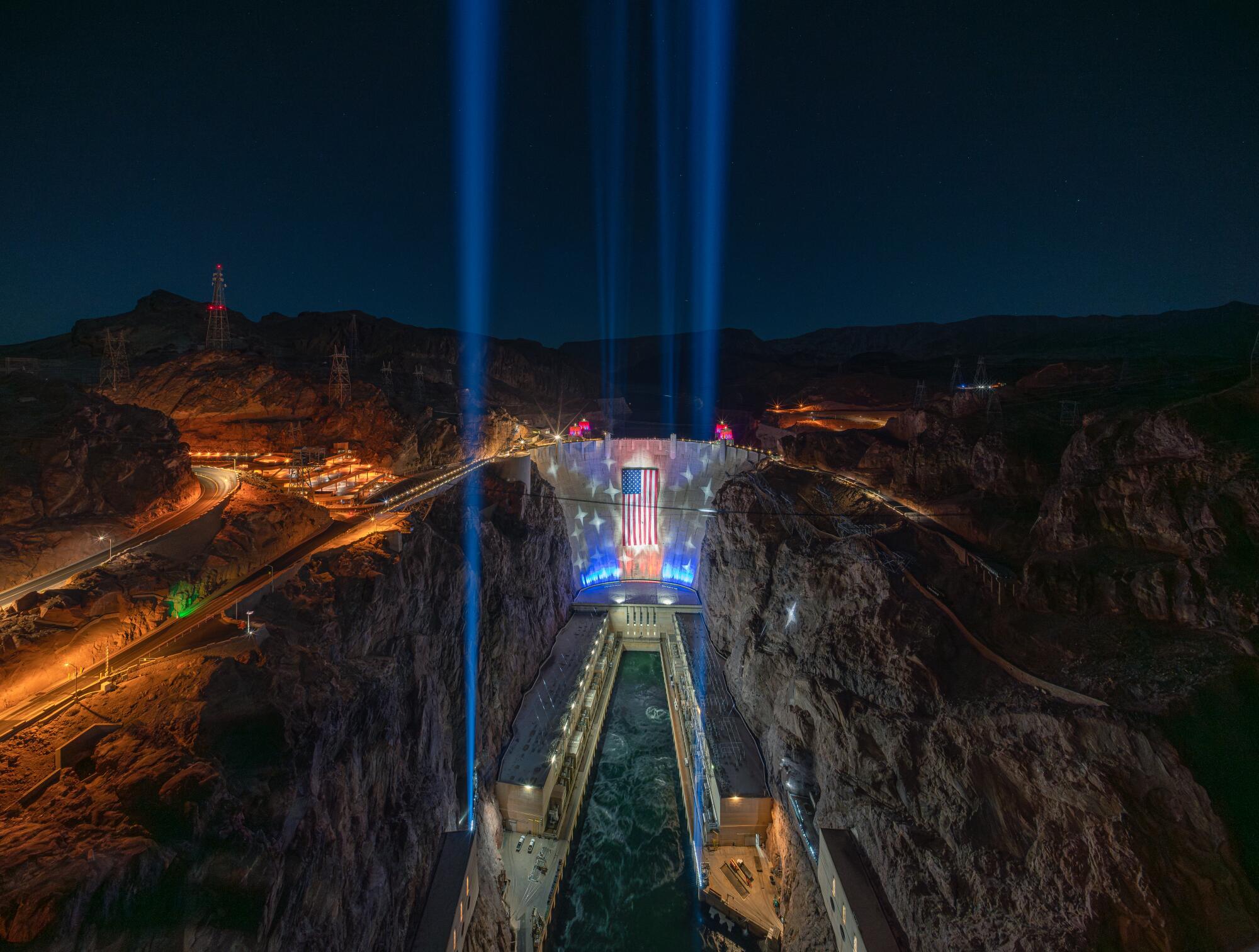
Now, after a massive infusion of cash from Congress, President Trump’s administration is swiftly building what it has dubbed a “smart wall,” a combination of 30-foot-tall steel fencing and an array of sophisticated technology like sensors, cameras and towers allowing Border Patrol to surveil the territory.
The wall is under heavy scrutiny for the billions of dollars being dedicated to it when border crossings are at their lowest in decades. Critics say the U.S. is militarizing the border as it increasingly deploys sophisticated surveillance technology to the area, impacting local communities.
“We are seeing a massive expansion of surveillance and surveillance technology across the borderlands,” said Ricky Garza, border policy counsel at the Southern Border Communities Coalition, an advocacy group. “The wall in all its forms is harmful to communities.”
Officials say the technology is complementary to the physical wall and frees up agents for other tasks.
“It’s a smart wall. It’s not just a barrier,” Customs and Border Protection Commissioner Rodney Scott said during recent congressional testimony. “It maximizes the use of our most valuable resource, which is our agents.”
Contracts for hundreds of miles of wall already inked
The wall has been a top priority for Trump, a Republican, since he first ran for president.
During the administration of President Joe Biden, a Democrat, the border emerged as a flashpoint, with thousands of people seeking to cross into the country each day. Those numbers started to taper off shortly before Trump returned to office last year and then slowed to a trickle, with his broader immigration crackdown serving as a deterrent for would-be migrants.
Flush with $46 billion to finish the wall after an infusion by Congress for immigration enforcement, CBP is inking tens of billions of dollars in contracts to build the wall and push along the president’s signature project.
Homeland Security Secretary Markwayne Mullin said recently that a preliminary part of the wall will be finished by “this time next year.” Scott said his agency is putting up 6 miles of wall a week.
Hundreds of miles had already been built before Trump returned to office. As of mid-June 2026, CBP has erected another 74 miles and aims to build hundreds more. There is no wall planned for roughly 535 miles of the roughly 2,000-mile-long border, because rugged terrain already serves as a barrier. Ground sensors and towers will be used instead.
CBP is also going back to hundreds of miles of already built wall and adding more technology, lights and roads. Along the long stretches of river in Texas that mark the border with Mexico, they’re deploying 12- to 15-foot-long cylinder-shaped buoys meant to keep migrants or smugglers from crossing the border.
More technology being deployed on the border
Technology is playing a greater role in the Trump administration’s effort to make illegal crossings along the border more difficult, part of a broader transformation of CBP in the years since Sept. 11, 2001, into an intelligence operation with a mass surveillance network whose reach extends far beyond the nation’s frontiers, according to reporting by The Associated Press.
And critics say the border technology poses a threat.
The Southern Border Communities Coalition says surveillance technologies can push migrants into more dangerous routes to avoid being detected.
Garza, the group’s policy counsel, warned that surveillance technology infringes on the privacy rights of border residents and that locals have found ground sensors used to detect smuggler or migrant traffic placed on their property without their consent.
Nayda Alvarez and her relatives own land along the Rio Grande roughly 125 miles inland from the Gulf of Mexico. She has found cameras placed on her family’s land, and just last week she spotted a surveillance tower about a quarter of a mile down the river from her house.
“Are we expecting a war or something?” she said. “It doesn’t make me feel safer.”
Dave Maass, director of investigations for the Electronic Frontier Foundation, a nonprofit that focuses on civil liberties related to digital technology, said the technology has made the border area “a hostile environment” for locals and would-be migrants.
The foundation has published a guide on the various types of surveillance towers in use along the southern border designed to help local residents.
These can range from fixed towers with video, infrared and radar technologies that have a range of roughly 8 miles to remote video surveillance systems that have cameras and a spotlight fixed on top. Some are mounted on the backs of trucks so agents can drive them to different parts of the border.
Increasingly, these towers are autonomous. They can scan an area, analyze what they’re seeing using artificial intelligence and alert Border Patrol agents to something suspicious. Proponents say this helps keep Border Patrol agents out in the field instead of sitting in front of computer screens watching for activity. But it also increases AI decision-making along the border when experts have warned about the technology’s potential for bias or other problems.
The big GOP tax cuts and spending bill passed by Congress last summer requires that CBP buys only the autonomous towers, and the department is deploying an additional 95.
Underground, buried fiberoptic cables can sense movement, capturing data that is also then analyzed by AI.
“We follow the contour of the land. We go through trees. We go down into the river banks. We can go absolutely everywhere,” said Magnus McEwen-King, CEO of Sintela, which has a contract with CBP to install the cables. He spoke at a recent border security expo in Phoenix, where some of the technology was on display.
CBP also uses ground sensors and trail cameras to detect smuggling routes.
Concerns over cost and future plans
The nonpartisan watchdog group Taxpayers for Common Sense has questioned both the huge amounts of money for the wall-building and whether taxpayers are getting their money’s worth.
In 2011, under Democratic President Obama, Homeland Security Secretary Janet Napolitano pulled the plug on a project to build a “virtual wall” of integrated technology like radars, sensors and cameras across the entire border after it ran over budget, faced technological glitches and was behind schedule.
Josh Sewell, director of research and policy at Taxpayers for Common Sense, said the organization would like to see more “robust evaluation” of the technologies being used to avoid similar scenarios. And he criticized the Trump administration for lack of oversight on how the money is being spent, a charge CBP has denied, citing “oversight mechanism.”
In the Big Bend area of southern Texas, opposition to the department’s wall-building plans gathered strong bipartisan support especially in the most sensitive areas that run through a state and national park and a wildlife area.
CBP now says it is not planning to build a 30-foot-high bollard wall in those areas. Its recently announced plans include installing patrol roads and some barriers designed to stop cars and using detection technologies.
Clara Benson, who is one of the founders of the No Big Bend Wall coalition, says bright lights in the area designed to illuminate the border could pollute the skies in an area renowned for having some of the best views of the stars. Even without a 30-foot-tall steel wall running through the land, there is concern about CBP’s plans.
“There’s still a lot of fear and dread that the plan is still going to be quite damaging,” she said.
Just 16 miles north of the California border, enchanting Ashland, Ore., has drawn theater fans for more than 90 years. The city owes its modern tourism economy in large part to William Shakespeare.
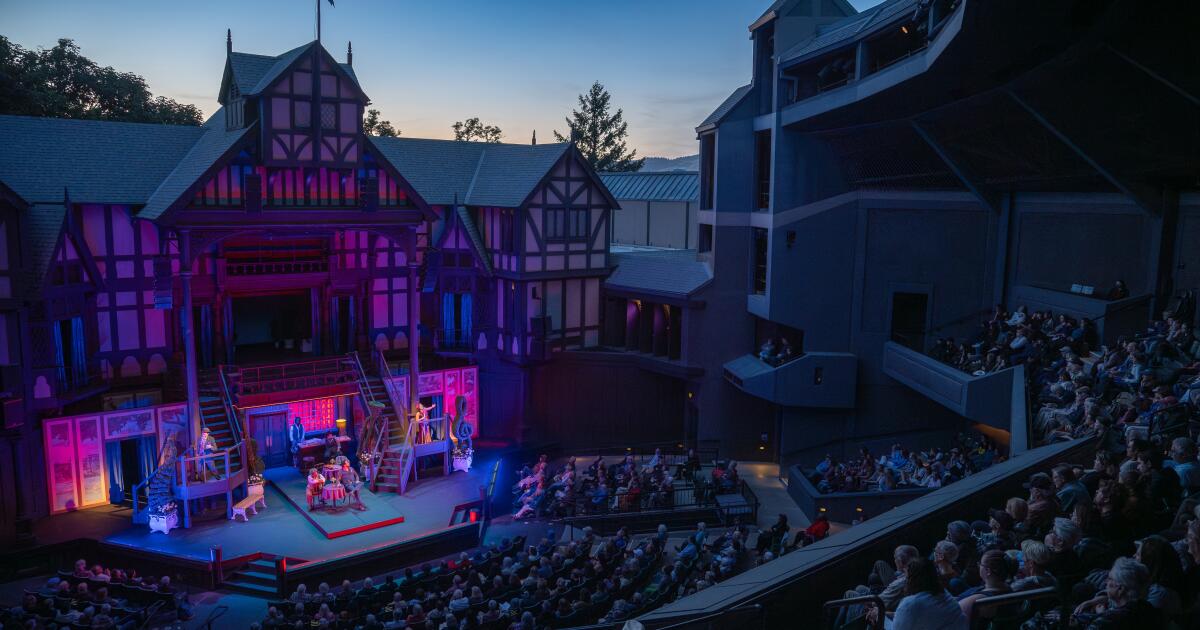
The Oregon Shakespeare Festival runs from spring to fall annually, attracting many of the 350,000 annual visitors to the city of 21,000 residents. Locals and travelers gather to watch live productions in venues like the Allen Elizabethan Theatre — modeled after a 1599 London playhouse, with a three-story Tudor facade — where for one magical evening, they’re transported to Shakespeare’s heyday.
While it’s hard to escape the Bard’s reach in the downtown core, Ashland and environs offer much more than theater. Its outdoor wonderland especially is well worth exploring. Or as Shakespeare once put it: “One touch of nature makes the whole world kin.”
Within a short drive await wineries, hiking, cycling and white-water rafting on the magnificent Rogue River. Crater Lake National Park is about a two-hour drive, and the destruction of dams on the Klamath River reopened scenic rafting there last year for the first time in more than a century. As a designated Tree City USA community, Ashland is steeped in greenery. Parks abound. Lovely Ashland Creek meanders through the town.
Founded as a farm town in the 1850s, Ashland incorporated as a city in 1885 after rapid growth fueled by the railroad’s arrival. Many buildings in the downtown historic district date to the turn of the 20th century. Today, Ashland is home to a variety of shops — a couple of favorites include Bloomsbury Books with its ecology rack right out front and Mountain Provisions for high-quality outdoor gear. And with more than 100 restaurants, Ashland’s food and beverage scene runs the gamut from casual (try the porkstrami at Sammich) to inventive (check out the unique Alsatian menu at Nous).
These days, a cautious optimism prevails throughout Ashland, which had been hit hard by the pandemic and simultaneous wildfires. At downtown’s Village Baker, the scent of baking bread hints at the 1,400 loaves produced daily. They start at 4 a.m. and deliver for miles around. That broad reach, co-owner Gerardo Gutierrez says, has helped them weather challenging times.
I was explaining the location of my broken-down car in Angeles National Forest to the tow truck dispatcher when I suddenly found myself shouting.
“Bear!” I yelled.
A black bear ambled across the road and into Red Box Picnic Area. I hollered at the bear, as did another person in the lot.
The bear ignored us both, focused on where it would find its dinner that night: a bear-proof trash can.
You are reading The Wild newsletter
Sign up to get expert tips on the best of Southern California’s beaches, trails, parks, deserts, forests and mountains in your inbox every Thursday
By continuing, you agree to our Terms of Service, which include arbitration and a class action waiver. You agree that we and our third-party vendors may collect and use your information, including through cookies, pixels and similar technologies, for the purposes set forth in our Privacy Policy such as personalizing your experience and ads.
In this edition of The Wild, our weekly outdoors newsletter, I will share the three bear encounters I had last week with black bears in Angeles National Forest. They were my first, second and third times to experience bruins in the San Gabriels. The third time, when a bear slapped my backpacking tent, was the most memorable moment. We’ll get to that later.
For anyone feeling rusty on the best course of action when you see a black bear in our local mountains, here’s a quick refresher on the tips I got previously from a conservation biologist.
🙅🏃Don’t run. You will look like prey.
🗣️ Let bears know you’re there. Say something loudly and calmly — don’t shriek! — like “Hey, bear!” in a deep voice.
💪 Make yourself big. Put your hands up and out — don’t shake them around — and try to get the bear’s attention without indicating that you’re scared or that you’re a threat to that bear.
👀👀👀 Keep your eye on the bear. But don’t look it in the eye. That can be perceived as threatening or like you’re trying to be dominant.
🤔 Observe its behavior and react accordingly. To learn more about this portion of my tips, check out No. 4 on my list.
🏔️ Carry bear spray. Bear spray is legal to carry in Angeles National Forest and generally on national forest land unless otherwise posted. It is prohibited in Yosemite National Park and other California national parks.
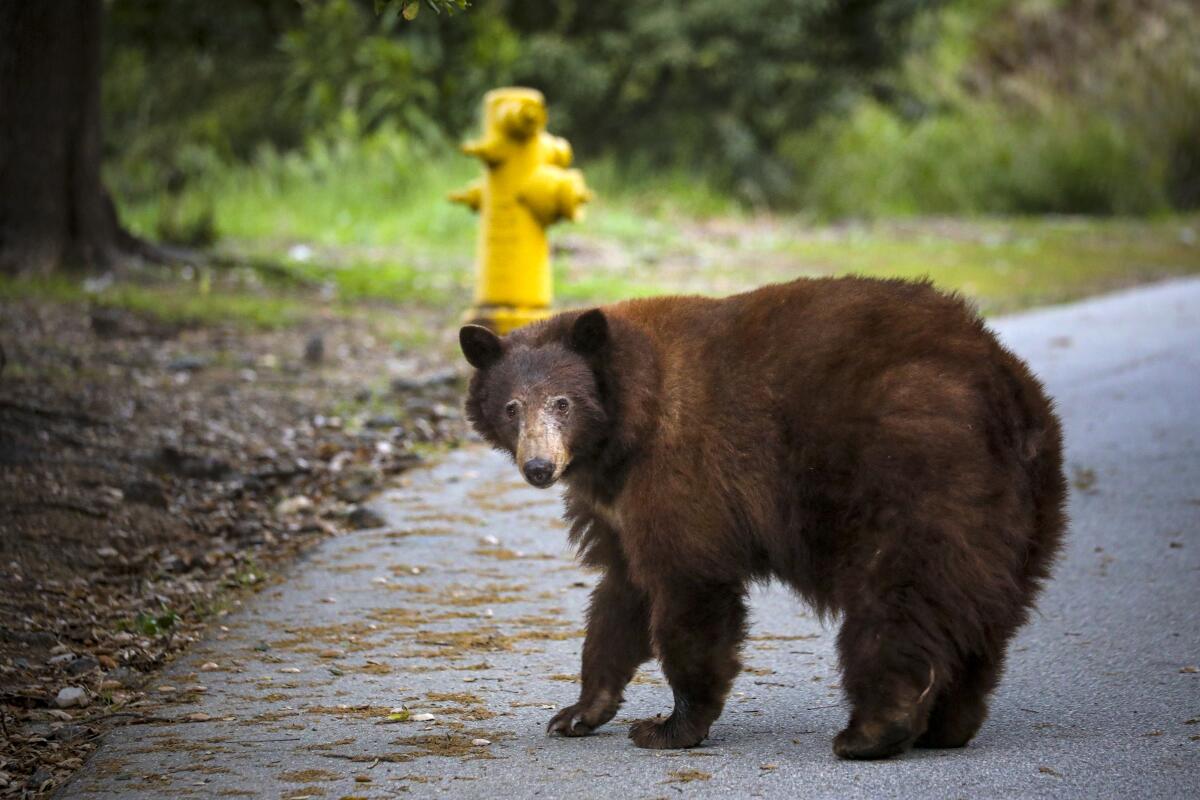
A black bear wanders along Canyon Road in March 2020 in Arcadia.
(Irfan Khan / Los Angeles Times)
Anyone who hikes in Angeles National Forest is likely familiar with Red Box Picnic Area. It’s where adventurers park to hike up to Strawberry Peak or other nearby trails, like the Gabrielino Trail, which I wrote about last week. That’s how I found myself briefly stranded in the forest.
I had spent the day hiking past gorgeous wildflowers and splashing around in the Arroyo Seco. I got back to my car around 7:30 p.m., discovered my car’s battery was dead and, after realizing I had cellphone reception, called for help.
As I waited, I chatted with a good Samaritan, an outdoors woman reading a book in her car who decided she’d wait with me until a service technician arrived.
The bear arrived in the lot around 8:30 p.m. As the sun dipped lower into the horizon, we watched the hungry fluffball knock over the brown metal trash can that was specifically designed to keep its species out.
A bear with its head inside a bear-proof trash can.
(Jaclyn Cosgrove / Los Angeles Times)
After knocking the trash can down, the bear easily shoved its arms inside. Over the next several minutes, it repeatedly shook the can toward its (adorable) face. It was kind of like watching a human shake a potato chip bag toward their mouth to get the very last bits of delicious fried starch.
My new friend and I agreed, in all our travels throughout California, we hadn’t seen anything like this. I contacted the California Department of Fish and Wildlife to ask them: How normal is it for a bear to deftly navigate the mechanisms of a trash can built to resist it?
“It’s pretty uncommon that the bears actually break in,” agency spokesman Cort Klopping said. “When I was talking to our biologist about it yesterday and a couple people in the office, the reactions were all kind of like, ‘Wow.’ Either somebody didn’t secure that thing or that bear was an absolute hulk of a bear to get into a bear-proof or bear-resistant trash can. … I was joking with the biologist that I think I’ve actually had trouble opening those.
“You were witness to what I would refer to as a pretty rare sight,” Klopping added.
I’d known there was a bear in the area when I started my hike earlier that day. At Switzer Picnic Area, I read signs posted around the picnic tables warning visitors, “Active Bear Area: Do not feed bears or leave food unattended.” The flier featured an image of a bear standing on a picnic table, eating through some family’s meal.
A sign posted at the Switzer Picnic Area in Angeles National Forest.
(Jaclyn Cosgrove / Los Angeles Times)
Angeles National Forest spokesperson Keila Vizcarra said in an email that since last August, forest officials have received at least four reports from the public and staff about two bears active in the Switzer area.
Earlier this month, recreation staff spotted two bears at the Switzer Picnic Area eating food left unattended at a picnic table. They notified state wildlife officials.
“The animals may be the same bears seen last year, but it is difficult to confirm because tag numbers are not always visible or provided; in this case, one of the bears did not appear to be tagged,” Vizcarra said.
Forest staff use various hazing methods to discourage bears and other wildlife from eating human food, like making loud noises, securing or repairing trash cans and educating visitors about how to keep their food safe from animals, she said.
“A major contributing factor continues to be unsecured or unattended food, which attracts bears from long distances,” Vizcarra said.
The bear at Red Box finished its trash-inspired tasting menu and then walked past our cars. We both honked, but it was so unfazed, I wondered aloud whether it was deaf. (It wasn’t.)
It then headed south from the parking lot, and we didn’t see it again. I had already planned to write this week’s newsletter about that experience.
Then I went backpacking as a little treat to myself.
On Friday afternoon, my dog, Maggie May, and I headed out from near Pasadena down the Gabrielino Trail with a plan to camp overnight at the Gould Mesa Trail Camp. Despite loving the outdoors, I’d never been backpacking, but after my parents bought me a tent and sleep pad for my birthday in late May, I was itching to go. Gould Mesa is close to a city. It’s next to the Arroyo Seco with water to filter and reachable by a short two-mile mostly flat hike. It felt like the perfect first trip.
About a mile in, a mountain biker warned us of a “big bear, really big bear” at the campground before he sped off. A female hiker told me the bear was average, probably 5 feet on its haunches. Others hadn’t seen it.
I was talking to another mountain biker, who was telling me the bear had been active in the area for about a month, when a man came racing down the trail, shouting about how the bear was aggressive and dangerous. The man said he’d lunged at the bear, trying to protect his food, and proceeded to make several choices that would likely be found on a “What not to do when you encounter a bear” list. Maggie and I continued onward.
We arrived at the campground around 4:30 p.m. and didn’t see anything. I asked a mother and son set up at the site next to mine about the bear, and they pointed to a large coast live oak where a small, young bear laid over a thick branch, its small feet dangling down, right above the trail. One reason hikers hadn’t seen the bear was that they’d walked right under it.
A young bear lies on the branch of a large coast live oak above the Gabrielino Trail near Pasadena.
(Jaclyn Cosgrove / Los Angeles Times)
The bear had entered the campground from near the river, and without the mother-son duo realizing that the bear was approaching them, it grabbed their food right off their picnic table. The mom told me that she considered trying to pull the food back, but the bear made noises suggesting that it preferred she didn’t. It then left the campground, and presumably after eating the meal that her son told me had “a lot of protein” in it, the bear climbed into the tree and took a nap.
I’d camped in areas with bears before, including in Kings Canyon National Park where bears came into the campground every night. This bear wasn’t being aggressive. Instead, it seemed young and like it was testing out how easy it was to get food from these weird animals — we humans — in its backyard.
I decided to stay, especially after the bear left around 7:30 p.m., and none of us saw it again. The campground was full, and two of us, myself included, had bear spray.
Maggie and I got into the tent around 9 p.m. and soon fell asleep to the sweet serenade of frogs and toads singing their nightly songs.
Then, at 2:39 a.m., I woke up to the sound of something slapping the corner of my tent next to my head.
“What the f—?” I screamed.
I lay there, heart racing, listening.
I had put my tent’s rain fly on, so I couldn’t see outside, but I could hear the bear as it left. A large whoosh-whoosh sound headed away from my tent.
For the next 20 minutes, I listened intently to every single sound the forest made. Then, after checking that my bear spray and satellite communicator were close by, I fell back asleep. In the morning, I found a small cut in my rain fly that the bear’s paw had left. My dad later suggested that I date the hole with a marker.
A small cut left after a bear swiped the rain fly of Wild writer Jaclyn Cosgrove’s backpacking tent.
(Jaclyn Cosgrove / Los Angeles Times)
Maggie and I left around 10:30 a.m. to beat the day’s heat. Once at my car and with strong cellphone reception, I must admit that I opened ChatGPT. I don’t have a bear biologist on speed dial — yet! — and I wanted to talk to someone about why the bear hit my tent.
I explained that there wasn’t any food or toiletries in my tent. I had packed everything inside a bear canister that I then placed inside the bear vault in the campground. The chatbot and I soon agreed: This bear was likely making its rounds for a late-night snack, hoping someone had dropped a marshmallow or hot dog, when it encountered my tent. Maybe my tent was in its way. Maybe it looked weird.
Later, I called Klopping with the California Department of Fish and Wildlife again.
When we’d spoke earlier in the week about the trash-can bear, I’d asked him whether that bruin was at risk of euthanasia.
I told him that Goldie, a mama bear euthanized by the state earlier this year after swiping at and injuring two people, was top of mind for me, along with Victor, a beloved bear in Mammoth who was euthanized in 2024.
Goldie was the first California black bear to be euthanized in 2026, Times staff writer Clara Harter reported. “There were two bears euthanized in 2025, three bears in 2024 and five bears in 2023, according to Fish and Wildlife,” Harter wrote.
Klopping said the trash-can bear was just out for an easy meal and would be classified as a “no harm, no foul bear,” defined by the agency as “a bear that has strayed into an area where an incident could occur, has not engaged in nuisance activity or caused property damage, and may require assistance to return to nearby suitable habitat.”
He said it was unlikely, based on what I reported, that the bear would be moved since it was already in a forest far from any neighborhood. Instead, the only action would probably be that someone secure the bear-proof trash can so it actually functions properly. (Sorry, bear.)
“As much as I don’t want to say it, this bear is doing bear things,” Klopping said. “This is a natural thing for a bear to do. It’s searching out calories to sustain itself — they’re there, readily available. This bear knows how to get to them.”
When I called Klopping back to talk about the bear (or bears) at the campground, I was more worried. I reported the incident through the agency’s website because I know its biologists use the data for several reasons, including discerning when to implement bear-resistant measures in an area or relocate a bear. But again, I worried about what would happen to the bear or bears.
A black bear peeks its head around the vault toilets in the Red Box Picnic Area in Angeles National Forest.
(Jaclyn Cosgrove / Los Angeles Times)
Klopping had told me it was rare for the agency to euthanize a bear: California Department of Fish and Wildlife received 2,735 calls and reports regarding black bears in 2025, including some duplicates where multiple people were reporting the same incident, compared with the two bear euthanizations that same year.
During our second call, he told me that a biologist would review the report I made and might call me to get additional information, but again, this wasn’t “aggressive” behavior, he said.
When bear yearlings separate from their mothers at around 18 months old — which often happens in June — Klopping said the agency will get reports of these adolescent bears wandering closer to populated areas.
“You would use the term ‘testing boundaries’ — that may have been exactly what happened here,” he said. “Odds are pretty good you probably scared it just as much as it scared you.”
I hope the bears I encountered soon return to foraging for forest delicacies that don’t come in fast-food wrappers.
As interesting as last week was, I really hope the only bears I see the rest of the summer are at the pride festivals I attend. They’re absolutely welcome to go camping with me!
3 things to do
Cyclists ride down an open street at a previous CicLAvia event.
(CicLAvia Los Angeles)
1. Frolic through the streets in South L.A. CicLAvia will host a free car-free open streets event from 9 a.m. to 4 p.m. Sunday through the Leimert and Exposition Park neighborhoods. The 3.6-mile pop-up park includes a short segment of Crenshaw Boulevard and mostly stretches along Martin Luther King Jr. Boulevard from Crenshaw to Figueroa Street. Visitors are welcome to walk, skate, bike, play and explore along the route. For more details, visit ciclavia.org.
2. Celebrate Pride along the river in Long Beach Friends of the L.A. River will co-host an LGBTQ Pride nature walk from 10 a.m. to noon Saturday through the Dominguez Gap Wetlands with the California Native Plant Society South Coast Chapter. Plant enthusiast Tory Jaimez will guide the walk, teaching participants about local ecology. Register at support.folar.org.
3. Listen to the birds in Huntington Beach We Explore Earth, a local outdoors community group, will co-host with Save Orange Hills and Friends of Shipley Nature Center a peaceful bird walk from 8:30 a.m. to 11:30 a.m. Saturday at Shipley Nature Center in Huntington Beach. Guides will help participants learn about local bird species and ecosystems. Register at eventbrite.com.
The must-read
Perched atop a tall pine tree, resident bald eagles Jackie, left, and Shadow protect their latest offspring in their 5-foot-wide nest. The nest is viewable via a live feed from the nest cam.
(Gina Ferazzi / Los Angeles Times)
Friends of Big Bear Valley, the nonprofit behind a popular eagle nest camera, is rushing to raise $10 million by July 31 to buy land that could become a lakeside gated community, leading to the destruction of crucial habitat that celebrity birds Jackie and Shadow use for foraging, along with other wildlife who call it home. Times staff writer Lila Seidman wrote that if the nonprofit can raise the money, then the San Bernardino Mountains Land Trust would conserve the roughly 63 acres and might transfer it to the U.S. Forest Service (a common practice of land conservancies). That’s if they meet the July deadline. “Failure is not an option,” said Jenny Voisard, media and website manager for Friends of Big Bear Valley. “We’re not going to let them build on it.”
Happy adventuring,
P.S.
After Goldie the bear was euthanized, lawmakers listened to the public’s demand for a more transparent process of when the California Department of Fish and Wildlife plans to kill a bear that the agency has deemed a threat to public safety. That includes Senate Bill 1135 by state Sen. Catherine Blakespear (D-Encinitas) that would “create the Wildlife Coexistence Program, which would provide public education, offer technical assistance and maintain a statewide incident reporting system. It would help communities deploy nonlethal devices to deter predators, like barriers or noise and light machines,” former Times staff writer Katie King wrote. The bill is set to have a hearing before the state Assembly’s Committee on Water, Parks and Wildlife on Tuesday at the state Capitol. Although the deadline to submit a letter to the committee has passed, residents can still attend the hearing, where they’re allowed to give their name, organization (if with one) and their position on the bill. You can still also contact your Assembly member or the committee.
For more insider tips on Southern California’s beaches, trails and parks, check out past editions of The Wild. And to view this newsletter in your browser, click here.
I was only about 30 minutes from my home, but there I was in the solitude of the San Gabriel Mountains without another soul on the trail.
Dozens of butterflies, likely variable checkerspots with hints of yellow and red on their wings, fluttered all around. A territorial hummingbird repeatedly buzzed past my head, resembling the sound of either the world’s largest bumblebee or a tiny angry drone zipping past my face. Western whiptails flitted across the trail and onto rocks. A cacophony of birdsong and calls filled my ears, including, per my birding app, spotted towhee, Western wood-pewee, wrentit, bushtit and a purple finch I looked long and hard to try to identify in the treetops. Later, a gray squirrel expressed its displeasure at an interloper disrupting its peace.
These are special and common experiences that I frequently find hiking along the Gabrielino Trail, a 28(ish)-mile route through the San Gabriel Mountains that runs from Chantry Flat north of Arcadia to a lush riparian area along the Arroyo Seco east of NASA’s Jet Propulsion Lab near Pasadena. Although it offers hikers an epic close-to-home backpacking experience, you do not need to complete the entire trail to enjoy it.
Because of its length and proximity to other trails, it is replete with epic day-hike opportunities and, because of that, it’s a great place to spend the summer solstice, both the mark of the beginning of summer and the longest day of the year.
You are reading The Wild newsletter
Sign up to get expert tips on the best of Southern California’s beaches, trails, parks, deserts, forests and mountains in your inbox every Thursday
By continuing, you agree to our Terms of Service, which include arbitration and a class action waiver. You agree that we and our third-party vendors may collect and use your information, including through cookies, pixels and similar technologies, for the purposes set forth in our Privacy Policy such as personalizing your experience and ads.
This weekend, we will see just over 14 hours of sunlight on Friday, Saturday and Sunday. The sun will rise around 5:40 a.m. and set just after 8 p.m. It offers hikers the opportunity to not only travel longer distances, but also take rests along the way to really savor their surroundings.
In this edition of The Wild, our weekly outdoors newsletter, I will suggest a few routes along the Gabrielino Trail. I encourage you, though, to take a look at a paper map of Angeles National Forest (available at most local outdoors gear stores) or use a mapping service such as CalTopo or onX Backcountry to discern what would be the most fun for you and your hiking party.
Before we discuss the hikes, a few safety reminders:
🙅 Don’t drink water straight from the creek (unless in a serious emergency). Always use a filter or pack your own water.
🫗 Pack more water in summer than you would in other seasons. Dehydration can evolve into a serious and life-threatening situation.
🤮 Never relieve yourself in or next to a river, as it’s a major contributor to pollution; never leave toilet paper in the woods.
🥾 Wear water-resistant or waterproof footwear with good traction, and pack extra wool socks to better ensure you won’t get blisters.
📡 Bring a cellphone with satellite messaging capabilities or a satellite communicator to ensure you can call for help; you likely won’t have cellphone reception in the San Gabriel Mountains.
🤔 Freshen up on Leave No Trace principles and how to best pack your bag for the safest best day.
Additionally, please note that the segment of the Gabrielino Trail in and around the West Fork and Devore Trail camps was damaged in recent storms. The Lowelifes Respectable Citizens’ Club, a trail maintenance crew, is repairing it and hopes to have it online soon.
OK, here’s what I recommend along the Gabrielino Trail. Have fun out there!
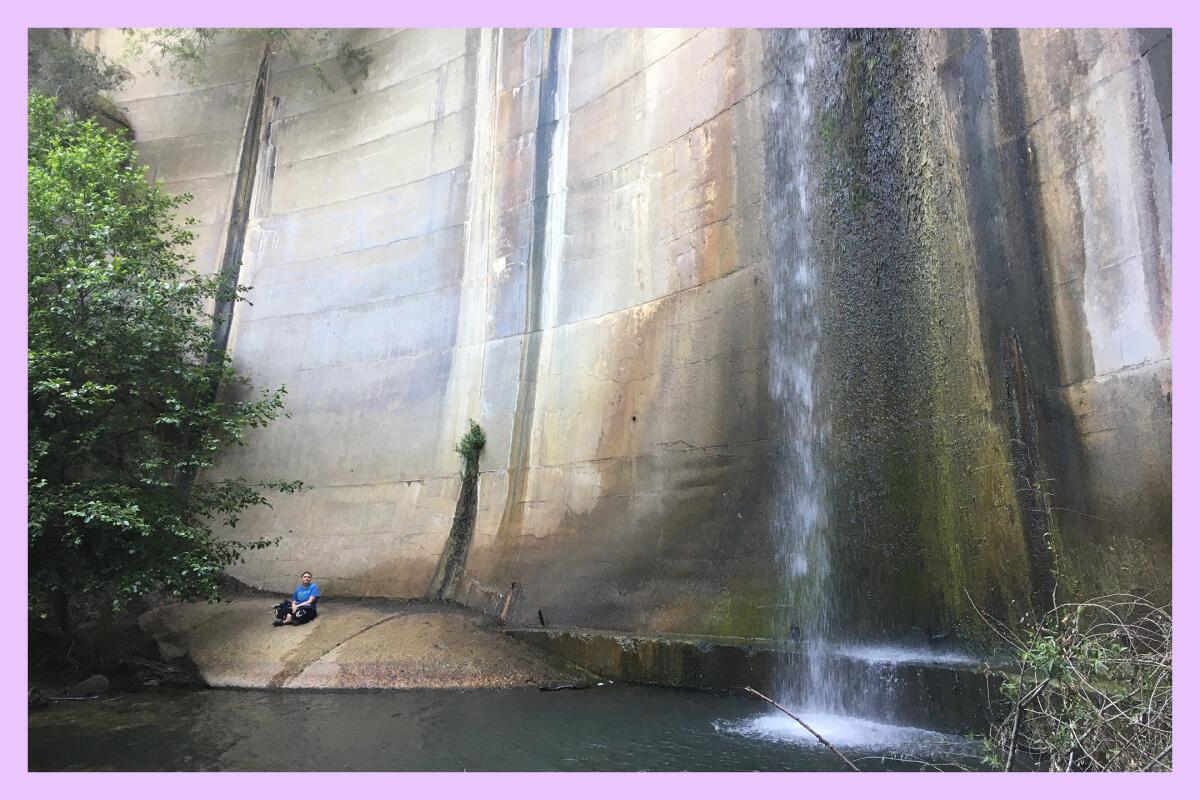
A hiker meditates near the Brown Mountain Dam just off the Gabrielino Trail in Angeles National Forest.
(Jaclyn Cosgrove / Los Angeles Times)
1. Gabrielino Trail near JPL to Brown Mountain Dam (or beyond)
Distance: 7.6 miles Elevation gained: About 650 feet Difficulty: On the easier end of moderate Dogs allowed? Yes Accessible alternative: Paved segment of Gabrielino Trail from Windsor Avenue
This 7.6-mile out-and-back trek takes hikers along the Arroyo Seco, under the canopy of massive coast live oaks and past aromatic native plants such as California bay laurel.
You will park in the large dirt parking lot and take the steep paved road a very short jaunt to join the trail. If hiking with a wheelchair or if you’re a hiker who prefers pavement, it’s better to park in the lot south of the dirt lot.
Once on the Gabrielino Trail, you can hike as far as you’d like. Short on time? Hike two miles to Gould Mesa campground, have a little snack (and maybe a swim) and head back.
To reach the dam, follow the trail in the northwesterly direction for about 3.4 miles from the starting point. You’ll come to an intersection where the Gabrielino Trail continues northwest, leading you away from the river. Instead, you’ll want to follow the footpath along the river to reach the man-made-but-still-lovely waterfall.
1a. Want a longer day?
If you want a longer day, you could continue on the Gabrielino Trail after your side quest to the Brown Mountain Dam waterfall and ask a friend to pick you up at this gate off Angeles Crest Highway at a specific time. This point-to-point journey will be about 7.6 miles. The extension is also much more challenging than the first 3.7 miles, as it gains about 1,500 feet over 3.9 miles. This trail through Dark Canyon can be overgrown, so please plan accordingly, including downloading a map and bringing a paper map with you. (See map)
Switzer Falls in Angeles National Forest.
(Raul Roa / Los Angeles Times)
1b. Big adventure day
For an even longer point-to-point journey, leave the Brown Mountain Dam waterfall and take the Gabrielino Trail all the way to Switzer Falls, asking a friend to pick you up at the Switzer Picnic Area at a specific time. This point-to-point route will be about 11 miles, and you will gain about 2,350 feet in elevation. This is the most rugged option, and this trail can be overgrown in places. Plan accordingly! (See map)
The Gabrielino Trail, a 28-mile trek through Angeles National Forest, passes through various plant communities and canyons, providing pockets of shade along the way.
(Jaclyn Cosgrove / Los Angeles Times)
2. Red Box to Valley Forge Trail Camp via Gabrielino Trail
Distance: 4.8 to 6.6 miles, depending on your route Elevation gained: About 1,200 feet Difficulty: Moderate Dogs allowed? Yes Accessible alternative:Mt. Wilson Observatory paved walking path
This 4.8- to 6.6-mile out-and-back trek will take you along a delightful path that always feels a little bit like a fairy wonderland to me. You’ll pass under shady oak canopies and past moss-covered rock walls. You end at the Valley Forge Trail Camp, which has lovely tall conifers and a vault toilet (that’s usually clean).
To begin, you’ll park in the Red Box Picnic Area parking lot, which can fill up on the weekends and does require you to display an Adventure Pass or other federal public lands pass. You’ll find the trail’s start down some rock steps in the southern area of the lot.
Valley Forge Trail Camp, left, and mossy rocks.
(Jaclyn Cosgrove / Los Angeles Times)
Just over two miles in, you’ll near the trail camp. Take good care to ensure you’re on the right trail. Instead of following the Gabrielino Trail, keep your eyes peeled for the trail that descends toward the riverbed. After a nice rest at the trail camp, you can take the trail or fire road back. (See map)
As of mid-June, the Red Box Picnic Area is experiencing active bear activity, so be mindful if returning to your car around dusk.
2a. For those feeling hardcore
From near Valley Forge Trail Camp, you could consider taking the very steep Valley Forge Trail, a 2.6-mile trek that gains about 1,550 feet, to the Eaton Saddle. From here, you could take the Mt. Lowe Motorway to the San Gabriel Peak Trail, head north briefly using the Mt. Disappointment Road to take the Bill Riley Trail down to Mt. Wilson Red Box Road. The downside is that you’ll have to then take the road about a third of a mile down to Red Box, and drivers zoom through here like they suddenly learned burgers at In-N-Out are free for only the next hour. That’s to say: Proceed with caution.
City lights glow after sunset in a view along the road to Mt. Disappointment in Angeles National Forest.
(Brian van der Brug / Los Angeles Times)
Additionally, parts of this trip extension might be overgrown. It is about 5.5 miles and gains 2,300 feet in elevation. It will be through a beautiful area of the forest though! (See map)
Regardless of which route you take, please make sure to check the weather, pack smart and be OK with turning around if the conditions on the trail aren’t passable. Additionally, please be mindful of trails that remain closed under the Eaton fire area closure order.
The stretch of the Gabrielino Trail between Red Box and Switzer picnic areas offers great views of nearby peaks in the San Gabriel Mountains.
(Jaclyn Cosgrove / Los Angeles Times)
3. Red Box Picnic Area to Switzer Picnic Area
Distance: About 8.6 miles Elevation gained: About 1,450 feet Difficulty: Moderate Dogs allowed? Yes Accessible alternative: West Fork National Scenic Bikeway
Earlier this week, I took this 8.6-mile moderate route, parking at the Red Box Picnic Area before heading down into the canyon on the segment of the Gabrielino Trail that runs parallel to Angeles Crest Highway. (See map)
This trail is both beautiful — lush with native plants and the last blooms of wildflower season with great views of nearby peaks — and exposed. There will be shady patches as you hike under healthy oak and maple tree canopy, but wear ample sun protection.
One of many deep pools along the rivers that run next to the Gabrielino Trail.
(Jaclyn Cosgrove / Los Angeles Times)
Although the trail runs parallel to the Arroyo Seco for a stretch, you cannot easily access the river because of a steep drop-off from the trail to the river. I didn’t cross the river until 3 miles in, and by then, I was feeling hot and ready for a quick dip.
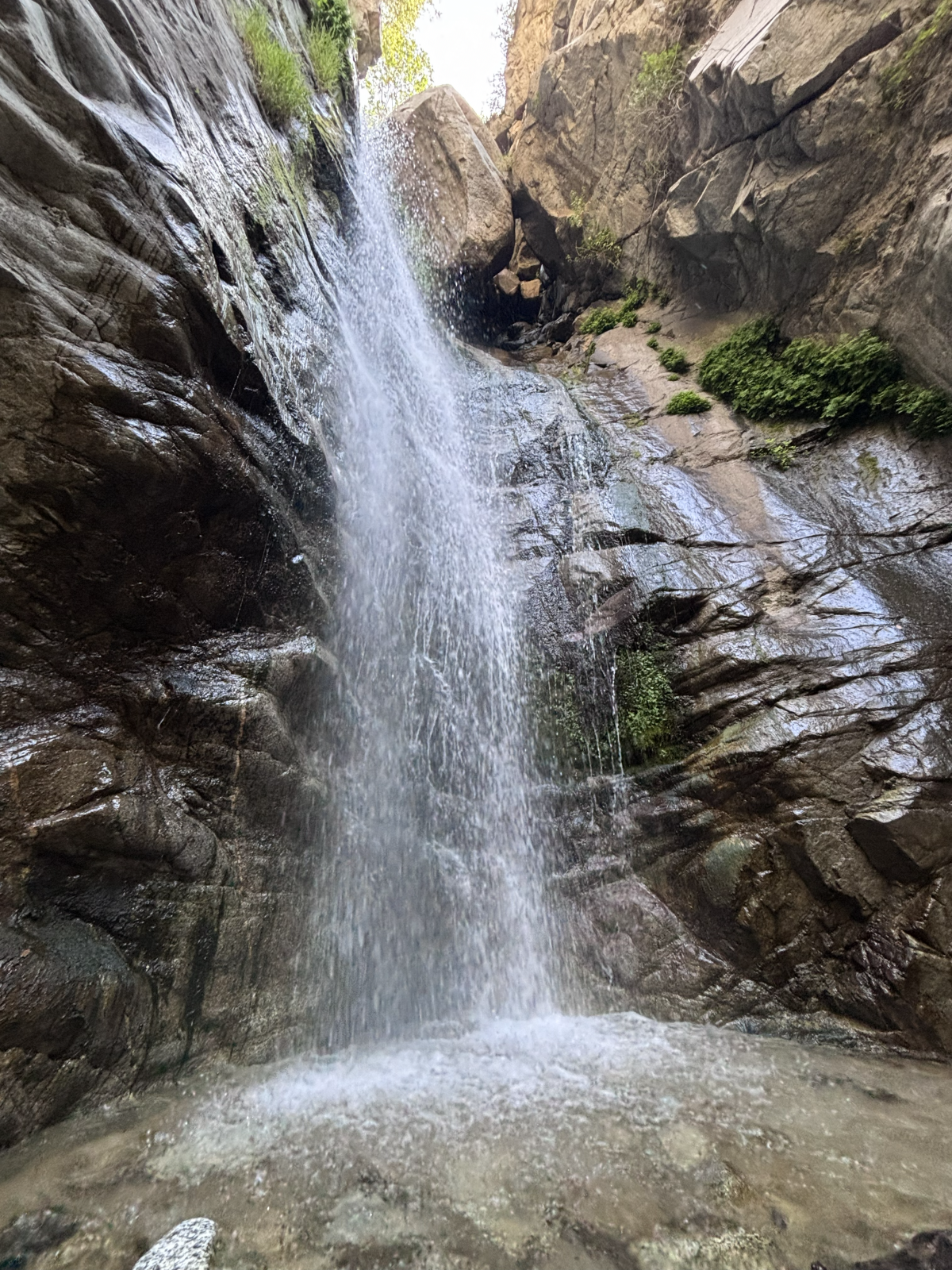
That said, when I arrived at the Switzer Picnic Area, I felt like I’d won the lottery. I had skipped the nightmare that it has become to park here, but I still got to swim around in one of the river’s deep pools. It was 1.8 miles farther to Switzer Falls, one of the best cascades in Angeles National Forest.
Great views from the Gabrielino Trail.
(Jaclyn Cosgrove / Los Angeles Times)
***
If you have any questions or feedback about the suggested routes, you can simply reply to this email if you’re a Wild subscriber. It will go directly to me. I love hearing from you. Have fun out there and happy summer!
3 things to do
Volunteers work at a Channel Islands Restoration event.
(Channel Islands Restoration)
1. Serve the river in Santa Paula Channel Islands Restoration, a Santa Barbara-based habitat restoration nonprofit, needs volunteers from 9 a.m. to noon Sunday at Santa Clara River Preserve (1368 Mission Rock Road in Santa Paula). The preserve spans almost two miles and is about 1,000 acres. All ages and skill sets welcome. The site is ADA-friendly, and restrooms are on-site. Register at cirweb.networkforgood.com.
2. Eradicate invasive plants in Irwindale The California Native Plant Society San Gabriel Mountains Chapter needs volunteers from 8 to 10:30 a.m. Saturday to yank weeds from the Santa Fe Dam natural area. Volunteers will also learn from plant society members about the local flora and fauna. Learn more at chapters.cnps.org.
3. Investigate the invertebrates in Rowland Heights The Invertebrate Club of Southern California will host a 1.5- to 3-mile hike from 6:30 p.m. to 9 p.m. June 26 through Big Dalton Canyon. Participants will learn about scorpions, beetles and other interesting creatures. Learn more at the group’s Instagram page.
The must-read
The Malibu coastline just south of Point Dume.
(Jackie Snow)
Freelance writer Jackie Snow was feeling inspired to get outdoors. After reading my 2024 piece about walking the entire 27.4 miles of Washington Boulevard, she came up with an idea: Walking the entire L.A. County shoreline. Snow took 10 trips from November through mid-January to accomplish her goal, walking 70(ish) miles in total. She maps out in her piece how you can do that too! “I have seen whale-watch perches, burned-out Malibu lots, crowded boardwalks and magnificent waves. The coastline is both fragile and welcoming — and walkable — if you’re willing to chase the tides,” Snow wrote in her article for The Times.
Happy adventuring,
P.S.
It’s ladybug season in Los Padres National Forest. Volunteers with the Los Padres Forest Assn. recently discovered thousands of the insects while they were working on the Piedra Blanca Trail. “If you know where to look, you can find them hibernating on rocks, leaf litter, and trees in masses called ‘lovelinesses,’” the association wrote on Instagram. “But, have you ever seen the next generation hatch and fly away in the springtime?” No, but I hope to someday.
For more insider tips on Southern California’s beaches, trails and parks, check out past editions of The Wild. And to view this newsletter in your browser, click here.
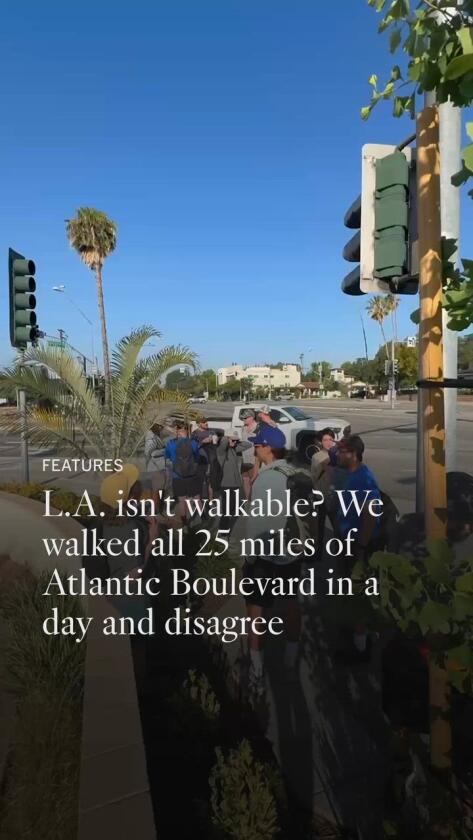
We took Atlantic all the way to the Pacific, traveling from the San Gabriel Valley to Long Beach on foot. On the last morning of May, a group of us set out at 7:45 a.m. from a barren In-N-Out parking lot in Alhambra, where Atlantic Boulevard begins. We kept walking until we reached the water, 12 hours and more than 55,000 steps later.
In all, our group passed eight freeways, two highways, and one river, twice. We walked through a dozen cities: Alhambra, Monterey Park, Commerce, Vernon, Maywood, Bell, Cudahy, South Gate, Lynwood, Compton, Long Beach and, of course, Los Angeles.
We spent only about 1.5 miles, a half-hour, in the city of Los Angeles itself, all in East L.A. We spent more time in Lynwood than Los Angeles. We spent far more time — more than a third of our day — in Long Beach.
Share via
To walk Atlantic was to connect the dots about how our region functions economically, from the port to the factories to the suburbs. It was also to realize just how expansive and multifaceted Long Beach is.
This is the sixth such walk of one lengthy street that, ending at the ocean, we’ve completed across Los Angeles. Our pursuit began in 2022 with Wilshire’s 16 miles, continued in 2023 withSunset’s 25, maxed out in 2024 withWestern’s 28-plus miles, and stepped back in 2025 withPico’s 15.5 miles. Earlier this year, roughly 30 of us strolled all of Santa Monica’s14.5 miles.
This time, we started with a group of 16, ranging in age from 20-something to sexagenarian, and finished with 12. Some walkers left and joined us along the way. Ten, including one Long Beach local, completed the street.
1
2
3
4
1.Pedro Moura, center, gives a pep talk before leading a group on a 25-mile walk the length of Atlantic Boulevard.(Scott Strazzante/For The Times)2.In so-L.A. fashion, a Tesla Cybertruck rolls past a pile of possessions flooding the sidewalk in front of an apartment building.3.Josiah Fields, 15, earns money by cleaning car windshields at the intersection of Atlantic and Alondra Boulevards.4.During the final mile of the their 25 mile walk, Chloe Stepney and Trevor O’Brien lead the way past Louis Burgers III on Atlantic Avenue.(Scott Strazzante/For The Times)
We’ve been playfully calling our annual jaunts the Big Walk. This one, we called the Bigger Walk. I suppose that makes Western the Biggest. We’ve come to believe the ideal distance for an all-day effort is about 20 miles. That seems long enough for it to feel like a real feat and short enough to include more interested folks and ample break time.
After a tranquil time on Santa Monica, I wrote that we expected Atlantic to be the opposite experience — “unwieldy, at times unwelcoming, and excessively industrial.” That was an overstatement at best and factually wrong at worst.
We did visit Vernon, the city that proudly promotes itself as “exclusively industrial.” But by one measure, Atlantic was literally the most welcoming street we’ve done yet. Many more people greeted us. The actual street was at least as pedestrian-friendly as Western or Sunset. At no point did we have to walk on the road or in a minuscule median.
We did, though, have to cross five crosswalks just to continue on Atlantic at one point, at an absurd intersection with Ferguson Drive, Goodrich Boulevard, Telegraph Road and Triggs Street. Railroad tracks and the famed old East L.A. Union Pacific Station stood to our left, and the 5 freeway to our right. Clearly, pedestrian convenience had not been front of mind during the area’s planning.
Oil might be the simplest way to illustrate how Atlantic differs from more famous L.A. streets. On Pico Boulevard, there are oil derricks hidden behind elaborate, towering facades. Along Atlantic, the derricks are just everywhere in plain sight for a while. We did walk atop both the Long Beach Oil Field, a mega giant field, and the Wilmington Oil Field,the third-largest oil field in the contiguous United States.
That’s Atlantic, lacking in pretense, not hiding anything, but exceeding our expectations. We saw more plants native to our region, including Cleveland sage and Sacred datura, than along Santa Monica. And we kept encountering vibrant pockets where we did not know they would be. Monterey Park was the first to impress us, with gorgeous Cascades Park tucked into a lush little valley.
A rose peeks through a fence at St. Rose of Lima Church on Atlantic Boulevard.
Lykayla Melendez poses in her quinceañera dress at Cascades Park along Atlantic Boulevard.
In East L.A., chilaquiles, tamales, tejuino and ribs were all available street-side, and one of our members noticed the newer location of the famed La Azteca Tortilleria in a strip mall near the Metro station. Azteca has been the No. 1 seed in Times columnist Gustavo Arellano’s tortilla tasting tournaments with KCRW; we picked up a couple dozen to go.
Farther south, Bell is best known locally as thehome of brazenly corrupt city officials earlier this century. When we passed through, the shade provided by a pocket park in the city center became a crucial respite for our lunch break. Across the street, a community market was just starting up for the afternoon. We caught a couple songs from a talented mariachi band.
Once we crossed the 105 overpass, we quickly encountered four sizable parks, each no more than two miles from the last. We saw one pump track, two tennis courts and skate parks, several sports fields, and an impressive number of food trucks, including Instagram-famous Kitchen’s Corner BBQ. At least another dozen food vendors seemed to be setting up for evening service as we marched by in the late afternoon.
By the third park we passed, we were in Long Beach, specifically North Long Beach. The fourth, Scherer Park, is a sprawling, 26-acre gem. Soon enough we were in Bixby Knolls, where, for more than a decade now, Long Beach officials have beeninvesting in improving bicycle and pedestrian access. It shows. We had a delightful happy hour on Ambitious Ales’ front patio overlooking Atlantic.
August Fagerstrom and Pedro Moura fist bump a well-wisher on Atlantic Avenue.
Official lists of the longest L.A.-area streets are almost impossible to find. Often, such lists are kept by cities. The longer the street, the less likely that all of it is within one city’s limits.
We can say this: There are not many stretches of a single street with the same name longer than Atlantic in the L.A. Basin. Western Avenue, definitely. Imperial Highway, depending on your perspective on what constitutes a street. Sunset is about the same length. And that’s about it.
Unless you want to be particularly persnickety and disqualify Atlantic on the grounds that it technically has two names. For its northern 10 miles, Atlantic is a boulevard. For its southern 15, it’s an avenue. Where Maywood becomes Bell, it switches. But it’s Atlantic all the same, and that was good enough for us.
At the end of their 25-mile walk, Chris Kirkham celebrates with fellow walkers at Atlantic Avenue and Ocean Boulevard.
Speaking of names: Our Alhambra is named after a Washington Irving book inspired by his visit to the 13th-century Islamic fortress of the same name in what is now Spain. You can walk to the actual Atlantic from that Alhambra in about 150 miles.
This was easier than that, at least. If you’re eager to explore the backbone of Los Angeles, curious for a challenge, you could do worse than attacking Atlantic. I promise you’ll see something new. We saw a street juggler. We saw a live chicken and a dead turkey. We saw a discarded box of Pacifico beer that had been cooking in the sun so long it turned from yellow to white.
Pedro Moura points out Chloe Stepney’s sock tan line as they celebrate the end of their 25-mile walk down Atlantic with a dip in the Pacific Ocean at Alamitos Beach.
After we rinsed our weary feet in the Pacific, some of us waddled back up to Downtown Long Beach and scarfed down Sonoratown burritos and chivichangas before heading home. It was a Sunday well spent.
I wanted to know more the moment I read “Sister Elsie Peak” on an old map.
I discovered the name while researching trails around Mt. Lukens, the highest peak in Los Angeles proper. Looking at the peak’s location on a historical map of L.A. County’s mountains, I noticed that it was previously named for a woman I’d never heard of.
Few of Southern California’s mountain peaks are named after women, so Sister Elsie Peak stuck with me. Who was she? And why was her mountain renamed to instead honor local leader Theodore Lukens?
In this edition of The Wild, our weekly outdoors newsletter, I will take you with me on my arduous journey to find the origins of the first known name for Mt. Lukens. Over the past week, I enlisted help from multiple librarians, map experts and one gracious historian (who you’ll meet later). We all scoured newspaper archives and history books, catching the fever of curiosity that seems to consume anyone who tries to find out who Sister Elsie was.
You are reading The Wild newsletter
Sign up to get expert tips on the best of Southern California’s beaches, trails, parks, deserts, forests and mountains in your inbox every Thursday
By continuing, you agree to our Terms of Service, which include arbitration and a class action waiver. You agree that we and our third-party vendors may collect and use your information, including through cookies, pixels and similar technologies, for the purposes set forth in our Privacy Policy such as personalizing your experience and ads.
What we collectively found was this: Sister Elsie was most likely not a real person, and her legend was most widely shared in the early 20th century by a local landowner who was known to embellish, including claiming that Josephine Peak near Mt. Lukens was named after his daughter. (It wasn’t.)
There appears to be no record anywhere — in newspapers, in history books, in Catholic Church records — as to the existence of a Sister Elsie or, as you’ll learn more about below, an alleged orphanage, ranch or school that she ran in the Tujunga area for Indigenous children or the broader Indigenous community.
In that same vein, I want to call something out before we begin: Stories about the relationships between colonizers and Indigenous peoples often get romanticized (see: Thanksgiving), with storytellers and early historians intentionally leaving out any details of forced assimilation or the American genocide. I cannot report anything concrete about how Sister Elsie actually treated Indigenous people in large part because I don’t believe she was real.
The sunset as viewed from a trail near Mt. Lukens in the San Gabriel Mountains.
(Jaclyn Cosgrove / Los Angeles Times)
OK, I’ve held you in suspense long enough. Let’s jump into everything under the actual sun that I could find about Sister Elsie Peak.
To begin my reporting, I contacted Times editorial library director Cary Schneider, who is always eager to help me with prospective stories (i.e. highly specific internet rabbit holes I’ve fallen down).
Cary found what might be the earliest mention in a local newspaper: A story in the Monrovia Daily News on April 23, 1910, in which a writer mentions a new trail leading to Sister Elsie Peak, but tragically gives no details of its namesake.
Next, we jump 20 years into the future when The Times and the Pasadena Star-News covered the dedication of Sister Elsie’s Well in Tujunga. Both publications described the well in their stories on April 28, 1930, as named after “the Catholic nun” who ran a school for Indigenous children “in the days of the Spanish missions.” The Times called her a “pioneer nun and teacher.”
Multiple radio towers and other infrastructure sit at the top of Mt. Lukens, as seen on a 2022 hike there.
(Jaclyn Cosgrove / Los Angeles Times)
The dedication occurred on the land of Philip Begue, a crucial character to understand in the Sister Elsie legend, as he’s believed to have either spread or made up the story, according to a local historian. Begue’s family bought land around Tujunga and La Crescenta in 1882, and later, Begue was an early pioneer and one of the first forest rangers in what would later become Angeles National Forest.
Throughout the late 1920s and 1930s, Begue seemed set on sharing the story of Sister Elsie. In 1934, he told the Pasadena Star-News that the sister “ministered to the sick and needy” Indigenous people.
A Times story on Sept. 29, 1935, announced a barbecue fundraiser for a local Catholic institution at the “old Basque rancho” owned by Begue. “The ranch on Honolulu avenue was famous in early days when Los Angeles was a pueblo and Sister Elsie had a children’s home where the ranch now stands.” The Begue family planned to cook “hundreds of pounds of meat for the affair.”
Times columnist Harry Carr offered in his column, the Lancer, a completely different take. Carr wrote on April 3, 1935, that Sister Elsie Peak was named “for a nun who lost her life trying to walk from San Fernando to San Gabriel.” No, he doesn’t provide a source for where he learned that information. Trust me: I too shook my fist at the sky.
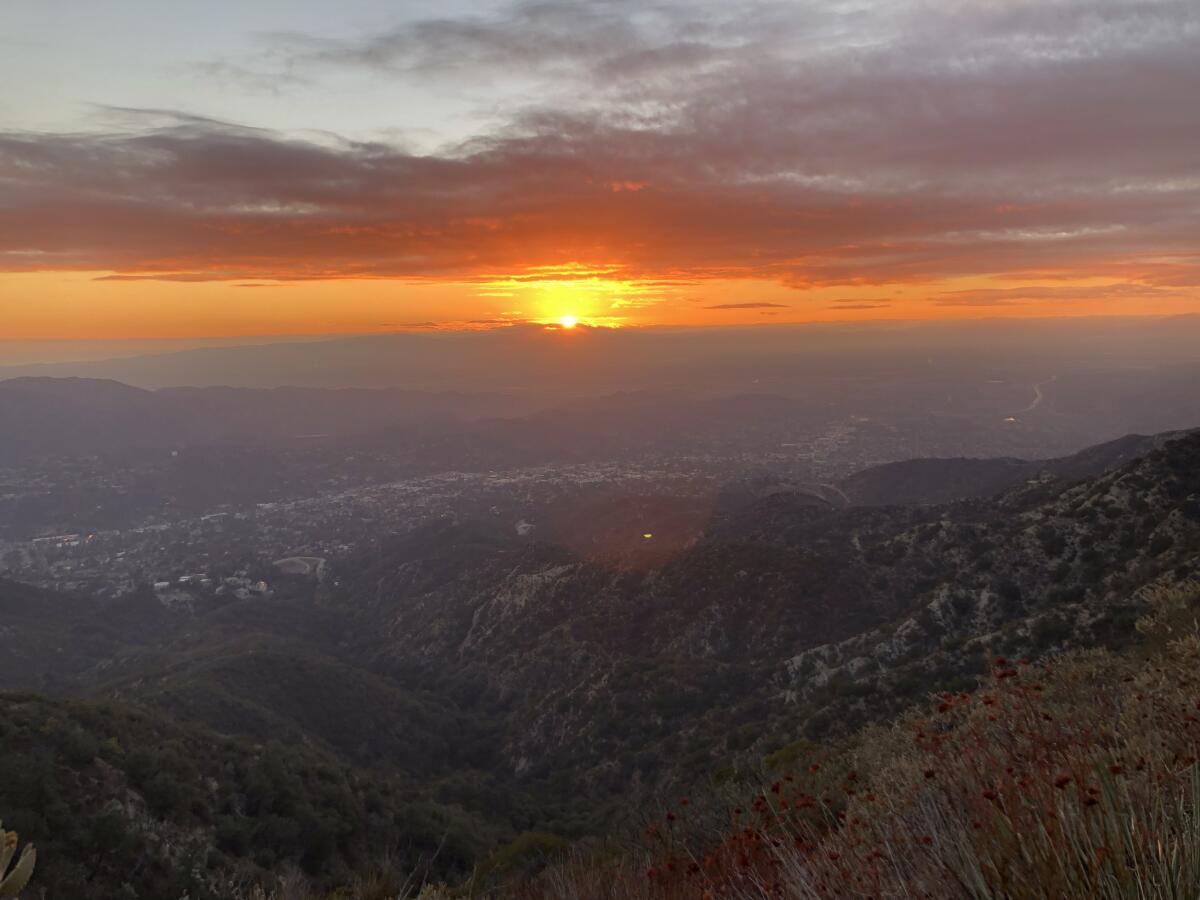
The last rays of sun blanket across Mt. Lukens, as seen from Dunsmore Canyon in Deukmejian Wilderness Park near Glendale.
(Jaclyn Cosgrove / Los Angeles Times)
I would be remiss to mention that the oldest reference to a “Sister Elsie” in The Times’ archives appears to be an 1889 story about — buckle up — a psychic medium in Azusa. For a brief and beautiful moment, Cary and I hoped Sister Elsie Peak would turn out to be named after Elsie Wheeler, a spiritualist medium whose own story relates to an astrological tool. Alas, the peak was named before she was born (which doesn’t work unless she was a really good psychic). That said, a peak named after a mythical nun and a clairvoyant feels arguably appropriate for the highest point in L.A.
Cary also discovered one of my favorite facts about the Sister Elsie legend — that it was turned into a play titled “Sister Elsie in Tujunga.” It was written by Frances Muir Pomeroy, superintendent of summer school at Our Lady of Lourdes Catholic Church. It was said to be about “the experiences of Sister Elsie when she conducted an orphanage here many years ago,” according to a 1938 Times story.
There are other references to Sister Elsie in The Times’ archives over the next several decades, but nothing that gives concrete evidence that she actually existed.
Cary advised me to contact the Los Angeles Public Library. Librarian Kelly C. Wallace, who specializes in California history, quickly got back to me.
Knowing that Cary had already scoured The Times’ archives, Wallace sifted through the agency’s Los Angeles Area Historical Newspapers database, which contains the Los Angeles Daily Star (1870-1879), the Los Angeles Evening Post-Record (1896-1936) and the Los Angeles Star (1851-1871), along with community newspapers such as the Eagle Rock Sentinel and the Highland Park Herald. She found little there.
The trail through Stone Canyon to reach Mt. Lukens.
(Mary Forgione / Los Angeles Times)
This is especially puzzling if Sister Elsie did exist because, before the advent of television, newspapers reported seemingly everything that we now post on social media — detailed trip reports, the attendees of parties, birth announcements, and even basic road repairs.
Wallace did discover a few interesting tidbits in books, but curiously nothing before 1930.
The earliest reference that Wallace found was in the 1938 book “History of La Crescenta-La Canada Valleys” by Grace J. Oberbeck. She spoke to Begue, who spun quite the yarn:
“On El Rancho de las Hermanas, the ranch of the sisters, a group of nuns who had an orphanage not far distant, kept a herd of cows which was looked after by” local Indigenous people “who supplied milk to the school whenever needed. Sister Elsie was the much loved nun in charge of” the Indigenous dairy workers, “and her name was given to the well. Almost directly north from here towers a high peak of the Sierra Madre range and this bears the name of Sister Elsie Peak.”
Legendary outdoors writer and historian John W. Robinson, Wallace found, told the Sister Elsie story in his 1977 book “The San Gabriels,” but followed it up with a correction in his 1983 tome, “The San Gabriels II”: “The derivation of Mt. Lukens’ original name, Sister Elsie Peak, is clouded in uncertainty. Exhaustive research into Catholic Church records fails to find any evidence of a nun named Sister Elsie nor an orphanage named El Rancho de Dos Hermanas.”
You’re telling me, John!
Wallace also found an entirely different story about Sister Elsie on page 47 of “The San Fernando Valley” by Jackson Mayers, published in 1976.
“Sister Elsie, a Sister of Charity, came to Tujunga from Los Angeles between 1850 and 1875 to work with” Indigenous people “at a school and orphanage. Near Haines Canyon was Sister Elsie’s well; Sister Elsie’s Peak was named, it is said, because when troubled she would gain strength by raising her eyes to that eminence, one whose top she was to be buried. Others held that two nuns on their way from Mission San Fernando to Mission San Gabriel lost their way in Tujunga and died atop the peak.”
There is tragically no footnote on the page, so I have no idea who Mayers’ source was.
I hoped that finding out when Sister Elsie Peak was named would help, but that also proved to be a dead end.
Local historian Mike Lawler, former president of the Historical Society of the Crescenta Valley, told Realtor Sharon Hales in a 2016 interview that cartographer George M. Wheeler and his team named the mountaintop Sister Elsie Peak during their survey of California in the late 1800s.
“We don’t know why he named it Sister Elsie Peak,” Lawler said. “The reasons why he named everything are lost to history. They were destroyed in the 1906 San Francisco earthquake.”
This led me to contact the staff at the David Rumsey Map Center at Stanford University Library, as its collections are vast, and I hoped maybe they’d somehow find half a charred page of notes with Sister Elsie’s biography scrawled in quill pen.
Instead, Kristina Larsen, the center’s associate curator, came up short, finding only that a misspelling, “Sister Else Pk” was on the 1881 land classification map from Wheeler.
Evan Thornberry, the center’s head and curator, unearthed “Vignettes of California Catholicism,” a 1988 book by Monsignor Francis J. Weber, longtime archivist for the Archdiocese of Los Angeles at the San Fernando Mission.
Weber conducted an exhaustive search for the existence of Sister Elsie and found no proof of any existence of Sister Elsie or a Catholic orphanage in the Tujunga area at the time.
Weber offered my favorite suggestion for why no one can find any hint of Sister Elsie’s existence: “Maybe the good Sister was kidnapped by Martians!”
If so, I hope someone there takes better care to protect knowledge regarding the names of that planet’s mountains.
You’d think I’d give up here, right?
Instead, I contacted historian Kristine Gunnell, who wrote “Daughters of Charity: Women, Religious Mission and Hospital Care in Los Angeles, 1856-1927” (Vincentian Studies Institute).
I hoped Gunnell would have an answer, as Sister Elsie was said to be in the Sisters of Charity, an American version of the Daughters of Charity, a group that was founded in France in the 1600s with an aim of serving low-income and sick people.
The Daughters group eventually inspired American Catholic women to serve in a similar way, first forming the Sisters of Charity until the groups essentially merged. In the 1850s, as more people moved to the American West, a bishop in the L.A. area requested that Daughters of Charity come to L.A., Gunnell said.
But, there’s no Sister Elsie referenced in Gunnell’s book.
Gunnell said after hearing from me, she contacted a history professor from DePaul University who is compiling a database about all the Daughters of Charity who served in California. He found no one referred to as “Sister Elsie” between 1850 and 1900.
A 1931 news story references that Sister Elsie treated Indigenous children diagnosed with typhoid fever.
Tujunga “was only a day’s wagon ride from Los Angeles, and if these Tongva were Catholic or had Catholic connections, the sisters may have considered their request,” Gunnell wrote to me. “I was hoping that I’d be able to find a record of the typhoid outbreak in Tujunga in the 1860s or 1870s and cross reference it with the Daughters’ records. It’s a good story, and the sisters likely would’ve reported it if it’s true. However, I can’t isolate a specific outbreak.”
Later, Gunnell and I hopped on a Zoom call to commiserate.
With all of our research before us, we reached the same conclusion: A Catholic sister could have feasibly traveled to Tujunga at the request of a bishop to help Indigenous people, but currently there is no record of a woman known as Sister Elsie who did so. There’s no record of much of anything told in the Sister Elsie story. It seems, instead, to have been an urban legend of its time.
At least for now.
Hikers in Elysian Park.
(Dania Maxwell / Los Angeles Times)
3 things to do
1. Reach for the rainbow in L.A. One Down Dog, an L.A. yoga and fitness studio, will host a Pride hike from 10:30 a.m. to noon Saturday in Elysian Park. Guests will hike a loop trail through the park. For more details, register at eventbrite.com.
2. Marvel at mollusks in Malibu The Wishtoyo Chumash Foundation will host a tidepooling event from 8 a.m. to 1 p.m. June 19 near the Wishtoyo Chumash Village (33904 Pacific Coast Highway) in Malibu. Guests will learn about Wishtoyo Village, which is typically not open to the public. All experience levels welcome. Learn more at the foundation’s Instagram page.
3. Learn along the L.A. River in Downey The California Native Plant Society and Friends of the L.A. River will host a guided bike ride along the L.A. River. Naturalist Cris Sarabia will teach participants about local ecology during the ride. Binoculars will be provided. Guests should bring safety gear and water. Learn more at the group’s Instagram page. Register at folar.org.
The must-read
Burn damage to the Torrey pine grove at Santa Rosa Island.
(Kayla Bartkowski / Los Angeles Times)
The length of time that it will take for Santa Rosa Island to recover after a blaze scorched about one-third of the island remains unclear, Times staff writer Grace Toohey wrote after a recent visit to the island. The fire, which grew to 18,379 acres, is now fully contained. Firefighters faced vicious winds and, at times, 30-foot flames. “They held the line, and we have them to thank for saving housing, saving the island, saving the history of the Santa Rosa Island,” said Ethan McKinley, superintendent of Channel Islands National Park. The island has long been a respite for hikers and backpackers, including Times staff writer Lila Seidman, who shared her experiences on the island and her grief that came in the wake of the blaze. “Now fear clouds the memories: Does the rugged, magical place of my mind’s eye still exist?” Seidman wrote.
Happy adventuring,
P.S.
I have a flurry of good California animal news to share. First, three mule deer were the first animals to walk over California’s first wildlife crossing over State Route 97 in Siskiyou County. Second, scientists have feared that the population of endangered steelhead trout in the Santa Monica Mountains were killed in massive debris flows after the Palisades fire. However, researchers recently spotted the fish — and their babies — in Topanga Creek. And finally, the California Department of Fish and Wildlife shared earlier this week that five orphaned black bear cubs that were rehabilitated and released into northern California in November successfully hibernated through the winter and returned to the landscape this spring healthy and active, according to recent data reviewed by the agency’s scientists.
For more insider tips on Southern California’s beaches, trails and parks, check out past editions of The Wild. And to view this newsletter in your browser, click here.
WARNER, N.H. — For Rahm Emanuel, the road to the White House runs through the uphill climbs of rural New Hampshire.
The onetime Democratic congressman, White House chief of staff, Chicago mayor and U.S. ambassador to Japan hasn’t formally announced his ambition to return to power in Washington. But his weekend trip through the state that typically holds the first presidential primary was hardly subtle.
There were the union hall visits and intimate house parties, staples of New Hampshire political rituals. At one event in the backyard of a handsome home in Concord, Emanuel greeted voters and practiced a stump speech that highlighted strains on the middle class and the excesses of the tax system.
And then there was the bike tour.
Over the course of three days, Emanuel pedaled more than 117 miles across New Hampshire from Portsmouth on the coast to Hanover on the Vermont border in what he dubbed the “Spin-Free Tour,” a nod to his blunt demeanor that he sees as an asset for a Democratic Party trying to move beyond its devastating losses in 2024.
“Tough times require a tough leader,” Emanuel told the Associated Press during a break at a coffee shop in Warner. “I don’t think this is just about learning the words to ‘Kumbaya.’”
For someone who has spent the better part of three decades in the highest orbits of political power, the 66-year-old Emanuel is in the unusual position of lacking a natural platform. His likely rivals in a Democratic presidential contest are mostly younger and, as governors, senators or a recently departed vice president, can more easily attract attention.
And despite his thick resume, Emanuel isn’t especially well known outside political circles, as demonstrated by a woman who asked who he was after he left the coffee shop. When informed that it was Emanuel and that he was considering a campaign, she responded, “A campaign for what?”
How Emanuel taps into tenacity to overcome hurdles
Emanuel is tapping into his hard-wired tenacity in hopes of overcoming such challenges.
As many prominent Democrats focus on castigating President Trump, Emanuel has released a flurry of policy proposals addressing everything from social media bans for children to prediction markets and a mandatory retirement age of 75 for those in public office. That would prevent him from seeking a second term if he were elected.
Emanuel is often on the road, talking education in Mississippi and Michigan. He’ll travel to Israel next month to address the U.S.-Israeli relationship as the war in Gaza has spurred new divisions in both political parties, especially among younger voters.
He is a regular guest on podcasts ranging from those hosted by Katie Couric and Kara Swisher to shows focused on fly fishing. He often uses the appearances to knock his own party for overreaching in cultural debates, particularly those involving the rights of transgender people. It’s a message of centrism that has echoes of that of the first president he served, Bill Clinton.
“We did things that were really ridiculous,” he said of Democrats on an episode of Couric’s podcast that posted last week. “Rather than worry about classroom excellence, we were worried about bathroom and locker room access.”
And he hops on the bike.
The tour gives him a chance to both demonstrate his physical fitness at a time of heightened awareness of the nation’s aging political leaders and to introduce himself to the state’s notoriously picky voters before the rest of the field swoops in after the November midterms.
“It is early,” said Rep. Maggie Goodlander, D-N.H., who appeared alongside Emanuel at the Concord house party. “But what I’d say is the people in New Hampshire know how to vet candidates and they’re the most engaged electorate in the country.”
Martha Kruse, a 76-year-old retired special education teacher from Laconia, New Hampshire, is just that type of voter. Active in her local Democratic Party, she traveled to the Concord event to see Emanuel after hearing him in interviews.
“I’m going away really enthused about him,” she said, adding that he was “right on” to prepare a campaign so early.
Riding through the hills of rural New Hampshire
The future of the presidency seemed a world away during a hilly 20-mile stretch of the ride on Saturday, which included an elevation gain of more than 1,300 feet. Along with a cadre of friends and aides, Emanuel cycled past homes where residents were tending to their yards or celebrating a recent graduation on their front patio. He was chatty at times as he rode with the pack and cycled alone at other points, showing little strain in navigating the steep hills.
With summer finally creeping into New England, the humidity was high and the rain was occasionally intense. The group stopped for water and snacks every 10 to 15 miles, huddling under a barn during one rainy stretch. A small group of local activists met up with Emanuel at the coffee shop in Warner, where he held court from a rocking chair.
But the realities of modern politics occasionally asserted themselves. The group cycled past signs praising Trump and denigrating his predecessor, Joe Biden. As the miles dragged on, a chase vehicle crept by periodically with cameras poking out the window to capture scenes that could later be shared on social media, where Emanuel now has an almost daily presence.
And the whir of the midterms wasn’t far away. In neighboring Maine, Graham Platner was contending with a drumbeat of reports about his history with women that has left some Democrats worried that the party’s path to a Senate majority is suddenly imperiled. Emanuel, who helped power Democrats to their sweeping 2006 victories in the U.S. House, said the “jury is still out” on whether Platner can win the Senate race.
“Everybody is holding their breath whether this is the start of something or the end of something,” he said.
Emanuel hopes voices of moderation are prevailing
But as the broader debate over the Democratic Party’s ideological future unfolds, Emanuel said he thought voices of moderation were prevailing. He noted recent wins by Rebecca Bennett, who emerged from a crowded Democratic primary in New Jersey with the nomination for a competitive House seat, along with Josh Turek, the new Democratic Senate nominee in Iowa.
“There’s a bigger character piece to this than ideological,” Emanuel said. “There’s radical moderates and their profile and character speak to kind of fighting a system, which is what’s needed right now.”
The bike tour was certainly not John McCain’s “Straight Talk Express,” the 2000 campaign bus from which the Arizona Republican senator opined on any question that came his way to seize attention and mount a surprise New Hampshire win over front-runner George W. Bush. But some voters said they were open to Emanuel.
Don Daley, a 60-year-old state employee from Concord, watched Emanuel talk from a bench in the backyard of the house party. He said that Emanuel probably “steps on a few toes.”
“But I think that’s what we need right now,” he said. “Some of our Democratic leaders haven’t been strong enough.”
You can’t own the beach in California. Our shoreline is public — thanks to the Coastal Act and the Coastal Commission — even when everything around it gets expensive and complicated. You can live next to it, monetize it and build a personality around proximity to it, but the wet sand itself belongs to everyone.
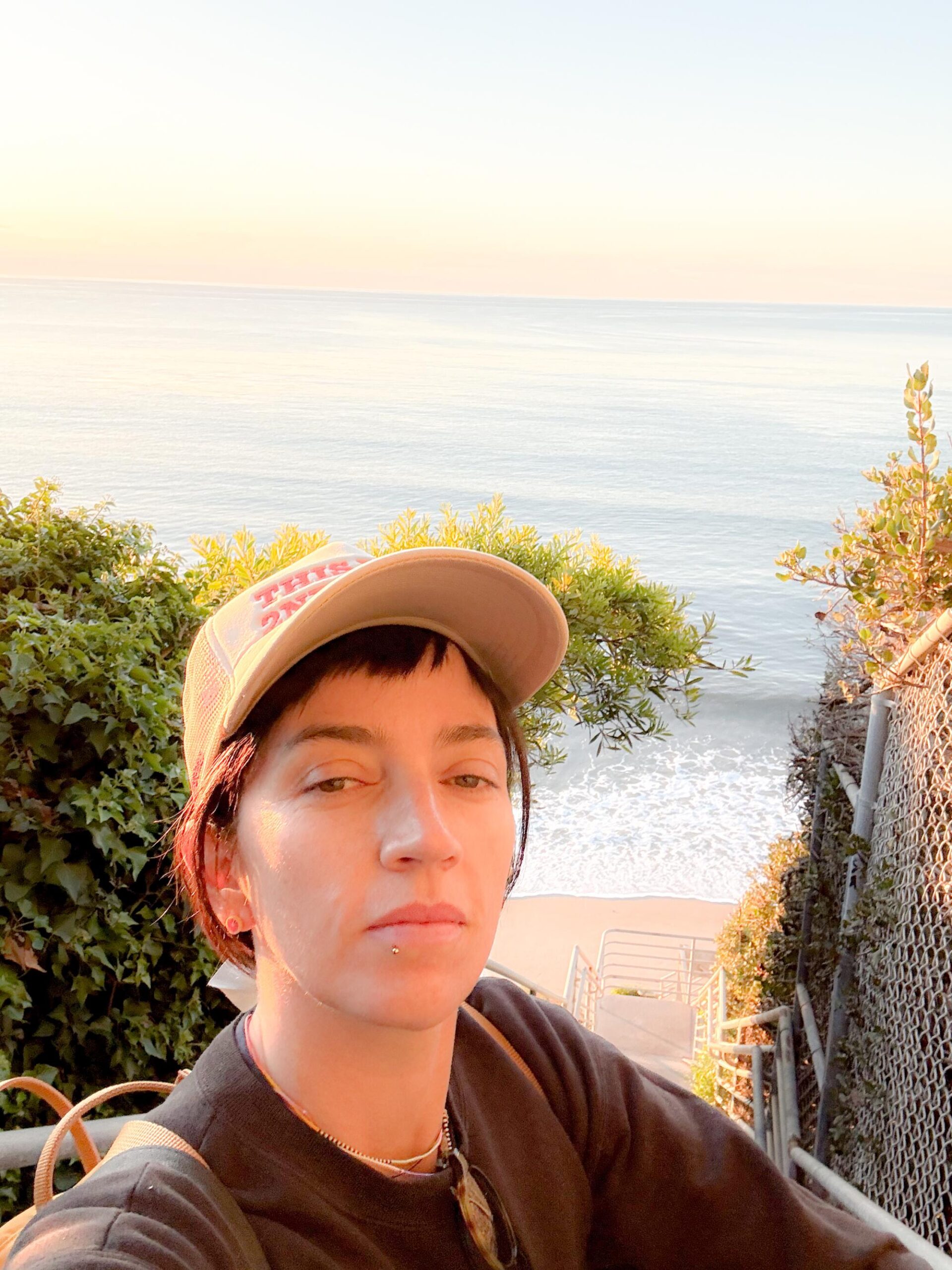
Jackie Snow takes a selfie by the new public stairs at Escondido Beach, also known as Hidden Beach.
(Jackie Snow)
In 2024, my colleague Jaclyn Cosgrove walked 27.4 miles of Washington Boulevard in a single day, from Whittier to the ocean. I read it in awe of the shape of it. One street. One day. A city revealed in a straight line.
And then a thought occurred to me, I could do something like that. What if I walked the entire L.A. shoreline? What would happen if I went to the beach and just kept walking along the crest of its waves? Except the shore does not reward this approach. It closes. It opens. Erosion pushes you onto the road and lets you back when it feels like it.
I set out to walk the 75 miles along the Los Angeles coastline anyway. I started at the mouth of the San Gabriel River and worked north toward the Ventura County line, taking 10 trips from the end of November to the second week of January, mostly waiting on tides and weather to cooperate.
Being a surfer helped. I already knew that wet sand means public access in California, that satellite view tells you things the default map doesn’t, and that tides can make or break an outing. For someone wanting to do a similar journey, the California Coastal Trail website is a valuable resource. You can walk long stretches and return back, but I went point to point, which means figuring out how to get back to your car. I usually Ubered, although public transit exists on some stretches. The slickest option is going with a friend who has a car: leave their car at the end, drive yours to the start, and walk. Their car is waiting at the finish to bring you both back to yours. Beyond that, bring more water than you think you need to especially as most stretches have no fountains, no services and no shade. Pack snacks that will sustain you throughout the journey, wear a hat and put on sunscreen, then reapply it. Even on gray, marine-layer days, you’re exposed for hours with nothing overhead.
If you’re inspired by this mega-trek but want to instead do a micro version, I suggest the 5.7 miles from Malibu Pier to Escondido Beach. You can park at one end and take a picturesque bus back where a tasty lunch at the pier’s Malibu Farm awaits at the finish. One last tip I picked up: be nice. People sometimes will give you water, or offer help, wanting to see you get to your destination too.
1
2
3
1.A red-tailed hawk perched on a coastal access sign along the boardwalk in Long Beach.2.A bench off the Long Beach boardwalk, near the start of the 75-mile walk.3.Birdhouses located near the Long Beach boardwalk.(Jackie Snow)
Alamitos Beach to Port of Long Beach: 4.9 miles
I start at the mouth of the San Gabriel River at Alamitos Park at about 10 a.m. on a busy Sunday at the end of November, walking with a friend. The first stretch is a flat, easy boardwalk. We stop at the Long Beach Museum of Art, which sits on the bluffs overlooking the water, and grab lunch at Claire’s, the museum’s outdoor cafe. From there, we walk toward the mouth of the Los Angeles River, passing through the marina, where boats sit quietly and a pirate ship is inexplicably for sale. We don’t make it up the man-made pier to the Queen Mary. Instead, we turn around just short of it, one river book-ending the other.
Looking back toward the marina near the mouth of the Los Angeles River, one river bookending the other.
(Jackie Snow)
Cabrillo Beach to Portuguese Bend Beach Club: 8.7 miles
I park at Cabrillo Beach, along the Port of Los Angeles, around 6:30 a.m. People are already playing ping-pong. Someone is dancing alone on the sand.
I start along the Cabrillo Beach Walking Path, which you enter at the south end of the beach where the sand ends and the bluffs start. In what feels like two seconds, I’m up on the cliffs, which quits partway and dumps me onto the residential streets of Coastal San Pedro, a neighborhood that looks quintessentially California. The houses are probably a few million dollars each, but they’re tidy bungalows, not the kind of aggressive beachfront wealth that makes you feel like you’ve wandered somewhere you’re not supposed to be.
I pass through Point Fermin Park, home to a lighthouse perched above the water. Down below, the beaches are rocky and loud. The waves are being sucked forcefully back out between the rocks, a sound that feels more industrial than oceanic. There’s more neighborhood walking on West Paseo Del Mar, interrupted by a Little Free Library stop where I add a few books to my bag. I hit the San Pedro hike trails, and the coastline turns dramatic, and suddenly I can’t step two feet off the path without risking a fall, but it’s breathtaking in its beauty.
Cabrillo Beach at the Port of Los Angeles, where the second walk began.
(Jackie Snow)
I hit another closed section, this one bordering Trump National Golf Club in Rancho Palos Verdes. Not wanting to end up on a Secret Service list that bars me from flying, I find another way around, on a surprising trail that curves between holes that’s part of the Ocean Trails Reserve. I climb down to the beach and start picking my way along the rocks toward the Portuguese Bend Beach Club, moving slowly and trying not to break my neck. You can definitely skip this part.
A security guard named Gilbert Blair waves me over and explains to me what I already know: I’m allowed to walk on the wet sand, but everything else is private. When I tell him what I’m doing, he starts offering advice, pointing out places on my Google map he thinks are closed because of last year’s heavy rains. This area is some of the shiftiest parts of all of California, with landslides going back all through the geographical record. In 2024, areas were moving 9 to 12 inches a week, although it has slowed down to 1 to 2 inches a week. He tells me the unstable land actually created a new beach, which the coast almost never does. People came from all over to see it, he says, gesturing toward a new form of sand that locals have called “unreal.”
Blair is nice, but not nice enough to wave me off the wet sand and through Portuguese Bend’s private roads so I can call an Uber. I have to backtrack, spending more time than I’d like carefully navigating the rocks. I briefly consider stopping at the nearby Trump National Golf Club to eat and use the bathroom, but I’m hot, sweaty and not in the mood to test my welcome.
The trail descending toward the rocky beaches below Point Fermin, where waves get sucked back out between the rocks with a sound more industrial than oceanic.
(Jackie Snow)
Terranea Beach to Palos Verdes Estates Shoreline Preserve: 5.4 miles
Based on Blair’s advice, I skip a section that isn’t open to the public and probably not safe. I drive Palos Verdes Drive South, a rutted, uneven road that skirts the area and feels vaguely off-roading. I park at Terranea Resort, which charges a fee, but there is also nearby free public parking. I pick the walk back up at the charming tucked-away Terranea Beach. As I head north, the trail climbs. I can see stretches of shoreline closed off, tantalizingly visible with no way to reach them.
I stop at the Point Vicente Interpretive Center, a modest but free museum perched above the water. Several people are gathered outside with binoculars, scanning the horizon. They tell me humpbacks were spotted farther out earlier, feeding. It’s easier to see them on the far side of Catalina, they explain, but they still watch from here, every day, sunrise to sunset, December through May. This is the Gray Whale Census and Behavior Project, run by the American Cetacean Society. Volunteers have been coming here for 43 years, counting whales as they migrate past the point.
The Point Vicente lighthouse, perched above the water where Gray Whale Census volunteers keep watch.
(Jackie Snow)
Volunteers with the Gray Whale Census and Behavior Project scanning the horizon. They’ve been counting whales here for 43 years.
(Jackie Snow)
After I peel myself away from looking for whales, the tides won’t allow me to climb down to Honeymoon Cove. I stay on the cliffs and admire the impressive houses around me. I continue until I round the Palos Verdes Estates cliffs, on Paseo del Mar, and see the long, flat stretch of built-up beaches unfurling ahead, South Bay-style, Malibu faint in the distance.
I’ve only done about 15 miles of my walk and suddenly I see how much more there is to go. I’m hot. I’m tired. I packed bad snacks. The sheer expanse of it, frankly, stresses me out. I had planned to make it to Rat Beach in Palos Verdes Estates, but I call it early.
The small coves that punctuate the Palos Verdes coastline, visible from the cliffs above.
(Jackie Snow)
Palos Verdes Estates Shoreline Preserve to El Porto Beach: 7.9 miles
I start back at Palos Verdes Estates cliffs. A couple of turns in, I come across my first real surf spot of the walk. I don’t think I’ve ever seen a surf break from this high up. The waves look less like waves and more like pulses of energy moving under the skin of the ocean.
When I finally hit Rat Beach and see how flat the coastline stretches ahead, I feel like dropping to my knees and kissing the ground. After days of cliffs and detours, the openness feels generous.
Hermosa Beach is busy with volleyball nets in use at a level that suggests Olympic aspirations. Forty minutes later, I stop atErcole’s in Manhattan Beach two blocks off the boardwalk and demolish one of its famed burgers. Instead of stopping where I planned, I keep going and end at my familiar surf spot El Porto.
Surfers walking out to the break at El Porto.
(Jackie Snow)
El Porto Beach to Ballona Creek Jetty: 4.8 miles
I’m back at El Porto Beach, this time walking a paved boardwalk through a thick, foggy marine layer with my husband and a friend who’s in town visiting.
Suddenly, my friend realizes he’s dropped his wallet somewhere north of El Segundo. Cue a round of retraced steps and mild panic. An angel named Dr. Gaz finds it, looks up my friend, and bikes it over so we don’t have to retrace any further. The wallet is returned. Our trio survives. We keep walking, stopping at Ballona Creek Jetty.
A dog and his man relaxing on the beach in Marina Del Rey.
(Jackie Snow)
Marina Del Rey to Will Rogers Beach: 7.4 miles
In this classic boardwalk stretch, we eye the muscle men of Muscle Beach, pause for a quiet break atSmall World Books in Venice and walk next to skateboarders (including one dressed as a Santa) in Santa Monica, before ending at Will Rogers State Beach.
The rocks and tide pools just past Malibu Lagoon, where the king tide pulled the water back farther than usual.
(Jackie Snow)
Will Rogers Beach to Malibu Pier: 7.7 miles
I do this stretch with my husband on New Year’s Day, parking at Will Rogers Beach Lot Three and timing it to a king tide. The highs are higher, but the lows are lower too, which is the part we’re interested in.
Even with the king tide low, the beach opens up and pinches closed without warning, and we move between wet sand, rocks we feel like traversing, and the shoulder of the Pacific Coast Highway when we don’t.
Soon enough, we hit the section of burned-out houses that still haunt the beach nearly a year later. I think I can still smell the smoke. It’s the quietest stretch of the whole walk, and the only place the emptiness feels like loss instead of calm.
The Malibu coastline near Escondido Beach.
(Jackie Snow)
When we finally reach the Malibu Pier, it feels like stepping back into civilization. People are on the beach. Nobu is packed. We eat at Malibu Farm and sit indoors, grateful for chairs, shade and food that isn’t trail mix.
Afterward, we take the bus back to the car from a stop near the Pier on the PCH, which turns out to be one of the most beautiful bus rides in existence, with the coastline framed perfectly by wide windows.
Malibu Pier to Escondido Beach: 5.7 miles
We come back the next day for another king tide, despite rain in the forecast. I start on the other side of Malibu Lagoon State Beach, which looks like nothing else on this walk. It’s swampy and green and quietly buzzing, reminding me of Florida, my home turf. Birders are out, rain jackets zipped, binoculars already up.
There are still rocks and little rivers to navigate, but the tide is so low it’s exposing tide pools I didn’t know existed up here. The sand is packed and forgiving, and we cover distance quickly until the rain really starts coming down.
We exit using the new stairs at Escondido Beach, also known as Hidden Beach, which were installed in 2023 after a multidecade battle over access. I take them slowly as I celebrate a mostly triumphant walk.
The Malibu coastline just south of Point Dume.
(Jackie Snow)
Escondido Beach to Zuma Beach: 6.7 miles
I head back to Escondido Beach, a few days later at low tide, though the tide is already coming in. That turns out to be a mistake. My second mistake is coming alone. As I scramble over rocks helpfully labeled with a sign warning not to climb on them, it’s dangerous, I notice my phone has no service. I decide the safest option is to soak my hiking boots instead along the incoming tide.
With my shoes sloshing and Google Maps satellite view looking deeply uncommitted to the stretch just south of Point Dume, I try to exit. Nope. Gated community. Not ready to give up, I keep going.
The surfer south of Point Dume whose companions offered to unlock the gate.
(Jackie Snow)
I spot a woman surfing and stop to take a photo. Her non-surfing companions start chatting with me. When they hear what I’m doing and where I’m trying to go, they offer to unlock the gate. It’s a genuinely kind gesture. But since I’m doing this for you, reader, I ask if there’s an exit farther along. They say there are stairs up ahead, probably reachable. I tell them, in the nicest way possible, that I hope I don’t see them again, and keep going.
My shoes are now collecting water on every step, the bottoms of my pants are wet, and everything underfoot is baseball-sized rocks, which I think is the worst possible rock size for walking. I round the curve. I spot the stairs.
If I had turned off satellite view, the stairs would have been obvious. So much for trying to read the coastline.
I climb out and walk to the tip of Point Dume and look south. I can see the South Bay, where I called it early weeks ago, hot and tired and hating my snacks. I’m still hot. I’m still tired. My snacks are still crummy. But standing here, salty and damp, I realize I don’t want this to walk to end.
The view from the cliffs near Point Dume.
(Jackie Snow)
Zuma Beach to county line: 5.3 miles
Today I timed the hike with a tide going out and my husband joins me so I don’t have a repeat from last time. We park along the PCH at Zuma. The first stretch we go by “Hannah Montana’s View,” a very persistent Google map label. It’s calm until a curve, where a gaggle of adolescent boys, shirtless and shoeless, are trying but failing to climb over the mussel-covered rocks ahead of us. For the second time on this walk, I have to turn around and back-track to the last exit, maybe a quarter mile back.
Luckily, the sighting of a Little Free Library makes the detour feel less like a failure and more like a reward. We cut through a small gated community that turns out to have a door for exactly this purpose, a quiet acknowledgment that people do, in fact, want to walk through here. There is so much rock walking. So much. Eventually we reach Leo Carrillo State Beach, where Los Angeles actually ends and Ventura County begins. Despite the name, County Line Beach is another mile or so away.
Gated Lechuza Point neighborhood has a beach access road that lets walkers get to the shore.
(Jackie Snow)
I watch people walk across the county border without noticing it at all, no fanfare, no announcement, no sense that anything has changed. They keep going. I stop. They are not done walking, but I am.
I haven’t seen every inch of the Los Angeles County coastline. I double-checked my walking distance and I’m still not at 75 miles, more like 65. The number I found online is probably not entirely accurate (the coastline is constantly changing). Maybe it’s closer to 70. But I have seen whale-watch perches, burned-out Malibu lots, crowded boardwalks and magnificent waves. The coastline is both fragile and welcoming — and walkable — if you’re willing to chase the tides.
SARATOGA SPRINGS, N.Y. — Golden Tempo closed out the Triple Crown season Saturday the same way he began it: In the winner’s circle.
The circumstances were different from the Kentucky Derby, when the late-running son of Curlin was helped by a hot pace that tired out the front-runners.
There was no such setup in Saturday’s Belmont Stakes, but Golden Tempo showed he didn’t need it.
Ridden again by Jose Ortiz, the Derby champion stormed into the stretch and outfinished Commandment to win a thrilling stretch duel by 1¼ lengths at Saratoga Race Course.
“Golden Tempo is amazing. Jose is amazing,” said trainer Cherie DeVaux, who added to her historic win as the first woman to capture the Derby by becoming the first woman to win two Triple Crown races.
“Amazing feeling,” she said on Fox Sports.
Golden Tempo was sent off as the co-fourth choice with Commandment at 6-1 and returned $14 for a $2 win ticket. Renegade, the Derby runner-up, finished third as the 17-10 favorite and Chief Wallabee, the second choice at 5-1, was fourth. The rest of the finishing order: Emerging Market, Growth Equity, Vitruvian Man, Ottinho and Powershift.
This marked the second straight year the Derby winner also captured the Belmont after skipping the Preakness, with Golden Tempo following Sovereignty. It’s the fifth time in the past six years that a horse used that formula to win this race.
Could Golden Tempo have won the Triple Crown?
“It’s not something I want to think about,” DeVaux said. “We made our decision and he won today and we’re going to be happy about that.”
Trainer Cherie DeVaux lifts the August Belmont Trophy as she stands next to winning jockey Jose Ortiz, left, after Golden Tempo’s victory in the Belmont Stakes on Saturday.
(Al Bello / Getty Images)
Golden Tempo, a homebred of owners Phipps Stable and St. Elias Stables, won for the fourth time in six starts. He earned $1.2 million from the $2-million purse to push his career total past $4.6 million.
Despite his victory five weeks ago in Kentucky, the general feeling about Golden Tempo entering the Belmont was pessimism. Not one of the 19 experts surveyed in Saturday’s Daily Racing Form selected him to win, with just two picking him second. The consensus was he would not finish in the top four.
The lack of pace was one reason, and sure enough, the race played out pretty much as expected, with Renegade’s stablemate, Powershift, dawdling through the first six furlongs in 1 minute, 12.38 seconds, about a second and a half slower than the same distance for the Derby (1:10.90).
Golden Tempo, ridden by jockey Jose Ortiz, crosses the finish line to win the Belmont Stakes on Saturday.
(Yuki Iwamura / Associated Press)
As he was in the Derby, Golden Tempo was last for more than half the race, but Saturday he trailed eight horses instead of 17 and never was more than about eight lengths behind the leader.
Growth Equity, who had been stalking Powershift, took the lead as the field turned into the stretch, but he soon was passed by Chief Wallabee. Before the field had run another furlong, though, Golden Tempo had moved around Renegade to the front. Commandment was on Golden Tempo’s outside but was unable to get past in the final furlong. In fact, the winner was pulling away as they reached the finish.
The final time wasn’t fast, 2:03.49 for 1¼ miles at Saratoga, which was hosting the Belmont for the third and final year while Belmont Park is rebuilt. The race started about five minutes after rain began falling in upstate New York.
Baffert’s Nysos dominates Met Mile
Nysos crosses the finish line to win the 133rd running of the Met Mile at Saratoga on Saturday.
(Yuki Iwamura / Associated Press)
The afternoon did not begin well for trainer Bob Baffert, who saw his top 3-year-old, Crude Velocity, routed by DeVaux’s Englishman in the Woody Stephens and his leading sprinter, Imagination, come up empty in the True North. But Nysos, the best horse in Baffert’s barn, salvaged the day — and then some — with a dominant win over Journalism and five others in the Grade 1 Met Mile.
“I’ve always thought he was one of the best horses in training and today he showed it,” Baffert said of the 7-5 favorite, who returned $4.94 after clocking 1:34.85, just 0.13 off the track record.
The victory was not without an anxious moment or two. Jockey Flavien Prat rushed Nysos to the lead out of the gate, but when he was joined on the pace by Antiquarian, Saudi Crown and Knightsbridge, the jockey dropped Nysos back to fourth place at the midway point.
“When he took him back I just thought, ‘I hope he knows what he’s doing,’” Baffert said.
Not surprisingly, Prat did. After Knightsbridge passed Antiquarian on the far turn, Prat took Nysos around those two as they moved into the stretch and pulled away. Knightsbridge was four lengths back in second with Journalism another three-quarters of a length behind in third.
“It felt like down the backside, the pressure from the outside never really stopped,” Prat said. “I figured I had to give him a chance, knowing he was carrying 126 [pounds] and he hasn’t run for [four] months, and it just played out good. When I tipped him out, he gave me a great run.”
It was the eighth win in 10 lifetime starts for Nysos, a 5-year-old son of Nyquist. He was second in the two defeats.
“He’s one of the best horses I’ve ever trained,” Baffert said.
The victory earned Nysos a berth in the Breeders’ Cup Dirt Mile in October at Keeneland, but the horse won that race last year and Baffert has a bigger prize in mind.
“We’re going for the Classic,” he said, mentioning the Aug. 22 Pacific Classic at Del Mar as a possible race to bridge the gap between now and Oct. 31.
I was alone in the forest in my favorite place for the first time in years, so I did the only logical next right thing. I lay down.
There I was, sprawled next to Millard Canyon Falls, listening as the water roaring down the cliff and cool air whooshed past my face. I gained a new perspective when I gazed at an upside-down waterfall. What’s the point of hiking if we don’t play around?
In today’s edition of The Wild, our weekly outdoors newsletter, I provide you with three great hikes where rivers and waterfalls are still flowing. It’s essential information as we head into summer and temperatures start to rise.
You are reading The Wild newsletter
Sign up to get expert tips on the best of Southern California’s beaches, trails, parks, deserts, forests and mountains in your inbox every Thursday
By continuing, you agree to our Terms of Service, which include arbitration and a class action waiver. You agree that we and our third-party vendors may collect and use your information, including through cookies, pixels and similar technologies, for the purposes set forth in our Privacy Policy such as personalizing your experience and ads.
If you were to force me to choose my favorite hike, I would stubbornly refuse to pick just one, but my list would include these three.
That’s why I really want to urge you, my dear Wild reader, to treat these places with the reverence they deserve. That includes:
Refreshing your memory on the seven “Leave No Trace” principles.
Packing a small trash bag in which you can store empty food wrappers, toilet paper and garbage you spot along the way.
Observing wildlife from a distance, including California newts, which you shouldn’t pick up because it’s rude and, more important, because they can secrete a neurotoxin through their skin that can be lethal to humans.
OK, let’s talk about where your next favorite hike will be!
Millard Canyon Falls in Angeles National Forest.
(Jaclyn Cosgrove / Los Angeles Times)
1. Millard Canyon Falls
Distance: 3.3 to 4.3 miles (see below) Elevation gained: About 900 to 1,100 feet Difficulty: Moderate Dogs allowed? Yes Accessible alternative: Paved segment of Gabrielino Trail from Windsor Boulevard
This 3.3- to 4.3-mile hike to Millard Canyon Falls will take you through lush hillsides and beneath the shade of coast live oaks and bigleaf maples as you walk alongside, and sometimes through, Millard Creek. Your journey ends at Millard Canyon Falls, a gorgeous 50(ish)-foot waterfall that gushes past massive boulders perched at the top of the cascade.
This hike is usually much shorter (about 1.5 miles), but a road closure in place since the Eaton fire lengthened it. I will explain more about the closure later. It is important to note, though, that Chaney Trail is the name of the roadway and an actual trail, both of which you’ll take on this hike.
To begin your hike, you can either parallel park nearNuccio’s Nurseries, taking care to obey all parking signage, or if those spots are all taken, park nearby and order a rideshare to drop you at the trailhead. I had cell reception with Verizon here, so it should be possible to order a ride back to your vehicle.
Millard Creek in Angeles National Forest.
(Jaclyn Cosgrove / Los Angeles Times)
From here, you have two options for reaching the Millard Canyon Falls trailhead.
1. Follow Chaney Trail road for about 1.66 miles to the Millard Canyon Falls trailhead. This route will be exposed, so you’ll need to start early if you choose this option.
2. Walk about half a third of a mile north from Nuccio’s, and then, near a bend in the road, you’ll take the Chaney Trail, a winding dirt path that I was delighted to find is in great shape. (Shout out to Restoration Legacy Crew, a volunteer trail maintenance group, for its amazing work in the Millard Canyon area!)
That trail is a bit overgrown in a few spots, so you’ll want to wear pants (or take the road). Additionally, make sure to lightly stomp before heading into overgrown areas, as this helps alert any snakes snoozing in the shade of your presence.
The view from the ground looking up at Millard Canyon Falls.
(Jaclyn Cosgrove / Los Angeles Times)
You’ll take Chaney Trail for about half a mile, pausing to catch your breath and take in the increasingly great views of the San Gabriel Valley. You will next cross over Mt. Lowe Motorway to take the Sunset Ridge Trail down. (See map for greater detail.)
You will boogie down a few switchbacks for 0.7 miles, enjoying shade provided by bay laurels and sumac trees, listening to the sweet songs of canyon wrens and spotted towhees. (That’s who was singing to me, anyway!)
You will reach the Millard Canyon campground, which is closed for overnight camping but does feature a few nice picnic tables shaded by massive coast live oaks. With the creek flowing nearby, I wouldn’t blame you if you stopped and had a little snack here.
Millard Campground in Angeles National Forest. It is closed because of damage from the Eaton fire.
(Jaclyn Cosgrove / Los Angeles Times)
That said, you have finally made it to the Millard Canyon Falls trailhead! Just northwest of the campground, you’ll find a little arrow pointing you northward onto the trail. From here, you will gain minimal elevation, and can actually just frolic. It is about half a mile to the waterfall.
As I mentioned, this trail is usually shorter and easier to access, as there’s a large parking lot near the trailhead and more parking along the roadway.
The roadway Chaney Trail was slated to reopen at the end of April. I frequently checked Los Angeles County Public Works’ road closure website, as I had planned to write about Millard Canyon once the road reopened. But when I checked the website, I saw that the reopening had been moved to the end of August. Huh?
I asked the public information officers at county Public Works about it and was told: “We are currently coordinating with our on-call emergency contractor to complete guardrail repairs on Chaney Trail, just north of the gate. Construction is anticipated to begin in July and be completed by the end of August, weather and field conditions permitting.”
Clockwise from top left: prickly phlox, golden yarrow, cliff aster and a type of larkspur. Center: A little bird on a dried out plant.
(Jaclyn Cosgrove / Los Angeles Times)
I passed a shiny new guardrail just north of the gate when I was hiking there earlier this week. I asked the agency whether there was some other guard rail missing. No, my friends. “The community raised concerns about the roadway narrowing included in this project, and we will be reconstructing the guardrail to address those concerns,” a spokesperson told me via email.
And now ends the saga of the Chaney Trail guardrail.
As for Millard Canyon, I will admit, it quite possibly is my favorite frontcountry natural areas. I was reminded of this fact when I visited this week. Although the road closure adds some steep mileage to reach the canyon, it’s worth it to me. I will be back. I hope to see you there!
The Fish Canyon Narrows near Castaic.
(Jaclyn Cosgrove / Los Angeles Times)
2. Fish Canyon to Fish Canyon Narrows
Distance: About 5.5 miles Elevation gained: About 400 feet Difficulty: Moderate Dogs allowed? Yes Accessible alternative:San Francisquito Creek Trail
To reach the Fish Canyon Narrows, you will take the Fish Canyon Trail (called Forest Route 6N32 or the Warm Springs Fish Canyon Truck Trail on some maps) on a 5.5(ish)-mile out-and-back journey. You will ascend into narrowing walls of sandstone, granite and conglomerate. A healthy stream flows throughout the canyon, giving you ample opportunity to cool off or have a picnic in a naturally occurring sound bath (which, when you’re lucky, will include a tree frog).
A quick note: This is the most rugged (read: least curated) of the three adventures mentioned in this list. There is no trail signage, and you’re in a less popular corner of Angeles National Forest. You might be entirely alone, especially if you hike this on a weekday. You should plan accordingly. Or skip it if I’ve already freaked you out. (I do this out of love!)
To begin, you’ll park on the road’s shoulder, and head east through a gate. Follow the roadway north and then south as it curves toward a dirt path. Follow the exposed dirt path northeast. You’ll trudge through multiple water crossings and be blessed with the occasional shade of sycamore trees.
The narrows are often cooler than the rest of the area. The first portion of this hike has little to no shade, so make sure to wear plenty of sun protection.
And if you leave the trail but aren’t ready to go home, head over to the swim beach at Castaic Lake. And if you’re not tired, there’s always the Cali Splash Park, a massive inflatable floating park. That’s a full day of adventure!
A hiker lies near the creek along the Icehouse Canyon Trail.
(Brian van der Brug / Los Angeles Times)
3. Icehouse Canyon Trail to Icehouse Saddle
Distance: Around 7 miles Elevation gained: 2,600 feet Difficulty: Challenging Dogs allowed? Yes Accessible alternative:West Fork National Scenic Bikeway
Icehouse Canyon Trail to Icehouse Saddle is a 7(ish)-mile trek that runs mostly parallel to the gorgeous and crystal clear Icehouse Creek, which often features several short waterfalls as the water rockets down the mountainside.
As they trek through the canyon shaded by bigleaf maple, California incense-cedar and bigcone Douglas-fir, hikers might spot wildflowers including orange-yellow western wallflowers, light purple Grinnell’s Beardtongue and red western columbine.
Icehouse Canyon is popular on weekends and is best visited on a weekday if you can swing it. You’ll need either a $5 Adventure Pass, an annual America the Beautiful pass or other federal public lands pass to park.
To begin your hike, you’ll park at or near the trailhead — in the parking lot if it’s your lucky day. Otherwise, you’ll park along the roadside, taking good care to read signage and not block anyone’s driveway. Once while walking to the trailhead, I was greeted by a local dog whose collar informed me that he was allowed to meander about and knew how to get back home. I love small mountain towns.
After you park — and remember to display your pass, as forest service workers do ticket vehicles without them — you’ll head east to the trailhead.
A visitor cools down in the creek at Icehouse Canyon.
(Jaclyn Cosgrove / Los Angeles Times)
Immediately upon entering the canyon, you’ll be greeted with stunning beauty. Try not to become too distracted by the pools of water surrounded by large boulders. (No one will know if you skip the hike and just take a dip.)
About a mile into your hike, you’ll come to a crossroad where the Chapman Trail and Icehouse Canyon Trail intersect. Continue east on the Icehouse Canyon Trail. A mile farther, you’ll start the switchback portion of the trail, where you’ll gain about 1,200 feet in 1.5 miles. It’s a beautiful suffer fest.
Icehouse Saddle will offer you incredible views of the San Gabriel Mountains and Mojave Desert. You’ll likely meet other hikers here who are planning to continue their journeys to one of several peaks reachable from the saddle, including to popular spots like Cucamonga and Ontario peaks.
Hikers meander past boulders and large pine trees.
(Brian van der Brug / Los Angeles Times)
It can be quite windy at Icehouse Saddle, so if you’re planning to have your lunch here (which I’ve done many times), consider packing a windbreaker.
The Times has been writing about hiking in Icehouse Canyon for more than 100 years, as city dwellers have long been drawn to its beauty. A July 1926 article about Icehouse Canyon started with a headline declaring, “Here’s a nice cool trip” in all caps.
“It is a trip which one will want to take more than once when its lure has gotten into the blood,” an unnamed Times journalist wrote.
May we all be so lucky to return again and again.
3 things to do
Docent Susan Hopkins leads a Pride Month hike during a previous year’s celebrations.
(L.A. County Department of Parks and Recreation)
1. Celebrate Pride across L.A. County The L.A. County Department of Parks and Recreation will host several events celebrating LGBTQ+ Pride throughout June. Almost 60 county parks are hosting events, including from 5 to 7 p.m. Thursday at Dalton Park in Azusa; from 5 to 7 p.m. Thursday at Dr. Richard H. Rioux Park in Stevenson Ranch; and from noon to 2 p.m. Saturday at Crescenta Valley Community Regional Park in La Crescenta. For a list of all events, visit parks.lacounty.gov.
2. Walk for peace in L.A. Los Angeles meditation nonprofit InsightLA will lead a free 12-mile Walk for Peace from 9 a.m. to 3 p.m. Saturday. The walk will start at Hollywood Forever Cemetery and end with community picnic at Tongva Park in Santa Monica. Register at insightla.org.
3. Repair trails in remote forest near L.A. The Lowelifes Respectable Citizens’ Club, a volunteer trail maintenance group, needs volunteers on Saturday and Sunday to help restore an overgrown segment of the Gabrielino Trail in Angeles National Forest. Volunteers will either ride gravel bikes down a 5.5-mile dirt road or hike in. Previous trail work experience not required. Register by emailing trailwork@lowelifesrcc.org.
The must-read
The aedes aegypti mosquito, called the “yellow fever mosquito,” is well-known for spreading nasty illnesses like its namesake and dengue fever.
(Sameer Neamah Mahdi / Associated Press)
Here’s a sentence I didn’t expect to write this year (or ever): Google would like to release up to 64 million sterilized male mosquitoes in California and Florida to help combat mosquito-borne illnesses such dengue, Zika, chikungunya and yellow fever. “Google says it can harness technology to optimize a concept that’s been around for decades, but hasn’t worked at a large enough scale with mosquitoes to rein in disease,” Times staff writer Lila Seidman reported. The project is called Debug —although Google could have gone with WiFly.
I’ll see myself out.
Happy adventuring,
P.S.
You’re sitting there thinking about your weekend, wondering, “Is there anywhere I could go dressed as a shark?” Why, yes, there is! The Cabrillo Marine Aquarium and Cosplay for Science will co-host the Science Entertainment Aquarium Convention from 9 a.m. to 4 p.m. Saturday at the aquarium (3720 Stephen M. White Drive in San Pedro). SeaCon 2026 will feature a beach cleanup, a fictional marine biology panel and a cosplay contest, along with much more. Learn more at the aquarium’s Instagram page. Have a jaw-some time!
For more insider tips on Southern California’s beaches, trails and parks, check out past editions of The Wild. And to view this newsletter in your browser, click here.
Nope, it’s not AI. It’s just a really big flag with bright lights, draped on Hoover Dam for the next several weeks.
As a display to mark the 250th anniversary of U.S. independence, the states of Nevada and Arizona and the federal Bureau of Reclamation teamed up to hang and illuminate an enormous American flag on the dam on Memorial Day.
The display, scheduled to be in place through July 4, is visible to anyone crossing between Arizona and Nevada on U.S. Route 93, which goes across the top of the dam. The flag is 150 feet tall and 300 feet long, spread on the south-facing side of the dam and lit by 550 LED lights (powered by dam-generated electricity).
A wider view of the illuminated U.S. flag at Hoover Dam.
(Michael Bittle)
It’s a spectacle that comes at a challenging moment for Hoover Dam, as experts warn that Lake Mead’s dwindling water levels could threaten the dam’s ability to generate hydropower. “Slap a flag on it, that’ll fix it,” suggested one of several Reddit commenters who were moved to snarkiness by the flag image.
The dam, a frequent day-trip destination from Las Vegas, stands 35 miles east of the Las Vegas Strip, about 295 miles northeast of Los Angeles. The site features a visitor center and overlook, and guided and self-guided tours.
Installation of the display involved dozens of riggers and two cranes. The flag, which is roughly the dimensions of a football field, has been previously used for celebrations at Indianapolis Colts and Las Vegas Raiders football games.
Within two days after it was hung, gusts of wind up to 50 mph prompted organizers to lower the flag last Wednesday as the National Weather Service declared a wind advisory for the area. Organizers raised the flag again late Friday.
Strong winds are not uncommon in the area. Organizers said weather “may periodically require the flag to be temporarily lowered.” Updates on the flag’s status can be found on the Hoover Dam Facebook page.
The Las Vegas Convention and Visitors Authority paid for the display. A spokeswoman said the cost, including flag, production, installation costs and six weeks of lighting, will be between $750,000 and $1 million.
The dam, a five-year construction job that was completed in 1936 during the depths of the Great Depression, is often hailed as one of the nation’s most impressive works of infrastructure. Though this is not the first time a flag has been draped on it, organizers have called the display “the most ambitious long-duration installation ever attempted at Hoover Dam.”
Seemingly at every single turn, a hiker blazed past me, ignoring any semblance of trail etiquette.
A house party near the mouth of the canyon blared music that reverberated throughout the hillsides, blocking any chance to hear birdsong. Although I’m nonbinary, I felt my gender rapidly evolving into grumpy old man.
“The privilege of living here,” I grumbled to myself. “Never hiking on Memorial Day ever again.”
Then, I realized just how much my own attitude was ruining what could otherwise be a beautiful day outdoors. I paused, took a few deep breaths and made myself look at the flowers, take in the smile of a passing hiker, and say a few things I felt grateful for. This gentle reframing saved the day.
You are reading The Wild newsletter
Sign up to get expert tips on the best of Southern California’s beaches, trails, parks, deserts, forests and mountains in your inbox every Thursday
By continuing, you agree to our Terms of Service, which include arbitration and a class action waiver. You agree that we and our third-party vendors may collect and use your information, including through cookies, pixels and similar technologies, for the purposes set forth in our Privacy Policy such as personalizing your experience and ads.
It was my first time hiking around Santa Ynez Canyon, and I laughed at myself for expecting serenity on Memorial Day, when seemingly half of L.A. heads to the beach and mountains for a quick escape. I had high expectations for the canyon’s Los Leones Trail. Several friends and colleagues had told me how beautiful it was. But those expectations were what put me in such a bad head space at the start of my hike.
I share this experience because I want to remind us all how lucky we are to live in a place where we can hike near the Pacific Ocean and then go swim and bounce in its waves.
In this edition of The Wild, our weekly outdoors newsletter, I will share three great hikes near some of the best (and cleanest!) beaches in Los Angeles County.
I chose trails near beaches that made our “15 best beaches in L.A. County” list this year, including two that feature tide pools. (Don’t know what a tide pool is? Check out my guide on how to explore them!)
A few quick things to remember:
Plan for hotter temperatures as summer creeps up: 🥵 Make sure to pack more water than you typically need, especially on hikes with minimal shade.
Bring your sun protection: Lately, I’ve been using my hiking umbrella that I reviewed for last year’s holiday gift guide. Its silver top deflects heat while its black underside traps harmful UV rays.
Leave no trace: Please refresh your memory of the seven “Leave No Trace” principles, including being mindful of how loud you’re talking and not playing music audibly from your phone or a speaker.
Tell someone where you’re going: Complete this form (or something like it) and leave a copy with a friend or family member, and another on your car’s dash. This will better ensure rescuers can find you, should an emergency occur.
OK, now that we’ve covered some essential safety measures, let’s dive into this week’s hikes. Soon, you could gaze upon a stretch of coastline from one of these hikes, only to go swimming later in the day at the same spot!
A popular lookout spot near the Los Leones Trail in the Santa Monica Mountains.
(Jaclyn Cosgrove / Los Angeles Times)
1. Los Leones Trail to Parker Mesa Overlook
Distance: About 7.4 miles out and back Elevation gain: About 1,500 feet Difficulty: Moderately challenging Dogs allowed? No Accessible alternative: Will Rogers State Park’s Inspiration Loop Trail Beach to visit nearby: Will Rogers State Beach at Temescal Canyon
This 7.4-mile out-and-back journey in the Santa Monica Mountains starts with taking the Los Leones Trail about 1.3 miles up before joining with East Topanga Fire Road for a steep 2.4-mile trek to the Parker Mesa Overlook.
To begin your hike, you’ll park in or around the Los Leones trailhead near Topanga State Park. Hopefully, you’ll snag a spot in the small lot near the trailhead. This reporter did not get that lucky, but I did find there was plenty of street parking, although it adds a little mileage to the trip.
There are flush toilets and water fountains near the trailhead, which always feels like a luxury. And even just from the restrooms, you can already see the deep blue ocean, a visual hint of what’s to come.
A large swath of the L.A. County coastline is visible from the East Topanga Fire Road.
(Jaclyn Cosgrove / Los Angeles Times)
You’ll find the trailhead marked by a wood and rock archway with a “Los Leones Canyon” sign. From here, you’ll hike north along steep rocky stretches. Poles and shoes with good traction are essential. I saw multiple hikers fall without them.
Immediately upon entering, it’s easy to see where last year’s Palisades fire charred several trees along the hillside. There is a little bit of mustard popping up, but it’s not overtaking the California sagebrush and other native plants just yet. I was pleased to see wildflowers still blooming in this canyon, including bush monkey flower, cardinal catchfly and just a bit of canyon sunflower. There were also several sumac and Southern California black walnut trees.
Watch out for roots and rocks along the Los Leones Trail, as I noticed several that could easily catch the feet of tired hikers headed down.
From left: Douglas nightshade, bush monkey flower, and canyon sunflower.
(Jaclyn Cosgrove / Los Angeles Times)
As mentioned, there was a loud house party at one of the houses down the canyon. Once I turned a corner about half a mile in, I could finally hear nature’s music over the All-American Rejects.
At just under 1.3 miles, you’ll find the Los Leones Trail meeting with East Topanga Fire Road (called the Paseo Miramar Trail on some maps). There’s an optional side quest here where you can take the fire road south to an overlook spot with a tree prominent on its bare hilltop.
Otherwise, you’ll take the East Topanga Fire Road northwest for about 1.8 miles before turning south to walk just over half a mile to the Parker Mesa Overlook. Along the way, you’ll find several spots to pause and take in the views.
To the east, you will see the wood frames of dozens of houses being rebuilt after the Palisades fire. It offers a sobering perspective on the long journey to getting one’s house back after wildfire.
I could also see downtown L.A., the Santa Monica Pier, the Palos Verdes Peninsula, sailboats and maybe some dolphins. (If you want to learn how to spot whales and dolphins from the trail, check out my tips on how to do just that!)
As hikers ascend the East Topanga Fire Road, the views of the Pacific Ocean grow only more expansive and panoramic.
(Jaclyn Cosgrove / Los Angeles Times)
As I left the trail, I noticed the house party had ended, as had my bad mood.
The short trails around White Point Preserve meander through coastal prairie and coast sage scrub.
(Jaclyn Cosgrove / Los Angeles Times)
2. Vista Trail & Grasslands Loop Trail
Distance: From 1.6 to 2.2 miles Elevation gain: About 250 feet Difficulty: Easy, but does include hills Dogs allowed? Yes, but not on beach Accessible alternative: Paths around the White Point Nature Education Center and some portions of the Grassland Loop Beach to visit nearby: White Point/Royal Palms Beach
This gentle 1.6-mile trek through White Point Nature Preserve in San Pedro combines two trails: Grasslands Loop Trail (0.8 miles) and the Vista Trail (0.8 miles). You’ll experience a coastal prairie, a rare habitat that used to cover an estimated 36 square miles, “extending north-south from the crest of the Ballona Bluffs to Palos Verdes and inland from the lee of the El Segundo sand dunes for three to six miles,” according to research compiled by the Urban Wildlands Group.
The White Point Nature Preserve, a 102-acre expanse, also houses a nature education center that’s open weekends from 10 a.m. to 3:30 p.m. The preserve’s trails are open daily from dawn to dusk.
Maggie May, canine hiking companion of Wild writer Jaclyn Cosgrove, trots along the trail past native plants in the White Point Preserve.
(Jaclyn Cosgrove / Los Angeles Times)
The preserve was previously owned by the U.S. military and was a Nike missile site, a Cold War-era missile defense system. The Palos Verdes Peninsula Land Conservancy now manages the L.A. city-owned property, regularly hosting volunteer opportunities to continue the conservancy’s efforts to restore the preserve’s native plant system that was destroyed by human activities.
After your hike, you can head just west of the preserve to White Point/Royal Palms Beach, which Times contributor Jenna Belhumeur wrote in our beach guide offers “some of the most diverse tide pools in Southern California.”
To begin your hike, you’ll park either in a large dirt lot at the preserve or along the street. Then, it’s choose your own adventure. If you’d like to do both loops (see map), you could head west from the parking lot, briefly walking on the Grassland Loop before joining the Vista Trail. Take the Vista Trail clockwise as it wraps around the preserve.
Catalina Island is often visible from White Point Preserve.
(Jaclyn Cosgrove / Los Angeles Times)
At the top of Vista Trail, the conservancy notes that: “Catalina Island is often visible less than 20 miles away. On the northeast portion of the trail are two gun emplacements built in 1942 as part of the US coastal defense system, each housing a 16-inch gun.” It was a clear enough day when I hiked the trail that I thought I saw a dolphin jump in the nearby water!
You can head from the Vista Trail and join back up with the Grasslands Trail to take its full loop around, too. There is also a nice path around the nature center with several educational signs about the local culture, flora and fauna.
The White Point Nature Education Center in San Pedro.
(Jaclyn Cosgrove / Los Angeles Times)
I visited the preserve on a weekday and found it to be somewhat meditative, especially when I realized there was a labyrinth near the nature center. The loudest sound was the crunching of my feet as I headed down the path, my trusted hiking dog Maggie May at my side.
The Nicholas Flat Trail in the Santa Monica Mountains, as seen last May.
(Jaclyn Cosgrove / Los Angeles Times)
3. The Willow Creek Trail to Nicholas Flat Loop
Distance: 1.8 miles (with an option to extend) Elevation gain: About 575 feet (more if you extend) Difficulty: Moderate Dogs allowed? No Accessible alternative: Nicholas Flat ADA Trail Beach to visit nearby: Leo Carrillo State Beach
The Willow Creek Trail to Nicholas Flat Loop is a 1.8-mile jaunt through coastal sage scrub at Leo Carrillo State Park that quickly rewards hikers with breathtaking ocean views.
You start near the park’s campground and take the Willow Creek Trail about 0.7 miles northeast before it jags to the west. There, you will find a sign for an ocean vista lookout point, which I recommend as long as body and spirit allow. It’s steep but does provide panoramic views of the mountains and coastline.
From here, you can either take the Nicholas Flat Trail back down to the parking lot, or you can continue on another section of the Nicholas Flat trail that takes you north and eventually to a quaint stock pond in the Nicholas Flat Natural Preserve.
The hike to the stock pond is about 2.3 miles with about 1,100 feet of elevation gained. Round trip, it will add up to 4.6 miles to your hike, depending on whether you incorporate other trails in the preserve into your hike. I’ve found this stretch of the hike to be uncrowded and serene, albeit challenging on the way up.
What I love about this hike is, it’s a buffet serving up some of the best features of the Santa Monica Mountains hikes: great views of the ocean, gorgeous wildflowers and lots of lizards and birds skirting here and there along the trail.
Over the past two weeks, users on iNaturalist have documented golden yarrow, cliff aster, Blochman’s dudleya, Plummer’s mariposa lily and other native plants still with blooms. You might be able to catch wildflowers, too, if you hike it soon!
3 things to do
Volunteers are needed to help at one of the native plant nurseries that the Santa Monica Mountains Fund manages.
(Christina Jimenez, SAMO Fund)
1. Free plants of weeds in Thousand Oaks The Santa Monica Mountains Fund needs volunteers from 9 a.m. to 2 p.m. Saturday at its Rancho Sierra Vista nursery to process cuttings, transplant seeds and tend to more than 50,000 plants being grown for local restoration. Volunteers who give at least two hours of their time will be thanked with three native plants. Participants should wear outdoor working attire and bring a reusable water bottle and sun protection. Register at eventbrite.com.
2. Learn about mobility justice in L.A. BikeLA, Los Angeles Walks and the Willowbrook Inclusion Network will host a soft launch gathering of a new community space from 3 to 5 p.m. Sunday at the Willowbrook/Rosa Parks Station. Guests can visit local vendors, including artists and small businesses, and see a portrait exhibit honoring mobility justice leaders. Learn more at the groups’ Instagram pages.
3. Celebrate the planet in Santa Ana OC Habitats, a Santa Ana-based conservation nonprofit, will host the “Earth for Everyone” festival from 12:30 to 3:30 p.m. Saturday at 1505 E. 17th Street in Santa Ana. Several local groups, including Bolsa Chica Conservancy, California Native Plants Society’s Orange County chapter and Orange County Coastkeeper, will be in attendance. Guests can play games, listen to live music, win prizes and more. Register at eventbrite.com.
The must-read
A view of the “Texas Dip” on Borrego Springs Road, near where San Diego Gas and Electric has proposed running miles of high voltage power lines and structures through a long stretch of the Anza-Borrego State Park.
(Robert Gauthier/Los Angeles Times)
One of my favorite sounds while I’m out hiking is the strange, discomforting buzz that comes from large transmission towers often found in our mountains. Just kidding! That’s one of many reasons that environmentalists are puzzled as to why San Diego Gas & Electric has proposed a 140-mile transmission line that would cut right through Anza-Borrego Desert State Park — again. As Times staff writer Hayley Smith reported, experts say the project would disrupt habitat for the park’s 1,500 plant and animal species, including bighorn sheep who already face the U.S. border wall as a migratory barrier. In 2008, a project was proposed along a similar route through the park, “but it was rejected by the California Public Utilities Commission as ‘environmentally unacceptable and infeasible’ because it would result in more than 50 significant and unavoidable impacts to the park,’” Smith wrote. It remains unclear what, if anything, has changed since then.
Happy adventuring,
P.S.
The Santa Rosa Island Fire has been devastating for many of us in the outdoors community to witness. The fire started May 15 and burned more than 18,000 acres of the island’s southeastern end. Santa Rosa is the second largest island in California at about 53,000 acres. It is a special place for many reasons, including its Torrey pines, island foxes, lizards, spotted skunks and several rare birds. Do you have any memories from hiking or camping on Santa Rosa Island that you’d like to share? Please either reply to this newsletter if you received it in your inbox, or if reading from the Times website, email me at jaclyn.cosgrove@latimes.com. We might use your responses in an upcoming article or newsletter. Thank you for sharing what makes this place special!
For more insider tips on Southern California’s beaches, trails and parks, check out past editions of The Wild. And to view this newsletter in your browser, click here.
Attention screenwriters, producers and agents: The Jonah Jeovany Vasquez story continues this weekend in Clovis, and it’s giving off Disney-like vibes.
The senior at Cathedral High is running in the 1,600 at the CIF state track and field championships on Friday at Buchanan High. He had never stepped on a “squishy” surface, otherwise known as a track, before this season.
“I never even knew what a track felt like,” he said. ”Everything was new to me.”
For three years, he attended Alliance Leichtman-Levine, a small Los Angeles charter school near his home in South Los Angeles. He ran cross country on his own with little coaching.
“They would hire a random coach off the street and we’d play flag football,” he said.
His training was jogging on a treadmill for two miles and maybe getting eight to 10 miles a week.
He finished third at the 2024 City Section Division V finals in 16:48 as the only representative from his school. In the state final, he finished 76th in Division V with a time of 16:58.60. That experience gave Vasquez motivation.
“Seeing so many people pass me bothered me,” he said. “I promised myself I was going to train hard so it wouldn’t happen again. I wanted to prove to myself I could run with the top guys.”
Jonah Jeovany Vasquez of Cathedral is on the podium after finishing second in the Division 3 1,600 at Moorpark.
(Cathedral)
He transferred to Cathedral last May, and coach Martin Farfan aggressively trained him to make up for lost time. Vasquez ran 15:35 on the state championship course in Fresno. But two weeks before the state championships, he was struck by an E-bike during a 10-mile workout running along the L.A. River. He went flying and had a gash on his knee.
“It was traumatic. I was at the peak of my power. I was super fit and faster than I had ever been,” he said.
He iced the knee and stopped training. He still ran in the CIF prelims. “I had no fitness,” he said. “I was like a deer in the headlights.”
Farfan started calling coaches telling them he had a talented runner but the recruiters were unimpressed. They took to the internet and couldn’t find a single track time for Vasquez. Farfan had a ringer about to try track for the first time.
Two weeks ago at the Southern Section divisional championships, he finished second in the Division 3 final in a personal-best 4:08.44.
Vasquez is healthy and eager to be the one passing runners with his late kick on Friday and Saturday night. He also has a scholarship waiting for him at Long Beach State.
“I’ve always had natural endurance,” he said. “I’ve been active since I was little. I honestly believe when I’m in college, I’m going to do some great things. I have that spark in me not every athlete has. I have the drive to be the best I can possibly be. Maybe not by my freshman year, but I will develop. I will not stop until reaching my goal. It’s all I want. When I sleep or do activities with my family, all I think about is running.”
His father immigrated from Nicaragua. His mother has family in Guatemala. They’ve supported Vasquez as running became his passion.
“I honestly believe I have a 4:04 or 4:05 in me,” he said.
Never doubt what can happen when a teenager finds something they love and devotes time and energy to achieving their dreams.
People don’t come to White Point/Royal Palms Beach for a lazy day of sunbathing, they come here to explore. At low tide, the rocky shoreline is a maze of crater-like formations and tide pools where visitors crouch over searching for life. During my visit, two men poking around with fishing rods excitedly showed me a small octopus they had spotted in one of the crevices. It’s no wonder: White Point offers some of the most diverse tide pools in Southern California.
If you park in the upper parking and playground area, the experience starts to feel special before even reaching the water. Brass plaques placed throughout the bluff describe the area’s rich history, while dramatic, panoramic views of the rugged cliffs and stony coastline unfold below. From there, it’s about a 10-minute walk downhill to the beach itself. The rocky shore is not ideal for swimming, but scuba divers come to experience the underwater hot springs.
During a recent visit, construction equipment occupied one end of the beach due to work on a sewage line, though the lifeguard on duty assured me that treated wastewater is released about three miles offshore, where deep ocean currents disperse it before it can affect water quality at the coast.
Best for: dramatic views, tide-pooling, scuba diving, fishing
Bathrooms: Yes (additional portable toilets also available at bottom of hill)
Parking: Lot immediately after entrance (10 minutes downhill walk to beach) is free weekdays, $8 on weekends; there’s another lot right by the beach, which is $6 after 9 a.m. on weekdays, $8 on weekends
Dog-friendly: Leashed dogs are permitted on the paved trails beyond the rocks
ADA-accessible: ADA parking, but no wheelchair available due to the rocks
What’s nearby: The nearby White Point Nature Preserve offers 102 acres of coastal habitat and hiking trails. There isn’t much in terms of food or drink in this area, so bring sustenance and make use of the picnic tables on the beach’s upper bluff portion.