Cars were seen burned and one overturned in a town in Tel Aviv district caused by shrapnel after a wave of Iranian missiles struck central Israel. According to local police, three people were wounded.
Iran has held a funeral for the country’s most influential defence figure, Ali Shamkhani, who was killed in Israeli-US strikes on February 28. Shamkhani was a key figure in Iran nuclear talks, chief of the country’s Defence Council and advisor to the late Supreme Leader. He lost a leg in an Israeli assassination attempt last June.
Thousands rallied in central Madrid calling for an end to the war involving the United States, Israel and Iran, with protesters warning the conflict could escalate into a global war.
Iranian media report the deaths in central Iran as Tehran launches new missile salvoes at Israeli targets.
Published On 14 Mar 202614 Mar 2026
Share
A missile strike on an industrial area of the central Iranian city of Isfahan has killed at least 15 people, with workers having been inside a factory at the time of the attack, Iranian media reports.
The strike hit a factory producing heating and cooling equipment on Saturday, a working day in Iran, according to the semi-official Fars news agency, which attributed the attack to US and Israeli forces.
Recommended Stories
list of 3 itemsend of list
It came on the 15th day of a conflict that Iran’s Ministry of Health says has now killed at least 1,444 people and wounded more than 18,500 since the US-Israeli attacks began on February 28.
Cities across Iran have been repeatedly targeted following the onset of hostilities.
On March 8, shelling damaged Russia’s consulate in Isfahan, injuring staff, with Moscow calling the strike a “blatant violation” of international conventions.
Iran’s Ministry of Culture said on Saturday that 56 museums and historic sites had been damaged, including Naqsh-e Jahan Square, a 17th-century centrepiece of Isfahan, and the UNESCO-listed Golestan Palace in Tehran.
UNESCO said it was “deeply concerned,” noting that four of Iran’s 29 World Heritage Sites had been affected.
Separately on Saturday, Iran’s army confirmed that Brigadier General Abdullah Jalali-Nasab had been killed in an Israeli attack, saying he was “martyred while defending the country”.
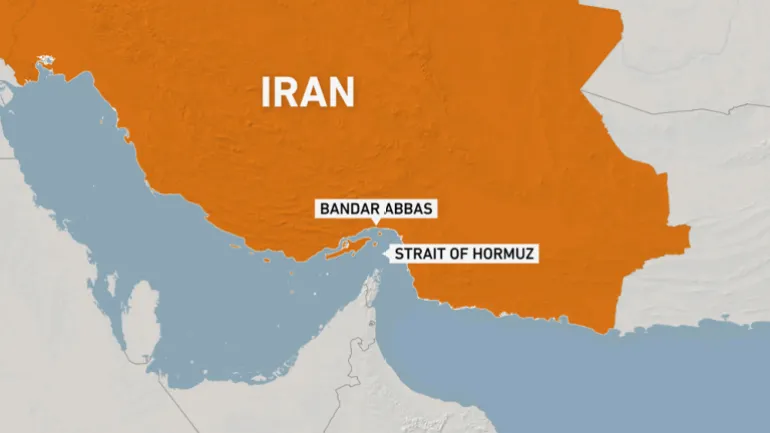
Earlier, US forces also struck Kharg Island, which handles roughly 90 percent of Iran’s crude exports, though a regional official said operations were continuing normally, and there were no casualties.
US President Donald Trump had previously threatened to target the island’s oil infrastructure if Tehran continued to disrupt the Strait of Hormuz.
Any prospect of negotiations appears remote. The Trump administration has rebuffed regional efforts to broker a ceasefire, with a senior White House official telling the Reuters news agency the president is focused on pressing ahead.
“He’s not interested in that right now, and we’re going to continue with the mission unabated,” the official said.
Iran has equally ruled out talks while the attacks continue, Reuters reported, citing an anonymous Iranian official.
Iranian Minister of Foreign Affairs Abbas Araghchi struck a defiant tone on Saturday, saying the US security framework in the region had “proven to be full of holes” and calling on neighbours to “expel foreign aggressors”.
Israeli Minister of Defence Israel Katz said the war was entering a “decisive phase”, which would “continue as long as necessary”.
Iran launched new missile salvoes at Israel on Saturday, with explosions heard over Jerusalem, according to reporters from the AFP news agency.
Six waves of missiles, some carrying cluster bomb warheads, struck wide areas of the country, the Israeli army said. In Eilat, a cluster munition impact injured three people, including a 12-year-old boy, according to The Times of Israel.
A strike on the heavily fortified United States embassy compound in Baghdad caused a fire and damage to the complex. It is the second attack on the embassy since the United States and Israel launched strikes on Iran on February 28.
Brits heading to Greece have been urged to check the latest travel advice as tensions linked to the Iran conflict raise wider security concerns across the region
The conflict in Iran has disrupted air travel across the globe(Image: ANIK)
Brits planning a Mediterranean getaway are being urged to check official travel guidance before heading abroad. Experts say no trip can ever be guaranteed completely safe amid growing tensions linked to the Iran conflict.
The latest reminder comes from the Foreign, Commonwealth & Development Office, which publishes travel advice for British holidaymakers. Its guidance for Greece stresses that travellers should read all advice carefully before departure.
On the UK Government travel advice website, officials warn: “No travel can be guaranteed safe.” It urges visitors to research destinations carefully and make sure they have comprehensive travel insurance before travelling.
The guidance also highlights passport rules that travellers must meet before entering the country. Greece follows Schengen Area rules, meaning passports must have been issued within the last 10 years and remain valid for at least three months after leaving the region.
British tourists can visit Greece without a visa for short trips. According to the government, travellers can stay in the Schengen area for up to 90 days within any 180-day period for tourism, family visits or business meetings.
However, new border procedures are also on the horizon for travellers heading to Europe. The European Union is introducing its Entry/Exit System, which will require visitors to register biometric details such as fingerprints or a photo when entering the bloc.
The system is expected to become fully operational from April 10. Officials warn the process could add several minutes to border checks for each passenger.
It comes as tensions continue to grow in the Middle East following the ongoing conflict involving Iran. The crisis has raised wider regional security concerns across parts of the eastern Mediterranean.
Neighbouring Cyprus, which lies roughly 800km from mainland Greece and around 300km from parts of the Middle East, has already been monitoring the situation closely. The island has previously served as an evacuation hub for foreign nationals during regional crises.
According to reports cited by international media and the United Nations, the latest escalation has fuelled fears of broader instability across the region. Military exchanges between Iran and its rivals have already heightened security alerts across several neighbouring countries.
The UK has also stepped up its military presence in the region. The HMS Dragon has been deployed to Cyprus as a precautionary measure. The Royal Navy says vessels may be deployed to support British nationals and regional security as required.
Despite the geopolitical tensions, Greece remains one of Europe’s most popular holiday destinations. Data from the Greek National Tourism Organisation shows the country welcomed more than 36 million international visitors in 2024.
Officials say the key message for travellers is to stay informed. Checking the latest government advice and ensuring documents meet entry requirements can help avoid problems when travelling abroad.
Video shows a large fire engulfing an apartment building in the Sidon area of southern Lebanon, following reports of an Israeli attack that killed four people.
The Foreign, Commonwealth and Development Office (FCDO) has been refreshing its travel advice for nations across the globe amid ongoing conflict in the Middle East, continuing to wreak havoc on international movement.
Beyond severely disrupting travel plans, the ongoing crisis is set to have far-reaching consequences for inflation, interest rates and commodity markets. British citizens have already been airlifted from Oman, the United Arab Emirates, and neighbouring regions, with Whitehall organising charter flights to repatriate nationals safely.
Those most at risk will receive priority booking on these evacuation flights, with the Foreign Office pledging to reach out to anyone who has registered their whereabouts in the affected zone, reports the Liverpool Echo.
In its guidance covering numerous Middle Eastern nations, the Foreign Office said: “Regional escalation poses significant security risks and has led to travel disruption. Stay away from areas around security or military facilities. Follow the instructions of the local authorities and monitor local and international media for the latest information.”
The advice went on: “If local authorities advise you to take shelter, stay indoors or move to the nearest safe building immediately. The greatest risk is from falling debris caused by intercepts, and you are safest inside a secure structure.
“Choose an interior stairwell or a room with as few external walls or windows as possible for additional protection.”
Political strife, natural calamities and safety issues are among the factors leading the UK Foreign Office to advise Brits against travelling to certain locations.
Afghanistan
Travel to Afghanistan is strongly discouraged. The security climate is unpredictable, with previous tensions between Afghanistan and Pakistan resulting in violent skirmishes in border areas.
Travelling across Afghanistan poses extreme risks, and several border crossings are currently closed.
The likelihood of British nationals being detained in Afghanistan is significantly high. If you’re a Brit and find yourself detained in Afghanistan, you could be looking at a lengthy prison sentence spanning months or even years.
The FCDO’s capacity to assist you is severely restricted, and in-person support in Afghanistan is not feasible.
Belarus
The FCDO strongly advises against all travel to Belarus. If you’ve ever participated in activities now deemed illegal by the Belarusian regime, you run a substantial risk of arrest.
There’s also a minor risk that direct conflict related to the war in Ukraine could spill over into Belarus.
In the unlikely event of conflict breaking out, the FCDO’s ability to aid British nationals will be drastically limited. Ignoring advice from the FCDO could invalidate your travel insurance.
Burkina Faso
The FCDO advises against all travel to Burkina Faso due to the threat of terrorist attacks and kidnappings, coupled with the country’s unstable political situation.
There is no British Embassy in Burkina Faso and all consular support is provided from the British Embassy in Accra, Ghana. They cannot provide in-person assistance.
If there is serious violence, unrest or a deterioration in the security situation, it could be difficult to leave safely.
Haiti
The FCDO advises against all travel to Haiti owing to the unstable security situation. There are currently no British consular officials in Haiti and its ability to provide consular assistance is severely limited and cannot be delivered in person in Haiti.
If you choose to travel to or remain in Haiti against FCDO advice, attempt to avoid all crowds and public events, and take appropriate security precautions.
Iran
The FCDO advises against all travel to Iran. If you are a British national already in Iran, either resident or visitor, the Foreign Office said: “carefully consider your presence there and the risks you take by staying”.
British and British-Iranian dual nationals face significant risk of arrest, questioning or detention. Possessing a British passport or links to the UK can be reason enough for the Iranian authorities to detain you.
Iraq
The FCDO advises against all travel to Federal Iraq and the Kurdistan Region of Iraq. This is due to recent escalation in regional conflict.
There is significant risk of further escalation, and events are fast-moving and unpredictable. The Foreign Office said: “Regional escalation poses significant security risks and has led to travel disruption. The border crossing from Iraq into Kuwait is closed.
“British nationals wishing to cross into Kuwait must contact the British Embassy in Kuwait 24 hours in advance. The British Embassy will share names and passport details with the Ministry of Foreign Affairs who will determine entry.”
Israel
The FCDO advises against all travel to Israel and Palestine: “Regional escalation poses significant security risks and has led to travel disruption. Stay away from areas around security or military facilities.”
Britons should inform the UK government of their presence in Israel, and register if they’re in the region for ongoing updates. You should adhere to instructions from local authorities and keep abreast of local and international media for the most current information.
Mali
The FCDO advises against all travel to Mali in its entirety owing to volatile security conditions. If you’re currently in Mali, you should depart “immediately” via commercial flight if you deem it safe to do so.
“The international airport in Bamako is open, and commercial flights are available. Do not try to leave Mali by overland routes to neighbouring countries as this is too dangerous. This is due to terrorist attacks along national highways.”
There remains a significant threat of abduction and criminal behaviour throughout Mali, including within the capital city of Bamako.
The Foreign Office warned: “If you choose to remain in Mali, you do so at your own risk. You should have a personal emergency plan that does not rely on the UK government.”
Niger
The FCDO advises against all travel to Niger. Officials said: “This is due to the rise of reported terrorist and criminal kidnappings of foreign nationals which have taken place this year in Niger. There is an ongoing risk of terrorist attacks throughout Niger including in the capital, Niamey.”
Support for British nationals is extremely limited in Niger. Assistance is delivered remotely from the British Deputy High Commission in Lagos.
Face-to-face help is unavailable. Should serious violence, civil unrest or a worsening security situation occur, departing safely could prove challenging.
Palestine
The FCDO advises against all travel to Israel and Palestine. UK citizens currently in the region should inform the Government of their whereabouts in Palestine and register their presence to receive ongoing updates.
Should you determine it’s safe to proceed and intend to use commercial departure options, verify the latest information from your airline or tour operator, alongside guidance from local authorities and the status of border crossings prior to travelling.
The Foreign Office cautioned: “The situation could escalate quickly and poses significant risks. Regional tensions may cause international borders (air and land) to close.”
Russia
The FCDO warns against all travel to Russia owing to the dangers and threats stemming from its ongoing invasion of Ukraine, including security incidents such as drone strikes and Russian air defence operations, a shortage of flights back to the UK, and restricted capacity for the UK government to offer assistance.
The Foreign Office said: “There is an increased risk of British nationals being detained in Russia, including if the Russian authorities suspect you of engaging in or supporting activities against Russian law, even if activities took place outside Russia.”
South Sudan
The FCDO warns against all travel to South Sudan due to the threat of armed violence and criminal activity.
“The political and security situation remains unpredictable. Political tensions are high and the security situation across the country could deteriorate rapidly and unpredictably.
“If the unstable security situation deteriorates, routes into and out of South Sudan may be blocked. Juba airport may close or be inaccessible. Flights may be cancelled at short notice.”
Syria
The FCDO warns against all travel to Syria owing to volatile security conditions and the risk of terrorist attacks. Consular support is unavailable from the British government within Syria.
The FCDO may learn of assistance offered by other organisations which can be shared with British nationals. Should you require help, contact the FCDO in London on +44 (0)20 7008 5000.
Yemen
The FCDO warns against all travel to Yemen in its entirety owing to unpredictable security conditions. The guidance states: “If you’re in Yemen, you should leave immediately.”
Assistance for British nationals is extremely restricted in Yemen. The British Embassy in Sana’a has suspended operations, with all diplomatic and consular personnel evacuated.
The UK government is unable to assist British citizens departing Yemen. No evacuation arrangements are currently in place.
Should you decide to stay in Yemen, you ought to keep movement around the country and within urban areas to a minimum, stay informed about changes in the local security landscape and observe other safety measures.
United States President Donald Trump has said the country’s military bombed military installations on Iran’s Kharg island, warning the area’s critical oil facilities could be next if Iran continues to block the Strait of Hormuz.
Iran, in turn, threatened on Saturday to reduce US-linked oil facilities to “a pile of ashes” if oil structures on the island were attacked, as the US-Israel war on Iran, now in its punishing third week, spilled over into a global oil price crisis already in the making.
Recommended Stories
list of 3 itemsend of list
Kharg island is where more than 90 percent of Iran’s oil is exported. Crude oil prices have surged more than 40 percent since the war began.
Trump said on Friday that US forces had “totally obliterated” all military targets on Iran’s Kharg island oil export hub, describing it in a social media post as “one of the most powerful bombing raids in the History of the Middle East”. He provided no evidence of that.
The US president said he had chosen not to “wipe out” oil infrastructure on the Iranian island, for now.
“However, should Iran, or anyone else, do anything to interfere with the Free and Safe Passage of Ships through the Strait of Hormuz, I will immediately reconsider this decision,” he added.
Iran’s semi-official Fars news agency reported, quoting sources, that more than 15 explosions were heard on Kharg island during the US attacks.
The sources said the attacks targeted air defences, a naval base, and airport facilities, but caused no damage to oil infrastructure. Iran’s Fars news agency reported thick smoke was seen rising from the island.
Al Jazeera’s Mohamed Vall, reporting from Tehran, said Iran’s potential retaliatory attacks on Gulf oil facilities would be a “catastrophic scenario” for the region, and for the “entire industry of oil and gas”.
“The Iranians are keeping this, apparently, as a card to use,” he said. “They’ve been talking about restraint and the possibility of that restraint ending if the Iranian oil facilities are attacked, as the Americans are hinting and threatening.”
US ground operation in the works?
Meanwhile, 2,500 more Marines and an amphibious assault ship are being sent to the Middle East, a US official told the AP news agency.
Elements from the 31st Marine Expeditionary Unit and the amphibious assault ship USS Tripoli have been ordered to the region, according to the source, who spoke on condition of anonymity to discuss sensitive military plans.
(Al Jazeera)
Marine Expeditionary Units are able to conduct amphibious landings, but they also specialise in bolstering security at embassies, evacuating civilians, and providing disaster relief.
“What we’re to make of this is that the US is very slowly increasing its military posture in terms of prosecuting the war, and that it is not intending to wrap things up any time soon,” Al Jazeera’s Rosiland Jordan reported from Washington.
The deployment does not necessarily indicate that a ground operation is imminent or will take place.
Trump dismisses prospect of deal
Following the attack on Kharg island, Iran would be “wise to lay down their arms, and save what’s left of their country”, Trump wrote on his Truth Social platform.
“The Fake News Media hates to report how well the United States Military has done against Iran, which is totally defeated and wants a deal – but not a deal that I would accept!” he posted separately, providing no evidence Tehran was seeking any sort of deal.
At least 1,444 people have been killed and 18,551 injured by US-Israeli attacks on Iran since February 28, Iran’s Ministry of Health says.
Al Jazeera’s Tohid Asadi, reporting from Tehran, said US-Israeli air attacks hit targets across the country, including in Tehran, Karaj, Isfahan and Tabriz. He said this was a sign that “we are not close to de-escalation.
“Iranian officials are talking about retaliatory strikes, with the Islamic Revolutionary Guard Corps talking about using what they call their most advanced weaponry, including Heidar missiles, to target Israeli territories and US bases in the region,” he said.
Israel’s attack, echoing similar carnage it wrought in Gaza, kills doctors, paramedics and nurses who were on duty.
An Israeli strike on a health centre in southern Lebanon has killed 12 medical workers, the Lebanese Ministry of Public Health said, as its devastating assault continued amid a wider regional war launched by the United States and Israel on Iran 15 days ago.
The attack late on Friday occurred in the village of Burj Qalaouiyah in the Bint Jbeil District, and killed doctors, paramedics and nurses who were on duty, Lebanon’s health ministry said.
Recommended Stories
list of 4 itemsend of list
The carnage echoed Israel’s constant targeting of medics and hospitals that decimated Gaza’s healthcare system during its genocidal war on the Palestinian enclave and which contravenes international humanitarian law.
Israeli strikes have so far killed 18 paramedics among 773 people reported killed in Lebanon since fighting between Hezbollah and Israel reignited March 2, after a US-Israeli assault on Iran began on February 28, with the conflict now embroiling much of the region.
According to Al Jazeera’s Heidi Pett, reporting from Beirut, the toll of medics was preliminary as rescue teams continued searching for missing people.
“You can see how deadly some of these individual air strikes have been, not just across the south, but of course, we are seeing air strikes hitting across the capital, Beirut,” said Pett.
Lebanon’s Ministry of Health said it was the second attack on the health sector within hours, after another Israeli strike on the southern village of Souaneh killed two paramedics and wounded five others when it hit a paramedic centre.
The ministry condemned the attack and denounced what it called as continued violence against health workers.
At least four people were also killed in an Israeli air raid on Taamir Haret Saida in the country’s south, the Lebanese News Agency (NNA) said.
Meanwhile, Hezbollah overnight claimed it fired suicide drones against Israeli troops in the northern town of Ya’ara inside Israel.
It was the 24th military operation announced by the group on Friday.
The Lebanese armed group also said it launched rocket attacks targeting Israeli soldiers in southern Lebanon, one in the town of Kfar Kila, and the other in the city of Khiam.
Late on Friday, Hezbollah leader Naim Qassem said his group is ready for a “long confrontation” with Israel as the war continues.
“This is an existential battle, not a limited or simple battle,” he said.
Damage in Israel from Iranian ‘cluster missiles’
Meanwhile, Iran’s retaliatory attacks against Israel continued.
Rocket and missile strikes early on Saturday targeted the Upper Galilee region of northern Israel, Channel 12 reported.
The news outlet said that a “limited number of launches” were either “intercepted” or exploded in open areas.
A post on X from Israel’s public broadcaster KAN featured several vehicles damaged in the strikes.
Alarms were raised for suspected rocket and missile fire in Manara, Margaliot, Kfar Giladi, Misgav Am, Tel Hai, Metula, Kfar Giladi and Kfar Yuval throughout the early morning on Saturday.
“A lot of the damage that we are being told about at the moment seems to be coming from these cluster missiles that Iran has been launching pretty much consistently for the last week at least and they scatter over a large area,” said Al Jazeera’s Rory Challands, reporting from Amman, Jordan.
“They disperse these submunitions bomblets. Each of those has about 2.5 kilogrammes (5.5 pounds) of explosives in them. You can see why that does quite some damage when it scatters and hasn’t been intercepted by the Israeli air defence.”
Mukalla, Yemen – A reported decision to impose thousands of dollars in fees on shipping headed for Yemen has experts worried that the price of imported goods and food will increase in the war-torn country, as it starts to feel the economic impact of the United States and Israel’s conflict with Iran.
Local traders and officials have said that international shipping companies informed importers earlier this month of the imposition of new fees of about $3,000 on each container bound for Yemen, described as “war risk” fees. The surprise move prompted government officials to scramble to assess and address its potential repercussions.
Recommended Stories
list of 3 itemsend of list
Because Yemen imports nearly 90 percent of its food and other essential commodities, economists and humanitarian organisations warn that the rise in shipping and insurance costs could quickly translate into higher prices for fuel, food and other goods, further worsening an already dire humanitarian situation.
Mohsen al-Amri, transport minister in Yemen’s internationally-recognised government based in the southern city of Aden, said he had instructed that the fees not be paid by ships already docked at Yemeni ports or those bound for the country, insisting that the ports remain safe.
“Our ports are far from the areas of geopolitical tension in the Gulf and the Strait of Hormuz, making the imposition of ‘risk’ fees on shipments to these relatively safe areas unjustified from both operational and security perspectives,” he said in a social media post last week.
Al Jazeera has reached out to shipping companies to confirm details of the fee, but has yet to receive responses.
For more than a decade, Yemen has been gripped by a bloody war between the Saudi-backed government, based in Aden, and the Iran-aligned Houthi movement, which controls the capital, Sanaa. The conflict has killed and wounded thousands of people and displaced millions, creating what the United Nations once described as the world’s worst humanitarian crisis. Hostilities have significantly declined since April 2022, when the warring parties agreed to a temporary United Nations-brokered truce.
‘High-risk’
Abdulrab al-Khulaqui, deputy chairman of the Yemen Gulf of Aden Ports Corporation, said Yemeni ports have long been classified as high-risk, prompting shipping companies to impose war-risk surcharges. These can reach about $500 per each 20-foot container and $1,000 per each 40-foot container, on top of regular shipping costs.
Al-Khulaqui said that the $3,000 fee now being demanded was “very high and unusual”, but was justified by shipping companies because they regard Yemeni ports as unsafe, despite their distance from Iran.
Although the Houthis are allied to Iran and previously attacked shipping in the Red Sea following Israel’s genocidal war on Gaza, the Yemeni group has yet to intervene in the US-Israel-Iran conflict. Other Yemeni parties are also not involved, making Yemen one of the few regional countries yet to see any violence related to the fighting.
In addition to barring local traders from paying the new charges, the Yemeni government is considering other measures to pressure shipping companies to cancel the fees, including threatening to stop vessels belonging to those companies from docking at Yemeni ports. Authorities may also allow traders to contact exporters directly in countries of origin to negotiate any additional charges.
The new surcharges come as the United Nations has again sounded the alarm over Yemen’s worsening humanitarian situation, saying nearly 65.4 percent of the population – about 23.1 million people – will require urgent humanitarian assistance and protection services this year. This marks an increase of roughly 3.5 million people compared with 2025.
“Yemen continues to face an escalating food security crisis entering 2026,” the World Food Program said in its February Yemen Food Security Update, released on March 5. “January data revealed that 63 percent of households nationwide are struggling to meet their minimum food needs, including 36 percent facing severe food deprivation.”
Bypassing Yemen’s ports
In addition to rising insurance fees on shipments to Yemen, the war in Iran and potential disruptions in the Strait of Hormuz could cut vital supply routes from regional hub ports such as Jebel Ali in the United Arab Emirates.
Mustafa Nasr, head of the Studies and Economic Media Center, told Al Jazeera that shipping companies may begin seeking alternative hub ports to deliver goods to Yemen, which could increase costs and cause delays.
“The closure of Jebel Ali port would force shipping lines to seek alternative ports that may be farther away and involve significantly higher transportation costs,” he said.
Nabil Abdullah Bin Aifan, manager of the government-run Maritime Affairs Authority in Hadramout province and a maritime researcher, said most goods arriving at Mukalla port – the province’s main seaport – are transported on wooden dhows from Dubai.
He said that if disruptions occur in the Strait of Hormuz, traders may turn to alternative regional hub ports such as Salalah in Oman or Jeddah in Saudi Arabia.
“Large ships come to Dubai to unload their containers, and traders then unload the goods from the containers and load them onto those primitive ships, which have no insurance,” Bin Aifan told Al Jazeera.
For now, wheat shipments from Ukraine and goods transported from China to Yemen may see price increases due to rising insurance costs, while products imported from Gulf countries could disappear from the market.
Shipping lines may also consider routing cargo through the Cape of Good Hope rather than the Gulf, Bin Aifan said.
“Even before the recent developments involving Iran, ports in our region were considered high risk. However, after the relative calm that followed the halt to Houthi attacks in the Red Sea, confidence gradually returned and ships began sailing back to the region. Now, the war has brought the problem back again,” he said.
All of this means that Yemenis, already struggling with poverty and hunger after years of war, will likely have to pay more for imported food and goods.
Abdullah al-Hadad, an English teacher from the city of Taiz with 40 years of experience in the profession, said that his monthly salary – less than $80 – is already not enough to cover his basic needs. Meat and fish have become luxuries for his family, and he still owes nearly one million Yemeni riyals (about $670) to a local grocery shop.
To make ends meet, he works additional jobs as a taxi driver and in a grocery store, while his children also work after school to help support the family and pay for medication for his 10-year-old son, who has autism.
“What I suffer from as a government employee is the extremely low salary, which does not even cover basic necessities such as bread, tea, salt and sugar,” al-Hadad told Al Jazeera.
“Other foods that are essential for a healthy diet, like meat or fish, have become a distant dream.”
Videos posted by social media users showed smoke rising from the US embassy in Baghdad after a reported attack. Iraqi officials said a helipad at the embassy was hit by a missile.
In a blow to Brits planning to get away for summer 2026, experts have revealed that the situation in the Middle East could cause holiday prices to rise, even in destinations not affected by the conflict
This article contains affiliate links, we will receive a commission on any sales we generate from it. Learn more
Brits could find their usual break is more expensive this year(Image: Getty Images)
Brits planning to get away overseas for Easter or summer this year are being warned they may need to expand their budget, as holiday prices could rise across all destinations.
Hannah Mayfield, a qualified financial advisor, has explained that the situation in the Middle East could have a “knock-on effect” on prices, following similar patterns seen during times of instability. Even those who opt for a UK-based staycation, or visit countries nowhere near the Middle East, could see higher prices for flights, accommodation, and even everyday spending.
Hannah explained: “Rising tensions in the Middle East can have a knock-on effect on holiday costs, even if you’re travelling somewhere completely different. But this isn’t a new phenomenon. We’ve seen similar patterns during previous periods of geopolitical instability, where travellers change their plans and demand shifts toward destinations perceived as safer.”
Hannah, who is working with travel insurers PayingTooMuch, gave the reasons why flight prices could rise: “Airlines can face higher operating costs during periods of geopolitical instability. If flights need to avoid certain airspaces, routes can become longer. At the same time, global oil prices usually rise during conflicts in major energy-producing regions, and that can eventually feed through into the price for fuel. For travellers, that might mean more expensive plane tickets.”
And it’s not just overseas jaunts that could become more expensive. Hannah said: “There’s also the potential impact on taking holidays, especially to destinations closer to home. If some holidaymakers decide not to travel as far afield, demand for popular destinations such as coastal towns, national parks and major cities can increase.
“When that happens, accommodation prices often rise during peak periods, particularly if availability is limited.” This could mean that, like during Covid, staycations could become pricier.
If you’re planning a trip, even to ‘safe’ destinations, you Hannah advises: “When travel feels more uncertain making sure you have the right level of cover for your trip becomes even more important, so you are less likely to face unexpected costs. Booking early, staying flexible with travel dates, comparing travel insurance policies and prices for flights can make a noticeable difference to the overall cost of a trip.”
She also had this warning: “Most standard travel insurance policies don’t cover acts of war, so conflicts itself may not typically have a direct impact on premiums. However, travellers should always check their policy details carefully, so they understand exactly what is and isn’t covered.
“Consider getting a policy that offers additional cover for travel disruptions which can offer another layer of protection in situations where official government travel advice changes and costs can’t be recovered elsewhere. It’s also worth noting that travel insurance does not cover events that are already known at the time the policy is purchased.”
Hannah, who also runs What is Wealth, which offers financial education for women, also gave some additional money saving tips for holidaymakers: “Keeping an eye on exchange rates and fuel prices can also help holidaymakers budget more accurately and avoid unexpected costs closer to their trip.”
Have a story you want to share? Email us at webtravel@reachplc.com
“The US Navy at this point can’t even get anywhere close to the Strait of Hormuz without being attacked.” Experts are pouring cold water on Pete Hegseth’s claims that the US is working effectively to reopen the world’s most crucial shipping lane.
Rights groups have slammed United States Secretary of Defense Pete Hegseth for saying that “no quarter” will be shown to Iran, as the US and Israel continue their military campaign against the country.
“We will keep pressing. We will keep pushing, keep advancing. No quarter, no mercy for our enemies,” Hegseth told reporters on Friday.
Recommended Stories
list of 3 itemsend of list
Under the Hague Convention and other international treaties, it is illegal to threaten that no quarter will be given.
Domestic laws, such as the 1996 War Crimes Act, also prohibit such policies. US military manuals likewise warn that threats of “no quarter” are illegal.
Brian Finucane, a senior adviser at the International Crisis Group, a think tank, said Hegseth’s comments appear to run afoul of those standards.
“These comments are very striking,” Finucane told Al Jazeera over a phone call. “It raises questions about whether this belligerent, lawless rhetoric is being translated into how the war is being conducted on the battlefield.”
But Hegseth has publicly dismissed concerns about international law, claiming he would abide no “stupid rules of engagement” and no “politically correct wars”.
His rhetoric has provoked concern among some experts that measures designed to prevent civilian harm are being ignored in favour of a campaign of “maximum lethality”.
Hegseth’s remarks also come after a US strike on a girls’ school in southern Iran that killed more than 170 people, most of them children. The war has left at least 1,444 Iranians dead and millions more displaced.
‘Inhumane and counterproductive’
Prohibitions against declaring “no quarter” go back more than a century, part of an effort to impose restraints on conduct during war.
The Nuremberg trials after World War II upheld that legal standard, as Nazi officials were prosecuted, in some cases, for denying quarter to enemy forces.
“The basic idea is that it’s both inhumane and counterproductive to execute people who have laid down their arms,” said Finucane.
He added that the “mere announcement” of “no quarter” from a government official can itself be a war crime.
The US and Israel have already faced allegations of violating international law during their war against Iran. Experts have condemned their initial strike on February 28 as “unprovoked”, deeming the conflict an illegal war of aggression.
Iranian officials also protested after a US submarine sank a military vessel, the IRIS Dena, off the coast of Sri Lanka, as it returned from a ceremonial naval exercise in India. That attack killed at least 84 people.
While warships are considered legal military targets, Iran has said that the ship was not fully armed, raising questions about whether it could have been interdicted rather than sunk.
US forces also purportedly declined to help rescue sailors from the Dena, even though the Geneva Convention largely requires aid to the shipwrecked. The Sri Lankan navy ultimately helped collect survivors from the wreckage.
Responding to the attack, Hegseth described the sinking of the ship as a “quiet death”. He also told reporters, “We are fighting to win.”
US President Donald Trump himself remarked that he asked why the ship had been sunk, not captured.
“One of my generals said, ‘Sir, it’s a lot more fun doing it this way,’” Trump said.
‘Serious red flag’
The US military has faced criticism for killing civilians in military operations for decades.
That includes during the so-called “global war on terror”, when airstrikes resulted in thousands of civilian deaths, including a 2008 attack on a wedding party in Afghanistan.
Even before the war with Iran, the Trump administration had faced accusations that it violated international law by attacking alleged drug-trafficking vessels in the Caribbean Sea and eastern Pacific Ocean.
At least 157 people have been killed in those attacks since they started on September 2.
The Trump administration, however, has never identified the victims nor presented evidence against them. Scholars have condemned the attacks as a campaign of extrajudicial killings.
Analysts say that the Pentagon’s policies of emphasising lethality at the expense of human rights concerns has carried over into its war against Iran.
“Death and destruction from the sky all day long. We’re playing for keeps. Our warfighters have maximum authorities granted personally by the president and yours truly,” Hegseth said during a briefing on March 4.
“Our rules of engagement are bold, precise and designed to unleash American power, not shackle it.”
Sarah Yager, the Washington director at Human Rights Watch, called such rhetoric alarming.
“I’ve been engaging with the US military for two decades, and I’m shocked by this language. Rhetoric from senior leaders matters because it helps shape the command environment in which US forces operate,” Yager said.
“From an atrocity-prevention perspective, language that dismisses legal restraints is a serious red flag.”
While the impact of Hegseth’s rhetoric on combat operations is not certain, a recent report from the watchdog group Airwars found that the pace of the US and Israeli assault on Iran has far outstripped other military operations in modern history.
Reports indicate that the US dropped nearly $5.6bn worth of munitions in the first two days of the war alone. Airwars says the US and Israel hit more targets in the first 100 hours of the Iran war than in the first six months of the US campaign against ISIL (ISIS).
Following Hegseth’s remarks on Friday, Senator Jeff Merkley condemned the Pentagon chief as a “dangerous amateur”. He cited the attack on the Iranian girls’ school as an example of the consequences.
“His ‘no hesitation’ engagement rules set the stage for failing to distinguish a civilian school from a military target,” Merkley wrote in a social media post.
“The result, more than 150 dead schoolgirls and teachers from an American missile.”
Sheikh Khalifa bin Hamad says Qatar will ‘not hesitate’ to ensure its stability as US-Israeli war on Iran continues.
Published On 13 Mar 202613 Mar 2026
Share
Qatar’s Interior Minister Sheikh Khalifa bin Hamad has said the situation in the Gulf country is “stable” amid Iranian drone and missile attacks launched across the Middle East in response to the US-Israeli war on Iran.
In an interview with Qatar Television on Friday, Sheikh Khalifa said the Qatari government had a plan in place to deal with the prospect of more Iranian attacks amid a regional war.
Recommended Stories
list of 3 itemsend of list
“The security situation in the country is stable, and we will not hesitate to take any measure that ensures the stability of our nation,” he said.
The interior minister said Qatar’s early warning system has been effective as authorities responded to reports of falling missile fragments at more than 600 sites across the country.
He added that Qatar has enough water to last for several months, as well as food reserves that will cover the nation’s needs for a year and a half.
Sheikh Khalifa’s remarks come as Qatar and other countries in the Gulf region have faced a barrage of Iranian attacks since the United States and Israel launched a war against Iran on February 28.
While Iran has said it is targeting US and Israeli military interests in the wider Middle East, the strikes have hit civilian infrastructure, including oil and gas facilities.
That has prompted a slowdown in regional energy production, which – coupled with Iran’s closure of the Strait of Hormuz, a key Gulf waterway – has raised concerns around the war’s effects on global economies.
Earlier this week, the United Nations Security Council passed a resolution denouncing the Iranian attacks on Gulf Cooperation Council (GCC) countries.
Sheikha Alya Ahmed bin Saif Al Thani, Qatar’s ambassador to the UN, had condemned the firings as “a clear violation of international law and the UN Charter”.
The attacks, she told reporters in New York on Wednesday, “impacts deeply the foundation of understanding upon which bilateral relations between our countries have been built”.
A Lebanese father mourned the death of his four daughters, mother, father, brother-in-law and nephew, after they were killed in an Israeli attack. Israel has killed at least 770 people in Lebanon since last Monday. Around 750,000 have been forcibly displaced.
Iranian state TV video shows the Chief Justice Gholam-Hossein Mohseni-Eje’i speaking to a reporter when a blast, described by officials as an Israeli strike, hit near the al-Quds Day rally in Tehran. Despite the explosion, he continued marching with crowds taking part in the annual pro-Palestinian demonstration.
Tens of thousands of people have gathered around the world for al-Quds Day, an annual event on the final Friday of Ramadan demonstrating solidarity with Palestine and opposition to Israeli occupation.
Rallies took place across numerous countries, including Iran, Malaysia, Indonesia, Kashmir and Yemen. In Tehran, thousands marched, chanting “death to Israel” and “death to America” as the United States-Israeli military campaign entered its 14th day of conflict.
The event has long been associated with Iran, and was established by the country’s first supreme leader, Ayatollah Ruhollah Khomeini, in 1979.
This year’s observance coincided with the US-Israel attack on Iran that has killed at least 1,444 people, including the Iranian supreme leader, Ali Khamenei.
Crowds turned out in Tehran and other cities, despite ongoing US and Israeli strikes in the region during the commemoration, state media reported.
Demonstrators worldwide expressed solidarity with both Palestinians and Iranians. In Kashmir, protesters burned mock coffins bearing images of US President Donald Trump and Israeli Prime Minister Benjamin Netanyahu while shouting slogans against the United States and Israel.
For the first time in 40 years, the United Kingdom banned London’s al-Quds Day march, citing risks of public disorder related to the “volatile situation in the Middle East” and potential confrontations between opposing groups. This marks the first protest ban since 2012, when authorities prohibited marches by the far-right English Defence League.
According to Iran’s Health Ministry, another 18,551 people have been injured in US-Israeli attacks on Iran since February 28.
Israel has killed almost 600 people in Lebanon and displaced more than 750,000 in less than two weeks. This is the opening act of Israel’s Gaza doctrine applied to a new front. The formula is consistent: Displace – either by ordering people to leave or by destroying their means of survival. Demolish civilian infrastructure to prevent return and expand territory through so-called “buffer zones”. Fragment any coherent governance by carving territory into disconnected enclaves where military action continues at a lower intensity.
I spent three years working in Palestine before being expelled by Israeli authorities. I watched this doctrine develop in real time. Now, from Beirut, I am witnessing its replication.
In the West Bank, Israel has spent decades fragmenting territory and denying Palestinians any contiguous geography. Water wells sealed with cement, homes demolished over impossible-to-obtain permits, herders pushed from their land by illegal settlement outposts. In Gaza, the same logic was applied with far greater speed and fury.
In October 2023, Israel announced that every Palestinian north of Wadi Gaza had to leave immediately. Days earlier, Israel’s defence minister had declared a complete siege: No electricity, no food, no water. By labelling an entire population as the enemy, Israel created a class of expendable people. The military released maps with Gaza divided into numbered blocks. When your number was called, you were forced to leave. Evacuation orders became the alibi for the crimes that followed. People were ordered into al-Mawasi, a stretch of coastline Israel designated a “safe zone”, a concentration area for hundreds of thousands living in tents, where air attacks continued. So-called evacuation zones were depopulated and destroyed.
Classic counterinsurgency logic would have entailed “clear, hold, and rebuild”. Israel’s approach was radically different: Destroy, displace, dismantle. The goal was not to pacify territory but to empty it. In both Gaza and southern Lebanon, Israel has treated civilian populations as indistinguishable from the resistance they support. Their displacement is the objective. The collapse of their political representation is a condition Israel seeks to make permanent. This is settler-colonial logic in contemporary military form.
The same playbook has now arrived in Lebanon, but with a revealing difference from previous Israeli operations here. In the first Lebanon war in the 1980s, Israel sought to install a sympathetic government. Gaza has shown that Israel has abandoned that aspiration. The goal is no longer to determine who governs a territory but to ensure that no coherent governance exists at all. Nor is Israel alone in this; the UAE’s approach in Yemen and the Horn of Africa – and its support to Israel in Gaza – reflects the same preference for isolated enclaves. What has emerged is a regional doctrine of fragmentation shared between aligned powers.
Israel has issued evacuation orders for the entirety of southern Lebanon and southern Beirut. The familiar map that appeared on my screen in Beirut last week had the same design and the same deadly ambiguity as the ones we dealt with in Gaza; announced evacuation zones failed to match those shown on the map. In Gaza, those who crossed the invisible lines were killed.
Hundreds of thousands of people are now on the move. Schools have become shelters, health workers have been killed, and people are sleeping on the seafront where just two nights ago a tent was bombed. Israel has threatened to attack Lebanese state infrastructure if the government fails to act against Hezbollah – extending its aims from displacement and infrastructure destruction towards the forced destabilisation of the state itself. The Lebanese government has responded by forbidding Hezbollah from firing. This is precisely the internal fracturing that Israel’s strategy appears designed to provoke.
But Lebanon is not Gaza. Hamas was fighting with an improvised arsenal inside a besieged strip of land, and this already proved challenging for Israeli forces. Hezbollah commands more sophisticated weaponry, hardened infrastructure, and decades of preparation for this kind of war. It has shown it can absorb heavy blows and strike back, surprising both Israel and outside observers with the depth of its capabilities. Israeli ground operations in southern Lebanon and the Bekaa have already met significant resistance. It is here that the doctrine may encounter its limits – not through diplomatic pressure, which has failed to materialise, but through asymmetric military reality. Iran has made Lebanon’s fate explicitly part of any ceasefire calculus, signalling a unification of fronts that Israel had thought were weakened.
A doctrine built on the assumption of impunity has encountered little resistance in the conference halls of a so-called rules-based order. The Gaza doctrine is the expanded version of what Israel previously called the “Dahiyeh doctrine” – the use of overwhelming force against civilian infrastructure – now weaponised towards a larger end: The permanent redrawing of the region’s geography, demography, and political order.
This doctrine has developed in a vacuum of accountability. The International Court of Justice has been ignored. The Security Council has been paralysed. Governments have continued trading with Israel as it steadily normalised the unacceptable. Daniel Reisner, who headed the international legal division of Israel’s military advocate general’s office, was candid in saying that “If you do something for long enough, the world will accept it […] International law progresses through violations.”
The United States is not a bystander to this failure; it is an active participant in deepening it. At the Munich Security Conference earlier this year, Secretary of State Marco Rubio framed the transatlantic alliance in ethnonationalist terms and cast colonialism as a Western achievement. At an event in Tel Aviv, US Ambassador Mike Huckabee expressed confidence that Washington would “neuter” both the ICC and the ICJ – the very institutions through which accountability might otherwise be pursued.
What is unfolding in Lebanon is the political continuation of an ongoing settler-colonial project. The evacuation orders are precursors to mass destruction, designed to prevent return and permanently alter the landscape. Stability in the Middle East demands more than ceasefire agreements that manage fragmented populations while permitting lower-grade warfare to continue. It requires unconditional enforcement of international law, full accountability for those prosecuting this doctrine, and the right of return and reconstruction – from Beit Hanoon to Beirut.
The views expressed in this article are the author’s own and do not necessarily reflect Al Jazeera’s editorial stance.