

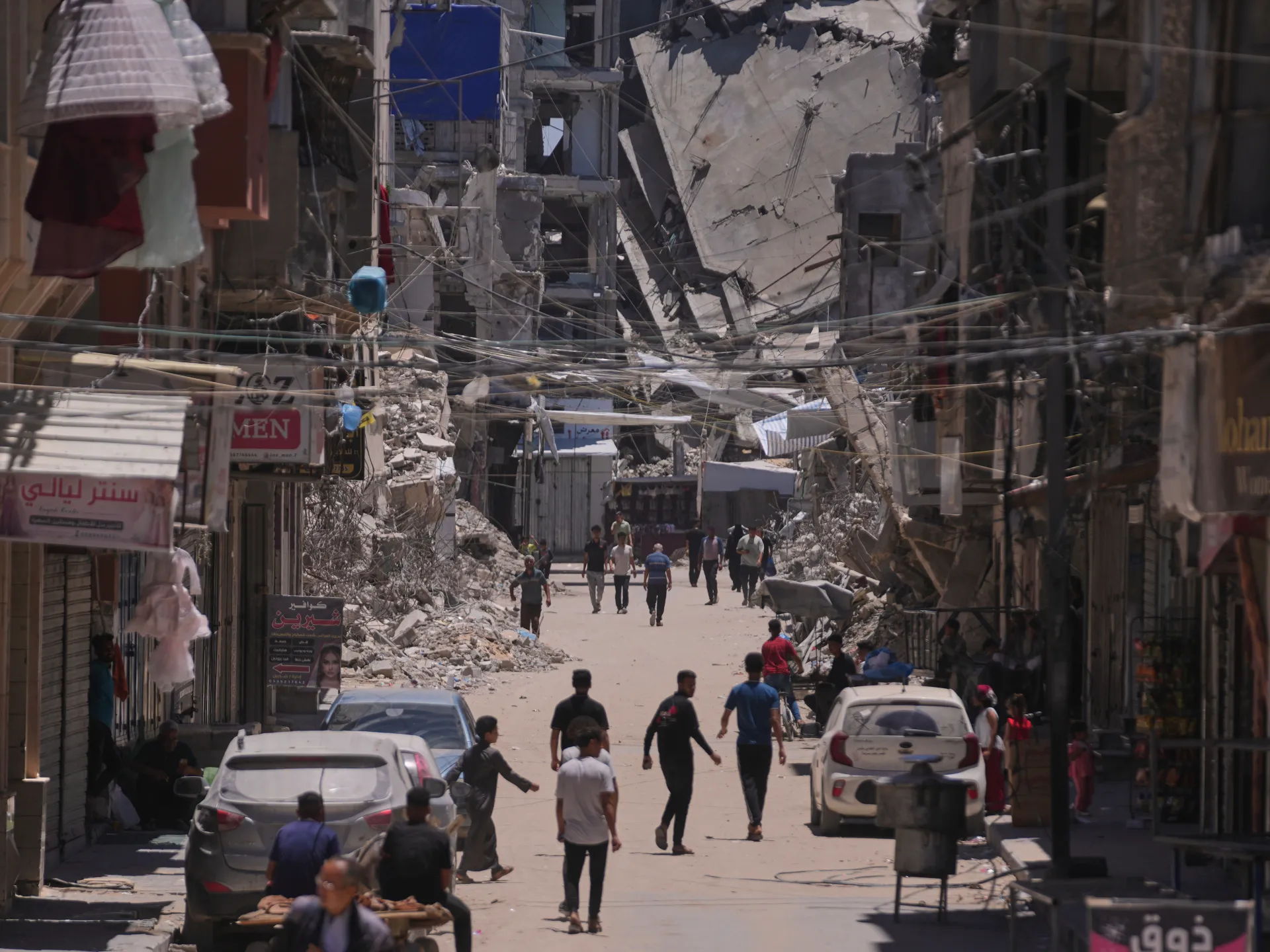
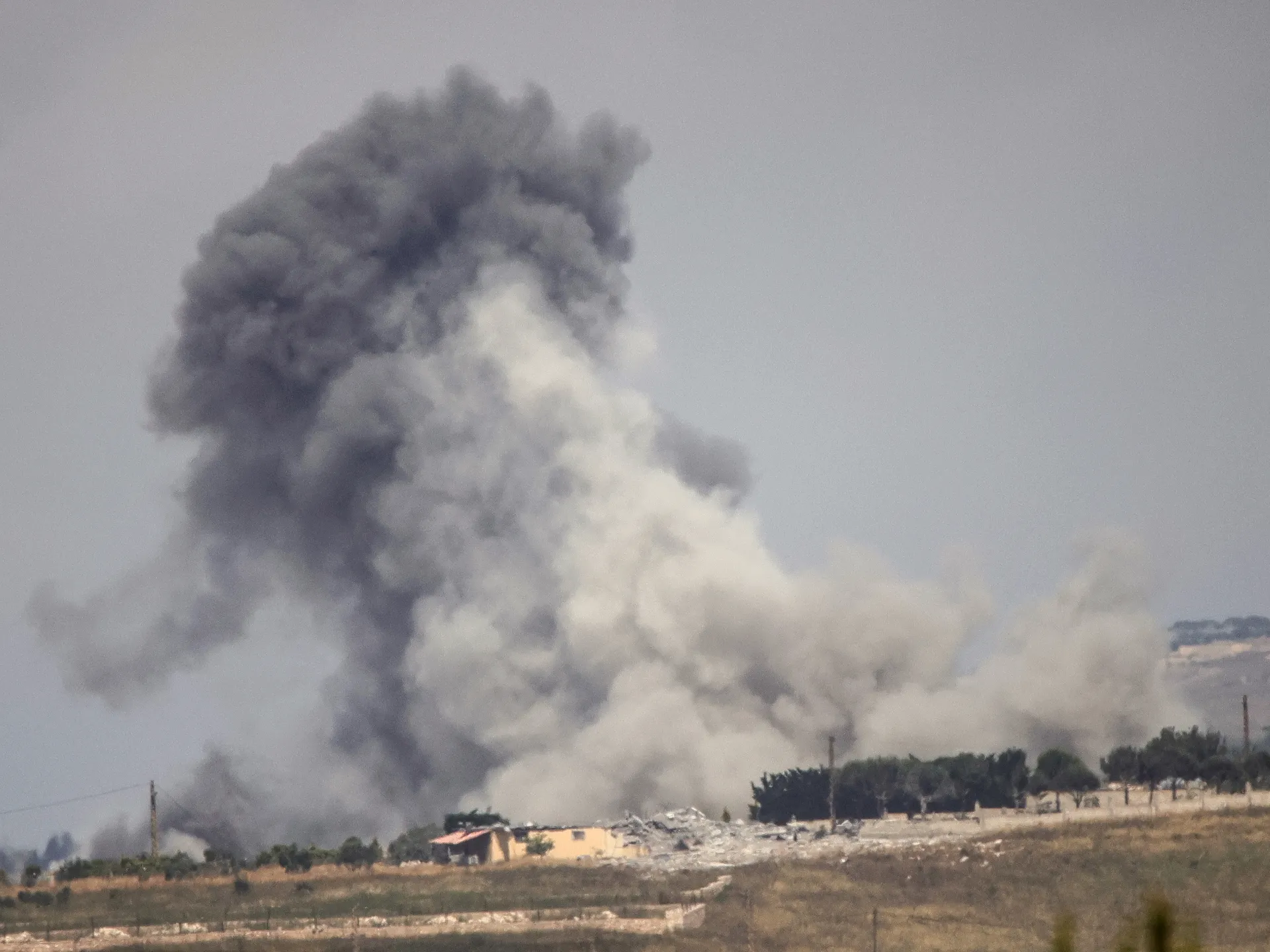
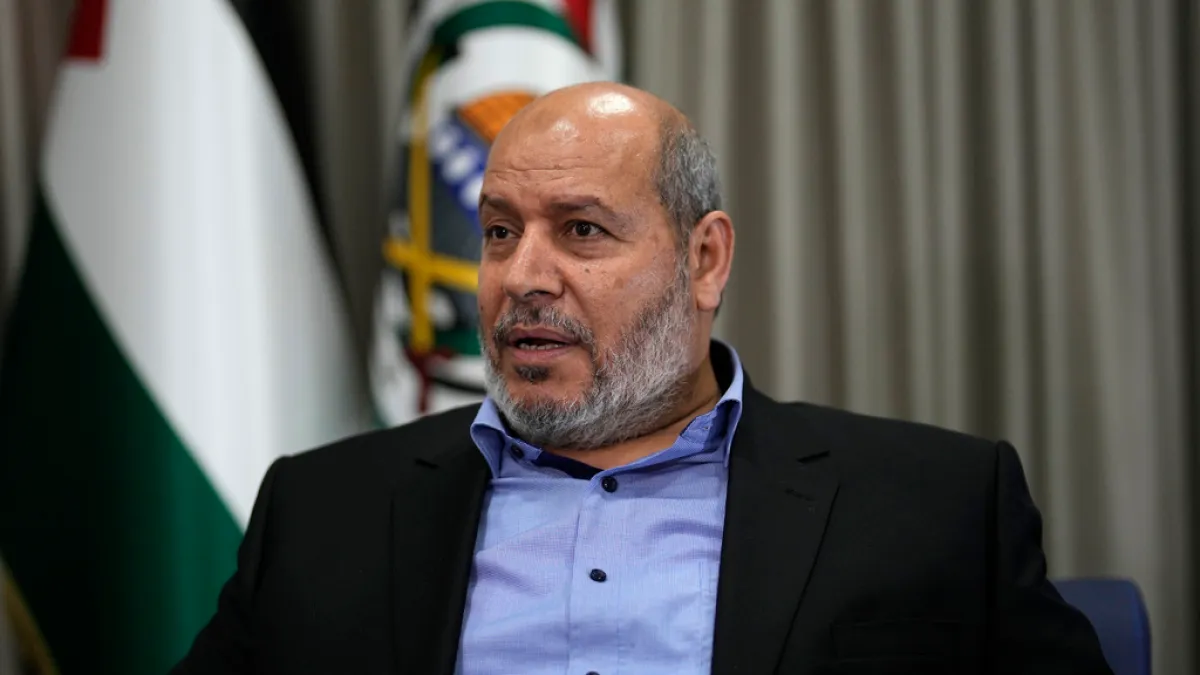
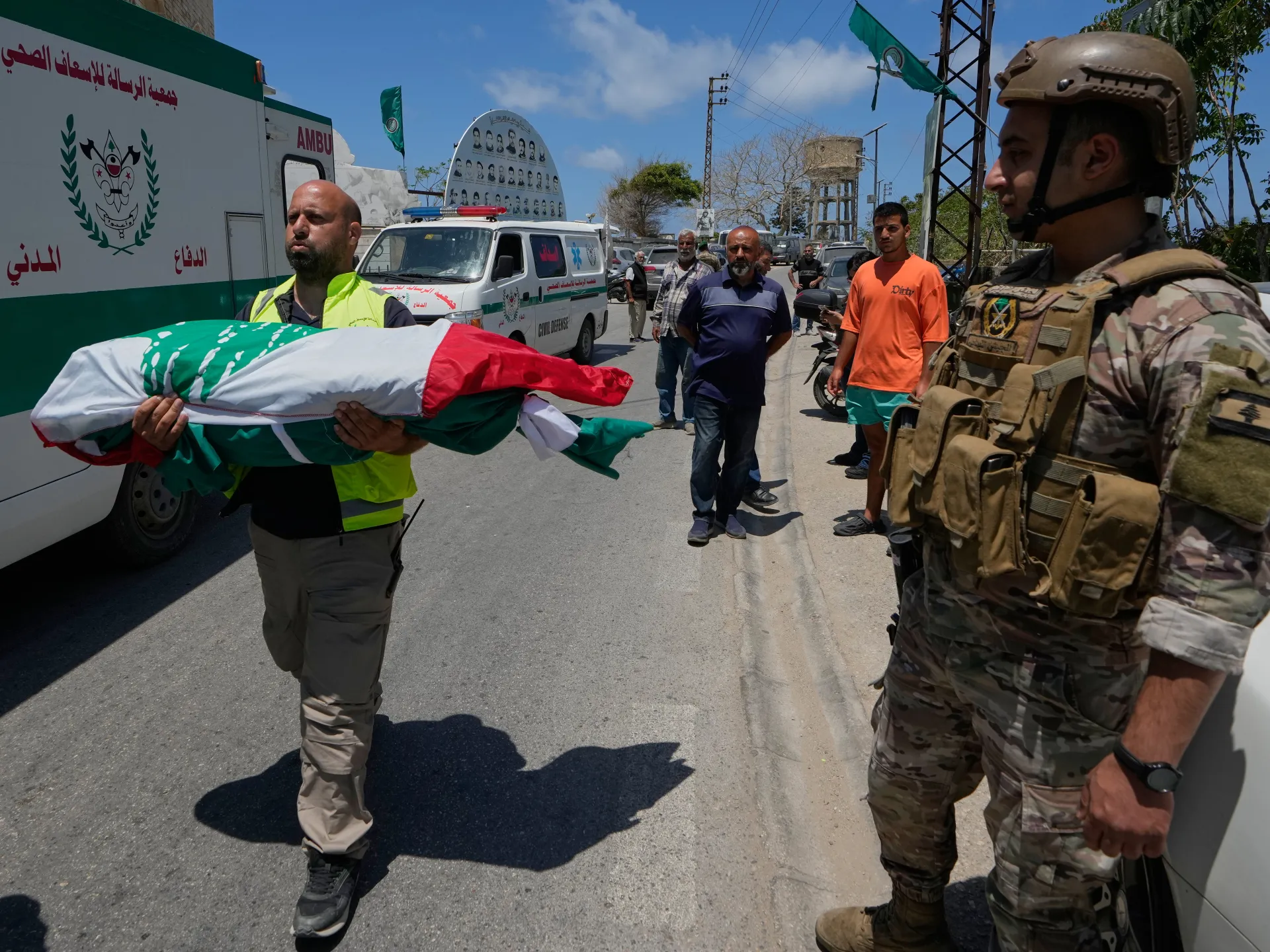
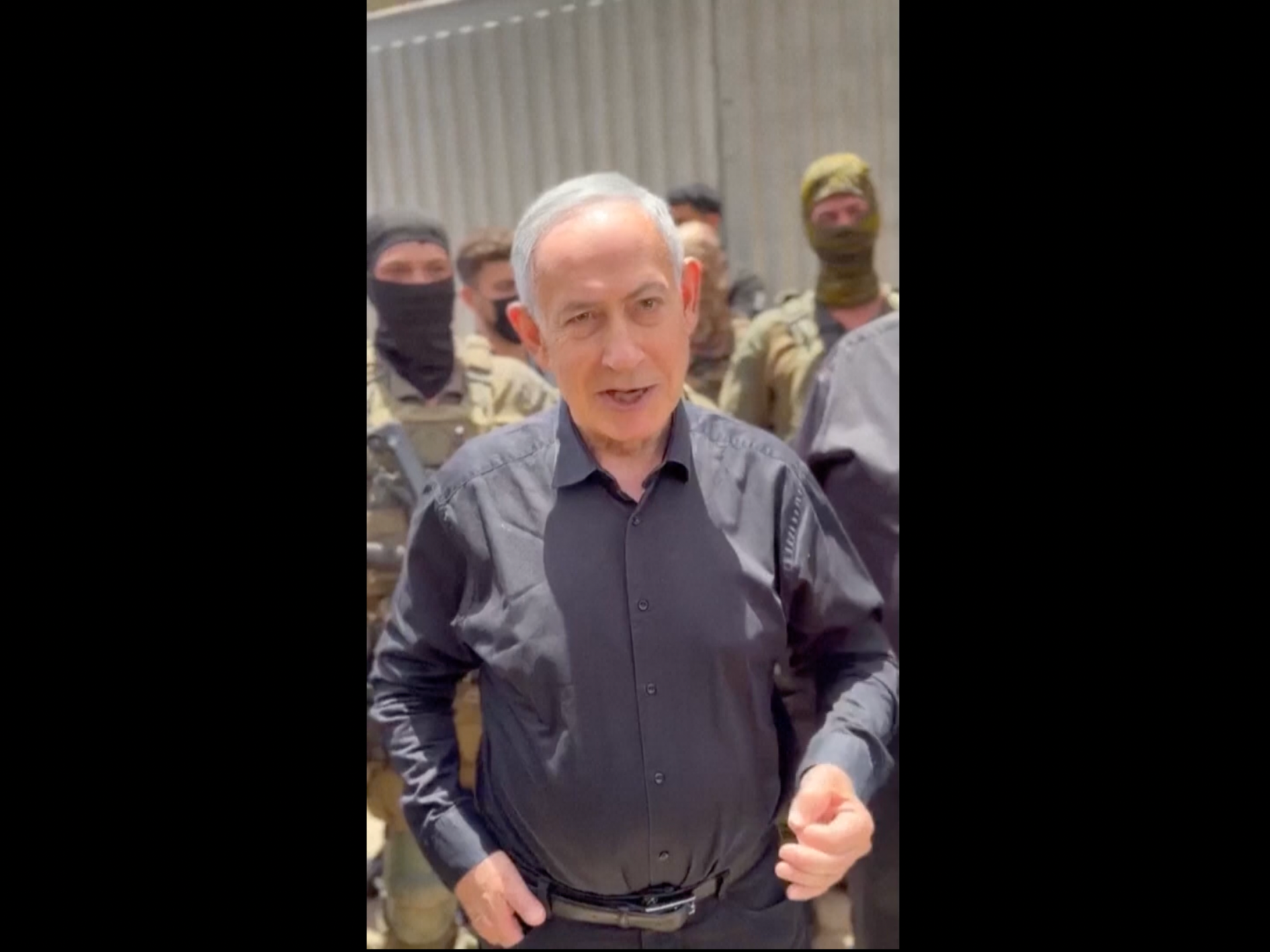
The Israeli army says its forces are striking key sites in southern Lebanon, as fierce clashes with Hezbollah continue near the town of Khiam.
Published On 16 Mar 202616 Mar 2026
Share
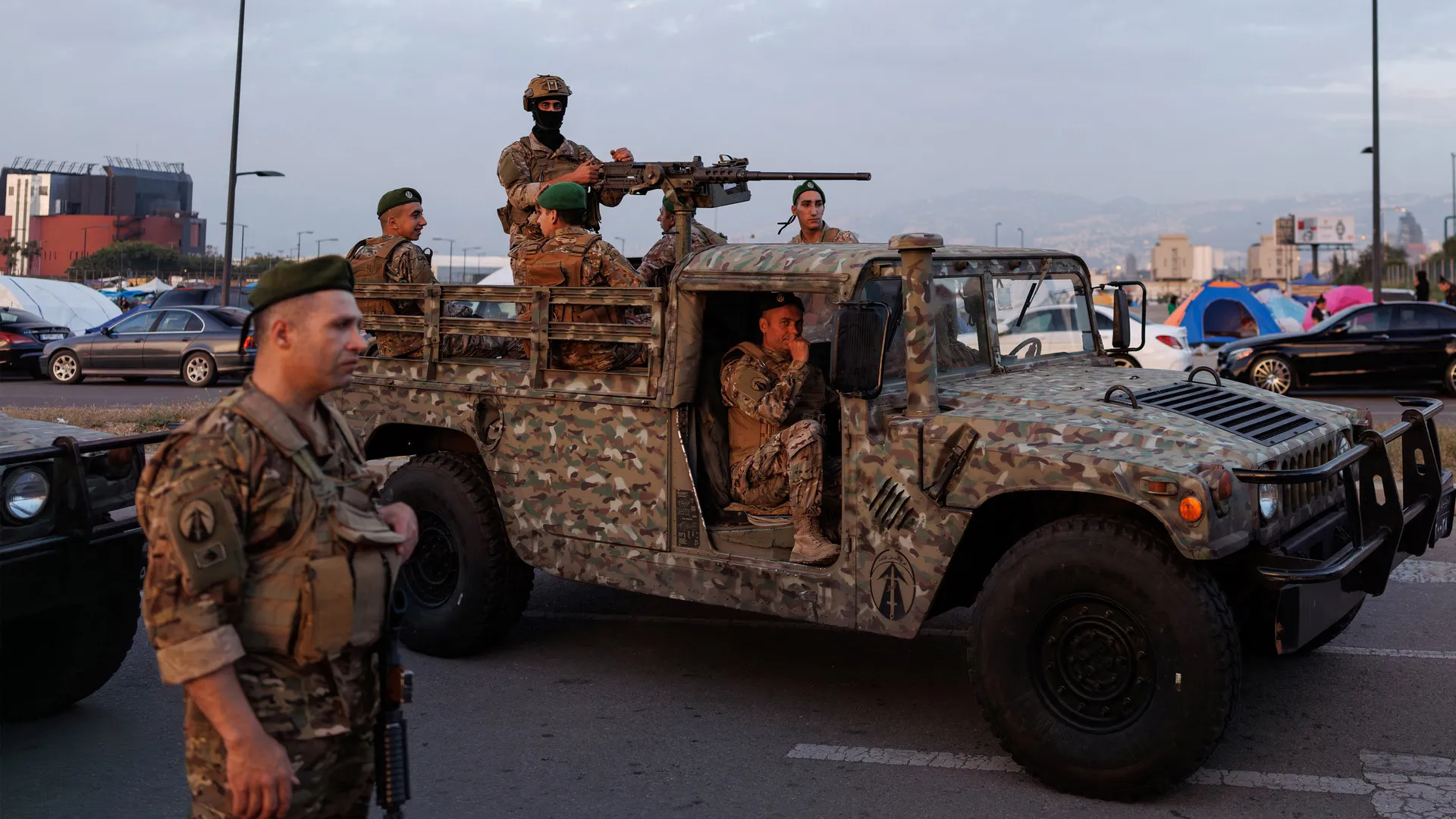
The Israeli military says its troops have begun ground operations in southern Lebanon as fighting against Hezbollah intensifies around the strategic southern town of Khiam.
At least three air strikes struck the city of Khiam, Al Jazeera Arabic reported on Monday.
Recommended Stories
list of 4 itemsend of list
Khiam, a stronghold of Hezbollah, is strategically located and is seen as a gateway to southern Lebanon. The latest war started after Hezbollah fired rockets in response to the killing of Iran’s Supreme Leader Ayatollah Ali Khamenei. Hezbollah had not attacked Israel since the 2024 ceasefire despite repeated Israeli violations of the United States-brokered deal.
On Monday morning, two Israeli air raids targeted the town of Yater, Al Jazeera Arabic reported. There were no immediate reports of casualties or damage.
Israel also launched raids on Burj Qalawiya, Sultaniya and Chaqra, also in southern Lebanon, according to Al Jazeera Arabic. Two raids were also conducted on the towns of Qantara and as-Sawana.
The Israeli army, in a post on X, said on Monday that its troops in recent days were “focused on ground operations on key targets in southern Lebanon to expand the forward defence area”.
“This operation is part of the effort to establish the forward defence, which includes destroying terrorist infrastructure and eliminating terrorists,” it added.
Importance of Khiam
Khiam sits on high ground just a few kilometres from the Israeli border and the Litani River, giving it a commanding view over northern Israel and nearby Lebanese plains.
Al Jazeera’s Zeina Khodr said a “major battle was under way” in and around Khiam. “The elevation of Khiam for both sides gives them a strategic advantage,” she said.
Moreover, Khodr noted the town lies on a “long and important junction … a road that leads to the eastern and western sectors of southern Lebanon”.
“One of the roads leads to the Bekaa Valley too in eastern Lebanon, another area where Hezbollah has influence,” she said.
“What Israel has been trying to do is really cut the supply lines and the difficult capabilities of Hezbollah, so it’s unable to bring in more weapons and fighters to areas south of the Litani River.”
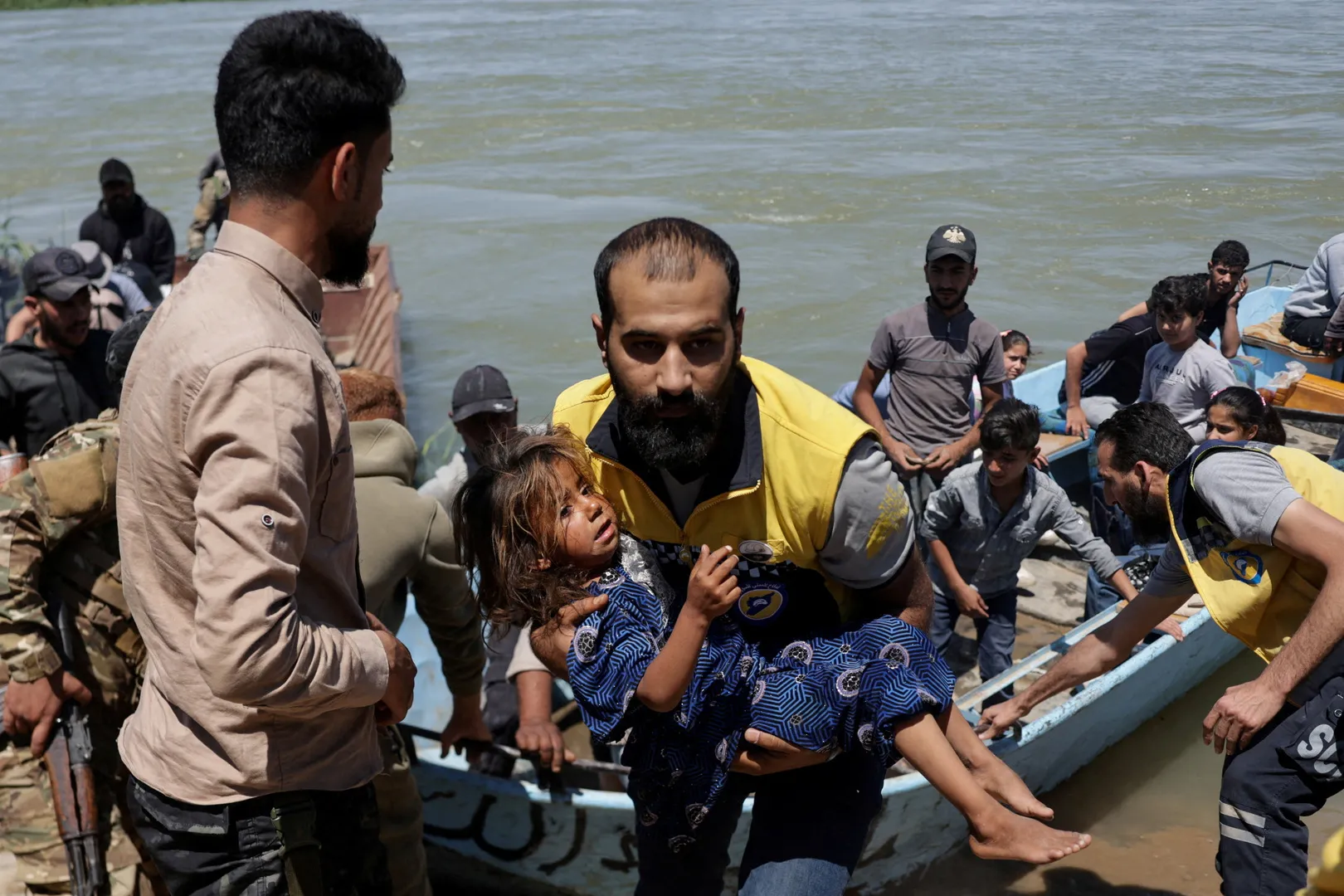
More than 800,000 people, including women and children, have been forced to flee from their homes as the Israeli army issued evacuation orders for many neighbourhoods in southern Lebanon, as well as the capital, Beirut.
Israeli attacks in Lebanon have so far killed at least 850 people, among them 107 children and 66 women.
Gaza City, the Gaza Strip – On February 28, Lama Abu Reida was just a few hours away from what she hoped would change the fate of her sick infant daughter, Alma.
The family had finally been informed that the baby girl – fewer than five months old and unable to breathe without an oxygen machine – was eligible for medical evacuation.
Recommended Stories
list of 3 itemsend of list
The small travelling bag was packed, the medical documents in order, and Abu Rheida ready to go. All that remained was to exit the Rafah crossing between Gaza and Egypt and from there head to Jordan, where Alma could undergo a surgery that was not available in the Gaza Strip.
But just one day before the scheduled March 1 trip, Israel shut Gaza’s crossings “until further notice”, citing security reasons. The decision coincided with the launch of a joint military attack alongside the United States on Iran – and shattered Abu Rheida’s hopes.
“They told me the crossing had been closed without any warning because of the war with Iran,” the mother says in a choked voice.
Alma, who suffers from a lung cyst, has been at Nasser Hospital in Khan Younis, in southern Gaza, for more than three months now, with her mother staying by her side day and night.
“She cannot do without oxygen at all,” Abu Rheida says. “Without it, she becomes extremely exhausted.”
‘I don’t know what might happen’
The Rafah crossing, Gaza’s main gateway to the outside world, was closed for long periods during Israel’s genocidal war against Palestinians in the Strip that began in October 2023.
On February 1, Israel announced a limited reopening as part of a trial phase following a “ceasefire” with the Palestinian group Hamas. This allowed some movement under the agreement’s arrangements, particularly for medical cases.
But only a few patients were able to travel, and thousands remained on waiting lists until the February 28 closure, which stopped the transfer of wounded patients abroad, as well as medical evacuations of patients like Alma.
Doctors had told her family the only option for Alma, who was previously admitted to intensive care three times within a month, was to have surgery abroad to remove the cyst from the lung. While not particularly risky, such an operation cannot be done inside Gaza due to limited medical resources.
“My daughter’s life depends on a single surgery, and afterwards she could live a completely normal life,” Abu Rheida says.
“If her travel is delayed any longer … I don’t know what might happen. Her condition is not reassuring,” she adds in despair.
On Sunday, Israeli authorities said the Rafah crossing will open again on Wednesday for ”limited movement of people” in both directions.
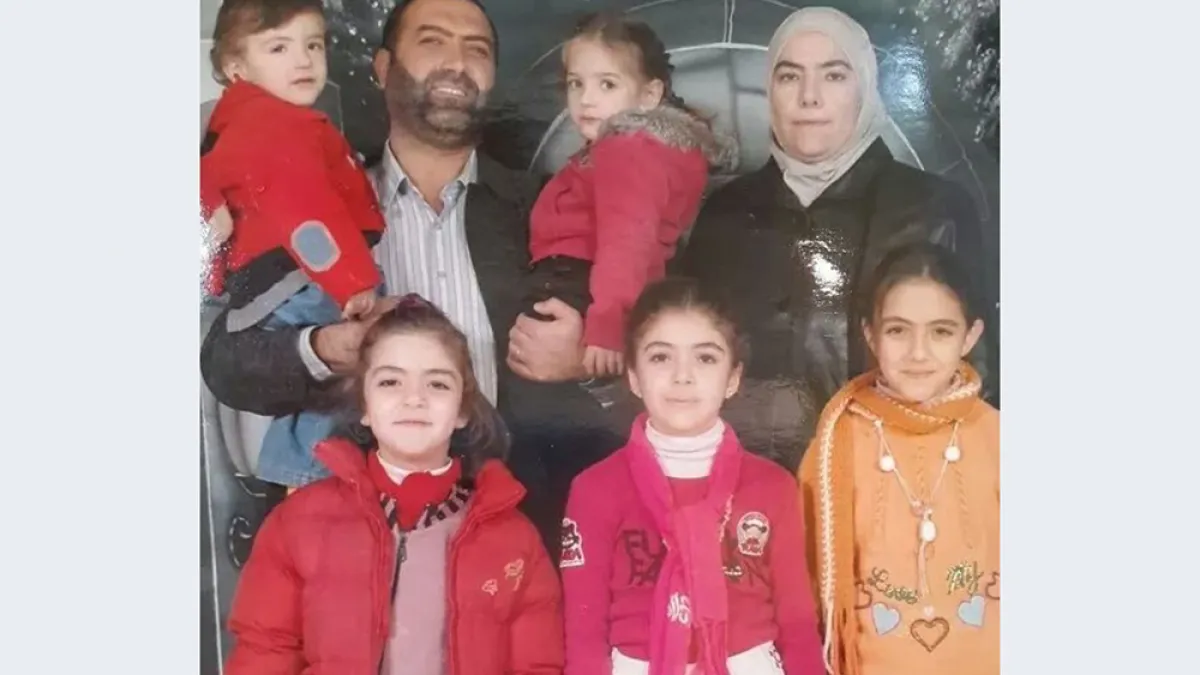
Hadeel Zorob’s late son, Sohaib [Courtesy of Hadeel Zorob/Al Jazeera]
‘The closure killed my children’
The very thing Abu Rheida fears is something Hadeel Zorob has already endured.
Zorob’s six-year-old son, Sohaib, died on March 1, 2025, while her eight-year-old daughter, Lana, passed away on February 18 last month. The two children suffered from a rare genetic disease that causes gradual deterioration in the body’s functions.
They were both waiting for medical referrals to travel abroad for treatment – but that never happened.
“I watched my children die slowly in front of my eyes, one after the other, without being able to do anything,” says Zorob, 32, breaking down in tears.
Lana was only a few days away from travelling before she passed away.
“My daughter’s travel had been scheduled around the same period when the crossing was later closed, but she died before that,” Zorob says.
“When the news of the crossing closure came, my grief for my daughter returned all over again as I remembered the many children who will suffer the same fate.”
Zorob says her children were still able to move and play relatively normally in the early stages of their illness.
Before Israel’s war on Gaza, both children were receiving specialised hospital treatment, which helped stabilise their condition to some extent. But as the Israeli attacks intensified, their condition gradually worsened until it reached a life-threatening stage. The collapse of Gaza’s healthcare system left the family struggling to access the medications they relied on.
“We even tried to bring the medicine from the West Bank, and I asked the Red Cross and the World Health Organization, but nothing worked,” Zorob says.
During the war, she and her family had to leave their home and move into a tent in the al-Mawasi area. The new displacament conditions made caring for the children much harder.
“Both were bedridden … in diapers, and their blood sugar needed regular monitoring. We had to give fluids and watch their food … all this in a tent with no basic necessities.”
Zorob says she feels like “going crazy” when she thinks that her children might have survived and improved if they were able to get treatment abroad.
“The closure of the crossings killed my children!” she adds, her voice filled with anguish. “The world gives no value to our lives or to the lives of our children … this has become something normal.”
Zorob says she is trying to stay strong for her third child, four-year-old Layan, despite the persisting pain.
“All I want is that what happened to my children does not happen to any other mother … that the crossing be reopened and that children and patients be allowed to travel.”
‘Is that too much to ask?’
According to the Health Ministry in Gaza, more than 20,000 patients and wounded people are waiting to travel abroad for medical treatment.
Among them are about 4,000 cancer patients in need of specialised care unavailable in Gaza, and roughly 4,500 children.
The lists also include around 440 “life-saving” cases needing urgent intervention and nearly 6,000 wounded people who require continued hospital care outside of Gaza.
The Al-Dameer Association for Human Rights has called the Rafah crossing’s closure a form of collective punishment for civilians in Gaza, warning that it “sentences more patients to death” and deepens Gaza’s humanitarian crisis.
Amal al-Talouli, 43, has been suffering from breast cancer for five years [Maram Humaid/Al Jazeera]
For Amal al-Talouli, the closure of the Rafah crossing was another devastating blow in her battle with cancer.
The 43-year-old has been suffering from breast cancer for about five years. Although she underwent treatment before the war, the disease returned and spread to other parts of her body, including the spine.
“Praise be to God, we accept our fate,” the mother of two says. “Still, why should our suffering worsen because we are prevented from travelling and the crossings are closed?”
Al-Talouli is currently living with relatives after losing her home in the Beit Lahiya project area, in northern Gaza, during the war.
Displacement was not an easy choice due to her health condition, she says. The situation is compounded by a severe shortage of medications and specialised medical staff – a reality also experienced by other cancer patients in Gaza.
“There is a shortage of everything,” al-Talouli says. “I developed osteoporosis and eye fluid from chemotherapy. Chemo needs good nutrition, but malnutrition and famine made it much harder.”
Al-Talouli says the shutdown of the crossings made things worse.
“[It] affects us very, very much. No medicines are entering, and no essential treatments are coming in,” says al-Talouli, whose name was on a waiting list to travel outside of Gaza for treatment.
She stresses that cancer patients in Gaza urgently need support.
“Now I only want the crossing to reopen so I can have a chance to recover and continue my life with my children,” she says. “Is that too much to ask?”
Footage shows a fire burning near Dubai International Airport after a drone ignited a fuel tank, according to authorities in the UAE. Flights have been suspended. Civil defence crews say the blaze is under control.
Displaced families in Sidon are turning their vehicles into makeshift shelters, covering them with tarp to shield themselves from the rain after failing to find space in local schools. Hundreds of thousands have been forced from their homes as Israel’s offensive in Lebanon intensifies.
Alireza Enayati says relations with Saudi Arabia are ‘progressing naturally’ and he’s in direct contact with Saudi officials.
Published On 15 Mar 202615 Mar 2026
Share
Iran’s ambassador to Saudi Arabia denied Tehran is responsible for attacks on Saudi Arabia’s oil infrastructure, saying if it was behind the strikes, it would have announced it.
Alireza Enayati did not suggest who carried out the attacks, but added Iran is only attacking United States and Israeli military targets and interests during the ongoing war, Reuters news agency quoted him as saying on Sunday.
Recommended Stories
list of 4 itemsend of list
After the US and Israel launched attacks on Iran at the end of February, Tehran retaliated against US and Israeli military assets, including in Saudi Arabia, Qatar, Bahrain, Jordan, Iraq, and the United Arab Emirates (UAE).
Last week, the Ras Tanura oil refinery was forced to stop operations after debris from a drone caused a small fire. Attempted attacks were also reported on the Shaybah oilfield in the desert near the border with the UAE.
So far, Saudi Arabia’s Defence Ministry has not blamed anyone for the attacks.
Enayati said he’s in direct contact with Saudi officials, explaining that relations are “progressing naturally” in many areas.
Talks included Saudi Arabia’s publicly stated position that its land, sea, and air would not be used to target Iran. He didn’t elaborate.
Iran and Saudi Arabia re-established diplomatic relations in 2023, in a deal brokered by China, that saw the two sides, which backed rival groups across the region, agree on a new chapter in bilateral relations.
‘Reliance on external powers’
Enayati reiterated to the Gulf states that the war “has been imposed on us and the region” following coordinated US and Israeli attacks.
Asked about the attacks on Gulf nations, Enayati replied: “We are neighbours, and we cannot do without each other; we will need a serious review.”
“What the region has witnessed over the past five decades is the result of an exclusionary approach and an excessive reliance on external powers,” he said, calling for deeper ties between the Gulf Cooperation Council’s six members along with Iraq and Iran.
Iran’s Foreign Minister Abbas Araghchi also denied his country is targeting civilian or residential areas in the Middle East, and said Tehran is ready to form a committee with its neighbours to investigate the responsibility for such strikes.
So far, the UAE, which normalised relations with Israel in 2020, has faced the brunt of Iran’s attacks, with US bases and oil refineries heavily targeted.
While all countries targeted have strongly condemned Iran’s missile and drone strikes, regional sources say there remains growing frustration at the United States for dragging them into a war they did not sign up for but are now paying the heaviest price for, Reuters reported.
Enayati said to resolve the conflict, the US and Israel need to stop their attacks, and international security guarantees to prevent future “aggression” must be given.
Paul Musgrave, associate professor at Georgetown University in Qatar, said the administration of US President Donald Trump has lost much of its leverage in the region, and the US engaged in the wrong conflict at the wrong moment, without proper planning.
Iran’s strategy, meanwhile, now seems to be “not who has a bigger bomb or bigger munitions, but who has the highest threshold for pain”, Musgrave told Al Jazeera.
Several Gulf energy producers have declared force majeure on oil and gas shipments after disruptions to shipping through the Strait of Hormuz due to the US-Israeli war on Iran. Al Jazeera’s Alma Milisic explains what the legal term means and how it could affect global energy markets.
Ukraine’s leader previously said advisers were sent to Qatar, the UAE, and Saudi Arabia to help thwart Iranian drone attacks.
Published On 15 Mar 202615 Mar 2026
Share
Ukraine wants money and technology as payback after sending specialists to the Middle East to help down Iranian drones during the ongoing Israel-United States war with Iran.
President Volodymyr Zelenskyy told reporters on Sunday that three teams were sent to the region to undertake expert assessments and demonstrate how drone defences work as countries in the Middle East continue to be targeted by Iran over hosting US military bases.
Recommended Stories
list of 4 itemsend of list
“This is not about being involved in operations. We are not at war with Iran,” Zelenskyy said.
Earlier this week, Ukraine’s leader announced military teams were sent to Qatar, the United Arab Emirates, Saudi Arabia, and a US military base in Jordan.
But he explained that more long-term drone deals could be negotiated with Gulf countries, and what Kyiv gets in return for its assistance still needs to be established.
“For us today, both the technology and the funding are important,” Zelenskyy said.
Throughout the four-year Russia-Ukraine war, Moscow has widely used Iranian Shahed-136 “suicide” drones, giving Kyiv expertise in knowing how to down the unmanned aerial vehicles through cheap drone interceptors, electronic jamming tools, and anti-aircraft weaponry.
However, US President Donald Trump has said he does not need Ukraine’s help in taking down Iranian drones attacking American targets.
‘Rules must be tightened’
Zelenskyy said he doesn’t know why Washington hasn’t signed a drone agreement with Kyiv, which it has pushed for months.
“I wanted to sign a deal worth about $35bn–50bn,” he said.
Still, as the Russia-Ukraine conflict continues with no end in sight, Zelenskyy raised concerns that the ongoing war in the Middle East will impact Kyiv’s supplies of air defence missiles.
“We would very much not like the United States to step away from the issue of Ukraine because of the Middle East,” he told reporters.
But as interest has grown for Ukrainian drone interceptors in light of the war, Zelenskyy said Kyiv’s rules to buy the drones must be tightened, with foreign countries and firms being unable to bypass the government and talk directly to manufacturers.
“Unfortunately, representatives of certain governments or companies want to bypass the Ukrainian state to purchase specific equipment,” Zelensky told reporters.
“Even in some free countries, we do not initially receive contracts from the private sector. A contract comes to me through the political channel. Only then does the private sector start negotiating with us.”
Two Palestinian brothers are the only survivors after Israeli troops killed their parents and two siblings in Tammun in the occupied West Bank, according to Palestinian health authorities. The boys say soldiers opened fire on their family car and beat them after the shooting.
CCTV footage released by Israeli police shows the moment an Iranian missile struck a street in Tel Aviv. Emergency crews say at least three people were injured, and several vehicles were destroyed.
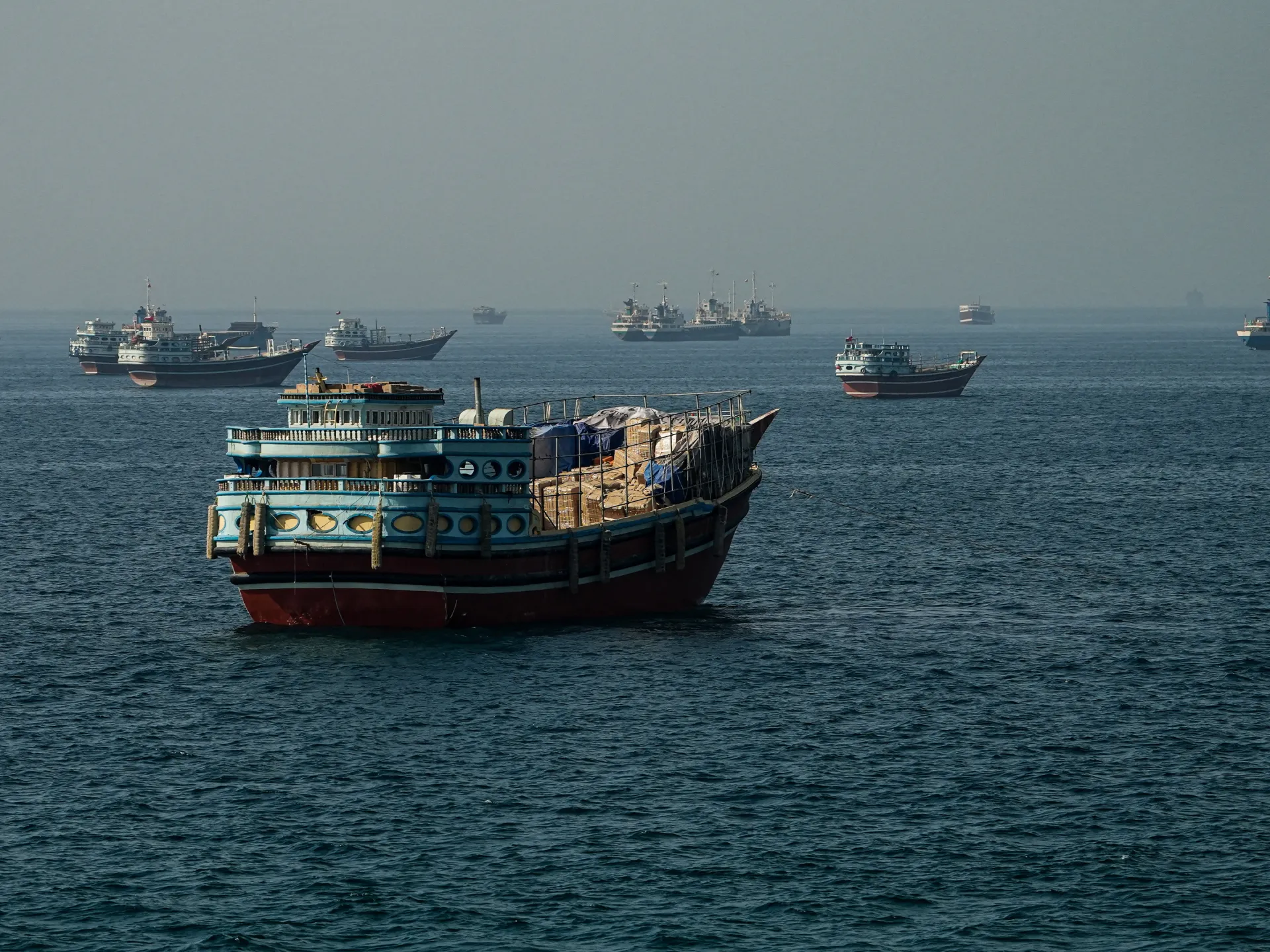
United States President Donald Trump has called for a naval coalition to deploy warships to secure the Strait of Hormuz, through which one-fifth of world oil shipments transit, as oil markets reel from supply disruptions caused by the US-Israeli war with Iran.
What is essentially the closure of the Strait of Hormuz by Iran in response to the attacks by the US and Israel has sent oil prices soaring to more than $100 per barrel.
Iran’s new supreme leader, Mojtaba Khamenei, has promised to keep the maritime artery closed while another top official in Tehran warned that oil prices could shoot up beyond $200 per barrel.
Trump said he hoped a naval coalition could secure the vital waterway, which connects the Gulf to the Gulf of Oman and the Arabian Sea. Iran has struck more than a dozen ships trying to sail through the narrow waterway since the hostilities started two weeks ago.
But will Trump’s solution work?
A tanker sits at anchor in Port Sultan Qaboos in Muscat, Oman, as oil shipments through the Strait of Hormuz have plummeted [File: Benoit Tessier/Reuters]
What has Trump said?
The US president has been facing domestic pressure over starting the war alongside Israel with no endgame or off-ramps in sight.
“On the strait of Hormuz, they had NO PLAN,” US Democratic Senator Chris Murphy wrote in a post on X. “I can’t go into more detail about how Iran gums up the Strait, but suffice it [to] say, right now, they don’t know how to get it safely back open.”
After threatening to bomb Iran more, Trump called on China, France, Japan, South Korea and the United Kingdom to send warships to secure the strait.
Trump claimed “100% of Iran’s military capability” had already been destroyed but added that Tehran could still “send a drone or two, drop a mine, or deliver a close-range missile somewhere along, or in, this waterway”.
“Hopefully China, France, Japan, South Korea, the UK, and others, that are affected by this artificial constraint will send ships to the area so that the Hormuz Strait will no longer be a threat by a nation that has been totally decapitated,” Trump wrote in a post on his Truth Social platform.
“In the meantime, the United States will be bombing the hell out of the shoreline, and continually shooting Iranian Boats and Ships out of the water. One way or the other, we will soon get the Hormuz Strait OPEN, SAFE, and FREE!”
Not long after, Trump returned to the keyboard, extending the invitation to all “the Countries of the World that receive Oil through the Hormuz Strait” to send warships, adding that the US would provide “a lot” of support to those who participated.
Israeli soldiers walk by a billboard commissioned by the evangelical Christian group Friends of Zion during the US-Israel war on Iran in Tel Aviv, Israel [File: Nir Elias/Reuters]
What has Iran said?
Alireza Tangsiri, commander of the Islamic Revolutionary Guard Corps Navy, said in a statement that claims by the US about destroying Iran’s navy or providing safe escort for oil tankers were false.
“The Strait of Hormuz has not been militarily blocked and is merely under control,” he said in a statement.
Iranian Foreign Minister Abbas Araghchi later doubled down on this, saying the strait remained open to international shipping except for vessels belonging to the US and its allies.
“The Strait of Hormuz is open. It is only closed to the tankers and ships belonging to our enemies, to those who are attacking us and their allies. Others are free to pass,” Araghchi said.
Khamenei – son of the late Supreme Leader Ali Khamenei, who was killed on the first day of the US-Israeli strikes – suggested in his first statement since taking power that the Strait of Hormuz would remain closed to provide leverage for Iran during the conflict.
F-18 combat aircraft are parked on the deck of the USS Abraham Lincoln aircraft carrier in the Gulf of Oman near the Strait of Hormuz during a 2019 deployment [File: Ahmed Jadallah/Reuters]
What are the challenges in the Strait of Hormuz?
The strait, which is just 21 nautical miles (39km) wide at its narrowest point, is the only maritime passage into the Arabian Gulf (known as the Persian Gulf in Iran). Shipping lanes in the waterway are even narrower and more vulnerable to attacks.
It separates Iran on one side from Oman and the United Arab Emirates on the other.
In brief, there is no way in or out by sea when the Strait of Hormuz is closed.
Alexandru Hudisteanu, a maritime security expert who served 13 years in the Romanian navy, told Al Jazeera that in the type of coalition that Trump is hinting at, “interoperability is the biggest hurdle.”
“That’s the ability of cruises to work together or with different units and different doctrine when basic communication would be an issue,” he said.
Then, there is the geography of the Strait of Hormuz: “a very unforgiving environment to sail with this type of wartime threats”, Hudisteanu said. “Especially difficult under missile threats and these asymmetric potential mines or unmanned systems that could damage or destroy ships.”
Providing escorts to ships would be a costly option, and it would pose risks to participating foreign warships from possible Iranian attacks, which would likely further drag more countries into the ongoing war.
From Iran’s point of view, “the fact that the shoreline is so close and the actual maritime passage is highly congested and confined is an advantage by default,” Hudisteanu added. Geographically, Iran keeps it as a gauntlet, with no way out for the ships unless Tehran allows it.
Another major challenge for any naval coalition trying to secure the passage would be the timeline of any operation. ”The security of the strait could be achieved. It’s just a matter of how much time you need and how many assets you need,” the analyst said. Rushing through it “could have negative implications for the security of the mission and the region”.
Smoke rises from the Thai bulk carrier Mayuree Naree near the Strait of Hormuz after an attack on March 11, 2026 [Handout/Royal Thai Navy via AFP]
How have countries responded?
No country has so far publicly agreed to Trump’s call to send warships to secure the Strait of Hormuz.
London said it is “intensively looking” at what it can do to help reopen the maritime passage. British Energy Secretary Ed Miliband said: “We are intensively looking with our allies at what can be done because it’s so important that we get the strait reopened.”
Chinese Ministry of Foreign Affairs officials said Beijing is calling for hostilities to stop and “all parties have the responsibility to ensure stable and unimpeded energy supply.”
Japan said the threshold is “extremely high” to send its warships on such a mission. “Legally speaking, we do not rule out the possibility, but given the current situation in which this conflict is ongoing, I believe this is something that must be considered with great caution,” said Takayuki Kobayashi, policy chief of Japan’s ruling Liberal Democratic Party.
France also confirmed that it will not send ships. The Ministry for Europe and Foreign Affairs said in a statement on Saturday: “Posture has not changed: defensive it is,” in reference to President Emanuel Macron’s assertion that France will not join the war against Iran.
South Korea, which imports 70 percent of its oil from the Gulf, said it was “closely monitoring” Trump’s statements and “comprehensively considering and exploring various measures … to ensure the safety of energy transport routes”.
(Al Jazeera)
Are countries negotiating with Iran?
Some countries have been negotiating with Iran to secure passage for their petroleum shipments.
Two Indian-flagged tankers carrying liquefied petroleum gas (LPG) have sailed through the Strait of Hormuz. New Delhi depends on this passage for 80 percent of its LPG imports.
The war on Iran has caused a critical shortage of cooking gas for India’s 333 million households. New Delhi has long had ties with Iran, but the government of Prime Minister Narendra Modi has not condemned the killing of Ali Khamenei. It has condemned Iran’s retaliatory attacks on Gulf countries, where millions of Indian citizens work and send $51bn in remittances home every year.
Iran’s ambassador to India, Mohammad Fathali, said Tehran had allowed some Indian vessels to pass through the Strait of Hormuz in a rare exception to the blockade but did not confirm the number of vessels.
A Turkish-owned vessel was similarly granted permission last week after Ankara negotiated passage directly with Tehran. Fourteen more Turkish vessels are awaiting clearance.
France and Italy also reportedly opened talks with Iranian officials to negotiate a deal to allow their vessels through the strait, but there has been no official confirmation yet.
“Iran is affecting maritime supply,” Hudisteanu said. “It’s affecting the maritime security of the region and the entire ecosystem and bringing the entire world to the table as the global price for oil and gas increases.”
The Palestinian presenter delivered the network’s first-ever bulletin when it went on air in 1996.
Published On 15 Mar 202615 Mar 2026
Share
Al Jazeera Arabic presenter Jamal Rayyan, the first face ever seen on the channel when it launched nearly three decades ago, has died at the age of 73.
Rayyan passed away on Sunday after a broadcasting career spanning more than five decades, during which he covered major global and regional events for the channel – from the United States wars in Afghanistan and Iraq to the Arab Spring.
Recommended Stories
list of 4 itemsend of list
He had been with Al Jazeera since its first day on air on November 1, 1996, when he presented the channel’s opening bulletin at the start of what would become a major broadcaster in the Arab world.
Born in Tulkarem in the occupied West Bank in 1953, the Palestinian presenter began his career at Jordanian Radio and Television in 1974 before working with several broadcasters in the region and beyond, including Emirati television, South Korean public broadcasting, and BBC Arabic.
Rayyan later recalled being sworn to secrecy after being quietly selected for the historic role.
“The vice chairman of the board came and said to me, ‘You have been chosen to be the first face on Al Jazeera, but we want one thing from you: do not tell anyone,’” he told Al Jazeera’s In-Depth Studies, a collection of testimonies from the channel’s founders and early staff.
Measured delivery, distinctive voice
The announcement that Rayyan was presenting the first bulletin was made public half an hour before airtime. He entered the studio deliberately on an empty stomach, he recalled, to ensure he could breathe well and deliver.
“As the broadcast started, my heart began beating rapidly. However, after I appeared on the screen and said, ‘Welcome to the first broadcast of Al Jazeera channel,’ I returned to my natural state and finished the broadcast. As soon as I finished and exited the studio, the entire room erupted in applause,” Rayyan said.
He spent nearly three decades as one of Al Jazeera’s most recognisable presenters, building a following of 2.3 million on X.
Over the years, Rayyan became a familiar presence in homes across the Arab world, his measured delivery and distinctive voice closely associated with Al Jazeera’s news bulletins.
In the Arab world and beyond, his broadcasts and the channel’s editorial approach reached wide audiences and helped shape regional news coverage in the years that followed.
Hundreds of tankers sit idle on both sides of the Strait of Hormuz as Iran has effectively closed the waterway, pushing oil prices above $100 – the highest since 2022, after the start of the Russia-Ukraine war.
Oil tanker traffic in the strait, through which one-fifth of global oil passes, has plunged after Israel and the United States launched attacks on Tehran on February 28. Asian countries, including India, China and Japan, as well as some European countries, source large portions of their energy needs from the Gulf. A disruption in supply will rattle the global economy.
With an aim to cushion from the shock, the International Energy Agency (IEA) has decided to release 400 million barrels of oil from emergency reserves, the largest coordinated drawdown in the agency’s history. But it has failed to push the prices down.
The agency had released about 182 million barrels after Russia’s invasion of Ukraine to stablise the oil prices.
According to the agency, oil shipments through the strategic waterway have fallen to less than 10 percent of pre-war levels, threatening one of the most critical arteries in the global energy system.
IEA members collectively hold about 1.25 billion barrels in government-controlled emergency reserves, alongside roughly 600 million barrels in industry stocks tied to government obligations.
A large number in a massive market
The figure may appear vast, but it shrinks quickly against the scale of global energy demand.
“This feels like a small bandage on a large wound,” energy strategist Naif Aldandeni said, describing the world’s largest coordinated emergency oil release as governments scramble to steady markets shaken by war.
The US Energy Information Administration (EIA) estimates world consumption of petroleum and other liquids will average 105.17 million barrels per day in 2026. At that rate, 400 million barrels would theoretically cover just four days of global consumption.
Even when compared with normal traffic through the Strait of Hormuz – around 20 million barrels per day – the released oil equals only about 20 days of typical flows.
Aldandeni told Al Jazeera that emergency reserves can calm panic in markets but cannot replace the lost function of a disrupted shipping corridor.
“The release may soften the shock and calm nerves temporarily,” he said, “but it will remain limited as long as the fundamental problem — the freedom of supply and tanker movement through Hormuz – remains unresolved.”
Oil prices reflect those anxieties. Brent crude ended trading on Friday at $103.14 per barrel, after surging to nearly $120 earlier as fears of disrupted production and shipping intensified.
Geopolitical risk premium
Oil expert Nabil al-Marsoumi said the price surge cannot be explained by supply fundamentals alone.
“The closure of the Strait of Hormuz added roughly $40 per barrel as a geopolitical risk premium above what market fundamentals would normally dictate,” he told Al Jazeera.
From that perspective, releasing strategic reserves serves primarily as a temporary tool to dampen that premium rather than fundamentally rebalance the market.
Prices above $100 per barrel are uncomfortable for major consuming economies already struggling to curb inflation and protect economic growth.
Recent EIA projections suggest global demand has not yet declined significantly because of the war, remaining close to 105 million barrels per day. The market pressure, therefore, stems less from falling consumption and more from fears of supply shortages and delays in deliveries to refineries and consumers.
Threats to oil infrastructure
The latest escalation could deepen those fears.
United States President Donald Trump said on Friday that the US Central Command (CENTCOM) had “executed one of the most powerful bombing raids in the History of the Middle East and totally obliterated every MILITARY target in Iran’s crown jewel, Kharg Island”.
He added that “for reasons of decency” he had “chosen NOT to wipe out the Oil Infrastructure on the Island”, but warned Washington could reconsider that restraint if Iran continues to disrupt shipping through the Strait of Hormuz.
CENTCOM confirmed the operation, stating US forces had struck “more than 90 Iranian military targets on Kharg Island, while preserving the oil infrastructure”.
Iranian officials have meanwhile warned they would target energy facilities linked to the US across the region if Iranian oil infrastructure comes under direct attack.
Kharg Island is not simply a military location. It serves as the primary export terminal for Iranian crude, making it a critical node in the country’s oil supply network.
If attacks move from obstructing shipping to targeting export infrastructure itself, the crisis could shift from a chokepoint disruption scenario to one involving direct losses of production and export capacity.
In such circumstances, the oil released from emergency reserves would act only as a temporary bridge rather than a lasting solution to lost supply.
Major oil companies such as QatarEnergy, the world’s largest producer of liquefied natural gas (LNG), Kuwait Petroleum Corporation and Bahrain state oil company Bapco have shut production and declared force majeure, while Saudi Aramco, the world’s largest oil producer, and UAE state oil company ADNOC have shut down their refineries.
Limits of emergency reserves
Even under a less severe scenario – where maritime disruption persists but infrastructure remains intact — the ability of strategic reserves to stabilise markets remains constrained by logistics.
The US Department of Energy said the US Strategic Petroleum Reserve held 415.4 million barrels as of 18 February 2026. Its maximum drawdown capacity is 4.4 million barrels per day, and oil requires about 13 days to reach US markets after a presidential release order.
That means even the world’s largest emergency stockpile cannot flood the market with crude immediately. The release must move through pipelines, shipping networks and refining capacity before reaching consumers.
Aldandeni said the current intervention would likely produce only a temporary stabilising effect, while al-Marsoumi warned that prolonged disruption in the Strait of Hormuz – or the spread of threats to other chokepoints such as the Bab al-Mandeb Strait in the Red Sea could quickly send prices further higher.
The captain of the Iranian women’s football team has withdrawn her bid for asylum in Australia, Iran’s state media says, making her the fifth member of the delegation to change her mind after her team’s participation in the Asian Cup.
Zahra Ghanbari will fly from Malaysia and travel to Iran within the next few hours, the IRNA news agency said on Sunday.
Three players and one backroom staff member had already withdrawn their bids for asylum and travelled to Malaysia from Australia, where the team participated in the AFC Women’s Asian Cup.
Australia’s Home Affairs Minister Tony Burke said his country had offered asylum to all players and support staff members prior to their departure over fears they might be punished upon their return home after the team refused to sing Iran’s national anthem at the tournament.
Iranian state broadcaster IRIB reported on Saturday that the three had “given up on their asylum application in Australia and are currently heading to Malaysia”, posting a picture of the women allegedly boarding a plane.
The news was confirmed by Burke a few hours later.
“Overnight, three members of the Iranian women’s football team made the decision to join the rest of the team on their journey back to Iran,” Burke said.
“After telling Australian officials they had made this decision, the players were given repeated chances to talk about their options.”
Five players took up the offer and signed immigration papers last week, with one more player and a member of staff joining them a day later. It leaves two Iranian players in Australia, where they have been promised asylum and an opportunity to settle.
Iran played their three group games of the Asian Cup at the Gold Coast Stadium in Queensland on March 2, 5 and 8, after the United States and Israel launched their war on Iran on February 28.
The initial attacks killed Iran’s Supreme Leader Ayatollah Ali Khamenei and other leaders.
Overall, an estimated 1,444 Iranians have been killed since the war began, including more than 170 people, mostly schoolgirls, who were inside a primary school in the city of Minab.
After refusing to sing the Iranian national anthem at their first match, players on the Iranian women’s football team were branded “traitors” by an IRIB presenter.
When Iran played their second game of the tournament against Australia three days later, not only did the players sing the national anthem, but they also saluted it, prompting fears that they may have been forced to change their stance after receiving backlash in Iranian media.
While neither the players nor the team management explained why they refrained from singing before the first match, fans and rights activists speculated that it may have been an act of defiance against the Iranian government.
On the day of the team’s departure from Australia, Burke announced his government had offered all players and staff members the chance to stay back in the country.
On Tuesday, Burke told reporters that five Iranian players had decided to seek asylum in Australia and would be assisted by the government.
“They are welcome to stay in Australia, they are safe here, and they should feel at home here,” he said.
A day later, Burke confirmed that an additional player and a member of the team’s support staff had received humanitarian visas in the hours before their departure.
However, one player, who previously chose to stay behind, changed her mind and decided to return to Iran.
The player, who was later identified as Mohadese Zolfigol, changed her decision on the advice of her teammates, Burke told the Parliament of Australia.
“She had been advised by her teammates and encouraged to contact the Iranian embassy,” he said.
The players who managed to escape with the help of Iranian rights activists were taken away by Australian police officials to a safe house, where they met immigration officials and signed the paperwork.
“Our understanding is that every single member of the squad was interviewed independently by the Australian Federal Police,” Beau Busch, the Asia/Oceania president of players’ welfare body FIFPRO told Al Jazeera last week.
“[The players] were made aware of their rights and the support available to them. They certainly weren’t rushed through that process.”
The fixture, part of the Qatar Football Festival, has been cancelled amid the ongoing US-Israeli war on Iran.
Published On 15 Mar 202615 Mar 2026
Share
The ‘Finalissima’ match between Spain and Argentina that was scheduled to be held in Qatar later this month has been cancelled due to the conflict in the Middle East, UEFA said in a statement.
“It is a source of great disappointment to UEFA and the organisers that circumstances and timing have denied the teams of the chance to compete for this prestigious prize in Qatar,” UEFA said in a statement on Sunday.
The US-Israeli strikes on Iran have affected countries throughout the Gulf, disrupting travel in some of the world’s busiest transit hubs and forcing several sporting events to be cancelled due to safety concerns.
The contest between European champions Spain and Copa America winners Argentina was scheduled for March 27 at Doha’s Lusail Stadium, where fans would have had the opportunity to watch Lionel Messi go head-to-head with Lamine Yamal.
UEFA said they held discussions with the organising authorities in Qatar and concluded that the match could not take place due to the “current political situation” in the region.
The Spain vs Argentina game was part of the Qatar Football Festival, as promoted by local organisers.
The five-day festival also included Egypt vs Saudi Arabia and Qatar vs Serbia on March 26; Egypt vs Spain and Saudi Arabia vs Serbia on March 30 and Qatar vs Argentina on March 31.
Serbia will now play Spain away instead.
“Serbia will face the current European champions, Spain, on away turf on March 27, and four days later they will host the Saudi Arabian national team,” the Football Association of Serbia said in a statement.
UEFA said they explored other feasible alternatives to play the Finalissima but they proved to be ‘unacceptable’ to the Argentinian Football Association (AFA).
UEFA first offered to stage the match at the Santiago Bernabeu with a 50:50 split of supporters in the stadium.
A second option was to stage the Finalissima over two legs – at the Bernabeu on March 27 and the second leg in Buenos Aires during an international window before the next Euros and Copa America.
However, the AFA rejected both options. UEFA said Argentina made a counter offer to play the game after the World Cup but Spain had no available dates.
“Ultimately, UEFA sought a commitment from Argentina that, if a neutral venue in Europe could be found, the game could go ahead on 27 March… or on the alternative date of 30 March. This proposal was also rejected,” UEFA added.
The 2022 edition of the Finalissima was held at Wembley Stadium in London where Argentina beat Italy 3-0.
The decision by United States President Donald Trump to launch a war on Iran has left many international law experts questioning if the world order established after World War II is actually working.
In his second presidential term, Trump seems to be wielding total power without restraint, and the system of checks and balances enshrined in the US Constitution appears to be failing to limit his power.
Recommended Stories
list of 4 itemsend of list
Since Trump was sworn in in January 2025, he has ordered two unprovoked attacks on independent states, Venezuela and Iran; threatened to annex Greenland; strained traditional alliances with Europe; undermined the United Nations; and rattled international trade with his sweeping tariffs.
Previous constraints set by the UN system and international law appear supplanted by what Trump told reporters in January was a vision of power limited only by his “own morality”.
President Donald Trump holds the key to unlock the FIFA Club World Cup trophy, which he said is staying at the White House, requiring a replica to be presented to the tournament’s winners, Chelsea, in July 2025 [File: Pool via AP]
So what checks are there on Trump? Is he really free to attack states, set tariffs at will and, as leader of the world’s most powerful state, essentially dictate global policy? And if so, why are so many observers now saying his war on Iran is faltering?
Has international law put any checks on Trump?
Not so far.
According to analysts, both his attacks on Venezuela and Iran were in clear breach of international law and the UN Charter, principally the prohibition on the use of force under Article 2(4).
Debates about international law, how it has been geared over the decades to underpin the interests of the West and the US specifically, are hardly new. However, experts said, the Trump presidency has seen even the notional restraints of international law trampled underfoot.
Trump himself has brushed aside international law, saying in January that it would be up to him to decide when and how much international law applied to the US and his actions.
“In many respects, international law has historically served US interests, and self-interest should continue to generate US support for a rules-based order organised around the core principles enshrined in the UN Charter,” Michael Becker, a professor of international human rights law at Trinity College in Dublin who previously worked at the International Court of Justice in The Hague, told Al Jazeera, “But finding value in international law often requires adopting a long-term outlook that does not sit easily with short-term political agendas.”
“In the current geopolitical climate, the capacity of international law to provide a meaningful constraint on US action under Donald Trump has proven negligible,” Becker added. “That seems unlikely to change, especially given the failure by other states to strike a united front against Trump’s gangsterism.”
What about the UN?
Not so much.
From its founding, the role of the UN has been to promote dialogue instead of conflict and provide a global response to international challenges. However, Trump’s relationship with the body, like so many of the president’s associations, has rarely been so straightforward. On the one hand, while appearing to try to supplant the body with his members-only Board of Peace as well as sidelining UN aid efforts in Gaza, he has on occasion sought the legitimacy of the UN for a number of his projects, such as his calls in August for the UN to establish a Support Office in Haiti, to help limit migration to the US.
However, while the support of the UN may be helpful, it is clear that Trump has no intention of abiding by its charter, Richard Gowan, the Crisis Group’s UN director from 2019 to 2025, said.
“While other UN members see the US is breaking international law on a regular basis, they often hold back from criticising Washington too loudly in forums like the Security Council because they fear blowback from Trump,” Gowan said. “So Trump is learning he can sidestep the UN when he wants to and get away with it while occasionally using it for instrumental purposes.”
What about other powers?
Up to a point.
Many countries known as “middle powers”, such as Canada, the United Kingdom, France, and other Western and European states, have proven successful so far in pushing back against Trump’s efforts to unilaterally annex Greenland. But European powers have failed to condemn Trump’s unprovoked war on Venezuela and Iran, exposing their double standards in conflicts in the Middle East and the Global South.
Many analysts expect that a withdrawal of investments in the US by Gulf states, which are bearing the brunt of Iran’s retaliation to US and Israeli attacks, may also hasten the war’s end.
“Middle powers can generate friction but not a veto,” HA Hellyer of the Royal United Services Institute for Defence and Security Studies in London said. “Collective action – European governments, Gulf states – can raise costs and extract tactical adjustments. The structural imbalance remains: The US retains decisive military, financial and institutional primacy.”
Smaller states often hedge their bets, follow Washington or look to regional alliances for protection, Hellyer added, continuing that while pressure was strongest in Europe, where the US is no longer seen as a reliable security guarantor, the idea of establishing an alternative continues to be a hurdle. “The logic of an alternative model is accepted; the capacity to execute it quickly is not. A prolonged interregnum follows. The Gulf Arab states are in an analogous position,” he said.
In the meantime, Trump and the US are free to act as they choose. “These are exposure-management strategies, pursued until structural dependence on the US security umbrella can be reduced,” he said.
China and Russia have so far criticised the breaches of international law while avoiding clear escalation, and India and other members of the BRICS bloc have largely stayed silent, suggesting a preference for strategic ambiguity over confronting Washington directly.
Canadian Prime Minister Mark Carney warned Trump of a ‘rupture’ in the Western alliance at the World Economic Forum in Davos, Switzerland, in January 2026 [File: Denis Balibouse/Reuters]
What about domestic restraints?
Not really.
The US Supreme Court was able to block Trump’s use of tariffs to manage large parts of his foreign policy by rewarding allies with lower tariffs and punishing critics with punitive import duties.
But none of the other traditional guardrails – such as Congress; the Department of Justice, which has provided unwavering support to the president; and even the news media – has contained the president’s ambitions. This isn’t entirely new. Previous presidents have ordered wars without congressional approval. However, with Trump, analysts suggested, it has been systematic.
Powerful US institutions have largely failed to hold the Trump administration accountable, analysts, such as Kim Lane Scheppele, a professor of international affairs at Princeton University, said.
“His base of strong supporters are saying that they are willing to experience short-term increases in gasoline prices if it leads to a friendly government in Iran in the long term. His opponents have been his opponents on everything, so he simply ignores and threatens them,” Scheppele told Al Jazeera.
“Trump pays more attention to market performance than to public opinion, so he started saying that he was minimising costs and saying that the Iran war is short term to boost markets again.”
“What the US is spectacularly missing is leadership to oppose Trump. Congress is not doing its constitutional job to constrain him. The Supreme Court is in his pocket because he packed the court in his first term. Lower court judges are heroic and have done amazing work under serious pressures, but they don’t get foreign policy questions, given the difficulty of anyone getting ‘standing’ … in the area of international matters,” she said, referring to the requirement that parties to a lawsuit must show actual or future direct harm to themselves to bring a case to court.
She noted that lower federal courts, although limited on foreign policy, have repeatedly checked executive overreach on immigration, sanctions designations and emergency powers, often under intense political pressure.
A bulk carrier and tanker at anchor in Muscat, Oman, as Iran has essentially closed the Strait of Hormuz by threatening to attack vessels transiting the waterway [File: Benoit Tessier/Reuters]
So why are so many people saying Trump’s war is faltering?
In the eyes of many observers, Trump, with no clear war aims or a defined resolution, is in danger of losing control of a conflict that appears to be both growing and reaching into economic areas apparently unforeseen by his administration, so while traditional restraints don’t apply, market forces, like gravity, always do.
Trump has repeatedly said the war would be over soon despite none of his claimed war aims being achieved.
Oil prices have surged due to his attacks on Iran, Tehran’s counterstrikes and threats to shipping in the Strait of Hormuz, through which about 20 percent of the world’s oil and liquefied natural gas passes.
The International Energy Agency’s decision on Wednesday to release 400 million barrels of oil from international petroleum reserves has failed to tame the prices. Iran has warned that oil could hit $200 a barrel as it continues its stranglehold of the waterway.
“Ultimately, the factors that might be most likely to constrain Donald Trump’s neoimperialist impulses – or his willingness to pursue the policy goals of those who have his ear – are the economic fallout from disrupting global energy markets and a broader disenchantment among US voters with his globe-trotting militarism, his rampant self-dealing and his callous disregard for the human costs of war,” Becker said.
Ebrahim Zolfaghari, spokesperson for Iran’s Khatam al-Anbiya Central Headquarters, accused the US and Israel of orchestrating a ‘diabolical plot’, claiming they copied Iran’s Shahed-136 drone design and repurposed it as a modified ‘Lucas’ drone to falsely blame Tehran for drone attacks across the region.
Thousands in Paris protest military operations in the Middle East. One of more than 85 coordinated protests across France. The rally opposed US and Israeli military operations in Iran, Lebanon, and Palestine.
Activists gathered outside the White House to protest the war with Iran, reenacting the Minab school strike, a deadly missile attack on a girl’s school in southern Iran that killed more than 170 people during early US-Israeli operations.
The Qatar GP, scheduled for April 10-12, has been rescheduled for November 8 amid the ongoing US-Israeli war on Iran.
Published On 15 Mar 202615 Mar 2026
Share
The Qatar Grand Prix that was scheduled to be held next month has been postponed due to the ongoing conflict in the Middle East, the sport’s governing body announced.
“MotoGP confirms that the Qatar Grand Prix, originally scheduled for April, has been postponed to November 8 due to the ongoing geopolitical situation in the Middle East,” MotoGP said on Sunday.
The Lusail International Circuit was set to host the fourth round of the 2026 championship from April 10-12 but it has now been rescheduled for November 8, organisers said in a statement.
“Following extensive scenario planning and calendar analysis, the revised date has been chosen to ensure minimal disruption to the wider MotoGP schedule.”
The Portuguese Grand Prix will now take place on November 22 and the season finale in Valencia will move to November 29, organisers added.
Aprilia’s Marco Bezzecchi leads the championship after the first round in Thailand. The next two races will be held in Brazil (March 20-22) and the United States (March 27-29).
Earlier on Sunday, Formula One and its governing body, FIA, said the Grands Prix races in Bahrain and Saudi Arabia will not happen in April due to safety concerns related to the Iran war.
Both countries have been hit during Iran’s retaliatory attacks after the United States and Israel launched a wave of strikes on Iran.
The announcement was made in Shanghai ahead of the Chinese Grand Prix.
“Due to the ongoing situation in the Middle East region, the Bahrain and Saudi Arabian Grands Prix will not take place in April,” F1 said. “While several alternatives were considered, it was ultimately decided that no substitutions will be made in April.”
F1 was due to race in Bahrain on April 12 and in the Saudi Arabian city of Jeddah on April 19.
“While this was a difficult decision to take, it is unfortunately the right one at this stage considering the current situation in the Middle East,” said Stefano Domenicali, president and CEO of F1.
“The FIA will always place the safety and well being of our community and colleagues first. After careful consideration, we have taken this decision with that responsibility firmly in mind,” FIA’s president, Mohammed Ben Sulayem, said.
The FIA did not explicitly rule out rescheduling the races and, along with F1, did not use the words “cancel” or “postpone” in announcing that the series would not be in Bahrain or Saudi Arabia next month.