Middle East

Qatar says Iran missile attack sparks fire, causes damage at gas facility | US-Israel war on Iran News

Qatar’s Foreign Ministry strongly condemns attack that caused “extensive damage” at the Ras Laffan complex.

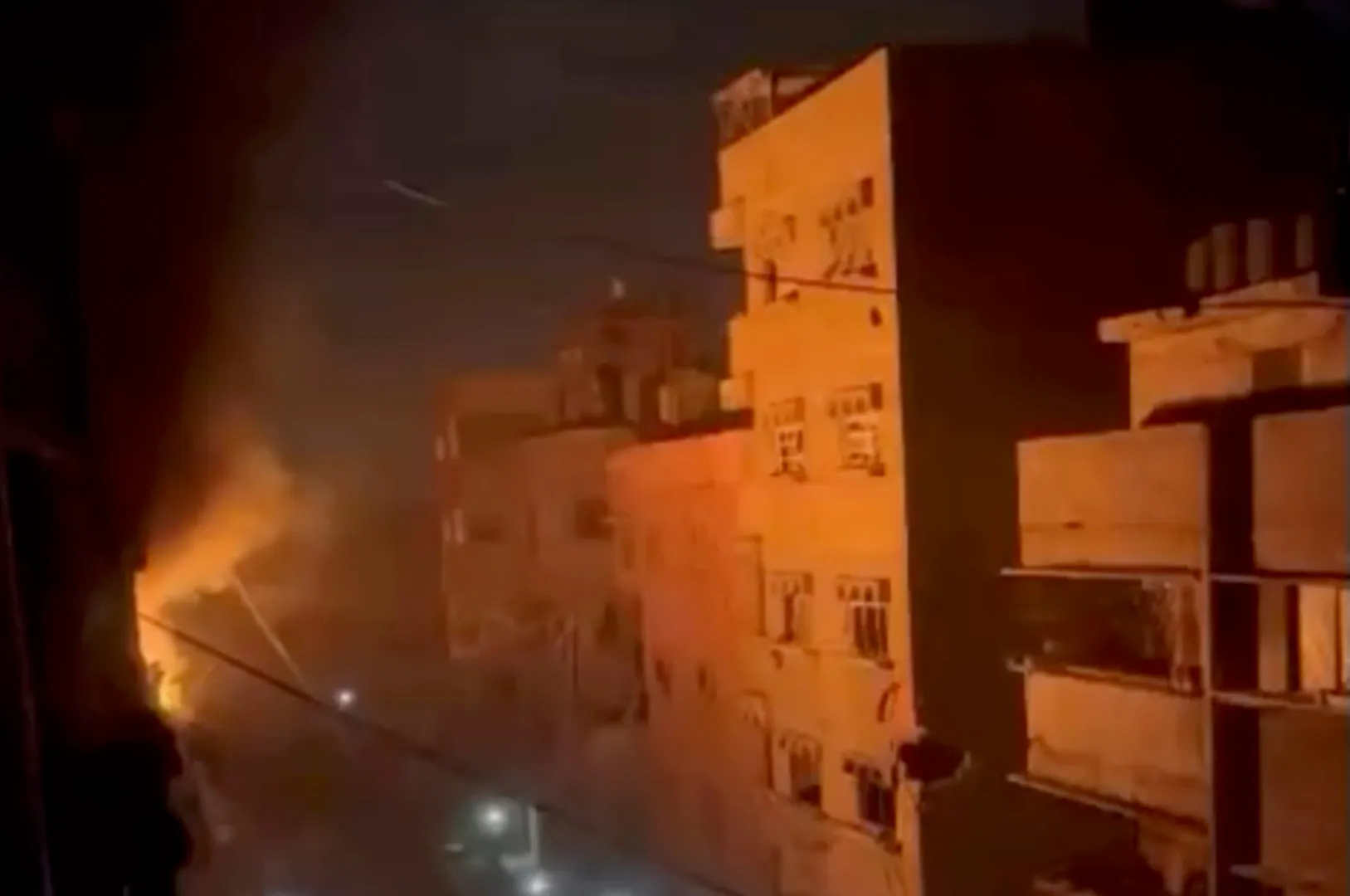
Qatar’s Ministry of ⁠Interior says civil ⁠defence teams are responding to a fire at the country’s main gas facility after an Iranian attack.

In a statement on Wednesday, QatarEnergy said there was “extensive damage” following the “missile attacks” on Ras Laffan Industrial City.

“All personnel have been accounted for and no casualties have been reported at this time,” the world’s largest liquefied natural gas (LNG) producer added.

The announcements came hours after Iran threatened to attack oil and gas facilities across the Gulf region in retaliation for an Israeli attacks on its South Pars gasfield as the fallout from the United States-Israeli war on the country continues to escalate.

Iran’s warning was directed at Qatar’s Mesaieed Petrochemical Complex, Mesaieed Holding Company and Ras Laffan Refinery; Saudi Arabia’s Samref Refinery and Jubail Petrochemical Complex; and the United Arab Emirates’s Al Hosn Gas Field.

In a statement, Qatar’s Foreign Ministry strongly condemned “the brutal” Iranian targeting of Ras Laffan Industrial City.

“Qatar considers this assault a dangerous escalation, a flagrant violation of its sovereignty, and a direct threat to its national security,” it said.

On March 2, Qatar suspended LNG production following an attack on at its giant Ras Laffan facility, as well as on a water tank at a power plant in Mesaieed Industrial City.

Source link

US intel chief Gabbard says Iran was not rebuilding enrichment prior to war | US-Israel war on Iran News

Washington, DC – Tulsi Gabbard, the director of US National Intelligence, said that the United States intelligence community had assessed that Iran was not rebuilding its nuclear enrichment capabilities following US and Israeli attacks last year.

The revelation on Wednesday appeared to undercut one of President Donald Trump’s key justifications for joining Israel in launching the latest war against Iran.

Recommended Stories

list of 3 itemsend of list

Trump and his top officials have repeatedly cited Iran’s nuclear ambitions as one of the main reasons for abandoning ongoing diplomatic talks in favour of military action.

“As a result of Operation Midnight Hammer,” Gabbard said in written testimony to the Senate intelligence committee, referencing the June 2025 US strikes on Iran’s nuclear facilities, “Iran’s nuclear enrichment program was obliterated”.

“There have been no efforts since then to try to rebuild their enrichment capability,” Gabbard said in the written testimony.

Notably, Gabbard did not read that portion of her testimony, which was provided to members of the committee, during her publicly televised oral testimony. When pressed on why she omitted the portion, Gabbard said simply that she did not have enough time. She did not deny the assessment.

“You chose to omit the parts that contradict Trump,” Senator Mark Warner, a Democrat, responded.

Trump has repeatedly said the June 2025 attacks, which came at the end of a 12-day war between Israel and Iran, had “obliterated” Iran’s nuclear capacity, even as he warned that Iran’s alleged nuclear ambitions presented an immediate threat to the US.

Tehran has for years denied it is seeking a nuclear weapon. Nuclear and arms monitors have maintained that even if Tehran were seeking a nuclear weapon, it did not represent a short- or medium-term threat.

The foreign minister of Oman, who had mediated the latest round of US-Iran indirect nuclear talks ahead of the war, has refuted Trump officials’ claims that the most recent negotiations were not yielding any progress.

The Guardian newspaper also reported this week that the United Kingdom’s national security adviser, Jonathan Powell, had attended the final session of talks and assessed that the Iranian position did not justify an immediate rush to war, citing sources familiar with the situation.

The administration has not settled on any single justification for launching the war, also pointing to Iran’s ballistic capabilities, its potential threat to Israel and US forces in the Middle East, and the totality of the Iranian government’s actions since the 1979 Islamic Revolution.

The concept of an “imminent threat” is significant in determining the legality of Trump’s decision to strike a sovereign country under international law.

It is also significant for US domestic law, under which presidents can commit the military only in instances of immediate self-defence. Only Congress can officially declare war or authorise extended military campaigns.

Iran’s government ‘intact but largely degraded’

The White House said earlier this week that Iran’s ballistic missile capacity was “functionally destroyed”, with the Iranian navy “effectively destroyed” and the US and Israel dominating the country’s airspace.

Experts have assessed that Iran still maintains the military capacity to inflict significant damage in the region, and it has continued to wield its military influence over the Strait of Hormuz.

Gabbard, meanwhile, offered a more sober assessment than the White House, saying that despite the killings of Iranian supreme leader Ayatollah Ali Khamenei, top military officials, and most recently the head of the Supreme National Security Council, Ali Larijani and the intelligence minister, Esmail Khatib, “the regime in Iran ⁠appears to be intact but largely degraded by Operation Epic Fury”.

“Even so, Iran and its proxies remain capable of and continue to attack US and allied interests in ⁠the Middle East. If a hostile regime survives, it will seek to begin a years-long effort to rebuild its missiles and UAV [drone] forces,” she said.

Gabbard also listed Iran, alongside Russia, China, North Korea and Pakistan, as among the countries “researching and developing an array of novel, advanced, or traditional missile delivery systems, with nuclear and conventional payloads, that put our homeland within range”.

The Washington, DC-based Arms Control Association has said that US intelligence as of 2025 had said it may take Iran until 2035 or longer to develop a missile capable of hitting the US, if it did indeed seek to do so.

High-profile resignation

Gabbard spoke a day after a top official in her agency, Joe Kent, the director of the US National Counterterrorism Center, resigned in opposition to Trump’s war with Iran.

In his resignation, Kent said that Iran “posed no imminent threat” to the US and that Trump’s decision to enter the war went against his “America First” pledges.

Kent is the first high-profile member of the Trump administration to step down in response to the war.

Gabbard herself had previously been a vocal opponent to indefinite military engagement in the Middle East and war with Iran. A former member of the US House of Representatives from Hawaii, she left the Democratic Party and supported Trump, in part, due to his anti-war vows.

However, in a post on X on Tuesday, Gabbard defended Trump’s decision to go to war.

“As our Commander in Chief, he is responsible for determining what is and is not an imminent threat, and whether or not to take action he deems necessary to protect the safety and security of our troops, the American people and our country,” she said.

She said her agency’s role was to funnel US intelligence to Trump.

“After carefully reviewing all the information before him, President Trump concluded that the terrorist Islamist regime in Iran posed an imminent threat and he took action based on that conclusion,” she said.

Source link

Trump will pay his respects in Delaware to 6 U.S. service members killed in the Middle East

President Trump is set to pay his respects on Wednesday at a Delaware military base when the remains of six U.S. service members killed in the crash of a refueling aircraft are returned to their families.

It will be the second time since launching the war with Iran on Feb. 28 that the Republican president will attend the solemn military ritual known as a dignified transfer, which he once described as the “toughest thing” he has had to do as commander in chief.

All six crew members of a KC-135 Air Force refueling aircraft were killed last week in a plane crash over friendly territory in western Iraq while supporting operations against Iran. They were from Alabama, Indiana, Kentucky, Ohio and Washington state.

“Every person on that aircraft carried a weight most Americans will never see, and they carried it with professionalism, courage, and a level of quiet excellence that deserves to be recognized,” retired Lt. Col Ernesto Nisperos, a friend of one of those killed, said in a text message Wednesday.

The crash brought the U.S. death toll in Operation Epic Fury to at least 13 service members. About 200 U.S. service members have been injured, including 10 severely, the Pentagon has said.

Trump last traveled to Dover Air Force Base on March 7 for the dignified transfer of six U.S. service members who were killed by a drone strike at a command center in Kuwait. He saluted as flag-draped transfer cases containing the remains of the fallen service members were carried from military aircraft to vehicles waiting to take them to the base’s mortuary facility to prepare them for their final resting place.

“It’s the bad part of war,” he told reporters afterward. Asked then if he worried about having to make multiple trips to the base for additional dignified transfers as the war continued, he said, “I’m sure. I hate to do it, but it’s a part of war, isn’t it?”

U.S. Central Command, which oversees military operations in the Middle East, said that the crash followed an unspecified incident involving two aircraft in “friendly airspace” over Iraq but that the loss of the aircraft during a combat mission was “not due to hostile or friendly fire.” The circumstances were under investigation. The other plane landed safely.

The crash killed three people assigned to the 6th Air Refueling Wing at MacDill Air Force Base in Florida: Maj. John A. “Alex” Klinner, 33, who served in Birmingham, Ala.; Capt. Ariana Linse Savino, 31, of Covington, Wash.; and Tech. Sgt. Ashley Pruitt, 34, of Bardstown, Ky.

Klinner, who left behind a wife, a 2-year-old son and 7-month-old twins, was known for his steady command and goofy nature, as well as a willingness to help others. Pruitt’s husband described her as a “radiant” woman who lit up the room. Savino was a friend, mentee and “source of positive energy” who was proud of her Puerto Rican heritage and inspired young Latinas, said Nisperos, who is serving as spokesman for her family.

“She had had this warmth that made you feel seen, a strength that showed up in everything she touched, and a spark — that spice — that made her unforgettable,” Nisperos said. “If you knew her, even for a moment, you knew you were in the presence of someone who was going to change the world.”

The three others were assigned to the 121st Air Refueling Wing at Rickenbacker Air National Guard Base in Columbus, Ohio: Capt. Seth Koval, 38, a resident of Stoutsville, Ohio, who was from Mooresville, Ind.; Capt. Curtis Angst, 30, who lived in Columbus; and Master Sgt. Tyler Simmons, 28, of Columbus.

Koval grew up dreaming of becoming a pilot, according to his wife, who described him as a loving, generous “fixer of all things.” Angst’s family said his life was defined by service, generosity and “a genuine love for people.” Simmons loved confiding in his 85-year-old grandmother and working out with her, Sen. Jon Husted said Tuesday, when he and Sen. Bernie Moreno honored the Ohio airmen on the Senate floor.

“To the mom and dad of these three young soldiers, I can’t even process what you’re going through. I can’t even imagine the emotions that you’re feeling,” Moreno said. “Just know that America is grateful beyond words for the sacrifice that your heroic young sons made.”

Superville writes for the Associated Press. AP writers Holly Ramer in Concord, N.H., and Hallie Golden in Seattle contributed to this report.

Source link

How Los Angeles’s Iranian diaspora is confronting the US war on Iran | US-Israel war on Iran News

Concerns over US involvement

The war has reignited a debate within the Iranian diaspora about what role the US should play in Iran’s future.

This question is more than a distant geopolitical issue for Iranians in Los Angeles.

Many residents explained that their family histories had been shaped by US involvement in the region, whether it was through US support for Iran’s fallen monarchy or through the US decision to back Iraq’s invasion of Iran in 1980.

Aida Ashouri, a human rights lawyer who is running to be Los Angeles city attorney, was among those publicly condemning the latest US campaign in Iran at the city hall protest on February 28.

“This is a US imperialist war, and we have to make that clear,” she said. “Call a spade a spade. This war is not to liberate the women of Iran or the people of Iran.”

Ashouri was born during the Iran-Iraq war in the 1980s. Her hometown, Isfahan, was also bombed in June last year during the US and Israel’s 12-day war with Iran.

For Ashouri, it was telling that the US and Israel once again launched the first strike in the current conflict. For many legal experts, that made the conflict an unprovoked war of aggression, in violation of international law.

“A war implies two sides are actively engaged, but Iran has done nothing to be involved,” Ashouri said.

“This is a unilateral military invasion, an aggression of the United States and Israel. They are the ones with the power to end it by stopping the bombing.”

She and other protesters drew parallels between the current Iran war and the US-led wars in Iraq and Afghanistan, launched in 2003 and 2001, respectively.

“I lived through the shadow of the war on terror, all the propaganda talking points,” said Shany Ebadi, an Iranian American antiwar organiser with the ANSWER Coalition. “What the Trump administration is saying reminds me a lot of the Iraq war.”

As someone who follows the news closely, Ebadi remembers feeling alarm when the first strikes were launched in February.

“When I got the breaking news notification of the initial attack, my whole body felt paralysed. I felt anger and frustration,” she said.

She and Ashouri both said they fear the military operation in Iran could spark a regional war that might further destabilise not just Iran, but the entire Middle East.

“I fear that war will repeat the disasters seen in Palestine, Iraq, Libya, and Afghanistan,” Ashouri said, listing countries targeted in the US’s “war on terror” over the past two and a half decades.

The question of whether bombs can pave the way to freedom in Iran is a simple one for Ashouri and her fellow antiwar activists. The answer, they say, is simply no.

Source link

Amid ruins, Palestinians struggle to preserve Gaza’s historic markets | Israel-Palestine conflict News

Khan Younis, Gaza Strip – Historic landmarks often withstand centuries of volatile change, but when rockets and missiles fall, even the most enduring stones become fragile.

For generations of families in Gaza’s southern city of Khan Younis, the Grain Market was the first stop when they went shopping.

Recommended Stories

list of 3 itemsend of list

Reaching it meant walking past the historic Barquq Castle, a centuries-old structure dating back to 1387 and the very foundation of Khan Younis.

But for residents, the castle was more than an old monument; it was a familiar landmark marking the entrance to one of the city’s liveliest commercial spaces.

The aromatic scent of spices and dried herbs would accompany any walk towards the Grain Market.

But that was before Israel’s genocidal war on Gaza began. Israeli attacks inflicted heavy damage on the Grain Market and the Barquq Castle. The market has now been reduced to shattered alleys, with dust and heavy silence filling the air.

Sitting in his store along a row of damaged old shops, 60-year-old Nahed Barbakh, one of the city’s oldest and most well-known traders of staple food supplies, spent decades watching customers stream through the market. Now, only a handful pass by his shop.

“I’ve been in this spot for decades, day in and day out, watching people bring life to this place,” Nahed said. “Look at it now – it’s empty. These days, there shouldn’t even be space to walk because of the crowds preparing for Eid.”

He paused before gesturing towards the nearby castle.

“We always felt the weight of history here because we are so close to Barquq Castle. Now that history and life itself have been struck by the occupation.”

But Israeli fire did not take into account the market’s historic status. The Grain Market, long considered the economic heart of Khan Younis, was also among the first sites of destruction during the second month of Israel’s genocidal war on Gaza. More than two years of Israeli bombardment and repeated waves of displacement have left the market unrecognisable.

“The occupation killed many of our friends who worked here,” Nahed said quietly. “Those who survived have been financially broken. That’s why you see most of these shops are still closed.”

He pointed to some shelves behind him.

“My shop used to be fully stocked with goods at its high capacity. We even had extra warehouses to supply what people needed, especially during the busiest seasons.”

Before he could finish his sentence, a deafening blast interrupted him — the sound of an Israeli tank fire.

“And this is the biggest reason people are afraid to return,” Nahed said abruptly. “The yellow line is only a few hundred metres away from this street. At any moment, bullets can reach here.”

The yellow line is the name given to the demarcation line behind which Israeli forces withdrew as part of the first phase of October’s ceasefire agreement. It effectively divides Gaza into two, and Palestinians have repeatedly been shot for approaching it.

The yellow line has divided Khan Younis, dramatically reshaping the city’s geography. Israel has repeatedly shifted the line, moving it deeper into Gaza.

The Grain Market, once firmly at the centre of urban life, now sits close to the yellow line.

What used to be the city’s commercial heart has effectively turned into its edge, where people hesitate to walk, leaving the revival of daily commerce life a distant prospect.

Nahed Barbakh, 60, shop owner and trader, sits at a table in front of his store
Nahed Barbakh, a 60-year-old shop owner and trader, sits at a table in front of his store [Ahmed al-Najjar/Al Jazeera]

Centuries of endurance

The Grain Market traces its origins to the late 14th century, when the Mamluk ruler Younis al-Nawruzi established Khan Younis in 1387 as a strategic stop along the trade route linking Egypt and the Levant.

Built as an extension of the Barquq Castle, which functioned as a caravanserai for travelling merchants, the market became a central commercial hub where traders and travellers exchanged goods, moving between Africa, the Levant and beyond.

The Grain Market occupies roughly 2,400sq metres (25,830sq feet). Its single-floor shops line a central street running east to west, intersected by narrow alleys branching towards smaller courtyards. The buildings preserve elements of their original construction, including sandstone walls and traditional binding materials that have survived centuries of repairs and modifications.

Over time, the market evolved into the primary commercial centre of Khan Younis, adapting to modern commerce while retaining its historic character.

But today, many of its shops stand damaged or shuttered.

According to Gaza’s Ministry of Tourism and Antiquities, the market is now among more than 200 heritage sites damaged in attacks by Israeli forces across the Gaza Strip since October 2023.

At the southern end of the Grain Market, where rows of vegetable stalls once overflowed with fresh produce, only one makeshift stand has opened.

Om Saed al-Farra, a local, stepped cautiously towards the stall, inspecting the small piles of vegetables laid out on a wooden crate. The expression on her face reflected more than surprise; it was disbelief at what the market had become.

“The market is deplorable now,” she said. “There used to be many stalls here and many choices for people.”

She gestured towards the empty stretch of the market’s vegetable section, once one of its busiest corners.

“These days were once filled with extensive joyful preparations for Eid, when families crowded the market to shop for food and essentials,” al-Farra said. “Now the market feels unusually gloomy, its stalls largely empty and its familiar vibrance gone. Everything is limited. Even if you have money, there are hardly any places left here for us to buy from.”

Rows of damaged and closed shops in the market
Rows of damaged and closed shops in Khan Younis’s Grain Market [Ahmed al-Najjar/Al Jazeera]

Economic collapse under fire

Although parts of the market’s infrastructure remain physically standing, many traders have not returned.

According to Khan Younis Mayor Alaa el-Din al-Batta, the Grain Market was once one of the city’s most vital economic lifelines.

“Just as it once connected continents, even under blockade, it continued to connect people across Gaza,” al-Batta said. “It holds a deep place in the memory of our residents. But once again, the occupation has brought destruction, targeting both our history and a critical lifeline for the people.”

For nearly two decades, Israel has controlled Gaza’s land crossings, airspace and coastline under a strict blockade. Since the genocide began in October 2023, restrictions have tightened further, pushing businesses and trade to collapse.

In a narrow western alley where scattered stones cover the ground, two cloaks hung outside a small shop. Inside, 57-year-old tailor Mohammad Abdul Ghafour leaned over his sewing machine, carefully stitching a torn shirt.

His shop was the only one open in the grey alley.

“I’ve been here since childhood,” Abdul Ghafour said. “My father opened this shop in 1956, and I grew up learning the profession right here in the market.”

Israel’s bombardment not only destroyed the place where he worked; it also killed dozens of his family members.

“On December 7, 2023, Israel committed a horrific massacre against my family,” he said. “I lost my father, my brothers, and more than 30 relatives.”

Burying his family members was only the beginning of the long, painful separation from the market and his shop.

“We were forced into displacement more than 12 times. I had many chances to leave as two of my children live in Europe,” Abdul Ghafour said. “But all I could think about was returning to my shop.”

When Israeli forces withdrew to the yellow line, he came back alone.

“I cleaned the street by myself. And if I had to do it again, I would. Whoever loves his land never abandons it,” he said. “I charge my batteries for my machine and come every day. My return encouraged some residents to come back too. But people still need shelter, water, and basic services before more families return.”

Resident Mohammad Shahwan stood in Nahed’s shop checking a list of items he hoped to buy.

“We left the crowded al-Mawasi as soon as we could to return to our damaged home,” he said, referring to the stretch of coastal Khan Younis that thousands of Palestinians have been forcibly displaced to. “But the number of residents here is still very small because of the destruction and lack of services.”

Still, Mohammad Shahwan said he was relieved to find the shop open at all.

“For the first time in two years, we’ll make traditional Eid biscuits,” he said, holding the list of ingredients. “The last two Eids were dark for my family after we lost my 17-year-old son, Salama. He and his aunt were killed by an Israeli strike.”

He could have bought the now-expensive supplies elsewhere, he said, but returning to the Grain Market carried its own meaning. “I wanted to buy them from here, just like we always did.”

Mohammad Abdul Ghafour, 57, Palestinian tailor.
Mohammad Abdul Ghafour, 57, a Palestinian tailor in Khan Younis [Ahmed al-Najjar/Al Jazeera]

Waiting for restoration

According to Mayor al-Batta, restoring the historic market will require a major reconstruction effort.

“The Grain Market needs a comprehensive restoration process to function again,” he said. “So far, our work has only been limited to clearing rubble and delivering limited water supplies for returning residents.”

The rebuilding process will require specialised materials and expert restoration work to preserve what is left of the historic structure. Municipal workers have already collected leftover stones from the ruins in the hope that they can one day be used in rebuilding parts of the market.

But reconstruction remains impossible under current conditions.

“More than five months have passed since the ceasefire began, yet not a single bag of cement has entered Gaza,” al-Batta said.

“We want to restore our historic identity and revive life for our people. But neither can happen while Israeli restrictions and violations continue.”

Source link

Travel expert Simon Calder warning for anyone with Dubai, UAE or Bahrain flights booked

He has just returned from the UAE with crucial advice

A travel expert has issued a warning to individuals with flights booked to or from the Middle East. The alert comes as tensions continue in the area, with Israel and the US maintaining their strikes on Iran which commenced over a fortnight ago.

Iran continues to hit back with drone and missile attacks on several neighbouring and nearby nations. This resulted in Dubai, a major hub for international travel and home to the world’s busiest airport, temporarily closing its airspace for the second time in 48 hours due to strikes in the vicinity.

Simon Calder, a journalist with the Independent, has just returned from the United Arab Emirates. He provided an update on the current situation for those flying to or from the Middle East, including passengers transiting through the region en route to other destinations.

He stated: “I’ve just arrived at London Heathrow Terminal 4 after a fairly normal flight from Abu Dhabi on Etihad. What wasn’t normal was just how quiet it was when I arrived. Terminal 4, the main hub for the Middle East from London, is frankly a bit of a ghost town. Many of the flights that you would normally expect to see multiple departures on Qatar Airways to Doha and on Etihad to Abu Dhabi are not flying, and there’s also, for instance, Gulf Air based in Bahrain who are not going there.

Content cannot be displayed without consent

“Having said that, there’s perhaps more flights than you might expect, given that, for example, Qatar and the UAE are on the Foreign Office no-go list. There’s a departure this evening to Abu Dhabi on Etihad and one a little later on Qatar Airways overnight to Doha. As well as that, El Al is going out to Tel Aviv. Now, you might have heard that the airspace in Israel is closed; well, it kind of is, but if you’ve got permission, and El Al certainly has, then you can go in.

“And finally, Gulf Air is flying from here later on today, but not to the normal destination of Bahrain. Instead, it’s going to Dammam, which is very close by in Saudi Arabia, from where passengers can travel to that island quite happily over the causeway. But bear in mind that the UAE, Qatar, Kuwait, and Bahrain are all on the Foreign Office no-go list. If you choose to ignore that advice, then it’s likely your travel insurance will not be valid.

READ MORE: Travel expert issues holiday ‘rise’ warning as jet fuel price surges 70 per centREAD MORE: Simon Calder issues update for anyone flying with Emirates, Etihad or Qatar Airways

Unsurprisingly, the conflict has impacted international travel in numerous ways. Not only have passenger numbers and flights passing through the Middle East declined dramatically, but neighbouring countries favoured by Brits seeking spring sunshine, including Cyprus and Turkey, have also experienced a fall in visitor numbers.

Conversely, nations to the west boasting milder weather, including Spain and Portugal, have witnessed a surge in reservations – as has the Caribbean. The situation has not only left thousands of British holidaymakers stuck in the Middle East, but many are also anxious about their upcoming travel arrangements.

The Association of British Insurers attempted to address these worries with the following statement when questioned about whether insurance will cover the cancellation of a trip to the Middle East due to concerns over the conflict.

It stated: “As the situation evolves, we can understand why people may be reconsidering their future plans to travel to the region. If you wish to cancel your trip, contact your airline, accommodation provider or tour operator in the first instance. They may be able to rebook parts of your trip or offer a refund.

“Travel insurance may not cover cancellations linked to the conflict, depending on your policy’s terms, any war exclusions, and when you bought it. Policies differ, and insurers may take different approaches, so it’s important to check with your insurer to understand what’s covered.”

Source link

Israel says it killed Iranian intelligence chief Khatib | US-Israel war on Iran

NewsFeed

Israel’s Defence Minister Israel Katz said an overnight strike killed Iran’s Intelligence Minister Esmail Khatib. There has been no confirmation from Iran but Katz says Israel’s military is authorised to target senior Iranian officials without additional approval from the government.

Source link

How Iran defied Trump threats to emerge as Strait of Hormuz gatekeeper | US-Israel war on Iran News

As United States President Donald Trump tries to build a coalition of navies willing to open the Strait of Hormuz, some countries are negotiating safe passage directly with Iran, underscoring a new de facto reality, analysts say: Regardless of military results, Tehran is calling the shots on who gets to use the world’s most important energy waterway.

After US-Israeli strikes on Iran began on February 28 and killed Supreme Leader Ali Khamenei, the Iranian military leadership responded by focusing on its most potent form of leverage – Iran’s geography. The country controls the northern shore of the Strait of Hormuz, through which 20 percent of global crude oil and natural gas supplies pass. It is 33km (20 miles) wide at its narrowest point, so any naval force that wants to cross it becomes easy prey for Iranian attacks coming from the mainland.

Recommended Stories

list of 3 itemsend of list

Considering insurance companies’ low appetite for risk, it took relatively few attacks on vessels in the strait – or just the threat of them – to undermine market confidence and send insurance premiums shooting up, causing a near paralysis in maritime traffic. About 20 vessels have been attacked since the start of the war.

“Iran has effectively proven that it dictates the terms of passage through the strait. They have now shown they are the gatekeeper of this important chokepoint. This will elevate the status of Iran in the geography of the Gulf,” said Andreas Krieg, an associate professor in Security Studies at King’s College London and a fellow at King’s Institute of Middle Eastern Studies. This will be the new reality for the foreseeable future, he added.

Meanwhile, crude prices have risen above $100 a barrel, more than 20 percent higher than pre-war prices, forcing countries to make the biggest releases of emergency reserves in history. Gas prices have risen by more than 40 percent since the war began.

Trump initially floated the idea of ordering the US Navy to escort vessels through the waterway. He then appealed to some countries to send warships and warned NATO members they would face “a very bad” future if these allies failed to help in opening the strait. But the appeal was either turned down or received noncommittal responses. Japan said it had no plans to deploy naval vessels. Australia ruled out sending ships. The United Kingdom said it would not be drawn into the wider war. Germany sent a clear message: “This is not our war”.

Others decided to take action – but not of the kind that Trump asked for. On Saturday, two India-flagged gas tankers passed through the strait after days of negotiations between New Delhi and Tehran, including a phone call between Indian Prime Minister Narendra Modi and Iranian President Masoud Pezeshkian. Ships from Pakistan, Turkiye and China also have transited through the Strait of Hormuz. The Financial Times has reported that Italy and France have also reached out to Iran for deals although Italian authorities have rejected making such an overture.

Meanwhile, Windward, a maritime intelligence tracking group, said that while traffic in the strait on Tuesday remained 97 percent below average, a growing number of ships have been passing through Iran’s territorial waters, suggesting that Tehran is allowing “permission-based transit”.

‘It is up to us to decide’

There is a precedent for US naval forces to escort convoys through the strait dating back to the Iran-Iraq War in the 1980s. But today’s scenario is different, experts said. Back then, the US, while it was backing Iraqi leader Saddam Hussein, was not a direct party to the conflict. Iran was still in a post-revolutionary process of consolidating power, and its Islamic Revolutionary Guard Corps was nowhere near as organised as it is today.

Today, Iran has drones that its factories are capable of producing on a large scale and has been using them. Iranian forces could also use small boats to assault tankers, deploy mines and engage in other guerrilla-style tactics. While there are conflicting reports on whether Iran has placed mines in the strait, experts said it would be a counterproductive move for Tehran because it would disrupt the passage for any ships – Iranian vessels included – and it would take away from Tehran the power to choose who may pass.

Iranian officials are aware of their geographic advantage. “This is up to our military to decide,” Iranian Foreign Minister Abbas Araghchi said on Sunday, referring to who will be allowed to use the strait.

Pro-government figures increasingly frame the Strait of Hormuz as a strategic bargaining tool beyond the war itself, suggesting the waterway could be used to extract compensation, sanctions relief or broader economic concessions after the war, Hamidreza Azizi, an expert on Iran and visiting fellow with the German Institute for International and Security Affairs, commented on X.

Recent attacks seem to suggest that Iran wants to increase its pressure on the energy market.

On Tuesday, a drone attack caused a fire at the port of Fujairah, the United Arab Emirates’s only crude export terminal. It is located outside the eastern entrance of the Strait of Hormuz, allowing its exports to circumvent it. The Iran-backed Houthis in Yemen could also further squeeze oil prices by disrupting the Bab al-Mandeb strait. That would force the US to operate across multiple maritime theatres. So far, the Houthis have not carried out such attacks, but this month, they said they were ready to strike at any ‌moment.

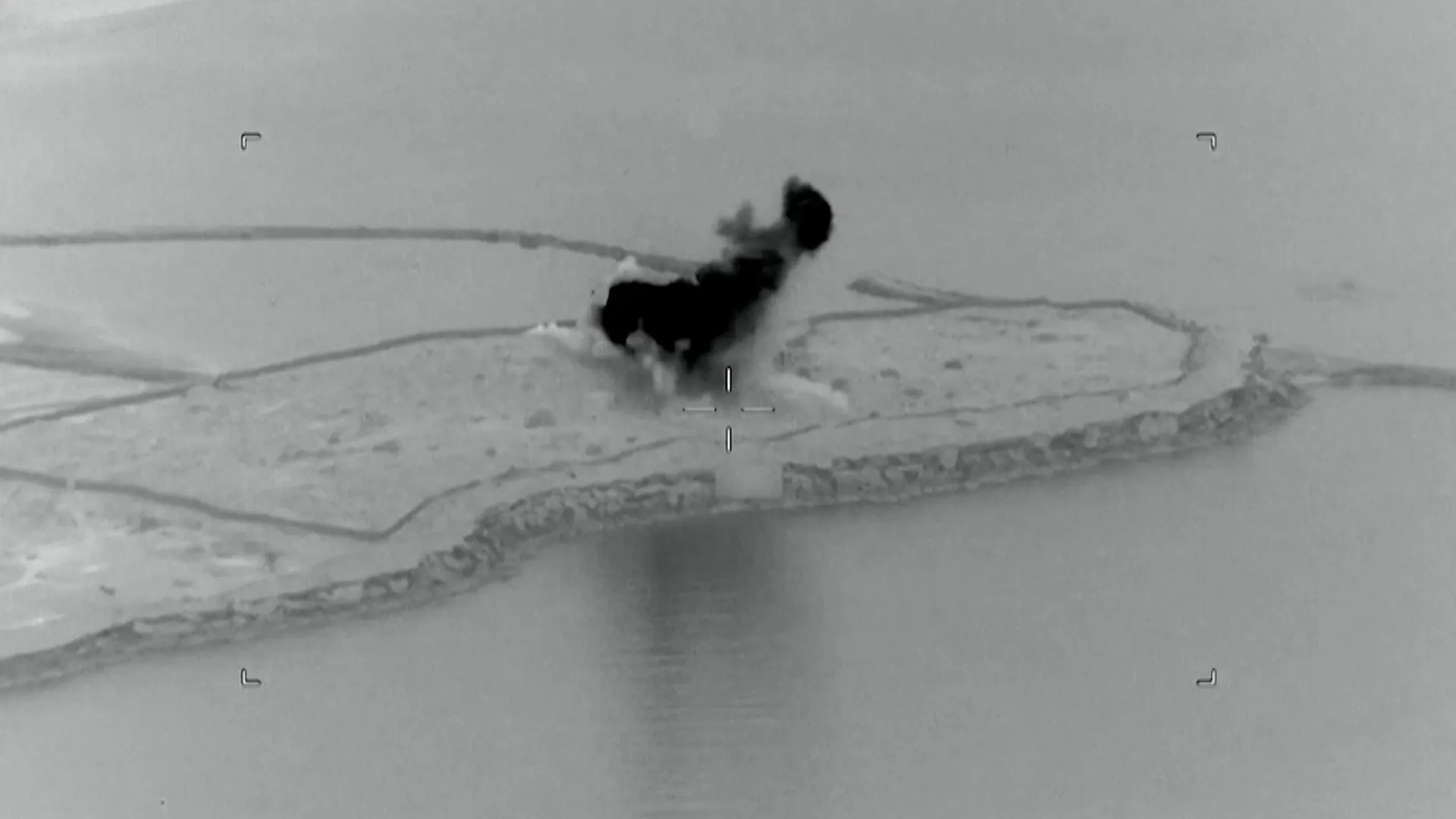
Still, the US is focused on applying maximum pressure on Tehran and forcing it to open the Strait of Hormuz. The US Central Command, the US military’s combat command responsible for operations in the Middle East, said early on Wednesday that its forces had used 2,270kg (5,000lb) bunker-busting munitions against antiship missile sites along Iran’s coastline near the Strait of Hormuz.

Trump has also ordered amphibious ships carrying thousands of US Marines to move to the Middle East, and some experts believe the US might try to seize Kharg Island, a tiny piece of land in the northern Gulf where 90 percent of Iranian crude oil is exported from. The US has already bombed what it said were military sites on the island.

Such an operation, however, might do little to force Iran into opening the Strait of Hormuz, Krieg said. The island is 500km 310 miles) from the strait, and should the US take control of it, it would expose US Marines to Iranian fire. Should Iran see its key terminal being seized, it could also opt to mine the strait outright, having fewer reasons to allow some vessels to pass through.

“The issue with the Strait of Hormuz is really not a military one. … It’s a market issue, and confidence cannot be restored by the military. Confidence can be restored through diplomacy only,” Krieg said.

Source link

Senegal to appeal decision to award AFCON title to Morocco | Africa Cup of Nations News

Morocco were awarded the 2025 AFCON title following an appeal to CAF regarding Senegal’s walk-off protest in final.

Senegal ‌have condemned the decision to strip them of the Africa Cup of Nations (AFCON) title, labelling ⁠it “unfair, unprecedented, and unacceptable”, ⁠and saying it casts a shadow over African football.

“The Senegalese Football Federation denounces this unfair, unprecedented, and unacceptable decision, which casts a shadow over African football,” it said ⁠in a statement on Wednesday.

Recommended Stories

list of 4 itemsend of list

“To defend its rights and the interests of ⁠Senegalese football, the federation will initiate an appeal as soon as possible before the Court of Arbitration for Sport in Lausanne,” it said.

Morocco were declared African champions on Tuesday after the Confederation of African Football’s (CAF’s) Appeals Board upheld their protest and ⁠found Senegal’s walk-off protest during the final on January 18 were grounds for them to be disqualified and the match result declared 3-0 in favour of the hosts.

Senegal won the final 1-0 in Rabat ⁠with an extra-time goal, but not before staging a 14-minute walk-off after a penalty was awarded against them in stoppage time at the end of the regulation 90 minutes.

The protest was instigated by coach Papa Bouna Thiaw, subsequently handed a lengthy ban, and saw Senegal’s veteran striker Sadio Mane emerge as a hero ‌as he attempted to get his teammates back onto the field.

Once Senegal returned to the pitch, the referee allowed play to continue with Morocco squandering the last-gasp penalty, and the encounter then went to extra time, with midfielder Pape Gueye netting the 94th-minute winner.

However, the Appeals Board said that by walking off, Senegal contravened tournament regulations and forfeited the game.

The Swiss-based Court of Arbitration for Sport (CAS) had to intervene in 2019 when Moroccan club Wydad Casablanca walked off in the second leg of ⁠the African Champions League final, also protesting against VAR.

In that case, they refused to play on, and the referee declared opponents Esperance winners, ⁠but CAF’s executive committee then surprisingly ordered a replay. Esperance took ⁠the matter to CAS and were declared champions, with CAF embarrassingly rebuked for attempting to override the referee’s decision.

The decision by Congolese referee Jean-Jacques Ndala to continue with the AFCON final in January, rather than stop it and declare Morocco ‌winners after Senegal’s walk-off, will likely feature strongly in any arguments for a reinstatement of Senegal as champions.

The Laws of the Game state the referee’s decision is final.

“No one could have imagined such ‌a ‌statement two months after the final,” said veteran coach Claude Le Roy, who managed Senegal between 1988 and 1992.

“For years, all the refereeing decisions have been flouted by the CAF,” he said on French television.

Source link

Why Israel targets Beirut’s Dahiyeh and what the suburb means to Lebanon | Israel attacks Lebanon

For years, Beirut’s southern suburb has been spoken about as though it were a world apart: A Hezbollah bastion, a target, a warning, or a battlefield. But in Arabic, the word “dahiyeh” simply means “the suburb”.

The word itself is ordinary. What makes it extraordinary in Lebanon is its history.

Recommended Stories

list of 4 itemsend of list

When the Lebanese speak of Dahiyeh, they do not mean any suburb of their capital city. They mean southern Beirut in particular – a dense belt of neighbourhoods that grew from villages, fields, informal housing and municipal edges into a major extension of the city.

Dahiyeh – in size nearly as big as municipal Beirut – has been shaped by migration and displacement in the past 50 years. While many moved there in search of work or housing, most of the others were pushed there by wars, political unrest, evictions and a general sense of being neglected by the Lebanese state.

INTERACTIVE Dahiyeh southern suburbs Beirut Lebanon Iran war Israel-1773737951

The social geography of Lebanon, which gained independence from French colonisers in 1943, began to be transformed in 1948 when Israel’s establishment saw the expulsion of more than 700,000 Palestinians from their land in what is commonly referred to as the Nakba. After Israel’s further occupation of Palestinian lands in 1967 and the expulsion of Palestinian fighters from Jordan in 1970, southern Lebanon and parts of Beirut became increasingly bound up with the Palestinian national movement.

Beirut’s ‘belt of misery’

Dahiyeh’s growth, however, accelerated after 1975, when the Lebanese civil war broke out. People displaced from other parts of Beirut moved south. The subsequent Israeli attacks and invasions in 1978 and 1982 drove more people to the edge of the capital. In that sense, Dahiyeh was not just a destination for “migrants”. It was also a refuge for the uprooted, the poor, and those repeatedly forced to start over.

Studies by scholars such as Mona Harb, professor of urban studies and politics at the American University of Beirut (AUB), show how a common noun – Dahiyeh – gradually evolved into a distinct political space: A stigmatised periphery marked in the Lebanese imagination as Beirut’s “belt of misery” that hardened into a territory with its own social and political significance. Today, it is part of Greater Beirut, woven into the capital geographically, economically and socially, even if the country’s politics may have treated the area as an outlier.

Harb’s work explicitly frames the southern suburb as a politically produced urban territory rather than just a space outside Beirut. To understand how that happened, one has to begin with the making of modern Lebanon.

Under the French Mandate, and later through the political order consolidated at independence in 1943, power in Lebanon was distributed through a sectarian system that heavily favoured the established elites, especially the Maronite Christians, who dominated the presidency and other key positions. The system not only created inequality, but also formalised and reproduced it.

Rural Lebanon, especially the south and the Bekaa Valley, remained underdeveloped and politically neglected for decades. Among those most affected were Lebanon’s Shia community, who were disproportionately concentrated in the poorer agricultural regions and had less access to state investments, infrastructure and patronage than the more privileged urban and mountainous centres. Scholars say it was not simply a temporary developmental gap, but a long history of marginalisation that defined the country’s politics.

Lebanon
A man photographs the rubble of buildings destroyed by Israel in Dahiyeh [Hassan Ammar/AP]

Israeli attacks on Palestinian positions inside Lebanon repeatedly hit the surrounding Lebanese communities as well, mainly in the south. For the Shia in southern Lebanon, these attacks sharpened a bitter awareness: They were living on the front lines of a bitter regional conflict, while they were also being denied equal economic rights and meaningful political inclusion in Lebanon itself.

Out of that reality emerged a new form of Shia political mobilisation centred not only on identity, but also on deprivation, dignity and state neglect. That mobilisation found its earliest expression in Harakat al-Mahroumin, the Movement of the Deprived, founded by Imam Musa al-Sadr in the 1970s. Al-Sadr became a towering figure of modern Lebanese Shia politics because he gave social, religious and political forms to grievances building up for decades. That movement later grew an armed wing: Amal.

Al-Sadr’s mysterious disappearance during a 1978 trip to Libya remains unresolved and politically contested to this day. What is not contested is his historical importance. He helped turn the Shia of Lebanon from a neglected rural underclass into an organised political constituency demanding equal rights, representation, and a defining national presence.

The rise of Hezbollah

The 1982 Israeli invasion of Lebanon changed the Shia political landscape yet again. Israel’s siege of Beirut, the departure of Palestinian icon Yasser Arafat and his Palestine Liberation Organization forces, and Syria’s desire to dominate Lebanon all intensified divisions within Lebanese society.

Amal, which meanwhile had grown closer to Damascus to get weapons, money and political backing, remained a major force. But new Islamist movements emerged from within and around it, shaped by the Israeli occupation, disillusionment with older leaderships, and increasing support from Iran’s Islamic Revolutionary Guard Corps, especially in the Bekaa region.

Over time, these currents crystallised into Hezbollah. The split within the Shia movement was less theological and more about political strategy, defined by questions over aligning more closely with Syria, solidarity with the Palestinians, and general resistance against the Israeli occupation. Differences between Amal and Hezbollah over these questions turned violent in the 1980s, an intra-Shia fighting that Lebanese often recall as “a war among brothers”.

As Hezbollah grew stronger, Dahiyeh became much more than a residential belt. It turned into an urban heartland of a social and political force. Hezbollah built institutions there: Offices, schools, clinics, welfare networks and media infrastructure. Amal also had a presence, but the common shorthand that reduces Dahiyeh to a “Hezbollah stronghold” always conceals more than it reveals.

Today, Dahiyeh hosts a Shia majority, but also has a small minority of Palestinians and other Lebanese communities, including Christians. It bleeds physically into what is known as Greater Beirut, including its Christian and mixed areas. So when the suburb is bombed, it is not some isolated military island that is hit, but a deeply inhabited part of urban Beirut.

That is precisely why Dahiyeh is so central to the Israeli military’s thinking. During the 2006 war, large sections of the southern suburb, especially Haret Hreik, were devastated by Israel. The destruction became so emblematic that Israeli military strategists came up with what came to be known as the Dahiyeh Doctrine: Use of overwhelming force and large-scale destruction of areas associated with an armed group, with the aim of generating deterrence and putting pressure on residents supporting the group. Rights activists and legal scholars say the doctrine violates international humanitarian law, as civilian neighbourhoods and infrastructure do not become legitimate targets simply because an armed group is embedded among the population.

That Israeli pattern, however, has intensified since October 2023, when a genocidal war on Gaza and attacks on Lebanon began. Meanwhile, the killing of Hezbollah leader Hassan Nasrallah in an Israeli strike in late 2024 eroded Dahiyeh’s resistance. That erosion is more visible in the ongoing Israeli attacks on Beirut and southern Lebanon, where more than a million people have registered as displaced since March 2. The old formula – that Dahiyeh was the principal red line and that any strikes there could be deterred by Hezbollah’s threats of retaliatory strikes on several Israeli cities – no longer holds.

Once again, Dahiyeh has become a focal point of the war, with repeated bombardment sending plumes of smoke over a place that many outsiders still describe as a world apart, but which is in fact woven into Beirut’s daily life. Built over decades by the poor, the migrants and the repeatedly uprooted – and shaped by the politics of marginalisation against those whom al‑Sadr once named “the deprived” – Dahiyeh has long served as both a refuge and a front line. Today, it is again being made to carry the costs of a conflict larger than itself.

Source link

Israel bombs central Beirut, killing 6, strafes south, east Lebanon | US-Israel war on Iran News

Wave of Israeli air attacks launched as ground offensive widens in south where Hezbollah are fighting Israeli forces.

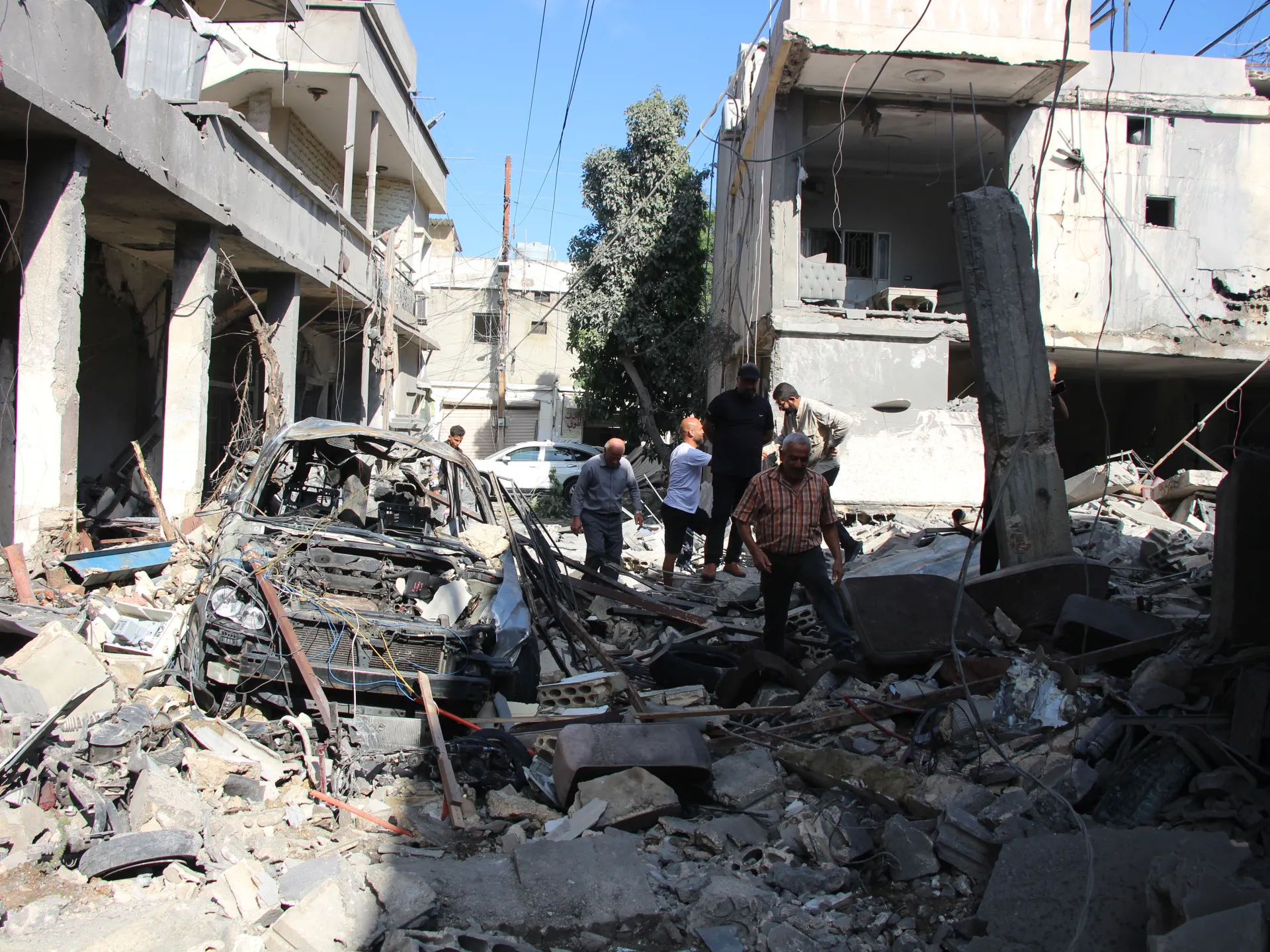
Israel has attacked a building in Bashoura, a neighbourhood in the heart of Beirut, Lebanon’s National News Agency (NNA) reported, with a blast and smoke rising over the area shortly after Israel issued an evacuation threat for the site.

The attack was part of a deadly wave of Israeli strikes across Lebanon that killed at least 20 people and wounded 24 on Wednesday, according to the country’s Ministry of Public Health, with raids stretching from the capital through southern and eastern parts of the country, a devastating front in the wider United States-Israel war against Iran embroiling the region.

Recommended Stories

list of 2 itemsend of list

At least six people were killed in the air strikes in Beirut, with dozens injured.

Al Jazeera’s correspondent in Beirut, Zeina Khodr, reported that intense Israeli attacks hit multiple regions across Lebanon, including central Beirut, overnight.

Speaking from in front of a 15-storey building struck in one of the attacks, Khodr said its lower floors had been targeted a week earlier. In the early hours, however, the structure was completely demolished, with the Israeli army claiming Hezbollah had stored cash there.

“You can see the widespread damage across this whole neighbourhood,” Khodr said.

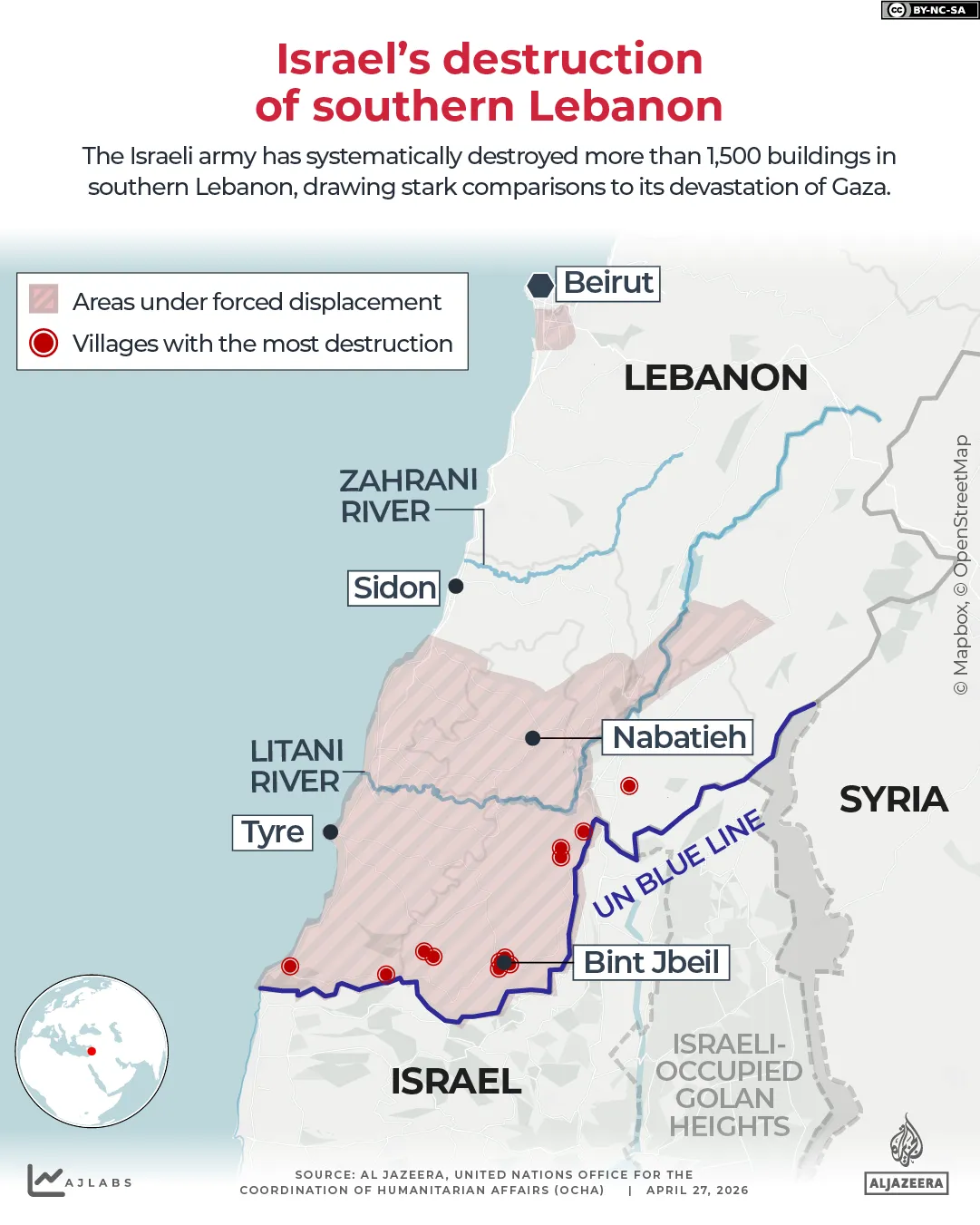
Israel’s military said it had launched what it described as limited ground operations in southern Lebanon, issuing evacuation threats for residents of four towns near the Zahrani River and the Tyre area, warning them to head north immediately.

Lebanon’s NNA also reported strikes on Tyre and the nearby area of Al-Burj Al-Shamali in the pre-dawn hours.

At least four people were killed in an Israeli attack that targeted four houses in the town of Sahmar in eastern Lebanon’s Bekaa Valley.

The intensifying assault has now killed at least 912 people in Lebanon, including 111 children, and wounded more than 2,200 since Israel launched its offensive on March 2, according to Lebanese Health Ministry figures.

More than one million people have been forced from their homes. The United Nations warned on Tuesday that Israeli attacks on residential buildings and civilian infrastructure may constitute war crimes under international humanitarian law.

A spokesperson for the UN human rights office said that deliberately targeting civilians or civilian objects “amounts to a war crime”, adding that Israel’s sweeping displacement orders for southern Lebanon may themselves violate international law.

Khodr said that Hezbollah’s secretary general, Naim Qassem, last night laid down conditions for the war to end, including Israel stopping attacks, displaced people being permitted to return to their homes, those detained over the last two years by Israel being released and the Israeli army withdrawing.

Across southern Lebanon, Khodr said Hezbollah was “still present in the area, trying to repel the Israeli army’s advance”, adding that Hezbollah’s aim was not just territorial control of the region, but preventing Israel from gaining new positions in the country.

The conflict was ignited on February 28 when US and Israeli forces assassinated Iranian Supreme Leader Ali Khamenei in Tehran, prompting Hezbollah to launch rockets into northern Israel on March 2.

Israel has since killed more than 2,000 people across Iran and Lebanon in its attacks.

German Chancellor Friedrich Merz, a staunch Israeli ally, added his voice to growing international concern, warning that Israel’s ground offensive in Lebanon was an “error” that risked worsening what he described as an already dire humanitarian situation.

Source link

Full list of all 69 countries the Foreign Office warns against travelling to

The Foreign Office has updated travel advice for countries including UAE and Pakistan over the weekend, with 69 nations now carrying various levels of travel warnings

The UK Foreign Office has recently updated travel advice for countries including the United Arab Emirates (UAE) and Pakistan over the weekend. The Foreign Office (officially known as the UK Foreign, Commonwealth and Development Office (FCDO)) regularly updates travel guidance for the nation’s citizens and states that “with commercial flights resuming to the UK from United Arab Emirates (UAE), we are pausing our ‘register your interest in flights from UAE’ scheme”.

However, the UAE is still among the countries that the UK Government advises people should only travel to if essential. It is one of 69 countries with a travel warning attached to it for UK citizens, reports the Liverpool Echo.

Typically, the Foreign Office categorises its warnings into three classifications:

  • The Foreign Office advises against all travel to a country: this is its highest warning level
  • The Foreign Office advises against all travel to parts of a country.
  • The Foreign Office advises against all but essential travel to a country or parts of a country.

Countries where the Foreign Office recommends against all travel

This is the Foreign Office’s highest warning level, effectively telling UK citizens not to travel to these countries under any circumstances. There are 14 countries where the Foreign Office recommends against all travel.

You can see more detail on these countries here. They are:

  1. Afghanistan, where British nationals face an elevated risk of detention.
  2. Belarus, where “you face a significant risk of arrest if you have at any time engaged in any activity now considered illegal by the Belarusian regime”.
  3. Burkina Faso, owing to “the threat of terrorist attacks and terrorist kidnap, and the unstable political situation in the country”.
  4. Haiti, owing to a volatile security situation.
  5. Iran, because of the ongoing Iran War. The FCDO warns: “If you are a British national already in Iran, either resident or visitor, carefully consider your presence there and the risks you take by staying. British and British-Iranian dual nationals are at significant risk of arrest, questioning or detention. Having a British passport or connections to the UK can be reason enough for the Iranian authorities to detain you.”
  6. Iraq, due to recent escalation in regional conflict. The FCDO warns: “There is significant risk of further escalation, and events are fast-moving and unpredictable.”
  7. Israel, due to the escalation in conflict in the region which poses significant security risks and has led to travel disruption.
  8. Mali, owing to unpredictable security conditions.
  9. Niger, owing to the increase in reported terrorist and criminal kidnappings of foreign nationals.
  10. Palestine, owing to the ongoing conflict between Israel and Hamas.
  11. Russia, owing to a heightened risk of British nationals being detained in Russia and the dangers and threats stemming from its continued invasion of Ukraine.
  12. South Sudan, owing to the danger of armed conflict and criminal activity.
  13. Syria, owing to uncertain security circumstances and the risk of terrorist incidents.
  14. Yemen, owing to the devastation caused by an ongoing civil war and humanitarian catastrophes.

Countries to which the Foreign Office advises against all travel to certain areas

The 36 countries to which the Foreign Office advises against all travel to certain areas are:

  • Algeria: FCDO advises against travel to within 30km of Algeria’s borders with Libya, Mauritania, Mali, Niger and Tunisia.
  • Armenia: FCDO advises against all travel to within 5km of the entire eastern border between Armenia and Azerbaijan, owing to tensions between the two countries Azerbaijan: The FCDO advises against all travel within 5km of the border with Armenia.
  • Benin: The FCDO advises against all travel to border regions near Niger and Burkina Faso.
  • Burundi: The FCDO advises against all travel to a region where there is a rebel group and the risk of possible armed incursions from the Democratic Republic of the Congo (DRC).
  • Cameroon: The FCDO advises against travel to borders with Nigeria, Chad and the CAR.
  • Central African Republic: The FCDO advises against all travel to the entirety of the Central African Republic, excluding the capital, Bangui.
  • Chad: The FCDO advises against all travel to the northern provinces of Chad, among other regions.
  • Congo: The FCDO advises against all travel within 50km of the Republic of Congo-Central African Republic border.
  • Côte d’Ivoire: The FCDO advises against all travel within 40km of the borders with Burkina Faso and Mali.
  • Democratic Republic of the Congo: The FCDO advises against all travel within 50km of most of its northern and eastern border.
  • Djibouti: The FCDO advises against all travel to the Djibouti-Eritrea border.
  • Egypt: The FCDO advises against all travel within 20km of the Egypt-Libya border and the border with Israel and Gaza.
  • Eritrea: The FCDO advises against all travel within 25km of all of Eritrea’s land borders.
  • Ethiopia: The FCDO advises against all travel to anywhere near borders with Eritrea, Somalia, South Sudan, Kenya and Somalia.
  • Georgia: FCDO recommends against all travel to the Russian occupied territories of South Ossetia and Abkhazia.
  • India: FCDO recommends against all travel within 10km of the India-Pakistan border and the Union Territory of Jammu and Kashmir.
  • Indonesia: FCDO recommends against all travel to a number of volcanoes in Indonesia.
  • Jordan: FCDO recommends against all travel to within 3km of the border with Syria.
  • Kenya: FCDO recommends against all travel to the Kenya-Somalia border and northern parts of the east coast.
  • Lebanon: FCDO recommends against all travel to the vast majority of Lebanon.
  • Libya: FCDO recommends against all travel to Libya except for the cities of Benghazi and Misrata.
  • Mauritania: FCDO recommends against all travel to the eastern half of the country.
  • Moldova: FCDO recommends against all travel to Transnistria, a region bordering Ukraine.
  • Myanmar (Burma): FCDO recommends against all travel to most of Myanmar.
  • Nigeria: FCDO recommends against all travel to large parts of north-west and north-east Nigeria.
  • Pakistan: FCDO recommends against all travel to within 10 miles of the border between Pakistan and Afghanistan and some other areas.
  • Philippines: FCDO recommends against all travel to western and central Mindanao and the Sulu archipelago.
  • Saudi Arabia: FCDO recommends against all travel to within 10km of the border with Yemen.
  • Somalia: FCDO recommends against all travel to the vast majority of Somalia.
  • Sudan: FCDO recommends against all travel to the vast majority of Sudan Togo: The FCDO advises against all travel within 30km of the border with Burkina Faso.
  • Tunisia: The FCDO advises against all travel to parts of its border with Libya and Algeria.
  • Turkey: The FCDO advises against all travel within 10km of the border with Syria.
  • Ukraine: The FCDO advises against all travel to the vast majority of Ukraine.
  • Venezuela: The FCDO advises against all travel within 80km (50 miles) of the border with Colombia, within 40km (25 miles) of the border with Brazil and within 40km (25 miles) of the border with Guyana as well as some central areas.

Countries to which the Foreign Office advises against all but essential travel

The 19 nations to which the FCDO recommends against all but essential travel are listed below. The advisories may apply to either the entire country or specific regions within a country.

  • Cambodia: FCDO advises against all but essential travel to within 20km from the land border with Thailand.
  • Colombia: FCDO advises against all but essential travel to several parts of Colombia including the borders with Venezuela, Panama and Ecuador, and central Colombia.
  • Cuba: FCDO advises against all but essential travel to Cuba.
  • Ecuador: FCDO advises against all but essential travel to several parts of Ecuador, where a 30-day state of emergency was renewed on February 28 due to internal disturbance and armed violence.
  • Ghana: FCDO advises against all but essential travel to the Upper East region of Ghana.
  • Guatemala: FCDO advises against all but essential travel to within 5km of the Mexican border from the Pacific Coast up to and including the Gracias a Dios crossing, as well as to to the towns of Santa Ana Huista, San Antonio Huista and La Democracia.
  • Kosovo: FCDO advises against all but essential travel to a section of northern Kosovo.
  • Kuwait: FCDO advises against all but essential travel to Kuwait because of the escalating conflict in the Middle East.
  • Laos: FCDO advises against all but essential travel to Xaisomboun Province, where there are intermittent attacks on infrastructure and armed clashes with anti-government groups.
  • Malaysia: FCDO advises against all but essential travel to all islands and dive sites off the coast of eastern Sabah from Sandakan to Tawau, including Lankayan Island, due to the threat of kidnapping.
  • Mexico: FCDO advises against all but essential travel to multiple cities and regions in Mexico because of escalating violence due to conflict between drug cartels and government forces.
  • North Korea: FCDO advises against all but essential travel to North Korea, because “the level of tension on the Korean Peninsula remains high” even if “daily life in the capital city, Pyongyang, may appear calm”.
  • Papua New Guinea: FCDO advises against all but essential travel to certain provinces due to the high risk of tribal fighting.
  • Peru: FCDO advises against all but essential travel to areas near the border Colombia and elsewhere. There is a state of emergency in Peru.
  • Qatar: FCDO advises against all but essential travel to Qatar because of the conflict in the Middle East.
  • Rwanda: FCDO advises against all but essential travel to a section of the border with the Democratic Republic of Congo (DRC).
  • Tanzania: FCDO advises against all but essential travel to a section of the Tanzanian border with Mozambique, due to attacks by groups linked with Islamic extremism.
  • Thailand: FCDO advises against all but essential travel to parts of the south near the Thailand-Malaysia border and all but essential travel to within 20km of the land border with Cambodia.
  • United Arab Emirates: FCDO advises against all but essential travel to the UAE, which includes Dubai and Abu Dhabi, because of the conflict in the Middle East.

Source link

Iran fires missiles, drones across Gulf, region remains in war crosshairs | US-Israel war on Iran News

Qatar, UAE, Kuwait and Saudi Arabia report new blasts, interceptions, with war edging to 3-week mark.

Iran has fired missiles and drones at several Gulf Arab nations, which have sought to intercept them, in a now-daily fallout from the United States-Israel war launched on Iran nearly three weeks ago that has engulfed the Middle East with deaths, destruction, assassinations, and an energy crisis spreading far beyond the region.

Early Tuesday, Qatar’s Ministry of Defence said its armed forces intercepted a missile attack against the country.

Recommended Stories

list of 4 itemsend of list

The Kuwait National Guard said it shot down an unmanned aircraft at dawn. The statement came hours after the Kuwaiti army said it was intercepting hostile missile and drone attacks.

The UAE, Saudi Arabia and Bahrain have also reported intercepting missiles and drones in recent hours.

Saudi Arabia’s Ministry of Defense reported the interception and destruction of a drone in the Eastern Region.

Earlier Tuesday, the UAE Ministry of Defence said the country’s air defences were “currently responding to incoming missile and drone threats from Iran”. The announcement came four hours after another reported attack from Iran. Later, a loud bang was heard in Dubai as authorities said air defences were dealing with a missile threat.

Al Jazeera’s Zein Basravi, reporting from Dubai, said, “The UAE has been the hardest hit by Iran’s retaliation. For instance, there have been 3000 different projectiles – missiles and drones – fired at GCC countries by Iran in terms of its retaliation. More than half, well over half, have targeted places in the UAE. Overnight was no different … Multiple explosions heard throughout the city.

“That glow of defensive weapons and interceptions in the night skies, something that has become all too familiar, not just in Dubai, but in cities across the GCC. Once again seen over the skies here.

“Dubai’s media office confirming that they were the result of air defence interception operations,” he added.

There have been several deaths in the Gulf nations, where an economic effect is also being acutely felt since the war began.

Gulf economies bear brunt of Iran war

The economies of the Gulf are suffering some of the worst damage.

Iran has launched continuous attacks on Gulf states since the onset of the conflict on February 28, arguing that it is attacking military bases used by the US for the war. Gulf nations have rejected Tehran’s claims, insisting the attacks on them are unjustified.

The Iranian strikes have upended energy production and inflicted major disruption to tourism and travel, putting the region at risk of some of the most severe economic harm since the 1990-1991 Gulf War.

After nearly three weeks of war, the economic effect on the region has already been substantial.

Middle Eastern oil producers’ daily output declined from 21 million barrels to 14 million barrels after a little more than a week of conflict as they deal with the closure of the Strait of Hormuz, according to Rystad Energy.

Source link

Araghchi: Iran’s system holds despite targeted leaders | US-Israel war on Iran

NewsFeed

Iran’s foreign minister is pushing back after the killings of top officials Ali Larijani and Basij commander Gholamreza Soleimani. Abbas Araghchi says the Islamic Republic is built to withstand shocks, insisting that no single figure, no matter how powerful, can destabilise the system.

Source link

Over 200 Ukrainian military experts in Gulf region to counter Iran’s drones | US-Israel war on Iran News

Ukrainian President Zelenskyy says Moscow and Tehran are ‘brothers in hatred’; claims Iran’s drones ‘contain Russian components’.

More than 200 Ukrainian military experts are in the Gulf region and wider Middle East helping governments in their defence against Iran’s drone attacks, Ukraine’s President Volodymyr Zelenskyy has said.

In an address to dozens of members of the United Kingdom Parliament in London on Tuesday, the Ukrainian leader said 201 Ukrainian anti-drone experts are in the region and another 34 “are ready to deploy”.

Recommended Stories

list of 4 itemsend of list

“These are military experts, experts who know how to help, how to defend against Shahed drones,” Zelenskyy said in his speech, referring to the Iranian-designed “kamikaze” drones that Russia has been using in its war against Ukraine since 2022.

“Our teams are already in the Emirates, Qatar, Saudi Arabia, and on the way to Kuwait,” the Ukrainian leader said.

“We are working with several other countries – agreements are already in place. We do not want this terror of the Iranian regime against its neighbours to succeed,” he said.

Last week, the Ukrainian leader said military teams had been sent to several Gulf states and Jordan.

Zelenskyy, who met with UK Prime Minister Keir Starmer and NATO chief Mark Rutte earlier on Tuesday, said Russia had received the Shahed-136 drones from the Iranians, who had “taught Russia how to launch them and gave it the technology to produce them”.

INTERACTIVE - SHAHED 136 drone


“Russia then upgraded them. And now we have clear evidence that Iranian Shaheds used in the region contain Russian components,” Zelenskyy said, describing the drones as designed for “low-cost destruction of expensive critical infrastructure”.

“So what is happening around Iran today is not a faraway war for us, because of the cooperation between Russia and Iran,” he said.

“The regimes in Russia and Iran are brothers in hatred, and that is why they are brothers in weapons. And we want regimes built on hatred to never win – in anything,” he added.

The Ukrainian leader then addressed his country’s newly developed prowess in drone warfare and manufacturing, claiming that 90 percent of Russian losses on the front lines in Ukraine are being “caused by our drones”.

Ukraine has moved on from making sea and aerial drones to producing interceptors that target drones, he said, adding that Ukraine is capable of producing at least 2,000 interceptors per day – half of which are required for its own defence and the remainder available for use by Kyiv’s allies.

“If a Shahed needs to be stopped in the Emirates – we can do it. If it needs to be stopped in Europe or the United Kingdom – we can do it. It is a matter of technology, investment, and cooperation,” he said.

While Ukraine has become one of the world’s leading producers of sophisticated, battlefield-proven drone interceptors, US President Donald Trump has said he does not need Ukraine’s help with countering Tehran’s drones targeting military targets in the Middle East.

After meeting with Zelenskyy at 10 Downing Street, Starmer said Russian President Vladimir Putin “can’t be the one who benefits from the conflict in Iran, whether that’s oil prices or the dropping of sanctions”.

During Zelenskyy’s visit on Tuesday, London and Kyiv signed a deal on a “defence partnership”, which is said to combine “Ukraine’s expertise and the UK’s industrial base to manufacture and supply drones and innovative capabilities”.

Source link

CAF strips Senegal of AFCON title, Morocco declared African champions | Football News

Governing body’s appeal board rules Senegal forfeited January final after players walked off pitch to protest referring decision.

African football’s governing body has stripped Senegal of the Africa Cup of Nations (AFCON) title they won in a chaotic final two months ago and declared Morocco the champions.

In a stunning decision, the Confederation of African Football (CAF) said on Tuesday that its appeals board ruled that Senegal is “declared to have forfeited” the match, a 1-0 victory. The result, it said, was now “being officially recorded as 3-0” ‌in favour of host nation Morocco.

At the January 18 final in Rabat, Senegal’s players walked off the pitch, led by coach Pape Thiaw, in protest against a penalty awarded late in regulation time to Morocco.

When play resumed after a delay of about 15 minutes, Morocco forward Brahim Diaz’s penalty was saved. In extra time, Pape Gueye scored the decisive goal that saw Senegal become champions of Africa for the second time.

The heated final also saw supporters trying to storm the field, players scuffling on the sidelines, reporters from the two countries fighting in media areas, and a bizarre sequence in which Moroccan ball boys tried to seize a towel being used by Senegalese goalkeeper Edouard Mendy – in an apparent bid to distract him and help their team win the continental title.

At a disciplinary hearing in January, CAF imposed fines of more than $1m as well as bans for Senegal and Morocco players and officials, but it had left the result untouched.

The case could go to a further appeal at the Court of Arbitration for Sport.

Source link