


Middle East

Senegal and Morocco tied by religion and trade but divided by AFCON fallout | Africa Cup of Nations News

When governing body offficials the Africa Cup of Nations title to Morocco, overturning Senegal’s victory two months after the chaotic final, football fans were stunned.

The impact of the decision could spread beyond sport and weaken the bond between the nations.

Recommended Stories

list of 4 itemsend of list

While Moroccan fans took to the streets to celebrate their team’s belated success, the decision by the Confederation of African Football (CAF) was met with disbelief in Senegal, with fans and authorities calling the decision “unjust”.

Senegal’s government on Wednesday said it will pursue “all appropriate legal avenues” to overturn the decision and called for an international investigation into “suspected corruption” within African football’s governing body.

The Senegal Football Federation (FSF) then announced on Thursday that it had instructed lawyers, apparently carrying through its threat to take the matter to the Court of Arbitration for Sport (CAS). Such a move could lead to a yearlong legal battle before a ruling.

CAF’s appeals board on Tuesday ruled that Senegal forfeited the final by leaving the field of play without the referee’s authorisation, and it awarded Morocco a default 3-0 win.

The game was delayed for 14 minutes as most of the Senegalese players and staff returned to their dressing room, while Senegal fans battled stewards behind one of the goals in protest against a controversial penalty call for Morocco after Senegal had a goal ruled out.

The players returned, Morocco missed the penalty, and Senegal won the match 1-0 in extra time.

What are the bonds that tie Morocco and Senegal?

Morocco and Senegal have long shared close ties built on religion, trade and culture. Tijaniyyah, a Sufi Muslim order, is widely followed in both countries. Moroccan banks and companies heavily invest in Senegal’s finance and agriculture sectors. Cultural exchanges include student programs, migration and joint festivals.

But the tensions surrounding the final and CAF’s appeals court decision to overturn Senegal’s victory have put a strain on the relationship between the two countries.

Last month, 18 Senegal fans who were arrested on charges of hooliganism at the final were given prison terms of up to a year by a Moroccan court. The Senegalese government has expressed solidarity with the Senegalese supporters.

Seydina Issa Laye Diop, president of the Senegalese national team’s fan group called “12th Gainde”, told The Associated Press on Thursday that the incidents should not damage the relationship between Senegal and Morocco.

“However, there are limits: if this continues, it could somewhat affect the pride of the Senegalese people,” Diop said. “If the goal is to preserve friendship, then it must be nurtured. Small gestures can have a big impact. These are things we can move past, especially since, during the trial, no solid argument has justified the continued detention of these supporters.”

Mariama Ndeye, a student in Senegal’s capital Dakar, said the decision has negatively affected her view of Moroccans.

“When everything goes well, they call us their brothers. But when things don’t go their way, they start being nasty,” Ndeye said.

People read newspapers reporting on the Confederation of African Football decision stripping the Senegal national football team of their Africa Cup of Nations title and awarding it to Morocco national football team in Dakar, Senegal
The newspapers reporting the fallout from CAF’s AFCON decision are seen on display in Dakar, Senegal [Misper Apawu/AP]

Politics and sport are rarely separated as Senegal and Morocco find out

On Wednesday, Morocco’s embassy in Dakar called on Moroccans in Senegal to “demonstrate restraint, vigilance, and a sense of responsibility.”

“It is important to recall that, in all circumstances, it is only a match, the outcome of which should never justify any form of escalation or excessive remarks between brotherly peoples,” the embassy said.

While the dispute has remained centred around the football match, bad feelings have spread more generally.

In Casablanca, home appliances business owner Ismail Fnani said he felt like other African countries were rooting against Morocco during the final.

“Honestly, my views toward Senegalese and sub-Saharan Africans changed after this,” he said. “We used to feel sympathy and help them because they were migrants who had struggled to get here. Where there was once sympathy and compassion, now I will treat them as they have treated us.”

Mohamed el-Arabi, who works in a grocery shop in Casablanca, said he did not celebrate the decision awarding Morocco the title.

“We would have preferred it to stay with Senegal because it doesn’t feel right otherwise,” El Arabi said.

“People here have started hating Senegalese. They no longer provide them with help. We used to be like brothers, especially since they are Muslims like us, but that is no longer the case,” he added.

The Senegalese government’s allegation of “suspected corruption” at CAF followed anger at perceived favouritism towards Morocco, which is a 2030 World Cup co-host and has invested heavily to become a football superpower.

On Wednesday, CAF President Patrice Motsepe defended the body against perceptions of favouritism towards Morocco.

“Not a single country in Africa will be treated in a manner that is more preferential, or more advantageous, or more favourable than any other country on the African continent,” Motsepe said in a video published on the CAF website.

Source link

Smoke rises after Iranian missile attack on Israel oil refinery in Haifa | Oil and Gas

NewsFeed

An Iranian missile struck an oil refinery in the Israel city of Haifa. The plant produces half of Israel’s domestic fuel supplies. Power was briefly disrupted before being restored, with no casualties reported. Iran’s Revolutionary Guard said it targeted refineries and military sites in the attack.

Source link

State Department has cut jobs with deep expertise in Middle East as Iran crisis escalates

In the escalating war in Iran, the State Department’s Bureau of Near Eastern Affairs would ordinarily be at the center of the geopolitical fray.

Typically led by a veteran diplomat, the bureau’s role would be to coordinate U.S. foreign policy across an 18-country region, much of which has become a chaotic battlefield scarred by drone and missile strikes as the U.S. and Israel remain locked in conflict with Iran.

The Trump administration for a time put Mora Namdar, a lawyer of Iranian descent with limited management experience, in charge before later moving her to a different post. One of her credentials was her contribution to Project 2025, a conservative think tank’s blueprint for the second Trump administration. Namdar’s last Senate-confirmed predecessor was a longtime Middle East expert who had been with the department since 1984 and had served as the U.S. ambassador to the United Arab Emirates.

Now that bureau is also working with far fewer resources. The administration’s most recent budget proposed a 40% cut to the bureau, though Congress eventually enacted less dramatic cuts. The administration also eliminated the dedicated Iran office, merging it with the Iraq office.

Staff reductions and management choices hamper emergency response

These kinds of personnel and management choices — coupled with President Trump’s moves to shrink government and confine decision-making to a tight circle — are limiting the ability of the United States to handle a global emergency, according to interviews with more than a dozen current and former U.S. officials, many of whom recently left government.

In divisions of the State Department that typically would handle the Iran response, numerous veteran diplomats with decades of collective experience were fired, retired or were reassigned — replaced by more junior officials or political appointees. The administration cut more than 80 staffers in Near Eastern Affairs, according to numbers compiled by a State Department employee who was terminated last year based on surveys of colleagues. (The department does not release official figures on Foreign Service officer staffing levels but did not dispute the number.)

The Trump administration has left the assistant secretary position in charge of Near Eastern Affairs vacant, along with key ambassadorships in the Middle East. Four of the five supervisors in the bureau have temporary titles.

The current and former officials, some of whom asked for anonymity to discuss sensitive internal matters during an active conflict, paint a portrait of an understaffed government workforce struggling to execute the president’s agenda. Those who remain tell colleagues that their analysis, recommendations and advice go unheeded.

The State Department vigorously disputed those assessments.

“As far as we can tell, AP’s entire ‘report’ on the evacuations does not include any conversations with people actually involved. Instead, it relies on ‘outside’ or ‘former official’ sources that have no idea what they are talking about. We walked AP through specific inaccuracy after specific inaccuracy — indeed how the whole premise was wrong,” State Department spokesman Tommy Pigott said.

More than 3,800 State Dept. employees departed since Trump took office

The State Department saw a departure of more than 3,800 employees since President Trump took office through a combination of reductions in force, staffers taking the Fork in the Road deferred resignation plan and ordinary retirements. According to estimates by the American Foreign Service Association, the labor union that represents foreign service officers, senior foreign service ranks were disproportionately represented in the layoffs compared to their share of the overall workforce.

“He’s making choices without the larger expertise of the United States government that would flag issues of consequence,” said Max Stier, CEO of the nonpartisan Partnership for Public Service, a nonprofit group that studies federal workforce issues. “Sometimes government is slow-moving because there are a lot of different factors that need to be balanced against each other.”

For instance, the administration appears to have been caught off guard by what would happen once the U.S. struck Iran — something Trump himself acknowledged this week when he expressed surprise that Tehran retaliated with strikes on American allies in the region. “Nobody expected that. We were shocked. They fought back,” Trump told reporters this week.

Pigott said staffing reductions “are not having any negative impact on our ability to respond to this operation, our ability to plan, and our ability to execute in service to Americans.” He added that the department “rejects the premise that key decisions were made without meaningful input from experienced professionals.”

But Iranian retaliation on U.S. allies was predictable, according to former officials, as well as previous war games and conflict models run by both the U.S. military and private organizations. The National Security Council, which Trump has pared, typically would have presented the president with analysis from experts within the bureaucracy.

Instead, decisions are made by a small group of officials close to the president without the planning or coordination of the larger machinery of government, including Secretary of State Marco Rubio, who also serves as the president’s national security adviser.

“In the Trump Administration, decisions are made by President Trump and senior administration officials and not by no-name bureaucrat leakers who whine to the press about not being consulted about highly classified operations,” White House spokesperson Dylan Johnson said.

Advice from career officials often went unheeded

“In the time that I was there, there was no policy process to speak of,” said Chris Backemeyer, who served in Near Eastern Affairs as a deputy assistant secretary of state before resigning last year. Backemeyer was a major proponent of the Iran deal that Trump abandoned. He recently left government to run for Congress as a Democrat in Nebraska.

“They did not want to hear any advice from career people,” said Backemeyer.

Namdar was later moved to be the head of Consular Affairs, the part of the department responsible for providing assistance to American citizens overseas and issuing visas to foreign visitors.

When the U.S. made the decision to strike Iran, Ambassador to Israel Mike Huckabee offered embassy staff in Jerusalem the opportunity to evacuate — a sign that he knew strikes were coming. But some other embassies in the region did not make similar arrangements — leaving nonessential personnel and their families stranded in a war zone.

The department said it has been issuing travel warnings since January and was fully staffed to handle the crisis the moment the strikes were launched.

Evacuation planning was chaotic

Still, little planning appears to have gone into how to evacuate the Americans who were living, working, visiting or studying in many of the countries that became engulfed in the conflict — in part because the White House seems to have underestimated the possibility of the strikes expanding into a prolonged multi-country war, as evidenced by Trump’s own remarks.

After Iranian attacks on allies like Saudi Arabia, Qatar and the United Arab Emirates, the State Department began calling for Americans to leave the region. But numerous former Consular Affairs staffers say such planning should have begun long before U.S. strikes started.

In a statement posted to social media, Namdar only told Americans to evacuate several days into the conflict, when airspace was largely closed and many commercial flights were unavailable.

“The messaging that went out to American citizens — after the U.S. struck Iran — was woefully late and, initially, confusing,” said Yael Lempert, who served as U.S. ambassador to Jordan until 2025. Lempert is one of five former ambassadors expected to speak about the department’s failures at an event Thursday at the American Academy of Diplomacy in Washington.

Other poorly executed evacuations, such the Biden administration’s withdrawal from Afghanistan, have drawn criticism.

But this time they’re compounded by the loss of experienced people, officials say. Consular Affairs has lost more than 150 jobs in the Trump administration due to a combination of reductions in force, dismissals of probationary employees and retirements, according to a U.S. official who asked for anonymity — though other parts of the department were hit much harder.

The department notes that it has offered assistance to nearly 50,000 Americans impacted by the conflict, with more than 60 flights evacuating citizens from the region. In total, the department says more than 70,000 Americans have been able to return home since the outbreak of hostilities on Feb. 28.

Democrat says personnel reduction imperiled safety

“The loss of experienced personnel through these RIFs has clearly undermined the Bureau of Consular Affairs’ ability to fulfill its most important mission, to protect Americans abroad,” Sen. Jeanne Shaheen, the top Democrat on the Senate Foreign Relations Committee, said in a statement.

Language skills at the department are also atrophying. Thirteen Arabic speakers and four Farsi speakers, all trained at taxpayer expense, were among employees let go, according to a draft letter being circulated by former foreign service officers.

It can cost $200,000 to train a foreign service officer in a language. The letter estimates that the total number of people fired by the State Department in the name of efficiency received more than $35 million in taxpayer-funded language training and more than $100 million in total training and other career development.

The State Department has set up two temporary task forces to deal with the crisis in the Middle East. One aims to bolster the capacities of Near East Affairs and another is aimed at helping Consular Affairs evacuate Americans.

A group of more than 250 Foreign Service officers were part of the administration’s reduction-in-force last year but still remain on the State Department’s payroll. Many have volunteered to return to the department to work on either a task force or do any other job that needs to be done with the outbreak of a global crisis.

“I haven’t been given any separation paperwork. I still have an active clearance. I could go back to the department tomorrow, either to backfill or staff a task force,” said one foreign service officer who asked for anonymity because they are still technically on the department’s payroll and are not authorized to speak to the press. “I will do the scutwork jobs.”

The department hasn’t responded to their offer but said in a statement that the task force is “fully staffed.”

Tau writes for the Associated Press.

Source link

Iran’s strike on Qatar gas facility will reduce supply for 3 to 5 years | International Trade

NewsFeed

Iran’s strike on Qatar’s Ras Laffan gas facility will cut an estimated 17% of the country’s Liquefied Natural Gas export capacity for up to five years, officials say. The damage is a major blow to the global energy market, which could disrupt supplies to Europe, Asia and beyond.

Source link

European nations, Japan to join ‘appropriate efforts’ to open Hormuz Strait | US-Israel war on Iran News

Several European nations and Japan have issued a joint statement saying they would take steps to stabilise energy markets, a day after several strikes on energy facilities in the Gulf region sent oil and gas prices soaring amid the United States-Israel war on Iran.

The leaders of Britain, France, Germany, Italy, the Netherlands and Japan issued a joint statement on Thursday expressing their “readiness to contribute to appropriate efforts to ensure safe passage through the [Hormuz] Strait.”

Recommended Stories

list of 3 itemsend of list

They did not specify what those efforts may entail but urged for “an immediate comprehensive moratorium on attacks on civilian infrastructure, including oil and gas installations”.

The International Energy Agency (IEA) last week authorised a coordinated release of its members’ strategic petroleum reserves, the largest in its history, in an attempt to counter rising global energy prices. “We will take other steps to stabilise energy markets, including working with certain producing nations ‌to increase output,” the statement said.

Markets have been hammered since the start of the war on February 28, with Tehran hitting sites across the Gulf and effectively closing the Strait of Hormuz, through which a fifth of global oil and gas flows.

European leaders have rejected demands by United States President Donald Trump ⁠to help ensure freedom of navigation in the Gulf’s key oil chokepoint by deploying warships as part of a naval coalition.

Thursday’s joint statement came ahead of a long-scheduled White House meeting between Trump and Japan’s Prime Minister Sanae Takaichi, aimed at burnishing the decades-old security and economic partnership between Washington and its closest East Asian ally.

US Treasury Secretary Scott Bessent said before the meeting on Thursday that he would expect that Japan, which gets 95 percent of its crude oil supplies from the Gulf, would want to ensure its supplies are safe.

Takaichi has sought to move Japan away from ⁠a pacifist constitution imposed by Washington after World War II, but with the Iran war unpopular at home, she has so far not offered to assist in clearing the Strait of Hormuz.

The Japanese prime minister told parliament on Monday that Tokyo had received no official request from the US, but was checking the scope of possible action within the limits of its constitution.

Soaring energy prices

Major economies have been scrambling to cushion the impact of soaring energy prices after the de facto closure of the Strait of Hormuz by Iranian forces.

Concerns were compounded on Wednesday when Iran hit the world’s largest liquefied natural gas (LNG) facility, Qatar’s Ras Laffan Industrial City, in retaliation for an Israeli attack on its South Pars gas field.

QatarEnergy reported “extensive damage” from Iranian missiles in Ras Laffan, which produces about 20 percent of the world’s LNG supply and plays a major role in balancing Asian and European markets’ demand for the fuel.

The company’s CEO, Saad al-Kaabi, said Iran’s attacks damaged facilities that produce ⁠17 percent of QatarEnergy’s LNG exports and that it would take ‌three to five years to repair.

Qatar’s Prime Minister Mohammed bin Abdulrahman bin Jassim Al Thani said Iran’s claims that it is targeting US bases are “unacceptable and unjustified”, as the attack on Ras Laffan shows that it is targeting energy infrastructure that is vital for Qatar and the entire world.

Energy prices have soared and stocks sunk amid the region’s protracted instability, reigniting fears over global supplies and inflation as well as the likely damage to economic growth.

European gas prices were up 25 percent and Brent crude oil futures nearly 6 percent at $113 at 13:00 GMT on Thursday after briefly surging about 10 percent. European gas prices have leapt by over 60 percent since the war began on February 28.

James Meadway, co-director of the Verdant economic policy think tank, said this would not be “a temporary blip” in the prices of oil and gas.

“In addition to the Strait of Hormuz being blocked, we now have a severe disruption to the basic production of oil and gas,” Meadway told Al Jazeera.

“At this point, this looks like it will be a significant rise in those prices stretching off into the distance.”

Source link

Iran attacks cut 17% of Qatar’s LNG capacity for up to 5 years: QatarEnergy | US-Israel war on Iran News

CEO Saad al-Kaabi says QatarEnergy may have to declare force majeure on long-term contracts for up to five years.

Iranian ⁠attacks on Qatar have wiped out ⁠17 percent of its liquefied natural gas (LNG) export capacity, causing an estimated $20bn in lost annual revenue and threatening supplies to Europe and ⁠Asia, QatarEnergy’s CEO says.

Saad al-Kaabi told the Reuters news agency on Thursday that two of Qatar’s 14 LNG trains, the equipment used to liquefy natural gas, and one of its two gas-to-liquids facilities were damaged in Iranian strikes this week.

Recommended Stories

list of 3 itemsend of list

The repairs will sideline 12.8 million tonnes of LNG production per year for three to five years, he said.

“I never in my wildest dreams would have thought that Qatar would be – Qatar and the region – in such an attack, especially from a ‌brotherly Muslim country in the month of Ramadan, attacking us in this way,” al-Kaabi said in an interview.

His comments came hours after Iran on Wednesday launched a series of attacks on oil and gas facilities across the Gulf region after the Israeli military bombed its South Pars offshore gasfield.

Tehran has been firing missiles and drones across the Middle East in response to the United States-Israeli war on Iran, which began on February 28.

It also has essentially blocked the Strait of Hormuz, a critical Gulf waterway through which about one-fifth of the world’s oil and LNG supplies transit, fuelling soaring petrol prices and global concerns about rising inflation.

Iran’s attacks on energy infrastructure have heightened tensions with its Arab Gulf neighbours, who have condemned the strikes as a violation of international law.

Iranian Foreign Minister Abbas Araghchi said on Thursday that his country would show “ZERO restraint” if its infrastructure is struck again as the Israeli attack on the South Pars gasfield continued to spur condemnation.

“Our response to Israel’s attack on our infrastructure employed FRACTION of our power. The ONLY reason for restraint was respect for requested de-escalation,” Araghchi wrote on X.

“Any end to this war must address damage to our civilian sites.”

‘Stay away from oil and gas facilities’

During Thursday’s interview with Reuters, al-Kaabi said QatarEnergy may have to declare force majeure on long-term contracts for up to five years for LNG supplies bound for Italy, Belgium, South ⁠Korea and China due to the two damaged trains.

“I mean, these are long-term contracts that we have to declare force majeure. We already declared, but that was a shorter term. Now it’s whatever the period is,” he said.

QatarEnergy had declared force majeure on its entire output of LNG after earlier attacks on its Ras Laffan production hub, which came under fire again on Wednesday. “For production to restart, first we need hostilities to cease,” al-Kaabi said.

The damaged units cost about $26bn to build, al-Kaabi said. He also told Reuters that the scale of the damage from the attacks has set the region back 10 to 20 years.

“If Israel attacked Iran, it’s between Iran and Israel. It has nothing to do with us and the region,” he said.

“And so now, in addition to that, I’m saying that everybody in the world, whether it’s Israel, whether it’s the US, whether it’s any other country, everybody should stay away from oil and gas facilities.”

Source link

Foreign Office issues new travel warnings for 31 countries amid Middle East war

The FCDO has issued numerous warnings and advice for British citizens planning to travel to, or already in, affected countries. The latest was issued earlier this afternoon and covers 31 countries

The UK Foreign, Commonwealth and Development Office (FCDO) has issued new travel advice for 31 countries amid the war in the Middle East.

Israeli and US strikes on Iran over the past three weeks triggered a response that has grounded thousands of flights, killed more than 2,000 people and caused flight paths and ship routes to be shut down.

The FCDO has issued numerous warnings and advice for British citizens planning to travel to, or already in, affected countries. The latest was issued earlier this afternoon and covers 31 countries.

“Escalation in the Middle East has caused widespread travel disruption, including airspace closures, delayed and cancelled flights. Your travel plans may be affected, even if your destination is not in the Middle East,” the advice reads.

READ MORE: Trump’s £150bn war bill as Iran gamble sends petrol prices soaring with taxpayers fumingREAD MORE: Keir Starmer holds emergency Cobra as he condemns Iranian strikes on energy plants

The FCDO advises that before travelling, UK passport holders:

  • check travel advice for any countries or territories you are transiting through
  • check for the latest updates from your airline or tour operator before travelling
  • review your travel insurance policy for coverage before you travel
  • monitor local and international media for the latest information and sign up for travel advice email alerts

Countries with updated advice

  1. Singapore
  2. Vietnam
  3. Phillipinnes
  4. Tuvalu
  5. Laos
  6. Thailand
  7. Uzbekistan
  8. New Zealand
  9. Bangladesh
  10. Australia
  11. Indonesia
  12. Brunei
  13. Japan
  14. Georgia
  15. Tajikistan
  16. Nepal
  17. Maldives
  18. Fiji
  19. Malaysia
  20. India
  21. Papa New Guinea
  22. Cambodia
  23. South Korea
  24. Samoa
  25. Solomon
  26. Tonga
  27. Nauru
  28. Vanutu
  29. Marshall Islands
  30. Kiribati
  31. Sri Lanka

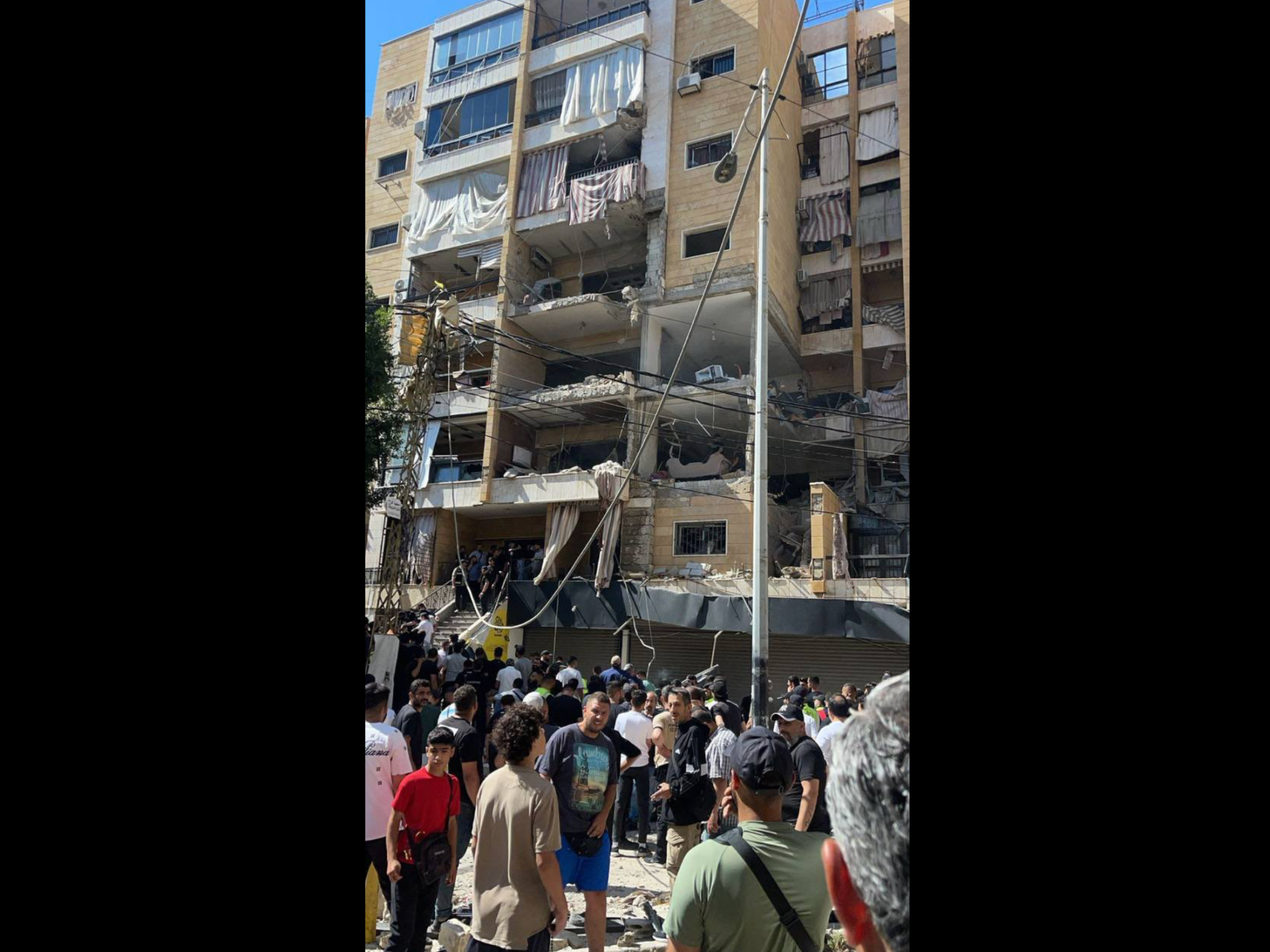
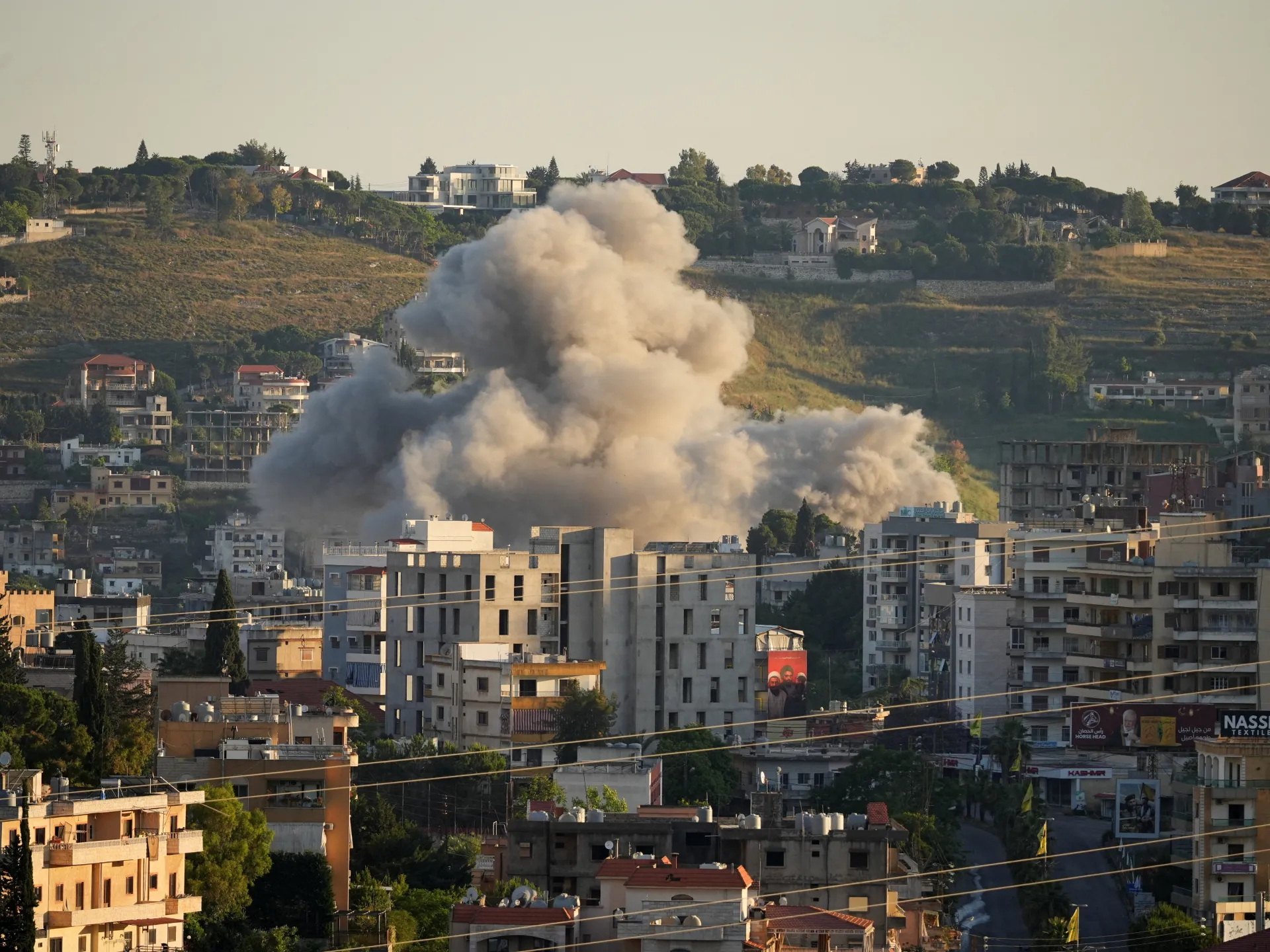
More than 1,300 people in Iran have been killed during the war. Israeli strikes against the Iranian-backed Hezbollah militant group in Lebanon have displaced more than 1 million people — roughly 20% of the population — according to the Lebanese government, which says more than 1,000 people have been killed. Israel says it has killed more than 500 Hezbollah militants.

In Israel, 15 people have been killed by Iranian missile fire. Four people were also killed in the occupied West Bank overnight by an Iranian missile strike, according to officials. At least 13 U.S. military members have been killed.

Iran announced the execution of three men detained in January’s nationwide protests, the first such sentences known to have been carried out, the judiciary’s Mizan news agency reported.

Today, three weeks since the war began, Iran intensified its attacks on oil and natural gas facilities around the Gulf.

The strikes, in retaliation for an Israeli attack on a key Iranian gas field, sent fuel prices soaring and risked drawing Iran’s Arab neighbors directly into the conflict. Tehran’s targeting of energy production further stressed global supplies already under pressure because of Iran’s stranglehold on the Strait of Hormuz, a strategic waterway through which a fifth of the world’s oil is transported.

Since the U.S. and Israel launched the war on Feb. 28, Iran’s top leaders have been killed in airstrikes and the country’s military capabilities have been severely degraded. Still, Iran — now led by the son of the supreme leader killed in the war’s opening salvo — remains capable of missile and drone attacks rattling its Gulf Arab neighbors and a global economy dependent on the energy they produce.

Source link

Drone attack from Sudan kills 17 people in Chad as war spills over border | Sudan war News

Local resident says casualties include mourners at funeral and children playing nearby.

A drone attack launched from Sudan has killed 17 people in Chad, according to the Chadian government, which has pledged to retaliate against any further strikes as the civil war in the neighbouring nation rages on.

A spokesman for the Chadian government announced the death toll on Thursday from the attack on the border town of Tine, which had been targeted despite “various firm warnings addressed to the different belligerents in the Sudan conflict and the closure of the border”.

Recommended Stories

list of 3 itemsend of list

It occurred as mourners gathered at a house on Wednesday for a funeral, according to a local resident quoted by the Reuters news agency, who reported there were two explosions and casualties included mourners and children playing nearby.

Local government sources said it was not immediately clear who was behind the attack, according to Reuters.

Chadian President Mahamat Idriss Deby called a meeting of the defence and security council on Wednesday night, ordering the army to “retaliate starting from tonight to any attack coming from Sudan”, according to a presidency statement.

Early on Thursday, the government said Chad had strengthened its security presence at the border and could potentially carry out operations on Sudanese territory.

Sudan’s paramilitary Rapid Support Forces (RSF) denied involvement in a post on Telegram, blaming the Sudanese army.

Porous border

The conflict in Sudan between its military and the RSF began in April 2023. The war has killed tens of thousands of people and displaced more than 12 million – nearly one million of them fleeing under fire to Chad, according to the United Nations.

The border between Chad and Sudan, which is nearly 1,400km (870 miles) long and located in a desert region, is porous and difficult to control.

Almost the entirety of Darfur, a vast region in western Sudan bordering Chad, has been captured by the RSF. The last major city there under the military’s control, el-Fasher, was seized by the RSF in October. The UN has accused the paramilitary group of carrying out massacres with “hallmarks of genocide”.

On February 21, the RSF claimed control of the border town of Tina, which is separated from Tine in Chad only by a narrow stream bed that is dry most of the time.

Chad closed its eastern border with Sudan last month after clashes linked to the war killed five Chadian soldiers. Its government said the move was aimed at preventing “any risk of the conflict spreading”.

Drones a key weapon of war

Drones have become a key weapon used by both Sudan’s military and the RSF.

The Sudanese army has received Iranian-made drones and Turkish and Russian military support.

The RSF, which has no air force of its own, has been equipped through a network of supply routes reportedly running through Chad and other transit states with reports pointing to the United Arab Emirates as a key supporter, an allegation that Abu Dhabi denies.

In the first two months of 2026, the Armed Conflict Location and Event Data project recorded 198 strikes by both sides, at least 52 of which caused civilian casualties. The attacks killed 478 people.

Source link

Morocco says stripping Senegal of AFCON win ‘upholds rights and integrity’ | Africa Cup of Nations News

The football federation of Morocco says it welcomes the CAF Appeal Board decision to award it the 2025 AFCON title.

The Royal Moroccan Football Federation (FRMF) has commended the decision to award its country the 2025 Africa Cup of Nations (AFCON) title, which was stripped from Senegal.

The FRMF “welcomes the decision, which reaffirms the primacy of competition regulations and reinforces the conditions necessary for the proper conduct of international tournaments”, the federation said in a statement on Thursday.

Recommended Stories

list of 4 itemsend of list

The Confederation of African Football (CAF) had announced on Tuesday that its Appeal Board had awarded the tournament to Morocco, the defeated finalists, on January 18.

The final, which Senegal won 1-0 in extra time, was delayed for 14 minutes when the Senegalese players and staff returned to the dressing room in protest against the awarding of an injury-time penalty to Morocco in the second half.

When play eventually resumed, Moroccan striker Brahim Diaz missed the kick with Senegal going on to win the game thanks to Pape Gueye’s stunning strike.

“From the outset, following the incidents that led to the interruption of the match, the FRMF maintained a clear and consistent position: the strict application of the governing regulations. The Federation’s approach was solely guided by this principle,” the FRMF statement read.

“Following its appeal, CAF has now confirmed that the applicable regulations were not properly enforced.”

Morocco appealed to CAF to overturn the result immediately after the final, which descended into chaos during and after the protest, and led to a pitch invasion, which resulted in 18 Senegalese fans being handed prison sentences.

The initial appeal was rejected, and the Appeal Board decision came exactly two months after the final was completed.

“Throughout the process, the FRMF acted in full compliance with all relevant legal and procedural frameworks, with a constant focus on upholding its rights and preserving the integrity of the competition,” it said in the statement.

“This decision provides clarity on the applicable framework and strengthens the consistency and credibility of international competitions, particularly within African football.”

The Senegal Football Federation (FSF) immediately responded to CAF’s ruling by saying it would take its own appeal to the Court of Arbitration for Sport.

Such a process could take as long as a year to reach a final decision.

Senegal’s government on Wednesday went on to allege corruption following the decision and called for an independent international investigation into the matter.

Source link

Are Iran’s athletes political pawns? | Digital Series

Game Theory

While in Australia, members of Iran’s women’s football team found themselves at the centre of an international political storm. As several players choose to return home, difficult questions are being raised about athlete safety, agency and Western intervention. Samantha Johnson looks at how Iran’s women footballers became caught in the middle of something they had nothing to do with, and asks whether they were being used as political pawns.

Source link

US East Asian allies in legal quandary as Trump seeks help in the Middle East | US-Israel war on Iran News

South Korea and Japan are facing uncomfortable questions about their mutual defensive obligations as the United States seeks support from its allies in the war on Iran, now nearly three weeks in and escalating by the day.

Earlier this week, US President Donald Trump urged the United Kingdom, China, France, Japan, and South Korea to send warships to the Strait of Hormuz, which has remained de facto closed since Washington launched its war with ally Israel on Tehran on March 28.

Recommended Stories

list of 4 itemsend of list

The president backpedalled on his position on Tuesday – declaring on social media that “we no longer ‘need,’ or desire, the NATO Countries’ assistance – WE NEVER DID! Likewise, Japan, Australia, or South Korea” – but observers say US allies may not yet be out of the hot seat.

Trump is expected to raise the issue of warships when he meets with Japanese Prime Minister Sanae Takaichi at the White House on Thursday, according to Al Jazeera correspondent Jack Barton.

“People do expect him to put pressure on Takaichi again to send warships to the Strait of Hormuz. It makes sense in a way because Japan is so dependent on energy supplies” from the Middle East, Barton said on Thursday from Seoul.

Japan’s Maritime Self-Defence Force is one of the largest and most advanced navies in the world, he said, which makes it an attractive target for the Trump Administration.

Although Japan and the US share a mutual defence, Tokyo’s pacifist constitution places restrictions on when it can deploy its Self-Defense Force. Legal scenarios include when it is attacked or facing a “survival-threatening” scenario, as well as acting in “collective self-defence” of its allies.

Takaichi told legislators this week that her government is considering what can legally be done to protect Japanese ships and interests, according to Japanese public broadcaster NHK World, although deployment is still a hypothetical scenario.

Japan relies heavily on Middle Eastern oil imports, of which 70 percent pass through the Strait of Hormuz, according to Japanese media. Tokyo began releasing oil from its strategic reserve on Monday to make up for the shortfall.

Stephen Nagy, a professor at the International Christian University, Tokyo, told Al Jazeera it was not unexpected that the US – a treaty ally – would call on it for help, but Japan will need to consider what is expected.

“The question is if they are going to be on the front line of the attack from Iran or if they are going to provide some kind of supporting role, such as anti-mining activities, refuelling missions, maritime domain awareness,” he said.

“It’s not so much of a problem going there and being involved in the challenges associated with the Hormuz Strait; what is more important is what exactly they are going to do in that role. I think the Japanese are going to find a way to legally add value to the Trump administration, but don’t expect warships there fighting Iranian proxies,” he continued.

South Korea finds itself in a similar predicament as it is both a US treaty ally and a country that is heavily dependent on Middle Eastern oil and gas exports.

Seoul last week took the extraordinary measure of imposing a price cap on domestic fuel prices for the first time since the 1997 Asian financial crisis, to keep prices from rising too quickly for consumers. Despite their concerns, legislators continue to urge caution from the government in deploying its navy or military assets to the Middle East, according to Al Jazeera’s Barton.

In-Bum Chun, a retired South Korean lieutenant general, told Al Jazeera that it is not immediately clear whether Seoul’s Mutual Defense Treaty with the US applies to the Strait of Hormuz.

Seoul must also weigh helping the US against maintaining a credible deterrence against North Korea. Recent media reports suggest that the US is considering moving some of its Terminal High Altitude Area Defense (THAAD) missiles from South Korea to the Middle East. The missiles were installed to deter North Korea, and their removal, along with naval assets, could make voters nervous.

“Seoul must also consider the persistent threat from North Korea and the fact that a South Korean warship is already deployed to the Middle East,” Chun told Al Jazeera. “At the same time, because about 70 percent of Korea’s oil imports pass through the Strait of Hormuz, freedom of navigation is not an abstract principle but a core national interest. These competing realities must all be weighed before any final decision is reached.”

Source link

Strikes kill two PMF fighters in northern Iraq amid wider war, group says | US-Israel war on Iran News

Air strikes come hours after pro-Iran armed group Kataib Hezbollah announces conditional suspension of US embassy attacks.

Air strikes have killed two fighters from the Popular Mobilisation Forces (PMF) in northern Iraq, the paramilitary group says from one of the fronts in the sprawling war engulfing the Middle East.

The two attacks targeted PMF positions early on Thursday in the Nineveh region, where Mosul city is located, and a military airport in Salah al-Din province, according to statements from the PMF, a predominantly Shia group that is part of Iraq’s security apparatus and includes several groups aligned with Iran.

Recommended Stories

list of 3 itemsend of list

The PMF blamed the attack on Israel and the United States. Iraq has been drawn into the US-Israeli war on Iran, now in its third week.

The PMF was formed in 2014 as a volunteer force supporting Iraqi security forces in the fight against ISIL (ISIS).

Strikes have targeted Iran-backed groups, which in turn have claimed near-daily attacks on US interests in Iraq and across the region.

Elsewhere, a fire broke out at a naval base in southern Iraq when it was hit by a drone overnight. An Iraqi security source told Al Jazeera that a drone crashed into a water treatment station at the Umm Qasr naval base near the border with Kuwait.

Footage from the scene circulating on social media and verified by Al Jazeera showed flames and smoke rising from the site.

US embassy attacks to be suspended

Hours before the attacks on PMF fighters, the pro-Iranian armed group Kataib Hezbollah said its secretary-general had “issued orders to suspend operations targeting the US embassy in Baghdad for a period of five days”.

Designated by Washington as a “terrorist organisation”, Iraq’s Kataib Hezbollah listed several conditions of the suspension, including Israel ceasing its bombardment of the southern suburbs of Beirut.

Kataib Hezbollah also demanded “a commitment to refrain from bombing residential areas in Baghdad and other provinces”.

Whenever “the enemy violates” the truce, “the response will be immediate”, the group said, warning of more strikes after the five-day period.

The US embassy has been targeted by drone and rocket attacks several times in recent days. Air defences have intercepted most of the projectiles.

The embassy is in the Green Zone, a heavily fortified district in central Baghdad that houses Iraqi government institutions and embassies.

A US diplomatic and logistics centre at Baghdad International Airport that houses military personnel has also been regularly targeted.

Source link

Ben-Gvir visits gallows museum, threatens the death penalty | Israel-Palestine conflict

NewsFeed

Israel’s National Security Minister has filmed himself in front of gallows at a Jerusalem museum, threatening the death penalty for “terrorists”. Itamar Ben-Gvir is leading a campaign to expand the grounds for execution, which human rights groups have slammed as discriminatory.

Source link

Saudi FM warns Iran that patience in Gulf not ‘unlimited’ amid attacks | US-Israel war on Iran News

Saudi Arabia’s Foreign Minister warns Iran that regional neighbours have ‘significant’ capabilities with which to respond to Tehran’s aggression.

Saudi Arabia’s Foreign Minister Prince Faisal bin Farhan Al Saud has warned Iran that tolerance of its attacks on his country and those of neighbouring Gulf states is limited, calling on Tehran to immediately “recalculate” its strategy.

Warning that Saudi Arabia and other Gulf states have “very significant capacities and capabilities” that could be drawn on should they “choose to do so”, the foreign minister told a news conference early on Thursday that Iran had carefully planned its strategy for striking regional neighbours, despite denials from Tehran’s diplomats.

Recommended Stories

list of 4 itemsend of list

“The level of accuracy in some of this targeting – you can see it in our neighbours as well as the kingdom – indicates that this is something that was premeditated, preplanned, preorganised and well thought out,” Prince Faisal said.

“I’m not going to lay out what would and would not precipitate a defensive action by the Kingdom [of Saudi Arabia] because I think that is not a wise approach to signal to the Iranians,” the foreign minister continued.

“But I think it’s important for the Iranians to understand that the kingdom, but also its partners who have been attacked and beyond, have very significant capacities and capabilities that they could bring to bear should they choose to do so,” he said.

“The patience that is being exhibited is not unlimited. Do they [the Iranians] have a day, two, a week? I’m not going to telegraph that,” he added.

“I would hope they understand the message of the meeting today and recalculate quickly and stop attacking their neighbours. But I am doubtful they have that wisdom.”

Prince Faisal’s warning followed a meeting of foreign ministers from Arab and Islamic countries in the Saudi capital earlier in the day to discuss the expanding war in the region, which on Wednesday saw Iranian attacks on Gulf energy sites, including Qatar’s Ras Laffan gas facility, where significant damage was reported, and the United Arab Emirates’ Habshan ⁠ gas facility.

Qatar’s Ministry of Foreign Affairs expressed its “strong condemnation and denunciation of the blatant Iranian attack targeting Ras Laffan Industrial City”, located 80km (50 miles) northeast of the Qatari capital Doha, which is the world’s largest liquefied natural gas (LNG) production facility, producing some 20 percent of the world’s LNG supply.

Iran’s Islamic Revolutionary Guard Corps (IRGC) had warned earlier that oil and gas facilities in Qatar, Saudi Arabia and the UAE would face retaliation for an Israeli strike on Iran’s South Pars gasfield.

Iranian state media reported that facilities linked to the country’s huge offshore South Pars field – located off the coast of southern Iran’s Bushehr province – had come under attack.

Saudi Arabia’s Ministry of Defence also said on Wednesday that its air defences had intercepted four Iranian ballistic missiles that targeted Riyadh and two launched towards the country’s eastern region.

Air defences in the UAE dealt with 13 ballistic missiles and 27 drones, according to the country’s Defence Ministry, while operations ⁠were ⁠suspended at the Habshan ⁠gas facility as authorities responded to ⁠incidents caused by fallen debris after the successful interception of a ‌missile.

The Saudi foreign minister also told the news conference on Thursday that while the war will end one day, it will take much longer to restore relations with Iran as trust “has completely been shattered” due to Tehran’s tactics of targeting its neighbours.

“We know for a fact that Iran has been building this strategy over the last decade and beyond,” Prince Faisal said.

“This is not something that is a reaction to an evolving circumstance where Iran is improvising. This has been built into their war planning: targeting their neighbours and using that to try and put pressure on the international community,” he said.

“So when this war eventually ends, in order for there to be any rebuilding of trust, it will take a long time. And I have to tell you, if Iran doesn’t stop … immediately, I think there will be almost nothing that can re-establish that trust,” he added.

Source link

What are Iran’s options as war goes on? | US-Israel war on Iran

Tehran defiant as US and Israeli attacks continue.

Relentless United States and Israeli attacks on Iran. Senior officials killed, with thousands of air strikes across the country.

Iran has retaliated, hitting Israel and its Gulf neighbours, targeting energy facilities and supply routes.

So what are Iran’s options now?

Presenter: Imran Khan

Guests:

Elijah Magnier – Military and political analyst specialising in wars in the Middle East

Setareh Sadeqi – Assistant professor in the Faculty of World Studies at the University of Tehran

Mehran Kamrava – Iranian studies unit at the Arab Center for Research and Policy Studies

Source link

Liverpool thrash Galatasaray 4-0 to reach Champions League quarterfinals | Football News

Liverpool shrugged off their Premier League malaise to storm into the Champions League quarterfinals by thrashing Galatasaray 4-0 at Anfield.

Goals from Dominik Szoboszlai, Hugo Ekitike, Ryan Gravenberch and Mohamed Salah on Tuesday overturned a 1-0 first-leg deficit for Arne Slot’s men to set up a reunion with defending champions Paris Saint-Germain in the last eight.

Recommended Stories

list of 4 itemsend of list

Slot needed a reaction from the English champions after they were booed off at Anfield on Sunday for the latest in a series of lacklustre displays in a 1-1 draw against struggling Tottenham.

Languishing fifth in the Premier League, the Champions League could save Liverpool’s season and Slot’s job.

The Dutchman had given a rest to some of his stars at the weekend and was rewarded with a dominant display that could have resulted in an even more comprehensive scoreline.

Galatasaray’s hopes of causing an upset were dealt a massive blow inside the first few minutes when star striker Victor Osimhen injured his forearm in a clash with Ibrahima Konate.

The Nigerian international was clearly hobbled as he continued on until half-time, when he was replaced by Leroy Sane.

By that point, the Turkish champions’ advantage had already been erased.

Szoboszlai has been Liverpool’s outstanding performer in a troubled season and levelled the tie with a cushioned finish from a well-worked corner on 25 minutes.

Galatasaray somehow escaped further punishment before the break.

Salah missed a glorious chance to immediately double the Reds’ lead when he failed to chip Ugurcan Cakir.

Florian Wirtz’s deflected effort flew just over, and Cakir repelled another sweet Szoboszlai strike.

The Turkiye goalkeeper then saved Salah’s poor penalty after Szoboszlai was upended inside the box.

But the floodgates opened on the visitors in the second half. Salah atoned for the penalty miss with an inch-perfect pass for Ekitike to slot home.

Two minutes later, Gravenberch fired in the rebound off a Salah shot that had been saved.

Salah has been a shadow of his former self this season, either side of a public bust-up with Slot after being dropped in December.

He could and should have had many more on the night, but did register his 50th Champions League goal in some style with a spectacular strike from Wirtz’s backheel.

Salah also hit the bar before asking to be replaced due to an injury concern, as Galatasaray offered little resistance to the waves of Liverpool attacks.

The Reds face a very different challenge against PSG, who crushed Chelsea 8-2 on aggregate to reach the last eight.

Slot has repeatedly spoken in glowing terms of the French champions.

Liverpool came as close as anyone to stopping PSG last season as Luis Enrique’s men emerged victorious on penalties in the last 16 after a titanic tussle.

Szoboszlai said he was delighted to get the win in such emphatic style, but warned that PSG would pose a formidable task.

“Today, we showed the right direction where we want to go and what we want to show everybody,” he told TNT Sports.

“I watched [PSG] play against Chelsea yesterday, they didn’t become a worse team than last season. But we showed today that we are able to do everything.”

Elsewhere, Harry Kane scored a brace in Bayern’s 4-1 over Atalanta to complete a 10-2 aggregate win.

Barcelona were not far off when they thrashed Newcastle United 7-2 for an overall 8-3 score, with captain Raphina getting two goals and assists apiece, and Robert Lewandowski also claiming a brace.

Tottenham Hotspur put up a fight against Atletico and won 3-2 from Xavi Simons’s late penalty for a personal brace, but the damage was done last week in Spain, where they lost 5-2.

The results mean that Liverpool and Arsenal are the only two of six Premier League teams to progress, as Chelsea and Manchester City went out on Tuesday against title-holders Paris Saint-Germain and record winners Real Madrid, respectively. Arsenal, for their part, ousted Bayer Leverkusen.

The quarterfinals, to be played April 7-8 and 14-15, are Real vs Bayern, Atletico vs Barcelona, PSG vs Liverpool and Sporting vs Arsenal.

Source link