Two deaths reported as Hurricane Simon, storm Rachel batter Mexico’s coast | Weather News
Simon caps a Pacific season of record-breaking intensity, as deadly storms wreak havoc from Hawaii to Mexico.
At least two people have died in Mexico after Hurricane Simon and former tropical storm Rachel brought torrential rain and catastrophic flooding to Pacific coast communities.
At a Monday news briefing, Guerrero Governor Evelyn Salgado confirmed that a 71-year-old man had died during Hurricane Simon after a retaining wall collapsed under the weight of intense precipitation.
Recommended Stories
list of 3 itemsend of list
According to the Guerrero-based news agency IRZA, the man, identified by his family as Albino Moreno Jimenez, had been feeding his animals on the western outskirts of Chilpancingo when a wall came crashing down on him.
A second death was announced later in the day in the state of Baja California along Mexico’s western coast. There, Governor Marina del Pilar said that a young girl had died from the effects of what was once Hurricane Rachel, which peaked in early October as a Category 3 storm.
At least 10 more people remain missing in Baja California, according to the governor. Eight were reported missing in the city of Ensenada, on the Pacific coast, and two in the fishing town of San Felipe on the Gulf of California.
The figures remain preliminary, with local newspaper La Jornada reporting a higher death toll of two in Baja California and 11 missing.
Death toll expected to rise
Rachel made landfall in the Mexican state as a post-tropical cyclone, and its remnants have travelled north through southern California in the southwestern United States.
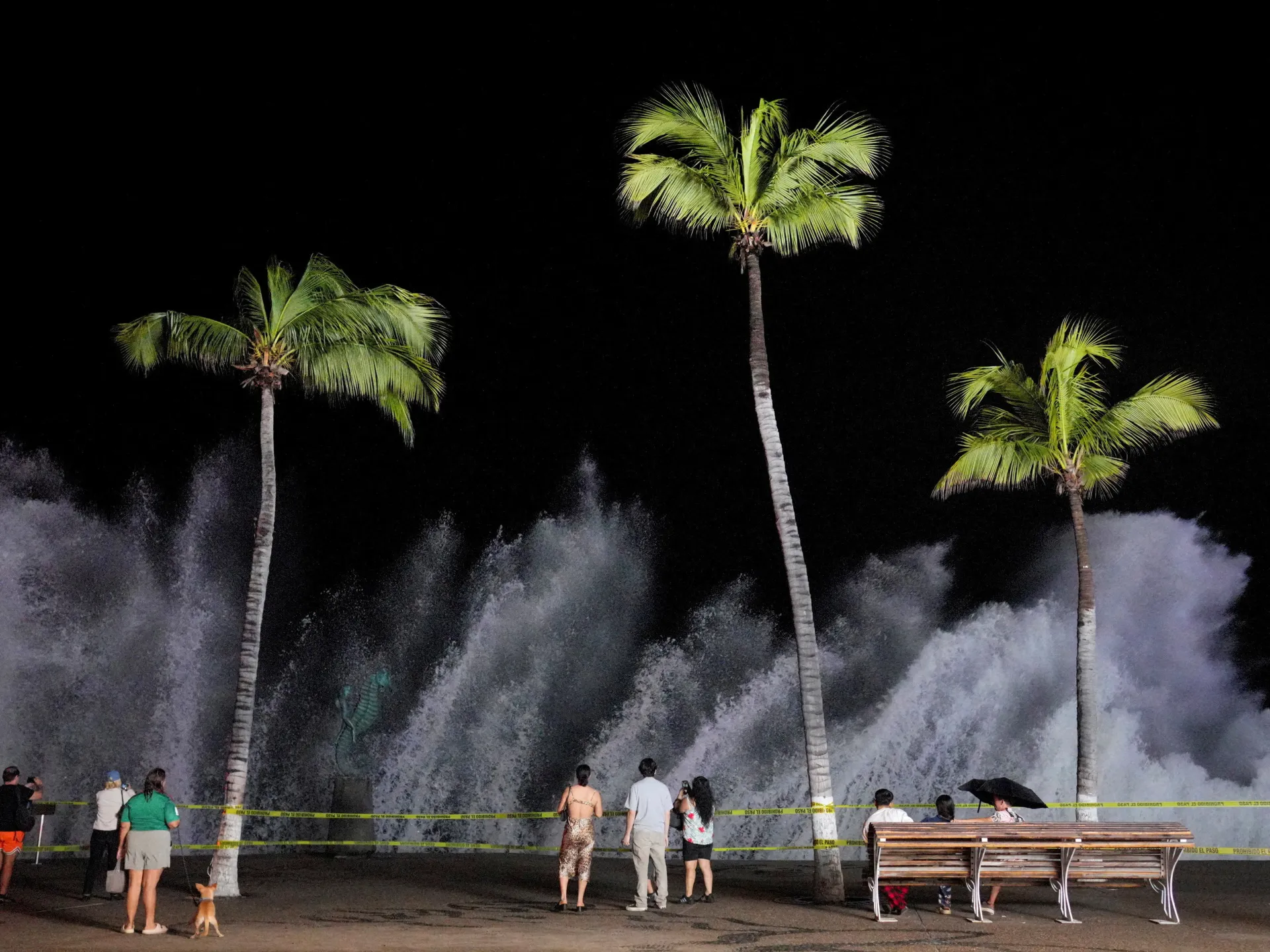
Hurricane Simon, meanwhile, has churned off the coast of Mexico since the weekend. By late Monday morning, it had weakened from a powerful Category 4 storm to a Category 2.
Its maximum sustained winds had slowed slightly to around 155km/h (100mph), according to the US National Hurricane Center. Its centre was about 115km west-southwest of Cabo Corrientes, a cape in the state of Jalisco, drifting west at 3km/h.
Forecasters predict Simon could make landfall on Thursday or Friday. Hurricane warnings remain in effect for western Mexico, which is vulnerable to landslides and deadly surf conditions as a result of the storm.
Experts warn the death toll from both storms could rise, and officials have called on residents to exercise caution amid the devastation wrought by downed trees, high winds and floodwaters.
The Spanish newspaper El Pais reported the death of a cliff diver, Juan Patines, who was killed in Mazatlan, the northwestern state of Sinaloa, after jumping into the sea on Saturday night.
According to Mexican media, the heavy surf hampered his efforts to return to shore amid dangerous coastal conditions associated with Hurricane Simon. Local authorities later halted cliff-diving at the site due to hazardous sea conditions.
Officials have yet to confirm whether his death was directly linked to Hurricane Simon.
A record Pacific storm season
Rachel and Simon have battered Mexico’s western coast as part of an extraordinary stretch of hurricane activity across the Pacific.
The northeastern and central Pacific Ocean has experienced a record storm season this year, fuelled in part by the El Nino weather phenomenon, which results in warming waters in parts of the region. Twenty-one named storms have been recorded in the Pacific so far.
On Sunday, Simon tipped the region to a historic high for accumulated cyclone energy (ACE), a metric of the combined strength and longevity of tropical storms. This year has already surpassed the previous high set in 2018.
The US island chain of Hawaii has been among the hardest-hit places. In August, Hurricane Lala unleashed ruinous flooding on Hawaii’s Big Island as a Category 1 storm, killing a 93-year-old woman and destroying some 100 homes, according to state officials.
A few weeks later, Hurricane Lowell, a Category 4 hurricane at its peak, struck the Hawaiian islands of Kauai and Niihau, where powerful winds, storm surge and flooding overwhelmed towns and roads.
Roughly 90 percent of Kauai’s power customers were plunged into darkness as a result of electricity outages. At least two deaths were linked to Lowell.
In late September, Hurricane Nolo brought another round of flooding and landslides to the Hawaiian islands, though it did not make landfall.