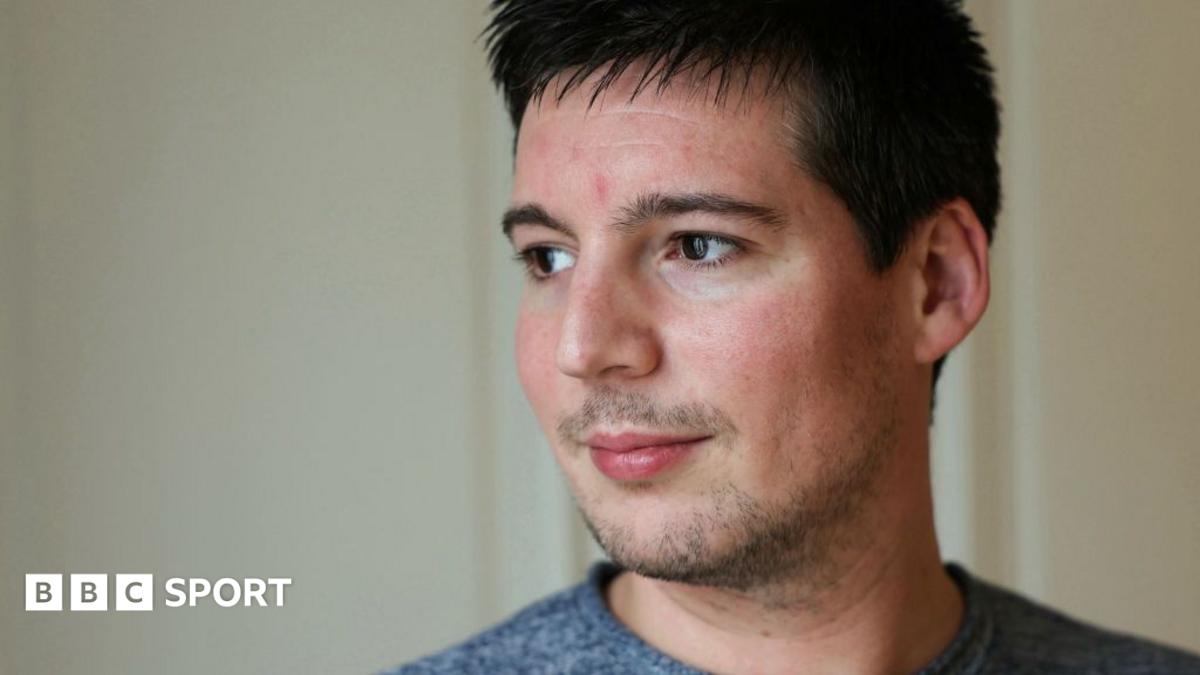
Pinto became part of Portugal’s witness protection programme in 2020 after agreeing to co-operate with authorities and provide files obtained through the Football Leaks operation.
He posted on X on Friday, external that the decision to terminate his participation in the programme on 10 October has put him in a “life-threatening situation”.
The 37-year-old said it had left him with no alternative but to relocate to an undisclosed location for an indefinite period because of “multiple death threats” and “the serious risk of an assassination attempt”.
BBC Sport has approached the Commission for the Protection of Victims of Crimes in Portugal for comment.
Pinto has described himself as a whistleblower, but was convicted in Portugal of offences including illegal access to data and attempted extortion and given a four-year suspended sentence.
He wore a bulletproof vest during his first trial in 2020, which was also subject to heightened security measures.
Earlier this year, he was acquitted in a second trial of 241 counts of illegally accessing email accounts belonging to a number of sports bodies in Portugal, including Benfica.
Pinto repeated allegations from 2018 that Infantino intervened to help City and Paris St-Germain avoid financial fair play sanctions from European football’s governing body Uefa.
A statement from Pinto’s lawyers released on Friday said the decision to end his participation in the witness protection programme left him at heightened risk, noting legal proceedings stemming from the leaks remained ongoing, including the case against Manchester City.
Pinto has set up a fundraising page to help him “survive this serious situation”, which he claims was “created by the Portuguese State”.
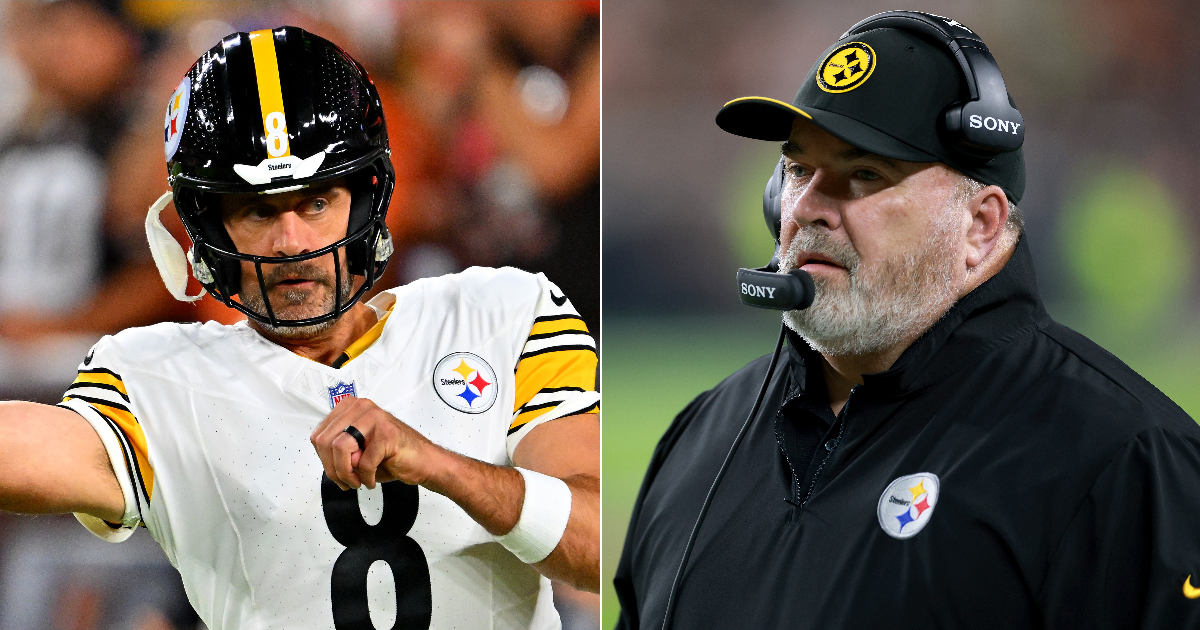
Both men used NSFW language toward each other that was picked up by Prime Video’s “Thursday Night Football” cameras and/or microphones.
The exchange took during the Steelers’ first drive in their eventual 27-24 road loss to the Cleveland Browns. Before a first down play from the Cleveland 20-yard line, Rodgers could be seen staring at the Pittsburgh sideline with his arms spread out, apparently waiting to receive the play from McCarthy.
Then the four-time league MVP exploded.
“What the f—?” Rodgers screamed toward the sideline. “Call it!”
The broadcast then cut to a shot of McCarthy, who could be seen saying the words, “f— a—hole,” in apparent reference to his quarterback.
Asked about that moment during his postgame news conference, McCarthy expressed regret for the language he used.
“I think what’s said on the field, the way I grew up in this game, usually stays on the field,” McCarthy said. “That’s not the case today, I understand that. But any negative communication on my part, I wish I wouldn’t use those words.”
Later in the same drive, Rodgers appeared to shake his head and roll his eyes while waiting for a play to be called. Speaking to reporters after the game, he indicated that the crowd noise affected the communication between the sideline and field.
“It was loud,” Rodgers said, “so some of the calls, it was hard to hear, for sure.”
The “TNF” cameras did catch a much more pleasant interaction between the two men, after the 42-year-old veteran kept the ball on a 1-yard sneak for a successful 2-point conversion to tie the game at 24-24 late in the fourth quarter.
McCarthy coached the Green Bay Packers from 2006 to 2018 and Rodgers was his starting quarterback for 11 of those seasons. During that stretch, they led the team to one Super Bowl victory (against the Steelers) and four NFC championship game appearances. Rodgers also earned two of his four NFL MVP awards during McCarthy’s tenure.
There was some well-documented tension between the two men during that time as well. But Rodgers has cited the Steelers’ hiring of McCarthy this offseason as a reason he decided to put off retirement for one more year.
“I’d gone into the offseason thinking it was probably going to be it, and I’d be totally fine with it — I feel good about my career,” Rodgers told The Athletic in August. “But once he got hired, then my mindset changed a little bit.”
He added: “Absence makes the heart grow much fonder, in this case.”
McCarthy said in the same article: “Just to be able to take this final lap with him, it’s awesome. You always want to do a great job, but now to do it with him in his last chapter, it’s special.”
Manchester City will claim as part of their appeal that key sponsorship deals were funded by the Abu Dhabi government, rather than the club’s owners.
Owners Abu Dhabi United Group (ADUG) – a private investment company belonging to United Arab Emirates vice-president and deputy prime minister Sheikh Mansour – are said to have topped up the value of commercial deals as part of a “disguised funding scheme” to the scale of £830.69m.
This, it was argued, enabled the club to appear to comply with Premier League and Uefa financial rules.
However, as first reported by the Daily Mail and Times, sources have told BBC Sport that City are expected to tell an appeal board that they have evidence showing the money directed to sponsors came from the Abu Dhabi government, rather than from ADUG.
Premier League rules allow state-owned bodies to sponsor clubs.
The independent commission detailed how City had “denied there had ever been any disguised funding scheme of the type alleged by the Premier League. Its case was that [it] had misunderstood how Abu Dhabi sponsorship agreements had been funded… The reality was [the club contested] that Abu Dhabi sponsors had always been liable for all recorded sponsorship fees and all had in fact been paid to the club by Abu Dhabi sponsors from their own funds/resources.
“No part of any recorded sponsorship fee had been paid by ADUG or from using ADUG funds. Abu Dhabi sponsors had from time to time applied for financial assistance from the Abu Dhabi government toward their liability to pay the recorded sponsorship fees – such applications had been granted…”
The independent commission rejected this submission as “untrue”, saying: “We concluded that it was an ‘explanation’ that the club had concocted well after the event in an attempt to obscure and conceal the realities of the disguised funding scheme.”
City’s argument is likely to lead to renewed debate over the extent to which City’s ownership is separate from the Abu Dhabi state, and over the ramifications of club ownership with state connections.
Mansour is a member of the ruling family of Abu Dhabi, and the brother of UAE President Sheikh Mohamed bin Zayed Al Nahyan.
Since the takeover in 2008, City have insisted the club is a completely private enterprise, and not state-owned. However, some critics have questioned the distinction, with human rights campaigners claiming the ownership of City has been used to “sportswash” the UAE.
On Saturday, City chairman Khaldoon Al Mubarak referred to “irrefutable evidence” that he claimed supports the club’s claims of innocence. City have claimed the commission’s decision contained “clear material errors, of law, principle and fact, and is unsafe”.
It has emerged that Al Mubarak, who was appointed chairman of City following the takeover in 2008, is named as an Emirati diplomat on the UK government’s current directory of all foreign representatives.
Representatives of foreign states and their diplomatic staff “enjoy privileges and immunities under the Diplomatic Privileges Act (1964)”, giving diplomats immunity from prosecution under criminal, civil and administrative laws.
City’s principal sponsor Etihad Airways has said it is considering legal action against the Premier League, claiming the release of the commission findings had “damaging implications… despite the airline not being named in the redacted published findings”.
The UAE’s state-owned national airline said it “categorically rejects any finding, conclusion or implication that suggests the airline has ever been involved in improper commercial arrangements”.
Etihad is owned by sovereign wealth fund L’Imad which is chaired by the Crown Prince of Abu Dhabi, the son of the UAE president.
The Premier League declined to comment when contacted by BBC Sport.
Additional reporting from James Landale, diplomatic correspondent for BBC News.
What if you could invent a government agency and get the government to fund it? That’s what Nigerian prosecutors accuse Adeniyi Adeyemi of doing, alleging he posed as its boss and secured a $1m budget allocation. He denies wrongdoing and has pleaded not guilty.
Sean “Diddy” Combs’ release date has been moved up once again, just as reports of his alleged pampered federal prison lifestyle have emerged.
The 56-year-old is scheduled to be released on Jan. 21, 2028, from FCI Fort Dix, a low-security federal prison in New Jersey, according to the Federal Bureau of Prisons inmate database.
The disgraced music mogul was sentenced to 50 months in prison last October after he was convicted of transporting prostitutes across state lines for drug-fueled sex performances known as “freak-offs.”
The initial release date for Combs was projected for June 2028.
Time in the jailhouse for the “Mo Money Mo Problems” rapper has been shortened several times this year. The last update to his sentence occurred this summer, moving his release to late February 2028.
News of his shortened prison stint comes as reports of Combs’ special lifestyle have emerged in a report by NBC News published Tuesday.
According to four inmates — who were granted anonymity by the outlet to speak freely about life inside the prison — Combs has allegedly been paying men to clean and cook special meals for him, including curry chicken, pizza and empanadas, and that the hip-hop artist receives Chinese-style massages.
One man told NBC, “This is not some normal s— you see in jail. This is some rich s—. It looks crazy, but again, it’s Diddy.”
The news outlet also reviewed footage obtained from inside the correctional facility, where Combs appeared to be using a contraband phone, which multiple inmates claim the artist-producer is using to scroll Instagram and view explicit nude content shared by an old girlfriend.
There are also claims that the “I’ll Be Missing You” singer is purchasing an antidepressant drug known as Remeron, or “rem-roms,” from other inmates and that he keeps a secret stash of liquor that was smuggled into the prison by guards.
“Hell yeah, I drank with him,” one of the men told NBC. He recounted drinking Hennessy with Combs.
Sources also allege that individuals outside the prison are depositing thousands of dollars into the commissary accounts of those performing services for the “Bad Boy for Life” rapper.
A spokesperson for Combs responded to the Los Angeles Times’ request for comment.
“The continued scrutiny of every mundane detail of Sean Combs’s life in prison has reached the point where the media characterizes ordinary prison life as news,” the spokesperson said via email. “The only real news is that Sean continues to serve his sentence within the rules and he patiently awaits the court’s decision on his appeal.”
In an emailed statement to The Times, a FCI Fort Dix spokesperson said they cannot comment on the “conditions of confinement for any incarcerated individual,” nor can they “confirm or deny the existence of a corresponding investigation.”
“Like all correctional agencies, contraband, particularly cell phones, narcotics, and weapons, remains a constant challenge, and we continue to tackle the problem of contraband being introduced into our facilities,” the spokesperson said. “Inmates are not permitted to have access to cell phones, and all incarcerated individuals in the Federal Bureau of Prisons (BOP) who are found to violate the ‘Inmate Discipline Program’ policy are subject to sanctions.”
Combs’ legal troubles hit a peak last year after he was involved in a lengthy and public trial involving allegations of sexual assault and other violence. Among the accusers were his former girlfriend Casandra “Cassie” Ventura and producer Rodney “Lil Rod” Jones, who lodged civil complaints against the music tycoon.
In July 2025, Combs was found guilty on two counts of a prostitution-related charge, but the business titan was cleared of racketeering conspiracy and sex trafficking, which carried heavier penalties, including a maximum sentence of life in prison.
Times staff writer Alexandra Del Rosario contributed to this report.
“Cartoon Network was better than Disney Channel and Nickelodeon.”
“Men should be required to get a vasectomy after a certain amount of baby mamas.”
These are just some of the bold, controversial statements that have come up at “Unpopular Opinion,” a live, interactive event where people share and defend their hot takes in front of a spirited audience. To support their claims, they present slide decks filled with graphics and memes on a giant screen. Those in the crowd gasp, cheer and laugh.
The crowd from a past “Unpopular Opinion” event. The viral series is coming to the Regent Theater in L.A.
(Quest Hollis / SideQuest Visuals)
The event was created by Chance Albury and Sarah Prince, founders of the Washington, D.C.-based experiential production company Something Different. People were already having these types of impassioned conversations online, Albury says, and they simply wanted to provide that space in real life.
They debuted the series in February, and after recaps of events went viral, they decided to take it on tour. “Unpopular Opinion” makes a stop in Los Angeles on Thursday at the Regent Theater.
“Who knew rage-baiting could be such a unifier?” Albury says.
“Everyone loves to argue,” Prince adds.
Albury says that the success of the show relies on having different perspectives and opinions in the room. The slide decks are also a major draw. Unpopular Opinion is one of several events that takes PowerPoint-style presentations out of their traditional setting — the office or the classroom — and puts them front and center in a social scene. Over the last few years, slide decks have shown up at house parties, matchmaking events and even in bars at gatherings like Lectures on Tap.
Anyone who wants to present can submit their hot take through an application form. Albury and Prince receive roughly 50 submissions for each event, but only about seven to nine are selected.
Presenters defend their hottest takes on stage using slides and passion.
(Quest Hollis / SideQuest Visuals)
“There’s just so many topics that you can talk about so it can’t get old,” says Prince, adding that a lot of the speakers are funny and present like stand-up comedians.
Typically hosted at a live music venue, the vibe of “Unpopular Opinion” feels like a boisterous late-night game show. Drinks are available for purchase at the bar. A live DJ plays a mix of hip-hop, pop and other high-energy genres as a host hypes up the crowd. As an icebreaker, audience members are asked to submit their own unpopular opinions to be displayed on the screen for everyone to see.
Then the main event begins. Presenters are given 10 minutes to make their case. Unlike a traditional debate tournament, audience members are encouraged to get involved and make their thoughts known.
“There’s just so many topics that you can talk about so it can’t get old,” says co-founder Sarah Prince.
(Quest Hollis / SideQuest Visuals)
After each pitch, the host asks audience members to hold up their paddle, which has a green thumbs up and a red thumbs down to indicate whether they agree or disagree. Then a mic is passed around so attendees can share their thoughts or rebuttals.
Though the event is called “Unpopular Opinion,” there are times when the majority of the crowd agrees with the presenter. There are also times when the audience strongly disagrees. In either case, Albury and Prince ask that attendees are respectful to one another.
The presentation topics range drastically, from lighthearted social media discourse (“Women standing behind the DJ booth is more embarrassing than men”) to hot-button dating debates (“Splitting the bill on the first date is fine”) to deeper societal issues (“People hate everything about slavery but Christianity”).
Albury and Prince say they are exploring ways to bring “Unpopular Opinion” “beyond the show doors” for those who can’t make it to a live event. They already post man-on-the-street-style interviews on social media, in which they ask people to weigh in on hot button questions.
Albury says the beauty of “Unpopular Opinion” is that it shows people it’s OK to disagree. “Just because we have different opinions doesn’t mean we can’t talk about it,” she says. “We may not even come to terms on agreeing or disagreeing, but we’ve got that space.”
‘Unpopular Opinion,’ hosted by Something Different
When: Oct. 1. Doors open at 7 p.m. and showtime is at 8 p.m. Where: Regent Theater, 448 S. Main St., Los Angeles Info: Tickets start at $48.60 (including fees). Must be 21+ to enter.
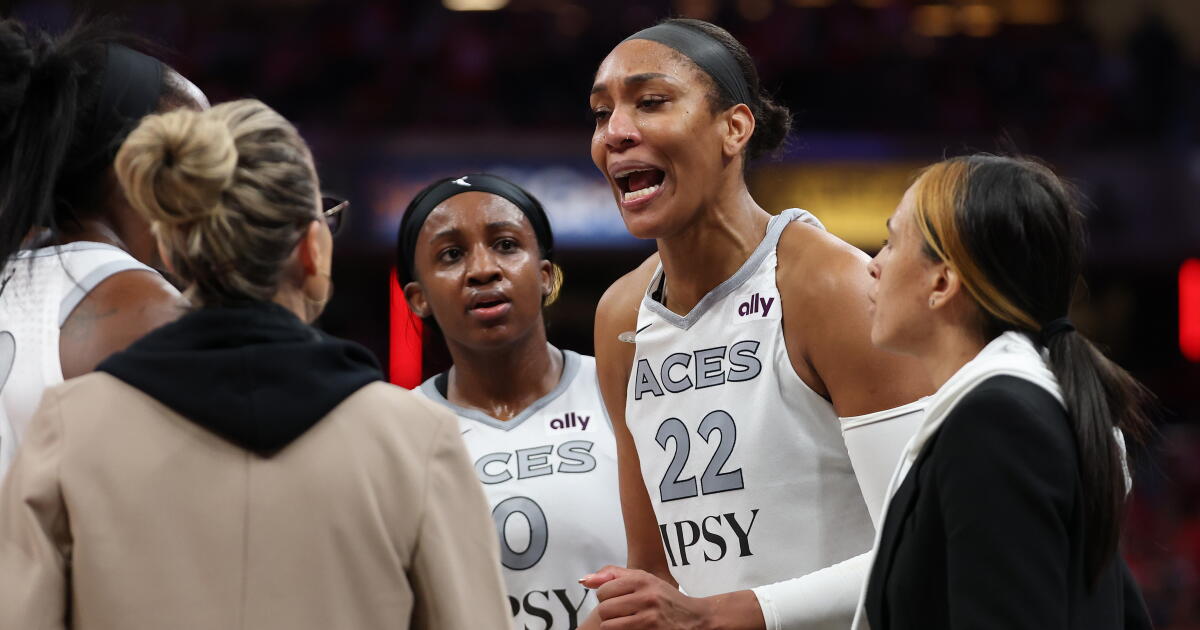
Las Vegas Aces star A’ja Wilson said she apologized to her teammates for getting a technical foul late in an eventual 98-89 playoff loss to the Indiana Fever on Tuesday night in Indianapolis.
But the four-time league MVP is not apologizing for her actions that led to the foul being called.
With about 4 minutes left in the fourth quarter and the Aces down by 11, Wilson drew a foul against Indiana’s Sophie Cunningham. As Cunningham protested the call, Wilson walked over to a Fever fan who had been standing in front of his seat in the second row behind the basket and pointing in Wilson’s direction.
Visibly upset, Wilson stood directly in front of the fan, who had been pulled back into his seat by a woman sitting next to him, while yelling at him. She was quickly pulled away by teammate Cheyenne Parker-Tyus, but was still upset as she walked away.
Speaking to reporters after the game, Wilson said that there are “just certain things that I’m not going to allow anymore because it’s just unacceptable.”
“I don’t know if you guys know me, but I don’t really get into the bulls—. I don’t,” Wilson said. “I try to play my game, keep it pushing. But if I’m just walking, because I just got the foul, I’m chilling — and if I see a man come at me, taking steps towards me and pointing at me, I don’t give a damn what you said. I don’t give a damn how you said it, the tone. That is unacceptable.”
Online video footage shot from the stands shows that the man was standing in front of his seat as the play unfolded. He appears to take a step or two while pointing and yelling after the foul was called.
“I didn’t exactly see what happened. I kind of saw the aftermath,” Aces coach Becky Hammon told reporters after the game. “I’ve never seen A’ja Wilson go like that. So whatever was done, I can tell you she felt very disrespected in that moment. I’ve never seen her really react like that ever. So whatever it was, it doesn’t have any place, I don’t think, in an arena.”
The fan eventually was escorted out of the seating area but was allowed to return to his seat. The Fever said in a statement that arena security spoke with the man and witnesses and “determined there was no violation of the Fan Code of Conduct.”
Wilson was assessed a technical foul for unsportsmanlike conduct.
“Yeah, I’m apologizing to my team for that,” she told reporters. But, Wilson added, “you don’t have to like me. You don’t have to love me. You can hate me with all your heart. … But I guarantee you will respect me.”
The decisive Game 3 of the series is Thursday in Las Vegas.
The Spanish coach won 20 trophies during a glittering 10 years as City manager before departing in May.
Published On 30 Sep 202630 Sep 2026
Former Manchester City manager Pep Guardiola has spoken out in support of the Premier League club after they were found guilty of serious breaches of financial rules.
The Spaniard handed over to former assistant Enzo Maresca at the end of last season after a decade in charge.
“I want every single @ManCity fan to know I am here; more than ever. I am, always have been, always will, be behind my club, my owner, my chairman, Ferran, the players, staff, Enzo and you, our unique supporters,” Guardiola said on Wednesday in a first reaction on his X account.
“Let me be clear: we will get through this together. I love you all.”
City’s Chief Executive Ferran Soriano addressed staff in a video on Tuesday in which he rejected the independent commission’s findings.
Guardiola took charge of City in 2016 and under his management, they won six Premier League titles – including four in a row – three FA Cups, five League Cups and the Champions League.
The Premier League charges, relating to “sham” commercial contracts used as part of schemes to inflate revenue and understate costs by more than 900 million pounds ($1.2bn) over nearly a decade, cover the period from 2009-18.
In doing so, they concealed the true state of their finances and avoided breaching Premier League and UEFA spending limits during a period in which they won three league titles.
An independent commission found the club guilty on all charges related to breaches of financial rules over the nine-year period.
They have also been found guilty of most of the charges they faced in relation to a failure to cooperate with a Premier League investigation.
City, who continue to deny any wrongdoing, have said they will appeal and have until Friday to do so.
The ruling has sent shockwaves through English football and cast doubt over the future of a club that has become a European giant.
The likely punishment is uncertain but according to Premier League rules, City could face a substantial points deduction, a fine or even expulsion from the top division.
Everton and Nottingham Forest were handed points deductions in the 2023/24 season for single breaches of financial sustainability rules.
On that basis, City would likely face relegation given the sheer weight of the case against them.
There is speculation they could even be stripped of their titles.
“If the appeal fails, Manchester City cannot stay in the league, they have to suffer. And I say that as a supporter and a fan,” said the club’s former chairman, David Bernstein.
Another factor is a potential flood of compensation claims that could cost the club hundreds of millions.
Former Liverpool managing director Christian Purslow told the BBC that clubs would be “queueing up to seek compensation”.
Wigan Warriors hooker Brad O’Neill has won the 2026 Steve Prescott MBE Man of Steel, the first time he has been given the honour.
The 24-year-old England hooker beat his Wigan team-mate Adam Keighran and Leeds full-back Lachie Miller to win the award.
O’Neill has been at the heart of an impressive Wigan side which won the Challenge Cup and League Leaders’ Shield in 2026.
He made 31 appearances in all competitions and was also named Rugby League Writers and Broadcasters Association Player of the Year.
O’Neill was sin-binned in last year’s Super League Grand Final for a wayward tackle on Tyrone May, however he inspired Wigan to two trophies, after a season without silverware in 2025.
It was a memorable night for the Warriors with Matt Peet also named Betfred Super League Coach of the Year having guided his side to the League Leaders’ Shield and Challenge Cup.
Wigan earned a clean sweep in the final three shortlist for the Woman of Steel award as Eva Hunter, Jenna Foubister and Megan Willams were all nominated, with Foubister taking the prize.
It was the second year in a row that three Wigan players were shortlisted, however this year the Warriors missed out on adding the Women’s Super League title to their Women’s Challenge Cup and League Leaders’ Crowns after they were beaten by York Valkyrie on Sunday.
Meanwhile, Halifax Panthers’ Rob Hawkins won the Wheels of Steel award.
Wilber Rafael Garces Perez has disputed the government’s account of what led to his shooting during a Doordash delivery in Austin, Texas.
A Venezuelan asylum seeker who was shot in the back by a United States Immigration and Customs Enforcement (ICE) officer in Texas is facing a federal assault charge, after prosecutors accused him of striking the officer with his car’s side-view mirror.
Wilber Rafael Garces Perez, 28, appeared in federal court in Austin on Tuesday, where he was charged with assaulting, resisting and impeding a federal officer. He could face up to 20 years in prison if convicted.
Recommended Stories
list of 4 itemsend of list
The charge stems from a September 20 encounter that began while Garces Perez was making a DoorDash food delivery near a shopping centre in Austin, the Texas state capital.
A federal complaint filed on Monday says immigration officers noticed that Garces Perez’s car had its emergency lights flashing, and they ran a database check. They found it was registered to Garces Perez, who was subject to a final order of removal from the US.
When the officers approached, Garces Perez handed over his driver’s license through a partially opened window but did not get out of the car, the complaint says. He asked the officers to wait until his wife could arrive to retrieve the vehicle.
Court documents describe the exchange up to that point as “pleasant and not aggressive”.
About a minute later, however, court documents say Garces Perez “abruptly” closed his window and drove off, striking one of the officers in the torso with his driver’s side mirror.
That officer chased Garces Perez in his own vehicle and caught up with him a short time later. In the complaint, the officer alleges that Garces Perez then tried to drive into him, prompting him to open fire.
There is no publicly available footage showing the events described in the complaint, including the shooting.
Videos, however, have circulated online showing the shooting’s aftermath, with Garces Perez injured in his car.
The complaint relies on unreleased body-camera footage from one of the two ICE officers who stopped Garces Perez.
The second officer was not wearing a body camera, according to the affidavit. That officer says he was struck by Garces Perez’s side mirror and later shot him.
Garces Perez, however, gave federal investigators a different account of the moments immediately before he was shot.
He told investigators that, after a brief chase, a law enforcement SUV struck his car, causing it to spin around, according to the affidavit. He said the officer then opened fire, shooting him in the back.
Garces Perez has been held in a detention facility in south Texas since the shooting.
His lawyer, Kate Lincoln-Goldfinch, said on Sunday the bullet was still lodged in his body and that he has a fractured clavicle. In a social media post, Lincoln-Goldfinch explained that his supporters were worried he could develop sepsis or suffer permanent damage if he didn’t undergo surgery soon.
The Department of Homeland Security has argued, however, that Garces Perez is receiving adequate medical care.
Garces Perez’s legal team is also seeking to stop his removal from the US.
The Venezuelan national entered the US in 2024 through CBP One, an online programme expanded under former President Joe Biden to allow asylum seekers to make appointments with immigration authorities at the US-Mexico border.
Trump ended the programme on his first day back in office, accusing the app of contributing to an immigration crisis in the US. His administration has since relaunched CBP One as CBP Home, a self-deportation portal.
Lincoln-Goldfinch has said Garces Perez was legally seeking asylum in the US and had a valid work permit. She has asserted that he was ordered to be deported after missing an immigration court hearing because the notice had been sent to an old address.
Garces Perez is due back before a federal immigration judge on Wednesday for a separate hearing on whether he can remain in the country.
The case comes amid a surge in immigration enforcement during Trump’s second term, with ICE reporting more than 50,000 arrests in both July and August.
Settler pogroms intensify as a total lockdown of the occupied West Bank enters its third day. And Israeli worshippers harass an elderly Palestinian man at Damascus Gate in occupied East Jerusalem.
Manchester City say they are ‘disappointed and surprised’ by the verdict and will appeal.
Published On 29 Sep 202629 Sep 2026
Manchester City have been found guilty of all charges of serious breaches of the Premier League’s financial rules between the 2009/10 and 2017/18 seasons, the league has said in a statement.
City were charged in February 2023 with breaches of the league’s financial rules spanning nine seasons following a four-year investigation.
The club said in a statement it would appeal.
An independent commission found that City “arranged ‘sham’ contracts (which misrepresented the true agreement between the parties) with a number of its commercial partners”, the league said on Tuesday.
The league added that the commission had found City used schemes “to artificially inflate the club’s revenues, and reduce its costs, by more than 900 million pounds during the affected period, to appear to comply with financial rules”.
“The core decision … details how the club systematically broke Premier League Rules for nearly a decade,” said Richard Masters, the chief executive of the Premier League.
“There are elements of the case that remain to be decided, including, importantly, what sanction must follow for these breaches.”
City, who deny any wrongdoing, said they were “disappointed and surprised” by the commission’s opinion.
“The club is innocent of the accusations made by the Premier League and a comprehensive body of irrefutable evidence exists in support of all of its positions, relating to this case,” the club said.
“Manchester City FC will now pursue the appeal avenues open to it, on the basis that the opinion contains clear material errors, of law, principle and fact, and is unsafe.”
The TikToker posted a side by side comparison of prices at a Greek airport, and many holidaymakers, despite visiting the country several times, didn’t know there was a ‘secret menu’ available
Food and drink can be expensive at the airport(Image: Rasid Necati Aslim/Anadolu via Getty Images)
Holidays are an expensive business, especially if you plan to grab a coffee and a toastie at the airport. Even a bottle of water can set you back £2-3, which is a kick in the teeth when you’re delayed and stuck in a hot terminal.
So, when one TikToker posted the prices at a busy Greek airport, it inspired a flood of comments, but not for the reason you might think. The Greek holiday fan, who posts under the username @zantegeezer with videos about the party island, went to an outlet at the airport that sold the usual pre-departure fare, and one thing surprised his followers.
He started his video saying: “I always post this every time I come to the airport. There is a regulated menu. Basically it means Greek government enforce these very good value for money options.”
Do you have a travel story to share? Email webtravel@reachplc.com
He goes on to show the regulated menu, which includes inexpensive prices for coffee, tea, toasties, and water, all the basic airport staples. He then holds up the café menu, saying:
“That’s a normal menu. You see the price difference there? I mean, look at the proper espresso you get off the regular menu”. The cafés usual menu shows a single espresso costs €4.80, just over £4, but travellers who order it via the regulated menu can get it for €1.80, a more reasonable cost of around £1.53.
A filter coffee is listed as €4.70 on the normal menu, yet if customers were to order off the regulated menu they’d spend just €1.60, around £1.36. And the bargains don’t stop there. Bottled water, in 0.5 or 0.75 litre bottles can be bought for €0.60 or €0.90, around £0.51 and £0.77 respectively.
Content cannot be displayed without consent
Hungry travellers can enjoy a toast with ham and cheese for €1.80, and if you’re dying for a cuppa before you get on the plane, a hot tea costs €1.60 on the regulated menu, or €4.00, about £3.43, if you order from the normal menu.
The TikToker finished by saying: “Just so you know, any airport in Greece you can get cheap stuff by law. Sort it out.” Regulated menus are also available in other locations across Greece in spots such as ports and ferries and places with a captive audience such as certain tourist sites.
However, there is a slight catch. The regulated prices only apply to basics such as water, coffee, and simple snacks like toasties, and only have to be offered on a takeaway basis, so the establishment isn’t under any obligation to let you use its tables. You’ll also generally be offered Greek brands, so don’t expect Volvic or San Pellegrino for the low price.
The video received many positive comments from people sick of rip-off airport prices. Over the summer, a number of airport prices came under scrutiny by fed-up travellers, from food costs to the hike in airport drop-off fees across major hubs.
Many shared their experiences with finding these cheaper deals. One said: “Santorini Airport only had €6.50 Evian water on display but they had the cheap Greek stuff when I asked.”, while another was unaware of these ‘secret menus’: “I didn’t know! Paid €4 for a bottle of water and € 7.90 for a sandwich at Zante airport!”
And there were plenty of calls for other countries to follow suit. “I need to call my representatives for the local and European Parliament. this has to be a European wide directive.”, said one. While another poster commented, “This is one of the best things about Greek airports. needs to be made Europe-wide”
Have a story you want to share? Email us at webtravel@reachplc.com
A bloke moaned that his full English breakfast at a cafe in Benidorm, which was under five pounds, was too expensive, and it led to a brutal response from the owner
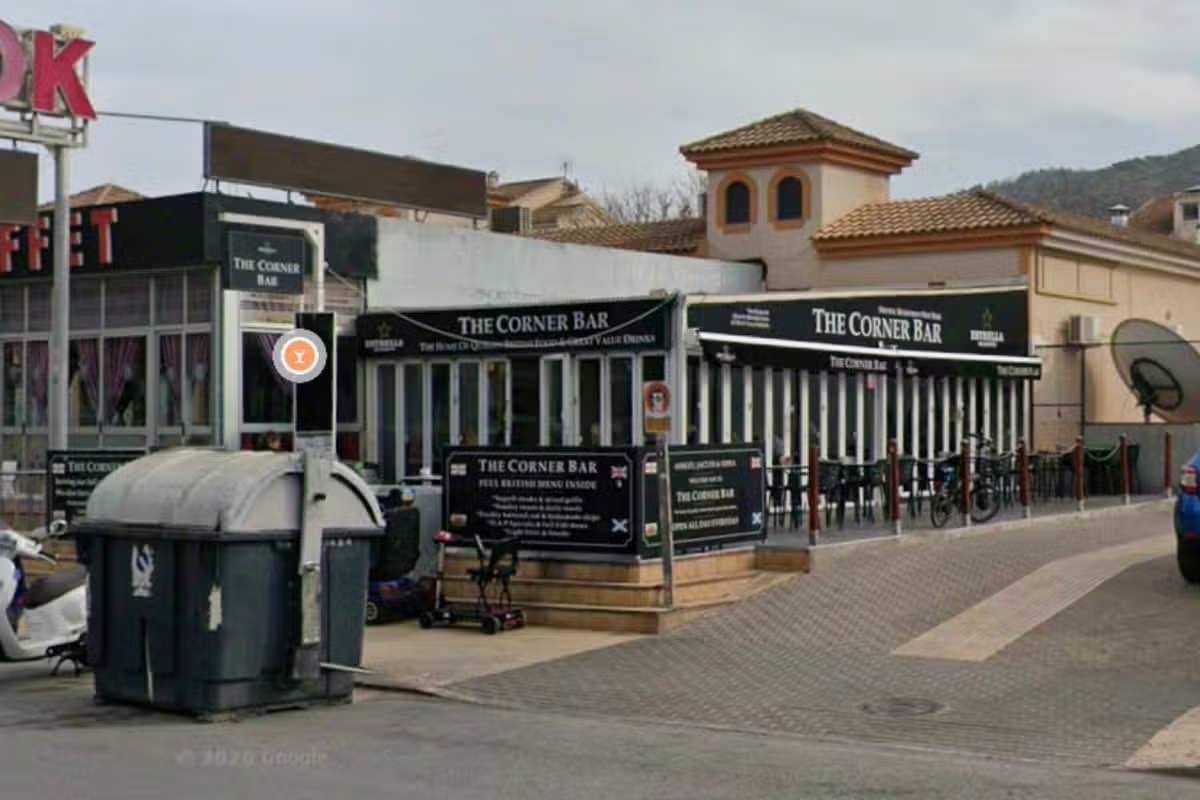
The Corner Bar Benidorm (Image: GoogleMaps)
The family behind a British-owned restaurant in Benidorm have hit back at a customer’s damning one-star review — after being floored by the price of his full English breakfast.
The Corner Bar is a favourite for both expats and holidaymakers looking for a taste of home but one customer, Peter Jones, recently shared his disapproval. He wrote: “Careful of the OAP discounts, especially at breakfast (€5.50). You can get a full English breakfast elsewhere for €4.50 (£3.86) or less.”
However, Ashley, who runs the cafe, shared the review online, before telling Peter to “have a day off” because she was “not having that” about the cost.
Defending her business in a Facebook post, she wrote: “I’m sure Peter is “fishing” here…surely he’s got to be…and I’m gonna be honest…he’s caught me. I mean. You can maybe not like our food. Not like our service. Not like us… maybe all 3, and honestly, I don’t mind, we try our best, every day, and that’s all you can do…
“But to give us a 1 Star Review on our prices…to suggest to the public you need to be careful of our prices. Nah, not having that. The breakfast in question…a No4 (pictured below).
“That’s 1 English Bacon, 1 Irish Sausage, 1 Black Pudding, 1 Fried Egg, 1 Roberts Bread Toast, Heinz Beans, Fresh Mushrooms & Tinned Tomatoes…and it’s €5.50.
“Cooked Fresh to Order by the Owner or the same 2 British Cooks who have been on The Corner for years…And apparently you need to be careful of our prices! Have a day off, Peter!”
The post soon took off and led to hundreds of comments from loyal customers who also defended the prices. One man, who has had the €5.50 (approx £4.70) full English before, wrote: “You cannot beat a No 4 at the Corner for value.”
Another person added: “Peter needs to give his head a shake! He wants €4.50 then bye bye mate! It will certainly not be as good.”
One person sarcastically said “wow a whole €1 less” before Ashley wrote another post in the comments thanking everyone for the support.
She said: “Cheers Everyone. Some lovely comments. We know we’re well supported and it’s massively appreciated. Just sometimes them review sites after a hard days work can be hard to read. We’re a small family business, currently have 5 WORKING members of staff plus us. We do our best. Thankfully, clearly the majority appreciate what we do.”
The Corner Bar has received 585 reviews on TripAdvisor with an average score of 4.2 out of five. They’ve also had 1,170 reviews on Google with an average score of 4.5 out of five.
And after the viral post, Michelle Baker, who has lived in Benidorm for more than 40 years, also shared it to her Benidormforever Facebook page. She said: “LOVE that Ashley from The Corner Bar Benidorm called this chap out… there’s just no pleasing some people!”
PITTSBURGH — James Copenhaver, one of three campaign rally attendees shot in 2024 during an assassination attempt on then-candidate Donald Trump, has died in Pittsburgh, his lawyer said Thursday. He was 76.
Copenhaver was in the bleachers during the event in Butler, Pa., when a 20-year-old gunman opened fire from a nearby rooftop, grazing Trump’s right ear with one bullet. Copenhaver was struck in the arm and in the abdomen, wounds that left him with lingering injuries and walking with a cane.
Two other attendees were also shot: David Dutch, who survived, and Corey Comperatore, who shielded his family from gunfire and was killed.
Copenhaver died Wednesday at Allegheny Health Network’s West Penn Hospital in Pittsburgh, according to a statement from the Allegheny County medical examiner cited in local media accounts.
Copenhaver’s lawyer, Joseph Feldman, said in a statement issued on behalf of the family that he died surrounded by loved ones. The statement did not specify whether his death was directly related to the injuries he suffered at the rally.
Copenhaver and his wife, Marianne Copenhaver, sued the federal government in June, alleging that the Secret Service and Department of Homeland Security had “utterly failed” to provide appropriate security at the rally. Copenhaver’s injuries required multiple surgeries, including a transection of his colon, and he had lingering kidney and other damage, including a loss of feeling in his leg. The lawsuit described the wounds as “debilitating, grievous, permanent and life altering.”
The family’s statement Thursday called Copenhaver above all else a devoted husband, father and grandfather who instilled the values of hard work, integrity and the service to others in his children.
“James’s dedication to this great country was a defining part of his life,” it said. “As a veteran, he proudly served our nation in the armed forces, and his love of country never wavered. James was a true American patriot who believed deeply in the freedoms and ideals upon which this nation was founded, and he embodied the very best traits of our great nation.”
In a statement posted to social media, President Trump on Thursday called Copenhaver “a true American Patriot.”
“Jim showed tremendous bravery, courageously continuing to FIGHT, FIGHT, FIGHT, and maintaining a positive spirit despite unimaginable hardships,” Trump wrote.
ByCybele Mayes-OstermanAssociated Press/Report for America
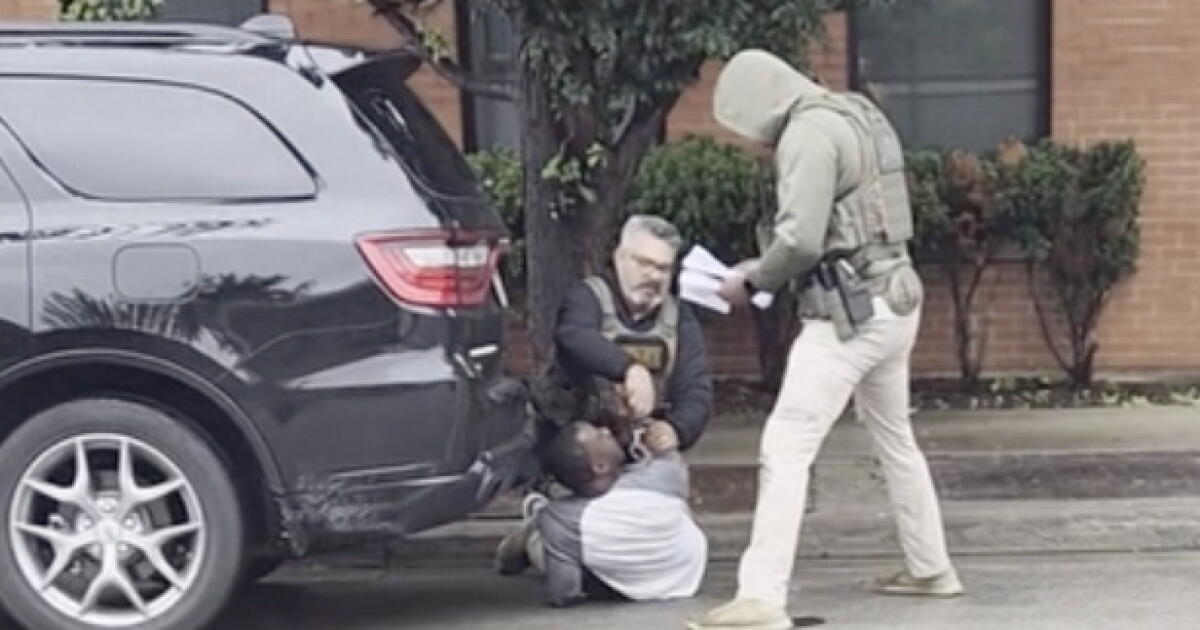
CHICAGO — A U.S. citizen was left bloodied and injured on the side of the road in a Chicago suburb after a confrontation with immigration enforcement agents who mistook him for a fugitive, according to local police and a resident who tried to help the man.
The man, whose identity was not disclosed, was taken away in an ambulance after the encounter on Sunday in Evanston, a city around 12 miles north of downtown Chicago. He told police his head, neck and teeth were injured, according to a news release from the Evanston Police Department.
A federal agent told officers who responded to calls reporting an altercation at just before 10 a.m. that morning that five agents in separate vehicles were looking for a fugitive with a Chicago address and a warrant for his arrest, according to the release. The agents mistook the man for the fugitive, the agent told police.
When the man refused to give his identification, the agents tried to handcuff him, the agent said. After realizing he was a U.S. citizen and not the person they were seeking, they released him.
One police officer saw blood on the agent’s hands, according to the release. The agent told police he was injured while trying to handcuff the man, and that they left the area immediately after because they feared protesters who had gathered would attack them, it noted.
Police have visited the man at the hospital and photographed his injuries, and are investigating the encounter.
Local authorities investigating
Evanston Mayor Daniel Biss said in a post on X that the man was treated at St. Francis Hospital for minor injuries. The police department “continues to investigate the situation, and we will remain vigilant about federal activities,” he wrote.
U.S. Immigration and Customs Enforcement officers had “encountered an individual who resembled the target” of a “targeted enforcement operation,” the Department of Homeland Security said in a statement. “The individual was given lawful commands but was not cooperative and refused to identify himself.”
The officers “left the scene without further incident” after the man identified himself, according to the statement. “When ICE officers offered the individual assistance, he refused.”
Illinois authorities condemn bloody encounter
The incident drew condemnation from Illinois officials as backlash grows against ICE’s presence in communities around the country. ICE announced a record number of arrests last month, with nearly 51,000 people arrested.
“I am disgusted and outraged by reports of what happened in my hometown of Evanston on Sunday,” Illinois Rep. Jan Schakowsky said in a statement.
Eyewitnesses tell AP what they saw
Ryan Garton, 56, told the Associated Press that he saw the agents pinning down the man, who was Black, on the side of the road as he was driving home. He pulled over to document what was happening on video.
One agent had his knee on the man’s back and was “beating up on him,” Garton told the AP. “I’m a citizen, leave me alone,” Garton said the man screamed as the agent pinned him down. Around five people stood nearby and yelled at the agent to stop.
Garton said he urged the agent to get off the man so he could inspect his injuries, and that the agent acknowledged that he was already aware the man was a U.S. citizen. When the agent stepped away, Garton saw bloodstains in the shape of handprints on the man’s shirt.
“His upper right eye socket and temple were swollen as if he had been punched” and his face was scraped “as if it had been ground into the sidewalk,” he said.
The man told Garton that he had been walking to the pharmacy to pick up a prescription when the agents stopped him.
Michael Lipson, the owner of a store across the street from where the incident occurred, said he saw the agents wrestle the man to the ground as he repeatedly yelled that he is a U.S. citizen. The man’s face looked “badly messed up,” Lipson told the AP.
Lipson said the agents checked cards and papers from the man’s wallet before leaving them scattered on the road. Lipson laid out his sweatshirt for the man to rest on while Garton inspected his injuries.
The same day, ICE agents shot and wounded a man in Austin, Texas, the latest in a string of shootings by federal immigration agents that have prompted growing backlash against the Trump administration’s aggressive immigration tactics.
At least 10 people have died in encounters with immigration agents in President Trump’s second term, including a Colombian man shot dead in Maine in July by an agent with a history of violent behavior, and a Mexican man hit by a tractor trailer as he fled agents in Florida the same month. ICE agents fatally shot Renee Good and Alex Pretti, both U.S. citizens, during the Trump administration’s siege of Minneapolis, named “Operation Metro Surge,” earlier this year.
“You only need to find one person in this entire world who doesn’t find you completely insufferable.”
That’s the wisdom Taylor Swift dispenses near the end of “Cleveland!,” one of four new songs on a newly expanded edition of “The Life of a Showgirl,” and if that exclamation point doesn’t tell you she’s found that person then I don’t know what would.
Released Thursday night, almost exactly a year after the original album came out, “The Life of a Showgirl: The Encore” tacks four bonus songs onto the blockbuster 2025 LP that set a new record for the biggest opening week of all time even as it drew the harshest reviews of her career. It also follows Swift’s high-profile wedding in July — her husband, the NFL star Travis Kelce, grew up in Cleveland Heights — and comes just as Grammy voters are about to decide on nominations for February’s awards ceremony, where “The Life of a Showgirl” is eligible for Swift’s eighth album of the year nod. (In case you haven’t been keeping track, that would tie her with Frank Sinatra for the most in Recording Academy history.)
In a statement ahead of “The Encore’s” release, Swift said she’d taken a trip to Sweden to celebrate “Showgirl’s” success with Max Martin and Shellback, her two principal collaborators on the album. “Really we just wanted to reflect and take in how grateful we were for the moment we were in,” she wrote, “but there was a studio there and we did what we do when we feel anything at all: We wrote more songs.”
Here are the four “Encore” tracks, ranked from worst to best.
4. ‘Cleveland!’ The exclamation point really is hilarious. (No shots at Cleveland.) I kind of dig the airy jangle-pop production, which reminds me a bit of “Ruin the Friendship,” by far the best song on the original “Showgirl.” But writing about her and Kelce’s romance as a bulwark against all the hate she receives as a rich and powerful pop star feels pretty uninspired, at least as rendered here. “The taste of me is acquired, but it’s his favorite dish”? Alas, no.
3. ‘Patient Zero’ “Encore’s” lead single — with a splashy music video set to premiere during Sunday night’s MTV Video Music Awards — has Swift fielding a phone call from a woman who’s dating one of the singer’s exes and could use a little advice. (“I’ve gotta be honest — I’ve been expecting your call,” Swift tells her.) That’s a rich premise, and I like the way the unexpected fiddle lick scrapes against the glossy synths. Again, though, the lyrics lack the emotional sophistication with which she once would have told a story like this one. And the song’s central image — a guy with a “devil on his shoulder under his halo” — is downright awkward.
2. ‘Pink Clouding’ OK, now we’re getting somewhere. This shimmering electro-pop number takes its title, as I just learned, from a term used among people experiencing addiction to describe the temporary euphoria one might feel in the early stages of recovery. (Recall that Swift wrote “Lavender Haze” a few years ago after hearing the phrase on “Mad Men.”) Here she’s looking back with regret at a relationship that she can see now was clearly a rebound: “You met me at a cursed time / I told you I was fine / And you were so good / That’s why you haunt me like you should.”
1. ‘Babylon’ Look, I’m not crazy about “liberated libertine.” And “Love is ice upon the ladder that you need to climb”? It’s giving Airbnb wall art. But man, oh man, does Swift finally tap into something deep in “Encore’s” closer: a trembling acoustic-guitar ditty about someone who’s realized only too late what they let slip away. Listen for yourself to hear how she sings it — this is a beautifully tender vocal performance — but the verse about the all-but-abandoned young mom sneaking into the bathroom to call her mom is an absolute killer. Taylor Swift: good songwriter!
Something’s in the air this fall — and it’s not just the autumnal chill. For some reason, survival thrillers are all the rage; there are even two featuring a man and his dog. First, we had Ridley Scott’s “The Dog Stars” with Jacob Elordi and a Belgian Malinois traversing a postapocalyptic landscape.
The latest is “Heart of the Beast,” an Alaskan-set story about two combat veterans — one human, one canine — who set out for a post-retirement camping trip and find themselves in a perilous situation after the human, retired Special Forces officer James (Brad Pitt), suffers a heart attack while piloting his seaplane. James and his combat dog Odin survive the crash, just barely, but they’re stranded deep in the wilderness, miles from civilization.
The film is directed by David Ayer, a purveyor of wild action flicks and ballads of masculinity; the screenplay is the debut effort of Cameron Alexander. Their intent is to deliver something muscle-bound and emotional — if a man can’t cry about an Army dog, what can he cry about? But until the last two minutes of the film, “Heart of the Beast” is essentially “Homeward Bound” for adults. You know, the 1993 kids adventure film featuring a golden retriever, a bulldog and a cat named Sassy who have to make their way home through the wild. Marry the structure of that film with a Jack London-inspired milieu, add some blood, gore and rather cheesy Iraq war flashbacks, and you have “Heart of the Beast.”
We watch James as he’s rained on, chewed on, pulls trunks out of an icy lake, falls off a log, breaks his arm, faces down a bear, fights off wolves, sustains many head injuries and inexplicably keeps going, in hopes of saving if not himself his dog, the most important creature in his life.
And oh, is Odin worth it. Played by four different dogs named Uber, Seeka, Ryker and Hondo, the performance that these dogs collectively deliver is worthy company to an Oscar winner — the dogs may even eclipse Pitt for sheer screen presence. With every whimper, sigh, howl, bark and head tilt, these dogs create an empathetic portrayal of a highly intelligent creature that has been through battle and has the scars (and nightmares) to prove it. Odin is a bionic dog, with titanium teeth and a prosthetic foot from injuries sustained during wartime, but nothing slows him down, not even a plane crash. However, the film does have its limitations when it comes to the other wildlife, all digitally created and the CGI isn’t convincing in the slightest.
“Heart of the Beast” is an onslaught of danger and misery, alleviated only by the pleasure of watching James’ survival skills and ingenuity. This man makes a lot of mistakes on this journey (he’s constantly calling himself “stupid” and “dumb”), but he’s also kind of a MacGyver. He starts a fire with cotton balls and Neosporin. He carries an alarming number of knives. He splints his own arm. If anything, it’s an excellent lesson on carrying the right gear and always taking medical supplies on a camping trip — if you ever go camping again after this.
Pitt typically excels when there’s a little (or a lot) of levity for him to exercise his loose-limbed charms and there’s precisely none of that in “Heart of the Beast.” Ayer pushes the emotional and physical extremes and it feels like a dirge: a forced march through the muddy Alaskan wilderness with plenty of body horror on top. The one moment of camaraderie comes in the beginning, when James shares a beer with a mysterious stranger (J.K. Simmons) who happens upon his camp and might even be an apparition of an old miner. James does share moments of affection and victory with Odin but there’s nothing to relieve the constant danger, even though structurally, the film has already sapped its potential suspense.
“Heart of the Beast” has its highs and lows but cinematically, it’s a mixed bag — entirely predictable and just not great. Nevertheless, there’s no denying that the star of the movie is indeed Odin and he’s a very, very good boy.
Walsh is a Tribune News Service film critic.
‘Heart of the Beast’
Rated: PG-13, for violence, peril, bloody/injury images and some language
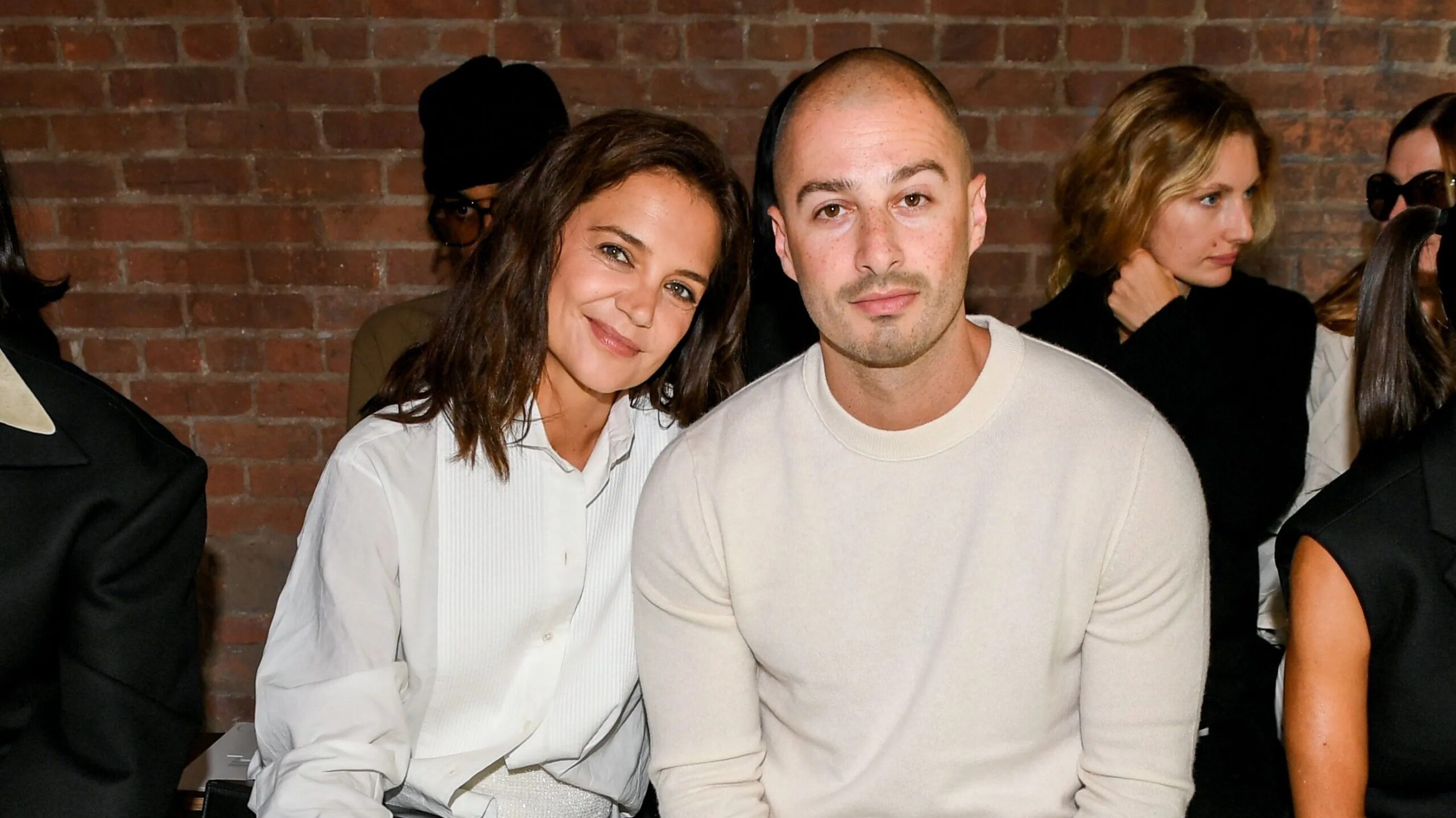
IT was written all over Katie Holmes’s face as she arrived at the Calvin Klein show at this month’s New York Fashion Week.
The reason for the actress’s mega-watt smile? The man on her arm, artist Jason Bard Yarmosky, whom Holmes, 47, has been dating since the start of the summer – and helped her get over the trauma of her doomed marriage to Tom Cruise.
Katie Holmes and Jason Yarmosky turned heads at New York Fashion Week as they stepped out in carefully co-ordinated looksCredit: Shutterstock EditorialThe actress and Tom Cruise were considered one of Hollywood’s biggest power couples before their marriage ended in 2012Credit: Reuters
Holmes and her new man, 39, attended four major fashion week events together, each time carefully co-ordinating their outfits – which in Hollywood terms says far more about relationship status than you might think.
Their romance has been the talk of New York society this summer, since they were first spotted in the Hamptons together in early July.
Handsome Jason is something of a name himself, building 40,000 followers on Instagram where he shares his work.
A source tells The Sun that he and Holmes have fallen for one another – fast – and that engagement may well be the next move.
“They have become close very quickly,” says the source.
“Something about Jason’s sense of self and passion for what he does really pulled Katie into his orbit and they’ve become inseparable. They are very much in love.”
They reportedly first met at a Tribeca Festival dinner in June, where Yarmosky had been selected for the festival’s Artist Awards Programme which was presented by Chanel.
They immediately bonded, says a source, over their “shared creativity”, with Holmes impressed by his work and his “quietly confident” energy.
Yarmosky is certainly cool, becoming something of a power player on the New York art scene, recently creating work for a special exhibition at iconic department store Bergdorf Goodman.
His website describes his paintings and drawings as centring around “themes of aging, time and memory” with a lot of his recent work inspired by his grandparents.
They made their relationship Instagram official this month, and shared sizzling photos from a trip they took to Lake Como in Italy as a collab post, the ultimate new power couple move.
Our source said that the trip was a huge step for them, and their electric connection was plain to see in the series of bikini photos as they enjoyed a boat trip on the lake.
Her friend Amy Astley, the former Vogue editor, commented that she was “glowing”.
“For Katie to make this romance so public is very telling,” said one friend.
“She has deliberately kept her romantic life under wraps for decades.”
Indeed, Holmes’s only long term relationship since her high-profile divorce from Tom Cruise, after almost six years of marriage, was with Jamie Foxx.
They were said to have dated for five years and in that time they were photographed together out in public only a handful of times.
In 2019, there were two – very rare – public appearances, first at the Clive Davis and Recording Academy Pre-Grammy Gala, then at the Met Gala.
A few months later, the romance was said to be over – and Holmes hasn’t found a great love again, until now, despite being linked fleetingly to chef Emilio Vitolo Jr. in 2020 and musician Bobby Wooten III in 2022.
“Things feel very different for Katie now,” said the source.
“For the first time since splitting from Tom, she wants to show the world how in love she is.”
And she certainly is – so much so that rumours are circulating that the pair could even be heading for engagement.
“It’s been a complete whirlwind,” said one Hollywood source.
“Katie’s friends and – most importantly – her parents Martin and Kathleen, all approve of the relationship. It is a big deal that they are together so publicly, it says a lot about where they are at.”
Katie and her new man have been increasingly open about their romance with a string of public appearances in New YorkCredit: GettyThe pair looked loved-up during their romantic getaway to Lake Como earlier this summerCredit: @katieholmes / instagram
Holmes has been notoriously private about every aspect of her life since her extremely high profile marriage, and subsequent divorce from Tom Cruise – something which left her feeling “shaken” and “cautious about living in the spotlight” said sources at the time.
It has been almost twenty years since the pair married in a lavish Italian wedding, at Bracciano’s 15th-century Odescalchi Castle – a celebration that reportedly cost them upwards of $3 million and included a performance by Andrea Bocelli.
Their relationship had been a whirlwind, from meeting in 2004, to getting engaged in 2005 and having their only child Suri in April 2006, just seven months prior to the wedding, the pair became a Hollywood power couple – known as TomKat – in record time.
She told W magazine, “I’ve found the man of my dreams”.
But their downfall was almost as dramatic as the couch-jumping which defined the start of the romance.
Holmes filed for divorce from Tom Cruise in 2012 after nearly six years of marriage through a carefully planned, covert exit from the relationship.
The Wall Street Journal reported at the time that the couple had been at loggerheads about Scientology, the controversial religion of which Cruise has been a prominent member for over 40 years, calling it a “beautiful religion”.
He said in 2016, “It’s something that has helped me incredibly in my life.”
He added, “It’s something, you know, without it, I wouldn’t be where I am. So it’s a beautiful religion. I’m incredibly proud.”
Reports revealed that Holmes and Cruise had disagreements over how the couple’s daughter, Suri, would be raised, with Holmes wanting to raise Suri away from Scientology.
During a court case in 2013, Cruise confirmed that it was “one of the assertions” made by his ex-wife which led to their split.
Following the split, Holmes was granted custody of Suri and they set up home in New York where they lived an exceptionally quiet life.
Katie Holmes and Tom Cruise pictured with their daughter Suri, who was born in 2006Credit: RexKatie and her Dawson’s Creek co-star and former boyfriend Joshua Jackson have reunited professionally for her new film Happy HoursCredit: Getty
Cruise was last photographed with his daughter, now 20 and attending Pennsylvania’s Carnegie Mellon University, in 2012 and she is said to have dropped his last name going instead by Suri Noelle, her mother’s middle name, in a recent Edinburgh Festival performance.
“They don’t have any kind of relationship,” a source has said of Suri and Cruise. “She was raised by Katie. They are incredibly close.”
Prior to her marriage Holmes had been riding high in her career which started with hit teen show Dawson’s Creek, and had just starred in Batman Begins in 2005.
Following their dramatic split, however, Holmes found herself somewhat “iced out of Hollywood”, says one industry insider.
Two years ago Holmes admitted: “Do I have 20 scripts at my door, all with the green light? No. Would that make life easier? Yes.”
Her most notable role in the post-Cruise years was as Jaqueline Kennedy in the TV miniseries The Kennedys, but the big blockbuster offers dried up.
Two years ago, she made a splash on Broadway with director Kenny Leon’s revival of Our Town.
Since then Holmes has been busy stepping back into the spotlight.
She has written and directed new romcom Happy Hours, in which she also stars alongside her former Dawson’s Creek co-star – and ex-boyfriend – Joshua Jackson.
She said earlier this year that “working with Josh again was a dream.”
Their friendship, which has been renewed in recent years after going no-contact while Holmes was married to Cruise, has been a huge part of Holmes’s “finding herself” again, our source tells us.
“With Josh, Katie can be herself,” they revealed. “He’s known her since they were kids. He’s encouraged her to find her voice artistically and also lean into being in the spotlight once again.”
And Holmes is certainly doing that, with more public appearances with her new man this year than we’ve seen since she was with Cruise, and a renewed spotlight on her life and career which she appears to be enjoying.
“Katie is happy and confident in who she is in a way that felt impossible even ten years ago,” said our source.
“Going through such a high profile divorce from someone who is so powerful, like Tom Cruise, was a life-shattering thing for her. It’s taken time but Katie feels free – and Jason is a big part of that.”
As Holmes said two years ago: “I’m adamant about having a life and not letting this industry dictate decisions as simple as what I wear or as complicated as what I do.”
She added, “You don’t want to be afraid of anything, right?”
It looks like Katie Holmes is really living by those words.
AUSTIN, Texas — A Venezuelan man shot by a U.S. Immigration and Customs Enforcement officer in Texas was back in a federal detention center Tuesday after being taken to a hospital for a second time with a bullet still lodged in his back, according to his attorney.
A federal judge also ordered Wilber Rafael Garces Perez, who was shot Sunday in Austin, to appear in court next week following a lawsuit that sought to stop his removal from the U.S.
Kate Lincoln-Goldfinch, Perez’s attorney, said in a video posted to social media Tuesday that the 28-year-old man was “still in a lot of pain.”
Perez was being held at a federal detention facility in the remote South Texas town of Pearsall, according to Texas Democratic U.S. Rep. Joaquin Castro, who has joined others in his party in sharply criticizing the shooting that occurred amid a surge in ICE enforcement during President Trump’s second term. The violent encounter has also sparked protests in Austin, including a gathering outside the Texas Capitol on Monday night.
Perez was making a DoorDash delivery Sunday afternoon when ICE officers in an unmarked truck sideswiped his car twice, Lincoln-Goldfinch has said. He was shot and taken to a hospital, then released into ICE custody with a bullet still in his back. Perez went back to the hospital Monday evening after complaining of pain and was taken back into ICE custody around midnight, Lincoln-Goldfinch said.
Court filings from Perez’s lawyers indicated he was forced to sleep on a cement floor at an ICE temporary processing center, and then at 4 a.m. Monday, ICE transferred him to the Pearsall facility. A temporary restraining order from his attorneys said he was also subject to interrogation without legal representation present.
Lincoln-Goldfinch wrote on social media that he was taken back to the hospital around 5 p.m. Monday after he began experiencing a loss of sensation in his arm.
The Department of Homeland Security, which oversees ICE, did not immediately respond to email messages Tuesday. The agency has released little information and has not said what prompted the shooting. In a statement early Monday, the department said it was investigating the shooting of a Venezuelan man in the U.S. illegally who “had a final order of removal.”
On Tuesday, the department responded on social media to a video of Texas Democratic U.S. Rep. Greg Casar saying Austin will be safer once ICE leaves, calling it a “ludicrous statement.”
“No amount of smears and false narratives will slow down ICE from doing its job by removing dangerous illegal aliens from our communities,” the agency posted.
On Monday, Perez called into a news conference and told reporters he had received no pain medication and slept on the floor.
Castro posted on social media that he planned to visit Perez on Wednesday to “check on his condition and demand his release.”
In response to the lawsuit, U.S. District Judge Orlando Garcia ordered Perez to appear in person at a hearing Sept. 30 in San Antonio.
A Venezuelan man who was shot by an ICE agent in Texas on Sunday says he is in a detention centre with a bullet still lodged in his back, after being released from hospital back into ICE custody.
Jason Eaton faces up to life in prison after a jury rejected his insanity defence.
Published On 21 Sep 202621 Sep 2026
A jury in the US state of Vermont has convicted a man of attempted murder for shooting three Palestinian college students in 2023, rejecting his defence that he was not guilty by reason of insanity.
Jason Eaton, 51, faces up to life in prison for the attack near the University of Vermont campus in Burlington. It left Hisham Awartani paralysed from the waist down and wounded his friends Tahseen Aliahmad and Kinnan Abdalhamid.
Recommended Stories
list of 4 itemsend of list
The jury deliberated for several hours on Monday before reaching its verdict after a week-long trial that included testimony from the three men and psychiatric experts called by both the defence and prosecution.
Eaton was ordered jailed pending sentencing, which has yet to be scheduled.
Awartani and Aliahmad, who were sitting in the front row of the courtroom, smiled and hugged people around them as the verdict was read.
Eaton did not dispute that he shot the three men in November 2023. Instead, his lawyers argued that he should be found not guilty by reason of insanity.
The defence said Eaton was suffering from a delusional psychotic disorder and believed the CIA and Israel’s Mossad were transmitting messages to him through FM radio.
Joshua O’Hara, the supervising attorney at the Chittenden County Public Defender Office, told jurors that Eaton believed the intelligence agencies had enlisted him to “overwatch duty” to protect a Jewish family living across the street and that God was commanding him to act.
Prosecutors rejected the insanity defence, telling jurors that a state psychiatrist had concluded Eaton did not have a mental disease or defect and that the evidence showed he intended to kill the three men.
‘He pulled out a handgun and started shooting’
Awartani, Aliahmad and Abdalhamid, now 23, grew up together in Ramallah in the occupied West Bank before moving to the US for university.
They were visiting Awartani’s grandmother in Burlington over the Thanksgiving holiday when they went for a walk near the University of Vermont campus after dark.
Awartani testified that the friends were smoking cigarettes and speaking a mix of English and Arabic. Two of them were wearing keffiyehs.
He said Eaton was standing on the porch of the apartment building where he lived before approaching the friends without saying anything.
When Eaton was about five to 10 feet (1.5 to three metres) away, Awartani testified, he pulled out a handgun and began shooting.
Awartani, then a student at Brown University, was shot in the chest and left paralysed from the waist down. Aliahmad, who attended Trinity College, was shot in the collarbone, while Abdalhamid, a Haverford College student, was shot in the right buttock.
The shooting prompted calls for a hate crime investigation, but no hate crime charges were filed.
Police later found three shotguns in Eaton’s apartment as well as a Ruger .380-calibre handgun that crime laboratory testing identified as the weapon used in the shooting.