Lulas

The WhatsApp ‘general’ behind Lula’s election comeback in Brazil | Elections News

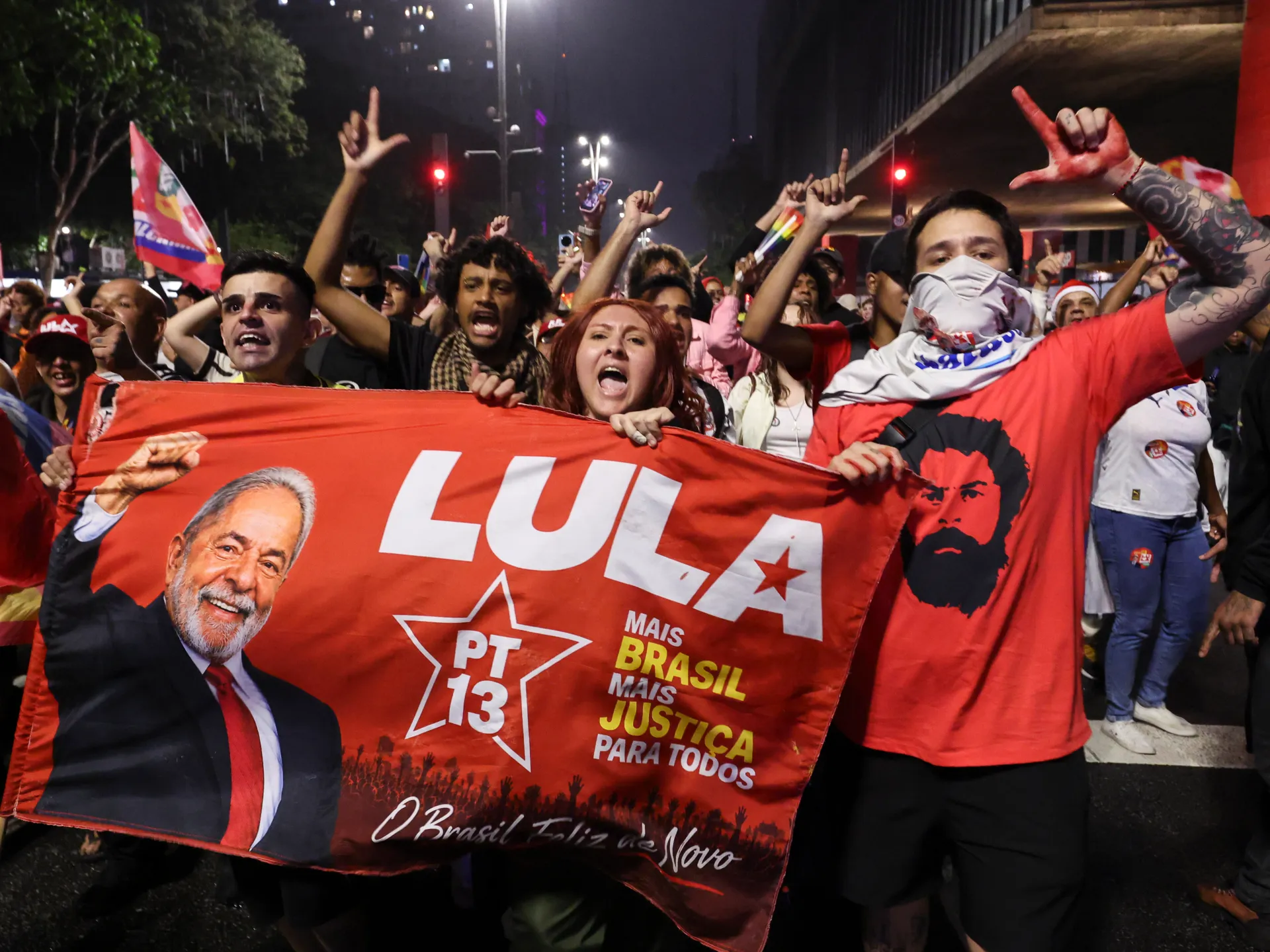
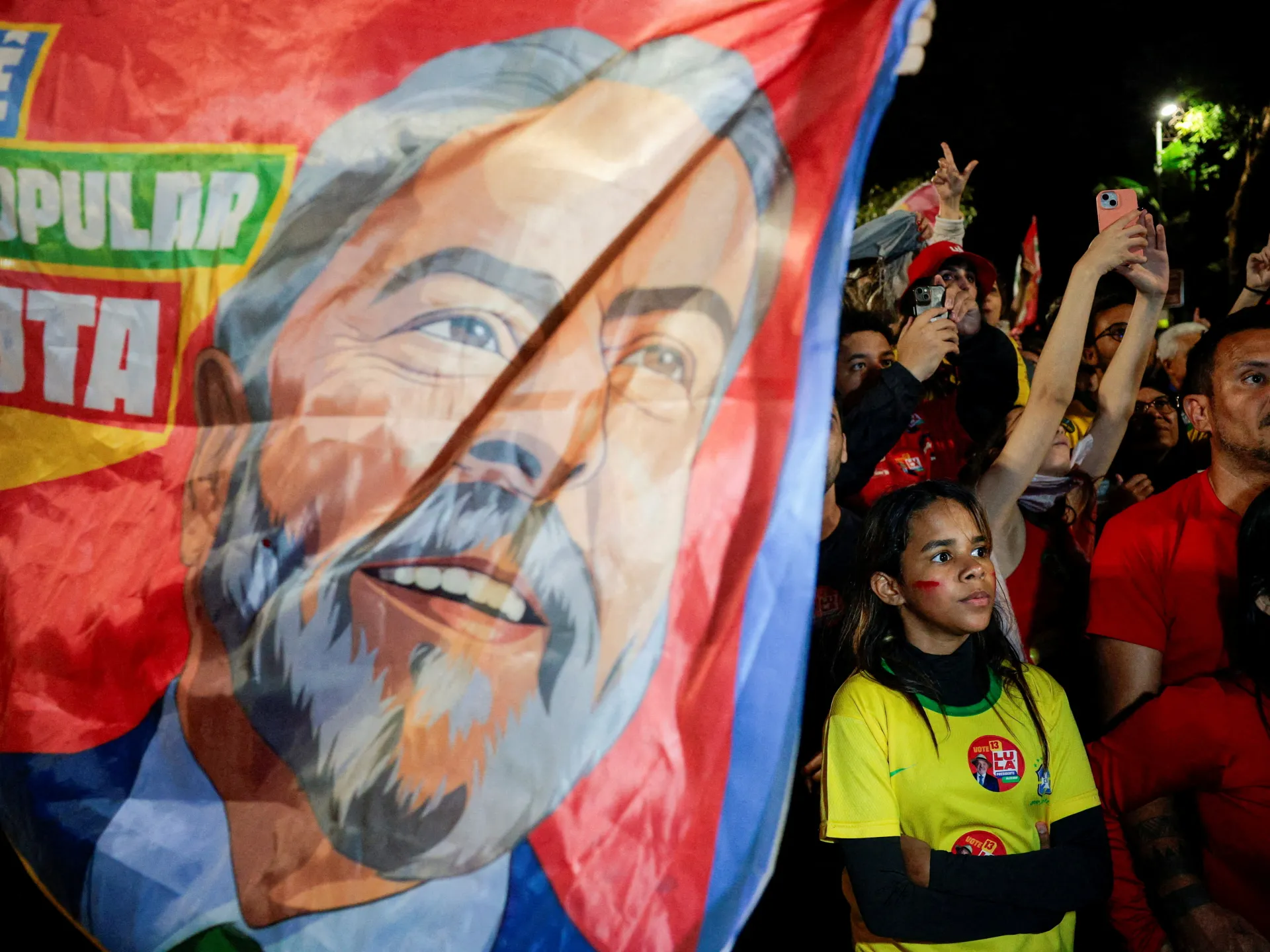
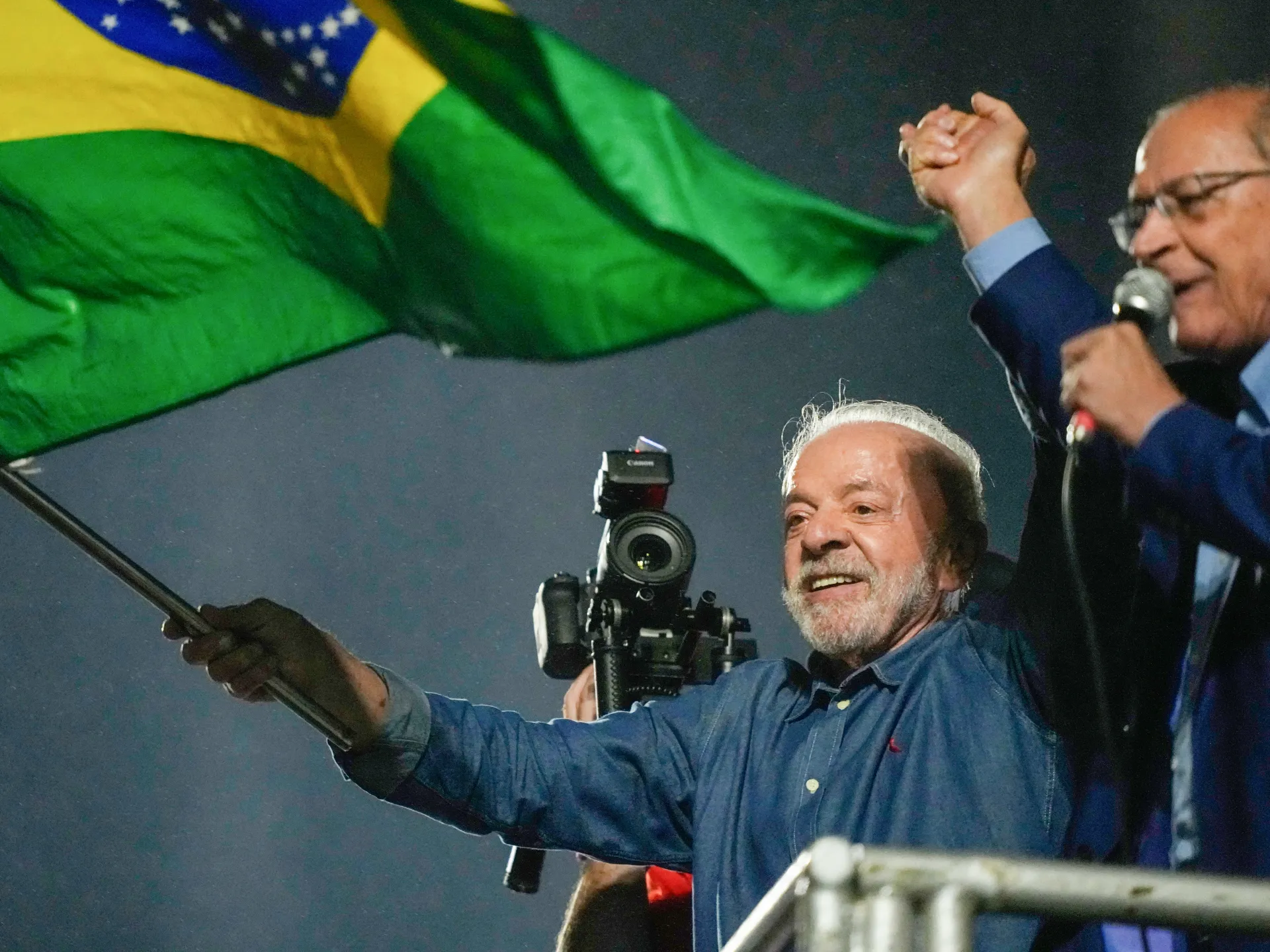
As Luiz Inacio Lula da Silva celebrated his election victory on Sunday in Sao Paulo, he placed his hand on the head of a man standing beside him and beaming in a green and yellow Brazilian football jersey.

Lula thanked him for his role in the campaign, calling him “our general”.

Recommended Stories

list of 4 itemsend of list

Andre Janones, a 42-year-old Brazilian congressman who had spent the final weeks of the presidential run-off building a mass online movement to get Lula re-elected, then embraced the president.

“He played an exponential role in this campaign in lifting the morale of our troops every day, morning, noon and night,” Lula told thousands of supporters who packed Paulista Avenue, the city’s main artery.

Just three weeks earlier, the president seemed to be in trouble. He had finished behind his right-wing rival Flavio Bolsonaro after the first round of voting, his campaign struggling to keep up with the right’s powerful social media operation.

Janones, who had also helped coordinate Lula’s digital operation in his run-off against Jair Bolsonaro in 2022, was convinced Lula’s campaign needed a change – and that he could help turn things around.

He posted a video declaring, “We are going to win this election. Lula will be re-elected president of Brazil.”

His plan centred on a WhatsApp channel he had launched months earlier.

Called Exercito do Lula, or “Lula’s Army”, it had about 60,000 followers after the first round.

By election day, Lula’s Army had grown to almost 11 million subscribers, with Janones widely credited with helping Lula stage his comeback.

How Andre Janones built Lula’s WhatsApp army

Janones is a lawyer and congressman who grew up in a working-class family in Minas Gerais. He made a name for himself through his social media commentary during Brazil’s 2018 truckers’ strike and was elected to Congress that year.

In 2022, he dropped his own presidential bid to endorse Lula, joining his run-off campaign.

“At the time, he became widely known for employing tactics similar to those used by Bolsonarism, despite operating on the left,” said Viktor Chagas, a professor at Fluminense Federal University who studies digital politics and online campaigning.

Janones coined the term “cultural Janonism” to describe his approach, which relied on urgent messages, memes and calls for supporters to take action, as well as what Chagas described as the occasional use of negative campaigning and “content of questionable origin”.

But the scale of Lula’s Army in 2026 was unprecedented, Chagas said.

In the video declaring that Lula would win, Janones urged supporters to enlist as “soldiers” by posting saluting emojis and joining his WhatsApp channel, where he assigned them what he called “missions”.

The tasks were simple, from recruiting three friends to sharing campaign videos to promoting hashtags.

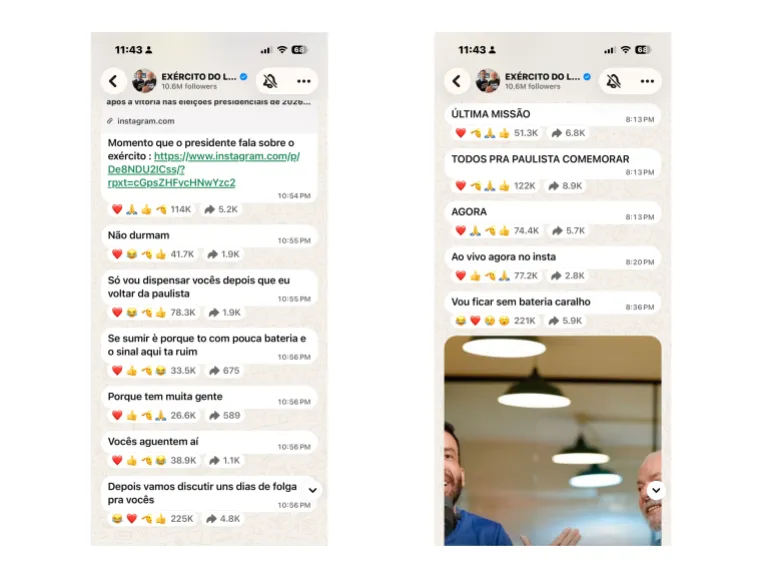
They came in a relentless stream of messages from Janones himself, often written in capital letters. Supporters couldn’t reply, but they could forward the messages or react with emojis, often doing so in the tens of thousands.

Chagas described the strategy as a form of “electoral gamification”, with Janones setting targets for supporters to reach together.

For Andre Pagliarini, an assistant professor of history and international studies at Louisiana State University and the author of a book on Lula, the appeal of Janones’s approach was giving people something they could actually do to help Lula win.

“It became an organising platform that grew exponentially because it spoke to a desire that many Lula supporters evidently had to do something tangible to defeat Flavio Bolsonaro,” he said.

How Lula’s campaign changed its message

But the path to victory wasn’t just about mobilising supporters online.

Pagliarini credited the campaign for also finding a more effective way to tell the story of the president’s working-class past.

“The campaign’s mistake in the first round was to present this history as a finished monument, worthy of admiration but distant from the lives of the people it was meant to represent,” he wrote.

After Bolsonaro mocked the president for having nine fingers during the final televised debate, for example, Lula responded by recalling how he lost a finger at 17 while working a night shift at a factory. He then linked his experience to workers injured as a result of employers’ negligence.

“Unlike Flavio, he reminded voters, he knew the world of work because he had lived in it,” said Pagliarini.

After the debate, Janones spread the message online, promoting the hashtag #SomosTodos9Dedos, or “We Are All Nine Fingers”. Supporters shared the slogan, with some posting photographs of their own amputated fingers in solidarity.

Janones had also publicly called for simpler, less polished campaign videos that showed a more relatable side of Lula, drinking coffee, visiting people’s homes and talking to ordinary Brazilians. Around the same time, the campaign started posting more informal, selfie-style videos.

“Lula was looser in his political communication, less mediated,” Pagliarini said.

Screenshots from Andre Janones’s WhatsApp channel, Exército do Lula, or “Lula’s Army,” show messages urging supporters to gather on São Paulo’s Paulista Avenue to celebrate Luiz Inacio Lula da Silva’s election victory on October 25, 2026 [Exército do Lula]
Screenshots from Andre Janones’s WhatsApp channel, Exercito do Lula, or ‘Lula’s Army’, after Luiz Inacio Lula da Silva’s election victory on October 25, 2026 [Exercito do Lula/WhatsApp]

Did Lula’s WhatsApp army help him win?

It is difficult to establish whether Janones’s digital army actually delivered votes.

“I am not sure there is a way to empirically connect the group to the outcome,” Pagliarini said.

But he believes Janones helped turn the campaign around.

“Janones himself became a kind of character in the campaign, a cheerleading strategist who seemed confident in a plan that had been missing throughout much of the race,” wrote Pagliarini.

Chagas agreed that it was “difficult to imagine the outcome we achieved without Lula’s Army”, adding that the channel brought together left-wing supporters who had previously been scattered across fragmented online communities, and gave them a way to work together.

The challenge now is keeping that momentum going, Chagas said, pointing to the far right’s use of “permanent campaigning”, maintaining the engagement of supporters between elections.

On election night, at least, Janones kept his soldiers busy.

“EVERYONE TO PAULISTA TO CELEBRATE,” he wrote, urging them to gather on Sao Paulo’s Paulista Avenue. “NOW.”

Later, he asked them not to go to sleep, adding that he’d let them go once he got back from the celebrations.

“Then we’ll discuss a few days off for you,” he joked in a message that drew more than 225,000 reactions.
Source link

Lula’s victory echoes across BRICS after fears of a Bolsonaro win | Elections

When Brazil’s President Luiz Inacio Lula da Silva scored his surprise election victory on Sunday, winning an unprecedented fourth term in office, his supporters were euphoric.

The joy they felt over Lula’s victory has echoed across large parts of the Global South – and could restore some hope to the grouping that has sought to give emerging countries a greater stake on the world stage, the BRICS alliance.

Recommended Stories

list of 4 itemsend of list

At a time when United States President Donald Trump is seeking to reassert US power and has cast BRICS as a threat to US interests, Lula’s victory in Brazil offers the alliance a measure of political reassurance, experts say.

A win by his rival, Flavio Bolsonaro, could have threatened Brazil’s commitment to the bloc, given his links to Trump and calls to reconsider the country’s role in BRICS.

Instead, Lula’s return gives the grouping one fewer reason to fear a retreat from within – as it continues to help forge a more multipolar future for a world dominated by the US.

As Esmat Zaidan, professor of public policy at Qatar’s Hamad Bin Khalifa University, told Al Jazeera, “The victory of Lula is important to BRICS’ political continuation in the current climate as it seeks to increase the bloc’s role and make it stronger in global governance.”

A spared fracture

It was clear to analysts that Lula’s win would safeguard the continuation of the BRICS alliance, while under Bolsonaro, its future may have floundered.

Lula himself was one of the architects of the bloc when it was founded nearly two decades ago, and has sought to advance its role on the global stage.

According to Zaidan, Bolsonaro’s desire to reconsider Brazil’s participation in BRICS and instead pursue closer alignment with Washington would have weakened the bloc’s political cohesion and potentially slowed cooperation on trade and financial reform.

Bolsonaro had reportedly also promised the US Trade Representative that Brazil’s Pix instant payment system would stay out of non-Western payment schemes, as the US seeks to safeguard global dominance of the dollar, said Imran Khalid, a geostrategic analyst and senior fellow at Foreign Policy in Focus.

“BRICS makes decisions by consensus, so one unwilling founding member can slow everything down from the inside. That was the real risk, more than Brazil walking out,” Khalid told Al Jazeera.

Still, Zaidan cautioned that continuity of the alliance does not amount to total unity within.

“The member countries of BRICS have distinctly different economic interests and geopolitical goals,” he said. “Therefore, while Lula’s victory makes it easier for the BRICS bloc to continue working towards a common agenda, his election did not eliminate these distinct differences.”

Guy Burton, a geopolitical and policy analyst, agreed that the bloc’s differences will remain unchanged with Brazil’s election result.

“BRICS matters because it represents a large share of the world’s population, economy and trade. But it has never really acted as a political unit. Its members are too different,” he said.

“The bloc now includes Iran and the UAE, which sit on opposite sides of the current war. That tells you how limited its cohesion is,” Burton added.

More multipolarity, but not a counterweight to Washington

The apparent relief in the Global South to Lula’s win reflects a broader concern among many emerging economies about their exposure to decisions made in Washington, “particularly regarding trade, tariffs and international economic relations,” said Zaidan.

“For these countries, the issue is not necessarily opposition to the US. It is about having greater room to make independent decisions and avoiding excessive dependence on any single global power,” he said.

Khalid pointed to China and Russia’s support for Lula, with Xi Jinping backing him against outside interference, and the Kremlin praising his work for the BRICS alliance.

“Most of these countries do not want a fight with the United States; they want the freedom to say no to Washington without being punished for it,” he explained.

“A strong Brazil inside BRICS helps protect that freedom.”

Lula has long advocated for a more multipolar international system, in which emerging economies have a stronger voice when it comes to shaping international rules and institutions, added Zaidan.

Burton said even countries and regions beyond the Global South are looking to lessen their reliance on  Washington, including Europe, which is building its own security against Russia and in support of Ukraine.

“So states, whether in the Western camp or not, have accepted that they must pursue their own interests. That means working with whoever they can. We are moving into a genuinely multipolar world,” he said.

Still, BRICS’ diversity and its member states’ varied interests have meant it has never been a coherent counterweight to the West, experts said.

Many in the alliance maintain strong economic and security relationships with the US, said Zaidan.

“I would see Lula’s victory as strengthening the case for strategic autonomy rather than confrontation with Washington,” said the professor.

“BRICS is potentially more effective when it expands the choices available to its members, rather than defining itself simply through opposition to the United States.”

Burton agreed, pointing to Brazil’s changing ties with Trump over the years.

“Russia and China are the obvious US rivals. But India under Modi long had a close relationship with Washington, and with Trump in particular, even if that has weakened recently,” he said.

“Brazil, too, was close to Trump under Jair Bolsonaro, Flavio Bolsonaro’s father, when he was in office.”

Challenging dollar dependence

Among the BRICS’ many ambitions is to promote trade in local currencies rather than the US dollar – and Lula’s victory could provide the political foundation to build on these efforts, said Zaidan, given that Brazil is one of the largest trading economies in the bloc.

Khalid said that after the alliance scrapped the idea of a common BRICS currency at its most recent summit in New Delhi in September, its ambition for trade in local currencies has become far more viable.

“If the [BRICS’ New Development Bank] moves towards its goal of 30 percent of lending in member currencies, and Brazil and China settle more trade in reais and yuan as they agreed in 2023, reliance on the dollar falls step by step, without an open confrontation,” he explained.

But Zaidan said that political will alone is not enough.

“Countries also need reliable payment infrastructure, sufficient currency liquidity, appropriate financial regulations, and businesses willing to use these arrangements,” he said.

For now the dollar reigns supreme in foreign exchange transactions, and there may be no tipping point for another decade or so, Burton said.

Ultimately, though, Lula’s victory could help BRICS move from political discussions towards more practical financial cooperation, while reducing dollar dependence will be “gradual, uneven and driven as much by economic feasibility as by geopolitical ambition”, said Zaidan.

How Washington reacts to this is another variable; Trump’s government sits at the contradiction of wanting to remain the world’s superpower, while also retreating to a more protectionist America-first role, said Burton.

“Developments such as Lula’s re-election will only sharpen the pressures already building in the Global North,” said the expert.

Source link

What will Lula’s fourth term mean for Brazil? | Elections

Luiz Inacio Lula da Silva wins a fourth term as Flavio Bolsonaro disputes the result. Can Lula deliver on his promises of change?

Brazil’s President Luiz Inacio Lula da Silva delivered a defiant message after being declared the winner of a run-off vote on Sunday.

He lost round one to his right-wing rival. But he made history by coming out on top in the second poll.

Recommended Stories

list of 3 itemsend of list

Opponent Flavio Bolsonaro has disputed the result and says he wants it annulled.

This will be Lula’s fourth nonconsecutive term in office. He’s promised a new approach to governing. But many challenges lie ahead. So, how will his government handle them?

Presenter: James Bays

Guests:

Thiago Vidal – Political risk specialist and the director of Political Analysis at Prospectiva Public Affairs

Robert Valencia – Latin American affairs analyst and a former journalist

Graziella Testa – Professor of Political Science at the Federal University of Parana

Source link

Brazil’s real sinks after Lula’s re-election victory | Financial Markets News

Investors react to Lula’s election victory with a sharp decline in the Brazilian real and concerns over increased spending and fiscal challenges.

Brazil’s real dropped against the United States dollar on the heels of Brazil’s President Luiz Inacio Lula da Silva’s unexpected re-election after right-wing Flavio Bolsonaro, the son of former President Jair Bolsonaro, led in the first round of voting earlier this month.

Brazil’s currency dropped against the dollar by 12 percent in spot trading. Bovespa stock index futures tumbled nearly 15 percent on Monday.

Recommended Stories

list of 3 itemsend of list

“I’m not surprised the real is sinking sharply; traders are covering their bets that assume a Bolsonaro victory and tighter fiscal policy,” Rachel Ziemba, adjunct senior fellow at the Center for a New American Security, told Al Jazeera.

Brazil’s stock exchange halted trading for 30 minutes. The Bovespa index fell 10 percent from its previous close, triggering a circuit-breaker safety mechanism and reversing a rally earlier this month amid expectations of a shift to the right after Bolsonaro won the first round.

Ziemba says Bolsonaro’s refusal to concede the election has driven some financial uncertainty.

“The market pressure is also amplified by the objections raised by Bolsonaro, but the scale of the victory suggests that the result will stand,” she said.

Interest rate futures had also reflected expectations that tighter fiscal policy under Bolsonaro would allow borrowing costs to decline.

“They [investors] assume more domestic spending and higher rates in Brazil. However, the real is still likely to be supported by strong commodity revenues,” Ziemba noted.

Stocks closed on Friday almost 7 percent above their level before the first round, while the Brazilian real was nearly 5 percent stronger against the US dollar.

Interest rate futures are up 3.1 percent, rising sharply after President Lula’s win. Interest rate futures had previously reflected a tighter fiscal policy amid expectations that Bolsonaro would oust the incumbent and that he would allow borrowing costs to decline.

Lula faces an increase in Brazil’s debt and will be challenged with protecting both social programmes and investment, with investors looking for signs of whether his gradual fiscal approach can bring borrowing costs down.

Lula’s team aims to produce a budget surplus of about 1.3 percent of gross domestic product (GDP) by 2030. That would leave money to cover part of the interest bill, reducing the need for fresh borrowing. But public debt already exceeds 82 percent of GDP, while pensions and other legally required spending limit where savings can come from.

“Lula’s policies have talked about spending cuts, but he has not gone into the details of how that is going to look,” said Divya Singaravelu, head of research at Meridian 1305 Capital.

Attention will now turn to Lula’s choice of finance minister and what it signals about his fiscal approach.

Source link

Lula’s victory may be a turning point for Latin America | Elections

At 80, President Luiz Inacio Lula da Silva has pulled off an extraordinary political victory. After losing the first round to Flavio Bolsonaro, son of former President Jair Bolsonaro, by 47 percent to 45 percent, Lula defied the odds to secure a stunning second-round victory, with 51.8 percent of the vote against Bolsonaro’s 48.2 percent.

His triumph confounded every pre-election poll and crowned a dramatic campaign revival that few had anticipated.

Lula’s victory in Latin America’s largest country does more than halt the far right’s return to power in Brazil. It breaks a succession of right-wing electoral victories across the region and deals a major blow to United States President Donald Trump’s increasingly interventionist agenda in the Western Hemisphere.

When Bolsonaro unexpectedly defeated Lula in the first round, the result sent shockwaves across Brazil and beyond. For the government, the defeat was particularly startling given its strong socioeconomic record. What followed was an extraordinary three-week political mobilisation that transformed the sluggish first-round campaign of Lula’s Workers’ Party into an existential confrontation over the future of democracy and sovereignty in Brazil.

The economic record was hardly that of a government heading for defeat. Brazil’s economy grew by a cumulative 9.2 percent between 2023 and 2025, compared with an average of just 5.6 percent among its South American neighbours. Unemployment fell from 9.3 percent in 2022 to a historic low of 5.4 percent in 2026.

Brazil also exited the United Nations Hunger Map in 2025, after having returned to it under the Bolsonaro senior administration. In the Amazon, deforestation fell to its lowest level in decades, a sharp reversal of the trend under his predecessor.

Not everything has been rosy under the Lula administration. Millions of Brazilians have remained trapped in credit-card debt, struggling with extremely high interest rates, while an explosion of online gambling has devastated the livelihoods of families. The run-off result sent a clear signal that there was social discontent.

Lula responded with unusually bold measures: a sweeping debt-relief initiative and restrictions on online betting, as well as expanded social benefits, fuel subsidies, and the transition from a six-day to a five-day working week. These policies sought to reconnect the government’s macroeconomic achievements with the everyday economic anxieties of Brazilian voters.

Bolsonaro offered a radically different vision for Brazil: sweeping spending cuts, privatisations, lower taxes and, above all, an iron-fisted response to crime and insecurity. His proposals included building five maximum-security prisons modelled on El Salvador’s notorious penitentiary system and authorising lethal force against heavily armed criminals.

Bolsonaro also pledged to pardon his father, sentenced to 27 years for plotting to overturn the 2022 election, and to grant clemency to those convicted over the January 8, 2023 assault on Brazil’s democratic institutions. For his supporters, this represented an opportunity to reverse what they considered judicial persecution. For his opponents, it threatened to rehabilitate the attempted coup and undermine judicial independence.

Lula’s campaign came back re-energised, with many young Brazilians mobilising at the grassroots level. The campaign was able to overcome even algorithmic bias by social media giants like Meta, which favoured Bolsonaro.

Ultimately, the election became a battle not only over Brazil’s democracy but also its sovereignty. Trump’s administration has intervened conspicuously in Brazilian politics throughout Lula’s term, imposing punitive tariffs, sanctioning a Supreme Court justice involved in Jair Bolsonaro’s prosecution and openly embracing his son’s candidacy.

In May, Trump received Flavio Bolsonaro in the Oval Office. Two days later, Secretary of State Marco Rubio designated Brazil’s two largest crime organisations as foreign terrorist organisations, a measure Flavio had publicly requested.

These designations carry implications extending far beyond electoral politics. They potentially open the door to US military operations on Brazilian territory under Washington’s expanding war on so-called “narcoterrorism”. The world saw how one such foreign terrorist designation enabled the US to intervene militarily in Venezuela and abduct its sitting president.

Whereas Trump seeks to draw Latin America’s largest country into Washington’s expanding system of hemispheric military dominance, Lula has defended Brazil’s strategic autonomy, insisting that cooperation against organised crime must respect national sovereignty.

He framed the election as a choice between a sovereign Brazil charting its own course and one subordinated to Washington’s geopolitical agenda. Sunday’s election result shows that the Brazilian people have made their choice.

Importantly, Lula’s victory may mark a turning point in Latin America’s rightward shift. Since Trump’s return to the White House, the right has scored a string of electoral victories in Honduras, Chile, and Bolivia, among others. But Lula’s re-election suggests that its momentum may be faltering.

The result comes just ahead of the US midterms and could deliver a significant setback to the strength of Trump’s leadership in the Americas. In Argentina, President Javier Milei — who regularly attacks Lula and threw all his weight behind Bolsonaro — has been sliding in the polls ahead of next year’s presidential election. In Chile, President Jose Antonio Kast has suffered an even more precipitous collapse in public support.

Mexico’s Claudia Sheinbaum, for her part, has likely breathed a sigh of relief. A Lula defeat would have left her increasingly isolated in a region gravitating towards Mexico’s northern neighbour. Instead, Latin America’s two most populous countries and largest economies will remain firmly on the left for the foreseeable future.

It is too early to declare the region’s rightward turn over. But Lula’s victory raises the possibility that the wave has already crested. Brazil will not be joining Trump’s Shield of the Americas, and while the “Donroe Doctrine” remains a threat, its moment of greatest ascendancy may already be behind it.

Lula’s victory is a vindication of a lifetime spent fighting for society’s most marginalised and disenfranchised. And its significance extends far beyond Brazil’s borders. For defenders of democracy, multilateralism, international law, environmental protection and the sovereignty of the Global South, it sends a powerful message: the far right’s advance is neither inevitable nor irreversible. Not in Brazil. Not anywhere.

The views expressed in this article are the author’s own and do not necessarily reflect Al Jazeera’s editorial stance.

Source link

Meta employees say Lula’s accounts restricted in Brazil election: Report | Social Media News

The messages, reported by a Brazilian daily, say the platform recommended Bolsonaro’s profile and his WhatsApp channel.

Employees at Meta have acknowledged in internal communications that the Instagram accounts of Brazilian President Luiz Inacio Lula da Silva were negatively affected by restrictions during the country’s election, media reports say.

The messages, reported on Friday by Brazilian daily Folha de S Paulo, also acknowledged the platform recommended the profile of Lula challenger Senator Flavio Bolsonaro, as well as his WhatsApp channel. Folha, the Sao Paulo-based paper, cited messages it had reviewed.

Recommended Stories

list of 4 itemsend of list

Meta told the Reuters news agency that the technical issues cited in the report were already public and the conversations it referenced related solely to the severity of the issues, not political interference.

“Any suggestion that Meta favors one side is false,” it added in a statement.

Lula, the left-wing incumbent, will face right-wing challenger Bolsonaro in a presidential runoff on October 25, following a stronger-than-expected performance by the senator in the first-round vote earlier this month.

Friday’s report came on the heels of a Brazilian court ruling on Thursday that ordered Meta to immediately adopt measures to provide equal treatment of the two candidates ahead of the runoff.

The ruling by a judge in Brazil’s top electoral court was made shortly after Lula filed a complaint that accused the tech giant – which owns Instagram, Facebook and WhatsApp – of using biased algorithms and AI restrictions to favour opposition candidate Bolsonaro ahead of the election.

Justice Marco Aurelio Bellizze ruled that Meta cannot reduce the distribution of political content, restrict searches or remove posts in a way that creates an imbalance between Lula and Bolsonaro. His ruling also orders the company to ensure its artificial intelligence tool applies identical criteria to both candidacies.

Bellizze said in his ruling that Meta must pay a fine of 500,000 reais ($98,700) per day if it fails to comply.

According to Lula’s party, some of his posts appeared without a share button and had reduced reach. Options for reactions, sharing, audio or accelerated speed were also missing.

Source link