Lula

‘Arbitrary measures’: Lula slams US ‘terror’ designation for Brazil gangs | Government News

The president of Brazil, left-wing leader Luiz Inacio Lula da Silva, has denounced a decision by the United States to designate two of the South American country’s criminal networks as “terrorists”, warning that the label could be a “setback” for local law enforcement efforts.

The condemnation came in a 435-word message posted to Lula’s social media platforms on Friday.

Recommended Stories

list of 3 itemsend of list

In it, Lula drew a line between criminal activities and international terrorism, which is often understood to use violence for political or social aims.

“The terror inflicted by these organisations upon communities seeks to generate profit through crime — specifically through drug and arms trafficking,” Lula wrote.

Those activities, however violent, “must not be conflated with the ideologically, politically, or religiously motivated actions characteristic of international terrorism”, he added.

Lula’s statements came in response to an announcement a day earlier from the administration of US President Donald Trump.

Pushback against ‘terrorist’ label

On Thursday, US Secretary of State Marco Rubio revealed that he had designated Brazil’s two largest criminal groups — the Primeiro Comando da Capital (PCC) and the Comando Vermelho (CV) — “specially designated global terrorists”.

He also outlined plans to add the two groups to the list of “foreign terrorist organisations”, effective June 5.

Rumours had swirled for months that the Trump administration would apply the “terrorist” label to the two groups. But Lula and his ministers had pushed back, calling on Trump to hold off.

“Terrorist” designations freeze all US-based assets connected to the targeted groups, but they can also be used to penalise anyone who offers “material support or resources” to them.

Experts warn that such restrictions could potentially affect financial institutions and even the victims of such groups, including businesses and individuals who might be forced to pay extortion.

Lula has also expressed concern that the “terrorist” label could pave the way for US military intervention, a fear he reiterated in Friday’s statement, though he never named Trump outright.

“We remain fully prepared to develop joint solutions that yield mutual benefits for all nations involved,” Lula wrote.

“However, we will not tolerate the imposition of arbitrary measures from abroad, nor will we accept their use as a pretext to undermine our sovereignty or our economy. Unilateral, non-negotiated measures can undermine the fight against criminals and trigger actions that endanger the lives of people who have absolutely no connection to crime.”

A tight election in Brazil

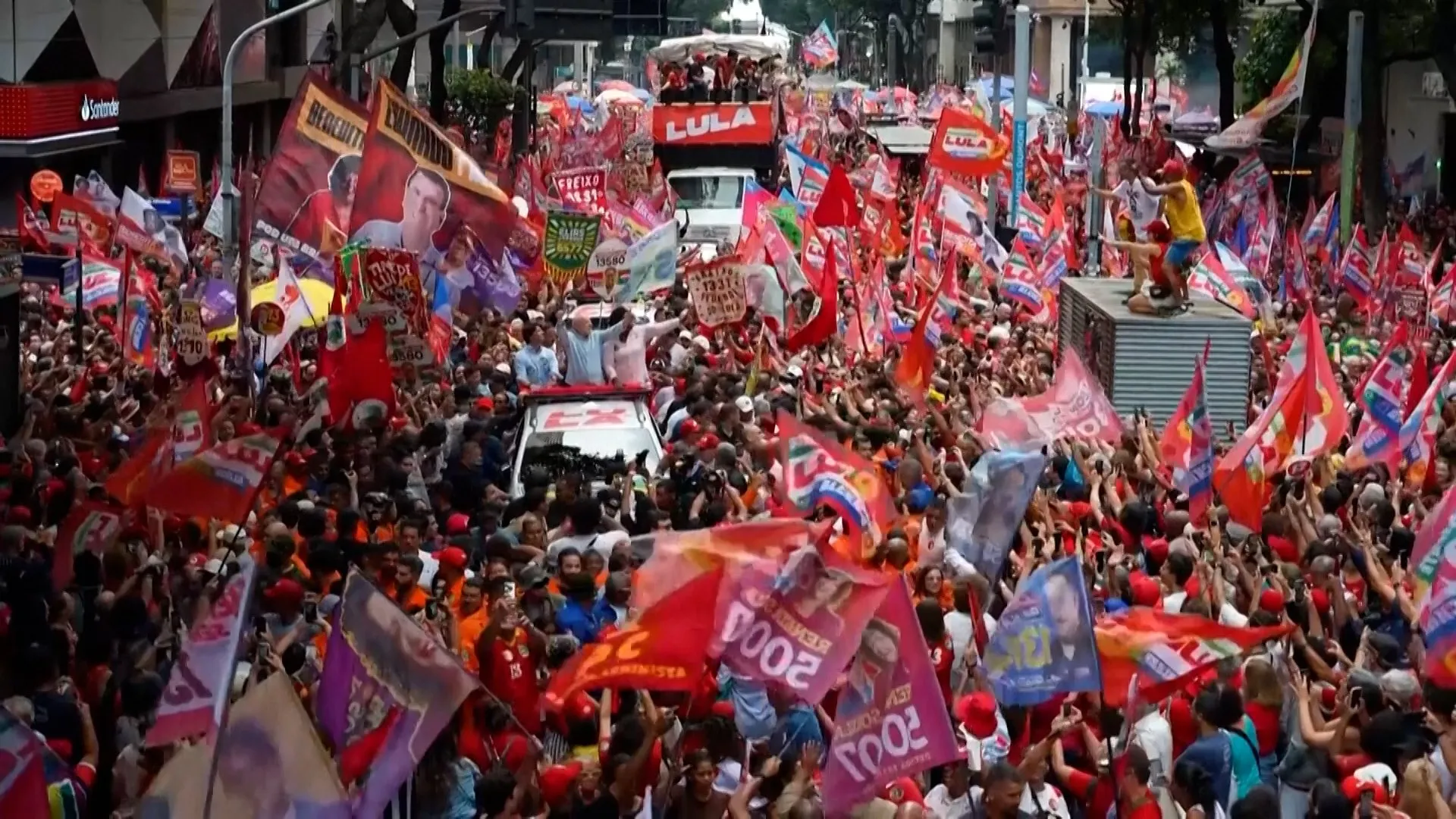
A prominent left-wing leader in Latin America, Lula is in the midst of a heated election season, as he seeks a fourth nonconsecutive term as Brazil’s president.

Previously, he served as president from 2003 to 2011, before being re-elected to a third term in 2022.

In that race, he defeated the right-wing incumbent, Jair Bolsonaro, who would later be convicted of attempting to overturn the results of the race. Bolsonaro is currently serving a 27-year prison sentence.

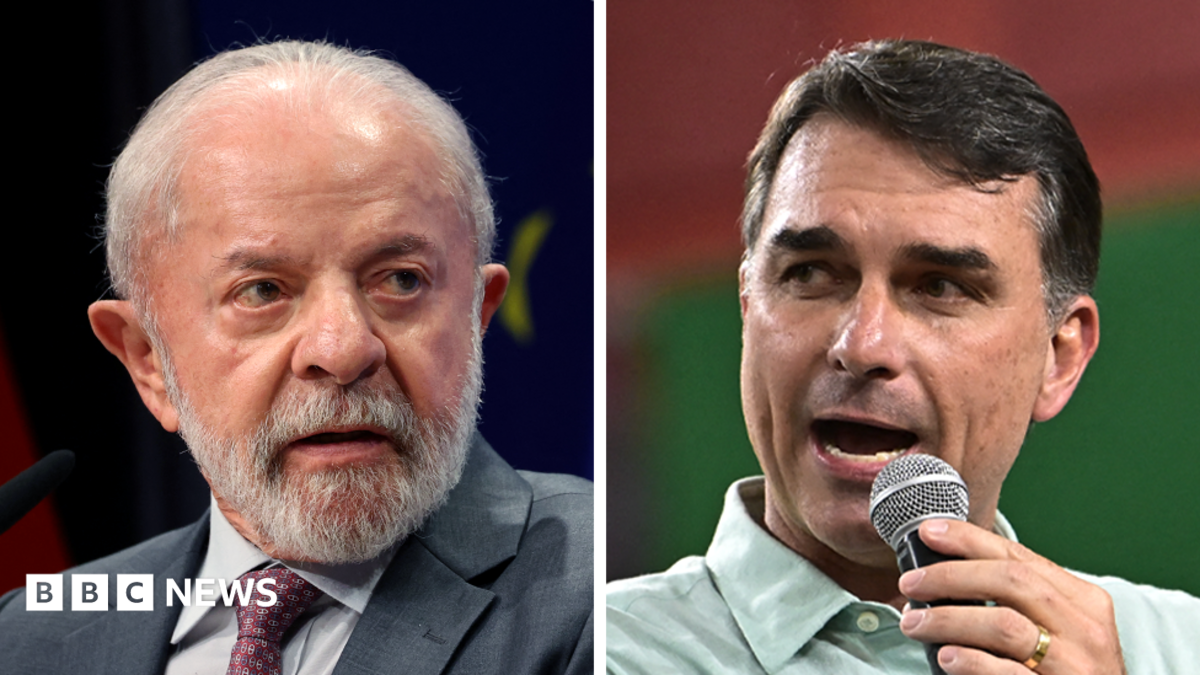
His eldest son, Senator Flavio Bolsonaro, is thought to have been instrumental in Trump’s decision to issue the “terrorist” designations. The senator is currently running against Lula in the 2026 presidential election, and the two have been locked in a tight race.

This week, as he visited the White House, Senator Bolsonaro confirmed to reporters that he intended to seek “terrorist” designations for both the Primeiro Comando da Capital and the Comando Vermelho.

Trump has close ties to the Bolsonaro family, and he has previously intervened in elections around the world on behalf of right-wing candidates.

In Friday’s post, Lula accused Senator Bolsonaro of leveraging his family connections to “petition foreign authorities” for favour.

“It is deplorable that, once again, members of the Bolsonaro family have travelled to the United States to advocate for foreign intervention in Brazil,” Lula wrote.

He pointed to alleged efforts to stop the criminal prosecution of Jair Bolsonaro. Currently, one of the ex-president’s sons, Eduardo Bolsonaro, is facing obstruction charges related to efforts to lobby Trump to intervene in the case.

Trump ultimately did impose steep sanctions against Brazilian products in August 2025, citing the Bolsonaro trial as a reason.

Concerns about sovereignty

Under Trump, the US has taken an increasingly expansionist view towards the Western Hemisphere, reviving the 19th-century Monroe Doctrine, which described the Americas as Washington’s sphere of influence.

Trump himself has used crime as justification for taking unilateral military action in the region. Since September, his administration has conducted 59 strikes against alleged drug-trafficking boats in the Caribbean Sea and eastern Pacific Ocean, killing at least 196 people.

And on January 3, he launched an early-morning military operation against Venezuela, culminating in the abduction and imprisonment of then-President Nicolas Maduro on drug-trafficking charges.

While the Bolsonaro family has courted Trump in recent months, Lula has criticised those military-led actions as unjustified.

But security is expected to be a dominant issue in October’s presidential race. This week’s “terrorist” designations are likely to put Lula in an awkward position, forcing him to condemn the label without downplaying the extent of the violence.

Lula has attempted to brush off right-wing criticism that he has been lax on crime, pointing to his government’s recent $11bn investment in the “Brazil Against Organized Crime” programme.

That follows a separate $2bn programme in March to bolster the country’s prisons, improve homicide investigations and disrupt arms trafficking and other financial transactions carried out by criminal groups.

Still, Lula and Bolsonaro remain neck and neck in the lead-up to October’s election.

On May 16, the polling firm Datafolha found that both candidates would receive 45 percent of voter support in a one-on-one race, with 9 percent of voters indicating they would cast a null vote.

Another 1 percent identified as undecided.

Source link

Poll shows Lula and Bolsonaro tied before Brazil’s presidential election | Elections News

Right-wing challenger Flavio Bolsonaro faces new scrutiny over a film funding scandal, which could affect his race against incumbent Lula.

A new poll has reaffirmed the tight race for Brazil’s presidency this year, with both the left-wing incumbent Luiz Inacio Lula da Silva and his right-wing challenger, Flavio Bolsonaro, tied in a head-to-head contest.

On Saturday, Datafolha, the polling firm for the Grupo Folha media conglomerate, released its latest numbers, tracking the candidates’ progress in the run-up to October’s generation election.

Recommended Stories

list of 3 itemsend of list

Nearly 2,004 responded to the latest survey, which asked them to identify whom they would vote for if Lula and Bolsonaro progressed to a run-off.

Lula, now 80 years old, is angling for a fourth nonconsecutive term.

Brazil’s presidents are limited to two four-year terms at a time, and Lula first served as president from 2003 to 2011, championing social programmes to reduce hunger and increase federal assistance to the poor.

Bolsonaro, on the other hand, is hoping to continue his father’s far-right political legacy. The eldest son of imprisoned former President Jair Bolsonaro, Flavio — a senator representing Rio de Janeiro — has pledged to seek his father’s release should he be elected.

Jair Bolsonaro is currently serving a 27-year prison sentence for attempting to plot a coup and subvert the election results in 2022, which saw an end to his term and the beginning to Lula’s latest.

Saturday’s poll results put Lula and the younger Bolsonaro in a dead heat.

Both candidates received 45 percent of the polled voter support, with an additional 9 percent indicating they would cast “null” ballots. The remaining 1 percent was undecided.

But the poll, conducted on May 12 and 13, was conducted before the latest scandal involving the younger Bolsonaro’s campaign gained public traction.

Controversy over film deal

On May 13, The Intercept Brasil, a news publication, printed a report containing leaked WhatsApp messages between Bolsonaro and a banker arrested for an alleged fraud scheme, Daniel Vorcaro.

Bolsonaro had reportedly approached Vorcaro to finance a film about his father’s life, called Dark Horse.

The Bolsonaro family has long maintained that Jair Bolsonaro is a victim of political persecution, and it had tapped US actor Jim Caviezel to play the ex-president.

According to The Intercept’s reporting, Flavio Bolsonaro and his brother Eduardo Bolsonaro had soliciting funding from Vorcaro, who ultimately pledged $24m, or 134 million Brazilian reals, to the film project.

In a statement, Flavio Bolsonaro acknowledged that he had reached out for financing, but he denied the exchange had anything to do with Vorcaro’s alleged fraud scheme.

“It is necessary to separate the innocent from the criminals,” the statement said. “In our case, what happened was a son seeking PRIVATE sponsorship for a PRIVATE film about his own father’s life.”

Left-wing lawmakers, however, have called for an investigation into the incident.

The controversy over the Dark Horse film is not the only scandal to have rocked Flavio Bolsonaro’s presidential campaign in recent months.

In December, the senator entered the presidential race with his imprisoned father’s blessing.

But shortly afterwards, he faced criticism for statements appearing to suggest he might withdraw from the race in exchange for his father’s freedom. He later clarified that his candidacy was “irreversible”.

In April, Brazil’s Supreme Court also gave the go-ahead for federal police to investigate whether Flavio Bolsonaro had made defamatory statements about Lula.

While Lula was the frontrunner by a wide margin in late 2025, Bolsonaro has since narrowed the gap, leading to the two candidates racing neck and neck before October’s election.

Source link

Brazil’s Lula warns of global disorder, calls for U.N. reform

Brazilian President Luiz Inacio Lula da Silva speaks during a media tour at the Hanover Fair 2026 Hanover, Germany, on Monday. Photo by Hannibal Hanschke/EPA

April 20 (UPI) — Brazilian President Luiz Inácio Lula da Silva has warned about the deterioration of the international order and the paralysis of the United Nations in a message published on X.

He urged strengthening multilateralism while on an official visit to Germany, where he also promoted the trade agreement between the European Union and Mercosur.

“It is useless to have one’s house in order in a world that is in disorder. The prevalence of force over law is the greatest threat to international peace and security,” Lula wrote in a message that addresses multiple global conflict hotspots.

Lulu expressed concern over “the risks of a new conflict in Iran” and a possible escalation in Lebanon, as well as the situation in Palestine, where he said that “the survival of the Palestinian state and its people remains under threat.”

He also mentioned the war in Ukraine, noting that “the long-awaited peace remains distant.”

In his message, Lula criticized the lack of international action.

“Between the actions of those who provoke wars and the silence of those who prefer to remain quiet, the United Nations is once again paralyzed,” he said. He added that Brazil and Germany have defended for decades a reform of the Security Council that restores its legitimacy.

“Revitalized multilateralism is the only path to restore diplomacy and cooperation as tools for peace and sustainable development,” he said, and concluded with a broader call: “Humanity must recover the idea that peace is morally necessary and politically possible.”

The message aligns with a series of recent statements by the Brazilian leader on the global order and the role of major powers.

In an interview published Thursday by the Spanish newspaper El País, Lula criticized U.S. President Donald Trump over his rhetoric toward other countries and questioned the use of threats in foreign policy.

“Trump does not have the right to wake up in the morning and threaten a country,” Lula said, also calling for greater responsibility from international leaders to preserve peace.

In the same interview, he defended dialogue as the main diplomatic tool and warned about the risk of global escalation.

“I do not want a war with the United States. I decided to be very patient,” he said, explaining that his government prioritizes negotiation and national interests over ideological differences.

He also questioned the use of tariffs by Washington and said that the arguments to apply measures against Brazil “were not true.”

Lulu already has raised the need to reform international institutions.

“The time has come to redefine the United Nations to give it credibility,” he said, in line with his most recent call on social media.

In Germany, Lulu participated in the opening of the Hannover Industrial Fair alongside Chancellor Friedrich Merz.

Both leaders highlighted the free-trade agreement between the European Union and Mercosur, whose provisional entry into force is scheduled for May 1.

Merz said the agreement “will make all participating economies stronger, more independent and more resilient.” Lula, for his part, presented it as an alternative to unilateralism.

“Mercosur and the European Union chose cooperation,” he said, adding that increased trade will boost employment and investment in both regions.


Source link