Imagine Paris in the 1920s, only it’s Los Feliz today — the Figaro Bistro patio humming with literary gossip from mercurial poets through clouds of cigarette smoke. It’s a proposition that Sammy Ginsberg is willing to explore.
A longtime writer and former high school English teacher, Ginsberg found writer gatherings to be inaccessible — either too large in scope or too exclusive. Luckily, Vermont and Hillhurst avenues are just right. The Los Feliz Writer Festival was born.
“Los Feliz is super artsy and filled with writers. It’s fun to organize one in the neighborhood,” says Ginsberg.
Ginsberg is weary of the well-trodden conversations about the New York literary scene, steeped in endless mythology. We may not have the New Yorker or the Paris Review, but we have each other: “There are 40 million people who live in L.A. County. I’m like, ‘We don’t need New York. We have people.’ ”
Willa Lane writes in a notebook at the closing Los Feliz Writers Festival event that featured journaling and meditation in Barnsdall Art Park.
(Samahra Litte )
That scrappy DIY quality can make Los Angeles’ literary community feel mysterious, even to the people living in it. A San Fernando Valley native, Ginsberg knows there’s plenty happening around the city — you just have to know where to look.
“There’s a lot of things going on, but you have to be in the know,” she says. “It’s happening in someone’s living room because it costs so much money to book a venue.”
In late August, Ginsberg organized the second annual Los Feliz Writer Festival, a sprawling collection of readings, workshops, parties and other literary miscellany. “Last year we did it, and it went really well,” she says. “This year, it’s even bigger and crazier and magical.”
The festival is, in some ways, an extension of the community Ginsberg has been quietly building all year. Since October, she’s hosted a weekly “Shut Up & Write” at Los Feliz watering hole the Big Bar at Alcove. “We have dinner and then write next to each other quietly,” says Ginsberg. “You can see each other every week, and it’s a natural, slow way to get to know people.”
The Los Feliz Writer Festival kicked off with Poets Are the New Popstars, a reading-meets-house-party at a private home in Los Feliz. Over the course of the festival’s 13 events, writers could attend personal essay workshops, receive tarot readings, and celebrate the 100th birthdays of Frank O’Hara, Allen Ginsberg and Harper Lee at East Hollywood bar Tabula Rasa. “I made these limited-edition official after-party zines with a poem and quote from the authors,” says Ginsberg.
Alex Moreno reads from her poetry collection “Sticky Time” at Poets Are the New Popstars.
(Toby Shapiro)
Ginsberg imagines the literary scene as a collaborative project. “For me, this is kind of like hipster ‘Dungeons & Dragons.’ I’m playing with my friends,” she says of the festival, which she plans to organize annually. In the future, the festival hopes to include more diverse voices. “In the second year, we’re trying to open up the conversation,” she says. “We, too, believe that L.A. is for everyone and want it to be a writers festival for everyone.”
Christina Catherine Martinez, a critic, writer and comedian, has a more pointed take on the Los Angeles literary world.
“A lot of parties and readings, but not a lot of bylines,” she muses. “Substack IRL but still gunning for the traditional publishing deal — kind of an old world is dying, a new world is not yet born.”
Yet, Martinez welcomes the proliferation of readings that have emerged throughout the city. “I love that there are so many readings,” she says. “Fifteen years ago the only time I mingled with other writers was at the yearly Artforum dinner, when the lit scene was barnacled to the art scene.”
This fall, Los Angeles will host an eclectic mix of literary events, from readings by acclaimed novelists to intimate gatherings for emerging writers and readers. For those looking to immerse themselves in the city’s burgeoning literary scene, here are 16 readings and literary events taking place across Los Angeles.
If you’re on your annual Gilmore Girls re-watch and dreaming of an escape to Stars Hollow, without the long-haul flight, then this UK village gives seriously cosy vibes for a day out
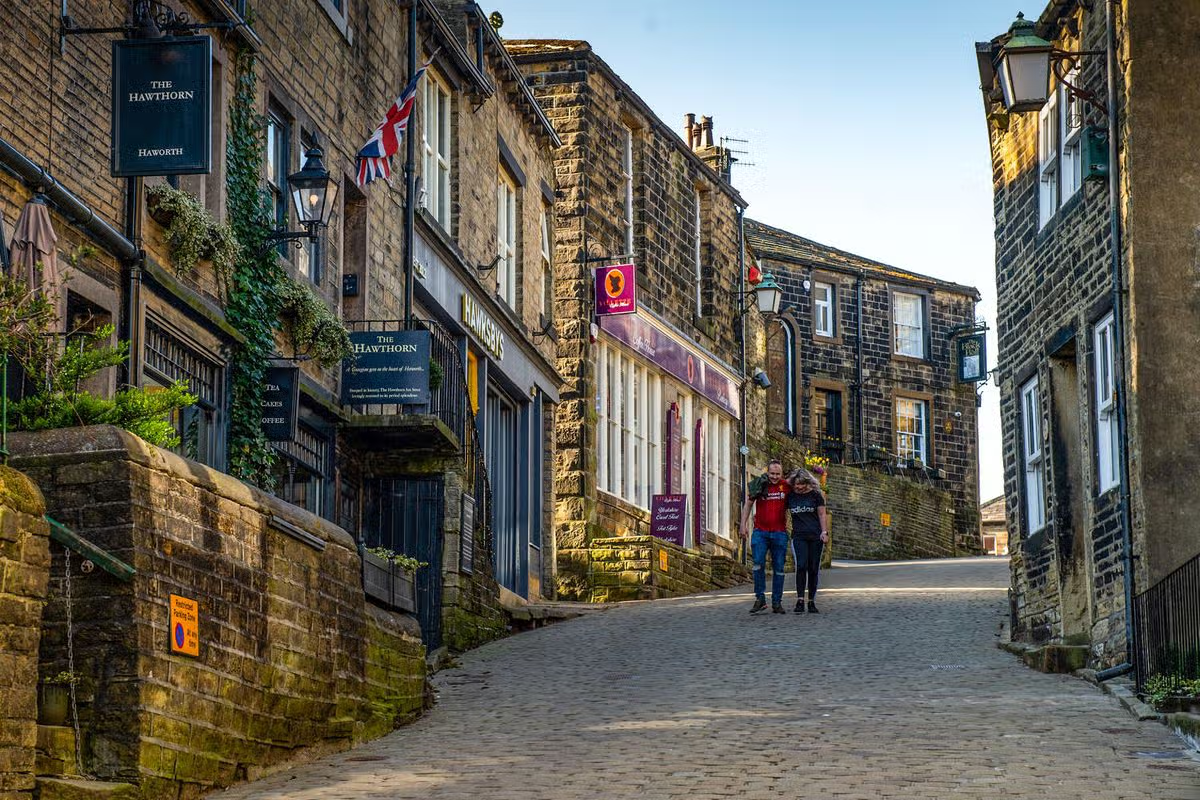
The village has been compared to Stars Hollow by British fans of the show(Image: SWNS)
Gilmore Girls may just be the perfect autumn show, and when the weather starts cooling off, many fans find themselves binge-watching the comedy-drama about a quirky mother and daughter duo.
And anyone who has watched the show will no doubt have dreamed about visiting Stars Hollow, the cosy Connecticut town where the Gilmores live, full of unique characters, friendly local shops, and of course, great coffee. Sadly, Stars Hollow isn’t a real location – the pilot was filmed in Canada before a set was built on a studio backlot in Burbank, California – but many fans have been looking out for locations that give the same vibes.
If you don’t fancy the flight to New England, British Gilmore Girls fans have been debating where the UK’s answer to Stars Hollow can be found, and one village with long literary associations is often named as the best local dupe.
Content cannot be displayed without consent
Taking to TikTok, travel creator @lilyjbet posted a video captioned: “pov: you just found the real-life Stars Hollow in England” showing footage of the quaint village of Haworth in Yorkshire. Her video shows a variety of eclectic shops, cafés, and bookstores that would thrill any Gilmore Girls fan.
Haworth has literary associations that Rory Gilmore would find fascinating. The Brontë sisters lived and wrote most of their novels here, and their former home is now the Brontë Parsonage Museum. Sitting atop a hill, it overlooks miles of countryside, and the view no doubt inspired the rugged backdrops of many of their famous works. Fans of gothic literature can walk to Top Withins, a remote farmhouse surrounded by moorland, which many believe helped inspire the gloomy setting of Wuthering Heights.
The museum is an incredible memorial to the literary sisters, many rooms still holding the original furniture and personal items, as if waiting for the family to return.
Many of the colourful independent shops in Haworth look like they belong in Stars Hollow. Wave Of Nostalgia, a vintage bookshop that also sells unique gifts, would certainly be a place the Gilmores would visit. Cabinet of Curiosities is a kind of old-school apothecary which could easily be from the Victorian era, while Spooks of Haworth, a ‘spiritual emporium,’ is the perfect stop for lovers of autumn and Halloween.
And of course, there are plenty of cafés where you can enjoy cosy mother-daughter chats or simply sit and read your book. Café Verde has a great location with outdoor tables on the cobbled streets, while Villette Coffee House and Bakery offers a range of freshly-baked pastries and Yorkshire specialities.
The perfect way to arrive in Haworth is by train. Not only because riding the vintage steam trains to your location feels like stepping back in time, but also because you can avoid needing to navigate the extremely narrow, steep roads that were built for a horse and carriage. The village is on the Keighley & Worth Valley Railway, a five-mile heritage railway that runs through the Yorkshire countryside, giving you stunning views on the way to your destination.
Fans of classic movies may also recognise the train line as being the setting of the 1970s adaptation of The Railway Children. In addition to standing in for the Edwardian railway hub, filming was completed around the village in locations including St Mary’s Churchyard.
Have a story you want to share? Email us at webtravel@reachplc.com
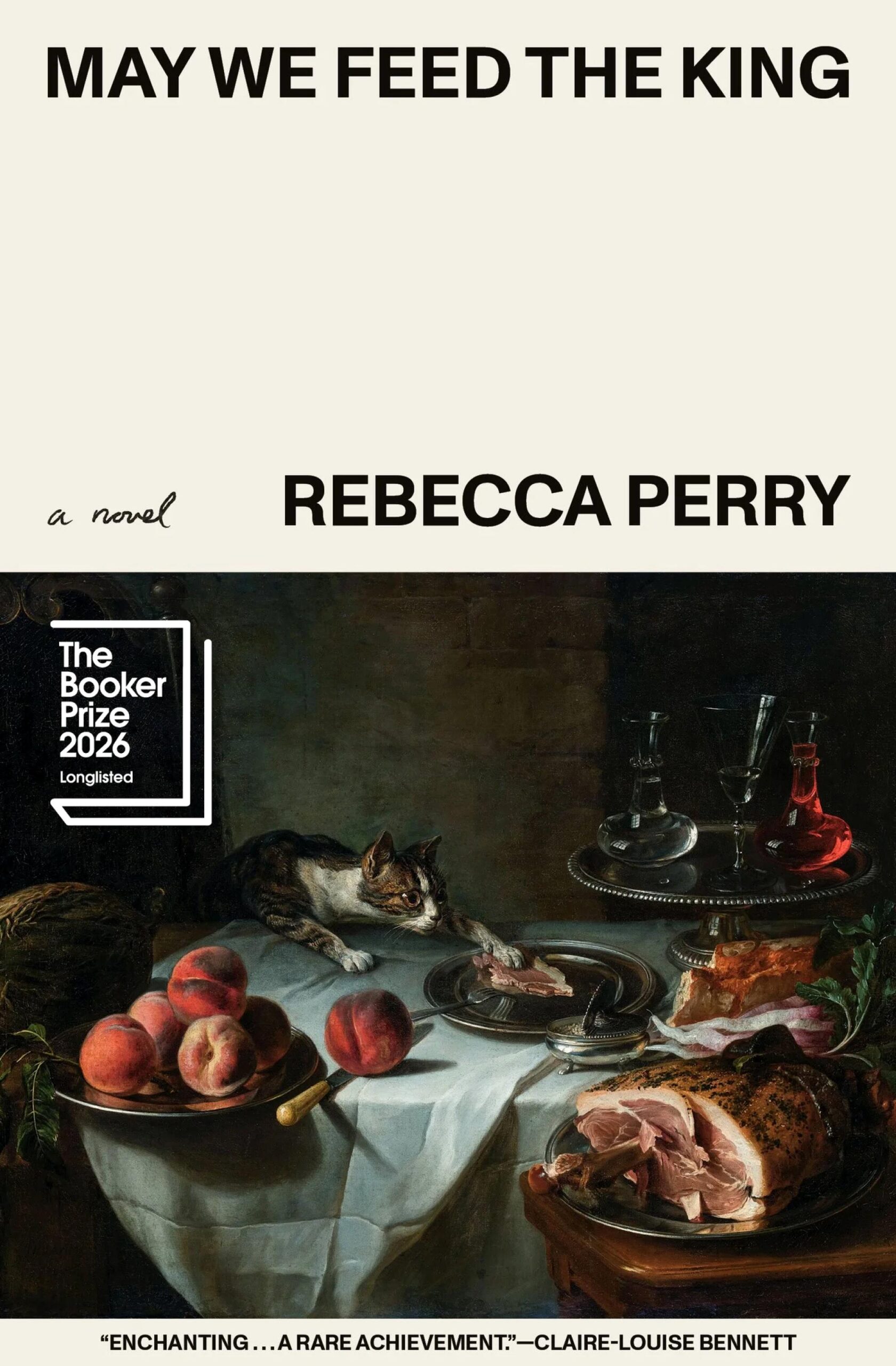
When the Booker Prize longlist was recently announced, it included a book with the memorable title “May We Feed the King.” The debut novel by British author Rebecca Perry isn’t yet available in the U.S., and when it does hit shelves, it will be coming from Transit Books, a small Bay Area publisher run by the husband-and-wife team Adam Z. Levy and Ashley Nelson Levy.
Cited by the Booker committee as “a playful, stirring meditation on history and storytelling” about a curator and a king, the book “has been an early favorite with indie booksellers,” Ashley says.
“May We Feed the King” by Rebecca Perry
(Transit)
“We knew the book was special when we acquired it,” Adam adds. “Ever since, we’ve been crossing our fingers and knocking on wood and sending up flares to the Booker gods, and sent the book to the printer a little earlier than usual just in case.”
Transit, known for publishing intelligent international fiction, began about a decade ago, when Ashley and Adam were convinced that great works of literature were being passed over by New York publishers, and that those books should have a place in America.
There were, Adam says, “really great authors who might have incredible reputations elsewhere not finding publishing houses here that are able to champion them in a way that gets them to access to a broader readership.”
The two were working full-time jobs while talking about their literary dreams over the dining room table. They had met at Columbia in New York and both worked in publishing there before moving to California, where Ashley is from.
Adam Z. Levy and Ashley Nelson Levy, co-publishers of the Bay Area nonprofit publisher Transit Books.
(Jennifer Baquing)
They carefully set out to connect with the international literary community and went through the slow process of launching Transit as a nonprofit. They now have a small staff, an office in Berkeley and count a Nobel Prizewinner, Jon Fosse, among their authors.
For the record:
9:20 a.m. Aug. 19, 2026An earlier version of this article stated that Transit’s office is located in Oakland. It is based in Berkeley.
At the same time Transit was starting out in Northern California, a pair of not-married friends in Los Angeles saw the same possibilities. Chris Heiser and Olivia Taylor Smith were convinced that they could begin a publishing house, starting with international noir.
Smith, who is now a senior editor at Simon & Schuster and lives in Germany, recalled those early days for me over Zoom. “We launched it at a time when it was almost the golden age of independent, small publishing, a lot of which was translation-focused,” she says.
They jumped right in, came up with a name, Ricochet, and a logo. Then they got a cease-and-desist letter — a small poetry press was also starting as Ricochet. “We had to change names,” Heiser says. “We were literally unnamed.” That’s how they launched Unnamed Press.
“A Certain Hunger” by Chelsea G. Summers
(Unnamed Press)
“I’m very grateful to the litigious poets who forced us to change our name,” Heiser adds. Their original crime-fiction focus rapidly expanded. Science fiction? Nonfiction? Feminist cannibal fiction? Yes, yes, yes.
That last was “A Certain Hunger” by Chelsea Summers, which Smith acquired. “I really loved that it is violent and intense and so visceral,” Smith said. “The prose is incredible and it absolutely was a cut above. Not to use a cannibalistic meat pun.” To date, the 2021 novel has been Unnamed Press’ biggest seller.
Where many literary novels from small presses sell fewer than 2,500 copies, “A Certain Hunger” has sold close to 200,000. “We’re a hits-driven business, you know — you have to have a book that does well enough to keep you going,” Heiser says.
Heiser remains with Unnamed as its publisher, and continues to guide it to unpredictable destinations. In 2022, the press opened North Figueroa Bookshop in Highland Park with fellow L.A. publisher Rare Bird Books — it stocks all publishers’ titles, not just their own.
Guests gather at the North Figueroa gallery for Unnamed Press’ launch of “Four Nose Jobs a Day,” a poetry book with an accompanying vinyl album by Devendra Banhart, center.
(Hoda Mallone)
And next door is the gallery they opened late last year. In June they held a gala launch for Devendra Banhart’s new collection of poems, “Four Nose Jobs a Day” in the North Figueroa gallery, published by Unnamed as both book and record album. The party was a little livelier than your typical book launch: Heiser says it “featured a reading backed by an excellent jazz trio, ceramic noses, a scent-maker, mimes and speed therapy, among many other things.”
Where Unnamed often makes unexpected turns, Transit has stuck close to its original mission: to translate a handful of books a year, often works of translation themselves, with a certain aesthetic.
For readers in sync with Transit’s sensibility — literary, bold and with an edge that feels fresh — they offer subscriptions. Their biggest swerve was adding children’s books. “The quality of the writing is really important, first and foremost,” Ashley said on a Zoom call with Adam and their executive editor, Lizzie Davis.
“We’re really attracted to literature that takes risks on the page,” Adam said. They began publishing acclaimed Norwegian author Jon Fosse’s work three years before he was awarded the Nobel Prize in literature. Transit is the American home of Fosse’s big and bold “Septology,” translated into English by Damion Searls.
“Septology 1-VII,” by Jon Fosse
(Transit Books)
Despite years of a cohort within the publishing community advocating for international literature, such as the National Book Awards’ translated literature prize being relaunched in 2018, translated works remain only 3% of the U.S. publishing market. Transit has remained committed to publishing works in translation, and has had genuine success.
Small publishers can be caught in a catch-22 when they have a sudden success. They have to pay to print books and get them distributed, then wait months before the profits (or unsold returns) come back. An author winning the Nobel Prize in literature is about as big a bonanza of demand as you can imagine.
When Fosse won the Nobel in 2023, that meant publishing a big run of his almost 700-page masterwork. “It was a bit of a cash crunch for us,” Adam admits, “but I think we were also lucky in a lot of ways.” The year before they had published “I Who Have Never Known Men” by Jacqueline Harpman, a Belgian novelist who died 20 years before — hardly a guaranteed success.
“Stories, Like Illnesses” by James Elkins
(Unnamed Press)
The publishers themselves can’t fully describe what happened — it was well-reviewed, it went viral, it kept selling, it went viral again. Now, the novel has sold more than 450,000 copies. “I feel like for a small press you really need to, not just catch a break, but catch a break every time,” Adam said, “if you want to last.” Those two pillars — the Fosse and Harpman — allowed the Levys to open their office in Oakland in 2024.
Transit recently released another Harpman book, “We Were Forbidden,” a trio of never-before translated novellas. In September, in addition to Perry’s book, they’ll also be publishing two novels by esteemed French writer Marie Darrieussecq.
Unnamed Press’ fall schedule includes James Elkins’ “Stories, Like Illnesses,” the third installment of a multivolume work called “Five Strange Languages.” Unnamed is publishing in five volumes over five years, “an epic publishing project for any publisher,” Heiser says. Luckily, the first volume got a boost when Jacob Elordi was photographed reading it during a marathon Frankenstein makeup session.
The Levys and Heiser all maintain that there was something about being in California that gave them the creative space to launch their publishing houses.
From their similar visions a decade ago, Transit and Unnamed were born separately, and have taken very different paths to sustainability. The Levys were deliberate and focused; Unnamed spontaneous and evolving. Both are flourishing and show what a little freedom can do.