




letter

White House suspends funding for New York’s Medicaid fraud unit

The Trump administration on Tuesday said it would freeze federal funding for New York’s Medicaid Fraud Control Unit, a state agency responsible for investigating and prosecuting fraud in the safety-net government healthcare program.

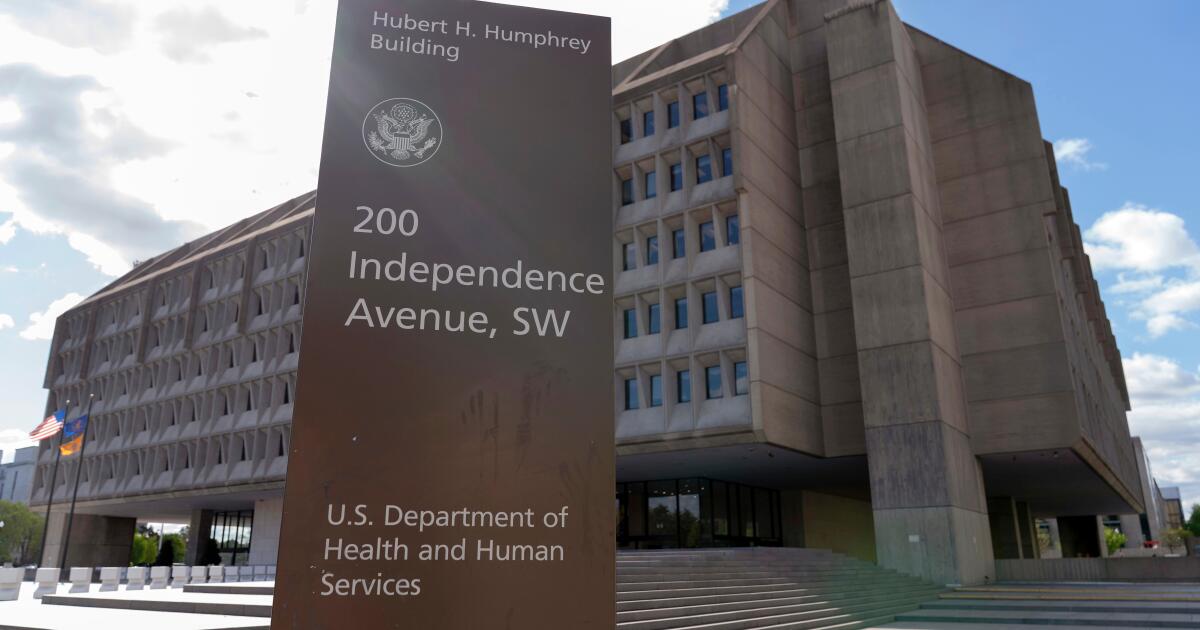
In a letter sent to New York officials, U.S. Department of Health and Human Services Inspector General Thomas March Bell accused the state of not securing enough criminal indictments and said millions of dollars in funding would be suspended through at least Sept. 30.

The move is the second suspension of a state Medicaid fraud unit this year by the Republican Trump administration, and part of a barrage of anti-fraud actions it has aggressively promoted in the healthcare sector. They have included the creation of a new task force, targeted investigations, funding deferrals and demands for revalidation of healthcare providers that have touched all states but are focused largely on Democratic ones.

The pulled funding also comes after the administration admitted a glaring error in figures meant to help justify a fraud inquiry into New York’s Medicaid program this year, a mistake critics said revealed a Trumpian tendency to attack first and verify the facts later.

New York Atty. Gen. Letitia James, a Democrat, immediately vowed to fight Tuesday’s funding freeze.

“During my time as Attorney General, my office has recovered over $627 million for Medicaid and was recognized by this very administration for leading the nation in anti-fraud efforts,” she wrote. “We are considering all legal options to stop this outrageous action.”

Letter accuses New York of low performance compared to other states

Bell’s letter to James and New York Medicare Fraud Control Unit Director Amy Held argues that the unit is moving too slowly on cases and amassing too few indictments and convictions for wrongdoing in the Medicaid system. It notes that compared with four similarly sized units in other states, it secured the lowest number of criminal fraud convictions between 2023 and 2025.

The letter acknowledges that one reason the state has fewer criminal convictions than others is that it made a deliberate choice to focus on “high impact, complex fraud cases” rather than smaller-scale individual cases, but says that trade-off didn’t produce sufficient results.

“Enough is enough,” Bell wrote. “The New York MFCU has failed to comply with the terms and conditions of its MFCU grant award.”

Bell said in the letter that the funding suspension could be lifted before Sept. 30 if New York takes corrective action, “showing it has remediated concerns that formed the basis for this suspension.” He said if the state doesn’t fix the problems, the freeze will continue.

New York officials dispute the Trump administration’s claims

New York’s attorney general’s office said in a statement that it has “long been recognized as a national leader in effectively investigating and prosecuting Medicaid fraud schemes,” including by the Health and Human Services inspector general’s office. A 2025 report from the office notes that New York is one of four states that made up half the total civil recoveries in that year.

A spokesperson for the attorney general’s office said most of the unit’s criminal convictions focus on company owners, executives and corporations that would return large amounts to Medicaid.

“This administration’s unprecedented attack on New York is another political distraction,” James said in a statement.

The funding cutoff follows a similar move in Hawaii. In early June, Bell told Hawaii officials that Medicaid fraud funding would be cut off there, saying that it had a three-year stretch without a Medicaid fraud indictment or conviction.

Joan Alker, executive director and co-founder of Georgetown University’s Center for Children and Families, said there’s an irony in the federal government cutting off money intended for prosecuting fraud when its stated goal is to do just that.

“If you want to fight fraud, don’t take away money from states’ fraud control units,” she said. “I chalk this up to more political theater to distract voters from historic Medicaid cuts before the midterms.”

Move follows months of federal warnings and deferrals

For months, the Trump administration has contended that states — especially some Democratic-led ones — have been lax about fraud in social safety-net programs, including Medicaid.

It has demanded that at least five states, four of them governed by Democrats, share information about how they identify, prevent and address Medicaid fraud.

The federal government has also withheld some Medicaid funding from Minnesota and California over fraud concerns. Minnesota Gov. Tim Walz, a Democrat who was Kamala Harris’ 2024 running mate, accused President Trump of making cuts because of retribution.

The fraud-busting efforts have also targeted Medicare programs. Dr. Mehmet Oz, who leads the federal Centers for Medicare and Medicaid Services, announced a six-month moratorium on new enrollments for providers of hospice and home care nationally.

Swenson and Mulvihill write for the Associated Press. Mulvihill reported from Haddonfield, N.J. AP writer Anthony Izaguirre contributed to this report.

Source link

Industry letter claims musicians are being forced into AI deals

A coalition of advocacy groups for artists, songwriters and managers is warning musicians about the growing risks of artificial intelligence music.

Recently, many major record labels have inked deals with AI music startups such as Suno, Udio and Klay. But the coalition, which includes organizations such as the Music Artists Coalition and the Songwriters of North America, argues in a new letter that “artists and songwriters whose works, voices, performances, likenesses and creative identities make those deals valuable are not being meaningfully consulted.”

The letter, released Monday, stated that many artists and songwriters in existing recording and publishing agreements are currently receiving letters from their labels and publishers claiming that they “will be opted in to AI-related uses by default, with little actual choice offered.” Even new artists are receiving agreements that include “AI rights clauses as a standard condition of signing.”

“We support innovation and recognise that AI can create new opportunities for music,” the coalition wrote in the letter. “However artists are not simply catalogue assets, and innovation cannot be used to override artists’ rights.”

The National Independent Talent Organization, a live entertainment advocacy group that signed the letter, said many of its members are coming to the organization with label contracts that include “non-negotiable AI usage clauses.”

“We can’t allow for contract language signed decades before this technology existed to be the standard bearer. These rights belong to the creators and they get the final say on usage,” said Nathaniel Marro, NITO’s executive director, in a statement to The Times.

“Music companies are leading the fight to protect artists’ and songwriters’ rights in the age of AI,” said a spokesperson for IFPI, the recording industry’s global trade body.

“While our members have taken different approaches, they share the same fundamental objectives: combating the unauthorized use of music and establishing licensing models that return revenue to artists and songwriters,” the IFPI spokesperson added.

The coalition is asking the industry to move forward on AI deals only under four conditions: that musicians directly consent to any agreement; that artists receive fair compensation; that there be transparency between the companies and the talent; and that companies make a public commitment to end contracts built on default AI opt-ins and forced AI clauses.

“Artists need a real seat in these conversations, clear terms on revenue share, and the ability to say no without losing their deal,” said Ron Gubitz, the Music Artists Coalition’s executive director, in a statement.

This letter comes at a time when policymakers are reviewing copyright rules in response to AI and when streaming platforms and social media platforms are overflowing with AI-generated music.

A little over two weeks ago, the American Federation of Musicians sued Universal Music Group and Warner Music Group. The complaint claims the major labels “received significant compensation” from the AI companies for past copyright violations and licensed “substantial” portions of their music catalogs to them, but haven’t shared that with the musicians.

Despite the confrontational tone of the letter, some signatories struck a more conciliatory note. Overall, the industry seems to be receptive to these AI changes, said Willie “Prophet” Stiggers of the Black Music Action Coalition, another signatory advocacy group. At this point in AI’s development, he added, everyone in the industry — from artists and labels to AI start-ups and policymakers — has a responsibility to establish effective guardrails.

“The companies building these technologies understand that trust is essential to long-term success, and trust begins with respecting creators’ rights,” Stiggers said in a statement to The Times. “There’s still important work ahead, but we’re encouraged that the conversation has shifted from whether protections are needed to how we build them together.”

“The structures being created now will shape the music ecosystem for years to come,” the coalition’s letter said. “The future of music must be built with artists, songwriters and their representatives, not imposed on them.”

Times staff writer Wendy Lee contributed to this report.

Source link

Letters to Sports: Dodgers continue to cover their bases

p]:text-cms-story-body-color-text clearfix”>

We’ll never know, of course, but it wouldn’t surprise me if Yoshinobu Yamamoto was relieved to lose the no-hitter in the ninth inning so that Mookie Betts wouldn’t have to bear the stigma of spoiling a perfect game. Yamamoto is a 100% class act.

Jay James
Pico Rivera


There’s only one MLB club that could possibly overcome all the Dodgers injuries in the first half of the season.

That team is in fact the Dodgers.

Fred Wallin
Westlake Village


I thought Bill Shaikin’s column on the Dodgers ruining baseball was good and provocative. For me, I do not believe the Dodgers are ruining baseball, but sports are much more fun and compelling to watch when they are competitive and each game means more.

It is easier to sustain competitiveness when one team or a few teams do not have a huge financial edge over other teams. I think the NFL, NBA, and NHL have been better at dealing with this issue than baseball.

Bill Francis
Pasadena

Source link

National League clubs send letter to FA to block academy proposals

The 52 clubs involved have outlined in the letter an agenda they hope to discuss at the meeting with the FA.

Among the issues they raise are:

  • Whether the process adopted by the board “complies” with the constitutional rights of the member clubs

  • The use of “anonymous” surveys instead of a formal voting procedure

  • The “incentive of financial distributions” to press for an agreement

  • “Concerns” regarding the independence of decision-making on the board

  • A need for “transparency and accountability”

The letter asks that the FA is bound by a notice period to agree the meeting and confirm an agenda, which is believed to be between seven and 14 working days.

Anthony Shaw, operations manager at Hashtag United FC, pulled the 52 clubs together and signed the letter on their behalf.

All clubs were listed. Among them were Middlesbrough, Derby County, Halifax, Doncaster Belles and Hull City.

Former Women’s National League chair Carol West has strongly opposed the proposals, writing on social media: “The damage being done here should not be underestimated. I can’t quite believe it’s being allowed to happen.

“The overriding issue with all of this is that the vast majority of clubs do not want PGA (Professional Game Academy) teams in their league but have repeatedly been denied their democratic right to vote to formalise this once and for all.

“Instead, they’ve been told it’s happening regardless which isn’t right.”

Source link

270k warned ‘don’t ignore’ CCJ letter or risk six years of credit damage

A BBC expert has warned more than 270,000 people in England, Wales and Northern Ireland

More than 270,000 people across England, Wales, and Northern Ireland have received letters through the post, according to a BBC expert – and those who ignore them could find themselves facing court action. Viewers of BBC Morning Live were recently warned about the thousands of letters connected to county court judgements that have been dispatched over the past 12 months.

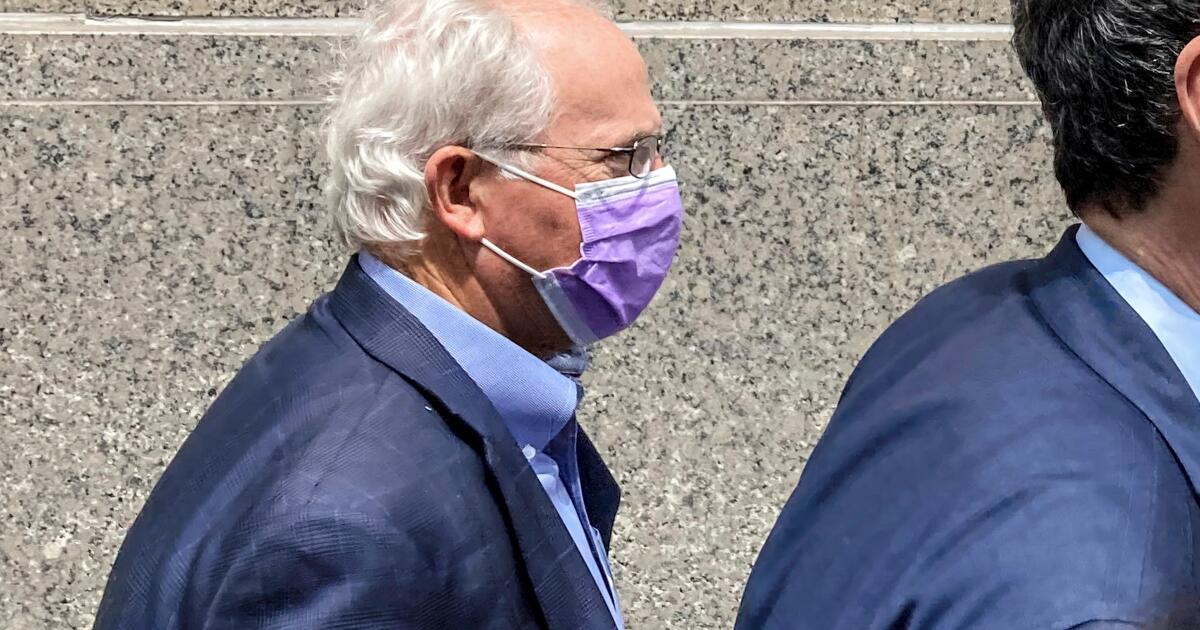
Expert Laura Pomfret explained to viewers that a County Court Judgement (CCJ) is essentially a court order issued in England, Wales, and Northern Ireland when someone fails to repay a debt and the creditor pursues enforcement action. She noted it could come from a council, company, landlord or a private individual – and if left unpaid, it can appear on the person’s credit report.

She said: “I think that’s what a lot of people resonate with that they’ve heard of CCJs can be bad for your credit. They stay on your credit report for six years. It can impact you getting a mortgage, even getting um a rental property. Sometimes credit checks are done, even when getting a mobile phone contract.

“It’s definitely something to avoid if someone can avoid it, and worryingly, in the first quarter of this year, over 270,000 new CCJs were registered, and that’s 17.5% up on last year. So this is obviously showing that people are struggling and in the energy industry is something that you know it’s it’s getting bigger and bigger.” She explained that these are frequently issued to those falling behind on energy bills — with the latest Ofgem figures revealing debt standing at £4.5 billion — while Energy UK puts the figure even higher at £5.5 billion.

Content cannot be displayed without consent

She added: “That’s like such a big bill that lots of people are pay and people pay every month clearly struggling with it. And interestingly as well, credit card transactions in February were up 6% versus last February whereas debit transactions were only up 1%. And that also shows, you know, that people are having to rely on credit for even the most basic of bills.”

Ms Pomfret noted that receiving a CCJ typically follows a series of threatening letters, meaning the householder will already be feeling anxious. She said: “Firstly, it is upsetting to receive a formal document like that. If you get that through the post, it’s got a court seal on it it’s very formal. It might have followed you, you know, debt demand letters with red writing all over, which is overwhelming.”

“Firstly don’t be overwhelmed is easy to say but don’t be alarmed like it’s just a formal process it’s essentially a document asking you asking you for money and so it if it comes through the post you it will tell you what you owe it’ll tell you how to pay it and it will also tell you the deadline by which to pay so you have a few options when you receive a CCJ.” She explained that the first option was to repay the debt – and if someone does so within a month, it could be removed from their credit file. She said: “After that, it stays on your report, but it says that you paid it. So, please make sure you prioritise paying it.”

It’s also possible to vary the terms of a CCJ, she noted, which involves approaching the court to attempt to alter the conditions of the judgement. “Another thing that you may be able to do is apply for what’s called breathing space. So this is formerly called in England and Wales the debt respite scheme. “What this does is it gives you space from creditors, including the CCJ, and maybe gives you time to make a plan to pay it back or speak to a debt advisor, which is super helpful. The last thing that you may be able to do is you may actually be able to get the judgment or CCJ set aside. or recalled if you believed um that it’s an error.””

She stressed that there would need to be a legitimate reason to apply for it to be set aside, including submitting evidence, primarily that the individual doesn’t owe the money or that it’s a mistake. She added: “Another reason is that you didn’t receive the original claim form. So before a CCJ is issued or a decree is issued, you will get a claim form put forward and there’s an opportunity to respond.

“So you could have, for example, the wrong address, it could have been sent somewhere else. You may not have received it. Now, the court’s not going to take kindly to just saying, ‘I didn’t receive it.’ It’s kind of like the dog ate my homework sometimes for some people, but you may genuinely not have done. So that could be an option. Ultimately, you’re going to need evidence, you’re going to have to fill in the correct forms. You may have to pay fees to get it set aside, but you know, in the long run, it may be worth doing tha if you don’t want it to damage your credit.”

To find the steps and court forms involved in asking a court to vary the terms of a CCJ or decree, such as requesting to pay in instalments, or even how to get a judgment cancelled, you can click on the links below.

For England, Wales and Northern Ireland you can click here.

For Scotland you can click here., external

There temporary protection from your creditors while you get debt advice and make a plan.

In England and Wales this is called Breathing Space, and you can find information on that by clicking here., external

In Scotland this is called a moratorium, and you can find more information on that here.
Source link

Trump pardons Republican ex-congressman convicted of insider trading

President Trump has issued a pardon to Stephen Buyer, a Republican former congressman from Indiana who served nearly two years in prison for making illegal stock trades based on inside information after he left office.

Buyer was sentenced to 22 months in prison in 2023 for trades made while working as a consultant and lobbyist. He was ordered to forfeit more than $350,000, representing the amount of the illegal gains, and pay a $10,000 fine. He was released in 2025.

The Supreme Court in May rejected Buyer’s appeal without comment or noted dissent.

In granting “a full, complete, and unconditional pardon,” Trump cited Buyer’s career as a judge advocate general in the Army and in the House that was “distinguished and highly productive.” The pardon was dated Thursday and released by the White House late Friday.

Buyer asserted that the pardon “corrects a politically motivated prosecution” and that it was “horrific to be imprisoned for a crime that I did not commit.”

Trump used his social media platform May 31 to share a pair of letters requesting a presidential pardon for Buyer, a lawyer and Persian Gulf War veteran who left office in 2011. He was a House prosecutor at President Clinton’s 1999 impeachment trial and in 2016 he served on Trump’s transition team focusing on veterans issues.

A letter signed by more than 40 Republican former members of Congress said Buyer was “targeted by the deep state” because of his involvement in Clinton’s trial a generation ago.

A second letter, from five current House Republicans, including Ken Calvert of Corona, said pardoning Buyer would bring justice to his case. The June 2025 letter was also signed by Tom Cole of Oklahoma, Marlin Stutzman of Indiana, Jack Bergman of Michigan and Pete Sessions of Texas.

Buyer, 67, was convicted in connection with insider trading involving the $26.5-billion merger of T-Mobile and Sprint, announced in April 2018, and illegal trades in the management consulting company Navigant when his client Guidehouse was set to acquire it in a deal publicly disclosed weeks later.

The Constitution gives a president broad power to grant pardons for federal crimes. The pardons do not erase a recipient’s criminal record but can be seen as an act of mercy or justice.

Source link

Letters to Sports: More calls for Angels ownership change

p]:text-cms-story-body-color-text clearfix”>

Bill Plaschke’s and many Angel fans’ desire for Arte Moreno to sell his ownership of the Angels is an overkill. Granted, us Angels fans have suffered under Moreno’s ownership, and the Angels would be better off with new ownership, but over the years Moreno has done many positive and charitable things. I suggest that the Angels provide Moreno with a 10%, non-voting interest, regardless of who the new owners might be. That way the fans are happy, and Moreno will still have a rooting interest.

Michael Gesas
Beverly Hills


Bill Plaschke’s column urging Angels owner Arte Moreno to sell the team hits the bull’s-eye. Clear, concise and comprehensive, it highlights most factors leading the Angels to the bottom of MLB. Most factors, except a significant one: Moreno’s ownership incompetence has been facilitated by the group of sycophants he has apparently surrounded himself with. These same people are now hard at work imploring Moreno, “just don’t read The Times today.”

Rob Fleishman
Placentia


If Bill Plaschke were an attorney delivering closing arguments at a jury trial, his recent article regarding Arte Moreno’s ownership of the Angels would certainly produce a verdict. The jury has reached its decision: the defendant must sell the team.

Wayne Muramatsu
Cerritos


Dear Angels,

I’ll start off by saying it’s not you, it’s me. I tried staying faithful to you but Arte Moreno’s interference in our relationship has clouded my better judgment. I thought I could stick it out knowing how hard you are working trying to reel me back in. It’s not working and I must now turn my back and walk away. What we have now is a shallow affair and it’s not fair to you that the charade continue. In the end, I take great comfort in knowing someday, somehow you will find what you are looking for.

Mark Petrasso
Port Hueneme

Source link