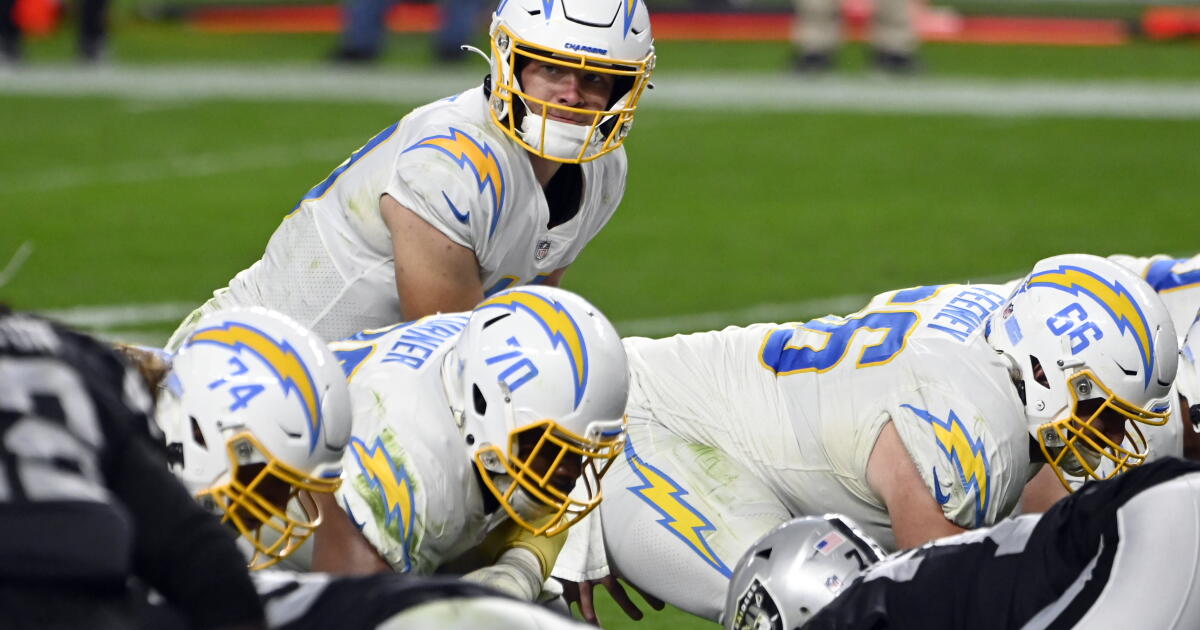
I’ve been a Justin Herbert fan since his days in Oregon. I kept believing he was going to lead the Chargers to new heights, even after all the leadership changes he’s been through. He’s talented, tough and all-in. I gave him every benefit of the doubt. But now, I can conclude only that Justin Herbert is the problem. Inconsistent, often slow to react, but mostly he’s unable to finish. He’s lost more games in the fourth quarter than he’s won.
So far this season the Chargers have the greatest negative point differential in the fourth quarter in the NFL. The pattern is consistent regardless of the coach. Is it all on Herbert? No. But he is the common denominator through all of this.
First, the fumbling. Thank you, Derius Davis. Your inability to simply complete a fair catch led directly to a Seahawks touchdown. How many points did your team lose by?
Next, the bumbling. Call it a banged up offensive line, (AGAIN!), a moderately skilled and depleted receiving core, or a lost, interception prone Justin Herbert, the Charger offense remains sketchy, inconsistent, and self-destructive.
Finally, the stumbling continues … as they cannot beat teams they should or pull out potential victories over the more challenging ones.
Good luck turning this around!
Rick Solomon Lake Balboa
I don’t care much about the Chargers. I rarely read stories about them and would be elated if they’d return to San Diego where they belong.
But, much like a car accident on the 405 that you instinctively know you shouldn’t stare, I just can’t seem to avert my eyes from the wreck the Chargers have become.
Ron Yukelson San Luis Obispo
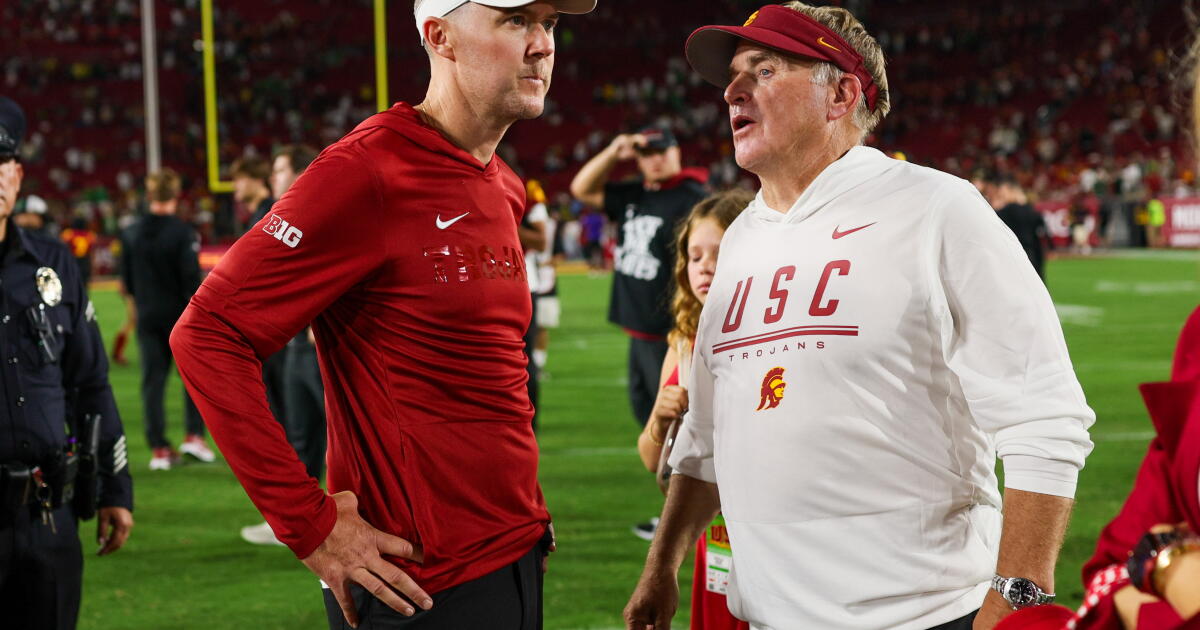
Here is a modest proposal: Lincoln Riley and Jim Harbaugh waive their buyout clauses and swap jobs. It might be the rare trade that improves both organizations. It is difficult to see how it could make things worse.
Readers of the Los Angeles Times Sports section give their thoughts on USC’s loss to Oregon, and the horrific late hit, the Dodgers playoff chances and more.
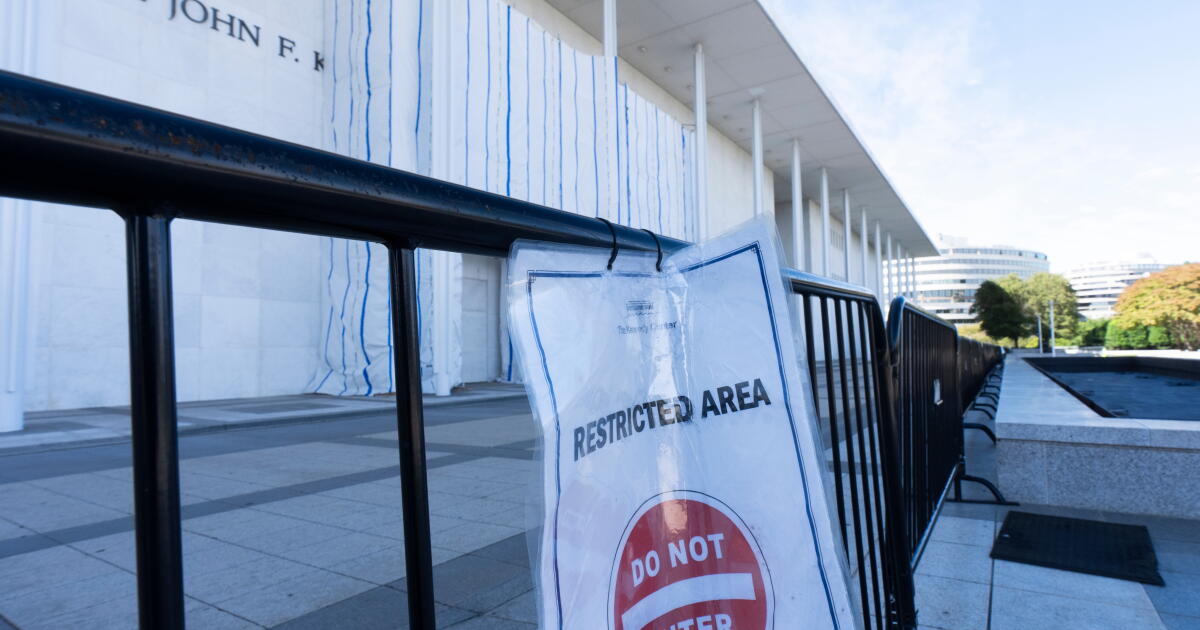
Kennedy Center officials were long aware of serious structural issues that they cited as new problems after the abrupt decision to close the performing arts venue this month, a group of former employees allege in a letter to Congress.
The center’s executive director and chief operating officer, Matt Floca, did not treat the roofing issues as priorities and in April halted a funded plan to address them, according to the letter Thursday signed by David Seide, a lawyer representing the anonymous whistleblowers.
Floca denied their allegations, saying recent investigations of the leaks exposed new hazards at the building.
In a September court declaration, Floca noted there were “acute risks to public safety” when the aging building temporarily closed its doors after an inspection of a deteriorating roof terrace canopy and a partial ceiling collapse. The former employees, however, claim those “acute” issues were known previously by Floca, who joined the Kennedy Center as vice president of facilities in 2024.
“More than one year ago, Mr. Floca had requested and received the needed funds to remediate the New Problems he references,” Seide wrote, citing President Trump’s tax cut and spending bill that he signed in the summer of 2025. “Yet six months ago – with the funds in hand – he stopped the remediation process from moving forward.” In the legislation, Congress earmarked $257 million for the Kennedy Center.
The letter, first reported by The New York Times, is the latest in a series of tensions over an iconic Potomac River waterfront building that has become a focus of the Republican president in his remaking of the nation’s capital in his second term. Trump has installed his own leadership to the center’s governing board and had his name placed on the building before a judge ruled the new lettering was illegally added and ordered it removed.
The Trump-aligned board voted earlier this month to close the center indefinitely for repairs hours after U.S. District Judge Christopher Cooper blocked its plans to return Trump’s name to the building.
Cooper has told the center that it must give 30 days’ notice before making any major physical changes to the building, including demolishing it, as Trump has threatened. The Kennedy Center leadership also must file a status report no later than Friday on the temporary closure and emergency repairs.
Asked for a response to the whistleblowers’ claims, a Kennedy Center spokesperson sent a written statement from Floca, who said the safety of patrons, artists and staff is his priority.
“The Kennedy Center has known for years that the roof overhang leaked,” he wrote. “What we did not know until this summer was how far the damage had spread inside it.”
Floca added that rather than halting design plans in April as the whistleblowers alleged, he had reassigned the work to a more comprehensive plan because the contractor’s quote for the initial plans were nearly three times the expected cost.
“That was a change in the approach to procuring and delivering the work, not a determination that the work was unnecessary,” Floca wrote.
Rhode Island Sen. Sheldon Whitehouse, the top Democrat on the Senate Committee on Environment and Public Works, wrote Floca on Thursday after receiving the whistleblower letter. Whitehouse said the documents showed Kennedy Center leadership had “hoarded” congressionally appropriated funding for repairs “while blaming previous leadership for the state of repairs.”
“My initial investigation into misconduct at the Center focused on cronyism and corruption, with documents demonstrating considerable excessive and self-serving spending under President Trump’s chairmanship,” Whitehouse said. “The documents that I attach today seem to reveal deeper financial mismanagement.”
A spokesperson for the committee’s Republican majority did not immediately reply to a request for comment Saturday.
In an otherwise empty compartment of a regional train on its way to a small town in Germany last month, a friendly passenger asked if I was headed to Halberstadt for “the note change.” He was an Australian law professor based in Hong Kong who was traveling with his Swiss mother for the irregular ritual every few years of a new note being sounded on a decommissioned old church’s diminutive modern pipe organ in what feels like the middle of nowhere.
He was hardly alone. The audience the next day in the packed late-Romanesque St. Burchardi “John Cage Organ” Church had come from seemingly everywhere, along with international media, to witness a barely distinguishable new note added to a sustained chord in Cage’s “Organ2/ASLSP.”
“ASLSP” stands for as “As Slow(ly) and Soft(ly) as Possible,” adapted from the opening line of the final paragraph in James Joyce’s “Finnegans Wake”: “Soft morning City! Lsp.” Cage had meant his organ piece to enjoy the indeterminacy of neither the performer nor the audience knowing how long the score, in eight parts, would last. In Halberstadt, they are stretching it out 639 years! The performance began in 2001 with the intent that each note change would be a great event.
Four years ago, Times columnist Nicolas Goldberg wrote an opinion piece about his fascination with what to him sounded like a profound project about the meaning of time. I tried to talk him out of what I believed to be a gimmicky violation of the being-in-the-moment spirit of Cage. But what mattered to Nick was the idea, not the intent, and he used me in his column as a foil. Still, Cage has been central to my practicing what some people (not me) call music criticism, and I contended wild horses couldn’t drag me to Halberstadt.
Nevertheless, early August’s “From 7 to 8,” as the note change was advertised, occurred almost exactly to the day, as when, 50 years earlier, I filed my first music review in the Los Angeles Herald Examiner. This was also to be my last summer and 121st season on staff of the Los Angeles Times. I step down as music critic Friday. (I still plan to contribute to The Times on an irregular basis.)
I happened to be visiting the Salzburg Festival in August and, in a spirit of endgame, hopped on a train to Halberstadt. On the seven-hour ride, my half-century Cage-suffused career passed through my mind.
I thought about how Cage had once told me that when he was a boy in Los Angeles, he loved Grieg with no need to know why. When he studied music, reason replaced love. It was only regaining the ability to hear music as music that he could compose.
Cage described this as an example of the celebrated Zen koan about reality: First there is a mountain, then there is no mountain, then there is.
When I accidentally stumbled into music criticism with an academic penchant for music analysis, my crutches for writing about music were technical and of little use in a newspaper. I had to find a way to simply listen. It gave me new ears, and I was hooked.
Cage solved my next problem by insisting that the way to discover new things is to overcome our dependence on our likes and dislikes, those supposed pillars of criticism. College taught me to investigate the “great” composers who mattered and disdain those of no value. Consequently, I had never paid attention to the likes of Rachmaninoff and Shostakovich but discovered that they moved listeners deeply. Again, for me, so-called criticism proved a pathway to opening the mind, and writing about discovery is an ancient pleasure. Cage put it this way: “It’s not what I don’t know that scares me, it’s what I do know.”
The great enticement to return to L.A. after spending nine years in New York (and periodically reporting on Cage from the East Coast and Europe for The Times) was the prospect of Walt Disney Concert Hall. Construction hadn’t yet begun and fundraising was iffy; the community was scared about what it didn’t know. I came armed with another Cage-ism: Every seat is the best seat in the house.
I tried to get the Music Center to make that the motto of the hall. After all, Cage was born at Good Samaritan Hospital about a mile from Disney. That didn’t fly. Still, thanks to Frank Gehry, every seat meant every view inside and out was the best. Every way of seeing also meant every way of hearing. Disney taught L.A. the joy of architecture in a way many of us had never known in this haphazardly built town. Once it was built, there was no choice but to embark on an ongoing love letter to L.A.
Such thoughts on the Cage train poorly suited arriving in the heart of the state of Saxony-Anhalt. One of the first things to catch my eye was a campaign billboard for a far-right Alternative for Germany candidate. A month later AfD would win a landslide victory, dividing Germany and alarming much of Europe.
The streets were mostly deserted. There wasn’t much open, giving the handsome and well-preserved Halberstadt a “Twilight Zone” aura.
In the St. Burchardi Church in Halberstadt, Germany, “The Cage Organ Project” is to be played for 639 years.
(Mark Swed/Los Angeles Times)
Dawn, though, attracted life. “The Cage Organ Project” proved marvelous, to use one of Cage’s favorite words. Whether they were 200-euro ticket holders who had journeyed long and far to be in the church for the note change or the hundreds on complimentary folding chairs outside on the lawn, unshaded in the hot sun watching on large video screens and listening with the assist of a fine amplification system, the aura was now calmness, grace and gratitude.
Nick had been right all along. Time became grounded. The note change is a marker, but the organ, in which air is electronically blown through the pipes day and night for all to hear, has become an endearing sound that connects you to your being. Here and now and hear and now are the same.
ASLSP, moreover, reflects the magical unhurriedness the world craves, be it the slowing down of AI or turning down the volume on social media and politicians’ bully pulpits. None of this may have been on Cage’s mind when “Organ2/ASLSP” had its premiere in Metz, France, in 1987, five years before Cage’s death. That performance lasted a half hour. But Cage is no longer with us, and “Organ2/ASLSP” now has a marvelous life of its own.
One of my most memorable interviews at The Times was with the Dalai Lama in 1999. He had never given one about music and appeared at first sorry he had agreed to. Every question about music got a negative response. The only need he expressed for it was as a fundraising tool for his Tibetan government in exile.
Noting my distress, he explained the problem with music is how easily we get attached to it, and at the heart of Buddhism is nonattachment. Then, breaking the tension with his trademark belly laugh, he admitted his problem was attachment to Buddhism.
At Halberstadt, I may have found my way of letting go. But I also leave The Times with the gratitude not only for the freedom it allowed me to champion causes but also to be part of a very long, quirky process that makes this newspaper unique.
Going back to 1925, there have only been four Times classical music critics in 101 years, and arriving here in 1996, I immediately discovered my roots in Isabel Morse Jones. A violinist who covered music from 1925 to 1947, she was a modernist with her finger on the pulse of the times and stood in refreshing contrast to the fussy East Coast male critics.
She was said to have provided an intellectual awakening of music on the West Coast. She put the Hollywood Bowl on the map. She championed new music and not just the stellar locals, Stravinsky and Schoenberg, but also the avant-garde and world music no one else gave the time of day. After leaving The Times, Jones founded the Music Academy of the West in Santa Barbara originally modeled after the Salzburg Festival.
She threw her lot in with the society page editor, who covered women’s clubs. Together they became a power duo who campaigned to build a home for the Los Angeles Philharmonic, which three decades later led to the Music Center. That society editor — who chronicled and illuminated the social, political and artistic issues in L.A. in the 1930s from the women’s perspective — was Crete Cage. John Cage’s mother was a must-read for all women in L.A.
We cannot hold on to Cage, but we can’t escape him either. Times look bad. L.A. feels in the dumps. It was like that, as well, when I arrived at The Times in 1996. The city was still recovering from the 1992 riots — the beating of Rodney King had caused a profound social reckoning — and the 1994 earthquake. There was a recession. The L.A. Phil, now the model arts institution in the country if not the world, was millions of dollars in the hole.
Today, catastrophe is wherever you look. The Olympics, the environment, the damn developers, self-driving cars, LAX. The news business isn’t so hot either.
But let history — and John Cage — remind us that opening our ears can be the conduit to opening our minds. We have a wealth of new artistic leadership on the way at the L.A. Phil, L.A. Opera, L.A. Chamber orchestra and Pacific Symphony; new management at the L.A. Master Chorale and the Wallis and Long Beach Opera. And new ideas all around us.
Just as Disney Hall spread joy when we needed it most, one of Gehry’s final masterpieces is taking shape, the Colburn Center on 2nd Street a block from Disney. I took a hard-hat tour after returning home from Halberstadt and experienced the same combination of awe and promise. When it opens next year, it will be a game changer.
And even here, Cage the connector can’t keep out. At the press opening of Peter Zumthor’s new LACMA building, I buttonholed the architect, telling him I see John Cage all over the place. He looked startled for a moment and then with an uncharacteristic grin replied that he considered that a welcome compliment. Chance, he said, is very important.
Across town, one of MOCA’s most successful exhibitions was its 1993 Cage celebration, “Rolywholyover A Circus.” Cage asked for natural light, so that paintings would always look different whenever you saw them. He wanted the surprise of artwork hung in an unpredictable fashion. He wanted to let the outdoors in and the indoors out.
It is no coincidence that this describes aspects of the new LACMA. “Rolywholyover” traveled to the Guggenheim in New York’s SoHo district the next year, and the young curator in charge was Michael Govan, LACMA’s visionary head behind the Zumthor galleries.
Along with the new LACMA building we have a new Metro D Line stop nearby. Now a direct connector between LACMA and the Colburn Center passes almost directly under Good Samaritan Hospital.
Let me make my last suggestion as “music critic.” How about naming the new D Line connection between LACMA and the Colburn Center the John Cage Express?
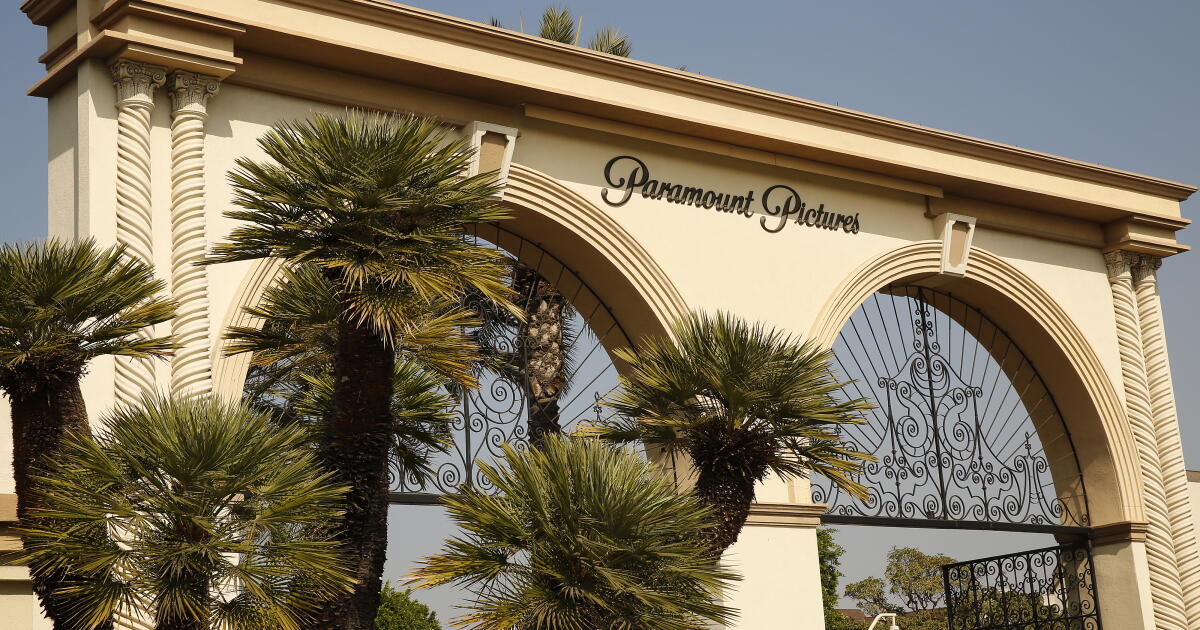
A federal judge declined Thursday to rule immediately on a proposed settlement between Paramount Skydance and 12 state attorneys general, leaving the last major legal hurdle to the studio’s $111-billion acquisition of Warner Bros. Discovery unresolved for now.
U.S. District Judge Araceli Martínez-Olguín did not indicate how she would rule, but said she wanted more information before deciding whether to approve the proposed consent decree, a court-enforceable agreement that would allow the merger to proceed under certain conditions..
“I’m not the only one who has some questions for you all. There’s lots of interest,” said Judge Martínez-Olguín. “I appreciate people are interested, but I also want to make sure that I have everything that I’m going to consider in front of me.”
The judge said she would issue a ruling “in due course.”
The hearing comes three days after California Atty. Gen. Rob Bonta announced that the two sides had reached an agreement.
It requires the combined company to release at least 30 films in theaters each year, commit at least an additional $1.5 billion to domestic film production and set aside $47.5 million for workers affected by the merger.
“When theater owners have publicly said that supply is the problem, those are voices that carry weight because they’re in the market,” said Paula Blizzard, an attorney for California, during the hearing. “They are the people we’re trying to protect — the businesses and the competition that we are trying to protect.”
The settlement proposal also includes stipulations on how basic cable channel negotiations must proceed, creates a board intended to protect the editorial independence of CBS News and CNN, and bars Paramount from selling or closing its Melrose Ave. lot or Warner Bros.’ Burbank lot while requiring the company to operate them “in a manner consistent with past practices.”
An independent monitor will oversee the settlement implementation. The agreement, if approved by the judge, will be in effect for five years.
“Paramount wants to get to work. Paramount is doing this deal because it wants to compete. Netflix, Amazon, Disney are far larger streaming undertakings,” said Josh Holian, an attorney for Paramount, during the hearing. “Paramount believes that a transaction like this can be transformative in fueling its ability to compete in that market.”
Before ending the hearing, Judge Martínez-Olguín assigned the parties several tasks, which included addressing a letter from U.S. Senator Cory Booker (D-N.J.) who echoed some concerns about the proposal.
Booker, the top Democrat on the Senate Judiciary Subcommittee on Antitrust, Competition Policy, and Consumer Rights, asked the judge to conduct an “independent public-interest review” before approving the settlement agreement. Because the U.S. Justice Department closed its investigation of the Paramount-Warner Bros. merger without seeking any remedies, Booker argued, the proposal is “the only enforceable instrument that will govern” the combined company.
Martínez-Olguín asked the parties to submit their responses to Booker’s letter by Monday, Sept. 28 at noon.
Warner Bros. Discovery Chief Executive David Zaslav had told staff earlier this week that he expected the deal to close no later than early October.
The settlement has divided Hollywood, with some saying Bonta bowed to political pressure from Los Angeles Mayor Karen Bass and California Gov. Gavin Newsom. During negotiations, Paramount threatened to move its studio out of state, which Newsom said he took seriously.
After the proposed settlement was announced, Paramount Chief Executive David Ellison said the combined company would remain in L.A.
Many in Hollywood are concerned about the threat of layoffs from the merger. Paramount has told Wall Street it plans to make more than $6 billion in cost cuts. A recent report commissioned by L.A. County estimated that 4,500 jobs could be lost over three years.
WASHINGTON — Eight sailors attempted suicide while deployed with the USS Abraham Lincoln aircraft carrier strike group, which spent a record-setting uninterrupted time at sea supporting the Iran war, the Navy’s top civilian leader said this week.
Acting Navy Secretary Hung Cao provided the information to Sen. Kirsten Gillibrand in a letter dated Tuesday after the New York Democrat inquired last month about the strike group’s crew of thousands. The Lincoln’s extended deployment drew the nation’s attention following reports of crew stress and poor mental health, as well as supply shortages, including food and hygiene products.
Gillibrand asked Cao specifically if there were any suicides.
“There have been no suicides on board during this deployment,” Cao wrote in the letter, which was obtained by the Associated Press and reported earlier by CNN. “Since the beginning of LINCOLN’S deployment, there have been a total of eight suicide attempts across the strike group — this number includes the LINCOLN crew and Sailors from the carrier wing, strike group and destroyer squadron staff, escorting destroyers, and all embarked aviation squadrons.”
President Trump had downplayed reports about conditions on the Lincoln, which left its homeport in San Diego in November, arrived in the Middle East in January in support of Iran operations, and spent a record-setting uninterrupted time at sea of more than 260 days.
The carrier and some of its supporting ships stopped in Thailand in early September on their way back home to California. The Lincoln’s commanding officer, Capt. Dan Keeler, said then that the ship will be heading home soon but may make further supply stops. He declined to comment on the exact date the strike group is expected back in the U.S.
Last month, Trump called the nearly nine months at sea that the sailors endured a “good period of time” but added that “over the years, we’ve had them out there much longer.”
Trump told reporters in August that he spoke with a retired admiral who recounted being on ships for “much longer.” Trump said the admiral assured him that the Lincoln is “beautifully maintained and beautifully taken care of.” Trump did not name the admiral.
Defense Secretary Pete Hegseth also had said that conditions about the Lincoln were “completely misrepresented.”
Gillibrand took aim at both in a statement released this week in response to Cao’s letter.
“What Trump and Secretary Hegseth dismissed as ‘fake news’ turned out to be serious and deteriorating conditions for our service members,” she stated.
“Our troops and their families make immense sacrifices every single day, yet the president dismissed them with open disrespect,” Gillibrand said. “That this administration can find endless taxpayer dollars for bombs, ballrooms, and billionaires, but cannot take care of our service members, is completely unacceptable.”
Extended deployments of carriers wear on service members who are away from home for long periods and increase strain on the ship and its equipment. The Navy is continuing to enforce a blockade on Iranian ports in the Strait of Hormuz, and the Trump administration has offered no clarity on how it intends to wind down the war.
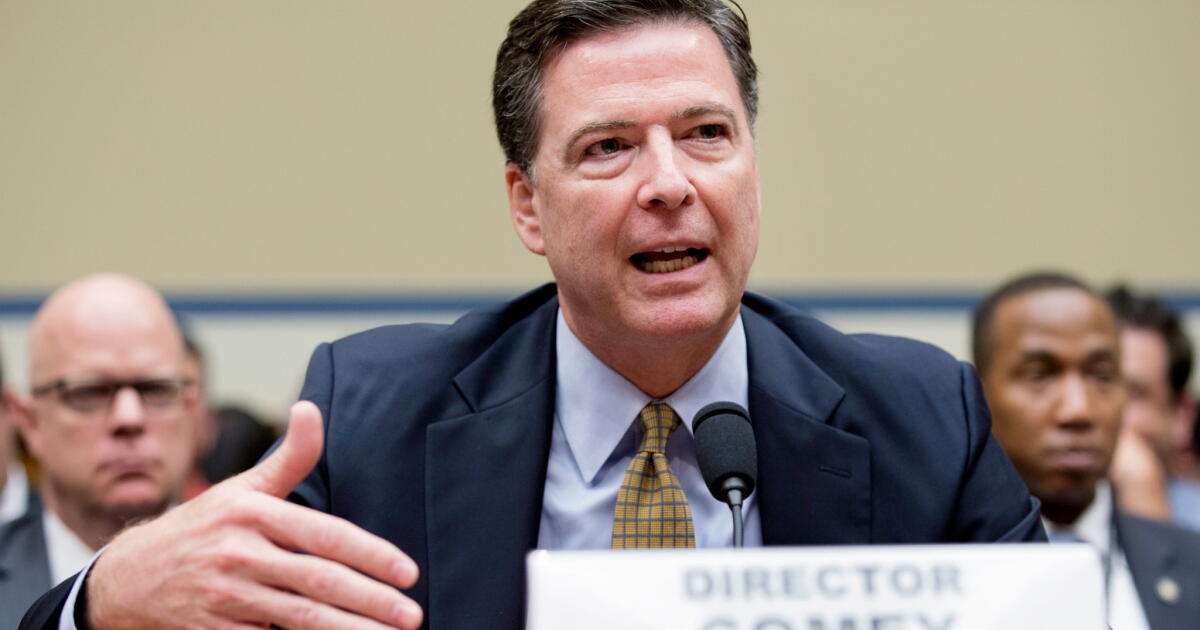
Reporting from Washington — FBI Director James B. Comey said Wednesday he has suffered anguish but does not regret his decision to inform Congress in late October that the bureau would reopen its inquiry into whether Hillary Clinton had mishandled classified emails, a disclosure that roiled the presidential race in its final days.
In his most detailed public comments on the explosive episode, the FBI director told the Senate Judiciary Committee that his decision to disclose the preliminary investigation into newly discovered Clinton emails 11 days before the election was “one of the world’s most painful experiences,” but that he would do it again.
“It makes me mildly nauseous to think that we might have had some impact on the election, but honestly, it wouldn’t change the decision,” Comey said.
“I’ve gotten all kinds of rocks thrown at me, and this has been really hard, but I think I’ve done the right thing at every turn,” he added.
Comey testified a day after the unsuccessful Democratic presidential nominee said that she believed Comey’s unusual letter to Congress on Oct. 28 had essentially tilted the close race to her rival, Donald Trump.
“If the election had been on Oct. 27, I would be your president,” Clinton said in a CNN interview at a women’s conference in New York. She blamed her loss on Comey’s disclosure, Russian hacking of Democratic Party emails and her own flaws as a candidate.
In response, President Trump said on Twitter that Comey “was the best thing that ever happened to Hillary Clinton in that he gave her a free pass for many bad deeds!”
“The phony Trump/Russia story was an excuse used by the Democrats as justification for losing the election,” Trump tweeted.
Comey repeatedly rebuffed questions Wednesday about the ongoing FBI counterintelligence investigation into whether any of Trump’s current or former aides cooperated with Russian intelligence agencies during the presidential race.
Comey only disclosed that investigation to a House hearing in March and said it had begun last July, during the heat of the campaign. After the election, U.S. intelligence agencies concluded that Russia had deliberately sought to interfere in the race to aid Trump and to undermine Clinton.
On Wednesday, Comey said he did not think he was inconsistent last fall when he disclosed that the FBI had obtained new evidence that might lead it to reopen its investigation of Clinton’s use of a private email server when she was secretary of State — but did not disclose a separate FBI investigation into whether members of Trump’s inner circle colluded with a foreign intelligence service.
He said he only announced the Clinton email inquiry, which the FBI had code named Midyear Exam, when it was formally closed in July. He said he felt obliged to inform Congress in October when new Clinton emails were found in an unrelated investigation.
Comey sent a follow-up letter two days before the election to say the additional emails did not change his earlier conclusion that charges against Clinton were not warranted.
Comey’s many critics say his news conference in July — when he called Clinton’s handling of classified material “extremely careless” but said that she would not be charged — and then his disclosures to Congress at the end of a bitter national election campaign were improper since the FBI is not supposed to discuss cases unless charges are filed.
In January, the Justice Department’s inspector general said he would investigate whether Comey violated department guidelines in his handling of the case.
Comey said Wednesday that he welcomes the internal inquiry. “If I did something wrong, I want to hear that,” he said.
He specifically declined to say whether the White House is cooperating with the Russia investigation, or whether the FBI has sought to examine Trump’s tax returns for evidence of ties to Russia. Trump has refused to release his tax returns to the public.
The FBI chief said Russia is still interested in trying to affect U.S. politics, and he believes it “a certainty” that Moscow will try to influence the elections in 2018 and 2020.
In a detailed, at times emotional explanation of his actions, Comey laid out the sequence of events that he said led to his July 5 news conference, his Oct. 28 letter to Congress and a follow-up letter three days before the election.
Comey said he decided the Justice Department was too compromised in July to publicly explain why Clinton would not be charged without “grievous damage to the American people’s confidence in the justice system.”
A big reason, he said, was because Atty. Gen. Loretta Lynch had met privately with former President Clinton in June in what both later described as a social visit because they were both at the same airport.
Under heavy criticism for meeting the former president while his wife was under an FBI investigation, Lynch recused herself from a direct role in the case. That gave Comey the authority to hold the politically sensitive news conference on his own, he said.
He said he sent the Oct. 28 letter after FBI agents found emails from Hillary Clinton on a laptop computer used by former Rep. Anthony Weiner, the husband of Clinton aide Huma Abedin, and thought they might include what he called “golden missing emails” from Clinton’s first months at the State Department. The FBI had seized Weiner’s laptop in an investigation of sexual texts he had exchanged with a teenage girl.
Agents found evidence that Abedin had passed classified emails to Weiner, who would print out emails for her to read, Comey said. But no charges were filed because the FBI could not “prove any sort of criminal intent,” he said.
Comey said he and his top staff debated whether to go public, mindful of long-standing Justice Department policies that seek to avoid actions that could sway elections.
Breaking that policy would be “really bad,” Comey said. But he said the only other choice, “concealment,” would have been “catastrophic.”
“We’ve got to walk into the world of really bad,” he said he concluded. “We’ve got to tell Congress we are restarting this.”
He said he made the decision even though a deputy said that might help elect Trump. Comey said he couldn’t consider that when making the call.
“Down that path lies the death of the FBI as an independent institution in America,” he said.
Infantino proposed an independent review of FIFA’s decision-making process amid criticism to his leadership.
Published On 22 Sep 202622 Sep 2026
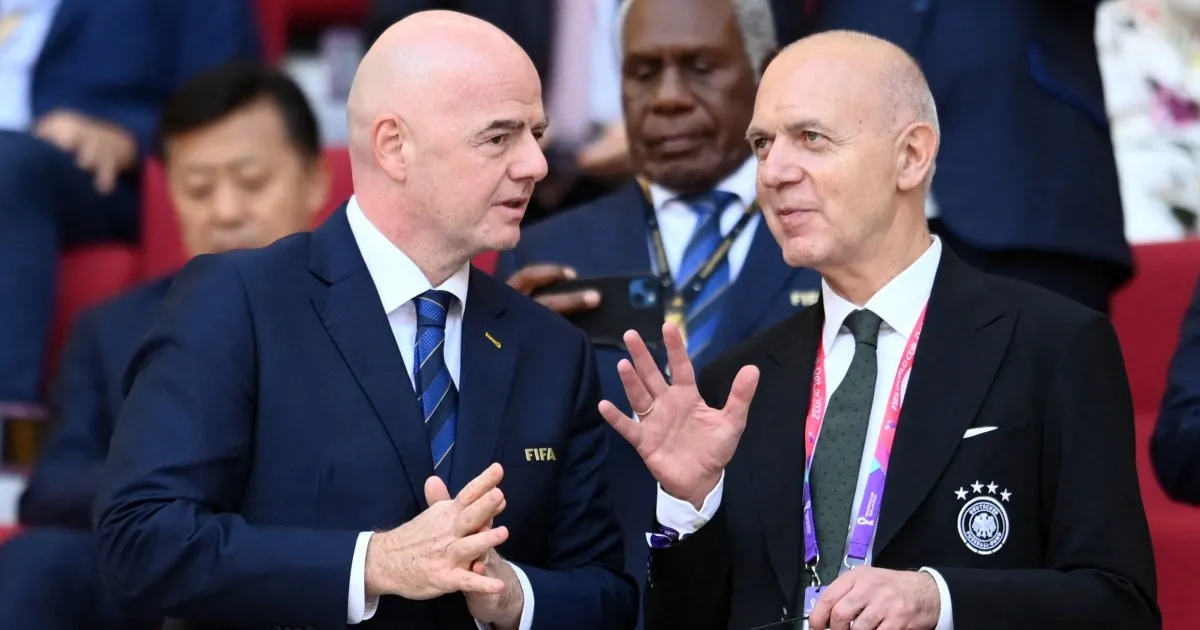
A letter from FIFA President Gianni Infantino this week to all 211 members, offering to discuss reforms within world football’s governing body – amid an ongoing crisis over his failed plan to sell a stake in the World Cup – is a mere ploy to get himself re-elected, Germany’s Football Association (DFB) President Bernd Neuendorf has said.
In Monday’s letter seen by the Reuters news agency, Infantino proposed an independent review of FIFA’s decision-making process, in a move that could help him regain support after the withdrawal of his controversial private investment plan.
Striking a conciliatory tone, he also said he would propose consultations with confederations, member associations and other stakeholders about strengthening FIFA’s decision-making.
Infantino faced a fierce backlash over his proposal to sell a 20 percent stake in FIFA’s commercial rights, including the World Cup, to private investors.
The plan was abandoned in July after strong opposition and boycott threats, with UEFA, the Asian Football Confederation and CONCACAF calling for changes to FIFA’s leadership.
They said there had been no consultation with any continental confederation at any stage, with Infantino acting alone. UEFA has said a change in leadership was now necessary, with the European body having lost faith in the current president.
“I regard Gianni Infantino’s letter as a transparent ploy to secure his re-election next year,” said DFB President Neuendorf on Tuesday. “Fundamentally, FIFA now seems to have recognised that changes are essential.
“However, Gianni Infantino is definitely not the right person to lead a reform process. He has squandered all credibility.”
Neuendorf is also a member of the FIFA Council, the organisation’s main decision-making body.
Infantino said in the letter that member associations’ positions on proposals or governance matters would not affect their treatment by FIFA, whose development and solidarity programmes would continue under existing rules.
The Swiss is up for re-election in March next year, with his opponents struggling to find a candidate to challenge the president. Sources familiar with the discussions told Reuters this month that he still had enough votes to win, prompting opponents to focus on curbing his powers.
Guess Aaron Donald was the smart one. He must have known what was coming for the Rams in Australia against the 49ers so he stayed home. Maybe he’ll all of a sudden have a strained groin and won’t be able to play this season.
Stanley Elrich Arleta
There is no longer a weekly cover of Sports Illustrated magazine to jinx athletes. But we still have Bill Plaschke! It sure didn’t take long for Bill’s prediction, that the Rams would go 20-0 this season, to jinx the team. The Plaschke Curse strikes again!
Stephen Greenberg Santa Monica
Do the Rams know they actually have to win some football games? Not just show up and expect the other team to lay down. I know Bill Plaschke put the curse on them by declaring an undefeated season but coach Sean McVay and the Rams have to do better.
Russell Hosaka Torrance
Can someone please take Bill Plaschke’s computer away from him so he can’t make another unnecessary prediction that could come back to jinx the fans of L.A.? What purpose does it serve for a sportswriter with a dubious history of predictions to go out on a limb and make yet another useless, grand statement? Hasn’t he learned his lesson?
Danny Balber Jr. Pasadena
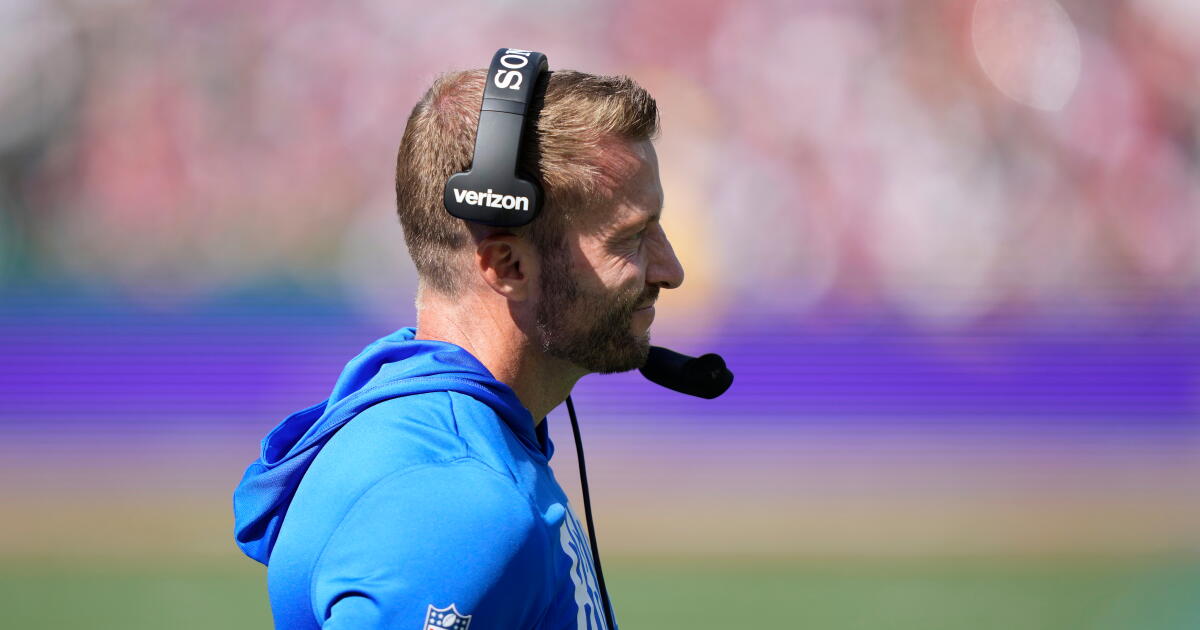
Sean McVay’s experiment of not properly acclimating the team to the massive time change in Australia was a huge a risk. McVay cited last year’s London Game (Rams handily beat the Jaguars), when they crossed five time zones (Baltimore to London) without acclimating and thought it would apply to 17 time zones to Melbourne?
It was an embarrassment for the franchise and L.A. and further promoted the idea that the Rams can’t beat the 49ers. Additionally, McVay went to his usual bag of tricks, abandoning a successful running attack in favor of a tired and rusty Matt Stafford passing incessantly, being harassed and ineffective.
This was easily the dumbest head coaching call of McVay’s career. He needs to apologize to his team and the fans.
Axel Hubert Santa Monica
Thanks, Roger Goodell! Your relentless desire to “expand” the NFL fan base reached its apex Thursday night (or Friday morning?) with the Rams and 49ers game in Australia. It’s bad enough forcing teams to fly eight or nine hours to Europe but this Australian game takes the proverbial cake.
When is “enough is enough” regarding “expanding” the game? The world loves soccer so let them have it; American football is uniquely American so, please, recognize this fact, enjoy the huge revenues from TV and let NFL teams play in the U.S. where the game belongs!