Government warns of crackdown as supporters of jailed former prime set off from northwest Pakistan towards Islamabad.
Supporters of jailed former Pakistani Prime Minister Imran Khan have set off on a protest march from the country’s northwest after talks with the government to call off the demonstration failed.
More than 5,000 were reported to have begun the rally on Sunday. The march, planned by Khan’s Pakistan Tehreek-e-Insaf (PTI) party, was originally scheduled for September 27 but was postponed until October 4 to allow talks between the government and the PTI leadership to take place.
Recommended Stories
list of 3 itemsend of list
However, two rounds of talks over the weekend failed to break the deadlock, and the PTI decided to carry out its plan, which is the latest attempt to pressure the government into releasing Khan, the country’s most popular political figure according to polls, who has been behind bars since August 2023 following a series of convictions that his party calls politically motivated.
All but one of the convictions against the former PM have since been suspended or overturned on appeal.
Videos posted on the PTI’s official social media showed supporters joining the march in different areas of Khyber Pakhtunkhwa (KP) province, which is ruled by the party, and setting off in convoys.
Sohail Afridi, the region’s chief minister, had earlier posted on social media that the demonstration in support of Khan would go ahead.
He said the march will make its way to Khairabad, 80 kilometres (50 miles) west of Islamabad, by Thursday, where the plan for the “next phase” will be announced.
Government warns protesters
The government has been preparing for weeks for the arrival of PTI demonstrators in Islamabad. It has erected barriers using shipping containers to block main access routes to the capital.
Interior Minister Mohsin Naqvi confirmed earlier on Sunday that the talks between the two sides had failed. He accused Afridi of “sabotaging” the negotiations, and added that the government would not allow the PTI to “create a disturbance”.
He also cited an Islamabad High Court order from September 14, ruling that no political party or its leadership has the “lawful right to occupy public roads, highways, interchanges, toll plazas and buildings in Islamabad”.
“If they violate the orders, whether they are workers or politicians, whether they are protesting within KP or outside KP, we will pursue them one by one. This time, we want to ensure that these repeated episodes of creating disturbance in Islamabad come to an end,” Naqvi said.
Traffic moves past shipping containers used to block a planned march by former Prime Minister Imran Khan’s Pakistan Tehreek-e-Insaf party, in Islamabad [File: Reuters]
Concerns about the 73-year-old Khan’s health, in particular the condition of his right eye that has required months of specialist treatment, have prompted the PTI’s campaign for his release.
The party has also called for the release of Khan’s three sisters, whose arrests last month further heightened tensions.
James Dorsey, a fellow at the National University of Singapore, said Khan was “essentially a populist leader” with “a genuine popular movement that had broad popular support”.
That is behind the “determination by the government to prevent [the protesters] from entering Islamabad,” he told the AFP news agency.
Given Pakistan’s security concerns, particularly following its unresolved February 2026 conflict with Afghanistan, Islamabad wants to avoid escalation in the face of the protests, he added.
“It’s a problem for the government, but I don’t think it’s an existential threat,” he said.
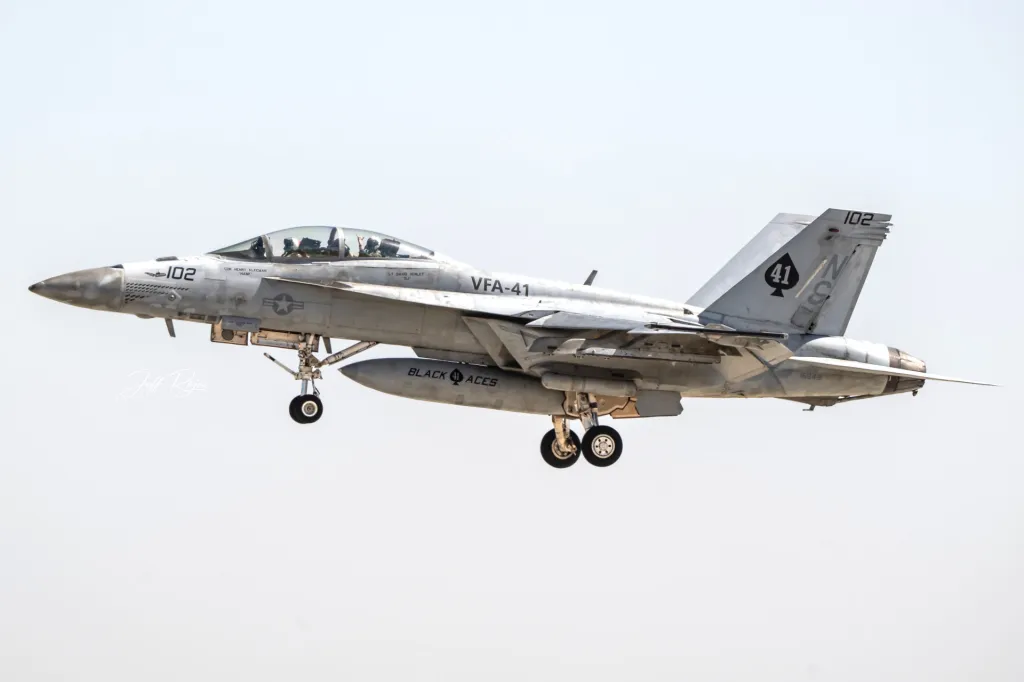
The volume of munitions expended in the course of U.S. operations against Iran this year has been and continues to be a hot topic of discussion, and there has been relatively little official data provided on this front. However, now we know that the F/A-18F Super Hornets of the U.S. Navy’s Strike Fighter Squadron 41 (VFA-41), the “Black Aces,” launched 421 missiles and bombs during their time supporting Operation Epic Fury.
This new insight into VFA-41’s role in the conflict with Iran comes from a photo of a large board listing the squadron’s weapons expenditures during Epic Fury, via Jeff Rojas, who goes by the handle @jro_photography on Instagram. Rojas also shared pictures recently taken of VFA-41’s Super Hornets. The Black Aces were one of the squadrons assigned to the Nimitz class aircraft carrier USS Abraham Lincoln, which has been on a marathon deploymentsince last year. The carrier only left the Middle East region last month and is now set to formally return home to San Diego, California, within days. Per the Pentagon’s official timeline, Operation Epic Fury began on February 28 and concluded on May 5, though U.S. forces have continued to conduct strikes on Iran, on and off, since then.
One of VFA-41’s F/A-18F Super Hornets spotted recently. Jeff Rojas Jeffrey Rojas
The complete tally of munitions employed as shown on the board, broken down by type, from greatest to fewest, is as follows:
The total cost of all of these munitions, using available data from U.S. military budget documents, is very roughly $43,646,000, at least. Unit costs fluctuate regularly due to a variety of factors. Furthermore, the exact price tag for different JDAMs can be somewhat difficult to calculate given how the individual components are budgeted.
The JDAM is really a family of kits that turn standard unguided ‘iron bombs,’ which can vary significantly in the kinds of effects they are designed to produce, into warheads for precision-guided munitions. This is exemplified by the (V)2 and (V)4 subvariants of the GBU-31/B mentioned here, which are built using standard high-explosive and bunker-buster bombs, respectively. No specific subvariants of the GBU-32, GBU-38, or GBU-54 were mentioned in the information provided. Standard JDAMs can also only be employed against static target coordinates. The LJDAM kits add a laser guidance component (akin to what is found on Paveway-series bombs) that enables strikes against moving targets.
A JDAM, as well as a pair of AIM-9Xs, seen under the wing of a VFA-41 Super Hornet in August. NAVCENT
No specific version of AGM-154 is mentioned, either, but the C and C-1 types, which have multi-stage bunker-busting warheads, are the only ones understood to be in service today. Remaining A variants, which were loaded with 145 small bomblets, were removed from U.S. service in 2008 as a result of new guidelines on cluster munitions issued under President George W. Bush. A planned AGM-154B, which would have contained six “smart” Sensor Fuzed Munition bomblets, was never produced. You can read more about the full JSOW family here.
We do not know exactly what targets any of these munitions were employed against. However, a picture that Jeff Rojas grabbed of one of VFA-41’s Super Hornets, seen toward the top of this story and in part below, shows a very interesting broken submarine kill marking, with the added text “Sub Buster.” The jet also has a number of more typical bomb-shaped kill marks.
A close-up look at the broken submarine and other kill marks on one of VFA-41’s Super Hornets. Jeff Rojas Jeffrey Rojas
The video montage in the social media post below includes a clip, starting at 0:13 in the runtime, of a Hellfire missile hitting what looks to be a Ghadir class diesel-electric midget submarine in port.
U.S. forces are degrading the Iranian regime’s ability to project power at sea and harass international shipping. For years, Iranian forces have threatened freedom of navigation in waters essential to American, regional and global security and prosperity. pic.twitter.com/gIBN02mowh
It is extremely likely that the AIM-9Xs and AIM-120s were fired at Iranian drones, though they could have been launched at incoming cruise missiles, as well. At the time of writing, there are no known or reported instances of U.S. military jets engaging crewed Iranian aircraft in the course of the conflict to date. In 2024, the Navy carried out a crash program that increased the total number of AIM-9Xs that F/A-18E/Fs could carry per sortie, specifically in response to Houthi drone threats. Super Hornets loaded with nine air-to-air missiles are now referred to as “Murder Hornets.”
It is also important to remember that this is a discussion of the munitions expended by just one Navy strike fighter squadron. Lincoln‘s air wing includes four strike squadrons, three with Super Hornets and one with F-35Cs, as well as units flying other types of aircraft and helicopters. The carrier was just one part of a much larger array of air, naval, and ground forces that participated in Operation Epic Fury and subsequent operations against Iran. For additional context, consider that the entire Eisenhower Carrier Strike Group, including its entire air wing and escorting ships, fired off 770 munitions in total, by the official count, during very active combat operations in and around the Red Sea between November 2023 and June 2024.
VFA-41 Super Hornets seen flying together recently. Jeff Rojas
As such, the tally of munitions launched from VFA-41 Super Hornets offers a very interesting view into that squadron’s contributions to Operation Epic Fury, as well as the full scale and scope of the conflict with Iran.
Special thanks again to Jeff Rojas for sharing the details about VFA-41’s participation in Operation Epic Fury and his pictures with us.
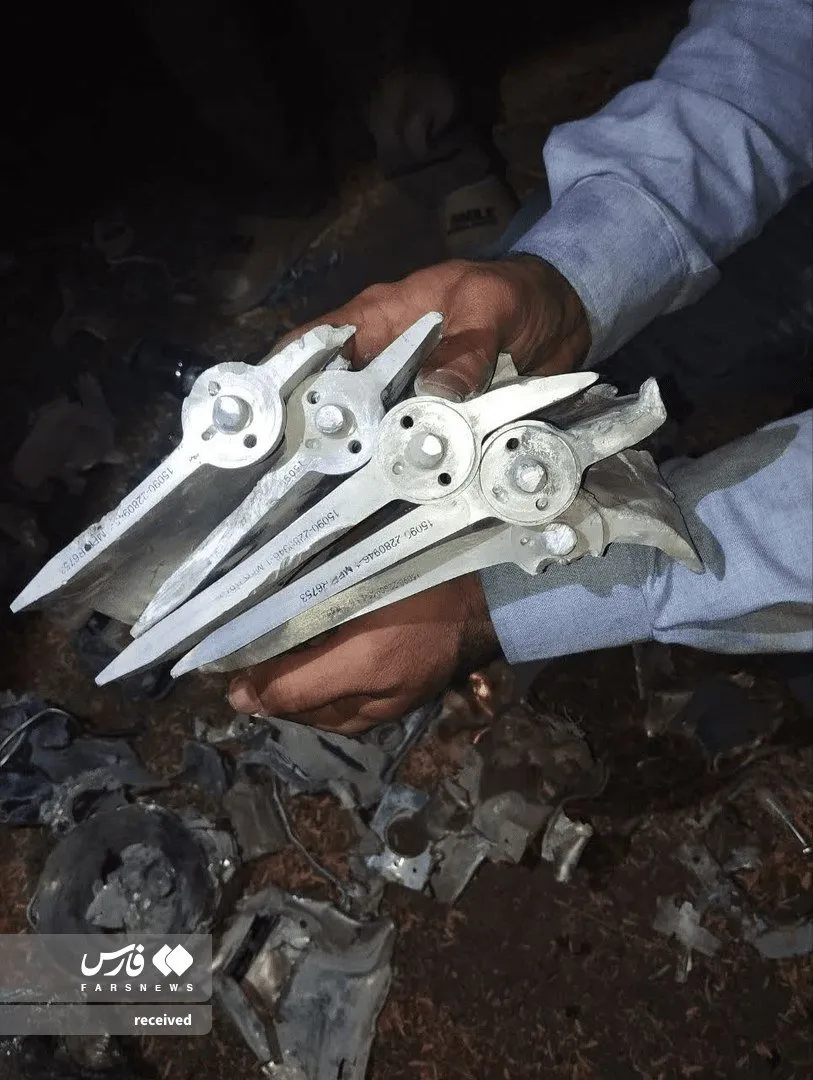
Remnants claimed to be photographed in Iran have been identified as belonging to a Raytheon ADM-160 Miniature Air-Launched Decoy (MALD). The wreckage was reportedly recovered after an Iranian interception that occurred earlier in the day, although the exact location and circumstances remain unconfirmed and there is reason for caution. Iranian state and military media have a long record of presenting unverified or exaggerated claims, especially during periods of conflict, and imagery released through those channels warrants independent scrutiny. Still, the MALD identification appears credible based on the visible wreckage, but its provenance, location, and the circumstances of its loss have not yet been independently established. MALDs were likely used at least in the opening stages of Operation Epic Fury, as well.
With that being said, the showing off of the MALD wreckage, regardless of its original use case, is something of a reminder that U.S. and Israeli forces are continuing to evaluate Iran’s electronic order of battle, which can include probing activities that leverage deception and decoys to better understand the state of Iran’s air defenses and command and control architecture. This is critical information that needs to be constantly updated for contingency and future potential air campaign purposes.
Wreckage of the MALD. Iranian media
Iranian sources today reported the destruction of an Orbiter-type reconnaissance drone over the Strait of Hormuz, before the separate imagery emerged showing what appears to be the wreckage of a MALD. It is not yet clear whether the two reports refer to the same incident or separate losses.
A close-up of the wreckage of the MALD. Iranian media
The appearance of the wreckage could also shed a light on how the U.S. and Israel can conduct ongoing air operations against Iran, even if kinetic actions have largely slowed to a trickle.
MALD is an expendable store, launched from another aircraft. The ADM-160 family was developed to provide a flexible way of decoying and distracting an enemy’s air defenses, while also adding to the survivability of allied aircraft and standoff weapons. Raytheon won the U.S. Air Force development contract for the current-generation ADM-160B in 2003. The B design is significantly different from the initial A-model from Teledyne Ryan (later Northrop Grumman), the development of which had started in the late 1990s. The B also features a more powerful turbojet engine and possesses greater range.
MALDs being prepared for loading onto an aircraft. U.S. Air Force
The ADM-160B is approximately 6.5 feet long, has a wingspan of roughly 5.6 feet when deployed, and is powered by a small turbojet. It has an operational range of around 550 miles.
Rather than carrying a conventional warhead, the MALD carries equipment intended to reproduce the radar signature of specific aircraft or standoff weapons. It can therefore provide additional and often highly enticing tracks for an adversary’s radar operators and surface-to-air missile crews to respond to. It can be programmed to fly intricate routes to better rival the target it is emulating and to provoke the attention of air defenders.
The related ADM-160C MALD-J adds an electronic warfare capability, allowing it to perform stand-in jamming and other forms of active electronic attacks against enemy air defense nodes. Further improved variants of the MALD, which the U.S. Navy has also been acquiring, have since been developed as you can read more about here.
The exact variant involved in today’s incident cannot be established from all publicly available imagery at this stage.
An ADM-160B under the wing of a U.S. Air Force B-52 bomber. U.S. Air Force
The possibility that the United States had used MALDs against Iran had already attracted considerable attention following Operation Midnight Hammer, the U.S. strike against Iranian nuclear facilities in June 2025.
During the operation, U.S. officials described a complex deception plan involving aircraft and other decoy measures designed to prevent Iran from determining the true direction and composition of the attack.
This strongly pointed to MALD as one likely component of that deception architecture.
In the Strait of Hormuz context, the MALD could serve a dual purpose. It could act in its primary role, as a defensive measure for allied aircraft and standoff weapons, drawing Iranian air defense systems away from it and toward the decoy. It can also be used more independently, triggering Iranian defenses and revealing their locations and operating characteristics, as well as the state of Iran’s command and control for those assets. Surveillance platforms, especially those in the air, can then soak up all that signals data. This can then be used to generate intelligence for future operations, and all without putting a person or an expensive piece of equipment at risk.
The unique nature of the current state of the Iran conflict would allow for MALD to be used in this unique manner. While kinetic actions have become sporadic, they are still occurring, so firing a decoy that looks like something much more threatening to Iranian air defenders would not be an unprecedented escalation.
An ADM-160 MALD in flight. Raytheon
Iran has characterized the incident as a shoot-down. If Iranian forces did successfully engage the MALD, that would represent a real air defense interception of a U.S. deception system, although these are expendable by design. It is equally possible that the MALD malfunctioned or just flew its route and ran out of fuel and crashed, as designed.
The wreckage also does not, by itself, identify the aircraft that launched the MALD.
The system has been integrated with a broad range of U.S. aircraft. In the course of U.S. operations against Iran, we have notably seen Air Force A-10C Thunderbolt II attack jets returning from theater with markings depicting MALD missions.
An A-10 with mission marks showing a mix of weapons used against Iranian targets. They include MALDs, Small Diameter Bombs, GBU-12 Paveways, Advanced Precision Kill Weapon System (APKWS) laser-guided rockets, AGM-65 Maverick air-to-surface missiles, and generic bombs that probably signify Joint Direct Attack Munitions (JDAMs). Andrew McKelvey
It is also worth noting that the MALD wreckage has appeared at the same time as reports of unusual, UAP-like objects over Iran, with videos and eyewitness accounts circulating online. Their authenticity and nature remain unclear.
A number of videos are circulating showing an unidentified object in the skies above Tehran, Iran, it’s not immediately clear what is being filmed. pic.twitter.com/bHNAQGFPNv
Such reports come amid an increasingly sophisticated use of low-end drones, decoys, and other forms of deception. These kinds of systems can be employed not only to stimulate adversary air defenses, but also to distract populations and probe how information moves out of a denied area. In such an environment, unusual aerial sightings should be viewed with caution — but not necessarily dismissed as irrelevant. We have been talking about how new forms of misdirection and guile will leverage relatively low-end technologies in future conflicts for many years now. While it isn’t clear if this light show in the sky over Iran was such an activity, it is certainly a reminder to keep that possibility in mind.
I don’t know what this is, or if it’s legit BUT remember we are in a new age of misdirection, decoy and guile. Specifically using low end drone technology. There are more ways to stimulate an enemy air defense system, distract a populous, assess the flow of public info from a… https://t.co/wW7YVlbayB
Meanwhile, the prospect of renewed U.S. strikes is increasingly being raised on both sides. Iran’s central military command said Sunday that it had received information that Washington was preparing to resume attacks, while President Donald Trump toldFox News that he was in a “deciding mode” and was considering further military action alongside economic pressure and a deal.
Trump had also told Axioslast week that he was approaching a major decision on whether to resume large-scale military operations, with U.S. forces in the region being maintained at current levels through the end of the year.
Iranian officials have warned that a renewed U.S. attack would trigger retaliation against American forces and interests across the region. At the same time, Qatar and Pakistan are pursuing diplomatic efforts to restart negotiations.
This situation is exactly why keeping as detailed intelligence on the status of Iran’s air defense overlay would be so critical. Building a highly detailed electronic order of battle and maintaining it is critical to the effectiveness of future air operations. There is usually an observable burst of such activity prior to a major operation kicking off, as well. There are also many unseen assets that help with this, from those in space to those in the air and even those under the sea. There have been reports of Israel’s secretive RA-01 stealth flying wing drone being spotted over Iran and of course the U.S. has its own RQ-170 and RQ-180 aircraft, just to name a couple known penetrating assets that are likely highly capable of collecting this information.
Regardless, the U.S. and Israel will have a lot of ‘maintenance’ to do in order to roll back any air defense capabilities Iran has been able to reconstitute should hostilities break out in full again, and a lot of critical intelligence data will need to be up-to-date in order to support such an operation.
No response by Yemen’s Houthis to a claim by the coalition forces that its missiles targeted Taif and Yanbu.
Published On 24 Sep 202624 Sep 2026
Saudi-led coalition forces fighting Yemen’s Houthis say they have intercepted six ballistic missiles allegedly fired by the Iran-allied group towards cities in Saudi Arabia.
The missiles were destroyed on Thursday in the direction of the Saudi cities of Taif and the strategically important port of Yanbu, according to Major General Turki al-Malki, the spokesman for the Saudi-backed Coalition to Restore Legitimacy in Yemen.
Recommended Stories
list of 3 itemsend of list
Saudi air defences intercepted some of the missiles attempting to target the cities, Al-Malki told the Saudi Press Agency (SPA).
There was no immediate claim of responsibility from the Houthis or other groups.
The coalition statement came as the Reuters news agency reported that an air defence system operated by Greek military personnel in Saudi Arabia intercepted a ballistic missile and a drone on Thursday in the wider Yanbu region, home to major oil refining facilities.
“Both were shot down,” a Greek security source told Reuters, adding that the Greek Patriot system launched two missiles but did not give details on the origin of the drone and the ballistic missile. A second source confirmed the information to the news agency.
Yanbu port is key to Saudi crude when shipments through the Strait of Hormuz are disrupted.
Earlier on Thursday, Saudi Arabia’s General Directorate of Civil Defence issued alerts warning of potential danger in the holy city of Mecca, the northwestern area of Tabuk, the Red Sea areas of Jeddah and Yanbu and the southern area of Taif. They later said the threat had passed and the cities were out of danger.
It was the first time in nearly 10 years that a security alert had been activated in Mecca, home to the Kaaba, Islam’s holiest site.
The Houthis have largely attacked southern areas of Saudi Arabia.
They stepped up attacks on the kingdom after declaring a naval blockade in July, a second theatre for the US-Iran war. The Houthis also seized the whole of Yemen’s western coast in a lightning offensive nearly two weeks ago that brought them to the shores of the Red Sea’s strategic Bab al-Mandeb waterway.
Forces with Yemen’s Saudi-backed internationally recognised government said on Thursday they repelled Houthi attacks along several fronts in Yemen’s southwestern Taiz governorate.
Colonel Majid al-Nuzaili, spokesman for the Yemeni government forces, said that the Houthis launched coordinated attacks on Wednesday night in a bid to reach positions on a key road connecting the Aden, Lahj and Taiz governorates.

![Traffic moves past shipping containers used to block the area, ahead of a planned march by jailed former Prime Minister Imran Khan's Pakistan Tehreek-e-Insaf (PTI) party, in Islamabad, Pakistan, on September 30, 2026 [Reuters]](https://i0.wp.com/occasionaldigest.com/wp-content/uploads/2026/10/2026-10-02T070015Z_265516849_RC2NTNAKEGKJ_RTRMADP_3_PAKISTAN-PROTESTS-CONTAINERS-1791131201.jpg?w=640&ssl=1)