killed

Iran names successor to security chief killed in US-Israeli attack | US-Israel war on Iran News

Mohammad Bagher Zolghadr, ex-IRGC commander, to replace late Ali Larijani as chief of Iran’s Supreme National Security Council.

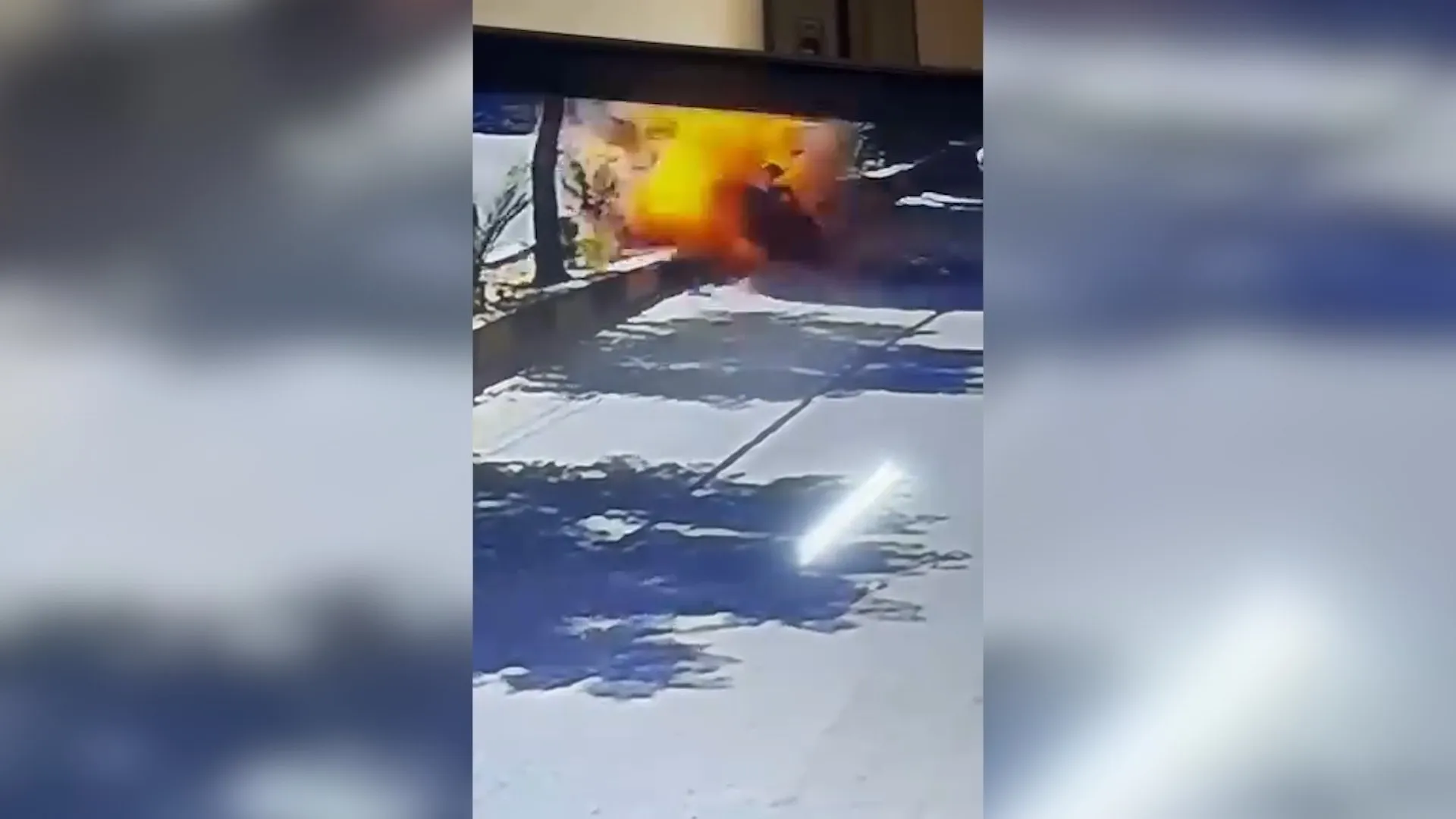
Iran has named Mohammad Bagher Zolghadr, a former commander of Iran’s Islamic Revolutionary Guard Corps (IRGC), as the successor to Ali Larijani, head of the country’s Supreme National Security Council (SNSC), who was killed in a US-Israeli air strike earlier this month.

President Masoud Pezeshkian’s deputy of communications announced the appointment on X on Tuesday.

Recommended Stories

list of 3 itemsend of list

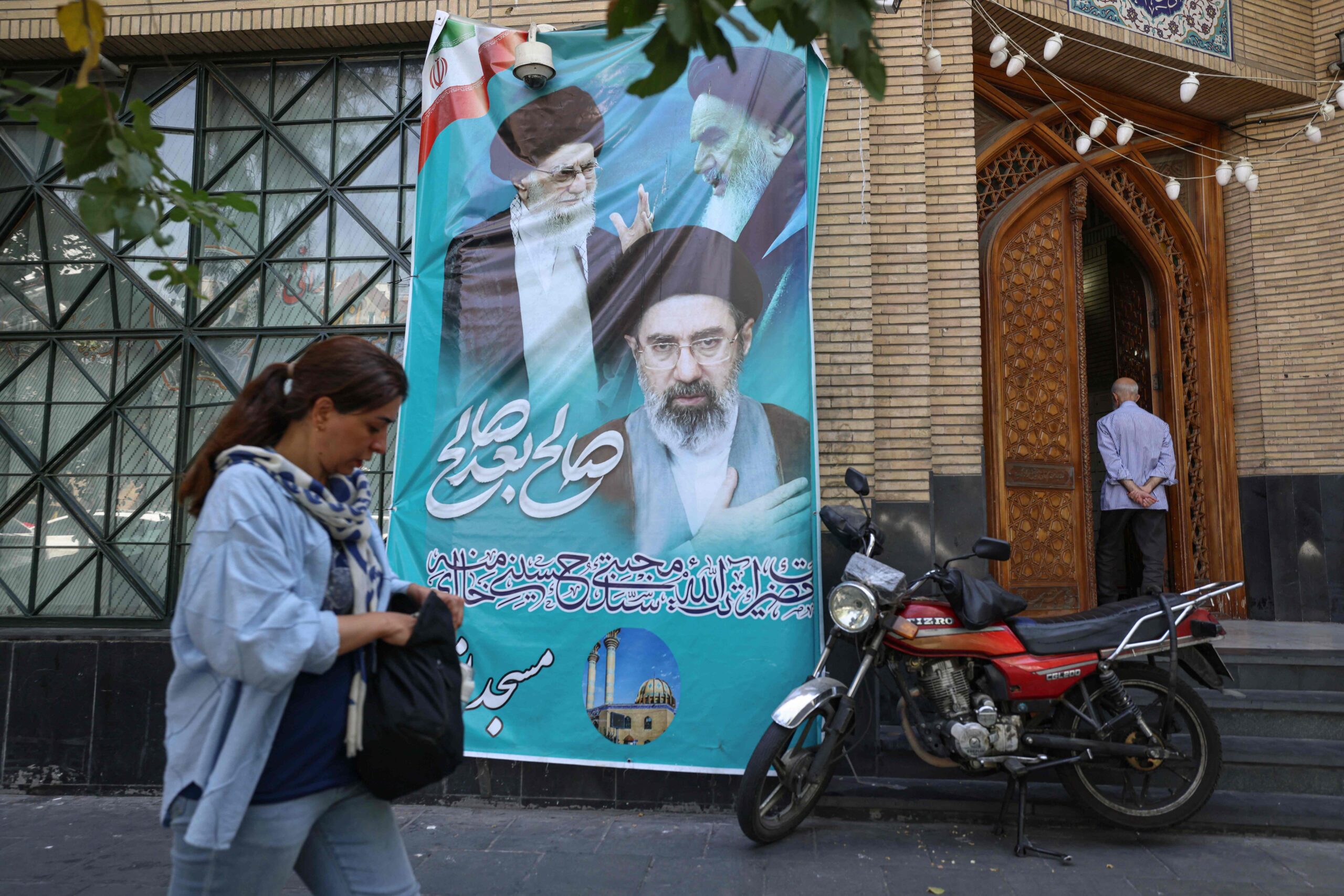
The SNSC, formally chaired by Pezeshkian, coordinates security and foreign policy and includes top military, intelligence and government officials, in addition to representatives of Supreme Leader Mojtaba Khamenei.

Zolghadr, who served in the 1980s war against Saddam Hussein’s Iraq, went on to become head of the IRGC’s joint staff for eight years and then deputy commander-in-chief of the elite force for another eight years.

In 2005, he was named deputy interior minister for security and police in the government of then-President Mahmoud Ahmadinejad, a move that was seen at the time as bolstering the IRGC’s influence in politics.

Since 2023, he has been the secretary of the Expediency Council, a powerful body that plays both an advisory and mediating role between Iran’s various power structures and the supreme leader.

Zolghadr’s new position consolidates the IRGC’s growing clout in Iran amid growing uncertainty regarding decision-making at the top of the system. Mojtaba Khamenei has not been seen in public since he succeeded his assassinated father, Ayatollah Ali Khamenei, in early March.

Larijani, one of the most prominent non-clerical figures in Iranian politics, was killed last Tuesday in a week that saw the war spiralling throughout the region, upending global energy markets and roiling the world economy.

On Tuesday, the war showed no sign of de-escalation after US President Donald Trump’s claim that he was speaking to an unidentified “top person”, as he extended by five days a deadline to hit Iran’s power plants.

Iran’s Parliament Speaker Mohammad Bagher Ghalibaf said “no negotiations” were under way, accusing Trump of seeking “to manipulate the financial and oil markets”.

Source link

Minnesota hockey reporter, 3 children killed in house fire, NHL says

NHL reporter Jessi Pierce and her three children were killed in a weekend house fire in Minnesota, the league announced Sunday.

Pierce, 37, covered the Minnesota Wild as the correspondent for NHL.com for the last decade.

“The entire NHL.com team is devastated and heartbroken by the loss of Jessi and her children,” said Bill Price, vice president and editor in chief of NHL.com, in a statement. “Jessi’s love of her family and hockey was evident in the energy and passion she brought to her work for us. She was an absolute joy to talk to and work with. She will be deeply missed.”

Firefighters responded to a house fire Saturday morning in White Bear Lake, Minn. Neighbors called 911 and reported seeing flames coming through the roof. Fire crews located an adult, three children and a dog inside the house, all deceased, the White Bear Lake Fire Department said. The department did not release the names of the victims in its statement Saturday.

The cause of the fire is under investigation.

“Out hearts ache for those involved in this tragedy. We ask for the opportunity to allow our community to come together and support one another during this difficult time,” Fire Chief Greg Peterson said in the statement.

The Minnesota Wild mourned her loss on social media Sunday. “Jessi was a kind, compassionate person that cared deeply about her family and those around her. She served as an ambassador for the game of hockey during her time covering the Wild and the NHL,” the post said.

Minnesota is known as the “State of Hockey,” and the Wild have had one of the biggest fan bases since their inception in 2000. The Minnesota North Stars moved to Dallas to become the Stars in the early 1990s.

Hill writes for the Associated Press. AP writer Stephen Whyno in New York contributed to this report.

Source link

Six killed as Qatar army helicopter crashes due to ‘technical malfunction’ | News

At least six people on board a Qatari military helicopter have been killed in a crash in the Gulf state’s waters after a “technical malfunction”, the government said.

Seven people were on board, with Qatar’s interior ministry on Sunday saying operations continue ‌to find the last missing person.

“A Qatari helicopter had a technical malfunction during a routine duty, which led to its crash in the regional waters of the State,” the country’s defence ministry earlier said in a statement on X.

More to come…

Source link

WHO says attack on Sudan hospital killed 64, including 13 children | Sudan war News

The attack on a teaching hospital in Al Deain, the capital of East Darfur state, has rendered the facility non-functional.

An attack on a ⁠hospital in Sudan’s Darfur region has killed at least ‌64 people, including 13 children, according to the head of ⁠the World ⁠Health Organization (WHO).

In a social media post, Tedros Adhanom Ghebreyesus said on Saturday that multiple patients, two female nurses and one male doctor were also among those killed in the attack on Al Deain Teaching Hospital in Al Deain, the capital of East Darfur state, on Friday night.

Another 89 people, including eight health staff, were wounded, he added.

The attack damaged the hospital’s paediatric, maternity, and emergency departments, rendering the facility non-functional and cutting off ‌essential medical services in the ‌city.

“As a result of this tragedy, the total number of fatalities linked to attacks on health facilities during Sudan’s war has now surpassed 2,000,” said Tedros, adding that over the nearly three-year conflict between Sudan’s army and the paramilitary Rapid Support Forces (RSF), the WHO had confirmed the killing of 2,036 people in 213 attacks on healthcare.

There was no immediate information about who was behind the attack.

The war between the army and the RSF erupted in mid-April 2023, unleashing a wave of violence that has led to one of the world’s fastest-growing man-made humanitarian crises, with tens of thousands of people killed and more than 12 million forced from their homes.

Both sides have been accused of war crimes and crimes against humanity, while the RSF has been implicated in atrocities in Darfur that United Nations experts say bear the hallmarks of genocide.

“Enough blood has been spilled. Enough suffering has been inflicted,” Tedros said. “The time has come to de-escalate the conflict in Sudan and ensure the protection of civilians, health workers, and humanitarians.”

Source link

Iran’s IRGC says spokesman Ali Mohammad Naini killed in US-Israeli attack | US-Israel war on Iran News

Israeli and US air attacks pound Iran as assassination campaign of country’s leadership continues.

Iran’s Islamic Revolutionary Guard Corps spokesperson has been killed in overnight strikes carried out jointly by the United States and Israel, the IRGC reported, the latest in a mounting toll of senior officials assassinated since the war began.

Ali Mohammad Naini, a 68-year-old brigadier general who took up the IRGC spokesman role in 2024, “was martyred in the criminal cowardly terrorist attack by the American-Zionist side at dawn”, the IRGC said in a statement on Friday.

Recommended Stories

list of 3 itemsend of list

His death came just hours after he appeared on national television to insist that Iran retained full capacity to manufacture missiles, even under wartime conditions.

“Our missile industry deserves a perfect score … and there is no concern in this regard, because even under wartime conditions we continue missile production,” Naini was quoted by the Fars news agency as saying.

On Thursday, Israeli Prime Minister Benjamin Netanyahu said that “Iran no longer has the capacity to enrich uranium and manufacture ballistic missiles”.


The Israeli army said on Friday that it was carrying out strikes across eastern Tehran, as the country marks the Persian New Year, Nowruz, which this year coincides with Eid al-Fitr.

Al Jazeera’s Mohamed Vall, reporting from Tehran, described the mood in the capital as “hushed”, with none of the customary festivities visible on the streets.

Naini’s killing is the latest in a string of high-profile assassinations that have gutted Iran’s establishment in under three weeks.

Supreme Leader Ayatollah Ali Khamenei was killed in the opening hours of the joint military campaign. He has since been replaced by his son, Mojtaba Khamenei.

Earlier this week, Ali Larijani, secretary of Iran’s Supreme National Security Council and one of the most influential figures in Iran’s establishment, was killed in a strike along with his son and several aides.

The head of the Basij paramilitary forces, Brigadier General Gholamreza Soleimani, and Intelligence Minister Esmail Khatib were also confirmed dead within the same 48-hour period.

US Defense Secretary Pete Hegseth made little effort to conceal Washington’s glee, saying on Thursday that “the last job anyone in the world wants right now” is a senior leadership role in the IRGC or Basij.

However, other US officials appeared to suggest that Washington and Israel’s aims in Israel were not aligned.

Director of National Intelligence Tulsi Gabbard told the House Intelligence Committee this week that US and Israeli objectives “are different”, adding that while Israel had been “focused on disabling the Iranian leadership,” Trump’s goals were to destroy Iran’s ballistic missile capabilities “and their navy”.

Israeli Prime Minister Netanyahu has cast the killings as a means of opening a path for Iranians to reclaim their country, saying on Wednesday the campaign against the country’s leadership “will not happen all at once” but that persistence would give Iranians “a chance to take their fate into their own hands”.

Foreign Minister Abbas Araghchi said the US and Israel had still failed to grasp that Iran’s political structure does not rest on any single person.

“The presence or absence of a single individual does not affect this structure,” he said.

Source link

Mexican military says 11 killed in raid targeting Sinaloa cartel leader | Crime News

Omar Oswaldo Torres, the leader of the Los Mayos faction of the Sinaloa criminal network, was detained in the raid.

Mexican authorities have revealed that 11 people were killed during a raid that resulted in the capture of Omar Oswaldo Torres, the leader of a faction of the Sinaloa Cartel.

In a social media post on Thursday, the Mexican Navy said the raid took place in Culiacan, part of the state of Sinaloa in northern Mexico.

Recommended Stories

list of 3 itemsend of list

It alleged that its personnel were attacked at the site of the raid and returned fire, killing 11 “assailants”. Their identities have yet to be released to the public.

“High-powered weapons and tactical equipment were seized at the scene,” the navy said in a statement.

The navy added that a woman identified as Torres’s daughter was also present during the operation, but she was released to her family due to a lack of connection to criminal activities.

Torres, known by the nickname “El Patas”, is the leader of the Los Mayos faction of the Sinaloa Cartel.

In recent years, Los Mayos have been in a fight with another faction, Los Chapitos. Each side is named for a different Sinaloa Cartel leader: Joaquin “El Chapo” Guzman and Ismael “El Mayo” Zambada, both of whom have been arrested and imprisoned in the United States.

Thursday’s raid comes as governments across Latin America seek to deliver US President Donald Trump tangible results in the fight against crime and drug trafficking.

Just this week, the Mexican government participated in a law enforcement operation with Ecuador and Colombia to arrest Angel Esteban Aguilar, the leader of the Los Lobos crime group.

A separate Mexican military operation in the state of Jalisco last month led to the death of Nemesio Oseguera, also known as “El Mencho”, the leader of the Jalisco New Generation Cartel.

Criminal groups responded with a burst of violence, including the erection of roadblocks and attacks on security force outposts across Mexico.

Critics have questioned the efficacy of the more militarised methods Trump has pressured Latin American leaders to use against cartel leaders.

Capturing or killing cartel leaders is sometimes referred to as a “decapitation strategy”, and the method is designed to weaken the structure of criminal networks.

But experts warn that the “decapitation strategy” risks increasing violence over the long term, as new conflicts emerge to fill the leadership vacuum.

Many also point out that such militarised approaches fail to address the root causes of crime, among them corruption and poverty.

Still, Trump has labelled groups like the Sinaloa Cartel “foreign terrorist organisations”, and has indicated he would consider taking military action on Mexican soil against such groups, despite concerns that such actions would violate Mexican sovereignty.

Trump told a summit of Latin American leaders earlier this month that he considered Mexico to be the “epicentre” of cartel violence.

“We have to eradicate them,” Trump said of the cartels. “We have to knock the hell out of them because they’re getting worse. They’re taking over their country. The cartels are running Mexico. We can’t have that.”

Mexican officials, meanwhile, have called on the US to stem the flow of illicit weapons into Mexico, to little avail.

Last year, the Supreme Court struck down a lawsuit from the Mexican government accusing US gun manufacturers of negligence, given that their products end up arming criminal networks in the Latin American country.

Source link

Trump will pay his respects in Delaware to 6 U.S. service members killed in the Middle East

President Trump is set to pay his respects on Wednesday at a Delaware military base when the remains of six U.S. service members killed in the crash of a refueling aircraft are returned to their families.

It will be the second time since launching the war with Iran on Feb. 28 that the Republican president will attend the solemn military ritual known as a dignified transfer, which he once described as the “toughest thing” he has had to do as commander in chief.

All six crew members of a KC-135 Air Force refueling aircraft were killed last week in a plane crash over friendly territory in western Iraq while supporting operations against Iran. They were from Alabama, Indiana, Kentucky, Ohio and Washington state.

“Every person on that aircraft carried a weight most Americans will never see, and they carried it with professionalism, courage, and a level of quiet excellence that deserves to be recognized,” retired Lt. Col Ernesto Nisperos, a friend of one of those killed, said in a text message Wednesday.

The crash brought the U.S. death toll in Operation Epic Fury to at least 13 service members. About 200 U.S. service members have been injured, including 10 severely, the Pentagon has said.

Trump last traveled to Dover Air Force Base on March 7 for the dignified transfer of six U.S. service members who were killed by a drone strike at a command center in Kuwait. He saluted as flag-draped transfer cases containing the remains of the fallen service members were carried from military aircraft to vehicles waiting to take them to the base’s mortuary facility to prepare them for their final resting place.

“It’s the bad part of war,” he told reporters afterward. Asked then if he worried about having to make multiple trips to the base for additional dignified transfers as the war continued, he said, “I’m sure. I hate to do it, but it’s a part of war, isn’t it?”

U.S. Central Command, which oversees military operations in the Middle East, said that the crash followed an unspecified incident involving two aircraft in “friendly airspace” over Iraq but that the loss of the aircraft during a combat mission was “not due to hostile or friendly fire.” The circumstances were under investigation. The other plane landed safely.

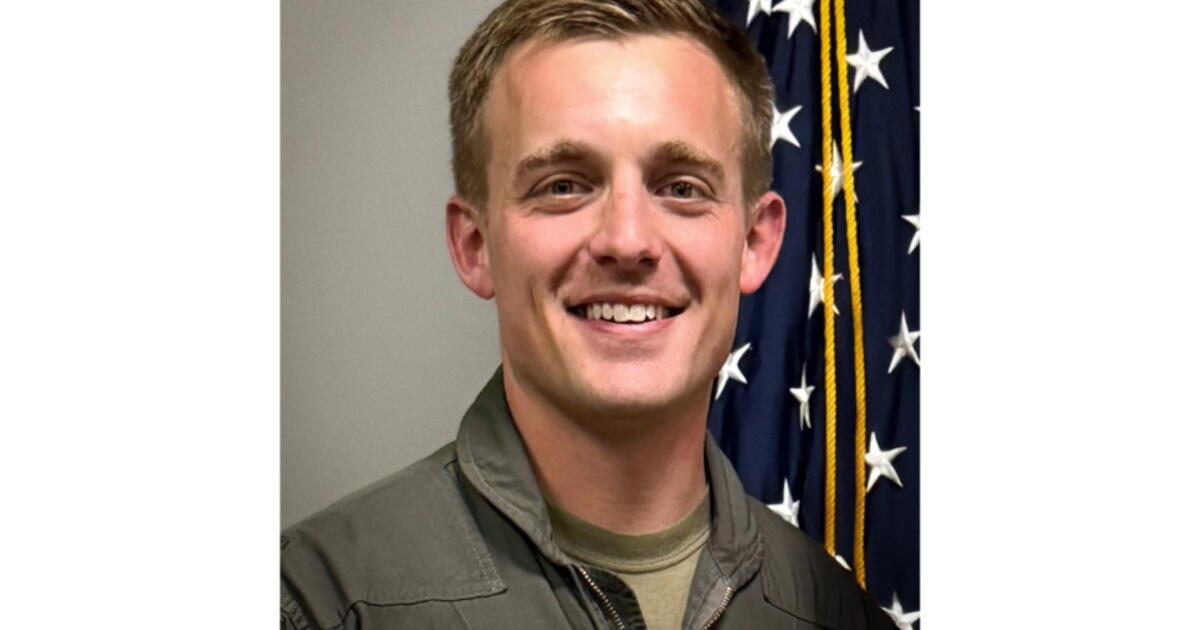
The crash killed three people assigned to the 6th Air Refueling Wing at MacDill Air Force Base in Florida: Maj. John A. “Alex” Klinner, 33, who served in Birmingham, Ala.; Capt. Ariana Linse Savino, 31, of Covington, Wash.; and Tech. Sgt. Ashley Pruitt, 34, of Bardstown, Ky.

Klinner, who left behind a wife, a 2-year-old son and 7-month-old twins, was known for his steady command and goofy nature, as well as a willingness to help others. Pruitt’s husband described her as a “radiant” woman who lit up the room. Savino was a friend, mentee and “source of positive energy” who was proud of her Puerto Rican heritage and inspired young Latinas, said Nisperos, who is serving as spokesman for her family.

“She had had this warmth that made you feel seen, a strength that showed up in everything she touched, and a spark — that spice — that made her unforgettable,” Nisperos said. “If you knew her, even for a moment, you knew you were in the presence of someone who was going to change the world.”

The three others were assigned to the 121st Air Refueling Wing at Rickenbacker Air National Guard Base in Columbus, Ohio: Capt. Seth Koval, 38, a resident of Stoutsville, Ohio, who was from Mooresville, Ind.; Capt. Curtis Angst, 30, who lived in Columbus; and Master Sgt. Tyler Simmons, 28, of Columbus.

Koval grew up dreaming of becoming a pilot, according to his wife, who described him as a loving, generous “fixer of all things.” Angst’s family said his life was defined by service, generosity and “a genuine love for people.” Simmons loved confiding in his 85-year-old grandmother and working out with her, Sen. Jon Husted said Tuesday, when he and Sen. Bernie Moreno honored the Ohio airmen on the Senate floor.

“To the mom and dad of these three young soldiers, I can’t even process what you’re going through. I can’t even imagine the emotions that you’re feeling,” Moreno said. “Just know that America is grateful beyond words for the sacrifice that your heroic young sons made.”

Superville writes for the Associated Press. AP writers Holly Ramer in Concord, N.H., and Hallie Golden in Seattle contributed to this report.

Source link

Israel says it killed Iranian intelligence chief Khatib | US-Israel war on Iran

NewsFeed

Israel’s Defence Minister Israel Katz said an overnight strike killed Iran’s Intelligence Minister Esmail Khatib. There has been no confirmation from Iran but Katz says Israel’s military is authorised to target senior Iranian officials without additional approval from the government.

Source link

In blow to Tehran, Iran’s top security official killed in Israeli airstrike

Iran’s top security official, Ali Larijani, has been killed in an Israeli airstrike, a move that represents a palpable hit to an Iranian leadership that has shown little interest in compromise after almost three weeks of war with the U.S. and Israel.

Killing Larijani, who led Iran as de facto wartime leader after Supreme Leader Ayatollah Ali Khamenei died on the first day of the war, eliminates a veteran official seen as the consummate insider despite not having the religious credentials for the Islamic Republic’s highest offices. Israel, in an announcement Tuesday, said the attack occurred the night before.

For all his bellicose comments since the war began, Larijani was also seen as a pragmatist, and observers say his death might strengthen the resolve of what’s left of Iran’s leadership, rather than induce a willingness to compromise.

His post as secretary of Iran’s Supreme National Security Council gave Larijani control of the country’s top security body, where he tasked government forces with subduing anti-regime protests in January. Thousands of Iranians were killed.

Also killed in the Israeli strikes was Gen. Gholamreza Soleimani, the head of the Basij, the volunteer auxiliary wing of the Islamic Revolutionary Guard Corps and an integral part of the state’s ability to keep order.

“Larijani and the Basij commander were eliminated overnight and joined the head of the annihilation program, Khamenei, and all the eliminated members of the axis of evil, in the depths of hell,” Israeli Defense Minister Israel Katz said in a statement Tuesday.

Israeli officials have employed “axis of evil” to refer to Iran and its allies, including the militant groups Hamas and Hezbollah.

Larijani had served as parliamentary speaker for 12 years and became the point man on nuclear negotiations as well as relations with allies such as China and Russia. He often acted as the government’s representative in the media.

Iranian officials confirmed that Larijani and Soleimani had been killed. They said Larijani’s son, the head of his office and several guards were also killed in the strikes.

Soon after Katz’s announcement, Iranian authorities released an undated note said to have been written by Larijani in which he honored Iranian sailors killed in a U.S. attack. The image of the note was also posted to Larijani’s account on X.

There was no explanation why the note was released and whether it is signified Larijani was still alive.

“We are undermining this regime in the hope of giving the Iranian people an opportunity to remove it,” said Israeli Prime Minister Benjamin Netanyahu.

Netanyahu and President Trump have repeatedly called on ordinary Iranians to topple the government.

Though assassinating Larijani counts as yet another intelligence coup for Israel and the U.S., both may come to regret the loss of a figure who, despite his defiant rhetoric since the war began Feb. 28, was considered by some analysts as a realist.

His killing adds to the evisceration of Iran’s upper echelons, raising the question of who is left to negotiate an end to the war, or have enough influence to make Iran’s deep state accept compromise.

Some observers say that’s the point.

“Why did the Israelis take out Larijani in this moment? Because Netanyahu is focused on blocking Trump’s pathways for a ceasefire and follow-up negotiations with Iran,” said Ellie Geranmayeh, a senior policy fellow at the European Council for Foreign Relations, adding that “Larijani would have been the man to get that job done.”

Khamenei’s assassination, Geranmayeh said, had already empowered more hard-line figures in government, and Larijani’s death “could act as an accelerator to that path.”

“Israel seems to be turning its attention to targeting those that could push for a political solution to the current crisis,” she said.

Larijani’s death would add to the murkiness surrounding Iran’s leadership. After Khamenei was killed and it remained unclear who would replace him, Trump added to the uncertainty by saying that the country’s new leader would need his approval, but also that the U.S. had killed many of the leaders whom he would have deemed acceptable.

After Khamenei’s son, Mojtaba Khamenei, was named the new supreme leader, Trump expressed his displeasure but repeatedly dodged questions about what the transition under the younger Khamenei would mean for the U.S. war effort.

After the elder Khamenei’s death, Larijani emerged as a high-profile voice for Iran, saying that Trump must “pay the price” for the U.S. strikes on the country.

In response, Trump acted as if he didn’t know who Larijani was.

“I have no idea what he’s talking about, who he is. I couldn’t care less,” Trump told CBS News.

Benjamin Radd, a political scientist and senior fellow at the UCLA Burkle Center for International Relations, said Larijani was perceived to be “the last of the competent bunch” within the Iranian leadership — an intellectual who had a complex understanding of the geopolitical reality on the ground, who had negotiated with the U.S. in the past, and who was “adept at maneuvering” all the various parts of the Iranian power structure.

Radd said Larijani “lost that mantle of being the pragmatist” when he strongly backed the deadly January crackdown on protesters, for which he was “more responsible than anyone else.”

He “absolutely was responsible for a tremendous amount of carnage and death and destruction,” Radd said.

And yet, with his death, “all of that diplomatic, institutional experience” that he did have “is gone” from the Iranian leadership, Radd said.

Those left in power, he said, are “generally not the sharpest people, they’re not the people who understand the subtleties of diplomacy, of what negotiating with the U.S. is like.”

Bulos reported from Beirut and Rector from Colorado.

Source link

US confirms 157 killed in maritime strikes experts call ‘extrajudicial’ | Military News

Defence official tells Congress that 47 alleged drug-trafficking vessels have been struck since campaign began.

The United States military has confirmed that at least 157 people have been killed in lethal strikes against alleged drug-trafficking boats off Latin America, described as a campaign of extrajudicial killings by legal experts.

Senior defence official Joseph Humire said that 47 “narco-trafficking vessels” have been struck in the Caribbean and Eastern Pacific since the campaign began in September, in a written statement to members of the US Congress.

Recommended Stories

list of 3 itemsend of list

Asked by lawmakers on Tuesday whether the quantity of drugs entering the US has gone down, Humire stated that the movement of drug-trafficking vessels had decreased by 20 percent in the Caribbean.

“We’ve measured the decrease in the movement of the vessels,” said Humire.

“But that’s a no in terms of the drugs actually getting into the US,” Representative Adam Smith responded.

Experts have expressed scepticism that the strikes are having any significant impact on the drug trade, and legal scholars have said that the campaign is a clear violation of international law and is blurring the distinction between armed conflict and criminal activity. Under international law, military force is permitted for the former, but not the latter.

The Inter-American Commission on Human Rights (IACHR) is holding hearings on the strikes, and advocates hope that the hearings could open the door to possible legal accountability for those responsible.

The Pentagon has shared videos on social media showing strikes on the vessels, but has provided few details about those killed or evidence of their status as drug vessels.

The administration of US President Donald Trump has embraced a militarised approach to combatting drug trafficking that has allowed the US to expand its military footprint across the region.

The US has stepped up collaboration with friendly governments such as Ecuador and threatened military strikes against countries like Mexico and Colombia if they do not do more to accommodate US demands.

Source link

Israel says overnight strike killed Basij commander Gholamreza Soleimani

March 17 (UPI) — Israel said Tuesday it killed Basij paramilitary force commander Gholamreza Soleimani in an overnight airstrike in Tehran.

Specifics on the strike were scant, but The Times of Israel reported the Israel Defense Forces targeted Soleimani at a camp he had recently established in Tehran after the paramilitary’s headquarters were destroyed.

Established in 1980, the Basij is a volunteer paramilitary reserve force under Iran’s influential Islamic Revolutionary Guard Corps, according to the U.S. Defense Intelligence Agency. The force — which the website for Iran’s supreme leader says consists of millions of members — was sanctioned by the United States for human rights abuses in 2011 and designated as a Specially Designated Global Terrorist in 2018.

Soleimani was appointed in 2019 to lead the Basij, which has been accused of helping suppress protests inside Iran through violence, mass arrests and force against demonstrators.

“The elimination of Soleimani adds to that of dozens of senior commanders from the armed forces of the Iranian regime who have been eliminated during the operation, and constitutes an additional significant blow to the regime’s security command-and-control structures,” the IDF said in a statement on Telegram.

“The IDF will continue to operate with determination against commanders of the Iranian terror regime.”

Iran has yet to respond to the report as of Tuesday morning.

The IDF said it conducted a wave of strikes Monday targeting military infrastructure in the Iranian cities of Tehran, Shiraz and Tabriz.

Its warplanes dropped dozens of munitions on security force command centers in Tehran, including those belonging to the Basij, the IDF said in an earlier Tuesday statement.

“The completed strikes are part of an ongoing effort focused on deepening the damage to the Iranian terror regime’s core systems and weakening its capacity to threaten the State of Israel,” it said.

Later Tuesday, Prime Minister Benjamin Netanyahu‘s office published a photo on social media showing him on the phone, accompanied by a caption saying he was “ordering the elimination of senior regime officials.”


Source link

Pentagon identifies six service members killed in refueling mission

March 15 (UPI) — The Department of Defense has identified the six U.S. service members killed during a refueling mission as part of the Iran war as three members of an Air Force refueling wing and three from the Ohio Air National Guard.

The six crew members were aboard a Boeing KC-135 Stratotanker — a refueling aircraft — when it crashed Thursday in western Iraq, which was considered friendly airspace.

Among the dead were four airmen assigned to the 6th Refueling Wing at MacDill Air Force Base in Tampa, Fla.: Maj. John A. Klinner, 33, of Auburn, Ga.; Capt. Ariana G. Sabino, 31, of Covington, Wash.; and Tech Sgt. Ashley B. Pruitt, 34, of Bardstown, Ky. The three were part of the 99th Air Refueling Squadron based out of Sumpter Smith Joint National Guard Base in Birmingham, Ala.

Shortly after their identities were made public, Alabama Gov. Kay Ivey offered her condolences on X.

“Three of the service members who lost their lives in duty to our nation were stationed at the 117th in Birmingham,” she posted. “They were not only outstanding Airmen. They were our neighbors — our fellow Alabamians. May their service and that of their families never be forgot.

Three others were assigned to the 121st Refueling Wing at Rickenbacker Air National Guard Base in Columbus, Ohio: Capt. Seth R. Kobal, 38, of Mooresville, Ind.; Capt. Curtis J. Angst, 30, of Wilmington, Ohio; and Tech Sgt. Tyler H. Simmons, 28, of Columbus, Ohio.

Ohio Gov. Mike DeWine and his wife, Fran DeWine, were mourning the loss of the three airmen who operated out of Ohio and were trained to do work that was “critical in long-distance missions in defense of our nation.”

“Every mission they undertook involved risks that they were willing to take and the courage to put the lives of others above their own,” he wrote in a post on X.

“They served with honor.”

The Pentagon said the crash that led to the service members’ deaths was under investigation. A second Boeing Stratotanker involved in the incident declared an emergency before landing in Tel Aviv with no one on board injured.

Thirteen U.S. service members have died in connection to the Iran war, which began in late February.

An Iranian flag stands amid the destruction in Enghelab Square following the attacks carried out by the United States and Israel on Tehran, Iran, on March 4, 2026. Photo by Nahal Farzaneh/UPI | License Photo

Source link

Six killed in attacks on Ukraine as EU extends sanctions against Russians | Russia-Ukraine war News

EU maintains pressure after slamming US for lifting sanctions on Russian oil exports as Middle East war bites.

The European Union has voted to renew sanctions against individuals and entities supporting Russia’s war on Ukraine, as Russian forces continued to target Ukrainian energy infrastructure, killing six people in the Zaporizhia and Kyiv regions.

The EU Council announced that the bloc’s 27 member states had agreed on Saturday to extend sanctions targeting some 2,600 individuals and entities with measures like travel restrictions and asset freezes until September 15, breaking an earlier deadlock caused by Hungary and Slovakia’s opposition to the move.

Recommended Stories

list of 3 itemsend of list

The extension of sanctions came one day after EU Council chief Antonio Costa slammed the United States for lifting sanctions on Russian oil exports, saying on X that weakening restrictions increased “Russian resources to wage the war of aggression against Ukraine”, with a knock-on impact on European security.

The measure was announced as Russia hammered Ukraine with missiles and drones on Saturday, killing five people and injuring 15 in the Kyiv region surrounding the capital, according to regional military administrator Mykola Kalashnyk.

The city of Zaporizhzhia was also hit by Russian-guided bombs, killing one person and injuring three, said the governor of the southeastern region, Ivan Fedorov. Photos posted online showed parts of buildings reduced to rubble.

Ukraine’s President Volodymyr Zelenskyy said Russia’s main target was energy infrastructure outside the capital Kyiv, but that the Sumy, Kharkiv, Dnipro and Mykolaiv regions were also targeted in an attack that included about 430 drones and 68 missiles, most of which were downed by air defences.

Russia’s winter attacks on Ukraine have left swaths of major cities without power or heating, as Moscow’s troops continue their offensive amid demands Kyiv cede more territory in the east. Ukraine’s Energy Ministry said on Saturday that consumers in six regions were without electricity.

Ukraine’s forces have targeted Russian strategic infrastructure such as oil refineries, depots and terminals in long-range strikes. On Saturday, Ukraine’s military said that it had struck the Afipsky oil refinery and Port Kavkaz in Russia’s southern Krasnodar region.

Putin ‘exploiting’ Middle East distraction

Saturday’s fighting came as the Iran conflict has distracted international attention from a US-backed peace push in the four-year war, which Kyiv says Moscow has no interest in ending.

Belgium’s Prime Minister Bart De Wever called on Saturday for the EU to be mandated by its member states to negotiate with Russia as it became apparent amid spiking oil prices caused by the Iran war that the US was easing pressure on Russian President Vladimir Putin.

“Since we are not capable of threatening Putin by sending weapons to Ukraine, and we cannot choke him economically without the support of the United States, there is only one method left: making a deal,” he told the Belgian newspaper L’Echo.

EU chief diplomat Kaja Kallas has said in the past that the bloc must first reach an agreement on what is expected from Russia before directly approaching Putin, formulating its own “maximalist demands”.

However, the bloc’s inability to reach a common position was highlighted during the EU Council’s recent deliberations on extending sanctions.

Hungary and Slovakia, which have been sparring with Ukraine over blocked Russian oil flows through the Druzhba pipeline, had earlier opposed the extension of the restrictions, reportedly calling for some Russian oligarchs to be removed from the list of offenders.

Reacting earlier this week to soaring oil prices caused by the war in Iran, Hungarian Prime Minister Viktor Orban urged the EU to suspend sanctions on Russian energy.

Posting on X, Zelenskyy said, “Russia will try to exploit the war in the Middle East to cause even greater destruction here in Europe, in Ukraine.”

Source link