WASHINGTON — President Trump said Friday that a “swift and lethal kinetic” U.S. strike has killed Hector Rusthenford Guerrero Flores, whom he called “the infamous leader” of the Tren de Aragua gang.
Tren de Aragua has been labeled by the United States as a terrorist organization. Guerrero Flores was charged in a New York federal court with racketeering conspiracy and other crimes, including lending support to terrorists in crimes that stretched more than a decade, authorities announced in December.
Defense Secretary Pete Hegseth posted on X that the strike occurred earlier in the week on a Tren de Aragua compound in Venezuela.
U.S. Atty. Jay Clayton alleged at the time that the gang is responsible for countless acts of violence, extortion and drug trafficking in North America, South America and Europe. Trump nominated Clayton on Thursday to be director of national intelligence.
The U.S. State Department had offered rewards of up to $5 million for information leading to Guerrero Flores’ arrest.
In a post on his social media site, Trump wrote, “Tren de Aragua terrorists no longer have safe haven in Venezuela or anywhere else and, under my leadership, we will find these vicious murderers and drug lords anytime, anyplace, and send them to the depths of hell where they belong.” Trump’s post referred to Guerrero Flores by his alias, Niño Guerrero.
Hegseth said, “The operation underscores the shared U.S. and Venezuelan commitment to take the fight to narco-terrorists and deny them any safe haven in our hemisphere.”
Venezuela’s ministry of communications did not immediately respond to a request for comment on the operation.
Trump has taken a series of extraordinary actions against the gang, including a series of strikes on small boats his administration has accused of smuggling drugs to the U.S.. At least 207 people have been killed in boat strikes by the U.S. military in the eastern Pacific Ocean and Caribbean Sea since the Trump administration began the campaign in early September.
Independent investigations, by the Associated Press and others, have raised questions about the boat passengers’ alleged connection to drug trafficking. And, in any case, many legal experts say the boat attacks amount to extrajudicial killings in violation of international law.
Trump and administration officials have consistently blamed Tren de Aragua for being at the root of the violence and illicit drug dealing that plague some U.S. cities. The president spent months repeating the claim — contradicted by a declassified U.S. intelligence assessment — that Tren de Aragua had operated under Venezuelan President Nicolás Maduro’s control. The U.S. invaded Venezuela and seized Maduro in January to face U.S. drug charges.
Tren de Aragua originated more than a decade ago at an infamously lawless prison in Venezuela’s central state of Aragua. The gang has expanded in recent years as millions of Venezuelans migrated to other Latin American countries or the U.S. in search of better living conditions.
Guerrero Flores returned to the prison in Aragua on murder and other convictions in 2013, when Venezuela’s crisis began and corruption, mismanagement and a drop in crude prices wrecked the oil-dependent economy. Guerrero Flores and a few other inmates saw a profitable opportunity as the government neglected prisons.
They assumed control and administration of the prison, establishing a system that controlled the entire inmate population through force and extortion. Over time, they transformed the lockup into a sort of city that included a zoo, baseball field, casino and restaurants. Guerrero Flores had his own lavish suite.
The size of the gang is unclear. Countries with large populations of Venezuelan migrants, including Peru and Colombia, have accused the group of being behind a spree of violence in the region. Still, unlike other criminal organizations from Colombia, Brazil and Central America, Tren de Aragua has no large-scale involvement in smuggling cocaine across international borders, according to InSight Crime, a think tank that tracks crime across Latin America.
In Venezuela, gang leaders have long been known to participate in various illegal activities, including illicit gold mining.
Weissert writes for the Associated Press. AP writer Regina Garcia Cano in Mexico City contributed to this report.
Friday marks one year since a deadly Air India Boeing crash, which killed 260 people in a densely populated suburb of the city of Ahmedabad in India’s western state of Gujarat.
Families of those killed gathered at the site on Friday to mark the anniversary of the disaster, but they are still waiting for answers about what caused the plane to come down shortly after takeoff from the nearby airport.
Indian authorities are expected to issue an interim report in the coming days, another source of frustration for the victims’ relatives, who had been hoping for a definitive finding and a final disclosure. Media reports, citing unnamed sources, suggest that Indian investigators will delay issuing a final report into the crash, citing the need to complete an analysis of the plane’s engines.
Under international aviation rules, a final report is due “if possible” within a year of an accident. If an investigation goes on for longer, an interim statement should be issued on each anniversary.
What happened to the Air India plane?
Flight AI171, an Air India Boeing 787 Dreamliner plane which had taken off only moments before, en route to London Gatwick, crashed into a medical college hostel in the residential area of Meghani Nagar, close to the international airport on the edge of India’s western city of Ahmedabad.
According to flight tracking website Flightradar24, the plane’s final signal was received seconds after takeoff at 1:38pm local time (08:08 GMT). It had reached an altitude of 625 feet (190 metres) before crashing back to the ground outside the airport.
The plane had issued a mayday alert to air traffic control just before all communications from the aircraft ceased.
(Al Jazeera)
How many people died in the crash?
Of the 242 people on board, all except one passenger were killed. These included 169 Indian nationals and 52 British nationals. A total of 260 people died, as 19 people on the ground close to the crash site were also killed. Another 67 people near the site were injured.
The sole survivor on board the plane, Vishwash Kumar Ramesh, is a British national whose brother was killed in the crash.
On Thursday, Ramesh’s representative, Sanjiv Patel, told the UK’s Guardian newspaper that Air India had paid £21,500 ($28,800) in compensation to Ramesh to help support his wife and their five-year-old son. It is not clear whether similar payments have been made to other families.
Relatives of the victims are meeting on Friday at a conference organised by lawyers, along with aviation and air safety experts, in Ahmedabad. They are due to hold a candlelight vigil after sunset.
Officials inspect the site of the crash near Sardar Vallabhbhai Patel International Airport in Ahmedabad, Gujarat, western India, on June 13, 2025. Air India flight AI171, bound for London, carrying 242 passengers and crew members, crashed minutes after takeoff in the Meghani Nagar area of Ahmedabad [Rajat Gupta/EPA]
What have preliminary reports shown?
This was the world’s first airliner crash involving a 787 Dreamliner, a Boeing model that has been in service since 2011.
In accordance with international aviation law, India’s Aircraft Accident Investigation Bureau (AAIB) published a preliminary report one month after the disaster.
That 15-page document said the fuel supply to the jet’s engines had been cut off moments before the crash, raising questions about possible pilot error.
It also published a conversation between the captain and his copilot about the fuel supply being cut off – two brief sentences that prompted theories of pilot suicide.
The report was met with strong criticism.
It did not state why the fuel switches were turned off – whether it was the fault of a pilot, or a result of a malfunction.
The preliminary report did not make any safety recommendations to Boeing or engine maker GE Aerospace, suggesting no technical issues had been discovered.
The crash also hit Air India at a sensitive stage of its post-privatisation turnaround, which has been slowed by supply-chain snags, an airspace ban imposed by Pakistan on Indian carriers and, more recently, the US-Israeli war on Iran.
What’s the latest on the investigation?
Under international rules, a final report is due “if possible” within a year of an accident, but sometimes investigations take longer. If it cannot be completed, therefore, an interim statement should be issued on each anniversary. With investigations continuing, the AAIB is expected to issue only an interim report at this stage.
The Federation of Indian Pilots union has been pushing for investigators to seek more technical data about the plane from Boeing and Air India to allow for a “rebuttal of the pilot suicide theory being explored by the AAIB”.
“It [an interim report only] will cause more speculation and more misunderstanding,” Charanvir Randhawa, the union’s president, told reporters at a packed news conference in Ahmedabad ahead of the anniversary of the crash.
“We have requested the Indian government and India’s Aircraft Accident Investigation Bureau (AAIB) not to come out with any interim report.”
A cockpit recording of dialogue between the two pilots of the Air India 787 before it crashed supported the view that the captain cut the flow of fuel to its engines, according to US officials’ early assessment reported by Reuters last year.
But the AAIB said at the time it was “too early to reach any definite conclusions”.
Investigators conducted engine testing in April and visited France last month as part of their analysis of the engine management unit, a source told Reuters on the condition of anonymity, as the information is not public.
On Thursday, Bloomberg also reported that the final report into the crash can be expected within three months, once studies of the engines, which had been sent to the US for examination, are concluded.
The captain’s father has asked India’s top court to order an independent investigation that examines possible causes other than deliberate pilot action – a cause that has been suspected in some other fatal crashes and was confirmed in the case of Germanwings Flight 9525, which crashed into the French Alps in 2015, killing all 150 people on board.
Three people have been killed in the border region between Russia and Ukraine, according to officials, as the two sides launched attacks on each other in the latest exchange of fire.
In Russia, two civilians were killed and two wounded in the region of Bryansk after Kyiv struck the settlement of Suzemka with artillery, Acting Governor Egor Kovalchuk said in a post on Telegram on Friday.
Recommended Stories
list of 4 itemsend of list
A drone also hit an apartment building in Russia’s central region of Tatarstan, injuring three people, while industrial facilities were hit, regional head Rustam Minnikhanov said on the Telegram messaging app.
Production work was not suspended, however, he added, but did not identify any plants. The region is home to key oil processing and petrochemical facilities, among others.
Russia’s city of Togliatti, home to the country’s biggest carmaker Avtovaz, also came under a drone attack overnight, Samara region Governor Vyacheslav Fedorishchev said on Telegram.
“Attention! Drone attack regime for Togliatti,” he wrote. Togliatti is a city on the Volga River some 800 km (500 miles) southeast of Moscow.
These strikes are what Ukraine refers to as a “logistics lockdown”, said Al Jazeera’s Audrey MacAlpine, reported from Kyiv. She explained that they are mid-range strikes anywhere over 30 kilometres (17 miles) from the front line, using long-range drones and sometimes heavy weaponry to target things like oil refineries, bridges, logistics, and roads as a means of halting Russia’s front-line operations.
At the same time, she said, Ukraine also launches what it calls “long-range sanctions” against Russian targets – a “tongue-in-cheek term … that we’ve seen escalating over the past several months, where Ukraine is targeting Russia’s oil refineries and oil industry,” MacAlpine explained.
In Ukraine, a drone attack in the border region of Sumy caused casualties.
A 44-year-old woman working as a rail station operator died on her way to a shelter during the strike, according to the head of Ukrainian Railways, Oleksandr Pertsovkyi.
Another woman, a station attendant, was wounded in the attack, Pertsovkyi added.
Three people were wounded in separate attacks on Ukraine’s southern Mykolaiv region.
“We’ve seen continual threats by Russia before massive attacks, and we have certainly seen the results of those actions here in cities like Kyiv, where ballistics continue to be the Achilles heel for Ukraine”, MacAlpine said.
Russian fuel shortages after Ukrainian attacks
In recent months, Kyiv has carried out an increasing number of attacks on Russia and Russian-occupied territories.
On Thursday, fuel stations on the Russian-held Crimean Peninsula ran out of petrol after a Ukrainian campaign against the peninsula’s supply lines escalated.
A witness in Sevastopol, the peninsula’s largest city, told the Reuters news agency there was no fuel at most local petrol stations, with supplies struggling to keep up with a rationing regime imposed in recent weeks.
Another witness, in the resort town of Yevpatoriya, said there was a long queue outside the only petrol station open there.
Ukraine has been intensifying drone attacks on supply lines to the peninsula, which Russia seized from Kyiv in 2014. Local authorities have imposed fuel rationing regimes, with some foodstuffs also running short.
Besides Russian-held Crimea, only two regions in Siberia have officially confirmed the shortages.
Most other regions have said the situation is under control, and that some disruptions were caused by panic buying. Moscow has denied there were any problems with fuel supplies.
A US strike on an oil tanker accused of transporting Iranian oil has killed three Indian sailors. It was the second attack in three days on a ship carrying crew members from India.
Police crack down down on supporters of the Joint Awami Action Committee, which plans to hold a rally Tuesday.
Published On 8 Jun 20268 Jun 2026
At least 11 people have been killed as police clashed with supporters of an outlawed group in Pakistan-administered Kashmir, officials said on Monday, a day before a planned protest over political rights and legislative representation.
Dozens of others, including police officers and civilians, were wounded in the violence that erupted Sunday after the Supreme Court of Pakistan-administered Kashmir ruled that 12 legislative seats reserved for Kashmiri refugees living in Pakistan are constitutionally protected and cannot be abolished without a constitutional amendment.
Recommended Stories
list of 3 itemsend of list
The landmark ruling came before a rally planned for Tuesday by the outlawed Joint Awami Action Committee, or JAAC, which has long demanded greater political rights for people in the region and the abolition of the refugee seats, on the grounds that the refugees have disproportionate influence.
The group has organised large protests in recent years, a number of which have turned violent.
“Four police officers and a passer-by died after miscreants shot at them,” Sardar Waheed Khan, commissioner of the Poonch sector in the region, told the Reuters news agency. “As the result of the law enforcers’ response, six protesters were killed,” he said.
Police Chief Liaqat Malik said 23 security officials and 50 protesters were among the injured in Sunday’s incident, with 30 offenders arrested in the Himalayan region that is a flashpoint with neighbouring India.
According to the regional police, armed supporters of the JAAC opened fire on security forces in Rawalakot, a city in Pakistan-administered Kashmir, and later surrounded the Combined Military Hospital, disrupting medical services.
Authorities said security forces eventually dispersed the crowd and restored order.
Police accused protesters of setting fires and damaging government and private property.
“The state has begun a massacre of our people in Rawalakot,” Shaukat Nawaz Mir, a JAAC leader, said in a video message on X, referring to the district where the incident happened. He pledged that the group would stay united to take part in the June 9 rally.
On Friday, the regional government designated the JAAC as a proscribed group under an anti-terror law, and advised domestic and foreign tourists to leave the region before June 9.
Mass demonstrations in the last two years by the JAAC against the rising costs of flour and electricity have turned deadly after violent crackdowns on protesters by security forces.
Khan, the police commissioner of the Poonch sector, said, “The JAAC leadership is misleading the masses by terming it a massacre. The state’s action was meant to restore law and order.”
When security forces tried to disperse the protesters, activists used automatic rifles, petrol bombs, and other weapons to target them, he said.
Israeli police said they killed two suspects allegedly involved in the shooting.
Published On 7 Jun 20267 Jun 2026
At least one man has been killed and five wounded in central Israel, Israeli medics have said, in what police called a suspected “terror attack”.
Israeli rescue service Magen David Adom said a 35-year-old man died of gunshot wounds in the attack on Sunday, while the other casualties have been transferred to two hospitals. Two of those injured are in serious condition, it added.
Recommended Stories
list of 3 itemsend of list
Israeli police said they killed a suspect allegedly involved in the shooting following a manhunt. The suspected gunman was a Palestinian with Israeli citizenship from the nearby Israeli city Tayibe, they said, adding that police forces, border guard soldiers and special units were conducting searches for additional suspects. The weapon used by the attacker has been located, the police said.
“The public is asked to be vigilant, obey the instructions of the police and report any suspicious incident or person to the police,” it added.
In an earlier statement, the police said Israeli forces intervened after a report of shooting towards passersby at a gas station at the entrance to the Kochav Yair area, close to the occupied West Bank city of Qalqilya. The Israeli Broadcasting Authority said the attacker began a shooting spree at Kochav Yair and continued at the entrance to the nearby towns of Tzur Yitzhak and Tzur Natan.
A source told the Army Radio that the Israeli internal security agency and police have launched a raid campaign in Tayibe. A security cordoning has also been imposed on several neighbouring Arab villages.
Hamas commended the attack, calling it a “heroic” operation, but did not claim responsibility.
Israeli Prime Minister Benjamin Netanyahu’s office said it was holding a situational assessment on the shooting attack.
Lior Zilberberg, from the Israeli ambulance service Magen David Adom, has described the response after the shooting began in central Israel.
“We were in a large training exercise in a nearby community when we received reports … about gunshot casualties at several scenes close to us. We immediately stopped the exercise and set out with intensive care units and ambulances to the gas station in Kochav Yair, Tzur Yitzhak, and Tzur Natan,” said Zilberberg in a statement.
“During the drive, civilians signalled me to stop and called me to provide medical treatment to an unconscious casualty inside a vehicle. He was pulseless and not breathing, with gunshot wounds to his body, and after medical assessments we were forced to pronounce him dead.
“Near the vehicle, another injured person was lying conscious, suffering gunshot wounds to the upper body. After initial medical treatment at the scene, he was evacuated.”
Funerals will be held for Lebanese officers killed in an Israeli attack in southern Lebanon, as Beirut’s army chief headed to Pakistan on a surprise visit amid ongoing mediation efforts in the wider United States-Israel war on Iran.
The Lebanese soldiers will be laid to rest on Sunday, a day after the brigadier general, captain and soldier were killed in an Israeli strike on a military vehicle on the Khardali-Nabatieh road, in an incident the Israeli army said it was investigating.
Recommended Stories
list of 4 itemsend of list
A ceasefire agreed on April 17 was meant to halt the fighting between Israel and Hezbollah, but Israel has continued to carry out near-daily attacks, prompting retaliatory ones from the Lebanese group. The violence has taken a disproportionate toll on civilians in Lebanon, where more than 3,500 people have been killed since hostilities resumed on March 2.
A further conditional ceasefire was announced by Lebanese and Israeli envoys last week in Washington, but was rejected by Hezbollah as it did not include the group or provide for Israel’s withdrawal from southern Lebanon.
Lebanese army chief Rodolphe Haykal left on Saturday for Pakistan, which has emerged as a central mediator between the US and Iran.
The visit is notable given the insistence by Washington – and by Lebanese leaders, including the president – that ceasefire talks for Lebanon remain separate from the US-Iran negotiations mediated by Pakistan.
Fighting continues in southern Lebanon
Meanwhile, Israeli attacks hit several towns across southern Lebanon and the western Bekaa overnight, while Hezbollah said it launched rockets, artillery fire, and drone attacks against Israeli forces, including near the Beaufort Castle in Yohmor al-Shaqif.
Lebanon’s Ministry of Public Health said on Sunday that an Israeli raid on the town of Saksakiyeh a day earlier killed at least two people. The ministry added that 22 people were wounded in the attack, including three children and a woman.
Two others were wounded following an Israeli drone attack on the town of Shahabiyeh, Lebanon’s National News Agency (NNA) reported.
Israeli air attacks also hit the town of Qalawiya at dawn, and the towns of al-Qatrani, Byblos and Rihan in the Jezzine district overnight. The town of Deir Kifa in the Tyre district was also bombed, while Barashit and Chaqra in the same district were subjected to intermittent artillery shelling overnight.
NNA also reported artillery shelling in the towns of al-Mansouri and Bayt al-Sayyad in the Tyre district.
Israeli warplanes launched an attack on the town of Srifa. Local media also reported that Israeli fighter jets attacked Dweir, near Nabatieh, north of the Litani River.
Paramedics, meanwhile, continue to look for survivors under the rubble following Israeli attacks.
“The pattern is part of what is being called the Gazafication of Lebanon, or Israel using actions normalised by the Gaza genocide,” said Al Jazeera’s Nour Odeh, reporting from Ramallah in the occupied West Bank.
“The targeting of schools in southern Lebanon, just like Gaza. Bombing Lebanese hospitals and clinics, also like Gaza. And the murder of journalists. Then there’s these so-called double-tap attacks against paramedics and rescue workers. Hundreds of Palestinian and Lebanese paramedics have been killed with this unlawful practice.”
Gazafication extends to the ceasefire, too, she added.
“The ‘Yellow Line’, first introduced in Gaza, has now swallowed 60 percent of the territory. In Lebanon, the ‘Yellow Line’ now includes nearly a fifth of the country. Both invisible lines keep expanding,” said Odeh.
No choice but negotiations, says Lebanese lawmaker
Najat Aoun Saliba, an independent member of Lebanon’s parliament, meanwhile, condemned Israel’s killing of the Lebanese soldiers and said President Joseph Aoun has no choice but to enter into negotiations with Israel.
“If we don’t have negotiations, what is the alternative? Is the alternative going to war? The war is not going to give us peace,” she told Al Jazeera.
Saliba said dialogue was the only viable path given the imbalance of power between Israel and Lebanon’s armies.
“The balance of power between the armies is not to be compared. Israel has a very strong army backed up by the United States. The Lebanese Armed Forces have been sidelined by a political will for 30 years, because they wanted to strengthen the presence of Hezbollah,” she said.
The lawmaker added that Hezbollah has not been able to stop Israeli aggression.
“Hezbollah is not able to stop any of these war crimes, and it’s not able to stop any of the invasions that Israel is doing. I think with … all these massacres and destruction, I don’t think we have a choice.”
The killing of Brigadier General Wissam Sabra, Captain Elie Khoury and soldier Hussein Ghozal came at a tense moment amid broader efforts to strike a deal between the US, Iran, Hezbollah, the Lebanese government and Israel.
Lebanese President Joseph Aoun said the attack was “aimed at thwarting all efforts to reach a solution”, while Prime Minister Nawaf Salam described it as “a heinous crime and an attack on Lebanon and all Lebanese people”.
Lebanon was drawn into the Middle East war when Iran-backed Hezbollah attacked Israel on March 2, following joint US-Israeli attacks on Iran.
Tehran has made a ceasefire in Lebanon between Israel and Hezbollah a condition for any peace deal with Washington.
A Palestinian father in Hebron has buried his seven-month-old son after the baby was killed by Israeli gunfire directed at the family’s car. The shooting, which also wounded the child’s parents, is the latest deadly incident amid escalating Israeli violence in the occupied West Bank.
Israeli forces reportedly killed a seven-month-old Palestinian baby, Sam Fahd Abu Haikal, and injured his parents in the Tel Rumeida area near Hebron on Friday evening, according to the Palestinian health ministry. The baby’s grandmother described how the family stopped their car after seeing Israeli military vehicles when shots were fired at them. She recounted that a bullet hit the baby in the face and lodged in his mother’s cheek, while also grazing the father’s finger. The parents were treated for their gunshot wounds.
The Israeli military stated that during operations in Hebron, soldiers fired shots at a vehicle they thought was approaching them quickly. They acknowledged that three Palestinians, later determined to be “uninvolved civilians,” were injured, and the incident is under investigation. Tel Rumeida has a history of violence as Israeli settlers live with military protection among the Palestinian community. Recent EU data indicates over 700,000 settlers reside in East Jerusalem and the West Bank while more than 3 million Palestinians live there.
Palestinian journalist and mother Aya Shamaa wrote about how an Israeli strike killed her children, newborn Ryan and seven-year-old Yaman. Like countless mothers in Gaza, she saw her children as gleams of hope amid a fragile ceasefire. Narrated by Al Jazeera’s Al Anoud Al Aqeedi.
June 3 (UPI) — A 15-hour standoff at a California bank ended with the suspect shot dead and all hostages freed, police said Wednesday.
The man had barricaded himself inside the Chase Bank building on Chester Avenue and 17th Street in Bakersfield at about 1 p.m. PDT Tuesday. Police were sent to the downtown bank for a bomb threat, and when they arrived they found a man was inside the bank with several hostages, though some were able to escape.
Buildings in the area were evacuated, and police responded with SWAT teams, hostage negotiators and a bomb squad.
Twice on Tuesday evening, hostage negotiators convinced the suspect to release a hostage.
But around 4:20 a.m. Wednesday, the situation “concluded following an officer-involved shooting” by FBI personnel, the Bakersfield Police Department said in a press release. It also said the department was not involved in the use of force.
The number of people taken hostage wasn’t immediately clear, but those who remained in the building were unharmed.
“We are aware of the ongoing situation occurring at the building where our branch is located on the ground floor,” a Chase Bank spokesperson told CBS News in a statement. “The branch is currently empty, and we are working with authorities.”
The area around the building was still closed Wednesday morning. Police told the public to avoid the area and allow for extra travel time.
Wreathes are seen amongst the statues at the Korean War Veterans Memorial during Memorial Day weekend in Washington on May 27, 2023. Memorial Day, which honors U.S. military personnel who died while in service, is held on the last Monday of May. Photo by Bonnie Cash/UPI | License Photo
The violence prompted 300 Mozambicans to return home by their own means over the weekend, with more than 500 still in the country now beginning the official repatriation process.
Published On 2 Jun 20262 Jun 2026
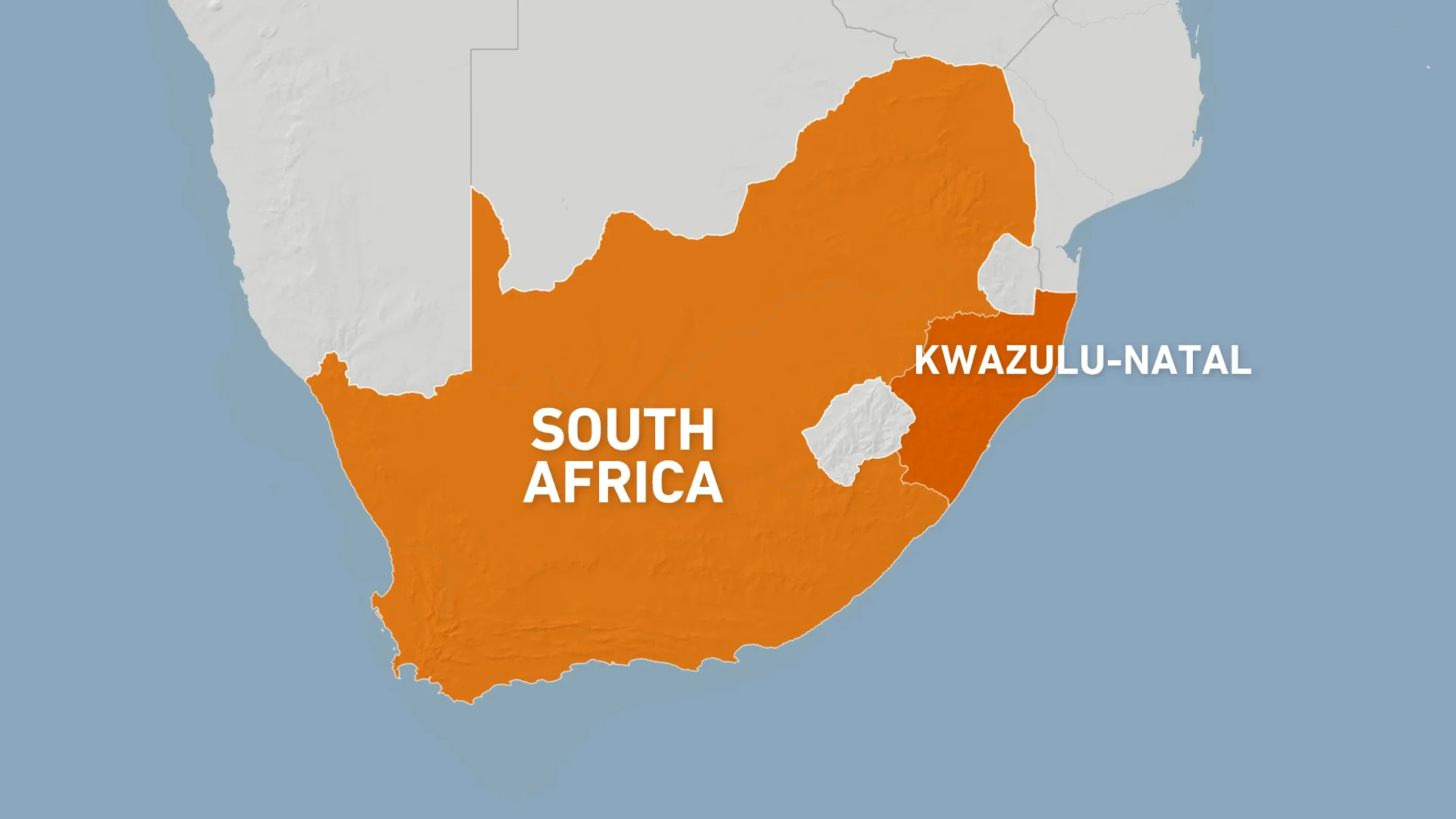
At least five Mozambican nationals have been killed in “xenophobic attacks” in South Africa over the weekend, the Mozambican government said, marking the first deaths officially linked to country-wide protests against undocumented immigration.
About 800 Mozambicans got caught up in violence that broke out in the southern coastal city of Mossel Bay on Friday, the government press office said in a statement received on Tuesday.
Recommended Stories
list of 3 itemsend of list
“Regrettably, seven Mozambican citizens have died, five of them as a direct consequence of the xenophobic attacks and the other two as a result of a road accident, when they were travelling in a private vehicle on their way back to Mozambique,” the statement said.
The violence prompted 300 Mozambicans to return home on Saturday, said the statement.
“The remaining just over 500 have since been sheltered in a safe location in the Western Cape Province, and as of today, 1 June, the process of their repatriation to Mozambique is already underway,” it said.
South African police said on Sunday they were investigating the deaths of two men at an informal settlement in Mossel Bay, a port town about 380km (236 miles) east of Cape Town, where xenophobic attacks had been reported.
They did not say whether the deaths were linked to the protests. It was also not immediately clear what nationalities the two men were.
But the area mayor, Dirk Kotze, voiced “deep concern and dismay at the current xenophobic attacks where people have been murdered, houses burned and families displaced”.
The region has seen anti-migrant protests similar to those reported in the financial capital Johannesburg, Durban and parts of the Eastern Cape province in recent weeks.
South Africa has faced recurring waves of xenophobic violence since 2008, when dozens of migrants were killed and thousands displaced in attacks across the country. Similar flare-ups occurred in 2015 and 2021.
The latest spike in anti-immigrant tensions comes as political parties seek support before local government elections in November.
June 1 (UPI) — At least seven people, including the suspected shooter, are dead Monday following a series of shootings in an Iowa city that authorities said stemmed from a domestic dispute.
The suspect was identified as Ryan Willis McFarland, 52, of Muscatine, located along the eastern Iowa border with Illinois.
Authorities said he shot six people, all believed to be family members, before dying from a self-inflicted gunshot wound that was fired after being confronted by police on the Riverfront Trail near a pedestrian bridge.
“Today, I simply do not have the words [for] this act of evil and what it has done to our community,” Muscatine Police Chief Anthony Kies told reporters at a press briefing.
The identities of the victims were not made public, but Kies said they are all believed to be related to McFarland.
The investigation began at about 12:12 p.m. CDT when police received a report of a shooting at 210 Park Avenue. Officers arrived to find four people who had sustained gunshot wounds and were pronounced dead at the scene.
McFarland was identified as a suspect and was then confronted. EMS personnel rendered aid after McFarland shot himself, but he was soon after pronounced dead at the scene, Kies said.
As the investigation progressed, investigators developed information indicating there may be additional victims, leading to the discovery of two men dead from apparent gunshots — one inside a 1509 Mill Street residence and the other inside a 808 Grandview Avenue business.
“Preliminary findings indicate that the shootings stemmed from a domestic-related dispute,” Muscatine Police Department said in a release.
Kies told reporters that the suspect had a criminal record, but would not elaborate. The weapon used in the shooting was also not mentioned.
The investigation is ongoing, authorities said.
According to The Gun Violence Archive, the Muscatine incident is the second mass shooting involving four or more victims in the United States in the last 24 hours. There have also been more than 163 mass shootings in the country so far this year, the organization’s statistics show.
A fire truck exits the Hanwha Aerospace facility in Daejeon on Monday, following an explosion at the company’s factory that killed five and injured two. Photo by Yonhap
SEOUL, June 1 (UPI) — Five workers were killed and two others injured Monday after an explosion and fire at a Hanwha Aerospace defense facility in the central South Korean city of Daejeon, officials said.
The blast occurred around 10:59 a.m. at Hanwha’s plant in Yuseong District, fire authorities told reporters. Some 100 personnel were dispatched and extinguished the blaze shortly after 1 p.m.
All five fatalities were found inside the work area, while two injured workers were rescued and taken to nearby hospitals, officials said. One suffered burns over his entire body and remained in critical condition, while the other sustained relatively minor burns to the neck.
Authorities said the bodies of the victims were severely damaged, making identification difficult.
Hanwha officials said the explosion occurred during a cleaning operation involving tools and equipment used in the rocket-propellant manufacturing process. The company said the exact cause of the blast remains under investigation.
A company official said the cleaning process had not previously been regarded as particularly hazardous because it involved washing equipment with water. The seven people involved in the accident were site workers rather than researchers, he added.
South Korean President Lee Jae Myung ordered authorities to mobilize all available resources for emergency response efforts and conduct a thorough investigation into the cause of the accident, according to his office.
Prime Minister Kim Min-seok issued similar instructions, calling for all available personnel and equipment to be deployed for firefighting and rescue operations and to prevent additional casualties.
Hanwha Aerospace Chief Executive Officer Son Jae-il apologized to the victims and their families following the deadly incident.
“We failed to protect the lives of those who were working at what should have been a safe workplace,” Son said. “As the company’s chief executive, I feel a heavy responsibility for this accident.”
Son pledged full cooperation with authorities investigating the cause of the explosion and said the company would conduct a comprehensive review of its safety systems to prevent a recurrence.
The company said it had established an emergency response headquarters at the site and was working with fire, police and other authorities on response and recovery efforts.
The Daejeon facility is one of Hanwha Aerospace’s key defense production sites and develops propulsion systems and tactical weapon technologies.
The accident was the latest in a series of deadly incidents at the complex. Explosions at the facility killed five workers in 2018 and three more in 2019.
A military vehicle patrols on the road in Yangon, Myanmar, in February 2022. An accidental explosion in a rebel-held part of the country on Sunday killed 55 people and injured many more, rebel leaders said. File photo by Stringer/EPA-EFE
May 31 (UPI) — Fifty-five people were killed, including six children, in an accidental detonation of mining explosives in a rebel-held area of Myanmar, the armed group said Sunday.
The Palaung Self Liberation Front/Ta’ang National Liberation Army, also known as the PSLF/TNLA, said in a statement that many others were also hurt in the blast, which happened Sunday afternoon local time in northern Shan State.
Rescuers told the Shwe Phee Myay News Agency the entire village of Kaung Tat in Namkham Township had been virtually destroyed and that “dozens” had been injured in the disaster.
Local officials have sent out an urgent call for blood donations as emergency workers tried to free victims trapped in rubble.
The PSLF/TNLA confirmed that many homes in the village were damaged when soft gunpowder stored for mining operations accidentally exploded at around 12:30 p.m.
The fatalities included 25 females and 30 males, they said, adding that the cause of the explosion will be investigated in detail.
Authorities, they said, “will take action in accordance with the law.”
The Ta’ang National Liberation Army is one of the main ethnic rebel groups in Myanmar fighting for independence from the central government, which along with its ally the Palaung Self Liberation Front comprise a front of resistance to the country’s military government.
The government of the Democratic Republic of Congo (DRC) has vowed not to shut down schools in Ituri province, despite the ongoing Ebola outbreak, which has already killed five schoolchildren since the epidemic began. The government announced the decision on Thursday, May 28, during a press briefing by the Minister of Public Health, Roger Kamba.
Roger noted at the press briefing that the government’s focus is on enhancing preventive measures in schools rather than shutting them down.
“We are not going to close schools. Our priority is to implement preventive measures to avoid further hardships for the children,” the Minister insisted. He expressed concern over the five schoolchildren who lost their lives, noting that many of these fatalities were related to self-medication and delays in accessing medical care.
Meanwhile, Congolese health officials had urged families to refrain from treating suspected cases at home and to seek medical help promptly. The officials warned amid heightened health monitoring in Ituri, where local authorities and partners are ramping up awareness campaigns to curb the spread of the virus.
The current outbreak spans three provinces: Ituri, South Kivu, and North Kivu, affecting 13 health zones. As of May 26, Ituri province reported 16 new confirmed cases, bringing the total to 121 confirmed cases and 17 deaths. “We know the outbreak in the DR Congo is more extensive, with over 900 suspected cases and 220 suspected deaths,” stated WHO Director General Tedros Ghebreyesus.
Tedros had earlier warned that the current Ebola epidemic affecting parts of the DRC is attributed to the Bundibugyo strain of the virus, stressing that there is currently no approved vaccine or treatment available. While discussing the troubling elements contributing to the Ebola outbreak in the DRC, Tedros said that, unlike earlier strains such as Zaire Ebola, which have effective medical solutions, the Bundibugyo strain poses a significant challenge due to the absence of preventive vaccines and effective treatments.
The lack of medical options raises serious epidemiological concerns, with the WHO director reporting around 600 suspected cases and 139 fatalities. The numbers are likely to increase, as the virus may have been spreading undetected for some time.
The virus has infiltrated multiple urban areas, and healthcare workers have also been impacted, increasing the risk of transmission nationwide. The situation is further complicated by regional security issues, particularly in Ituri province, which has faced significant violence since late 2025, displacing thousands of people. This area is a resource-rich mining zone with a highly mobile population, contributing to a heightened risk of virus spread.
Given the lack of validated treatments, however, the WHO is investigating potential vaccines and therapeutics for widespread use. Tedros has called upon the international community to take action, stressing that the five identified risk factors, including population movement, transmission within health facilities, and urban expansion, could collectively worsen the epidemic’s impact on public health.
The Democratic Republic of Congo (DRC) government has decided to keep schools open in Ituri province amid an ongoing Ebola outbreak, focusing instead on implementing preventive measures to avoid further hardships for children. Health authorities urge families to seek immediate medical help instead of self-medicating and are enhancing awareness campaigns to contain the virus spread.
The outbreak, affecting the provinces of Ituri, South Kivu, and North Kivu, has resulted in 121 confirmed cases and 17 deaths in Ituri alone. The WHO highlights the difficulty posed by the Bundibugyo Ebola strain, which currently lacks an approved vaccine or treatment. The virus is spreading in urban areas and impacting healthcare workers, compounded by regional violence and population mobility in the resource-rich Ituri, increasing transmission risks.
The WHO stresses the need for international intervention, with ongoing investigations into potential vaccines and therapeutics. The identified risk factors — including population movement, transmission in health facilities, and urban expansion — threaten to exacerbate the epidemic’s public health impact.
At least 22 people have been killed and 36 others injured when a truck carrying recently returned Afghan refugees overturned in eastern Afghanistan’s Laghman Province.
Officials say the driver lost control of the vehicle and authorities have launched an investigation.
A Palestinian doctor has been killed and three people injured in an Israeli attack in central Gaza, as Israeli settlers attacked Palestinian homes and property in northern and southern parts of the occupied West Bank.
The attacks across Palestine on Saturday, the fourth day of the Muslim holiday of Eid al-Adha, came amid continued Israeli violations of a United States-backed “ceasefire” implemented in October aimed at halting Israel’s genocidal war on Gaza.
Recommended Stories
list of 3 itemsend of list
Dr Jamal Abu Aboun, the head of anaesthesia at Al-Yafa Medical Hospital in central Gaza’s Deir al-Balah, was killed in an Israeli strike near the Al-Aqsa Martyrs Hospital, also in Deir al-Balah on Saturday.
“The body of Jamal Abu Aoun and three injured people, including a child, had arrived at the hospital following an Israeli drone strike that targeted a group of civilians near the hospital,” a medical source at Al-Aqsa hospital told the Anadolu news agency.
Earlier, Israeli artillery shelling targeted areas east and south of Khan Younis city in southern Gaza. Another artillery strike targeted al-Bureij refugee camp in central Gaza.
At least 922 Palestinians have been killed and 2,786 others injured in Israeli attacks since the October “ceasefire”, according to the Gaza Media Office.
Israel launched its genocidal war on Gaza in October 2023, killing at least 72,000 Palestinians and injuring over 172,000 others, according to Palestinian figures.
In testimonies to The Associated Press news agency, Israeli soldiers described a climate of dehumanisation, permissive rules of engagement and the routine killing of Palestinians during the “ceasefire”.
Reservists who served in Gaza between last October and January said Israeli troops frequently opened fire on Palestinians approaching or crossing the so-called “Yellow Line”, an often poorly marked boundary separating Israeli-occupied areas from the rest of the enclave.
One soldier said that fellow troops celebrated after a strike on a vehicle carrying Palestinians killed everyone inside. “It was a jungle,” the soldier told AP. “After the ceasefire, the order was: If someone crosses the line, you shoot them.”
Another reservist said commanders repeatedly emphasised holding territory at all costs. “There was a general feeling that human lives are not valuable,” he said.
Settler attacks in occupied West Bank
Elsewhere in occupied Palestine, Israeli settlers attacked several homes early on Saturday in the town of Beita, south of the city of Nablus in the northern West Bank, according to Palestinian news agency, Wafa.
They threw stones at houses and smashed several vehicles, Wafa reported.
State-run Voice of Palestine radio reported Israeli forces firing light bombs into the sky over the town.
In the southern West Bank, settlers attacked Palestinian farmland and damaged several trees in Khirbet el-Muraq in Masafer Yatta, activist Osama Makhamra, who follows Israeli violations south of Hebron, told reporters.
Israeli settlers carried out at least 540 attacks in April against Palestinians and their property in the occupied West Bank, including Jerusalem, according to a monthly report by the Palestinian state-run Wall and Settlement Resistance Commission.
The attacks ranged from “direct physical violence, uprooting trees, burning fields, preventing farmers from accessing their land, seizing property, as well as demolishing homes and agricultural structures”.
Israeli army raids, arrests and settler attacks have intensified across the West Bank since the start of the genocidal war in Gaza.
According to Palestinian figures, Israeli forces and settlers have killed 1,168 Palestinians, injured 12,666, displaced about 33,000, and detained nearly 23,000 in the West Bank since October 2023.
Five Palestinians, including three members of the same family, were killed and five others injured in fresh Israeli attacks in the Gaza Strip on Sunday amid daily violations of an ongoing ceasefire, medical sources said.
One of the Palestinians was killed by Israeli gunfire in the center of Jabalia refugee camp in northern Gaza and his body was transferred to Al-Shifa Hospital in western Gaza City, the sources told Anadolu.
A couple and their child were also killed, and three others were wounded in an Israeli airstrike that targeted their home in the Nuseirat refugee camp in central Gaza, the sources added.
In a separate incident, the sources said a child died from injuries sustained in an Israeli strike that targeted a police headquarters in northwestern Gaza on Saturday.
In northern Gaza, a Palestinian fisherman was moderately injured after Israeli naval forces fired shells and machine-gun fire at fishing boats off the coast of Gaza City, according to the sources.
Another Palestinian was injured by shrapnel from a shell fired by Israeli forces on the beach in the Al-Sudaniya area, northwest of the enclave.
In a related development, the Israeli army carried out demolition operations targeting buildings and facilities in northern Gaza. Local sources reported hearing a large explosion resulting from the demolitions.
In Khan Younis in southern Gaza, Israeli forces also carried out similar demolition operations east of the city, accompanied by gunfire and artillery shelling near Bani Suheila roundabout, according to the local sources.
According to Gaza’s Health Ministry, over 880 people have been killed and more than 2,645 others injured in Israeli attacks since the ceasefire was announced on Oct. 10, 2025.
The agreement was meant to halt Israel’s two-year war that killed more than 72,000 people, most of them women and children, injured over 172,000 since October 2023, and caused massive destruction affecting 90% of civilian infrastructure.
At least 16 students were killed and scores were injured in the early hours of Thursday after fire ripped through a boarding school dorm in Kenya’s Rift Valley region. File photo by Justin Lane/EPA-EFE
May 28 (UPI) — At least 16 students were killed and 74 were injured after fire tore through a girls’ boarding school in Kenya in the early hours of Thursday.
The blaze broke out as students were sleeping, engulfing the dorm block at the school in Gilgil, 77 miles northwest of the capital Nairobi, police and the Kenya Red Cross said.
A rescue and recovery operation was still underway amid efforts to account for all the students who were in the accommodation building — thought to be about 220.
“It is a sad and distressing situation. As we speak, our officers are combing the area because some students fled in shock and fear during the night,” said police commander Masoud Mwinyi.
Mwinyi said the police department had launched an investigation and that criminal investigators and forensics officers had been dispatched to the scene.
A parent told Kenya’s NTV News that most of the students in the hospital had been injured as they tried to escape by jumping from the upper level of the dorm block because one of the doors was closed.
President William Ruto and First Lady Rachel Ruto extended their condolences to the victims’ families and friends, as well as teachers and staff at the school.
“Our hearts and prayers are with the families who have lost their beloved daughters in the tragic fire at Utumishi Girls Academy in Gilgil. No words can truly ease the pain of losing young lives filled with promise, hope, and dreams for the future. As a nation, we mourn with the parents, guardians, teachers and fellow students who are enduring this unimaginable tragedy,” Ruto wrote on X.
Education Secretary Julius Ogamba ordered the immediate closure of the school but urged the public and media to refrain from speculating on the cause of the fire until the investigation was complete.
Ogamba said the Education Ministry was in the midst of a health and safety code audit of schools that had already seen the shuttering of almost 350 boarding schools that did not meet government standards.
The crackdown was launched 18 months ago in the wake of the deaths of 21 people in a blaze in a dorm of the Hillside Endarasha Academy, a boarding school in Nyeri, 100 miles north of Nairobi, in September 2024.
The country’s boarding schools have a poor safety record with a series of deadly blazes blamed on overcrowding and breaches of basic safety measures such as keeping exits clear and windows and exits unlocked.
Some have been deliberately set, with the finger pointed at students disaffected by tough discipline regimes and living conditions.
Responding to a parliamentary committee’s request in 2021 for school arson data, the Ministry of Education reported 126 arson attacks in the first 11 months of 2020 alone.
Wreathes are seen amongst the statues at the Korean War Veterans Memorial during Memorial Day weekend in Washington on May 27, 2023. Memorial Day, which honors U.S. military personnel who died while in service, is held on the last Monday of May. Photo by Bonnie Cash/UPI | License Photo
MATTHEW Perry’s live-in assistant has been jailed for three years and five months after injecting the actor with ketamine and leaving him alone to die.
Kenneth Iwamasa, 60, learned his fate as he appeared in federal court in Los Angeles on Wednesday.
Sign up for the Showbiz newsletter
Thank you!
Actor Matthew Perry was open about his years-long battle with drugs and focused heavily on his addition problems in his autobiographyCredit: GettyKenneth Iwamasa, left, stands next to his attorney, Alan Eisner, during a news conference after his sentencing in Los AngelesCredit: APKenneth Iwamasa refused to answer any questions outside of court and had his lawyer speak on his behalfCredit: APMatthew Perry’s mother, Suzanne Morrison, center left, and stepdad, Keith Morrison, arrive at federal court for the sentencing of Kenneth IwamasaCredit: AP
He was the fifth and final defendant to be sentenced for playing a role in the actor’s 2023 overdose death.
Iwamasa, who was previously out on bail, avoided photographs by turning up to court at 7am when the doors opened, two hours ahead of the hearing, a source told The U.S. Sun.
He was then granted a delayed surrender date of July 17.
Los Angeles Judge Sherilyn Peace Garnett also ordered him to pay fines of $10,000 and $100 and be on supervised released for two years.
Iwamasa wore a grey suit and matching tie with a white shirt for the hearing.
“Kenny wishes he would have had the strength to push back and say no and for that he will forever be remorseful,” his lawyer, Alan Eisner, said as he stood beside him outside of the court.
“Kenny is not the only person here who partook in this tragic event.”
He said Perry had agency, and his family should have also been there for him during his relapse.
Most read in Entertainment
“Mr Perry’s family could have said no along the way,” he bizarrely stated.
His loved ones previously insisted they had no idea he had fallen back into addiction.
The attorney said the blame shouldn’t all fall on his client, a man who is at the “low end of the totem pole” and wasn’t benefiting financially like those who sold him the drugs.
Asked why he left him alone to die after injecting him with the drug, the lawyer called the comments “vindictive” and said it was an unfair narrative.
Perry’s stepfather, Keith Morrison, who arrived with the actor’s mother, Suzanne, gave an emotional impact statement, along with estate manager, according to the New York Post.
Iwamasa was reportedly on the verge of tears as Morrison addressed him in court but he did not speak to reporters outside.
Matthew Perry is seen leaving E Baldi restaurant in Beverly Hills with his assistant Kenneth Iwamasa in August 2024Credit: BackGridMatthew Perry’s publicist, Lisa Calio, slammed Iwamasa in a letter to the judge before the sentencing hearingCredit: Alamy
Although he pleaded guilty, his counsel argued that he was trapped in a toxic employer-employee dynamic and felt unable to refuse Perry’s requests.
The actor’s publicist, Lisa Calio, who was close to him for 30 years and is now the CEO of The Matthew Perry Foundation, wrote a heartbreaking letter to the judge and slammed Iwamasa.
She claimed he hatched a delusional plan to get rid of those tasked with keeping Perry safe so he could run the show and live a lavish lifestyle, before sourcing drugs for him.
She wrote, “His narcissistic, outrageous, irresponsible behavior, his psychotic plan, caused him to heat up the jacuzzi, give Matthew the giant shot he requested and leave him alone to die.”
Referencing the day Perry was found dead, she recalled, “I received a text from Kenny at 4 a.m. as he was driving one of Matthew’s cars from the house in the Hollywood Hills to the house in the Palisades. And he was loving it.”
She claimed, “Kenny convinced Matthew that there were too many people around and that he didn’t need to spend the money on them anymore. And that battle, Kenny won. I was not aware.”
Calio claimed that it was “the beginning of the end.”
She added, “Whatever sentence he receives, it won’t be long enough.
“He will always be known as the man who killed Matthew Perry, I suppose there should be some comfort in that.”
Before he was Perry’s live-in assistant, the star had other staff members and a sober companion who saved his life.
Iwamasa had been working for Perry’s manager, Doug Chapin, since the 1990s and took a more hands-on role as the actor’s live-in assistant around 2022, according to reports.
Court documents showed he was paid around $150,000 a year to assist Perry around the clock and was tasked with helping to manage his sobriety.
They lived together at a Beverly Hills rental after Perry sold his “mansion in the sky” in Century City and was waiting for renovation work to be completed on his new home in the Pacific Palisades.
As Perry relapsed, Iwamasa obtained ketamine from suppliers and was taught how to administer it, according to court documents.
Iwamasa admitted to injecting Perry with the drug three times on the day he died, including twice in 40 minutes.
Iwamasa was accused of repeatedly lying to investigators, including allegedly hiding the fact that heinjected Perry with several ketamine shotson the day of his death,court documents also show.
He later admitted he “cleaned up the scene” during a phone call with middleman Erik Fleming, officials claimed.
The assistant reportedly said he got rid of syringes and bottles, changed passwords on Perry’s devices and “deleted everything.”
The five responsible for Matthew Perry’s death
Here are the five individuals allegedly behind Perry’s ketamine overdose.
“Ketamine Queen of Los Angeles” Jasveen Sangha – Sangha, 42, pleaded guilty in September 2025 to federal charges for supplying the ketamine that caused Matthew Perry’s fatal overdose. Prosecutors say that after Perry’s death, she reportedly searched online, “can ketamine be listed as a cause of death.” She has now been jailed for 15 years.
“Dr. P” Dr. Salvador Plasencia – Plasencia, 44, was one of the physicians who illegally supplied ketamine to Perry before his death. He pleaded guilty in mid‑2025 to several federal counts of ketamine distribution. In December 2025, he was sentenced to 30 months in federal prison and fined; he was remanded immediately to begin serving his term.
Dr. Mark Chavez – Chavez, 55, pleaded guilty to conspiracy to distribute ketamine in connection with Perry’s death. In December 2025, he was sentenced to eight months of home confinement, ordered to complete community service, and placed on supervised release.
Kenneth Iwamasa – Iwamasa, 60, Perry’s live‑in assistant, admitted he obtained and administered ketamine to Perry as part of the scheme. He pleaded guilty to conspiracy to distribute ketamine causing death and is set to be sentenced in May.
Erik Fleming – Fleming, 56, an intermediary dealer who helped coordinate the flow of ketamine from suppliers to Perry’s assistant, pleaded guilty to conspiracy and distribution charges. He was sentenced to two years in prison.
It was several months before it was revealed that Iwamasa played a part in Perry’s death, shocking not only his family and friends but thousands of fans worldwide.
He pleaded guilty in August 2024 to one count of conspiracy to distribute ketamine resulting in death and initially faced 15 years behind bars.
But prosecutors said in court documents that he provided significant cooperation in the government’s investigation, leading to a reduced sentencing recommendation of three years and four months.
Perry’s mum, Suzanne Morrison, also described Iwamasa in a victim impact statement ahead of sentencing as a “man without conscience” and said the family felt betrayed by him.
In the statement, Morrison said Iwamasa not only delivered the fatal dose but also painted himself as someone who was trying to help Perry, and even went as far as begging to speak at his funeral.
She said in court filings, “He clung to me and the family as if he was somehow the good guy who tried to save Matthew.”
She added: “We trusted a man without a conscience, and my son paid the price.”
Four others were convicted in recent months after being involved in Perry’s death.
Erik Fleming, a middleman and former drug counsellor, was sentenced to two years in prison, while Jasveen Sangha, also known as “The Ketamine Queen”, was handed 15 years.
Dr. Salvador Plasencia, who was involved in supplying and administering ketamine linked to Perry, received two and a half years.
He obtained the drug from a fellow doctor, Mark Chavez, who received eight months of home detention after pleading guilty.
Perry rose to fame as Chandler Bing on the hit 90s sitcom Friends.
A funeral has been held for Mohammed Odeh, believed to be the leader of Hamas’s military wing, who Israel said was killed in a strike on a busy area in Gaza City on Tuesday. Odeh’s family has reportedly confirmed his death, despite no official comment from Hamas.