El Chigüire Bipolar, our award-winning equivalent of The Onion, recently ran a headline that nicely captures the domestic fatigue surrounding the months-old rhetoric of the secretary of state: Marco Rubio anuncia que ya ahora sí, de pana, de panita, pronto viene la transición. That translates roughly to: “Rubio announces that now it’s time for the transition to happen soon, this time for sure, for real, I swear.”
It was four days after a military intervention toppled Maduro that Marco Rubio first spoke of the famous three-phase that US diplomats and officials love to quote. He later laid out his expectations for the process currently unfolding. We summarized his comments from the January 28 Senate hearing:
Rubio was reluctant to provide a precise timeline for the current arrangement between Venezuelan authorities and the US. The Trump administration wants to see rapid progress, he suggested. And in five months, the situation must be different (…)In the long term, the US wants Venezuela to have a democratically elected government (…) Rubio said he wants María Corina to be part of the transition and to be able to run for election eventually.
Fast forward to July, and the messaging from out from the White House has become increasingly unnerving to many. We’ve published plenty of stuff that describes the Rodríguez regime’s response to the disaster (ultimately sluggish and dwarfed by the efforts of ordinary people and foreign rescuers) and Delcy’s inability to deploy the Venezuelan military in a meaningful way.
One must not overestimate the influence of the Secretary of State. Rubio is part of the Trump administration, and he cannot break with the president’s overarching goals.
The gringos, however, are adamant that the chavista elite has been fully compliant with aid efforts. Chief of Mission John Barrett expressed strong confidence in local authorities soon after the quakes. A picture of him amicably grabbing the arm of Diosdado Cabello before a team of US rescuers drew social media outage. So did another of Cabello sharing a laugh with a US general, garnering headlines about the Americans’ willingness to work closely with an alleged narco-terrorist.
Rubio’s priorities in the Venezuela portfolio
In the Trump government, one can identify three figures or groups that have stood out for their distinct talking points and approaches to the country.
There is Donald Trump himself, who seems exhilarated whenever he mentions Delcy Rodríguez and the oil riches the US is extracting there without transparency or accountability. The US president is still eager to use Venezuela to advance his domestic agenda; he recently invoked a CIA report on potential electronic fraud in Venezuelan voting machines, a move perhaps meant to cast doubt on election integrity in US states using that technology.
Then you have a network of whisperers and operatives around Trump, which includes both administration officials and external figures, that intend to covertly influence the Venezuela portfolio behind the scenes, sometimes attempting to lobby through journalists and social media. From the outside, the likes of Laura Loomer and Harry Sargeant featured in 2025. In the White House, one figure that doesn’t talk much but is definitely part of the “Venezuela core” is political advisor Stephen Miller, as he reluctantly admitted last week. JD Vance, a likely candidate in the next presidential race, represents the isolationist faction of the administration. And there’s Rubio, who many Venezuelans and the Machado-led opposition perceive as their ally.
Rubio remains the only relevant US official who consistently discusses the purported goals of democratization and institutional reconstruction. He is also the leading figure in the Venezuela dossier, and we believe he genuinely wants to put an end to chavista rule once and for all. His record as an anti-chavista (and anti-Castro) hawk is widely known but, as this Substack post points out, he’s had to seek a middle ground between a regime-change strategy and the Ric Grenell-backed normalization agenda revealed in 2025. A week ago, Rubio welcomed the “reconciliation and transition talks” that a Rodríguez-led delegation and a Machado-less opposition group agreed to begin on August 1. He said the US will be “very engaged” in this process, while suggesting it will operate independently. It clearly won’t. The talks are happening because the State Department is sponsoring them. Which, as it happens, is not bad news at all.
Neither Edmundo González nor Dinorah Figuera possessed significant political capital until a major player backed them. Both, too, are likely easy to guide and control.
Still, one must not overestimate the influence of the Secretary of State. Rubio is part of the Trump administration, and he cannot break with the president’s overarching goals.
One of Rubio’s main goals here is to keep the situation stable. If the recent off-the-record skirmishes with María Corina Machado were to escalate into open conflict between the opposition leader and Trump, framing the Venezuela portfolio as a foreign policy success would become far more difficult. As a Secretary of State, Rubio has become accustomed to defending Trump’s rhetoric and actions in a professional and composed tone while reassuring allied figures and governments in private (including some whom the president has publicly humiliated). This same dynamic likely governs his approach to Machado, whom Rubio insists can play a role in the transition even as Trump continues to shun her.
Machado, who has recently challenged Washington, cannot afford to break with her sole reliable, long-time ally in the US government, Rubio, if she wants to avoid a damaging fallout. Rubio, meanwhile, can’t break with Trump either if he hopes to run for president in 2028, given Trump’s grip on the Republican Party and the MAGA voter base. Rubio would probably like to engineer elections in Venezuela in a way that maximizes his political credit. With the Republican presidential primaries scheduled for the first half of 2028, showing off Venezuelan elections as a personal triumph while the GOP selects its nominee would require those elections to take place in late 2027 or early 2028.
Washington’s proxy
Rubio wants to control this process through Dinorah Figuera and a group of former opposition lawmakers from Primero Justicia and Voluntad Popular, the parties who backed the creation of the Comisión Delegada Figuera presides. To Washington, Figuera represents what Edmundo González was to Machado in the 2024 election: a figure with enough legitimacy who was admitted as a competitor by the chavista-controlled institutions. Just as the opposition leader needed an opposition proxy to stand in for her when she was banned from running, Rubio needs a Venezuelan politician coming from the 2015 National Assembly to claim that negotiations for democracy and reconciliation are Venezuelan-led. Neither González nor Figuera possessed significant political capital until a major player backed them. Both, too, are likely easy to guide and control.
Much like the president-elect, Figuera has shown little political ambition beyond serving as a viable, cooperative figure under these circumstances (much as González did after the Maduro regime disqualified dozens of potential opposition candidates). Figuera has described herself as “an instrument” of the reinstitutionalization and democratization process. She hopes to guarantee the participation of political parties and Machado, whom she acknowledges as the opposition’s leader but notes that she holds “a different vision.”
We expect the Rodríguez-Figuera talks to make progress before the end of 2026.
The upcoming talks will be like nothing we have ever seen, in terms of the US operating as an all-powerful actor wielding immense coercive capacity and veto power. The members of the opposition delegation, whose full roster is not yet public, are expected to serve more as liaisons in constant communication with the Department of State and Trump administration personnel, than as fully-empowered negotiators over the major issues at stake.
Figuera claims this process should lead to a trustworthy CNE and a reformed Supreme Court with new magistrates across its entire structure—not just the chamber overseeing elections. Repressive statutes passed in the Maduro era, used to seize the assets of the regime’s opponents or to punish citizens under the chavista definition of hate speech, are expected to be revoked too.
With the Delcy regime unable to make progress on multiple fronts and definitely after the government’s lame emergency response, her position before the United States seems weaker as we approach the end of the year. Our latest Political Risk Report quotes Rodríguez government sources suggesting the Trump administration wants to accelerate political developments in Venezuela ahead of the November midterms, so its ventures in Caracas can be framed as a clearer success.
We expect the Rodríguez-Figuera talks to make progress before the end of 2026. Whether that progress will translate into preparations for a new presidential election, as Machado and most Venezuelans would hope, remains to be seen
As the Q2 earnings season gets underway, investors are closely watching consumer staples companies for insights into consumer spending, pricing power and demand for everyday essentials.
Businesses with consistently strong profitability are expected to remain in focus as earnings reports
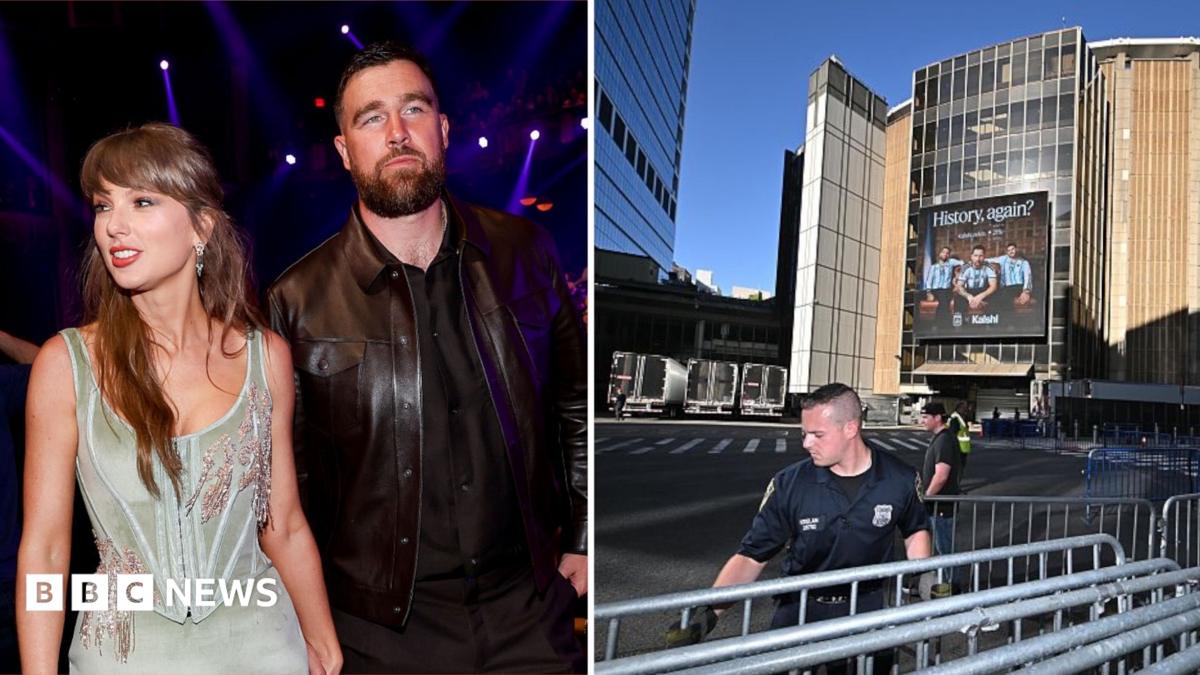
For several days, media outlets have watched every move outside the arena. They spotted trucks with cryptic labels like “GP” and “garden party” on it and crews unloading tons of equipment and things like large white staircase prop and large mirror ball. Earlier in the week, workers were seen rolling out a red carpet, which was hastily withdrawn.
New York City Mayor Zohran Mamdani, an astute student of both politics and pop culture, has coyly alluded to the wedding chatter during press conferences.
City officials confirmed to the BBC that somebody applied for street closure permits in the area, but did not reveal whom.
But the city was not likely to have shut down Manhattan’s busiest corridor on a holiday weekend for just anybody. And not just a holiday weekend, July 4th weekend. And Not only July 4th weekend, but America’s 250th birthday weekend – while the city also hosts the World Cup.
The speculation heightened.
Then the celebrities started to emerge.
Paparazzi captured images of Antonoff, Swift’s longtime producer, sporting a tux and a toothpick dangling out of his mouth, reportedly heading to Thursday’s event at the Garden.
His sister Rachel Antonoff, a designer, followed closely behind in a bubblegum-pink dress.
US tabloid Page Six reported Bradley Cooper and Gigi Hadid, a longtime member of Swift’s friend circle, had also arrived at the venue.
Pop star and actress Selena Gomez posted images of herself on Instagram wearing a black gown with gem earrings and heading to an unspecified event.
People Magazine published video Dunham, who created the series Girls, being chauffeured through Manhattan in a black SUV.
The FIFA World Cup has yet to provide a meaningful boost to U.S. economic activity, with business surveys, card spending data, and airline passenger traffic showing little evidence that the tournament is supporting demand, according to Pantheon Macroeconomics.
Pakistan says talks between the United States and Iran which were postponed on Friday will begin in Switzerland on Sunday, as Tehran announced it was again closing the Strait of Hormuz because of continued Israeli attacks in Lebanon.
Iran’s foreign ministry spokesman, Esmail Baghaei, confirmed on Saturday that an Iranian delegation, including Parliament Speaker, Mohammad Bagher Ghalibaf, Foreign Minister, Abbas Araghchi and other senior officials, was heading to Switzerland.
Recommended Stories
list of 3 itemsend of list
In Washington, Vice President JD Vance confirmed that the top US negotiators Jared Kushner and Steve Witkoff were already in Switzerland working through technical details of anticipated negotiations on Iran’s nuclear programme.
Vance told Fox News that he expects to leave for Switzerland “sometime in the next couple of days” but acknowledged that “it’s always a delicate coordination dance.”
The planned meeting on Sunday will start technical-level negotiations towards a final US-Iran deal. That is after both sides signed a memorandum of understanding (MoU) earlier in the week declaring a permanent end to “military operations on all fronts”, including in Lebanon.
The MoU stipulates that a final deal should be reached within 60 days, “extendable with mutual consent”.
Although Israel agreed to a renewed ceasefire with Hezbollah on Friday, its attacks in Lebanon continued into Saturday, killing at least 32 people, according to Lebanon’s civil defence and state media reports.
On Friday, Israeli attacks killed 83 people and wounded 141, Lebanon’s health ministry said.
Iran’s Islamic Revolutionary Guard Corps (IRGC) on Saturday announced it was re-imposing restrictions on the Strait of Hormuz over Israeli “crimes” in Lebanon and what it called a US violation of commitments to establish a ceasefire.
It warned ship crews not to approach the strategic waterway, saying their security would be at risk if they do.
Mohammad Mokhber, an adviser to Iran’s supreme leader, warned that the flow of energy in the Middle East would halt so long as the US-Iran agreement “remains only on paper”.
The US military said its forces were still operating in the “general area” of the Strait of Hormuz and “remain present and vigilant” to make sure “all aspects of the agreement with Iran are adhered to”. It said 55 commercial vessels had transited the strait on Saturday and that safe passage was still “intact”.
‘Things are moving backwards’
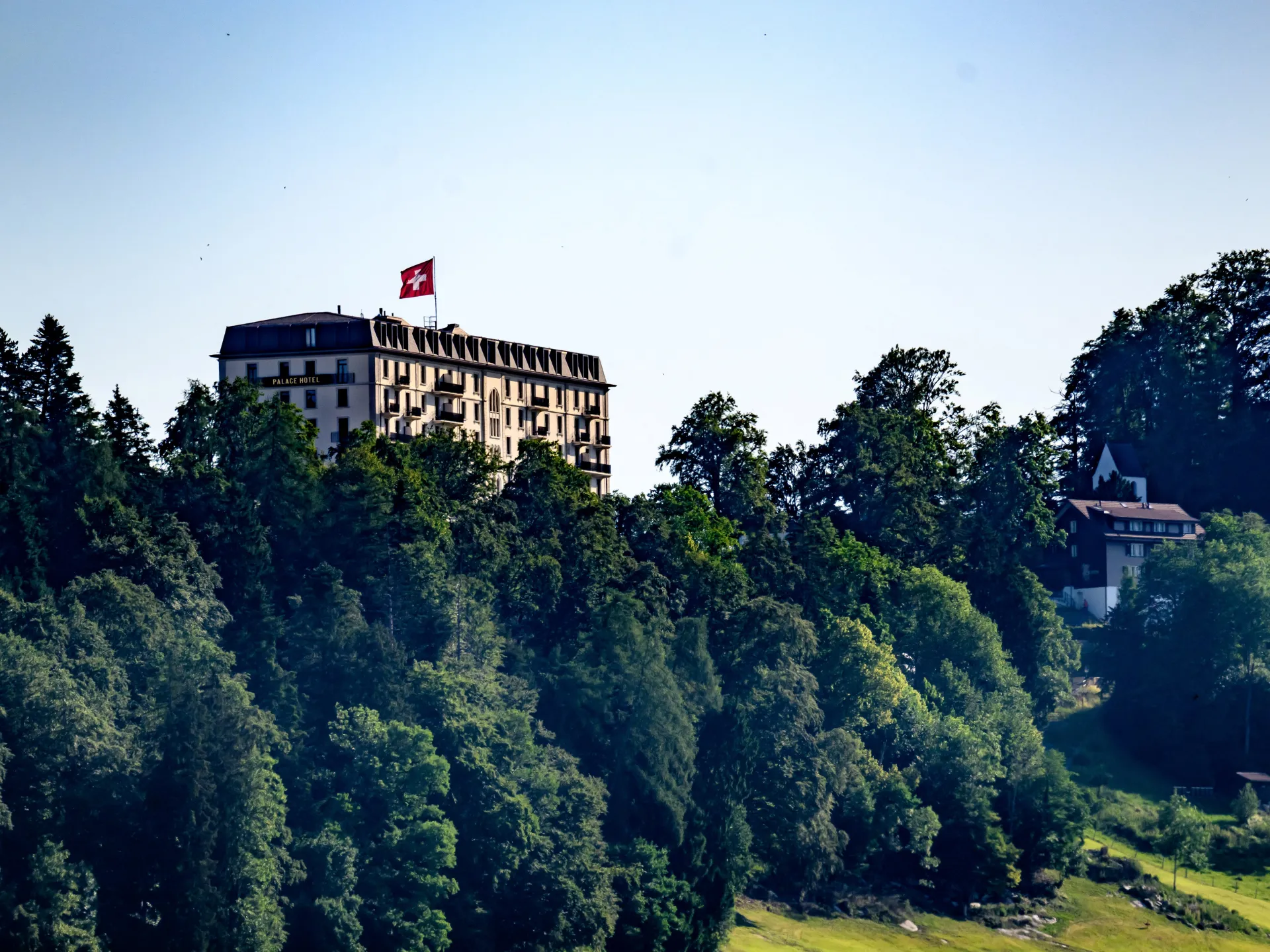
According to Pakistan’s foreign ministry, Pakistani and Qatari mediators will join the US-Iran talks on Sunday in the Swiss mountain resort of Burgenstock.
Reporting from there, Al Jazeera’s Osama bin Javaid said there has been a flurry of behind-the-scenes diplomatic activity ahead of the formal negotiations, with Qatar’s Prime Minister, Sheikh Mohammed bin Abdulrahman bin Jassim Al Thani, already holding meetings. Pakistan’s Foreign Minister, Ishaq Dar, has been holding talks in Egypt and Pakistan’s Interior Minister, Mohsin Naqvi, travelled to Iran.
Iranian foreign ministry spokesman Baghaei has signalled that progress may be scarce until Iran feels the US is living up to its end of the interim deal.
In comments broadcast by Iran’s IRIB, Baghaei said Iran “must naturally be very firm and serious in demanding fulfilment of obligations” considering the US’s past “failure to honour commitments”.
Al Jazeera’s James Bays, reporting from Burgenstock, said there are indications “things are moving backwards from when the MoU was signed”, citing Israel’s continued bombardment of southern Lebanon.
“The Iranians see this as a serious breach of the MoU,” he said. “Their first sanction was by not coming here. They have now utilised their best weapon by closing the Strait of Hormuz.
“Iran believes this tactic will help get things back on track with regard to southern Lebanon,” added Bays.
MEXICO CITY — The Mexican national team will kick off the 2026 World Cup against South Africa on Thursday with the weight of entertaining 83,000 at iconic Azteca Stadium and soccer fans around the globe.
The match at the venue known as Mexico City Stadium during the World Cup will kick off at noon PDT and air on Fox and Telemundo.
Once the ball starts rolling, the stadium’s altitude — 7,216 feet above sea level — will be one of the biggest assets for the Mexican lineup led by coach Javier Aguirre.
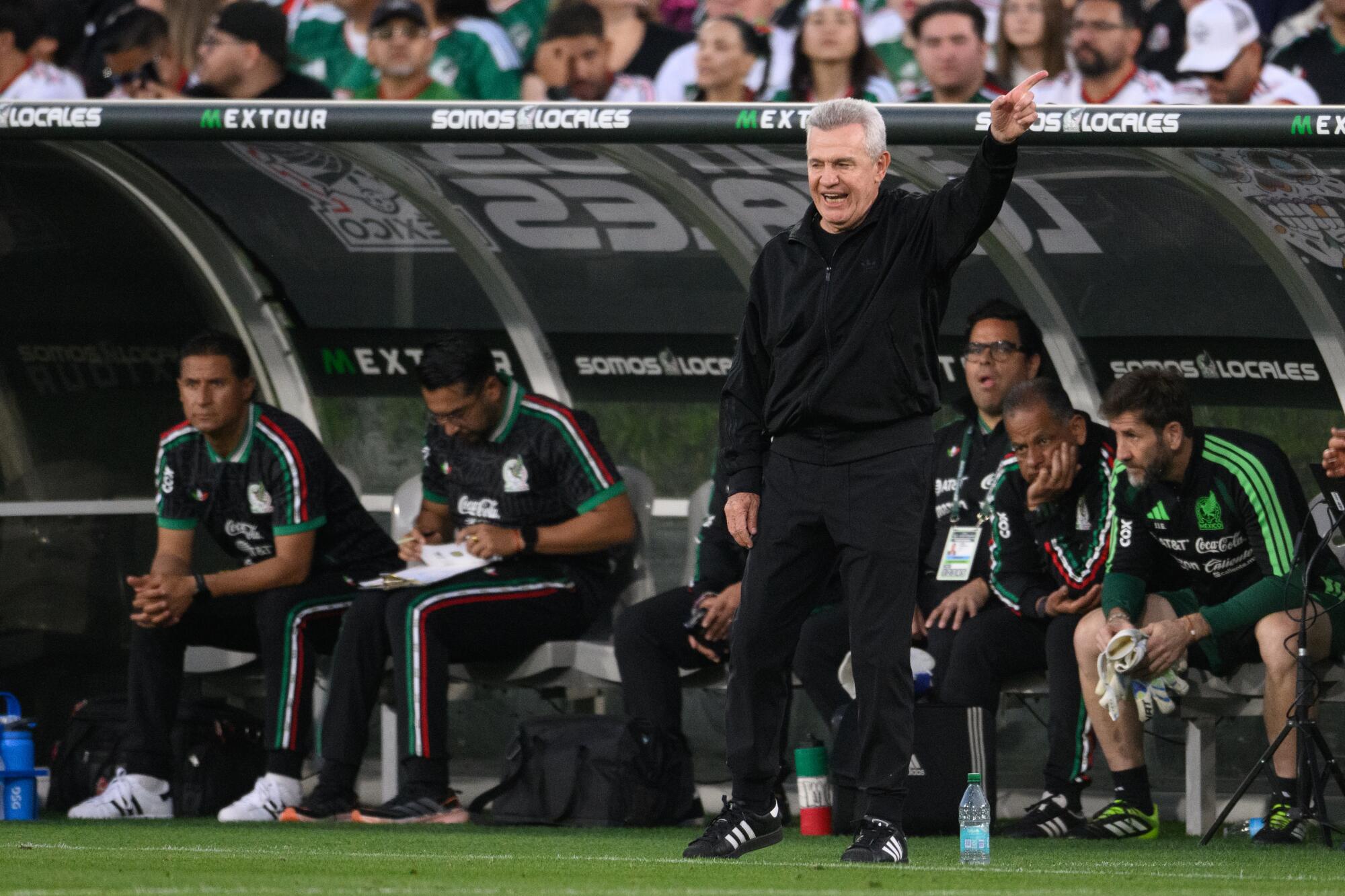
Mexico coach Javier Aguirre directs his players during a friendly against Australia on May 30 at the Rose Bowl.
(Kyusung Gong / Ap Photo/kyusung Gong)
Aguirre will likely deploy the 4-3-3 formation he used during Mexico’s final warm-up match against Serbia.
“We’re ready; we’ve been working for 22 months,” said Aguirre, 67, who took the reins of the national team on Aug. 1, 2024, following Jaime Lozano’s failure at that year’s Copa América, when Mexico was knocked out in the group stage.
Since his arrival, Aguirre has led the team to its first Concacaf Nations League title and the Gold Cup. Mexico enters the tournament on an eight-game unbeaten streak, though several of those results came against lower tier opponents and at home. The two most encouraging highlights of that streak were the draws against Belgium and Portugal.
“If my teams are known for anything, it’s for their character,” Aguirre said. “My team is just like me.”
The starting goalkeeper position remains a topic of debate, but it appears Aguirre has already made his decision. Guillermo Ochoa, who will be playing in his sixth World Cup with Mexico, is considered by many to be the ideal experienced goalkeeper to use during the opener, when nerves are sure to be high. However, Raúl Rangel has been the starting goalkeeper during Mexico’s past three warm-up matches, playing the full 90 minutes each time.
Rangel, who was 10 years old when Mexico tied South Africa in the opening match of the 2010 World Cup and who fondly remembers El Tri’s victory over France that tournament, is confident between the posts.
Mexico could turn to veteran goalkeeper Guillermo Ochoa to calm nerves during the World Cup opener on Thursday.
(Ronaldo Bolanos/Los Angeles Times)
“We’re in great shape; we proved it against Portugal and Belgium, two teams that are among the world’s elite,” said Rangel, who noted that Ochoa has instilled a sense of calm in the team.
“I do believe we can be champions. We have to start keeping that in mind and believe that it’s possible. Not everyone can boast that they played in a World Cup on home soil.”
The Mexican team’s lack of elite club experience, however, is obvious and could be a problem. El Tri has few players in top-tier leagues and lacks game-changers on the wings, as Diego Lainez, Uriel Antuna and Hirving Lozano were left off the final roster. Offensive output is a cause for concern. In tight matches, goals have come mainly from defenders, with César Montes and Johan Vásquez being the primary threats on set pieces.
The commitment to youth appears to be a key factor in Aguirre’s approach to building the roster. Mexican American Brian Gutiérrez brings freshness and dynamism to the midfield, alongside Erik Lira’s energy. As an option off the bench, Aguirre could turn to 17-year-old Gilberto Mora, the youngest player in the tournament, who is sure to draw cheers from the crowd.
For his part, South Africa’s 74-year-old head coach, Hugo Broos, knows the Azteca Stadium well, having marked Maradona during the 1986 World Cup semifinals. To acclimate his players to the altitude, he held training camp in Pachuca, at an elevation of 7,979 feet.
“This game is special. I’ve played in European championships, but there’s nothing like a World Cup. And we’re going to play at the Azteca Stadium — it’s incredible that this is going to happen,” Broos said.
South Africa coach Hugo Broo talks with Nigeria’s players during a World Cup qualifying match against Nigeria in Bloemfontein, South Africa, on Sept. 9.
(Themba Hadebe / Associated Press)
He expects to be challenged by Mexico.
“They’re a very well-rounded team, with great mobility and teamwork,” Broos said of El Tri. “You can tell they want to be world champions.”
South Africa will pose a real threat with Mbekezeli Mokoena driving the midfield and the speed of Oswin Appollis and Relebohile Mofokeng on the wings. The team’s main weakness lies in finishing, as Lyle Foster is their only striker, and if he doesn’t perform well, the South African side will suffer.
“We can’t say we don’t have a chance against Mexico, because that’s not true,” said Broos about his team, which is ranked 60th in FIFA rankings and will tangle with a Mexican squad ranked No. 14.
Pregame entertainment will kick off at 10:30 a.m. PDT with performances by Shakira, Burna Boy, Maná, J Balvin, and Alejandro Fernández. As a new ceremonial feature, all 26 players from each team — starters and substitutes — will participate in the ceremony by lining up around the tournament’s central emblem on the field, rather than in the traditional pregame formation.
The match is expected to be played in the rain. Protests are expected around the stadium throughout the day, including demonstrations by the teachers’ union and groups representing the families of missing persons.
The World Cup arrives in L.A. on Thursday. This marks the first time the festivities have taken place in the Southland since 1994, when Pasadena’s Rose Bowl hosted the final between Brazil and Italy, which famously ended in a scoreless tie and was decided by a penalty shootout that led to Brazil winning its fourth World Cup title. (The U.S. hosted the Women’s World Cup in 1999 and 2003, with the finals at the Rose Bowl and Home Depot Center [now known as Dignity Health Sports Park], respectively.)
Soccer is art and art is soccer and soccer is life — and also one of the most beloved sports on the planet — and thankfully for you, dear arts lover, you can mix your passion for art and fútbol by heading to a free public viewing party at a number of local museums and cultural institutions.
This year sees Spain and France as favorites, with England, Brazil, Portugal and defending champions Argentina all in the running. No matter who your team is, there is a museum watch party for you. Here are your top choices, in no particular order:
The Getty Center: A variety of watch parties will take place on newly installed big screens at the museum’s Trellis Bar & Lounge and Garden Terrace Cafe, which will also feature themed menu items and drinks. The Getty will stay open until 9 p.m. on June 12, 19, 26 and July 3 to accommodate evening games. Normal Friday hours will resume July 10. Admission is free, but a reservation is required. Parking is free after 5 p.m.
Los Angeles County Museum of Art: The museum is hosting two free outdoor watch parties on large screens located on its Smidt Welcome Plaza on Wilshire Boulevard. Mexico vs. Korea can be seen from 6 to 8 p.m. on June 18; and Uruguay vs. Cape Verde will take place at 3p.m. on June 21.
LACMA is also hosting a few soccer-themed events, including “Andell Family Sundays: ‘Fútbol Is Life’,” set to take place on June 7, 14 and 28 from 12:30 to 3:30 pm. The event features art-making workshops inspired by the museum’s ‘Fútbol Is Life’ exhibit featuring soccer miniatures by Lyndon J. Barrois Sr., and led by artists Karl Petion and Patricia Yossen. There is also an event called “Let’s Play: Soccer Juggling,” from noon to 3 p.m. on June 21. This is also tied to the exhibit and offers lessons in soccer basics through a drop-in juggling and accuracy workshop led by representatives from American Youth Soccer Organization. All ages and experience levels are welcome. RSVP required.
The Autry Museum of the American West: The Autry’s free Griffith Park watch party will take place at 4 p.m. June 12 when Paraguay takes on USA. The event will feature food trucks, themed cocktails, soccer-inspired games and activities, and local vendors selling specialty wares. Free, but an RSVP is required.
The Music Center: It’s not a museum, but it’s one of the city’s most beloved cultural centers. It’s also hosting a free public screening of Spain vs. Uruguay from 5 to 7 p.m. on June 26 on its lovely Jerry Moss Plaza, including family-friendly activities and themed refreshments. Bring a picnic or pick your dinner from an on-site restaurant. Stick around after the game for a free global dance party celebrating the start of the 22nd season of the Music Center’s Dance DTLA.
I’m Arts editor Jessica Gelt putting my game face on. This is your arts and culture news for the week.
You’re reading Essential Arts
Our critics and reporters guide you through events and happenings of L.A.
By continuing, you agree to our Terms of Service, which include arbitration and a class action waiver. You agree that we and our third-party vendors may collect and use your information, including through cookies, pixels and similar technologies, for the purposes set forth in our Privacy Policy such as personalizing your experience and ads.
The week ahead: A curated calendar
FRIDAY
Gustavo Dudamel: Celebrating 17 Years In his final concert as L.A. Phil music director at Disney Hall, the maestro joins his Venezuelan and American identities, conducting two poetry-inspired choral symphonic works. John Adams’ “Harmonium” borrows texts from Emily Dickinson and John Donne to explore time, harmony and rhythm. “Cantata Criolla” by composer Antonio Estévez follows a Venezuelan troubadour who squares off against the devil. 8 p.m. Friday and Saturday; 2 p.m. Sunday. Walt Disney Concert Hall, 111 S. Grand Ave., downtown L.A. laphil.com
Haunted In this one-act dance opera, composer Paul Salerni unites poetry and music to share a tale of doomed love entwined with a ghost story with an unexpected conclusion. Based on a libretto by former California Poet Laureate Dana Gioia. 8 p.m. Friday and Saturday. Sierra Madre Playhouse, 87 W. Sierra Madre Blvd. sierramadreplayhouse.org
SATURDAY
Family Fest: Pride A free, outdoor event celebrating love, identity and inclusivity, featuring Bob Baker Marionette Theater, Iwalani Music, Everybody Dance LA, Drag Story Time, Color Me Face Painting and more. 11 a.m.-2 p.m. The Wallis, 9390 N. Santa Monica Blvd., Beverly Hills. thewallis.org
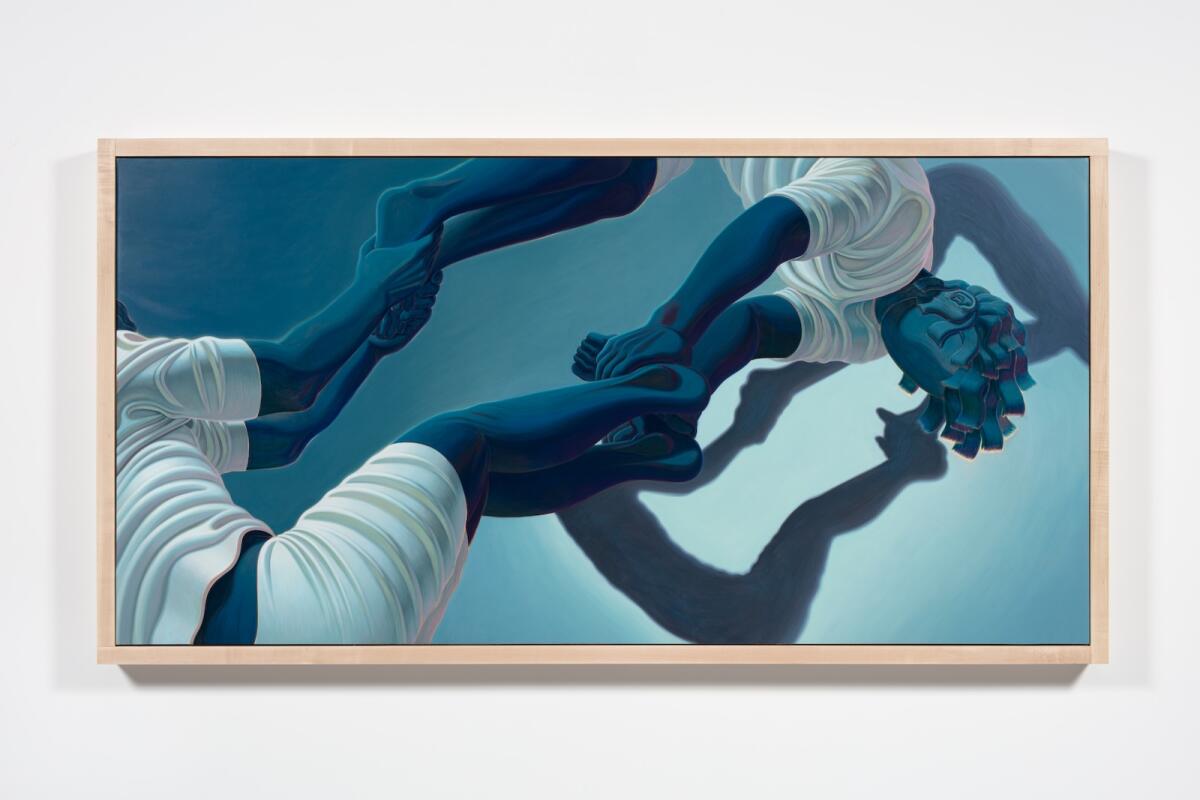
“Catapult” by Alex Gardner, 2025. Acrylic on canvas. 48 1/16 x 96 1/16 inches.
(Wild Don Lewis Photography; courtesy of Alex Garden and Perrotin)
Alex Gardner, Gabriel Rico and Makiko Kudo A trio of new exhibitions connected through the natural world and the creatures, great and small, who inhabit it: In “Animals,” painter Alex Gardner explores his experience of fatherhood; Gabriel Rico’s “Gabrielinos (I Am You And What I See Is Me),” the artist’s first solo show in Los Angeles, uses textile, assemblage and sculpture to encourage viewers to think about the world around them; the life and death of Japanese painter Makiko Kudo’s pet cat inspired “Reincarnation,” a series of oil paintings. Opening reception, 6-8 p.m.; exhibitions run through July 11. Perrotin Los Angeles, 5036 W. Pico Blvd. perrotin.com
Magnificent Mozart & Mahler Eckart Preu conducts the Long Beach Symphony in two classical masterpieces, “Eine Kleine Nachtmusik” and Mahler’s Fifth. 7:30 p.m. Long Beach Terrace Theater, 300 E. Ocean Blvd. longbeachsymphony.org
Will Geer Theatricum Botanicum The summer repertory season launches with Shakespeare’s “Romeo and Juliet” and “A Midsummer Night’s Dream” in the great outdoors of Topanga Canyon. “Romeo and Juliet,” 7:30 p.m. Saturday-Sept. 26; “A Midsummer’s Night Dream,” Sunday-Oct. 10. Will Geer Theatricum Botanicum, 1419 Topanga Canyon Blvd., Topanga. theatricum.com
SUNDAY
Juneteenth Block Party Debbie Allen Dance Academy (DADA) hosts its annual free community celebration featuring free dance master classes, live performances, carnival rides, games, food trucks, music and a marketplace for local and minority-owned businesses. Noon-7 p.m. Debbie Allen Dance Academy, 1850 S. Manhattan Place, L.A. debbieallendanceacademy.com
L’Chaim America! The Braid theater company performs real stories of American Jewish life centered on gratitude and possibility. 2:30 p.m. Skirball Cultural Center, 2701 N. Sepulveda Blvd., L.A. skirball.org
MONDAY National Museum of the Aftermath The project, conceived and titled by Cauleen Smith and curated by Jon Rubin and Harrison Kinnane Smith, travels from city to city adopting a different name and form in each location. For two months, it will operate within Oxy Arts, challenging the status quo of history and speculating on the future. 11 a.m.-4 p.m. Tuesday-Saturday; through Aug. 8. Oxy Arts, 4757 York Blvd., L.A. oxyarts.oxy.edu
WEDNESDAY
Denise Burse, from left, Charlayne Woodard and Deborah Joy Winans in rehearsal for “Angry, Raucous, and Shamelessly Gorgeous” at Geffen Playhouse.
(Isaak Berliner.)
Angry, Raucous, and Shamelessly Gorgeous An expat actor of a certain age returns to the U.S. primed for a comeback, only to face a new generation with very different ideas from her own. Written by Pearl Cleage and directed by LaTanya Richardson Jackson. Denise Burse, Olivia Washington, Deborah Joy Winans and Charlayne Woodard star. Through July 12. Geffen Playhouse, 10886 Le Conte Ave., Westwood. geffenplayhouse.org
The Revolutionists Playwright Lauren Gunderson turns France’s Reign of Terror on its ear in this raucous comedy about women fighting for égalité. Directed by Jamie Torcellini. Previews, 7:30 p.m. Wednesday and Thursday; 7:30 p.m. Thursday-Saturdays and 2 p.m. Sundays, through June 28. International City Theatre, 330 E. Seaside Way, Long Beach. https://ictlongbeach.org/therevolutionists/
THURSDAY
Double Take: Photographs in Pairs An intriguing exhibition matching photographs based on their formal qualities: the angle of a body, the geometry of a space, the relationship between figures and the interpretation of color. Photographers featured include Diane Arbus, Walker Evans, Robert Frank, Lauren Greenfield, Mary Ellen Mark, Helmut Newton, Irving Penn, Herb Ritts, Sam Taylor-Johnson, Bruce Weber and Bastiaan Woudt. Opening reception 7-9 p.m. Thursday; exhibition runs through July 18. Fahey/Klein Gallery, 148 N. La Brea Ave. faheykleingallery.com
Esa-Pekka Salonen conducts the Los Angeles Philharmonic at the Walt Disney Concert Hall in 2025.
(David Swanson/For The Times)
Ojai Music Festival This year’s music director, Esa-Pekka Salonen, is in the spotlight as a composer with the U.S. premiere of his new work for violin and cello and the first complete performance of his “Six Preludes” for piano, and other works; Salonen also conducts the Friday, Saturday and Sunday evening concerts. In its 80th year, the festival pays tribute to its defining musical figures and welcomes L.A. Phil New Music Group, Colburn Orchestra, L.A. Dance Project and many other noteworthy artists. Through June 14, 2026. Libbey Bowl, 210 S Signal St., Ojai. ojaifestival.org
Rheology This experimental play by Pulitzer Prize finalist and Obie winner Shayok Misha Chowdhury is a collaboration with his mother, physicist Bulbul Chakraborty, filled with dramatic urgency. 8 p.m. Thursday, and June 12-13. REDCAT, 631 W. 2nd St., downtown L.A. redcat.org
Thursday Night Jazz Weekly series featuring guest musicians backed by the Jack Lieberman Trio. Upcoming guests include the Tyler Hammond Jazz Experience (June 11); Ido Eylon and Willem Jochems (June 18); and Joey Du Bois with Kahlil Childs (June 25). 8 p.m. Thursdays. The Spotlight, 1601 N. Cahuenga Blvd., Hollywood. thespotlight.la
Arts anywhere
New and recent releases of arts-related media.
Ann Patchett and her novel “Whistler.”
(Los Angeles Times illustration; images from Emily Dorio, Harper)
Ann Patchett, ‘Whistler’ What does a literary novelist have to do with the performing and visual arts? In Patchett’s stories, the past is often inextricably entwined with the present and within those threaded timeframes lie traces of genetic code leading to the arts and art-adjacent worlds. In “Taft” (1994), the protagonist is a former jazz musician turned Memphis bar owner; “The Magician’s Assistant” (1997) finds the title character unraveling the illusions of her own life; “Bel Canto” (2021) features a famous American soprano at the center of a hostage crisis; and “Tom Lake” (2023) revolves around a Michigan woman’s long ago love affair with a soon to be famous actor during a summer stock production of Thornton Wilder’s “Our Town.” Of the writer’s latest book, “Whistler,” Times contributor Leigh Haber wrote, “This exquisite writer has once again delivered an incandescent work of fiction — sweet, but never sentimental, infinitely wise and suffused with love. It’s also an ode to New York City itself.” And that ode notably begins with the protagonist and her husband at the Metropolitan Museum of Art. A place that Haber notes, “one gets the sense, they know by heart.” This connection to art may prove to be tangential — I’ve only read a quarter of the book — but Patchett’s appreciation of these worlds is anything but. Harper: 304 pages, $30
— Kevin Crust
Culture news and the SoCal scene
Jeff LeBeau, left, and Tim Cummings in the West Coast premiere of Samuel D. Hunter’s “Grangeville” at the Ruskin Group Theatre Arts Center, dairected by John Perrin Flynn.
(John Perrin Flynn)
Times theater critic Charles McNulty reviewed the West Coast premiere of playwright Samuel D. Hunter’s “Grangeville,” directed by John Perrin Flynn, at the Ruskin Group Theatre. The play, which explores the lives of two estranged half brothers from a small Idaho town, is “beautifully acted,” McNulty writes, adding, that Hunter, “the bard of Idaho,” is “one of the theater’s outstanding American realists.”
McNulty also loved the Alicia Keys jukebox musical, “Hell’s Kitchen,” which staged its L.A. debut last week at the Hollywood Pantages Theatre. The musical tells the story of Key’s upbringing in the Manhattan neighborhood of the show’s title, but the story isn’t where the show shines, writes McNulty, noting that the joy comes from the way Keys’ music is seamlessly integrated into the narrative.
Yo-Yo Ma plays the solo for the premiere of Angelica Negron’s “Mudillo” on Thursday, May 28, 2026.
(Jason Armond / Los Angeles Times)
“Our streets are garlanded with ‘Gracias, Gustavo’ banners and billboards. The Walt Disney Concert Hall shop has become a Dudamel-torium, aisles bursting with Gustavo T-shirts, hoodies, tote bags, refrigerator magnets and this and that,” writes Times classical music critic Mark Swed in a review of Dudamel’s penultimate weekend at Walt Disney Concert Hall, including one featuring cellist Yo-Yo Ma.
Dancers from choreographer Benjamin Millepied’s L.A. Dance Project rehearse at LACMA’s David Geffen Galleries on Friday, May 22, 2026, in Los Angeles.
(Carlin Stiehl / For The Times)
Benjamin Millepied’s L.A. Dance Project is staging a free, two-week-long series of public shows called “City of Dance” which take place at nine Southern California landmarks, including LACMA, Hollywood Forever Cemetery, Tongva Park and Stearns Wharf. Read all about how the project came to be, including its use of Philip Glass’ score from the critically acclaimed 1982 documentary film, “Koyaanisqatsi.”
Enjoying this newsletter? Consider subscribing to the Los Angeles Times
Wallis Annenberg Center for the Performing Arts announced its 2026-27 season.
(Jason Kempin / Getty Images for Wallis Annenber)
Wallis Annenberg Center for the Performing Arts has unveiled its 2026-27 season, its first under the leadership of its new executive director and CEO, Jean Davidson. Highlights include music by Joshua Redman Quartet; Ronald K. Brown and his dance company Evidence, comedy and cabaret by performers including Sandra Bernhard and designer Isaac Mizrahi; recitals by L.A. Opera, concerts featuring Los Angeles Chamber Orchestra and much more. “At the heart of this season is a belief in the power of live performance to connect people to ideas, to one another, and to the shared human experience. We are proud to support artists who spark curiosity, foster empathy, and invite dialogue, while continuing to strengthen The Wallis as a vibrant gathering place for all audiences,” said Davidson in a news release. See the full schedule here.
Pacific Jazz Orchestra also announced its 2026-27 season led by composer, arranger and conductor Chris Walden. The 40-piece string orchestra and big band hybrid is entering its fourth season with five programs dedicated to jazz, swing, soul R&B, Broadway and pop, staged in six venues across the region, including in Beverly Hills, Irvine, Northridge, Palm Desert, Santa Barbara and Ventura. Featured guest artists include Broadway star Sutton Foster, pianist David Benoit and vocalist Nayanna Holley. See the full schedule here.
UCLA’s Center for the Art of Performance has announced “Far Away, Here,” a new multiyear international opera initiative that will launch in the 2026-27 season with the U.S. premiere of a new adaptation of “Kafka’s Letter to His Father, “ scheduled to run Nov. 12-14 at the UCLA Nimoy Theater. The initiative will continue to present U.S. premieres of under-the-radar operas by artists from around the world, and is curated and produced by tenor Timur Bekbosunov, in collaboration with CAP UCLA’s executive and artistic director, Edgar Miramontes.