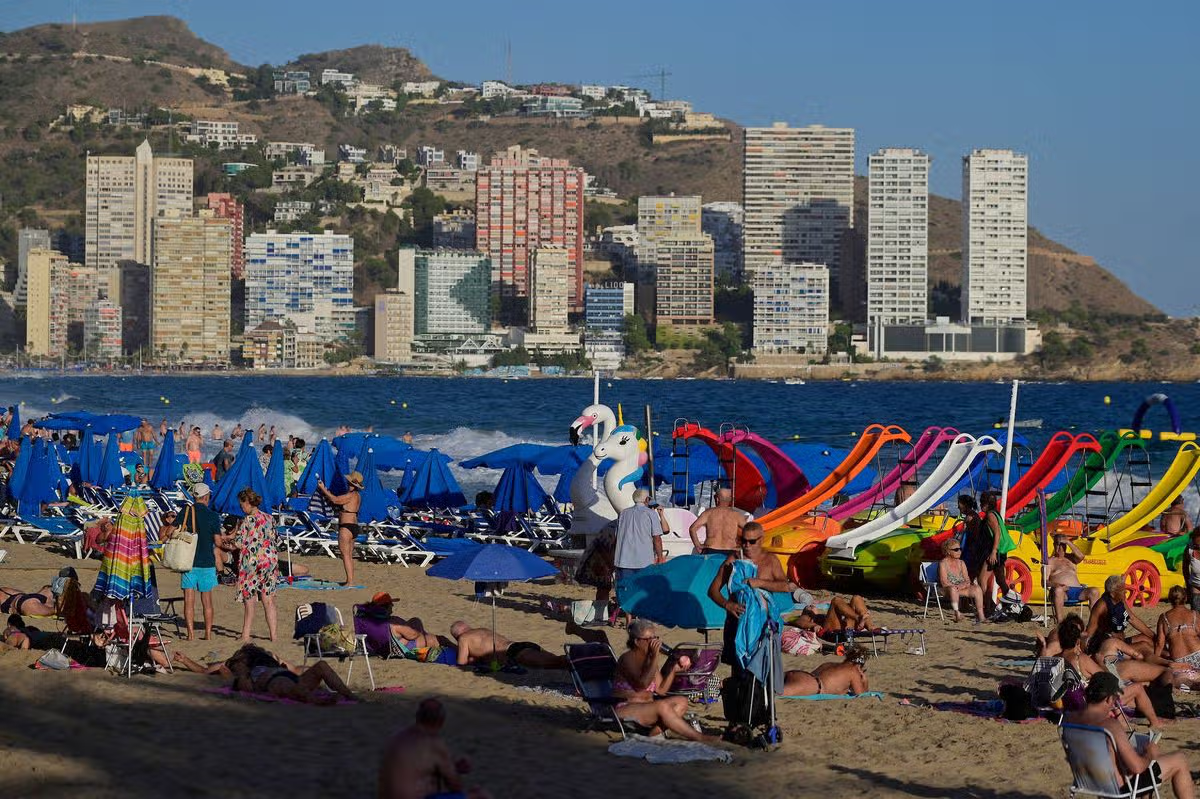
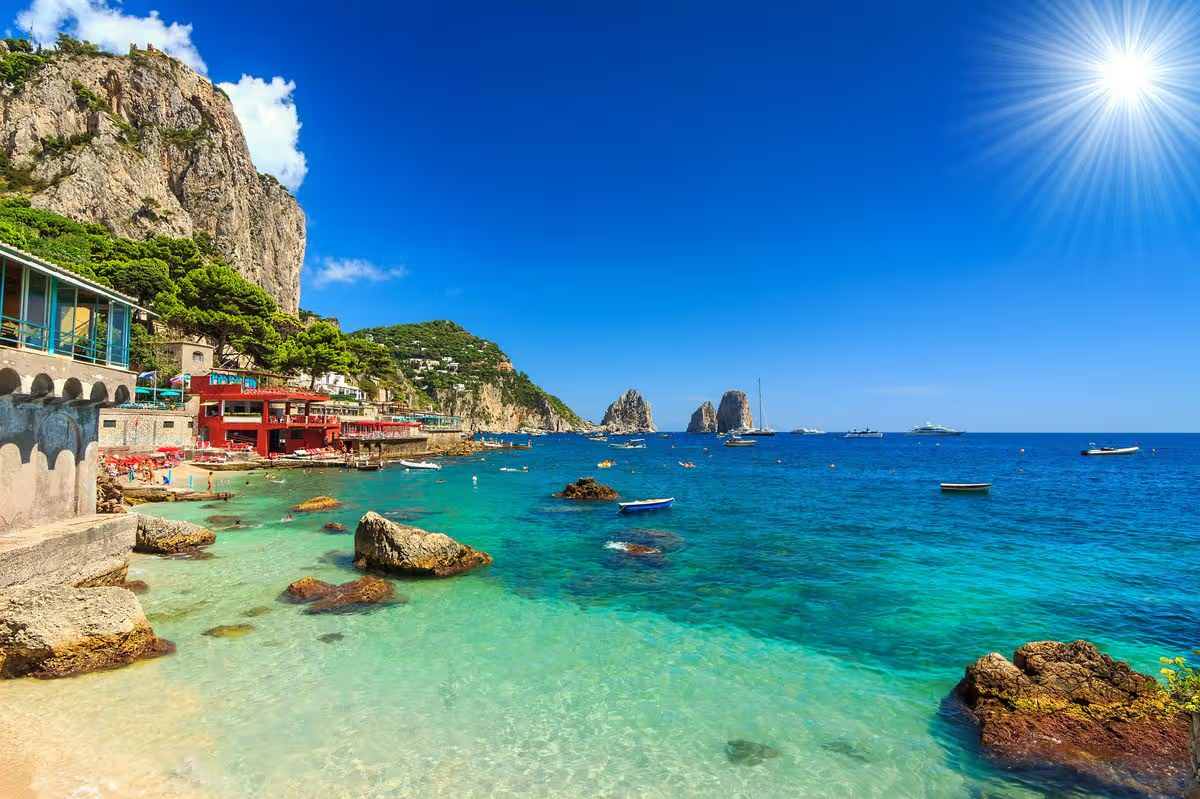
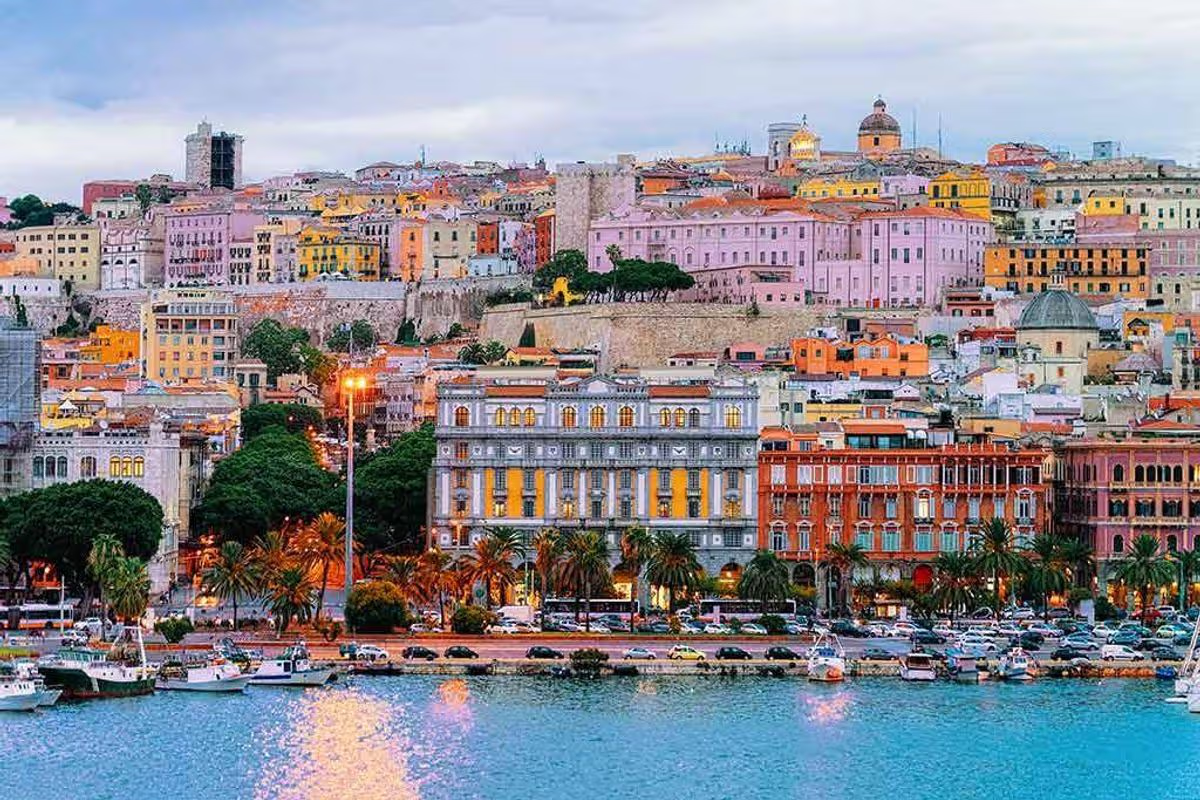
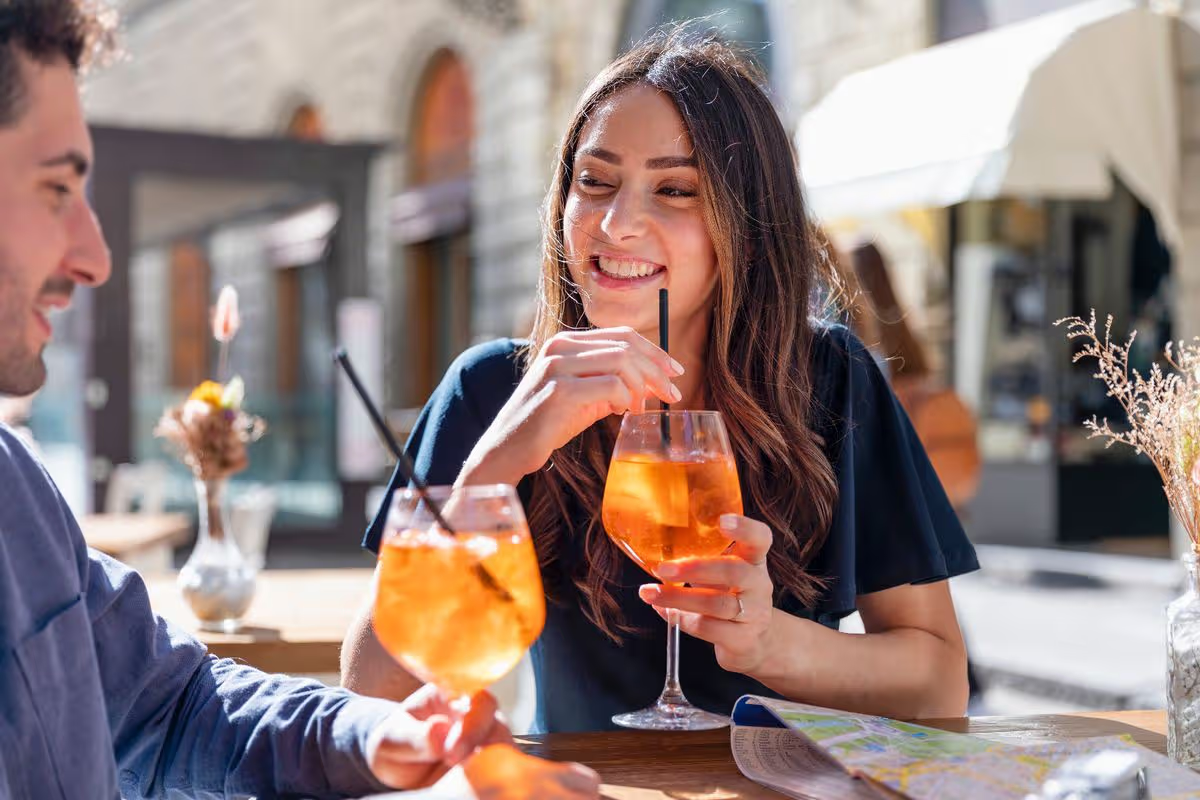
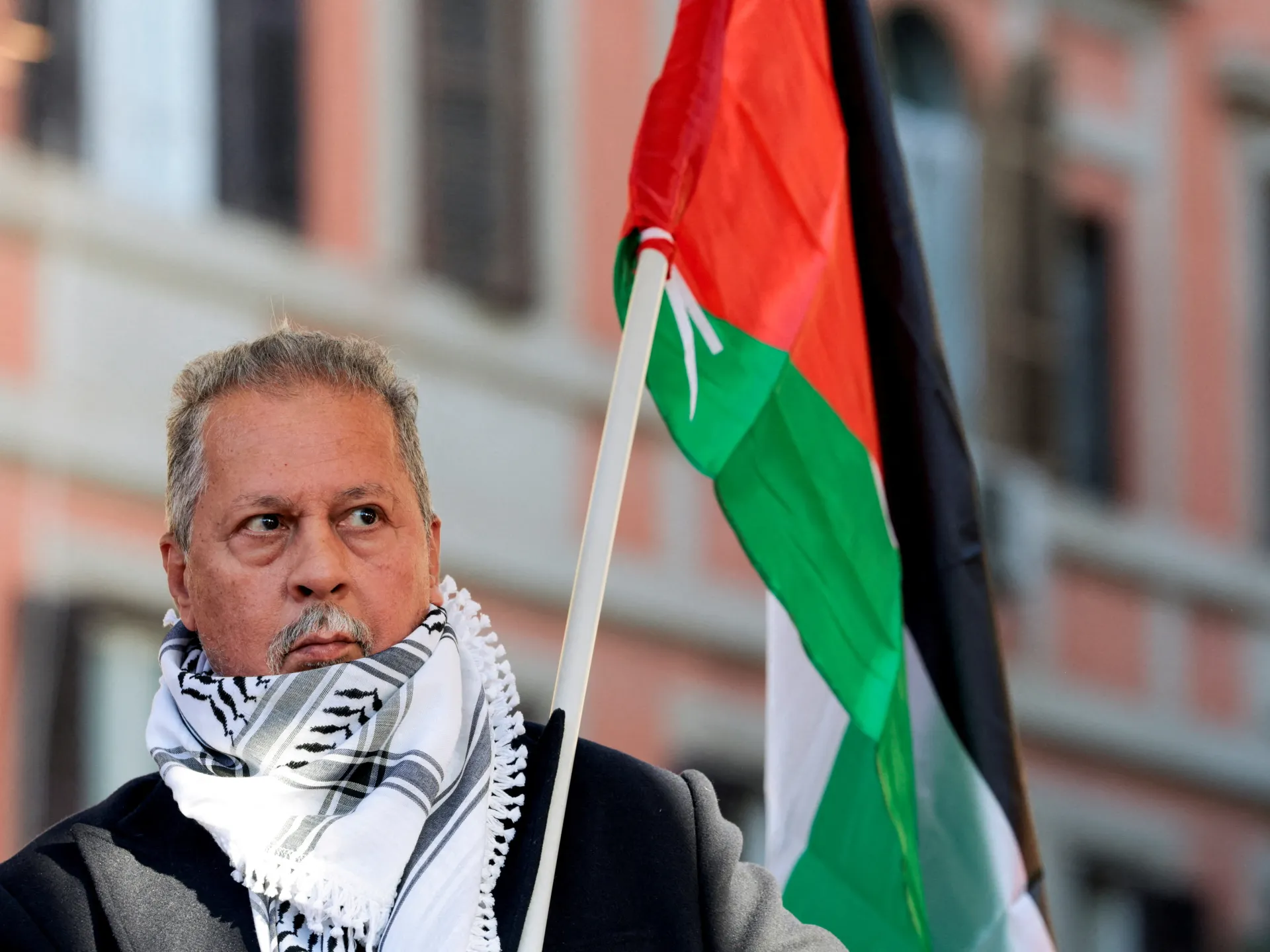
New advice and information has been given(Image: JOSE JORDAN, AFP via Getty Images)
Travel association ABTA has issued some new advice today for travellers heading to the likes of Spain and France this summer.
Fresh research published today by ABTA, the travel association, has shown how the Middle East conflict has transformed the way and timing of holiday bookings, with travellers increasingly turning to travel professionals. Almost a third (31%) of UK adults considering a holiday within the next 12 months indicated they were more inclined than previously to book through a travel professional following the current Middle East conflict.
The primary reasons cited were their ‘knowledge’ at 53%, ‘expertise’ at 44%, and ‘wanting the security of a package holiday’ at 41%. Furthermore, 27% of people were more likely to book a package holiday than before the current conflict in the Middle East.
Having everything organised (52%) and the entitlement to a refund or replacement if the holiday can no longer go ahead (48%) were the most frequently cited reasons, followed by value for money (38%).
Where are people heading for their holidays this summer?
The Middle East conflict has had a substantial effect on travel, initially resulting in flight delays, cancellations and warnings against travel. The consequences persist, with numerous routes to or passing through the Middle East cancelled and yet to resume, prompting travel professionals to explore alternative routes or suggest different destinations to ensure people can still enjoy their desired holidays.
Following the Foreign, Commonwealth and Development Office’s (FCDO) recently revised travel guidance for several Gulf nations, which has eased prior restrictions, the appetite for travel to or via the region is anticipated to grow in the coming months. Nevertheless, reduced flight availability to and through the area this summer means numerous holidaymakers are opting for a short-haul break.
Of all those intending to head abroad over the next 12 months, 84% indicated they were planning to visit Europe. Spain tops the charts as the most sought-after destination for 38% of those contemplating a foreign holiday this summer.
Italy and France complete the top three most favoured locations, with 23% and 19% respectively of summer travellers considering heading there.
Despite short-haul breaks proving a hit this summer, the desire to venture further afield on long-haul trips remains strong. A total of 13% planned to holiday in the USA, 6% Australia and 6% Japan, all making the Top 10 most popular destinations.
Will people be booking their summer holidays at the last minute?
The impact of the conflict is also shaping booking behaviour, with a growing number of travellers choosing last-minute reservations, as they adopt a wait-and-see approach regarding prices and the broader cost of living. Among those considering an overseas holiday during the summer of 2026, 30% of UK adults were holding off on booking until two to four weeks before their planned departure date. A further 10% planned to book less than two weeks before travelling.
Mark Tanzer, chief executive officer of ABTA, said: “While global events are influencing how people plan and book their holidays and where they go, our appetite to travel abroad this summer and beyond continues to be strong.
“People are determined to get away and the UK’s travel agents and tour operators are expertly placed to help them access the best deals and understand the latest travel advice.
“With so many people saying they will book late, our advice is to get ahead of the pack and arrange your holiday now to avoid any last-minute rush.”
ABTA’s research was conducted by The Nursery Research and Planning using a nationally representative sample of 2,000 UK adults, with the survey taking place between May 8, 2026 and May 19, 2026.
A POPULAR destination in Europe is cracking down on tourists – with fines dished out to rule-breakers.
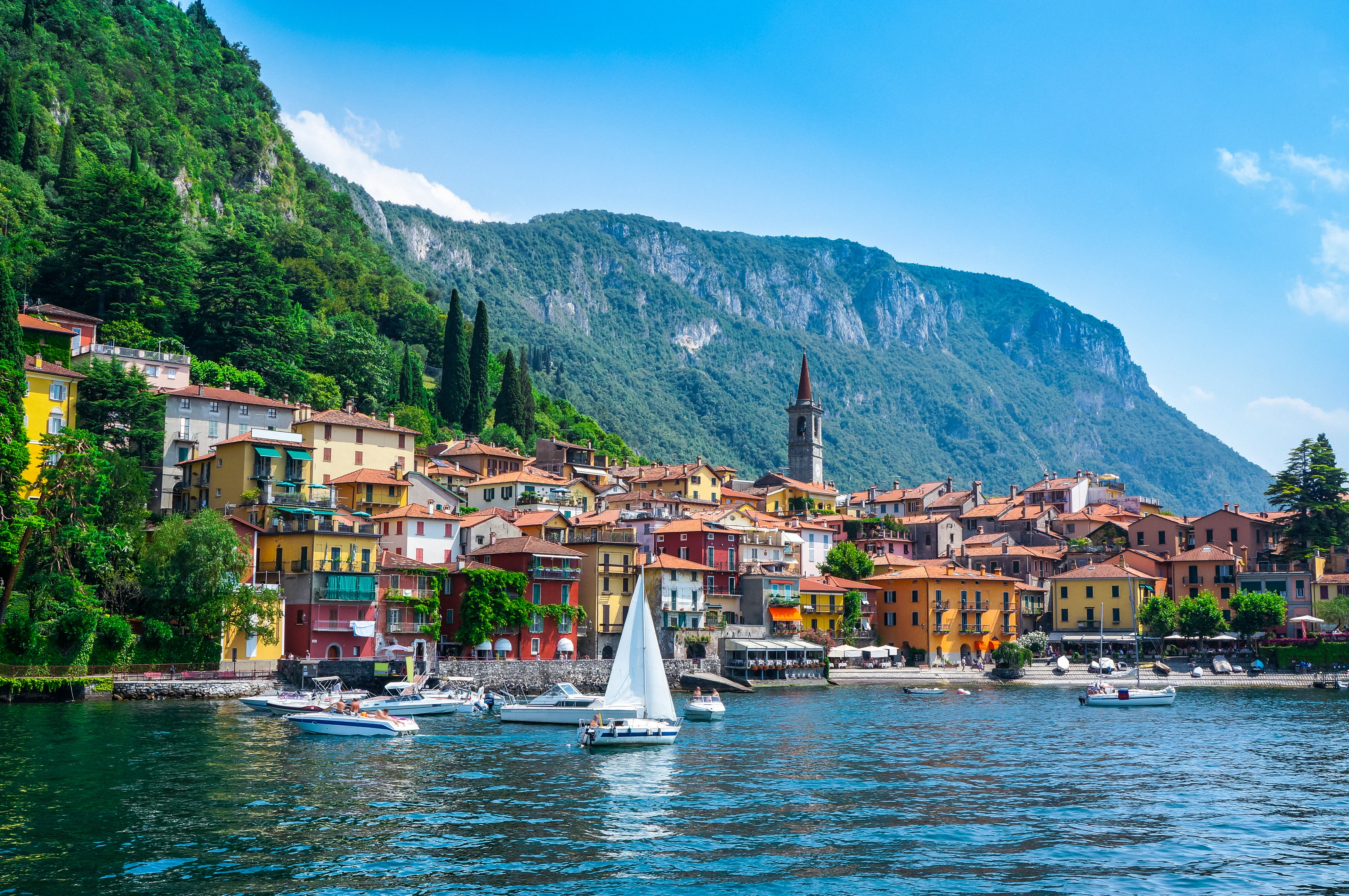
The small village of Varenna, near Lake Como, is banning anyone from walking around its historic streets either bare-chested or wearing swimwear.
Sign up for the Travel newsletter
Thank you!
Varenna village on Lake Como is now fining people who are bare-chested or wearing swimwear in its streetsCredit: Getty
The new rules come as the village, which is home to only 650 people, is experiencing high levels of tourism each summer.
Tourists heading to the town will still be able to have a bare chest or wear their swimwear if they are at one of the lake’s beaches or if they are enjoying a boat trip on the lake itself.
However, if they are caught in the wrong place in the swimwear or with no shirt on, they could be fined between €50 (£42.74) and €200 (£170).
Varenna isn’t the only Italian spot to ban being shirtless and wearing swimwear in the town centre.
It is also banned to walk shirtless, barefoot or in a bikini in the town centres of Sorrento and the Amalfi Coast, with fines ranging from €25 (£21.37) to €500 (£427.48).
Varenna has also introduced a number of other rules impacting tourists.
There’s also a clampdown on crowds, as tour groups are now capped at 25 people.
The aim of this is so that the village’s lanes will not be blocked.
Guides have been banned from using speakers as well.
According to The Guardian, Mauro Manzoni, Varenna’s mayor, said: “Varenna is a wonderful village, and we are proud to welcome hundreds of thousands of visitors from all over the world every year.
“However, our residents’ quality of life cannot be sacrificed on the altar of mass tourism.”
This incredible feat of engineering took 17 years of continuous construction to finish.
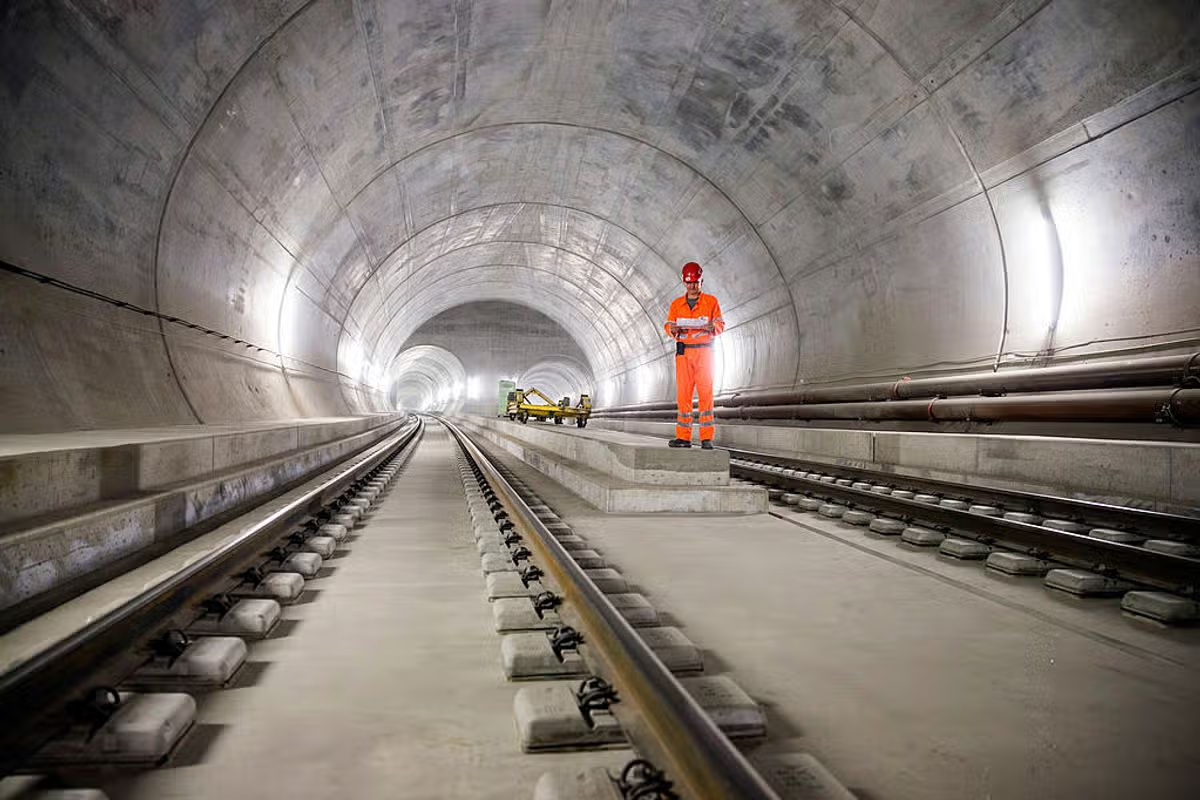
This tunnel is an incredible feat of engineering(Image: Getty)
Ten years ago this month, construction finished on one of the most impressive feats of engineering in the world. The Gotthard Base Tunnel – a railway tunnel below the Lepontine Alps in Switzerland – is the longest and deepest transport tunnel in the world.
It opened in June 2016 and has provided a high-speed rail link between northern and southern Europe. Specifically, the train runs between Rotterdam in the Netherlands and Genoa in Italy.
It’s called a Base Tunnel as it travels through the base of the mountain, rather than trying to snake over the ranges.
This means that the journey on this train is by and large straight and flat.
The high speed trains that travel through it can reach speeds of 250km/h, slicing the journey time significantly.
Construction of this incredible tunnel took a whopping 17 years of continuous labour, and approximately CHF 12.2 billion (£11.2billion) to build.
Engineers and construction crews excavated more than 28 million tonnes of rock using massive boring machines to dig it out, as well as precious blasting to clear the way for the tunnel.
Before its construction, trains had to carefully traverse the winding mountain routes which meant travel speed and cargo capacity was significantly hampered.
Now, trains can whip through the solid rock mountain and travel between Erstfeld in the north to Bodio in the south in just 20 minutes.
This incredible tunnel runs for 57km and at its deepest point it is thousands of feet deep.
At the deepest point, trains are travelling at 7,546 feet below the surface.
Since its construction, the train has carried thousands of people with data showing that the number of people travelling through the Gotthard by train has almost doubled in 10 years
In 2025 the average was 16,400 a day, compared with 9,000 in 2015, according to the Swiss Federal Railways.
This city break is one of those places where you can do everything on foot – perfect for soaking up the history, incredible food and affordable drinks
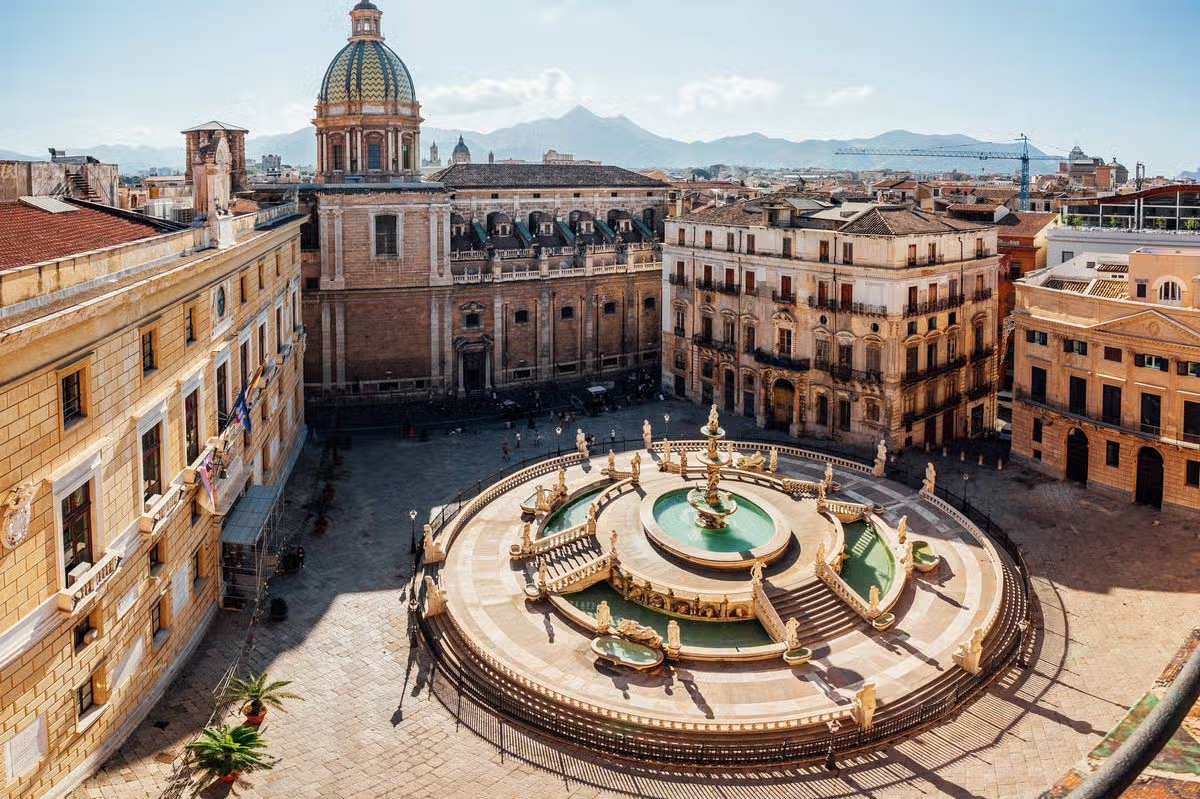
This city break is one of those places where you can do everything on foot – perfect for soaking up the history, incredible food and affordable drinks(Image: FilippoBacci via Getty Images)
When it comes to holiday destinations, we in the UK are truly spoilt for choice, with continental Europe practically on our doorstep. It’s precisely why people travel from the far corners of the globe to settle here – drawn by the unrivalled access to a continent they might otherwise never explore.
Each year, my mum and I jet off together for a blissful and adventurous getaway, with me desperate to return to Italy while Mum was keen to add a fresh destination to her ever-growing list. After minimal deliberation, we agreed on Sicily as our next adventure – a magnificent fusion of rich history, sweeping coastline and an irresistible array of regional dishes we’d yet to sample.
Just over half of our trip was spent in the island’s second largest city, Catania, while the remaining days were whiled away exploring the capital, Palermo. It was the perfect blend of relaxation and excitement, indulgence and discovery – precisely what we both needed.
I’m a huge fan of a city break, and Palermo delivers on every front, while also offering easy access to the rest of the island – ideal for those seeking respite from the tourist crowds. The Sicilian capital is one of those rare cities where public transport becomes completely unnecessary, as virtually everything is within comfortable walking distance.
Just be prepared to dart between buildings for shade from the blazing sun. If you’re fond of impressive churches, atmospheric theatres and magnificent palazzos, Palermo has them in abundance, reports the Express.
Cattedrale di Palermo, Palazzo dei Normanni, and Teatro Massimo di Palermo are traditional must-sees, but the authentic city reveals itself amongst the twisting side streets and cobblestone lanes.
Architectural treasures are plentiful, though some might suggest they merely mask the island’s more recent violent past. We’d been advised beforehand against mentioning the mafia while in the city, yet one of the most compelling aspects of my visit was exploring the No Mafia Memorial.
While the activities and offences of the mafia and criminal gangs are portrayed in films and television, nothing truly prepares you for the overwhelming number of photographs documenting the harsh reality. The connection between the corrupt powerbrokers and sinister underworld was undeniable.
You’re left bewildered by just how much violence occurred. Nevertheless, this free museum provides a perspective you simply won’t discover on screen.
Naturally, all the architecture and heritage makes Palermo undeniably striking, yet the primary attraction for us was the regional food. Endless servings and dishes of fresh seafood and handmade pasta represents my gastronomic paradise.
You absolutely cannot skip a visit to Mercato Ballarò, a hidden alleyway brimming with stall after stall of meat, fish, vegetables, cheese, and fruit; whatever you’re after, Mercato Ballarò stocks it. The market is definitely not for the faint-hearted.
It’s a feast for all the senses, with a dazzling array of colours, aromas and sounds. It can be incredibly overwhelming, with vendors desperately trying to hawk their wares or entice you into their eatery.
Instead, try a comforting bowl of Zuppe Di Mare at Osteria Villena on Via Maqueda, a seafood stew generously packed with calamari, prawns, mussels and cod, all brought together with a San Marzano sauce. It’s salty, warming, satisfying and absolutely divine. I could have happily devoured several bowls.
For pasta lovers who still crave that seafood fix, the Tonnarelli Mare Mare is an absolute must. Yes, it may appear to be packed with tourists, but Osteria Villena is clearly doing something right, as every lunch and dinner sitting was completely full.
However, no visit to Sicily is truly complete without sampling one of its most abundant fish: swordfish.
Think of it as a white fish with the texture of a tuna steak when cooked, but with a distinctive flavour you simply won’t get from eating the likes of cod or haddock. Best enjoyed served with caponata.
If you enjoy a spot of people watching, my favourite haunt was Enotequa, a dark and atmospheric wine bar serving up crisp Sicilian wines in all varieties, €7 (£5.99) Aperol spritzes, and a meat and cheese board to round it all off for just €30 (approximately £25) for two people. If spritzes aren’t your cup of tea, a bottle or pint of beer will set you back between €4 to €5 (£3.42 to £4.28), according to Numbeo. London could never!
And make sure you sample a cannolo, packed with fresh ricotta cream and topped with as many nuts, chocolates and glace fruit as your heart desires.
Palermo is a paradise for anyone seeking a getaway that’s not too far from home. It boasts glorious weather, stunning architecture, and incredible food to match. Despite only spending two days there, I could quite easily have stayed far longer.
I’m still daydreaming about that seafood stew… and the spritzes, naturally.
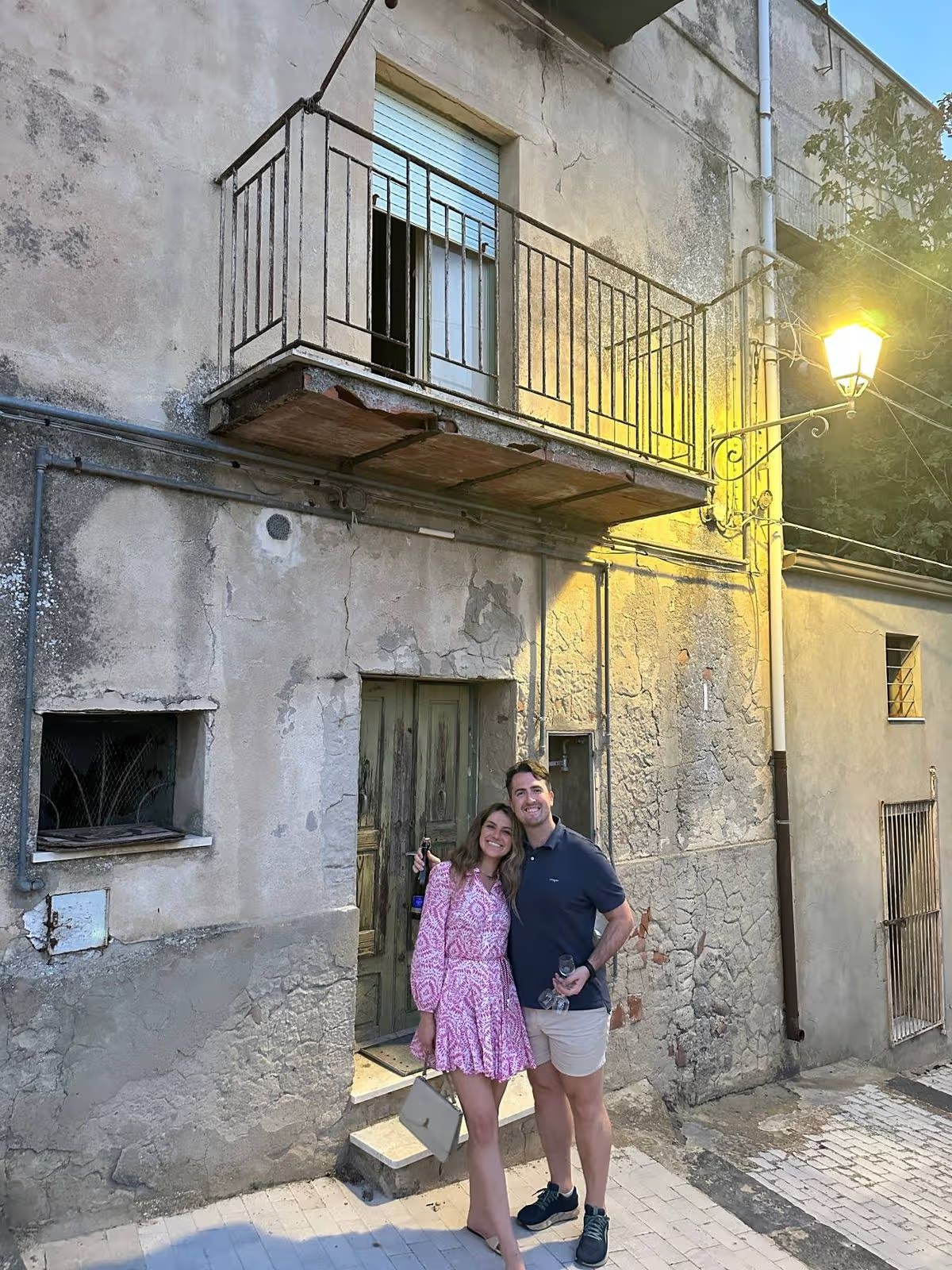
EXCLUSIVE: Rae Knopik, 31, was always determined to find out more about her Italian roots, and now she’s able to dive into her history further than she ever imagined after winning a €1 (86p) home in Troina with the love of her life
Couple meet in Italy and win €1 house
A couple managed to snap up a €1 (86p) home in Italy after finding love in the romantic country. Rae Knopik, 31, had always been determined to explore her Italian heritage, and now she’s able to delve into her roots further than she ever dreamed possible. The social media personality, who has amassed over 35,000 followers on Instagram eager to follow her adventures, opened up about how she managed to secure her dream home alongside her fiancé Declan Norrie, 31.
Rae, who is American, explained that her family originally hails from Sicily. Her ancestors ended up settling in the US when her great-great-grandmother and great-great-grandfather emigrated, despite her great-great-grandmother being reluctant to do so at the time.
Rae explained: “She never learnt English and never smiled in her family photographs. I found her so fascinating and I wanted to return to my Sicilian heritage.”
Eventually, Rae relocated to Florence, where she lived for a period of time. It was there that she met Declan, the man she is now set to wed.
“I met the love of my life when I was in Florence. Four weeks after meeting him, I was on a plane to Australia, and I’ve been here ever since,” she added.
However, when Covid struck, the pair began browsing the internet for travel videos while they were unable to venture far from home, and it was during this time that they stumbled across the €1 (86p) property in Troina. While it’s not something many people would seriously contemplate without a lot of thought, they simply thought “why not?” and threw their names into the hat.
After taking part in a series of interviews, they heard nothing for quite some time — but then everything changed in an instant.
Rae added: “They waited for about 12 months. We didn’t tell anyone about it in case the house didn’t pan out but, in May 2022, they said ‘you have won the house, would you like to come see it?'”
The couple flew over in June and snapped it up almost immediately. They later found out that roughly 60,000 people had entered for the property, meaning they had truly struck gold.
When asked about the condition of the property, Rae said: “We knew it was going to be a complete renovation. We didn’t know how long it’d been since someone had lived in the house.
“They clean it up, but you know it’s going to be a complete renovation. We didn’t even think we’d have running water so we were pretty pleased with the house.
“It was over 60 years since someone had lived in it. It is a complete renovation journey.”
The couple must now carry out a full overhaul of the property, entirely at their own expense. There are also certain conditions they are required to adhere to.
Renovation regulations, however, can vary considerably depending on the area when it comes to €1 properties. It’s therefore essential to thoroughly research the rules before putting in an application for any property.
She also pointed out that people can have the wrong idea about purchasing them. They are far from simple bargains, as Rae explained that a considerable amount of effort and money is required to make them habitable.
Nevertheless, Rae has ambitious plans for the property, and the couple are also planning to tie the knot in Italy, with some of the locals even intending to come along. For this young pair, they may well end up returning to the very place that sparked their whirlwind romance.
When asked to describe Troina, Rae said that as you drive towards it, it looks like “a castle in the sky”, adding that “it’s quite romantic”. She now hopes the home will be transformed into a stunning retreat for them to share with loved ones once the renovation is complete.
“I want my family to use it,” she added. “Me and Declan want to settle there at some point for months or even years, but I hope it will be used by my family.”
ROME — President Trump’s attacks on Italy’s premier have had an unintended consequence.
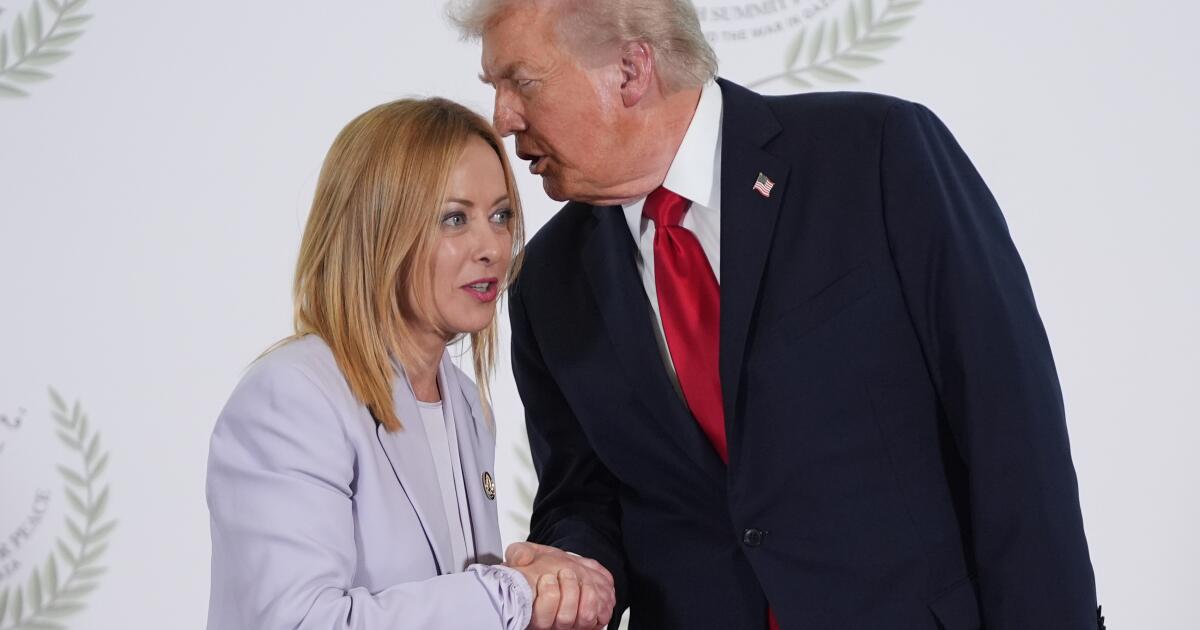
After Trump questioned Italy’s reliability as a wartime ally and claimed Giorgia Meloni had groveled for his attention, European leaders rallied to Meloni’s side, thawing what had been a frosty relationship over her hard-right political roots.
It is the latest example of how the often divisive American president is helping to draw Europe closer together.
European leaders are finding more reasons to coordinate on defense, tariffs and foreign policy as they confront wars in Ukraine and Iran, a ballooning trade deficit with China, and threats from Russia. That leaves Trump, who has often preferred to negotiate with European countries individually, with less ability to do so, analysts say.
“Most of the mainstream leaders realize that Europe is getting squeezed between China and America, and so, if not now, then when?” said Sudha David-Wilp, vice president at the German Marshall Fund. “They need to act as a bloc in order to maintain Europe’s place in the world.”
This newfound European unity could be tested next week at a NATO summit in Turkey.
European leaders rally around Meloni
Meloni’s spat with Trump has helped her strengthen ties with European leaders once wary of her party’s post-fascist roots.
A pivotal moment came in March when she wouldn’t allow U.S. bombers headed to the Middle East to use a base in Sicily without parliamentary approval.
For years before then, France and Germany often kept Meloni outside the small-group talks that helped shape Europe’s response to major foreign policy crises. That persisted into 2026 amid disagreements over the Russian war on Ukraine, including Meloni’s rejection of a proposal by Britain and France to send European troops there following a possible ceasefire.
But Trump’s escalating attacks on Meloni — who called Trump’s criticism of Pope Leo “unacceptable” — helped shift the dynamic, prompting European leaders to rally around her.
After all, they, too, have been on the receiving end of Trump’s barbs.
Meloni was firmly in the fold at a late June meeting in Berlin with the leaders of Germany, France, Britain and Poland. And she met the next day with French President Emmanuel Macron in southern France — the first bilateral summit since the pandemic.
Europe’s nationalist parties are adjusting
Even nationalist parties across the continent once aligned with Trump are recalibrating their stances because his trade policies and war with Iran are proving unpopular with voters.
In France, far-right leader Jordan Bardella recently blasted U.S. actions as “foreign interference” and described Trump as “erratic” and “extremely unsteady.” Bardella had previously welcomed Trump’s brand of nationalism as a “wind of freedom.”
In Germany, leaders of the far-right Alternative for Germany party have criticized the U.S. military campaign against Iran. The co-leader of the party, Tino Chrupalla, said in March he was “extremely disappointed” with Trump, whom he had viewed as a politician who would avoid new conflicts.
The changing rhetoric comes as elections approach, putting more focus on domestic issues.
“This pushes everyone to consider a European horizon more than an international one,” said Lorenzo Castellani, a political analyst and professor at Rome’s LUISS University,
Beyond Europe’s biggest powers
These dynamics are playing out beyond the European Union, from the Arctic Ocean to the Balkans.
When Trump threatened to take Greenland by force, protests erupted in its capital, Nuuk, and in the Danish capital of Copenhagen. Leaders across the political spectrum bristled at the threatened infringement of European sovereignty and feared it could shatter the already stressed NATO military alliance.
In Albania, a luxury development being planned that is linked to Trump’s family business has become a major political issue, drawing protests in June.
The political risks of close alignment with Trump were perhaps most clearly illustrated in Hungary. Prime Minister Viktor Orbán — long regarded as Trump’s closest ally in the European Union — was voted out of office in April despite support from the U.S. president and prominent figures in the MAGA movement.
An analysis by the consultancy Maplecroft suggested that negative perceptions of the Trump administration may have weighed on Orbán politically.
Meloni’s balancing act
Though Meloni remains closely aligned with Trump on issues like immigration and security, she has long diverged from him on Ukraine. Her steadfast support for Kyiv made her more palatable for European leaders and has been a key factor in forging a more united European front toward the U.S.
During their public spat last month, Meloni said her friendship with Trump came with a heavy political cost.
In her response to his accusation that she had “begged” to be photographed with him while at the recent G7 summit in France, she wrote on social media: “As for my popularity, being your friend has certainly not helped it, nor does it depend on my relationship with you.”
A recent Pew Research Center survey found that Trump is deeply unpopular in Italy. According to the survey, 83% of Italians have no confidence in Trump’s ability to do the right thing regarding foreign affairs. His handling of a range of issues — including Iran, tariffs, and U.S. immigration policies — received a low level of support.
With a national election due by 2027 — and possibly as early as next spring — Meloni faces mounting political pressures, including fallout from the unpopular Iran war and her former ties to Trump.
Voters across Europe could hold their own politicians accountable for the actions of an American president beyond their control, said Castellani, the political analyst.
“At a certain point, when voters see the price of gasoline rising because of a war perceived as distant, they ask Meloni for the bill, not Trump.”
Zampano and McNeil write for the Associated Press. McNeil reported from Brussels. AP writers Sylvie Corbet in Paris, Geir Moulson in Berlin, and Justin Spike in Budapest, Hungary, contributed to this report.
Pilots and cabin crew are set to strike on Sunday, with passengers facing cancellations and delays
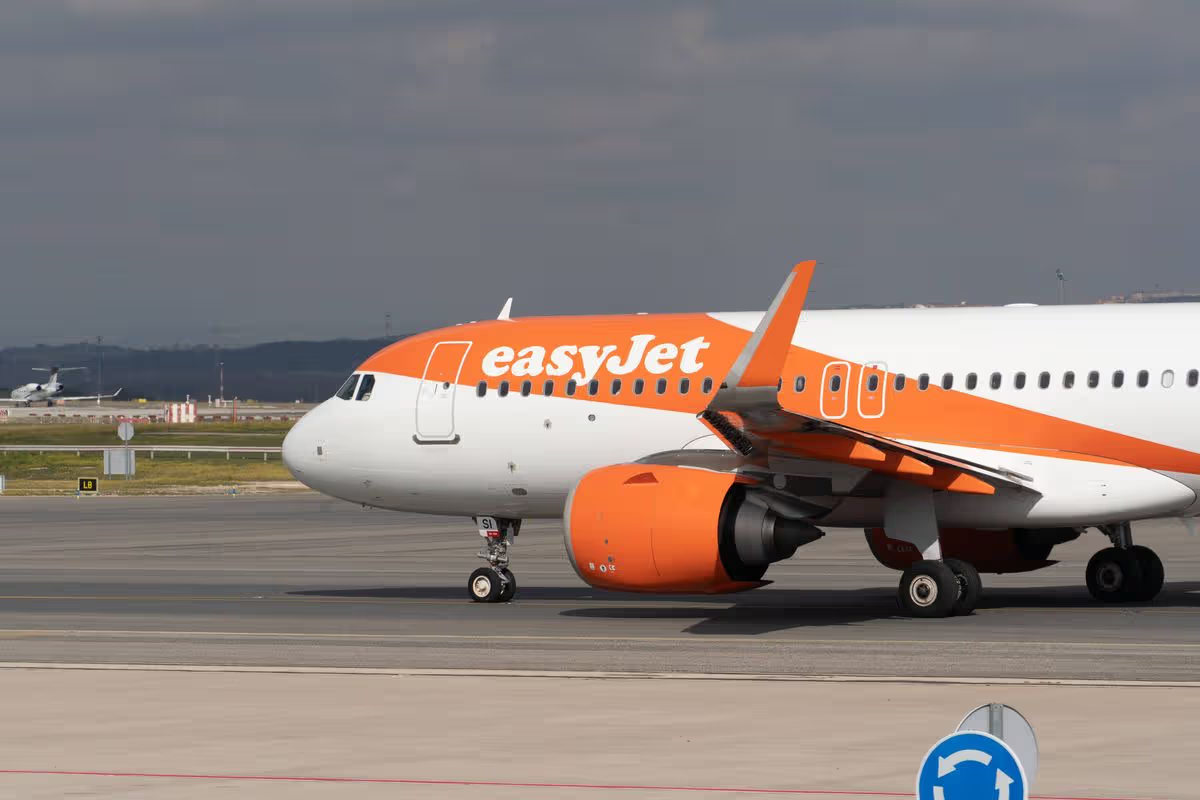
EasyJet travellers could face delays this weekend(Image: pablorebo1984 via Getty Images)
EasyJet passengers with travel plans should keep a close eye on their apps and emails for any last-minute updates arising from strike action in a popular holiday destination. Those flying to or from Italy on Sunday, July 5, face the risk of delays and cancellations.
Travel expert Kate Donnelly (@Thedonnellyedit) has reminded anyone who has trips booked to or from the European destination with the airline to monitor their inboxes carefully, as the situation could change at short notice. It comes as airline workers walk off the job this weekend, July 5.
She said: “If you’re travelling to Italy on July 5, you may well already be aware that multiple strikes are set to take place involving air traffic control and ground handling staff. But, now another one has been added to the calendar.”
Reports have confirmed that EasyJet’s Italian operation will strike on Sunday, July 5, with flights expected to be disrupted throughout the entire 24-hour period. According to the Strike Tracker website, the issue will last until midnight, with normal service expected to resume from Monday, July 6.
It says: “EasyJet pilots and flight attendants in Italy will stage a 24-hour national strike on July 5 (00:00-23:59), called by FILTCGIL, FITCISL, UILTUIL, UGL Trasporto Aereo and ANPAC. Flights to/from Italian airports may be cancelled or delayed. Travellers should check flight status with the airline.”
Content cannot be displayed without consent
Kate points out that this is an airline-specific issue, meaning it “won’t matter which airport you are arriving or departing from”. Any flight booked through EasyJet could potentially be affected, reports the Express.
She said: “If you are on an EasyJet flight, it could be impacted on this date. With this particular strike action, there is obviously the risk of delays, but also a higher risk of flight cancellations.
“Airlines will obviously do what they can to try and minimise disruption. Make sure you keep an eye on your app notifications and your emails because, if they do make changes ahead of the date, you will be notified directly by them first.”
Can I get compensation if EasyJet cancels my flight due to strike action?
If EasyJet reschedules your flight as a result of their own Italian pilots or cabin crew walking out, you are legally entitled to compensation. Internal staff strikes are not regarded as extraordinary circumstances.
If the airline can prove that your flight was rescheduled due to Air Traffic Control closing the skies or the airport’s baggage handlers staging a walkout, this is considered an “extraordinary circumstance”. In this case, you will receive a refund or be rebooked, but no additional compensation.
Even where the airline is not at fault, EasyJet is still legally obliged to take care of you. If your rescheduled flight leaves you stranded at the airport or stuck in Italy overnight, they are required to provide:
Free food and drink vouchers
Free hotel accommodation
Free transport between the hotel and the airport
To claim compensation or expenses from easyJet for a delayed or cancelled flight, you must submit a claim directly through the official easyJet Compensation Claims Portal or the easyJet Expense Claim Form. You will need your booking reference and your exact flight number.
Had enough of the heat? Grab your bags and enjoy utter luxury with Club Med prices in July
This article contains affiliate links, we will receive a commission on any sales we generate from it. Learn more
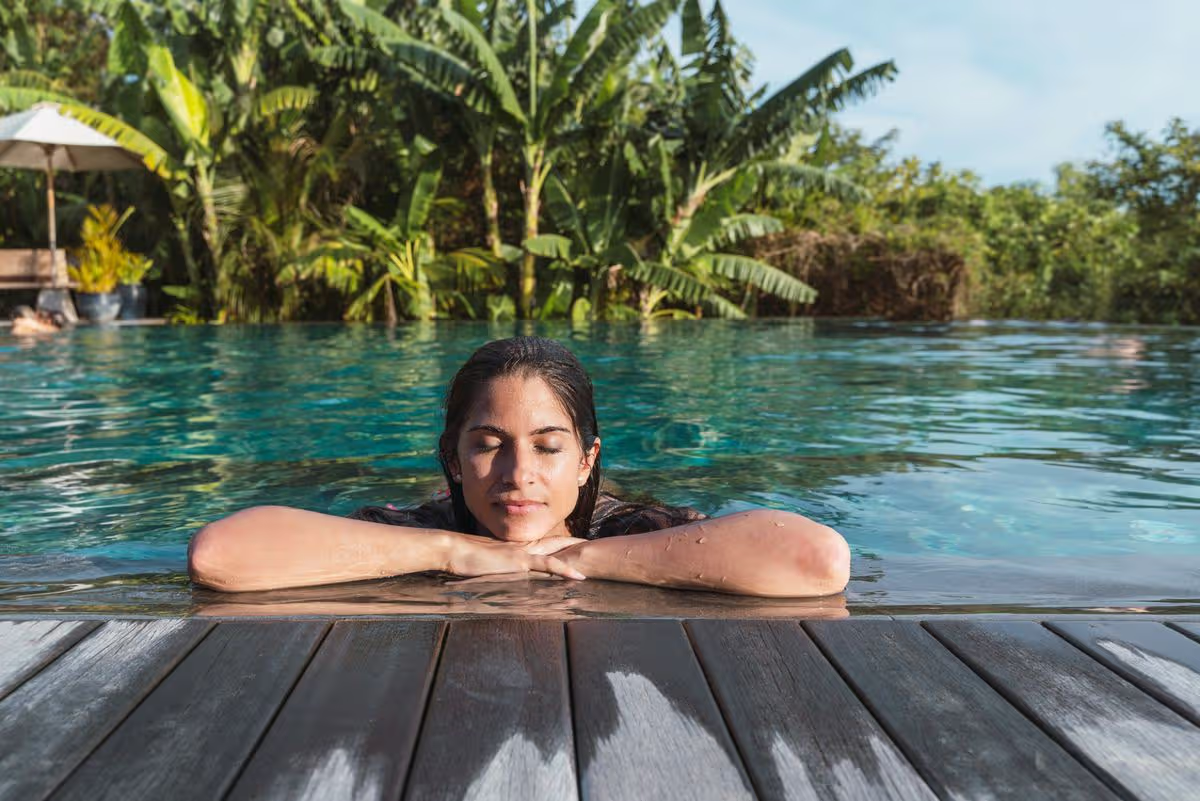
Escape the heat with a dip in the pool on a luxury stay, for less(Image: Getty Images)
Club Med has officially unveiled an enticing selection of last-minute summer holiday offers, giving spontaneous travellers the chance to save up to 15% on last-minute breaks. Tailored for those prepared to jet off at a moment’s notice, this time-limited promotion delivers sunshine, sandy shores and luxury at a fraction of the usual cost.
Holiday seekers will need to move quickly, however, as spaces are restricted across selected dates and properties. To maintain the excitement, Club Med will be introducing fresh departure offers every Friday, reports the Manchester Evening News.
Renowned for its upmarket all-inclusive holidays, Club Med provides idyllic getaways to stunning locations across the globe. Each package bundles together high-end accommodation with fine dining, unlimited activities and childcare into one transparent price, allowing guests to unwind and savour a much-needed escape.
READ MORE:
From the sun-kissed coastal havens of Europe to the palm-lined shores of the Caribbean, we’ve compiled some of the finest resorts for a last-minute holiday you’ll treasure forever.
Club Med Magna, Marbella
The 12-acre Club Med Magna Marbella is a sun-soaked resort ideally situated for reaching central Marbella. Visitors can unwind beside the family lagoon pool and the adults-only Zen Zone or get involved in numerous activities such as padel tennis.
The resort also features outstanding dining experiences at the sophisticated Suenos restaurant and the Tierra Gourmet Lounge, which offers regional specialities such as jamón ibérico. Additionally, there are four distinct bars where guests can savour a holiday drink.
Travel dates are available until July, with new deals added every Friday
As the sun-kissed shores of Marbella continue to be a favourite amongst British tourists, holidaymakers can also discover reduced Spanish getaways with savings of up to £600 through TUI. Budget-conscious last-minute escapes are also on offer for under £500 with Love Holidays.
TripAdvisor users have given the resort glowing reviews, with one describing it as ‘THE family destination’. One visitor said: “Our stay was simply amazing, everything is thoughtfully designed with families in mind. Our 4-year-old absolutely loved the kids’ club… the food was exceptional. There were so many spaces to explore with our children, and a great range of sports and activities to enjoy – paddle, tennis, Pilates and more.”
Another guest did observe that the location was an “Isolated village, without much personality, but a hotel of good quality, made for sport and sun.”
On the whole, though, the prevailing view mirrored this assessment, stating: “Very good experience at Club Med Magna Marbella. Everything was perfect, buffet, kids club and entertainment.”
Club Med Da Balaia, Algarve
Perched atop the famous red cliffs of the Algarve, Club Med Da Balaia is a paradise for golf enthusiasts. Visitors can also unwind beside the unique natural eco-pool or try their hand at numerous activities, including flying trapeze and archery.
The resort also features excellent dining at the Balaïa Restaurant and the relaxed lounge, offering authentic Portuguese fare alongside stunning ocean vistas. There’s also a spa on-site providing bespoke treatments and ample indulgence.
The Algarve remains a firm favourite holiday destination for Brits seeking a getaway. Currently, Love Holidays has last-minute, room-only Portugal breaks from £119 per person, while Golf Breaks provides specially designed escapes for devotees of the sport.
At Club Med, TripAdvisor reviewers are full of praise for the resort, with one declaring: “Our stay at Club Med La Balaia was simply fantastic from start to finish. Set in a stunning location overlooking a beautiful, family-friendly beach, the resort offers the perfect balance of activity and relaxation.”
While one visitor mentioned the pool was “ok, maybe a bit warmer may have been ideal,” the overall sentiment mirrored this review: “We had an absolutely wonderful week at Club Med de Da Balaia…three young children, parents and grandmother. Everything was there for a successful holiday: sunny weather and beautiful surroundings.”
Cefalù, Sicily
The flagship Exclusive Collection Cefalù is a luxury resort superbly located on the iconic Italian island of Sicily. Guests can unwind in the restored 18th-century palazzo lounge or participate in numerous activities, including sunset yoga and Europe’s first stand-up paddleboarding school.
After an action-packed day, the resort features impressive dining options to satisfy every appetite. Visitors are then treated to a delectable Sicilian-inspired menu that perfectly captures the authentic flavours of the region.
Travellers unlucky enough to miss out on a Club Med stay could try booking a break to Italy with British Airways Holidays instead. Alternatively, Citalia offers a range of specially selected tours and holidays in the region.
Guest reviewers overwhelmingly praise the resort, with one hailing it as a ‘magical place’ where “the food is to die for’. They also praise the stunning views and say that just being 10-15 minutes away from Cefalu town in Sicily ‘is something very special.”
While one guest noted that, unlike some other Club Med locations, there was “no show at happy hour, no barbecue, no themed evening.”
Most, however, enjoyed their stay with another adding: “We had an absolutely exceptional time at Club Med de Céfalù! The setting is simply magical: breathtaking views of the Tyrrhenian Sea, elegant architecture perfectly integrated with nature, and a serene atmosphere that immediately invites relaxation.”
Club Med Palmiye, Turkey
Positioned south of Antalya close to the Taurus mountains, Club Med Palmiye is a beachfront resort nestled along a Mediterranean shoreline. Holidaymakers can opt to unwind beside the family pool or the adults-only Zen pool, or take part in numerous activities including flying trapeze and wakeboarding..
When it comes to dining, the resort provides multiple choices to cater for varying preferences. Guests can sample Turkish cuisine in a restaurant boasting a duck pond moat. There’s also a vibrant beach bar to enjoy as evening approaches.
Turkey’s southern coastline delivers budget-friendly entertainment and warm weather. Some other excellent bargains to the area include all-inclusive getaways with On The Beach, and Mr and Mrs Smith provide thoughtfully selected stays in upscale accommodations.
As you’d anticipate from Club Med, the Palmiye resort has also garnered numerous positive reviews on TripAdvisor. One said: “A great place for early birds and those who like to do a lot of different activities, to learn tennis and padel, circus trapeze, sailing basics and waterski.”
While one visitor mentioned slight annoyances with “long lines” for waterskiing, the overall verdict reflected the sentiment of an ideal family retreat. Another repeat guest proclaimed: “We came here after 2 years again, it was a good experience, so we come again, and we will come every year.”
For those contemplating a long-haul escape, the Punta Cana Resort in the Dominican Republic offers particular appeal to families.
A perfect choice for summer holidays, it features Club Med’s biggest water park, boasting more than 20 slides and splash zones, alongside a luxurious spa..
With a 4.4-star rating on TripAdvisor, guests commend the beautiful beach and the expert instructors who help families master new pursuits, including golf and tennis. Meanwhile, the Club Med resort in Marrakech has been described as a ‘magical destination’ where visitors can swap unpredictable weather for golden sunsets, colourful souks and the enchanting scent of spices wafting through the streets.
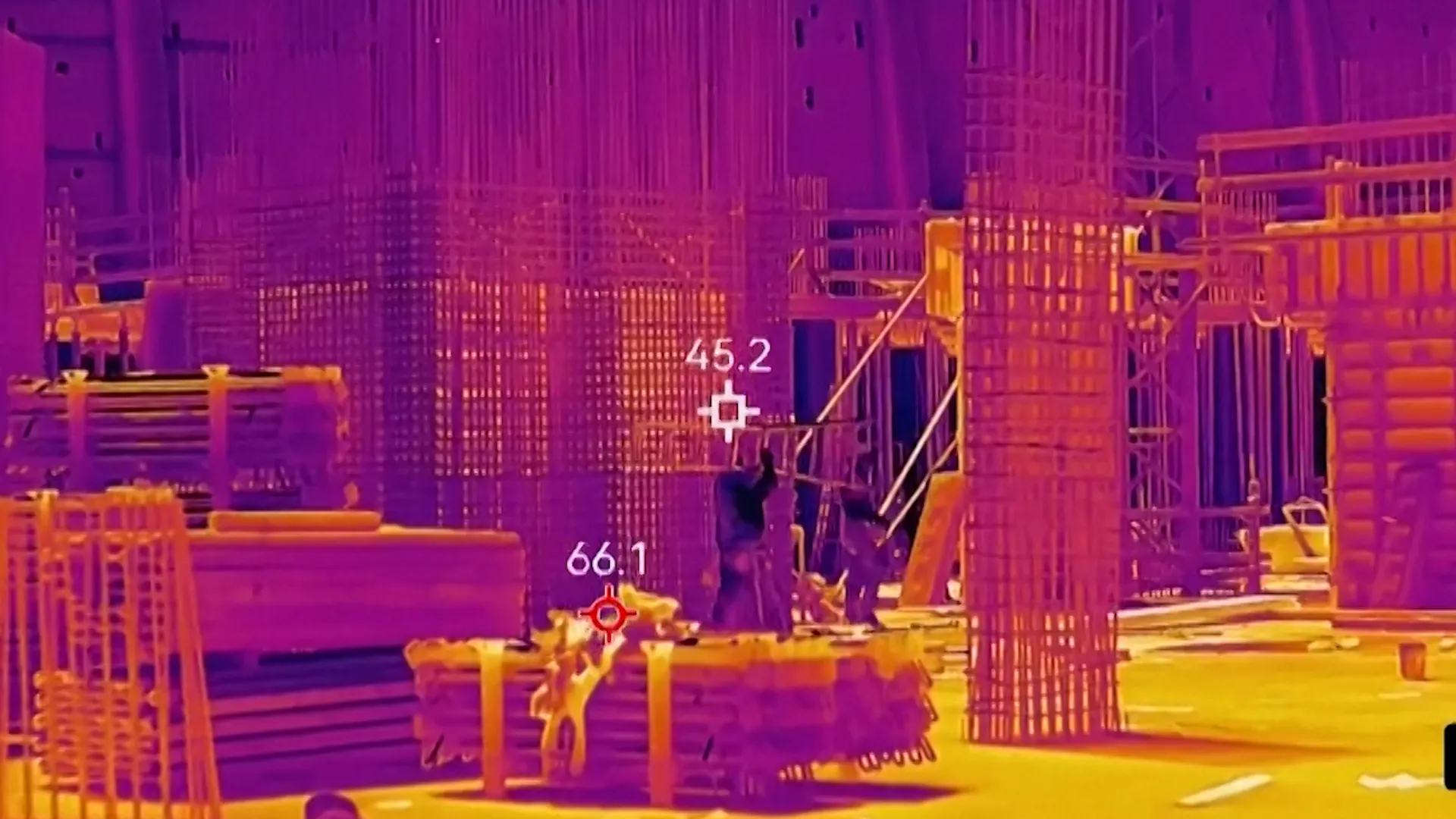
Activists have used thermal cameras to show the extreme temperatures outdoor workers are facing during Europe’s summer heatwaves, with one construction worker shown enduring surface temperatures above 65°C.
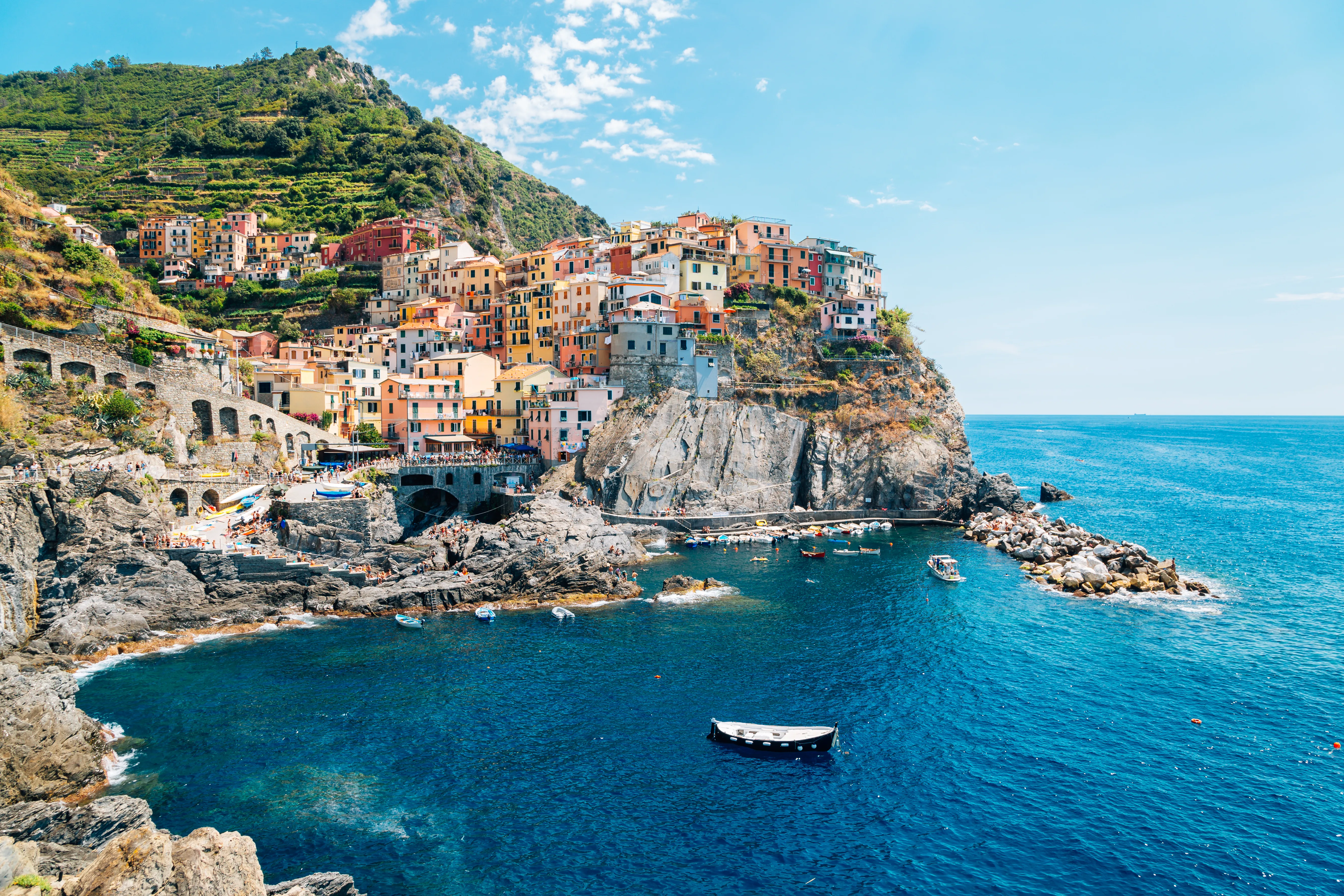
In fact, any shoes deemed unsuitable for the trails – along with flip flop and sandals – could score you a fine of between €50 (£43.15) to €2,500 (£2,157.31).
Staff across the park, as well as guards, can carry out checks including stopping visitors to check they have the right footwear.
If you are caught wearing them on the hiking trails you could be fined over £2,000Credit: Getty
If you don’t have the right footwear, you could get fined on the spot or not be allowed to use the trails.
One trail where flip flops are banned is the famous Blue Path, which connects all five villages in the park.
The path takes between five and eight hours to walk from end-to-end, or longer if you want to explore the villages.
To do the Blue Path, you will usually need a Cinque Terre Card, which gives you access to the trails as well as local shuttle buses and museum discounts.
Flip flops are allowed in some areas though, including the villages in the park – Monterosso al Mare, Vernazza, Corniglia, Manarola and Riomaggiore.
The park isn’t the only spot in Italy where you can’t wear flip flops though.
In Capri, a law that was created back in the 1960s bans people from wearing noisy shoes.
This includes flip flops, as well as squeaky sandals and even wooden clogs.
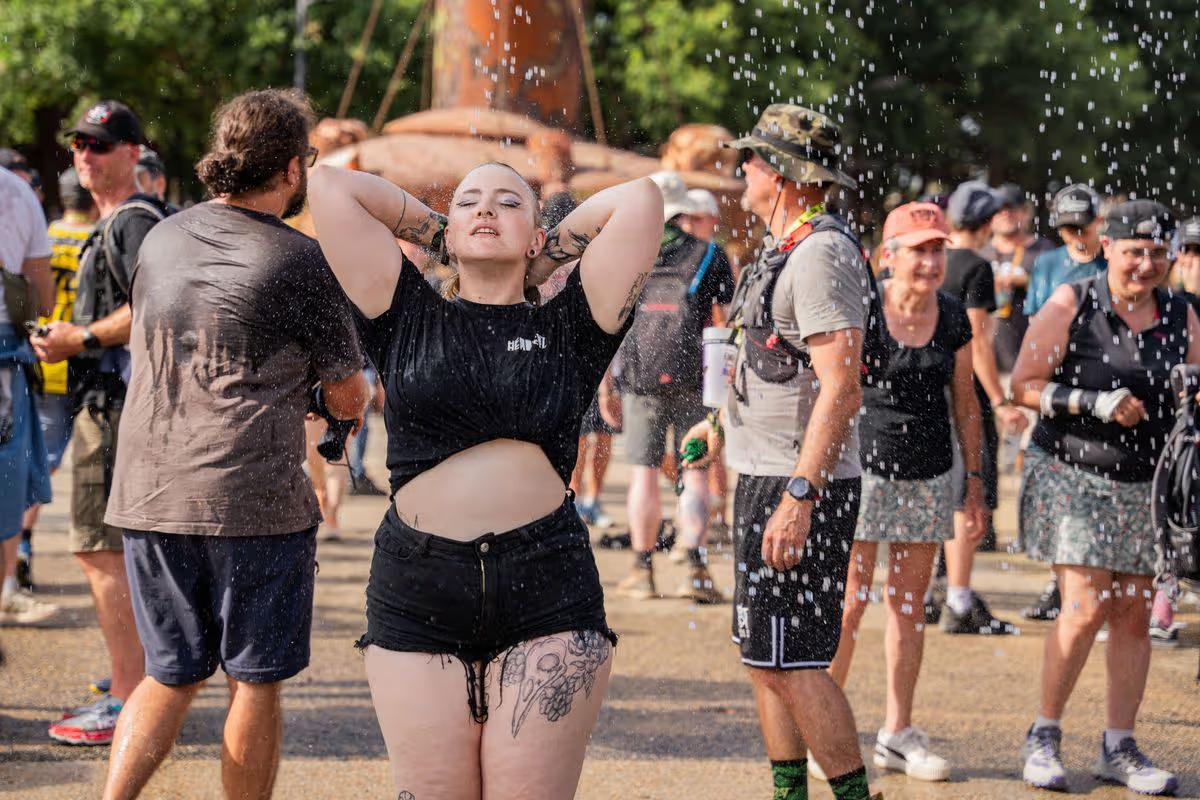
Festivalgoers pass under a water spray to cool down during the heatwave at the Hellfest festival site in Clisson, Loire-Atlantique, France
Health warnings have been issued for peopel across Europe including in France, Italy, Spain and Germany. France has been cancelling trains, concerts and sports events and cracking down on public drinking as an exceptional heat wave unfurled across parts of Europe.
Multiple drownings were reported as people sought relief in whatever water they could find About a third of France is under “red alert″ heat and temperatures reached 40C in some areas, in a country where air-conditioning is not widespread.
The forecast for Monday is even hotter. The Eiffel Tower and other Paris venues set up misting stations to cool crowds, among a raft of measures introduced by authorities to minimise risks. Tourists in Rome dunked in fountains.
Spain’s Basque Country cancelled some sports and cultural events. More than 200,000 people across Europe died from heat-related causes over the last four years, and most of the fatalities were preventable, the World Health Organisation’s Europe office said this month.
More above-average temperatures are expected this summer, which can cause heat exhaustion and life-threatening heat stroke. Human-caused climate change is tied to increasing extreme weather events and UN climate agency projections say the next five years should shatter more heat records.
A rapid study found that human-caused climate change was responsible for killing about 1,500 people in an unusually early European heat wave in May. In this latest European hot spell, French media reported that four children drowned on Saturday.
Summer drownings are an annual problem that health authorities say worsens during hot spells. France’s annual Music Day on Sunday was of particular concern. The nationwide summer solstice celebration involves thousands of concerts in village squares, rave venues and Paris clubs, bringing communities together and increasingly drawing British and other international visitors.
Some of the concerts outside Paris were cancelled. The French government banned public drinking in “red alert” zones, and ordered organisers of music day events to limit alcohol consumption to “preserve emergency services and allow medics to concentrate on taking care of the most vulnerable”.
Scores of French trains were cancelled, and the national rail authority dispatched thousands of extra staff to deal with potential problems as the heat threatened rails and electrical cables. Authorities are notably worried about people living in the baking streets, and elderly people in nursing homes or isolated in their homes.
About 15,000 older people died in France in a 2003 heat wave that became a national reckoning. The government mobilised emergency services and military forces for reinforced wildfire readiness, imposed tightened surveillance of water supplies to France’s many nuclear reactors, and ordered 845 schools to close on Monday.
Spain kicked off the summer with large parts of the country on alert because of temperatures expected to hover around 40C — even in the interior of Basque Country, a northern region that typically experiences cooler temperatures. Authorities have suspended outdoor sports and cultural activities in the region.
The heatwave is expected to scorch Spain at least until Wednesday. In Italy, authorities expanded heat warnings — referred to locally as “red flags” — to eight cities on Sunday in northern and central parts of the country.
Temperatures there are mostly in the upper 30s. At one farm outside Milan, owners set up fans and sprinklers to keep cows cool, while visitors to Milan Fashion Week huddled under parasols and clutched fans.
In Rome, tourists dunked their arms and occasionally their faces into the city’s famed fountain pools. The German Weather Service is forecasting temperatures of up to 37C for Monday and Tuesday, and up to 39C on Wednesday.
A 23-year-old man drowned on Saturday in a lake near Rheinstetten in the south-western region of Baden-Wurttemberg, the German news agency dpa reported. Three other people are missing after swimming in the Rhine River, a police spokeswoman told dpa.
Thunderstorms also threatened regions in Germany and Poland. French Prime Minister Sebastien Lecornu is convening a new government heat crisis meeting on Sunday, and ordered government ministers to plan for better adapting France to heat waves in the future — including “via air conditioning, if necessary”.
A travel journalist who travelled to Italy said they were nearly caught out by a rule introduced in the city of Venice to improve cleanliness
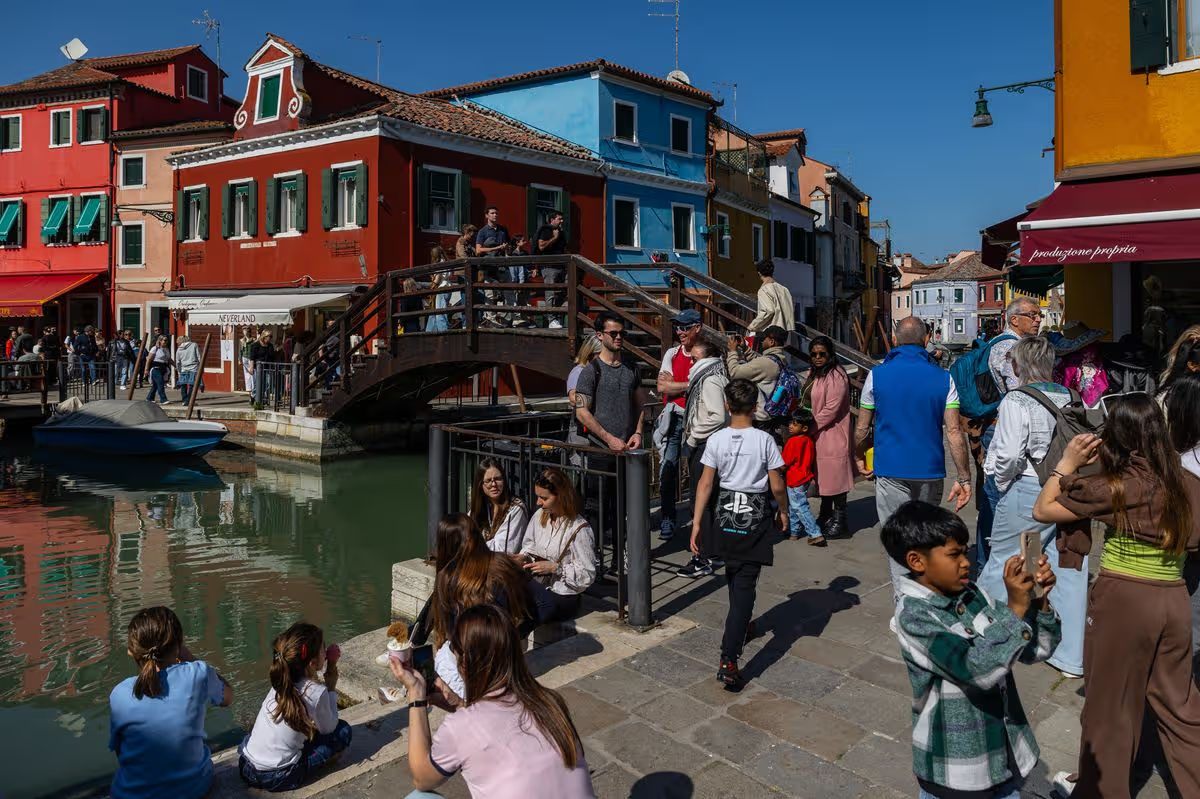
A journalist has talked about what happened when they visited Venice(Image: Emanuele Cremaschi/Getty Images)
A travel journalist who visited Venice said they nearly lost £86 after breaking a rule they didn’t know about. Joey Handler, a travel journalist, spent six days in Italy travelling around the iconic European country, visiting various popular cities en route.
However, in one of their latest pieces, they admitted they had five regrets from their time in Italy which formed part of a two week trip around Europe.
Reflecting on the trip, back in October 2022, the Joey touched on how at one point in Venice they were stopped by the authorities for doing an act they thought was innocuous.
Joey said the incident occurred after she had completed a walking tour and went for some lunch. Eventually, after passing full restaurant after full restaurant she said she cut her losses and bought an ice cream before deciding to sit down.
However, it was the sitting down that was the problem. The Business Insider journalist explained: “I eventually cut my losses and stood in line for gelato before sitting on a shaded step to enjoy it.
“As I was about to take my first bite, the nearby authorities waved their hands up and down at me — a gesture I could only take to mean ‘get up’. And there I was, committing an etiquette violation that, according to the City of Venice, may result in a fine of 100 to 200 euros.”
As well as being informed by the local authorities about the rule, tourists and others can also be informed by the local government website. On this rule, they said: “Do not consume food and drink sitting on the ground, do not sit or lie down on banks and foundations, monuments, bridges, steps, puteals and high-water walkways
“Fine: 100 to 200 euros DASPO – Urban banning order (offenders will be immediately banned from the place where the offence was committed).”
This means that offenders could be fined anywhere between £86.74 and £173.48 if they’re caught. On why such rules, which include not swimming in the canals, dumping rubbish, walking around in a swimsuit, feeding pigeons and seagulls, not cycling, and not bivouacking in public areas, are in place, the local authority say is to preserve the environment.
They explained: “Current regulations enforced by the Venice City Council Municipal Police forbid certain behaviour, in order to preserve urban cleanliness and landscape, and also for reasons of safety and public hygiene.
“The violation of such regulations involves the application of administrative fines – from €25 to €500.”
This isn’t the only charge people can face if they travel to Venice with tourists als facing an entrance fee which was introduced in 2024 by the city. This fee is around €5 (£4.34) and originally applied on peak days between April and July before being expanded.
However, the new mayor of Venice Simone Venturini, has talked about the possibility of increasing this to €50 (£43.37). He told Corrier della Sera: “If today it ranges from €5 to €10, my proposal is to increase it to €30 to €50.”
Whilst move was in part a reaction to the sheer number of tourists, opponents have warned it risks not being true to the city itself. Former mayor Massimo Cacciari went further and called for the scheme to be removed altogether: “There is no other city in Italy or Europe where you have to enter with a ticket, as though it was a museum.
“It is barbarous, uncivilised and, in my opinion, against the constitution. It is simply obscene. I thought that Venturini would be more intelligent than his predecessor and would scrap the fee.”
The Foreign Office has issued travel advice warning UK holidaymakers
Millions of Brits head to Italy each year(Image: Janoka82 via Getty Images)
British holidaymakers are being warned that they risk being slapped with a 500 euro fine when visiting one of the most sought-after destinations in Europe.
Millions of Brits are set to head overseas during the summer months, desperate for some sun, a change of scenery, as well as a well-deserved rest. The Foreign Commonwealth and Development Office (FCDO), the Government’s foreign affairs department, plays a key role in keeping UK citizens informed when travelling abroad – offering travel guidance covering more than 220 countries and territories across the globe.
In its travel advice for Italy, the FCDO cautions that “some Italian towns and cities have specific laws, and you could be fined for breaking them”. This, the FCDO noted, can include activities such as eating and drinking near major churches, historic monuments and public buildings.
It is also against the law to enter or bathe in public fountains across numerous towns and cities, including Florence and Rome, or to swim in the canals of Venice. The island of Capri is enormously popular with tourists and can be accessed by ferry from both Naples and Sorrento.
The stunning island nestled off Italy’s Amalfi Coast is celebrated for its Mediterranean charm and rich ancient heritage. However, visitors are being made aware that bringing any disposable plastic items onto the island – such as bags, cutlery, plates, cups, food packaging, trays and straws – is strictly prohibited.
Should you be caught doing so, you could face a penalty of up to 500 euros. Additional FCDO guidance regarding Italy adds: “Illegal traders operate on the streets of all major Italian cities. It is illegal to buy items from unlicensed street traders. If you do, you could be stopped by the local police and fined.
“It’s illegal to remove sand, shells or pebbles from coastal areas in Italy. You could face a large fine for doing so. It’s also illegal to collect various species of flowers, plants and herbs from mountain and wooded areas. For more information, check with the regional authorities of the area you’re visiting.”
If you’re searching for a Sardinian city break with a difference, Cagliari has stunning Mediterranean beaches, flamingos and ancient history – and it’s just a short flight from the UK
Lauren Gordon Emerging Audiences Editor and Octavia Lillywhite Acting beauty and wellness editor
12:53, 20 Jun 2026
This article contains affiliate links, we will receive a commission on any sales we generate from it. Learn more
Just 220 miles from Rome lies Sardinia, and in its south region, the city of Cagliari(Image: Getty)
If you’re contemplating a weekend escape this year, you’ve likely thought about one of Italy’s major destinations – timeless Rome or the enchanting cathedrals of Florence. Architecture, history, sunshine and some of the finest cuisine on the planet – Italian city breaks are difficult to surpass.
But here’s our suggestion – venture beyond the conventional and uncover something away from the masses, with even more on offer.
Roughly 220 miles from Rome sits Sardinia, and at the southern extremity the city of Cagliari is, according to my travel guide, “older than Rome”. It’s a city that combines multiple dimensions: ancient and contemporary, urban and natural, monumental and everyday.
Like Barcelona, it achieves the ideal balance between city and beach getaway. The beach, the largest stretch of sand I’ve witnessed in Europe, is merely 10 minutes drive from the centre, so you can transition from sipping cocktails in a rooftop bar in the Castello district, to barefoot walks along the shoreline.
And if you’re seeking a taste of nature, the salt flats – home to Cagliari’s flock of flamingoes – is a brief bus journey from the old town, reports OK!.
The historic core of the city is the Castello district, positioned on a limestone hill and surrounded by imposing walls. I had the privilege of exploring its delightful, narrow streets, and became captivated by the shaded piazzas and panoramic vantage points overlooking the Gulf of Angels.
While tourist favourites such as the Amalfi Coast and Rome continue to hog the limelight, Cagliari is steadily carving out a reputation as a must-visit destination — perfect for those seeking a hidden gem well away from the crowds. Here’s my ultimate itinerary.
Stay by the sea in Cagliari
You could always opt for the old town, but to truly soak up this coastal city, The MGallery Palazzo Tirso is a five-star boutique hotel tucked away in La Marina, one of Cagliari’s four historic quarters. From its rooftop terrace, you’ll be treated to stunning sea views alongside the magnificent sights of Castello.
For a holiday packed with rest and relaxation, Palazzo Tirso has everything you need, boasting a sauna, steam room, spa pool and a selection of L’Occitane-fuelled treatments. The 25-minute massage left me feeling as though I’d ascended into heaven.
The hotel also houses two restaurants: rooftop venue Cielo, offering all-day dining and aperitifs with DJs, and Terra, a genuinely gourmet spot showcasing prestigious recipes crafted by Palazzo Tirso‘s chefs.
My standout meal was at Sa Schironada, a charming little restaurant just a six-minute stroll from the Palazzo Tirso hotel. We shared a plate of traditional Sardinian bread and olive oil — which you simply can’t get enough of in Italy — and for my main, I tucked into a generous platter of mouth-wateringly delicious mussels in garlic and white wine sauce, accompanied by more Sardinian bread.
It was, needless to say, a glorious overload of carbs and seafood that left me fit to burst, but every single mouthful was absolutely worth it.
Spend a day flamingo spotting
Cagliari is extraordinary for its natural surroundings, so it’s essential you explore the Molentargius Salt Flats, where colonies of pink flamingos make their home. They’re situated within a protected park – a rare example of a lagoon ecosystem nestled inside an urban environment.
Alongside flamingos, you could also catch sight of the great white pelican, a cattle egret colony or, if you’re fortunate, the purple swamphen, with its metallic blue plumage and scarlet beak.
To enter the park, you can rent a bike for approximately €15 per day, or take a guided mini bus tour through the park, where they’ll provide a tour guide and a pair of binoculars.
Exploring the beach
Poetto Beach extends for several kilometres, and it’s among the defining features of local life. Far more than simply a beach, it’s a social hub: bustling throughout the year, where sports, relaxation, and community spirit converge.
The sheer scale of Poetto left me stunned. I’m accustomed to town beaches that are compact and pebbly, but this beach’s scenic expanse is magnificent.
From it, you also enjoy a stunning view of the Devil’s Saddle, the promontory at the precise centre of the Gulf of Angels and – according to legend – the location of the battle between good and evil. Good must have triumphed because the place is paradise.
Cocktails with a Michelin-starred chef
In an immersive cocktail experience courtesy of the Palazzo Tirso hotel, you can savour cocktail pairings crafted by Michelin-starred chef Pichaya “Pam” Soontornyanakij, aka Chef Pam – who received The World’s Best Female Chef status in 2024.
Her signature creations include Caviar-Crowned Tartare, Sun-Kissed Crab, and Squid’s Midnight Dip. Bite-sized masterpieces bursting with character, these are far from ordinary bar snacks.
Every piece is carefully designed to complement the drink alongside it, transforming an evening tipple into a truly curated occasion.
For wine enthusiasts, just 35 minutes north, tucked away amongst the rolling hills of Donori, lies Tenute Maestrale, a contemporary winery surrounded by undisturbed vineyards producing superb white, rosé and red wines, with tastings of three wines and traditional snacks starting from just £28.
When to visit Sardinia’s capital
Cagliari is stunning throughout the year, particularly during summer when the beaches and bustling streets truly come alive. For a genuine festival atmosphere, The Feast of Saint Efisio takes place annually from 1st-4th May.
It’s an 80km pilgrimage from Cagliari to Nora, retracing the route of Saint Efisio’s martyrdom. Thousands of participants, adorned in traditional costumes, accompany the saint’s statue on elaborately decorated ox-drawn carts.
It ranks amongst the longest and most ancient pilgrimages in the world, with the city traversed by a procession of 2800 people in traditional dress from across Sardinia, followed by 270 horsemen of Campidano, the Militiamen and the Guardiania.
How to book your Cagliari getaway
Rooms at MGallery Palazzo Tirso begin at £240 for bed and breakfast. You can reserve directly via the hotel’s website, or via Booking.com or Expedia.
The Italian prime minister has accused Trump of making up a story that she ‘begged’ him for a photo at the G7 summit in France.
Published On 19 Jun 202619 Jun 2026
A diplomatic row between United States President Donald Trump and Italian Prime Minister Giorgia Meloni has escalated, with Italy’s top diplomat cancelling an upcoming visit to the US.
At issue is Trump’s claim that Meloni “begged” him for a photograph during the Group of Seven (G7) meeting in France earlier in the week.
Recommended Stories
list of 3 itemsend of list
“She’s probably happy I talked to her. I didn’t have to talk to her,” Trump reportedly told the Italian La7 network. The broadcaster only published a dubbed Italian version of the interview, not the original English version.
“She begged me to take a picture with her. She wanted a picture with me so badly. I wouldn’t have taken it, but I felt sorry for her.”
On Friday, Meloni posted a video answering Trump’s statement, saying that “certain things deserve an immediate response”.
“Donald Trump’s statements are completely fabricated. I am frankly stunned,” she said. “I don’t know why the president of the United States behaves this way toward his own allies. After all, this isn’t the first time this has happened.”
The head of a far-right party who campaigned on an anti-immigrant platform, Meloni had long been seen as one of Trump’s most supportive counterparts in Europe.
She had met with Trump at his Mar-a-Lago estate following his 2024 election victory and attended his inauguration in January 2025.
However, the pair have diverged during Trump’s second term over several issues, including support for Ukraine amid Russia’s invasion, the US-Israeli war with Iran, Trump’s threats to seize the Danish territory of Greenland and his criticism of Pope Leo.
In her video, Meloni said it was a “shame” Trump did not show “the same resolve toward the enemies of the West, toward the enemies of the United States” as he did in his statements against her.
She accused the US president of being “much more accommodating” to foes than allies.
“But there’s one thing he must remember: Italy and I do not beg,” she said.
Shortly after Meloni posted the video, Italian Foreign Minister Antonio Tajani said he was cancelling a weekend trip to the US, where he was scheduled to attend a business forum in Miami, Florida and meet with US Secretary of State Marco Rubio.
He called Trump’s reported statements “serious and offensive”. Several other government officials also weighed in.
Justice Minister Carlo Nordio suggested Trump’s remarks besmirched the legacy of the US soldiers who died during World War II.
“The thousands of crosses marking the graves of American soldiers who died to free us from Nazi-Fascist dictatorship did not deserve such a painful blow to our fraternal ties,” Nordio posted on X.
Defence Minister Guido Crosetto said he did not believe Meloni would ever beg for a photo, “not even under threat”.
“Jokes of this kind do no good to anyone: neither to the USA, nor to Italy, nor to the alliance,” he said.
The White House did not immediately respond to Meloni’s comments.
IT’S NO lie that Brits love a European break but behaving badly could turn your trip into a holiday nightmare.
Across Europe, countries have their own rules relating to tourists – from banned beach items to strict curfews.
Sign up for the Travel newsletter
Thank you!
And if you want to avoid a hefty fine this summer, you’ll want to know what the rules are for each country.
France
A number of major cities in France and holiday hotspots ban drinking alcohol between 4pm and 8pm, including along the Paris riverbanks and the French Riviera.
When it comes to heading to the beach, make sure to not take any of it home with you as a souvenir.
Taking shells for example, is considered environmental theft and you could be fined €250 (£216.60) for doing this.
Swimming is always a fun activity, but men heading to the pool need to make sure you leave the swimming shorts at home.
Due to health and hygiene laws in the country, men in France must wear Speedos.
Some places ban drinking alcohol on the streetsCredit: Getty
Spain
Most cities in Spain have banned drinking alcohol on the streets, such as Madrid, Barcelona and Valencia.
Also don’t jump from your hotel balcony into a pool – you can get kicked out of the hotel and fined.
Across Spain, make sure to not smoke or vape on the terraces of bars or restaurants or at pools.
Make sure to not jump from a hotel room into a pool as you could get kicked outCredit: Alamy
But in Barcelona and popular Balearic and Canary Islands spots, smoking and vaping are banned across all beaches.
Fines for this range from €30 (£25.99) to €2,000 (£1,732.79).
In Barcelona, Malaga and Majorca, make sure not to walk through the streets in a bikini or swimming trunks. If you do, you could face a fine of up to €300 (£259.92).
Also when you are at the beach in Cullera, Calpe or Tenerife, don’t reserve a spot with a towel as you could have your belongings confiscated and be fined up to €3,000 (£2,599.18)
Portugal
In Albufeira, Portugal, there is a Code of Conduct in place for touristsCredit: Getty
In Portugal, there are some rules to be aware of when visiting.
Portable speakers are not allowed to be loud on beaches or you could be fined or it could be confiscated from you.
Fines vary between €200 (£173.28) and €4,000 (£3,465.58) for this.
Also in Albufeira, a Code of Conduct introduced last year is still in place for tourists this year.
The rules basically reinforce that visitors must act respectfully, with public nudity and drinking alcohol on the street banned.
Italy
There are a number of different rules across Italy you’ll need to follow.
In Florence, there are a number of streets where you can’t sit and eat outdoors.
The rule has been introduced to ease congestion.
In Italy, you cannot wear flip flops on the Cinque Terre hiking trailCredit: Getty
Also in Florence, e-scooters are banned in the city centre.
In Liguria, Portofino, over the summer, travellers who walk the cobbled streets either barefoot, in swimwear or topless can be fined.
You could also get fined between €50 (£43.32) to €2,500 (£2,165.99) if you are caught hiking Cinque Terre in flip flops.
Drinking alcohol in the streets is also banned with fines up to £2,568.
And make sure not to sit or lie down on a path, wall or park as this can also get you fined. Fines range from £22 to £433.
Over in Milan, you cannot smoke outdoors unless you are 10 metres away from other people. If caught breaking the rule, you could be fined between €40 (£34.66) to €240 (£207.93).
In Rome, you cannot drink out of a glass bottle on the streets after 10pm and all outdoor drinking is banned after midnight.
While in the city it is also worth being aware that when you visit the famous Spanish Steps, not to sit, eat or drink on them.
And in Venice, it is illegal to feed the pigeonsCredit: Getty
This is to protect the 18th century marble from damage and stains and if you are caught doing this, you could get a fine between €250 (£216.60) and €400 (£346.56).
And if you are visiting the Italian island of Sardinia, make sure you don’t dig a hole, build a sandcastle or take sand or shells from the beach as you could be fined up to €3,000 (£2,599.18).
Heading to Venice? Make sure you don’t feed the pigeons – it is illegal and you can be fined between €25 and €500.
Greece
In Greece, there are some different rules compared to other countries.
For example, at archaeological sites like the Acropolis and the Parthenon you cannot wear high heels.
If you are caught with high heels, you could be fined up to £760.
Drinking on the streets is also not allowed.
And if you are caught topless in public you could face a fine of up to £250.
Even though it may be tempting, make sure you don’t take pebbles from Greek beaches either as you could be slapped with a £771 fine.
It is also worth knowing that across Greece, sunbeds and umbrellas have been banned on 251 beaches and the beaches that do have sunbeds allowed, at least 70 per cent of the sand must be without sunbeds.
Fans of the classic cocktail, which has seen a huge resurgence in popularity in recent years, should head to this sunny city where you can enjoy a glass of the summery orange drink for just one Euro
The Aperol Spritz has become one of the most popular cocktails on holiday(Image: Getty Images/Westend61)
Head to the Mediterranean during the summer months and you’ll often see tables laden with oversized glasses of Aperol Spritz. The iconic orange cocktail has become a holiday staple, whether it’s served at a pavement café in a cobblestoned old town, or a beachfront bar with plastic chairs.
But like many so aspects of holidays, the price has been steadily rising in popular resorts, turning it into a costly treat. However, there are still places where you can pick up an inexpensive cocktail, and one city has been named the cheapest spot to enjoy an ice cold Aperol.
Travel money provider eurochange has put together an Aperol Spritz index, tracking the top ten cheapest destinations in Europe where you can enjoy this summery cocktail without worrying about your bar bill, and luckily the least expensive spot is just a three-hour flight from the UK.
According to the research, Naples in Italy is the cheapest place to order your Aperol with the average cost coming in at €2 (approximately £1.73), but one bar is famous for serving these sunset cocktails for just one Euro (approximately 86p). Don’t expect a fancy cocktail bar if you visit Cammarota Spritz as it consists of tables crammed into an alleyway and drinks served in plastic cups, but the lively atmosphere has seen it receive a raft of positive reviews, with one saying it was: “Our favourite bar in Naples, no messing about with ‘drink-in’ or ‘takeaway’ prices, no service charges, just good cheap Spritz.”
And after a few Euro spritzes, you may find yourself craving another Napoli staple; the city is the birthplace of modern pizza, and you’ll find plenty of hole-in-the-wall places where you can pick up a slice. A popular late-night snack is pizza al portafoglio, also known as ‘wallet pizza’ as it comes folded and served in paper so you can devour it while walking back to your hotel.
Naples is ideal for as a spring or autumn city break, offering about 210 sunny days a year, so you can enjoy the winding historic streets and visit attractions such as Museo Cappella Sansevero, home of the stunning marble Veiled Christ statue.
Explore the city’s ancient sites at Napoli Sotterranea – underground Naples – taking you through an extensive network of streets and squares built under the surface by Romans and Greeks. Pass throw the narrow tunnels of the aqueduct, see old air raid shelters from World War 2, and climb through a hatch into the ancient Roman theatre of Neapolis.
Naples also has a variety of beaches, including some small stretches of sand on the outskirts of the city. These urban beaches can be small and busy during heatwaves, but they’re perfect for when you simply want a quick dip in the Med.
You can also take buses further down the coast for a day at a beach club or a public beach. Close to Naples you’ll find Gaiola Beach, famous for its islets that rise from the sea that can be crossed by bridge. Or the craggy coastline of Scoglione Marechiaro, famous for its turquoise waters.
Have a story you want to share? Email us at webtravel@reachplc.com
Since Israel launched its latest war on Gaza, Palestinian activist Mohammad Hannoun has been a figurehead in demonstrations across Italy.
Wrapped in a keffiyeh and waving the national flag, as head of the Palestinian Association in Italy he delivered impassioned speeches condemning the Italian government’s military cooperation with Israel and demanding an end to the genocide in Gaza.
Recommended Stories
list of 3 itemsend of list
The 63-year-old Jordanian national, who lives in the port city of Genoa and is an architect by profession, was arrested in December, under the accusation of having raised around 7 million euros ($8.1m) through his non-profit Association of Solidarity with the Palestinian People (ABSPP) that allegedly ended up in Hamas’s coffers.
Italian Prime Minister Giorgia Meloni expressed “appreciation and satisfaction” when the so-called “Operation Domino” led to the arrest of nine people, including Hannoun, described by investigators as the “head of the Italian cell of the Hamas organisation”.
But Italy’s Supreme Court of Cassation last month demanded a “comprehensive re-evaluation” of the evidence, describing it as too “generic”, according to the ruling seen by Al Jazeera.
The material presented in court consisted of Israeli intelligence sent to Italian authorities, as well as open-source online information whose provenance and reliability had not been established.
Hannoun’s case is not an isolated one.
Last month, Amin Abu Rashid, a Dutch national of Palestinian origin, was acquitted in the Netherlands by the Rotterdam District Court of financing Hamas, after a years-long legal battle landed him in jail for a year. Similarly, the evidence had relied on Israeli government reports and unverified newspaper articles.
The UK-based advocacy organisation CAGE International described Abu Rashid’s acquittal as a “direct rebuke of the use of Israeli intelligence as the basis for prosecuting Palestinian humanitarian organisers in Europe”.
Anas Mustapha, head of public advocacy at CAGE, told Al Jazeera that relying on Israeli evidence to prosecute Palestinians was tantamount to relying on Chinese information to try Hong Kong dissidents.
This practice constitutes a “major threat to the rule of law in Europe”, he said.
“Israeli intelligence is being laundered through European legal systems to suppress Palestinian civil society,” said Mustapha. “The aim is to disrupt and restrict activism and action against the state of Israel.”
‘Battlefield evidence’
Nicola Canestrini, who is among the lawyers representing the nine defendants including Hannoun, liaised with Abu Rashid’s representatives over the course of several months to challenge the use of so-called “battlefield evidence” in both Italian and Dutch courts.
The term refers to evidence collected by military forces during active hostilities or combat operations. Just like a standard crime scene, the collection of this type of evidence under European requirements must be presented with a chain of custody – the chronological documentation of the seizure, transfer, analysis, and storage of the materials.
In Hannoun’s case, the files alleging cooperation between the ABSPP and Hamas’s military wing were not accompanied by a chain of custody, but sent by an Israeli official “whose personal details remain confidential”, according to court documents.
The only indication of their provenance was the word “Avi”, which Canestrini said was later found to mean Israeli intelligence official Avi Abramson.
The evidence purportedly originated from hard drives found in Gaza’s hospitals as they were taken over by Israeli forces, namely in al-Shifa, al-Rantisi and Jabalia, as well as the Maghazi refugee camp and other locations across the Gaza Strip.
United Nations experts and organisations, including Human Rights Watch, have found that Israeli military actions in Gaza, including the forcible displacement of patients from those hospitals, amount to war crimes.
Canestrini and his legal team argued in court that unverifiable evidence collected by a state undergoing trial at the International Criminal Court (ICC) and the International Court of Justice (ICJ) was inadmissible.
“There’s a short-circuit in the legal system that is very troublesome for the rule of law,” the lawyer told Al Jazeera. “We’re seeing a foreign state under investigation for war crimes and crimes against humanity bringing evidence forward, and Italian authorities copying and pasting it in their reports.”
Additionally, rather than file an arrest warrant through established international cooperation channels, Israel sent the documents through a “spontaneous information exchange”. That measure bypasses oversight mechanisms established by the European Union Agency for Criminal Justice Cooperation (Eurojust) and the UN Military Evidence Guidelines.
“I believe this was done wilfully to avoid checks and balances that guarantee the respect of human rights,” the lawyer said.
Al Jazeera contacted Italian officials Riccardo Perisi, director of the Service for Combatting Extremism and External Terrorism, and District Attorney Marco Zocco, who declined to comment on Hannoun’s case due to ongoing legal proceedings. Avi Abramson, the Israeli intelligence official identified as the source of the evidence, did not respond to requests for comment.
According to the European Legal Support Center (ELSC), an independent organisation offering legal assistance to organisations and individuals advocating for Palestine, European states have systematically deployed “counterterrorism” and “public order” measures against Palestine solidarity efforts.
ELSC found a pattern of repression to “demobilise opposition to the Israeli genocide against Palestinians” in the United Kingdom, Germany, the Netherlands, and France, “advanced through alliances between state actors, Zionist lobby groups, and arms manufacturers”.
In Italy, activities around Palestinian solidarity are increasingly “equated with terrorism,” Italo Di Sabato, the national coordinator of Osservatorio Repressione (Observatory on Repression), an Italian organisation focused on tracking state control and defending the right to protest, told Al Jazeera.
The observatory documented cases in which pro-Palestinian activists were targeted by lawsuits, searches and administrative sanctions. “The objective is stifling any real form of solidarity with the Palestinian people,” Di Sabato said.
He argued that accepting opaque evidence to be used against Hannoun would have created a dangerous legal precedent.
“Israel’s aim was to have a free zone where everything is permitted,” Di Sabato said. “The political meaning of the Supreme Court of Cassation’s ruling is that the rule of law cannot be suspended when we deal with Palestine.
“What today constitutes the basis for the repression of Palestinian activism could tomorrow be the basis for the repression of any form of dissent.”
NEWLYWEDS Dua Lipa and Callum Turner were spotted kissing in the sea as he squeezed her bum while on their honeymoon in Italy.
The pop star, 30,and heractorhusband Callum, 36, have been enjoying married life at the luxury San Domenico Palace hotel in Taormina near Catania.
Sign up for the Showbiz newsletter
Thank you!
Dua Lipa and Callum Turner were spotted kissing in the sea as he squeezed her bumCredit: BackGridThe newlyweds are enjoying a luxury honeymoon in ItalyCredit: BackGrid
The couple arrived at the hotel on Monday after they drove from Palermo where they had a huge wedding bash that was attended by several A-listers.
In new photos, the pair looked every inch the loved-up couple, as they soaked up the sunshine in Sicily.
They were pictured in the sea on a float with their hands all over each other.
In one snap, Dua was seen on top her new husband as they enjoyed a kiss, while he couldn’t resist but give her bum a squeeze.
The pair looked loved-up with their hands all over each otherCredit: BackGridThe happy couple were seen enjoying a string of kisses in the waterCredit: BackGridThe One Kiss hitmaker was seen soaking up the sunshine in an inflatable floatCredit: BackGridThe actor and the pop star have been making the most of married lifeCredit: BackGrid
Dua showed off her toned figure in a silver thong bikini and matching top.
They were also seen with their eyes firmly locked on each other as they gazed into each other’s eyes, with Dua placing her hands on his face.
The duo looked smitten as Callum wrapped his arms around Dua’s waist.
The One Kiss hitmaker animatedly pulled an excitable expression with her hands up in the air.
Dua was then seen relaxing on the inflatable float, while Callum held onto the side.
Dua showed off her incredible figure in a silver thong bikiniCredit: BackGridThe singer looked in her element as she soaked up the sunshine in the metallic two-pieceCredit: BackGridThey were seen gazing into each other’s eyesCredit: BackGrid
She showed off her sunkissed glow in the two-piece swimwear and wore a black and white bandana on her head.
The couple are staying at a lavish £4k-a-night Italian hotel.
Earlier this week, they were seen walking through the town of Taormina hand-in-hand as they explored.
The hotel where the pair are residing for their honeymoon might be recognisable to some, this is because it was made famous in the HBO series The White Lotus.
Dua partied with A-listers including Donatella Versace at her wedding in Italy last weekendCredit: ReutersDua and Callum first married at Old Marylebone Town Hall in London on May 31Credit: Madison Phipps
Known for its stunning clifftop setting and jaw dropping view of the volcano Mount Etna, the resort is more than fit for the A-listers.
The hotel is The Four Seasons Hotel San Domenico Palace, and it was the main location for the second season of the hit HBO series.
The pair tied the knot last weekend prior with a string of famous faces in attendance.
Elton John, 79, who flew in by private jet for the ceremony, and Dua are close friends after they collaborated on the track Cold Heart in 2021.
Italian fashion designer Donatella Versace, 71, was also at the wedding, held in the grounds of the 18th-century Villa Valguarnera in Bagheria, and is believed to have designed Dua’s dress.
Other A-list guests at their Sicily bash included Brit actor Joe Alwyn, American actress Grace Gummer and her husband DJ Mark Ronson, and pop star Charli XCX and her husband George Daniel, the drummer with The 1975.
Some guests were understood to have signed non-disclosure agreements to protect the privacy of the star-studded three-day celebrations, which kicked off on Friday.
The villa where the lavish wedding bash happened, which also featured in HBO drama The White Lotus 2, is widely considered one of the most historically and culturally significant villas in Sicily.
Amid the vow renewal, following their London ceremony, music legend Elton John serenaded the couple with a rendition of his smash hit ‘Your Song’ in an incredibly emotional and touching moment.
The ceremony kicked off at 5pm and lasted for around an hour with guests arriving from 3:30pm in a whopping 60 minivans.
The bride and groom turned up in a luxury Mercedes Maybach Class V at 3pm prompt to greet their guests ahead of the nuptials.
A new beach rule for a European hotspot has been introduced for anyone aged between 10 and 65, but one traveller has dubbed it the ‘most unusual beach rule of 2026’
An ‘unusual’ beach rule has been introduced at a popular holiday hotspot (Image: Getty Images)
A popular European destination that welcomes thousands of Brits each year is introducing a new beach rule for everyone aged 10 to 65.
A day out at the beach, be it in the UK during the summer months or in Europe, is often accompanied by an umbrella to help provide shade from the balmy sun. However, holidaymakers of a certain age have been banned from using a parasol on a beach in Sardinia, Italy.
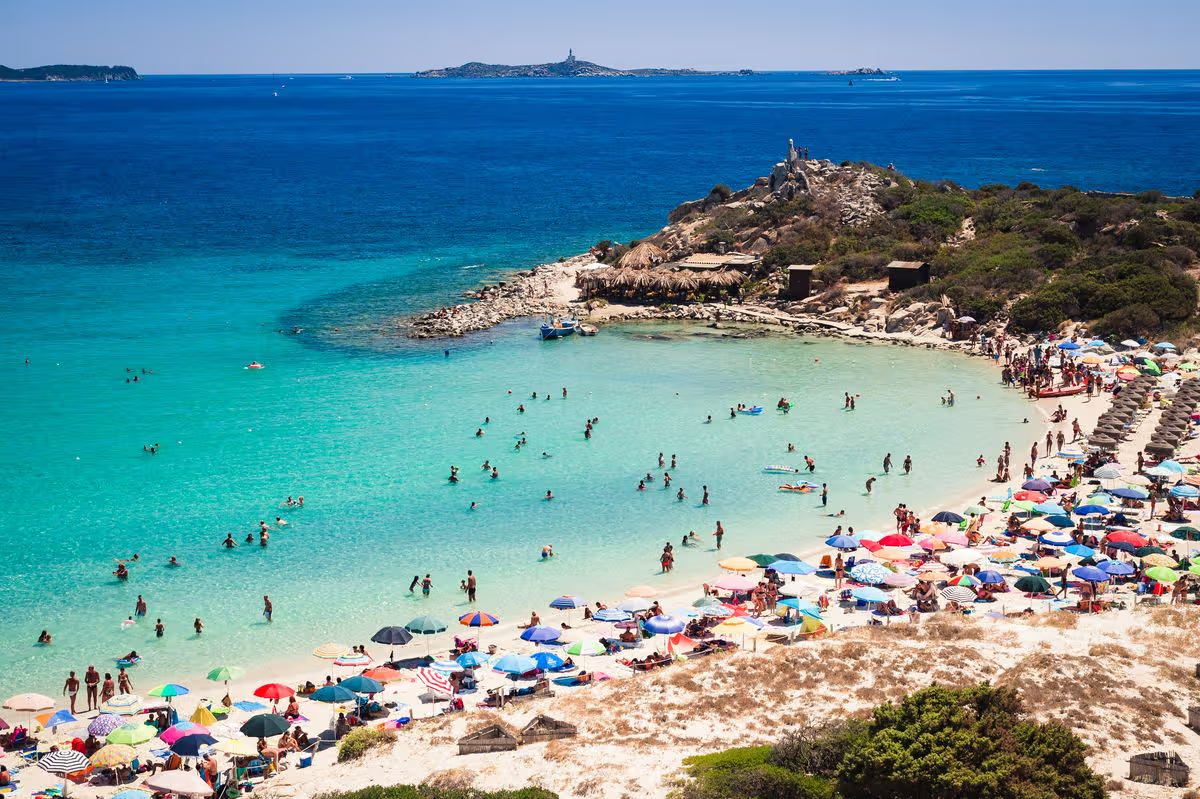
Under the new rule introduced earlier this month, Punta Molentis Beach, near the popular resort town of Villasimius in Sardinia, only allows families with children under 10 years old or people over 65 to put up an umbrella. It comes as the Italian beach limits the number of visitors to 150 at a time and puts in strict restrictions following wildfires in July last year.
In addition, visitors arriving at Punta Molentis Beach on foot will need to pay a fee of €10 (£8.60), while those arriving by boat will pay €5 (£4.31). Meanwhile, only 70 cars will be able to access the beach per day until 31 October, and reservations will be compulsory to visit, the Villasimius council website reported.
The town council also said in a message: “It’s therefore necessary to limit human impact and ensure protection of this heritage for future generations.”
The rules are in place throughout the summer season and aim to protect the beloved beach following last summer’s wildfires. Holidaymakers were forced to flee the wildfires by boat after they erupted in late July 2025, with around 100 hectares of Punta Molentis said to have been destroyed by the blaze, including cars in the beach car park.
However, not everyone is happy with the new rules. One person commented on X, formerly Twitter: “Banning shade in the Mediterranean summer heat sounds incredibly dangerous.”
A second said: “Guess I’m just gonna roast under the sun then, sounds like a fun time for my skin.” While a third added: “This might be the most unusual beach rule of 2026.”
One more wrote: “Banning basic sun protection for specific age groups under the guise of ‘saving space’ is a massive skin cancer risk waiting to happen.”
However, the council noted on its website that: “The ecosystem of Punta Molentis is one of the most valuable in our territory but also one of the most fragile.”
Meanwhile, in the Italian hotspot of Sorrento, people are banned from wearing swimwear away from beaches and pools. Anyone caught out could face fines of up to €500 (around 431), while Portofino, Positano and Capri have also enforced similar rules.
The rule is to avoid tourists walking around town or going to lunch in swimsuits or bikinis. But it doesn’t just apply to swimwear, as those caught walking around topless could also face a fine.
Do you have a travel story to share? Email webtravel@reachplc.com
A new Eurocamp in a location just a couple of hours from the UK offers easy access to a Blue Flag beach and one of the biggest waterparks in the entire country – and the perfect day trip is just a short drive away
16:58, 08 Jun 2026Updated 17:07, 08 Jun 2026
This article contains affiliate links, we will receive a commission on any sales we generate from it. Learn more
A nine-hectare water park will be at the heart of the new holiday park(Image: Eurocamp)
Already looking for your summer 2027 holiday? A new Eurocamp opening could be the perfect choice if you like a beach and pool holiday, but also want to be in close proximity to an incredibly popular city break destination.
Set to open in May 2027, hu Eraclea Mare is a brand-new camping village on the Adriatic coast near Venice, covering over 100-hectares and set on a spectacular long stretch of Blue Flag beach. Bookings are already open on the Eurocamp website from May 1 next year, just in time for a half-term trip to Italy.
And according to Eurocamp, at the heart of its newest site will be a nine-hectare water park – the largest ever built in an Italian holiday village. It’ll have six pools, including Olympic and semi-Olympic sized options, lagoons, waterslides, and a 40,000 square metre solarium.
But the pool won’t be the only place to make a splash. The park is being built on the long sandy Spiaggia Pannolenci where you’ll find calm, shallow waters for swimming and basking in the Italian sunshine. Or you can enjoy the shaded wooded trails that lead you to the nearby small town of Eraclea Mare.
Back on dry land, you’ll find activities including a tree experience and zip line, mini golf, paintball, and a huge variety of sports to enjoy with the whole family.
The mega-park will also include “30 food and drink outlets” according to Eurocamp’s website, including authentic Italian and Venetian restaurants, gelato shops, and bars. At night, a 1,500 outdoor theatre will host a range of family-friendly entertainment including music and lively events.
The new Eurocamp will also be well-located for day trips to Venice, so you can combine a sightseeing city break with a family holiday. The ferry port of Punta Sabbioni is just a 40-minute drive away, and you can park your car and take a boat in to avoid the traffic. The ferry is a picturesque 30-minute journey and an amazing way to arrive in the city. It docks close to the iconic Piazza San Marco, where you’ll find many of Venice’s top sightseeing spots just a short walk away.
Outdoor enthusiasts will also be able to visit the Dolomiti Bellunesi National Park, otherwise known as the Dolomites, a vast range of mountains and dense, unspoilt forest popular for hiking, sailing on serene lakes, and canyoning your way through its incredible landscape.
The Adriatic coast has a huge range of holiday parks along sparkling sea, and if you’re looking to visit this summer you can choose from existing accommodation options such as the 4-star Holiday Center Pra’ Delle Torri. This site has camping, a holiday village with mobile homes, plus an onsite hotel, with all guests enjoying access to a waterpark with slides.
If you prefer a hotel, you’ll also find the Park Hotel Pineta in Eraclea Mare. Set on a private sandy beach and surrounded by dense pine trees, this relaxed accommodation offers spacious family rooms and apartments.
Have a story you want to share? Email us at webtravel@reachplc.com
PARIS — U.S. Defense Secretary Pete Hegseth gave a D-day anniversary speech Saturday that appeared to link immigration by sea to the wartime liberation of Europe, warning that the freedom won by Allied troops could prove temporary if leaders failed to defend it against today’s “invasion.”
Hegseth, speaking at the Normandy American Cemetery in Colleville-sur-Mer overlooking Omaha Beach in northwestern France during commemorations for the 82nd anniversary of the June 6, 1944, landings, said that today, “different European beaches are stormed by different dangerous ideologies.”
“Beaches in Spain and Italy and Greece and Bulgaria. Boats and men arrive,” he said.
“When will European capitals do something about that invasion? Or is it too late?” he added. “I pray not, and I believe not.”
Hegseth did not use the word “immigration,” but his remarks echoed broader Trump administration criticism of Europe over migration, borders and what U.S. officials have described as censorship of nationalist and far-right voices.
On Saturday, British Prime Minister Keir Starmer’s office condemned Vice President JD Vance’s remarks blaming immigration for the killing of Henry Nowak, an 18-year-old British student stabbed to death in Southampton, even though both Nowak and his killer were British.
In December, the Trump administration’s national security strategy warned that Europe faced the “prospect of civilizational erasure” and could become “unrecognizable” within 20 years.