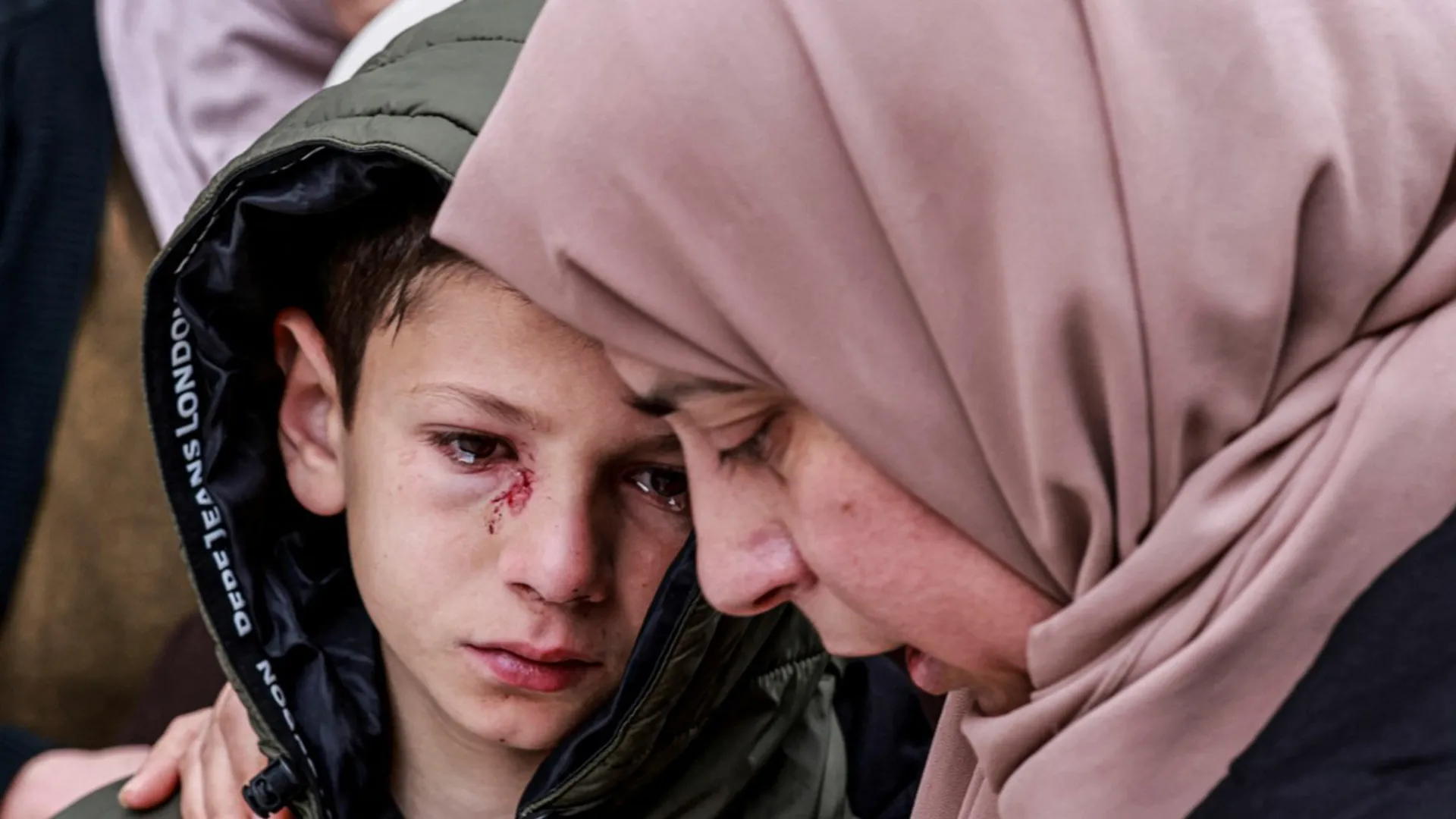
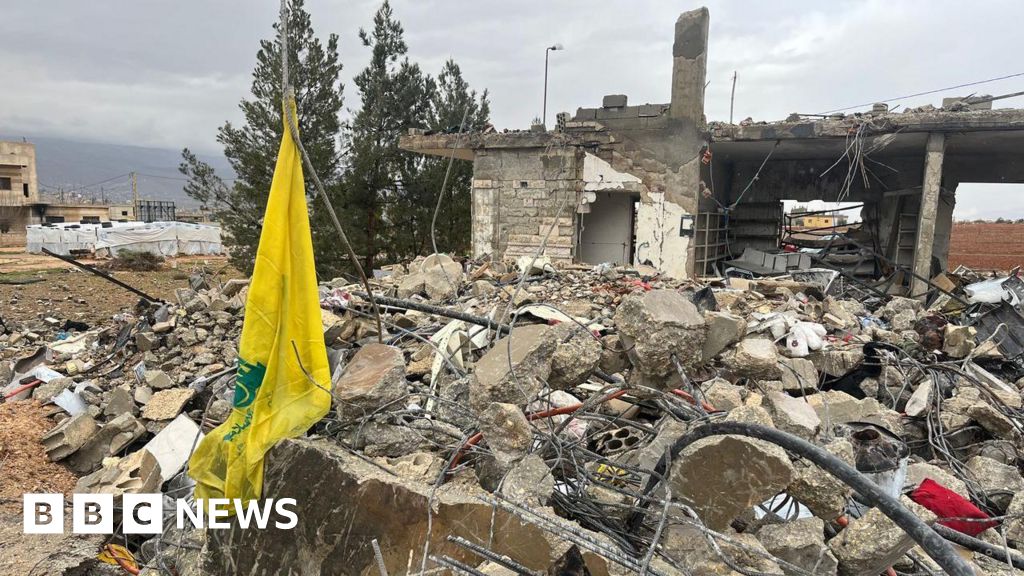
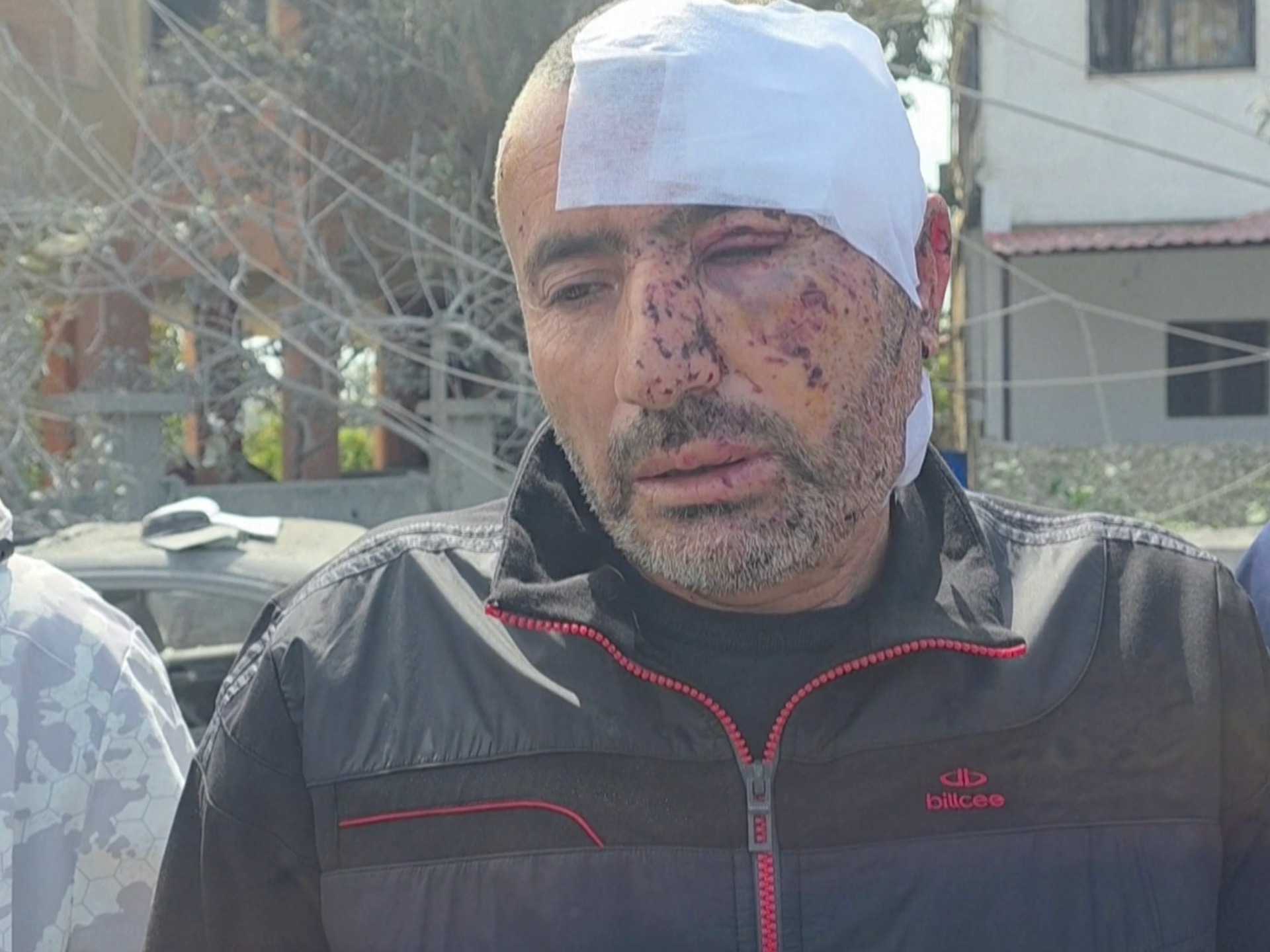
Two Palestinian brothers are the only survivors after Israeli troops killed their parents and two siblings in Tammun in the occupied West Bank, according to Palestinian health authorities. The boys say soldiers opened fire on their family car and beat them after the shooting.
A relative tells BBC those killed were civilians and not Hezbollah operatives, but the Israel Defence Forces says it was targeting “terrorist infrastructure”.
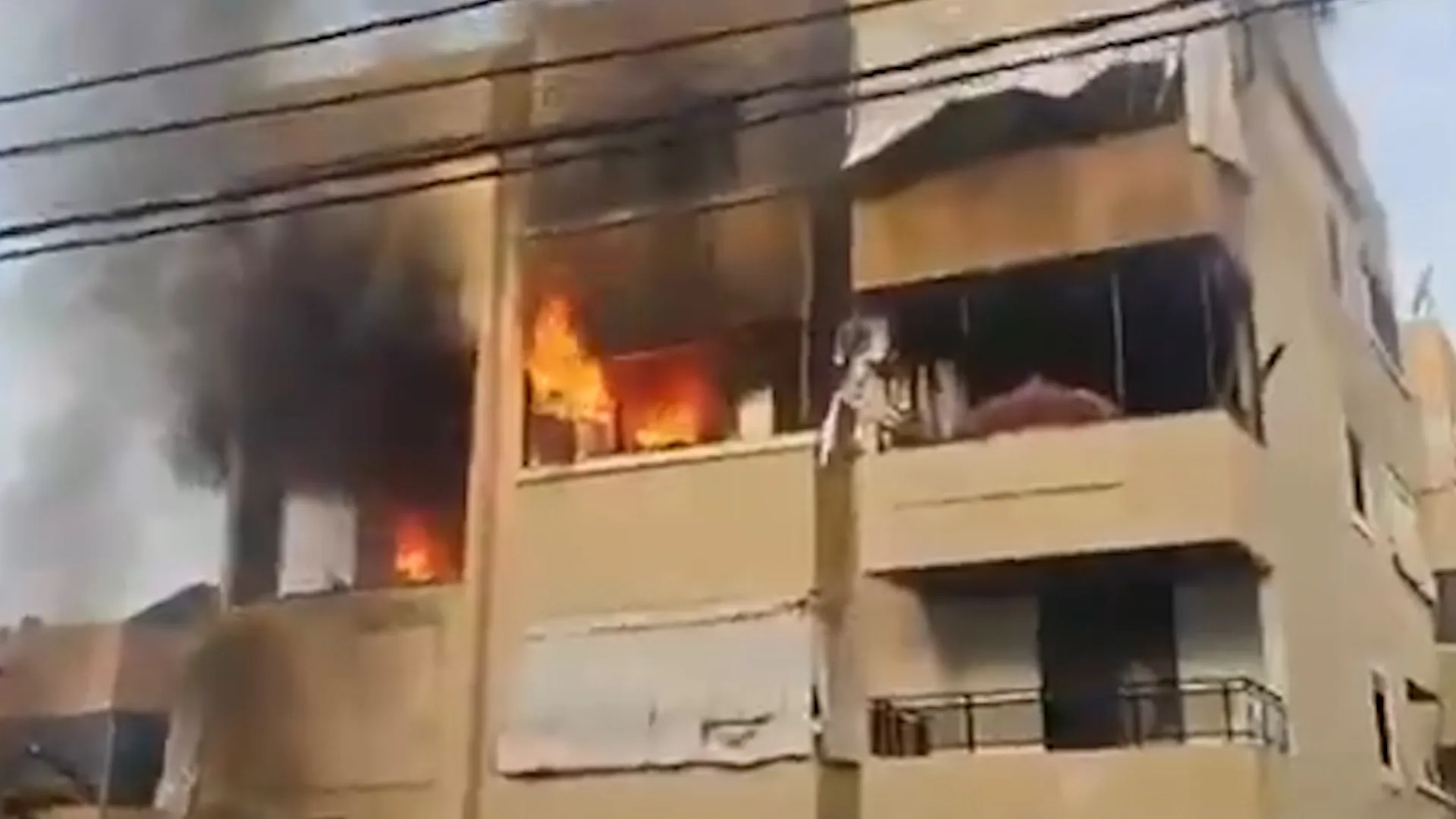
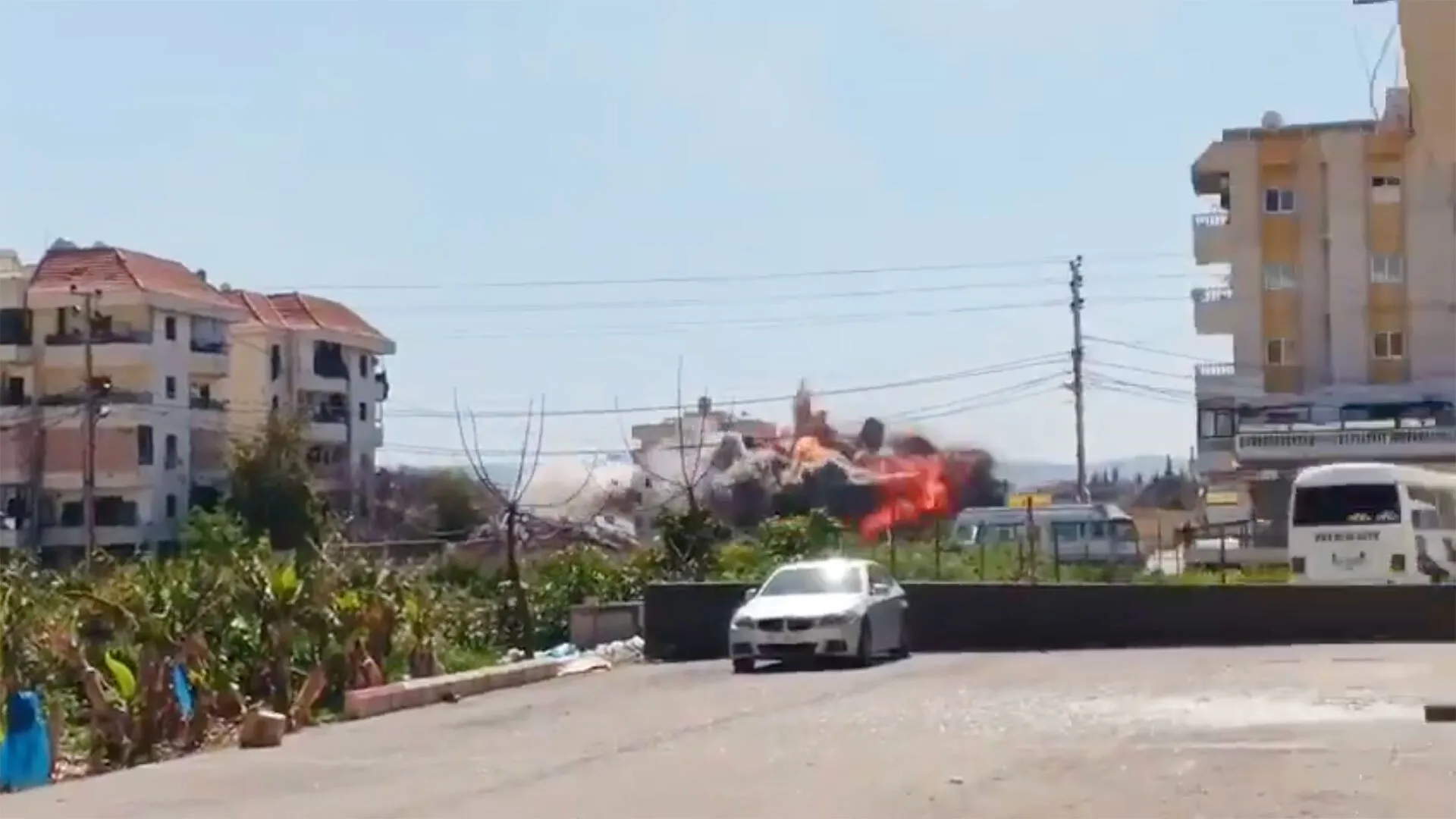
Video shows a large fire engulfing an apartment building in the Sidon area of southern Lebanon, following reports of an Israeli attack that killed four people.
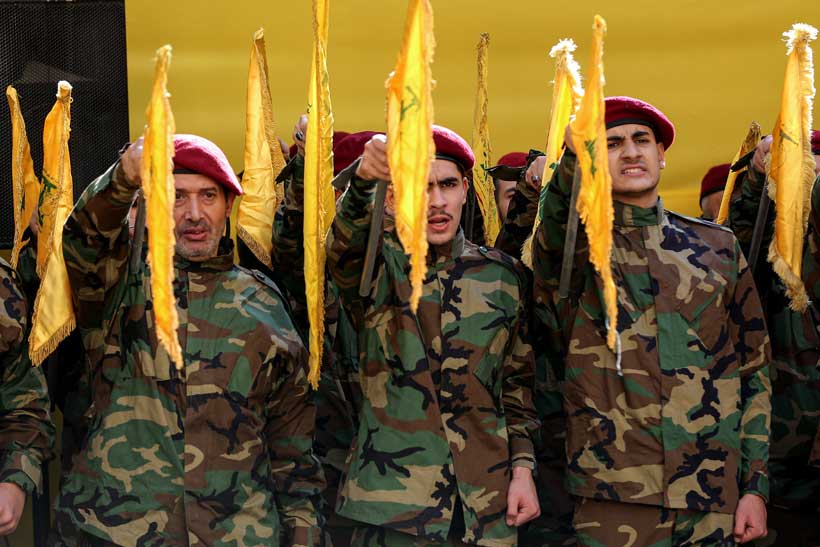
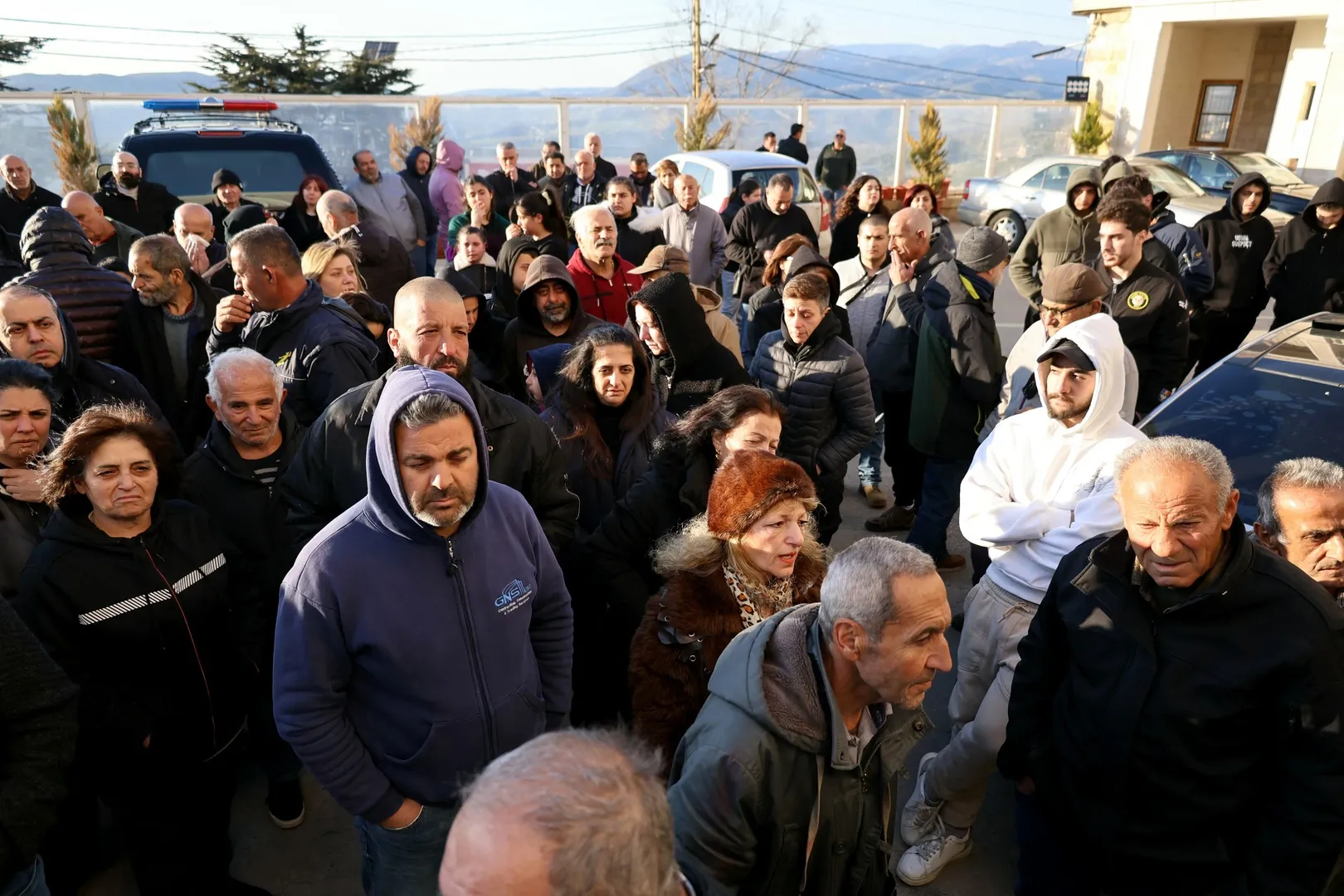
A Lebanese father mourned the death of his four daughters, mother, father, brother-in-law and nephew, after they were killed in an Israeli attack. Israel has killed at least 770 people in Lebanon since last Monday. Around 750,000 have been forcibly displaced.
Israeli Prime Minister Benjamin Netanyahu said several Iranian nuclear scientists were killed in Israeli strikes. He also said a “new path of freedom” for Iran was approaching and told Iranians the country’s future ultimately depends on them.
Weekly insights and analysis on the latest developments in military technology, strategy, and foreign policy.
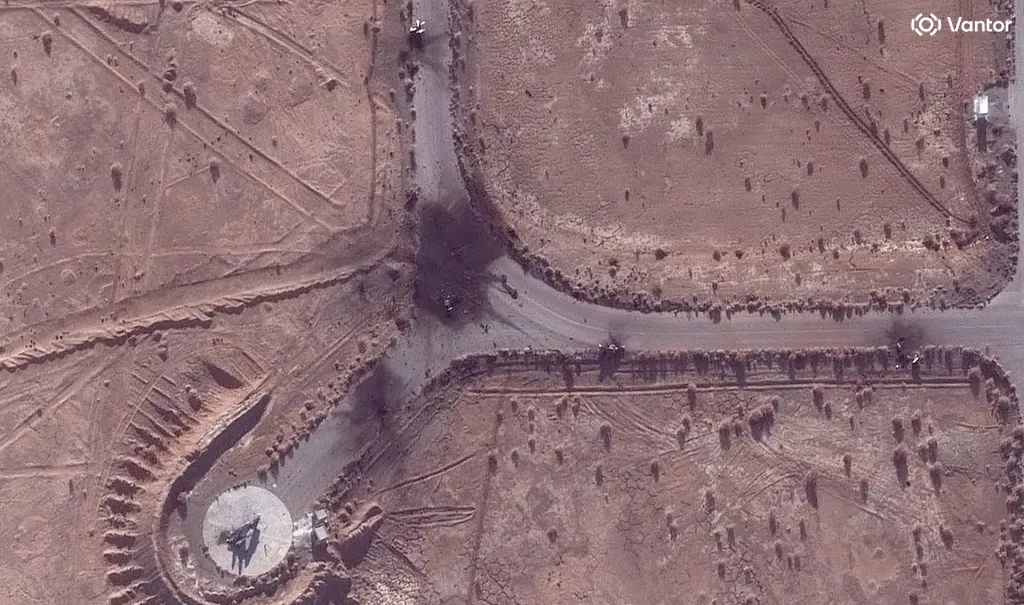
Satellite imagery from Vantor shows at least two, and more likely three, swing-wing F-14 Tomcat fighters, as well as at least 10 other aircraft destroyed on the ground following strikes on an Iranian airbase in Isfahan. Iran’s Tomcats, the only ones left in service anywhere after the U.S. Navy retired the type back in 2006, have been a hot topic of interest for decades now. The fleet’s fate may now be sealed for good as U.S. and Israeli strikes continue to pummel Iran’s Air Force, along with the rest of the country’s military and security forces.
Vantor has provided an image of Iran’s 8th Tactical Air Base in Isfahan taken on March 9, following strikes, as well as one from February 22 for comparison. The Israel Defense Forces (IDF) said explicitly on March 8 that it had targeted F-14s at Isfahan, the home base for Iran’s Tomcat fleet, but no imagery of those strikes looks to have been released. IDF videos of Iranian F-14s being struck that have been circulating online recently all look to be old.
The Vantor image from February 22 shows five F-14s. One is seen on what looks to be an alert pad, with another on a taxiway nearby. Two more are seen sitting outside a pair of aircraft hangars, while another is seen next to a separate set of hangars. The March 9 image shows the Tomcat on the pad and the lone example by the shelters to have been hit. There is also a huge scorch mark where the F-14 had been previously seen on the taxiway, pointing to its total destruction, though it is hard to tell for certain from the remaining wreckage. The other two jets appear to have been moved in the intervening weeks, and their status is unclear.
The post-strike image also shows at least 10 other aircraft destroyed along various taxiways. Vantor has assessed these to be members of the Iranian Air Force’s fleet of Chinese-made F-7 fighters. F-7 is the nomenclature for export variants of the Chengdu J-7, itself derived from the Soviet MiG-21 Fishbed.
Vantor also shared imagery of a row of four hardened aircraft shelters at Isfahan, three of which have a single hole in the top following the strikes. A structure next to the shelters, which had already been damaged prior to the current conflict, has now been flattened, as well.
Whether or not any of the F-14s that were struck at Isfahan were operational at the time is unknown. Estimates of how many Iranian Tomcats are even still airworthy have ranged widely in recent years, from just a handful to maybe as many as 25. As noted earlier, the 8th Tactical Air Base is the main station for Iran’s F-14s, though examples have also been positioned to provide quick reaction alert (QRA) coverage for Tehran in the past.
A total of 79 F-14As were delivered to Iran before the fall of the Shah in 1979. Iran’s air arm and the U.S. Navy are the only ones to have ever operated the Tomcat, and Iran has been the only one still flying them since 2006. While the current regime in Tehran has been able to keep a small portion of its original F-14 fleet flyable, sustaining the jets has been an immense challenge requiring the cannibalization of airframes.
A stock picture of one of Iran’s remaining F-14s taken in 2013. Iranian quasi-state media
The capabilities of the remaining jets can only have steadily degraded, as TWZ has written in the past:
“In particular, the F-14’s once-state-of-the-art AN/AWG-9 fire control radar has suffered from low serviceability, with the Tomcat fleet effectively being divided between those with fully functioning radars and those with more diminished capabilities. The current status of any surviving AIM-54 Phoenix and AIM-7 Sparrow air-to-air missiles is also a matter of debate, and Iranian programs to introduce alternative weaponry for the F-14 have had only very mixed results, as you can read more about here.“
The total number of F-14s in Iran, flyable or not, had already been reduced to some degree during the 12 Day War with Israel last year. Strike footage the IDF released during that conflict showed at least five Tomcats being struck. Satellite imagery had confirmed that at least two of those jets had been sitting idle for some time beforehand, as well.
The Israeli Air Force has conducted additional precision strikes targeting IRIAF F-14s, continuing its focused effort to systematically degrade Iran’s remaining air combat capabilities. pic.twitter.com/vT6JJ4D1x7
The overall intensity of the current U.S.-Israeli air campaign against Iran has been far greater than what was seen during the 12 Day War last year. The Iranian Air Force does not appear to have mustered any kind of major response, even in the first few days of what the U.S. military has dubbed Operation Epic Fury and that the Israelis are calling Operation Roaring Lion. Qatari F-15 fighters shot down two Iranian swing-wing Su-24 Fencer combat jets attempting to carry out a strike mission on Al Udeid Air Base on March 2. An Israeli F-35I Adir also shot down a Yak-130 armed jet trainer over Iran on March 4.
Other airbases across Iran beyond Isfahan have also been targeted in U.S. and Israeli strikes. Satellite imagery has previously confirmed the loss of one Il-76 cargo plane, two C-130 airlifters, and two swing-wing Su-22 Fitter combat jets in Shiraz.
U.S. Central Command has also previously released video footage in the past showing strikes targeting Su-22s at Shiraz, as well as some of Iran’s remaining U.S.-made F-5s at Qasem Soleimani International Airport (formerly Ahvaz International Airport) in Khuzestan.
Geolocation of destruction of F-27s and F-5s: 31.33563, 48.76275 Ahvaz International Airport, Khuzestan Province, Iran
Google Earth imagery taken 11/19/2025 for reference (F-5s not present). Aircraft were in current placement on 2/28/26. Runway was seen cratered by 3/05/26. https://t.co/XRMx7NZxWHpic.twitter.com/iZGnxPp4mO
Overall, Iran’s already dilapidated air arm looks to be even more severely degraded now, and seems likely doomed, at least in its present guise. U.S. officials have said that neutralizing the Iranian government’s ability to project military power beyond its borders is a core objective of the current campaign.
When it comes to the F-14s, regardless of whether any of them were still operational to any real degree when the current conflict erupted, the story of the country’s Tomcats looks to be increasingly approaching a definitive end.
The armed wing of Hamas, Al-Qassam Brigades, released a video message on Wednesday afternoon showing an Israeli captive currently held in Gaza, the Palestinian Information Centre has reported. The footage shows Omri Miran lighting a candle on what he described as his “second birthday” in captivity.
“This is my second birthday here. I can’t say I’m celebrating; it’s just another day in captivity,” said Miran. “I made this cake for the occasion, but there is no joy. It’s been a year and a half. I miss my daughters and my wife terribly.”
He addressed the Israeli public directly, including his family and friends. “Conditions here are extremely tough. Thank you to everyone demonstrating to bring us home safely.”
The captive also urged Israelis to stage a mass protest outside Prime Minister Benjamin Netanyahu’s residence. “Bring my daughters so I can see them on TV. Do everything you can now to get us home. Netanyahu’s supporters don’t care about us, they’d rather see us dead.”
Screengrab from footage shows Israeli captive Omri Miran
He asked captives released in previous prisoner exchange deals to protest and speak to the media. “Let the people know how bad it is for us. We live in constant fear of bombings. A deal must be reached soon before we return home in coffins.
Miran urged demonstrators to appeal to US President Donald Trump to put pressure on Netanyahu: “Do not believe Netanyahu. Military pressure is only killing us. A deal — only a deal — will bring us home. Turn to Trump. He seems to be the only powerful person in the world who could push Netanyahu to agree to a deal.”
He also mentioned the worsening humanitarian situation: “The captors told me the crossings are closed; no food or supplies are coming in. As a result, we’re receiving even less food than before.”
In conclusion, the captive sent a pointed message to the Israeli leadership: “Netanyahu, Dermer, Smotrich, Ben Gvir — you are the reason for 7 October. Because of you, I am here. Because of you, we’re all here. You’re bringing the state to collapse.”
A Maronite Catholic priest has been killed by Israeli tank fire after it targeted a home in southern Lebanon. Father Pierre al-Rahi was reportedly killed when an Israeli tank fired on the home of a local couple a second time after several people had rushed there to try to help.
An Israeli air strike has heavily damaged a building in southern Lebanon’s Tyre district.
An Israeli air strike has heavily damaged a building in southern Lebanon’s Tyre district as Israeli forces continue to attack across the area. The army says it is targeting Hezbollah military infrastructure and has warned residents south of the Litani river to leave.
Dozens of civilians, including children, wounded by an Iranian drone strike in Bahrain. France deploying warships to secure shipping commerce in the Strait of Hormuz. Australia taking heat from President Trump over its handling of the Iranian women’s soccer team. Markets across Asia plunging as the price of oil surged.
Lebanon reporting half a million people displaced by fighting between Israel and Hezbollah. The U.S. State Department telling nonessential staff to get out of Saudi Arabia after attacks there killed workers from India and Bangladesh. Ukrainian anti-drone experts turning their attention from their war with Russia to help intercept Iranian attacks. The defense minister of ever-neutral Switzerland saying his country believes the U.S.-Israeli war violates international law.
In less than two weeks, the Trump administration has instigated a truly global conflict — and with no quick and clear path to resolution, despite Trump insisting to congressional Republicans gathered at his Miami resort Monday that it would be a “short term excursion.”
“Short term! Short term!” Trump said in a bullish speech about the conflict, in which he said “the world respects us right now more than they have ever respected us before.”
“We’re counting down the minutes until they will be gone,” he said of Iran’s remaining leadership, while adding that the U.S. “will not relent” until Iran is “totally and decisively defeated.”
The war is not isolated to Iran, though it has certainly caused devastation there — with more than 1,300 deaths reported and toxic clouds from strikes on fuel depots hovering over Tehran, a city of some 10 million people.
The war’s effects also are not limited to the Middle East, though they are widespread there — as Israel has pushed into Lebanon and Iran has launched a wave of retaliatory strikes on U.S. allies across the Persian Gulf. The fighting has grounded regional air traffic, threatened desalination facilities that provide drinking water to millions and undermined the safe reputation of modern metropolises such as Dubai and Abu Dhabi.
Unlike the recent U.S. incursion into Venezuela to capture and oust President Nicolás Maduro, the U.S. war on Iran has been met with stiff resistance militarily, drawn in a slew of allies, reignited proxy battles, drastically destabilized the oil trade and shifted dynamics between the U.S. and other major powers such as China and Russia.
China, which gets upward of 50% of its crude oil imports through the Strait of Hormuz, has largely stayed out of the conflict, though China’s Foreign Minister Wang Yi said Sunday that the war “should never have happened” and “benefited no one.”
Trump said Monday that the U.S. is less harmed by strait disruptions, and was “really helping China” by securing the strait.
Russia, meanwhile, has emerged the lone winner of energy disruptions in the region, said Robert David English, a UCLA international policy analyst — as the Trump administration considers reducing oil sanctions on Russia to take pressure off of Mideast sources.
Trump said he had a “good talk” with Russian President Vladimir Putin about Iran on Monday. He also said the U.S. was going to suspend sanctions against other countries in order to alleviate strain on oil markets while the Iran conflict persists, but did not provide specifics.
The scope of the war has been dictated in part by Iran, which has historically limited its responses to U.S. strikes but warned after the U.S. bombed its nuclear sites last summer that it would treat any new attacks — large or small — as an act of war, and respond in kind.
Its strikes on U.S. facilities and allies throughout the region reflect that strategy, and are aimed in part at making the war more politically costly for the U.S. by straining global markets and its regional allies, experts said.
However, “you can’t attribute the increasingly global characteristics of the conflict solely to an Iranian strategy, because wars in this region tend to spill over the longer they last, with unintended consequences” including “bringing in all kinds of actors that don’t want to be involved,” said Kevan Harris, an associate professor of sociology who teaches courses on Iran and Middle East politics at the UCLA International Institute.
That can serve as a deterrent to starting wars in the region, he said, but “also makes them more difficult to wind down.”
The surge in oil prices to nearly $120 a barrel Monday — before a remarkable reversal to below $90 by the time U.S. stocks closed — is one of the furthest-reaching effects of the war, and one that clearly had Trump’s attention.
“Short term oil prices, which will drop rapidly when the destruction of the Iran nuclear threat is over, is a very small price to pay for U.S.A., and World, Safety and Peace. ONLY FOOLS WOULD THINK DIFFERENTLY!” Trump wrote on social media Sunday.
How long prices will remain elevated or volatile is a matter of debate, but Trump’s “short term” projections have been undercut by increasing strikes on oil and gas facilities in the region.
“If you can tolerate oil at more than $200 per barrel, continue this game,” Ebrahim Zolfaghari, a spokesperson for Iran’s Islamic Revolutionary Guard Corps, said Sunday.
Prices at the pump have surged for average Americans, some of whom were attracted to Trump’s candidacy because of his promises to avoid foreign wars and focus on driving down the cost of living for U.S. citizens.
Now, Trump and other administration officials are facing questions about their own role in putting the world at war, and offering various different justifications. They’ve asserted without proof that the U.S. faced an imminent threat of attack from Iran. Trump has repeatedly hinted that his goal was removing the government.
President Trump speaks at the Republican Members Issues Conference on Monday at Trump National Doral Miami in Doral, Fla.
(Mark Schiefelbein / Associated Press)
In the meantime, Iran has shown no signs of bowing to Trump, rejecting his calls for “surrender” and for him to have a say in naming their next leader. Iran installed Mojtaba Khamenei after Trump said the hard-liner son of the late Ayatollah Ali Khamenei would be “unacceptable.”
The choice was hailed by the president of Azerbaijan and the leader of Yemen’s Houthi rebels, among other allies.
To date, seven U.S. service members have been killed in the conflict, according to U.S. officials. Every day, U.S. taxpayers are on the hook for nearly $1 billion in war costs, according to one estimate. Democrats have slammed Trump for both.
“This war is coming from the same President that is building a $400 million ballroom in the White House. The same President that says $100 for a barrel for oil is worth it. The same President that doubled healthcare premiums for millions of Americans. But we have money for another endless war?” Sen. Alex Padilla (D-Calif.) wrote Monday on X.
Other world leaders focused on the global economic impact.
Traffic through the Strait of Hormuz, which transports about 20% of the world’s oil, has nearly halted, while producers in Saudi Arabia, Iraq, Kuwait and the United Arab Emirates ceased oil operations without open routes for export.
In response, French President Emmanuel Macron suggested French and other allied naval assets could escort oil tankers in the strait, shifting the security burden there from Washington onto Europe, leaving European vessels vulnerable to hostilities and potentially drawing the European Union deeper into the conflict.
Already, they’ve agreed to allow the U.S. to use bases in their territories, though the U.S. and Spain got into a spat after Spain rejected U.S. use of its bases and Trump threatened U.S. trade with the country.
Macron on Monday also threw additional military support behind Cyprus, following a meeting with Cypriot President Nikos Christodoulides and Greek Prime Minister Kyriakos Mitsotakis at a Cyprus air base.
France will dispatch an additional 11 warships to operate across the eastern Mediterranean, the Red Sea and the Strait of Hormuz, Macron said, after an Iranian drone struck a British military base on Cyprus on Monday.
“When Cyprus is attacked, it is Europe that is attacked,” Macron said.
Located just 150 miles from Israel in the eastern Mediterranean, the island of Cyprus has emerged as a strategic — and exposed — nerve center in the U.S. offensive against Iran. It hosts vital British military bases and acts as an intelligence, surveillance, and logistics hub in countering Iranian influence and proxy attacks.
Britain’s Defense Secretary John Healey said Monday that the United Kingdom was conducting air defense to support the UAE, and that Typhoon jets had taken out two drones — one over Jordan and the other headed to Bahrain.
Trump suggested Monday that the U.S. was on the path toward victory, but acknowledged it had not accomplished all of its goals.
“We’ve already won in many ways, but we haven’t won enough,” he said — adding the conflict will end “pretty quickly.”
He said Iran had been “very foolish, very stupid” when it attacked its neighbors, hurting its own chances of success in resisting the U.S.
“Their neighbors were largely neutral, or at least weren’t gonna be involved, and they got attacked,” Trump said. “And it had the reverse effect. The neighbors came onto our side, and started attacking them.”
Iran may still attempt to widen the conflict’s economic and geopolitical impact to keep up pressure and push for a ceasefire in its favor, but that could also backfire, said Benjamin Radd, a political scientist and senior fellow at the UCLA Burkle Center for International Relations.
“Iran’s becoming increasingly like North Korea in this sense,” he said, “isolating itself further.”
Tedros Adhanom Ghebreyesus says children, the elderly at particular risk after damage to Iranian petroleum facilities.
Published On 9 Mar 20269 Mar 2026
Share
The head of the World Health Organization has warned that recent Israeli attacks on oil facilities in Iran could have negative effects on public health, with Iranian children and the elderly among the most vulnerable.
Tedros Adhanom Ghebreyesus said in a statement on Monday that damage to Iranian petroleum facilities “risks contaminating food, water and air”.
Recommended Stories
list of 3 itemsend of list
Those hazards “can have severe health impacts especially on children, older people, and people with pre existing medical conditions”, Tedros warned in a post on X. “Rain laden with oil has been reported falling in parts of the country.”
The Iranian authorities said oil facilities in the capital, Tehran, and the nearby province of Alborz were targeted on Saturday in the United States-Israeli war against the country, the Fars news agency reported.
Israel said it struck “a number of fuel storage facilities in Tehran” that were used “to operate military infrastructure”.
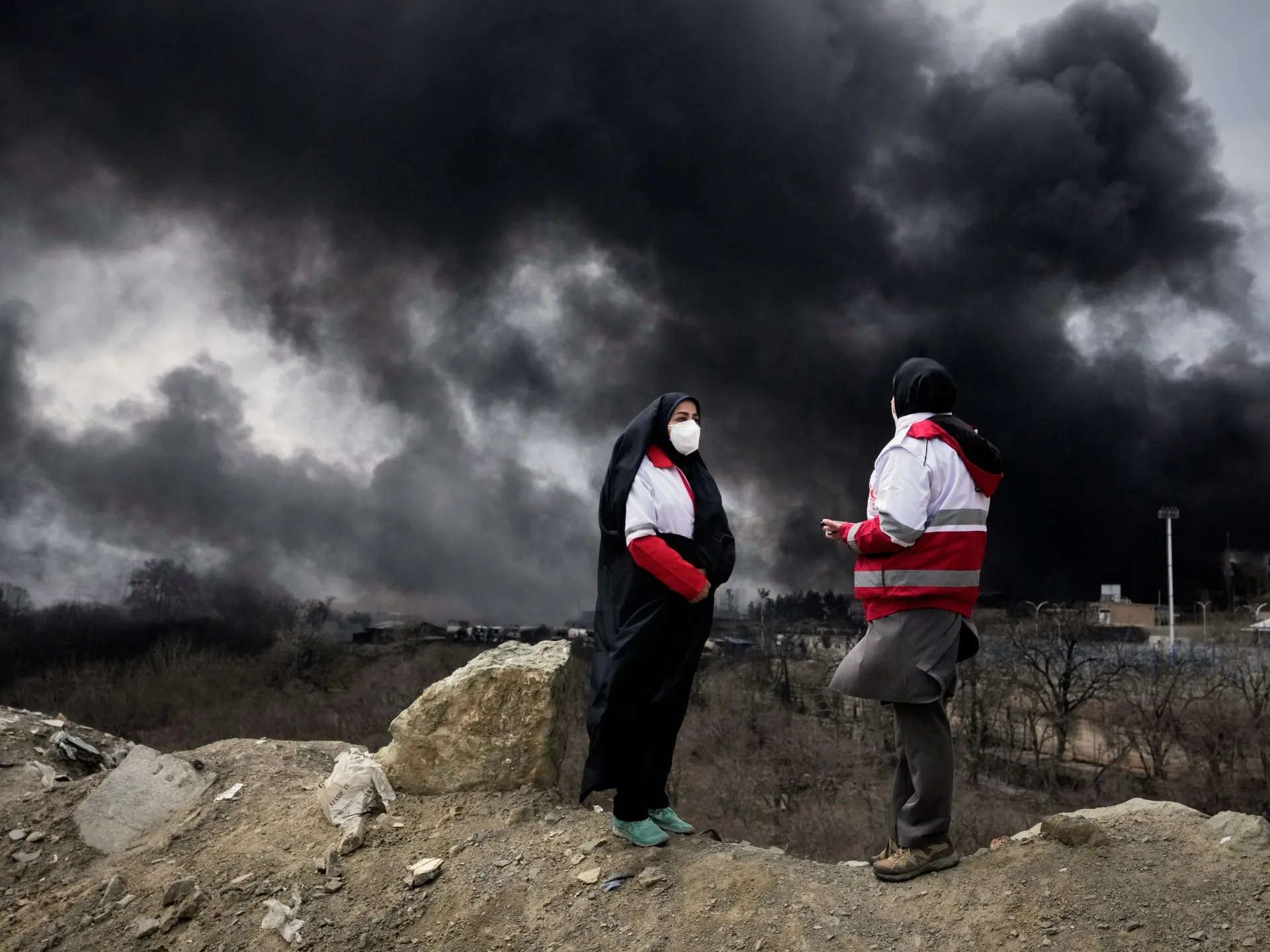
The strikes sent massive flames and clouds of thick, black smoke into the sky above Tehran, with Al Jazeera’s Tohid Asadi reporting that black raindrops fell early on Sunday morning.
The attacks on Iran’s energy infrastructure came as the US and Israeli governments had vowed to continue to bombard the country despite mounting international concern over the widening conflict.
Iran has retaliated to the US-Israeli strikes by launching missiles and drones at targets across the Middle East, including energy infrastructure in nearby Arab Gulf states.
Human rights groups have condemned both Iran and the US and Israel for targeting civilian infrastructure.
Agnes Callamard, the head of Amnesty International, said on Monday that “Israel should have taken all feasible precautions to avoid or minimize the risks to civilians when targeting oil refineries” in Iran.
“The incidental harm to civilians, including the release of toxic substance, appears to indicate that too little precautions were taken and that the incidental harm to civilians is disproportionate,” she wrote on X.
“The scenes of catastrophe described by Iranians after Tehran’s oil depots were bombed are yet another demonstration that ultimately, whatever they may say, the US and Israel’s attacks on Iran are harming first and foremost civilians, including children.”
Thick clouds of smoke rise over Tehran after the attacks on Iranian oil infrastructure, on March 8, 2026 [Majid Asgaripour/WANA via Reuters]
Israeli strikes on fuel depots and petroleum logistic sites in Tehran on Sunday saw apocalyptic images coming out of the Iranian capital, as the spilled oil ignited a river of fire, and thick black smoke blanketed the city of 10 million, leaving streets and vehicles covered with soot.
Israel and the United States claimed they were targeting Iranian military and government sites, but government officials and people say civilian structures such as schools, hospitals and major landmarks are increasingly coming under attack. At least 1,255 people have been killed in the strikes since February 28.
What Israeli and US military planners frame as a calculated degradation of state infrastructure is being described by local officials and environmental experts as an act of total warfare, and collective punishment.
Shina Ansari, head of Iran’s Department of Environment, described the systematic destruction of the oil depots as a blatant act of ecocide.
The attacks systematically targeted four major storage facilities and a distribution centre, including the Tehran refinery in the south and depots in Aghdasieh, Shahran, and Karaj. In the Shahran district, witnesses reported unrefined oil leaking directly into the streets as temperatures hovered around 13C (55F).
Ansari from Iran’s Department of Environment stated that the environment remains the silent victim of the war, noting that the incineration of vast fuel reserves has trapped the capital under a suffocating shroud of pollutants.
The medical and environmental fallout is immediate and severe. The Iranian Red Crescent Society warned that the smoke contains high concentrations of toxic hydrocarbons, sulphur, and nitrogen oxides. The organisation noted that any rainfall passing through these plumes becomes highly acidic, posing risks of skin burns and severe lung damage upon contact or inhalation.
Ali Jafarian, Iran’s deputy health minister, told Al Jazeera that this acid rain is already contaminating the soil and water supply. Jafarian added that the toxic air poses a life-threatening risk to the elderly, children, and those with pre-existing respiratory conditions, prompting authorities to advise residents to remain indoors.
The destruction has also forced the Iranian Ministry of Petroleum to slash daily fuel rations for civilians from 30 litres [8 gallons] to 20 litres [5 gallons]. At least four employees, including two tanker drivers, were killed in the depot strikes.
The strategic bombing myth
Major General Mamoun Abu Nowar, a retired Jordanian military analyst, told Al Jazeera that the primary objective of the strikes is to break the resilience of the Iranian people and paralyse the country’s logistics and economy.
“They are preparing the Iranian environment for an uprising against the regime,” Abu Nowar said, adding that the broader goal is to halt state operations and curb Tehran’s regional influence.
However, Abu Nowar raised urgent concerns about the specific munitions deployed, urging Iranian authorities to investigate the bomb fragments given the unusual density of the smoke and the resulting acid rain.
Some military strategists argue that striking an adversary’s vital infrastructure can paralyse the state from the inside out, bypassing the need to fight its military forces directly.
Modern warfare has increasingly relied on this strategic bombing via precision drones and missiles to destroy morale and incapacitate an adversary’s ability to wage war. For Israel, which is engaged in a genocidal war in Gaza and wider regional conflicts, targeting oil depots is viewed as a way to send a coercive message while avoiding a ground war.
However, Adel Shadid, a researcher in Israeli affairs, told Al Jazeera Arabic that the strategy is designed to make life hell for ordinary Iranians in hopes of sparking an uprising. Shadid noted a glaring contradiction in the rhetoric of Israeli Prime Minister Benjamin Netanyahu, who claims to support the Iranian people while overseeing the destruction of their basic means of survival.
Raphael S Cohen, director of the Strategy and Doctrine Program at the RAND Corporation, notes that such bombing campaigns consistently fail to achieve their primary goal of breaking a population’s will. Instead, Cohen argues, strategic bombing typically produces a rally-around-the-flag effect, unifying societies against a common foe rather than causing them to capitulate.
Historical echoes and retaliation
The reality of targeting oil infrastructure rarely aligns with sterile military theory, as history shows that such tactics reliably produce devastating, long-term environmental consequences.
During the 1991 Gulf War, the torching of Kuwaiti oil wells created a regional environmental catastrophe. Similarly, during the battle against ISIL (ISIS) in Iraq, the burning of the Qayyarah oil fields created a “Daesh Winter” that blocked out the sun for months.
The fires released vast quantities of toxic residues, including sulphur dioxide and polycyclic aromatic hydrocarbons, causing severe respiratory illnesses, soil acidification, and long-term carcinogenic risks for the local population.
Meanwhile, Mokhtar Haddad, director of the Al-Wefaq newspaper, told Al Jazeera Arabic that the targeting of energy hubs could trigger a global energy war.
According to Al Jazeera’s Sohaib al-Assa, reporting from Tehran, the Islamic Revolutionary Guard Corps (IRGC) has already retaliated by striking the Haifa oil refinery and targeting a US base in Kuwait, signalling that the conflict is no longer confined to military targets.
On Monday, Bahrain’s state-run oil company Bapco declared force majeure after waves of Iranian strikes targeted its energy installations. Iran has also been accused of also targeting energy facilities in other Gulf Cooperation Council (GCC) countries.
Palestinian journalist Amal Shamali, who worked as a correspondent for Qatar Radio, has been killed in an Israeli air strike on the Nuseirat refugee camp in central Gaza, the Palestinian Journalists Syndicate (PJS) says.
Shamali, who was killed on Monday, also “worked with several Arab and local media outlets and was among the journalists who continued performing their media mission despite the ongoing assault and war on the Gaza Strip”, the PJS said in a statement.
Recommended Stories
list of 3 itemsend of list
More than 270 journalists and media workers have been killed in Gaza since Israel launched a genocidal war against Palestinians in the territory on October 7, 2023, in response to Hamas-led attacks on southern Israel.
“This represents one of the bloodiest periods for journalists in modern history, reflecting the scale of the deliberate targeting of Palestinian journalism in an attempt to silence the voice of truth and prevent the documentation of the crimes and violations committed against the Palestinian people,” the PJS said.
The PJS also said: “Targeting journalists will not succeed in breaking the will of the Palestinian journalistic community or deterring it from fulfilling its professional and humanitarian mission of conveying the truth and documenting the crimes and aggression faced by the Palestinian people.”
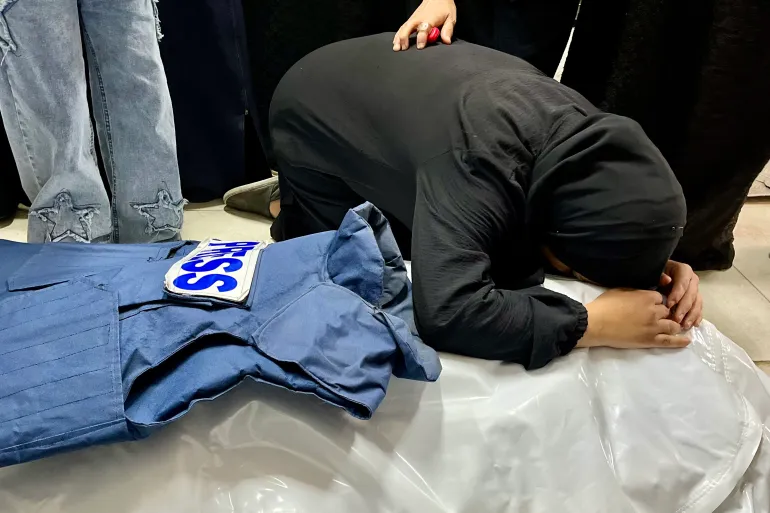
A woman mourns over the body of journalist Ahmed Mansur at Nasser Medical Complex in Khan Younis in the southern Gaza Strip on April 8, 2025 [File: AFP]
Gaza’s Government Media Office released a statement after Shamali’s killing, saying it “strongly condemns the systematic targeting, killing, and assassination of Palestinian journalists by the Israeli occupation”.
The office also said it “holds the Israeli occupation, the U.S. administration, and the countries participating in the crime of genocide – such as the United Kingdom, Germany, and France – fully responsible for committing these heinous and brutal crimes”.
It called on international and regional media associations, the international community and human rights organisations to condemn “the crimes” committed against Palestinian journalists and media professionals working in Gaza and to work towards holding Israel accountable for its “ongoing crimes” against Palestinian journalists.
Israeli attacks have killed about 13 journalists every month over more than two years of war, according to a tally by Shireen.ps, a monitoring website named after Al Jazeera journalist Shireen Abu Akleh, who was shot and killed by Israeli forces in the occupied West Bank in 2022.
Israel’s war on Gaza has been the single deadliest conflict for journalists.
Dozens of protesters condemn Israel’s attacks on journalists in Gaza in the Syrian capital, Damascus [File: Izz Aldien Alqasem/Anadolu]
According to Brown University’s Costs of War project, more journalists have been killed in Gaza since the war began on October 7, 2023, than in the US Civil War, World Wars I and II, the Korean War, Vietnam War, the wars in the former Yugoslavia and the post-9/11 war in Afghanistan – combined.
As per a report released early this year by the International Federation of Journalists (IFJ), Palestine was the deadliest place to work as a journalist in 2025.
The IFJ said the Middle East was the most dangerous region for media professionals, accounting for 74 deaths last year – more than half of the 128 journalists and media workers killed.
The Middle East was followed by Africa with 18 deaths, the Asia Pacific (15), the Americas (11) and Europe (10), according to the report.
Since a US- and Qatar-brokered “ceasefire” came into effect in October, 640 Palestinians have been killed and at least 1,700 wounded, according to Gaza’s Ministry of Health. At least 72,123 Palestinians have been killed since October 2023 while 171,805 people have been injured. At least 1,139 people were killed in the Hamas-led attacks on Israel on October 7, 2023.
Hezbollah reported on Monday that its fighters engaged Israeli troops in eastern Lebanon during an overnight airborne raid, marking the second such operation in the area in recent days. The conflict between Israel and the Iran-backed group has drawn Lebanon deeper into the regional war, which began after Hezbollah opened fire to avenge the killing of Iran’s former supreme leader.
The Israeli military has not immediately commented on the latest Hezbollah claim. In previous operations, the military carried out airstrikes across Hezbollah-controlled southern Beirut, including targeting financial institutions like Al-Qard Al-Hassan. Lebanese authorities report nearly 400 people have been killed in the country since March 2, including 83 children and 42 women, though the toll does not distinguish combatants from civilians. Israel confirmed two soldier deaths in southern Lebanon—the first Israeli military casualties since the outbreak of hostilities.
Expanding Operations
Hezbollah stated that around 15 Israeli helicopters flew over eastern Lebanon after midnight, deploying troops observed approaching Lebanese territory from Syria. The region, the Bekaa Valley, is a stronghold of Hezbollah’s political and security apparatus. This follows a similar Israeli raid near Nabi Chit on March 2–3, which Lebanese officials said killed 41 people. Israel described that previous operation as an attempt to recover the remains of Ron Arad, a navigator missing since 1986.
Civilian Displacement and Urban Strikes
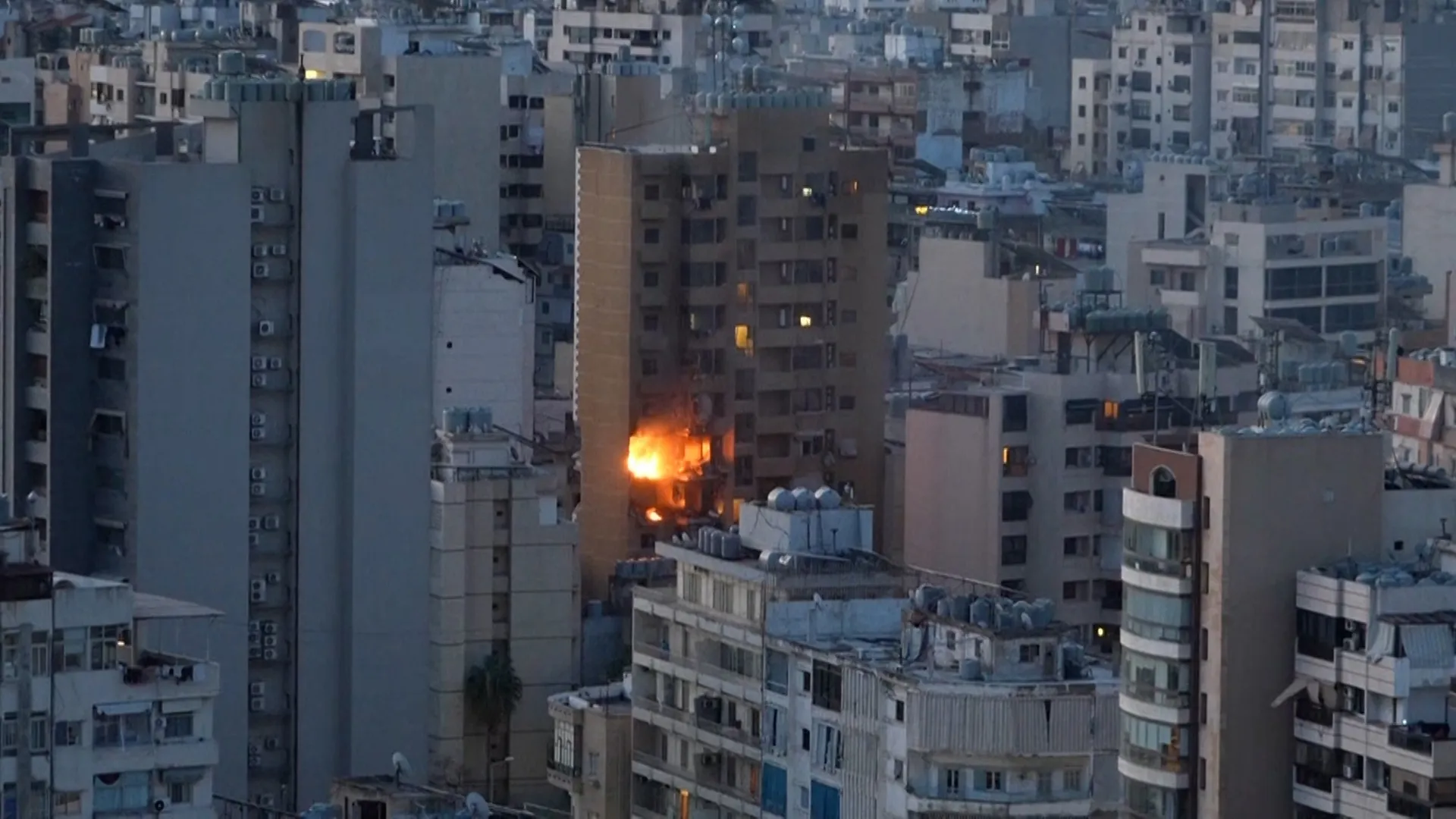
The war has prompted mass displacement, with hundreds of thousands fleeing southern Lebanon and Beirut’s southern suburbs, known as Dahiyeh. Israeli strikes have also hit locations outside Hezbollah strongholds. On Sunday, a drone strike in Beirut’s Rouche seafront district reportedly killed five senior commanders of Iran’s Revolutionary Guards Quds Force, illustrating the widening geographic and operational scope of the conflict.
Strategic Posturing
Israel has reinforced its military presence in southern Lebanon, establishing forward defensive positions in anticipation of potential Hezbollah attacks into Israel. The military maintains troops at five positions in the region, a posture originating from the 2024 war with Hezbollah.
Analysis: Escalation Risks
The repeated incursions and airstrikes signal a deepening and increasingly unpredictable phase of the Israel-Hezbollah conflict. Hezbollah’s engagement of Israeli forces in eastern Lebanon demonstrates its capacity to operate beyond the southern front, potentially broadening the battlefield.
For Israel, the operations appear aimed at both tactical objectives such as neutralizing high-value targets—and broader deterrence, signaling its intent to strike Hezbollah assets and Iranian-linked operatives throughout Lebanon. For Lebanese civilians, however, the widening conflict exacerbates humanitarian pressures, including casualties, mass displacement, and infrastructure destruction.
The situation underscores the risk of further regional escalation, with Syria and Iran-linked actors already drawn into the conflict, raising the possibility of a protracted war with extensive human and geopolitical costs.
Weekly insights and analysis on the latest developments in military technology, strategy, and foreign policy.
Less than a week into Operation Epic Fury, we have seen a wide variety of munitions used by the U.S. and Israeli militaries and have previously looked at how their employment evolved as the conflict has progressed. We have also gotten a look at an apparently mysterious version of the widely used Joint Direct Attack Munition (JDAM) in Israeli Air Force (IAF) service.
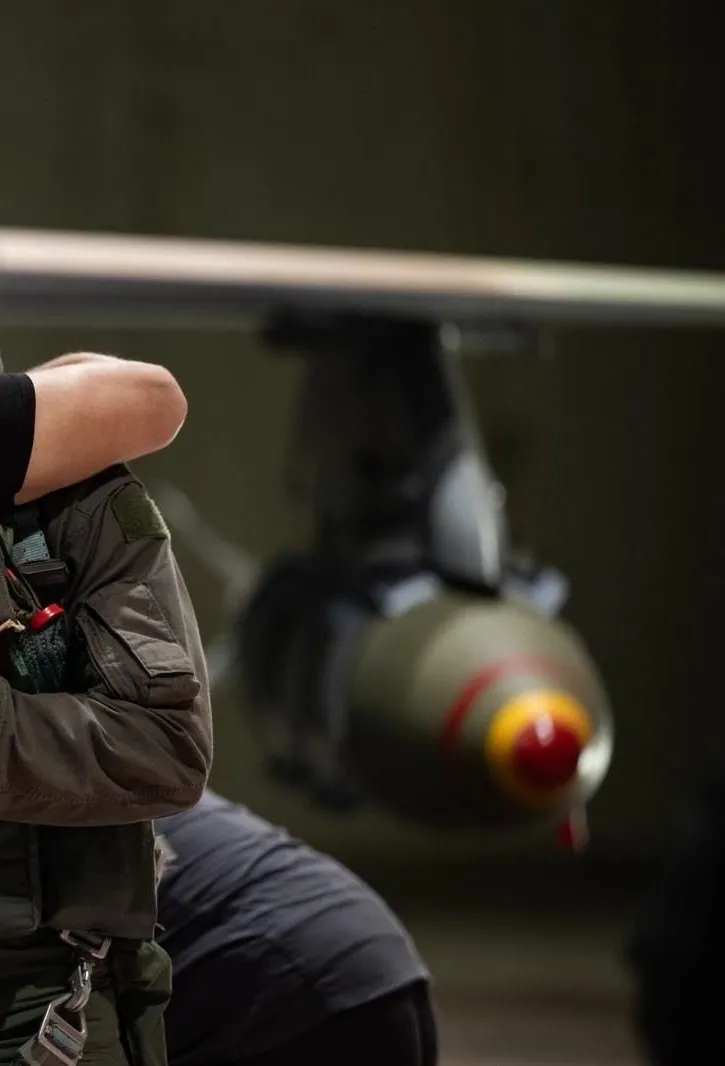
The imagery in question, showing two unusually marked 2,000-pound GBU-31 series JDAMs under the wing of an F-16C/D Barak jet, was posted on the IAF’s official X account earlier this week. It appears some of the photos may have been subsequently taken down. The photos were presented alongside an account of missions flown deep into Iranian territory and over its capital city, Tehran, in the form of a statement from the commander of Ramat David Air Base, identified only as “Col. A.” However, no explanation of the bomb appears to have been given.
״אנו טסים לעומק שטח האויב ומעל עיר הבירה שלו, טהרן, בנחישות ועם תחושת שליחות עמוקה. לא נעצור. צוותי האוויר מבצעים את משימתם הרחק מישראל, בסיכון גבוה, גם כשמערך ההגנה האווירי של האויב שיגר עליהם עשרות טילי קרקע-אוויר.
The standout feature of the JDAM seen in the photos is its markings. These include a red band around the nose of the weapon, as well as a red-painted nose plug. There is also a more familiar yellow band, which on U.S.-standard munitions indicates that they contain high explosives, around the nose.
Another view of the unusual JDAM under the wing of an F-16. IAF
A red band, however, is far more unusual and rarely — if ever — seen on a JDAM.
Based on U.S.-standard munitions markings, a red band can indicate an incendiary payload, while dark red on a gray panel “indicates the ammunition contains an irritant (riot control) agent.” There is a good chance that the JDAM might be an incendiary type.
The OSMP has added Israeli 2,000-pound-class air-delivered bombs with distinct red and yellow markings.
This suggests the munitions likely contain an incendiary and high-explosive payload. The best known of these is the BLU-119/B CrashPAD which contains white phosphorous. pic.twitter.com/MWkudRFKlb
— Open Source Munitions Portal (@MunitionsPortal) March 5, 2026
One of the few fielded examples of a JDAM with an incendiary payload that we are readily aware of is the 2,000-pound BLU-119/B Crash PAD (Prompt Agent Defeat), a weapon that doesn’t seem to have been shown before.
Crash PAD was intended to be used exclusively with the JDAM guidance package. Before looking at this weapon in more detail, the basic JDAM kit consists of the guidance package and control section, tailfins for steering, and strakes attached to the bomb for stability and a limited gliding capability. This kit is then mated to an existing bomb body, normally a variant or derivative of the ubiquitous Mk 80 series of weapons.
A standard 2,000-pound JDAM arming an Israeli F-16. IAF
The Crash PAD was developed in 2002 as a quick reaction capability for use in Operation Iraqi Freedom in 2003. It was designed to attack chemical and biological weapon stockpiles. It does this by using a combined payload of approximately 145 pounds of PBX-109 high explosive and 420 pounds of white phosphorus.
A poor-quality but rare diagram showing the contents of the BLU-119/B Crash PAD. DoD
In this way, the high-explosive blast-fragmentation warhead penetrates the weapon containers, and the white phosphorus warhead defeats the agents by literally incinerating them. This is intended to minimize effects on the civilians and the environment.
Weapons load crew loads a standard 2,000-pound GBU-31 JDAM on an F-16CJ of the 22nd Expeditionary Fighter Squadron at a forward-deployed air base during Operation Iraqi Freedom. U.S. Air Force photo by Staff Sgt. DERRICK C. GOODE/RELEASED Staff Sgt. Derrick C. Goode
There was also a similar type of weapon named Shredder, which was based on the bunker-busting BLU-109 bomb body, as used in the GBU-31 JDAM, for deeper penetration, and also with WP content, but it does not seem to have been produced. There could be other such weapons, too, also based on the JDAM, that we don’t know about.
As for white phosphorus, this remains a controversial and misunderstood weapon.
White phosphorus is not a chemical weapon, as sometimes described, since it is primarily an incendiary weapon, although it’s also regularly used for making smokescreens and for target marking. Burning at around 1,500 degrees Fahrenheit, white phosphorus can obviously inflict terrible injuries, and its use in densely populated areas violates international law.
The warhead for Crash PAD was developed by Alliant Techsystems (ATK), which received a $4-million contract in October 2003 from the U.S. Air Force Research Laboratory (AFRL) at Eglin Air Force Base, Florida. Sled-track testing took place in late January 2003, and flight test occurred in late February 2003, just ahead of the invasion of Iraq.
Details of the use of Crash PAD in Iraq are very scarce, but the weapon seems to have been retained in the U.S. Air Force inventory and, in Fiscal Year 2011, the Defense Threat Reduction Agency initiated concept studies for a BLU-119/B conversion that would use a safer, lower- cost payload fill.
Interestingly, during the Gaza-Israel conflict, the IAF released a photo of one of its AH-64D Apache attack helicopters armed with a mysterious version of the Hellfire air-to-ground missile with a prominent red stripe painted around the middle of its body, all the more intriguing.
An Israeli AH-64 with one of the Hellfire missiles carried in a four-round cluster on the outer station of the right-hand stub wing, marked with a red-colored band. This is in obvious contrast to the more usual (three) yellow bands seen on live Hellfire missiles, including the others loaded onto this helicopter. IAF
As we discussed at the time, this may well have been a version of the Hellfire with a thermobaric warhead, another type of incendiary, designed for destroying enclosed targets.
As internet chatter about the possible meaning behind the red-banded Hellfire spiked, the IAF quietly deleted the post in question, replacing it with a similar photo, this time showing a different AH-64D taking off with standard-looking Hellfires fitted.
Perhaps the red-banded JDAM was another social media slip-up, although at least one of the images is still found on the IAF’s X account.
Two of the unusual JDAMs under the wings of an F-16 Barak in its shelter, apparently at Ramat David Air Base. IAF
Since the Israel Defense Forces (IDF) has generally been extremely discriminating about the kinds of photos and videos that it releases for public consumption, the red stripes on the JDAM might also indicate something different altogether.
Israel has a long history of adapting U.S.-made and other weapons to its very particular needs, and the marking in question may be entirely specific to the IDF, pointing to a different, novel version of the JDAM.
Regardless, there could certainly be a role in the current conflict for Crash PAD or another agent-defeating munition.
Iranian soldiers wearing gas masks sit in foxholes during Operation Badr, in the Iran-Iraq War, in March 1985. Iranian state media www.mehrnews.com
In 2025, the U.S. Department of State reported unresolved questions surrounding Iran’s chemical and biological activities, including around experiments with pharmaceutical-based agents, and stated that Iran “has not abandoned its intention to conduct research and development of biological agents and toxins for offensive purposes.”
There could be other reasons to use a weapon like Crash PAD in Iran, possibly tied to targets that produce volatile rocket fuel and other dangerous compounds.
In a report last month, the U.K.-based International Institute for Strategic Studies (IISS) think tank assessed that “Iran’s nuclear facilities hold a range of chemical and toxic hazards.” This includes certain nuclear materials that are also highly toxic.
In the course of time, and despite the secrecy surrounding the details of Israeli combat operations, we might still learn more about what is, for now, something of a mystery munition.








![A woman mourns over the body of journalist Ahmed Mansur at Nasser Medical Complex in Khan Yunis in the southern Gaza Strip on April 8, 2025. [AFP]](https://i0.wp.com/www.aljazeera.com/wp-content/uploads/2025/09/AFP__20250408__39HB7LK__v1__HighRes__PalestinianIsraelConflictGazaPressFuneral-1-1756701660.jpg?w=640&ssl=1)