March 17 (UPI) — Israel said Tuesday it killed Basij paramilitary force commander Gholamreza Soleimani in an overnight airstrike in Tehran.
Specifics on the strike were scant, but The Times of Israel reported the Israel Defense Forces targeted Soleimani at a camp he had recently established in Tehran after the paramilitary’s headquarters were destroyed.
Established in 1980, the Basij is a volunteer paramilitary reserve force under Iran’s influential Islamic Revolutionary Guard Corps, according to the U.S. Defense Intelligence Agency. The force — which the website for Iran’s supreme leader says consists of millions of members — was sanctioned by the United States for human rights abuses in 2011 and designated as a Specially Designated Global Terrorist in 2018.
Soleimani was appointed in 2019 to lead the Basij, which has been accused of helping suppress protests inside Iran through violence, mass arrests and force against demonstrators.
“The elimination of Soleimani adds to that of dozens of senior commanders from the armed forces of the Iranian regime who have been eliminated during the operation, and constitutes an additional significant blow to the regime’s security command-and-control structures,” the IDF said in a statement on Telegram.
“The IDF will continue to operate with determination against commanders of the Iranian terror regime.”
Iran has yet to respond to the report as of Tuesday morning.
COMMANDER OF THE BASIJ UNIT ELIMINATED
Yesterday, the IDF targeted & eliminated Gholamreza Soleimani, who operated as commander of the Basij unit for the past 6 years.
Under Soleimani, the Basij unit led the main repression operations in Iran, employing severe violence,… pic.twitter.com/aJ0dNtCFz0— Israel Defense Forces (@IDF) March 17, 2026
The IDF said it conducted a wave of strikes Monday targeting military infrastructure in the Iranian cities of Tehran, Shiraz and Tabriz.
Its warplanes dropped dozens of munitions on security force command centers in Tehran, including those belonging to the Basij, the IDF said in an earlier Tuesday statement.
“The completed strikes are part of an ongoing effort focused on deepening the damage to the Iranian terror regime’s core systems and weakening its capacity to threaten the State of Israel,” it said.
Later Tuesday, Prime Minister Benjamin Netanyahu‘s office published a photo on social media showing him on the phone, accompanied by a caption saying he was “ordering the elimination of senior regime officials.”
“Right is right, wrong is wrong, and Trump’s wrong.” Former Marine Brian McGinnis, whose hand was broken by police and a congressman earlier this month in a protest at the US Capitol, says Donald Trump is “wrong” when it comes to the joint US-Israeli war on Iran.
‘For 40 years, we’re protecting you’: US President Donald Trump criticises allies’ reluctance to commit forces to open the key waterway for Gulf oil exports.
Israeli forces have attacked multiple towns in southern Lebanon after announcing “limited and targeted ground operations” against Hezbollah. Israel has warned residents will not be able to return to their homes until the military says so.
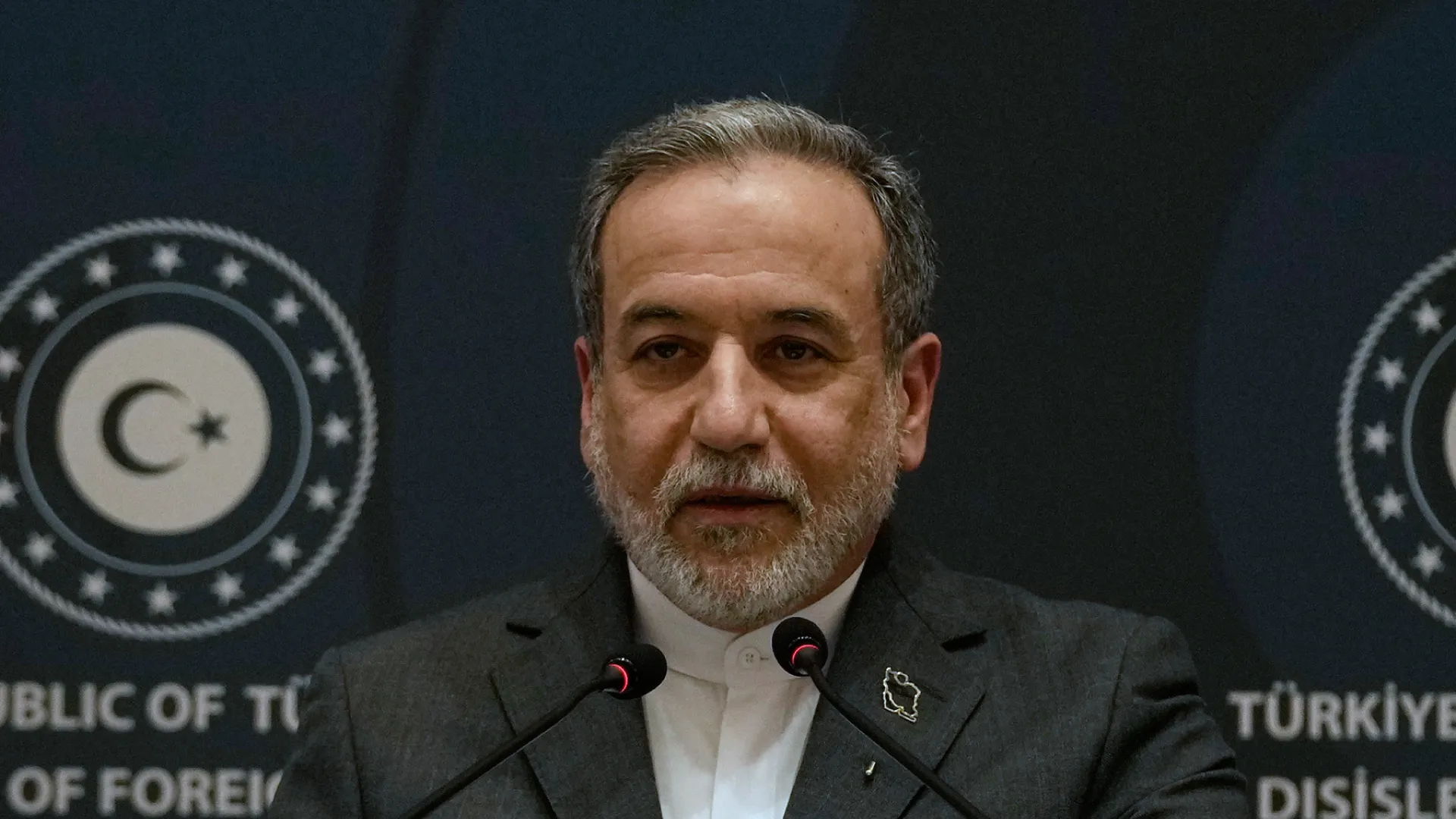
As the war US-Israeli war on Iran enters its third week, Iran’s Foreign Minister Abbas Araghchi has said that his country has shown it is ready to take the war “as far as necessary” and that the conflict must end in a way “that our enemies will never again consider repeating these attacks”.
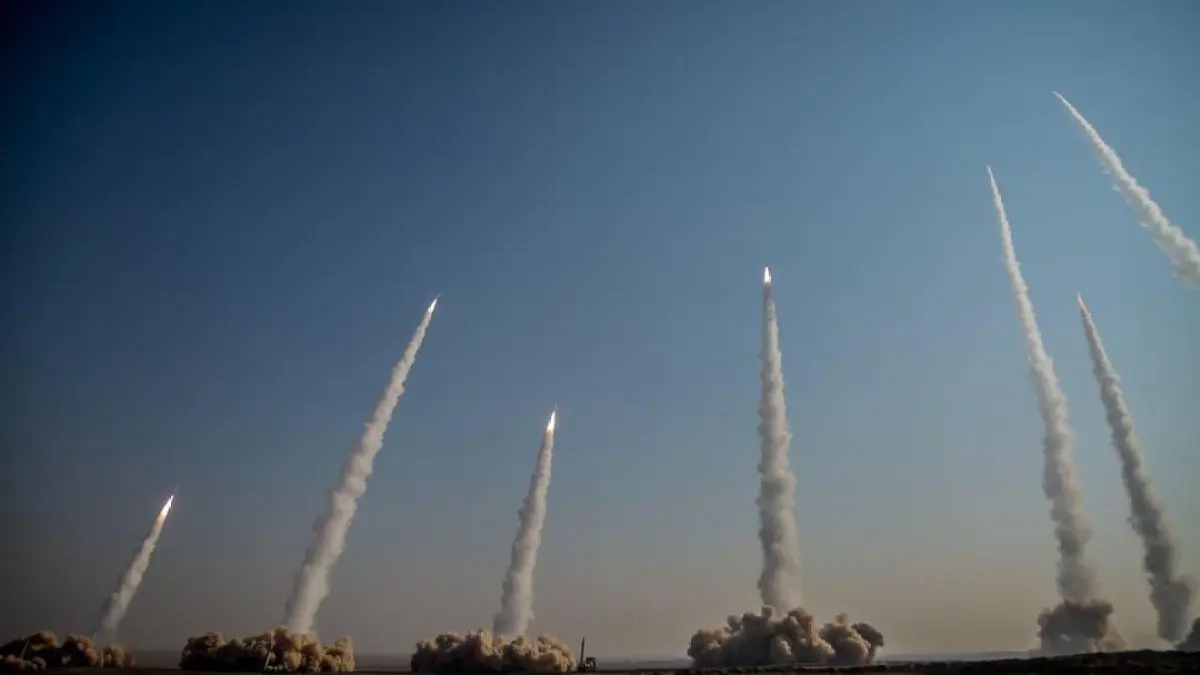
Joint attacks by the United States and Israel have severely reduced Iran’s capacity to fire missiles and drones, experts say, but Iran retains enough capabilities to inflict significant damage.
“Iran’s ballistic missile capacity is functionally destroyed. Their navy assessed combat ineffective. Complete and total aerial dominance over Iran,” the White House said on Saturday. “Operation Epic Fury is yielding massive results,” it said in reference to the war launched by Israel and the US on February 28.
Recommended Stories
list of 3 itemsend of list
On Sunday, President Donald Trump said US forces had decimated Iran’s drone manufacturing capacity.
Still, on Monday afternoon, Qatar announced it had intercepted the latest in a series of missiles fired from Iran towards the country. Saudi Arabia, the United Arab Emirates and Bahrain also issued alerts. A missile landed on a car in Abu Dhabi, killing a person.
So are Iran’s missile capabilities severely reduced? And how is it still firing projectiles at its neighbours and Israel?
Is Iran firing fewer missiles now?
Indeed, the number of retaliatory missiles and drones that Iran has fired towards Gulf countries, Israel and other nations in the region has seen a steep decline since the start of the war.
In the first 24 hours of the conflict, Iran had fired 167 missiles (ballistic and cruise) and 541 drones at the United Arab Emirates, for instance. By contrast, on day 15 of the conflict, it had shot four missiles and six drones, according to a tally compiled by Al Jazeera based on the emirate’s Defence Ministry statements.
The barrage against Israel has also decreased, from nearly 100 projectiles over the first two days to a single-digit number in the past few days, according to Israel’s Institute for National Security Studies.
Last week, the Pentagon said missile launches were down 90 percent from the first day of fighting and drone attacks were down by 86 percent.
How big is Iran’s missile arsenal – and how much has it been hit?
Iran has the largest inventory of ballistic missiles in the region, the US Office of the Director of National Intelligence assessed in 2022. While there are no official accounts on how many missiles it has, Israeli intelligence reports suggest it counted around 3,000 missiles, a figure that dropped to 2,500 following the 12-day war last June.
Key to the US-Israel strategy has been hunting down Iran’s launchers. Each missile launch generates a signature, such as a large explosion, that can be picked up by a satellite and radar systems.
According to a senior Israeli military official cited by the Institute for the Study of the War, Israel has put up to 290 launchers out of service, out of an estimated 410 to 440 launchers.
But Iran is a vast country, and without boots on the ground, it will be hard to completely eliminate Iran’s capacity to shoot despite the US and Israel having nearly full control of the country’s airspace, said David Des Roches, an associate professor at the National Defense University in Washington, DC.
“It is not obvious to identify launchers,” Des Roches told Al Jazeera. “What we see are missiles that were put in hidden places or places not associated with the military before the war, when there was less observation”.
According to Des Roches, the slowdown in launches is due to Iranian forces having lost the capacity to launch volleys. As a result, Iran has been firing one or two missiles at a time towards civilian and commercial infrastructure, especially in Gulf countries, instead of aiming volleys at military targets. Iran insists that it is targeting only US interests in the region.
“Militarily speaking [Iran’s action] is not significant – this is what is called harassment fire to exhaust alert systems in nearby countries and scare people off,” Des Roches said.
What’s Iran’s strategy?
According to Hamidreza Azizi, an expert on Iran and visiting fellow with the German Institute for International and Security Affairs (SWB), Tehran’s central calculation is that the Gulf and Israel may run out of their defensive capabilities before Iran runs out of missiles.
“There might be some interest in making this a war of attrition,” he said, pointing at the lower, yet constant, number of weapons launched from Iran each day.
“Although the US and Israel have been successful in taking out some of the launchers and major missile bases, the Iranians have decentralised the missile bases and missile command and they have been increasingly relying on mobile launchers which makes it more difficult for the other side to detect and target,” Azizi said. “This is a race about time.”
And in that race, Iran believes it has a chance, say experts.
“It does not matter how many you launch as long as you maintain a credible threat,” Muhanad Seloom, an assistant professor in critical security studies at the Doha Institute for Graduate Studies, told Al Jazeera. “It takes one successful drone to shatter a sense of security.”
Iran has long experience in producing cheap yet effective drones. The Shahed 136 can be made quickly and in large numbers in relatively simple factories, and several of them can be fired at once, overwhelming defences. It also doesn’t need complex launchers that can be targeted in air strikes. With a speed of just 185km/h (115mph), Shaheds can be shot down by helicopters. Still, many have managed to get through US and Gulf air defence systems.
Just on Monday, a fire broke out near the UAE’s Dubai International Airport in a drone-related incident that temporarily disrupted flights; another drone attack caused a fire at the Fujairah industrial area, also in the UAE; air sirens sounded in central Israel due to a missile fired from Iran; and in the Strait of Hormuz – a key waterway through which 20 percent of global energy supplies are shipped – hundreds of vessels remain paralysed over fear of being struck despite few attacks on ships. Since the start of the war, a maritime tracker has reported 20 incidents related to vessels.
This, say experts, is part of Iran’s defensive doctrine of asymmetric warfare against militarily superior powers, such as the US and Israel. The weaker party, Iran in this case, turns to unconventional methods of warfare, wearing down the enemy by targeting key infrastructure to inflict economic pain.
Tehran has already pushed oil prices to higher than $100 a barrel and sent global markets into panic mode. The second-biggest exporter of natural gas, Qatar, continues to keep shut its production; Bahrain’s state oil company has declared force majeure on its shipments, and oil production from Iraq’s main southern oilfields has plunged 70 percent.
If Iran can keep raising global oil prices, “it will inflict equal or more damage to the US than American bombs in Iran,” said Vali Nasr, a professor of international affairs and Middle East studies at Johns Hopkins University.
March 16 (UPI) — The Israeli military announced Monday that soldiers were conducting “limited and targeted ground operations” in southern Lebanon against Hezbollah, amid its larger war against the militant organization’s backer, Iran.
Israeli troops were reported in Lebanon earlier this month, but Monday’s announcement appears to formalize and broaden the mission. The language in the announcement was also consistent with other reports that Israel may be planning to significantly expand its ground operation.
“This activity is part of broader defensive efforts to establish and strengthen a forward defensive posture, which includes the dismantling of terrorist infrastructure and the elimination of terrorists operating in the area, to create an additional layer of security for residents of northern Israel,” the IDF said in a social media statement.
Israel has been attacking Hezbollah in Lebanon for years, and launched a ground operation there in October 2024 that ended with a fragile cease-fire, with both sides accusing the other of violations. Fighting erupted again late last month after the United States and Israel launched a war against Iran.
Specifics about the ground operation were minimal, including the day it began, with the IDF stating on Telegram that the troops entered Lebanon “in recent days.”
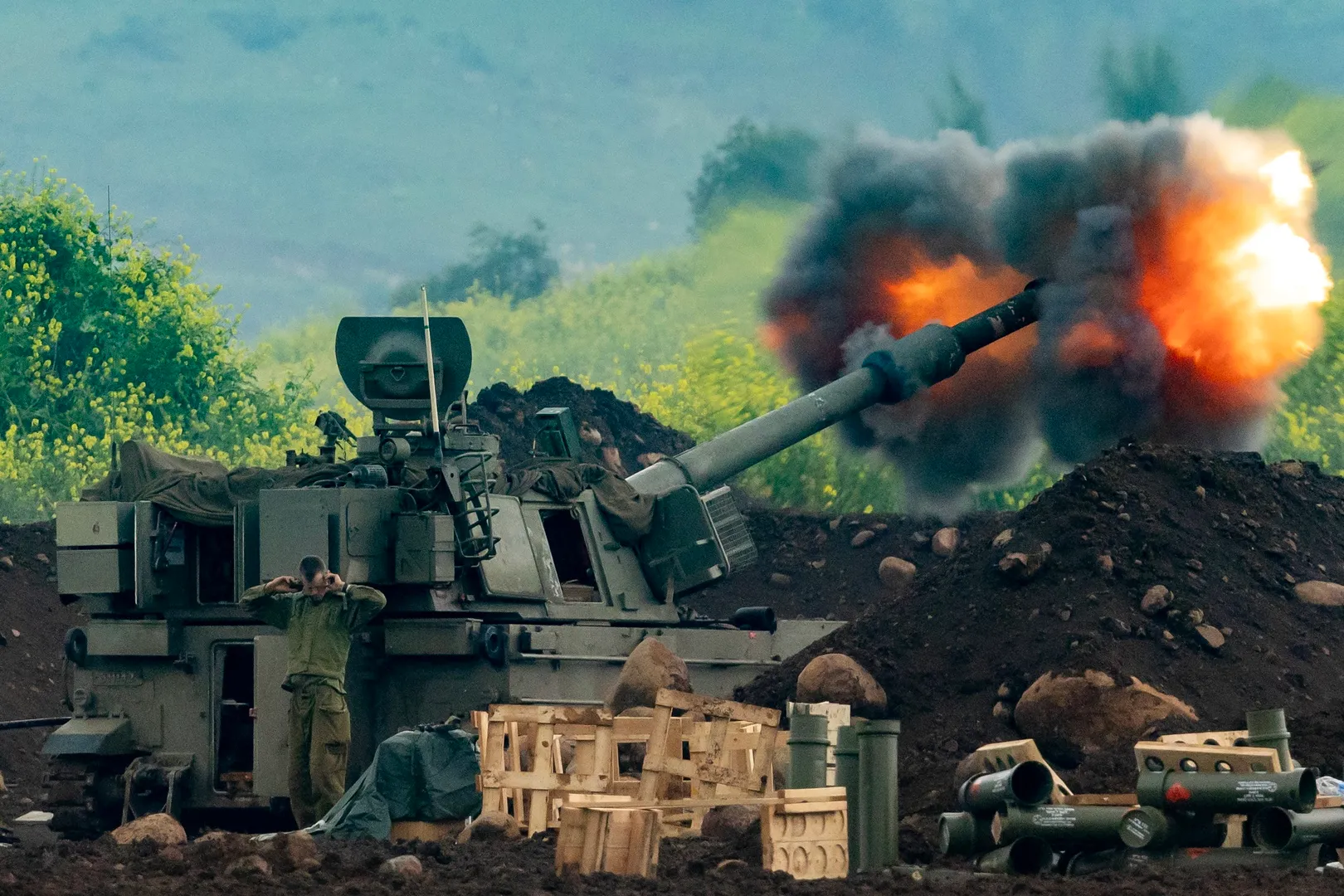
Troops from the 91st Division are conducting what the Israel Defense Forces called “limited and targeted ground operations” against Iran-backed Hezbollah strongholds.
Videos of the operation taken from apparent night-vision cameras worn by the soldiers and distributed by the IDF online show Israeli forces and military vehicles seemingly operating in southern Lebanon.
The operation was aimed at enhancing the forward defense area and was part of broader efforts to strengthen Israel’s forward defensive posture, the IDF said, which is consistent with reporting by Axios that Israel plans to seize all of Lebanon south of the Litani River and will be a major operation.
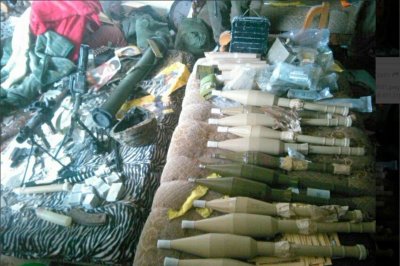
The IDF said airstrikes were conducted before the soldiers of the 91st Division moved in, with a Hezbollah site attacked on Saturday. Troops on Sunday searched the area and found a storage facility housing dozens of rockets, explosive devices and guns, it said in a Monday update on the operation.
Photos included in the release show rockets laid upon a couch inside a debris-filled residence.
Two Hezbollah operatives were also killed, it said, stating the militants had advanced on the Israeli troops.
“The IDF will continue to operate with determination against the Hezbollah terrorist organization following its deliberate decision to attack Israel on behalf of the Iranian regime,” the IDF said.
“The IDF will not tolerate any harm to the residents of the State of Israel.”
במסגרת מאמץ משימת ההגנה הקדמית: כוחות צה”ל חיסלו מחבלים ואיתרו מצבור אמצעי לחימה של מחבלי ארגון הטרור חיזבאללה
במהלך פעילות מבצעית של אוגדה 91, חיל האוויר תקף מבנה צבאי של ארגון הטרור חיזבאללה בו זוהתה פעילות של מחבלי הארגון בסוף השבוע.
אתמול, הכוחות סרקו במרחב המבנה ואיתרו בו… pic.twitter.com/IfLTvjhIZp— צבא ההגנה לישראל (@idfonline) March 16, 2026
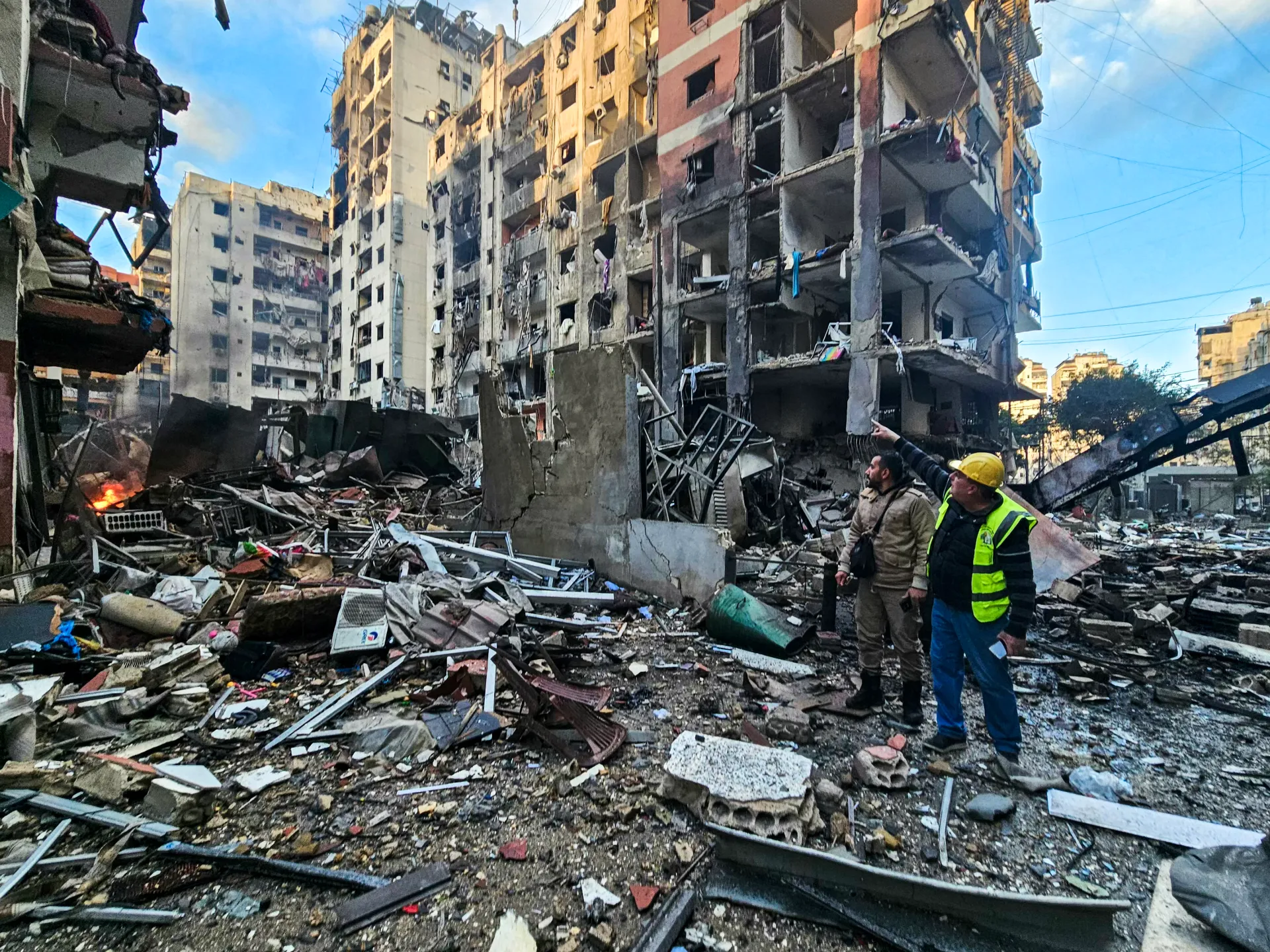
Neighbourhoods in Beirut’s southern suburbs have been left in ruins by Israeli bombing attacks. Israel says it is targeting Hezbollah infrastructure but hundreds of thousands of people have been forcibly displaced.
The Israeli army says its forces are striking key sites in southern Lebanon, as fierce clashes with Hezbollah continue near the town of Khiam.
Published On 16 Mar 202616 Mar 2026
Share
The Israeli military says its troops have begun ground operations in southern Lebanon as fighting against Hezbollah intensifies around the strategic southern town of Khiam.
At least three air strikes struck the city of Khiam, Al Jazeera Arabic reported on Monday.
Recommended Stories
list of 4 itemsend of list
Khiam, a stronghold of Hezbollah, is strategically located and is seen as a gateway to southern Lebanon. The latest war started after Hezbollah fired rockets in response to the killing of Iran’s Supreme Leader Ayatollah Ali Khamenei. Hezbollah had not attacked Israel since the 2024 ceasefire despite repeated Israeli violations of the United States-brokered deal.
On Monday morning, two Israeli air raids targeted the town of Yater, Al Jazeera Arabic reported. There were no immediate reports of casualties or damage.
Israel also launched raids on Burj Qalawiya, Sultaniya and Chaqra, also in southern Lebanon, according to Al Jazeera Arabic. Two raids were also conducted on the towns of Qantara and as-Sawana.
The Israeli army, in a post on X, said on Monday that its troops in recent days were “focused on ground operations on key targets in southern Lebanon to expand the forward defence area”.
“This operation is part of the effort to establish the forward defence, which includes destroying terrorist infrastructure and eliminating terrorists,” it added.
Importance of Khiam
Khiam sits on high ground just a few kilometres from the Israeli border and the Litani River, giving it a commanding view over northern Israel and nearby Lebanese plains.
Al Jazeera’s Zeina Khodr said a “major battle was under way” in and around Khiam. “The elevation of Khiam for both sides gives them a strategic advantage,” she said.
Moreover, Khodr noted the town lies on a “long and important junction … a road that leads to the eastern and western sectors of southern Lebanon”.
“One of the roads leads to the Bekaa Valley too in eastern Lebanon, another area where Hezbollah has influence,” she said.
“What Israel has been trying to do is really cut the supply lines and the difficult capabilities of Hezbollah, so it’s unable to bring in more weapons and fighters to areas south of the Litani River.”
More than 800,000 people, including women and children, have been forced to flee from their homes as the Israeli army issued evacuation orders for many neighbourhoods in southern Lebanon, as well as the capital, Beirut.
Israeli attacks in Lebanon have so far killed at least 850 people, among them 107 children and 66 women.
Gaza City, the Gaza Strip – On February 28, Lama Abu Reida was just a few hours away from what she hoped would change the fate of her sick infant daughter, Alma.
The family had finally been informed that the baby girl – fewer than five months old and unable to breathe without an oxygen machine – was eligible for medical evacuation.
Recommended Stories
list of 3 itemsend of list
The small travelling bag was packed, the medical documents in order, and Abu Rheida ready to go. All that remained was to exit the Rafah crossing between Gaza and Egypt and from there head to Jordan, where Alma could undergo a surgery that was not available in the Gaza Strip.
But just one day before the scheduled March 1 trip, Israel shut Gaza’s crossings “until further notice”, citing security reasons. The decision coincided with the launch of a joint military attack alongside the United States on Iran – and shattered Abu Rheida’s hopes.
“They told me the crossing had been closed without any warning because of the war with Iran,” the mother says in a choked voice.
Alma, who suffers from a lung cyst, has been at Nasser Hospital in Khan Younis, in southern Gaza, for more than three months now, with her mother staying by her side day and night.
“She cannot do without oxygen at all,” Abu Rheida says. “Without it, she becomes extremely exhausted.”
‘I don’t know what might happen’
The Rafah crossing, Gaza’s main gateway to the outside world, was closed for long periods during Israel’s genocidal war against Palestinians in the Strip that began in October 2023.
On February 1, Israel announced a limited reopening as part of a trial phase following a “ceasefire” with the Palestinian group Hamas. This allowed some movement under the agreement’s arrangements, particularly for medical cases.
But only a few patients were able to travel, and thousands remained on waiting lists until the February 28 closure, which stopped the transfer of wounded patients abroad, as well as medical evacuations of patients like Alma.
Doctors had told her family the only option for Alma, who was previously admitted to intensive care three times within a month, was to have surgery abroad to remove the cyst from the lung. While not particularly risky, such an operation cannot be done inside Gaza due to limited medical resources.
“My daughter’s life depends on a single surgery, and afterwards she could live a completely normal life,” Abu Rheida says.
“If her travel is delayed any longer … I don’t know what might happen. Her condition is not reassuring,” she adds in despair.
On Sunday, Israeli authorities said the Rafah crossing will open again on Wednesday for ”limited movement of people” in both directions.
Hadeel Zorob’s late son, Sohaib [Courtesy of Hadeel Zorob/Al Jazeera]
‘The closure killed my children’
The very thing Abu Rheida fears is something Hadeel Zorob has already endured.
Zorob’s six-year-old son, Sohaib, died on March 1, 2025, while her eight-year-old daughter, Lana, passed away on February 18 last month. The two children suffered from a rare genetic disease that causes gradual deterioration in the body’s functions.
They were both waiting for medical referrals to travel abroad for treatment – but that never happened.
“I watched my children die slowly in front of my eyes, one after the other, without being able to do anything,” says Zorob, 32, breaking down in tears.
Lana was only a few days away from travelling before she passed away.
“My daughter’s travel had been scheduled around the same period when the crossing was later closed, but she died before that,” Zorob says.
“When the news of the crossing closure came, my grief for my daughter returned all over again as I remembered the many children who will suffer the same fate.”
Zorob says her children were still able to move and play relatively normally in the early stages of their illness.
Before Israel’s war on Gaza, both children were receiving specialised hospital treatment, which helped stabilise their condition to some extent. But as the Israeli attacks intensified, their condition gradually worsened until it reached a life-threatening stage. The collapse of Gaza’s healthcare system left the family struggling to access the medications they relied on.
“We even tried to bring the medicine from the West Bank, and I asked the Red Cross and the World Health Organization, but nothing worked,” Zorob says.
During the war, she and her family had to leave their home and move into a tent in the al-Mawasi area. The new displacament conditions made caring for the children much harder.
“Both were bedridden … in diapers, and their blood sugar needed regular monitoring. We had to give fluids and watch their food … all this in a tent with no basic necessities.”
Zorob says she feels like “going crazy” when she thinks that her children might have survived and improved if they were able to get treatment abroad.
“The closure of the crossings killed my children!” she adds, her voice filled with anguish. “The world gives no value to our lives or to the lives of our children … this has become something normal.”
Zorob says she is trying to stay strong for her third child, four-year-old Layan, despite the persisting pain.
“All I want is that what happened to my children does not happen to any other mother … that the crossing be reopened and that children and patients be allowed to travel.”
‘Is that too much to ask?’
According to the Health Ministry in Gaza, more than 20,000 patients and wounded people are waiting to travel abroad for medical treatment.
Among them are about 4,000 cancer patients in need of specialised care unavailable in Gaza, and roughly 4,500 children.
The lists also include around 440 “life-saving” cases needing urgent intervention and nearly 6,000 wounded people who require continued hospital care outside of Gaza.
The Al-Dameer Association for Human Rights has called the Rafah crossing’s closure a form of collective punishment for civilians in Gaza, warning that it “sentences more patients to death” and deepens Gaza’s humanitarian crisis.
Amal al-Talouli, 43, has been suffering from breast cancer for five years [Maram Humaid/Al Jazeera]
For Amal al-Talouli, the closure of the Rafah crossing was another devastating blow in her battle with cancer.
The 43-year-old has been suffering from breast cancer for about five years. Although she underwent treatment before the war, the disease returned and spread to other parts of her body, including the spine.
“Praise be to God, we accept our fate,” the mother of two says. “Still, why should our suffering worsen because we are prevented from travelling and the crossings are closed?”
Al-Talouli is currently living with relatives after losing her home in the Beit Lahiya project area, in northern Gaza, during the war.
Displacement was not an easy choice due to her health condition, she says. The situation is compounded by a severe shortage of medications and specialised medical staff – a reality also experienced by other cancer patients in Gaza.
“There is a shortage of everything,” al-Talouli says. “I developed osteoporosis and eye fluid from chemotherapy. Chemo needs good nutrition, but malnutrition and famine made it much harder.”
Al-Talouli says the shutdown of the crossings made things worse.
“[It] affects us very, very much. No medicines are entering, and no essential treatments are coming in,” says al-Talouli, whose name was on a waiting list to travel outside of Gaza for treatment.
She stresses that cancer patients in Gaza urgently need support.
“Now I only want the crossing to reopen so I can have a chance to recover and continue my life with my children,” she says. “Is that too much to ask?”
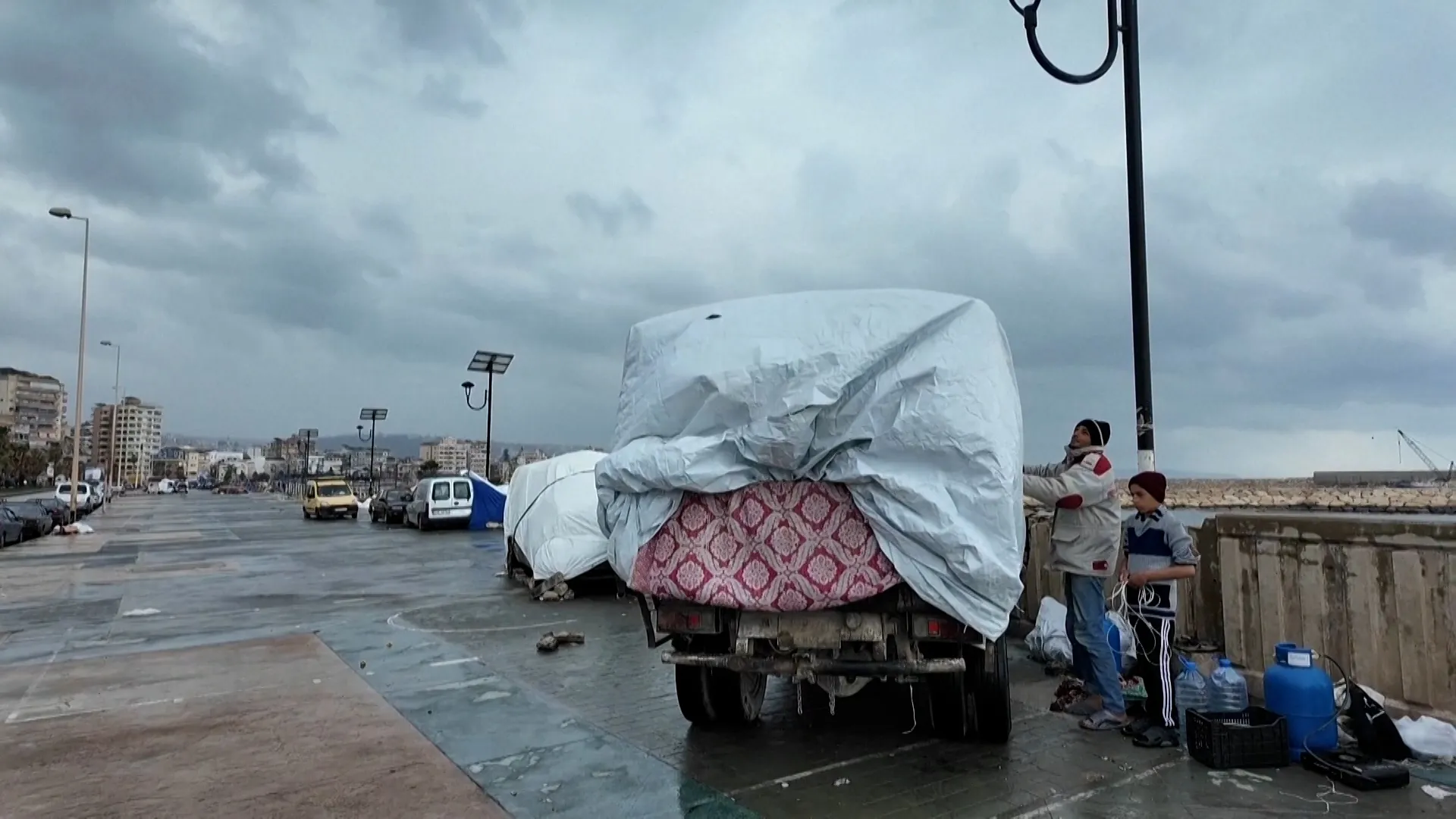
Displaced families in Sidon are turning their vehicles into makeshift shelters, covering them with tarp to shield themselves from the rain after failing to find space in local schools. Hundreds of thousands have been forced from their homes as Israel’s offensive in Lebanon intensifies.
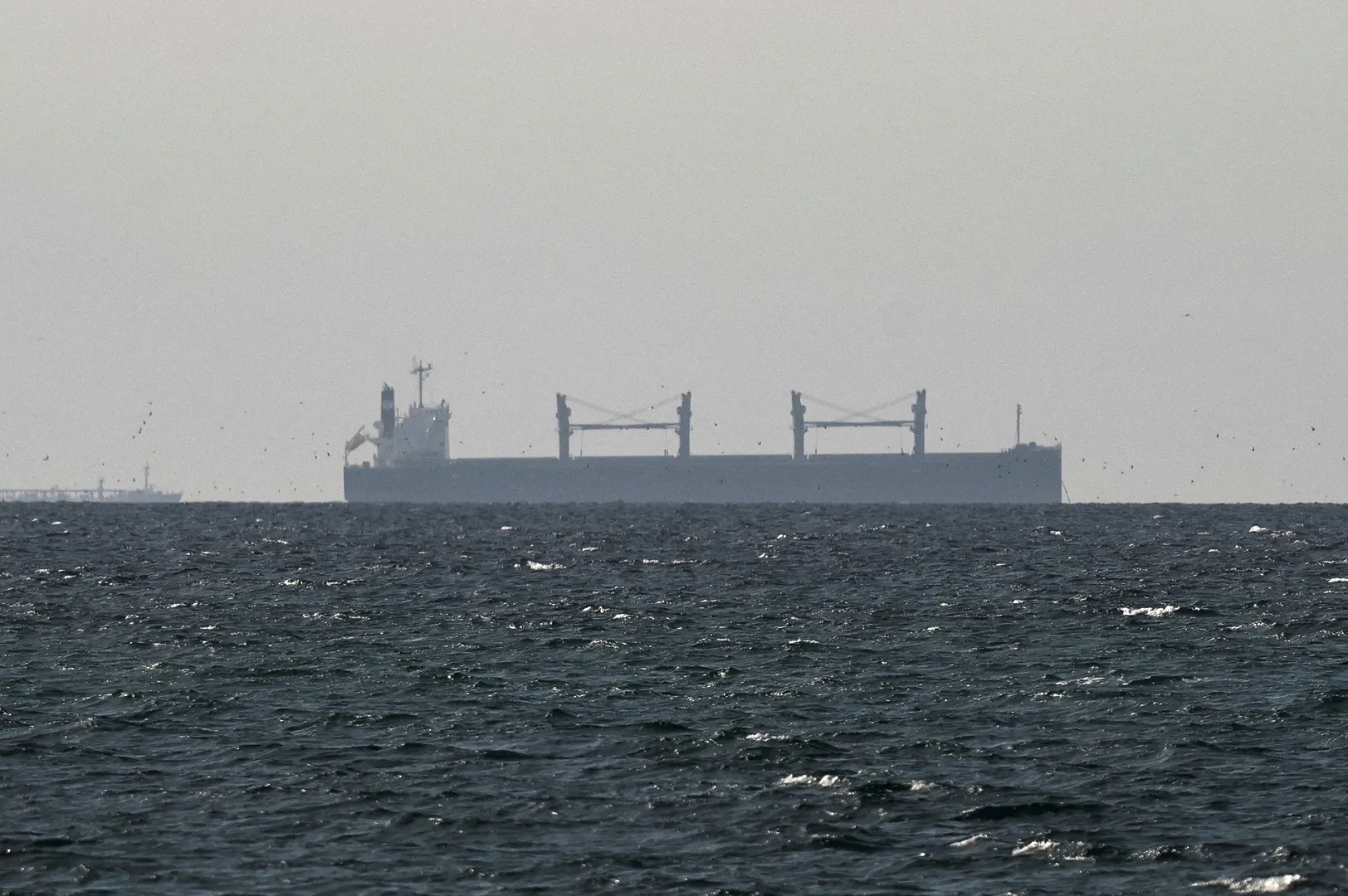
Several Gulf energy producers have declared force majeure on oil and gas shipments after disruptions to shipping through the Strait of Hormuz due to the US-Israeli war on Iran. Al Jazeera’s Alma Milisic explains what the legal term means and how it could affect global energy markets.
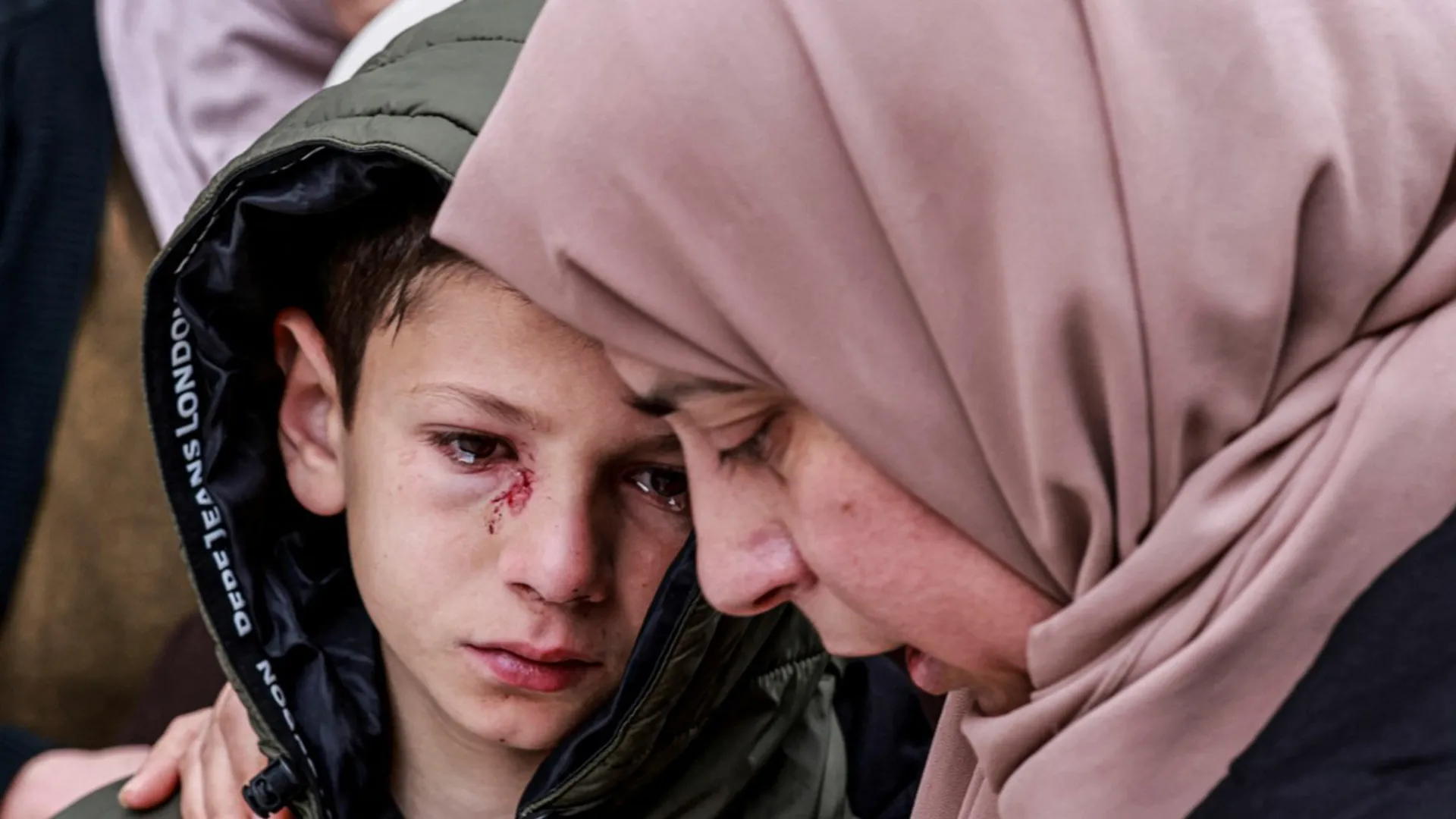
Two Palestinian brothers are the only survivors after Israeli troops killed their parents and two siblings in Tammun in the occupied West Bank, according to Palestinian health authorities. The boys say soldiers opened fire on their family car and beat them after the shooting.
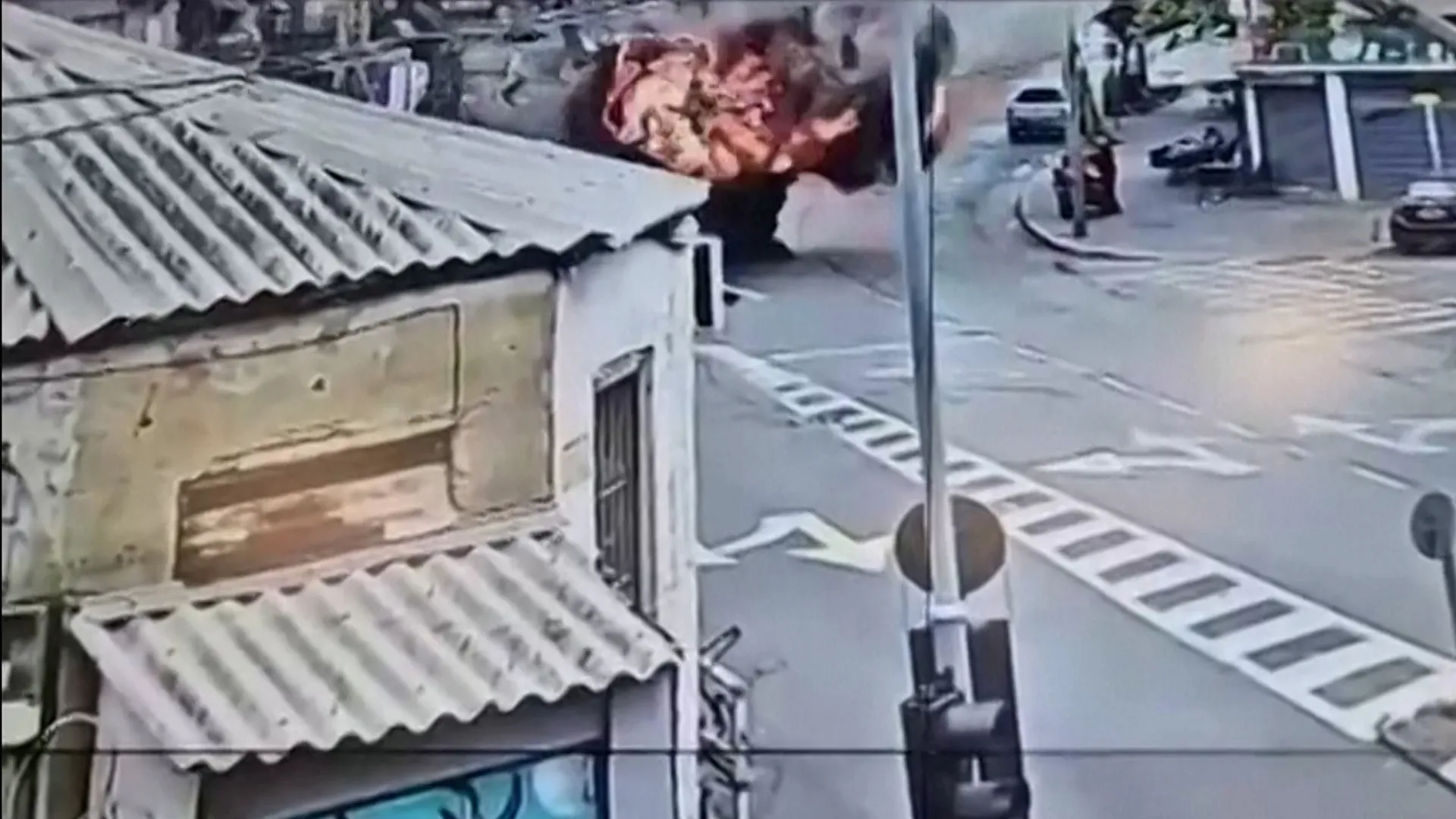
CCTV footage released by Israeli police shows the moment an Iranian missile struck a street in Tel Aviv. Emergency crews say at least three people were injured, and several vehicles were destroyed.
1 of 2 | Iranians stand inside their damaged residential building in southern Tehran, Iran, on Sunday. Photo by Abedin Taherkenareh/EPA
March 15 (UPI) — Israel said it launched a wave of airstrikes on Iran on Sunday as Iran carried out its own attacks on U.S. military sites and against U.S. allies in the Gulf region at large.
The Israeli military said its airstrike hit the Hamedan area of western Iran, hitting multiple military headquarters, The Times of Israel reported. The Israeli military said it plans to expand its attacks on western and central Iran “with the aim of broadly and systematically damaging the regime’s command and control capabilities.”
Israeli officials, meanwhile, said at least five people in the country were injured Sunday by Iranian missiles. Iran’s state-run Mehr news agency reported that the Iranian military has pledged to “pursue and kill” Israeli Prime Minister Benjamin Netanyahu “with force.”
The United Arab Emirates said it has seen a drop in Iranian attacks within its borders. The defense ministry said it intercepted four ballistic missiles and six drones Sunday.
Since the start of the war, it has faced more than 1,900 attacks by Iran.
Bloomberg reported that a key oil port on the UAE’s east coast — Fujairah — was back in operation Sunday after it was targeted by an Iranian drone Saturday. The port is about 70 nautical miles away from the Strait of Hormuz, which Iran closed earlier in the month to put pressure on its enemies’ abilities to transport oil. About one-fifth of the world’s oil passes through the strait.
Fujairah is situated at one end of a pipeline that allows the UAE to bypass use of the Strait of Hormuz entirely. The site exported an average of more than 1.7 million barrels of crude and refined fuels per day in 2025, about 1.7% of the world’s demand, The Guardian reported.
Officials said they intercepted a drone attack near the site, causing a fire there briefly.
British Energy Secretary Ed Miliband said his country was examining ways to reopen the Strait of Hormuz and keep oil flowing. In an appearance on Sky News’ Sunday Morning with Trevor Phillips, Miliband said Britain was in talks with allies.
“There’s different ways in which we can make maritime shipping possible. We are intensively looking with our allies at what can be done, because it’s so important that we get the strait reopened.”
Hundreds of tankers sit idle on both sides of the Strait of Hormuz as Iran has effectively closed the waterway, pushing oil prices above $100 – the highest since 2022, after the start of the Russia-Ukraine war.
Oil tanker traffic in the strait, through which one-fifth of global oil passes, has plunged after Israel and the United States launched attacks on Tehran on February 28. Asian countries, including India, China and Japan, as well as some European countries, source large portions of their energy needs from the Gulf. A disruption in supply will rattle the global economy.
With an aim to cushion from the shock, the International Energy Agency (IEA) has decided to release 400 million barrels of oil from emergency reserves, the largest coordinated drawdown in the agency’s history. But it has failed to push the prices down.
The agency had released about 182 million barrels after Russia’s invasion of Ukraine to stablise the oil prices.
According to the agency, oil shipments through the strategic waterway have fallen to less than 10 percent of pre-war levels, threatening one of the most critical arteries in the global energy system.
IEA members collectively hold about 1.25 billion barrels in government-controlled emergency reserves, alongside roughly 600 million barrels in industry stocks tied to government obligations.
A large number in a massive market
The figure may appear vast, but it shrinks quickly against the scale of global energy demand.
“This feels like a small bandage on a large wound,” energy strategist Naif Aldandeni said, describing the world’s largest coordinated emergency oil release as governments scramble to steady markets shaken by war.
The US Energy Information Administration (EIA) estimates world consumption of petroleum and other liquids will average 105.17 million barrels per day in 2026. At that rate, 400 million barrels would theoretically cover just four days of global consumption.
Even when compared with normal traffic through the Strait of Hormuz – around 20 million barrels per day – the released oil equals only about 20 days of typical flows.
Aldandeni told Al Jazeera that emergency reserves can calm panic in markets but cannot replace the lost function of a disrupted shipping corridor.
“The release may soften the shock and calm nerves temporarily,” he said, “but it will remain limited as long as the fundamental problem — the freedom of supply and tanker movement through Hormuz – remains unresolved.”
Oil prices reflect those anxieties. Brent crude ended trading on Friday at $103.14 per barrel, after surging to nearly $120 earlier as fears of disrupted production and shipping intensified.
Geopolitical risk premium
Oil expert Nabil al-Marsoumi said the price surge cannot be explained by supply fundamentals alone.
“The closure of the Strait of Hormuz added roughly $40 per barrel as a geopolitical risk premium above what market fundamentals would normally dictate,” he told Al Jazeera.
From that perspective, releasing strategic reserves serves primarily as a temporary tool to dampen that premium rather than fundamentally rebalance the market.
Prices above $100 per barrel are uncomfortable for major consuming economies already struggling to curb inflation and protect economic growth.
Recent EIA projections suggest global demand has not yet declined significantly because of the war, remaining close to 105 million barrels per day. The market pressure, therefore, stems less from falling consumption and more from fears of supply shortages and delays in deliveries to refineries and consumers.
Threats to oil infrastructure
The latest escalation could deepen those fears.
United States President Donald Trump said on Friday that the US Central Command (CENTCOM) had “executed one of the most powerful bombing raids in the History of the Middle East and totally obliterated every MILITARY target in Iran’s crown jewel, Kharg Island”.
He added that “for reasons of decency” he had “chosen NOT to wipe out the Oil Infrastructure on the Island”, but warned Washington could reconsider that restraint if Iran continues to disrupt shipping through the Strait of Hormuz.
CENTCOM confirmed the operation, stating US forces had struck “more than 90 Iranian military targets on Kharg Island, while preserving the oil infrastructure”.
Iranian officials have meanwhile warned they would target energy facilities linked to the US across the region if Iranian oil infrastructure comes under direct attack.
Kharg Island is not simply a military location. It serves as the primary export terminal for Iranian crude, making it a critical node in the country’s oil supply network.
If attacks move from obstructing shipping to targeting export infrastructure itself, the crisis could shift from a chokepoint disruption scenario to one involving direct losses of production and export capacity.
In such circumstances, the oil released from emergency reserves would act only as a temporary bridge rather than a lasting solution to lost supply.
Major oil companies such as QatarEnergy, the world’s largest producer of liquefied natural gas (LNG), Kuwait Petroleum Corporation and Bahrain state oil company Bapco have shut production and declared force majeure, while Saudi Aramco, the world’s largest oil producer, and UAE state oil company ADNOC have shut down their refineries.
Limits of emergency reserves
Even under a less severe scenario – where maritime disruption persists but infrastructure remains intact — the ability of strategic reserves to stabilise markets remains constrained by logistics.
The US Department of Energy said the US Strategic Petroleum Reserve held 415.4 million barrels as of 18 February 2026. Its maximum drawdown capacity is 4.4 million barrels per day, and oil requires about 13 days to reach US markets after a presidential release order.
That means even the world’s largest emergency stockpile cannot flood the market with crude immediately. The release must move through pipelines, shipping networks and refining capacity before reaching consumers.
Aldandeni said the current intervention would likely produce only a temporary stabilising effect, while al-Marsoumi warned that prolonged disruption in the Strait of Hormuz – or the spread of threats to other chokepoints such as the Bab al-Mandeb Strait in the Red Sea could quickly send prices further higher.
All the predictions, drama and pageantry of Hollywood’s biggest night will play out at the Dolby Theatre this afternoon as the 98th Academy Awards get underway.
How many awards will “Sinners,” directed by Ryan Coogler, win from its record-setting 16 nominations? And will Coogler win best director? Our critic says, “no.”
Tonight is also a big evening for our entertainment team, which has been producing features, previews, explainers, predictions and so much more.
The 2026 Oscars will air on ABC, and those with cable subscriptions can also watch by logging into the ABC app or abc.com.
The telecast will also stream live on Hulu, YouTubeTV, AT&T TV and FuboTV. Internationally, the ceremony will be broadcast in more than 200 territories. You can check your local listings here.
When the red carpet viewing gets underway
“Chicken Shop Date” host Amelia Dimoldenberg will return, for a third-straight year, as social media ambassador and correspondent for the official red carpet, which will kick off at 3:30 p.m. on ABC and Hulu.
For extended coverage, E! will begin its red carpet broadcast at 1 p.m. ABC’s coverage begins at 12:30 p.m., followed by “The Oscars Red Carpet Show,” hosted by Tamron Hall and Jesse Palmer.
“Sinners” is picking up steam heading into the show
My colleague Greg Braxton wrote about how award prognosticators believe Sinners gained positive press after its stars — Delroy Lindo and Michael B. Jordan — were called a racial slur at the BAFTAs.
Jordan’s and Lindo’s handling of the BAFTA incident, along with warmly received victories for the “Sinners” cast at the Actor Awards on March 1, has given the Warner Bros. release unexpected momentum leading up to Sunday’s Oscars ceremony.
Although it received a record-breaking 16 nominations, the film has been largely overshadowed through much of awards season by Paul Thomas Anderson’s political thriller “One Battle After Another.”
And Timothée Chalamet of “Marty Supreme” had been considered for months as an almost-certain lock for lead actor. But the events in past weeks have seemingly positioned “Sinners” for upset wins in the picture race and lead actor for Jordan.
Every character — from Miles Caton’s rebellious guitarist and Jack O’Connell’s lilting vampire to Wunmi Mosaku’s soulful witch and Michael B. Jordan’s bootlegging twins Smoke and Stack — has been scarred by life in 1930s Mississippi.
She also said the film “Eddington” should’ve been a contender (perhaps a nod to “On the Waterfront”). Ari Aster’s merciless black comedy drags us back to May 2020 when tempers, temperatures and misinformation were heating up across America.
Dueling civic leaders Sheriff Joe (Joaquin Phoenix) and Mayor Ted (Pedro Pascal) agree that COVID has yet to arrive in their New Mexican hamlet.
But with the Oscars, quality is often secondary to an awards narrative. Both movies have cultural relevance.
Both won critical acclaim and, to a degree, commercial success. (Though “One Battle” wasn’t the blockbuster “Sinners” was, it still grossed more than any other movie in Anderson’s career.) “Sinners” scored 16 Oscar nominations, the most in history; “One Battle” was close behind with 13.
There’s much more to read in the above links. Enjoy them and the Oscars.
You’re reading the Essential California newsletter
The week’s biggest stories
(Chris Putnam/FiledIMAGE – stock.adobe.com)
Election news
Oil and the Iran War
Crime, courts and policing
What else is going on
Must reads
Other meaty reads
For your downtime
(Illustrations by Lindsey Made This; photograph by Richard Shotwell / Invision / AP)
Going out
Staying in
L.A. Affairs
Get wrapped up in tantalizing stories about dating, relationships and marriage.
Have a great day, from the Essential California team
Jim Rainey, staff reporter Hugo Martín, assistant editor, fast break desk Kevinisha Walker, multiplatform editor Andrew J. Campa, weekend writer Karim Doumar, head of newsletters
The decision by United States President Donald Trump to launch a war on Iran has left many international law experts questioning if the world order established after World War II is actually working.
In his second presidential term, Trump seems to be wielding total power without restraint, and the system of checks and balances enshrined in the US Constitution appears to be failing to limit his power.
Recommended Stories
list of 4 itemsend of list
Since Trump was sworn in in January 2025, he has ordered two unprovoked attacks on independent states, Venezuela and Iran; threatened to annex Greenland; strained traditional alliances with Europe; undermined the United Nations; and rattled international trade with his sweeping tariffs.
Previous constraints set by the UN system and international law appear supplanted by what Trump told reporters in January was a vision of power limited only by his “own morality”.
President Donald Trump holds the key to unlock the FIFA Club World Cup trophy, which he said is staying at the White House, requiring a replica to be presented to the tournament’s winners, Chelsea, in July 2025 [File: Pool via AP]
So what checks are there on Trump? Is he really free to attack states, set tariffs at will and, as leader of the world’s most powerful state, essentially dictate global policy? And if so, why are so many observers now saying his war on Iran is faltering?
Has international law put any checks on Trump?
Not so far.
According to analysts, both his attacks on Venezuela and Iran were in clear breach of international law and the UN Charter, principally the prohibition on the use of force under Article 2(4).
Debates about international law, how it has been geared over the decades to underpin the interests of the West and the US specifically, are hardly new. However, experts said, the Trump presidency has seen even the notional restraints of international law trampled underfoot.
Trump himself has brushed aside international law, saying in January that it would be up to him to decide when and how much international law applied to the US and his actions.
“In many respects, international law has historically served US interests, and self-interest should continue to generate US support for a rules-based order organised around the core principles enshrined in the UN Charter,” Michael Becker, a professor of international human rights law at Trinity College in Dublin who previously worked at the International Court of Justice in The Hague, told Al Jazeera, “But finding value in international law often requires adopting a long-term outlook that does not sit easily with short-term political agendas.”
“In the current geopolitical climate, the capacity of international law to provide a meaningful constraint on US action under Donald Trump has proven negligible,” Becker added. “That seems unlikely to change, especially given the failure by other states to strike a united front against Trump’s gangsterism.”
What about the UN?
Not so much.
From its founding, the role of the UN has been to promote dialogue instead of conflict and provide a global response to international challenges. However, Trump’s relationship with the body, like so many of the president’s associations, has rarely been so straightforward. On the one hand, while appearing to try to supplant the body with his members-only Board of Peace as well as sidelining UN aid efforts in Gaza, he has on occasion sought the legitimacy of the UN for a number of his projects, such as his calls in August for the UN to establish a Support Office in Haiti, to help limit migration to the US.
However, while the support of the UN may be helpful, it is clear that Trump has no intention of abiding by its charter, Richard Gowan, the Crisis Group’s UN director from 2019 to 2025, said.
“While other UN members see the US is breaking international law on a regular basis, they often hold back from criticising Washington too loudly in forums like the Security Council because they fear blowback from Trump,” Gowan said. “So Trump is learning he can sidestep the UN when he wants to and get away with it while occasionally using it for instrumental purposes.”
What about other powers?
Up to a point.
Many countries known as “middle powers”, such as Canada, the United Kingdom, France, and other Western and European states, have proven successful so far in pushing back against Trump’s efforts to unilaterally annex Greenland. But European powers have failed to condemn Trump’s unprovoked war on Venezuela and Iran, exposing their double standards in conflicts in the Middle East and the Global South.
Many analysts expect that a withdrawal of investments in the US by Gulf states, which are bearing the brunt of Iran’s retaliation to US and Israeli attacks, may also hasten the war’s end.
“Middle powers can generate friction but not a veto,” HA Hellyer of the Royal United Services Institute for Defence and Security Studies in London said. “Collective action – European governments, Gulf states – can raise costs and extract tactical adjustments. The structural imbalance remains: The US retains decisive military, financial and institutional primacy.”
Smaller states often hedge their bets, follow Washington or look to regional alliances for protection, Hellyer added, continuing that while pressure was strongest in Europe, where the US is no longer seen as a reliable security guarantor, the idea of establishing an alternative continues to be a hurdle. “The logic of an alternative model is accepted; the capacity to execute it quickly is not. A prolonged interregnum follows. The Gulf Arab states are in an analogous position,” he said.
In the meantime, Trump and the US are free to act as they choose. “These are exposure-management strategies, pursued until structural dependence on the US security umbrella can be reduced,” he said.
China and Russia have so far criticised the breaches of international law while avoiding clear escalation, and India and other members of the BRICS bloc have largely stayed silent, suggesting a preference for strategic ambiguity over confronting Washington directly.
Canadian Prime Minister Mark Carney warned Trump of a ‘rupture’ in the Western alliance at the World Economic Forum in Davos, Switzerland, in January 2026 [File: Denis Balibouse/Reuters]
What about domestic restraints?
Not really.
The US Supreme Court was able to block Trump’s use of tariffs to manage large parts of his foreign policy by rewarding allies with lower tariffs and punishing critics with punitive import duties.
But none of the other traditional guardrails – such as Congress; the Department of Justice, which has provided unwavering support to the president; and even the news media – has contained the president’s ambitions. This isn’t entirely new. Previous presidents have ordered wars without congressional approval. However, with Trump, analysts suggested, it has been systematic.
Powerful US institutions have largely failed to hold the Trump administration accountable, analysts, such as Kim Lane Scheppele, a professor of international affairs at Princeton University, said.
“His base of strong supporters are saying that they are willing to experience short-term increases in gasoline prices if it leads to a friendly government in Iran in the long term. His opponents have been his opponents on everything, so he simply ignores and threatens them,” Scheppele told Al Jazeera.
“Trump pays more attention to market performance than to public opinion, so he started saying that he was minimising costs and saying that the Iran war is short term to boost markets again.”
“What the US is spectacularly missing is leadership to oppose Trump. Congress is not doing its constitutional job to constrain him. The Supreme Court is in his pocket because he packed the court in his first term. Lower court judges are heroic and have done amazing work under serious pressures, but they don’t get foreign policy questions, given the difficulty of anyone getting ‘standing’ … in the area of international matters,” she said, referring to the requirement that parties to a lawsuit must show actual or future direct harm to themselves to bring a case to court.
She noted that lower federal courts, although limited on foreign policy, have repeatedly checked executive overreach on immigration, sanctions designations and emergency powers, often under intense political pressure.
A bulk carrier and tanker at anchor in Muscat, Oman, as Iran has essentially closed the Strait of Hormuz by threatening to attack vessels transiting the waterway [File: Benoit Tessier/Reuters]
So why are so many people saying Trump’s war is faltering?
In the eyes of many observers, Trump, with no clear war aims or a defined resolution, is in danger of losing control of a conflict that appears to be both growing and reaching into economic areas apparently unforeseen by his administration, so while traditional restraints don’t apply, market forces, like gravity, always do.
Trump has repeatedly said the war would be over soon despite none of his claimed war aims being achieved.
Oil prices have surged due to his attacks on Iran, Tehran’s counterstrikes and threats to shipping in the Strait of Hormuz, through which about 20 percent of the world’s oil and liquefied natural gas passes.
The International Energy Agency’s decision on Wednesday to release 400 million barrels of oil from international petroleum reserves has failed to tame the prices. Iran has warned that oil could hit $200 a barrel as it continues its stranglehold of the waterway.
“Ultimately, the factors that might be most likely to constrain Donald Trump’s neoimperialist impulses – or his willingness to pursue the policy goals of those who have his ear – are the economic fallout from disrupting global energy markets and a broader disenchantment among US voters with his globe-trotting militarism, his rampant self-dealing and his callous disregard for the human costs of war,” Becker said.
Ebrahim Zolfaghari, spokesperson for Iran’s Khatam al-Anbiya Central Headquarters, accused the US and Israel of orchestrating a ‘diabolical plot’, claiming they copied Iran’s Shahed-136 drone design and repurposed it as a modified ‘Lucas’ drone to falsely blame Tehran for drone attacks across the region.
WASHINGTON — After two weeks of war with Iran, the Trump administration is being forced to temper its expectations of a swift end to the conflict, with U.S. intelligence and defense officials expressing doubt it can achieve the overthrow of Iran’s government and the destruction of its nuclear program through military means.
It was an outcome forewarned by analysts at the State Department, the CIA and the Pentagon, who together alerted the administration to the pitfalls full-scale war with Iran would bring before President Trump decided to proceed, two U.S. officials told The Times, granted anonymity to speak candidly.
Certain military goals of Operation Epic Fury laid out at the start of the war are still seen as achievable at the Pentagon, with U.S. and Israeli strikes making steady progress degrading Iran’s ballistic missile infrastructure, its drone program and its navy.
But a prewar U.S. intelligence assessment, that an air assault was unlikely to topple the Islamic Republic, still holds, with the intelligence community now casting doubt the assault had any more political effect than to radicalize a government already devoted to the destruction of Israel and harming the United States.
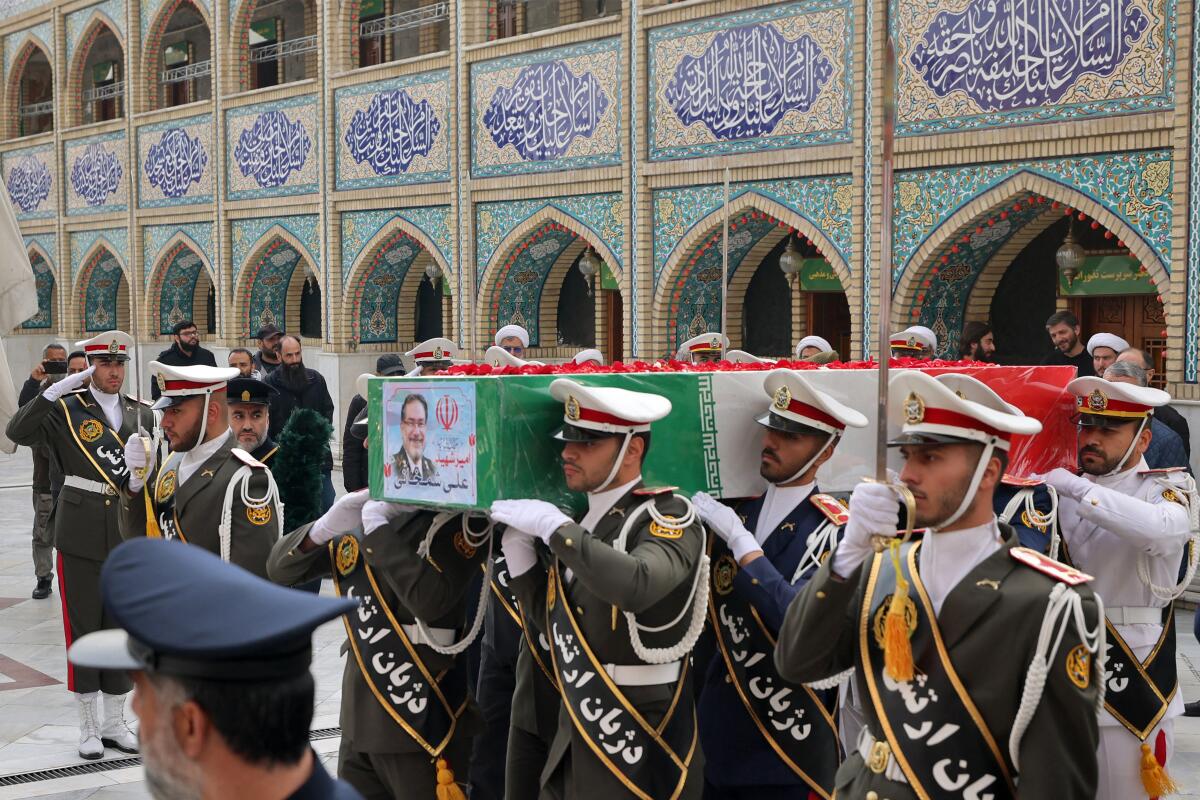
A military procession in Tehran carries the casket of Ali Shamkhani, political advisor to Iran’s last Supreme Leader Ayatollah Ali Khamenei, who was also killed in U.S.-Israeli attacks.
(Atta Kenare / AFP/Getty Images)
Concern has only grown that Iran’s new government will make the fateful strategic decision to build a bomb after the war, unless Trump decides to escalate the conflict with a perilous ground invasion. And the White House now contends with a new mission imperative, created by its decision to launch the war itself, of reopening the Strait of Hormuz to vital shipping traffic that carries 20% of the world’s daily oil and liquid natural gas supply.
The foreign policy strategy Trump publicly laid out as his playbook for the conflict — to come down hard on the government, decapitating its leadership, and hope the remnants would seek mercy — has not worked, with Tehran looking for new ways to expand the war and maximize pain for the U.S. administration.
Trump has minimized the conflict as an “excursion” that would end “very soon,” while also calling it a war, vowing to take the time he needs to “finish the job.” He says it will conclude whenever he decides to end it.
It remains possible that a declaration from Trump that the fighting is over results in a ceasefire, as it did in June of last year, when Trump demanded an end to 12 days of war between Iran and Israel. But the Iranians have a vote, too — and senior leadership in the Islamic Republic have made plain they plan to continue fighting this time whether Trump likes it or not.
On Friday, the Pentagon announced that an additional expeditionary unit of 2,500 Marines was being deployed to the region to support the effort.
“Starting wars is an easy matter,” Ali Larijani, secretary of Iran’s Supreme National Security Council, wrote on social media. “Ending them does not happen with a few tweets.
“We will not leave you until you admit your mistake and pay its price,” he added.
It is a sore lesson for a president whose decade in public life has been distinguished by an exceptional ability to warp reality to his liking.
“The White House has created a dilemma for America: If it declares victory and ends the war, it leaves in place a weakened Iranian government with the means and renewed motivation to pursue nuclear weapons,” said Reid Pauly, a professor of nuclear security and policy at Brown University.
“If it presses on with the war,” Pauly added, “it risks the kind of mission creep that may eventually find American boots on the ground.”
In a news release last week, the White House said that, “from the opening hours of this historic campaign, the objectives were clear: obliterate Iran’s ballistic missile arsenal and production capacity, annihilate its navy, sever its support for terrorist proxies, and ensure the world’s leading state sponsor of terrorism will never acquire a nuclear weapon.”
Yet, at the start of the operation, Trump issued a promise to the people of Iran that, at the end of the U.S.-Israeli campaign, Iran’s military and paramilitary infrastructure would be so badly hobbled that a rare, generational opportunity would emerge for them to take their government back.
“To the great proud people of Iran, I say tonight that the hour of your freedom is at hand,” Trump said. “Stay sheltered. Don’t leave your home. It’s very dangerous outside. Bombs will be dropping everywhere. When we are finished, take over your government. It will be yours to take. This will be probably your only chance for generations.”
Trump said in the days that followed he would need to have a say over the next ruler, after assassinating the country’s longtime supreme leader, Ayatollah Ali Khamenei. But the Iranian system of clerics and militants defied the president, selecting in Khamenei’s son a man viewed as even more hostile to the West than his father was.
Israeli leadership, too, set out regime change as a goal of the war. Yet even their officials now say that a substantial leadership change in Tehran is an unlikely result.
Trump would go on to insist on the “unconditional surrender” from the Iranian government, a demand that he later said would be satisfied by the incapacitation of Iran’s military.
Repeating his conviction that the war will end soon, Trump told Fox News’ Brian Kilmeade in an interview Friday that he would order an end to the fighting “when I feel it. When I feel it in my bones.”
“The problem with the administration’s approach is that it has constantly shifted its goals. Some are achievable, such as degrading Iran’s conventional force. Others are not, such as picking the next leader of Iran,” said Ray Takeyh, a scholar on Iran at the Council on Foreign Relations.
“The mixed messages have led to confusion at home,” Takeyh added, “and lack of planning for oil shortages and getting the Americans out of the region shows that process and personnel can actually matter.”
Mark Dubowitz, CEO of the Foundation for Defense of Democracies, said the joint U.S.-Israeli campaign was always designed to unfold in three phases: degrading Iran’s ability to wage war, reducing Iran’s ability to repress democratic forces inside the country, and finally, encouraging the Iranian people to rise up.
“The president controls the strategy, but no president fully controls the endgame because the regime gets a vote,” Dubowitz said. “The endgame is not a scripted political transition directed from Washington. It is a regime under simultaneous military, economic, and internal pressure — to strip of its war-making and repression capabilities — and whether that produces succession, fracture, or collapse will ultimately be decided in Tehran.”
Whether the conflict will achieve the destruction of Iran’s nuclear program is an equally grave question in Washington, where officials are debating over a list of stark options on how to physically destroy, bury or retrieve the fissile material that Tehran could use to build a nuclear weapon — a threat seen as only more grave under the stewardship of an angry and vengeful government.
“The war was publicly justified, to the extent it was justified at all, in terms of destroying Iran’s nuclear program. Very few strikes have been directed against nuclear-related targets, however — almost certainly because those that survived last June’s attacks are invulnerable to air attack,” said James Acton, co‑director of the nuclear policy program at the Carnegie Endowment for International Peace.
“Unless the U.S. and Israel attempt high-risk special forces operations or a ground incursion,” he added, “Iran will end the war with its surviving nuclear infrastructure largely intact and greater incentives to build the bomb.”
Pauly agreed it is unrealistic to expect the United States and Israel can destroy Iran’s nuclear program through air power alone. The U.N. International Atomic Energy Agency believes Iran has roughly 440 kilograms — about 970 pounds — of 60% highly enriched uranium, possibly spread across multiple facilities.
“Securing this material will require either U.S. ground troops or, after some coercive bargain is reached, international inspectors,” Pauly said.
In an exchange with reporters last week at the Pentagon, Defense Secretary Pete Hegseth had few details to offer on what U.S. options were to remove or eliminate an accessible uranium stockpile, enriched to near weapons grade, that had been buried in a U.S. operation last year intended on obliterating the nuclear threat.
Diplomacy, he suggested, might be required to secure the material.
“I will say we have a range of options, up to and including Iran deciding that they will give those up,” he told reporters, “which of course we would welcome.”