
island

US attacks military sites on Iran’s Kharg island, home to vast oil facility | US-Israel war on Iran News

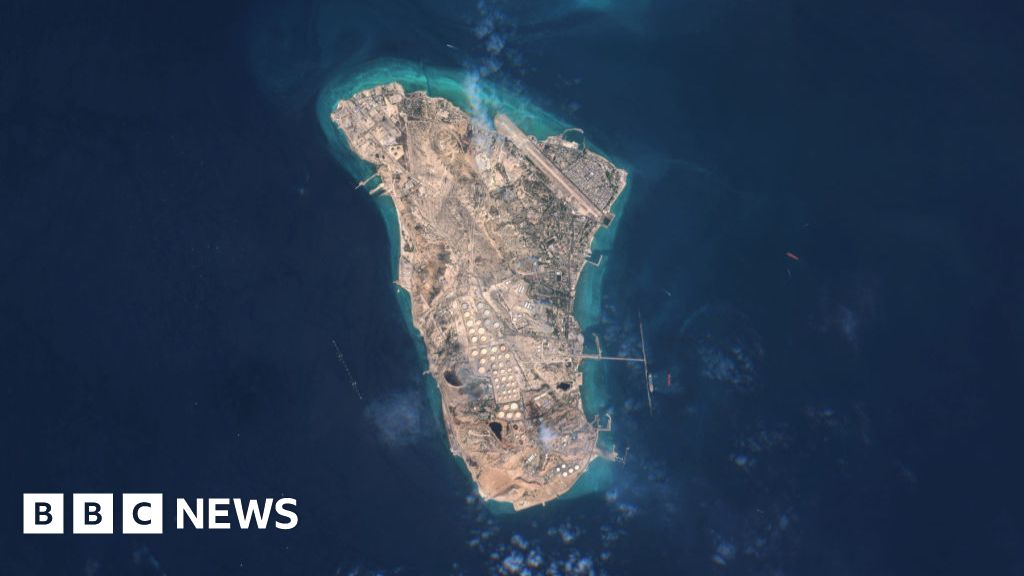
United States President Donald Trump has said the country’s military bombed military installations on Iran’s Kharg island, warning the area’s critical oil facilities could be next if Iran continues to block the Strait of Hormuz.

Iran, in turn, threatened on Saturday to reduce US-linked oil facilities to “a pile of ashes” if oil structures on the island were attacked, as the US-Israel war on Iran, now in its punishing third week, spilled over into a global oil price crisis already in the making.

Recommended Stories

list of 3 itemsend of list

Kharg island is where more than 90 percent of Iran’s oil is exported. Crude oil prices have surged more than 40 percent since the war began.

Trump said on Friday that US forces had “totally obliterated” all military targets on Iran’s Kharg island oil export hub, describing it in a social media post as “one of the most powerful bombing raids in the History of the Middle East”. He provided no evidence of that.

The US president said he had chosen not to “wipe out” oil infrastructure on the Iranian island, for now.

“However, should Iran, or anyone else, do anything to interfere with the Free and Safe Passage of Ships through the Strait of Hormuz, I will immediately reconsider this decision,” he added.

Iran’s semi-official Fars news agency reported, quoting sources, that more than 15 explosions were heard on Kharg island during the US attacks.

The sources said the attacks targeted air defences, a naval base, and airport facilities, but caused no damage to oil infrastructure. Iran’s Fars news agency reported thick smoke was seen rising from the island.

Al Jazeera’s Mohamed Vall, reporting from Tehran, said Iran’s potential retaliatory attacks on Gulf oil facilities would be a “catastrophic scenario” for the region, and for the “entire industry of oil and gas”.

“The Iranians are keeping this, apparently, as a card to use,” he said. “They’ve been talking about restraint and the possibility of that restraint ending if the Iranian oil facilities are attacked, as the Americans are hinting and threatening.”

US ground operation in the works?

Meanwhile, 2,500 more Marines and an amphibious assault ship are being sent to the Middle East, a US official told the AP news agency.

Elements from the 31st Marine Expeditionary Unit and the amphibious assault ship USS Tripoli have been ordered to the region, according to the source, who spoke on condition of anonymity to discuss sensitive military plans.

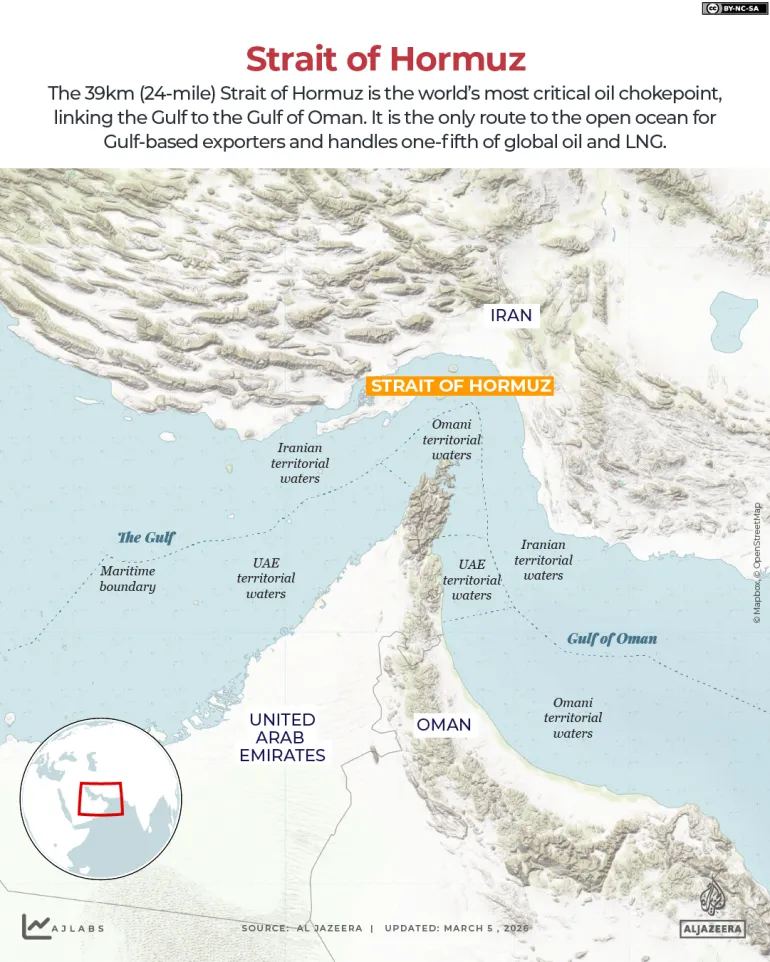
INTERACTIVE - Strait of Hormuz - March 2, 2026-1772714221
(Al Jazeera)

Marine Expeditionary Units are able to conduct amphibious landings, but they also specialise in bolstering security at embassies, evacuating civilians, and providing disaster relief.

“What we’re to make of this is that the US is very slowly increasing its military posture in terms of prosecuting the war, and that it is not intending to wrap things up any time soon,” Al Jazeera’s Rosiland Jordan reported from Washington.

The deployment does not necessarily indicate that a ground operation is imminent or will take place.

Trump dismisses prospect of deal

Following the attack on Kharg island, Iran would be “wise to lay down their arms, and save what’s left of their country”, Trump wrote on his Truth Social platform.

“The Fake News Media hates to report how well the United States Military has done against Iran, which is totally defeated and wants a deal – but not a deal that I would accept!” he posted separately, providing no evidence Tehran was seeking any sort of deal.

At least 1,444 people have been killed and 18,551 injured by US-Israeli attacks on Iran since February 28, Iran’s Ministry of Health says.

Al Jazeera’s Tohid Asadi, reporting from Tehran, said US-Israeli air attacks hit targets across the country, including in Tehran, Karaj, Isfahan and Tabriz. He said this was a sign that “we are not close to de-escalation.

“Iranian officials are talking about retaliatory strikes, with the Islamic Revolutionary Guard Corps talking about using what they call their most advanced weaponry, including Heidar missiles, to target Israeli territories and US bases in the region,” he said.

Source link

Pristine waters teeming with marine life: a deep dive into the Greek island of Alonissos | Greek Islands holidays

Greek divers surface around me shouting about “megalo” groupers. I’m surrounded by enormous grins above the water and big fish below. A happy place to be. A bunch of us, divers and snorkellers, are hanging around Agios Petros reef off the island of Alonissos, and there’s a reason the groupers are big here. The National Marine Park of Alonissos Northern Sporades, established in 1992, is Greece’s largest working marine protected area (MPA) – two bigger MPAs have just been created, but are not yet operational. The protective measures appear to be working, judging by the size, abundance and diversity of marine life – glassy waters teeming with colourful fish and precious shells make swimming here an absolute dream.

For those who like to go deeper, Alonissos is the site of Greece’s first underwater archaeological park and museum – the impressive Peristera wreck, with its giant cargo of amphorae preserved from the 5th century BC. This one is for certified divers descending with accredited local dive centres. I’m with one of those schools, Ikion Diving, but today we’re doing something more accessible. We’re in the village of Steni Vala for the launch of a citizen science project, the Highly Protected Mediterranean Initiative (much more fun than it sounds). Ikion is partnering with the universities of Thessaloniki and the Aegean to offer free snorkelling and diving trips logging native and alien species. I’m worried about my fish ID skills, but the effervescent biologist Katerina Konsta runs a great briefing and we’re given dive slates with images to mark (imparting a childish delight at playing scientist).

Everyone buddies up. I have come solo, so Katerina is stuck with me, and we complete two gentle transects of the reef. It’s a sea of colour: reds and blues, yellows, silver and gold. Friendly little wrasse, painted combers, sizeable parrotfish and 35 salema porgy accompany us as I try not to double-count them. No sign of invaders – lionfish, rabbitfish, redcoats or bluespotted cornetfish. Back at the dive centre, we input the data, and I’m gratified to find that my card matches Katerina’s, give or take a grouper.

It has been great fun – a very gentle introduction to fieldwork, in what I’m going to declare the best place in the Mediterranean to spot fish. I do not say this lightly. Over several years, I have sailed east to Greece from Gibraltar; my boyfriend, Wolfi, sailed west from Turkey. We both freedived. Neither of us has seen this much life underwater, though he is reminded of particular parts of the Turkish coastline where, as a teenager 20 years ago, he regularly found now-rare giant triton (Charonia tritonis) and giant tun snails (Tonna galea) – a great source of envy as I have never seen either in the wild.

‘A happy place to be’ … Susan Smillie diving off Alonissos. Photograph: Wolfgang Hainzl

With the smug glow of having done something worthwhile, I wander down to the charming harbour, where I find Wolfi soaking up the atmosphere, and I boast about all the groupers I’ve seen. Fish tavernas line the front, but I have a local person’s recommendation, so we’re heading for Tassia’s Cooking (if you can’t get in, Sossinola is also good). Having made friends with so many fish today, I find I just can’t eat one, so I opt for creamy fava bean and vine leaves, followed by moussaka – all homemade, well priced and really good.

A five-minute stroll from Steni Vala’s harbour, behind Glyfa beach, we find our night’s accommodation, Ilya Botanic Suites, by a shady olive grove. Calming and compact, these minimalist rooms reflect the landscape; fine-grained terrazzo softened with vertical wooden blinds and plants, and – the best bit – a small plunge pool to sink into after the hard work of counting fish.

The next day we head north to Gerakas, where I’m in the water for under a minute when I find a beautiful grouper snagged on the end of a tangled line. We get some pliers and release the distressed creature; it heads down to the safety of the rocks and we make for the tiny port of Kalamakia for the excellent Margarita fish taverna (owned by a fisher). Our meal of fresh Thunnus alalunga (Alonissos tuna), scorpion fish and lobster comes to about €180 for two with drinks – expensive by Greek standards, but all locally caught and the quality is excellent.

Kritamo restaurant in Patitiri has great cocktails and modern Greek cuisine. Photograph: Kritamo

Away from the water, Alonissos is surprisingly lush for an Aegean island – Aleppo pines and oaks, maples and olive trees stud the hills. It even boasts a mountain (just, at 475 metres), Kouvouli. At 20km long, the island’s interior is easy to cover over a couple of days (you’re more likely to meet handsome goats than other humans), but, be warned, some roads only loosely resemble that description, and a quad bike is preferable to a car if you don’t want to lose your deposit. There are plenty of bike trails (and beautiful ravine hikes), but in the searing July heat we opt for shady forest walks and quick stops for clifftop views. And, let’s be honest, on a Greek island in summer, the best days start and finish in the sea.

Happily, you can access a range of beaches on both sides of the island for sunrise and sunset views. On the eastern shore is the much-loved Agios Dimitrios, a sweeping triangular stretch of white pebble. It’s organised with cafes and sunbeds, great for families, but for me it’s most stunning from above, that tongue of white plunging like an arrow into turquoise sea. Kokkinokastro is another beautiful beach, and Gialos, with its old windmill perched on the cliffs, offers a wonderfully moody sunset. But my favourite, hands down, is the small and secluded Kremisma beach. Absolutely beautiful. It’s a short walk from a car park and a slightly steep drop (ignore the frayed rope), and there are no sunbeds, no bars, nothing at all (perhaps literally – it’s said to be nudist-friendly, though personally I wouldn’t recommend stripping, which is not customary in Greece).

Off the pebble beach is a rocky little coastline that’s perfect for spotting marine life. Wolfi and I by now are on one baby moray eel each, and I have swooned over a shiny brown cowrie, but he’s ahead on octopus. Competitive, me?

Patitiri harbour. Photograph: Rolf Richardson/Getty Images/Collection Mix: Subjects RF

The busy little port town of Patitiri, where you will arrive, is home to most residents and offers plenty of accommodation, shopping, beaches, tavernas and a museum (a steep climb makes a morning visit best). To get a sense of why Alonissos is important, visit the monk seal information centre, run by MOm (the Hellenic Society for the Study and Protection of the Monk Seal). The marine park was established to protect its population of monk seals (one of the most endangered marine mammals in the world). There are gifts, and footage of seals you won’t see up close (a sobering photo of someone with a nasty bite illustrates another reason you shouldn’t try).

For nightlife, don’t miss the tiny and eclectic Drunk Seal bar, at its best after midnight. Overlooking the port, you will find Kritamo restaurant, with great cocktails and a contemporary spin on Greek cuisine. Down among the throng of the town, the old-school taverna Archipelagos cooks Greek classics – goat in tomato, stifado – very well. A few kilometres along the coastline, pretty Votsi and Rousoum Gialos harbours are also worth a stroll for dinner.

Behind and above Patitiri sits Chora, the historic hilltop “old town”, where locals lived until it was devastated by an earthquake in 1965 (establishing the port as the new capital). Most of the stone houses have since been extensively restored, while several churches and the original Byzantine walls survived. It’s beyond charming – all cobbled alleys crowded with candlelit tavernas and flowering balconies. The views over both coastlines make it ideal for sunset and dinner (evening temperatures help with the steep streets). There’s also a museum where landlubbers can “dive” the Peristera shipwreck, using VR to navigate the piles of amphorae.

Great fun, but you don’t need scuba skills or simulation to find real treasures underwater in Alonissos. With Wolfi and I neck and neck in sightings, I end the week on an absolute high, spotting a stunning giant triton snail in the shallows, followed by a giant tun snail partly buried in the sand. Numbers of both have plummeted in the Mediterranean due to overfishing and shell collectors, so it’s a joy to see them alive and well in Alonissos’s practically pristine waters.

Ilya Botanic Suites in Steni Vala has double suites with a hot tub and garden view from £105 a night. Free scuba diving and snorkelling trips: to take part in a reef check in Alonissos, contact Kostas (info@ikiondiving.gr) or check the website (sporadesdiving.gr). Return ferry tickets to Alonissos from Skiathos, about £45; or from Volos, Thessaly (2.5 hours’ drive from Thessaloniki), or Mantoudi, Evia island (2 hours’ drive from Athens, connected by a bridge), about £80


Source link

Cuba confirms it’s begun talks with U.S. over ‘bilateral differences’

Cuba has begun direct talks with the United States in an effort to solve “bilateral differences” between the two countries, Cuban President Miguel Díaz Canel said Friday.

The comments, broadcast nationwide in Cuba, are the first confirmation of bilateral talks between two governments that have been fierce adversaries for almost 70 years, since Fidel Castro’s revolution toppled the U.S.-backed dictator Fulgencio Batista.

What exactly the talks are about remains unclear, but the Trump administration—which has choked off oil supplies to the island, triggering a severe energy crisis—has been insisting that Cuba’s communist government must change.

In a statement released on social media, Díaz Canel said, “The primary purpose of this conversation is, firstly, to identify the bilateral problems that require a solution—based on their severity and impact—and, secondly, to find solutions for these identified problems.”

Rumors of direct talks between the two nations have been circulating for months, but neither Washington or Havana had confirmed the talks until now.

On Tuesday, the Cuban ambassador to the United States, Lianys Torres Rivera, told The Times that the Cuban government was “ready to engage with the U.S. on the issues that are important for the bilateral relations, and to talk about those in which we have differences.”

Trump and Secretary of State Marco Rubio, the son of Cuban immigrants, have been insistent that the current government must change.

“It may be a friendly takeover, it may not be a friendly takeover,” Trump told Latin American leaders gathered in Florida on Saturday.

“It wouldn’t matter because they’re down to, as they say, fumes. They have no energy. They have no money. They’re in deep trouble,” Trump said.

Trump responded to the Cuban leader’s willingness to negotiate on Friday morning by amplifying a news article with the headline:”Cuba confirms talks with Trump officials, raising hopes for US deal.” He posted that on his Truth Social account.

Rolling blackouts, shortages of food and medicine, a lack of gasoline and other shortfalls have become everyday occurrences on the island, home to 10 million. Images of uncollected garbage rotting on Havana’s streets have been broadcast across the globe. A lack of jet fuel has bludgeoned the critical tourism sector.

“The status quo is unsustainable,” Rubio said last month. “Cuba needs to change…And it doesn’t have to be change all at once. It doesn’t have to change from one day to the next.”

The Cuban announcement comes 13 days after the U.S. attacked Iran and two months after U.S. forces, deployed by Trump, deposed Venezuelan President Nicolás Maduro, a longtime Cuban ally, and brought him to New York to face drug trafficking charges.

Source link

‘No cars, unspoilt beaches and seabirds rule’: readers’ favourite European island escapes | Travel

Visiting this Spanish archipelago is like winning the lottery

A short ferry ride from Vigo (daily and overnight visitor numbers are capped) took us to the tiny archipelago of the Cíes Islands, a protected cluster of islands where seabirds rule and tiny beaches remain unspoilt. There are no cars on the island and only a few small restaurants dotted about. There is one campsite, with little else but the waves of the Atlantic to lull you to sleep. I felt as if I had won the lottery when we visited and knew this would be an experience not easily matched.
Helen E

Ischia in Italy is best by bus

Ischia, in the Bay of Naples. Photograph: Alxpin/Getty Images

Italy has brilliant public transport. We found it so easy to use the ferries and buses during our visit to Ischia in the Bay of Naples. The simple circular routes on the island mean there is almost zero chance of getting lost. You can buy a day ticket for a few euros, hopping on and off at your leisure until quite late in the evening. Much more fun to experience the lovely island like the locals and cheaper than a taxi.
Jane

Profile

Readers’ tips: send a tip for a chance to win a £200 voucher for a Coolstays break

Show

Guardian Travel readers’ tips

Every week we ask our readers for recommendations from their travels. A selection of tips will be featured online and may appear in print. To enter the latest competition visit the readers’ tips homepage

Thank you for your feedback.

A serene corner of Elba

‘Heaven’ … Cavo on Elba, in Italy. Photograph: Image Professionals/Alamy

Tiny Cavo on the island of Elba is my idea of heaven. Some of the hydrofoils from Piombino on the mainland stop there; some continue round to the busier Portoferraio with its mega yachts and bustle. Cavo is much quieter, more serene, and the iron-rich landscape means that the sea glitters with tiny flecks of iron as you swim underwater. A few hotels, a beach, prawns the size of your head, a jazz festival in the summer: what’s not to like? Porto Azzurro is more glamorous, but the quiet of Cavo is what I want.
Angharad

An overlooked Greek island

The Temple of Aphaea at Aegina, in Greece. Photograph: Panagiotis Karapanagiotis/Alamy

I recently revisited Aegina, off Athens, which was my childhood holiday spot for many years. It’s more than just “a small island near Piraeus”; it was once, very briefly, the capital of Greece and still has impressive ancient temples from a time when it stood strong among larger Greek city states. The town has changed, but it was great to see once again the port with its colourful mansions, market, and the mix of boats bobbing in the water. Returning felt like a trip down memory lane, and I’m grateful that Aegina remains charming and slightly off the usual tourist path.
Michael Castelli-Coats

Soulful and sandy Rügen, Germany

‘Germany’s Baltic jewel’ … Rügen. Photograph: Lothar Knopp/Getty Images

For a nostalgic escape, head to Rügen, Germany’s Baltic jewel and largest island. Famed for its white chalk cliffs, the island’s soul lies in its fine sands and unspoilt towns. In Binz and Sellin, ornate belle époque villas line the promenade, feeling wonderfully frozen in time. We took the Rasender Roland steam train from Putbus to Göhren, stopping at charming seaside resorts along the way. Whether soaking up the architecture or lounging in a wicker strandkorb (beach basket), Rügen is a masterclass in coastal serenity. We stayed at Hotel Am Meer & Spa (€165 B&B) and enjoyed its panoramic views.
Daniela

The UK’s ultimate north

A puffin in Hermaness national nature reserve, on Unst, in the Shetland Islands. Photograph: FLPA/Alamy

Unst, the UK’s most northerly inhabited island, is reached via two small ferries through Shetland. The journey is part of the pleasure. Rolling, heather-covered hills greet you. Hermaness national nature reserve is a highlight, with boardwalks to dramatic cliffs and the UK’s northernmost point. May to August offers the best chance of good weather and puffins, though neither is guaranteed. Nor were the otters that we glimpsed.
Richard Waters

Kayaking around Vis, Croatia

‘You can kayak round the island in a week’ … Stiniva Beach on Vis. Photograph: Mauritius Images/Alamy

The cliffs on the north side of the Croatian island of Vis rise straight up from the sea, a crumpled mass of limestone. You can kayak round the island in a week – if the weather gods are kind – but it’s the desolate north coast that makes the greatest impression. Eleonora’s falcons nest there and screech as you paddle past. At one point along the shore, a blowhole erupts in a burst of spray with each wave. Small bays with sandy beaches let you take a break from kayaking, but you won’t see another person until you reach Vis port, tired but deeply satisfied.
Andrew Cassely

A timeless slice of village life in Sicily

‘Sicily slowed to a human pace’ … The hilltop Novara di Sicilia. Photograph: Danita Delimont/Alamy

Perched high in the Nebrodi mountains, Old Noar Villa in Novara di Sicilia offers a rare kind of island escape: Sicily slowed to a human pace. Fruit trees, grapevines and walnut trees surround the house, scented by mountain air and deep quiet. Ancient churches and a beautifully preserved 200-year-old theatre anchor village life, alongside the butcher, baker and biscotti maker, cafes and softly buzzing bars. The sea is never far – the almost Grecian Aeolian Islands are just a hop away.
Neil Masey

Cycle to huge beaches off the Netherlands

‘One of the largest beaches in Europe’ … at Schiermonnikoog. Photograph: Westend61/Alamy

Schiermonnikoog is well off the beaten track in the north of the Netherlands. Only permanent residents are allowed to drive; everyone else cycles or walks. It has one of the largest beaches in Europe, where you can go seal spotting or birding. It’s brilliant for kids because there’s hardly any traffic – they can safely roam around by themselves.
Sabine

Winning tip: We glimpsed our future on a Scottish island

Stags at Lochranza, on Arran. Photograph: John Rae/Alamy

Arran is stunning and diverse. We went just after finding out my partner was pregnant, so it holds a special place in our hearts. In Lochranza, we stepped off the bus and immediately saw a herd of deer and seals on the beach. We walked the rugged coast to Hutton’s Unconformity, where it was realised the Earth is millions not thousands of years old, and imagined our future. In the cosy community pub, a friendly barman shared his whisky knowledge. We returned for our first family holiday. We took a slower pace, pottering along the seafront and castle gardens in Brodick. Auchrannie spa pool was perfect for our baby’s first swim. We’ll go back again when he’s old enough to enjoy more of an adventure on Arran.
Nic

Source link

Fears for Spanish island holidays as Iran crisis to fuel huge price hikes on everything from hotels to beer

YOUR holiday sangria or paella could be much more expensive on your next trip to the Spanish islands.

Officials have said that destinations like the Canaries and Balearics will experience a price hike when it comes to food and drink because of the ongoing conflict in the Middle East.

Price of food and drink on popular Spanish islands are set to increaseCredit: Alamy
The increasing price of fuel will impact goods heading to the Canary and Balearic IslandsCredit: Alamy

The Spanish islands are incredibly popular with Brits, especially during the summer holidays.

The Canary Islands welcomes up to six million British tourists each year and it’s where you’ll find the likes of Tenerife and Lanzarote.

Meanwhile, around three million tourists visit the Balearics – with over two million heading to Majorca alone.

Both locations are popular thanks to their high temperatures and direct flights from multiple locations across the UK.

EGG-CELLENT CHOICE

The cheapest all-inclusive holidays this Easter break – from just £192pp


DREAMY DEALS

Our pick of the best long haul holidays for short haul prices

Now, industry chiefs have said the increase in cost of food and drink at these destinations will be worse than 2022 when prices shot up after the war in the Ukraine began.

Urgent meetings are already being held in the Balearic Islands and in the Canaries which are very dependent on imports due to their more isolated locations.

In July 2022, inflation climbed to 10.8 per cent in Spain.

President of the Association of Food and Beverage Distributors of the Balearic Islands, Mr Bartolomé Servera is warning of severe increases, which will depend on the duration of the crisis in Iran.

Mr Servera said the new impact will be much greater if the conflict is prolonged as the weight of the Middle East is much greater, especially through the Strait of Hormuz, through which 20 per cent of oil and gas pass.

Mr Servera says carriers have already begun to raise prices because the price of fuel has skyrocketed.

Brits flock to the likes of Majorca each year with around two million visitingCredit: Alamy

Diesel has risen by 32 cents per litre, around 22 per cent; while Gasoline 95 has become between 18 and 20 cents per litre more expensive, which represents 12 per cent.

In addition, it is not ruled out that the barrel of Brent will continue to rise: this Wednesday (March 11) it is around 90 dollars, but this past Monday (March 9) it was close to 120 dollars.

This is likely to then effect everything on the island from hotels and resorts.

The association president said “Milk, eggs, bread, fruit will rise.

“Everything needs fuel for its production or transport, so they will not escape the escalation of costs and producers will have to pass them on to consumers.”

The Canary Islands also fear soaring prices and will meet with transport leaders shortly.

President of the Cabildo de La Gomera, Casimiro Curbelo said official need to be monitoring the impact of the war on the islands and prepare contingency plans.

The Government of the Canary Islands says it is “very attentive” to the consequences of the war in the Middle East and plans to hold a meeting with the transport sector in the coming days in view of the increase in fuel prices.

Faced with this situation, the Government of Spain is working on an aid package, as it did at the beginning of the war in Ukraine, to alleviate the looming rise in prices.

For more on Majorca, here are the hidden gems on the island loved by locals.

And one writer who has visited 100 countries explains why he always goes back to these Spanish islands that Brits love and have the best food and beaches.

Officials have said the price of food and drink on Spanish islands will increaseCredit: Alamy

Source link

Trump threatens Cuba again, says island nation may face ‘friendly takeover’ | Donald Trump News

The US president repeats claims that Cuba is ready to negotiate as it faces a spiralling energy and economic crisis.

United States President Donald Trump has signalled that his administration is still pursuing a government overthrow in Cuba even as the US-Israeli war on Iran enters its second week.

Trump said on Monday that the US Department of State is still focused on Cuba, where plans by the White House may or may not include “a friendly takeover” of the island, according to the Reuters news agency.

Recommended Stories

list of 4 itemsend of list

US Secretary of State Marco Rubio is “dealing” with Cuba, the president told reporters in Florida.

“He’s dealing [with it], and it may be a friendly takeover, it may not be a friendly takeover. Wouldn’t really matter because they’re really down to … as they say, fumes. They have no energy, they have no money,” Trump said.

“They are going to make either a deal or we’ll do it just as easy, anyway,” he said.

Cuba has been grappling with an energy crisis since January, when US forces abducted Venezuelan President Nicolas Maduro and halted fuel exports from Caracas to Havana, cutting the country off from one of its few allies and a key source of oil for the Cuban economy.

White House officials have suggested that Cuba is facing an economic collapse and that its government is ready to negotiate with Washington.

Trump has said on multiple occasions that Cuba’s government is ready to “fall” and that its leaders want to “make a deal” with Washington, according to NBC News.

Cuba has denied reports of high-level talks, according to Reuters, but it has not “outright” denied US media reports of “informal talks” between Raul Guillermo Rodriguez Castro, the grandson of former Cuban President Raul Castro, and US officials.

Cuba has been in the crosshairs of the US for decades, but Trump is the first US president since the Cold War to openly discuss and pursue a government change in Havana.

Trump’s attacks on Venezuela and Cuba are in line with his revival of the “Monroe Doctrine”, a 19th-century policy that states the Western Hemisphere should be solely under the sway of the US and no other foreign power.

Trump first raised the notion of a “friendly takeover” of Cuba in February.

Source link

Sunshine island destinations for March – including two secret islands and stunning ocean waterfall

Escape the UK’s unpredictable weather with these toasty March and April holiday destinations within easy reach of Britain — cheap flights and even cheaper pints, what’s not to love?

With British weather continuing to swing between dreary downpours and (marginally) pleasant spring sunshine, holidaymakers are still hunting for getaway spots with guaranteed warmth and gentle breezes. That’s where we step in.

If you’re seeking holiday destinations within easy reach of Britain that are gloriously warm at this time of year, whilst remaining incredibly budget-friendly, look no further, because we’ve got you covered.

As the UK starts to shake off winter’s chill, we’ve compiled the finest options for a March-April escape in the meantime, with temperatures across these destinations hovering between 16C to 24C.

Picture yourself enjoying glorious sunshine as you plunge into crystal-clear waters surrounded by some of the most striking and awe-inspiring landscapes on earth – all whilst enjoying inexpensive drinks.

Amazon cabin bag meets Ryanair requirements for less than £15

This article contains affiliate links, we will receive a commission on any sales we generate from it. Learn more
Ryanair bag

£20.99

£14.99

Amazon

See the deal

Travellers keen to beat the bag charges without breaking the budget have made an Amazon travel bag a bestseller. Rated 4.7 stars out of 5 from almost 3,000 reviews, the Xkdoai bag comes in six colours with prices from £14.99, saving 29% on the usual price.

Without further delay, here’s our selection of sunny destinations within easy reach of the UK you can explore in March and April without emptying your wallet, reports the Express.

La Graciosa

This diminutive Canary Islands treasure is remarkable in every respect – it features absolutely no tarmac roads owing to its heavily protected designation as the largest Marine Reserve in Europe and as a National Park, meaning there are no vehicles on this island whatsoever.

It’s the first hidden island on our list, and an absolute paradise for travellers yearning for tranquillity and isolation, with the island’s untamed, pristine and genuinely secluded nature ideal for those weary of overcrowded tourist hotspots and constant travel mayhem. Reaching La Graciosa couldn’t be simpler.

Take a direct flight from the UK to Lanzarote followed by a short ferry crossing to the island. At the time of writing, a direct one-way flight from London Stansted Airport to César Manrique-Lanzarote Airport on March 11 costs just £29.

From there, jump on a 30-minute ferry from the port of Órzola, which will carry you across to La Graciosa. Prices on this tiny island haven are affordable, with a pint of local beer costing around £2.

Caleta del Sabo, the island’s only village, is a must-see attraction during your stay and Playa de las Conchas is the island’s most celebrated beach.

The breathtaking sandy stretches of Playa de las Cocinas and Playa Francesa are also top-rated draws, providing magnificent views of the imposing Famara cliffs over in Lanzarote.

Del Ámbar, Del Salado, and De la Laja are among the other pristine beaches found on Graciosa. You can even indulge in a boat excursion to the neighbouring Isla de Lobos for some birdwatching.

Comino

The relatively unknown Maltese island of Comino, famous for its dazzlingly brilliant Blue Lagoon, is a gem hiding in plain sight, and our second under-the-radar secret island haven.

With no towns – and therefore no cars – visiting Comino is truly an experience like no other.

Considered a haven for swimmers, snorkellers, hikers and photographers – tourists are known to travel from around the world just to sample a slice of life in this deserted paradise.

To get to Comino, travellers can fly into Malta International Airport – a one-way flight from London Stansted Airport to Malta International Airport on 12 March would set holidaymakers back £51 – and then from mainland Malta, you can hop on one of the regular ferries from Cirkewwa Ferry Terminal, which will whisk you off to Comino in roughly 35 minutes.

As for beverages, pints on Comino can cost anywhere between £2.60 to £4.

Undeniably, the crown jewel of Comino – and arguably the entire Maltese archipelago – is the world-renowned Blue Lagoon, enticing visitors with its pristine white sands and shimmering turquoise waters all year round.

Santa Marija Bay, nestled on the quieter side of Comino, offers a serene beach, shallow waters and none of the tourist throngs found at the Blue Lagoon.

The Santa Marija Caves are another major draw on this island, and trekking up to the iconic Santa Marija Tower is a favourite pastime.

Gran Canaria

Often described as a ‘miniature continent’ due to its near-circular shape, Gran Canaria offers affordable flights, with a direct one-way flight on 13 March (including one carry-on bag) from London Luton Airport to Gran Canaria Airport priced at £29 at the time of writing.

A pint of beer in many spots across Gran Canaria will only set you back £2, and if that’s not tempting enough – there are numerous pubs offering the famed Canary Islands Happy-Hour €1 pints, which equates to roughly £0.87.

Las Alcaravaneras and Las Canteras, sandy beaches bordering Las Palmas – Gran Canaria’s biggest city, are major tourist attractions catering extensively to holidaymakers.

Additional popular beaches across the island include Maspalomas, Playa del Inglés, San Agustín, Amadores, and Puerto de Mogán. The bustling tourist destination of Puerto Rico is also essential viewing for those wanting a vibrant atmosphere.

Anfi del Mar, Playa de Taurito, and Meloneras Beach are equally excellent choices for visitors to explore.

Roque Nublo, the 80-metre volcanic monolith rock is a major draw for hikers, whilst the ‘Dragon’s Tail’ in the Tamadaba Natural Park offers unrivalled panoramic vistas of the island in the north west.

Charming villages such as Tejada, Artenara, Fataga, and beautiful towns including Santa Lucía de Tirajana and Agüimes are equally worth exploring.

Natural pools, secluded coves off dramatic coastlines, untamed beaches, and vibrant cities – Gran Canaria offers everything.

Lanzarote

As the fourth biggest island in the perpetually popular Canary Islands in Spain, Lanzarote is a breathtaking destination.

Boasting black sand beaches in one area and a rocky landscape in another, the island’s terrain features the Famara mountain ranges in the north and Ajaches to the south.

At the time of writing, a direct one-way flight from London Stansted Airport to César Manrique-Lanzarote Airport on March 11 was just £29, and pints will set you back just £1.30 on this tropical paradise. Lanzarote’s all-inclusive resorts are a massive hit with budget-conscious holidaymakers, with luxurious options available for those looking to indulge.

The island’s unique landscape is another magnet for tourists – boasting mountains, vast craters, red terrain, black sand beaches, crystal clear turquoise waters, white sands, and the cherry on top; an active volcano named Mount Timanfaya which features lava fields formed centuries ago.

When it comes to leisure activities, there’s a wealth of options on this compact island, with activities such as surfing, scuba diving, kiteboarding, and windsurfing popular amongst visitors. Lanzarote also boasts numerous family-friendly beaches, particularly suitable for young children.

Gozo

Despite its small size, Gozo delivers in spades. The island can be accessed via various routes – initially by flying to Malta’s main international airport, then either taking a short yet scenic 25-minute ferry from Cirkewwa Terminal in northern Malta or a 45-minute ferry from the stunning capital Valletta to Gozo.

At the time of writing, a one-way ticket from London Stansted Airport to Malta International Airport on March 12 cost £51. The best part?

Drinks in Gozo are reasonably priced – chilled pints of delicious local beer for just £1.80.

Ramla Bay, regarded as one of Gozo’s best beaches, is a popular attraction, whilst the gantija temples, among the world’s oldest and best-preserved free-standing structures, are must-sees.

The Ta’ Kola Windmill stands as another significant landmark on the island, whilst the Cittadella, Gozo’s recently refurbished historic settlement at the heart of the island’s capital Victoria (Rabat), is another essential destination should you travel to this magnificent retreat.

It’s not just spectacular views on offer in Gozo, as the island also boasts four Michelin guide restaurants – Tmun, Level Nine at The Grand, Al Sale, and Ta’ Frenc.

The culinary and wine scene in Gozo is unmatched, with food and wine tours proving a popular activity amongst visitors.

For those wanting distinctive experiences, look no further than the traditional milking of sheep and goats in Gozo, which is then transformed into traditional Gozitan cheese.

For activity fans, clifftop hiking, kayaking and cycling are superb options for a perfect day out.

Fuerteventura

The oldest island in the Canary Islands Archipelago, Fuerteventura is genuinely stunning. Recognised as an ideal destination for watersports, especially for those passionate about surfing, waterskiing, and windsurfing, this exotic Spanish island embodies sun-drenched enjoyment.

A direct one-way flight from London Luton Airport to Fuerteventura Airport on March 15 costs just £29, and pints are reasonably priced at £1.70 on this vibrant island. With a staggering 152 individual beaches, this Canary Islands jewel boasts a unique landscape.

Some of Fuerteventura’s top beaches include Playa de Sotavento, Playas de Corralejo, Playas de El Cotillo, Playa de Cofete, Playas de Jandia, and Playa de Ajuy.

Popular resort destinations such as Corralejo, Caleta de Fuste and El Cotillo draw in hordes of tourists, with Corralejo’s historic quarter exuding authentic Spanish charm through its narrow lanes, tapas bars and seafood eateries.

The area is particularly renowned for the Corralejo Dunes, while the Calderón Hondo volcano trail is just a stone’s throw away, offering breathtaking panoramic views.

Family-oriented Caleta de Fuste boasts an upscale marina and traditional markets, making it a must-visit on any Fuerteventura itinerary.

El Cotillo is a charming, bustling fishing village famed for its surfing conditions and serene lagoon, whilst the secluded Cofete Beach and the ancient Ajuy Caves are also must-see attractions on the island.

Madeira

Madeira is a truly awe-inspiring destination offering a plethora of activities and experiences for travellers to indulge in, and getting to the island is remarkably straightforward.

A direct one-way flight from London Luton Airport to Madeira Airport on March 16 costs £43 at the time of writing, whilst the average price of a pint of beer is around £2.10.

Often dubbed the ‘Pearl of the Atlantic’, this small Portuguese volcanic island certainly deserves its glowing reputation, with one social media user calling it “unfairly beautiful”, whilst another labelled it “Europe’s Hawaii”.

Calheta Beach and Machico Beach rank amongst the island’s most popular destinations, whilst the Natural Pools of Porto Moniz represent another jewel in this Portuguese island’s collection – and undoubtedly its most famous attraction.

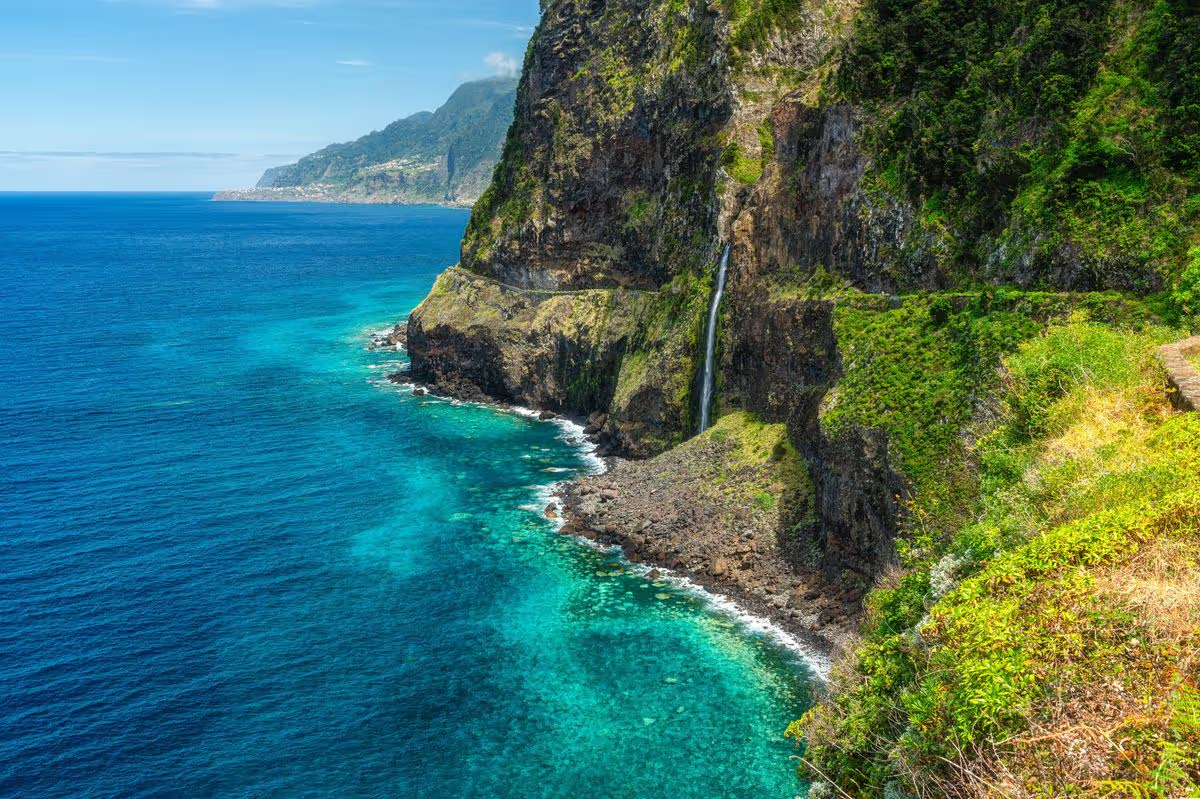
Another essential location in Madeira is Seixal Beach – a stunning natural black sand beach celebrated for its striking lush green setting, towering cliffs and the tumbling waterfall, Miradouro do Veu da Noiva, which flows straight into the sea and presents a magnificent spectacle.

Funchal, the lively historic capital of Madeira, proves a major attraction, with the city famous for the Old Town (Zona Velha), Monte Cable Car & Toboggan Ride, the Monte Palace Tropical Garden, and the Mercado dos Lavradores market.

The Laurissilva of Madeira is a 20-million year old forest praised for its incredible biodiversity, and a walk along its woodland paths is essential. Pico do Areeiro – Madeira’s third-tallest peak represents another unmissable spot, especially for keen hikers.

The trek from Pico do Areeiro to Pico Ruivo delivers an exciting mountain expedition, connecting the island’s three loftiest peaks whilst providing unforgettable panoramas.

A nod to Madeira’s famous wine is unavoidable, with Funchal, the town of Câmara de Lobos, and the adjacent island of Porto Santo celebrated as the premier destinations for wine tastings and vineyard excursions.

Tenerife

Those visiting this breathtaking island can enjoy palm-lined beaches, dramatic volcanoes, enchanting landscapes, verdant forests, and mouth-watering cuisine – all during a single holiday.

The white sand, 1.3-kilometre-long Playa de las Teresitas beach remains a firm favourite with holidaymakers, as does the 850-metre long golden sand expanse of Playa de las Vistas.

Playa Jardin beach with its volcanic black sand also draws those wanting something distinctive during their coastal getaway.

Direct flights to this sun-drenched holiday island are wallet-friendly – at the time of writing, a one-way flight from London Luton Airport to Tenerife South Airport on March 24 was priced at £27 with one free cabin bag allowance, whilst pints cost just £1.30 on average.

The sophisticated Playa del Duque is ideal for upscale dining and relaxed family activities, whilst the sprawling natural beach of Playa de la Tejita provides stunning views of Montaña Roja aka the Red Mountain.

The secluded cove of Playa de Abama is celebrated for its golden sands and excellent snorkelling, and arguably, Tenerife’s most magnificent beach, Playa de Benijo is perfect for an isolated retreat surrounded by nature, remarkable cliffs and gorgeous black sand.

The south-west coastline of Tenerife, especially the area between Los Gigantes, Costa Adeje, and Los Cristianos, is renowned for dolphin and whale watching, while a visit to the Teide National Park and the Corona Forestal Natural Park is absolutely essential.

The colonial town of San Cristobal de la Laguna provides a unique retreat within Tenerife, whilst the island’s capital, Santa Cruz de Tenerife, acts as the lively heart of this sun-drenched paradise.
Source link

Stunning remote island where you can live for free if hired for one job

The Island Bakery in Tobermory on the Isle of Mull is hiring two production staff members, with the job offering a two-bed flat and a salary of £22,000-£24,000

Anyone seeking a remote relocation with some baking know-how might find their dream opportunity on a stunning Scottish island. The Island Bakery in Tobermory, situated on the wild Isle of Mull, is recruiting two production staff members – and the position includes a two-bedroom property.

The bakery has built quite a reputation, stocking its renowned biscuits through several upmarket stores, including Selfridges and Harvey Nichols. According to the job advert, the salary ranges from £22,000-£24,000, with minimal experience necessary, making it ideal for anyone wanting to swap hectic urban living for a more peaceful existence – so it could be time to refresh that CV.

Two shift patterns are available: 2pm to midnight, Monday to Thursday, or 6am to 2pm, Monday to Friday.

The posting has gained traction online because it includes a two-person flat, as job vacancies offering accommodation on the Isle of Mull are relatively uncommon.

The bakery has made clear it will favour candidates prepared to share the flat, given the accommodation is suited for two occupants. Those with a partner or mate also keen to move may stand a stronger chance of securing the role.

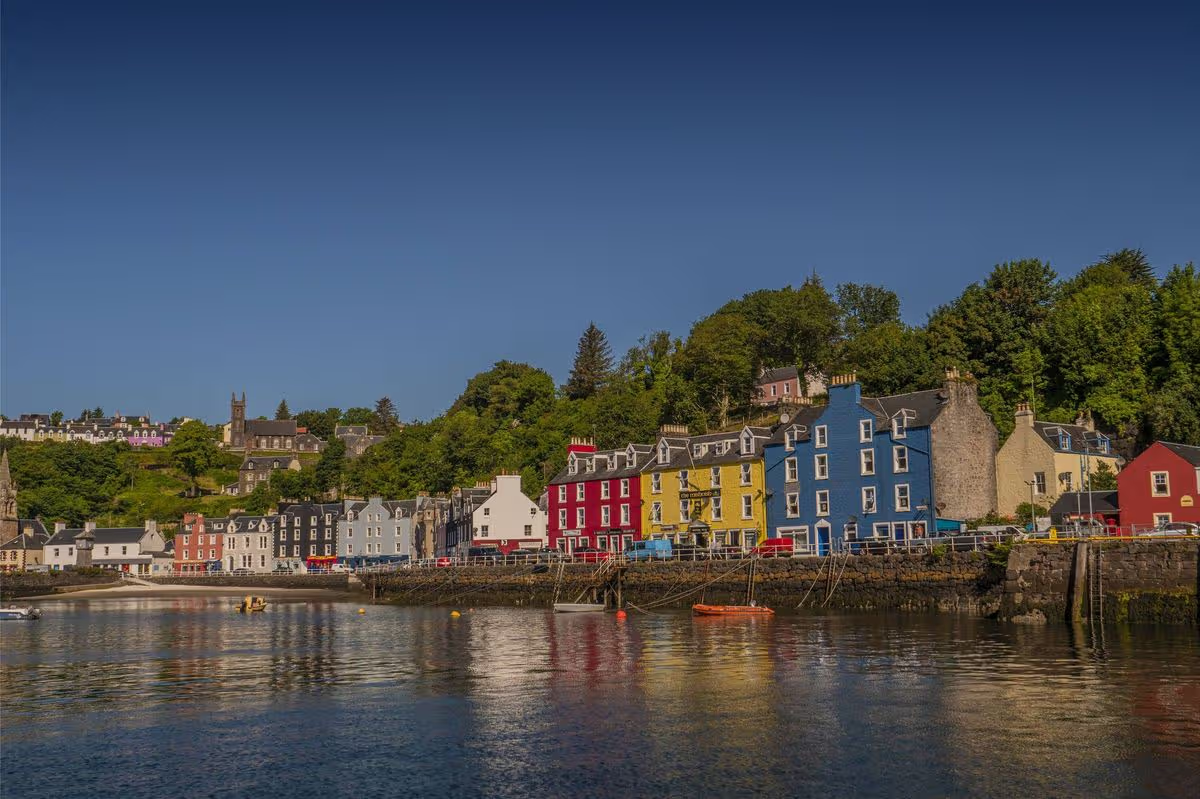
Both the bakery and accommodation are based in Tobermory, which has been recognised as one of the ‘most colourful places in the world.

With a population of merely 900 residents, Tobermory is genuinely isolated, with the journey from Glasgow typically requiring a two-and-a-half-hour drive to Oban, followed by a 45-minute ferry crossing to Craignure and then an additional 35-minute drive to reach the village.

Lonely Planet highlighted its “cinematic scenery” and “distinct wildlife,” acknowledging that whilst it may lack Mediterranean sunshine, the village still boasts stunning landscapes and exceptional seafood.

The island’s remarkable wildlife includes golden and white-tailed eagles, minke whales, and basking sharks, all of which you might spot frequently if you choose to relocate to this beautiful village.

To apply for this job, visit the listing at hijobs.net.

Source link

Stunning British island with ‘dreamy’ coastlines, rare wildlife and dark skies

This stunning island has been dubbed the UK’s own Tasmania

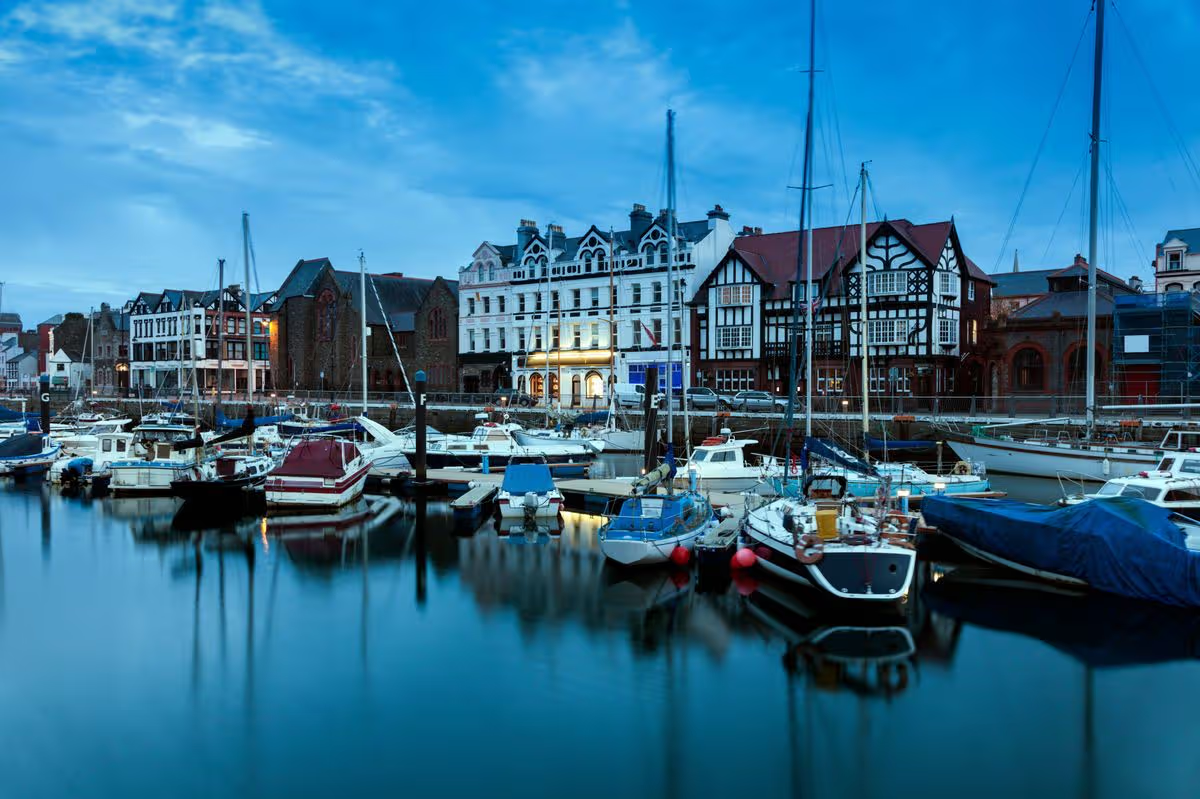
Located just 40 minutes from the UK is the Isle of Man, the first complete nation to receive UNESCO Biosphere status. Described as Britain’s answer to Tasmania, the island boasts rare wildlife, dramatic coastlines and unspoilt beaches, making it ideal for a peaceful retreat.

With only 85,000 residents and a thoughtful mix of community and countryside, the island offers plenty of space, even at peak times of year. Situated in the waters between the UK and Ireland, the Isle of Man is accessible by either aircraft or ferry, meaning even those fearful of flying can experience this stunning destination.

Walkers can follow the entire coastline along the Raad ny Foillan coastal path, marking its 40th anniversary this year, passing through cliffs, coves and fishing hamlets with ocean vistas at every point.

Meanwhile, the wild coastlines of Niarbyl Bay and the Calf of Man bear more resemblance to the Australian island of Tasmania than somewhere in the Irish Sea.

Writing on TripAdvisor, one recent guest to Niarbyl Bay said: “Niarbly Beach offers an idyllic setting for walking and exploring, perfect for both relaxation and adventure.

“The beach’s unique rock formations provide an intriguing landscape to discover, with plenty of tide pools and hidden nooks.”

Meanwhile another commented: “A real dreamy gem on the island with picturesque scenery of the coast and Irish Sea, there is also a walk along the coast that heads south and a little stone pebble beach, complete with a sea cave and a lovely old thatched cottage on the shoreline.”

The island’s wildlife represents another major draw for any visit, featuring the tailless Manx cat and the uncommon four-horned Loaghtan sheep, as well as seals, seabirds, and the occasional basking shark.

The Isle of Man is also a haven for stargazers, boasting 26 official Dark Sky Discovery sites and remarkably low light pollution. On occasion, the Northern Lights can even be spotted from the island.

Source link

Melvine Malard: Manchester United star’s journey from Reunion Island to League Cup final against Chelsea

With a population of just 900,000, Reunion is better known for its volcanoes, wildlife and tropical climate rather than professional footballers.

On the men’s side, former West Ham star Dimitri Payet and Newcastle winger Laurent Robert are two that fans may remember – but those that make it all the way form a short list.

Growing up, Malard tried her hand at boxing, karate, judo and handball before discovering football.

“When I tried football, I said ‘that is my sport’ because I could put in a lot of energy and could play free,” she says.

She began playing in the island’s capital for Saint-Denis FC before the chance meeting with Bompastor, who was managing the Lyon academy at the time.

“She tells me, ‘Mel, I like you, come to Lyon’. I had two months to think but I said yes right away because it was a big opportunity in my life,” Malard says.

The transition from sunny Reunion to the bitter winters of Lyon all alone at the age of 14 was a shock to her system.

“It was so difficult but I knew what I wanted and I knew it was football,” she says. “Every morning and every night, I would put my boots on, go to the pitch and I would be happy.”

Seizing those early opportunities has paid off handsomely for Malard – three league titles, four Champions League medals and the experience of playing alongside some of the best in the world at Lyon and the France national team.

Now, in Manchester, she is continuing to love her experiences – despite that gloomy weather.

“Every time I pass Old Trafford, it’s a dream for me,” Malard says. “The people are so nice when I play football, singing my name at the stadium. The club is very big, has a lot of history and I enjoy it a lot here.”

And it will be a full-circle moment for Malard against Chelsea, managed by Bompastor, in the cup final.

“I’m excited, it’s good for us and this club deserve that,” says Malard, who featured in the 4-0 win against Tottenham in the 2023-24 FA Cup final as United lifted their first major women’s trophy.

“I’m also excited to play against my [former] coach. If we win, we put the name again in history and that is what we want.

“I’m confident because I believe in this team – I believe in this club. We are here to win everything we can.”

Source link

Rugged island at the ‘world’s end’ frozen in time and with incredible cable car

The tiny island is home to just six permanent residents, and has more sheep than people, while its only entry and exit point takes you soaring 250m above the Atlantic Ocean

Far removed from the rest of civilisation, this tiny island has been frozen in time, with nothing but fragments of a life that once thrived and a handful of people who still call it home.

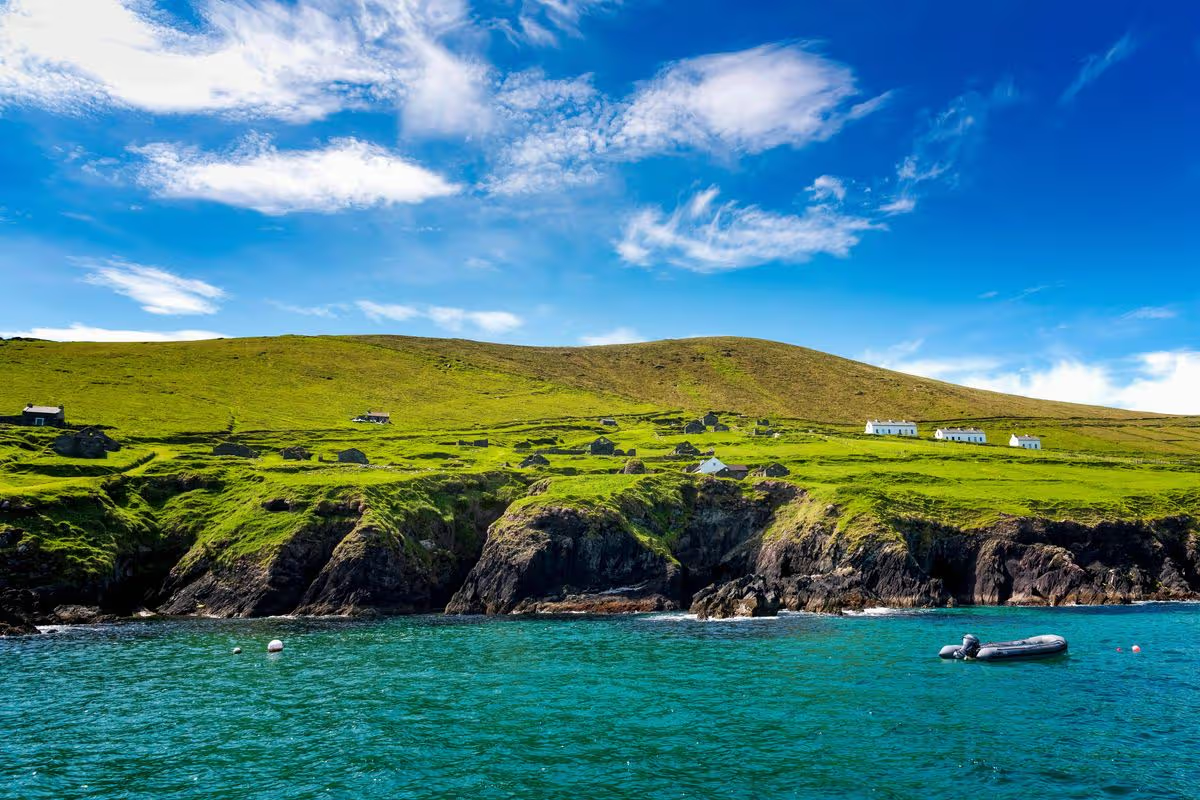
Off the coast of West Cork in Ireland sits Dursey, a charming island steeped in history but offering little else. Ever since the stunning landscape acquired a new form of transport, visitors have been able to travel across from the mainland in a distinctive way and discover a place that appears to have ceased to exist.

This tranquil island is home to approximately six permanent residents, with around 15 houses that are deemed habitable and up to seven farmers.

Their livestock stays on the island, and the owners who traditionally inherited the land continue to spend a few nights on the island but never remain. This means there are likely more sheep inhabiting Dursey than there are people.

Best UK holiday cottage deals

This article contains affiliate links, we will receive a commission on any sales we generate from it. Learn more
Sykes Cottages

From £27 per night

Sykes Cottages

See the deals

Sykes Cottages offers a wide range of handpicked holiday homes across the UK and Ireland, from cosy countryside retreats to stunning coastal escapes. Prices start from £27 per night

It’s understood that when people who live in Dursey have children, they have no option but to have a primary home on the mainland, to enable schooling and access to other facilities.

Unique attraction

Dursey is home to a rare form of transport in Ireland, and the country’s one and only cable car. It carries travellers 250m above the Atlantic Ocean, across to the island, surrounded by nothing but verdant green hills.

Starting from Ballaghboy, Cork, on Ireland’s mainland, the aerial voyage transports you to Dursey in a mere seven and a half minutes.

Throughout the journey travellers can absorb the breathtaking coastal views as the minuscule speck of land gradually grows larger before them.

Built in 1969 as a reliable and secure link between the island and Cork’s mainland, as the surrounding waters are considered far too hazardous for regular boat crossings.

The stretch of water is known as the Dursey Sound and has proved erratic over the decades, with rapid tidal surges. Beyond this, submerged rocks encircling the landmass also render it a perilous voyage and generally unsafe for travellers.

After experiencing the cable car journey, one visitor posted on TripAdvisor: “For us this was the most beautiful part of Ireland.

“We took our mountain bikes over in the cable car, and luckily for us, the weather was glorious. We saw almost all of the island and spent ages staring at the views. We just haven’t seen anything to top it despite travelling the whole way round Ireland.”

Another expressed their admiration for the island, posting: “I absolutely loved Dursey Island. It’s a stunning place, delightfully remote and serene. It is the last place in Europe that the sun sets, a cool fact for you!”.

Historic ruins

Its rugged terrain is also home to numerous equally weathered historical ruins, dating back as far as the 17th century. The most notable of these historic structures is O’Sullivan Beare Castle, which was almost completely razed during the Nine Years’ War in 1602.

Very little of it survives today, and the devastation inflicted by English forces also resulted in a massacre of local residents. One visitor claimed: “Dunboy Castle was very cool, though some information on the site would have been helpful – similar to the plaques found elsewhere. The ruins are overgrown, and you almost stumble into them. “.

Another attraction is the 19th-century Napoleonic-era signal tower. It stands quietly on the island’s highest point, originally built with the purpose of warning against French invasion.

Yet it has remained in ruins since the mid-19th century, abandoned and forgotten by history.

Commonly known as the Church of Kilmichael, it comprises the monastic church and graveyard lying in ruins on the quiet island. It’s believed that the church was established by monks from Skellig Michael but was likewise destroyed in the infamous siege of 1602 by Sir George Carew’s army.

Source link