
Iran

Trump says ‘serious’ talks are occurring, threatens strikes on Iran energy, water sites

President Trump threatened Monday to destroy vital Iranian energy and water infrastructure if a peace deal is not reached, as Tehran continued to deny negotiations were taking place and said it was preparing for a ground invasion following the arrival of thousands of American troops in the region.

If a ceasefire agreement is not reached quickly, the president said in a social media post, “We will conclude our lovely ‘stay’ in Iran by blowing up and completely obliterating all of their Electric Generating Plants, Oil Wells and Kharg Island (and possibly all desalinization plants!).”

The threats came within hours of the president insisting on Sunday night that diplomatic efforts would “probably” lead to a deal soon, and that Iran had allowed 20 more oil cargo ships to pass through the Strait of Hormuz as a “sign of respect.”

Trump said the United States is in “serious discussions with A NEW, AND MORE REASONABLE, REGIME in Iran” but offered no details.

Iran, however, continued to throw cold water on the negotiations Monday when Esmail Baghaei, the foreign ministry spokesperson, dismissed the Trump administration’s terms as “unrealistic, unreasonable and excessive.”

“I do not know how many people in the United States take American diplomacy claims seriously. Our mission is clear, unlike the other side, which constantly changes its position,” he said in comments carried by the semi-official Iranian agency Tasnim News.

Baghaei said that there have been no direct negotiations, but only messages through intermediaries stating that the U.S. wants to confer.

On Saturday, the USS Tripoli, a naval warship, arrived in the Middle East carrying about 3,500 sailors and Marines and a transport of fighter planes. Earlier this month, the San Diego-based USS Boxer and two warships from the 11th Marine Expeditionary Unit departed from Camp Pendleton to join the buildup of troops in the region.

The deployments have made Iranian diplomatic envoys even more dubious that American peace efforts are sincere.

“The enemy publicly sends messages of negotiation and dialogue while secretly planning a ground offensive. [They] are nothing more than a cover to hide preparations for a land invasion,” Iran’s top lawmaker, Mohammad Bagher Qalibaf, said in a statement Sunday.

He added that Iranian forces were waiting for the arrival of American troops on the ground to “set them on fire” and “punish their regional partners forever,” according to state media.

As officials in both Washington and Tehran strike increasingly hard lines, neighboring countries are desperate for a truce.

Egyptian President Abdel Fattah Sisi pleaded with Trump to stop the war during a speech at an Egyptian energy conference on Monday.

“I tell President Trump: Nobody can stop the war in our region in the gulf but you,” Sisi said.

“Please, Mr. President, please. Please help us stop the war. You are capable of doing so.”

Egypt, though not directly involved in the war, has contended with its repercussions on energy, fertilizer and food prices, not to mention disruptions to shipping income Cairo receives through the Suez Canal.

“Wealthy countries might be able to absorb this, but for middle-income and fragile economies, it could have a very, very severe impact on their stability,” ‌Sisi said, noting that predictions of oil reaching $200 per barrel were “not an exaggeration.”

Egypt and Israel signed a peace treaty in 1979, which saw Israel return territory it seized during the 1967 war. Though the agreement is deeply unpopular with most Egyptians, it has held despite escalating tensions during Israel’s campaign against Hamas.

In December, the two nations formally announced a $35-billion agreement expanding Israel gas exports to Egypt. But the war with Iran has disrupted supplies, tripling the cost of imports, according to Egyptian officials.

Last week, the government ordered energy-saving measures for a one-month period, including early closing times for most commercial establishments as well as reductions in street lighting and allocations for government vehicles.

Jordan, another U.S. regional ally that is also energy-starved, took similar steps, enacting bans on air conditioning in government offices and private use of government vehicles.

Despite talks of negotiations, the fighting showed little sign of abating.

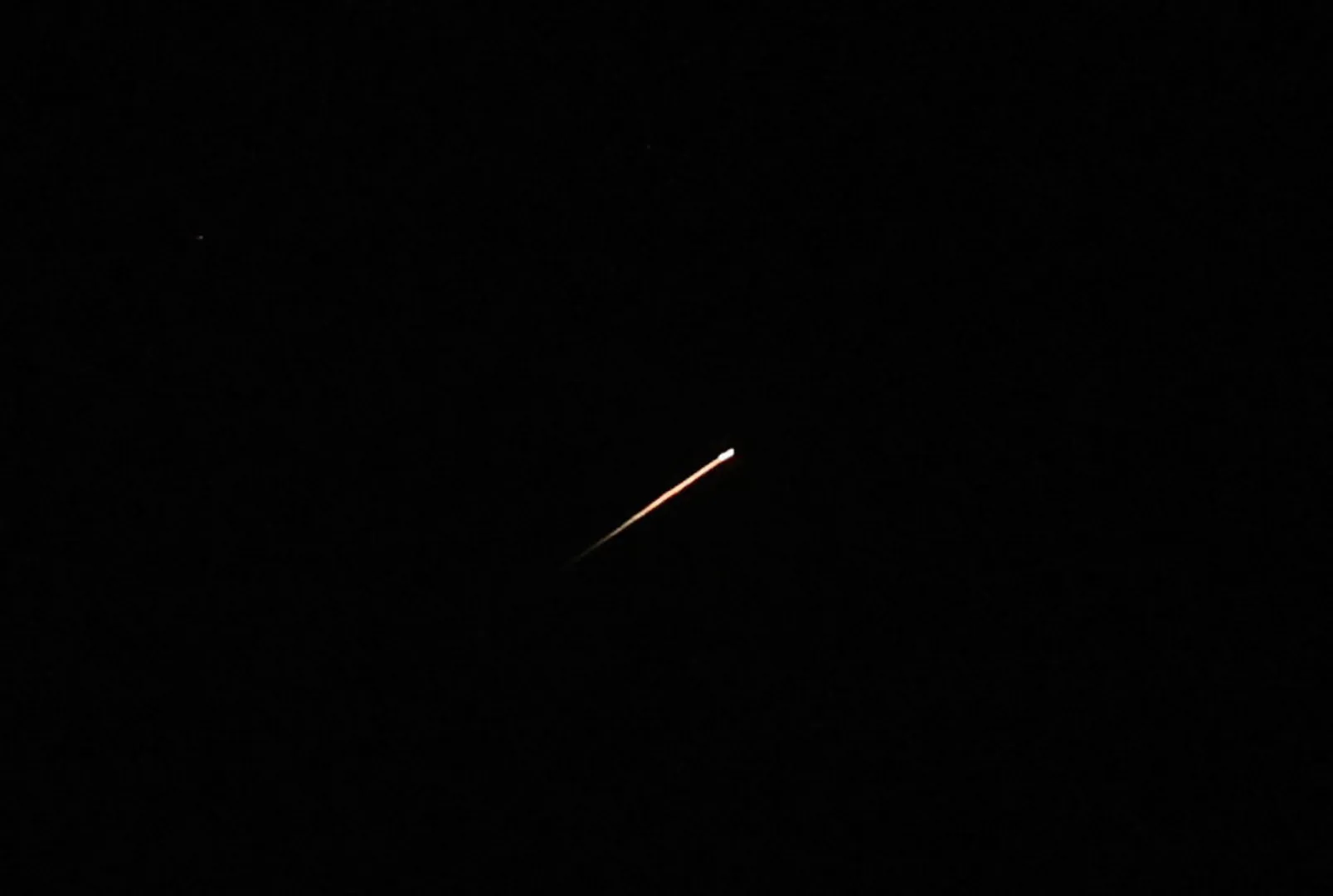
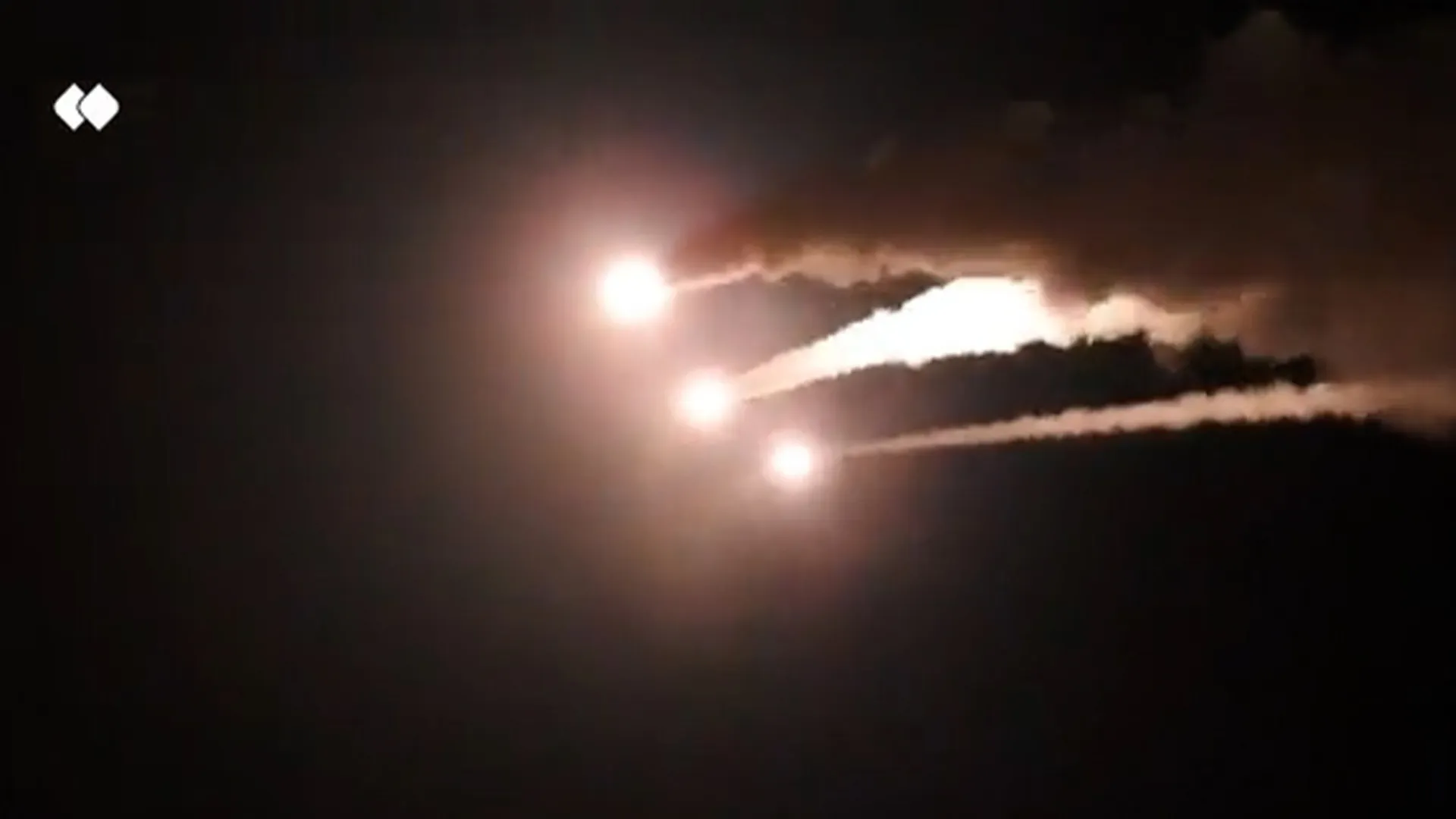
Trump’s call for peace followed a fresh round of U.S. and Israeli airstrikes on Iran Monday. Tehran retaliated by hitting a major water and power facility in Kuwait, and Saudi Arabia and the United Arab Emirates said they intercepted incoming Iranian missiles.

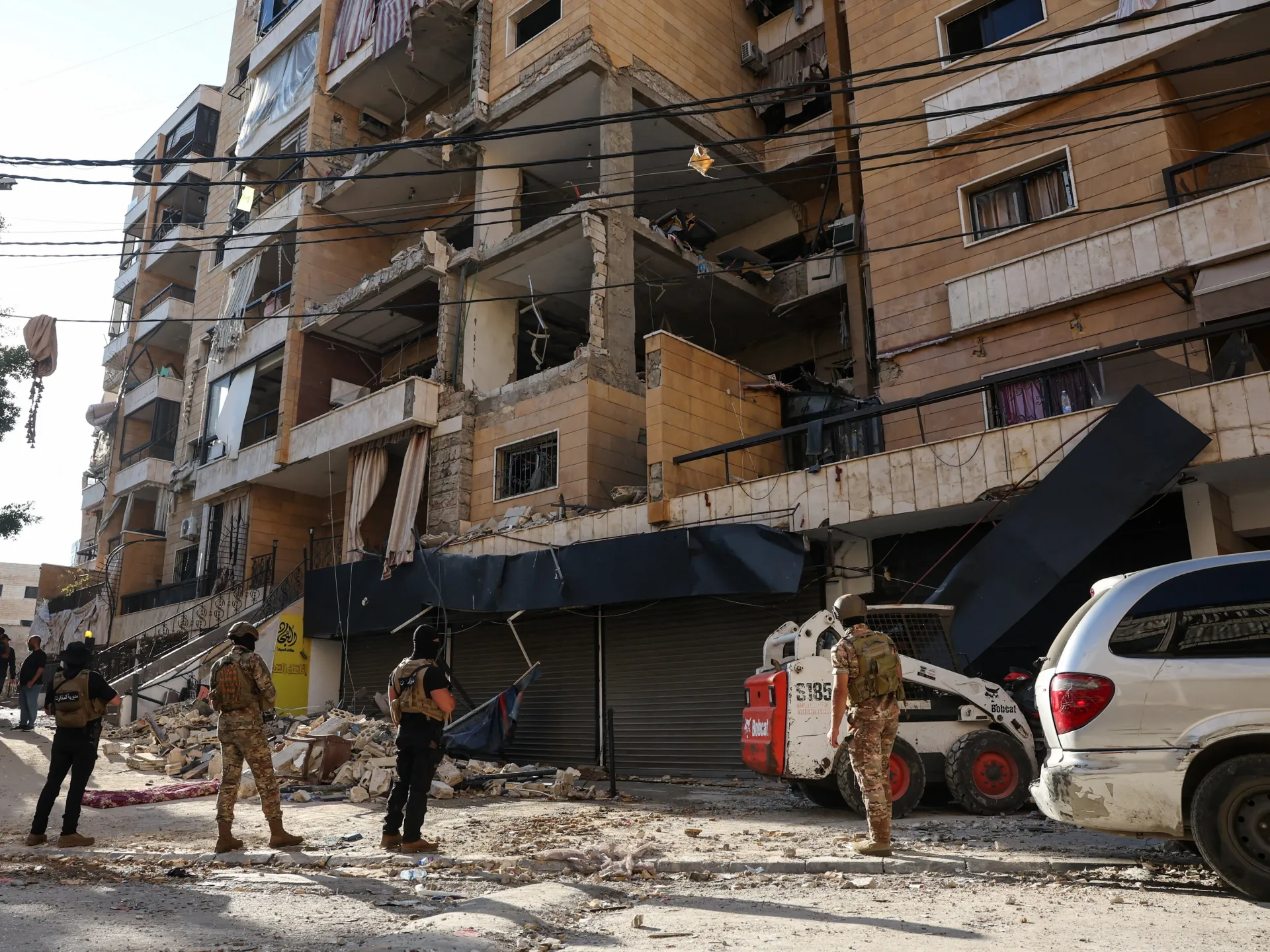
Two U.N. peacekeepers were killed on Monday when an “explosion of unknown origin” hit their vehicle near the village of Bani Hayyan, in south Lebanon.

The deaths mark the second fatal incident in two days involving the United Nations Interim Force in Lebanon, known as UNIFIL, a peacekeeping force established in 1978 and which later monitored cessation of hostilities between the two nations.

UNIFIL also reported a peacekeeper was killed Sunday night when a projectile exploded in a UNIFIL position.

“We do not know the origin of the projectile. We have launched an investigation to determine all of the circumstances,” a UNIFIL statement on Monday said.

Meanwhile, Israel continued its bombardment of Lebanon, hitting areas near the capital and in the country’s south. One strike targeted a Lebanese army checkpoint, killing a soldier, the Lebanese military said. Lebanese authorities said on Monday that the death toll since hostilities broke out between Hezbollah and Israel earlier this month continues to rise.

The Israeli military said one of its soldiers was killed in a Hezbollah anti-tank missile attack in southern Lebanon, which also wounded four other soldiers. Six soldiers have been killed since Israel restarted its campaign in Lebanon.

Hezbollah rockets also killed two civilians, according to Israeli health authorities.

Israel’s fire and rescue service said a fuel tanker and a building at the oil refinery in the northern city of Haifa were hit by debris from an intercepted missile, according to a report from Israeli daily the Times of Israel.

It was unclear whether the missile was launched by Iran, the Lebanese Shiite group Hezbollah or Yemen’s Houthi rebels.

Deaths from the conflict continue to rise, with 1,900 people killed in Iran, over 1,200 in Lebanon, 19 in Israel and 13 U.S. military members. Millions of people have been displaced from their homes in Iran and Lebanon.

Ceballos and Quinton reported from Washington, Bulos from Beirut.

Source link

Trump wants to ‘take Iran’s oil’: Can he, and what would that mean? | US-Israel war on Iran News

United States President Donald Trump said on Sunday that he wishes to “take the oil” in Iran, as the US-Israel war against Iran enters its second month.

On Monday, President Trump threatened to target Iran’s energy infrastructure, including oil wells, if Tehran does not reopen the Strait of Hormuz, which has been under a de facto Iranian blockade for weeks, triggering a global energy crisis.

The Trump administration has unveiled no clear goal behind its military campaign against Iran, one of the world’s biggest oil producers and under US sanctions for decades.

Here is more about what Trump says, how much oil Iran has, and whether Trump could take it.

What has Trump said about Iran’s oil?

Trump told the Financial Times that his “preference would be to take the oil” in Iran and that US forces could seize Iran’s export hub at Kharg Island.

Kharg is a 22-square-kilometre (8.5-square-mile) coral outcrop in Iran’s Bushehr province. Closely guarded by the Islamic Revolutionary Guard Corps (IRGC), entry to the island is restricted to those with official security clearance.

Kharg processes 90 percent of Iran’s total oil exports, handling approximately 1.5 million barrels every day.

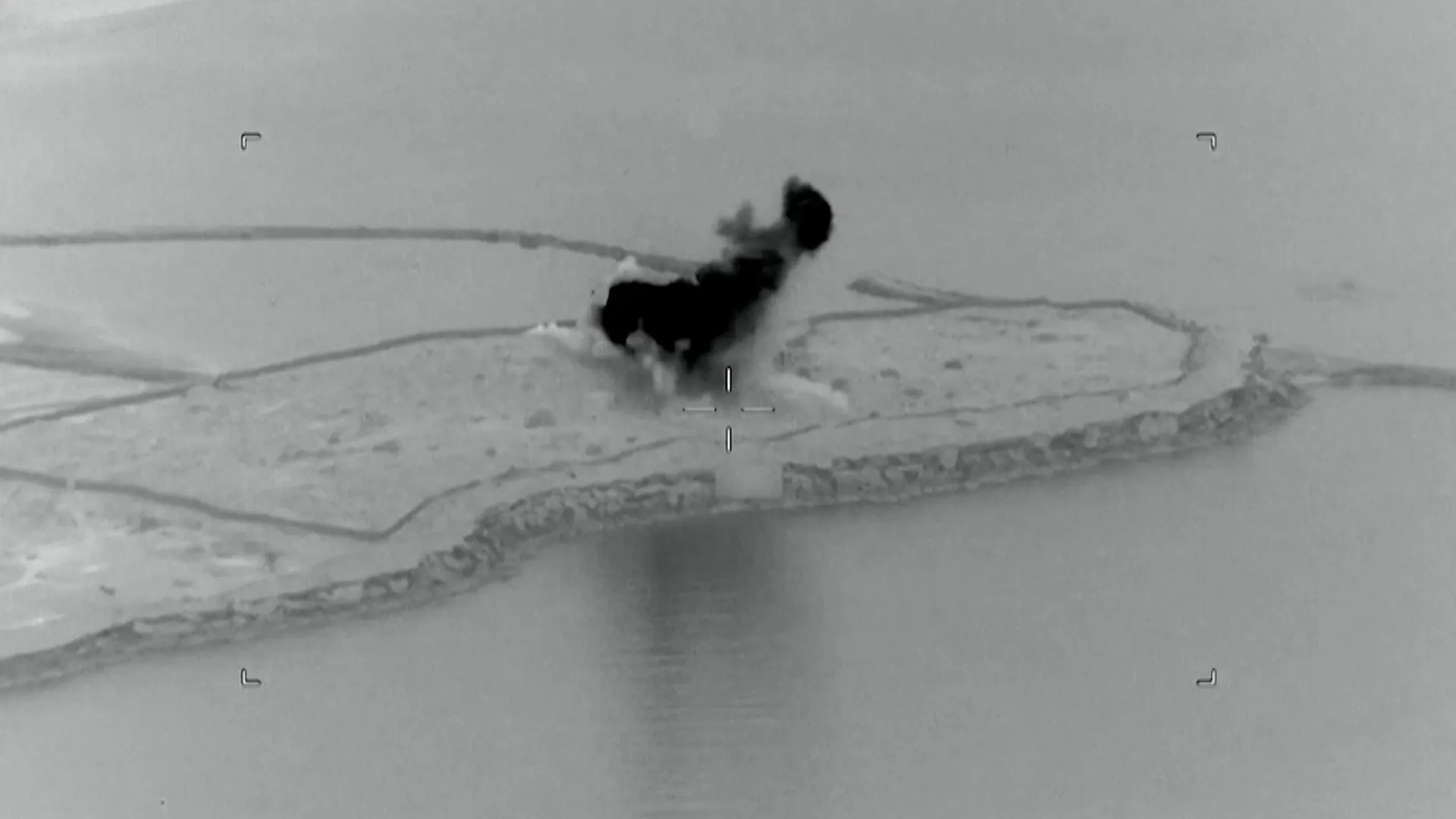
On March 14, Trump announced that the US Air Force had bombed Iranian military facilities on the island.

“For reasons of decency, I have chosen NOT to wipe out the Oil Infrastructure on the Island. However, should Iran, or anyone else, do anything to interfere with the Free and Safe Passage of Ships through the Strait of Hormuz, I will immediately reconsider this decision,” Trump wrote on Truth Social.

Critics say the Trump administration was emboldened by the success of its brazen military operation in January to abduct Venezuelan President Nicolas Maduro from Caracas. Washington says it is now in control of Venezuela’s oil exports.

Earlier this month, Trump claimed that 100 ⁠million barrels of Venezuelan oil had been brought to refineries in Houston, Texas in the US. He added that ⁠an additional 100 ⁠million barrels of Venezuelan ⁠oil were on the way.

Ties between Venezuela, which has the world’s largest proven reserves of crude oil, and Washington had deteriorated under former President Hugo Chavez, who decided to nationalise the oil sector. Relations collapsed further under Maduro, who succeeded Chavez in 2013. Venezuela’s current interim president, Delcy Rodriguez, has since opened the sector for private investment.

How much oil does Iran have?

Iran is one of the world’s biggest oil producers.

The country holds the world’s second-largest proven natural gas reserves and the third-largest crude oil reserves, according to the United States Energy Information Administration.

Iran holds around 24 percent of the Middle East’s and 12 percent of the world’s proven oil reserves, with about 157 billion barrels of proven crude oil.

It is the ninth-largest oil producer globally, and the fourth-largest within the Organization of the Petroleum Exporting Countries (OPEC), producing about 3.3 million barrels of crude oil per day.

Before the war, Iran was exporting around two million barrels of crude and refined fuel each day, though its exports dropped dramatically after Trump slapped sanctions on Iran in 2018 during his first term in power. The Iran nuclear deal signed under US President Barack Obama in 2015 – the Joint Comprehensive Plan of Action (JCPOA) – placed limits on Iran’s nuclear programme in exchange for sanctions relief in place for decades.

The US cut diplomatic ties with Iran after pro-Washington ruler Shah Mohammad Reza Pahlavi was toppled in the 1979 Islamic Revolution and the subsequent hostage crisis involving US citizens.

Can the US seize Iranian oil?

The Pentagon is preparing for limited ground operations in Iran, potentially including raids on Kharg Island and coastal sites near the Strait of Hormuz, according to US officials quoted by the Washington Post newspaper.

The plans, which fall short of a full invasion, could involve raids in special operations and by conventional infantry troops, the newspaper reported on Saturday.

However, even if the US invades or occupies Kharg Island, this would not give the US access to Iranian oil.

In order to access Iranian oil, the US would have to occupy Iran’s oil production sites and refineries. In essence, the US would need to occupy mainland Iran.

INTERACTIVE-IRAN-OIL-MAP-JUNE 17, 2025-1772104794
(Al Jazeera)

What would it mean if the US were to take Iranian oil?

In 2023, Iran’s gross domestic product (GDP) was around $457.5bn, according to World Bank data.

In the same year, Iran’s net oil export revenues were estimated at $53bn.

That export figure is equivalent to roughly 12 percent of Iran’s GDP, although export revenues and GDP are not directly comparable.

At the same time, if the US were to lift sanctions on Iranian oil after seizing it, it could lead to a flow of more Iranian oil into global markets, bringing down oil prices.

Iran is one of the most heavily sanctioned countries in the world. The US first imposed sanctions on Iran in November 1979, after Iranian students stormed its embassy in Tehran and took Americans hostage. The hostage crisis ended when dozens of US citizens were released after more than a year.

The US-Israeli war on Iran has sent global oil prices soaring. Benchmark Brent crude rose to more than 3 percent on Monday to $116 a barrel – the highest level in nearly two weeks. The oil price was about $65 per barrel before the war.

Has the US tried to interfere in Iranian oil before?

Yes; this is not the first time the US has shown an interest in Iranian oil.

In 1953, the government of Mohammad Mossadegh, Iran’s first democratically elected prime minister, was toppled in a CIA-orchestrated coup after he nationalised the British-controlled firm Anglo‑Iranian Oil Company (AIOC), the predecessor of modern-day BP.

Washington framed the operation – codenamed “Operation Ajax” – as a Cold War necessity to keep Iran and its energy reserves out of Soviet hands.

The coup restored and entrenched the shah’s rule, a turning point that still haunts Iran’s relationship with the West.

Neighbouring Iraq’s oil revenue is still effectively under US control more than two decades after the US invaded the Middle East nation. Iraq’s oil revenues are deposited into an account at the Federal Reserve Bank in the US before making it to Baghdad.

Source link

Major cruise line cancels all sailings in April in ‘disappointing’ blow to customers

All impacted guests have been offered a full refund or a future cruise credit, and will be supported by the firm’s teams, who will provide rebooking options and assistance.

A major cruise line has cancelled all its April sailings as the impact of the Iran war on travel worsens.

Celestyal has confirmed the cancellation of all April 2026 departures as its ships wait to reposition to Athens, Greece.

The line’s fleet is currently positioned in the Arabian Gulf, with Celestyal Discovery in Dubai, UAE, and Celestyal Journey in Doha, Qatar. All guests and non-operational crew have been disembarked, while both vessels remain fully operational. The cruise line announced that staff and crew’s departure from the region will take place in accordance with safety guidance from the relevant authorities.

“Due to the ongoing situation in the Middle East, all sailings scheduled for April 2026 have been cancelled,” a statement from Celestyal read.

The next planned departures are:

• Celestyal Discovery – May 1, 2026 (3-night Iconic Greek Islands)

• Celestyal Journey – May 2, 2026 (7-night Heavenly Greece, Italy and Croatia)

Lee Haslett, chief commercial officer at Celestyal, said: “Our priority remains the safety and confidence of our guests, crew and partners. While we know this will be disappointing, taking this decision now provides greater clarity and flexibility for those affected. Our teams are working closely with guests and travel partners to support rebooking options and ensure a smooth transition, and we remain focused on returning to service in the Mediterranean as soon as it is safe to do so.”

All impacted guests have been offered a full refund or a future cruise credit, and will be supported by Celestyal’s teams, who will provide rebooking options and assistance.

READ MORE: European city with 6 of the best restaurants and the biggest theme park — not ParisREAD MORE: Southwest Airlines passengers slam new ‘fat tax’ policy as ‘discrimination’ and ‘stressful’

The news comes as senior figures from the energy, shipping and banking sectors prepare to meet Sir Keir Starmer as Donald Trump hinted the conflict with Iran could intensify.

Oil prices surged after the US president revealed he was weighing up a military operation to take control of Iran’s Kharg Island, a critical component of the country’s export infrastructure.

The Downing Street talks are expected to centre on Iran’s continued blockade of the Strait of Hormuz, which has severely disrupted a key shipping route for the oil and gas industry, as well as supplies of other goods such as fertiliser.

The gathering will include representatives from energy giants Shell and BP, shipping behemoth Maersk, maritime insurance specialist Lloyd’s of London, and banking heavyweights HSBC and Goldman Sachs.

Major General Richard Cantrill, the UK’s maritime operations commander, will also brief those in attendance on the latest developments in the region.

This follows the Royal Navy’s announcement that it is equipping the transport vessel RFA Lyme Bay with minehunting drones — a move widely understood to be aimed at giving ministers options for securing the strait once conditions allow.

Downing Street confirmed the purpose of the meeting was to hear directly from businesses and explore how the Government and private sector can join forces in tackling the ongoing conflict.

The No 10 summit is expected to be followed by a Cobra meeting on Tuesday, where senior ministers will assess the continuing economic damage caused by the war, Sir Keir has suggested. The summit follows Mr Trump’s comments that he could “take the oil in Iran” or potentially seize control of Kharg Island, the country’s main oil export hub.

Source link

Why have the US and Israel bombed more than 75 Iranian police facilities? | Armed Groups News

In the densely populated neighbourhoods of southern Tehran, the 11th Criminal Investigation Base once stood as a mundane symbol of local law enforcement. Its detectives investigated economic crimes, fraud and petty thefts.

The building housed no ballistic missiles, no uranium centrifuges and no military command centres. Today, it is a crater. In the opening wave of the United States-Israel war on Iran, warplanes wiped the local police station off the map.

Satellite imagery provided by Planet Labs shows the complete destruction of the 11th Criminal Investigation Base in southern Tehran between February 26 and March 6, 2026.
Satellite imagery provided by Planet Labs shows the destruction of the 11th Criminal Investigation Base in southern Tehran on February 26 and March 6, 2026. [Al Jazeera/Planet]

It was not an isolated incident. An investigation by Al Jazeera’s Digital Investigations unit has verified that at least 75 internal security sites were destroyed or damaged in bombardments by Israel and the US from February 28 to March 10. The targeted facilities included local police stations, criminal investigation headquarters, public security offices and checkpoints operated by the Basij paramilitary force.

Al Jazeera mapped the strikes using open-source data, cross-referencing field reports with satellite imagery to confirm the destruction. However, conducting independent verification has grown increasingly difficult. On March 6, commercial satellite providers Planet Labs and Vantor restricted imagery over the Middle East, later expanding the blackout to impose a 14-day delay on all images of Iran.

While the companies said the blackout prevents hostile actors from endangering civilians, independent journalist Ken Klippenstein recently revealed a leaked US Space Force directive dictating how commercial satellite firms describe damage. The leak exposed a deliberate US effort to control the flow of information and obscure the reality of the battlefield.

Targeting population centres

The spatial distribution of the 75 verified strikes revealed a clear and deliberate strategy. Warplanes bypassed isolated military installations to hit the infrastructure Tehran uses to police its citizens.

An Al Jazeera map detailing the geographic distribution of the 75 internal security sites targeted by US and Israeli strikes, showing a heavy concentration in Tehran and the western provinces.
An Al Jazeera map details the geographic distribution of the 75 internal security sites targeted by US-Israeli strikes, showing a heavy concentration in Tehran and western provinces. [Al Jazeera]

The capital alone absorbed 31 strikes, more than 40 percent of the total targets. Sanandaj, the capital of Kurdistan province, suffered eight strikes. The remaining targets were clustered tightly in major western and central cities, including Isfahan, Kermanshah and Hamedan. Meanwhile, Iran’s sprawling eastern and southeastern provinces remained largely untouched by this campaign.

By overlaying the strike coordinates with demographic maps, the investigation shows a near-perfect alignment with urban density. More than 70 percent of Iran’s population lives in these targeted western urban areas.

INTERACTIVE - Iran population density - FEB26, 2026-1772104770
A population density map of Iran demonstrates how the strike locations closely align with the country’s most heavily populated urban centres. [Al Jazeera]

The strikes systematically targeted the Law Enforcement Command, known as FARAJA, and the Basij network. FARAJA, elevated in 2021 by late Supreme Leader Ali Khamenei to operate alongside the military, is currently led by Ahmad-Reza Radan. It manages daily urban law enforcement and riot control. The Basij, an immense volunteer paramilitary force deeply embedded in Iranian neighbourhoods, acts as the state’s ultimate tool for social control.

Engineering state collapse

The pattern of the US-Israeli air strikes points to an objective far removed from dismantling nuclear facilities or degrading military infrastructure. It reveals a calculated attempt to engineer the collapse of the Iranian state.

On February 28, US President Donald Trump launched the war and in a video address urged Iranians to take over their government once the bombs stopped falling. Israeli Prime Minister Benjamin Netanyahu echoed this sentiment in Farsi, calling on millions of Iranians to take to the streets and describing the military strategy as breaking the Iranian government’s bones.

The military planning, however, preceded events on the ground that Trump and Netanyahu pointed to for justification for their war. Israeli Defence Minister Israel Katz revealed in early March that Israel had been planning to strike Iran in mid-2026, long before January’s deadly government crackdown across Iran against economic protests.

Satellite imagery captures the extensive damage inflicted on the Beheshti Basij headquarters in Tehran's District 8 following the initial wave of strikes. (Al Jazeera/Planet).
Satellite imagery captures extensive damage to the Beheshti Basij headquarters in Tehran’s District 8 after the initial wave of strikes. [Al Jazeera/Planet]

This approach aligns with a broader Israeli doctrine. Daniel Levy, a former Israeli government adviser, previously told Al Jazeera that Israel has no interest in a smooth political transition in Tehran. What Israel wants is the collapse of the government and the state, Levy said, adding that if the repercussions spread to Iraq, the Gulf and the entire region, that is better from Israel’s point of view.

A failing strategy

Still, a month into the war, the US-Israeli strategy to spark an internal revolution through the systematic destruction of Iran’s internal security apparatus appears to be failing.

Iranians are living under daily bombardments. As missiles destroy civilian infrastructure and oil refineries burn, daily survival has eclipsed any coordinated political uprising. The United Nations special rapporteur on human rights in Iran has warned that civilians are facing a simultaneous military and human rights crisis.

Rather than collapsing, Iran’s internal security apparatus has adapted. During Ramadan, FARAJA deployed 24-hour patrols across Tehran, and riot police shut down public gatherings before the Persian New Year holiday. After the March 17 assassination of Basij commander Gholamreza Soleimani, Israeli forces released footage of strikes on mobile Basij checkpoints, indicating that Iranian security forces are still controlling the streets.

The US attempt to dismantle state security from the air mirrors its disastrous 2003 de-Baathification policy in neighbouring Iraq, which barred members of the former ruling Baath Party from holding government jobs, dismantled local policing and birthed a devastating sectarian war. Unlike in Iraq, Washington today has no troops on the ground in Iran to fill a security void it is trying to create.

Beneath the rubble of the 11th Criminal Investigation Base and dozens of stations like it, the US and Israel are aiming to bury the Iranian state and spark a popular revolt. Instead, they have trapped millions of civilians in a burning country.

Source link

Gold and silver prices plunge: Why has safe-haven demand faded amid Iran war?

Published on

It is an old market saying, but it has never felt more apt: when people are worried about the future, they buy gold — when they are worried about the present, they sell it.


ADVERTISEMENT


ADVERTISEMENT

While the Iran war has raised longer-term concerns over energy security and global stability, the immediate fallout, in the form of surging oil prices and renewed inflation fears, has forced investors to prioritise liquidity and higher-yielding assets over metals.

Gold hit an all-time high of $5,602 (€4,873) at the end of January and looked to be heading higher still in early March, but has since dropped nearly 25% to a low of $4,100 (€3,567), trading around $4,500 (€3,915) at the time of writing.

The decline marks a dramatic pullback from gold’s extraordinary performance last year.

In 2025, the metal delivered one of its best annual gains in decades, rising more than 60% to record levels as central banks accumulated reserves and investors sought protection amid economic uncertainty.

The drop in 2026 has triggered a swift unwinding of leveraged positions in futures and exchange-traded funds which were riding last year’s tremendous rise.

This sharp reversal defies the traditional role of the metal as a refuge during geopolitical turmoil, with a stronger US dollar and rising bond yields proving far more influential.

Macroeconomic forces override safe-haven appeal

Rising US Treasury yields and a firmer US dollar have been the dominant headwinds for precious metals.

Higher oil prices stemming from the Iran war have lifted inflation expectations, prompting markets to price in fewer Federal Reserve rate cuts or even the possibility of tighter policy for longer, including potential hikes that were previously unexpected.

This has increased the opportunity cost of holding non-yielding gold, while the US dollar’s strength has made it more expensive for international buyers.

The result has been a classic “flight to liquidity” rather than the expected flight to quality risk assets, as leveraged traders facing margin calls accelerated the sell-off.

The correction for metals has been one of the sharpest in recent memory.

Silver shares in gold’s downturn

Silver, which often amplifies gold’s moves, followed with an even bigger drop.

The white metal reached an all time high of $121 just one day after gold, on 29 January, but it has since dropped roughly 50% to as low as $61.

At the time of writing, it is trading at around $70.

Silver enjoyed an even more spectacular rally than gold in 2025, surging roughly 145% thanks to robust industrial demand from solar panels, electronics and electric vehicles, combined with investment buying.

In 2026, however, it has also declined sharply amid the same pressures of US dollar strength and higher yields, although its industrial fundamentals continue to offer longer-term support.

Source link

Trump: Iran permits 20 more tankers through Hormuz

March 30 (UPI) — Iran has agreed to allow 20 more oil tankers through the Strait of Hormuz, President Donald Trump said late Sunday, as he claimed negotiations with Iran over ending the war were going “extremely well.”

Speaking to reporters aboard Air Force One, Trump said the tankers will be allowed through the key Persian Gulf oil transit route starting Monday, describing the gesture by Iran as “a tribute” or “a sign of respect.”

Iran has not confirmed the announcement. Trump late last week said Iran had permitted about 10 tankers through the Strait of Hormuz.

The press conference was held after Foreign Minister Ishaq Dar of Pakistan announced that Iran agreed to allow 20 Pakistani-flagged vessels through the Hormuz at a rate of two per day.

Pakistan is seeking to mediate the U.S.-Iran talks.

“This is a welcome and constructive gesture by Iran and deserves appreciation,” Dar said in a statement. “It is a harbinger of peace and will help usher stability in the region.”

About 20% of global oil and liquefied natural gas supplies pass through the Strait of Hormuz, and Iran has all but closed it since the United States and Israel attacked Tehran on Feb. 28.

The closure has sent prices higher at U.S. gas pumps. Brent futures early Monday hit $116 a barrel, up from about $72 a day before the war began.

More than a week ago, Trump gave Iran a 48-hour ultimatum to open Hormuz or risk further attacks on its energy infrastructure. He has since extended the deadline until April 6, citing progress in talks with Iran.

“We’re doing extremely well in that negotiation,” he said, while adding that “you can never know with Iran because we negotiate with them and then we always have to blow them up.”

“We’ll make a deal with them. Pretty sure,” he said. “But it’s possible we won’t.”

Immediately after the Feb. 28 U.S. strikes on Iran, Trump called for regime change, a goal that U.S. military and White House officials quickly walked back.

On Sunday, Trump claimed regime change had been achieved saying Ayatollah Ali Khamenei, the country’s supreme leader, was killed early in the war and that they were now conducting negotiations with other officials.

“We’ve had regime change. If you look already because the one regime was decimated, destroyed, they’re all dead. The next regime is mostly dead and the third regime, we’re dealing with different people than anybody’s dealt with before,” he said. “It’s a whole different group of people. And, frankly, they’ve been very reasonable.”

Source link

IAEA says Iran’s Khondab heavy water reactor no longer operational | United Nations

NewsFeed

The UN’s nuclear watchdog says Iran’s Khondab heavy water production plant is no longer operational after suffering severe damage in an Israeli strike on March 27. The reactor, which contains no declared nuclear material, was hit along with other key infrastructure sites.

Source link

Netanyahu orders deeper Israeli invasion into Lebanon | US-Israel war on Iran

NewsFeed

Israeli Prime Minister Benjamin Netanyahu has ordered the military to expand its invasion in southern Lebanon, pushing deeper to extend what he calls a ‘buffer zone’. As Israeli forces advance towards the Litani River, an explosion at a UN position in southern Lebanon killed a peacekeeper.

Source link

Iranian academic describes US-Israeli attacks on Iran’s universities | US-Israel war on Iran

NewsFeed

A post-doctoral fellow in Tehran has told Al Jazeera there was no warning before US-Israeli strikes hit the Iran University of Science and Technology on March 28. Helyeh Doutaghi says the attack reflects a wider pattern and raises questions about what defines ‘legitimate retaliation’.

Source link

Oil rises above $116 a barrel as Iran accuses US of preparing invasion | Oil and Gas News

DEVELOPING STORY,

Crude prices continue to climb as world faces its biggest energy crisis in decades.

Oil prices have surged to their highest level in nearly two weeks amid escalation on multiple fronts of the US-Israel war on Iran.

Brent crude, the global benchmark, rose more than 3 percent on Monday morning to top $116 a barrel.

Recommended Stories

list of 4 itemsend of list

The latest climb took the global benchmark to its highest point since March 19, when it briefly touched $119 a barrel.

The surge came after Iran said it was prepared for a US ground invasion, with the speaker of the country’s parliament warning that Tehran was waiting for the arrival of US troops to “set them on fire” and “punish” their regional allies.

Tehran’s warning came as the conflict deepened over the weekend, with the Iranian-backed Houthis launching missiles at Israel for the first time in the war, and Israel expanding its invasion of southern Lebanon.

Iran’s effective closure of the Strait of Hormuz in retaliation for the US-Israel war has disrupted about one-fifth of global oil and liquified natural gas (LNG) supplies, plunging the world into its biggest energy crisis in decades.

Oil prices have risen nearly 60 percent since the start of the war, driving up fuel prices worldwide and forcing numerous countries to adopt emergency measures to conserve energy.

Analysts have warned that oil prices are likely to keep rising unless maritime traffic returns to normal levels in the strait.

Greg Newman, the CEO the Onyx Capital Group, which began as an oil derivatives trading house, said that energy markets were only beginning to feel the fallout of the turmoil.

“Physical oil moves around the world in loading cycles , and Europe has taken around three weeks to really start feeling the effects of the oil shortage,” Newman told Al Jazeera.

“Brent is starting to reflect the reality, and we think it’s a steady rise from here towards $120 and beyond.”

Newman said the scale of the disruption had yet to be fully appreciated.

No one in the market has ever seen the outages we are now suffering from – physical premiums are the highest ever. There is still a sense that the macro world is not taking this seriously enough, but it is worse than anything that has come before it,” he said.

“The reality will come out in the economic numbers over the coming months.”

More to follow…

Source link

Egypt enacts energy saving measures as Iran war affects import costs

March 29 (UPI) — Egypt is ordering stores and malls to close early, asking people to work from home and dimming street lights as energy costs have skyrocketed since since January.

The North African country put energy saving efforts into effect because the U.S. and Israeli war in Iran has sent the cost of importing oil and natural gas — which is how Africa gets the vast majority of its energy supplies — through the roof, The BBC and Anadolu Agency reported.

Many nations globally have seen the cost of fuel and natural gas increase, and several African and Asian nations have enacted efforts similar to Egypt, because Iran has blocked the Strait of Hormuz to attempt to get the two nations to end the airstrikes aimed at regime change there.

Roughly 20% of the world’s oil and natural gas supply moves through the Strait and choking it off has had a significant effect on Egypt.

Egypt imports liquefied natural gas from the United States and Qatar, among others, and recently signed a deal with Israel for gas that will be delivered via a pipeline, the Financial Times reported.

Although Egypt, with Pakistan and Turkey, are involved with talks to end the war, Egyptian Prime Minister Mostafa Madbouly said that because “there is no clarity about the duration of this war,” the energy reduction measures, which go into effect .

“These measures aim to mitigate the effects of energy import costs due to high global oil prices,” Madbouly said during a press conference.

Since January, Madbouly said that natural gas imports tripped from $560 million per month in January to $1.65 billion per month in March and that its petroleum bill more than doubled in the same time period from $1.2 billion per month to $2.5 billion per month.

Among the “exceptional measures” that will go into effect include stores, restaurants, cinemas and gathering places closing by 9:00 p.m. five nights per week; most employees being told to work from one or two days per week; street lighting and street advertisement lighting will be dimmed by 50% and government vehicles will see be required to use 30% less gas.

Despite talks starting to end the war, the price of Brent crude oil on Friday surpassed $111 per barrel as Iran continued to block most ships from passing through the Strait of Hormuz.

Although Iran allowed a handful of oil tankers through the Strait last week, which U.S. President Donald Trump called a show of good faith, global markets have been hit hard, even beyond energy, as a result of limited traffic transiting the passage.,

President Donald Trump stands with U.S. Secretary of Agriculture Brooke Rollins during an event celebrating farmers on the South Lawn of the White House on Friday. Photo by Aaron Schwartz/UPI | License Photo

Source link

How will the Houthis’ involvement shape the war? | US-Israel war on Iran News

The Yemeni group has launched missiles towards Israel in support of Iran.

They have threatened to join the war ever since it started a month ago.

Now, Yemen’s Ansar Allah, also known as the Houthis, have followed up on their threat and launched missiles towards Israel.

This move marks a significant escalation in the US-Israel war on Iran.

There are fears that the Iran-aligned group could attack shipping in the Red Sea, as it has done before.

This would further disrupt global trade, already affected by Iran’s blockade of the Strait of Hormuz.

Will Israel and the US retaliate? And if so, how?

Presenter: James Bays

Guests:

Hisham Al-Omeisy – senior Yemen adviser at the European Institute of Peace

H A Hellyer – senior associate fellow in defence and security studies at the Royal United Services Institute

Michael Mulroy – former US deputy assistant secretary of defence for the Middle East

Source link

Iran accuses US of plotting ground attack, as Israel steps up bombardment | US-Israel war on Iran News

Iran’s parliament speaker has accused the United States of plotting a ground attack despite publicly pushing for a negotiated deal, as the US deploys thousands of military personnel to the Middle East.

“Our men are waiting for the arrival of the American soldiers on the ground to set them on fire and punish their regional allies once and for all,” Mohammad Bagher Ghalibaf said in a statement on Sunday, carried by the official IRNA news agency, as Iran struggled with power cuts amid escalating Israeli attacks on central and western areas of the country.

Recommended Stories

list of 3 itemsend of list

Iran’s Ministry of Energy reported power outages in the capital, Tehran, its surrounding region and neighbouring Alborz province on Sunday, “following attacks on electricity industry facilities”. The Fars news agency reported later that the outages were being resolved.

It was unclear whether the attacks were related to US President Donald Trump’s threats to strike Iranian power stations and other energy infrastructure if Tehran did not agree to a deal to end the war. Trump extended his deadline by 10 days through April 6 as Washington presented a 15-point plan for peace that critics described as “maximalist”.

Al Jazeera’s Ali Hashem, reporting from Tehran, said that authorities had activated substations to restore power. “This gives an indication of how much they’ve been also preparing for such situations,” he said.

Ghalibaf’s comments on Iran’s readiness for a ground assault came as The Washington Post reported that the Pentagon was preparing for weeks of limited ground operations in Iran, potentially including raids on Kharg Island, a crude export hub, and coastal sites near the Strait of Hormuz shipping chokepoint.

As the US-Israel war on Iran stretches into its fifth week, the Trump administration is also planning to send thousands of soldiers from the army’s 82nd Airborne to the region, following a US Central Command (CENTCOM) announcement Saturday that about 3,500 military personnel had arrived in the Middle East on board the USS Tripoli.

IRGC threatens retaliation after university attacks

The Israeli military said it dropped more than 120 munitions on sites used for research, development, and production of weaponry in Tehran on Sunday.

Iran’s Ministry of Health reported that 2,076 people had been killed since the start of the war, including 216 children.

Among the deaths, six people were killed in a US-Israeli attack on a residential area in the Iranian village of Osmavandan, according to the Mehr news agency, which added that five houses were destroyed and 22 were severely damaged.

A university in Iran’s central city of Isfahan said it was hit by US-Israeli air strikes on Sunday for the second time since the war erupted, leaving four university staff members wounded.

The strike followed an attack the previous day on Iran’s University of Science and Technology. After that attack, Iran’s Revolutionary Guard Corps (IRGC) said it would target two Israeli or US universities in the region in retaliation, according to Iranian state television.

Hossein Sadeghi, head of the Information and Public Relations Center at Iran’s Ministry of Education, told the IRNA news agency that at least 250 students and teachers have been killed amid strikes on 600 educational facilities across Iran since the war began.

Also on Sunday, a commercial building housing Qatar’s Al-Araby TV in Tehran was hit, with video footage showing walls and windows blown out of the multistorey block. “It was a real miracle we survived,” said Al Araby camera operator Mohammadreza Shademan. “There was no military target here”.

As the civilian cost of the war mounts, Iran is demanding compensation in a five-point plan presented to the US.

That plan also includes a halt to killings of Iranian officials, an end to hostilities, safeguards against the outbreak of more war, and Iran’s “exercise of sovereignty over the Strait of Hormuz”.

Iran, Hezbollah launch attacks

Israel’s military said on Sunday evening that it had detected seven new incoming missile salvoes fired from Iran during the day. These coincided with Hezbollah rocket attacks on northern Israel, with sirens triggered in more than 100 towns.

Israel’s ADAMA, a pesticide maker in the Neot Hovav industrial zone, located 9km (6 miles) south of the city of Beersheba, said its Makhteshim plant was hit either by an Iranian missile or debris ⁠from a missile. No casualties were reported, and no leak of hazardous materials was found.

Reporting from Ramallah in the occupied West Bank, Al Jazeera’s Nour Odeh said it was “an incident that raises a lot of alarms”.

“This industrial zone has about 19 different factories, including a bromide factory and some pharmaceutical factories. But it’s also home to the main hazardous disposal sites in Israel. So a lot is at stake here,” she said.

Another missile hit open ground near homes in Beersheba, injuring 11 people.

Israeli media reported that missile fragments fell on the northern port city of Haifa after missiles launched by Iran and Hezbollah were intercepted.

Houthis enter fray amid talks

As the war raged on, foreign ministers from Pakistan, Turkiye, Egypt and Saudi Arabia met in Islamabad, looking to de-escalate the conflict, which has also ensnarled Gulf nations hosting US military assets.

Across the Gulf, the United Arab Emirates said it had intercepted 16 ballistic missiles and 42 drones launched from Iran, while Saudi Arabia reported downing 10 drones. Sirens sounded in Kuwait and Bahrain.

The Iranian army said it had targeted US forces based in Jordan, launching drones on the living quarters and military equipment sites at the Muwaffaq Salti airbase in Azraq, the ISNA news agency reported.

Meanwhile, readying itself for attacks amid the US military build-up, an Iranian naval commander, cited by state media, said Iran had complete control of waters near the Strait of Hormuz, a vital chokepoint for a fifth of the world’s oil.

He said Iran was waiting for US forces to come within range, warning they could be targeted with coastal missile systems.

As oil prices shoot up and the world’s economy slides, the arrival of Yemen’s Houthis into the conflict, with Saturday’s strikes on Israel, further complicates matters, raising fears that the Yemeni group could block the Bab al-Mandeb Strait.

Houthi attacks on shipping vessels in the Red Sea during Israel’s genocidal war on Gaza upended commercial traffic worth about $1 trillion a year.

Source link

A premature ceasefire risks ‘another round of conflict’ in future | Donald Trump News

Abas Aslani, senior research fellow at the Center for Middle East Strategic Studies, says a premature ceasefire in the US-Israeli war on Iran could spark another round of fighting, pointing to a lack of trust in talks as the US ramps up troop deployments despite calls for de-escalation.

Source link

Israeli police bar priest from Jerusalem’s Holy Sepulchre on Palm Sunday | US-Israel war on Iran

NewsFeed

Christians in Jerusalem and Gaza marked Holy Week under wartime restrictions, with Israeli police blocking the Latin Patriarch from the Holy Sepulchre for the first time in centuries. In Gaza, a small Christian community continued Palm Sunday rites despite ongoing attacks and severe shortages of basic essentials.

Source link

IRGC spokesperson says Trump ‘only understands the language of force’ | Donald Trump News

IRGC spokesperson Ebrahim Zolfaghari dismisses threats of US ground operations. He says the US president ‘only understands force’ as the Pentagon prepares plans that could involve thousands of troops on the ground in Iran, according to a report by The Washington Post.

Source link

Iran Wants To Make Deal To End War, Trump Claims (Updated)

President Donald Trump claims that Washington and Tehran have had “very good and productive conversations regarding a complete and total resolution of our hostilities in the Middle East.” On the back of this development, the U.S. leader said today that he would order a five-day pause in all U.S. airstrikes against Iranian power plants and energy infrastructure. Iran has denied any knowledge of these talks, however. Over the weekend, the Trump administration had also given 48 hours for Tehran to lift its blockade of the strategic Strait of Hormuz, or to face the consequences.

Speaking to reporters today, Trump reaffirmed his claim that discussions were taking place with Iran about ending the war and that there were “major points of agreement” between the two parties. He said he expects a deal to be agreed on very soon, adding “I didn’t call, they called — and they wanted to make a deal.”

Trump on Iran:

We have major points of agreement and we both want to make a deal.

We will likely talk today, possibly by phone.

I hope to meet soon.

— Clash Report (@clashreport) March 23, 2026

On Saturday, Trump had threatened to bomb Iran’s power plants after 48 hours unless Iran agreed to fully reopen the Strait of Hormuz, the strategic oil shipping route that Iran has effectively blocked.

As of today, however, Trump says he has instructed the Pentagon to postpone all airstrikes against Iranian power plants and energy infrastructure for a five-day period, which he said reflected the progress made on a possible deal.

BREAKING: Trump:

I HAVE INSTRUCTED THE DEPARTMENT OF WAR TO POSTPONE ANY AND ALL MILITARY STRIKES AGAINST IRANIAN POWER PLANTS AND ENERGY INFRASTRUCTURE FOR A FIVE DAY PERIOD, SUBJECT TO THE SUCCESS OF THE ONGOING MEETINGS AND DISCUSSIONS. pic.twitter.com/HmCFLFYSa1

— Clash Report (@clashreport) March 23, 2026

LONDON, March 23 – Oil prices fell by over 13% on Monday after U.S. President Donald Trump said he would order the military to postpone any strikes against Iranian power plants and energy infrastructure.

— Idrees Ali (@idreesali114) March 23, 2026

In a post on Truth Social, Trump added that his latest instruction to the Pentagon is subject to the “success” of ongoing “meetings and discussions.”

“We’re doing a five-day period, and we’ll see how that goes. If it goes well, we’re going to end up with settling this,” Trump told reporters, referring to earlier comments about the bombing pause. “Otherwise, we’ll just keep bombing our little hearts out.”

FAIRFORD, ENGLAND - MARCH 14: A USAF B-1 Lancer bomber takes off on a sortie from RAF Fairford on March 14, 2026 in Fairford, England. Since UK Prime Minister Keir Starmer allowed the US to use British bases to launch defensive strikes against Iranian missile sites, a variety of US military aircraft including B52 bombers, and B-1 bombers, have arrived at RAF Fairford in Gloucestershire. (Photo by Christopher Furlong/Getty Images)
A U.S. Air Force B-1B bomber takes off on a sortie from RAF Fairford, England, on March 14, 2026. Photo by Christopher Furlong/Getty Images Christopher Furlong

Trump has said that the latest talks took place on Sunday and involved his Middle East envoys, Jared Kushner and Steve Witkoff. Trump claims they were talking to a “respected” Iranian leader, but that it was not the new supreme leader, Ayatollah Mojtaba Khamenei.

The status of Mojtaba Khamenei remains unclear, after U.S. War Secretary Pete Hegseth last week said that the new supreme leader was wounded and “likely disfigured,” presumably as the result of an airstrike.

Trump says he has not heard from Iran’s Supreme Leader, but does not want him killed.

— Idrees Ali (@idreesali114) March 23, 2026

For its part, Tehran has denied that it has conducted talks with Washington and instead has said that the U.S. president’s comments show that he has “backed down.”

Iran’s Fars News Agency, which is linked to the Islamic Revolutionary Guard Corps (IRGC), quoted a source as saying there has been “no direct or indirect” contact between Iran and Trump.

March 23 (Reuters) – Iran’s Fars news agency, citing a source, said there are no direct or indirect communications with the United States, despite U.S. President Donald Trump’s recent statement about “productive” talks with Tehran.

— Idrees Ali (@idreesali114) March 23, 2026

Iran continues to warn that it will “irreversibly destroy” essential infrastructure across the Middle East, a message that it began to push in response to U.S. threats to hit Iranian power plants. Iran said it would hit power plants in all areas that supply electricity to American bases, “as well as the economic, industrial, and energy infrastructures in which Americans have shares.”

An IRGC-affiliated news outlet recently listed 29 ‘tech targets’ Iran plans to strike across the Middle East. How should the U.S. help these countries & protect their own data assets?

More from CSIS’s Intelligence, National Security, & Technology Program: https://t.co/lt1dMG1CVu

— CSIS (@CSIS) March 22, 2026

The U.S. president also said that “we’re gonna get” the “nuclear dust,” referring to the enriched uranium in Iran. Asked how, he said, “We’re going down, and we’re going to take it ourselves.”

Trump has said that ending Iran’s nuclear program is critical for any deal and has now claimed that Iran has agreed to that.

“We are very willing to make a deal. It’s got to be a good deal, and it’s got to be no more wars, no more nuclear weapons. They’re not going to have nuclear weapons anymore. They’re agreeing to that. Any of that stuff, there is no deal,” Trump said when asked about the Iranian nuclear program.

It should be recalled that Iran has always insisted it was not going to pursue the development of nuclear weapons, and that its uranium-enrichment efforts were entirely peaceful.

Iran’s foreign ministry hit back at Trump’s statements, saying they were “part of efforts to reduce energy prices and buy time to implement his military plans,” which could still involve a possible occupation or blockading of Iran’s strategically crucial Kharg Island — a prospect that we have discussed in detail in the past.

Iran’s Foreign Ministry says that they are not talking with the US.

“[Trump’s] statements are part of efforts to reduce energy prices and buy time to implement his military plans.”

— OSINTtechnical (@Osinttechnical) March 23, 2026

“Yes, there are initiatives from regional countries to reduce tensions, and our response to all of them is clear: We are not the party that started this war, and all these requests should be referred to Washington,” the Iranian Foreign Ministry was quoted as saying.

UPDATES:

We have ended today’s rolling coverage.

3:50PM EST—

Iranian officials have repeatedly threatened the United States and Israel with secretive new super-weapons, the details of which are notably thin.

The latest such threat comes from Major General Ali Abdollahi Aliabadi, who heads up the unified combatant command headquarters of the Iranian Armed Forces. “The use of a new, secret weapon will begin soon, and it will bring an end to the enemy’s operations,” he claimed.

Iranian Major General Abdollahi:

“The use of a new, secret weapon will begin soon and it will bring an end to the enemy’s operations.” pic.twitter.com/GCX8PK0r7p

— Open Source Intel (@Osint613) March 23, 2026

The U.K. Royal Navy’s Type 45 destroyer HMS Dragon has arrived on station in the eastern Mediterranean. The U.K. government faced criticism for the slow pace of response, three weeks after an Iranian-made drone hit the British base of RAF Akrotiri in Cyprus. U.K. Defense Secretary John Healey said that the destroyer will begin “operational integration into Cyprus’s defense” starting on Monday night.

3:45PM EST—

Abigail Hauslohner, Washington-based correspondent for the U.K. Financial Times, reports that Trump today claimed the idea of launching a war against Iran came from the U.S. War Secretary Pete Hegseth.

“Pete, I think you were the first one to speak up, and you said: ‘Let’s do it because you can’t let them have a nuclear weapon’,” Trump is quoted as saying.

Trump suggests it was actually @secwar Pete Hegseth’s idea to launch the war against Iran. “Pete, I think you were the first one to speak up, and you said: ‘Let’s do it because you can’t let them have a nuclear weapon'” – Trump just now in TN

— Abigail Hauslohner (@ahauslohner) March 23, 2026

There are signs, too, that Hegseth may be lined up as a negotiating partner with Iran. Abas Aslani, a journalist and senior research fellow at the Center for Middle East Strategic Studies (CMESS), reports that Washington has suggested that Vance take part in talks with Iran’s Parliament Speaker Mohammad Bagher Ghalibaf. Iran has not yet responded to the idea, which apparently derives from Iranian distrust of Steve Witkoff.

3:35PM EST—

Barak Ravid, global affairs reporter with Axios, writes that U.S. Vice President JD Vance spoke today with Israeli Prime Minister Netanyahu, updating him on plans for negotiations between the United States and Iran. Ravid cites an unnamed source who says that Vance and Netanyahu discussed the components of a possible agreement to end the war with Iran. Such a development would seem to suggest that Trump’s talk of an imminent deal with Iran may be premature.

🚨סגן נשיא ארה״ב ג׳יי-די ואנס שוחח בטלפון היום עם ראש הממשלה נתניהו ודן עמו בנסיון לפתוח במו״מ בין ארה״ב לבין איראן, כך לפי מקור שמעורה בפרטים. המקור ציין כי ואנס ונתניהו דנו על המרכיבים של הסכם אפשרי לסיום המלחמה עם איראן https://t.co/ObparWASYR

— Barak Ravid (@BarakRavid) March 23, 2026

A video circulating on social media this evening shows apparent Israeli airstrikes targeting what is reported to be an Iranian missile complex in Isfahan. Iran’s largest missile production and assembly facility is in Isfahan, and the plant has manufactured solid and liquid rocket fuels as well as various missile components. Also located close to Isfahan city is the Isfahan Nuclear Research Center, formerly known as the Uranium Conversion Facility.

Open-source intelligence sources have collated more information pointing to the ongoing deployment of U.S. forces from the Continental United States. Based on this, at least 35 C-17 transport flights to the Middle East have been identified since March 12, with 11 more flights on the way. Among the origins of these flights are key CONUS military installations, including Fort Bragg, North Carolina, and Fort Campbell, Kentucky. Fort Bragg is notably the home of the 82nd Airborne Division. Reported destinations of these flights include airbases in Israel and Jordan.

A significant movement is underway from US Army, Navy and Air Force bases in CONUS to the Middle East comprised of at least 35 C-17 flights since March 12th, with 11 more flights on the way.

Origins:
12-Hunter Army Air Field/Fort Stewart, GA
8-Unknown
7-JB Lewis-McChord, WA… pic.twitter.com/iqU9Wq3K3G

— TheIntelFrog (@TheIntelFrog) March 23, 2026

1:50PM EST—

Additional details about the talks with Iran, as reported by Barak Ravid, global affairs reporter with Axios:

Turkey, Egypt, and Pakistan are the countries that conveyed messages between the US and Iran in the last two days 

Senior officials from the three countries held separate talks with White House envoy Steve Witkoff and Iranian Foreign Minister Abbas Araghchi 

“The mediation continues and is progressing. The discussion is about ending the war and resolving all remaining open issues. We hope to receive answers soon,” the source said

🚨טורקיה, מצרים ופקיסטן הן המדינות שהעבירו מסרים בין ארה״ב לאיראן ביומיים האחרונים
🚨בכירים משלוש המדינות קיימו שיחות נפרדות עם שליח הבית הלבן סטיב וויטקוף ועם שר החוץ האיראני עבאס עראקג׳י
🚨“התיווך נמשך ומתקדם. הדיון הוא על סיום המלחמה ופתרון כל הסוגיות שנותרו פתוחות. אנחנו… https://t.co/8HytxRWHYx

— Barak Ravid (@BarakRavid) March 23, 2026

This is in line with other reporting, including from the British Financial Times, that suggests that Pakistan is taking an increasingly important role in brokering talks between Tehran and Washington.

Iranian police say they have arrested 68 people for filming areas hit by airstrikes. It also says 67 were basically anti-regime individuals. Regardless, arrests for doing similar activities are also happening in allied Arab countries.

Iranian police said 68 people were arrested for allegedly filming locations hit by Israeli and US missiles and sending the images to what authorities called hostile media.

Police said 67 of those detained were “operational elements” linked to monarchists and one was accused of… pic.twitter.com/XeHPPegzMI

— Iran International English (@IranIntl_En) March 23, 2026

If the war explodes into a focus on targeting basic infrastructure, desalination plants would be among the most troubling targets, as they provide clean water to populations and industry.

MAP: Desalination plants are the lifeline of the Gulf. From Saudi Arabia’s massive Ras Al Khair (~1M m³/day) to the UAE’s Taweelah RO, this map shows the critical infrastructure securing water for the region’s cities and industries. pic.twitter.com/FskrFhn9en

— Mintel World (@mintelworld) March 23, 2026

Prime Minister of the U.K. Keir Starmer says it is totally unclear if Diego Garcia was targeted by Iranian ballistic missiles, which has been the prevailing narrative of the strange long-range missile attack by Iran.

UK’s Keir Starmer:

There were no missiles that hit the Chagos Islands (Diego Garcia).

There were two heading in that direction.

There is no assessment that we are being targeted in that way at all. pic.twitter.com/OYJJnNxiRl

— Clash Report (@clashreport) March 23, 2026

1:21PM EST—

B-52s are now launching from the United Kingdom with full loads of GBU-31 JDAMs equipped with BLU-109 bunker buster warheads. This indicates that the bombers are now making direct attacks on targets in Iran, although these would still be in the lowest threat areas, and especially not deep into the eastern part of the country. Up until now, B-52s, which are the most vulnerable type within the U.S. bomber force, have been burning through stealthy AGM-158 JASSM cruise missiles for standoff strikes in Iran, as air supremacy has not been in place across the country, which you can read all about in our past report here.

בי 52 ממריא מפיירפורד אתמול
רק חימושי סטנד אין
האמריקנים מרביצים לאיראנים עם הצד המעליב של היד pic.twitter.com/j1VLJgNS6n

— David Lisovtsev (@david_lisovtsev) March 23, 2026

Some tankers are trickling through the Strait of Hormuz:

An oil supertanker hauling two-million barrels of Iraq’s crude got through the Strait of Hormuz, the first vessel observed moving Baghdad’s barrels through the the vital waterway https://t.co/ZoSlo8X96c

— Bloomberg (@business) March 23, 2026

Iran’s missile technology continues to be quite impressive, with more advanced types still being fired at Israel and eluding air defenses. We have seen multiple occasions where Iranian maneuverable reentry vehicles (MaRVs) have been able to pierce interceptor barrages during the terminal stage.

“The attacks on QatarEnergy’s Ras Laffan complex involved sophisticated missiles that were manoeuvrable and able to evade US-made Patriot air-defence systems, according to an official briefed on the attack.”

— Dmitry Stefanovich (@KomissarWhipla) March 23, 2026

The U.S. and Israel continue to strike at Iran’s ability to quickly restart production of standoff weaponry.

The damage done to energy production infrastructure in the Middle East is becoming more clear. AFP states at least 40 energy assets have been destroyed or badly damaged in nine countries. The long-term economic fallout from Iran’s strikes on these targets remains unclear, but economists are warning that the damage done, as well as the Strait remaining closed for a prolonged period, could spark a global recession.

BREAKING The head of the International Energy Agency says at least 40 energy assets have been “severely or very severely damaged across nine countries” in the Middle East due to the war in the region pic.twitter.com/VbUpTUE5Xm

— AFP News Agency (@AFP) March 23, 2026

BREAKING The war in the Middle East could see the world face its worst energy crisis in decades, International Energy Agency chief Fatih Birol warns, describing the situation as “very severe” pic.twitter.com/CxLA1PmF5W

— AFP News Agency (@AFP) March 23, 2026

Iran has released a new video showing its underground ‘missile cities,’ this time showcasing air defense weapons still stored there. Clearly, this is intended to convey that air supremacy is not achieved and won’t be achieved, although many of these facilities have had their entrances collapsed by strikes, trapping everything inside from being used.

Iran’s Revolutionary Guard Corps (IRGC) has released new footage showing an underground facility housing intact meduim-to-long range air‑defense systems, including the Iranian‑built Khordad‑15 surface‑to‑air missile (SAM) system alongside stockpiles of interceptor canisters. pic.twitter.com/uhjwzPtsU6

— Egypt’s Intel Observer (@EGYOSINT) March 23, 2026

South Korea’s military is active in the UAE and has supplied air defense assets to help counter the Iranian barrages, according to The Diplomat.

South Korea maintains special forces on UAE soil, has supplied air defense systems that are actively engaged in combat, and has conducted emergency resupply operations under fire. Seoul has thus accumulated a stake in the Iran War – whether it wanted to or not.… pic.twitter.com/xsNj5v2ueZ

— The Diplomat (@Diplomat_APAC) March 23, 2026

New York Times reports that Israel had a secret plan to spark a rebellion in Iran that would quickly overrun the regime, but that never occurred:

Israel had a plan to spur a mass rebellion inside Iran, potentially bringing a swift end to the war. That hasn’t happened.https://t.co/4wKswKyF4o

— The New York Times (@nytimes) March 23, 2026

NATO Secretary Rutte says 22 nations are working together to reopen the Strait. Currently, this appears to be a diplomatic endeavor not a military one.

NATO Secretary General Mark Rutte said that 22 countries, including NATO members along with allies such as South Korea and Japan, are coordinating efforts to reopen navigation through the Strait of Hormuz pic.twitter.com/eRi0IBjMxg

— Reuters (@Reuters) March 23, 2026

Data centers continue to be new high-profile targets in the age of AI and cloud computing.

An IRGC-affiliated news outlet recently listed 29 ‘tech targets’ Iran plans to strike across the Middle East. How should the U.S. help these countries & protect their own data assets?

More from CSIS’s Intelligence, National Security, & Technology Program: https://t.co/lt1dMG1CVu

— CSIS (@CSIS) March 22, 2026

12:40PM EST—

In a further effort to put pressure on the United States, Iran’s defense council today threatened to lay sea mines to block the entire Gulf if Iran’s coasts or islands are attacked.

The fact that two U.S. Navy Independence class Littoral Combat Ships (LCS) configured for minesweeping duties — representing a substantial portion of the Navy’s mine countermeasures capacity for the Middle East region — were last reported thousands of miles away in a completely different part of the world is something TWZ has already reported on.

Oman, which has emerged as a key player in terms of its efforts to mediate between Tehran and Washington, is also seeking a way to reopen the strait.

The Omanis are “working intensively” to “put in place safe passage arrangements” for the strait, Omani Foreign Minister Badr Albusaidi wrote on X.

“Whatever your view of Iran, this war is not of their making. This is already causing widespread economic problems, and I fear they promise to get much worse if the war continues,” Albusaidi added.

Whatever your view of Iran, this war is not of their making. This is already causing widespread economic problems and I fear they promise to get much worse if the war continues. Oman is working intensively to put in place safe passage arrangements for the Strait of Hormuz.

— Badr Albusaidi – بدر البوسعيدي (@badralbusaidi) March 23, 2026

The U.S. military’s recent use of the new Precision Strike Missile (PrSM) short-range ballistic missiles against Iran was the longest field artillery strike launched by the U.S. Army in its history. This is the claim of Adm. Brad Cooper, commander of U.S. Central Command (CENTCOM), in his latest update on Operation Epic Fury.

The PrSM strike, on March 19, “took out Iranian military infrastructure, demonstrating the U.S. military’s unmatched reach and lethality,” Cooper said. The CENTCOM chief said that Iran “has lost significant combat capability,” with U.S. forces having destroyed “thousands” of Iranian missiles, advanced attack drones, and “all of Iran’s Navy.”

The Iran conflict was the first combat use of the PrSM, which only began entering service roughly two years ago. The new missiles offer significantly greater range compared to their predecessors, the Army Tactical Missile System (ATACMS), and provide a much-expanded area in which American units can now hold targets at risk.

Cooper also said that the U.S. military has struck a total of 130 Iranian vessels, which constitutes “the largest elimination of a navy over a three-week period since World War II,” Cooper said.

“Their navy is not sailing, their tactical fighters are not flying, and they’ve lost the ability to launch missiles and drones at the high rates seen at the beginning of the conflict,” Cooper added. He also claimed that the U.S. military has been able to “maintain air superiority over Iran’s skies” in the course of over 8,000 combat flights. The reality of the air picture over Iran is somewhat different, as we have discussed in the past, and the continued risk to U.S. and Israeli aircraft appears to have been underscored by the emergency landing of a U.S. Air Force F-35A fighter after a mission over Iran last week.

The F-35 in question was apparently hit by ground fire, and, while the incident is still under investigation, the U.S. military has confirmed that the pilot suffered shrapnel wounds.

Iran’s IRGC posted a video on March 19 purporting to show an F-35 being targeted and struck by an Iranian air defense system. The authenticity of the video has not been confirmed. 

Still yet to hear any official denial that this F-35 video is exactly what it purports to be, and the disclosure that the pilot suffered shrapnel wounds only seems to back this up. That the pilot was wounded shows the blast was closer than many have said, and again speaks volumes… https://t.co/8T7tC93zFq

— Gareth Jennings (@GarethJennings3) March 20, 2026

There are signs that the storied 82nd Airborne Division of the U.S. Army could be headed to the Middle East. Based on the movement of cargo flights between Fort Bragg in North Carolina and the Middle East, the Pentagon could be moving elements of the elite paratrooper unit into the region.

There had been earlier signs that the 82nd Airborne was at least being prepared for a possible deployment, with the cancellation of a major training exercise in which its headquarters unit would have been involved.

The division includes a brigade combat team of between 4,000 and 5,000 soldiers that are on constant alert for rapid deployment anywhere in the world within hours. They can be assigned various high-priority missions, including seizing critical objectives, reinforcing U.S. embassies, and enabling emergency evacuations.

It is also quite possible that at least part of the deployment was scheduled in advance of the war.

There are indications, based on plane spotters, that elements of the 82nd Airborne Division—likely the alert brigade—have arrived in the Middle East via cargo flights from Fort Bragg and likely Fort Campbell.

USS Gerald R. Ford will be replaced by the USS George H.W. Bush,… pic.twitter.com/ybzoogKApz

— Clash Report (@clashreport) March 23, 2026

The Israel Defense Forces (IDF) today said they have launched another wave of strikes in Tehran. Among the claimed targets were a Quds Force base used as a command post, an IRGC aerial defense headquarters, a Ground Forces headquarters, a Quds Force intelligence headquarters, and a naval cruise missile manufacturing site.

🎯STRUCK: Several Iranian terror regime headquarters in Tehran

Dozens of IAF fighter jets used 100+ munitions in the strikes that targeted:

• A Quds Force base used as a command post for coordinating and overseeing intelligence & operational activity
• An IRGC aerial defense… pic.twitter.com/tTur69j2EO

— Israel Defense Forces (@IDF) March 23, 2026

While unconfirmed, it appears that the IDF is on board with the U.S.-announced five-day pause on strikes against Iranian energy infrastructure.

A source told Reuters that Israel was kept informed of U.S.–Iran talks and would likely follow Washington in halting attacks on Iranian energy infrastructure. https://t.co/Lj3g2qu57w

— Clash Report (@clashreport) March 23, 2026

Yesterday, the IDF issued details of its overnight airstrikes, claiming to have struck several Iranian weapon production sites and various headquarters of the regime. The IDF said that Israeli Air Force fighters had hit targets including an Iranian Army training base that included a storage site for anti-aircraft missiles; a weapons production and storage site of the Iranian defense ministry; a weapons production site of the IRGC Air Force; a headquarters of the Iranian intelligence ministry; and a headquarters of Khatam-al Anbiya, the Iranian military emergency command.

During a wave of overnight airstrikes in Tehran, the IDF says it struck several Iranian weapon production sites and various headquarters of the regime.

According to the military, the targets hit by Israeli Air Force fighter jets included: an Iranian army training base that… pic.twitter.com/B1kLaV0NgT

— Emanuel (Mannie) Fabian (@manniefabian) March 22, 2026

Meanwhile, Israel continues to fight on a second front in Lebanon. Among the targets that have been struck repeatedly are bridges across from the Litani River in southern Lebanon. The video below purportedly shows an Israeli Air Force strike on the Qasmiya Bridge yesterday. The IDF says strikes like these are meant to prevent Hezbollah from moving operatives and weapons into southern Lebanon.

The Israeli Air Force struck the Qasmiya Bridge on the Litani River in southern Lebanon a short while ago, hours after warning it would bomb the crossing.

Footage shows the moment the bridge, located on the coastal highway, was struck.

The military said it would strike the… pic.twitter.com/PyxVLdo1yg

— Emanuel (Mannie) Fabian (@manniefabian) March 22, 2026

The U.S. State Department has issued a “worldwide caution” to all Americans. “The Department of State advises Americans worldwide, and especially in the Middle East, to exercise increased caution. Americans abroad should follow the guidance in security alerts issued by the nearest U.S. embassy or consulate,” the State Department said in a statement.

The U.S. State Department has issued a “worldwide caution” to all Americans.

“Groups supportive of Iran may target other U.S. interests overseas or locations associated with the United States and/or Americans throughout the world.” pic.twitter.com/iiZaBXUkrj

— OSINTtechnical (@Osinttechnical) March 23, 2026

Over the weekend, remarkable footage emerged showing the apparent interception of an Iranian medium-range ballistic missile. The video was reportedly captured in the Deir ez-Zor governorate of eastern Syria. While its authenticity cannot be confirmed, it bears the hallmarks of an exoatmospheric interception, of the kind that could be carried out by a Standard Missile-3 (SM-3) fired by a U.S. Navy Arleigh Burke class destroyer. It is important to remember that Israel’s own Arrow 3 anti-ballistic missile interceptors are also capable of engaging threats outside of the Earth’s atmosphere and use kinetic kill vehicles to destroy their targets. 

Exoatmospheric interception of an Iranian medium-range ballistic missile seen earlier tonight over Al-Asharah in the Deir ez-Zor Governorate of Eastern Syria, likely carried out by an SM-3 fired by a U.S. Navy Arleigh Burke-class guided-missile destroyer positioned in the Eastern… pic.twitter.com/CwkMO7W5pi

— OSINTdefender (@sentdefender) March 22, 2026

Iranian missiles continue to threaten the air defense umbrella over Israel, as the video below confirms. In this case, an apparent cluster munition delivered by an Iranian missile, or otherwise debris from an intercepted missile, struck a car in the city of Tel Aviv.

Footage shows the moment a cluster munition struck a car in Tel Aviv during Iran’s ballistic missile attack this morning. pic.twitter.com/1FcN2LowwO

— Emanuel (Mannie) Fabian (@manniefabian) March 22, 2026

Footage has emerged showing the immediate results of apparent airstrikes on Yazd, in central Iran. The site has been struck by the United States and Israel on multiple occasions this month and is considered one of the most significant underground missile-launch facilities in the country. The fact that the base has been targeted repeatedly suggests that it is proving tricky to render inoperational.

Iran’s Yazd missile base was seen suffering a series of major secondary explosions after a series of U.S.-Israeli strikes tonight. pic.twitter.com/t8gAeRieP7

— OSINTtechnical (@Osinttechnical) March 23, 2026

According to a recent CNN investigation, satellite images from 27 Iranian underground bases indicate that the U.S.-Israeli campaign has struck 77 percent of the tunnel entrances that could be imaged. However, construction equipment was seen appearing at bombed sites typically within 48 hours. This would be used for digging out blocked entrances and restoring access to the tunnel systems below, likely making the sites operational again.

Last Friday morning local time, Iran reportedly launched two intermediate-range ballistic missiles at Diego Garcia in the Indian Ocean, but neither of them struck the base.

More analysis of that abortive attack is now emerging. This airbase has hosted a significant build-up of U.S. military aircraft, although not, so far, long-range bombers. This would be an option, however, since the United Kingdom gave the go-ahead for the United States to use the island for strikes on Iran. The threat posed to Diego Garcia by Iranian long-range attack drones and missiles is something we have discussed in the past.

In his analysis of the attempted attack, missile and drone expert Fabian Hinz outlines the various weapons that Iran could have called upon, as well as their various advantages and disadvantages.

While we have seen similar footage before, it is interesting to note that U.S. Navy F/A-18E/F Super Hornets continue to use their onboard 20mm cannons to strafe targets along the Iranian coast.

A photo from the perimeter fence at RAF Fairford in England confirms that U.S. Air Force bombers — and planespotters — have been busy in recent days.

Contact the author: thomas@thewarzone.com

Thomas is a defense writer and editor with over 20 years of experience covering military aerospace topics and conflicts. He’s written a number of books, edited many more, and has contributed to many of the world’s leading aviation publications. Before joining The War Zone in 2020, he was the editor of AirForces Monthly.


Source link

Houthis open new front against Israel, is Red Sea shipping at risk? | US-Israel war on Iran News

NewsFeed

The Houthis in Yemen have launched their first attacks on Israel, opening a new front in the month-long regional war. Al Jazeera’s Virginia Pietromarchi explains why the move could raise new risks for oil shipping, and civilians in Yemen.

Source link