Human Rights

‘Sent to be killed’: How Russia forces migrants to fight in Ukraine | Russia-Ukraine war News

Kharkiv, Ukraine – Hushruzjon Salohidinov, 26, was working as a courier in Saint Petersburg, Russia’s second-largest city and President Vladimir Putin’s hometown.

But last year, the Tajik man and practising Muslim says he was arrested while picking up a parcel which police claimed contained money stolen from elderly women.

Salohidinov says he never interacted with the alleged criminals, but nevertheless spent nine months in the Kresty-2 pre-trial detention centre about 32km (20 miles) from the city, while a judge refused to start his trial because of the “weak evidence” against him.

But instead of releasing him after that, prison wardens threatened to place him in a cell with HIV-infected inmates who, they said, would gang-rape him – unless he “volunteered” to fight in Ukraine.

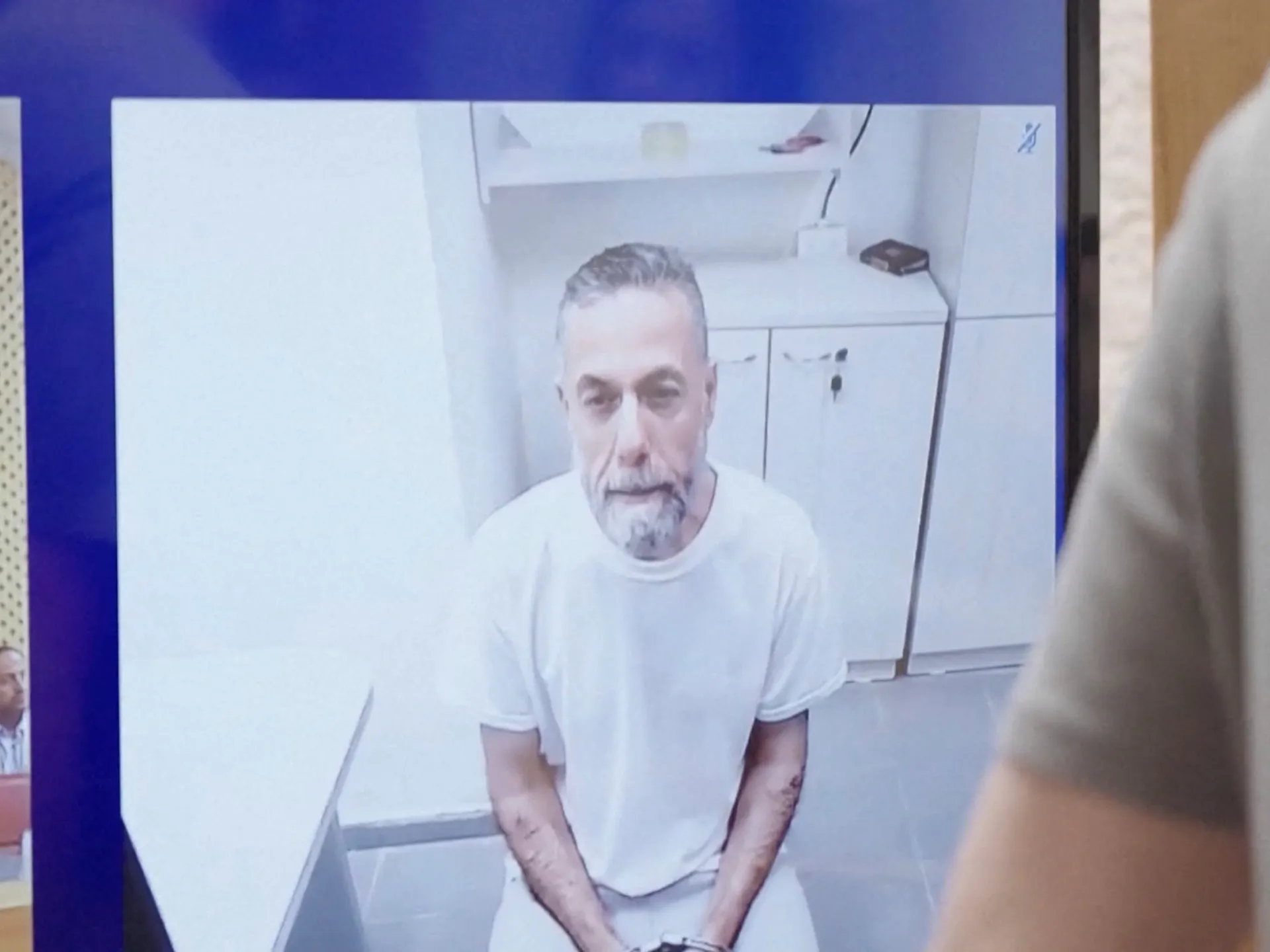
“They said, ‘Oh, you’ll put on a skirt now, you’ll be raped,’” Salohidinov, who has raven black hair and a messy full beard, told Al Jazeera at a centre for war prisoners in northeastern Ukraine, where he is now being held, having been captured in January this year by Ukrainian forces.

Using a carrot-and-stick tactic, the wardens also promised him a sign-up bonus of 2 million rubles ($26,200), a monthly salary of 200,000 rubles ($2,620) and an amnesty from all convictions.

So, in the autumn of 2025, Salohidinov signed up as he “saw no other way out”.

Officials in Kresty-2, St Petersburg’s prosecutors’ office and Russia’s Ministry of Defence did not respond to any of Al Jazeera’s requests for comment.

Russia migrants
Hushruzjon Salohidinov, 26, a Tajik man forced to fight for Russia, at a prisoner of war facility [Mansur Mirovalev/ Al Jazeera]

‘Catching migrants’

Salohidinov is just one of tens of thousands of labour migrants from Central Asia coerced by Russia to become soldiers as part of the Kremlin’s nationwide campaign, according to human rights groups, media reports and Russian officials.

Hochu Jit, a Ukrainian group that helps Russian soldiers surrender, has published verified lists of thousands of Central Asian soldiers like Salohidinov.

“They are literally sent to be killed, no one considers them soldiers that need to be saved,” the group wrote in a 2025 post on Telegram. These soldiers’ life expectancy on the front line is about four months. “Losses among them are catastrophic,” the group reported.

With its low birthrate and large oil wealth, Russia has for years been a magnet for millions of labour migrants from ex-Soviet Central Asia, especially Tajikistan, Uzbekistan and Kyrgyzstan.

The campaign by the Kremlin to force Central Asians to fight in Ukraine dates back to 2023 – the year after Russia’s invasion of Ukraine – when police began rounding up anyone who didn’t look Slavic and charging them with real or imagined transgressions such as a lack of registration, expired or “fake” permits or blurred stamps on their documents. Sometimes, migrants are simply bused straight to conscription offices.

In 2025, Al Jazeera interviewed another Tajik man who said he had been detained with an expired work permit and was then tortured into “volunteering” while being subjected to countless xenophobic and Islamophobic slurs from his officers.

Migrants say they are abused, tortured and threatened with jail or having their entire families deported.

“The main way of recruiting as many migrants as possible is pressure on them with threats of deportation,” Alisher Ilkhamov, the Uzbekistan-born head of the London-based Central Asia Due Diligence think tank, told Al Jazeera.

Sometimes, migrants are simply duped.

Salohidinov said one serviceman in his squad was an Uzbek who “didn’t speak a word of Russian” and was fooled into “volunteering” while signing papers at a migration centre.

In their reports about “catching” migrants, officials frequently use derogatory terms about them, and also when they describe men who have obtained Russian passports but skipped registration at conscription offices. Since the Soviet era, such registration has been obligatory for all men and, since 2024, a newly naturalised Russian national can lose his citizenship if he fails to do it.

“We’ve caught 80,000 such Russian citizens, who don’t just want to go to the front line, they don’t even want to go to a conscription office,” chief prosecutor Alexander Bastrykin said in May 2025, referring to the migrants’ alleged patriotic sentiments.

He boasted that 20,000 Central Asians with Russian passports were herded to the front line in 2025.

The year before, he said 10,000 Central Asians had been sent to Ukraine.

Such remarks resonate with the Russian public that lives with “a high level of xenophobia in the stage of fear and helplessness,” Sergey Biziyukin, an exiled opposition activist from the western city of Ryazan, told Al Jazeera.

“For them, such phrases from Bastrykin are a form of sedative.”

What makes Central Asians easy targets is that they hail from police states, which depend on Moscow politically and economically, observers say.

“While the migrants are frightened into signing contracts, their motherland doesn’t really pay any attention,” Galiya Ibragimova, an Uzbekistan-born, Moldova-based regional expert, told Al Jazeera.

Despite hefty signup bonuses and relentless propaganda, the number of Russians who want to fight in Ukraine fell by at least one-fifth this year, and Moscow will strive to recruit more Central Asians, she said.

Russia conscripts
Russian conscripts called up for military service attend a ceremony marking their departure for garrisons from a recruitment centre in Saint Petersburg, Russia, on October 15, 2025 [Anton Vaganov/Reuters]

‘We’ll have our fingers broken’

After signing the contract and leaving his debit card with his sign-up bonus with his parents, Salohidinov was sent to the western city of Voronezh for three weeks of training that did little to prepare him for the war.

“We just kept running back and forth with guns,” he said.

Their drill sergeants, he says, told the conscripts that the standard-issue flak jackets, helmets, boots and flashlights were of subpar quality and urged them to pitch in a million rubles ($13,100) each for “better” gear.

The incident corroborates reports on dozens of similar cases in Russian military units.

Salohidinov was ordered to work in a kitchen – and was verbally abused and beaten for the slightest transgression.

Of 28 men in his unit, 21 were Muslims – but their ethnic Russian officers ignored their pleas not to have pork in meals, repeating a decades-old practice of ignoring religion-related dietary restrictions dating back to the Soviet army.

The commanders demonised Ukrainians, telling them “that if we surrender, we’d be tortured, have our fingers broken, maimed, get [construction] foam up our a**, have our teeth yanked out one by one, have our arms broken”, Salohidinov says.

In early January this year, the conscripts were bused to the Russia-occupied Ukrainian region of Luhansk.

Salohidinov says he was tired, frightened and disoriented – Ukrainian drones were “always” above them and a grenade explosion nearby damaged his left eardrum.

Ukraine prisoner swap
A woman waits for news about a missing loved one as some Ukrainian soldiers return during a prisoner of war (POW) swap, amid Russia’s attacks on Ukraine, in an undisclosed location in Ukraine, on April 11, 2026 [Thomas Peter/Reuters]

‘Glad I got captured’

On the fourth day of his service, Salohidinov was ordered to run beyond Ukrainian positions as part of Russia’s new tactic to send two or three servicemen to infiltrate the porous front line.

The mission was suicidal because the terrain was open, dotted with landmines and the bodies of dead Russian soldiers, while Ukrainians were firing machineguns and flew drones above them.

“I ran and ran and saw we were being shot at,” he said. “Me and my commander decided to surrender voluntarily instead of dying for nothing.”

They detached their assault rifles’ magazines, raised their hands and yelled they were surrendering.

What followed was “a calm feeling, beautiful”, he said. “They fed us, let us have a smoke, gave us food and water and even cake.”

Now, Salohidinov hopes to return to Tajikistan and panics at the thought of being made part of a prisoner swap – these have taken place several times each year – and returning to Russia because he would be sent back to the front line.

Tajikistan and other Central Asian nations have never endorsed Russia’s war in Ukraine, but nor have they openly criticised it.

In August 2025, Tajikistan’s Prosecutor General Habibullo Vohidzoda declared that no Tajik national would be charged for fighting in Ukraine.

So, what Salohidinov needs right now is an extradition request.

“I’m even glad that I got captured, because I’m not fighting anyone now, not risking anything,” he said. “I’ll even say thanks to Ukraine for taking me prisoner.”

The Tajik embassy in Kyiv did not respond to Al Jazeera’s request for comment.

Source link

As world focuses on Iran, Israel ‘engineering starvation policy’ in Gaza | Gaza News

With the global attention fixated on the diplomatic efforts to end the war on Iran, Israel has systematically escalated its attacks on Gaza and choked off vital aid, plunging the besieged enclave into what economic experts are now calling an “engineered, compounded famine”.

The number of aid trucks entering Gaza has dropped drastically in violation of the October 2025 ceasefire with Hamas. Since then, the Government Media Office in Gaza has recorded 2,400 military violations by Israeli forces, resulting in the killing of more than 700 Palestinians.

Recommended Stories

list of 4 itemsend of list

On Tuesday, Israel’s military killed at least 11 Palestinians, including two children, in separate attacks across the war-torn Strip.

The intensity of these attacks spiked during peak regional tensions. Between February 28 and April 8, while Israel and the US were engaged in a bombing campaign against Iran, Israeli forces bombed Gaza on 36 out of those 40 days.

In the last five weeks alone, more than 100 people have been killed, including Al Jazeera journalist Mohammed Wishah. Israel has killed more than 72,336 people since launching the brutal military offensive on October 7, 2023.

Interactive_40Days_Gaza_US-ISRAEL-WAR-APRIL8_2026-FOOD_SECURITY

The ‘truck deception’

While Israel frequently claims it is allowing hundreds of aid trucks into Gaza, Palestinian officials and economic experts argue these figures are a deliberate mathematical deception.

According to the Government Media Office, only 41,714 aid and commercial trucks have entered Gaza over the past six months. This represents a mere 37 percent of the 110,400 trucks stipulated under the ceasefire agreement. The fuel situation is even more critical, with only 1,366 fuel trucks entering out of a promised 9,200 – an abysmal 14 percent compliance rate.

Recent daily logs highlight the severity of the bottleneck. On April 13, a total of only 102 aid trucks and 7 fuel trucks were allowed into the entire Strip, alongside 216 commercial trucks – a fraction of the more than 600 total trucks required daily under the “ceasefire” deal. By April 14, the numbers remained critically low with 122 aid trucks and 12 fuel trucks entering.

Crucially, Israeli authorities entirely shut down additional entry points like the Zikim and Kissufim crossings, which had processed dozens of commercial and aid trucks just a day prior, bottlenecking all limited traffic exclusively through Karem Abu Salem.

Mohammed Abu Jayyab, a Palestinian economic expert based in Gaza, told Al Jazeera that Israel utilises a “technical and commercial deception” to inflate these numbers.

“An Israeli truck carries up to 32 or 34 pallets… which are then unloaded into two or three smaller, dilapidated Palestinian trucks on the Gaza side,” Abu Jayyab explained. “Consequently, the UN and Israel count double or triple the actual number of Israeli trucks entering.” One pallet holds roughly 1 tonne of goods or food items.

Furthermore, Israel recently banned mixed-load shipments. If a merchant brings in 20 pallets of sugar, the remaining 12 pallet spaces on the truck must remain empty, yet it is still registered as a full commercial truck.

“The political agreement stipulated a ‘truck’ but did not specify quantities, weights, or the number of pallets,” Abu Jayyab noted, allowing Israel to weaponise logistics to restrict aid while appearing compliant.

Engineering starvation

This logistical strangulation is part of a broader strategy. Hassan Abu Riyala, undersecretary of the Ministry of National Economy in Gaza, stated in a meeting published on the ministry’s official Telegram channel that Israel is “engineering a policy of starvation”.

To ensure chaos in the local markets and sky-high prices, Israel has deliberately dismantled civil regulatory bodies. “The occupation targeted the majority of the crews that monitored prices, and assassinated the [former] undersecretary of the Ministry of Economy and five directors general during the war,” Abu Riyala said.

The results have been devastating, basic commodities have become scarce, and bread production has plummeted to 200 tonnes daily, far below the 450 tonnes required to feed the population.

“We manage this structural deficit under exceptional and coercive conditions,” Ismail Al-Thawabteh, director general of the Government Media Office, told Al Jazeera.

He described the ongoing reduction of supplies despite the truce as a “systematic restriction of basic supplies” that pushes the population towards dangerous levels of food insecurity. Fresh produce has skyrocketed, with 1kg (2.2lb) of tomatoes jumping from $1.50 to nearly $4 in a matter of weeks.

Moreover, the humanitarian catastrophe is being accelerated by the withdrawal of major aid groups. Al-Thawabteh noted that the scaling back or suspension of operations by key international institutions, most notably the World Food Programme (WFP), due to Israeli restrictions, represents a “highly dangerous development” that threatens the complete collapse of Gaza’s relief system.

“We issue an urgent appeal to the international community and the guarantors of the agreement to immediately pressure Israel to open the crossings… before reaching a point of no return and an imminent human explosion,” he said.

A ‘compounded famine’

The crisis has evolved beyond a simple lack of food; it is now a complete collapse of the Palestinian economy.

Abu Jayyab described the current situation as a “compounded famine”. With unemployment soaring to 80 percent and the destruction of more than 160,000 jobs across industrial, agricultural, and commercial sectors, the population has entirely lost its purchasing power.

“It has become illogical to link the entry of food supplies from the crossings to their availability to Palestinian citizens,” Abu Jayyab told Al Jazeera. Even when goods reach the market, between 70 to 80 percent of families simply cannot afford to buy them due to the total absence of income.

This extreme deprivation is forcing civilians into life-threatening alternatives. “The return of long queues for bakeries, and citizens resorting to burning plastic and waste in the absence of cooking gas, are dangerous field indicators of an unprecedented deterioration,” Al-Thawabteh warned, noting that government health facilities are currently struggling to treat respiratory and skin diseases resulting from this toxic pollution.

The medical blockade

Meanwhile, the stranglehold extends to Gaza’s most vulnerable patients. While the ceasefire agreement mandated the opening of the Rafah crossing for medical evacuations, Israel has kept the borders tightly restricted.

Over the past six months, only 2,703 people have been allowed to cross through Rafah out of an expected 36,800 – a compliance rate of just 7 percent. Consequently, only 8 percent of the severely wounded and chronically ill patients slated for urgent medical evacuation have been permitted to leave. According to the World Health Organization, roughly 18,000 people are still trapped in Gaza waiting for life-saving treatment abroad.

INTERACTIVE - Israel’s closure of the Rafah crossing - OCT 15, 2025 copy 2-1775738950
(Al Jazeera)

Source link

The New Prosecutor General is a Professional Denialist of Chavista Atrocities

A day after the chavista-controlled National Assembly gave the cold shoulder to Magaly Vásquez, and confirmed Larry Devoe as Attorney General, I spent the day going through the latter’s public record as a “Venezuela agent” in multilateral spaces.

It was a shocking way to spend a Friday afternoon. What was I expecting? Back in 2014, Devoe was handed the so-called Human Rights Council just as Venezuela was about to spiral into a multi-dimensional crisis. Súper Bigote seemingly set three tasks in the international arena:

Find excuses and someone to blame for the disaster that was about to unfold, by casting the chavista government as the victim.

No matter how bad the humanitarian situation can get and the extent to which social indicators were reversed, insist that Chávez lifted millions out of poverty forever. 

Every time other diplomats, foreign officials or humanitarian personnel showed details and data that showed a dire country, answering that Venezuela was sovereign and democratic and no one needed to meddle with our own mess.

    Devoe was one of the three main bureaucrats that defined such diplomatic chavista wisdom in those days. These three had fancy degrees from European schools, and were clever enough to fabricate a good headline amidst pervasive criticism. Besides Devoe, there was a lady called Delcy Rodríguez, disgraced in the late-Chávez years but handed the Information Ministry soon after el comandante passed, with studies from London’s Birkbeck University and Paris Nanterre University. There was also Bernardo Álvarez, Maduro’s representative in the OAS who had been the man in Washington when Chavez’s beef with Bush reached peak levels.

    Soon after they started to defend Maduro in Venezuela and abroad, the international perception about his regime suffered a deep setback. In July 2016, dozens of Venezuelan NGOs addressed Ban Ki-moon complaining about the behavior of UN agencies in reaction to the country’s humanitarian situation. The letter was based on a report that covered plummeting indicators in the previous four years (measuring institutional quality, human rights and the conditions of vulnerable groups). On August 10, the South Korean secretary general said Venezuela was undergoing a humanitarian emergency, quoting that very report.

    In 2016, Devoe said an opposition-drafted amnesty law was a “serious threat” to human rights.

    Rodríguez, Álvarez and Devoe had work to do. Footage of Delcy denying the humanitarian crisis in June 2016 (did so again in 2018 before the UNHCR) has circulated in recent days, but it was actually Álvarez who first established the regime’s position. In an IACHR human rights hearing that featured the likes of Alfredo Romero, Carlos Correa, Rafael Uzcategui, Liliana Ortega and other prominent human rights defenders—many of which the newly minted prosecutor will have to deal with— , Álvarez said: “It’s not a humanitarian crisis, that has a political intentionality.”

    A 43-year-old UCAB lawyer, with human rights studies from the iconic Alcalá de Henares University, sat next to Álvarez and in front of Romero et al. He was Larry Devoe, and came with the goods in his turn to speak, praising the “23,146 health centers across the territory, a 333% in terms of infrastructure” that Maduro had inherited by 2015.

    He made another remark that day that now sounds like a prescient spell. Back then, the opposition-led parliament approved an amnesty bill aimed at 82 political prisoners held in Venezuela. Devoe said its contents were a “serious threat” to human rights with the allegation that the bill pardoned international crimes like the use of minors to commit crimes, drug trafficking, terrorism and corruption.

    Whataboutism at its best

    Devoe would use that technique several times after. In October 2018, he was invited as a conference speaker in the Autonomous University of Santo Domingo to discuss OAS’ record in defending human rights in the region. His lecture’s talking points: Venezuela became “the theater of operations of OAS and US actions” and the OAS whitewashed the pre-Chávez regime. Before that, he showed up in a local TV program, El Matinal, where interviewer Pablo McKinney tried to make him feel at ease by introducing the brotherly ties between Dominicans and Venezuelans. Devoe started speaking of Venezuela’s all-round, positive transformation since 1999 in terms of human rights. When McKinney raised his eyebrows, Devoe claimed Venezuela had one of the best social security programs in the Americas, but the nation was under MECANISMOS DE AGRESIÓN since 2013.

    Devoe kept going. Chavez had ended illiteracy and handed out two million homes, and so goes that famous song. Unconvinced by the explanation, McKinney said he couldn’t bear Venezuelans wandering the streets of his city. Es demasiado grave, to which Devoe replied that Maduro was getting the Allende treatment, and that Venezuelan migrants were returning home from Colombia and the DR because of the treatment they got in those countries.

    Is this surprising?

    Not really. That was the standard rhetoric wielded by chavista diplomats, or Cuban officials since the 1960s, which Devoe also liked to quote. That doesn’t exempt Devoe from being a cold liar that now heads one of Venezuela’s most important institutions. He’s still good for Delcy, as he was good for the three tasks that I listed several paragraphs ago. 

    Devoe could not acknowledge the humanitarian crisis in public. It was too embarrassing. It would give credibility to widespread reports about malnutrition, tropical diseases and growing maternal mortality rates.

    The videos show how Devoe reacts to well-documented accusations to “defend the country” and conceal responsibility. Take for instance this occasion in 2018, two years after Ban Ki Moon’s now-historic statement, where Devoe addressed Venezuelan experts in the Inter American Commission on Human Rights. He admits the scarcity of medical supplies, but attributes its cause to “sanctions and economic blockades” (sectoral sanctions then in place affected Venezuelan credit). When asked about Maduro’s public refusal to accept humanitarian assistance, Devoe said:

    “Commissioner, Venezuela has the capacity to buy and provide the resources to guarantee the rights of its population.”

    A kidney transplant patient, Francisco Valencia, interrupted Devoe to tell him he had not received medical treatment for six months. “I am dying.” Devoe replied: “Well Francisco, I ask you to leave this room and ask Euroclear to unfreeze the 1,650 million dollars that would let us buy your treatment.”

    The problem with that statement is not only Devoe’s audacity in talking back to a helpless patient. Venezuelan humanitarian organizations were, at that point, getting resources because of international cooperation. That cooperation was, to an extent, greenlighted by the Venezuelan State. ECHO, Caritas International, the Red Cross, the International Rescue Committee and others were already in the country, liaising with local groups.

    Like Maduro and Delcy, Devoe could not acknowledge it. It was too embarrassing. It would give credibility to reports that maternal mortality grew 90% between 2016 and 2017, of 11.4% of acute malnutrition among kids under 5 years old, and claims that the government was hiding data on spikes of tuberculosis, diphtheria and malaria.

    Hard Left roots?

    It recently emerged that Larry Devoe is the maternal grandson of Pompeyo Márquez, who had been a communist militant during Betancourt and Leoni’s war against Cuba-funded guerrillas. Márquez later joined the party system with Movimiento Al Socialismo (MAS) through Caldera’s pacification process. He broke with Chávez when MAS endorsed his 1998 candidacy, and spent his final years opposing chavismo from within the Left.

    On that shocking Friday afternoon, I also came upon a book about Venezuelan universities in the second half of the 20th century. One chapter speaks about the political climate in Caracas’ Universidad Central in the 1970s. It mentions a Larry Devoe in the youth ranks of MAS, which clashed with the Leftwing Revolutionary Movement (MIR)—where Jorge Antonio Rodríguez, father of Jorge and Delcy, was a student leader—on campus and in student council elections. (At this point, everyone knows the fate of Jorge Rodríguez padre, murdered in the custody of DISIP in 1976 after the kidnapping of William Niehous).

    Albeit rivals in the halls of UCV, it seems like the fathers of Larry Devoe and the Rodríguez siblings were part of the same political community 50 years ago. There’s a chance the new prosecutor general, born after the killing of Rodriguez padre, has known Delcy and Jorge for quite a while. Devoe Sr. was a MAS member along with Jorge Valero, a former Venezuelan ambassador to the UN and OAS this century, whom Devoe defended in his Santo Domingo speech.

    Delcy, Ernesto Villegas and Larry Devoe presented a 2017 report denying the State’s responsibility for the great majority of deaths during that year’s protests.

    Part of what people like Devoe and the Rodríguez siblings likely absorbed early on were accounts of the extrajudicial killings and torture Venezuelan communists endured in the 1960s. Then came the 1976 case of Rodríguez. And later, when Devoe was 11, the Caracazo—preceded by massacres like Cantaura and El Amparo, carried out by state officials, often with impunity.

    These events are not just real; they must be remembered as part of the bloodier side of our recent history, one that did not begin in 1999. What is striking is that Devoe, now prosecutor in this “new political moment”, has repeatedly covered up similar crimes, the very kind the Rodríguez siblings have long grieved over.

    In 2023, Devoe dismissed the ongoing investigation in the International Criminal Court as a political ploy, said Caracas proved crimes against humanity were never committed, and echoed Tarek William Saab’s claims that Venezuelan courts were doing their job in dealing with the bad apples. That now contradicts the discourse of the Rodríguez siblings, who got rid of Saab to appoint him. Six years before that, Delcy, Ernesto Villegas and Larry Devoe presented a report denying the State’s responsibility for the great majority of deaths during the 2017 protest cycle. This denialism has been a recurring pattern in his career as a Venezuelan State agent, and remains a part of chavismo’s rhetoric about “political violence since 1999.”

    Someone told me that Devoe was respectful and decent in one-on-one interactions, even after heated debates over the causes and scale of the Venezuelan crisis. That perhaps he was caged by his own surroundings. Let’s see if Devoe can somehow turn that record around.

    After all these years, we have reasonable doubts he’ll do so.

Source link

US forces kill 4 people in latest strike on vessels in eastern Pacific | Donald Trump News

The killings mark the fourth US deadly strike in the past four days on vessels in the eastern Pacific Ocean.

The US military has killed four more people in its fourth deadly attack on vessels in the eastern Pacific Ocean over the past four days.

US Southern Command (SOUTHCOM) announced the attack in a social media post on Tuesday, alongside a video that showed a stationary boat with outboard engines being hit by a missile and exploding into a huge ball of flames.

Recommended Stories

list of 4 itemsend of list

SOUTHCOM, which is responsible for US military operations in Latin America and the Caribbean, claimed that the four people killed were “narco-terrorists”, but provided no evidence to support its claims.

Justification for the lethal attack, according to SOUTHCOM, was due to intelligence – details of which were not provided – that confirmed that “the vessel was transiting along known narco-trafficking routes in the eastern Pacific and was engaged in narco-trafficking operations”.

The latest killing of people on board vessels in international waters in the eastern Pacific Ocean and Caribbean brings the overall death toll to at least 175 since early September, when US President Donald Trump ordered the attacks to stop what the White House claims are Latin American cartels transporting drugs to the US.

Tuesday’s killings came after two people were killed in a US strike on Monday, and five people were killed in two separate strikes on Saturday, also in the eastern Pacific.

The Associated Press news agency reported that the US coastguard has suspended a search for one survivor from the two attacks reported on Saturday.

International legal experts and rights groups say the US military campaign amounts to “extrajudicial killings” in international waters and that the attacks have targeted civilian fishing boats.

Legal experts have said that if some vessels were involved in drug trafficking, those on board should face the law, rather than deadly attacks.

Critics have also questioned the effectiveness of the US military operation in part because the fentanyl behind many fatal overdoses in the US, which Trump has used to justify his campaign, is typically trafficked to the US over land from Mexico, where it is produced with chemicals imported from China and India.

Source link