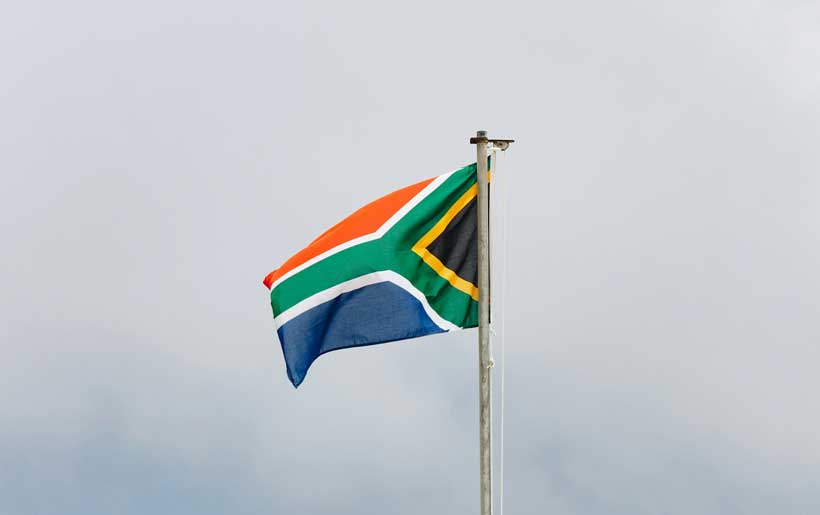
South African President Cyril Ramaphosa has described violence against women as a “national shame” after the discovery of another woman’s body intensified public anger over the country’s persistent gender-based violence.
Eleven women’s bodies have been found in Ekurhuleni, a municipality east of Johannesburg, since July, prompting renewed fear and outrage after years of government promises to tackle violence against women.
Most of the victims were in their 20s or 30s. Some were found stripped and showing signs of sexual violence, according to authorities.
“There are women lying tonight in government mortuaries waiting to be identified, waiting for someone to claim them, waiting to be taken home and laid to rest,” Ramaphosa said in a televised address late on Tuesday.
Stay ahead of the geopolitical week.
MD Briefing delivers expert analysis across five global fronts — the Indo-Pacific, energy, geoeconomics, European security, and the Middle East — every Monday morning. Free.
“How can our hearts not be broken? How can we not be angry?”
He described violence against women as a source of “profound pain and national shame” and acknowledged growing anger among South African women.
Investigation Into the Killings
Ramaphosa said police had so far found no evidence that a serial killer was responsible for the 11 deaths. He stressed, however, that investigators were continuing to examine all possibilities.
Authorities have made arrests in connection with three of the killings, while investigations into the remaining deaths are continuing.
The president said none of the cases would be allowed to go cold, amid growing concerns over whether South Africa’s law enforcement agencies can adequately investigate violent crimes against women.
The latest deaths have revived criticism of the government’s efforts to tackle gender-based violence, despite repeated national campaigns and commitments aimed at reducing the problem.
South Africa’s Wider Crime Crisis
The killings are unfolding against a broader backdrop of severe violent crime in South Africa.
The country has one of the highest murder rates per capita in the world, while corruption, limited resources and weaknesses within the policing system have made it difficult to investigate and prosecute cases effectively.
Only about one in 10 murders is solved, highlighting the scale of the challenge facing investigators.
For communities in Ekurhuleni, the discovery of 11 women’s bodies has therefore become more than a series of individual criminal investigations. It has renewed questions about public safety, accountability and whether years of government commitments are translating into effective protection for women.
Ramaphosa’s remarks reflect the political pressure surrounding the issue as authorities face renewed demands to identify the victims, establish who was responsible for their deaths and prevent further violence.
Wilber Rafael Garces Perez has disputed the government’s account of what led to his shooting during a Doordash delivery in Austin, Texas.
A Venezuelan asylum seeker who was shot in the back by a United States Immigration and Customs Enforcement (ICE) officer in Texas is facing a federal assault charge, after prosecutors accused him of striking the officer with his car’s side-view mirror.
Wilber Rafael Garces Perez, 28, appeared in federal court in Austin on Tuesday, where he was charged with assaulting, resisting and impeding a federal officer. He could face up to 20 years in prison if convicted.
Recommended Stories
list of 4 itemsend of list
The charge stems from a September 20 encounter that began while Garces Perez was making a DoorDash food delivery near a shopping centre in Austin, the Texas state capital.
A federal complaint filed on Monday says immigration officers noticed that Garces Perez’s car had its emergency lights flashing, and they ran a database check. They found it was registered to Garces Perez, who was subject to a final order of removal from the US.
When the officers approached, Garces Perez handed over his driver’s license through a partially opened window but did not get out of the car, the complaint says. He asked the officers to wait until his wife could arrive to retrieve the vehicle.
Court documents describe the exchange up to that point as “pleasant and not aggressive”.
About a minute later, however, court documents say Garces Perez “abruptly” closed his window and drove off, striking one of the officers in the torso with his driver’s side mirror.
That officer chased Garces Perez in his own vehicle and caught up with him a short time later. In the complaint, the officer alleges that Garces Perez then tried to drive into him, prompting him to open fire.
There is no publicly available footage showing the events described in the complaint, including the shooting.
Videos, however, have circulated online showing the shooting’s aftermath, with Garces Perez injured in his car.
The complaint relies on unreleased body-camera footage from one of the two ICE officers who stopped Garces Perez.
The second officer was not wearing a body camera, according to the affidavit. That officer says he was struck by Garces Perez’s side mirror and later shot him.
Garces Perez, however, gave federal investigators a different account of the moments immediately before he was shot.
He told investigators that, after a brief chase, a law enforcement SUV struck his car, causing it to spin around, according to the affidavit. He said the officer then opened fire, shooting him in the back.
Garces Perez has been held in a detention facility in south Texas since the shooting.
His lawyer, Kate Lincoln-Goldfinch, said on Sunday the bullet was still lodged in his body and that he has a fractured clavicle. In a social media post, Lincoln-Goldfinch explained that his supporters were worried he could develop sepsis or suffer permanent damage if he didn’t undergo surgery soon.
The Department of Homeland Security has argued, however, that Garces Perez is receiving adequate medical care.
Garces Perez’s legal team is also seeking to stop his removal from the US.
The Venezuelan national entered the US in 2024 through CBP One, an online programme expanded under former President Joe Biden to allow asylum seekers to make appointments with immigration authorities at the US-Mexico border.
Trump ended the programme on his first day back in office, accusing the app of contributing to an immigration crisis in the US. His administration has since relaunched CBP One as CBP Home, a self-deportation portal.
Lincoln-Goldfinch has said Garces Perez was legally seeking asylum in the US and had a valid work permit. She has asserted that he was ordered to be deported after missing an immigration court hearing because the notice had been sent to an old address.
Garces Perez is due back before a federal immigration judge on Wednesday for a separate hearing on whether he can remain in the country.
The case comes amid a surge in immigration enforcement during Trump’s second term, with ICE reporting more than 50,000 arrests in both July and August.
The high court grants an emergency petition ahead of expected arguments in the case, slated for December.
The United States Supreme Court has allowed President Donald Trump’s administration to continue third-country deportations, halting a lower-court ruling that paused such removals over questions of due process.
On Tuesday, the high court granted the administration’s emergency request to resume the deportations, which involve sending immigrants to countries they may have no connection to.
Recommended Stories
list of 3 itemsend of list
The court’s order was unsigned, as is typical for an emergency petition. It also does not include an explanation or a list of how the justices voted.
But at the bottom of Tuesday’s order, the court’s three left-leaning justices – Sonia Sotomayor, Ketanji Brown Jackson and Elena Kagan – indicated they would have denied the Trump administration’s petition.
The Supreme Court’s decision to pause the lower court ruling is temporary. The order calls for arguments to be heard in December.
That hearing comes as Trump administration continues its appeal against the lower court’s ruling, handed down by Judge Brian Murphy in Boston, Massachusetts.
Murphy had ruled that immigrants must be given a “meaningful” chance to raise safety concerns before their removal to third-party countries.
In pausing such deportations, Murphy indicated that some immigrants may have been denied the opportunity to challenge their deportations as part of their due process rights.
Tuesday, however, is not the first time the Supreme Court justices have weighed in on the practice of forcibly sending people to third countries, which Trump dramatically stepped up since his return to office in 2025.
Trump campaigned on a pledge to implement the “largest deportation operation in American history”, and his officials have argued that third-country deportations are a means of removing individuals whose home countries may not accept them.
In June 2025, the Supreme Court also issued an unsigned order allowing such removals to proceed.
That cleared the way for eight men, including nationals of Cuba, Myanmar and Vietnam, to be deported to South Sudan, a country the US State Department advises against visiting because of “crime, kidnapping, and armed conflict”.
The Department of Homeland Security at the time called the removals “a win”, while rights groups said the move flouted basic legal protections.
Critics have expressed concern that many of the governments receiving third-country deportations have a record of human rights abuses.
Third-country deportations have been used to bypass court protection orders that prevent immigrants from being sent back to their home countries due to fears of persecution.
But advocates say that some of those third-party countries have ultimately sent deportees, including asylum seekers, back to the places where they feared they would be at risk of torture or other harms.
At least 35 countries have signed agreements with the Trump administration to take in the third-country nationals, according to a tally by the nonprofits Refugees International and Human Rights First.
The groups estimate that more than 25,000 people have been subject to third-country deportations so far.
On Monday, human rights experts at the United Nations wrote to the US government urging a halt to such removals, warning they were putting deportees at heightened risk of abuse.
“At gravest risk are children, women, persons with disabilities, victims of trafficking, LGBT persons, human rights defenders, stateless persons and other people in extremely vulnerable situations,” the experts said.
On Tuesday, Burundi became the latest country to enter an agreement with the US to take non-citizen deportations.
Officials said the country would only take in people who were not facing prosecution and had no links to “terrorism”.
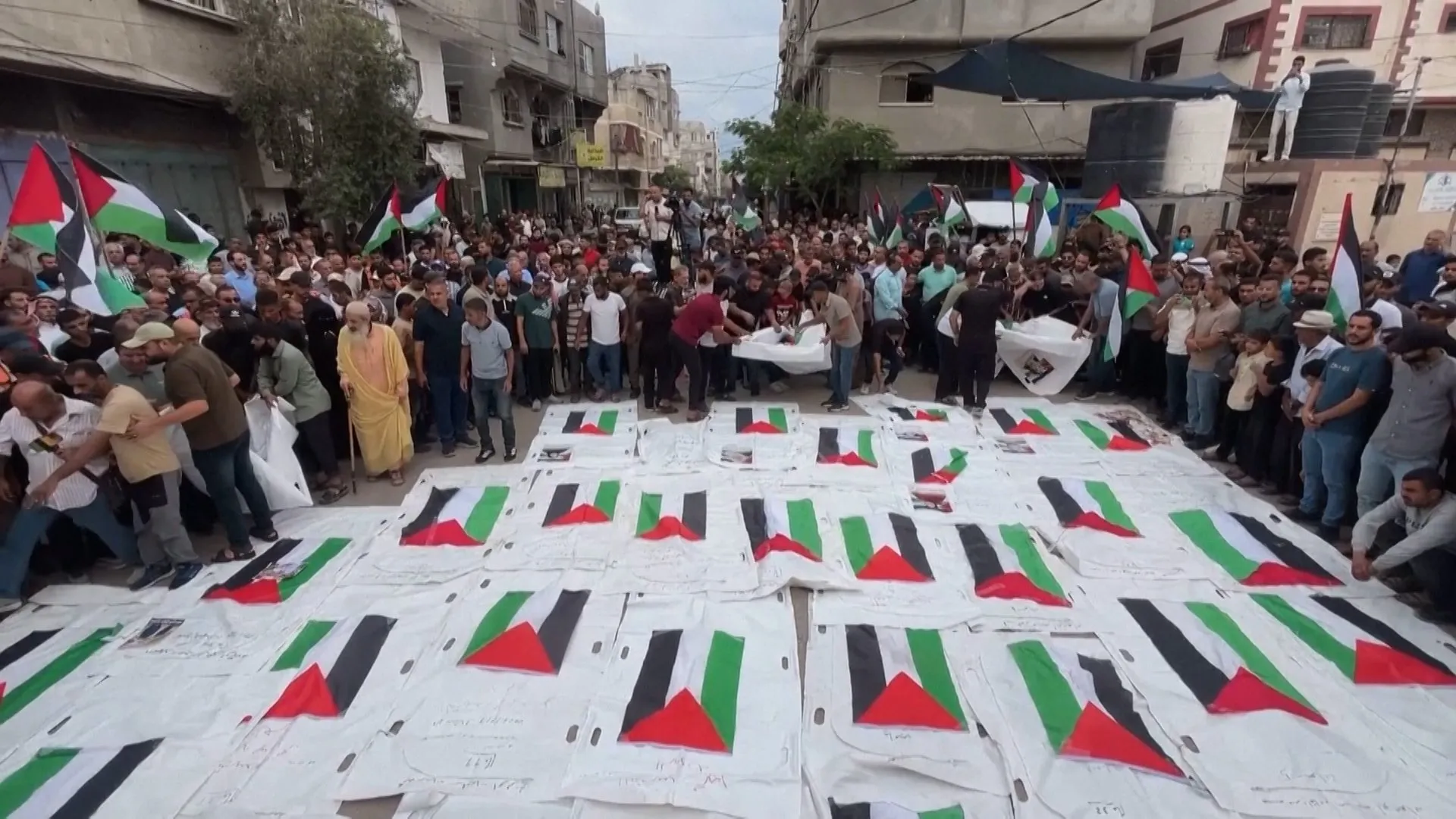
Dozens of mourners in Gaza grieve the loss of their loved ones as they bury the fragmented remains of relatives killed in an Israeli strike in October 2023.
Matthew VanDyke and six Ukrainians were accused of smuggling weapons and drones to armed ethnic groups fighting India.
Published On 28 Sep 202628 Sep 2026
Matthew VanDyke, a United States citizen held in India for more than six months and accused of supporting ethnic separatist groups, has been temporarily released on bail and returned to the US.
The 47-year-old arrived on Saturday morning and reunited with his family, according to a family spokesperson.
India’s main opposition Congress party said that, despite being “accused of plotting terrorist acts”, VanDyke was allowed to return home from New Delhi.
“Obviously US pressure determined this outcome, but what did India get in return?” Jairam Ramesh, a legislator and spokesperson for the party, posted on X.
VanDyke’s family told Al Jazeera before his release that his health was failing and he had lost weight after going on a month-long hunger strike in Tihar Jail to try to improve conditions in prison. He had to use a wheelchair to attend hearings, according to his mother, Sharon. VanDyke denied the accusations against him, and his family said he was in the region documenting the situation faced by minority ethnic groups.
Matthew VanDyke, who spent months in Libyan prisons before joining rebel forces who opposed dictator Moammar Gadhafi, speaks with reporters after his flight arrived at Baltimore-Washington International Airport, Saturday, November 5, 2011. [Patrick Semansky/Reuters]
Earlier this month, Indian prosecutors declined to bring terrorism charges against VanDyke and the others. Instead, prosecutors formally accused them of visa violations for entering restricted areas along the Myanmar border.
The Maryland native is a former filmmaker and rebel fighter during the Arab Spring and spent about six months in a Libyan prison during the Muammar Gaddafi regime. He was held alongside James Foley, a journalist who was later killed by ISIL in Syria. In recent years, VanDyke was based in Ukraine, where his consultancy helped train Ukrainian military forces.
In a statement to Al Jazeera before VanDyke’s release, James Foley’s mother, Diane, who now heads a foundation named after him, said she was “deeply saddened by his arrest in India and by his apparent poor health.” She added that her foundation called for “his release on humanitarian grounds.”
Demonstrators protest against UK government’s proscription of Palestine Action as a terrorist organisation.
Published On 28 Sep 202628 Sep 2026
Police in the United Kingdom have arrested more than 50 people protesting in support of the banned Palestine Action group outside a Labour Party conference in the northwestern English city of Liverpool.
The local Merseyside Police confirmed the arrests in a statement published on Sunday.
Recommended Stories
list of 3 itemsend of list
The police said those taken into custody at the protest, organised by Defend Our Juries, had displayed material in support of Palestine Action, proscribed as a “terrorist” group by the Labour government in July 2025 under the Terrorism Act.
According to the statement, police respected the rights of people to protest lawfully while aiming to keep the peace and ensure the public are safe.
A police officer speaks to a supporter of the group Palestine Action as demonstrators gather to protest outside the conference venue on the first day of the annual Labour Party conference in Liverpool, northwest England, on September 27, 2026 [Oli Scarff/AFP]
More than 250 protesters sat outside the conference centre holding banners with words supporting the group on Sunday, before dozens of police began making arrests.
English band Massive Attack singer Robert Del Naja was among those arrested.
After asking demonstrators if they were going to continue holding up the signs, officers led people away, telling them they had been arrested under the Terrorism Act.
Reporting from Liverpool, Al Jazeera correspondent Milena Veselinovic said the protesters wanted to put proscription “front and centre of the UK Prime Minister Andy Burnham’s agenda” on the first day of his party’s annual conference.
“Being arrested is nothing in comparison to what the people in Gaza are going through, and it’s also worth it, because this is about our right to free speech,” one protester told Al Jazeera.
Another said that “there are priests, there are healthcare workers, there are people who deeply care, and deeply care about right and wrong.”
Kerry Moscogiuri, chief executive of Amnesty International UK, said protesting “is one of the most effective tools” to make government leaders listen and described the arrests as “a truly shameful attack on freedom of speech”.
“The new prime minister can reform our laws so that communities are protected in coming together and demonstrating on the issues they care about. Will he do so?” she said.
Activists also confronted Foreign Secretary Ed Miliband inside a restaurant in Liverpool, demanding that he lift the ban on the group and declare Israel’s genocide in Gaza.
The activists left after Miliband reportedly refused to comment.
A civil disobedience campaign has emerged since Palestine Action was outlawed in July 2025, with more than 3,600 people arrested for showing their support for the group, often while holding signs reading, “I oppose genocide. I support Palestine Action.”
The UK Supreme Court is now set to hear the case after London’s Court of Appeal upheld the government ban in June.
Durban, South Africa – Bishop Raphael Bahebwa is in hiding, afraid he could be attacked for speaking out for the rights of foreigners in South Africa.
“I am in hiding now because they say they are going to kill me for speaking about the rights of foreigners,” he told Al Jazeera.
Bahebwa has lived in South Africa for 26 years, after arriving as a refugee from the Democratic Republic of the Congo (DRC).
In that time, he has watched antiforeigner sentiment flare repeatedly in the country he came to call home. But he says this year feels different.
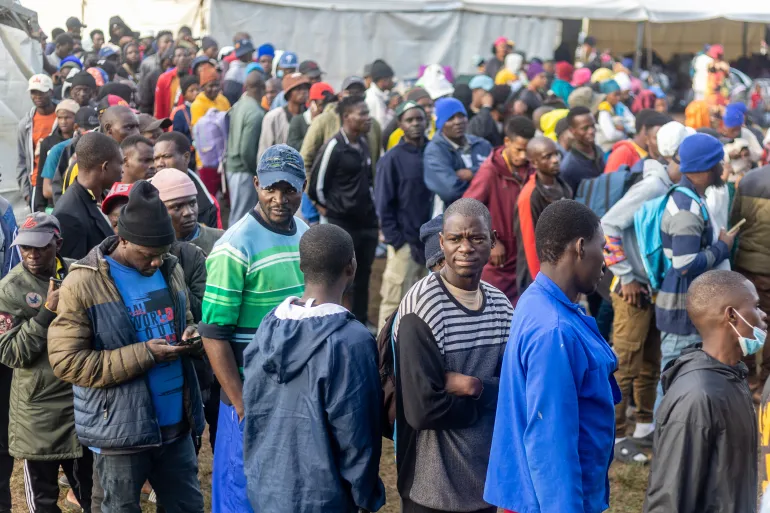
A September 30 deadline declared by March and March, an anti-immigration movement that has led protests across South Africa this year, has renewed fears of violence among migrant communities.
The group has called for undocumented foreign nationals to leave South Africa and has warned of further demonstrations if its demands are not met.
For Bahebwa and other refugees in Durban, however, the distinction between documented and undocumented migrants offers little comfort. They say the hostility they experience on the streets rarely begins with a request to see their papers.
Fears of renewed violence
South Africa will hold local government elections on November 4, in a campaign in which migration has become an increasingly prominent political and social issue.
For months, Bahebwa was among hundreds of refugees and asylum seekers who slept on the pavement outside the Durban Refugee Reception Centre on Che Guevara Road.
Many were from the DRC and Burundi, with others from Uganda, Mozambique and Tanzania. They said they had fled their communities because they feared antiforeigner attacks.
They arrived outside the Department of Home Affairs (DHA) office seeking safety.
Instead, the pavement became their home.
For roughly four months, men, women and children slept outside, exposed to the elements and dependent on civil society organisations and volunteers for food and other necessities.
“It has been very tough,” Bahebwa said. “Never before have I experienced something like this.”
Some of the migrants told Al Jazeera that conditions became desperate. They described irregular access to food and medication and said one man who had tuberculosis died while living at the camp. Al Jazeera has not independently established the circumstances of his death.
The camp was also not far removed from the hostility its residents said they had fled.
On September 3, members of March and March confronted refugees and asylum seekers living outside the centre. Violence broke out, and police intervened. At least four people were reported injured.
At another protest days later, police officers stood between the two groups, forming a barrier as tensions rose.
March and March has described its mobilisation as a campaign against undocumented immigration, crime and deteriorating conditions in South African communities.
The group says the government’s response to immigration enforcement has been insufficient.
Its leaders have repeatedly rejected accusations that their campaign is xenophobic and insist their target is undocumented migration rather than foreign nationals generally.
Bahebwa said documented and undocumented migrants alike have been caught in the hostility.
Earlier this year, six refugees working in salons around Durban’s Warwick Street Market were beaten by men carrying sticks, according to public-interest news outlet GroundUp. Two were hospitalised.
Bahebwa said the migrants had also struggled to obtain help from the authorities after earlier attacks.
“Police said we can’t open cases because we are foreigners. We had nowhere to go,” he alleged. Police have not publicly responded to that specific allegation.
Nowhere obvious to return to
In mid-September, the government moved to clear the makeshift camp outside the refugee centre.
The refugees were given a choice: return to the communities they had fled or accept temporary accommodation at the Lindela facility in Gauteng, hundreds of kilometres from Durban. Lindela is a government-run immigration detention facility used to hold people facing deportation.
The choice divided them.
Malawi migrants to South Africa line up for supplies at an informal refugee camp in Sherwood, Durban, South Africa, after fleeing their homes amid fears of xenophobic attacks [File: EPA]
Some feared going to Lindela, a facility historically associated with immigration detention and repatriation. Others felt they could no longer endure life on the pavement.
On September 15, 274 people were transported by bus from Durban to Lindela. About 150 others chose to remain in Durban and began trying to find alternative accommodation.
For those who stayed behind, leaving the pavement did not resolve the problem that had brought them there in the first place.
Kafuti Muyumba, a small business owner from the DRC and a representative of the refugee community, said many were afraid to return to neighbourhoods where they had built businesses and lives.
People are afraid, he said. “Even the police allow March and March violence. They came with sticks and say we are attacking them,” Muyumba told Al Jazeera.
He said many refugees had lost their livelihoods during the months of upheaval and were now desperate to find accommodation.
“This is not the first time we are experiencing xenophobia,” he said. “In 2008 and then in 2015 we also experienced this.”
In 2008, xenophobic violence spread through townships and informal settlements, killing dozens and displacing thousands.
Further outbreaks of violence against foreign nationals followed in subsequent years.
For Muyumba, those memories make the rhetoric surrounding September 30 difficult to dismiss.
“We don’t trust the police. They are not being fair with us. Some of them are also saying we must go,” he said.
Police have said there are no plans to change their normal policing approach because of the September 30 deadline and that any protesters will be expected to remain within the law.
March and March said all it wants is for undocumented immigrants to leave the country and return home.
But Muyumba said returning to the DRC is not a viable alternative for many Congolese refugees.
“There is still war there,” he said.
A country tightening its borders
In response to ongoing protests, the South African government said it had intensified its immigration enforcement.
Between June 14 and August 20, authorities processed 86,596 foreign nationals for deportation and repatriation, according to the government’s Inter-Ministerial Committee on Migration.
Malawians made up the largest group, followed by Zimbabweans and Mozambicans.
Government data says 90 percent of those repatriated had entered South Africa illegally, while 95 percent were classified as having crossed the border outside official ports of entry.
The government says the operations form part of a broader effort to strengthen border management and enforce immigration law.
At the same time, officials have repeatedly warned private groups against taking immigration enforcement into their own hands.
March and March’s September 30 deadline has no legal authority. The government says common citizens cannot deport anyone from South Africa.
Protesters hold placards during an anti-immigration march in Durban, South Africa, calling for tighter border controls and the deportation of undocumented migrants [File: Thuli Dlamini/Reuters]
But deadlines do not need legal force to create fear, as was the case for an earlier deadline of June 30. For the refugees who spent months sleeping outside the DHA office in Durban, September 30 is another uncertainty layered on top of many others.
Some have been moved hundreds of kilometres away.
Others are trying to find new homes in the same communities they once fled. But among the migrants Al Jazeera spoke to, there is a shared anxiety that paperwork may offer limited protection when anger is directed first at being foreign.
Bahebwa has spent more than a quarter of a century in South Africa. For now, he says he is hiding and does not know what September 30 will bring.
“They are scapegoating us as foreigners,” he said. “It is not going to end on September 30. It has to do with the elections.”
Head of the Roman Catholic Church holds ’emotional’ two-hour meeting with seven abuse victims in French town of Lourdes.
Published On 27 Sep 202627 Sep 2026
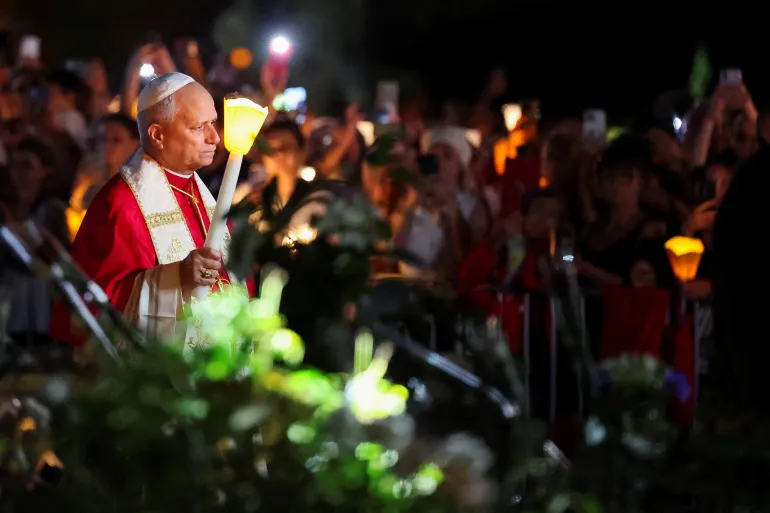
Pope Leo XIV has thanked a group of survivors of clerical abuse “for their painful testimony” and “reaffirmed his commitment” to end harm by Catholic priests at a meeting in southwestern France, the Vatican said.
On Sunday, the pontiff visited the pilgrimage town of Lourdes, where he privately met seven survivors of child abuse, now adults, and promised to further efforts to reform the Church in the wake of the global sexual abuse scandal.
The group said in a later news conference that the meeting was emotional and touching.
“When he saw the state I was in, he took me into his arms,” survivor Jean-Marie Delbos said, adding, “It was an extraordinary moment.”
The 80-year-old was abused as a pupil at the nearby boarding school of Notre-Dame de Betharram, where staff have been accused of physical and sexual abuse over several decades.
The survivors said they felt heard and that they were impressed by Leo’s compassion and knowledge of their individual cases.
But they hoped the words would be accompanied by action.
Jerome Guillement, who has written about a priest abusing him as a teenager, said at the news conference that the pope understood the “systemic” nature of sexual abuse in the Church.
“From his point of view, the perpetrators are individuals, but what allows it to continue is the systemic dimension within the institution,” he said.
“He certainly believes that the Church has done a great deal in France, but he also believes that the Church in France still has a tremendous amount left to do.”
Pope Leo participates in a candlelight procession at the Sanctuary of Our Lady of Lourdes in Lourdes, France, September 27, 2026, as part of his four-day apostolic journey to France [Stephane Mahe/Reuters]
Local leaders hoped Leo’s visit would help repair the Church’s standing after a 2021 independent inquiry found that some 330,000 French children had been abused by Catholic clergy and lay leaders over seven decades.
The pope told an estimated 150,000 people gathered for a Mass in a field near the famed Catholic shrine in Lourdes earlier on Sunday that the Church must have the courage to face its past.
Veronique Garnier, another survivor who met with the pontiff, said she had found the Mass, in which Leo referred to abuse without directly apologising for it, troubling and wondered why she had attended.
But she said she was encouraged by her meeting with Leo.
“I do indeed believe there is hope – hope that there can be change and truly listening to us at a deep level, rather than just superficially with beautiful words that are never followed by any real action,” she said.
Leo also spoke about the abuse scandals in a closed-door meeting with French bishops on Sunday, according to a Vatican-provided text.
He was expected to visit the northeastern city of Metz on Monday before returning to Rome the same day.
South Korea’s presidential office criticises Ukraine for denying POW nondisclosure agreement.
Published On 27 Sep 202627 Sep 2026
The South Korean president’s office has expressed “strong regret” over Ukraine’s disregard for a nondisclosure agreement with Seoul in the transfer of two North Korean prisoners of war (POWs) to Seoul, South Korean media reported.
Last week, Ukraine’s President Volodymyr Zelenskyy said in an address to the United Nations General Assembly (UNGA) that his country transferred two North Korean POWs to South Korea.
Recommended Stories
list of 3 itemsend of list
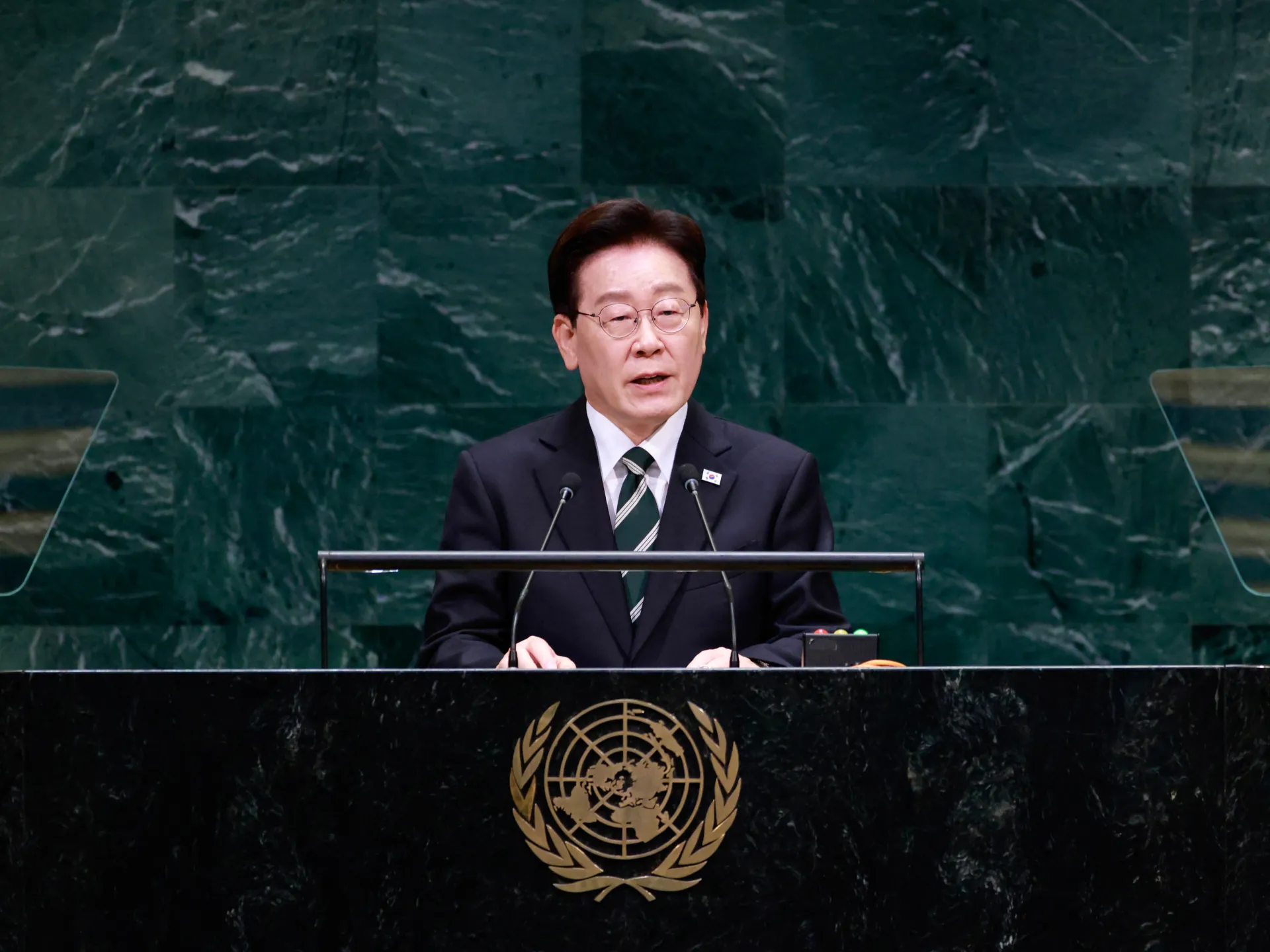
President Lee Jae Myung’s office “expresses strong regret over Ukraine’s unilateral disclosure [of the transfer] and its subsequent false announcement that there had not been a non-disclosure agreement”, the Yonhap news agency quoted Seong Ghi-hong, South Korea’s senior presidential secretary for public relations, as saying in a statement on Sunday.
The office said the nondisclosure agreement aimed to safeguard the soldiers from dangers they could face if their transfer were to be disclosed, in accordance with international law and humanitarian principles.
According to Yonhap, a South Korean media outlet, the Ukrainian presidential office said it had disclosed the transfer of the POWs without extensive details on the process, claiming that it would have been strange to keep the entire transfer a secret. Ukrainian media outlets reported a Ukrainian presidential source as denying the existence of a confidentiality agreement with Seoul, Yonhap said.
The South Korean presidential office said the Ukrainian presidential office’s “false” denial of the confidentiality agreement “seriously hampers” bilateral trust and causes serious disruptions to bilateral friendship.
Seong Ghi-hong said the government was considering additional measures over the issue, if necessary, Yonhap added.
North Korean POWS
Ukrainian forces captured the two North Korean soldiers in Russia’s Kursk region in January 2025.
Mounting evidence, including from intelligence reports and testimonies of defectors, has indicated that North Korean soldiers resorted to self-detonation or other forms of suicide rather than be captured.
In his UN address, Zelenskyy said, “These guys are not easy to capture alive.” He added, “One of them, when he realised he was going to be taken prisoner, tried to kill himself. And he was shocked that fate did not let him die.”
South Korean media reported that the two captured soldiers had expressed their desire to defect to South Korea.
The issue of North Korean prisoners of war was a key topic during the NATO summit in Ankara, Turkiye, where Lee met Zelenskyy in July.
Senior presidential spokesperson Kang Yu-jung stated afterwards that both leaders agreed to resolve the status of North Korean POWs in accordance with international law. This built on a prior agreement reached during the South Korea-Ukraine foreign ministers’ meeting in March, where both nations pledged to cooperate on the POW issue.
According to South Korean intelligence, North Korea is estimated to have deployed approximately 14,000-15,000 soldiers to support Russia’s efforts in its war with Ukraine since 2024, primarily in the Kursk border region. South Korean, Ukrainian and Western officials said they suffered heavy casualties, with more than 6,000 North Korean soldiers killed in the fighting.
The transfer comes as South Korea has backed efforts to revive dialogue with North Korea, while United States President Donald Trump has renewed his willingness to engage with Pyongyang.
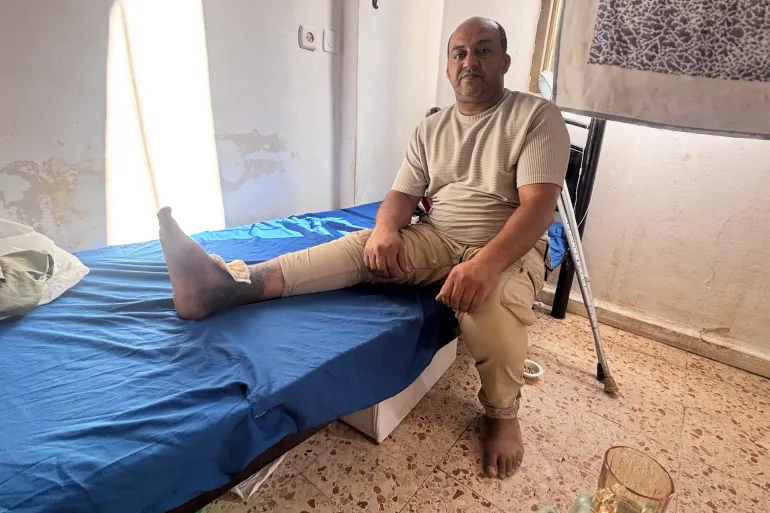
Tulkarem, occupied West Bank – Hakim Mar’i spends his days lying on a single bed, his disfigured leg raised. The windows of Mar’i’s dilapidated apartment, his latest temporary shelter, are covered with old blankets. Unable to work, Mar’i has no money for electricity, so the blankets have to do. At night, his family lives in near darkness.
The apartment is just around the corner from mounds of rubble and gnarled iron structures that mark one entrance to the now-emptied Tulkarem refugee camp. For Mar’i and other Palestinians, the camp was a home once considered temporary. But now, even the physical structure – their home – that tied those generations together is gone.
Recommended Stories
list of 4 itemsend of list
The apartment is just around the corner from mounds of rubble and gnarled iron structures that mark one entrance to the now-emptied Tulkarem refugee camp. For Mar’i and other Palestinians, the camp was a home once considered temporary. But generations lived there, and now, the physical structure – their home – that tied his family together over the years is gone.
Impoverished, Hakim’s family is in disarray. With its debts mounting and its members facing another eviction, he said he has considered taking his life several times over the past year and a half.
Mar’i cannot afford treatment for his debilitating leg injury, which has developed severe infections. He said he sustained it while working as a labourer inside Israel in 2019. The wound worsened after Israeli soldiers severely beat him when they forced his family from the Tulkarem camp. Diabetes and other untreated conditions have piled on, but he is unable to pay for the needed medical care.
“This joint here is completely gone,” he said, gesturing at the swollen, blackened lower leg that prevents him from working.
“The medicine – by God, the medicine, I haven’t been able to get. My wife and kids tell me: get out travel. Go to America, Turkey – so I can the medical treatment I need… I’m a sick man.”
His mother, Salwa, sat beside him, less than a kilometre (0.6 miles) from their former four-storey home. She wept when asked about the family home that was built floor by floor after they were first displaced in 1948 from al-Khudayra, the Arabic name for Hadera, a city in Israel. “We really put a lot into that house,” she said.
After their removal, the Israeli military razed the Mar’i home so a road traversing the now-emptied camp could be built. “Seeing it destroyed was really painful for us – all of us,” she said.
It has been more than 20 months since Israeli forces emptied the Jenin, Tulkarem and Nur Shams refugee camps in a sweeping military operation in the northern West Bank, displacing tens of thousands of Palestinians whose families had already been refugees for three generations. Constantly renewed orders for a closed military zone now prevent their return.
Since January 2025, Hakim’s family has been forced to move four times. First, they fled to a converted youth centre before landing in a cramped apartment with their four children, all under 15.
Unable to pay rent, the family could see the landlord’s generosity run its course as this once-temporary housing arrangement now has no end in sight. Hakim owes money at the local shops for food he bought on credit. Some nights, the children eat at neighbours’ houses.
“I have children. I have food. I have drink,” he said. “My hands are empty. Nobody is with me. Nobody is standing beside me.”
Hakim Mar’i in his family’s apartment with his injured leg, which prevents him from working [Al Jazeera]
‘We’re already at the brink’
The Mar’i family is among more than 33,000 Palestinians forcibly removed from the Jenin, Nur Shams and Tulkarem camps by Israeli forces in early 2025. This is the largest single episode of forced displacement in the West Bank since Israel’s occupation began in 1967, according to the United Nations agency for Palestinian refugees (UNRWA).
UN satellite imagery shows that 20 percent of all buildings across the three camps have been destroyed and another 28 percent are damaged.
“The level of destruction we are seeing is severe and unprecedented,” said Roland Friedrich, director of West Bank affairs for the UN agency for Palestinian refugees, UNRWA.
According to Friedrich, 85 percent of those displaced have no regular income after many lost jobs when the camps were emptied. More than 80 percent of residents are renting, an unfamiliar expense for families who never paid for housing or utilities inside the camps.
The closed military zone covering the camps is renewed every two months, Friedrich said, with no indication of when – or whether – residents will be allowed to return. “What we saw there is forced displacement,” Friedrich said. “The UN’s position is very clear: People have to be allowed to return. The camps must be rebuilt.”
Unlike after the 2000-2005 second Intifada when the Jenin camp was rebuilt, displaced families and UNRWA staff fear there is no return plan this time.
The Israeli military stated the camps were emptied for “operational security” in its effort to root out fighters from the camps. Friedrich worried the aim of the military operations is to “change the geographical expression of the Palestinian refugee issue”.
Now more than 20 months into what was meant to be an emergency response, funding shortages have left UNRWA unable to cover the vast needs of the displaced population. It has moved some operations to keep schools and basic health clinics functioning. With funds dwindling, the agency has shifted to a “targeted approach”, leaving thousands without support.
Friedrich pointed to a rise in gender-based violence linked to the economic strain on families and to growing depression and anxiety among displaced children observed by UNRWA’s psychosocial teams. “We’re already at the brink now,” he declared.
Members of the Zbeidat family sit on couches outside. The room they stay in is on the left [Al Jazeera]
‘Everyone went their own way’
While Hakim’s displacement plays out in the shadow of the camp, the family of Khadija Zbeidat face their own imminent eviction on the outskirts of Tulkarem. They live in the neighbourhood of Dhinnaba, where sparse houses are interspersed with greenhouses. They are unable to afford a residence closer to the city centre.
As Khadija sat on a couch in the middle of the yard, her many children and grandchildren ran past a small patch of plants she has planted – one of her few remaining joys. “I love plants,” she said. “We had many flowers in our home in the camp. Having the plants here is all I have to feel like myself,” she told Al Jazeera.
Khadija, a widow, shares a tiny spartan room with nine family members, nearly all children, along with a small bathroom and a kitchen barely big enough for one person to cook in. A worn couch takes up one corner. The ceiling is peeling above it.
The room was given to them rent free by a relative of Khadija’s brother-in-law after they spent four months crammed into her daughter’s house with nine other people. “It got really cramped, the pressure on each other,” Zbeidat said. “And we became a burden too.”
Khadija’s family was displaced in January 2025 from the Tulkarem camp’s Haret al-Nadi section, a significant part of which has been destroyed, she said.
“The camp was excellent,” she said of their life before. “I swear, I wish they’d take us back. Everything was close to us, dear – … the closeness, that sense of belonging and the warmth, the company and the neighbours.”
The memories that she cherishes most dearly and that bring her to tears are of food: the stuffed grape leaves and the maamoul cookies made as a neighbourhood together for Eid. This year, there was none of it.
“Nothing. No cookies,” she said. “Nobody even had it in them to do anything any more. Everyone went their own way – scattered.”
Like the Mar’i family and others, they were not allowed to bring their belongings during their abrupt displacement. Some residents have since been allowed to retrieve belongings once or twice from their homes in the camps, but much of what they own remains left behind. Khadija’s daughter-in-law at one point returned to the ruins of the camp – at the risk of being shot – to retrieve a doll left behind that Khadija’s granddaughter Sandy would not stop crying about.
In Tulkarem, displaced families live either in the poorest areas closest to the camp, like the Mar’is, or on the cheaper outskirts, like the Zbeidats, remaining close enough to the health and schooling services that UNRWA still provides. But even a simple trip to buy groceries requires Khadija, who has no car, to travel 2km (1.2 miles).
At night, the family sits outside rather than in the stifling heat of the poorly ventilated room, watching Israeli military drones pass low overhead. “What to do? We’re used to seeing them, to having them around, to them raiding houses,” Khadija said. “It doesn’t matter any more.”
The military raids that always haunted life in the refugee camps have now come to wherever the displaced refugees have fled to. “We don’t feel safe,” Khadija said. “Nor the kids. It’s dangerous. When they want to go out somewhere, my heart stays busy until they come back.”
The kitchen and bathroom the Zbeidats have are in the same room they sleep in [Al Jazeera]
Waiting to be kicked out again
For months after the displacement, landlords, relatives and shopkeepers absorbed much of the shock, allowing families to stay for free or buy food on credit. But as the emergency stretches to almost two years now, that informal safety net is fraying. The pressure is felt particularly in economically moribund Tulkarem, where many families had relied on jobs inside Israel before Palestinian work permits were revoked after the Hamas-led attacks in southern Israel and the start of Israel’s genocidal war in Gaza in October 2023.
The owner of the property where Khadija’s family is staying recently sent his sister to tell Khadija’s family to leave. “They think it’s been too long,” Khadija explained. “They want the land, to benefit from the land and the room. … But where can we get money, where to pay from? The rent is very high, and we can’t afford it. We don’t know what to do if she comes again and kicks us out.”
Hakim’s family is on the brink of eviction too. Like others, he received from UNRWA a one-time rental subsidy of 3,000 shekels ($985) and a separate 1,700-shekel ($560) multipurpose cash payment for short-term assistance. “Every minute, I am waiting for the landlord to kick us out,” he said.
Khadija’s family survives on credit from shopkeepers who know their situation and, for now, still extend it – but patience is wearing thin.
Hakim said this goodwill is collapsing: “You tell them: ‘Give me a day, two days. Be patient with me.’ They won’t bear it.”
As distant as a return to her family’s lands in 1948 feels now, Khadija still hopes to return to the camp one day. But she worries that her children may inherit an even more precarious existence than the one that preceded this latest dispossession – refugees for generations displaced yet again. “Only God knows what tomorrow will bring us,” Khadija said.
If you or someone you know is at risk of suicide, theseorganisations may be able to help.
Tunis, Tunisia – For nine-year-old Yassar Naouar, visiting his father in prison has become an exercise in staying strong. He tries not to cry in front of Wael, fearing that seeing his son in tears would make an already painful situation harder for him. After leaving the prison, Yassar finds a corner where he can finally let the tears fall.
Hichem Naouar, Yassar’s grandfather, says the boy has changed since his father was detained. He now sleeps beside his mother after waking up screaming at night and his results at school have worsened. When Yassar told his mother that other children kept asking whether his father was a thief, she asked him what he thought.
“Never,” the nine-year-old replied.
Wael’s youngest child, four-year-old Sumud, is too young to understand why her father is in prison. Hichem says he took her to visit him. When she saw her father behind the glass, she leaned forward to embrace him, only to hit her head against the barrier.
Hichem spoke to Al Jazeera on Wednesday outside the Tunis Court of Appeal, where he had gone to follow the latest challenge to Wael’s detention. He repeatedly choked up as he described what he had seen during his most recent visit.
Wael was sitting with his hand against his cheek, his father said, his elbow trembling and his gaze fixed in the distance. He was struggling to see clearly and to keep water down without vomiting. He was dizzy and had difficulty controlling his left leg. Wael later told Hichem that other prisoners had said he sometimes wakes during the night calling out his youngest daughter’s name.
For his father, however, Wael’s story is also about the kind of person he has been. He recalled an incident during the Sumud land convoy in Libya in May, when armed men tried to kidnap another participant. Wael intervened, pulled the man away and helped him escape before returning to the men and telling them they could take him instead.
During the first Sumud flotilla, a female fell into the sea and was close to drowning. Wael immediately jumped in and rescued her.
“Wael’s strength is in the strength of his ideas and in his commitment to his people. Whenever he heard about any injustice against workers or employees, you would always find him at the forefront,” Hichem said.
The case and its wider fallout
Wael, 41, began a hunger strike on August 16 to protest his continued detention and was transferred to hospital as his condition deteriorated. He suspended his strike after 38 days following appeals from his lawyers and supporters, saying the decision did not mean abandoning his demands.
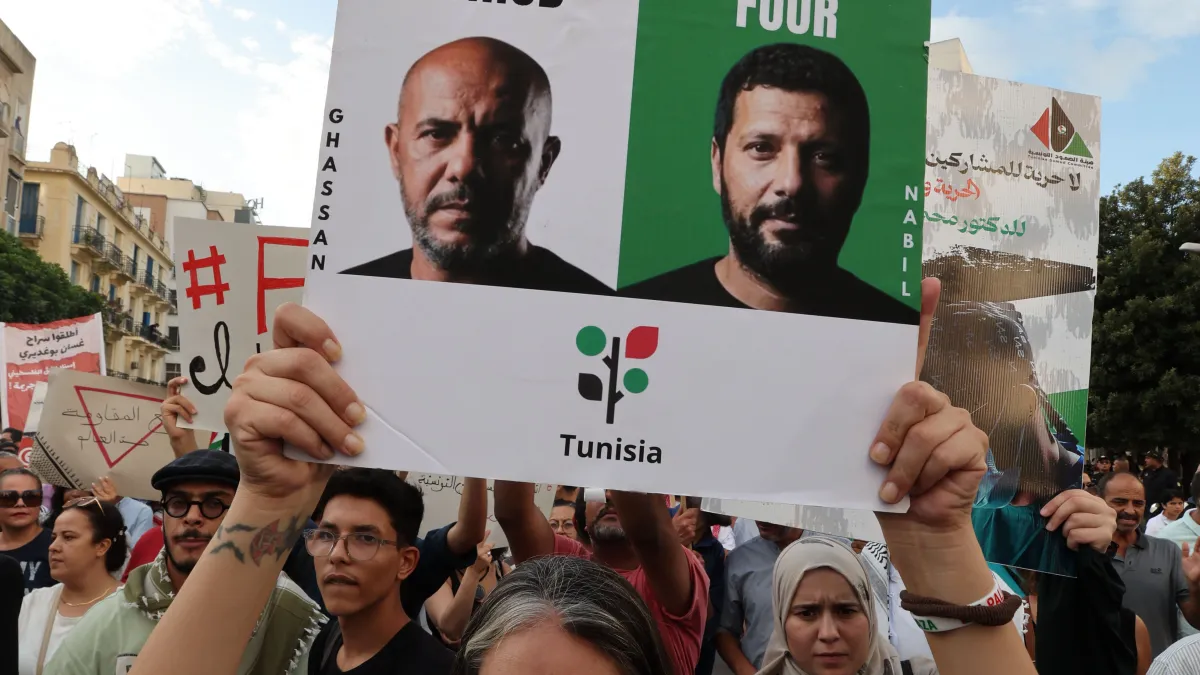
Four activists, Wael Naouar, Ghassan Henchiri, Ghassan Boughdiri and Nabil Channoufi, have been held since March following an investigation by Tunisia’s Economic and Financial Judicial Pole, a specialised body that handles financial and economic crimes. The investigation concerns alleged financial irregularities linked to fundraising for the Global Sumud Flotilla, an international campaign seeking to deliver aid to Gaza and challenge Israel’s blockade of the Palestinian territory.
The state-owned TAP news agency, citing judicial sources, reported that investigators are examining the origin and use of funds collected for the flotilla and whether any were diverted for other purposes. The activists and their defence team have repeatedly denied wrongdoing and maintain their innocence. None of the four has been convicted.
For their lawyers, the issue is also why the men should remain in prison while the investigation continues.
Ghassan Ghribi, a member of the defence committee, described the latest extension of their pretrial detention as an “exception to the exception”, arguing that freedom should be the rule and detention the exception. The four-month extension was ordered on September 11 and the defence challenged the decision before the Court of Appeal in Tunis.
“The investigating judge spent six months on the case without carrying out any investigative work, other than questioning the activists,” Ghribi told Al Jazeera. He said the extension should be based on clear reasons and that the four men were being made to pay the price for what he described as a lack of investigative work.
The Court of Appeal rejected the challenge on Wednesday, leaving the quartet in pretrial detention for another four months while the investigation continues. Henchiri, Boughdiri and Channoufi remain on hunger strike.
Authorities have presented the case as a financial investigation into the handling of funds raised for the flotilla, rather than a prosecution linked to the men’s political or pro-Palestinian activities. The government has rejected accusations that the judiciary is being used to silence opponents, saying the judiciary is independent and that legal proceedings are conducted according to the law.
The fallout has also widened beyond the four men. Fourteen people detained after the September 19 protest calling for their release have since been placed in pretrial detention, lawyer Rafed Rabbeh confirmed to Al Jazeera on Friday. Among them is a 17-year-old who was brought before a juvenile judge. Tunisia’s Child Protection Code says priority should be given to preventive and educational measures and that pretrial detention should be avoided as much as possible for children.
Rabbeh said the detainees face several charges, including participating in a gathering allegedly intended to disturb public order and commit an offence, publicly attributing unlawful acts to a public official without proof, and making public statements deemed to damage the reputation of a person or official body. The charges are based on several provisions of Tunisia’s Penal Code.
The toll on those left behind
Speaking by phone from Gafsa, Ghassan Henchiri’s father, Sebti, said his son remains conscious but is visibly exhausted after being on hunger strike since September 9.
“According to what his sister told me after visiting him, he is still holding up. The fatigue is visible. He is exhausted, but he is still conscious,” Sebti said.
Ghassan has not been taken outside the prison for further medical examination of a head injury sustained during his detention in Israel, Sebti told Al Jazeera. Ghassan and his family have raised the issue with both the prison administration and investigating judge. They were promised that he would receive the necessary medical examinations, but that has not happened, Sebti said.
“It could be a superficial injury, but with the conditions in prison and the high temperatures, it has exhausted him,” he said.
Ghassan also has other health problems, including living with one kidney and suffering from back problems, Sebti said. He has developed a skin rash that keeps him from sleeping, but his request to see a dermatologist was rejected because the prison doctor did not consider it serious, Sebti said.
“I will remain steadfast, I will not give up my right and these malicious accusations are false,” Ghassan told his father.
“He is my son, my brother, my companion, my whole life,” Sebti said. “Ghassan is a man of integrity. I am not saying that because I am his father. Everyone knows that about him.”
Ghassan’s detention has also reshaped family life. He had been working at a high school and was recently engaged, Sebti said.
He described Ghassan’s political commitment as something rooted in the family. He has been involved in student activism and later trade unions since 1978, campaigning for freedom, the right to organise and a better, more dignified life for Tunisians. Ghassan grew up with those principles and was influenced by his father’s activism.
“This is what Ghassan was raised on and what influenced him,” Sebti said.
Human Rights Watch has also raised concerns over the use of financial and money-laundering investigations against civil society actors in Tunisia.
For the Naouar and Henchiri families, the impact of the detentions is being felt at home, in prison visits, anxious phone calls and children asking when their fathers will return.
Yassar still asks about his father and has told his grandfather he is ready to go on hunger strike too.
Asked where her father is, four-year-old Sumud answers: “Palestine. Prison”.
A Pew Research poll in April indicated 60 percent of the US adult population held an unfavourable view of Israel.
Published On 26 Sep 202626 Sep 2026
US ambassador to Israel Mike Huckabee says that the recent souring of public opinion in the United States towards Israel is the result of a lack of “biblical literacy”.
In an interview with NewsNation on Thursday, the ambassador suggested there were three sources of declining support for Israel.
Recommended Stories
list of 3 itemsend of list
He cited disinformation and foreign propaganda, a hatred of those who believe “there is a God and that he’s made up the rules for life”, and not knowing the Bible.
“You add all that together, I guess you just want to be mad at Israel and blame them for everything,” he said.
Huckabee claimed that accusations of genocide in Gaza and that Israel is an apartheid state are false, and Americans would have a more favourable view of Israel if they would “look at the truth”.
A Pew Research poll in April indicated that, although favourable opinion of Israel remained relatively strong at 65 percent among white evangelicals, such as Huckabee, 60 percent of the US adult population held an unfavourable view of Israel.
An AP-NORC poll from July suggested that Americans who believed Israel committed genocide in Gaza outnumbered those who did not, although roughly half said they did not know enough to answer.
For Israel, the decline in support has become alarming as prominent critics of Israel won several elections, including Zohran Mamdani, who became New York City mayor.
Israeli Prime Minister Benjamin Netanyahu used part of his speech at the United Nations General Assembly to lambast Mamdani, claiming that Jews in New York told him that they no longer feel safe in the city.
Netanyahu, too, has seen declining popularity in the US, with the same Pew survey indicating more than half of Americans did not trust him to do the right thing regarding world affairs.
Mamdani has previously said that he opposes hatred and bigotry, including anti-Semitism, but promised to execute an International Criminal Court warrant for Netanyahu for war crimes when the Israeli leader next visited New York City – before eventually concluding that the city did not have the legal authority to do so.




![A policeman speaks to a supporter of the proscribed group Palestine Action as they gather to protest outside the conference venue on the first day of the annual Labour Party conference in Liverpool, north-west England on September 27, 2026 [Oli Scarff/AFP]](https://i0.wp.com/occasionaldigest.com/wp-content/uploads/2026/09/AFP__20260927__C9GU2MN__v1__HighRes__BritainPoliticsLabourConferencePalestineConflic-1790556936.jpg?w=640&ssl=1)

![Protesters hold placards during an anti-immigration march in Durban, South Africa, calling for tighter border controls and the deportation of undocumented migrants [Thuli Dlamini/Reuters]](https://i0.wp.com/www.aljazeera.com/wp-content/uploads/2026/06/2025-11-07T155727Z_1005019881_RC2NRHA84QWK_RTRMADP_3_SAFRICA-PROTEST-1782784993.jpg?w=640&ssl=1)
![Pope Leo participates in a candlelight procession at the Sanctuary of Our Lady of Lourdes as part of his four-day apostolic journey to France, in Lourdes, France, September 27, 2026 [Stephane Mahe/Reuters]](https://i0.wp.com/occasionaldigest.com/wp-content/uploads/2026/09/2026-09-27T202553Z_140704132_RC2VRNAYDPZJ_RTRMADP_3_POPE-FRANCE-1790546103.jpg?w=640&ssl=1)
![Hakim Mar’i in his family’s apartment with his injured leg, which prevents him from working [Al Jazeera]](https://i0.wp.com/occasionaldigest.com/wp-content/uploads/2026/09/d9-1790406476.jpg?w=640&ssl=1)
![Members of the Zbeidat family sit on couches outside. The room they stay in is on the left [Al Jazeera]](https://i0.wp.com/occasionaldigest.com/wp-content/uploads/2026/09/s2-1790406485.jpg?w=640&ssl=1)
![The kitchen and bathroom the Zbeidats have are in the same room they sleep in [Al Jazeera]](https://i0.wp.com/occasionaldigest.com/wp-content/uploads/2026/09/s4-1790406489.jpg?w=640&ssl=1)