Houthis

Houthi advance in Yemen is about more than just the Red Sea | Houthis News

The rapid Houthi advance down Yemen’s Red Sea coast this week is an astonishing military victory, but not quite the game-changer it is being portrayed as.

The group has been able to threaten the vitally important shipping route, but they have been doing so since 2023. This new victory consolidates that control, proving that Yemen’s government is not currently in a position to defeat them.

Recommended Stories

list of 3 itemsend of list

The prior Houthi control over the northern section of Yemen’s Red Sea coastline, including the major port city of Hodeidah, has allowed the Iran-allied rebel group, for years, to first attack shipping linked to Israel and the United States – and then, in recent months, Saudi Arabian-linked vessels.

That control also damaged the global economy. Long before the US war with Iran and the transformation of the Strait of Hormuz into a tool to throttle international trade, Houthi attacks around Yemen had turned Bab al-Mandeb into a similar weapon, and led to bombing campaigns against the Houthis by the US, the United Kingdom, and Israel.

Houthi officials themselves have emphasised this, with one leading official, Abdulqader al-Murtada, saying earlier this week that the group did “not need control over Bab al-Mandeb, for the blockade [on Saudi ships] is already in place”. Al-Murtada could point Saudi ships that have avoided Bab al-Mandeb since the Houthis began attacking them in July, even before their latest progress.

However, the Houthi lightning advance makes it even easier for the group to disrupt shipping. They now have access to the Red Sea’s narrow entry point and several islands in it, allowing them to use shorter-range weapons and more easily reach vessels they want to attack and board, as well as potentially using sea mines to further restrict shipping. Interactive_Keyplayers_Yemen_September8_2026

Not going away

The increase in the Houthi ability to target shipping – even with the caveats outlined above – does have an impact on market sentiment. Oil prices have increased as traders price in the ability for Iran and its allies to disrupt shipping in Hormuz and Bab al-Mandeb, the two maritime chokepoints of the southern Arabian Peninsula.

However, the consequences of this advance are not limited to the increased ability of the Houthis to attack shipping, but to the increasing reality that the Houthi problem on the Red Sea is not going away.

For months, after Saudi Arabia backed a Yemeni government campaign against southern Yemeni separatist forces earlier this year, the mood had shifted in the country’s anti-Houthi camp.

The perception was that the Yemeni government, led by the Presidential Leadership Council, had finally gotten its act together. President Rashad al-Alimi repeatedly spoke of a unified military chain of command, allowing the military to overcome the divisions blamed for its inability to defeat the Houthis.

Yemeni and Saudi officials had hinted at an anti-Houthi campaign all year. The Red Sea coastline was a possible location: the largely flat geography suited the government, allowing Saudi Arabia to effectively use its air power; much of the population is not made up of the Houthis’ traditional support base; and prior Houthi attacks on Red Sea shipping meant that there would likely be international buy-in for such a campaign.

The seizure of the Red Sea coastline has broken all of those narratives.

The momentum the Yemeni government thought it had, even at the start of this week when it claimed advances in al-Jawf, to the east of the Houthi-controlled capital Sanaa, is now gone.

After months of projecting unity, Yemen’s anti-Houthi camp is once again turning on itself, trading accusations of blame for the defeat.

Saudi dilemma

The message the Houthis have for Saudi Arabia is clear: ‘Your partners in Yemen can’t defeat us.’

Therefore, the potential Houthi argument is that Saudi Arabia has to make a deal with them and agree to their terms, including Riyadh funding public sector salaries, access to income from Yemen’s oil and gas reserves, and no restrictions on flights and shipping to Houthi-controlled ports.

The Houthis have an incentive to lock in their gains and raise the cost of escalation before Saudi-backed Yemeni forces can reorganise.

Their attacks on Saudi Arabia, escalating in the past week, have been damaging, and the group is promising more if Riyadh increases its military support for the Yemeni government.

The risk of any such intervention is clearly there for Saudi Arabia. But so is the risk of inaction. The Houthis have repeatedly demanded more concessions when they were in positions of strength.

With the Yemen war unresolved, the Houthis may decide to escalate again in the future, even if a deal is agreed now.

And so, policymakers in Riyadh could determine that it makes more sense to make a concerted effort to deal with the problem head-on now, rather than allow it to fester into the future.

Source link

At least 46,000 displaced by escalating Yemen fighting: UN | Humanitarian Crises News

The International Organisation for Migration (IOM) warns that the figure is rising ‘by the hour’ as it calls for safe humanitarian access.

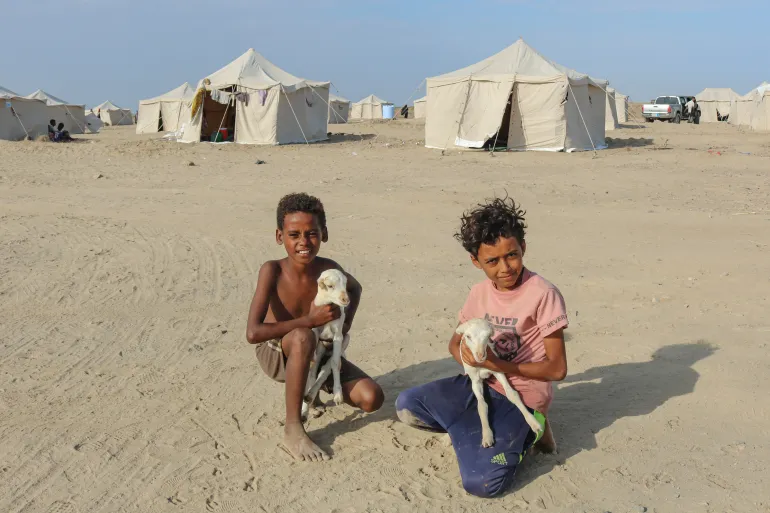
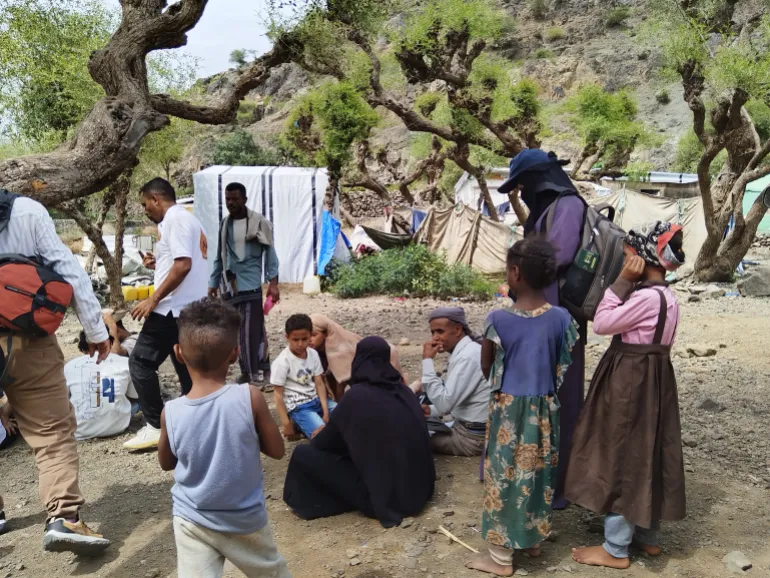
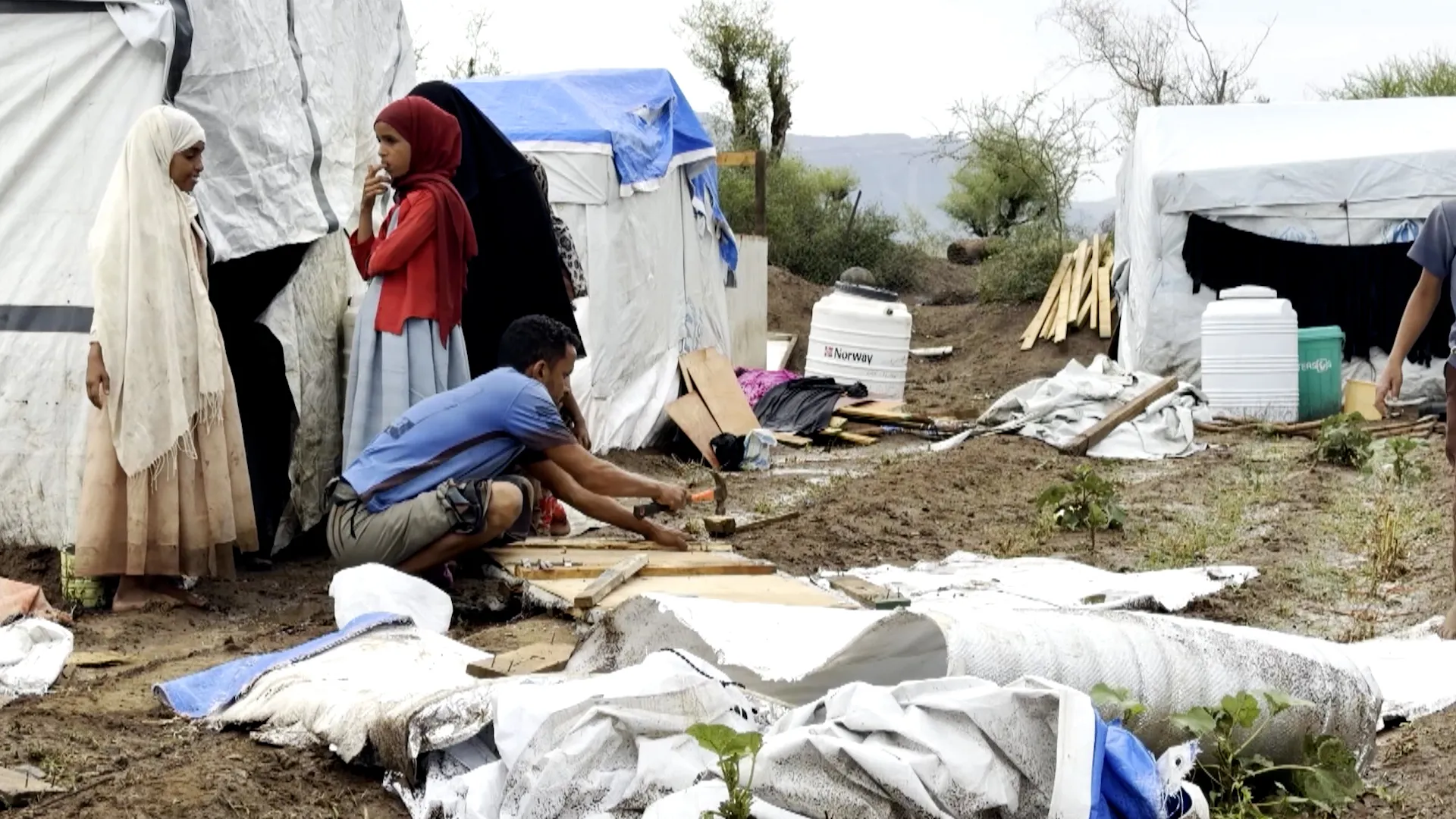
More than 46,000 people have been driven from their homes in Yemen in the wake of the latest escalation in fighting between Houthi rebels and government forces, according to United Nations data.

The International Organisation for Migration (IOM) warned that the figure is rising “by the hour” in a statement issued on Friday.

Recommended Stories

list of 4 itemsend of list

The UN agency called on all parties to the conflict to guarantee safe humanitarian access and protect civilians, aid workers and humanitarian assets on the ground.

“Families are being forced to flee for the second or third time in this conflict, with almost nothing left,” Amy Pope, head of the IOM, said in the statement.

The agency said many people had reportedly fled Mocha with their belongings overnight after the Iran-allied Houthi rebels captured the strategically important Red Sea port city from the internationally recognised government on Thursday.

Entire villages were said to have been abandoned in some areas of the war-torn country. The IOM urged the parties to the conflict to guarantee humanitarian access and ensure the safety of aid workers.

The statement came amid reports on Friday that the Houthis had captured a strategically located island in the Bab al-Mandeb Strait and now control Yemen’s entire Red Sea coast.

‘Two new crises’

Separately on Friday, the UN also voiced concern over the Houthis seizing a key humanitarian compound and its assets in Mocha, warning that humanitarian personnel and facilities must be protected.

“The compound houses staff of UN agencies working to provide humanitarian assistance to vulnerable communities in the area,” UN deputy spokesperson Farhan Haq told reporters.

All UN personnel working at the compound had left before the seizure and were “safe and accounted for”, Haq added.

Haq stressed that humanitarian personnel, premises and assets “must be respected and protected at all times”, while calling for safe and unimpeded humanitarian access so life-saving assistance can continue reaching people in need.

Farea Al-Muslimi, a Yemen researcher at the London-based Chatham House thinktank, told Al Jazeera that deteriorating humanitarian conditions in Yemen will build on what was already one of the world’s worst crises.

“Yemen was already going through one of the worst humanitarian crises in the world,” Al-Muslimi said.

“It got terribly worse after the Houthis cracked down on aid organisations in northern Yemen. But the war continued despite the fragile truce, and what that meant was the destruction of what remained of the economy, with millions of families left without income,” he said.

Al-Muslimi warned that the latest escalation “will create two new crises”, one being further internal displacement, noting that “we’ve already seen more than 10,000 families displaced in the last week alone”, and the other being rising prices for goods inside Yemen.

“Since this is [happening in] a maritime [trade] corridor, it will, for sure, drive further violence inside Yemen, but also from outside Yemen,” Al-Muslimi added.

“The Yemeni population will continue to suffer, first and foremost, more than anyone else, inside or outside the country.”

Source link

Houthis’ Stranglehold On Strategic Bab Al-Mandab Strait Grows Stronger

The Iranian-backed Houthi rebels have captured Mokha – a key Red Sea port in southwestern Yemen near the Bab al-Mandab (BAM) Strait. There are also reports they seized two islands located in the Red Sea shipping lanes. These moves against the Saudi Arabian-backed forces that previously held these areas could further cement the Houthis’ control over the narrow chokepoint to the Gulf of Aden, where the group has already imposed a blockade on Saudi oil exports.

The Houthis’ drive to control the BAM has been emboldened by the U.S. being stretched thin in its ongoing fight against Iran. Combined with Tehran’s control of the Strait of Hormuz, this threatens to add to the Islamic Republic’s command over the flow of oil from the Middle East. It is a maximum pressure campaign on the U.S. and global markets, something we have predicted for years. Amid all this activity, the per-barrel price of Brent Crude is well over the $100 mark now.

The port of Mokha. (Google Earth)

The rapid advance on Mokha was planned and backed by Iran, according to the leader of Saudi-backed forces that retreated from Mokha, which is about 50 miles north of the BAM. It took place as Tehran has taken a more belligerent stance in the region that has seen it reportedly damage U.S. aircraft in a recent attack on Jordan earlier this week and get closer to striking U.S. Navy warships with ballistic missiles.

“The Joint Forces have formed a command center south of the city of Mokha, following Houthi breakthroughs across various combat axes under heavy fire, in which the Houthis used various types of weapons,” Deputy Chairman of the Presidential Leadership Council (PLC), Lt. Gen. Tareq Saleh, said in his acknowledgment that his forces lost the port. The PLC was created in 2022 to represent the internationally recognized government of Yemen.

“The armed forces on the West Coast — the National Resistance, the Giants [Brigades], and the Homeland Shield — in addition to units of the Taiz axis west of the governorate, have paid a heavy price, martyrs and wounded, over the past days as they confronted the Houthi attack, which was planned by Iran, supported by it, and carried out with the participation of its various proxies/tools.”

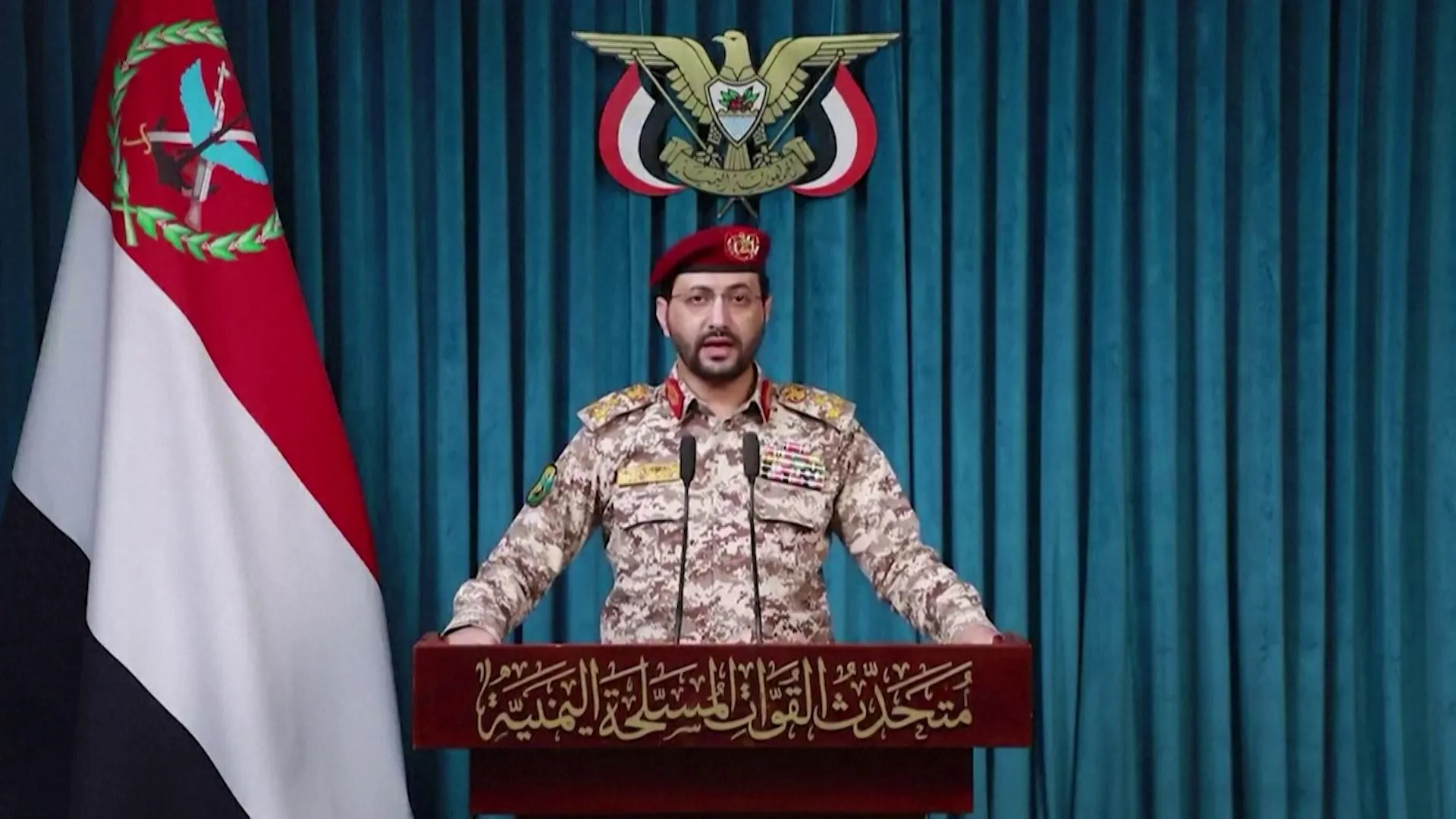
“Thanks to God, our armed forces were able to repel an enemy combat formation a short time ago in the province of Taiz, forcing it to withdraw,” Houthi spokesman Brig. Gen. Yahya Saree proclaimed. “This was achieved by targeting it with a number of locally manufactured surface-to-air missiles.”

(Houthi Telegram channel)

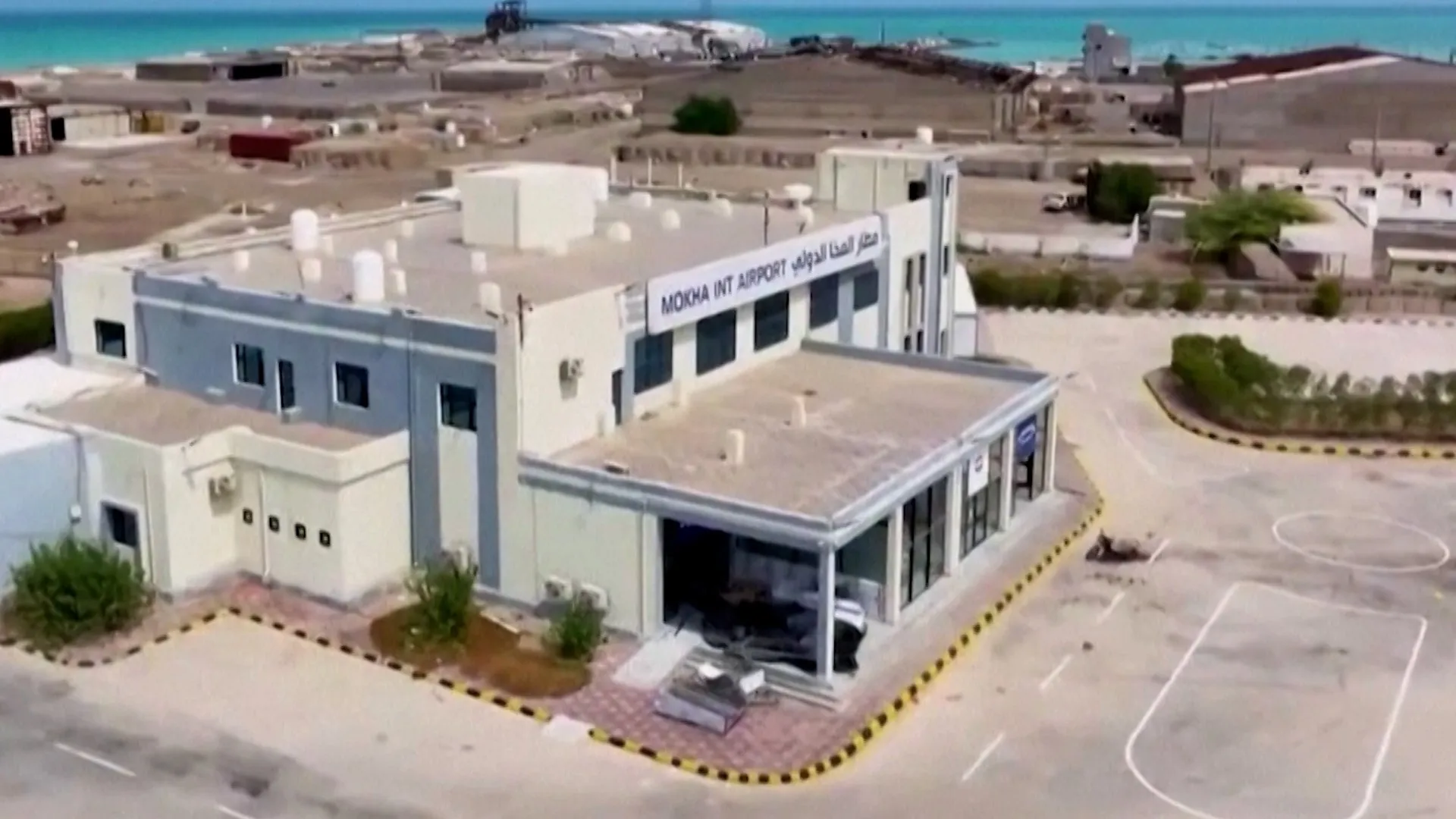
Videos have emerged showing Houthi forces inside Mokha and its airport and a large amount of equipment being seized.

Even before the capture of Mokha, the rebel group held the BAM under threat with its array of drones and missiles, some of which it launched from deeper in Yemen. In fact, the group became the first to fire anti-ship ballistic missiles (ASBM) at vessels during its campaign against Red Sea shipping.

©2023, The International Institute for Strategic Studies, originally published on https://iiss.org/online-analysis/military-balance/2024/01/houthi-anti-ship-missile-systems-getting-better-all-the-time/(reproduced with permission) (International Institute of Strategic Studies)

Mokha, however, provides a potential new surveillance and launching point for the Houthis to deploy mines as well as aerial drones and uncrewed surface vessels (USVs) they can use to attack shipping. As we have reported previously, the rebel group pioneered the operational use of some of these weapons.

The Houthis “are determined to control the ports in order to use booby-trapped boats from areas close to shipping lanes,” Col. Abdul Basit Al-Baher, a Yemeni army officer and military analyst, told Arab News last month as the rebels were pushing closer to the port.

You can see video and images of a Houthi USV that struck the Greek-owned ship Tutor in the Red Sea in 2024 below.

In addition to Mokha, the Houthis also reportedly captured two important islands that could also add to its control over shipping through the strait. However, TWZ cannot independently confirm this.

There are claims that the Houthis seized Perim Island, which sits right in the middle of the BAM. In 2021, satellite images we obtained showed completion of a new, approximately 6,150-foot-long runway on the island as well as hangars and other facilities. The installation was supposedly meant primarily to support drone operations and was built by the United Arab Emirates.

This strategically located island sits in the narrowest part of the BAM, less than two miles west of Yemen and about 13 miles east of Djibouti, giving the Houthis a commanding presence at the mouth of the Red Sea.

PHOTO © 2025 PLANET LABS INC. ALL RIGHTS RESERVED. REPRINTED BY PERMISSION)
(PHOTO © 2025 PLANET LABS INC. ALL RIGHTS RESERVED. REPRINTED BY PERMISSION)

Zuqar Island, which was also reportedly captured, sits in the middle of the Red Sea about 80 miles north of Perim Island. In the custody of the Yemeni government since 1998, it was being “used by government forces to track shipping traffic, monitor movements by Houthi rebels and stop weapons smuggling in the Red Sea,” according to The National.

Last year, images emerged of construction of a runway on the island.

(PHOTO © 2025 PLANET LABS INC. ALL RIGHTS RESERVED. REPRINTED BY PERMISSION)
This satellite image from 2025 shows the runway on Perim Island. (PHOTO © 2025 PLANET LABS INC. ALL RIGHTS RESERVED. REPRINTED BY PERMISSION)

It is unclear who built this island runway, though there have been indications that it could have been the United Arab Emirates once again.

Zuqar Island sits about 7 km east of the northbound shipping lane in the Red Sea. Control over these two islands could allow the Houthis to mirror the pattern Iran established in the Strait of Hormuz by directing traffic to pass through a narrow passage between Qeshm and Larak islands.

The Iranian transit scheme for the Strait of Hormuz. (Iranian government)

The conflict between Saudi Arabia and the Houthis grew out of a civil war in Yemen that erupted in 2014. It expanded a year later when a Saudi-led coalition joined forces with the government ousted by the Houthis and raged on until the parties reached a tenuous ceasefire in 2022. The Saudis held off on getting involved in the recent Red Sea conflict which saw the U.S. and coalition warships duking it out with the Houthis, and eventually led to a U.S.-led air campaign over Yemen. Tensions, however, reignited after that conflict ended when the Houthis joined the U.S.-Iran conflict on the side of their major supporter. In addition to the aforementioned blockade, the Houthis began striking Saudi refineries.

The Houthis already control the port of Hodeidah, about 100 miles to the north. Capturing Mokha and the two islands extends their reach even closer to the BAM. 

In the wake of the Houthi blockade imposed in July, traffic in the BAM fell by 15%, according to Lloyd’s List Intelligence.

On average, 273 ships sailed through the chokepoint each week between 27 July and 23 August,” the organization reported. “The naval ban on Saudi Arabia came into effect on 20 July, and the weekly average in the run up date was 319. Still, traffic remains above volumes seen before the crisis in the Middle East Gulf that led to a flurry of activity in the Red Sea as Saudi oil was redirected to Yanbu.”

As we have explained in the past, Saudi Arabia has diverted millions of barrels of oil per day through pipelines to its Yanbu port on the Red Sea in an effort to minimize the energy shortages due to the hostilities near the Persian Gulf.

ANKARA, TURKIYE - JULY 29: An infographic titled "Red Sea tensions expose the vulnerability of alternative oil corridors to Strait of Hormuz" created in Ankara, Turkiye on July 29, 2026. (Photo by Yasin Demirci/Anadolu via Getty Images)
Saudi Arabia has increasingly sent oil to its port of Yanbu on the Red Sea. (Photo by Yasin Demirci/Anadolu via Getty Images) Anadolu

The biggest impact of the blockade, Lloyd’s List Intelligence notes, is that it is driving up the cost to deliver oil by forcing traffic north through the Suez Canal, “extending voyage times and tying up capacity. In the Middle East, rising use of Hormuz shuttle tankers and multiple STS transfers is creating delays and increasing vessel utilization. Combined, these rising inefficiencies have led to the third VLCC spot-rate spike since the beginning of the crisis in the Middle East Gulf.” 

The Houthi strikes on Saudi’s oil infrastructure, including a Houthi missile and drone attack against the Saudi Aramco refinery at Jazan on the Red Sea earlier this week, add a further dilemma for Riyadh, making it harder to get its product to points of shipment.

Video of of the aftermath of those strikes, which you can see below, emerged on social media.

All this is raising the specter of the U.S. having to get as involved as it did during the previous Houthi campaign against shipping that ended last September, which could pull resources away from Iranian-focused operations, if supporting such an operation is even possible at all at this point. The Navy, and other key elements of the U.S. military, is overstretched and worn down by continuous deployments for many months leading up to Venezuela and then Iran, and now six months after Operation Epic Fury.

U.S. forces in the Persian Gulf are under increasing pressure as tensions with Iran continue to simmer. On Tuesday, several U.S. Air Force jets were damaged in an Iranian missile barrage on Muwaffaq Salti Air Base in Jordan, according to CBS News. An A-10 Thunderbolt II close support jet lost a wing and about eight F-15E Strike Eagle multi-role fighters were slightly damaged and returned to service, the network noted.

There is also a report that Acting Navy Secretary Hung Cao said Iranian forces “blew the hell out of Bahrain” where the U.S. military has a number of key facilities, including the headquarters of the U.S. Fifth Fleet. The country has been the subject of frequent Iranian barrages since the U.S. and Israel first attacked on Feb. 28.

Cao’s assessment matches what we have seen and heard prior to his comments and raises anew the question of whether the U.S. will return to Bahrain and other bases in the region heavily attacked by Iran.

On the sea, Iranian missiles are getting closer to hitting U.S. Navy warships, the Wall Street Journal reported.

“At least three times in the past week, Iranian forces have launched missiles at American warships, including an aircraft carrier, taking direct aim at the U.S. Navy in a way it hasn’t done since the start of the war,” the newspaper noted. “The attempted strikes on warships have led to much closer calls than previous attempts, with Iran using maneuverable warheads, people familiar with the attacks said.”

Amid this activity, traffic through the Strait remains suppressed.

“Vessel transits via the Strait of Hormuz fell on Wednesday to seven from 12 ​the previous day, preliminary ship-tracking data showed on Thursday, with ‌levels also below the 10-day average of 14,” Reuters reported. “Out of these seven ships, four vessels exited and three entered, according to the data.”

However, an exact figure is hard to come by. Some vessels could be sailing through the ​waterway with their transponders turned off and would not be counted ​toward the totals, the outlet added.

Vessels transit the Hormuz Strait off the coast of Iran's southern port city of Bandar Abbas on September 7, 2026. Iran's top negotiator threatened on September 6 of a more forceful response to any further US attacks after Tehran targeted American warships in their latest round of clashes. The exchanges of fire, which began with US raids last week, come amid a deadlock in the six-month war between the two foes. (Photo by ATTA KENARE / AFP via Getty Images) /
Vessels transit the Hormuz Strait off the coast of Iran’s southern port city of Bandar Abbas on September 7, 2026. (Photo by ATTA KENARE / AFP) ATTA KENARE

As it is, oil prices are skyrocketing. As of noon Thursday, the per barrel price of Brent Crude exceeded $107, the highest price since July when it fell to just over $77 per barrel, according to OilPrice.com.

It will take some time before we get a better picture of how the Houthi seizure of the port of Mokha, and possibly Perim and Zuqar islands, will affect the global economy due to rising oil prices, either through reduced supply, increased cost of delivery or some combination of the two. With no end in sight to the U.S. conflict with Iran that helped to drive these actions, the Yemeni rebel group has incentives to inflict economic pain wherever it can.

Contact the author: howard@twz.com

Howard is a Senior Staff Writer for TWZ. He writes frequently about conflict, focusing heavily on the Middle East and Ukraine, and interviews with military and intelligence officials and industry leaders from around the globe. He lives near Tampa, Florida, home of U.S. Central Command, U.S. Special Operations Command.


Source link

Arab News | UN Security Council ‘can’t call for de-escalation’ while support still flows to Houthis, Saudi envoy warns

NEW YORK CITY: Saudi Arabia’s ambassador to the UN warned the Security Council on Thursday that “the international community cannot call for de-escalation” in Yemen “while at the same time allowing the continued flow of support that enables this (Houthi) militia to continue its hostile and criminal conduct.”

The warning from Abdulaziz Alwasil came during an emergency council session to discuss Houthi attacks against the Kingdom this week. It was requested by the UK, the penholder on Yemen, and Bahrain.

He said the latest strikes on Saudi cities, which began on Tuesday, were not an isolated episode but “an extension of a systematic, hostile approach pursued by this militia since its coup against the legitimate Yemeni government in 2014,” and part of a pattern that has also targeted commercial shipping and threatened freedom of navigation in the Red Sea and the Bab Al-Mandeb Strait.

He said a press statement by the council on Aug. 7 condemning Houthi missile strikes on the Kingdom since July 13, and attacks against commercial vessels since July 22, had gone unheeded, and the militia had answered the international warnings with further escalation.

Alwasil said Saudi Arabia had backed nearly every major effort to end the Yemen war — including the Gulf Initiative, the transitional period, the National Dialogue Conference, the Geneva, Kuwait and Stockholm talks, a 2021 initiative and the UN-brokered truce in 2022 — but the Houthis had repeatedly met those efforts with renewed violence.

“My country affirms its legitimate right to defend itself, its citizens and residents, and to safeguard our national resources,” he said, adding that Riyadh “will not hesitate to take all measures necessary to deter Houthi attacks and to protect our security, sovereignty and territorial integrity.”

He called on the council to enforce Resolutions 2216, which imposed an arms embargo and sanctions on the Houthis, and 2722, which demanded an immediate halt to Houthi attacks on commercial shipping in the Red Sea, and to send “a clear and firm message” that leaves no room for misinterpretation that attacks on the Kingdom must stop.

Yemen’s ambassador, Abdullah Alsaadi, affirmed Sanaa’s “full solidarity with the Kingdom of Saudi Arabia, its leadership, government and people,” and its “absolute rejection of the use of any part of the Yemeni territory as a platform for launching missiles and drones, or for threatening the security of the Kingdom or any neighboring country.”

He said the attacks amounted to the “hijacking” of Yemen’s own sovereign decisions over war and peace, carried out by a militia that operates outside of state institutions and was “militarily and technically supported by the Iranian terrorist regime.”

Saudi Arabia had shown “a great degree of restraint,” Alsaadi said, and been “the principal partner of the Yemeni people and state” in supporting institutions, salaries and services throughout the war. But he cautioned that “restraint should not be misconstrued as weakness.”

The security of Yemen and of Saudi Arabia “cannot be separated from one another,” he added, as he called for full enforcement of the arms embargo on the Houthis, and accountability for those who finance and arm the group.

Source link

The Houthis are testing the limits of Saudi restraint | Opinions

The renewed escalation in Yemen is no longer simply a Yemeni battlefield development. For Saudi Arabia, it is becoming a direct test of national security, economic resilience and the kingdom’s ability to prevent the wider regional war from spilling further across its borders.

The latest Houthi attacks have demonstrated this clearly. Missiles and drones have hit civilian and economic sites in Abha, Khamis Mushait, Jizan and Najran, injuring dozens of civilians and causing fires and temporary disruption at energy facilities. The attacks came as fighting intensified in Yemen and around the western coast, while the Houthis continued to threaten maritime traffic in the Red Sea and Bab al-Mandeb.

Saudi Arabia therefore faces two interconnected threats: Attacks on its territory and attempts to disrupt the maritime routes on which regional and international trade depends.

This creates a difficult strategic equation for Riyadh. Saudi Arabia has spent the past several years trying to move away from direct military involvement in Yemen and towards diplomacy, de-escalation and support for a political settlement. A return to an open-ended war would contradict that strategy and impose unnecessary political and economic costs.

But restraint cannot mean accepting repeated attacks on Saudi territory.

A different security environment

The security challenge today differs considerably from the first years of the Yemen war.

Saudi Arabia has strengthened its air and missile defences, improved coordination between its military and security institutions and accumulated considerable experience in countering drones and ballistic missiles. It is therefore much better prepared to defend its territory than it was a decade ago.

Yet the Houthi threat has also evolved.

The group possesses a combination of ballistic missiles, cruise missiles and increasingly sophisticated drones. Even when most incoming weapons are intercepted, relatively inexpensive systems can impose disproportionate defensive costs and create uncertainty around airports, industrial facilities, border communities and energy infrastructure.

This means Saudi security cannot depend on interception alone. No air defence system can guarantee a perfect shield indefinitely.

The strategic objective must therefore be deterrence: Convincing the Houthis that attacks on Saudi territory will impose costs greater than any political or military benefit they expect to obtain.

This does not necessarily require returning to the large-scale military campaign of previous years. Riyadh has more options today. These include intelligence operations, strengthening Yemeni government forces, improving border security, disrupting missile and drone supply networks and, where necessary, conducting proportionate operations against facilities directly involved in attacks on Saudi Arabia.

The distinction is important. Saudi Arabia does not need to choose between doing nothing and returning to a full-scale war.

The economic front

The economic consequences are equally important.

Saudi Arabia is one of the world’s largest energy exporters, which makes attacks on its oil infrastructure internationally significant even when physical damage is limited. The latest attacks affected energy facilities and contributed to renewed concern in already nervous global oil markets.

There is an apparent paradox here: Regional instability can push oil prices higher and temporarily increase Saudi oil revenues. But higher prices caused by war should not be confused with economic benefit.

Saudi Arabia’s economic strategy under Vision 2030 depends increasingly on stability, investment, tourism, logistics, technology and the development of major projects outside the oil sector. Persistent missile and drone attacks can raise insurance and transport costs and affect perceptions of regional risk even if the kingdom’s underlying economy remains strong.

The greater strategic concern is maritime security.

Saudi Arabia occupies a strategic position between two of the world’s most important energy corridors: The Strait of Hormuz to the east and Bab al-Mandeb to the west. Disruption of both routes represents a serious challenge not only for Saudi Arabia but for the global economy.

This is why the Red Sea dimension of the Yemen conflict is particularly important. Bab al-Mandeb connects the Indian Ocean with the Red Sea and the Suez Canal. A sustained Houthi ability to threaten shipping there would increase freight and insurance costs and potentially divert vessels around Africa.

Saudi Arabia, however, possesses an important strategic advantage: Its energy infrastructure is not completely dependent on the Gulf. The kingdom can transport significant quantities of oil through its East-West pipeline to terminals on the Red Sea. This provides an alternative to Hormuz and gives Riyadh greater strategic flexibility.

That advantage does not, however, eliminate Saudi Arabia’s exposure to insecurity elsewhere in the Red Sea, including around Bab al-Mandeb.

Protecting Bab al-Mandeb should therefore be understood not simply as a Saudi or Yemeni interest but as an international economic and security requirement.

Avoiding the Houthi trap

The greatest danger for Riyadh may be political rather than purely military.

The Houthis could benefit from drawing Saudi Arabia back into an extensive war. It would allow them to portray the conflict once again as a confrontation between Yemen and an external power rather than a struggle among Yemenis over the future of their state.

Saudi Arabia should avoid this trap.

Confronting the Houthis must remain fundamentally a Yemeni responsibility. The internationally recognised Yemeni government and its forces should carry the principal burden of confronting Houthi expansion on the ground, while Saudi Arabia provides political, economic, intelligence and defensive support.

This is particularly important on the western coast. If the Houthis consolidate their military position around strategic areas overlooking the Red Sea and Bab al-Mandeb, the consequences will extend far beyond Yemen.

The objective should not be to retake Sanaa through another large-scale air campaign or restart an indefinite regional war. It should be to prevent the Houthis from using military force to change the regional balance, threaten neighbouring states or threaten international maritime arteries.

Diplomacy backed by deterrence

Saudi policy is therefore likely to operate on several tracks simultaneously.

First, Riyadh will continue strengthening its air and missile defences and protecting critical infrastructure. Second, it can increase support for Yemeni government forces while avoiding unnecessary direct involvement in ground combat. Third, it will seek broader regional and international cooperation to secure the Red Sea and Bab al-Mandeb.

At the same time, diplomatic channels should remain open.

Saudi Arabia has repeatedly demonstrated its preference for a negotiated settlement in Yemen. But negotiations are sustainable only when both sides believe that escalation carries unacceptable costs.

Diplomacy, therefore, must be backed by credible military power.

Saudi Arabia has strong incentives to prevent Yemen from becoming another permanent front in the wider regional confrontation. The kingdom’s economic transformation requires stability, while its geopolitical interests require secure borders, uninterrupted energy exports and freedom of navigation.

But the same logic that encourages restraint also places limits on it.

If attacks on Saudi cities, civilians and energy infrastructure continue, Riyadh will increasingly regard the issue not as intervention in the Yemeni civil war but as the defence of Saudi territory.

That distinction will shape what comes next.

Saudi Arabia does not need another prolonged Yemen war. Nor does Yemen. But avoiding one requires restoring deterrence while preserving the possibility of a political settlement.

The most effective Saudi strategy, therefore, is neither unlimited escalation nor passive restraint. It is calibrated pressure: Defend the kingdom, strengthen legitimate Yemeni institutions, protect the Red Sea, keep diplomatic channels open and make clear that attacks on Saudi territory will carry consequences.

The views expressed in this article are the author’s own and do not necessarily reflect Al Jazeera’s editorial stance.
Source link

Houthis, Yemeni forces engaged in fierce battles: Why each front matters | US-Israel war on Iran News

Sanaa, Yemen – The United Nations-recognised Yemeni government and the Houthi group have been using warplanes, missiles, drones and other weapons as they engage in intense fighting on multiple fronts in the country’s north, west and central regions.

At least 194 people have been killed and 880 others wounded in the past two weeks of fighting in parts of Taiz, the western coast, al-Jawf, Marib and Dhalea, according to aid agencies.

Iran-backed Houthis, also known as Ansar Allah (supporters of God), have intensified attacks on the coastal district of al-Makha (Mocha) located on the western coast, among others, to gain a foothold in the Red Sea – a vital shipping lane.

On the other hand, government forces have been battling to expand in Taiz and boost their control of Marib, an oil-producing region in the north.

Fighting has also been raging in the al-Jawf governorate bordering Saudi Arabia and Dhalea, which connects the Houthi-controlled north to the country’s south under the internationally recognised government.

Experts say gains or losses on any of these strategically important fronts could have significant consequences for either side.

Interactive_Control_Map_Yemen_September8_2026

Taiz and western coast fronts

“The hills and mountainous areas of Taiz and the western coast are key targets for the Houthis, who have repeatedly attempted to advance there,” Yazeed al-Jeddawy, the research manager at the Sanaa Center for Strategic Studies, said.

“The Houthis are trying to seize commanding terrains, cut supply routes between the coastal Mocha district and Taiz, and prevent government troops on the western coast from linking up with the Taiz Military Axis,” said al-Jeddawy.

In Taiz and along the western coast, al-Jeddawy says, the immediate contest is over the heights and roads connecting Taiz to al-Makha.

Situated roughly 60km (37 miles) from the Bab al-Mandeb strait, al-Makha enjoys a highly strategic position on the Red Sea. For a month now, the Houthis have launched missile and drone attacks on the city, causing massive damage to its port facilities and killing and injuring several civilians.

Recently, the group has also attempted to extend its ground operations towards al-Makha city.

“The Houthis seem intent on tightening their hold around [al-Makha] and moving closer to the Dhubab–Bab al-Mandeb area. A substantial advance would strengthen their position near the southern entrance to the Red Sea and give them greater leverage over international shipping,” he added.

Fuad Mussed, a Yemeni political analyst and author, told Al Jazeera that the strategic importance of the western coast and Taiz fronts stems from their proximity to Bab al-Mandeb, a chokepoint connecting the Red Sea to the Gulf of Aden and one of the world’s most important shipping routes.

“The Houthis seek to move closer to this vital waterway to threaten maritime traffic. Such a move aims to keep the Strait of Hormuz and Bab al-Mandeb under the influence of Iran and use them as leverage against regional and international powers. This is a strategy Tehran has been pursuing for years,” Mussed said.

Iran has blocked the Strait of Hormuz, a global oil chokepoint, to use it as leverage in the war against the United States. It has also warned that its allies could shut shipping via Bab al-Mandeb. Iran also attacked Saudi Arabia’s pipeline used to export oil from the Red Sea.

In July, the Houthis declared a blockade against Saudi vessels transiting through the Red Sea – an alternative to the Strait of Hormuz.

Marib and al-Jawf fronts

Over the past few weeks, pro-government forces have attacked Houthi-held territories in Marib and al-Jawf, facing further retaliation from the Houthis.

Saddam al-Huraibi, a Yemeni political commentator, said the Marib front is fateful for both sides.

“Marib is a government stronghold in north Yemen. So, a Houthi expansion in Marib would threaten government presence and weaken its leverage in the north. That is why pro-government troops are ready to fight tooth and nail on this front line,” al-Huraibi told Al Jazeera.

For the Houthis, the takeover of Marib will deepen the group’s authority and step towards controlling the oil and gas infrastructure. The Iran-backed group captured vast swaths of northern Yemen, including the capital, Sanaa, in 2014, but Marib has remained in government hands since.

“Dominating Marib’s oil and gas resources has been a Houthi goal for over a decade. Without facing a crushing defeat in Marib, they would keep fighting to achieve that goal,” al-Huraibi said.

Adjacent to Marib, al-Jawf is also a hub of tense fighting between the Houthis and government forces. A government gain there would lay the groundwork for further advances, while a strong Houthi defence could undermine government forces’ morale and prompt them to retreat.

“Government-aligned forces have lately focused much of their offensive effort on al-Jawf. Government gains in al-Jawf would ease the threat to Marib while requiring the Houthis to defend a much broader area,” al-Huraibi said.

Al-Jeddawy said government gains could open routes towards the north – Saada, Amran or Houthi positions north of Marib.

The Houthis have carried out attacks in Saudi Arabia, including energy facilities in the country’s south. They have also accused Saudi Arabia of launching multiple attacks in al-Jawf, al-Bayda, Marib and Taiz provinces in support of government forces.

This screen grab taken from undated video footage released on September 9, 2026 by Ansarullah Media Centre shows what the Houthi authorities said are attacks on Saudi-backed forces in Jawf province’s frontlines [AFP]

The Dhalea front

Fighting on the Dhalea front, a strategic gateway between Houthi-held territory and the southern governorates, has intensified in recent weeks.

Fighting there did not fully stop during the relative calm, which began in April 2022 following the UN-brokered ceasefire.

A Houthi advance there could open a route for their fighters to reach other southern territories. On the other hand, a Houthi setback would encourage government forces to push towards Ibb, controlled by the group.

“[Houthi] advances in Dhalea could expose the southern hinterland, while [government advances] could threaten Houthi positions and supply routes towards Ibb, al-Bayda and, farther north, Sanaa,” al-Jeddawy noted.

With the escalating fighting, the Houthis face pressure on several fronts, but the group has been readying for a range of scenarios, Khaled Ghorab, a pro-Houthi general, said.

“The [Houthi] Yemeni armed forces were never caught off guard by the prospect of escalation; rather, they worked to build and develop their own military capabilities based on tactical combat plans designed to counter a comprehensive, sustained attack launched simultaneously from land, sea and air,” he said.

Ghorab noted that this state of readiness enables the Houthi forces to carry out a direct response to sources of the threat – whether deep within enemy territory or at sea – targeting military bases or aircraft carriers as far as the Horn of Africa.

While the warring parties compete to seize strategic positions on several front lines, the latest escalation is also closely related to the wider regional confrontation.

“Iran has an interest in keeping Yemen and the Red Sea active as sources of leverage, while parts of the government camp believe the Houthis are under growing strain and that this is an opportunity to weaken them,” al-Jeddawy, the Sanaa-based researcher, said.

“The escalation still reflects domestic military and political aims, but its timing and direction cannot be separated from the regional war,” he told Al Jazeera.

Source link

Yemen envoy warns of wider war as Houthis threaten Bab al-Mandeb Strait | Conflict News

The war in Yemen is threatening to open a new front as the Iran-allied Houthi rebels are trying to advance along the Red Sea coast, through the mountain chains of Taiz province, edging closer to strategic ground that overlooks one of the world’s most vital maritime arteries.

For the internationally recognised Yemeni government, this is an offensive with global consequences.

Recommended Stories

list of 3 itemsend of list

In Wednesday’s interview with Al Jazeera, Yemen’s Ambassador to Qatar, Rajeh Badi, a former government spokesman, said that his government and its armed forces had not violated any truce since 2021.

The Houthis, he argued, are “the aggressors”. “What we are seeing now is a surprise Houthi offensive to seize strategic ground along the Red Sea, in order to allow Iran, through its Houthi proxy, to tighten its grip on maritime routes,” Badi said.

He added that the Houthis, who have advanced on al-Makha (Mocha) and al-Waziyah, and over large stretches of the mountain chain overlooking the Red Sea in Taiz province, “want commanding positions to launch more effective strikes on ships and disrupt navigation in the Red Sea”.

Badi said the Yemeni government responded by opening fronts in al-Jawf, Marib and al-Bayda, and that the consequences could extend far beyond Yemen.

[Al Jazeera]
[Al Jazeera]

“We are now facing a real threat that does not stop at Yemen’s borders,” he said. “It threatens the entire region and the world. If the Houthis manage to choke maritime traffic in the Red Sea, we will be looking at another Hormuz in these waters – with potentially even greater impact.”

The Red Sea and Bab al-Mandeb “represent a vital artery for global shipping, for both energy and food supplies”, he added.

A chokepoint that belongs to the world

Bab al-Mandeb connects the Red Sea to the Gulf of Aden. To the north, the Red Sea leads to the Suez Canal, while farther east, beyond the Arabian Sea, lies another critical chokepoint, the Strait of Hormuz. This geography is what gives Yemen’s conflict consequences far beyond its borders, as Saudi Arabia is already being drawn into the confrontation.

The Houthis have targeted Saudi territory, civilian infrastructure in the kingdom’s south and Saudi-linked vessels in the Red Sea.

Major-General Turki al-Maliki, spokesman of the Saudi-led coalition in Yemen, said the Houthis on Wednesday attacked Saudi cities of Khamis Mushait, Abha, and Jizan with ballistic missiles and drones. He did not elaborate on any casualties as a result of the attacks.

Badi, who has spoken to the media for the first time since taking up his post, said those attacks are designed to change the nature of the war.

“By targeting Saudi territory, civilian infrastructure in the kingdom’s south, and Saudi-linked vessels in the Red Sea, the Houthis are trying to drag Saudi Arabia into their war. Their calculation is simple: they want to rebrand this conflict as a Saudi-Yemeni war,” he said.

The ambassador assessed that “every time their militias suffer heavy losses inside Yemen at the hands of the Yemeni armed forces, they respond by firing missiles and drones at civilian sites in Saudi Arabia, in an attempt to inflame Yemeni public opinion and convince the outside world that Yemen is at war with Saudi Arabia”.

The conflict, he said, is fundamentally about Yemen’s state and its future. The Yemeni people are fighting to “reclaim their state, their republic, their dignity and their stability”.

This screen grab taken from undated video footage released on September 9, 2026 by Ansarullah Media Centre shows what the Houthi authorities said are attacks on Saudi-backed forces in Jawf province's frontlines.
Footage released by Houthi media claims to show attacks on Saudi-coalition forces on the front lines in al-Jawf province on September 9, 2026 [AFP]

Iran’s hidden hand

Behind Yemen’s fragmented front lines, a larger regional confrontation looms, and its architect, according to Badi, is Iran.

The official said that Tehran’s relationship with the Houthis is now impossible to hide. “Iranian officials openly boast about it, and Houthi leaders proudly talk about their ‘strategic’ ties with Tehran,” he said.

The Houthis are “one of Iran’s key regional arms – just like Hezbollah in Lebanon or the Popular Mobilisation Forces (PMF) in Iraq. Many of Tehran’s other proxies have come under pressure,” he added.

“Former Yemeni President Abd-Rabbu Mansour Hadi used to say that if Iran gains control over Bab al-Mandeb and the Strait of Hormuz, it will not need a nuclear weapon – its grip over these two chokepoints would be more powerful than any nuclear arsenal. Events have proved him right,” Badi recalled.

‘We have exhausted all peaceful avenues’

For Yemen’s government, the alternative to another war was supposed to be diplomacy.

Badi urged the world “to stand with us so we can rid ourselves of this scourge – a threat that no longer targets Yemenis alone”.

“We have exhausted all peaceful avenues. For more than 13 years, we have been engaging in dialogue rounds and signing agreements, whether inside Yemen or after the Houthis seized the capital, Sanaa,” he said.

Badi added that the Houthi rebels have effectively “buried peaceful options. Peace is simply not part of this movement’s culture or mindset. That is what ultimately forced us to take up arms”.

“The world must understand this difficult equation,” the ambassador concluded, that the Houthis are “an armed proxy, an extension of the Iranian Revolutionary Guard Corps. The Houthis do not represent us”.

Source link

Arab News | Houthis bring ‘nothing but suffering’ to Yemen, US says

DUBAI: The US has accused Yemen’s Houthis of triggering the latest escalation in violence in the country, as renewed fighting threatened to unravel years of relative calm and draw it deeper into the wider regional conflict.

The US Embassy in Yemen said on Wednesday that the Iran-backed group had brought “nothing but suffering” and accused it of turning Yemen into a base for Iran to “undermine Arab unity and security.”

“The terrorist Houthis and their Iranian backers miscalculated by underestimating the resolve of the Republic of Yemen’s legitimate government, the Yemeni Armed Forces, and the Yemeni people to end Houthi aggression and brutality,” it said on X.

It cited an Aug. 7 statement by the UN Security Council, which condemned Houthi missile attacks against Saudi Arabia and commercial vessels and warned that the group’s actions threatened regional security, navigational rights and efforts to secure peace in Yemen.

The statement came a day after a major Houthi attack on southern Saudi Arabia wounded 73 people, including women and children, and struck energy facilities in Abha, Khamis Mushait, Jazan and Najran.

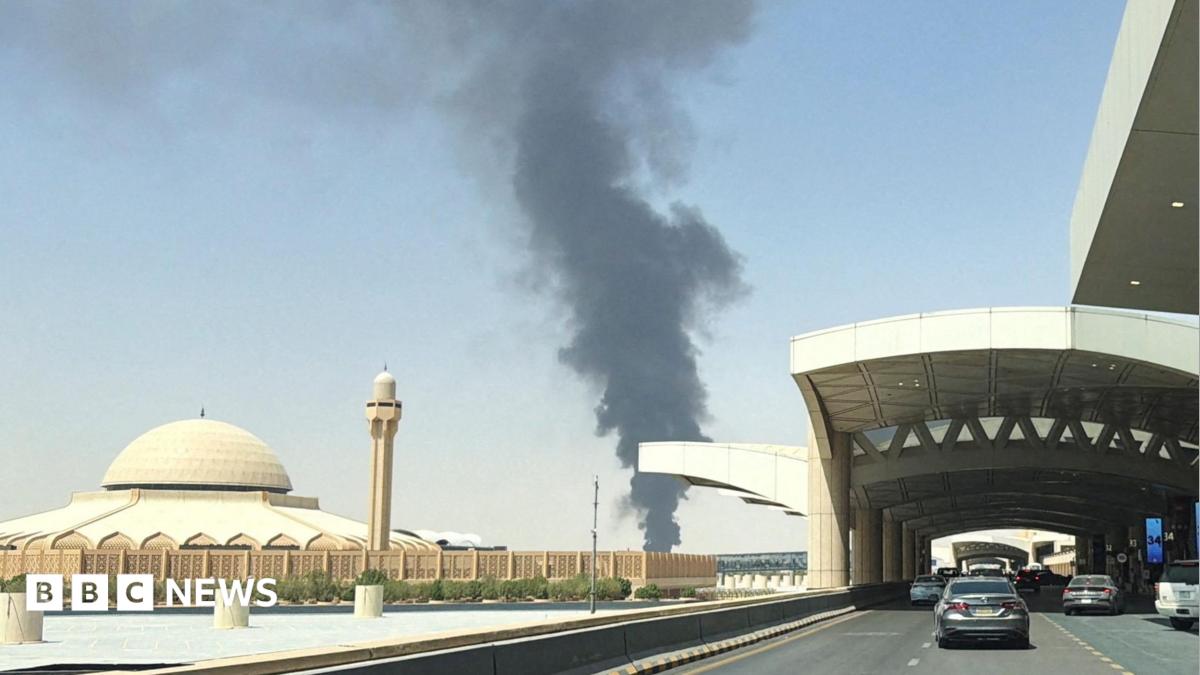
Fires broke out at several sites and operations at some facilities were temporarily halted, according to Saudi authorities, who described the attacks as a “dangerous escalation” and vowed to take measures to deter further strikes.


Source link

Arab News | Houthis bring ‘nothing but suffering’ to Yemen, US says

  • Iran-backed group underestimates Yemeni resolve to end brutality, embassy says

DUBAI: The US has accused Yemen’s Houthis of triggering the latest escalation in violence in the country, as renewed fighting threatened to unravel years of relative calm and draw it deeper into the wider regional conflict.
The US Embassy in Yemen said on Wednesday that the Iran-backed group had brought “nothing but suffering” and accused it of turning Yemen into a base for Iran to “undermine Arab unity and security.”
“The terrorist Houthis and their Iranian backers miscalculated by underestimating the resolve of the Republic of Yemen’s legitimate government, the Yemeni Armed Forces, and the Yemeni people to end Houthi aggression and brutality,” it said on X.
It cited an Aug. 7 statement by the UN Security Council, which condemned Houthi missile attacks against Saudi Arabia and commercial vessels and warned that the group’s actions threatened regional security, navigational rights and efforts to secure peace in Yemen.
The statement came a day after a major Houthi attack on southern Saudi Arabia wounded 73 people, including women and children, and struck energy facilities in Abha, Khamis Mushait, Jazan and Najran.
Fires broke out at several sites and operations at some facilities were temporarily halted, according to Saudi authorities, who described the attacks as a “dangerous escalation” and vowed to take measures to deter further strikes.


Source link

Cameraman catches the moment Yemeni government forces are ambushed | Conflict

A suspected-Houthi roadside ambush of Yemeni government forces has been captured on camera. The convoy was driving through the Hodeidah governorate when gunmen opened fire, killing one person and wounding several others.

Source link

Arab News | Saudi coordination, empowerment of Yemeni government to reshape balance of power

Political analysts believe that the latest Houthi attacks open a new phase in Saudi Arabia’s approach to the Iran-backed group, marked by a shift from managing and containing escalation to firmly deterring it. They said that Riyadh will not accept the targeting of its citizens and residents on its territory, or attacks on its vital facilities.

The analysts told Asharq Al-Awsat that this phase is witnessing an advanced level of political, military, and security coordination between Saudi Arabia and Yemen’s legitimate government, strengthening the latter’s ability to confront sources of threat and reshape the balance of power on the ground.

Saudi Foreign Minister Prince Faisal bin Farhan said on Tuesday that his country would not hesitate to defend itself against attacks by the terrorist Houthi militia and would use all available means to protect its interests.

Speaking at a press conference with his Russian counterpart, Sergey Lavrov, in Moscow, the Saudi foreign minister said the Kingdom is putting forward diplomatic solutions to avoid further suffering for Yemen and its people, and will not hesitate to support what serves the interests of Yemen and the region. He highlighted that the path of diplomacy for dealing with the Houthis remains open.

Prince Faisal added that the Houthis prefer to put their narrow personal interests ahead of Yemen’s interests, while the country’s legitimate government has provided an opportunity to negotiate with them responsibly. He described their latest escalation as part of their pattern of provocation.

The limits of Saudi Arabia’s patience

Dr. Abdulaziz Sager, chairman of the Jeddah-based Gulf Research Center, said Yemen’s legitimate government is fulfilling its responsibilities in confronting Houthi attacks targeting civilians and vital infrastructure across the country. He added that the government has worked to mobilize its capabilities and resources, and consolidate its ranks, particularly at the military level.

“The Kingdom will not tolerate any attacks against citizens, residents or vital facilities on its territory, and that its patience has limits,” Sager said. He expects Riyadh to respond “firmly and decisively against the sources of fire, in a manner proportionate to the scale and intensity of the attacks,” citing recent developments in Iraq.

He added that the Houthis had misread Saudi patience, saying that “they do not adhere to reason or logic and continue to receive instructions.” He said that the group had been given several opportunities over the past years but failed to make use of them.

A more decisive phase

Yemeni writer Saleh Al-Baidani said the latest developments point to “a shift from managing and containing escalation toward a more decisive approach focused on deterrence.”

He told Asharq Al-Awsat: “The Kingdom has provided ample opportunities for de-escalation and a political settlement, but the Houthis misread this restraint, treating it as a permanent limitation on Saudi action rather than a calculated political choice that could be reassessed as circumstances evolve.”

He added that the recent attacks on Saudi territory and vital facilities have elevated the threat to a level that makes the previous approach increasingly difficult to sustain. Al-Baidani said: “When the Houthis evolve from a party to the Yemeni crisis into a regional pressure tool more directly linked to Iran’s calculations and its wider confrontation in the region, the approach to dealing with them inevitably changes.”

According to Al-Baidani, the escalation is no longer linked solely to the Yemeni file, but has come to affect Saudi national security, the security of the Red Sea, energy supplies and the safety of international maritime corridors.

Saudi-Yemeni coordination

The Yemeni writer highlighted that coordination between Saudi Arabia and the legitimate government has entered a different phase compared to previous years, whether at the political, military or security levels.

He added: “The Kingdom appears more aware of the importance of having a Yemeni partner capable of managing the confrontation on the ground, while the Yemeni government realizes that any serious move against the Houthis requires a regional umbrella and political, military and economic support.”

Al-Baidani concluded that the success of the next phase remains contingent on the ability of the Yemeni side to unify military and political decision-making, and to transform multiple forces and fronts from a point of weakness into a source of pressure on the Houthis.

He added: “If that is achieved, we may not be facing a fleeting military round, but rather an attempt to reshape the balance of power that has settled over the past years.”

On Tuesday, Yemeni government forces expanded the scope of their field advance on a number of fronts, managing to liberate the Al-Yatama area in the Khabb wa ash-Sha’af district of Al-Jawf Governorate, northeast of Sanaa, a day after recapturing the Al-Labanat area in the same governorate. This came in parallel with the launch of a large-scale military operation in Al-Bayda Governorate, southeast of Sanaa, and the continuation of clashes on the western coast and west of Taiz, on the sixth day since the start of the Houthi escalation.

The advance comes at a time when government forces have begun, over the past few days, to shift from containing Houthi ground attacks to regaining the initiative on several axes, capitalizing on the group’s retreat from some positions, while army units, resistance forces and the Giants Brigades continue their operations on more than one front.


Source link

Saudi-Houthi fighting in Yemen escalates: What happened, and what’s next? | Houthis News

Yemen’s Houthi group has carried out attacks in southern Saudi Arabia, with Riyadh saying that dozens of people have been wounded, as fighting between the Iran-aligned group and pro-Saudi forces in Yemen sharply escalates.

The Houthis on Tuesday said they targeted Saudi energy sites belonging to oil giant Aramco in southern areas, with the group’s military spokesperson calling it “a broad operation”.

Recommended Stories

list of 3 itemsend of list

Saudi authorities confirmed attacks on several facilities and installations related to the energy sector in the south of the country, vowing a firm response. Riyadh also accused the Houthis of wounding at least 73 people in the attacks.

The conflict between the Yemeni armed group and Saudi Arabia is unfolding as the Houthis are currently fighting Yemen’s Riyadh-backed internationally recognised government, which announced that it was launching counteroffensives against Houthi-held positions across several provinces on Monday.

The renewed hostilities are the most serious since a UN-brokered truce halted large-scale fighting in 2022, after eight years of a full-blown conflict that killed tens of thousands of people in one of the world’s poorest countries.

The escalation also comes as the strategic importance of Yemen’s Bab al-Mandeb Strait grows amid Iran’s effective closure of the Strait of Hormuz, a key passageway for global oil and gas supplies.

The Houthis have sought to advance towards the vital Red Sea shipping route, while government forces say their campaign ultimately aims to retake the Houthi-held capital, Sanaa.

So what do we know about the latest fighting, and what comes next?

How did the fighting between Saudi Arabia and the Houthis unfold?

The Houthis on Monday said Saudi Arabia launched multiple attacks on Houthi-held areas.

The group said Saudi attacks using aircraft and cruise missiles struck al-Jawf, al-Bayda, Marib and Taiz provinces.

Moreover, the Houthis accused Saudi Arabia of carrying out an air strike on a prison in al-Hazm, the capital of al-Jawf, killing seven people and injuring seven others. Riyadh did not immediately comment on the attacks.

At the same time, the Houthis claimed to have shot down Saudi reconnaissance drones over al-Jawf and al-Bayda.

Meanwhile, on Tuesday, Major-General Turki al-Malki, the Saudi spokesman for the Riyadh-led coalition in Yemen, said the Houthis carried out attacks on the Saudi cities of Abha, Khamis Mushait, Jazan and Najran, injuring at least 73 people, among them women and children.

According to a statement from Saudi Arabia’s Energy Ministry, the strikes also triggered fires at multiple oil installations and utility sites across the kingdom’s southern provinces.

Southern Saudi Arabia is home to key oil infrastructure, including the Jazan refinery, one of the kingdom’s largest, with the capacity to process 400,000 barrels of crude per day.

Shortly after, the Houthis announced that they had targeted Saudi energy infrastructure operated by oil giant Aramco in the south using drones and ballistic missiles.

The group’s military spokesman, Yahya Saree, said the attacks were retaliation for recent Saudi attacks on Houthi-controlled areas across Yemen.

Why is this escalation taking place now?

A key focus of the fighting is the Bab al-Mandeb Strait, the narrow waterway connecting the Red Sea to the Gulf of Aden.

The Houthis declared a blockade against Saudi shipping in July. The Houthis have also pushed towards government-held areas near al-Makha (Mocha) and territory bordering the Bab al-Mandeb Strait amid reinforcements and counteroffensives from government forces.

The strait’s strategic importance has increased dramatically because Iran’s restrictions on the Strait of Hormuz have forced Saudi Arabia to rely more heavily on its Red Sea export route. Between March and mid-July, Saudi seaborne crude exports through Bab al-Mandeb were eight times higher than during the same period in 2025.

In 2024, about 4.1 million barrels of crude oil and petroleum products passed through the strait daily on average – about 5 percent of the global total.

Internally displaced (IDP) Yemeni women who fled their homes with their families due to renewed clashes between Yemen's Saudi-backed government forces and the country's Houthi rebels, carry jerrycans after seeking shelter in Mocha, on the Red Sea coast of Yemen on September 7, 2026. [AFP]
Internally displaced Yemeni women, who fled their homes with their families due to renewed clashes between Yemen’s Saudi-backed government forces and the country’s Houthi fighters, carry jerrycans after seeking shelter in al-Makha, on the Red Sea coast of Yemen on September 7, 2026. [AFP]

Ahmed Nagi, a senior analyst at the International Crisis Group, said the strait holds importance “when we look at the Houthis’ broader strategy”.

“The move towards the western coast is not only about gaining territory on the ground. It also has a maritime dimension,” he told Al Jazeera.

“The Houthis have already linked their military campaign to the Red Sea and the shipping routes around Bab al-Mandeb. So gaining more control over the … western coast could give them greater depth and allow them to sustain pressure on maritime traffic in the Red Sea. In that sense, the ground offensive and their maritime campaign are closely connected.”

The latest escalation also follows fighting that resumed in July after an Iranian aircraft attempted to land in Sanaa without Saudi authorisation, followed by strikes on Sanaa airport and Houthi retaliation.

What is happening between government forces and the Houthis?

On Sunday, Yemen’s internationally recognised government said its warplanes had struck Houthi positions in Hodeidah, Marib and al-Jawf, as fighting spread across several fronts.

On Monday, government-aligned forces stepped up their counteroffensive. They announced a ground push towards the al-Labanat mountains in al-Jawf, while also reporting rocket attacks on Yatma and “intensive battles” with Houthi fighters in the province. Government forces also claimed advances towards Dhi Na’im district in al-Bayda.

The Houthis said they had repelled the advance towards al-Labanat and inflicted casualties on government-aligned forces. Houthi official Mohammed al-Farah also claimed the group fired ballistic missiles at reinforcements in al-Jawf.

By late Monday, government-aligned forces reported carrying out further air attacks against Houthi positions west of Taiz.

Al Jazeera could not independently verify the battlefield claims by the Houthis or the Yemeni government.

Rashad al-Alimi, who heads Yemen’s Saudi-backed Presidential Leadership Council, meanwhile said on Monday that government forces had made significant gains against the Houthis, pointing to advances in al-Jawf, al-Bayda, Taiz and Hodeidah.

“Our armed forces will continue to carry out their constitutional duty until state institutions are restored and their authority extends over the entire territory of Yemen,” al-Alimi said in a statement.

Yemen’s deputy defence minister, Major-General Samir al-Sabri, said in comments aired on state television that the government had resolved to “retake Sanaa”.

Majid al-Nuzaili, a spokesperson for government-aligned forces, said the goal of the offensive was to “liberate Yemen from the grip” of the Houthis “and restore Sanaa as a capital for all Yemenis”.

What is the humanitarian situation on the ground?

The World Health Organization said on Monday that at least 728 people have been killed or wounded in Yemen since August 23, with the majority in Taiz and along the western coast.

It said an estimated 21,000 people, roughly 3,000 families, have been displaced from Taiz alone since Thursday.

Al Jazeera’s Yousef Mawry, reporting from Sanaa, said the casualty count is expected to rise.

“These casualties are said to be in the hundreds from both sides, especially as we have reports of air strikes being conducted in the governorate of al-Jawf,” he said.

The Crisis Group’s Nagi said the world was witnessing “significant deterioration in what is already a catastrophic situation”.

“We saw in the past few days a lot of displacement from areas where there has been fighting between the two sides, especially in Taiz,” he noted.

“Those are the direct impacts, but there are also indirect ones. The economic situation is likely to get worse, which will put even more pressure on the humanitarian situation. Ultimately, I think it will depend on how long this round of fighting lasts. The longer the conflict continues, the greater the humanitarian impact will be.”

What’s next?

Analyst Hisham al-Omeisy said the fighting in the war-torn country was no longer simply a domestic one.

“We are way beyond the concept [of it] being domestic. It all started with the Houthis pushing to control Bab al-Mandeb and the western coast, to control the chokehold on the other side of the Arabian Peninsula, with the Iranians controlling the Strait of Hormuz,” al-Omeisy, a senior Yemen adviser at the European Institute of Peace, told Al Jazeera.

“This is definitely not domestic, especially when the Houthis have started attacking Saudi Arabia as well for the better part of the last month, and now escalating since today [Tuesday].”

Domestically, the Crisis Group’s Nagi said it was “unclear” what the outcome of this round of fighting will be, describing the situation on the ground as “very fluid”.

“But what we are seeing is that the government seems to be in a stronger position than at any time before, and it sees this round of fighting as an opportunity to consolidate its position and gain more territory from the Houthis,” he added, while warning that this did not mean the Houthis were weak.

“It’s true that the Houthis are fighting in Taiz, and they were the ones who launched the offensive against government forces there and made some gains. But on other fronts, in al-Jawf, al-Bayda, Marib and elsewhere, government forces have advanced and gained several key areas, while the Houthis have been on the defensive.”

On whether there will be a winner in this conflict, al-Omeisy said that in the long term, he expects a negotiated settlement.

“Look at the history of Yemen … we always inevitably reach some sort of a deal, so it’s not going to be a winner-takes-all,” he said.

“I don’t imagine there’s going to be a push to regain the capital [Sanaa], for instance. It’s going to be a bloodbath if they [government-aligned forces] do that.”

“There’s going to be a humbling of the Houthi forces. There’s going to be losses. But eventually, you will need a political deal,” al-Omeisy added.

According to Saudi political analyst Khaled Batarfi, the Houthi strikes will trigger a response but not a prolonged war.

“This is an escalation, of course,” Batarfi told Al Jazeera. In past attacks, Saudi Arabia tried “to not get engaged in a civil war, keep its distance and not to respond to attacks. But now this is too much [of an escalation],” he said.

“The coalition will have a say on that. This is a civil war inside Yemen, and it affects us as one of the parties. And so any response … in the same way [will be] an eye for an eye. But I don’t see a prolonged war – not with Iran and not with the Houthis.”

Source link

Houthi attacks on southern Saudi Arabia reportedly injure dozens | Houthis

Saudi Arabia says a wave of Houthi attacks on the country’s south have injured 73 people, including women and children. The strikes reportedly hit civilian and economic sites, as fighting intensifies in Yemen.

Source link

Yemen government launches own air attacks on Houthis: What that means | Houthis News

Yemen’s internationally recognised government has launched a series of air attacks against Houthi positions in the country, marking a significant escalation in the conflict, with some of the country’s heaviest fighting since a fragile truce in 2022.

Government warplanes carried out at least 15 strikes on Friday against Houthi positions, gatherings and vehicles in the western provinces of Taiz and Hodeidah, according to the Yemeni military.

Recommended Stories

list of 4 itemsend of list

The air assault against Houthi positions provided support to government forces fighting a major Houthi offensive towards the Red Sea coast and the strategic Bab al-Mandeb Strait, one of the world’s most important shipping routes.

These are not the first air attacks by government aircraft since Yemen’s fragile truce began to unravel in July. On July 25, government aircraft struck Houthi missile and drone launch sites and weapons depots in Marib and al-Jawf, according to Yemeni military officials cited by the Reuters news agency.

And less than two weeks earlier, on July 13, Yemen’s internationally recognised government said its forces had struck the runway at the Houthi-held Sanaa International Airport to prevent an Iranian aircraft from landing.

However, the latest attacks mark a significant step up in the government’s use of its own air power against the Houthis, after Saudi-led coalition aircraft provided much of the aerial firepower supporting anti-Houthi forces during the most intense years of Yemen’s war.

Friday’s air campaign comes as the Iran-backed Houthis, who have been vying for control of Yemen for years, attempt to advance through western Taiz and southern Hodeidah towards al-Makha (Mocha), and territory overlooking the critical Bab al-Mandeb Strait at the opening to the Red Sea.

Control of the area could strengthen the Houthis’ position along the Red Sea, where the group has previously attacked commercial and military vessels, while threatening a key government supply route.

The fighting unfolds against a backdrop of the wider regional conflict, with the Houthis recently declaring a Red Sea maritime blockade against Saudi Arabia, while disruption to shipping through the Strait of Hormuz during the US-Israel war with Iran has raised the strategic importance of alternative routes through the Red Sea. This means any expansion of Houthi influence around Bab al-Mandeb could have consequences for shipping far beyond Yemen.

Here’s what we know.

What has happened?

Fighting erupted on Thursday as Houthi forces launched a major offensive along front lines in western Taiz and southern Hodeidah, using ballistic missiles, drones and artillery as ground forces attempted to advance towards government-held territory along the Red Sea coast.

The fighting has centred on areas west of Taiz and around al-Makha, a government-held port near the Bab al-Mandeb Strait.

A Yemeni official in Aden told the AFP news agency that the Houthis were seeking to capture hills overlooking Bab al-Mandeb and al-Makha before pushing towards the coast.

Al Jazeera’s Yousef Mawry, reporting from Sanaa, said Houthi forces had made gains in western Taiz.

“According to military officials from the internationally recognised government, the Houthis have been able to take some of those territories,” Mawry said. “In western Taiz, they’ve managed to take over a strategic military base, which is settled on top of a strategic mountain and gives the Houthis an overview of the entire area.”

Mawry said there had been particularly heavy fighting around al-Barah and Maqbanah, where a main road is used to resupply government forces stationed in Taiz and al-Makha.

More than 120 fighters have been killed since the Houthi offensive began, according to an AFP tally, making the clashes among Yemen’s deadliest in years.

Several civilians were also reported killed and others injured after a ballistic missile hit a restaurant in the al-Makha area, according to government-run Saba TV.

On Saturday, at least four civilians were killed and nine others injured in a Houthi missile strike on a crowded road in southwestern Yemen, according to Saba news agency.

The attack by the Iran-backed group on Saturday targeted a gathering of civilians along the strategic Heijah al-Abd Road, south of Taiz city, Saba said, citing local and medical sources.

What is behind the latest tensions?

The Houthis seized Yemen’s capital, Sanaa, in September 2014 and subsequently took control of much of northern and western Yemen, prompting a Saudi-led coalition of Arab countries to intervene in support of the internationally recognised government in March 2015.

A United Nations-brokered truce in April 2022 sharply reduced fighting. Although the agreement formally expired six months later, large-scale hostilities between the Houthis and Saudi-backed government forces remained relatively limited and Saudi Arabia pursued negotiations with the group.

No comprehensive peace agreement followed, however, leaving front lines largely frozen rather than ending the conflict.

That fragile status quo came under increasing pressure after the United States and Israel launched their war against Iran on February 28, but tensions escalated further in July with the government air force strike on the Houthi-held Sanaa International Airport, preventing an Iranian aircraft from landing.

Interactive_Yemen_Control_Map_Jan14_2026_REVISED
(Al Jazeera)

What do we know about Yemen’s air force?

The modern Yemeni Air Force was created after North and South Yemen unified in 1990, bringing together two militaries equipped with both Soviet and Western aircraft.

Its fleet subsequently included MiG-21 and MiG-29 fighters, Su-22 fighter-bombers, US-made F-5 fighters and a range of helicopters and transport aircraft.

But Yemen’s armed forces fractured when the Houthis seized Sanaa and the political crisis descended into war in 2014 and 2015.

When Saudi Arabia intervened soon after, its coalition targeted airbases, air-defence systems and combat aircraft in a bid to prevent the Houthis from making use of Yemen’s air force.

That left the Saudi-led coalition – rather than the Yemeni government’s own depleted air force – providing much of the air power supporting government forces during the subsequent war.

Saudi-led coalition aircraft conducted tens of thousands of air raids between March 2015 and the 2022 truce, striking Houthi military positions and providing air support during major government ground offensives. The campaign also caused extensive civilian casualties and became one of the most controversial aspects of the war.

Between 2014 and 2022, Human Rights Watch documented dozens of apparently unlawful coalition air attacks on homes, markets, hospitals, schools, detention centres and other civilian sites.

In 2024, the US and the United Kingdom launched a new round of air attacks against Houthi positions in Yemen following strikes on Israel-linked shipping in the Red Sea. Earlier this year, the US Pentagon disclosed that US military attacks against Yemen’s Houthis killed 153 civilians in 2025 and wounded another 243. The US had previously denied its attacks had caused civilian deaths.

The conflict in Yemen has caused a huge humanitarian crisis. In 2021, the UN estimated that 377,000 people had died in Yemen since 2014, with 60 percent the result of food shortages and lack of accessible health services.

Why is the Yemeni government using its own air power now?

Previously relying on Saudi-led coalition air force power, the government’s decision to deploy its own warplanes now comes as it tries to blunt a Houthi offensive that initially made gains across several fronts in western Taiz and threatened the main road linking Taiz with the Red Sea port of al-Makha.

Mohammed al-Basha, a Yemeni American analyst and former spokesperson for Yemen’s embassy in Washington, told Al Jazeera that the Houthis had achieved “some initial gains during a surprise, multi-axis offensive across western Taiz” this week, temporarily capturing positions and threatening areas overlooking the Taiz-al-Makha corridor.

But those advances did not produce the wider breakthrough the group appears to have sought, he said.

“The front did not collapse, the Taiz-al-Makha corridor was not severed, and attempts to expand the offensive towards other strategically important positions were stopped,” al-Basha added.

Government and allied forces recovered much of the territory lost during the first day of fighting, according to al-Basha, while Houthi advances on several other axes were contained or repelled.

The government has since sent reinforcements, and the use of aircraft gives those forces another means of attacking Houthi positions and concentrations as they try to retake high ground and prevent the group from cutting the Taiz-al-Makha road.

Why have the Houthis launched this offensive now – and what happens next?

Al-Basha said Jabal Numan, overlooking the Taiz-al-Makha road, is one of the most important remaining contested areas, while a Houthi attempt to capture Jabal Dhu Ba’s, north of Hays, was repelled by National Resistance forces.

Taking such high ground could allow the Houthis to observe and threaten government supply routes, while losing it could make further advances towards al-Makha substantially more difficult.

“The first day therefore ended with a mixed battlefield picture,” he said. “The Houthis gained ground through the initial surprise and speed of their multi-axis assault, but much of that ground was subsequently recovered.”

The arrival of new government-aligned forces, coupled with air support, could make it harder for the Houthis to repeat their initial breakthrough.

“The next phase is likely to be more difficult,” al-Basha said. “Both sides are reinforcing, several positions remain contested, and control of Jabal Numan remains a key immediate objective.

“The coming hours will likely centre on attempts by anti-Houthi forces to recover the mountain, consolidate their lines and prevent another Houthi push towards the Taiz-al-Macha corridor.”

Source link

Closure of al-Makha port leaves workers and traders fearing for the future | Conflict News

Taiz, Yemen – Mohammed Al-Homaidi, a labourer in his 30s, has been working at the al-Makha (Mocha) port in western Yemen since its reopening in 2021.

Even though he was reliant on a daily wage, his earnings provided a decent standard of living for his family.

Recommended Stories

list of 4 itemsend of list

But things changed on August 9, when the Red Sea port was targeted by Houthi attacks that killed at least seven people.

With the conflict between the Yemeni government and Houthi forces escalating after a long-standing truce collapsed last month, finding daily work was no longer his priority, but his safety.

“It was around 12:30pm when the explosions [were heard] at the seaport, which was full of workers at the time. I couldn’t understand what was happening, and we couldn’t flee because the explosions were continuous,” Al-Homaidi told Al Jazeera. “After about an hour and a half, I ran outside the port and didn’t stop until I reached home.”

Thirty more people were injured in the barrage of Houthi drone and missile strikes that targeted the port and surrounding areas.

Houthi forces have continued to target the port and surrounding areas on a near-daily basis, resulting in dozens of deaths and injuries.

On August 11, the Houthis targeted a vessel at al-Makha port, killing three Pakistani crew members and injuring eight other seamen.

Three days later, the Houthis targeted two cargo ships at the Red Sea port, damaging the facility’s remaining infrastructure.

Due to the repeated Houthi attacks, operations were suspended last Friday to avoid putting the port’s 1,500 workers’ lives in danger.

For Al-Homaidi and other workers whose salaries were dependent on their daily labour, the port’s closure means a new struggle to put bread on the table.

“I am happy that we are safe at home today, but we are jobless now because we rely on daily wages,” Al-Homaidi said. “I don’t have any savings, and our food at home is running out. How can I provide basic needs for my family?”

Life beyond the seaport

Al-Homaidi also has experience working in al-Makha’s other major industry: fishing. But dangerous attacks around the Red Sea mean this is not an option for him and his colleagues at the port either.

Local fishermen have been ordered by local authorities not to go out to sea until further notice – but with money running low, a group of fishermen still ventured out on August 11. Their families are continuing to desperately search for them after they failed to return home.

With near-daily Houthi attacks on al-Makha, public beaches, parks, the coastal walkway and other areas have also been closed.

Families avoid going outside due to the threats of Houthi drones and missiles, and a strict nightly curfew for motorcycles is in place from 11pm to 6am.

Compounding the community’s suffering is a complete blackout of landline and mobile communications. Residents who can afford it use Starlink satellite internet. But for most Yemenis in al-Makha, there is no way to reach the outside world.

Houthi attacks have stopped fishermen in al-Makha from going out to sea
Houthi attacks have stopped fishermen in al-Makha from going out to sea [File: Al Jazeera]

Back to square one

Abdulmalik Al-Sharabi, director of al-Makha port, confirmed to Al Jazeera that repeated Houthi attacks have forced the port to halt operations. At least six merchant vessels carrying commercial cargo have been struck since the most recent bout of violence, resulting in casualties among civilians and seamen.

“More than 1,500 port workers lost their jobs, while 16 were killed and 22 injured as a result of the Houthi attacks,” Al-Sharabi told Al Jazeera English.

Missile strikes have specifically targeted civilian infrastructure at the port and in surrounding areas, he said.

“The attacks targeted commercial and service areas, workshops, equipment, and the port pier, destroying it to the point that it ceased operations,” Al-Sharabi noted.

Operations across 30 shipping and customs clearance agencies have ground to a halt, affecting workers.

The port, which was closed between 2015 and 2021, serves as an economic lifeline for Taiz governorate as well as other Yemeni economic hubs such as Lahj, Hodeidah and Ibb. With it now closed, traders there will be forced to route imports via the port of Aden, driving up logistics costs.

“We were happy to have a seaport with such operational capacity, but today we are back to square one,” Al-Sharabi said.


Fishermen and traders are worried for their future in al-Makha, where 1,500 have lost jobs after Houthi attacks killed 16 fishermen and forced the port to shut down
Fishermen and traders are worried for their future in al-Makha, where 1,500 have lost jobs after Houthi attacks killed 16 fishermen and forced the port to shut down [File: Al Jazeera]

No money, no food

Abdulraoof Abdullah, a fisherman in his 50s from al-Makha, has no source of income for his eight family members other than the fish he caught in the Red Sea. Due to the instability off al-Makha’s coast, he has not been out to sea since August 11.

“We are out of work now, and our homes are almost empty of food. We try to secure meals each day either by going into debt or asking friends for help,” he told Al Jazeera English.

With the port closed and food imports reduced, Abdullah said he expects prices to rise in the market, and he has no choice “but to pray to Allah.”

“We don’t have money to buy food for today, so how could we possibly have money to stockpile food?” he added.

“Most residents in Makha are fishermen, and we are currently out of work,” Abdullah said. “When we have jobs, we can buy food; otherwise, we will have to displace to another area where we can find work to support our families.”

Trading woes

Rashad, a local trader in al-Makha who preferred to be identified only by his first name, was importing goods through shipping agencies at the port since 2021. Given that his warehouses are just a few kilometres from the port, this was by far the cheapest option.

“Our goods are currently held up in Djibouti, and shipping costs have surged due to ongoing tension in the Red Sea,” Rashad told Al Jazeera. “Furthermore, we were just informed that our cargo will now be redirected to Aden, meaning we will have to pay significantly more for overland transport from Aden to al-Makha.”

With the warehouses still stocked with food from earlier orders, prices have not yet risen. But if the port remains closed, traders will be forced to increase prices on future shipments arriving via Aden.

“I am a resident of al-Makha before I am a trader. Any price increase directly impacts my family and neighbours – something I desperately want to avoid. But unless al-Makha seaport reopens soon, price hikes will be inevitable,” he added.

Although Rashad didn’t have any cargo on the ships that were recently hit in Houthi attacks, he said he feels empathy for other traders who suffered financial losses.

“Some people assume traders are financially comfortable, but we are in a state of constant worry. We track our shipments for months until they safely reach our warehouses,” he said.

“No one can imagine the devastation felt by traders who lost everything at al-Makha port. The harsh reality of this war has impacted every single Yemeni, and we are no exception.”

Source link