Hormuz

Does Trump hold ‘all the cards’ against Iran in the Strait of Hormuz? | US-Israel war on Iran News

“I have all the cards,” posted the White House on its X account on Sunday, alongside an image of President Donald Trump holding playing cards from the Uno game, in a message appearing to signal Washington’s confidence in its ongoing war on Iran.

Uno is a card game in which the winner is the first to get rid of all their cards.

Recommended Stories

list of 4 itemsend of list

The post came after Trump announced on his Truth Social platform that the US military would begin guiding ships stranded around the Strait of Hormuz by the war on Monday, in a sign that the conflict could further escalate, despite the near-month-long fragile ceasefire. Tehran has been effectively blocking nearly all shipping from the Gulf for more than two months, after the US and Israel attacked Iran two months ago, disrupting global energy supplies.

“We have told these countries that we will guide their ships safely out of these restricted waterways, so that they can freely and ably get on with their business,” Trump said, dubbing the campaign “Project Freedom”. “They are merely neutral and innocent bystanders!”

The president added that US negotiators were engaged in “very positive discussions” with Tehran, which could lead to “something very positive” without further elaboration.

Iran, however, reacted by insisting that the security of the waterway was in the hands of its armed forces, and warned that “any safe passage and navigation in any situation” should be “carried out in coordination with the armed forces”.

On Monday, the Iranian Fars news agency reported that a US warship had been hit by two Iranian drones, the claim was denied by US Central Command.

So what leverage do the US and Iran hold over each other, and what happens next?

In response to Trump’s “I have all the cards” social media post, Iran’s Consulate General in Hyderabad, India, posted its own image on X.

“Yes, we have less cards,” Iran’s consulate in the Indian city of Hyderabad wrote on X, together with a photo of an Iranian military spokesperson holding four Uno cards compared to Trump’s five, pointing out that usually holding all the cards means you are losing, not winning, in the game of Uno.

In response to Trump’s “Project Freedom” declaration, Iran’s Islamic Revolutionary Guard Corps (IRGC) warned that ships deemed to be in breach of its rules in the Strait of Hormuz “will be stopped by force”, while insisting there has been no change in how it manages traffic through the strategic waterway.

On Monday, it issued a new map of the Strait of Hormuz with boundaries extending further to the east than its previous one, and said any ship travelling between the two sides must coordinate with the IRGC first.

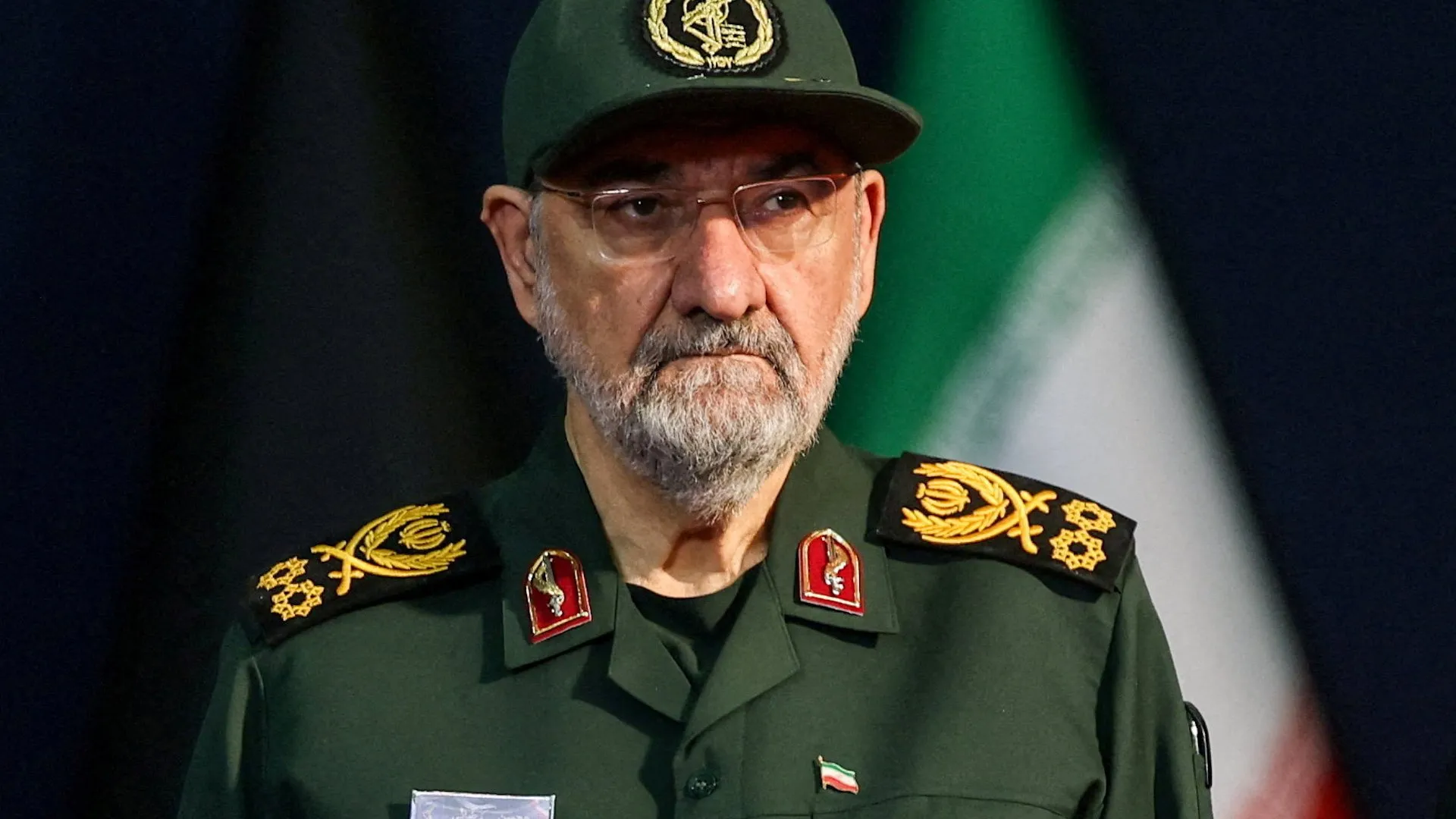
“There has been no change in the management process of the Strait of Hormuz,” spokesperson Sardar Mohebbi said, adding that vessels that comply with the “transit protocols issued by the IRGC Navy” will be “safe and secure”.

“Other maritime movements that are contrary to the declared principles of the IRGC Navy will face serious risks. Violating vessels will be stopped by force,” he said.

What leverage does the US have over Iran?

Sanctions

The United States’ most enduring source of leverage over Iran remains its sanctions regime, which was launched in 1979 when Ayatollah Ruhollah Khomeini declared Iran an Islamic Republic.

Successive US administrations over the past 47 years have hit Tehran with a series of financial restrictions targeting Iran’s banking, oil exports and access to international markets – the US says the sanctions are a response to Iran’s nuclear programme.

Sanctions have significantly constrained Iran’s economy, limiting government revenue and contributing to inflation and currency depreciation. Measures enforced through the US Treasury also deter other countries and companies from engaging with Iran, further strangling its economy.

The economic pressure has been central to US strategy towards Iran, particularly during its attempts to force Tehran back to negotiations over its nuclear programme, under both Democratic and Republican administrations.

Military power

Beyond economics, the US maintains overwhelming military superiority, especially air power. Aircraft carriers, long-range bombers and precision strike capabilities give Washington the ability to target Iranian infrastructure with relatively low risk to its own forces.

US bases across the Gulf, as well as military partnerships with regional allies – most notably Israel – reinforce this advantage.

American forces, together with the Israeli army, have killed more than 3,000 people, and struck thousands of sites across Iran in the current war, including Iran’s energy and nuclear sites.

Naval blockade

Since mid-April, the United States has enforced a widespread naval blockade of Iranian ports and ships. The operation began on April 13 after talks between Washington and Tehran collapsed, with US forces ordered to stop or divert vessels entering or leaving Iranian ports.

US forces have since intercepted or turned back dozens of ships, and seized a container ship, the Touska. On Monday, the US announced that its crew had been repatriated to Iran from Pakistan, where they were taken after their ship was captured in the Gulf of Oman last month.

According to Trump, the blockade is designed to choke Iran’s oil exports, its main revenue source.

US officials say the measures have severely disrupted Iran’s trade, which relies heavily on sea routes.

What leverage does Iran have?

Strait of Hormuz

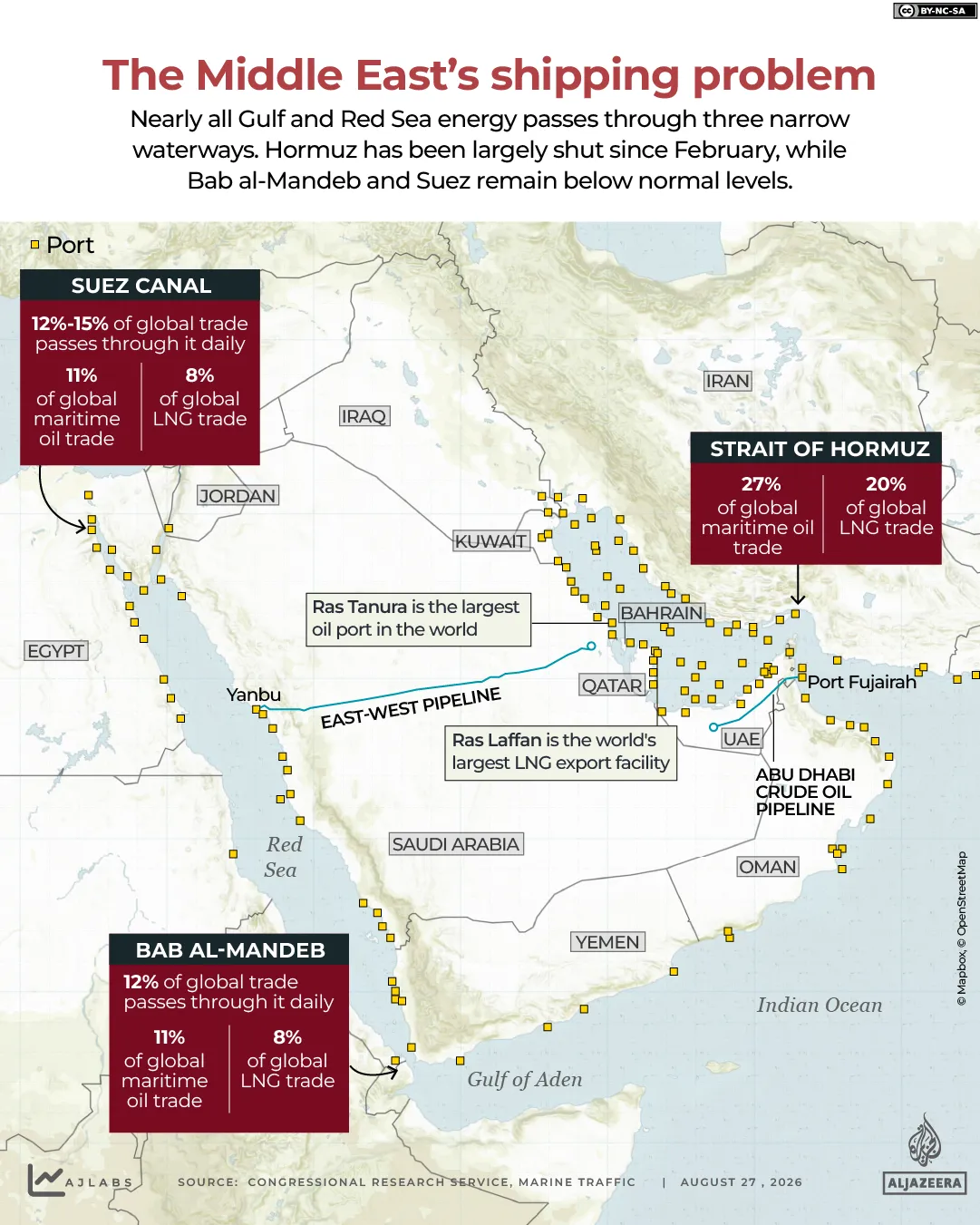
The vital waterway is Iran’s most significant strategic asset, the narrow passage ships one-fifth of the world’s oil and liquefied natural gas (LNG) supplies in peacetime.

Tehran has effectively closed the strait since the war began on February 28, sending global oil and gas prices soaring and energy markets into turmoil. Iran has repeatedly demonstrated its ability to target shipping, seize vessels, or conduct military exercises, demonstrating its ability to close or restrict the strait.

The result is soaring energy prices globally, forcing many countries to implement severe austerity measures to soften the blow.

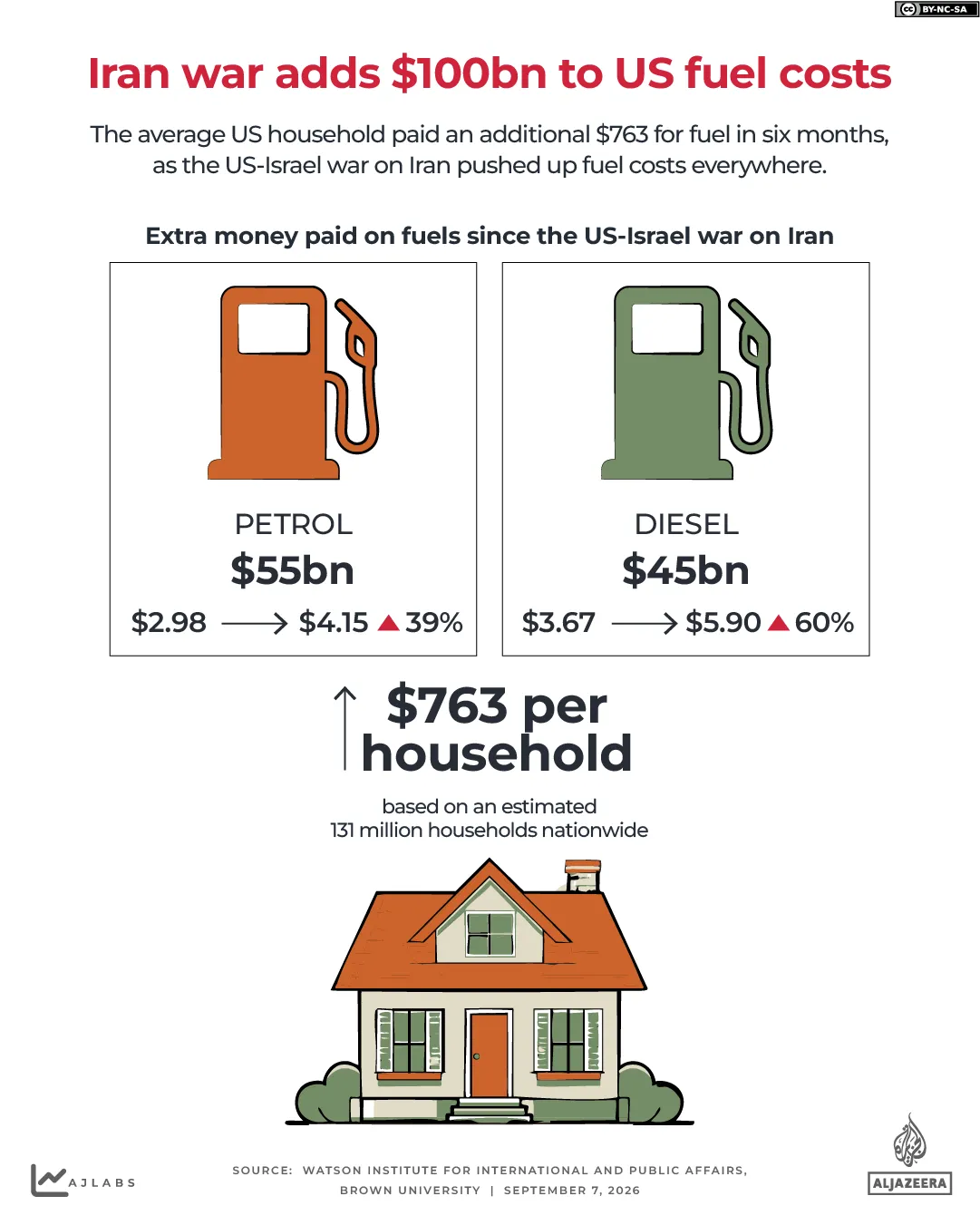
Last week in the US, the average price of a gallon (3.8 litres) of gasoline (petrol) rose to $4.30, according to the American Automobile Association (AAA), up from less than $3 before the war.

Surging energy costs have driven up inflation and deepened economic uncertainty in the US, compounding Trump’s political troubles amid overwhelming disapproval for the war amongst Americans.

Even if the US does begin escorting ships through safely – the threat from mines or Iranian strikes may be enough to prevent tankers from attempting to sail, experts say. Insurance companies are also unlikely to underwrite voyages.

Regional allies

Iran’s network of allied groups across the Middle East is another asset that Tehran relies on heavily. These include armed groups in Iraq and Syria, as well as Hezbollah in Lebanon and the Houthis in Yemen

Through these groups, Iran has exerted pressure indirectly, targeting US interests and allies without engaging in direct confrontation.

One critical threat Iran has previously made is for the Houthis to disrupt shipping in the Bab al-Mandeb, another vital maritime chokepoint linking the Red Sea to the Gulf of Aden.

INTERACTIVE - Bab al-Mandeb strait red sea map route shipping map-1774773769

The Houthis, an Iran-aligned group in Yemen, have previously targeted shipping in this area, most notably during Israel’s genocidal war on Gaza, further raising concerns about the security of global trade routes.

Roughly 4.2 billion barrels of crude oil and refined petroleum liquids flowed through the strait in 2014, accounting for about five percent of global supply.

Cheap drones and cluster bombs

While nowhere near the military capabilities of the US, Iran’s investment in missile and drone programmes has proven to be an effective means of deterrence. That is particularly through its ability to threaten regional US bases and impose significant costs on regional countries hosting American assets involved in military operations against Tehran.

While the US undoubtedly has a more sophisticated and powerful arsenal at its disposal, the interceptors it uses to combat Iranian drones cost around $4 million each, while Iran’s Shahed drones can be mass-produced at $20-50,000 each.

Furthermore, Iran’s ballistic missiles have proved capable of breaching Israel’s much-lauded “Iron Dome” defence system on several occasions. Iran has also dropped cluster bombs, which divide before they can be intercepted, making them much harder to stop.

So does the US really hold the most cards?

Michael Clarke, visiting professor at the Department of War Studies, King’s College London, said Trump’s overwhelming conventional military strength has failed to translate into strategic leverage on the ground.

“President Trump thinks he is a great poker player,” Clarke told Al Jazeera. “He thought America’s sheer destructive potential put all the ‘cards’ in his hand” when starting the war on Iran.

But Iranian forces have consistently disrupted US expectations through asymmetric tactics, he said.

“At every turn, the Iranians have come up with asymmetric tactics – vicious, reckless tactics – that have negated everything the Americans have tried to do,” Clarke noted, describing a pattern in which traditional US military superiority has been blunted by unconventional responses.

Despite significant American forces and assets in the region – including “no fewer than three US Carrier Strike Groups, two Marine Expeditionary Units, hundreds of combat aircraft and thousands of troops”, Clarke argued that Washington has struggled to find an effective use for its multi-billion-dollar resources at its disposal.

Moreover, he said, domestic pressure on Trump is growing. Trump “can’t find a way to use them [US forces] that will make any real difference to the current stalemate in the limited time he has before his own MAGA base concludes he has lost the game”.

Clarke also highlighted the willingness of Iran’s IRGC to escalate tensions. “Whatever this war might do to Iranian society, the IRGC is prepared to gamble with its own existence in the fight,” he added.

Source link

Iran says it fired missiles at US warship to prevent it entering Hormuz | US-Israel war on Iran

NewsFeed

Iranian state media says two missiles have struck a US navy destroyer to prevent it entering the Strait of Hormuz after the warship ignored warnings to halt. The attack comes after US President Donald Trump announced a naval mission to ‘guide’ stranded ships through the strait.

Source link

Two vessels attacked near Strait of Hormuz hours apart

A container ship sails on the Strait of Hormuz, as seen from Ras Al Khaimah, United Arab Emirates, on June 23, 2025. The United Kingdom Maritime Trade Operations Center said a tanker was struck in the strait late Sunday. File Photo by Ali Haider/EPA-EFE

May 4 (UPI) — An oil tanker was struck late Sunday near the Strait of Hormuz, the second attack on a vessel in the Persian Gulf in about eight hours.

The United Kingdom Maritime Trade Operations said in a statement that it received a report of a tanker being hit by unknown projectiles as the vessel was about 78 nautical miles north of Fujairah, United Arab Emirates, near the northern tip of Oman’s Musandam Peninsula by the Strait of Hormuz.

The attack occurred at about 11:40 p.m. local time, it said, adding that all crew were safe and there was no environmental impact from the strike.

The tanker was not identified.

The oil tanker was struck a little more than eight hours after a bulk carrier was attacked by “multiple small craft” in the same region.

The UKMTO said the unidentified bulk carrier was attacked Sunday afternoon about 11 nautical miles west of Sirik, Iran. All crew were reported safe.

The agency is advising vessels to transit the Strait of Hormuz with caution.

The maritime security threat level in the strait remains critical as the United States is enforcing a blockade of Iranian ports in response to Iran restricting which vessels can transit the strait.

The attacks come as U.S. President Donald Trump on Sunday vowed to “free” cargo ships trapped in the Persian Gulf since the U.S.-Israel war against Iran began on Feb. 28.

In his Truth Social post, Trump said Project Freedom would begin Monday with the goal of helping ships sailing under neutral flags navigate the strait. Few specifics on how the operation will work were given.

More than two dozen vessels have reportedly been attacked in the strait since the war began.

Source link

Oil markets lower as Trump vows to help ships leave Strait of Hormuz

Published on

Crude prices were slightly lower ahead of European markets opening as traders digested comments from US President Donald Trump that Washington would help ships leave the Strait of Hormuz from today. Iran, however, has rejected the plan.


ADVERTISEMENT


ADVERTISEMENT

At the time of writing, the price of a barrel of US benchmark crude (WTI) was down 0.28% to $101.65 a barrel, while Brent crude, the international standard, edged down 0.06% to $108.10 a barrel.

Much hinges now on progress towards ending the war with Iran and unlocking the bottleneck through the Strait of Hormuz.

The oil market “remains the fulcrum, with hundreds of tankers, bulk carriers, and cargo ships still stranded across the Gulf, idling as storage constraints force producers to shut … production simply because there is nowhere left to store it,” Stephen Innes of SPI Asset Management said in a commentary note.

Trump said what he called “Project Freedom” would begin Monday morning in the Middle East. The US Central Command said it would involve guided-missile destroyers, more than 100 aircraft and 15,000 service members, but the Pentagon did not immediately answer questions about how they would be deployed.

Asia-Pacific and US markets

In Asian share trading overnight, Hong Kong’s Hang Seng jumped 1.4% to 26,135.47. Markets in mainland China and Japan were closed for “Golden Week” holidays. In Australia, the S&P/ASX 200 slipped 0.3% to 8,704.70.

Strong buying of tech stocks pushed shares in South Korea sharply higher, as the Kospi gained 3.8%. Taiwan’s Taiex surged 4.2%.

On Friday, the S&P 500 climbed 0.3% to another all-time high of 7,230.12, closing out a fifth straight winning week. The Dow Jones Industrial Average dipped 0.3% to 49,499.27, and the Nasdaq composite added 0.9% to a record close of 25,114.44.

Apple led the way after delivering better profit than expected. Because it’s one of Wall Street’s biggest stocks in terms of overall size, its rally of 3.3% was by far the strongest force lifting the S&P 500.

Stock prices generally follow the path of corporate profits over the long term, and US companies have been exceeding expectations for earnings in the first three months of 2026. That’s even with the war with Iran and high oil prices souring confidence for many US households.

Strong earnings boost S&P 500

A little more than a quarter of the companies in the S&P 500 have reported already, and 84% of them have topped analysts’ estimates, according to FactSet. The index is on track to deliver roughly 15% growth in profit from a year earlier.

The main uncertainty for the global economy is where oil prices are heading because of the Iran war. Oil prices moved higher last week on worries that the war might keep the Strait of Hormuz closed for a long time, trapping oil tankers pent up in the Persian Gulf instead of delivering crude to customers worldwide.

Brent was selling for a little more than $70 per barrel before the war began, and soaring prices helped the two biggest U.S. oil companies report stronger profit for the latest quarter than analysts expected. But stock prices nevertheless fell for both Exxon Mobil, 1%, and Chevron, 1.4%, as oil prices regressed Friday and each reported drops in net income from a year earlier.

In other dealings early Monday, the dollar rose to 157.18 Japanese yen from 156.80 yen. The euro fell to $1.1724 from $1.1746.

Source link

Trump says US to begin escorting ships in Strait of Hormuz | US-Israel war on Iran

NewsFeed

US President Donald Trump has announced ‘Project Freedom’, a naval mission to escort stranded ships through the Strait of Hormuz starting Monday, warning any interference will be met “forcefully”. The move comes amid a fragile US-Iran truce, with Tehran warning it would treat US intervention as a breach.

Source link

Iran lawmaker says Strait of Hormuz will not return to pre‑war state | US-Israel war on Iran

NewsFeed

Iran says the Strait of Hormuz will never return to the status quo that existed before the US and Israel launched their war. A draft Iranian law would permanently ban Israeli vessels and deny transit to nations deemed ‘hostile’ by their alliance with the US.

Source link

U.S. hits crude oil export record as war keeps Strait of Hormuz closed

May 3 (UPI) — Oil exports from the United States have increased by more than 30% the U.S.-Israeli war in Iran started and the Strait of Hormuz was blockaded in response.

The Port of Corpus Christie has overtaken the ports in Saudi Arabia and Iraq in the last few weeks as the two Persian Gulf ports have been cut off from the rest of the world since the Strait has been blockaded.

Over the past two months, the United States has sold more than 250 million barrels of oil to foreign buyers as exports have increased by 30%, from 3.9 million barrels per day in February to 5.2 million barrels per day in April, Bloomberg and CNBC reported.

Experts have warned, however, that domestic oil inventories are depleting stockpiles and there is a question of how long the country will be able to continue replacing oil on the market that is stuck in the Strait.

Although selling oil is good for business, oil producers are struggling to keep up with the demand and it is possible that selling so much could have an add-on effect of pushing gas prices for American consumers even higher than they have gone since the war started.

“Ships are coming to take our oil, but once significant volumes of are leaving the United States, it can be expected that balances will tighten,” Clayton Seigle, senior fellow at the Center for Strategic and International Studies, told Bloomberg.

“We are digging ourselves a hole in terms of spending down inventories,” he said.

Roughly 20% of global oil supplies pass through the Strait of Hormuz and Iran’s shutting of it has caused gas and fuel prices to skyrocket over the last two months, including massive effects on the airline industry, which has seen seen the price of jet fuel double since before the war.

Oil from the United States, Latin America and West Africa could for a short time be a substitute for Middle Eastern oil for countries in Asia, which has been hurt the most, but it is not ideal, Matt Smith, director of commodity research at Kpler, told CNBC.

“Asian markets are buying whatever they can get their hands on, so they’re taking a lot of light sweet [American] crude [oil],” Smith said, but their refineries are optimized for the heavier oil produced in the Middle East.

“It’a hole that can’t be plugged,” Smith told CNBC. “The answer has to be ensuring secure supply from the Middle East.”

[kicker]

Source link

Strait of Hormuz blockade and other major naval sieges in modern times | US-Israel war on Iran News

The Strait of Hormuz, a narrow waterway once carrying roughly a fifth of the world’s oil and gas, remains effectively closed after the United States and Iran imposed competing blockades.

Naval blockades are one of the oldest weapons in warfare, requiring no ground troops or invasion, just the ability to cut off what an enemy needs to survive. These blockades have reshaped economies, societies and alliances across generations, sometimes with instant shockwaves, sometimes with effects only seen later.

Recommended Stories

list of 4 itemsend of list

From Israel’s ongoing siege of the Gaza Strip to blockades during World War I, here are some notable naval blockades in modern history:

Israel’s siege of Gaza (2007-present)

Gaza
A view of the severely damaged Gaza City port as fishermen work under difficult conditions due to Israeli attacks, March 8, 2025 [Hamza ZH Qraiqea/Anadolu]

Israel’s complete land, sea and air blockade of the Gaza Strip is one of the longest sieges in modern history.

Launched in 2007, Israel has limited the entry of goods and essential supplies, causing a prolonged humanitarian and economic crisis for the Strip’s 2.3 million people, who cannot travel freely.

Before Israel’s genocidal war on Gaza began in October 2023, fishermen were restricted to 6-15 nautical miles (11-28km) from shore, well below the 20-nautical-mile (37km) zone guaranteed by the Oslo Accords.

After 2023, with Israel’s policy of starving the population, fishermen have taken extreme measures to feed their families, leading to many being killed by Israeli fire.

Since 2008, several Freedom Flotilla vessels have attempted to break the Israeli blockade. Since 2010, all flotillas attempting to break the Gaza blockade have been intercepted or attacked by Israel in international waters.

On April 30, Israel raided 22 out of the 58 vessels in the most recent Global Sumud Flotilla campaign in international waters more than 1,000km (620 miles) from Gaza.

Blockade of Biafra (1967-70)

Biafra opinion piece
Nigerian troops entering Port Harcourt, after routing Biafran troops during the Nigerian Civil War [File: Evening Standard/Getty Images]

During the Nigerian Civil War, which began in July 1967, the Nigerian federal government imposed a land, sea and air blockade on the secessionist Republic of Biafra shortly after it declared independence.

The blockade led to widespread starvation, widely seen as a deliberate wartime strategy, transforming a territorial conflict into a global humanitarian crisis. Death tolls vary, but it is estimated that one to two million people died, the vast majority from hunger and disease rather than direct conflict.

The nearly three-year-long blockade ended with the Biafran surrender in January 1970.

Beira Patrol blockade (1966-75):

HMS Cleopatra's Wasp helicopter, No.463, encountered an engine failure at high altitude during the blockade on the Port du Beira in 1971. A crash landing occurred at sea and the aircraft was recovered. [File image.]
HMS Cleopatra’s Wasp helicopter encounters an engine failure at high altitude during the blockade on the Port du Beira in 1971; the aircraft was recovered after it crash-landed [File: 50tony Wikimedia Commons]

The Beira Patrol was a nine-year-long blockade by the British navy to prevent oil from reaching Rhodesia, present-day Zimbabwe, through the Mozambican port of Beira, enforced under United Nations sanctions following Rhodesia’s unilateral declaration of independence.

The blockade largely failed its strategic goal. Rhodesia continued receiving oil via South Africa and other Mozambican ports, which the UN resolution did not authorise the British navy to intercept.

Additionally, the cost to the United Kingdom was substantial. The operation tied up 76 naval ships over nine years, with two frigates required on station at all times.

The blockade ended in July 1975, when Mozambique’s newly gained independence from Portugal allowed it to credibly commit to blocking oil transit to Rhodesia, rendering the naval patrol redundant.

Cuban Missile Crisis ‘quarantine’ (1962)

Cuba missile crisis
A US official shows aerial views of one of the Cuban medium-range missile bases, taken in October 1962, to the members of the UN Security Council [File: AFP]

In October 1962, the US ordered a naval “quarantine” of Cuba after US U-2 spy planes discovered Soviet nuclear missile sites under construction on the island.

The US deliberately called it a “quarantine” rather than a blockade, which would have been legally an act of war, aiming to prevent the Soviets from bringing in more military supplies and to pressure them to remove the missiles already there.

The quarantine drew a line 500 nautical miles (920km) from Cuba’s coast, with US warships authorised to stop, search, and turn back any vessel carrying offensive weapons if necessary.

The crisis brought the world to the brink of nuclear war. The then-Soviet First Secretary Nikita Khrushchev called the blockade “outright piracy” and an act of aggression, and initially ordered ships to proceed. For several days, Soviet vessels steamed towards the quarantine line as the world watched.

The most dangerous phase of the standoff lasted 13 days. An agreement was reached in which the Soviets would dismantle their offensive weapons in Cuba in exchange for a US public declaration not to invade Cuba, and a secret agreement to remove US Jupiter missiles from Turkiye.

The naval quarantine was formally ended on November 20, 1962, after all offensive missiles and bombers had been withdrawn.

Blockade of Wonsan (1951-53)

Korean_War_bombing_Wonsan-1777774647
US B-26 Invaders dropped para-demolition bombs at supply warehouses and dock facilities at the Wonsan port in North Korea in 1951 [File: Wikimedia Commons]

During the Korean War, UN naval forces led by the US imposed a blockade of the North Korean port of Wonsan in February 1951, lasting nearly two and a half years.

It aimed to deny the North Korean navy access to the city, which was strategically significant for its large harbour, airfield and petroleum refinery.

The blockade was preceded by a dangerous mine-clearance operation in October 1950. North Korean forces had been well supplied by the Soviet Union and China with sea mines, and during the clearance, the sweepers USS Pledge and USS Pirate were sunk, killing 12 men and wounding dozens.

The operation successfully constrained North Korean and Chinese forces on the east coast, forcing them to divert thousands of troops and artillery pieces away from the front line. UN forces also captured several harbour islands, which strengthened the blockade’s grip on the port.

The blockade ended after 861 days with the signing of the Korean Armistice Agreement in July 1953. By that point, allied naval fire had almost levelled Wonsan.

US submarine blockade of Japan (1942-45)

Torpedoed_Japanese_destroyer_Yamakaze_sinking_on_25_June_1942-1777774700
The US sinking of the Japanese destroyer Yamakaze on June 25, 1942 [File: US Navy via Wikimedia Commons]

The US imposed a submarine blockade against Japan during the Pacific War.

The blockade began taking shape in 1942, combining US naval submarine attacks on merchant shipping with minelaying operations to cripple Japan’s war capabilities, disrupt shipping and cut off vital supplies such as food and fuel.

As an island nation, Japan was especially vulnerable, almost entirely dependent on imports of oil, rubber and raw materials. Its economy and military could not function without open sea lanes.

Over the course of the war, US submarines sank some 1,300 Japanese merchant ships and roughly 200 warships. By 1945, oil imports had effectively ceased.

Food imports collapsed, causing significant shortages and malnutrition across Japan by 1945, though the extent of civilian starvation is disputed.

After the US dropped atomic bombs on Hiroshima on August 6 and Nagasaki on August 9, 1945, Japan announced its surrender on August 15, bringing the blockade and the Pacific War to an end.

Blockade of eastern Mediterranean (1915-18)

Modern_Palestine_and_Syria_(5008479)-1777774750
World War I map shows modern Palestine and Syria, published in 1918 [File: Wikimedia Commons]

In August 1915, during World War I, the Allied forces imposed a blockade of the eastern coast of the Mediterranean to cut off military supplies and weaken the Ottoman Empire’s war effort.

The declared area ran from the intersection of the Aegean Sea and the Mediterranean Sea in the north to the Egyptian frontier in the south. The blockade was initiated by Britain and France, later assisted by Italy and other Allied powers.

The consequences were devastating. Military supplies, munitions, oil, food and medicine were all targeted. The food crisis was compounded by a locust plague in 1915 and a severe drought, contributing to severe famine across Lebanon and Greater Syria.

Reports suggest the famine led to 500,000 deaths by 1918, mostly civilians, with Mount Lebanon losing an estimated one-third of its population. Mass migration followed.

The blockade remained in place throughout the war and lifted only when Allied forces occupied Beirut and Mount Lebanon in October 1918.

Allied blockade of Germany (1914-19)

German_U-Boat,_U-35,_sinking_the_French_steamer,_Herault,_off_Spain,_1916_(32416175403)-1777774786
German U-35 submarine sinking the French steamer, Herault, in the Mediterranean, off Cabo San Antonio, Spain, June 23, 1916 [Courtesy of the Library of Congress]

The British navy began blockading Germany almost immediately after the outbreak of the war in August 1914.

The naval blockade extended from the English Channel to Norway, cutting off Germany from the oceans.

Britain mined international waters to prevent ships from entering the ocean, creating danger even for neutral vessels.

Germany responded by declaring the seas around the British Isles a “military area”, prompting Britain and France to ban all goods to and from Germany.

The blockade’s most devastating consequence was famine. The winter of 1916-17, known as the Turnip Winter, marked one of the harshest years in wartime Germany.

The blockade had cut off food and fertiliser imports, a failed potato harvest left little to fall back on, and a breakdown in food distribution compounded the crisis. It is estimated that between 424,000 and 763,000 civilians died from diseases related to hunger and malnutrition.

The blockade was not yet fully lifted until July 1919, after the Treaty of Versailles had been signed.

Source link

Japan holds off naval deployment to Hormuz Strait

May 1 (Asia Today) — Japan considered deploying its Self-Defense Forces to the Strait of Hormuz ahead of a summit with U.S. President Donald Trump but ultimately held back due to constitutional and legal constraints, reports said Friday.

Prime Minister Sanae Takaichi reviewed options in March to send naval assets to the region amid heightened tensions in the Middle East, according to Japanese media.

Two proposals were examined: dispatching minesweepers under Japan’s Self-Defense Forces law or sending destroyers and patrol aircraft for “survey and research” purposes under a separate legal framework. Both options were shelved due to concerns they could violate Japan’s pacifist constitution.

Article 9 of Japan’s constitution renounces war and prohibits the use of force to settle international disputes, placing strict limits on overseas military operations.

The discussions were prompted in part by U.S. requests for allied support in securing maritime routes. Trump warned in March that Iran could disrupt shipping in the Strait of Hormuz using drones, mines and short-range missiles, and called on countries including Japan, South Korea and European allies to contribute naval forces.

The Strait of Hormuz is a critical energy corridor for Japan, which depends heavily on Middle Eastern oil imports. Any prolonged disruption could affect supplies of crude oil, naphtha and petrochemical products.

Japanese officials acknowledged the urgency of ensuring maritime security but stressed legal limits. Defense Minister Shinjiro Koizumi said Japan must act within the bounds of its laws, while Takaichi told parliament she had explained constitutional constraints during talks with Trump.

Legal concerns centered on whether minesweeping operations in a conflict zone could be considered part of combat activities, potentially violating Article 9. Similarly, deploying naval vessels under the guise of research could be viewed as de facto joint operations with U.S. forces in a high-risk area.

Despite the decision, debate continues within Japan. Lawmakers from the ruling Liberal Democratic Party have suggested revisiting deployment options if maritime disruptions persist, emphasizing the importance of securing sea lanes.

The episode highlights Japan’s evolving security posture. While Tokyo has expanded defense spending and strengthened alliances, its ability to deploy forces abroad remains constrained by constitutional interpretation.

The issue also carries implications for South Korea, which relies on the same energy routes. If the United States increases pressure on allies to contribute to maritime security, both Seoul and Tokyo may face similar dilemmas balancing energy security with military involvement.

— Reported by Asia Today; translated by UPI

© Asia Today. Unauthorized reproduction or redistribution prohibited.

Original Korean report: https://www.asiatoday.co.kr/kn/view.php?key=20260501010000010

Source link

Syria becomes alternative energy corridor for oil as Hormuz effectively blo | Oil and Gas

NewsFeed

Syria is receiving hundreds of Iraqi oil trucks hauling crude overland to its Baniyas port as an alternative energy corridor to Europe, creating a costly but crucial workaround while the Strait of Hormuz is largely blocked by the US-Israeli war on Iran.

Source link

China’s UN Envoy: Hormuz closure will dominate Trump-Xi talks | US-Israel war on Iran

NewsFeed

China’s UN Ambassador Fu Cong says maintaining the ceasefire and reopening the Strait of Hormuz are “urgent” priorities, warning the issue will be high on the agenda if it remains closed during President Donald Trump’s upcoming visit to Beijing.

Source link

US warns shippers against paying Strait of Hormuz tolls, ‘donations’ | US-Israel war on Iran News

Latest warning comes as Iranian state media reports Tehran has presented new peace proposal to US.

The United States has warned that any shippers paying tolls or other fees to Iran for passage through the Strait of Hormuz risk being sanctioned.

The warning on Friday comes as a US naval blockade of the strait continued for its third week, amid stalled US-Iran ceasefire talks. Iranian President Masoud Pezeshkian has called the ongoing siege on the country’s ports “intolerable”.

Recommended Stories

list of 3 itemsend of list

Iran’s influence over, and ability to effectively close, the Strait of Hormuz emerged as a key point of leverage shortly after the US and Israel began launching attacks on Iran on February 28.

About one-fifth of the global crude oil and liquefied natural gas maritime shipments pass through the arterial waterway.

In its past proposals to end the war, Iran has proposed charging fees or tolls for vessels seeking to pass through the state. Washington has repeatedly rejected the prospect.

The advisory from the Department of the Treasury’s Office of Foreign Assets Control said Iran may offer shippers fiat currency, digital assets, offsets, informal swaps, or other in-kind payments.

It said those also included payments framed as charitable donations, including to the Iranian Red Crescent Society, Bonyad Mostazafan, or Iranian embassy accounts.

“OFAC is issuing ‌this alert to warn US and non-US persons about the sanctions risks of making these payments to, or soliciting ‌guarantees ‌from, the Iranian regime for safe passage,” it said.

“These risks exist regardless of payment method,” it said.

Both the government of Iran and the International Revolutionary Guard Corps (IRGC) remain under US sanctions.

The advisory on Friday came as Iranian state media reported that Tehran had sent a new proposal for a lasting ceasefire to the Trump administration.

A White House spokesperson said it does not “detail private diplomatic conversations”, declining to confirm receipt of the proposal.

The spokesperson, Anna Kelly, added that “Trump has been clear that Iran can never possess a nuclear weapon, and negotiations continue to ensure the short- and long-term national security of the United States”.

Both sides have largely halted attacks since reaching a tentative agreement to pause fighting on April 7. Trump has repeatedly threatened to resume attacks amid the stalled negotiations.

Iran’s Foreign Minister Abbas Araghchi said Friday that Tehran remains open to diplomacy with the US if Washington alters its “expansionist approach” and “threatening rhetoric”.

Source link

Oil hits 4-year high on Hormuz Strait, fresh U.S. military action fears

A gas station in Berlin, Germany, displays the latest per liter prices for petrol, diesel and LPG on Thursday after oil prices on global markets surged to their highest level since 2022. Photo by Filip Singer/EPA

April 30 (UPI) — Oil prices briefly topped $126 a barrel in Asian trade overnight as markets reacted to news the United States might resume its military offensive against Iran and fears the Hormuz Strait might remain closed for much longer than anticipated.

Brent crude, the global benchmark, surged to $126.31, its highest level since Russia invaded Ukraine in 2022, after a report that U.S. military commanders were pitching a campaign of “short and powerful” strikes to U.S. President Donald Trump, to force Iran back to the negotiating table.

The price retreated to around $120 by the time markets in Europe opened on Thursday and continued to fall through the morning. The Brent contract for June delivery was trading at $113.91 a barrel in mid-afternoon trade in London, while American crude for June delivery was changing hands at $104.82.

Oil prices have already elevated since the war began on Feb. 28 and began climbing further on Wednesday after Trump met with executives of U.S. oil companies the previous day about how to deal with supply disruption from the closure of the Strait of Hormuz by Iran, which has vowed it will continue until the United States’ blockade of its ports is lifted.

The group discussed “steps we could take to continue the current blockade for months if needed and minimize impact on American consumers,” a White House official said.

Around 25% of the world’s oil supply passes through the strait and the prospect of it remaining effectively closed for months has set alarm bells ringing in markets as traders’ faith in an early resolution fades and “the reality of the supply situation” sets in.

“The breakdown of talks between the U.S. and Iran, along with President Trump reportedly rejecting Iran’s proposal for a reopening of the Strait of Hormuz, has the market losing hope for any quick resumption in oil flows,” said William Patterson, ING’s Singapore-based head of commodities strategy.

Trump has said he believes the regime in Tehran will blink first, saying they were less afraid of the bombing than the blockade, with U.S. officials banking it will force Iran to shutter oil production because the oil has nowhere to go and the country lacks sufficient storage facilities.

Artemis II pilot Victor Glover (L) and mission specialist Christina Koch meet with President Trump in the Oval Office of the White House on Wednesday. Photo by Graeme Sloan/UPI | License Photo

Source link

Tracking the shadow fleet: How Iran evaded the US naval blockade in Hormuz | Investigation

On March 11, the Thai cargo ship Mayuree Naree was struck by two projectiles while crossing the Strait of Hormuz, one of the world’s most important waterways located between Iran and Oman. A fire broke out in the engine room, and while 20 sailors were rescued, three remained trapped inside the stricken vessel. Their remains were found weeks later when a specialised rescue team boarded the vessel, which had run aground on the shores of Iran’s Qeshm island.

At about the same time, a “shadow fleet” of tankers continued to navigate the very same waters safely. Operating with fake flags, disabled signals and unspecified destinations, this covert armada survived because it operates outside the traditional rules of maritime trade.

Recommended Stories

list of 4 itemsend of list

Iran threatened to block “enemy” ships passing through the Strait of Hormuz – a crucial chokepoint for a fifth of the world’s oil – in the wake of the United States-Israeli war launched on February 28. Soon, navigation through the strait was disrupted amid fears of attacks.

Following a temporary ceasefire on April 8, the United States imposed a full naval blockade on Iranian ports on April 13. Theoretically, traffic through the strait should have come to a complete halt.

However, tracking data reveals a remarkably different reality.

INTERACTIVE - Strait of Hormuz - March 2, 2026-1772714221
(Al Jazeera)

An exclusive Al Jazeera open-source investigation tracked 202 voyages made by 185 vessels through the strait between March 1 and April 15, navigating both under fire and across blockade lines.

The numbers behind the shadows

To understand how the strait operated under extreme pressure, Al Jazeera’s Digital Investigative Unit monitored the waterway daily, cross-referencing vessel International Maritime Organization (IMO) numbers with international sanction lists from the US Office of Foreign Assets Control (OFAC), the European Union, the United Kingdom and the United Nations. An IMO number is a unique seven-digit figure assigned to commercial ships.

Of the tracked voyages, 77 (38.5 percent) were directly or indirectly linked to Iran. Notably, 61 of the ships transiting the strait were explicitly listed on international sanctions lists.

INTERACTIVE-Vessel Traffic Through the Strait of Hormuz between March 1 and April 15-1777534474
(Al Jazeera)

The investigation divided the conflict into three distinct phases to map the fleet’s behaviour:

  • Phase 1: Open War (March 1 – April 6): 126 ships crossed the strait, peaking at 30 vessels on March 1. Among these, 46 were linked to Iran.
  • Phase 2: The Truce (April 7 – 13): 49 ships crossed during this fragile pause. More than 40 percent of these vessels were tied to Iran, including the US-sanctioned, Iranian-flagged Roshak, which successfully exited the Gulf.
  • Phase 3: The US Blockade (April 13 – 15): Despite the explicit naval blockade, 25 ships crossed the strait.

Breaking the blockade

When the US blockade took effect, the shadow fleet adapted immediately.

The Iranian cargo ship “13448” successfully broke the blockade. Because it is a smaller vessel operating in coastal waters, it lacks an official IMO number, allowing it to evade traditional sanction-monitoring tools. The vessel departed Iran’s Al Hamriya port and reached Karachi, Pakistan.

Similarly, the Panama-flagged Manali broke the blockade, crossing on April 14 and penetrating the cordon again on April 17 en route to Mumbai, India.

The investigation uncovered widespread manipulation of Automatic Identification System (AIS) trackers. Vessels such as the US-sanctioned Flora, Genoa and Skywave deliberately disabled or jammed their signals to hide their identities and destinations.

Fake flags and shell companies

To obscure ultimate ownership, the shadow fleet heavily relies on a complex web of “false flags” and shell companies. The investigation identified 16 ships operating under fake flags, including registries from landlocked nations like Botswana and San Marino, as well as others from Madagascar, Guinea, Haiti and Comoros.

INTERACTIVE- Strait of Hormuz AJA Vessel registry breakdown by flag state-1777534470
(Al Jazeera)
INTERACTIVE-Commercial managers behind vessels-1777534468
(Al Jazeera)

The operational network managing these ships spans the globe. Operating firms were primarily based in Iran (15.7 percent), China (13 percent), Greece (more than 11 percent) and the United Arab Emirates (9.7 percent). Notably, the operators of nearly 19 percent of the observed vessels remain unknown.

The toll of a parallel system

Despite the intense military pressure, energy carriers dominated the traffic, with 68 ships (36.2 percent) transporting crude oil, petroleum products and gas. Ten of these tankers were directly linked to Iran. Non-oil trade also persisted, with 57 bulk and general cargo ships crossing during the open war phase, 41 of which were tied to Tehran.

INTERACTIVE-Strait of Hormuz traffic by vessel type-1777534472
(Al Jazeera)

Before the war, at least 100 ships crossed the Strait of Hormuz daily. Today, a staggering 20,000 sailors are trapped on 2,000 ships across the Gulf – a crisis the International Maritime Organization described as unprecedented since World War II.

A shadow Iranian fleet, meanwhile, has been navigating seamlessly as part of a parallel maritime system born from 47 years of US sanctions on Tehran. Washington slapped sanctions on Tehran following the 1979 Islamic revolution that toppled the pro-Washington ruler Shah Mohammad Reza Pahlavi. The two countries have had no diplomatic ties since 1980.

Source link

Pakistan opens up road trade routes into Iran amid Hormuz blockade | US-Israel war on Iran News

Islamabad, Pakistan – Pakistan has opened six overland transit routes for goods destined for Iran, formalising a road corridor through its territory as thousands of containers remain stranded at Karachi port because of the United States blockade of Iranian ports and ships trying to pass through the Strait of Hormuz.

The Ministry of Commerce issued the Transit of Goods through Territory of Pakistan Order 2026 on April 25, bringing it into immediate effect. The order allows goods originating from third countries to be transported through Pakistan and delivered to Iran by road.

Recommended Stories

list of 4 itemsend of list

The announcement coincided with Iranian Foreign Minister Abbas Araghchi’s visit to Islamabad for talks with Prime Minister Shehbaz Sharif and army chief Asim Munir, the latest in a series of diplomatic engagements as Pakistan seeks to mediate an end to the two-month war between Washington and Tehran.

Federal Minister for Commerce Jam Kamal Khan described the initiative as “a significant step toward promoting regional trade and enhancing Pakistan’s role as a key trade corridor”.

Iran has not publicly commented on the move, and Al Jazeera’s query to the Iranian embassy in Islamabad went unanswered.

The notification does not extend to Indian-origin goods. A separate Commerce Ministry order issued in May 2025, following the India-Pakistan aerial war that month, bans the transit of goods from India through Pakistan by any mode and remains in force.

Routes and regulations

The six designated routes link Pakistan’s main ports, Karachi, Port Qasim and Gwadar, with two Iranian border crossings, Gabd and Taftan, passing through Balochistan via Turbat, Panjgur, Khuzdar, Quetta and Dalbandin.

The shortest route, the Gwadar-Gabd corridor, reduces travel time to the Iranian border to between two and three hours, compared with the 16 to 18 hours it takes from Karachi – Pakistan’s biggest port – to the Iranian border. The Gwadar-Gabd route could cut transport costs by 45 to 55 percent compared with costs from Karachi port, according to officials.

But for Iran, firms sending their goods to the country, and transporters, all routes into Iranian territory today are viable options, with the principal maritime passage they have traditionally used – the Strait of Hormuz – blockaded by the US Navy.

Corridor shaped by conflict

The current US-Iran war began on February 28, when US and Israeli forces launched attacks on Iran.

In the weeks that followed, Iran restricted commercial navigation through the Strait of Hormuz, the narrow waterway through which roughly a fifth of the world’s oil and gas passes during peacetime, disrupting one of the most critical arteries of global trade.

Pakistan brokered a ceasefire on April 8 and hosted the first round of direct US-Iran talks on April 11, in Islamabad. The negotiations lasted nearly a day but ended without a deal. Two days later, Washington imposed a naval blockade on Iranian ports, throttling Tehran’s maritime access.

A second round of talks has since stalled. US President Donald Trump cancelled a planned visit to Islamabad by special envoys Steve Witkoff and Jared Kushner last weekend.

Iran has ruled out direct negotiations with Washington while the blockade remains in place, though Araghchi told Pakistani officials that Tehran would continue engaging with Islamabad’s mediation efforts “until a result is achieved”.

The transit order appears to be a direct economic response to that impasse.

More than 3,000 containers destined for Iran have been stuck at Karachi port for several days, with vessels unable to collect the cargo. War-risk insurance premiums have surged from about 0.12 percent of a vessel’s value before the conflict to roughly 5 percent, making shipping to the region too expensive for many operators.

Shifting regional dynamics

The corridor also signals a shift away from Afghanistan, whose relations with Pakistan have deteriorated sharply.

The two sides engaged in clashes in October 2025 and again in February and March this year, with skirmishes continuing along the northwestern and southwestern borders.

The Torkham and Chaman crossings have ceased to function as reliable commercial routes since tensions escalated, limiting Pakistan’s overland access to Central Asian markets.

“This is a paradigmatic shift. Pakistan’s relations with the Afghan Taliban, the de facto rulers in Kabul, have no reset switch,” Iftikhar Firdous, cofounder of The Khorasan Diary, told Al Jazeera.

“Kabul has been diversifying away from Pakistan towards Iran and Central Asia, but this move flips the equation. Pakistan can now bypass Afghanistan entirely for westbound trade. The impact on Kabul’s transit relevance and revenue is strategic, not immediate – but it is real.”

Firdous said the implications extend beyond bilateral ties.

“This corridor also reduces Pakistan’s reliance on longer maritime routes through the Gulf. Geopolitics, security, and infrastructure will ultimately determine which corridors dominate, but it places Pakistan as the main overland gateway for China-backed trade routes into West Asia and beyond,” he said.

Minhas Majeed Marwat, a Peshawar-based academic and geopolitical analyst, urged caution. “A cornered Afghanistan is a destabilised Afghanistan, and Pakistan knows better than most what that costs,” she wrote on X on April 27.

“The opportunity here is real. So is the risk. Security on the northwestern and southwestern borders remains the variable that could unravel everything. Pakistan is positioned well. It is not yet positioned safely. Those are different things.”

Source link

Can Russia serve as an economic lifeline for Iran amid the Hormuz blockade? | US-Israel war on Iran News

As Iran stares down the economic consequences of a prolonged blockade of the Strait of Hormuz, attention is shifting north.

With Gulf shipping lanes disrupted and oil exports constrained, Tehran may seek to depend less on the Gulf and more on a patchwork of railways, Caspian ports and sanctions-era trade networks linking it to Russia.

Recommended Stories

list of 4 itemsend of list

The importance of that relationship was underscored this week when Iranian Foreign Minister Abbas Araghchi travelled to St Petersburg for talks with Russia’s President Vladimir Putin, praising Moscow’s “firm and unshaken” support as the two sides discussed the war, sanctions and the future of the Strait of Hormuz.

But could Moscow really offer a lifeline for Iran’s beleaguered, war-torn economy, and would it even want to? We spoke to experts to find out.

Increasing but modest bilateral trade

Economic relations between Iran and Russia deepened after the US withdrew from a 2015 nuclear deal with Iran and other nations in 2018 and reimposed sweeping sanctions on Tehran.

Russia’s full-scale invasion of Ukraine in 2022 served to accelerate that trend as both countries found themselves increasingly cut off from the Western financial system. They turned to sanctions-evasion networks, alternative payment systems and non-Western trade corridors to keep goods, energy and money flowing.

Current trade is dominated by agricultural products – especially wheat, barley and corn – alongside machinery, metals, timber, fertilisers and industrial inputs. Tehran has also supplied Russia with low-cost Shahed drones, which Russia updated and has been using in its war on Ukraine.

“Trade turnover reached $4.8bn last year [2024], but we believe that the potential for our mutual trade is much greater,” Russian Energy Minister Sergey Tsivilyov told an intergovernmental commission on trade and economic cooperation between Moscow and Tehran in 2025.

Bilateral trade is reported to have increased by 16 percent during that period, driven largely by Russian exports of grain, metals, machinery and industrial goods.

But experts say that despite this increase, the overall trade relationship remains relatively modest compared with Iran’s trade with China or the Gulf countries.

Trade between the two is “not substantial, because both countries are producing almost similar products and the industries are similar”, Mahdi Ghodsi, an economist at the Vienna Institute for International Economic Studies, told Al Jazeera.

Russian President Vladimir Putin shakes hands with Iranian Foreign Minister Abbas Araqchi during a meeting at the Boris Yeltsin Presidential Library in Saint Petersburg, Russia April 27, 2026. Dmitri Lovetsky/Pool via REUTERS
Russian President Vladimir Putin shakes hands with Iranian Foreign Minister Abbas Araghchi during a meeting at the Boris Yeltsin Presidential Library in Saint Petersburg, Russia, April 27, 2026 [Dmitri Lovetsky/Pool via Reuters]

Alternatives to Hormuz

The backbone of Russia-Iran trade is the International North-South Transport Corridor (INSTC), a network of shipping lanes, railways, and roads linking Russia to Iran and onward to Asia, bypassing Western-controlled maritime routes.

Goods move from southern Russian ports, across the Caspian Sea to northern Iranian ports, including Bandar Anzali, before continuing by rail or truck.

The route has become increasingly important for Russian grain, machinery and industrial exports to Iran.

This route can serve as a “viable but partial lifeline”, Naeem Aslam, chief market analyst at London-based Think Markets, told Al Jazeera, adding that Russian ports in Astrakhan, on the Volga River delta near the Caspian Sea, and Makhachkala, on the Caspian Sea, are already “primed for a surge in grain, metals, timber and refined products”.

A western branch also runs through Azerbaijan, though a key missing rail link between Rasht and Astara in northern Iran remains unfinished.

In 2023, Moscow agreed to help finance the line, with Russia’s president calling the agreement a “great event” that “will help to significantly diversify global traffic flows”.

Easier in theory than in practice

Analysts say that, although these routes may provide a temporary solution, the Strait of Hormuz offers a scale and efficiency that rail and land corridors cannot easily replicate.

Although maritime trade has been highly volatile in recent weeks, “from a historical perspective it is simply the quickest and the most cost-effective way of transporting anything”, Adam Grimshaw, an economic historian at the University of Helsinki, told Al Jazeera.

“Roughly 90 percent of Iran’s international trade is maritime trade that goes through the Gulf, which can’t be quickly or immediately replaced through land access to Iran or through air transport to circumvent the American blockade”, Nader Hashemi, an associate professor at Georgetown University, told Al Jazeera.

Ghodsi said Russia might be able to offer a “lifeline” in the short term, as it did when it exported grain during Iran’s droughts, but in the long run, it simply “cannot substitute” the vast amounts of maritime trade.

Re-routing trade routes via land “takes time”, pushing up prices for consumers and creating more food waste as perishables rot en route.

Does Moscow want to help Iran?

Most analysts say throwing an economic lifeline to Iran is not in Russia’s interests.

“They’ve got their own economic problems,” John Lough, head of foreign policy at the New Eurasian Strategies Centre, told Al Jazeera, pointing to signs of stagnation inside Russia, pressure on reserves and growing frustration over the prolonged war in Ukraine.

While Moscow could offer symbolic support or limited humanitarian assistance, “now is not a good time” to invest in Iran, he said, referring to the US-Israel war on the country.

Replacing maritime trade with overland routes would be extremely difficult, despite years of discussion about alternative corridors linking the two nations, he said.

It also won’t necessarily help Iran’s economy, which needs all the export revenue it can get, experts say.

“Much of Iran’s economy revolves around the sale of oil, and with that blocked or prevented by the American blockade, Russia really can’t help in that regard”, Hashemi said.

Others are more optimistic, however.

“Propping [up] Iran locks in higher global oil prices that buoy Russia’s war economy, cements INSTC dominance for Asian trade, and keeps a key anti-Western ally alive – no downside for Moscow in a fragmented Gulf,” Aslaam said.

Source link

Why Subsea Cables in Hormuz Are at Risk in the Iran War

Iran has raised concerns about the vulnerability of submarine cables in the Strait of Hormuz, which are crucial for the region’s digital economy. This narrow waterway, known for its importance in global oil shipments, also supports several fibre-optic cables connecting countries from India and Southeast Asia to Europe via the Gulf states and Egypt.

Submarine cables are essential for transmitting data and power, carrying about 99% of the world’s internet traffic. They play a significant role in telecommunications, cloud services, and online communication. Damage to these cables can lead to internet slowdowns, outages, disrupted e-commerce, and delayed financial transactions, causing economic consequences, according to analyst Masha Kotkin.

Gulf countries, especially the UAE and Saudi Arabia, have invested billions into artificial intelligence and digital infrastructure to reduce dependence on oil, with their national AI companies relying heavily on undersea cables for data transfer. Key submarine cables in the Strait of Hormuz include the Asia-Africa-Europe 1 (AAE-1), the FALCON network, and the Gulf Bridge International Cable System, with additional infrastructures being built.

Despite the growth in submarine cable length, faults have remained stable at around 150–200 incidents yearly, largely due to human activities like fishing and anchor dragging, with state-sponsored sabotage being a potential risk. Other threats include undersea currents, earthquakes, and typhoons. To mitigate these risks, the industry has measures such as burying cables and selecting safer routes.

The ongoing Iran war has caused significant disruption to energy supply and regional infrastructure, though subsea cables have not yet suffered damage. However, military operations increase the risk of unintentional damage from ships inadvertently impacting cables. Historical incidents, like one in 2024, highlight these risks.

Repairing damaged cables in conflict areas presents challenges, including obtaining permits and addressing the dangers of remaining fighting or mines. Once conflicts end, another challenge lies in re-evaluating the sea floor to ensure the cables’ safety.

If subsea cables are damaged, there are alternatives like land-based links, but experts warn that satellite systems cannot replace them due to limited capacity and higher costs. Low-Earth-orbit networks like Starlink are not a scalable solution for millions of users at present.

with information from Reuters

Source link

U.S. Efforts To Prevent Iranian Mine Laying In Strait Of Hormuz Underway

A day after President Donald Trump ordered U.S. forces to destroy Iranian ships laying mines in the Strait of Hormuz, the Chairman of the Joint Chiefs of Staff on Friday said efforts to prevent mining are already underway.

The Islamic Revolutionary Guard Corp (IRGC) “has a variety of smaller Boston Whaler-size boats,” Air Force Gen. Dan Caine told reporters, including from The War Zone, during a Friday morning media briefing. “We have forces up there deterring and preventing them from continuing to [lay mines], and will continue to do so pursuant to the orders of the Secretary and the President.”

You can hear Caine’s comments on Iranian mining at the 23-minute mark in the following video.

Caine did not offer specifics about what assets are involved, when they arrived or what actions they have taken. The Pentagon and CENTCOM have declined to comment. A U.S. official, however, did provide us with some additional information.

“Iran likely placed some mines in or near the Strait at some point during the conflict,” the official told us, speaking anonymously to discuss operational details. “We’re not talking about a high volume. In fact, more than 95% of Iran’s naval mines were destroyed during Operation Epic Fury.”

U.S. forces “are actively addressing the matter using a combination of manned and unmanned capabilities to ensure passage through the Strait is safe.” The official declined to say if the U.S. is actively searching for mines already laid or provide further details. In our story yesterday, we spelled out what assets the Navy has for its surface fleet to conduct demining operations, though it remains unclear how many are in the region. You can read more about that here.

As we noted, the Independence class littoral combat ship USS Canberra is the only confirmed mine sweeper currently in CENTCOM, according to a post on the Pentagon’s image sharing site that shows the ship patrolling in the Arabian Sea.

The Independence-class littoral combat ship USS Canberra (LCS 30) patrols the Arabian Sea during a maritime blockade against ships entering or exiting Iranian ports and coastal areas, April 17, 2026. (U.S. Navy photo)
The Independence class littoral combat ship USS Canberra (LCS 30) patrols the Arabian Sea during a maritime blockade against ships entering or exiting Iranian ports and coastal areas, April 17, 2026. (U.S. Navy photo) NAVCENT Public Affairs

As we have frequently reported, the IRGC has invested heavily in its fleet of small boats for decades. In addition to being armed with short-range anti-ship missiles, as well as artillery rockets and other weapons, they can also be used to lay naval mines. While the president claimed that 159 Iranian ships have been destroyed, the IRGC still has a large number of these small vessels.

War Secretary Pete Hegseth, also speaking at the briefing, said “reckless mining like that is a violation of the cease fire.” He declined to say how long it will take to clear the Strait of mines.

“We would not speculate on a timeline,” he proffered in response to a question about a Washington Post story claiming Congress was informed it could take up to six months to do so. “We feel confident in our ability, in the correct period of time, to clear any mines that we identify, and we encourage other countries to be a part of such an effort as well. But we’re tracking that very closely.”

It isn’t clear why these efforts to keep small boats from mining the Strait have not been persistent and ongoing from early in the conflict, but especially now that Iran professes control over the strategic waterway. However, Hegseth derided the IRGC as a fighting force.

“Iran’s battered military, the IRGC, specifically, has been reduced to a gang of pirates with a flag,” the secretary scowled.

Sec. Of War Pete Hegseth: “The IRGC specifically has been reduced to a gang of pirates with a flag… They know that we, the United States of America, control the flow of global shipping — and we know that they know. Their real navy is at the bottom of the Arabian Gulf.” pic.twitter.com/94HNDITkMn

— Breaking911 (@Breaking911) April 24, 2026

UPDATES

Caine offered some new details about the three Iranian-linked ships the U.S. interdicted this week. Those efforts started Sunday with the Iranian-flagged cargo ship Touska, which was fired upon and later boarded.

At about 9 a.m. EDT on Sunday, the Arleigh Burke class guided missile destroyer USS Spruance “disabled the Touska‘s engine by firing nine inert rounds from the destroyer’s Mk-45 5-inch gun precisely into the engine room and engine space on board the Touska,” he explained. Seven hours later, CENTCOM gave the command for Marines to fast-rope in from helicopters and “seize the shot,” Caine added.

.@thejointstaff Chairman Gen. Dan Caine: As of this morning, 34 ships have met the U.S. blockade and made the wise choice to turn around. One ship did not. Over several hours this past Sunday, the U.S. conducted maritime interdiction operations against the Touska, whose crew… pic.twitter.com/GG5UxxDACa

— Rapid Response 47 (@RapidResponse47) April 24, 2026

China on Friday pushed back against Trump’s claim that the Touska contained a “gift from China perhaps.” The president made that claim earlier this week on CNBC. .

“China rejects any assertion and speculation that lack factual evidence,” the Chinese Foreign Ministry responded. “Normal trade between countries should not be disrupted.”

MFA Spokesperson’s response to President Trump’s remarks that the Iranian cargo ship intercepted by the U.S. might have carried a “gift” from China:

China rejects any assertion and speculation that lack factual evidence. Normal trade between countries should not be disrupted. pic.twitter.com/0aGAa7174N

— CHINA MFA Spokesperson 中国外交部发言人 (@MFA_China) April 24, 2026

The Touska was carrying “vital dialysis supplies and medical equipment,” Al Jazeera reported on X, citing the Iranian Red Crescent Society. The War Zone cannot independently verify that claim.

Caine also addressed the fate of two other Iranian-linked ships – the Tifani and the Majestic X – that were stopped in the Indian Ocean this week. The vessels and their crews “remain in U.S. custody, and we will continue to conduct similar maritime interdiction actions and activities in the Pacific and Indian Oceans against Iranian ships and vessels of the Dark Fleet,” Caine noted.

Jeanine Pirro, U.S. Attorney for the District of Columbia, said the Tifani and Majestic X each contained 1.9 million barrels of oil.

Overnight, pursuant to a seizure warrant submitted by my office and signed by a federal magistrate, U.S. forces interdicted the dark fleet vessel, M/T Majestic (formerly known as the M/T Phonix), while carrying approximately 1.9 million barrels of Iranian oil in the Indian Ocean.…

— US Attorney Pirro (@USAttyPirro) April 23, 2026

German shipping giant Hapag-Lloyd told us that one of its ships has recently transited the Strait of Hormuz.

“For security reasons, we will not comment on the timing or provide further details regarding this passage or on individual ships still in the Persian Gulf,” the company explained. “What we can tell you is that of the original six ships, we currently have four remaining in the Persian Gulf with approximately 100 seafarers.”

“The safety of our crews remains our highest priority,” Hapag-Lloyd’s spokesperson added. “We are in close contact with the vessels, local authorities and naval forces, and continue to monitor the situation closely. At this moment, it is not possible to predict any change of this situation.”

Overall, global trade intelligence firm Kpler’s Risk & Compliance tracker showed that transits through the Strait of Hormuz continue to be reduced.

Between April 22 and 23, “traffic remained low at 17 crossings of both commercial and non-commercial vessels, well below pre-crisis levels,” Kpler stated. “Ongoing monitoring provides critical insight into supply flows and potential disruption risks.” 

Strait of Hormuz | Daily Vessel Crossings:

Kpler’s Risk & Compliance tracker provides daily monitoring of vessel activity through one of the world’s most strategic maritime routes. Across 22–23 April, traffic remained low at 17 crossings of both commercial and non-commercial… pic.twitter.com/8J0pE4XjO7

— Kpler (@Kpler) April 24, 2026

Oil output from Persian Gulf nations has been running 14.5 million barrels a day below pre-war levels this month, Bloomberg News reported, citing Goldman Sachs Group Inc., which estimated any resumption would take months.

The region-wide total is 57% lower than before the outbreak of the Iran war, analysts including Daan Struyven said in an April 23 note. A possible restoration would likely take “a few months,” a scenario based on a full-and-safe reopening of the Strait of Hormuz and no renewed strikes, according to Goldman Sachs.

Goldman: Oil output from Persian Gulf nations has been running 14.5 million barrels a day below pre-war levels this month. The region-wide total is 57% lower than before the outbreak of the Iran war. A possible restoration would likely take “a few months,” a scenario based on a…

— Annmarie Hordern (@annmarie) April 24, 2026

Saudi Arabia has “achieved a huge boost in crude exports through its Red Sea terminals, but has yet to stabilize flows at its target level for the route,” Bloomberg also noted.

Shipments of crude to overseas destinations from Yanbu “have averaged about 4 million barrels a day in the first three weeks of April,” data compiled by the outlet show. “That’s about five times as much as Saudi Arabia exported on the route before the conflict in Iran started, but still only about 80% of Riyadh’s target.”

Saudi Arabia has achieved a huge boost in crude exports through its Red Sea terminals, but has yet to stabilize flows at its target level for the route. https://t.co/uzIybMCFqk

— Bloomberg (@business) April 24, 2026

CENTCOM provided some additional context to the arrival yesterday of the aircraft carrier USS George H.W. Bush into the region.

Joining the USS Abraham Lincoln and USS Gerald R Ford, it marks the first time since 2003 that there were three carriers in the area of responsibility since 2003. Combined, the three carrier strike groups have 200 aircraft, nine Arleigh Burke class guided missile destroyers, and 15,000 sailors and Marines.

For the first time in decades, three aircraft carriers are operating in the Middle East at the same time. Accompanied by their carrier air wings, the USS Abraham Lincoln (CVN 72), USS Gerald R. Ford (CVN 78) and USS George H.W. Bush (CVN 77) include over 200 aircraft and 15,000… pic.twitter.com/fbMdz1IYn8

— U.S. Central Command (@CENTCOM) April 24, 2026

There may be some movement toward new talks to end the war. White House Press Secretary Karoline Leavitt confirmed that the U.S. is sending a negotiating team to Pakistan where Iran’s foreign minister is already headed. The swiftly moving situation follows on the heels of previous diplomatic efforts that failed to end the 55-day-old conflict.

“I can confirm that Special Envoy Witkoff and Jared Kushner will be off to Pakistan again tomorrow morning to engage in talks, direct talks – intermediated by the Pakistanis who have been incredible friends and mediators throughout this entire process – with representatives of the Iranian delegation.”

“The Iranians want to talk,” Leavitt told reporters. “They want to talk in person. And so the president is, as I’ve said many, many times, to all of you, always willing to give diplomacy a chance. So Steve and Jared will be heading to Pakistan tomorrow to hear the Iranians out. We hope progress will be made, and we hope that positive developments will come from this meeting, and we will see that the President, the Vice President, the Secretary of State, will be waiting here in the United States for updates.”

Vice President JD Vance, she added,”is on standby and will be willing to dispatch to Pakistan if we feel it’s a necessary use of his time.”

CNN reported that Witkoff and Kushner will “participate in talks with Iranian Foreign Minister Abbas Araghchi.”

Scoop: Trump is sending his special envoy Steve Witkoff and Jared Kushner to Pakistan to participate in talks with Iranian Foreign Minister Abbas Araghchi, two administration officials tell CNN.

VP JD Vance is not currently planning to attend given Iran’s Speaker of the…

— Alayna Treene (@alaynatreene) April 24, 2026

The move to send a U.S. team to Pakistan follows Araghchi’s announcement earlier on Friday that he will head to Pakistan Friday night and then to Oman and Russia to “closely coordinate with our partners on bilateral matters and consult on regional developments.”

Embarking on timely tour of Islamabad, Muscat, and Moscow.

Purpose of my visits is to closely coordinate with our partners on bilateral matters and consult on regional developments.

Our neighbors are our priority.

— Seyed Abbas Araghchi (@araghchi) April 24, 2026

At the time of Araghchi’s announcement, it was believed that the Iranian delegation was not expected to speak with US representatives, CNN reported, citing a U.S. source and Iranian state media. However, “the Pakistanis anticipate the meeting will lead to a second round of talks between the US and Iran,” the cable network suggested. 

All this follows a second round of peace talks that failed to materialize this week after Iran declined to send negotiators to Islamabad. However, Trump extended the ceasefire to what has been reported to be sometime over this weekend. As we discussed yesterday, a large reason for Iran’s reluctance to talk may be a schism between hardliners in the IRGC and more moderate elements of the government like Araghchi. While Trump is pushing that narrative, Iranian officials are pushing back, claiming no such divide exists.

In response to Trump’s claim that there are divisions among Iranian officials, the country’s authorities released a joint statement, whose translation was also shared in a tweet by President Pezeshkian 👇 https://t.co/DnhWk9l9KD pic.twitter.com/miTVh211a4

— IRIB (Islamic Republic of Iran Broadcasting) (@iribnews_irib) April 24, 2026

Another factor that may be contributing to Iran’s lack of a concrete response to U.S. demands may be the condition of its putative leader. A reporter from The New York Times said that Ayatollah Mojtaba Khamenei was so badly injured on the first day of Epic Fury that his face and lips are burned to the point where he has trouble speaking and that one of his legs may have been amputated.

NYT reporter says Supreme Leader Khamenei’s face is severely burned, he has trouble speaking and may need a prosthetic leg. She also says he uses a long chain of human couriers to send hand-written messages from hiding. pic.twitter.com/f9dyjuDBIK

— Erin Burnett OutFront (@OutFrontCNN) April 24, 2026

Pakistan says Araghchi called its Deputy Prime Minister/Foreign Minister Mohammad Ishaq Dar today. 

“Both sides exchanged views on regional developments, the ceasefire, and ongoing diplomatic efforts being pursued by Islamabad in the context of US-Iran engagement,” Pakistan’s Foreign Ministry stated on X. Dar “underscored the importance of sustained dialogue and engagement to address outstanding issues, in order to advance regional peace and stability at the earliest. Araghchi appreciated Pakistan’s consistent and constructive facilitation role in this regard, and both leaders agreed to remain in close contact.”

DPM/FM Senator Mohammad Ishaq Dar @MIshaqDar50 received a call today from Foreign Minister of Iran H.E. Abbas Araghchi @Araghchi.

Both sides exchanged views on regional developments, the ceasefire, and ongoing diplomatic efforts being pursued by Islamabad in the context of… pic.twitter.com/eJ1fuVTVKE

— Ministry of Foreign Affairs – Pakistan (@ForeignOfficePk) April 24, 2026

Ukrainian President Volodymyr Zelensky returned to Saudi Arabia today, where he said he had a “very productive meeting with the Crown Prince of Saudi Arabia, Mohammed bin Salman Al Saud.”

“We appreciate our constructive cooperation,” Zelensky stated on X. “There is a strategic security arrangement that we are actively developing across three key areas. The first is the export of Ukrainian security expertise and capabilities in air defense. The second is energy cooperation, which makes Ukraine more resilient in this difficult time. The third is the area of food security. We are working together to strengthen our peoples and our partners. We have set tasks for our teams, and I expect their prompt and full implementation.”

Last month, Zelensky said he inked 10-year defense cooperation agreements with Saudi Arabia, the United Arab Emirates and Qatar.

A very productive meeting with the Crown Prince of Saudi Arabia, Mohammed bin Salman Al Saud. We appreciate our constructive cooperation. There is a strategic security arrangement that we are actively developing across three key areas.

The first is the export of Ukrainian… pic.twitter.com/Uc7fVXBHSs

— Volodymyr Zelenskyy / Володимир Зеленський (@ZelenskyyUa) April 24, 2026

After suffering through intense Iranian missile and drone barrages, UAE presidential advisor Anwar Gargash said it will take a long time to reconcile with Tehran.

“You can’t be attacked with 2,800 missiles and drones then talk to me about trust,” he stated. “That will take ages and ages.”

UAE President MbZ’s Advisor Anwar Gargash on Iran:

You can’t be attacked with 2,800 missiles and drones then talk to me about trust. That will take ages and ages. pic.twitter.com/ComhPnA7fz

— Open Source Intel (@Osint613) April 24, 2026

An internal Pentagon email “outlines options for the United States to ​punish NATO allies it believes failed to support U.S. operations in the war with Iran, including suspending Spain from the alliance and reviewing the U.S. position on Britain’s claim to the Falkland Islands,” Reuters reported. It based the information on what it was told by a U.S. official.

“The policy options are detailed in a note expressing frustration at some allies’ perceived reluctance or refusal to grant the United States access, basing and overflight rights – known as ABO – for the Iran war,” the news outlet added, citing the anonymous official.

However, an alliance official told us that “NATO’s Founding Treaty does not foresee any provision for suspension of NATO membership, or expulsion.”

While Trump and CENTCOM say Iran’s ability to produce weapons has been destroyed during Epic Fury, Tehran says otherwise.

Iran’s Defense Ministry says “the Islamic Republic will continue producing military equipment and that it is fully prepared to meet the armed forces’ needs in all scenarios, including war and peacetime conditions,” Iran’s official Press TV news outlet claimed on X.

Iran’s Defense Ministry says the Islamic Republic will continue producing military equipment and that it is fully prepared to meet the armed forces’ needs in all scenarios, including war and peacetime conditions.

Follow: https://t.co/mLGcUTSA3Q pic.twitter.com/yoKrUMFDlt

— Press TV 🔻 (@PressTV) April 24, 2026

Kuwait’s Defense Ministry (MoD) said two northern border centers were struck by fiber-optic guided drones launched from Iraq.

The attack caused material damage, but no casualties, said MoD spokesman Colonel Saud Abdulaziz Al-Otaibi.F

بيان رقم (60)
صادر عن المتحدث الرسمي لوزارة الدفاع
العقيد الركن سعود عبدالعزيز العطوان

استهدف صباح اليوم موقعان من المراكز الحدودية البرية الشمالية لدولة الكويت، لهجوم عدواني آثم بواسطة عدد (2) طائرة درون مفخخة، موجّهة بسلك الألياف الضوئية، قادمة من جمهورية العراق، ما أسفر عن… pic.twitter.com/UwRQCxGqgv

— KUWAIT ARMY – الجيش الكويتي (@KuwaitArmyGHQ) April 24, 2026

Contact the author: howard@thewarzone.com


Source link

Iran-Iraq Tanker War redux? Why the Strait of Hormuz crisis is different | US-Israel war on Iran News

On April 20, the United States fired at and then seized an Iranian-flagged container ship close to the Strait of Hormuz in the northern Arabian Sea, amid its blockade of Iranian ports.

It was similar to a scene which played out in the 1980s during the so-called Tanker War between Iran and Iraq, during which both countries fired on each other’s tankers in the Strait of Hormuz, seeking to cripple each other’s economies.

Recommended Stories

list of 3 itemsend of list

As naval tensions rise again in the Strait of Hormuz – this time between Iran and the US – we break down what happened in the 1980s and examine the parallels and differences between the situations then and now:

1987 tanker war
The ‘Pivot’ tanker in flames in the Strait of Hormuz in 1987 during the Iran-Iraq war [File: Francoise De Mulder/Roger Viollet via Getty Images]

How the 1980s Tanker War played out – a timeline

The war between Iran and Iraq began in 1980 when then-Iraqi President Saddam Hussein launched a full-scale invasion of Iran following Iran’s 1979 Islamic revolution.

In 1984, this war reached the Gulf when Iraq attacked Iranian oil tankers, seeking to cripple its oil-revenue-dependent economy. Iran retaliated by firing at oil tankers belonging to Iraq and its allies in the Gulf.

According to a report by the University of Texas’s Robert Strauss Center for International Security and Law, Iran also threatened to close the Strait of Hormuz then, but did not do so since its own economy, already crippled by the war, was dependent on exporting oil to the rest of the world through it.

In November 1986, when Iran struck Kuwait’s ships, Kuwait asked for foreign help. The former Soviet Union was the first to respond and helped escort the nation’s ships in the Gulf.

The US, led by then-president Ronald Reagan, launched Operation Earnest Will in July 1987, also seeking to protect tankers in the Gulf and render more assistance than Moscow. The operation involved reflagging Kuwaiti tankers with the US flag so they could legally sail under US protection.

According to an article by the Veterans Breakfast Club, a US-based website which shares experiences of former US military veterans, during Washington’s very first escort mission in July 1987, a reflagged tanker hit an Iranian mine in the Gulf.

“The convoy continued, but the incident made clear that the United States had entered a shadow war with Iran at sea,” the article said.

“Over the next fourteen months, dozens of US warships rotated through the region escorting tankers and protecting shipping lanes. US forces also conducted special operations to hunt Iranian mine-layers at night and conducted strikes against Iranian military positions and ships. The mission wasn’t a small one, consuming 30 US Navy ships at one time,” the article added.

Then in April 1988, the US frigate USS Samuel B Roberts was damaged by an Iranian mine in the Strait of Hormuz. Historian Samuel Cox, writing for the US Naval History and Heritage Command (NHHC), noted in 2018 that by the end of 1987 that vessel was so badly damaged, that “the only thing actually holding the ship together was the main deck”.

So, the US launched Operation Praying Mantis, seeking to destroy Iranian vessels.

The tanker war eventually ended in August 1988, following a United Nations-brokered ceasefire agreement between Iran and Iraq.

Cox noted that by the end of 1987, “Iraq had conducted 283 attacks on shipping, while Iran attacked 168 times. Combined, the attacks had killed 116 merchant sailors, with 37 missing and 167 wounded, from a wide variety of nationalities.”

“Initially, there was great concern that the attacks would cut off the vital flow of oil from the Arabian Gulf, but all they really did was drive up insurance rates. The world’s need for oil was so great, that over 100 dead merchant seamen was apparently an acceptable price,” he wrote.

1987 tanker wars
A tanker in flames in the Strait of Hormuz in December 1987 during the Iran-Iraq war [File: Francoise De Mulder/Roger Viollet via Getty Images]

What is happening in the Strait of Hormuz now?

The current hostilities between the US and Iran in the Strait of Hormuz began when Tehran, whose territorial waters extend into the strait, closed passage to all vessels after the US and Israel began bombing the country. On March 4, the Islamic Revolutionary Guard Corps (IRGC) declared that it was in full control of the strait, and ships would need to get clearance from them to pass through it.

Shipping through the strait collapsed by 95 percent, sending the price of oil – 20 percent of global supplies of which are shipped this way – soaring above $100 a barrel.

Iran, through its imposition of control over who passes through Hormuz, has for almost eight weeks now, determined which vessels can exit the strait from the Gulf into the Gulf of Oman.

At first, Iran indicated that it would allow “friendly” ships to pass if they paid a toll. On March 26, Iran’s Foreign Minister Abbas Araghchi told Iran’s state TV: “The Strait of Hormuz, from our perspective, is not completely closed. It is closed only to enemies. There is no reason to allow the ships of our enemies and their allies to pass.”

Vessels from Malaysia, China, Egypt, South Korea, India and Pakistan passed through the strait through most of March and early April.

Iran’s Islamic Revolutionary Guard Corps (IRGC) provided these vessels with an alternative route through the Strait of Hormuz to avoid potential sea mines. US officials, including Donald Trump, have said mines have been placed there by Iran, although it has not officially confirmed or denied this.

INTERACTIVE - Alternative route throughthe Strait of Hormuz - APRIL 14, 2026-1776162674
(Al Jazeera)

But on April 13, alarmed that Iran was continuing to ship its own oil out of the strait, the US imposed a naval blockade of all Iranian ports. Since then, US Central Command has said US forces have directed 33 Iran-linked vessels to turn around or return to an Iranian port.

On Monday, the US military fired on and then captured the Iranian-flagged container ship Touska close to the Strait of Hormuz in the northern Arabian Sea, and, a day later, detained another oil tanker sanctioned for transporting Iranian crude oil as it sailed in the Bay of Bengal, which links India and Southeast Asia.

In a post on social media after detaining the Touska, the Pentagon wrote: “As we have made clear, we will pursue global maritime enforcement efforts to disrupt illicit networks and interdict sanctioned vessels providing material support to Iran – anywhere they operate.
International waters are not a refuge for sanctioned vessels.”

Since the US naval blockade of Iranian ports began, Tehran, which was earlier allowing vessels from “friendly” nations to pass through the Strait of Hormuz, has further tightened its grip on the strait.

Justifying the decision not to allow any foreign ships to pass until the US ends its naval blockade on April 19, Iran’s First Vice President Mohammad Reza Aref said the “security of the Strait of Hormuz is not free”.

“One cannot restrict Iran’s oil exports while expecting free security for others,” he wrote in a post on X.

Last Saturday, Iran reportedly fired at two Indian-flagged merchant vessels in the strait. The IRGC said the two ships were attacked because they were “operating without authorisation”, according to state media reports.

Then, on April 22, Iran captured two container ships seeking to exit the Gulf via the Strait of Hormuz after firing on them and another vessel.

What are the parallels between the two wars?

Just like during the Tanker War of the 1980s, shipping has been severely disrupted by the US-Israel war on Iran, upending global oil and gas prices.

According to an April 17 article by the World Economic Forum, from the mid-1980s when the Tanker War took place, to the start of the new millennium, a barrel of crude oil averaged $20.

On Friday, while a ceasefire between the US and Iran was in effect, a naval battle was still playing out in the Strait of Hormuz, and Brent crude, the international benchmark, topped $106 per barrel. During open warfare between the US, Israel and Iran in March and early April, oil rose as high as $119 per barrel.

Mines in the sea are another problem common to both time periods.

While vessels were damaged by mines during the 1980s Tanker War, there has so far been no report of vessels being damaged by mines in the current war. However, the risk is the same.

US President Donald Trump has said the US will ramp up efforts to remove mines from the Strait of Hormuz. This has not begun yet, however.

According to CNN, there are only a few US minesweeping ships in the Gulf. The US Navy also told the broadcaster that four dedicated minesweepers stationed in the Gulf region were decommissioned last year.

John Phillips, a British safety, security and risk adviser and former military instructor, told Al Jazeera: “There are some clear parallels between the current situation in Hormuz and the Tanker War of the 1980s. In both cases, the basic idea is the same: pressure at sea can have effects far beyond the water itself.

“A relatively small amount of naval disruption, whether that means mining, harassment of shipping, missile threats, or attacks on tankers, can create real strategic and economic consequences, especially in a chokepoint like the Strait of Hormuz. So in that sense, the original Tanker War is a useful reminder of how vulnerable global trade can be when the maritime domain becomes part of a wider political or military confrontation.”

What are the differences between the two wars?

During the Tanker War, the US escorted ships to protect them from Iranian attacks and also deployed vessels to remove mines. NATO countries like the United Kingdom, Belgium, the Netherlands, France and Italy also joined.

But in the current standoff in the Strait of Hormuz, US allies like the UK and other NATO nations have refused to join Washington in reopening the Strait of Hormuz, or begin minesweeping operations, fearing they will be dragged into the war.

In a post on Truth Social in early April, the US president took aim at allies, “like the United Kingdom”, which, he said, have “refused to get involved in the decapitation of Iran”, telling them to either buy US fuel or get involved in the rapidly escalating war.

“You’ll have to start learning how to fight for yourself, the U.S.A. won’t be there to help you anymore, just like you weren’t there for us. Iran has been, essentially, decimated. The hard part is done. Go get your own oil!” Trump wrote.

The framework of the US-Israel war on Iran is different from that of the war between Iraq and Iran in the 1980s, experts say.

“In the 1980s, the Tanker War was part of the broader Iran-Iraq War, so the shipping attacks were tied to a much larger land conflict between two regional armies. Today, the situation is more about Iran’s standoff with the United States and its allies, and the maritime activity is less about asymmetrical war at sea and more about deterrence, signalling and the threat of escalation,” said Phillips.

“The military lesson, really, is that Hormuz is still one of those places where limited actions can have outsized effects, but the modern setting is more fast-moving, more technologically advanced and potentially more volatile than the original Tanker War,” he added.

Analysts have also pointed out that, unlike in the 1980s, Iran is currently stronger when it comes to withstanding attacks and naval blockades by the US.

In the Tanker War, Iraq was militarily supported by Western allies, while Iran was under a US arms embargo imposed in 1979 after the Iranian revolution. While this gave Iraq a military advantage, Iran’s IRGC used asymmetric warfare tactics by striking Iraq’s allies’ ships and oil tankers.

Experts also say that since the 12-day war between Iran and Israel last year, Tehran has shifted its military doctrine from one that is primarily about defensive containment to an explicitly offensive asymmetric posture.

“Iran today appears more structurally aggressive in doctrine where it is formally embracing earlier and more extensive use of regional missiles, drones, cyberattacks and energy coercion [when energy resources and infrastructure are targeted or cut off], but is operationally constrained by battle damage, sanctions and internal instability,” Phillips, the risk adviser and a former military chief instructor, told Al Jazeera in an interview on March 2.

A former US ambassador to Bahrain, Adam Ereli, also told Al Jazeera that Iran and the IRGC have “revolutionary fervour”, which means they can “survive”.

“They can tolerate pain for a lot longer than I think most American decision-makers and planners calculate,” he said.

Source link