Hormuz

How long can Iran survive the US’s Hormuz blockade? | US-Israel war on Iran News

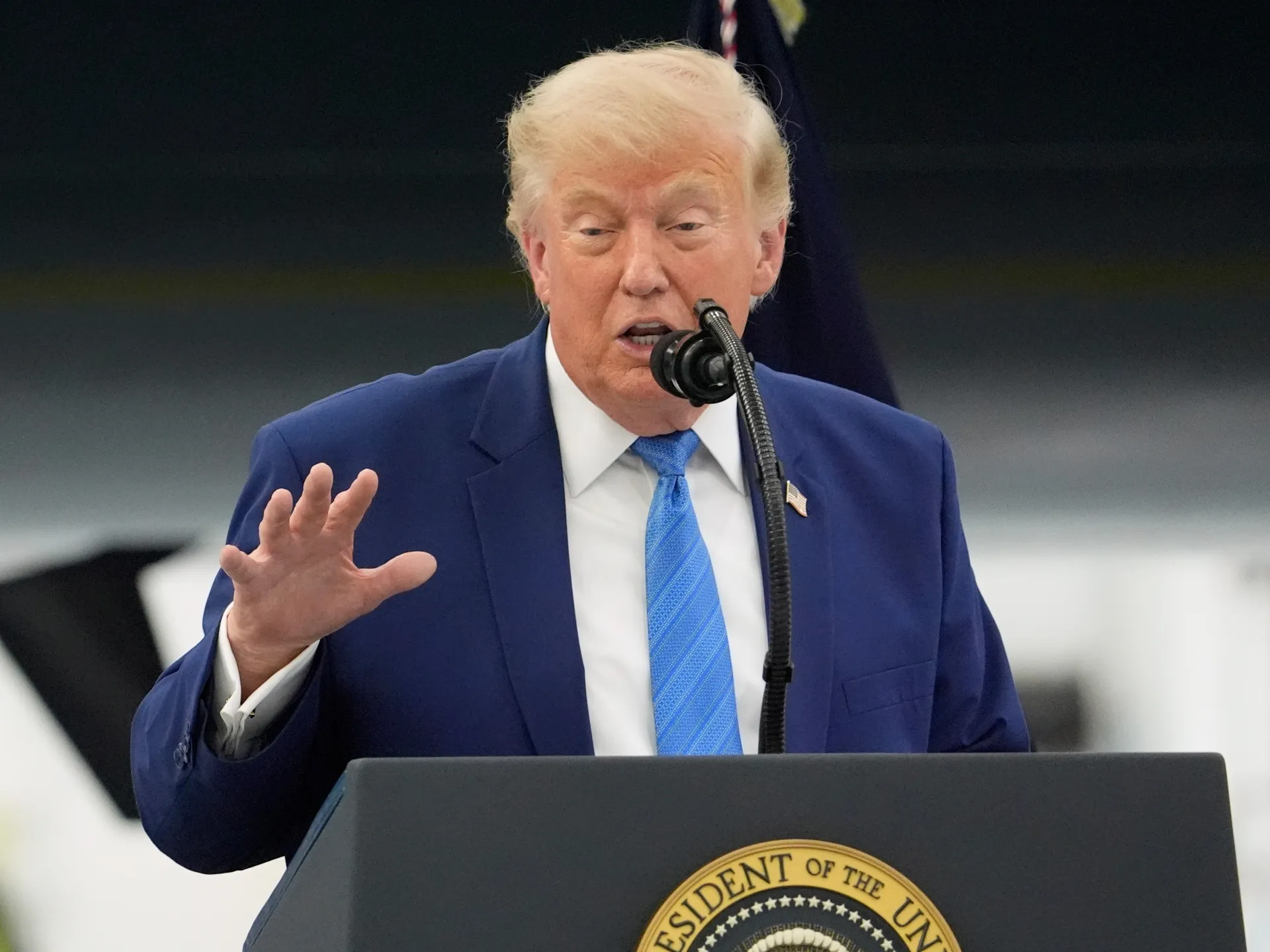
United States President Donald Trump has claimed Iran is “collapsing financially” and said the country is losing millions of dollars a day due to Washington’s naval blockade of Iranian ports.

In a post on his Truth Social platform on Tuesday night, Trump wrote: “Iran is collapsing financially! They want the Strait of Hormuz opened immediately – Starving for cash! Losing 500 Million Dollars a day. Military and Police complaining that they are not getting paid. SOS!!!”

Recommended Stories

list of 3 itemsend of list

The US blockade of Iranian ports began at 14:00 GMT on April 13. Since then, the US has fired on and seized an Iranian-flagged tanker near the Strait of Hormuz, and redirected ships in the open seas carrying cargo to or from Iran. Iran’s armed forces have called this “an illegal act” that “amounts to piracy”.

In response to the US naval blockade, Iran has closed the Strait of Hormuz to all foreign shipping and has captured several foreign-flagged ships. Previously, it had allowed some ships deemed “friendly” to Iran to pass.

On April 19, Iran’s First Vice President Mohammad Reza Aref said the “security of the Strait of Hormuz is not free”.

“One cannot restrict Iran’s oil exports while expecting free security for others,” he wrote in a post on X.

“The choice is clear: either a free oil market for all, or the risk of significant costs for everyone,” he added. “Stability in global fuel prices depends on a guaranteed and lasting end to the economic and military pressure against Iran and its allies.”

In a statement on social media on Thursday, Iran’s parliamentary speaker and lead negotiator in the ceasefire talks, Mohammad Bagher Ghalibaf, said a full ceasefire could only work if the US naval blockade is lifted.

Analysts say the blockade is hurting Iran but believe the country has the economic and political will to sustain it.

How long can Iran survive the naval blockade?

Here’s what we know:

How is the naval blockade hurting Iran?

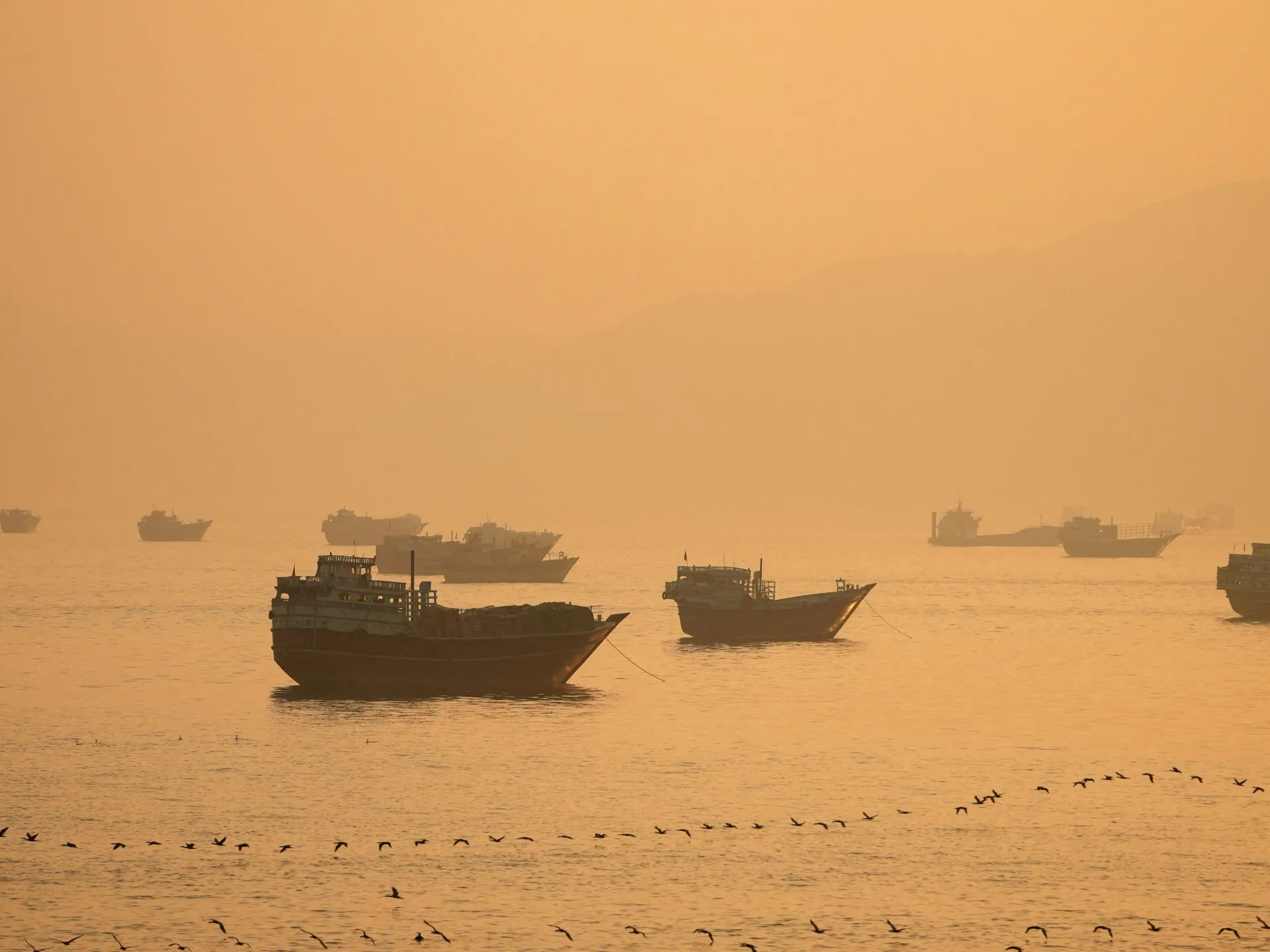
Iran exports oil, gas and other goods including petrochemicals, plastics and agricultural products by sea. Analysts say the US naval blockade of its ports, including in the Strait of Hormuz, could therefore affect this trade.

Soon after the start of the US-Israel war on Iran on February 28, authorities in Tehran implemented the effective closure of the Strait of Hormuz, the only waterway out of the Gulf, through which 20 percent of the world’s oil and liquefied natural gas (LNG) supplies were shipped from Gulf producers in peacetime.

The near-shutdown of the vital chokepoint sent global oil and gas prices soaring, and since then, Iran has controlled the strait. However, it has continued to export its own energy products through the waterway.

Iran’s oil exports through the Strait of Hormuz account for about 80 percent of its total oil exports. According to Kpler, a trade intelligence firm, Iran exported 1.84 million barrels per day (bpd) of crude oil in March and has shipped 1.71 million bpd so far in April, compared with an average of 1.68 million bpd in 2025.

From March 15 to April 14, it exported 55.22 million barrels of oil. The price per barrel of Iranian oil – across its three major variants, known as Iranian light, Iranian heavy and Forozan blend – has not fallen below $90 per barrel over the past month. On many days, the price has surpassed $100 a barrel.

Even at the conservative estimate of $90 a barrel, Iran has earned at least $4.97bn over the past month from its ongoing oil exports.

By contrast, in early February before the war started, Iran was earning about $115m a day from its crude oil exports, or $3.45bn in a month.

Simply put, Iran has earned 40 percent more from oil exports in the past month than it did before the war.

Stopping this is a key motivation behind the US naval blockade of Iranian ports.

In an interview with Al Jazeera on April 14, Frederic Schneider, a nonresident senior fellow at the Middle East Council on Global Affairs, told Al Jazeera that the previous six weeks had been a boon for Iran in terms of oil revenues, but with the US blockade, that will change.

“Iran has some buffer in the form of crude oil reserves in floating tanks – basically parked tankers – which was estimated at about 127 million barrels in February. But that doesn’t mean that the blockade wouldn’t hurt Iran,” he said.

On Friday, Schneider told Al Jazeera that Iran, however, seems to be “playing the longer game” and has anticipated and prepared for this sort of conflict to some degree.

“The naval blockade has added economic strain, as several civilian ships have been captured in international waters. But it remains unclear how tight the blockade is, how many ships manage to pass given the considerable amount of floating Iranian oil, and how long Trump can maintain the blockade,” he said.

INTERACTIVE - Strait of Hormuz - March 2, 2026-1772714221
(Al Jazeera)

Can the US keep the blockade going for long?

Schneider noted that Trump will face a legislative challenge by May 1, when the 60 days he can maintain a foreign offensive without congressional approval come to an end.

Dire conditions have been reported on the ships that are upholding the blockade, he said, and it remains to be seen how China will react to the continuing seizure of ships that carry any of its cargo.

“China has already said it sees the blockade of Chinese trade with Iran as unacceptable. Further, the closure of Hormuz by Iran in retaliation is hurting, if not the US itself that much, American allies in the region and globally, raising the pressure on Trump,” he said.

“If we can glean anything from the behaviour of the two sides, it is Iran that is signalling patience and Trump showing impatience,” he added.

Adam Ereli, a former US ambassador to Bahrain, told Al Jazeera’s This is America programme that while the US blockade of Iranian ports and seizure of vessels transporting Iranian oil “makes sense” as a policy, it may not work as intended due to domestic political considerations in the US.

“The Iranians have prepared for this, for this eventuality. They have their own plans. They’ve got alternative means of storing their oil or selling their oil,” Ereli told Al Jazeera.

“Even if they ran out of oil, they have ways to survive a very tough blockade and sanctions regime that, frankly, I think will outlast Trump’s patience and the patience of the American people,” he said.

“Remember, this isn’t just about moving soldiers and ships and planes around on a map. There’s politics involved here in the United States,” he added.

“Trump is nothing if not attuned to the political winds. And for that reason, I think that you’ve got this Iran strategy on the one hand that runs up against an electoral strategy on another hand, and therefore, the question is, which one is going to give?”

Can Iran store the oil the US is blockading in the meantime?

Iran’s domestic refineries have a capacity of 2.6 million bpd, according to consultancy FGE Energy. Its oil and gas production facilities are concentrated in southwestern provinces: Khuzestan for oil and Bushehr for gas and condensate from the South Pars gasfield.

Iran is also the third-largest oil producer in the Organization of the Petroleum Exporting Countries (OPEC) and exports 90 percent of its crude oil via Kharg Island for shipping through the Strait of Hormuz.

The US naval blockade has begun affecting the country’s storage capacity, according to TankerTrackers, the maritime intelligence agency. The blockade means Iran has to store more oil, and space could become tight.

TankerTrackers said that on Kharg Island, to prepare for the possibility of running out of oil storage space, Iran has brought an old tanker named NASHA (9079107) out of retirement.

“She’s a 30yo [year old] VLCC [Very Large Crude Carrier] that’s been anchored empty for the past few years; currently spending 4 days on a trip that should take 1.5-2 days,” TankerTrackers said in a post on X, suggesting that the tanker is being used to store oil. It is unclear if the ship has a heading or course.

Can Iran continue to earn revenues from oil?

Yes, analysts say that for a few months, Iran can continue to earn revenue from oil which is already in transit at sea.

Kenneth Katzman, former Iran analyst at the Congressional Research Service in Washington, DC, said Iran is not exporting new oil amid the US blockade of Iranian ports, but Tehran has between 160 million and 170 million barrels of oil “afloat” on ships around the world currently.

Those supplies, which transited the Strait of Hormuz before the US blockade was imposed, are on board hundreds of tankers and “waiting to be delivered”, Katzman told Al Jazeera.

Katzman said he had been informed by an Iranian professor that, based on those supplies, Tehran could have revenue flows that can last until August despite the US naval blockade.

“Which is a long time. Does President Trump have until August? Probably not,” he said.

“He’s probably going to have to look at kinetic escalation if he wants to bring this to the conclusion that he wants, or he’s going to have to accept less than the deal he ideally wants,” he said.

Iranian ships will still have to avoid US naval ships on the open ocean, as the US Navy has also recently intercepted ships carrying Iranian cargoes.

On Wednesday this week, for example, the US military intercepted at least three Iranian-flagged tankers in ‌Asian waters, Reuters reported, and was said to be redirecting them away from their positions near India, Malaysia and Sri Lanka.

How else can Iran earn revenue?

Besides oil revenue, Iran is also currently receiving revenue from a “toll booth” system that the country imposed on the Strait of Hormuz in March.

On Thursday, Iran’s deputy parliament speaker Hamidreza Haji-Babaei said Tehran’s central bank had received the first revenues from tolls imposed since the start of the war, according to the semiofficial Tasnim news agency. It is unclear how much that toll revenue is.

Iranian politician Alaeddin Boroujerdi told the United Kingdom-based, Farsi-language satellite TV channel Iran International in March that the country has been charging some vessels as much as $2m each to pass through the strait.

According to Lloyd’s List, the shipping news outlet, at least two vessels that have transited the strait so far have paid fees in yuan, China’s currency. Lloyd’s List reported that one “transit was brokered by a Chinese maritime services company acting as an intermediary, which also handled the payment to Iranian authorities”. It is, however, not clear how much the vessels paid.

How resilient is Iran’s leadership?

In recent days, while pressuring Iran to negotiate a ceasefire deal, US President Donald Trump has claimed that Iranians are “having a very hard time figuring out who their leader is”, alleging that there is “crazy” infighting between “moderates” and “hardliners” in Tehran.

But the country’s officials have insisted that Iran’s government is united.

Mohammad Reza Aref, Iran’s first vice president, said on Thursday: “Our political diversity is our democracy, yet in times of peril, we are a ‘Single Hand’ under one flag. To protect our soil and dignity, we transcend all labels. We are one soul, one nation.”

Foreign Minister Abbas Araghchi also dismissed allegations that the Iranian military may be at odds with the political leadership.

“The failure of Israel’s terrorist killings is reflected in how Iran’s state institutions continue to act with unity, purpose, and discipline,” he wrote on X, referring to the assassinations of Iranian political and military figures Israel has carried out in recent weeks.

“The battlefield and diplomacy are fully coordinated fronts in the same war. Iranians are all united, more than ever before.”

One of the strongest messages of unity came from Iran’s President Masoud Pezeshkian.

“In Iran, there are no radicals or moderates,” he said on X.

“We are all Iranians and revolutionaries. With ironclad unity of nation and state and obedience to the Supreme Leader, we will make the aggressor regret.”

How strong is Iran militarily?

Iran has demonstrated considerable military resilience in the face of weeks of US-Israeli strikes through its use of asymmetric warfare.

This includes the use of guerrilla tactics, cyberattacks, arming and supporting proxy armed groups and other indirect tools.

During its war with the US and Israel, Iran has targeted energy infrastructure in Israel and across the Gulf, threatened to target banking institutions and targeted US data centres of technology companies such as Amazon in the United Arab Emirates and Bahrain.

Iran has also blocked the Strait of Hormuz and reportedly placed mines in the strait to disrupt shipping, sending global oil prices soaring.

Since the US began its naval blockade of Iranian ports in mid-April, Iranian officials have repeatedly promised that their country will defend itself and respond to any US attack.

Earlier this week, after the US military said it had seized an Iranian vessel and ordered dozens of others to turn around, Iran also retaliated by capturing foreign commercial vessels around the Hormuz Strait, which it said violated naval regulations.

Ereli, the former US ambassador, told Al Jazeera that Iran and the IRGC have “revolutionary fervour”, which means they can “survive”. “They can tolerate pain for a lot longer than I think most American decision makers and planners calculate,” Ereli said.

Ereli said it was unknown how long Tehran could last under “siege conditions” imposed by the US, but probably a lot longer than the US anticipates.

“I think they can go a lot longer, especially than most people imagine, and especially when it comes to kneeling to the Americans,” Ereli said.

“There’s a level of pride and survival. They’re at war with us, and for them it’s a war of necessity. They’ve got to survive,” he added.

Source link

Oil rises above $106 per barrel as US, Iran deadlocked in Strait of Hormuz | US-Israel war on Iran

Jump in prices comes as Donald Trump says vessels will need permission of US Navy to transit key waterway.

Oil prices have jumped on heightened tensions between the United States and Iran in the Strait of Hormuz following Washington and Tehran’s tit-for-tat captures of commercial vessels.

Brent crude, the international benchmark, topped $106 per barrel early on Friday morning as Washington and Tehran stepped up their confrontation over the key maritime route for transporting the world’s energy.

Recommended Stories

list of 4 itemsend of list

Brent stood at $106.80 as of 01:00 GMT, up nearly 5 percent from its closing price on Wednesday, when it surpassed $100 per barrel for the first time in two weeks.

US stocks fell overnight, with the benchmark S&P 500 index dipping 0.41 percent and the tech-heavy Nasdaq Composite dropping 0.89 percent.

Shipping in the Strait of Hormuz, which normally carries about one-fifth of the world’s supply of oil and natural gas, remains at a standstill as Iran continues to demand the right to decide which vessels may pass and the US blocks Iran’s maritime trade.

US President Donald Trump said in a Truth Social post on Thursday that he had ordered the US Navy to destroy any Iranian boats laying mines in the strait, shortly after the Pentagon announced that it had seized a tanker carrying sanctioned Iranian oil for the second time in less than a week.

Trump also appeared to expand the scope of the US naval blockade beyond Iranian ports, writing on Truth Social that no ship “can enter or leave” the strait without the approval of the US Navy.

“It is ‘Sealed up Tight,’ until such time as Iran is able to make a DEAL!!!” Trump said.

Trump’s threats came a day after Iran’s Islamic Revolutionary Guard Corps announced the capture of two foreign cargo ships in the waterway.

The IRGC said it had seized the Panamanian-flagged MSC Francesca and Greek-owned Epaminondas after the vessels had endangered maritime security “by operating without the necessary permits and tampering with navigation systems”.

The Greek Maritime Affairs and Insular Policy Ministry has denied that the Epaminondas was captured and said the vessel remains under the control of its captain.

Only nine commercial vessels transited the strait on Wednesday, compared with seven on Tuesday and 15 on Monday, according to maritime intelligence platform Windward.

Before the US and Israel launched their war against Iran on February 28, the waterway saw an average of 129 transits each day, according to United Nations Trade and Development.

Source link

S. Korean special envoy calls for safe Hormuz transit in meeting with Iran’s FM

This photo, released by Iran’s foreign ministry on Thursday, shows South Korea’s special envoy, Chung Byung-ha (L), meeting with Iranian Foreign Minister Abbas Araghchi in Tehran. Photo Courtesy of Ministry of Foreign Affairs of the Islamic Republic of Iran

South Korea’s special envoy to Iran has met with Iranian Foreign Minister Abbas Araghchi in Tehran and called for efforts to ensure safe passage through the Strait of Hormuz and the safety of Korean nationals, Seoul’s foreign ministry said Thursday.

Chung Byung-ha, special envoy for South Korea’s foreign minister, has been in Iran since March 11 as Seoul seeks to secure the safety of its vessels and seafarers stranded in the vital waterway blocked by both Iran and the United States amid the Middle East crisis.

“Special envoy Chung requested Iran’s continued support for the safety of 40 South Korean nationals remaining in Tehran, and 26 Korean vessels and crew on board,” ministry spokesperson Park Il said in a press briefing. The meeting took place late Wednesday (Iran time).

A total of 173 Korean crew members remain aboard the stranded ships.

South Korea has been in talks with Iran and neighboring countries to ensure their safety, sharing details of the vessels and crew with relevant parties, including Iran and the U.S.

Chung expressed hope in his meeting with Araghchi that peace talks between Iran and the United States will resume so as to restore regional peace and stability, the ministry said in a press release.

Chung also noted the importance of developing bilateral relations between Seoul and Tehran.

Echoing Chung’s remark on their ties, Araghchi expressed Iran’s readiness to cooperate in that regard, adding that Tehran will continue to pay attention to Korean nationals staying in the country.

Seoul’s decision to dispatch a special envoy to Iran has sent a positive signal to Tehran in terms of bilateral relations and is seen as contributing to potential future talks with Tehran on the ships and nationals, according to sources familiar with the matter.

South Korea is among a handful of countries that still maintain their embassy operations in Iran. Seoul also recently provided humanitarian aid to the war-hit country through the International Committee of the Red Cross.

Regarding Iran’s blockade of the strait, Araghchi defended the measure as an effort to safeguard its national security and interests, saying that “responsibility for any resulting consequences lies with the parties carrying out the aggression,” Iran’s foreign ministry said on a social media post.

Copyright (c) Yonhap News Agency prohibits its content from being redistributed or reprinted without consent, and forbids the content from being learned and used by artificial intelligence systems.

Source link

Iran Ramps Up Attacks On Ships In The Strait Of Hormuz After Trump Ceasefire Extension (Updated)

Though President Donald Trump on Tuesday declared an extension to a ceasefire with Iran, the Islamic Republic continues to attack shipping in the Strait of Hormuz. At least two ships were fired on by Iran, according to the United Kingdom Maritime Trade Operations (UKMTO). Iranian officials say the Islamic Revolutionary Guard Corps (IRGC) seized those ships and fired on another.

These incidents came a day after U.S. forces boarded an Iran-linked oil tanker in the Indian Ocean and highlighted that regardless of diplomacy, shipping remains a target for both sides. Meanwhile, Iran made veiled threats against the telecommunications cables running under the Strait. All this is happening as Tehran says it won’t return to the bargaining table until the U.S. ends its blockade of Iranian ports. We’ll discuss that more later in this story.

The first attack in the Strait on Wednesday took place shortly before midnight EDT about 15 nautical miles northeast of Oman, according to UKMTO. 

“The Master of a Container Ship reported that the vessel was approached by 1 IRGC gun boat, no VHF challenge that then fired upon the vessel which has caused heavy damage to the bridge. No fires or environmental impact reported. All Crew reported safe.”

Nour News, a website affiliated with Iran’s Supreme National Security Council, said the Islamic Revolutionary Guard Corps (IRGC) opened fire on the Epaminodes, after it had “ignored the warnings of the Iranian armed forces,” the BBC reported.

Epaminodes is a Liberian-flagged container ship, according to MarineTraffic.com.

A second incident took place about three hours later eight nautical miles west of Iran, UKMTO stated. 

“A master of an outbound cargo ship reports having been fired upon and is now stopped in the water,” the organization explained in an alert. “Crew are safe and accounted for. There is no reported damage to the vessel. UKMTO is aware of high levels of activity in the SoH area and encourages vessels to report any suspicious activity.”

It is unclear at the moment which ship was attacked in that incident. UKTMO did not name the vessel. However, in addition to claiming they fired on the Epaminodes, Iranian officials say they also struck the Euphoria, which MarineTraffic said is a Panamanian-flagged container ship, and the MSC-Francesca, also a Panamanian-flagged container ship, according to MarineTraffic.

The Epaminodes and MSC-Francesca were also seized for “endangering maritime security by operating without the necessary permits and tampering with navigation systems,” the IRGC claimed, stating the vessels have been “directed to the coast of Iran.”

🚨Update: The two vessels are currently in the territorial waters of the Islamic Republic of Iran for inspection of their cargo, documentation, and related records. https://t.co/aXbSZLSNFa

— IRIB (Islamic Republic of Iran Broadcasting) (@iribnews_irib) April 22, 2026

The disposition of the vessels and crews is not currently known. U.S. Central Command could not confirm any of these incidents.

A Sentinel-2 satellite image captured today shows what looks like a swarm of IRGCN fast attack craft sailing north of the strait of Hormuz near Kargan coast, according to open source investigator Mehdi H on X. 

The image shows what appears to be at least 33 boats. It is unclear if there is any connection between these craft and the shipping attacks. The IRGC has invested heavily in its fleet of small boats for decades as TWZ has explored in the past. Some of these vessels are armed with short-range anti-ship missiles, as well as artillery rockets and other weapons. They can also be used to lay naval mines. These fleets are extremely hard to find and fix, and do not need large ports to operate from. While CENTCOM says it has destroyed well over 150 Iranian ships, the IRGC still has many remaining small boats.

Sentinel-2 satellite image today shows what looks like a flotilla of IRGCN fast attack crafts sailing north of strait of Hormuz near Kargan coast.
At least 33 boats can be seen in what looks like a show of force enforcing the strait closure by Iran.
Geo-location: 26.899,56.824 pic.twitter.com/smNuM0y6D3

— Mehdi H. (@mhmiranusa) April 22, 2026

As we noted earlier in this story, in addition to attacking and capturing ships on the Strait, Iran pointed out the vulnerability of telecommunications cables running under it.

“The Strait of Hormuz is not only a crucial route for oil and gas transportation; this narrow waterway is also one of the most important internet chokepoints in the region and the world,” the IRGC-linked Tasnim news agency noted on Wednesday. “According to submarine network data, at least 7 main communication cables of the Persian Gulf countries pass through this route; while more than 97% of the world’s internet traffic is transferred via these fiber optic cables laid under the sea.”

“Cables such as FALCON, AAE‑1, TGN‑Gulf, and SEA‑ME‑WE connect a significant part of the region’s digital communication to major data centers in the Middle East, Europe, and Asia,” the outlet added. “These infrastructures are the backbone of data transfer, e-commerce, cloud services, and online communications in the Persian Gulf countries.”

“The concentration of many internet cables in a narrow passage makes the Strait of Hormuz a vulnerable point for the region’s digital economy,” Tasnim posited, calling it “a place where cables, after passing through the strait, connect to coastal landing nodes and major regional data centers.”

New post from Iran state media Tasnim about major undersea Internet cables in the Strait of Hormuz

“The concentration of a large number of internet cables in a narrow passage has made the Strait of Hormuz a vulnerable point for the region’s digital economy” pic.twitter.com/JE0o4qcCC6

— Steve Lookner (@lookner) April 22, 2026

UPDATES

Our coverage for the day has concluded.

UPDATE: 7:56 PM EDT –

Though the fighting may be paused, White House Press Secretary Karoline Leavitt said the economic pressure on Iran continues.

.@PressSec on Iran: “There’s a ceasefire with the military and kinetic strikes, but Operation Economic Fury continues and… we are completely strangling their economy through this blockade. They’re losing $500M/day… He’s satisfied with that as we await their response.” pic.twitter.com/SdtLveF1ZH

— Rapid Response 47 (@RapidResponse47) April 22, 2026

The aircraft carrier USS George H. W. Bush is set to arrive in the Middle East in about three to five days after sailing around the southern tip of Africa, Fox News Chief National Security Correspondent Jennifer Griffin stated on X.

The timing, she noted, coincides with Trump’s extending the ceasefire deadline by that same timeline.

3rd aircraft carrier USS Bush arrives in Middle East after detour around southern tip of Africa in next 3-5 days as Trump extends the ceasefire with Iran by “3-5 days.” https://t.co/MymBLABmlE

— Jennifer Griffin (@JenGriffinFNC) April 22, 2026

The Washington Post reports that the Pentagon has told Congress it could take six months to fully clear the Strait of Hormuz of mines deployed by the Iranian military.

The publication added that any such operation is unlikely to be carried out until the U.S. war with Iran ends.

This “assessment that means the conflict’s economic impact could extend late into this year or beyond,” the newspaper added.

“The timeline — met with frustration by Democrats and Republicans alike, two of these people said — is the latest sign that gasoline and oil prices could remain elevated long after any peace deal is reached,” the Post noted.

EXCLUSIVE: It could take six months to fully clear the Strait of Hormuz of mines deployed by the Iranian military, and any such operation is unlikely to be carried out until the U.S. war with Iran ends, the Pentagon has informed Congress — an assessment that means the conflict’s…

— Dan Lamothe (@DanLamothe) April 22, 2026

Israel’s N12 News reported on X that Trump has given Iran a deadline of Sunday.

Two Israel Air Force technicians from Tel Nof Airbase, near Ashdod, will be charged with spying for Iran during Operation Roaring Lion, Israel’s public broadcaster KAN News reported on Wednesday.

“The two technicians, who worked on IAF F-15 fighter jets, handed over documentation of the engine diagrams, as well as photographs showing the face of a flight instructor, which is against military censorship rules, The Jerusalem Post reported.

“They were also asked to gather information about former IDF chief Lt.-Gen. (ret.) Herzi Halevi and National Security Minister Itamar Ben-Gvir,” the publication noted. “Authorities are considering whether to increase the charges on one of the technicians to treason, rather than the lower charge of espionage.”

Report: Two Israel Air Force technicians from Tel Nof Airbase will be charged with spying for Iran during Operation Roaring Lion. They provided sensitive military documents and photos.
Written by @JamesGennhttps://t.co/KA8lLh9672

— The Jerusalem Post (@Jerusalem_Post) April 22, 2026

The New York Post said Trump told them that another round of negotiations with Iran may take place later this week. At issue is the future of Iran’s highly enriched uranium, its supply of ballistic missiles, support of proxies like Hezbollah and the Houthis, and ultimate disposition of the Strait of Hormuz.

“‘Good news’ about a second round of talks between the US and Iran may be coming as soon as Friday,” the publication said Trump and Pakistani sources told it on Wednesday.

“Sources in Islamabad touted positive mediation efforts with Tehran, renewing the possibility of more peace talks within the next ‘36 to 72 hours,’” the newspaper added. “Asked about this possible breakthrough by The Post, Trump, in a text message, said: ‘It’s possible! President DJT.’”

Well, guess I’m not going anywhere just yet!

President Trump and Pakistani sources today told me good news about a fresh round of talks between the US and Iran is “possible” as soon as Friday.https://t.co/5TdF0kRgO7

— Caitlin Doornbos (@CaitlinDoornbos) April 22, 2026

Trump “plans to give the Iranians a limited timeframe to come up with a unified proposal to get diplomatic negotiations back on track,” CNN reported, citing two sources familiar with the internal discussions. “The administration does not want to indefinitely extend the ceasefire, the sources said, and does not want to give Iran time to drag out talks further.”

President Trump plans to give the Iranians a limited timeframe to come up with a unified proposal to get diplomatic negotiations back on track, two sources familiar with the internal discussions tell me.

The administration does not want to indefinitely extend the ceasefire, the…

— Alayna Treene (@alaynatreene) April 22, 2026

“Trump is willing to give another three to five days of ceasefire to allow the Iranians to get their shit together,” one U.S. source briefed on the matter told Axios. “It is not going to be open-ended.”

Trump’s negotiators “believe a deal to end the war and address what’s left of Iran’s nuclear program is still achievable,” the outlet added. “But they also worry they may not have anyone in Tehran empowered to say yes.”

Supreme Leader Mojtaba Khamenei “is barely communicating,” Axios posited. “The IRGC generals now in control of the country and Iran’s civilian negotiators are openly at odds over strategy.”

“We saw that there is an absolute fracture inside Iran between the negotiators and the military — with neither side having access to the supreme leader, who is not responsive,” a U.S. official told the news organization.

Axios added that though Vice President JD Vance was all set to go to Pakistan for the second round of negotiations, he instead found himself waiting for the IRGC generals now in control of Iran to let parliament Speaker Mohammad Bagher Ghalibaf and Foreign Minister Sayed Abbas Araghchi travel to Pakistan to meet him. However, while the Iranians appeared to have given Pakistani mediators the green light for talks, by Tuesday morning, that signal was gone, replaced by a demand that the U.S. lift its naval blockade.

“Trump is willing to give another three to five days of ceasefire to allow the Iranians to get their shit together,” one U.S. source briefed on the matter said. “It is not going to be open-ended.”https://t.co/QdZWaZPYL3

— Jason Brodsky (@JasonMBrodsky) April 22, 2026

As we have previously noted, Trump extended the ceasefire deadline yesterday, but gave no specific date for when fighting could resume. In a Truth Social post, he said he did so to give time for the fractured Iranian leadership to come up with a response to U.S. demands and that the ongoing blockade of Iranian ports would remain in effect.

His post came after Iranians refused to commit to peace talks tentatively scheduled to be held in Pakistan.

The official Iranian IRIB news outlet denied Tehran has taken any official position on Trump’s ceasefire extension or future negotiations.

🚨 IRIB EXCLUSIVE
“Iran has NOT yet announced an official position on Trump’s claim about extending the ceasefire. Rumors about Iran’s formal agreement are #not_accurate, and no statement has been issued by Iranian officials.”

— IRIB (Islamic Republic of Iran Broadcasting) (@iribnews_irib) April 22, 2026

The Iranians say the future of negotiations depends on the status of the ongoing blockade of its ports.

Iran’s UN Ambassador Amir Saeid Iravani stated that Tehran is prepared to negotiate immediately after the United States ends its naval blockade, emphasizing that Washington must first halt its “ceasefire violations.”

He added that while Iran is prepared to negotiate, it is also prepared for war.

Iran Ready for Talks Once US Lifts Naval Blockade, Envoy Says

Iran’s UN Ambassador Amir Saeid Iravani stated that Tehran is prepared to negotiate immediately after the United States ends its naval blockade, emphasizing that Washington must first halt its “ceasefire violations.” pic.twitter.com/GOxEO8yqzS

— Tasnim News Agency (@Tasnimnews_EN) April 22, 2026

Citing data from the Vortexa cargo tracking group, Financial Times is reporting that “at least 34 tankers with links to Iran have bypassed the US blockade since it began.” 

CENTCOM, which on Tuesday said the US Navy had directed 28 vessels to turn back to Iranian ports since the blockade was enacted, told us the assertion that dozens of ships bypassed the blockade “is not true.”

Good morning, Asia. While you were sleeping, one of our most-read stories reported that dozens of ships have managed to circumvent the blockade since it began — despite Donald Trump declaring it a ‘tremendous success’. https://t.co/TI52fxy7VQ pic.twitter.com/BkOeMke1pR

— Financial Times (@FT) April 22, 2026

The Pentagon on Wednesday pushed back on the assertion that the Iranian-linked oil tanker Tifani was seized by the U.S., however, it may be a matter of semantics.

As we reported yesterday, the vessel boarded by U.S. forces in the Indian Ocean and The Washington Post later said it was “seized” as the United States determines “next steps for the Tifani and its crew in the next couple of days.”

“Seized wouldn’t be accurate at this time,” a Pentagon official told us. “So the way it works is after interdiction the U.S. has 96 hours to determine next steps. That’s where the rest of the interagency comes in. It varies by ship and situation what the solution would be. At this point DoW’s finished its role with just the interdiction.”

“During that 96-hour period, State would make the determination it’s stateless and work through diplomatic channels on where to take it,” the official added. “DHS and Coast Guard could be the ones to escort it. DoE gets involved for the oil, treasury for the sanction, DoJ for the legal elements and warrant. It really is a large, complex coordination effort across the interagency.”

The exact current disposition of the vessel is unclear. We have reached out to the White House for more details.

U.S. forces on Tuesday boarded the Iranian-linked oil tanker M/T Tifani. (Pentagon)

With Iran partially reopening its airspace, the U.S. State Department stated that any U.S. citizens still in the country “should leave Iran now, monitor local media for updates, and consult with commercial carriers for additional information on flights out of Iran.”

Americans seeking to depart Iran “may also depart by land to Armenia, Azerbaijan, Türkiye, and Turkmenistan. U.S. citizens should not travel to Afghanistan, Iraq, or the Pakistan-Iran border area,” the warning added. “Be aware that the Iranian government may prevent U.S. citizens from departing or charge an ‘exit fee’ for departures from Iran. U.S.-Iranian dual nationals must exit Iran on Iranian passports.”

Iran: As of April 21, Iran’s airspace has partially reopened. U.S. citizens should leave Iran now, monitor local media for updates, and consult with commercial carriers for additional information on flights out of Iran. Americans seeking to depart Iran may also depart by land to… pic.twitter.com/yvVIqO0XoJ

— TravelGov (@TravelGov) April 22, 2026

During the course of Epic Fury, the U.S. has run through a large amount of advanced munitions, CNN reported.

The list includes about 50% of Terminal High Altitude Area Defense (THAAD) interceptors, 50% of its Patriot interceptors, 45% of its Precision Strike Missiles, 30% of its Tomahawk Land Attack Cruise Missiles (TLAMs), 20% of its Joint Air-to-Surface Standoff (JDAM) munitions and 20% of its Standard Missiles (SM-3 and SM-6).

Approximate estimates of percentages of U.S. munitions expended in Iran war, per @CNN :
50% THAAD interceptors
50% Patriot interceptors
45% Precision Strike Missiles
30% Tomahawk missiles
20% Joint Air-to-Surface Standoff Missiles
20% Standard Missiles (SM-3 and SM-6) https://t.co/1A9TH0zpr5

— John M. Donnelly (@johnmdonnelly) April 21, 2026

Given the expenditure of costly defensive munitions used to swat down much cheaper Iranian drones, the U.S. military has introduced Ukrainian counter-drone technology in recent weeks at a key U.S. air base in Saudi Arabia, Reuters reported, citing five people with ​knowledge of the matter.

These attacks have destroyed aircraft and buildings, and killed at least one service member.

“The deployment of a Ukrainian command-and-control platform called ‌Sky Map at Prince Sultan Air Base, which has not previously been reported,” is another sign of Ukrainian battlefield technological advances after more than four years of full-on war with Russia.

Contact the author: howard@thewarzone.com

Howard is a Senior Staff Writer for The War Zone, and a former Senior Managing Editor for Military Times. Prior to this, he covered military affairs for the Tampa Bay Times as a Senior Writer. Howard’s work has appeared in various publications including Yahoo News, RealClearDefense, and Air Force Times.


Source link

Trump maintains blockade as Iran’s factions struggle to unite

Iranian forces attacked three commercial vessels in the Strait of Hormuz on Wednesday, stoking an already tense standoff in the Persian Gulf as a U.S. naval blockade strains Tehran’s economy and pressures its divided leadership to return to peace talks.

The Islamic Revolutionary Guard Corps, or IRGC, claimed responsibility for the attack, saying it seized two ships and damaged a third after the vessels “ignored repeated warnings.” British maritime monitors confirmed the incidents, describing one cargo ship left disabled in the water and another that took heavy damage to its bridge.

“Disrupting order and safety in the Strait of Hormuz is considered a red line for Iran,” the Iranian Navy Command said in a statement.

Hours before, President Trump confirmed he would maintain the naval blockade in the gulf, but agreed to give Iranian leaders additional time to agree on a new peace proposal, he wrote in a Truth Social post.

“Based on the fact that the Government of Iran is seriously fractured, not unexpectedly so and, upon the request of Field Marshal Asim Munir, and Prime Minister Shehbaz Sharif, of Pakistan, we have been asked to hold our Attack on the Country of Iran until such time as their leaders and representatives can come up with a unified proposal,” Trump wrote Tuesday.

More than a dozen American warships have prevented exports from leaving Iranian ports since peace talks in Islamabad failed earlier this month. The tactic has greatly constrained Iranian oil exports — about 90% of which flow through the Strait of Hormuz — contributing to rising inflationary pressure.

The restrictions could wipe out roughly $435 million in daily economic activity, according to Miad Maleki, a senior fellow at the Foundation for Defense of Democracies. Oil exports, Tehran’s primary revenue source, have halted. At the same time, Iran has been unable to import food or industrial goods. As a result, the blockade is expected to empty Iran’s war coffers and sharply accelerate inflationary effects on its people.

Trump is betting that the strategy will force Iran’s fractured negotiating team — which appears to be split between parliamentary moderates and hard-liners within the Revolutionary Guard — to agree on a “unified” peace proposal.

Karoline Leavitt, the White House press secretary, said Wednesday the president extended the ceasefire agreement to allow Iran to get their “act together,” and emphasized that Trump has not given Iran a “firm deadline” to respond yet.

“President Trump will ultimately dictate the timeline and he will do so when he feels it is in the best interest of the United States and the American people,” Leavitt told reporters.

Though she declined to specify who the administration is negotiating with in Iran, Leavitt said the president was “generously offering a bit of flexibility” to the regime so that they can come up with a unified response.

“This is a battle between the pragmatists and the hard-liners in Iran right now,” Leavitt told reporters at the White House.

That division was visible earlier this week when plans for a second round of talks in Islamabad collapsed after Iranian officials failed to confirm participation and instead introduced new preconditions under pressure from hard-line factions.

Iranian Parliament Speaker Bagher Ghalibaf initially signaled a willingness to attend talks, but was overshadowed by Islamic Revolutionary Guard Corps commander Maj. Gen. Ahmad Vahidi, who insisted that the United States lift its blockade before discussions could begin. A report by the Institute for the Study of War said Vahidi sought to derail negotiations rather than secure meaningful economic relief.

“One challenge with the ongoing negotiations is the divided nature of Iran’s negotiating team,” the report said, adding that “[Trump’s] reference to a ‘unified’ proposal appears to imply that previous proposals were not unified in some way.”

And while hard-liners continue attempts to derail diplomacy with continued demands and attacks in the strait, moderates in Iran continue to push for peace.

This week, prominent Sunni cleric Moulana Abdol Hamid called a “fair agreement” the only viable path forward and warned that those who seek to block negotiations would bear responsibility for the “homeland’s devastation.”

Benjamin Radd, a political scientist at UCLA who studies Iran, said the dispute is a sign of a larger power struggle for control of Tehran’s government.

“There are clear divisions within the leadership,” Radd said in an interview. “Right now, it’s the IRGC faction that has all the power. They have the guns, they have the weapons. What they don’t have is the diplomatic connections and experience dealing with the United States.”

Radd pointed to the economic toll of the U.S. blockade as a key driver of tension inside Iran.

“They’re facing a huge domestic crisis,” he said. “They’re not able to replenish their own needs. Nothing can get in or out of the country. They can’t make any money.”

The consequences of the U.S. strategy could push the more moderate Iranian leaders to strike a deal on nuclear enrichment or a reopening of the strait in exchange for the United States lifting the blockade, Radd said.

“That would start rebuilding some sort of trust,” Radd said. “And then we’re seeing the IRGC is basically steadfast, refusing to do any of this.”

With renewed Israeli attacks in Lebanon killing at least three people Wednesday, despite a 10-day ceasefire agreement, Iranian leaders are preparing for the possibility that talks with the United States will fail altogether.

“Iran has prepared for a new phase of fighting,” the IRGC-affiliated Tasnim News Agency reported this week, citing military redeployments and updated target lists.

Meanwhile, Iranian Judiciary Chief Gholam Hossein Mohseni Ejei warned that renewed U.S. or Israeli strikes were likely. Iran Foreign Ministry spokesman Esmaeil Baghaei made a similar statement in a news briefing Wednesday. He announced the country’s armed forces were “on high alert” and ready to defend against any threat, while being open to Pakistan’s mediation efforts.

He did not confirm if the government was participating in a second round of negotiations.

“Diplomacy is a tool for ensuring national interests and security,” he said, “and we will take the necessary steps whenever we conclude that the necessary and logical grounds exist to use this tool to achieve national interests.”

Until then, it appears both Washington and Tehran will continue brinkmanship in the strait.

On Wednesday morning, the IRGC released a statement confirming it seized the two cargo ships and identified them as the MSC Francesca and the Epaminondas. It claimed the MSC Francesca was linked to Israel and accused both of “jeopardizing maritime security by operating without necessary permits and tampering with navigation systems.”

A third ship, the Euphoria, which sails under the Panamanian flag and is owned by a company based in the United Arab Emirates, was fired upon early Wednesday while heading east out of the Strait of Hormuz, according to Vanguard, a maritime intelligence firm.

The Euphoria later resumed sailing toward the Gulf of Oman, according to Lloyd’s List.

In Lebanon, Amal Khalil became the fourth journalist killed by Israeli fire since hostilities with the Lebanese Shiite militant group Hezbollah intensified on March 2.

Khalil’s body was reported to have been found under the rubble of a house where she and freelance photographer Zeinab Faraj were sheltering, according to their colleagues.

Khalil and Faran were in the southern Lebanese town of Al-Tayri, covering developments there when an Israeli attack targeted the vehicle in front of them, killing its occupants.

The two journalists then sheltered in a house but were hit by Israeli fire once more, according to a statement from the Lebanese Health Ministry.

When Red Cross crews scrambled to the area to rescue the trapped journalists, they were targeted with a sound bomb and machine-gun fire.

The Israeli military said it was not preventing rescue teams from reaching the area and that the incident was under review. It acknowledged targeting a vehicle it said had come out of a structure used by Hezbollah and was heading toward Israeli troops.

The Red Cross reached the house by the early evening local time, and rescued Faraj, who is reported to be in stable condition after undergoing surgery for a head wound, according to her colleagues.

Times staff writers Ana Ceballos in Washington and Nabih Bulos in Beirut contributed to this report.

Source link

What we know about the US capture of Iranian vessel near Hormuz | US-Israel war on Iran

NewsFeed

US forces have released video appearing to show the capture of an Iranian-flagged ship near the Strait of Hormuz, which President Donald Trump says was attempting to breach its naval blockade. Iran has condemned the operation as ‘maritime piracy,’ warned of retaliation, and cast doubt on new talks with the US. Here’s what we know.

Source link

US forces attack and seize Iranian ship Touska near Strait of Hormuz | US-Israel war on Iran

NewsFeed

US Central Command has published a video said to show a guided-missile destroyer firing at an Iranian-flagged cargo ship near the Strait of Hormuz. The USS Spruance fired several rounds into the Touska’s engine room for ‘violating the US blockade’, before marines boarded it.

Source link

Iran blocks Strait of Hormuz, fires on commercial ships

The Strait of Hormuz is closed again, this time by Iran. Two ships have reported being fired on in the strait Saturday. File Photo by Divyakant Solanki/EPA

April 18 (UPI) — Just one day after the Strait of Hormuz was declared open, Iran has blocked the passage again, citing “breach of promise” by the United States, and has begun firing on commercial ships.

Iran accused the United States of “banditry and piracy under the guise of a so-called blockade.”

“Until the United States ends its interference with the full freedom of movement for vessels traveling to and from Iran, the status of the Strait of Hormuz will remain under intense control and in its previous state,” Iran’s semiofficial Fars media said on X.

On Friday, Iranian Foreign Minister Seyed Abbas Araghchi said the Strait of Hormuz was open after a cease-fire in Lebanon.

But by Saturday morning, that had changed. President Donald Trump said the United States would continue blocking Iranian ships.

Gunboats fired on a tanker in the strait Saturday morning, CNN reported the United Kingdom Maritime Traffic Organization said.

The UKMTO said a tanker captain reported that it was “being approached by 2 [Islamic Revolutionary Guard Corps] gun boats,” about 20 nautical miles off the coast of Oman.

The captain said there had been no radio warning before the ship was fired on.

“Tanker and crew are reported safe,” UKMTO posted.

Just hours later, a container ship was hit by “unknown projectile which caused damage to some of the containers” about 25 nautical miles off the coast of Oman, CNN reported the UKMTO said. In the second event, the UKMTO did not say who was responsible for the attack. No fires or environmental damage have been reported.

Trump reported Saturday that talks between Iran and the United States were continuing but that “Iran got a little cute,” CNN reported.

“We have very good conversations going on,” Trump said. “They got a little cute, as they have been doing for 47 years.”

“They wanted to close up the strait again, as they’ve been doing for years. They can’t blackmail us,” the president said.

“We’re talking to them, and you know, we’re taking a tough stand. They killed a lot of people. A lot of our people have been killed,” Trump said.

On Friday, Trump told CBS News in a phone interview that Iran had “agreed to everything.”

He said that the United States would remove Iran’s enriched uranium but would not involve ground troops.

“No. No troops,” he said. “We’ll go down and get it with them, and then we’ll take it. We’ll be getting it together because by that time, we’ll have an agreement and there’s no need for fighting when there’s an agreement. Nice right? That’s better. We would have done it the other way if we had to.”

“Our people, together with the Iranians, are going to work together to go get it. And then we’ll take it to the United States,” he said.

But hours later, a spokesperson for Iran’s foreign ministry said in a statement, “Enriched uranium is as sacred to us as Iranian soil and will not be transferred anywhere under any circumstances. … Transferring uranium to the United States has not been an option.”

Source link

Iran reasserts control of Hormuz Strait as Trump warns against ‘blackmail’ | US-Israel war on Iran News

Top negotiator Mohammad Bagher Ghalibaf says US naval blockade of Iran’s ports is ‘a clumsy and ignorant decision’.

Iran’s Islamic Revolutionary Guard Corps Navy (IRGC) says the Strait of Hormuz is closed and that any ship that attempts to pass through the waterway will be targeted, a dramatic reversal less than 24 hours after the critical shipping lane was reopened.

In a statement carried by Iran’s Student News Agency, the IRGC navy said on Saturday the strait will be closed until the United States lifts its naval blockade on Iranian vessels and ports. It said the blockade was a violation of the ongoing ceasefire agreement in the US-Israel war on Iran.

Recommended Stories

list of 4 itemsend of list

“We warn that no vessel of any kind should move from its anchorage in the Persian Gulf and the Sea of Oman, and approaching the Strait of Hormuz will be considered cooperation with the enemy, and the offending vessel will be targeted,” it said.

Mohammad Bagher Ghalibaf, Iran’s parliament speaker and a senior negotiator in talks between Washington and Tehran on ending the war, said in a television interview that “the Strait of Hormuz is under the control of the Islamic Republic”.

“The Americans have been declaring a blockade for several days now. This is a clumsy and ignorant decision,” he added.

The reassertion of control came just hours after Iran had briefly reopened the strait, in line with a 10-day ceasefire between Israel and Lebanon. Oil prices dropped on global markets after Iranian Foreign Minister Abbas Araghchi said on Friday that the waterway was “completely open for all commercial vessels.”

More than a dozen commercial ships passed through the waterway before the IRGC reversed course.

Iranian gunboats reportedly fired on two commercial ships on Saturday, according to United Kingdom Maritime Trade Operations (UKMTO). India’s Ministry of External Affairs also said that two Indian-flagged ships were involved in a “shooting incident” in the strait.

Some merchant vessels in the region received radio messages from the IRGC Navy, warning that no ships were being allowed through the strait.

US President Donald Trump said Tehran could not blackmail Washington by closing the waterway and warned that he would put an end to the ceasefire if a deal before its expiry on Wednesday is not reached. Trump added that the naval blockade would “remain in full force”.

Iranian Supreme Leader Mojtaba Khamenei, meanwhile, said the navy was ready to inflict “new bitter defeats” on its enemies.

‘Two competing blockades’

Al Jazeera correspondent Zein Basravi said that Iran and the US are back where they were the previous day.

“Less than 24 hours ago, world leaders were praising what they thought was a breakthrough in this conflict, hoping Iran was signalling a confidence-building measure by opening the Strait of Hormuz, potentially leading to a ceasefire deal and a permanent end to the war,” he said.

“As disappointed as people may be, this isn’t entirely surprising. What we’re seeing now is a return to square one,” he added, saying there are now “two competing blockades in place”.

Al Jazeera’s Ali Hashem, reporting from Tehran, said Iran was using the strait to send a message.

“It’s clear that Iran is dealing with a situation in which they are not sure what’s on the table. So the Strait of Hormuz is once again the only space for engagement, even if it’s a negative engagement. And it’s the space where they are sending and conveying messages to the Americans, showing their leverage,” he said.

Source link

Iran Reopens Strait Of Hormuz, U.S. Blockade Continues (Updated)

Iran says it has reopened the Strait of Hormuz, which it largely closed after being attacked by the U.S. and Israel. The move was prompted by a temporary ceasefire in Lebanon between Israel and Hezbollah, an Iranian proxy. However, the U.S. blockade on Iranian ports enacted on Monday remains in place, President Donald Trump announced on his Truth Social social media site.

All this comes as the U.S. and Iran appear closer to reaching a deal to end the war, which we will discuss in greater detail later in this story. The temporary ceasefire between the two countries ends April 21.

“In line with the ceasefire in Lebanon, the passage for all commercial vessels through Strait of Hormuz is declared completely open for the remaining period of ceasefire, on the coordinated route as already announced by Ports and Maritime Organization of the Islamic Rep. of Iran,” Sayyed Abbas Araghchi, the Iranian Foreign Minister, stated on X Friday morning.

In line with the ceasefire in Lebanon, the passage for all commercial vessels through Strait of Hormuz is declared completely open for the remaining period of ceasefire, on the coordinated route as already announced by Ports and Maritime Organisation of the Islamic Rep. of Iran.

— Seyed Abbas Araghchi (@araghchi) April 17, 2026

That route is a narrow five-mile stretch between the islands of Qeshem and Larak, roughly 15 miles from the Iranian shoreline.

In a post on his Truth Social site, U.S. President Donald Trump hailed the decision but said it did not change the ongoing blockade.

“THE STRAIT OF HORMUZ IS COMPLETELY OPEN AND READY FOR BUSINESS AND FULL PASSAGE, BUT THE NAVAL BLOCKADE WILL REMAIN IN FULL FORCE AND EFFECT AS IT PERTAINS TO IRAN, ONLY, UNTIL SUCH TIME AS OUR TRANSACTION WITH IRAN IS 100% COMPLETE,” Trump stated. “THIS PROCESS SHOULD GO VERY QUICKLY IN THAT MOST OF THE POINTS ARE ALREADY NEGOTIATED.”

Trump:

The Strait of Hormuz is completely open and ready for business and full passage, but the naval blockade will remain in full force and effect as it pertains to Iran only, until our transaction with Iran is 100% complete! pic.twitter.com/YMGS5BUGjD

— Clash Report (@clashreport) April 17, 2026

The president added that “Iran has agreed to never close the Strait of Hormuz again. It will no longer be used as a weapon against the World!” However, there was no immediate response from Tehran.

𝗗𝗼𝗻𝗮𝗹𝗱 𝗝. 𝗧𝗿𝘂𝗺𝗽 𝗧𝗿𝘂𝘁𝗵 𝗦𝗼𝗰𝗶𝗮𝗹 𝗣𝗼𝘀𝘁 𝟭𝟬:𝟰𝟬 𝗔𝗠 𝗘𝗦𝗧 𝟬𝟰.𝟭𝟳.𝟮𝟲

Iran has agreed to never close the Strait of Hormuz again. It will no longer be used as a weapon against the World! President DONALD J. TRUMP

— Commentary Donald J. Trump Posts From Truth Social (@TrumpDailyPosts) April 17, 2026

Regarding any peace deals, Trump said on his Truth Social network that the “U.S.A. will get all Nuclear ‘Dust,’ created by our great B2 Bombers – No money will exchange hands in any way, shape, or form.”

This was a reference to the Operation Midnight Hammer attack on Iranian nuclear facilities last year.  Iran is believed to have about 440.9 kg of uranium enriched up to 60% of the explosive uranium isotope, U-235 stored at these locations.

“This deal is in no way subject to Lebanon, either, but the USA will, separately, work with Lebanon, and deal with the Hezboolah situation in an appropriate manner. Israel will not be bombing Lebanon any longer,” Trump added.

“The U.S.A. will get all Nuclear “Dust,” created by our great B2 Bombers – No money will exchange hands in any way, shape, or form.” pic.twitter.com/vkRVe30AzT

— The White House (@WhiteHouse) April 17, 2026

It remains to be seen how this will play out. Iran’s state TV, citing a senior military official, highlighted that “only civilian vessels will be allowed to pass through the Strait of Hormuz via designated routes and with permission from the Islamic Revolutionary Guard Corps Navy.”

“The passage of military vessels through the strait remains prohibited,” it said.

Iran’s state TV, citing a senior military official, said “only civilian vessels will be allowed to pass through the Strait of Hormuz via designated routes and with permission from the Islamic Revolutionary Guard Corps Navy.”

“The passage of military vessels through the strait… pic.twitter.com/1mi3rOmTgX

— Iran International English (@IranIntl_En) April 17, 2026

Despite the closure, ships have still transited the strategic body of water through which about a fifth of the world’s oil and gas exports pass. Ship traffic through the Strait actually “increased from last month’s unusually low levels, with crossings rising and activity extending across a broader mix of vessel types and cargoes,” according to the global trade intelligence firm Kpler.

Traffic gradually returns to Hormuz

Vessel traffic through the Strait of Hormuz has increased from last month’s unusually low levels, with crossings rising and activity extending across a broader mix of vessel types and cargoes. Movements are becoming more balanced in both… pic.twitter.com/FPjw0s3N9k

— Kpler (@Kpler) April 16, 2026

There is also still the issue of mines in the section of the Strait outside the Qeshem-Larak passage. Demining is one of the issues being discussed today in an international meeting being held in Paris, a French official told us. We’ll discuss this meeting in a little more detail later in this story.

Trump, however, claimed that “Iran, with the help of the U.S.A., has removed or is removing all sea mines!”

The Strait of Hormuz and Qeshem and Larak islands. (Google Earth)

We have reached out to shippers and maritime analysis and security firms to get a clearer picture of what this decision means from their perspectives.

“This is good news,” a spokesman for Hapag-Lloyd told us. “There are still some open questions on our end, but they might be resolved within the next 24 hours. Top priority for the passage is safety and security for the seafarers, the vessel and the cargo of our customers. If all open issues are cleared (i.e. insurance coverage, clear orders of Iranian government/military about the exact sea corridor to be used and the sequence of ships leaving) we would prefer to pass the strait as soon as possible. Our crisis committee is in session and will try to resolve all open items with the relevant parties within the next 24-36 hours.”

The reopening of the Strait “marks a turn for global shipping, as it allows over 750 vessels previously trapped in the Middle East Gulf to begin clearing approximately $17 billion in stranded energy and dry bulk cargoes,” Kpler told us. “As of April 17, 2026, there are 862 vessels currently operating within the Mideast Gulf. The core of the backlog is composed of approximately 187 laden tankers carrying roughly 172 million barrels of crude and refined products, along with a specialized cluster of 15 LNG vessels that remain almost entirely stalled following the collapse of recent ceasefire talks.”

The Strait reopening and a looming new round of peace talks appears to have provided a boost to the world economy.

“Oil prices are falling by more than 10%, and Wall Street is rallying toward another record after Iran said the Strait of Hormuz is fully open, which would allow oil tankers to exit the Persian Gulf again and carry crude to customers worldwide,” The Associated Press reported. “The S&P 500 rallied 0.7% as U.S. stocks sprinted toward the finish of a third straight week of big gains. The Dow Jones Industrial Average rose 1%, and the Nasdaq composite added 1%.”

Stocks “have rallied more than 11% since late March on hopes that the United States and Iran can avoid a worst-case scenario for the global economy,” the wire service added.

BREAKING: President Trump and Iran’s foreign minister say the Strait of Hormuz is now fully open. Crude oil prices tumble 10% after the announcements. https://t.co/d44au7X8UP

— The Associated Press (@AP) April 17, 2026

UPDATES

Our coverage for the day has concluded.

UPDATE: 5:45 PM EDT

Trump told CBS News that Iran has “agreed to everything,” and will work with the U.S. to remove its enriched uranium.

He insisted that doing so will not involve U.S. ground troops. But when asked who would retrieve it, he would only say “our people.”

“No. No troops,” he told the network. “We’ll go down and get it with them, and then we’ll take it. We’ll be getting it together because by that time, we’ll have an agreement and there’s no need for fighting when there’s an agreement. Nice right? That’s better. We would have done it the other way if we had to.”

The president said the material would then be brought to the U.S.

“Our people, together with the Iranians, are going to work together to go get it. And then we’ll take it to the United States,” he said.

NEWS President Trump tells me:

-No ground troops will be required to remove enriched uranium from Iran

-Iran has agreed to stop backing all proxy groups like Hezbollah and Hamas

-I asked if Iran has agreed to stop enriching uranium *forever.” He said, “They’ve agreed to…

— Weijia Jiang (@weijia) April 17, 2026

UPDATE: 5:24 PM EDT –

Speaking to the White House press corps, Trump addressed questions about the peace process.

“We’ll see how it all turns out, but it should be good, some very good discussions, and hopefully that subject that you like to talk about will be very good,” he said. “And we’ve done a good job, but we’ll see … the talks are going on and going over the weekend, and a lot of good things are happening that includes Lebanon.”

Asked about differences with Iran on how all this is developing, Trump said: “If there are, I’m going to straighten it out. .. don’t think there’s too many significant differences.”

As for the blockade: “When the agreement is signed, the blockade ends,” he proclaimed.

Earlier on Friday, Iranian officials said they would close the Strait again if the blockade is not lifted.

“We’ve had some very good discussions… Talks are going on. It’ll go on over the weekend — and a lot of good things are happening,” says @POTUS in Arizona.

“As soon as the agreement gets signed, that’s when the blockade ends.” pic.twitter.com/PjNlBvwSAo

— Rapid Response 47 (@RapidResponse47) April 17, 2026

UPDATE: 1:34 PM EDT –

Trump told Axios that U.S. and Iranian negotiators will probably meet this weekend, and he expects them to hammer out a final deal to end the war. The deal should come “in a day or two,” Axios reporter Barak Ravid added on X.

UPDATE: 1:28 PM EDT –

Trump told Reuters on Friday that the U.S. will work with Iran to recover its enriched uranium ​and bring it back to the United States.

“We’re going to get ‌it together. We’re going to go in with Iran, at a nice leisurely pace, and go down and start excavating with big machinery… We’ll bring it back to the United ​States,” Trump said during a phone interview.

The ⁠United States will work ‌with Tehran to recover its enriched uranium and bring ​it back to ‌the United States, President Donald Trump told Reuters on Friday.

“We’re going to get it together. ‌We’re going to go in with Iran, at ⁠a nice leisurely pace, and go ‌down ​and… pic.twitter.com/ZfwJTFrIbr

— Iran International English (@IranIntl_En) April 17, 2026

UPDATE: 1:17 PM EDT –

Seyyed Mohammad Mehdi Tabatabaei, a spokesperson for Iran’s president, pushed back on Trump’s claim that Iran promised never to close the Strait again.

“The Twitter rhetoric and baseless statements of the enemy are aimed at stripping the Iranian nation of their sense of pride for the great victories they have achieved through their resolute defense,” he stated on X. “The conditional and limited reopening of a portion of the Strait of Hormuz is solely an Iranian initiative, one that creates responsibility and serves to test the firm commitments of the opposing side. If they renege on their promises, they will face dire consequences.”

لفاظی‌های توئیتری و اظهارات بی‌پایه دشمن، در جهت سلب احساس افتخار ملت ایران برای پیروزی‌های بزرگی است که در دفاع مقتدرانه کسب کرده‌اند.
بازگشایی مشروط و محدود بخشی از تنگه هرمز ، صرفا ابتکاری ایرانی، مسئولیت‌آفرین و برای آزمون تعهدات قطعی طرف مقابل است. بدعهدی کنند، بد می‌بینند.

— سيد مهدي طباطبايي (@tabaei1356) April 17, 2026

UPDATE 12:51 PM EDT –

Iran considers the continuation of the U.S. blockade on its ports a ceasefire violation and would close the Strait of Hormuz again if the blockade is not lifted, the IRGC-affiliated Fars News reported citing an informed source close to the Supreme National Security Council.

We’ve reached out to the White House for comment.

Iranian official to Fars:

If the maritime blockade continues, it will be considered a violation of the ceasefire, and the Strait of Hormuz transit route will be closed.

— Clash Report (@clashreport) April 17, 2026

With new talks potentially set to be held in Pakistan over the weekend, the U.S. and Iran are negotiating over a three-page plan to end the war, Axios reported Friday morning. One of the key elements under discussion is “that the U.S. would release $20 billion in frozen Iranian funds in return for Iran giving up its stockpile of enriched uranium,” the outlet noted, citing two U.S. officials and two additional sources briefed on the talks.

The Memo of Understanding (MoU) also states the two sides are negotiating over a “voluntary” moratorium on nuclear enrichment by Iran. It also deals with the Strait of Hormuz, “though the sources said there are still significant gaps on that issue,” Axios posited.

It’s unclear if the MOU refers to Iran’s ballistic missiles and its support for regional proxies.

🚨 SCOOP: The U.S. and Iran are negotiating over a three-page plan to end the war, with one element under discussion being that the U.S. would release $20 billion in frozen Iranian funds in return for Iran giving up its stockpile of enriched uranium. https://t.co/w84Yd8JHgp

— Axios (@axios) April 17, 2026

“Trump is directly talking to the Iranians,” U.S. Sen. Lindsey Graham (R-SC) told Fox News

“He is negotiating himself,” Graham proffered. “He was on the phone with the Iranians a couple of days ago, and it got rather sporty—to the point that Trump loudly told Iran what would happen if they keep playing games. He actually lost his voice. I’d hate to be the Iranian on the receiving end of that.”

Senator Graham:

Trump is directly talking to the Iranians. He is negotiating himself.

He was on the phone with the Iranians a couple of days ago, and it got rather sporty—to the point that Trump loudly told Iran what would happen if they keep playing games.

He actually lost… pic.twitter.com/rMPjT9SYYc

— Clash Report (@clashreport) April 17, 2026

Despite rising hopes that the war in Iran could soon end, the country’s deputy foreign minister on Friday rejected any call for a temporary ceasefire. Instead, Tehran is seeking a comprehensive end to conflict across the Middle East, Saeed Khatibzadeh told reporters today. That includes fighting between Israel and Hezbollah, currently paused on the first full day of a shaky 10-day ceasefire.

“We are not accepting any temporary ceasefire,” Khatibzadeh said on the sidelines of the Antalya Diplomacy Forum hosted by Turkey’s Foreign Affairs Ministry. Any end to the fighting must include all conflict zones “from Lebanon to the Red Sea,” he added, describing it as a “red line” for Iran.

The cycle of violence “should end here once and for all,” Khatibzadeh continued, according to Al Jazeera.

The Islamic Revolutionary Guard Corp (IRGC) said it is ready to resume fighting if needed.

The Army and the IRGC have their “finger on the trigger” and are “prepared to deliver a powerful, destructive, and regret-inducing response to any aggressive or criminal action by the US-Israeli enemy and their allies against the Iranian nation,” the IRGC said Friday.

As we noted earlier in this story, the leaders of nearly three dozen nations met – mostly virtually – at a conference in Paris today to discuss the future of the Strait of Hormuz.

Co-chaired by French President Emmanuel Macron and British Prime Minister Keir Starmer, the conference on the Initiative for Maritime Navigation in the Strait of Hormuz looked at ways of protecting shipping after the fighting ends.

Starmer said the U.K. and France will lead a multinational mission to “protect freedom of navigation” in the Strait as soon as conditions permit. He added that the mission would be “strictly peaceful and defensive,” with the aim of reassuring commercial shipping and supporting mine clearance efforts.

Starmer invited other countries to join, saying that roughly a dozen countries had committed to contributing assets.

Kaja Kallas, European Union High Representative for Foreign Affairs and Security Policy/Vice-President of the European Commission, said leaders also discussed ensuring that Iran imposes no tolls on passage through the Strait.

“Any pay-for-passage scheme will set a dangerous precedent for global maritime routes,” she stated on X. “Iran has to abandon any plan to levy transit fees. Europe will play its part in restoring the free flow of energy and trade, once a ceasefire takes hold.”

Kallas added that the EU’s Aspides naval mission is already operating in the Red Sea “and can be quickly strengthened to protect shipping across the region. This could be the fastest way to provide support.”

Yesterday, a spokesman for Aspides told us that there were no changes in its mission.

Under international law, transit through waterways like the Strait of Hormuz must remain open and free of charge. This is what leaders made clear in their call on reopening the Strait today.

Any pay-for-passage scheme will set a dangerous precedent for global maritime routes.… pic.twitter.com/Jeufv4hQou

— Kaja Kallas (@kajakallas) April 17, 2026

Contact the author: howard@thewarzone.com

Howard is a Senior Staff Writer for The War Zone, and a former Senior Managing Editor for Military Times. Prior to this, he covered military affairs for the Tampa Bay Times as a Senior Writer. Howard’s work has appeared in various publications including Yahoo News, RealClearDefense, and Air Force Times.


Source link

Gunfire reported by vessel in Strait of Hormuz | US-Israel war on Iran

NewsFeed

A maritime agency reported that a tanker was fired on by gunboats in the Strait of Hormuz. The United ⁠Kingdom ⁠Maritime Trade Operations agency says it received a report ⁠of a tanker being fired upon by what it ‌said were two gunboats linked to Iran’s Revolutionary Guard Corps. The vessel and ‌its crew were reported safe.

Source link

Iran closes Strait of Hormuz again over US blockade of its ports | US-Israel war on Iran News

Reports of Iranian gunboats opening fire on a tanker in strait, after Tehran said it is closing the waterway until the US lifts the blockade of its ports.

Iran says it has closed the Strait of Hormuz again, calling the decision a response to a continued blockade of its ports by the United States.

The Iranian military on Saturday said control of the strategic waterway, through which 20 percent of the global oil flows, has “returned to its previous state”, with reports saying Iranian gunboats fired at a merchant vessel as it attempted to ‌cross.

Recommended Stories

list of 4 itemsend of list

The closure of the strait came hours after it was reopened, with more than a dozen commercial ships passing through the waterway, after a US-mediated 10-day ceasefire deal was reached between Israel and Lebanon.

The Islamic Revolutionary Guard Corps (IRGC) on Saturday said in a statement, cited by the Iranian media, that the ongoing US blockade of Iranian ports represented “acts of piracy and maritime theft”, adding that the control over Hormuz is “under the strict management and control of the armed forces”.

“Until the US restores full freedom of navigation for vessels travelling from Iran to their destinations and back, the status of the Strait of Hormuz will remain tightly controlled and in its previous condition,” it said.

By 10:30 GMT on Saturday, no fewer than eight oil and gas tankers had crossed the strait, but at least as many ships appeared to have turned back, having begun to exit the Gulf, the AFP news agency reported.

The toing and froing over the strait cast doubt on US President Donald Trump’s optimism the day before, that a peace deal to end the US-Israel war on Iran was “very close”.

Trump had celebrated the reopening of the strait on Friday, but warned the US attacks would resume until Iran agreed to a deal, which included its nuclear programme.

“Maybe I won’t extend it,” Trump told reporters on board Air Force One about the temporary ceasefire agreement in place. “So you’ll have a blockade, and unfortunately we’ll have to start dropping bombs again.”

Asked whether a potential deal could be made in this short timeframe, Trump said: “I think it’s going to happen.”

But Iran says no date has been agreed for another round of peace talks, accusing the US of “betraying” diplomacy in all negotiations.

The conflicting and changing reports about the strait and how much freedom ships have to transit through it have deterred many vessels from crossing, according to John-Paul Rodrigue, a maritime shipping specialist at Texas A&M University.

“Ships have been attempting transit since the announcement, but it looks like many of them are heading back because the situation is unclear,” Rodrigue told Al Jazeera. “There is contradictory information being issued by all parties.”

Reporting from Tehran, Al Jazeera’s Tohid Asadi said “uncertainty is the name of the game” as far as the Strait of Hormuz is concerned.

“Iran is looking for a comprehensive end to the war across the region, security assurances, sanctions relief, the unfreezing of frozen assets, regional relations – and on top of all of that – the nuclear dossier and Iran’s stockpile of highly enriched uranium,” he said.

“But right now, uncertainty is the name of the game. The fragile situation makes it hard to talk about the possibility of successful negotiations down the road.”

Source link

As oil prices plunge below $91 after weeks, a new Hormuz crisis emerges | Oil and Gas News

Brent crude falls more than 9 percent after Iran said it will reopen the strategic waterway, only to shut it down again over US blockade of its ports.

Oil prices have plummeted to their lowest point in weeks after Iran said the Strait of Hormuz was open for passage during a ceasefire in Lebanon, and United States President Donald Trump said he expected to ⁠reach a deal to end the war soon.

Brent crude, the international benchmark, fell more than 9 percent to $90.38 a barrel on Friday, taking it below $91 for the first time since March 10.

Recommended Stories

list of 4 itemsend of list

The plunge came after Iranian Foreign Minister Abbas Araghchi said the strait was “completely open” and would remain so for the duration of the 10-day ceasefire between Israel and Lebanon, which took effect on Friday.

Hailing Tehran’s announcement, Trump declared the waterway “ready for business and full passage,” but said the US Navy’s blockade of Iranian ports would remain in “full force” until the sides reached a peace deal.

On Saturday, however, Iran rowed back on its decision to reopen the Strait of Hormuz, warning that it would continue to block transit through the key waterway as long as the US blockade of Iranian ports remained in effect.

The announcement came after Trump said the blockade “will remain in full force” until Tehran reaches a deal with the US, including on its nuclear programme.

Roughly one-fifth of the world’s oil passes through Hormuz and further limits would squeeze already constrained supply, driving prices higher once again.

Amid the escalation, Pakistani officials say they are trying for more talks between the US and Iran ahead of the April 22 ceasefire deadline.

Meanwhile, ship tracking data displayed by MarineTraffic earlier on Saturday showed a significant uptick in vessels crossing the strait, which is located between Iran, the United Arab Emirates and Oman.

“It’s busy out there, the busiest I’ve seen it since the Strait of Hormuz was effectively closed at the beginning of the war,” Michelle Wiese Bockmann, an analyst at maritime intelligence firm Windward, said in a post on X.

“Last night there were few ships taking the risk but overnight there seems to have been a change.”

While Iran allowed a limited number of vetted ships to transit the waterway since the start of the war, traffic has remained at a trickle compared with pre-conflict levels.

The near-total closure of the strait has triggered one of the worst energy shocks in history, driving up fuel prices and prompting governments to roll out emergency measures.

Oil prices have swung wildly since the US and Israel launched strikes on Iran on February 28, hitting a post-conflict peak of $119 a barrel on March 19.

Source link

Outlines of a deal emerge with major concessions to Iran

Upbeat claims from President Trump over an imminent peace deal to end the war with Iran were met with deep skepticism Friday across the Middle East, where Iranian and Israeli officials questioned the prospects for a lasting agreement that would satisfy all parties.

The outlines of an agreement began to emerge that would provide Iran with a major strategic victory — and a potential financial windfall — allowing the Islamic Republic to leverage its control over the Strait of Hormuz to exact significant concessions from the United States and its ally Israel as Trump presses for a swift end to the conflict.

In a series of social media posts and interviews with reporters, Trump announced that the strait was “fully open,” vowing Tehran would never again attempt to control it. But Iranian officials and state media said that conditions remained on passage through the waterway, including the imposition of tolls and coordination with the Islamic Revolutionary Guard Corps.

Iranian diplomats posted threats that its closure could resume at any time of their choosing, and warned that restrictions would return unless the United States agreed to lift a blockade of its ports. Trump had said Friday that the blockade would remain in place.

“The conditional and limited reopening of a portion of the Strait of Hormuz is solely an Iranian initiative, one that creates responsibility and serves to test the firm commitments of the opposing side,” said a top aide to Iran’s president, dismissing Trump’s statements on the contours of a deal as “baseless.”

“If they renege on their promises,” he added, “they will face dire consequences.”

In an overture to Iran, Trump said Israel would be “prohibited” from conducting additional military strikes in Lebanon, where the Israeli government of Prime Minister Benjamin Netanyahu seeks to prevent Hezbollah, an Iranian proxy militia, from rearming, a potential threat to communities in the Israeli north.

But in a speech delivered in Hebrew, Netanyahu would say only that Israel had agreed to a temporary ceasefire, while members of his Cabinet warned that Israel Defense Forces operations in southern Lebanon were not yet finished. A top ally of the prime minister at a right-wing Israeli news outlet warned that Trump was “surrendering” to Iran in the talks.

It was a day of public messaging from a president eager to end a war that has proved historically unpopular with the American public, and has driven a rise in gas prices that could weigh on his party entering this year’s midterm elections.

Yet, Republican allies of the president have begun warning him that an agreement skewed heavily in Tehran’s favor could carry political costs of its own.

Trump was forced to deny an Axios report Friday that his negotiating team had offered to release $20 billion in frozen Iranian assets in exchange for Tehran agreeing to hand over its fissile material, buried under rubble from a U.S. bombing raid last year.

That sum would amount to more than 10 times what President Obama released to Iran under a 2015 nuclear deal, called the Joint Comprehensive Plan of Action, that was the subject of fierce Republican criticism in the decade since.

“I have every confidence that President Trump will not allow Iran to be enriched by tens of billions of dollars for holding the world hostage and creating mayhem in the region,” said Sen. Lindsey Graham (R-S.C.), a strong supporter of the war. “No JCPOAs on President Trump’s watch.”

Still, Trump said in a round of interviews that a deal could be reached in a matter of days, ending less than two weeks of negotiations.

He claimed that Tehran had agreed to permanently end its enrichment of uranium — a development that, if true, would mark a dramatic reversal for the Islamic Republic from decades developing its nuclear program, and from just 10 days ago, when Iranian diplomats rejected a U.S. proposal of a 20-year pause on domestic enrichment in favor of a five-year moratorium.

He said Iran had agreed never to build nuclear weapons — a pledge Tehran has made repeatedly, including under the Nuclear Nonproliferation Treaty, in a religious decree from then-Supreme Leader Ayatollah Ali Khamenei, and in the 2015 agreement — while continuing nuclear activities viewed by the international community as exceeding civilian needs.

And he repeatedly stated that Iran had agreed to the removal of its enriched uranium from the country, either to the United States or to a third party. Iranian state media stated Friday afternoon that a proposal to remove the country’s highly enriched uranium had been “rejected.”

Iran’s agreement to allow safe passage for commercial vessels through the Strait of Hormuz is linked to a ceasefire in Lebanon that the Israeli Cabinet approved for only a 10-day period. Regardless of whether it holds or is extended, Israeli officials said their military would not retreat from its current positions in southern Lebanon — opening up Israeli forces to potential attack by Hezbollah militants unbound by a truce brokered by the Lebanese government.

The Lebanese people, Hezbollah officials said, have “the right to resist” Israeli occupation of their land. Whether the fighting resumes, the group added, “will be determined based on how developments unfold.”

An Iranian official threw cold water on the prospects of reaching a comprehensive peace deal in the coming days, telling Reuters that a temporary extension of the current ceasefire, set to expire Tuesday, would “create space for more talks on lifting sanctions on Iran and securing compensation for war damages.”

“In exchange, Iran will provide assurances to the international community about the peaceful nature of its nuclear program,” the official said, adding that “any other narrative about the ongoing talks is a misrepresentation of the situation.”

Trump told reporters Friday that the talks will continue through the weekend.

While Trump claimed there aren’t “too many significant differences” remaining, he said the United States would continue the blockade until negotiations are finalized and formalized.

“When the agreement is signed, the blockade ends,” the president told reporters in Phoenix.

Times staff writer Ana Ceballos contributed to this report.

Source link

World reacts to Strait of Hormuz reopening amid US-Iran conflict | US-Israel war on Iran News

Iran’s Foreign Minister Abbas Araghchi and United States President Donald Trump have said that the Strait of Hormuz is open to commercial vessels.

Araghchi declared on Friday that the strategic waterwat was “completely open” in line with the ceasefire between Israel and Lebanon that took effect the previous day.

Recommended Stories

list of 3 itemsend of list

Trump affirmed on social media that the strait was open, later claiming that Iran had agreed to “never close the Strait of Hormuz again”. However, he also posted that the US naval blockade on Iranian ports would “remain in full force”.

In parallel, France and the United Kingdom hosted a meeting in Paris involving about 40 countries, which agreed to play a role in restoring freedom of navigation in the Strait of Hormuz once the US-Israeli war on Iran stops.

The blocking of tankers from using the strait, through which about 20 percent of the world’s crude flows on a typical day, has led to a global surge in fuel prices.

World leaders have welcomed the news with cautious optimism amid mixed messages from the US and Iran:

United States

“The Strait of Hormuz is completely open and ready for business and full passage, but the naval blockade will remain in full force and effect as it pertains to Iran, only, until such time as our transaction with Iran is 100% complete,” Trump wrote on Truth Social.

Minutes later, he issued another post saying the US Navy’s blockade on Iranian ships and ports “will remain in full force” until Tehran reaches a deal with the US, including on its nuclear programme.

Later, Trump told the news agency AFP that a deal to end the war on Iran was “close”, saying there were “no sticking points” left between Washington and Tehran.

Iran

Foreign Minister Abbas Araghchi posted on X that the strait was “declared completely open” and would remain open for the remaining period of the 10-day Israel-Lebanon ceasefire, which took effect overnight Thursday into Friday.

Some Iranian state media reports later appeared to contradict Araghchi’s announcement, with a senior military official telling state media that only nonmilitary vessels would be allowed to transit with permission from the Iranian Islamic Revolutionary Guard Corps (IRGC) Navy.

The Fars news agency, which is close to the IRGC, noted a “strange silence from the Supreme National Security Council”, the de facto top decision-making body in the country, as the status of the new supreme leader, Mojtaba Khamenei, remains unknown.

United Kingdom

UK Prime Minister Keir Starmer cohosted a summit on a potential military mission to secure the Hormuz Strait with French President Emmanuel Macron in Paris on Friday, with about 30 to 40 countries participating in person or by video conference.

On the sidelines, Starmer cautiously welcomed news of the strait’s reopening but said it must become “both lasting and a workable proposal”.

He said the UK and France would lead a “strictly peaceful and defensive” multinational mission to protect freedom of navigation as soon as conditions allow.

France

Speaking after the gathering, Macron said, “We all demand the full, immediate and unconditional reopening of the Strait of Hormuz by all parties.”

“We all oppose any restrictions or system of agreements that would, in effect, amount to an attempt to ⁠privatise the strait – and, of course, any toll system,” he added.

Macron’s office said roles for members of the international coalition working to reopen the strait could include “intelligence, mine-clearing capabilities, military escorts [and] communication procedures with coastal states”.

Germany

Chancellor Friedrich Merz said Germany could contribute mine clearance and intelligence capabilities to the international mission, but would need parliamentary support and a ″secure legal basis″ such as a UN Security Council resolution.

He said he wanted US involvement in the international mission to secure shipping through the Strait of Hormuz. “We believe this would be desirable,″ he said.

Trump later appeared to rebuff his overtures, saying on social media that he had received a call from NATO, but declined its assistance in no uncertain terms.

Finland

Finnish President Alexander Stubb, who participated in the Paris summit, said on X, “We welcome Iran’s announcement on opening the Strait. Lasting solutions require diplomacy,”

United Nations

United Nations Secretary-General Antonio ⁠Guterres on ⁠Friday welcomed the opening ‌of Strait of Hormuz by Iran ⁠and said ⁠it was “a ⁠step in the ⁠right ⁠direction”.

International Maritime Organisation

Arsenio Dominguez, secretary-general of the UN shipping agency said, “We are currently verifying the recent announcement related to the reopening of the Strait of Hormuz, in terms of its compliance with freedom of navigation for all merchant vessels and secure ‌passage.”

Shipping companies

The Norwegian Shipowners’ Association said several things had to be clarified before any ships can transit the strait, including the presence of mines, Iranian conditions and practical implementation.

“If this represents a step towards an opening, it is a welcome development,” said Knut Arild Hareide, CEO of the association, which represents 130 companies with some 1,500 vessels.

A spokesperson for Germany’s Hapag-Lloyd Shipping Company said, “We are now beginning to assess the new situation and the risks involved … For the time being, therefore, we are still refraining from passing through the strait.”

In a statement, Denmark’s Maersk said: “We have noted the announcement. The safety of our crew, vessels and customers’ cargo remains our priority. Since the outbreak of the conflict, we have followed the guidance of our security partners in the region, and the recommendation so far has been to avoid transiting the Strait of Hormuz.

“Any decision to transit the strait will be based on risk assessments and close monitoring of the security situation, with the latest developments also included in the ongoing assessments.”

Markets

Oil prices plunged after Iran’s announcement that passage for commercial vessels would remain “completely open” for the duration of a 10-day ceasefire in Lebanon.

“This news is having an immediate impact on markets,” said Kathleen Brooks, research director at XTB. “This is the biggest development so far during the ceasefire, and it gives hope that the war will end soon, and supply chains will return to some normality.”


Source link

Shipping firms seek clarifications before crossing Hormuz | US-Israel war on Iran News

Shipping companies said several things had to be clarified, including the presence of mines, Iranian conditions, practical implementations.

Shipping companies have cautiously welcomed Iran’s announcement that the Strait of Hormuz is open but said they would require clarifications, including about the risk of mines, before vessels move through the entry point to the Gulf.

Iran’s Foreign Minister Abbas Araghchi said on Friday that the Strait of Hormuz was open to all commercial vessels during a 10-day Lebanon ceasefire accord, prompting a fall in oil and other commodity prices while stock markets rose.

Recommended Stories

list of 4 itemsend of list

All commercial ships, including United States vessels, can sail through the strait, although their plans need to be coordinated with Iran’s Islamic Revolutionary Guard Corps, a senior Iranian official told the Reuters news agency.

Transit would be restricted to lanes which Iran deemed safe, adding that military vessels were still prohibited, the official said.

“We are currently verifying the recent announcement related to the reopening of the Strait of Hormuz, in terms of its compliance with freedom of navigation for all merchant vessels and secure passage,” said Arsenio Dominguez, secretary-general of the United Nations shipping agency, the International Maritime Organization.

The Norwegian Shipowners’ Association said several things had to be clarified before any ships could transit the strait, including the presence of mines, Iranian conditions and practical implementation.

“If this represents a step towards an opening, it is a welcome development,” said Knut Arild Hareide, CEO of the association which represents 130 companies with some 1,500 vessels.

Shipping association BIMCO cautioned members on returning to the strait.

“The status of mine threats… is unclear and BIMCO believes shipping companies should consider avoiding the area,” said Jakob Larsen, BIMCO’s chief safety and security officer.

The threat posed by mines in parts of the strait is not fully understood, and avoidance of the area by ships should be considered, a US Navy advisory on Friday, seen by Reuters, also said.

German shipping group Hapag-Lloyd on Friday said it was working for its ships to sail through the strait “as soon as possible”, but added that several questions remained.

“Our crisis committee is in session and will try to resolve all open items with the relevant parties within the next 24-36 hours,” it added.

Its Danish peer Maersk said it was closely monitoring the security situation and would act based on its risk assessment.

France’s CMA CGM and Norwegian oil tanker group Frontline declined to comment.

A recent route imposed by Tehran through its territorial waters near Larak Island would present navigational challenges even if vessels were not required to pay a toll, and would raise questions regarding compliance and insurance, said Matt Wright, lead freight analyst at data intelligence firm Kpler.

US President Donald Trump on Friday said Iran had agreed to never close the strait again, and that it was removing sea mines from it.

One of the world’s most important maritime chokepoints, disruption in the strait has forced shipping companies to suspend sailings, reroute cargo and rely on costly workarounds to keep goods moving in and out of the Gulf.

Source link