Last month, veteran Hollywood producer Roy Lee got three calls in a single day from executives at three different studios. Each believed they had found the next internet-native short poised to become a Hollywood blockbuster — an online monster named Siren Head — and each was ready to make an offer and wanted Lee’s help to develop a movie.
The frenzy traces back to the enduring global box-office runs of two low-budget horror films, Curry Barker’s “Obsession” and Kane Parsons’ “Backrooms,” which have earned $403 million and $349 million, respectively. Studios have become fixated on hunting down every short film, internet meme and indie video game with the potential to “put something new and fresh on the screen,” Lee said.
“In the past, whenever we were putting together movies with the studios, they would resort to going back to safer bets with filmmakers who’ve made movies before,” Lee said, whose L.A.-based horror production company, Spooky Pictures, secured three Barker films before “Obsession” hit theaters. “But because of the [ongoing] success, bosses are going to their lower-level executives saying, ‘You better find the next person and bring them to us.’”
The race for Hollywood to capture new-age internet intellectual property, or IP, is well underway. And, in some cases, it’s happening on terms decided by the online creators themselves, according to interviews with agents and producers.
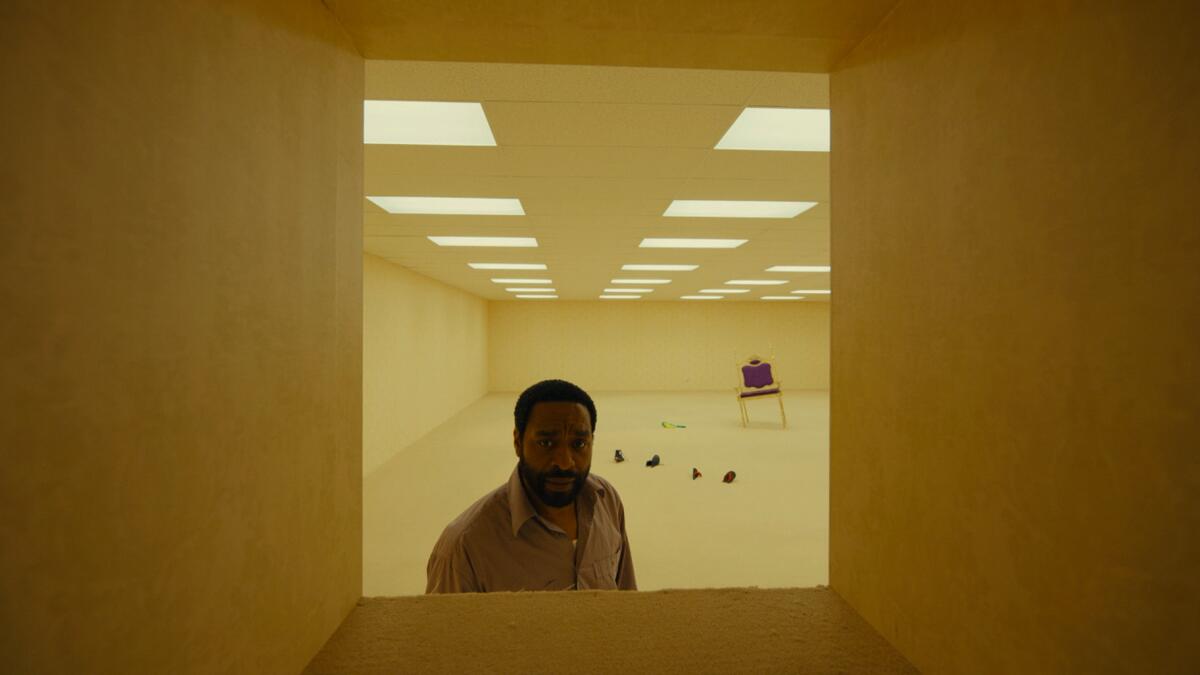
A still of leading actor Chiwetel Ejiofor in “Backrooms.”
(A24)
A new kind of scouting
Mining the internet for the next big thing isn’t a new idea. What’s changed is how major studios approach the creators behind it. In the past, studios have plucked influencers from their online niche and slotted them into whatever mainstream production needed a face. Under the precedent set by Barker and Parsons, studios are now looking to acquire a fully developed idea from creators who already have a built-in audience, agents say.
The industry has long been criticized for leaning too hard on sequels, franchises and remakes led by well-seasoned directors. But after “Obsession” and “Backrooms” were released, it became clear what kind of story could still pull audiences into a theater. Both films came from digital-native storytellers in their 20s who arrived with sizable online followings already attached. In the wake of their success, Parsons is reportedly working on a “Backrooms” sequel for A24, and Barker has another horror movie in the works for Universal Film Group.
“Hollywood is realizing that they have to take more chances,” said Jordan Lonner, Barker’s agent at United Talent Agency. “You have to take those leaps to attract a younger audience. They can feel when something is authentic and that they’re being served something by filmmakers that actually understand them, versus when they’re being served by a big corporate giant.”
Creators are calling the shots
As Hollywood looks to the internet for answers, agents and executives say creators may soon have more leverage than ever at the negotiating table. For example, creators probably will retain ownership and control of their IP, said Ty Flynn, a partner and agent at UTA’s Creators division.
“[Creators] can really have the final say in the creative oversight of their project,” Flynn said. “It’s definitely something that is unique to the space, because they’re obviously the masters of their audience. They know better than anyone else how their audience responds. It’s in the best interest of any partner to [have it] play out, versus trying to control it from the start.”
“Obsession” stars Inde Navarrette and Michael Johnston.
(Focus Features)
While creators break into the mainstream, their representatives say traditional companies are growing more comfortable betting on digital stars. UTA‘s roster includes Alix Earle, Jake Shane and Markiplier — the last of whom recently landed his own box-office breakthrough with “Iron Lung.” The YouTuber, whose real name is Mark Fischbach, self-financed the horror film for $3 million, distributed it on his own and earned roughly $50 million in 4,000 theaters worldwide.
Creative Artists Agency is also teaming up with private equity firm TPG to buy creator-led companies.
Kori Adelson, president of North Road Films — one of the financiers behind “Backrooms” — predicts this shift also will change how studios weigh “price point to risk.” If major companies are willing to diversify their budgets, she said, it could open the door for small-, mid- and big-budget projects to reach a wider range of viewers.
“There’s a direct relationship between budget and authenticity,” Adelson said. “The bigger the budget, the more protections that are in place to ensure that it makes money, because the investment is so big, so you are by definition not able to take risks. And the lower the price point is, the more freedom you have to be bold and to take big swings and to be original.”
Even before the release of “Obsession” and “Backrooms,” multiple studios competed for the theatrical rights to the popular online video game “99 Nights in the Forest,” hosted on Roblox. Disney’s 20th Century ultimately won, with the game’s developers signing on as executive producers.
“Studio people were bending over backwards to make all these promises that would never happen in the past,” Lee said.
There are limits to this model, however
Replicating this success at scale won’t be easy, said Paul Dergarabedian, head of marketplace trends for Rentrak. Because major studios operate with far bigger budgets, he said, the low-budget, indie playbook doesn’t simply transfer over.
Buzz Lightyear and Woody in Disney and Pixar’s “Toy Story 5.”
(Disney / Pixar)
“The whole point is that [‘Obsession’ and ‘Backrooms’] were made by independent filmmakers with very modest budgets,” Dergarabedian said. “It makes sense that everyone’s looking for what’s next, but it’s not an easy task. Both of those films came about very organically and authentically.”
Many studios will remain “inherently risk-averse,” said Darrell Miller, an L.A.-based entertainment lawyer — largely because of how much cash flow they need just to operate. He said, “Obsession’s” $403-million worldwide gross is a “big win” for Focus Features, the indie distributor backed by Universal, but it doesn’t compare to what a major studio needs from a tentpole release.
“Major studios have to generate over a billion to pay for the overhead, the operation and the size of their business model,” Miller said. “Blockbusters average between $200 [million] and $400 million [to make] and they’re spending another one to two times for marketing. The major studio game is much bigger.”
Every film, regardless of budget, carries a degree of unpredictability. Plenty of indie productions flop at the box office or never land distribution at all — just as plenty of big-budget releases continue to resonate with mass audiences. “Toy Story 5,” for one, has taken the 31-year-old franchise to new heights. The animated film, made with a budget between $150 million and $200 million, has earned upward of $763 million globally less than a month after its release.
Some creators are saying no
Even as studios chase internet-native IP, some of the most sought-after creators are turning them down. For Luke Pounder and Tristan Tales of L.A.-based TalesVision, traditional Hollywood isn’t the goal. The duo, known for fictional young adult content on YouTube, plans to keep leveling up their material while keeping it native to the internet.
“We never wait on a green light from anyone to tell the stories that we want to tell, and social media has already given us that opportunity,” Tales said.
The pair had been in talks with traditional studios about a few of their ideas, but timeline constraints and the potential loss of creative control steered them away. Even as creators become bigger stakeholders in these deals, for Pounder and Tales, that still isn’t enough.
Later this year, they‘ll launch their first premium series, “Lostlings,” with Lion Forge Entertainment. The eight-episode, half-hour series will premiere on their own YouTube channel.
“YouTube isn’t just like this discovery platform where you pluck the talent or the IP and then throw it into the traditional system. YouTube can be that next phase as well, where you take the talent or the IP and distribute it on there,” Pounder said. “YouTube has to catch up to its creators and their ambitions.”
Meanwhile, the competitive bidding war for the internet urban legend Siren Head closed last week, with Warner Bros. winning the theatrical rights for an undisclosed amount. The film will be directed by Brian Duffield (“No One Will Save You”) and co-written by Zach Cregger (“Weapons”). Trevor Henderson, the artist who created the monster online, will serve as an executive producer.
Lee, who will serve as a producer on the “Siren Head” movie, sees this as just the beginning.
“We’re talking about making films the traditional way using the talent that learns their craft either by doing shorts on YouTube, or doing things in a non-traditional manner.”
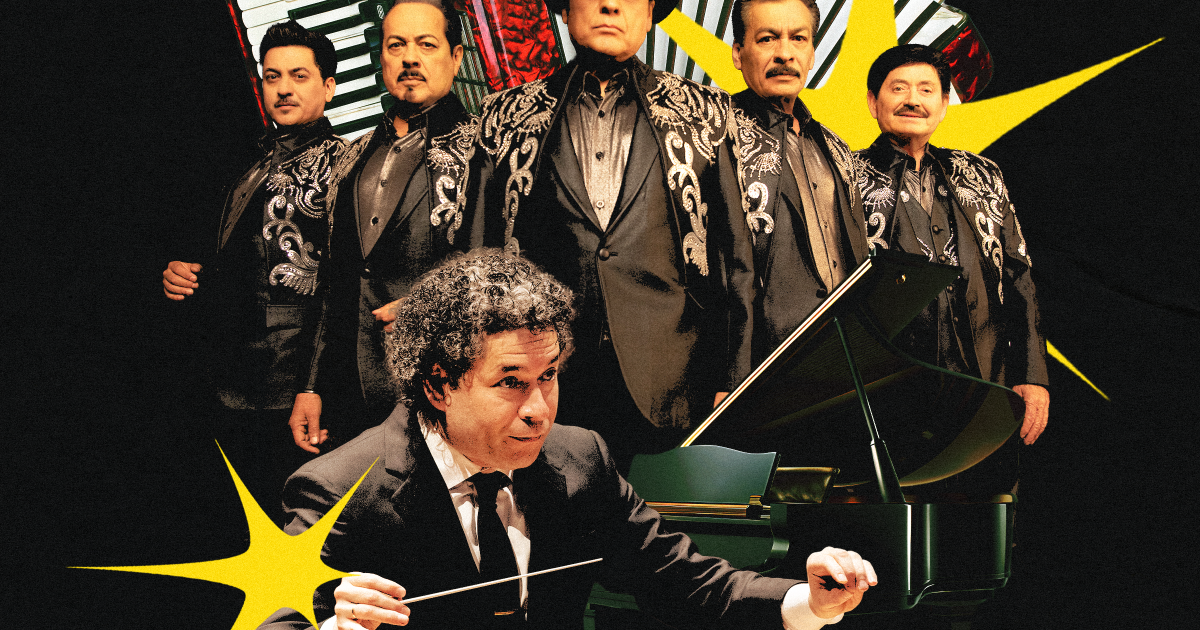
Storied norteño group Los Tigres del Norte announced Tuesday that they are teaming up with departing L.A. Philharmonic conductor Gustavo Dudamel for a special performance Aug. 21 at the Hollywood Bowl.
The show is part of a series titled “Celebrating Gustavo at the Bowl,” which looks to send off Dudamel in style as he transitions into his new role as the music and artistic director of the New York Philharmonic. The “Jaula de Oro” artist’s appearance is part of “Gustavo’s Fiesta,” which will also feature performances by other prominent Latino artists.
The norteño act has sold 37 million albums and recorded 500 songs over a career that’s spanned five decades. They have seven Grammy Awards, eight Latin Grammys and have had 66 songs land on Billboard’s Hot Latin Songs chart, the most of any Latin music act ever.
Recently, the “La Puerta Negra” hitmakers were immortalized in U.S. pop culture history when its members appeared in animated form in a December 2025 episode of “The Simpsons” and performed an original corrido about the escapades of Homer Simpson and Pedro Chespirito (also known as the Bumblebee Man).
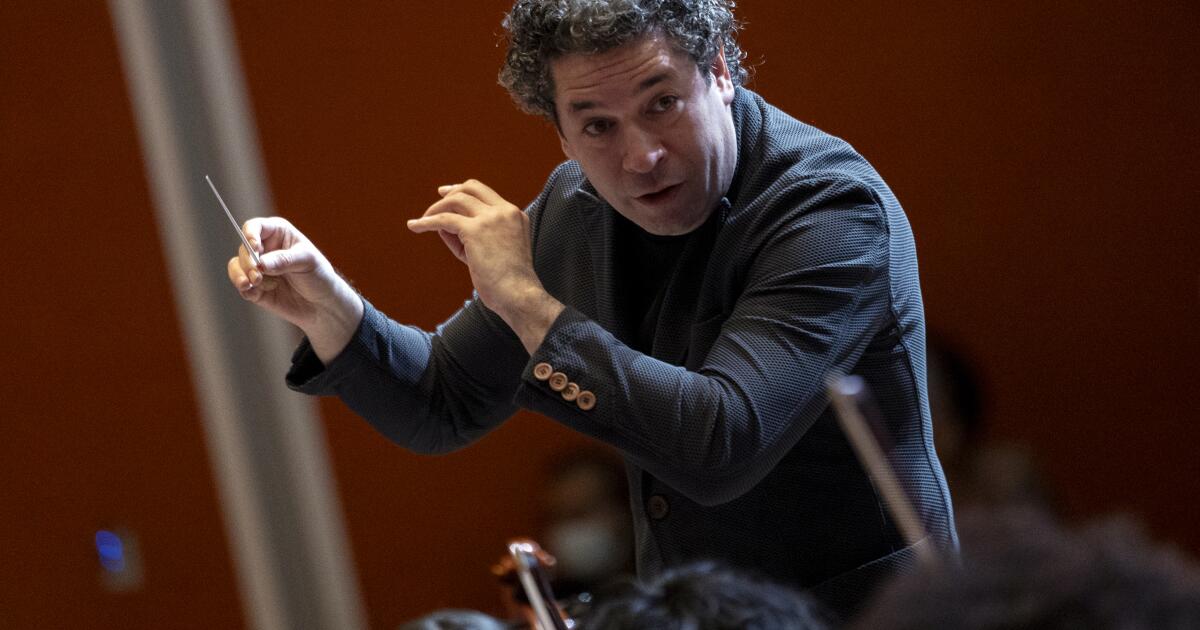
The show will serve as Dudamel’s third-to-last performance as the music and artistic director of L.A. Philharmonic. On Aug. 22, he will be in concert with Foo Fighters. His farewell weekend will conclude Aug. 23 and will serve as a benefit for his homeland of Venezuela, which suffered catastrophic losses from twin earthquakes in late June.
Donations will benefit Dudamel’s Earthquake Recovery to Support Venezuelan Communities fund, in partnership with the United Nations Development Programme and the Development Bank of Latin America and the Caribbean fund.
Gustavo Dudamel’s farewell to Los Angeles will also function as a benefit for his homeland of Venezuela, which suffered catastrophic losses from twin earthquakes in late June.
Dudamel and the Los Angeles Philharmonic announced Monday that the beloved composer’s final Hollywood Bowl performance as the orchestra’s music and artistic director, originally programmed as “Celebrating Gustavo at the Bowl: A Musical Legacy,” will instead be called “A Concert for Venezuela.” Still scheduled for Aug. 23, the show will raise funds for communities affected by the earthquakes.
“Venezuela will always be my home, and every moment, my thoughts are with the families whose lives have been forever changed by this tragedy,” Dudamel said in a statement. “The suffering is immense, but so is the strength and resilience of our people. This concert at the Hollywood Bowl is an invitation to stand together and transform our compassion into action.”
A full program and special guests will be announced later. Dudamel and the musicians will contribute their time and services free of charge.
Donations will benefit Dudamel’s Earthquake Recovery to Support Venezuelan Communities fund, in partnership with the United Nations Development Programme and the Development Bank of Latin America and the Caribbean fund. The L.A. Phil will contribute $50,000 to the fund, announced President and Chief Executive Kim Noltemy.
“In moments of profound need, our responsibility as an institution extends beyond the stage,” she said. “We are grateful for the opportunity to provide direct financial support to relief efforts for communities in Venezuela with a $50,000 charitable donation and to stand alongside Gustavo in bringing this concert to life at the Bowl.”
Twin earthquakes on June 24 devastated Venezuela, with more than 3,300 deaths and more than 30,000 people reported missing. As international rescue teams depart and locals are left to search through rubble, Venezuelans abroad, including L.A. restaurants, have looked for ways to send support.
Dudamel, who was born and raised in Barquisimeto, Venezuela, wrote in a 2015 op-ed for The Times that he is a “product” of El Sistema, the country’s government-funded youth music program. He has been the music director of the Simón Bolívar Symphony Orchestra since 1999.
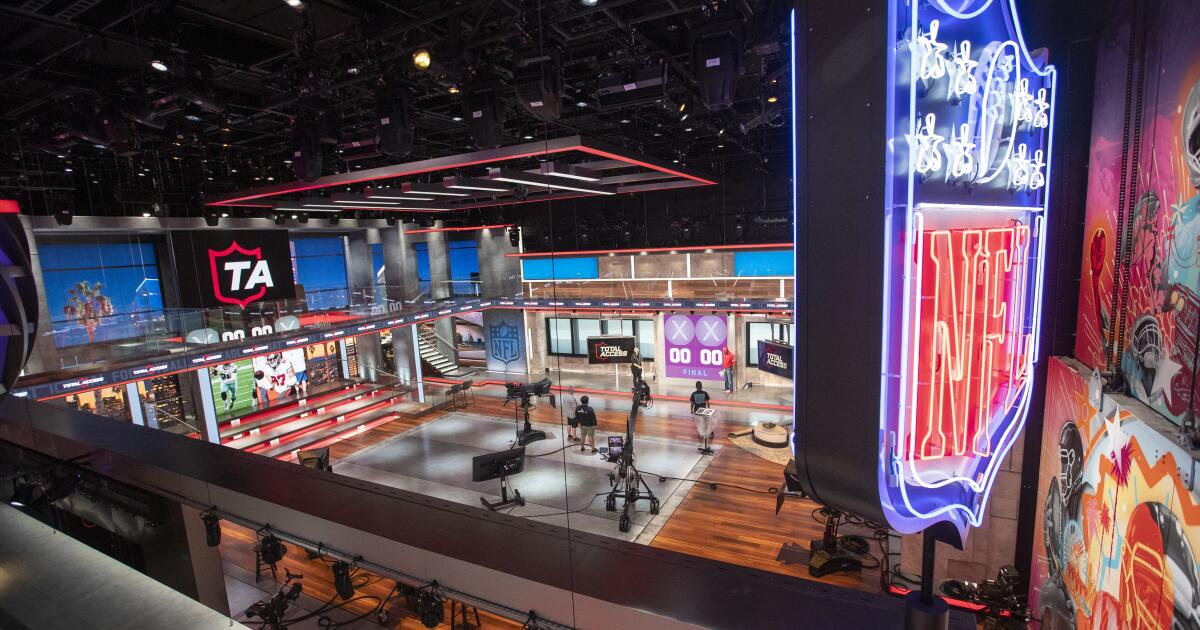
ESPN is pulling up stakes from downtown Los Angeles and heading to the NFL’s headquarters at Hollywood Park in Inglewood.
“We look forward to all of ESPN’s L.A. based studio content, originating from a single location, further enhancing creativity and collaboration with expansion possible in the future,” the Walt Disney Co.’s sports media unit said Wednesday in a statement.
ESPN produced “NBA Today” and “WNBA Countdown” out of the L.A. Live location, which opened in 2009. A late night edition of “SportsCenter” was produced there until last year. The productions will move into the NFL’s Los Angeles headquarters near SoFi Stadium.
ESPN’s local radio outlet, KSPN, will continue to broadcast out of the L.A. Live location adjacent to Crypto.com Arena.
The NFL took a 10% equity stake in ESPN last year. As part of the deal, ESPN oversees the NFL Media, including the NFL Network and the RedZone channel, which has its production facilities at the Hollywood Park location that opened in September 2021.
The moves, expected to be completed by early September, come ahead of ESPN producing its first Super Bowl, which will air on ABC in February 2027 from SoFi Stadium.
Although a new round of layoffs is reportedly expected at ESPN, a person familiar with the matter who could not comment publicly said there will be no job cuts related to the move to Hollywood Park.
About 160 employees work at the L.A. Live location. People involved in ESPN’s productions will relocate to Hollywood Park while others will move to a Disney location in Glendale, Calif.
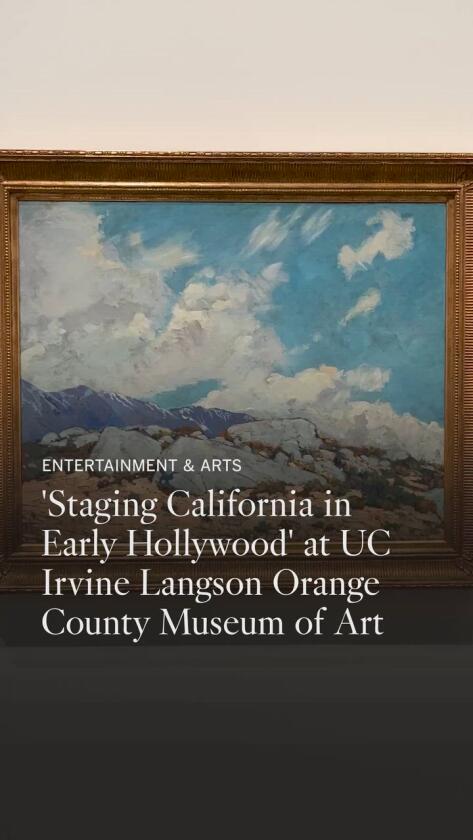
A dull yellow light peeks through a brooding sky looming over rolling Southern California hills. The oil painting “Approaching Storm” captures the kind of picturesque scene that would get fine artist Paul Grimm work in early Hollywood. Known for his plein air landscapes and masterful depictions of clouds, he turned to studio work to make money during the Great Depression.
He is one of many artists on display at a new UC Irvine Langson Orange County Museum of Art exhibition about set painters whose work would go uncredited or overlooked.
Share via
“They weren’t making their living selling their paintings, but they were making their living working for the studios,” said museum director Kathryn Kanjo. “The artist would lose their individual credit and recognition, to be at the service of what was needed by the studio.”
Elsewhere in the “Staging California in Early Hollywood” exhibition, hangs an 18-by-25-foot painted backing for “The Sound of Music” (1965), a project led by the then-art director of 20th Century Pictures’ special effects department, Emil J. Kosa Jr. He’d be the only one to get credit at the time, not the five other contributing artists, including celebrated plein air artist Arthur Grover Rider, who are also noted in the museum description.
“In general, at the studios, they systematized the production design, so that it was fast,” Kanjo said, describing the rigid process as militaristic. “Five artists at a time work day after day to get these things done.”
It’s the museum’s first exhibition since UC Irvine acquired the Orange County Museum of Art last September, building a 9,000-piece collection dating back to the 19th century.
The exhibition, with about 50 pieces, is the first since Kanjo’s appointment in December. It’s a love letter to the film industry’s anonymous and little-known artists, whose works were vital to movies.
The exhibition opens with Paul Grimm’s Untitled, 1974, left, and “Approaching Storm,” 1974, right, which capture the essence of the Southern California landscape.
(Allen J. Schaben / Los Angeles Times)
Take two of the most prolific set artists of the mid-20th century: Warren Newcombe and George Gibson. Newcombe was a Massachusetts-born, well-educated artist who started working on sets as early as 1920. He’d eventually join the MGM art department, where he perfected a visual effect technique called “matte painting.” For a time, it was simply referred to as the “Newcombe shot.”
Gibson was also at MGM around the same time. When the studio first hired the Scottish artist, he’d routinely miss shifts to paint plein air in Southern California. He and Newcombe would help craft “The Wizard of Oz” (1939), but when the credits rolled, both their names were missing.
Newcombe and Gibson would go on to be recognized and celebrated for their work. About a decade after “The Wizard of Oz,” Newcombe won two Oscars for special effects, for “Thirty Seconds Over Tokyo” (1944) and “Green Dolphin Street” (1947).
“He was really instrumental in the professionalization of artists at MGM,” assistant curator Michaëla Mohrmann said of Gibson. “His insistence on color saturation is something that really informs his work for ‘The Wizard of Oz,’ and it’s really that movie that cements his reputation as one of the masters of scenic art.”
Meanwhile, artists like Arthur Beaumont hardly got their due. Raised by a military family in England, the California transplant was particularly captivated by naval vessels. By 1933, he had painted maritime art for most of the U.S. Naval fleet. As a result of his work, he was commissioned as a lieutenant in the U.S. Navy and recognized as its fleet’s official artist.
He also began producing promotional materials and storyboards for Paramount Studios’ naval films as early as 1935, first for a movie titled “Mutiny on the Bounty.” In 1942, he would do the same for “Wake Island” in the midst of World War II. His work was later etched into metal plates and used to mass-produce publicity prints.
Museum director Kathryn Kanjo stands between Arthur Grover Rider’s “Ortega Highway” (1974), left, and Emil J. Kosa Jr.’s “How Marvelous Thy Works” (1928).
(Allen J. Schaben / Los Angeles Times)
“They were participating [in the military and war] in different functions and not always credited for that kind of work,” Mohrmann said. “I think there was an act of generosity [during wartime] in general — everyone was really patriotic.”
The exhibition also features a silent film titled “The Life and Death of 9413: a Hollywood Extra,” a 1928 short highlighting the plight of a background actor known as “9413.”
“It’s all like him being shoveled around and underappreciated and not even given a name, right?” Kanjo said. “Everybody thought it was funny because it was kind of meta, but it was pointing out real issues.”
Beyond giving credit where credit’s due, the exhibition aims to uplift background art.
“Back then as well as now, people question the artistic merits of these works because they were made for films that were for profit,” Mohrmann said. “When in reality there was a ton of talent and artistry and critical thinking.”
Appearing as the amoral daughter of Joan Crawford at only age 17, Blyth’s short film career saw her work with many top stars of Hollywood’s classic era.
A WELSH seaside town has been put on the map globally thanks to two very famous celebrities spotted there this week.
Singer Kylie Minogue and Hollywood director Quentin Tarantino have been seen in the pretty seaside town of Porthcawl.
Sign up for the Travel newsletter
Thank you!
Two A-listers were spotted filming in the seaside town of PorthcawlCredit: AlamyKylie Minogue was spotted filming a scene at a local cafe with Quentin TarantinoCredit: WNS
It isn’t for a holiday – but for filming upcoming movie called Tangled in the Blue, directed by Welsh filmmaker Jamie Adams.
They were caught going to the Saltwater Inn pub, where onlookers said the celebrities “laughed and sang together” for a scene.
Other nearby sightings include at Newton Church, being used for a funeral scene in the film, and at Parkgate Hotel in Cardiff.
But Porthcawl itself is a popular beach town even without the endorsements of the mega stars, with seven bays and two Blue Flag beaches – Rest Bay and Trecco Bay.
She said: “Porthcawl, the ‘jewel of South Wales‘ has the lot. A spectacularly cragged coastline and a swathe of sandy beaches, kissed by sparkling seas – and all just a stone’s throw from the mountains.
“OK, so it might not be the Caribbean, but it does offer fun and frolics for those on a budget.”
“We kicked off activities in Rest Bay. Our morning surf lesson with the brilliant Hugh woke us up quicker than you could say ‘coffee‘.”
The Welsh seaside town has seven beaches – two of which are Blue FlagCredit: Getty – ContributorTrecco Bay Holiday Park is the largest in the countryCredit: Handout
Emma continued: “Within two hours we’d gone from complete beginners to standing up and catching waves.
“Who needs the Maldives when this precious little corner of the UK packs such a punch?”
Along with 2,000 caravans (which can welcome up to 50,000 guests during peak holiday periods) also on-site is a huge entertainment plaza with everything from crazy golf and high ropes to a swimming pool and splash pad.
There’s a bowling alley and for older kids the Next Level Gaming Arena has over 25 consoles including PS5 and Xbox.
Other outdoor activities include archery, hover boards, bumper zorbs and there are even pedal karts to get around.
The park puts on shows, and there’s even Paw Patrol Mighty Missions for little ones.
The holiday park has all the essential facilities like restaurants, cafes, bars, there’s also a launderette, supermarket and even a chapel.
When the sun is shining, guests can enjoy the sprawling sandy Blue Flag beach right on its doorstep.
A four-night stay across this weekend in a Bronze two bedroom caravan which sleeps four people works out to £405 – or £25.31pppn.
If you fancy making a week’s holiday (from June 27 – July 4), then this works out as just £16.40pppn.
Or, sign up with Sun Club and you could stay at Trecco Bay from £9.50.
It has a huge splash park, swimming pool and plenty of other activities to doCredit: Handout
Book Trecco Bay with Hols from £9.50…
Here’s how you can stay at Trecco Bay Holiday Park from £9.50
Parkdean Resorts Trecco Bay is one of 300+ holiday parks you can book with The Sun’s Hols from £9.50.
New breaks at Trecco Bay will be released with the next drop of £9.50 holidays on Wednesday, July 8.
However – if you are signed up to Sun Club – you can get in and book your holiday a whole day EARLY.
Sign up to Sun Club for £1.99 a month and you will have priority in picking from hundreds of new dates for holidays, from 0:01AM on Tuesday, July 7.
Click here to sign up to Sun Club and get early access to booking your Trecco Bay holiday.
When the creators behind Universal Studios Hollywood’s soon-to-open “Fast & Furious” coaster discusses the attraction, they speak of it not only as the most grown-up, intense ride at the park, but also as one of the most extreme coasters in Universal‘s global portfolio. That means, in theory, a ride as vaunted as its Florida coasters Jurassic World VelociCoaster and Stardust Racers.
For riders, some of the perception of danger will come from the coaster’s location. Fast & Furious: Hollywood Drift is set on a hill between the park’s upper and lower lots. It will careen over, under and around guest escalators, and take attendees on a journey that includes multiple inversions and speeds of 72 mph, making it the fastest coaster at any Universal park. A particularly unique facet is the ability for its cars, each meticulously designed after a real vehicle, to rotate 360 degrees.
You’re reading Mr. Todd’s Wild Ride newsletter
Todd Martens’ newsletter delivers news and commentary on the past, present and future of theme parks, right from the theme park capital of the world — Southern California.
By continuing, you agree to our Terms of Service, which include arbitration and a class action waiver. You agree that we and our third-party vendors may collect and use your information, including through cookies, pixels and similar technologies, for the purposes set forth in our Privacy Policy such as personalizing your experience and ads.
Plenty of coasters have the capacity to spin, but Universal has been hyping the high-speed “drift” sensation of its cars. Each ride vehicle will have distinct programming along the coaster’s 4,100 feet of track, and the hope is to create the feel of a stunt car just barely maintaining its control.
I like a coaster, but I’m also, I’ll admit, a tad squeamish. Hollywood Drift is expected to open by mid-summer, and at the time of writing, only Universal stakeholders had been on the attraction. Jon Corfino, the park’s lead creative executive, was one of those riders, so as he gave me a tour of the coaster, I pressed him to describe what the experience is like. Here’s what I learned.
So Fast & Furious: Hollywood Drift is intense. But just how intense is it?
A loop on Fast & Furious: Hollywood Drift.
(Todd Martens / Los Angeles Times)
The late, great theme dark designer Eddie Sotto once devised a simple formula for what makes a good coaster: Fear minus death equals fun. I wanted to ask Corfino just how scared I would be. Answer: Pretty frightened. Probably.
“It’s a high level of intensity, absolutely, for sure,” Corfino says.
And yet Corfino tried to calm my nerves. Hollywood Drift, he explained, is designed to feel relatively slick — polished, if you will.
“I’ve ridden coasters that I would say are high intensity, but they’re very aggressive,” he says. “They’re very rough. But if you look at what we tried to achieve here, it’s that you’re in a [car] vehicle. It’s very smooth. It’s not something that would be not natural for a car, if that makes sense.”
Well, except for the whole going upside down part. Based on Corfino’s assessment, we can expect some white knuckles, as Hollywood Drift will lift riders off their seats at multiple points.
“You definitely feel you’re coming out a couple times, and not the least of it is when you’re upside down,” Corfino says. The coaster will utilize a lap restraint that extends from the top.
“You’ll be holding on,” he says. “When you’re upside down, you’re holding on.”
What about the drops?
Unversal Studios’ Hollywood’s Fast & Furious: Hollywood Drift is set to open this summer.
(Todd Martens / Los Angeles Times)
Corfino didn’t pinpoint the exact steepness of the drops on Hollywood Drift, but riders will encounter one immediately after launch. When exiting the show building, designed to look like a warehouse garage, Hollywood Drift will take a sudden dip off a cliff. The sharp drop is one of many.
Riders will encounter, for instance, a so-called “bunny hop,” which is typically a series of small hills that provide airtime. But Hollywood Drift will play with riders’ expectations through its terrain. Those mid-ride hills are “actually pretty darn steep,” Corfino says. And then before the ride ends, riders will go up, over and under Universal Studios’ most recognizable feature (except perhaps Stuart the Minion): its escalators.
“When you go up over the loop, that’s very steep. You’re coming straight down over the stairway and then underneath the stairway,” Corfino says.
How real are the cars?
The minicars of Fast & Furious: Hollywood Drift.
(Todd Martens / Los Angeles Times)
The coaster will feature four heavily detailed miniature cars as ride vehicles. These four-seaters — mimicking a Dodge Charger, Mazda RX-7, Nissan Skyline GT-R and Toyota Supra — all come complete with working taillights. And each has its own distinct sound effects, engine and brake noises that match their real cars. Guests will hear brakes each time the vehicle drifts or turns.
The minicars aren’t complete tiny re-creations. The odometers in the coaster cars, for instance, are for show only.
“The truth is I was really laboring,” Corfino says of the accuracy of the coaster cars. “They all have realistic sound effects, and when you hit the bottom, the big launch, I wanted to hear the NOS kick in. But you’re going so fast, at 72 mph, and with the wind, you’re not hearing anything. Quite frankly, your vision is even kind of shaky because you’re going so fast.”
That sort of attention to detail is what separates a Universal or Disney coaster from so much of the industry — even if riders will be clutching their restraints too hard to notice the discrepancies in each car’s engine roar.
I’m eager to get on the ride. I will, however, pretend I didn’t hear Corfino say that thing about “shaky” eyesight.
This week in SoCal theme parks
Dataland is now open in downtown Los Angeles. Theme park fans should give it a look.
(Carlin Stiehl / For The Times)
“Stranger Things” lives at Halloween Horror Nights. Universal Studios Hollywood’s trickle of announcing haunted houses for its Halloween event continues. After unveiling a “Sinners” house earlier this year, Universal has added “Stranger Things” to the roster. “Stranger Things” is no outsider to the festivities, but this house will be themed specifically to the show’s fifth and final season. Expect, of course, some Demogorgons and other nasty creatures. Halloween Horror Nights is set to launch on Sept. 3.
Theme park fans, pay attention to this new museum. Now open in downtown Los Angeles is Dataland, which was described by this outlet as a “25,000-square-foot immersive, environmental, generative, multisensory AI arts museum.” While there’s much to discuss and debate regarding the center’s use of AI, Dataland’s inaugural exhibition, “Machine Dreams: Rainforest,” is the kind of all-encompassing, wrap-around display theme parks are known for (I’d argue Dataland is, in fact, more indebted to theme parks than the world of fine arts, but that’s another column). No doubt those in the immersive space are paying close attention as to how Dataland is received.
“Toy Story 5” has arrived, in theaters and at the Disneyland Resort. Fans of the “Toy Story” franchise will want to make their way to Disneyland’s Pixar Place Hotel, where a second-floor exhibit features drawings and sculptures from the new film. And for hotel guests, coming July 2 is the “Disney Poolside Splash Bash,” a pool party with music, trivia and appearances from Jessie, Bo Peep and Woody. If you’ve seen the movie, I encourage you to check out Amy Nicholson’s review of the work. She found, perhaps, that the toys have overstayed their welcome.
Bag checks and metal detectors arrive at CityWalk. Universal Studio’s theme park adjacent shopping and dining area is home to a couple should-be cultural institutions: the Los Angeles outpost of Jimmy Buffett’s Margaritaville and one of the finer Imax theaters in the nation. Now getting to either comes with an extra hurdle, as Universal has placed CityWalk within the theme park’s security zone. Prepare for bag checks, metal detectors and extra time if you’re heading to a sold-out screening of Christopher Nolan’s “The Odyssey.” The local film community, as reported by The Wrap, is having a fit.
What I’m thinking about
A media image distributed by Adobe and Walt Disney Imagineering is designed to show how AI software can be used in the design process.
(Adobe / Walt Disney Imagineering)
Generating attention this week was an announcement from Adobe and Walt Disney Imagineering, the creative arm of the company responsible for theme park designs, regarding a new AI partnership. AI is a term I generally believe is rightfully viewed with skepticism, especially when it comes to creative work. As a writer, I view utilizing AI to help craft a story as strictly forbidden; journalism, after all, is a storytelling art. But I’m not above tools that can help accelerate tedious aspects of the process, such as using AI to help transcribe an interview.
So places in which Adobe’s Firefly Foundry could, say, transform drawn 2D renderings into potential 3D models seem not entirely troublesome, especially for an industry in which one of the most time-consuming aspects is the build. And yet there were components of the announcement, as well as the press materials distributed with it, that made me cringe. The generation of on-demand, on-brand assets, for instance — one of the promised abilities of the software — is a job for an artist, not a computer.
And Adobe and WDI proved my point. Accompanying the press release was an image of Disneyland’s Haunted Mansion ride vehicles, the Doombuggies, as re-imagined by the program. A perfect, coffin-like design from Bob Gurr was now bedazzled with garish, grotesque imagery that had little similarity with anything in the Haunted Mansion. That the two companies viewed something this amateurish as a prime example of what the software could achieve should raise an eyebrow.
Tell us your stories. Ask us your questions.
Have a theme park tale to share? Whether it was a good day or less-than-perfect day, I would love to hear about it. Have a question? A tip? A fun photo from the parks to share? Email me at todd.martens@latimes.com. I may feature your note in an upcoming newsletter.
Ride on,
Todd Martens
P.S.
Changes are coming to Disneyland’s classic Autopia ride.
(Allen J. Schaben / Los Angeles Times)
Disneyland’s classic Autopia attraction is facing a deadline. The Disneyland Resort has already stated that the gas-powered minicars of Autopia would be on the way out in early 2027. Disneyland officials confirmed just a few weeks ago that the park has an agreement with the California Air Resources Board to retire the current engines next year. No closing or reopening date has been announced, and no details on the new cars have yet been released.
But, thanks to new reporting from environmental reporter (and former Times staffer) Sammy Roth, it’s been revealed that the theme park faces a strict deadline to begin making the switch. In a recent edition of Roth’s Climate Covered Goggles, the writer noted that due to an agreement with the board, Autopia in its current form must shut down by Feb. 1, 2027.
While that doesn’t shed any clarity on when the ride may reopen with refreshed vehicles, it at least provides a timeline as to how long it will likely exist in its current form.
There are few things a Los Angeles local is less likely to do than take a Hollywood sightseeing tour on a big, garish bus. Only rush-hour traffic and $20 tacos inspire the same level of dread.
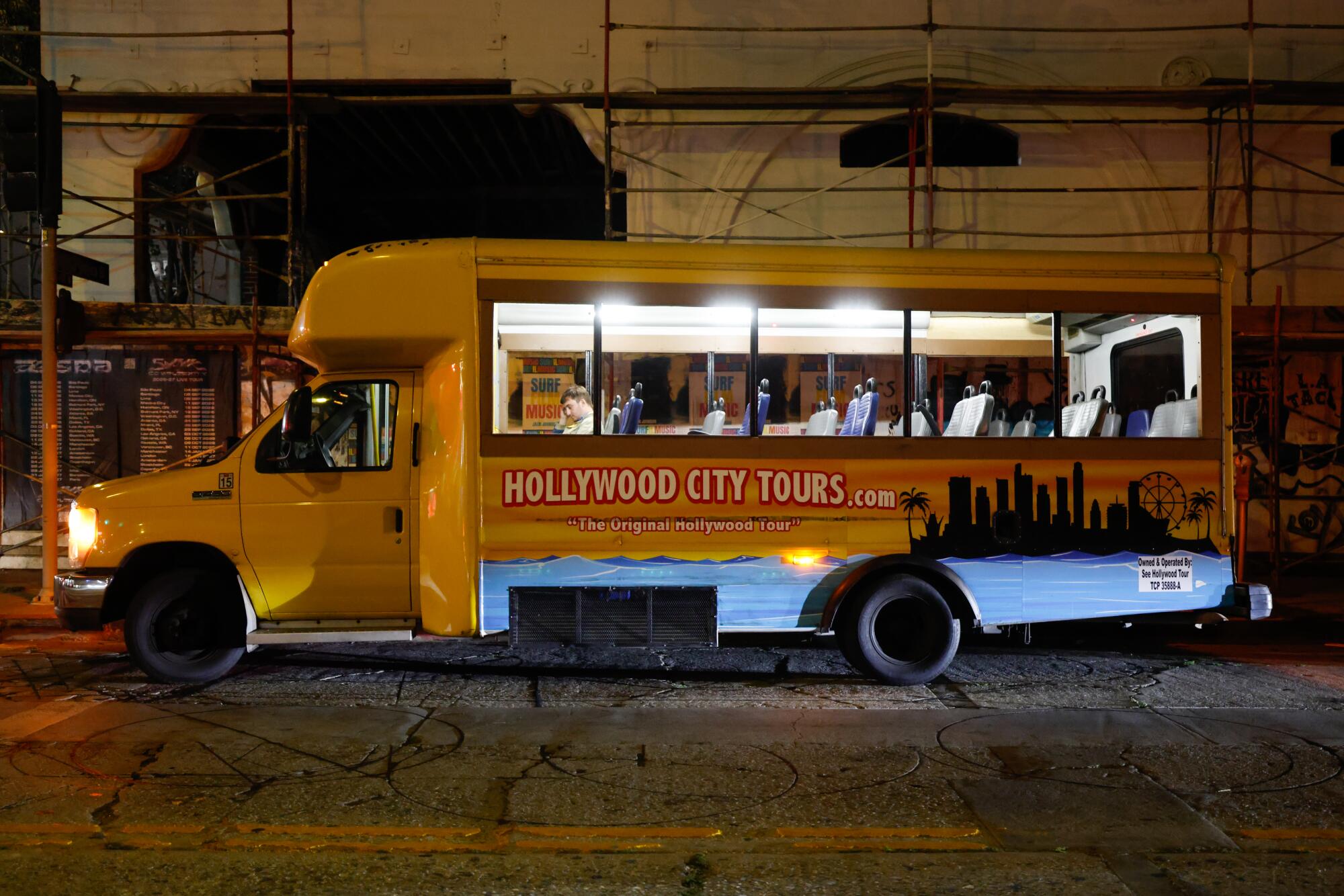
Yet nearly everyone aboard the open-air bus for a Tuesday night production of “California Gothic: A Bus Tour” was an L.A. resident. The show, which is produced by the aggressively hip New Theater Hollywood, recently wrapped its third “season” after debuting in February and returning for an April encore. Set on a moving bus, the 1.5-hour-long experience is part esoteric Tinseltown history lesson, part immersive theater. The narrative conjures meaning from the Los Angeles cityscape by fusing a hodgepodge of textbook theories about the sprawling metropolis onto the gritty reality of daily life.
“We originally organized this thinking there would be more people coming who aren’t from here,” said Oliver Misraje, the show’s writer and primary tour guide, as the bus pulled away from the curb at Santa Monica and Wilcox. “But this just goes to show how much people love the city and are from here, contrary to popular belief.”
In lieu of celebrity-hungry tourists, “California Gothic” has been packing its bus twice a night with rowdy young scenesters and in-the-know locals eager to absorb its heady mix of California history, public intellectualism and performance artistry.
While the show wrapped its latest run in mid-June, it will reopen its automated doors during the last week of October for a special “ghost tour” edition co-written by Misraje and New York it girl Ruby McCollister.
The bus arrives for New Theater Hollywood’s “California Gothic: A Bus Tour.”
My tour was far less steeped in irony than I feared. As the bus wound its way through the streets of Hollywood, starting at the New Theater’s doorstep before eventually circling the Hollywood Walk of Fame, Misraje led the audience through his take on the death of the “California dream” and the rotting carcasses of empty buildings and broken promises left in its wake. Along the way, we encountered a haunted-eyed Marilyn Monroe impersonator (Brooks Ginnan), a masked Hollywood legend known as the Duchess of Argyle (Shauna Frente) and a singing, swaggering “Rat Czar” with a lot to say about real estate developers (Loren Kramar).
Yes, it’s whimsical, and yes, it references Mike Davis’ “City of Quartz” more than any of the TMZ-type excursions it gently parodies, but it’s still, at its heart, a bus tour.
In a nod to classic Hollywood tour advertisements, the show’s winkingly all-caps poster declares, “You Will See: The Hollywood Sign, Marilyn Monroe, the Schizo City State.” There is also a stash of BuzzBallz ready-to-drink cocktails for trivia winners, but Misraje and his cast do not deliver their performances with smirks or smarm. They commit full-throatedly to playing out Misraje’s vision of a Hollywood haunted by the dreamers it’s wronged and the secrets it’s plastered over.
“Ultimately, we are trying to pay homage to the bus tour format, which is intrinsically ‘carny,’” Misraje said, likening himself to a carnival barker espousing aesthetic philosophy aboard an ever-changing “Ship of Theseus.”
Before the performers infiltrate the ship, “I’m trying to intentionally set up audience expectations to think they’re going to get this run-of-the-mill Hollywood death tour,” he explained. “I consider myself a kind of impish person, but still fundamentally sincere.”
1
2
3
1.Tour guide Oliver Misraje begins the show.2.Rat Czar, portrayed by Loren Kramar, performs during the bus tour.3.Guests board the bus.
Given the show’s monologue-heavy format and bevy of literary references, it’s no surprise that the concept began as an essay. Misraje, a 27-year-old writer and self-described “Hollywood hustler” raised primarily in the Inland Empire, was inspired after the 2025 Palisades and Eaton fires to stage a piece he had written bridging his love of Gothic literature with his “welfare class” upbringing in a family of seven raised by a single mother, which he considered gothic in its own right.
“We were in the Inland Empire and it was the 2008 financial crisis,” he said. “There was all this imagery of things famously California-coded, like the suburban house, the pool, the strip mall, and when we were there, it was just, like, destroyed. There were abandoned housing subdivisions rotting in the sun.”
The perfect setting, he explained, for the kind of “literature that emerges after the failure of a historical project.”
After reaching out to New Theater co-owner Calla Henkel and conceiving the project, Misraje and his producers elected to turn the funhouse mirror onto Hollywood, framing the neighborhood with historical context and Freudian theory but ultimately letting it speak for itself.
The bus passes the TCL Chinese Theatre.
The highly mutable nature of street life and the participatory character of the show means its tone can shift drastically from tour to tour, even within the same night. Sometimes, the streets appear glittering; other times, seedy and dangerous. Once, there was a showdown with another tour bus — one presumably not carrying theatergoers. At a different show, a drunk pedestrian tried to board the bus during faux-Monroe’s speech. One particularly harrowing night, someone circled the bus on an electric scooter, shouting homophobic slurs at the all-queer cast.
“It’s almost like surfing,” Misraje said. “There’s so much chaos you’re confronting, and you have to find a way to ride it and let it be a part of the show.”
The show’s high production costs make bringing in a profit difficult, but Misraje said he and the New Theater Hollywood team plan to revive it periodically, with an evolving story and cast of characters.
On my tour, no performer better represented the blurred line between theater and street life than the Duchess of Argyle, a.k.a. the Mysterious Masked Lady of Hollywoodland, a.k.a. Shauna Frente, a busty Blanche DuBois figure in an eyeless flapper mask and gartered stockings. Just three days before, she had been evicted from a home on Argyle Avenue that once allegedly belonged to Cecil B. DeMille. This happened after a lengthy legal battle, during which the show helped raise money for temporary housing.
As the Duchess spilled neighborhood secrets, our bus repeatedly passed an Extra Space Storage facility painted with images of old Hollywood behemoths: Lucille Ball, Groucho Marx and the like. The intermingling smells of sizzling hot dogs, urine and marijuana wafted through the open windows.
Hollywood may be ghostly, the Duchess told us, but it was hers to haunt.
Duchess of Argyle (Shauna Frente) tells Hollywood stories during the tour.
Two of the biggest box-office standouts of 2026 so far were not made by established studio directors or built on franchise IP.
“Obsession” and “Backrooms” — horror films from internet-native directors in their 20s — have outperformed far more expensive studio releases.
The breakout success of these films has ignited debate across Hollywood about what made these movies so popular, especially among Gen Z moviegoers who haven’t been flocking to cinemas in recent years. Here’s what to know:
The numbers
”Obsession” was directed by 26-year-old Curry Barker, who got his start on YouTube with sketch comedy and horror shorts. Released May 15 by Focus Features, the film was made for just $750,000 but opened to a staggering $17 million and has improved on its debut every weekend since.
“Obsession” set an all-time horror record for the biggest fourth weekend for a film at the domestic box office, raking in $25.4 million. It now ranks as the year’s fifth most popular film, nearing $200 million domestically and roughly $295 million worldwide — ahead of Pixar’s “Hoppers” ($166 million) and Paramount’s “Scream 7” ($121 million), per Box Office Mojo.
Released May 29 by A24 (known for such acclaimed films as “Moonlight” and Everything Everywhere All at Once”) on a reported $10-million budget, it opened to $81 million and crossed $100 million in under a week.
Within two and a half weeks, it had outgrossed the entire theatrical runs of horror films “Five Nights at Freddy’s 2,” “Smile” and “Scream 7.” It sits as 2026’s eighth-highest-grossing film.
Who is watching?
The audiences are young. In recent weeks, nearly 90% of “Backrooms’” viewers were under 35, with more than half under 25. Over “Obsession’s” first few weekends, 75% of the audience was 17 to 34, which is significant at a time when major studios have struggled to consistently get younger viewers to trek to the multiplex.
Why it’s working
Audiences have clearly latched onto the stories, said Jason Blum of Blumhouse–Atomic Monster, who worked on both films.
“There’s been an audience kind of waiting to get back to the movie theaters, and we in Hollywood really have not landed on what would get them back,” he told The Times in an interview this week.
Blum, who upended horror genre with the “Paranormal Activity” franchise, ties the success of “Backrooms” and “Obsession” to a connection to the directors’ origins.
Because the films were made by creators who speak to younger viewers daily on YouTube, he said, that generation “feels like they’re being spoken to.”
David Gross, an analyst at FranchiseRe, framed it as a new pipeline of talent and material. Creators can build large followings very inexpensively, he said, and their stories arrive further developed — which expedites the development and discovery process. He called internet-based storytelling “another additive source for material for movies.” Blum added that the films’ success could make studios more willing to bet on undiscovered directors who “might not have been considered” before.
Rosie Ramirez, chief marketing officer at Galaxy Theatres, said a young first-wave audience tends to generate buzz. More than a month after “Obsession” was released, she said, the Nevada chain’s four California locations are only now seeing a second wave of moviegoers curious about the hype.
Whether this marks a lasting shift or a fluke is unclear. May crossed $1 billion in box office — with “Backrooms” and “Obsession” doing much of the heavy lifting. Despite the improvement, the box office has yet to full return to pre-pandemic levels, with the summer tracking roughly 3.5% behind summer 2019, said Comscore’s Paul Dergarabedian.
And Dergarabedian questioned how the industry could replicate a success that, in his words, was “authentically and organically created” rather than manufactured: “It just happened,” he said.
Ramirez argued the broader summer slate — franchise tentpoles like “Toy Story 5” alongside some original surprises — points to a healthy box office regardless, a reminder that “it doesn’t always have to be the big summer blockbuster.”
When Brian Grazer has an idea for a movie, he now starts with a chatbot. The co-founder of Imagine Entertainment — the company behind “A Beautiful Mind,” “Apollo 13” and “Liar Liar” — said he sits down with Anthropic’s AI assistant, Claude, to rough out a story before handing it to a writer.
“You can build the whole thing into an outline. You still need a screenwriter. I always believe you need a screenwriter,” Grazer said during a keynote at UCLA’s Entertainment Symposium on Thursday. What once could have taken up to a year, he said, now takes him about a week — but the human writer stays.
That balance — AI as an accelerant rather than a replacement — captures where much of Hollywood has landed in practice. Amazon MGM, Lionsgate, Netflix and Disney have all made major investments in the technology. The sharper question at the symposium, which drew many of the industry’s top lawyers and dealmakers to the Westwood campus, was not whether to use AI but how: who authorizes it, how far it goes and who gets paid.
For the companies building the tools, the answer increasingly comes from the client. Studios, production companies and distributors regularly approach Promise, a generative AI company, to bring AI into their productions, and each arrives with its own usage guidelines, said the company’s president, Jamie Byrne. Those rules govern which AI models Promise may use and what protections apply — effectively letting each client decide how heavily AI figures into the work.
“It comes down to a risk appetite,” Byrne said during a panel on AI. “We know that there’s talent that are staunchly against it. We know that there are many who are okay with it.”
He framed adoption as a competitive necessity: “Every time there’s a technology change, certain studios or production companies rise. Others fall, and it’s usually the ones that are not leaning into the new tool.”
Ron Howard, also of Imagine Entertainment, argued the limits will ultimately be set elsewhere — by viewers. “Sure, it’s about efficiencies and budgets, but more than anything, audiences are going to tell us where those restrictions are,” he said. He expects AI-generated content to settle into its own subgenre over time, with audiences signaling what they will accept.
The most contested ground is labor, where consent has become the dividing line. The emergence of synthetic performers such as Tilly Norwood has made AI a central issue in SAG-AFTRA’s contract. The union’s most recent agreement draws a clear line between authorized digital replicas, which use a performer’s likeness with their consent, and fully synthetic creations.
Talent agencies are organizing around the same principle. In recent years, Creative Artists Agency began digitally scanning clients into what it calls the CAA Vault, building a replica of a client’s image, likeness and voice while leaving the talent in complete control of how it is used.
That control is beginning to carry real value, said Tammy Brandt, CAA’s deputy general counsel, who said she is seeing more deals that involve digital likeness. Hollywood has been slow to work out how to monetize these replicas, she said, but once it does, audiences will start to encounter them more often.
“You have to lean into the technology and understand what it can do, and honestly, how you can make money, work with talent and with creative assets in a way that the user is interested in,” Brandt said. “There’s a little bit of trial and error as you go with that.”
THE daughter of a legendary Hollywood director and her husband have been mysteriously found dead inside a running car parked on a highway.
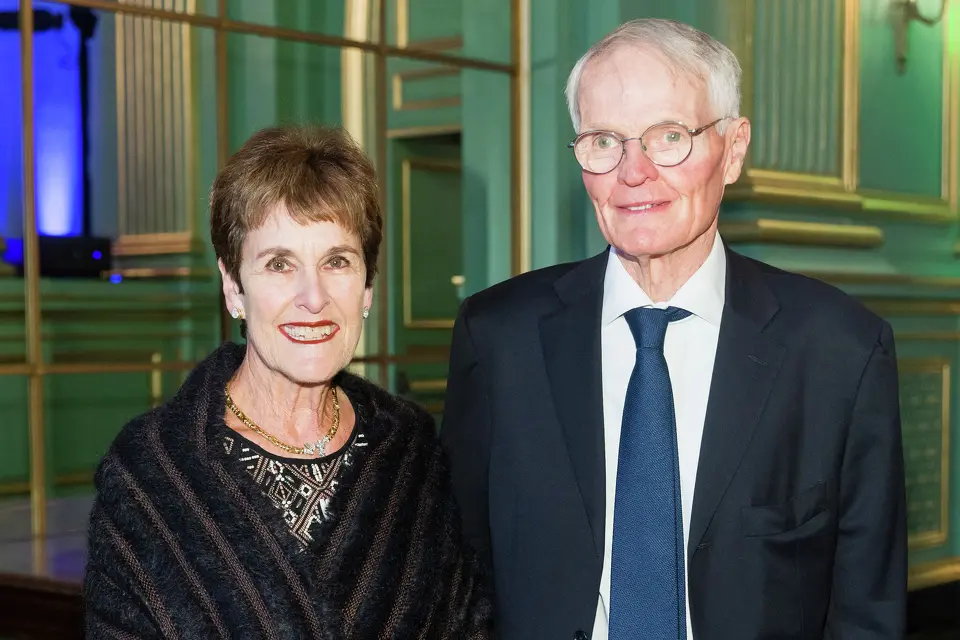
Judith “Judy” Wyler Sheldon, 84, and her husband Wylie Sheldon, 86, were discovered unresponsive in a Jeep Compass on Interstate 5 near Redding, California.
Sign up for the Showbiz newsletter
Thank you!
Judith ‘Judy’ Wyler Sheldon, pictured here in her youth, was found dead inside a running carJudy with Wylie Sheldon, 86, in 2019Credit: Jana Asenbrennerova for Drew Altizer Photography
A California Highway Patrol officer made the grim discovery on the shoulder of the northbound carriageway, just north of Fawndale Road, at approximately 5.46pm on Monday.
Judy, a prominent San Francisco arts patron, is the daughter of famous filmmaker William Wyler.
She was found behind the wheel, while her husband was in the passenger seat.
Despite emergency medical personnel attempting life-saving measures, both were declared dead at the scene.
The circumstances surrounding the tragedy remain unclear, and investigators are working to determine what happened inside the vehicle.
The California Highway Patrol’s Northern Division Investigative Services Unit has taken over the case.
While authorities have not publicly disclosed any indication of foul play or a medical emergency, the deaths occurred during a period of extreme heat.
The National Weather Service had issued a warning for the Redding area, where temperatures soared to 109 degrees Fahrenheit (43C) on the day the couple were found, though investigators have not confirmed if the weather played a role.
Most read in Entertainment
The couple were found dead on Interstate 5 near Redding, California (stock)Credit: GoogleJudy is the daughter of famous Hollywood director William WylerCredit: Getty
The news has stunned California’s arts and film communities, where Judy spent decades championing silent-film preservation.
She was the long-time chair and former president of the San Francisco Silent Film Festival.
Anita Monga, the festival’s artistic director, said the community was “reeling” from the devastating loss.
“Judy and Wylie were very dear to us, supportive and a positive presence at all our events,” she said, recalling how the couple regularly opened their home to visiting film archivists and musicians.
“Judy would allow, actually encourage, our visiting guests to pose for pictures with her father William Wyler’s Oscars.
The perfect hosts.”
Born Judith Wyler in Los Angeles, she briefly appeared on screen during the 1950s with credits in The Errol Flynn Theatre, The Buccaneers, and BBC Sunday-Night Theatre.
However, her lasting legacy was behind the scenes.
Judy’s passion for film preservation intensified after attending a 2007 retrospective of her father’s silent-era films in Pordenone, Italy.
Her cultural influence also extended to other institutions, including serving as a gala co-chair for San Francisco Performances.
The tragedy carries a deep resonance due to Judy’s family’s monumental place in cinema history.
Her father, William Wyler, remains one of the most acclaimed directors in American film, directing classics such as Roman Holiday, Ben-Hur, The Best Years of Our Lives, Mrs. Miniver, and Wuthering Heights.
William won three Academy Awards for Best Director, a feat achieved by only a handful of filmmakers.
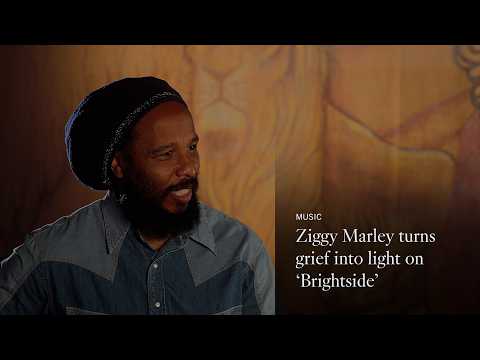
It’s Friday afternoon in North Hollywood and Ziggy Marley is perched on a stool inside his newly built Rebel Lion Studio, tucked in one of the neighborhood’s creative enclaves.
The nine-time Grammy winner is surrounded by a collection of lion figurines, guitars, traditional hand drums and a piano. Along the walls hang two replicas of backdrops his legendary father, Bob Marley, used on tour in the 1970s. The murals, depicting Rastafari icons and Haile Selassie I and Marcus Garvey, were featured in the 2024 biopic “Bob Marley: One Love.”
“These are what we used as the backdrop for the concert scenes. Them spiritual to me,” Marley says in patois as the smell of palo santo dances around the rehearsal space.
Music has been both an inheritance and lifelong pursuit for Marley. From sitting in studio sessions with his father as a child to building a five-decade career of his own, he has remained a curious student of the craft, one willing to challenge convention in search of a deeper meaning. That spirit is evident on “Brightside,” his ninth solo album, which was released on vinyl on April 18 (Record Store Day) and May 1 on streaming.
Rather than recording the eight-track project in 440 Hz, the standard tuning frequency for most modern music, he opted for 432 Hz, a tuning some musicians and theorists believe creates a warmer, more meditative listening experience. He also slowed down his songwriting process, giving each lyric room to carry its message of hope through turbulent times. The album, which may be his most personal yet, also features “Many Mourn for Bob,” the first song he has written directly about his late father.
“I think it shows the next stage that I probably am in,” says Marley, adding that he felt connected to his father on a spiritual level. “We took another step in the relationship, to another place that it’s never been before.”
Ziggy Marley is bringing his “Brightside” tour to the Hollywood Bowl on June 21 alongside reggae star Burning Spear.
(Dania Maxwell / For The Times)
He adds, “When I was doing the song, it kind of came to me like this song could’ve been my father’s song. It could’ve been a song that he wrote.”
The reflective nature of “Brightside” arrives at another pivotal time in Marley’s career. This year marks the 20th anniversary of “Love Is My Religion,” the Grammy-winning album that launched his solo career and crystallized a personal philosophy he still carries today. He is also set to release his sixth children’s book, “True to Myself,” in September.
As we wrap up our conversation, Marley has only a few minutes before Rebel Lion Studio shifts back into work mode. Within minutes, bandmates, background singers and production crew members begin funneling into the space, hauling in stacks of equipment as promotion and preparations continue the “Brightside” tour, which stops at the Hollywood Bowl on June 21.
This interview has been lightly edited for length and clarity.
You recorded your latest album, “Brightside,” here at Rebel Lion Studio, which you designed and built from the ground up. Can you take me back to the beginning of that process and why you wanted to do it?
I grew up around my father and my mother as growing musicians trying to succeed and there was one thing I kept hearing over and over throughout my life: independence. Their whole mission was to be independent. I saw them work and I saw my father build a studio. I saw him have a space where he can do more music and control his own time. That was a dream of mine for a long time, ever since I started doing music because usually we use other people’s studios. I couldn’t have this in my house. It’s too much. It’s a dream come true.
We’re surrounded by two beautiful murals. Is there a particular item that is personal to you?
The murals are replicas of my father’s backdrops that they used. The original artwork is by Neville Garrick, but he helped us re-create them for the Bob Marley movie. These are the murals we used as the backdrop for the concert scenes. They are spiritual to me cause that’s Haile Selassie and Marcus Garvey, two very important beings for us. Inspirational.
On “Brightside,” Ziggy Marley dedicated a song to his father, Bob Marley, for the first time in his career.
(Dania Maxwell / For The Times)
“Brightside” is your ninth solo album. What mindset were you in emotionally and spiritually when you started working on it?
I never thought about making an album, I was just writing songs. You just tap into things in your subconscious that are waiting to become music, I feel like. Then when the time comes for writing songs, the time comes. It’s like a season. Like you have blueberry or orange season. So there’s a season for me when I write songs. Then you say, “All right, let’s make an album then.” But you don’t think about an album before. It’s just an expression or a feeling just to make music, not for any reason but to make it. It happened over a period of years. Ideas and experiences that eventually come out. But closer to the time I [made] the album, I remember writing some of the later songs like “Why Let the World.” It was a song that I wrote because I was feeling down and everything that was happening in the world and the country. Just so much negativity and I just felt like I needed to take a break from it. To recharge yourself. We cannot fight every day. We need to take a break and then get back to it. I needed to teach myself to take some time. It was more of a mental thing than an emotional thing. Stuff I deal with my father, personal life and stuff with my spirituality and my faith. So there’s a lot of me in this record.
“Many Mourn for Bob” is the first song you’ve explicitly written about your father. Your brother, Stephen, is also on the vocals. What surprised you emotionally once that song was finished?
I’m not sure I thought about it like that. The experience of expressing that emotion, it’s a spiritual experience. I think it shows the next stage that I probably am in and even my relationship with my father on that spiritual level. It’s a different place. We took another step in the relationship, to another place that it’s never been before. When I was doing the song, it kind of came to me like this song could’ve been my father’s song. It could’ve been a song that he wrote. That’s how I felt about it. This is partly his song. It’s me and him making this song. This song is his song too.
How has your relationship with grief changed over the years?
It’s more of a comrade, understanding, empathy and having the maturity and the experience to understand what he went through as a man, as a human being. I think that’s what it is, really. A better understanding of what he went through, not the glory. The pain, the mental and emotional state. You’re more than just an idol. You’re more than just a legend. You’re more than just a father. To go deeper than that, so that’s the next level.
Yeah, the skit you used of him saying “I’m just a man from the ghetto” on the song really summarizes that.
That’s the real him. That’s him right there. Even in the tone of his voice, you can hear the real Robert coming out.
Another standout song from the album is “Racism Is a Killa.” One thing that you do well is having a heavy topic, but finding a way to still make it feel hopeful and joyful. Why was it important for you to approach the track this way rather than from a place of anger, heaviness or sounding preachy?
I think it started out preachy and angry, but over time, it kind of evolved and I kind of evolved too ‘cause my own evolution is represented in the music. And you know something, doing that song helped me evolve because I had to think about it differently without the anger. The song made me do that. Like how else can I approach this? It’s inspiration that causes these things. It’s not an intellectual thing. I didn’t do that intellectually. Like over time, something just started coming out of me. I never really thought about it before, but I can see it now.
In the video, which features your daughter, Zuri, you referred to the condition as “Racismosis” in the video and sang about how it can be cured.
It’s kind of like a sickness, a disease. It’s a virus. We can minimize the virus and stop the disease. It’s true. Racism is a killa. This virus can kill ya. Literally kill ya. Spirtually kill ya. Emotionally kill ya. Mentally kill ya. It kill ya in different ways. It kills the victim and it kills the person perpetrating it. It’s killing everyone, but we can cure it though. It starts with the children. I have a friend of mine who said, “Yo, my little son loves this song. He doesn’t want to stop. He says ‘Put on “Racism is a Killa.”’ So that’s where the antidote is starting. The minds of the children. The music with a conscious message gives them the right consciousness that they grow up with. That is how we take our time and lower the spread of the virus.
You recently released an alternate version for “Racism Is a Killa” with Big Boi. How did that collaboration come together and what excited you about working with him?
I’ve loved Big Boi and Outkast from a long time ago. He’s a legend and a strong voice. There’s different layers to it and I feel like Big Boi took it to that other layer. So yeah, we just love Big Boi and I’m going to jump on something he does. [Laughs]
I’d be remiss if I didn’t ask your approach for your album and how you swapped the typical 440 Hz for 432 Hz. Do you remember the first time you heard the music played back that way?
It’s a long journey because for most of my life in music, I’ve tried to be a student. I’ve tried to keep an open mind and learn more and more. With this album, there’s an inspirational side of music and that’s where I lean into most of the time, but as I grew up, I started to understand there’s also a science too. It’s also mathematics. The universe, it’s all mathematics and science, and I shouldn’t shun the science of music just because I think the inspiration is all it should be. I think a part of that was learning that for myself and opening up and saying, “Yo, let me put some science into this.” Frequency. What does frequency do to people? Frequency affects people. Frequency is a weapon. It’s a tool. I’m sure the army has some kind of frequency thing. So frequency is powerful. I wanted to try something different anyway. I want to be different. I want my frequency to be different from the majority of frequencies that’s being played out there, because it’s fun for me to be different.
When I was working on the demos, I was like “Let me try this 432 Hz thing” and I like how it feels for me personally, how I sing on the frequencies. It resonates differently and makes me feel different. We did it and it felt good, and we did it live, and from my point of view, I felt a different energy with the audience too. So all of those experiments led me to the final conclusion to say, “Yeah, let me do the record in 432.” It’s really nice vibes, which the world needs a different frequency. We can use it.
This year marks the 20th anniversary of “Love Is My Religion,” your first solo Grammy-winning album. When you think back to that era of your life, who was Ziggy back then?
A lot was changing because I moved to L.A. during that time.
You got married around that time too, right?
Yeah. I don’t really fight change. I just try to navigate them and figure them out cause sometimes change is hard. There was a lot of change living here, moving around, trying to find a place, music, but then it’s like we are continuously updating ourselves. I’m continually updating. You know how you update your OS. I’m updating my OS. My operating system is being updated throughout my experience in life. There’s always something else out there for me to evolve to. So during that period of my life, “Love Is My Religion” came to me when someone asked me, “What religion are you?” And I just said “Love is my religion.” I never thought about it before, never contemplated it, never even thought of those words together before in my life, and they just came out to me that day. So the album represents a time in my life when I realized there’s a spiritual awakening that I had. “Love Is My Religion” is a spiritual awakening. That’s my thing. That’s who I am. That’s why it’s a milestone.
“If you think you’re going to change this world with music and you’re trying to send a message out there, you have to speak to children,” Ziggy Marley says.
(Dania Maxwell / For The Times)
You’re kicking off the “Brightside” tour this month, which includes a stop at the Hollywood Bowl. What are you most excited about when it comes to bringing this album to people for the first time live?
I’m excited about playing the music. I think it’s about the music. These new songs, they vibrate very highly for me and I’m excited about experiencing and expressing that. And also kind of not doing it for the audience. I don’t want to do it for the audience. I want the audience to experience what I’m experiencing, what I’m expressing. I want them to feel me. I don’t want them to be like “Hey look at me.” [Laughs] There’s still connectivity going on, but I want them to feel the songs the real way. That’s what I’m excited about for people to feel it the way that I feel it.
You even posted the lyrics and told fans to get to practicing, so they can really understand the message.
Yeah. Just reading them for me, I really like the writing I did on this. I also took some time with this too. I was saying to someone that I developed a deeper relationship with the lyrics and the words than I did before. My relationship with the words here are very mature. I feel good about it. That’s why I want people to know the words because words are very important. Words are very important. If you know the words you get a deeper understanding of what I’m talking about and what I’m feeling.
After nearly 50 years of making music, Ziggy Marley built his own studio in North Hollywood called Rebel Lion Studio. He plans to turn it into a multipurpose creative space.
(Dania Maxwell / For The Times)
Look on the bright side is a phrase that people say often, but what do those words mean to you right now?
Sometimes we can get in a place [where] we can’t see the other side of things because we’re so caught up in that one place. Like the cliché, there’s two sides to a story, ya know? The universe is always yin and yang, but there’s always another side of things. But I feel like the way we are being programmed in a way through media and everything, it’s like there’s only one side. Everything is like this, there’s nothing else going on over there that we need to see, we only need to see this. This is all that’s going on in the world. There’s nothing good, there’s nothing nice, there’s no good people, there’s no love. So it’s a realization too. A realization that there’s the other side. Never get to that place where we think it’s just that side alone because we get so much of it. It’s a reminder, I think, for us like “Come on guys.” The thing about it too, sometimes you can feel like — even for me — some people say, “Hey look on the bright side,” some people find that like “Why are you happy? Why you so chirpy?” [Laughs]
That’s true.
I’m proud that I’m on the bright side. I’m living on the bright side, I don’t care. You don’t like me because I’m living on the bright side? You want me to be like you, you want me just live on the dark side with you, right? So it’s like a proudness of being positive and having that outlook in life, and not feeling like you have to [fall to] peer pressure. More positivity in life, not just the negativity. I’m confident in that too. So it’s kind of like that too, you know, like being proud, lifting up that side of me. Yeah, I’m happy to be living on the bright side.
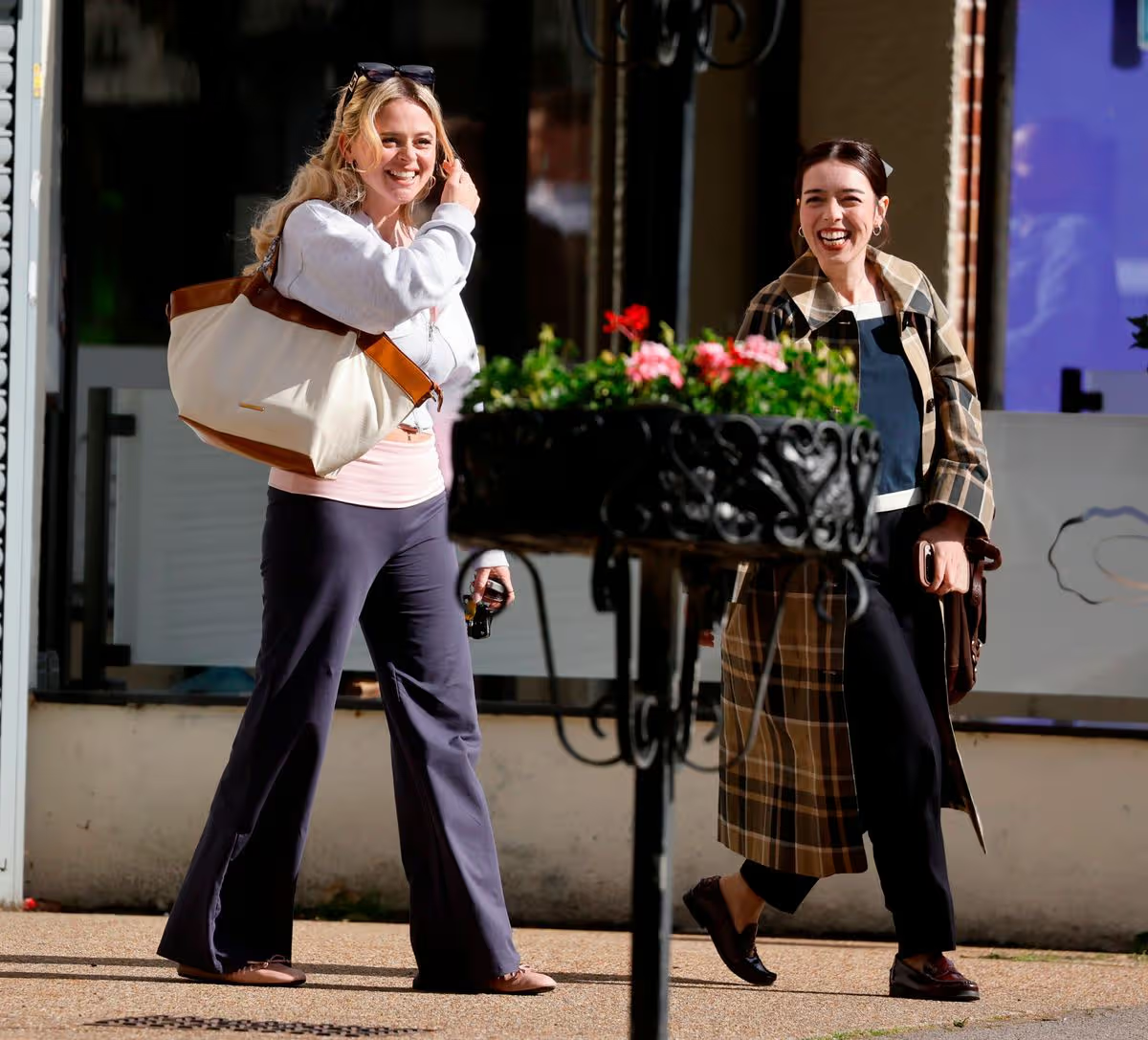
Emily Atack has been busy filming the new series of BBC drama Reputation.
The Rivals star has been seen on the set of the hotly-anticipated BBC drama, which focuses on the story of a high-stakes celebrity defamation battle. Soon, the legal battle spirals out of control – but at what cost?
In the new photos, Emily can be seen filming in gym gear as she clutches a large bag. Standing outside a nail salon, Emily’s character has sunglasses atop her head as she wears a grey hoodie and blue leggings.
In one picture, she clutches car keys as she hugs one of her co-stars. She is also seen chatting and walking with co-stars Kyle Soller and Marli Siu as part of the scenes.
The series follows the story of a character called Lena, an excellent lawyer who takes on a new case representing global pop star Davina Knight. In her new song, Davina decides to accuse her ex-husband, Billy, of abusive behaviour.
A private split soon ends in a very public libel battle and soon, it is much more than what goes on in the courtroom. There’s social media, PR machines and everyone becomes the judge and the jury.
Lena finds her own personal life thrust into the spotlight as the case continues to unfold. How far will she go to win and how much will Davina do to protect her own reputation?
Lena will be played by Skyfall and Moonlight star Naomie Harris whilst Davina Knight will be played by Mad Men star Christina Hendricks. Naomie said of joining the programme: “I was hooked from page one of Reputation. It’s so rare to read scripts with the wit and flair of Anya’s writing and I knew straight away that I wanted to play Lena.”
Christina added of her part: “Davina’s a fantastic, fierce character. I’m so looking forward to working with Naomie and I’m delighted to be working again with the Forge.”
Emily’s specific role has yet to be revealed but she will also star alongside Alex Jennings (The Crown, The Lady In The Van), David Gyasi (The Diplomat, Interstellar), Emily Atack (Rivals, Inbetweeners), Kyle Soller (Andor, Bodies), Marli Siu (Twenty Twenty Six, Everything I Know About Love) and Alex Heath (Serpent Queen, Prime Target) amongst others.
Tilly Keeper (You, Queenie), Corey Johnson (Digger, The Day of the Jackal), Aidan McArdle (Sherlock & Daughter, Showtrial), Ernest Kingsley Jnr (Washington Black, The Sandman), Jodie Campbell (Boarders, Bitch Boxer), Kayla Meikle (Transaction, Time 2), Mike Noble (This City is Ours, Dirty Business),Enzo Cilenti (Black Mirror, Jonathan Strange & Mr Norrell) and Kat Ronney (Dinosaur, Finding Emily) will all also star in the upcoming BBC drama.
Anya Reiss, writer of Reputation, said: “When I found out London was the global capital of high stakes libel cases – where the rich, powerful and famous come to fight in public for their reputations – I was in. I’ve loved writing this world and now I’m excited to get it off the page and onto the screen.”
Lindsay Salt, Director of BBC Drama, added: “Reputation is high-stakes, intoxicating and hugely entertaining, with a lot to say about the world. In Lena and Davina the brilliant Anya Reiss has created two lead characters for the ages, and we’re delighted to be working with her, Mahalia and the team at The Forge to bring this very public battle to BBC iPlayer and BBC One.”
“Nothing has changed since the last time I talked about all this,” Rogen said, “and I haven’t worked with him in a really long time and I have no plans to.”
The actors got their start in Hollywood on the cult classic TV show “Freaks and Geeks.” At the time, Rogen was 16 and Franco was 21. As they continued to make their way through the industry, they became known for a string of well-loved early-2000s and 2010s comedies including “This Is the End,” “The Disaster Artist” and “Pineapple Express.”
Franco’s illustrious movie career came to a halt when five women, including several of his acting students, accused him of sexual exploitation. Some of the allegations included removing protective plastic guards covering actresses’ vaginas during the filming of intimate scenes, and Franco getting angry when actresses didn’t want to go topless.
Two of the accusers filed a class action in 2019, claiming sex discrimination, sexual harassment, fraudulent business practices and intimidation. Franco settled the case in 2021 for $2.2 million.
Rogen and Franco’s friendship has been a point of contention for the actor, as Rogen continues to climb the ranks in Hollywood. Just last year, “The Studio,” a show that Rogen created, writes, stars in, directs and produces won 13 Emmys and is currently filming its second season.
Rogen previously said he regretted saying that he could work with Franco again after the allegations surfaced.
“What I can say is that I despise abuse and harassment and I would never cover or conceal the actions of someone doing it, or knowingly put someone in a situation where they were around someone like that,” Rogen said in 2021, in an interview with the U.K.’s Sunday Times. “I also look back to that interview in 2018 where I comment that I would keep working with James, and the truth is that I have not and I do not plan to right now.”
The actor is still hesitant to detail the nuances of his friendship with Franco. He told the New York Times that it’s “a very personal thing.”
“There’s the public-facing side of it, which I’ve spoken about, and I have the same stance publicly that I’ve had, and I think the proof is in the pudding — I have not worked with him in years,” Rogen said. “But the personal side of it is just so nuanced, and it involves people that I don’t know if I should be dragging into this.”
David Beckham can’t keep away from his Hollywood Walk of Fame starCredit: InstagramHe unveiled the iconic star on Friday in a formal ceremonyCredit: Getty
And it seems that Sir David still can’t get over the exciting honour.
He was seen posing with it the day after it was unveiled at a formal event attended by his famous family.
Crouching down to see it while donning casual clothes, the sporting legend looked proud as punch as she took a selfie with the star.
His wife Victoria then snapped a photo of her husband as he took the selfie, with her sitting several feet away from him.
At the formal event, David was supported by sons Romeo and Cruz, daughter Harper, and wife VictoriaCredit: GettyVictoria and David shared a smooch after the unveiling of his starCredit: Getty
She then uploaded the snap to her own Instagram story and wrote: “Spotted. @davidbeckham fan.”
David’s wife Victoria Beckham and three of their children, Harper Seven, Cruz and Romeo were all in attendance at the formal event that saw the iconic star unveiled on Friday.
David’s eldest child Brooklyn failed to show up to the very special event, despite living down the road from the Los Angeles location that the unveiling took place.
As David gave his speech before unveiling the star, he mentioned his children – but did not name them individually.
“My beautiful children who are the reason I get out of bed in the morning,” he said while choking back tears.
“Kids, I hope you bring my grandchildren here one day and tell them about a boy who dreamed big,” he added.
After the star’s unveiling, the Beckham’s youngest child Harper visited eldest sibling Brooklyn’s Los Angeles home.
In a scathing statement, Brooklyn told how he grew up with “overwhelming anxiety” having been “controlled” by his parents most of his life.
His initial statement read: “I have been silent for years and made every effort to keep these matters private.
“Unfortunately my parents and their team have continued to go to the press, leaving me with no choice but to speak for myself and tell the truth about only some of the lies that have been printed.
“I do not want to reconcile with my family. I’m not being controlled, I’m standing up for myself for the first time in my life.”
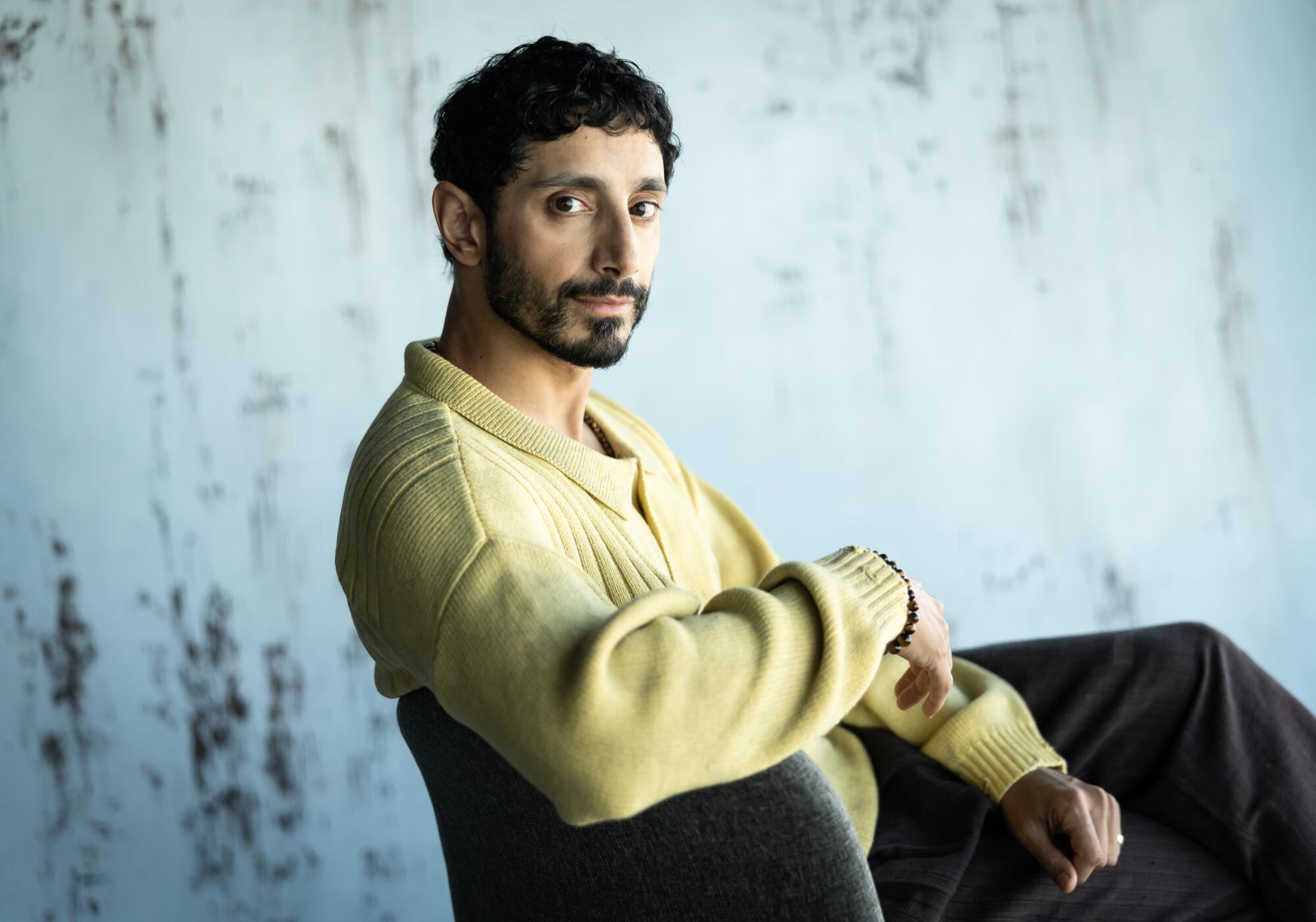
In this week’s episode of The Envelope podcast, Riz Ahmed talks about drawing on his own experience for “Bait,” his Prime Video series about a British Muslim actor whose life is upended when he’s rumored to be the next James Bond.
Kelvin Washington: Hello, everyone, and welcome to the next episode of The Envelope. Kelvin Washington, Yvonne Villarreal, we have Mark Olsen. And Mark, I’ll stay with you for a second. You had a chance to speak with Riz Ahmed, who is the creator and the star of “Bait,” which centers around the idea of who could be the next James Bond. So then, dang it, I’m asking you two the same question: Who could be, should be the next James Bond? Is there somebody or somebodies that you’ve thought about for a while and said, “Well, that would fit, that could work”?
Mark Olsen: It was recently announced that they have begun the casting process to replace Daniel Craig in the beloved and long-running James Bond franchise. And there have already been at least one sort of confirmed person, the actor Tom Francis, auditioned. But then there’s a lot of other names being thrown around, like Callum Turner, Jacob Elordi, Aaron Taylor-Johnson. Kind of everybody about that age bracket you could think of. You know, it’s funny, in the last movie, “No Time to Die,” Lashana Lynch was given the number 007, so she was not James Bond, but she was 007. And I always thought, actually, in the last couple of movies, that Léa Seydoux would make a perfect [00 agent] — she’s cool, she feels kind of dangerous. She would have seemed to me like a great person for that kind of role. But then also, that’s obviously not James Bond. So who knows who it could be. Yvonne, what do you think? Do you have anybody in mind?
Yvonne Villarreal: Can it be a toss-up between you two? How would you fare?
Olsen: I don’t know if I’d pass basic training.
Washington: They have doubles, OK? They got stunt doubles and CGI and AI for all of that and for you, OK.
Villarreal: It’d be like the Leslie Nielsen version.
Washington So it’d be like 007 with a question mark: 007?
Villarreal: More seriously — not that I don’t take you two seriously as candidates — I would throw my enthusiasm around Jonathan Bailey or Damson Idris.
Washington: I’m gonna one-up your Idris and just go [with] the obvious, Idris Elba. It’s been sitting there for the last 15 years or so.
Villarreal: That’s why I didn’t [say that], because I’m like, “It’s been sitting there and they still haven’t.”
Washington: But sometimes it just makes sense. Sometimes it’s just sitting smacking you in the face, or shooting you with a silent 9mm — whatever he uses, James Bond. It just makes sense, and to be honest, it’s one of those, he’s probably passing [on the role] because you wanna have a franchise you can hold on to for 20 years with a particular actor, give or take, and he seems like he’d be probably too senior for that at a certain point. The podcast, the conversation behind what really happened there is going to be fascinating because, to your point, it just seems like the momentum was building for it and it didn’t happen. So it would be interesting to hear what actually comes out of that. But those are my are my guesses right there.
All right, Mark, you had a chance to speak with Riz Ahmed, obviously the creator and the star of “Bait.” Fascinating to me, just the concept of the show as a whole.
Olsen: Riz Ahmed is someone who, he’s so thoughtful about his own career, but also his place in the world. And so he does such a great job with this show and taking this idea of like, “Could an actor like Riz Ahmed, could he be James Bond? Should he be James Bond? Why not?” And so the show is just so thoughtful and finds all these really inventive ways of exploring that idea. He’s playing a little-known actor who it becomes public that he’s auditioned for the role and that throws his whole life into tumult both within the industry, with sort of like online hate towards him, but then also with his own family. And the show is also meant to be kind of a real love letter to the South Asian communities of London. Riz in the conversation talks about how they went out of their way to shoot in parts of London that you don’t normally see. So the show, it’s just so inventive and fun in a lot of really terrific ways.
Washington: Well, let’s hear more of your conversation with Riz now.
Riz Ahmed.
(Christina House / Los Angeles Times)
Mark Olsen: On the show, you play an actor who auditions for the part of James Bond. It leaks to the press, and then his whole world turns upside down. For you, is the premise of the show predicated on the idea that someone like you would never get that part, or is it that, of course you should get that? Which end of the telescope are you looking at it from?
Riz Ahmed: Kind of neither, really. The premise of the show was something a bit more emotional than that. The James Bond thing came right at the end, to be honest, of the creative process. Really, the heart of the show is the idea of auditioning. James Bond really serves as a symbol in the show, a symbol of aspiration, pinnacle of achievement in this industry and also of alpha masculinity and all this kind of stuff. And so it’s really the idea of trying to be that guy, which on some level, we’re all trying to be this kind of preferred version of ourselves, right? We’re all performing. We’re actually all always auditioning. So it’s about that feeling, [which] I think extends outside this industry. We’re doing that on LinkedIn or social media, on this podcast right now. We’re performing a version of ourselves. When actually the true version of ourselves is kind of messy, chaotic and vulnerable. So it’s that distance between the public and private self that I was really interested in, and James Bond just served as an aspirational symbol of that public way that you would love to be seen.
Olsen: But Bond, because of the specific cultural baggage that comes with that franchise, did you feel like it fit thematically with what you were trying to do?
Ahmed: Oh, perfectly. It was a godsend. It was like one of those moments where it’s like, “OK, so we want to do something about, like, aspiring to be anything but yourself. We want to do something about feeling like life is one big audition, but we need something that encapsulates success and cultural acceptance.” And it was like … Of course: Bond. And because the process of making this show was one of pulling so much from my own personal life, there was a moment or two when my name was mentioned in that conversation. I mean, along with, you know, everyone and their dog. But it was an interesting kind of thought experiment, it was an interesting, as I said, kind of vessel to place all of the themes into. And so when that idea came about, it was like, “This is perfect. We can talk about everything we want to talk about using this symbol.” We’re like, “OK, now how are we gonna get it?” And everyone told us Barbara Broccoli would never let us use it. Rightly so, she was very protective of this IP. But I wrote her a letter, sat down with her, showed her the scripts and she understood. She understood that it’s not really about Bond. It’s a show about self-love, and she really kind of vibed with that. Shout out Barbara Broccoli, thank you for letting us use Bond exactly how we wanted to.
Olsen: You recently hosted the new “SNL UK” and in your monologue, you made this joke that you don’t just play intense roles, that there’s this image of you that it’s all that you do. Did you purposely want to make “Bait” as a way to break you out of that perception?
Ahmed: It wasn’t that careerist and calculating, to be honest. I was just trying to make something that was authentically me. And I think the people who know me know that I’m a lover of comedy. My first rap song was a comedy rap song. I got banned on British radio back in the day because it was a quite an acerbic kind of satire. And actually it’s funny because I think that’s an American perception of me. In the UK, nine times out of 10, when I get stopped is for a British comedy I did called “Four Lions.” Which is like a kind of cult classic British movie. It’s a very British comedy. That’s like me, that’s like how I am in real life. And so when I wanted to make my own show, it just stands to reason it would be a reflection of my taste. So the overall frame was comedy, but I kind of have quite a maximalist sensibility. I want to have my cake and eat it. So I also wanted it to be a spy thriller and a family drama and quite surreal and psychological thriller and all of these elements kind of put together, but the frame of it all, I would say, is comedy. And yet it was really actually important to us that we tried to defy genre and defy categorization in that way.
Olsen: Did you feel like this was a role that, like, nobody was going to give you, like you had to write this for yourself?
Ahmed: It wasn’t so much out of a kind of frustration or a desire to create work for myself or break out of a pigeonhole or anything like that. Honestly, I just tried to make something as honest and authentic and vulnerable as possible, if that doesn’t sound too eye-rolly. I guess I reached a point in my life as a creative where I realized, actually, performance isn’t about putting on the mask, it’s about taking it off. It’s about sharing with the world who you are, sharing your privacy and your insanity. And if you do that, people will connect with it because it’s honest. And if you name your pain and your craziness, there’s something healing in that for yourself and others. I had kind of gotten to that place in my life. And so I wanted to kind of follow that through to a place that felt quite scary and pull on the most personal aspects of my own neuroses and my life and my neighborhood that I grew up in — so many locations are literally where I’ve grown up. So many moments in the show I pulled very directly from my life experience. My character has a panic attack at the end of Episode 1 at this particular music venue in North London. I had a panic attack in that venue in North London when I was supporting Wu-Tang Clan. My character is approached by MI5 and MI6. They say, “Hey, you’re a rising actor, do you wanna work with us, help with messaging?” That happened to me specifically once I started to become a bit more well known. There’s just so many things that kind of came from that place, and it was all based on this idea of like, “If I wanna make a show about a character who needs to learn how to take off the mask, then I need to do that as well.” And we kind of had a mantra in the room, which was like, “If it feels scary and it’s true, do it.” And there were times when I didn’t want to do it, definitely times when I wanted to kind of hide, but I just increasingly have this feeling that if you can offer up a part of yourself, then that’s one of the most liberating things you can do as an artist. And also for an audience, it just feels honest. That’s where you can connect most with people, if you’re willing to share that vulnerability.
Olsen: What was the writing process of the show like for you? Was there a moment where you had like a whiteboard with a list of awkward things that had happened to you?
Ahmed: That whiteboard would be very, very big, very, very large. Let’s say we’ve got a lot left in the tank if we ever do another season. The writing process was a learning curve for me, never having been in an American writers’ room system before. Hugely grateful to my co-showrunner, Ben Karlin, who’s got himself a really eclectic background. He’s one of the founding writers of the Onion, the satirical website. He has this track record, “The Daily Show With Jon Stewart” and “The Colbert Report,” but also “Modern Family.” And so I wanted someone who had that eclectic background, and we had a writers’ room that was similarly very eclectic. We had stand-up comedians. We had novelists. We had playwrights. We had experienced TV writers. We had U.S. [people], we had UK people. I just knew that I wanted this to feel quite eclectic, and as I say, kind of genre-bending. And so I wanted that breadth. So actually the writing process for this was like, “How do we make this feel as chaotic and messy and unpredictable as possible?” That requires a crazy amount of craft. And there were a lot of late nights, there was a lot of hair being pulled out. And it was, I think, one of the most intense periods, more so than the shoot, even. It was just trying to figure out what this show was. And I came to this realization, which is, Shah Latif, my character, is having an identity crisis. He’s trying to work out who he is. So it stands to reason the show should also be trying to work out what it is. The show needs to be having an identity crisis. So then we gave up on this mission of trying to make it feel coherent and consistent. And we said, “Of course, he’s an actor trying to work out who he is. Every episode should be a different genre. We should have our James Bond-goes-to-the-gala-in-a-tux episode. We should to have our Bollywood-proper episode. We should have our Linklater walk and talk. We should have our Greengrass does a spy thriller.” So we really deliberately and really defiantly tried to embrace the identity crisis of the character in how we told the story. And when we did that, everything fell into place. We would stop trying to straitjacket this into something more predictable.
Olsen: And what was it like for you to be filling this role of not just actor but also writer, producer, showrunner? How did you feel about taking on all those roles?
Ahmed: I felt scared. I felt out of my depth. I felt like I needed the help of people much smarter than me. Luckily, I had that help. And more than that help, their patience. I continually said, “No, we’ve got to go back and do it again. We’ve got to rewrite that episode. We’ve gotta redo this whole section,” as it felt so personal to me. Not just because it’s my personal experiences, but because there’s a world that hasn’t quite been put on screen before in this show, and I felt a tremendous sense of responsibility and emotional connection to that world and these characters. So at times it felt overwhelming. ButI’m of this philosophy that usually when you’re making something, you kind of end up feeling how the character is feeling. The character feels out of his depth, feels overwhelmed, feels like he does not quite know what he’s doing, it stands to reason I should feel like that. If I really feel like I’ve got it all worked out and I’m in control, we’re doing something wrong. So as far as possible, I tried to remind myself that that was a sign of almost being in touch with the material. At least that’s how I tried to talk myself off the ledge, man.
Olsen: Can you just talk to me a little bit about the title? As I understand it, “Bait” is UK slang?
Ahmed: The title actually has many different layers to it. I always say this is a show that’s hard to sum up in a sentence, but it’s really easy to sum up in one word, and that word is bait, because it has like five or six different meanings. So one key meaning is British slang. It means really blatant and in your face. So if you’re blowing up someone’s spot, you’re baiting them up. You’re being really kind of, “Look at me, look at me,” you’re being bait. So that speaks to Shah Latif, the character, and his attention seeking. But bait also means, online, trolling. It also means, in Urdu, your loyalty or your allegiance. It also mean in Arabic, in Hebrew, home. And it also, in literal meaning, it’s something used as part of a trap, which speaks to the spy thriller element to the show. So all these different layers to the word bait correspond to a different layer of show, correspond to each different episode. That’s exploring that meaning. And I wish I could tell you we had this all worked out upfront, but we struggled with the title for so long and it kind of like hiccuped itself up into the ether in a late-night kind of hair-pulling session. We realized, “Oh, my God, that’s it. That’s exactly what it should be.” So yeah, the title I think encapsulates how we’re trying to explore these different genres and all the different narrative threads in the show.
Olsen: All the things that your character of Shah Latif is going through trying to move forward in his career as an actor, remaining true to his community and his sense of self, how much of those are your own issues? Are there things that you feel like you’re on the other side of now? Are those things that you’re sort of constantly trying to figure out for yourself?
Ahmed: Of course, like this idea of searching for your identity in a world that either commodifies it or punishes it, that’s something I relate to. But I also kind of feel like that’s something we all relate to. There’s a lot of me in Shah Latif, but I actually think there’s a lot of Shah Latif in all of us. This idea of feeling as though you’re not enough. This idea of trying to cultivate a public version of yourself because you’re ashamed of the private version of your self. I think that’s such a universal feeling right now in this performative culture that we live in. We all wanna be looked at, but we don’t wanna be seen. And somebody once told me that the distance between your public and private self is the amount of shame that you carry. I think it’s true, more or less. I’m not saying you shouldn’t have a private life and some things shouldn’t be kept private. It probably should. But in a kind of deeper sense, I think there’s a truth in that. So I wanted to make a comedy in this playground of shame because it’s something that I can relate to, but I just had a sense that this is a very universal feeling.
Olsen: How much of these are issues or things you were going through in your career maybe five years ago, 10 years ago? What are the the sort of top-line things that you feel like you’re struggling with now?
Ahmed: This is where it becomes a full-blown therapy session. I would say that there was a period of time when I was just really desperate to be in the room. And now I’m in a place where I’m really excited to try and build my own room. And that, in a way, is a journey that the character goes on. I think it’s a journey that I’ve gone on, and the show, in a way, is a culmination of that journey. You know, it was just such a privilege to be able to create a playground and bring together this kind of ensemble. I don’t think there’s ever quite been a brown ensemble like this on screen before and [to] showcase all that talent and create that sense of family and specificity. And yeah, as I said, kind of build my own room rather than asking for a seat at someone else’s table. So I think that journey is one that I’ve been on and one that, I think, the show is exploring.
Olsen: There are these title cards throughout the series that give you these neighborhoods and locations, and I don’t know London super well, but like, it feels like it’s a very specific version of London. What was the importance of those locations for you?
Ahmed: The shows that I really adore and the ones that really inspired me on this journey are ones that are unapologetically specific. The Holy Trinity in my mind was “Atlanta,” “I May Destroy You” and “Fleabag.” These half-hour shows that are super personal, but also super specific in the world they’re exploring, whether they’re a city like Atlanta or a certain kind of Black London, or a very particular kind of white, middle-class British family in “Fleabag.” And so I wanted that unapologetic specificity. I wanted it to be a love letter to my London. And so I wanted to shout out these neighborhoods that really mean something to me. But more than that, I wanted to give a nod to the spy genre with those title cards. You know, in a Bond movie it says like, “Somewhere in the Caribbean,” you know, “Mexico City.” I wanted do that with Kentish Town, with Brick Lane, with Wembley. I wanted to elevate our daily experience and those neighborhoods to that kind of grand stage and those epic stakes and say, “Actually, this is as magical, as important, as exotic, as thrilling as any of those locations within that kind of genre.” Jordan Peele, when he made “Get Out,” said, “Being Black in America is like living in a horror movie. That’s why I made ‘Get Out.’” I can add this thesis that being brown in the West is like being in a spy thriller. And that’s why we made this. So I wanted those neighborhoods to feel like those chyrons you have in a spy thriller.
Olsen: You’ve often mentioned in the past, it’s a phrase I’m very taken with, “stretching culture,” expanding the idea of what’s possible. And I’m just curious, like, how is that going for you?
Ahmed: There’s the idea that the universe is expanding in all directions at the same time. I feel like that with culture. I feel like things are getting crazier and better at the same time simultaneously at an accelerating pace. You know, that’s kind of how I feel about it. And it’s like our consciousness, right? You get a little bit crazier, even as you get smarter. It’s that kind of feeling. For whatever it’s worth, it may sound pretentious, but I kind of feel it’s important to try and anchor myself in some sense of purpose. And I think that’s the purpose of storytelling, is to kind of constantly expand horizons of who is considered human and what is considered human. And I think for me, at least in this moment in my journey, I want that to be about telling stories that haven’t been told before, portraying worlds and communities and characters that maybe we haven’t been that familiar with.
Olsen: You’ve expressed some frustration recently with the phrase “representation” — that it’s become kind of a hollow gesture. What would you like to see happen moving forward?
Ahmed: Well, I was really proud to be part of the conversation, when we were kind of collectively coining that term, right, going from diversity to representation. But I do think it’s not an end in itself. Like I said, being in the room doesn’t necessarily change anything. It’s what are you allowed to do in that room? Does the room change you, or do you change it? It’s what the show’s exploring. And so at least for me right now, the kind of representation I’m interested in is how authentically we can represent ourselves. Do you know what I mean? Like, do I have to code switch? Do I have put on a mask or do I get to take it off? That to me is, I think, the most exciting kind of knot to unpick right now. And as I said, that’s kind of at the heart of the show.
Olsen: I want to be sure to ask you about some of the other cast on the show, specifically Guz Khan. I feel like I could watch the two of you just driving around in a car together for hours.
Ahmed: I’ll send you the rushes.
Olsen: Did you two have an immediate chemistry?
Ahmed: Can I tell you, the story of me and Guz is its own bizarre bromance. Here’s how I thought I knew Guz. Guz went viral in the UK because he did a joke, kind of like [a] shout-out against Steven Spielberg, right? Because there’s a kind of dinosaur in his “Jurassic Park” reboot that sounds like a racial slur in the UK. I’m just gonna let people check it out for themselves. I’m not gonna say more than that. This is like 10 years ago, something like that. He goes viral, he starts blowing up, people start offering him his own TV show. He DMs me on Twitter and he’s like, “Bro, like, what’s the industry like? Is it like crazy Illuminati vibes?” I was like, “Yes, but the Illuminatis are actually very fun, come and join us.” And just started this banter with him, and he goes on his journey, becomes one of the most beloved comedians. I’m on set with him, shooting “Bait.” And he goes, “You don’t remember the first time we met and we spoke, do you?” I said, “I remember, you DM’d me like a crazy guy.” And he was like, “No, no. We met 20 years ago.” I was like, “What are you talking about?” I was doing a spoken-word performance in the Midlands in the UK. No one was coming to see it. It was a completely empty club. So I take it upon myself to go outside and start flyering passers-by. Down a dark alley, I see guys with some of his friends engaged in a business of some sort. His legal team have asked me to refer to it as “selling tulips.” They were selling tulips, OK? I go down to this alleyway, I hand him flyers, him and his friends. I’m like, “How are you doing there, gentlemen? Would you like to come and see me do some spoken word?” They’re like, “What the hell? We’re in their mid-tulip transaction.” He decides out of the kindness of his heart with his boys to come and watch me do spoken word at Coventry Student Union. And he said it was the first time he saw someone that looked like him doing something like that in a space like that. … Twenty years later, we’re on set together. We met when we were like 20 years old and I’d completely forgotten him, but he remembered. We have like a brotherhood and a friendship in real life. I wrote that role for him. He is someone who constantly reminds me that as an artist, your art can only be as expansive as your heart is. He’s just that guy on set you want to be around. He brings the positive energy, he reminds you this is meant to be fun. And actually, when you’re having fun, you’re feeling relaxed and loose, you do great work. He’s evidence of that. And so I just have so much love for him, but I would only say that because he’s not here. If he was here, I would be making fun of him aggressively.
Olsen: Now that to me seems like this notion of stretching culture, where you’ve had this influence on him that you kind of didn’t even know.
Ahmed: I would love it if he would say that publicly, rather than me having to tell the world that I’m responsible for his career. Thank you for saying it. If we can clip that bit, that would be great. Send it to Guz, yeah? Email that to him. I don’t know, man. I kind of feel like we’re all in this relay race, right, and we’re just fumbling the ball to one another and trying to move forward. And one of the great things about this show was being in community in that way. I think for some people, particularly in the UK, they’re familiar with the world that’s portrayed here. I think, for a lot of Americans, they’re really not. Interestingly, I’ve had a lot of Latin viewers and Latina viewers approach me saying, “That’s my family, I get that, I know what that is.” And so I don’t know, I just think it’s kind of exciting. One of the things I love most about storytelling on screen is we can bring people into worlds they haven’t been to before. That’s what I remember falling in love with when I watched “Goodfellas” and “Mean Streets” in that world that Scorsese creates. So yeah, I think as long as we’re all leaning into this specificity, doing so in community, maybe that’s how we get to stretch culture.
Olsen: In a recent profile on you, the actor Sandra Hüller, who you work with on the upcoming movie “Digger,” she said that one of the things she most admires about you is that you take yourself and your work seriously. And I think I feel the same way, like there’s an intentionality to what you do, there’s a sense of purpose to what do.
Ahmed: It sounds so boring, though, when you put it like that. Doesn’t it? I hope I don’t take myself too seriously. I guess I take it seriously that I’ve got this opportunity to try and tell stories, and I believe that they matter. But I actually hope I don’t take myself seriously, very seriously. I hope this show in a way is evidence of that. That’s Exhibit A. Yeah, you got Hüller’s testimony here and then you got “Bait” over here. Who do you believe?
Olsen: Is there anything you can tell me about “Digger”? It’s a new film from Alejandro González Iñárritu, it stars Tom Cruise, and it has quickly become, I think, one of the most anticipated movies of the year. People are very excited about it. And there’s very little known about it, is there anything you can say about it?
Ahmed: It’s funny you should say that because I spoke to Alejandro today and he gave me permission to reveal something exclusively to you on this podcast. No, not really. There’s nothing. Absolutely nothing. I actually might get assassinated for just saying that even.
Olsen: And have you seen it?
Ahmed: I feel like anything I say, there’s like a bomb on my leg that might go off. I’ll say this, it was a really unique and incredible experience. Alejandro is this crazy genius and being around that level of — Tom Cruise as well — they’re all obsessive perfectionists that have just like endless rocket fuel in them. It’s just inspiring to be around, honestly. Really, really unique. I don’t know if I’ll ever have an experience like that again.
Olsen: And then you were nominated for an Academy Award for acting for “Sound of Metal,” but you won an Academy Award for the short film “The Long Goodbye” that was based on an album that you put out. As you’ve become busier in your acting career, has it become difficult for you to still make time for your music?
Ahmed: The projects that I have out right now with “Hamlet” and “Bait” are things that I’ve built. I’m not saying this is the way, necessarily, it’ll always be, but at least over the last several years, acting is like this cherry on the cake. I’m spending all this time building these other things and writing these things and producing these things. And in a way making music is part of that. It’s like being in a writers’ room, with musicians in a studio. And one of the things that I’ve enjoyed most is bringing the development of stories together with the development of albums. “The Long Goodbye” short film is an example of that. But I mean, I joke about this to my friends, one of the main reasons I made “Bait” as a TV show is so that I could make a soundtrack. You know, I grew up on Bollywood where, in a way, the movie was just an excuse for the music. I partly almost feel the same way here. We’ve got a soundtrack for “Bait,” which I’m very, very proud of. And it’s a reflection, I think again, of that eclectic, multicultural London that I know and love. It pulls together artists from across the diaspora, from the Bay Area and the U.S. through to India and Pakistan, from Trinidad and Bangladesh and Karachi and London. And it’s something that I think kind of speaks to the genre-bendiness of the show as well. So in a weird way, as I’m developing more of my own stories, I’m able to incorporate music into that process more.
Olsen: But are you making music of your own?
Ahmed: Yeah, I’ve got two tracks on that soundtrack, for example. Yeah, one of them with a rapper who I’ve been a huge fan of for many, many years. So that was a lovely moment. His name is Casisdead, makes very kind of cinematic UK hip-hop. So I’ve got two tracks on that and yeah, I mean, watch this space. Hopefully I’ll have some more time.
Olsen: And then, this is a moment in the show, and I know it’s something that’s happened in the past, but are you still ever mistaken for Dev Patel?
Ahmed: Honestly, every time I’m mistaken for Dev Patel, I’ll take the flowers. I’m such a fan of his, personally, and he’s actually also from that very particular pocket of Northwest London where I’m from, that this show is almost a love letter to. That pocket of London has produced, if I may humbly put myself in that bracket, myself, but also Dev Patel, Jay Paul, Jay Sean and Jay Shetty. All the Jays. All of them. So I’m very proud of Dev and everything he’s doing, and he’s telling his own stories as well in a way that I find really inspiring.
David Hockney, the innovative and prolific British artist who arrived in Los Angeles in 1964, soon celebrating its sun-drenched life and landscapes in colorful, wildly popular paintings, has died.
He was 88.
Calling himself “an English Los Angeleno,” Hockney immortalized the city’s sparkling swimming pools, palm trees and beautiful young men, then went on to experiment with intricate photo collages, portrait suites, painted and filmed images of Yorkshire landscapes, iPad drawings and more.
Since his Pop Art paintings in the early ‘60s at London’s Royal College of Art, Hockney was rarely out of the limelight and, more important, rarely out of fresh ideas for how to draw, paint, film, print, photograph or otherwise express his creativity. The David Hockney Foundation owns more than 8,000 of his works, including about 200 sketchbooks, more than 230 self-portraits, opera designs and portraits of family and friends.
Hockney loved Hollywood — the people and the place — and liked to say he was brought up in England and Hollywood because of the time he spent at the movies. His peroxide blonde hair reportedly was inspired when he was a student and saw Clairol TV ads claiming “blondes have more fun.” But it was his interest in everything from Elvis Presley to the Hubble Space Telescope and his sense of humor that set him apart. Time Magazine art critic Robert Hughes once called him “the Cole Porter of modern art.”
He was open about being gay, even when homosexuality was outlawed in Britain. His early love affair with artist Peter Schlesinger, a younger man he met when teaching a summer drawing class at UCLA in 1966, inspired Hockney’s monumental 1972 painting “Portrait of an Artist (Pool with Two Figures),” a centerpiece of Jack Hazan’s 1974 film “A Bigger Splash.” The painting’s 2018 auction at Christie’s drew a record $90 million for a living artist.
He was a dedicated reader and student of art, paying homage in his work to Picasso and Cubism as well as to Monet, Matisse, Van Gogh and Cezanne. A lover of opera, he often had it playing loudly in the studio and enjoyed taking visitors on curated car trips through the Hollywood Hills or Malibu while listening to Wagner. He designed sets for major companies in Los Angeles, Chicago, New York, London and elsewhere over the years, and some of his set models were later shown in museums.
David Hockney’s work “Gregory in the Pool (Paper Pool 4)” is part of his solo exhibition “David Hockney: Perspective Should Be Reversed” at the Palm Springs Art Museum in Palm Springs. (Courtesy of the Palm Springs Art Museum)
(Courtesy of the Palm Springs Art Museum)
His solo shows drew enormous crowds to the Los Angeles County Museum of Art as early as 1988. In 2017 a major retrospective of his work, keyed to his 80th birthday, was presented at New York’s Metropolitan Museum of Art, Paris’ Centre Pompidou and London’s Tate Modern. Chronicling Hockney’s arrival as an important artist in the “ravishing” Met retrospective, the New Yorker writer Andrea K. Scott called it “a revelation.” It was, she wrote, “a retort to all the eye-rollers,” including herself, who dismissed his work “as, at best, a guilty pleasure.”
In 2012 he received the coveted Order of Merit, which Queen Elizabeth II presented to him at Buckingham Palace.
David Hockney was born the fourth of five children to a working-class family in Bradford, Yorkshire, on July 9, 1937. He has said he started “making marks on paper” at 8 and received private painting lessons before moving on to Bradford School of Art in 1953. The first painting he sold was a portrait of his father in 1955. He attended the Royal College of Art in London from 1959 until his graduation in 1962 and received the school’s Gold Medal.
After college he did not slack off, noted his biographer Christopher Simon Sykes. In his 2014 book, “Hockney: The Biography,” Sykes pointed out that the artist’s first flat had a chest of drawers near the bed on which he had painted, in large capital letters, the words “get up and work immediately.”
David Hockney in 2017.
(Catherine Opie, Courtesy of Regen Projects, Los Angeles and Lehmann Maupin, New York, Hong Kong and Seoul.)
Hockney lived by that command for the rest of his life, turning out canvas after canvas, photo after photo. In the ‘80s came his extraordinary multi-image photographic collages of friends including writer Christopher Isherwood and artist Don Bachardy and such landmarks as the Brooklyn Bridge, Grand Canyon and Pearblossom Highway.
“The Polaroids started oddly enough when I’d just finished a long period of work in the theater, which is of course playing with perspective and illusion,” he once told The Times. “People say, ‘You are a painter, and photography is a sideline.’ But nothing is a sideline for me.”
That included his continuing fascination with technology. The artist’s long career swept in artworks made not only on cameras and canvases, but on such things as fax machines and photocopiers. Hockney liked to experiment, whether it was with state-of-the-art printing devices or centuries old painting techniques. He went several times to a show of portraits by Jean Auguste Dominique Ingres at London’s National Gallery in 1999 and was greatly taken with the photographic’ quality of Ingres’ 19th century drawings. Certain that Ingres had used something optical to achieve that quality, Hockney bought himself a camera lucida, a small device that works like a prism. He then applied Ingres’ methods–as Hockney imagined them–to his own portraits of friends and family, and in 2001, he published “Secret Knowledge,” exploring his theories on early artistic uses of optical devices.
His death was confirmed by the Associated Press and New York Times.
After decades spent shaping modern movies without ever taking home a competitive Oscar, actor Glenn Close and director Ridley Scott will finally receive statuettes from the Academy of Motion Picture Arts and Sciences this fall.
The academy announced Wednesday that Close and Scott will receive honorary Oscars at this year’s Governors Awards alongside pioneering animator Floyd Norman, while producers Christine Vachon and Pamela Koffler, co-founders of Killer Films, will receive the Irving G. Thalberg Memorial Award.
The annual Governors Awards, launched in 2009, recognize lifetime achievement and significant contributions to filmmaking and the motion picture industry. The Thalberg Award honors producers whose bodies of work reflect consistently high-quality motion picture production.
Unlike the competitive Oscars handed out during the telecast, the honorary prizes are presented at a separate ceremony attended by film industry figures, academy members and awards season contenders.
Close, 79, one of the most acclaimed actors of her generation, has received eight Oscar nominations over her career, including for “Fatal Attraction,” “Dangerous Liaisons,” “Albert Nobbs” and “The Wife.”
Scott, 88, the architect of “Alien” and “Blade Runner,” whose striking visual style helped define modern blockbuster filmmaking, has scored nominations for directing “Thelma & Louise,” “Gladiator” and “Black Hawk Down,” while also earning a best picture nomination for “The Martian.”
The 90-year-old Norman, who began working at Disney in the 1950s, became the studio’s first Black animator, contributing to films including “Sleeping Beauty,” “The Jungle Book” and “Robin Hood.” His career has spanned more than six decades.
Vachon and Koffler have been central figures in American independent cinema for decades, backing such films as “Boys Don’t Cry,” “Far From Heaven,” “Carol,” “First Reformed” and “Past Lives,” the last of which earned them their first best picture nomination in 2024.
The honors will be presented Nov. 15 at the Ray Dolby Ballroom at Ovation Hollywood during the academy’s 17th Governors Awards ceremony.
Hasley was a veteran TV writer who taught screenwriting classes at UCLA Extension. He was also a friend of Caitlyn Jenner and helped write the former athlete’s motivational book “Finding the Champion Within,” according to his biography.
The L.A. County medical examiner released Hasley’s identity Tuesday but had yet to rule on his cause of death.
More than two dozen personnel with the Los Angeles Fire Department responded to a report of a hiker in grave medical condition off Nichols Canyon Road near Hollywood Boulevard shortly before 7 p.m. Saturday.
A helicopter was used to reach the patient and allow paramedics to provide urgent medical care. They were unable to save him, and he was declared dead shortly after, according to the LAFD.
Hasley hailed from Pittsburgh and played university football before venturing to Hollywood to pursue his dreams as a writer. He wrote on 37 episodes of “The Smurfs” in the late 1980s and early ’90s as well as several episodes of “Fat Albert and the Cosby Kids,” according to IMDB. His TV writing credits also included “Swift Justice,” “Ghost Stories,” “Murder, She Wrote,” “Young Riders” and “Highway to Heaven.”
He was able to channel his love of sports while working with NBC on the network’s project “Star Salute to the U.S. Olympic Team,” where he met Olympic gold medalist Caitlyn Jenner, according to his professional biography.
The pair became friends, and Hasley went on to help write a book about Jenner’s philosophy on overcoming adversity in sports and life. He was commissioned to ghostwrite several other motivational books including “Passion, Profit, & Power” for hypnotist Marshall Sylver and “The Slight Edge” for self-help expert Jeff Olson.
Hasley loved sharing his passion for writing with students at UCLA and described the process of writing as akin to assembling a puzzle, where one tries many different combinations of pieces before finding the perfect fit, according to his teaching biography.
“I personally believe that when you know your characters well enough they will start dictating their actions,” he wrote. “When that happens writing becomes a euphoric experience.”
In addition to teaching and writing, he enjoyed golfing, horseback riding, fighting City Hall over an environmental issue, volunteering in soup kitchens and speaking to youth organizations, according to his bio.
Hasley was formerly married to actor Robin Riker, best known for her roles on “Brothers” and “The Bold and the Beautiful.”
He lived in the Hollywood Hills not far from where he suffered the medical emergency. A neighbor told the New York Post they had seen him earlier Saturday carrying groceries home. “It’s very sad he had to die all alone like that,” the neighbor said.
Times staff writer Sonja Sharp contributed to this report.
The first film by Canadian filmmaker David Cronenberg to be shot partly in the U.S. is, perhaps not surprisingly, a freaky satire of Hollywood. Its take on fame has only grown more accurate in the years since its premiere in 2014. Julianne Moore, Mia Wasikowska and Robert Pattinson star in a demented tale of family, celebrity, ambition, ego and limousines. Funny and perverse, the film captures the uncanny cocktail of mean-spirited malignancy, self-obsessed delusion and just plain obliviousness that runs rampant around town. Presented by the screening series Mezzanine and the local literary magazine the Big One, the evening will be introduced by the film’s screenwriter, Bruce Wagner, a longtime chronicler of Los Angeles.
“Maps to the Stars” is playing June 14 at Brain Dead Studios. Tickets here.
‘If you take all these springs together in terms of flow, it’s by far the largest in Ireland, and one of the biggest systems in the world,” said Dr Benjamin Thébaudeau, geologist for the newly designated Unesco Joyce Country and Western Lakes Geopark in western Ireland.
Over a few days, I discovered that this massive system of limestone springs and caves is the engine that drives this landscape, in the same way as an underground train network powers a city. It’s a place where rivers disappear into limestone fissures and subterranean lakes, and where roads twist through drowned valleys beneath mountains shaped by fire and ice.
It’s also the dreamy, lush landscape of western Ireland that famously drew Hollywood to the village of Cong for The Quiet Man in 1952. Travelling through the geopark from the heart of County Galway into southern County Mayo, I based myself in Cong, which is effectively an inland island between Lough Mask and Lough Corrib. The village takes its name from the Irish for “narrows”, a reference to its tight, water-bound geography and the concentration of springs that rise and fall invisibly beneath the surface.
Water is everywhere and rarely still. It drains from Lough Mask through swallow holes before travelling unseen for miles through limestone fissures beneath Cong, eventually forcing its way back to the surface as cold springs around the village.
“If you look in the centre, you can see the current flowing in opposite directions,” Benjamin says, pointing beyond the interpretive boards towards the channels where he first noticed the phenomenon. “We call it the Hatchery because of its connection to wild fish, and the springs bubble up there, right in the middle.”
John Wayne and Maureen O’Hara in John Ford’s 1952 film The Quiet Man, filmed in County Mayo. Photograph: TCD/DB/Alamy
Yet I quickly realised that it is not only the geopark’s karst terrain and glacial valleys that give it such distinct character. At its core sits a living Gaeltacht where Irish is still spoken in daily life, embedded in place names, local conversation and nightly sessions at the third-generation Burke’s Bar (Tí Bhúrca) in nearby Clonbur. The language runs through the landscape as another ingrained system alongside rock, water and soil.
The Augustinian abbey at Cong was founded under Gaelic royal patronage, yet its surviving stone arches reflect the deep architectural imprint left by later Norman reconstruction. In the 12th century, Ruaidrí Ua Conchobair (anglicised to Rory O’Connor), the last high king of Ireland, spent his final 15 years within these walls following political collapse in Connacht, seeking a quiet sanctuary where the river meets the woods. Centuries later, the tides of power shifted brutally under Tudor administration. The abbey was suppressed, and Sir Richard Bingham, the notorious lord president of Connacht, turned Ashford Castle into a menacing administrative hub, temporarily pulling the region’s political gravity to Cong before authority drifted westward once more. The castle was bought in 1852 by the Guinness family with proceeds from the global flow of the black stuff. They transformed the medieval ruins into a grand Victorian hunting lodge, the luxury retreat we see today.
Like the landscape of the geopark itself, these stone landmarks remain, but they constantly change their form, mirroring the fluid cultural afterlife of Cong village. At The Quiet Man Museum, curator Lisa Collins spoke of the enduring pull of John Ford’s film. Honeymooning visitors still arrive dressed as Sean Thornton (played by John Wayne) and Mary Kate Danaher (Maureen O’Hara), she said, stepping into a version of Ireland that has long outlived the production and indeed the country itself. The museum has been designated a Treasure of European Film Culture by the European Film Academy, with plans to mark the 75th anniversary of the film in Cong next year.
The Quiet Man cottage museum; Cong, Co Mayo. Photograph: Image Source Limited/Alamy
Among the exhibits is the fishing rod used by the village priest during filming on the River Cong. Held for decades by the family of sound man Thomas A Carman before its donation to the museum, the prop brings one of the movie’s most famous comedic exchanges into the room. In that celebrated scene, Mary Kate speaks in the Irish language to Father Peter Lonergan as he casts for a legendary, elusive salmon. Standing by the water, she desperately explains that she has refused to consummate the marriage while her husband sleeps in a “mála codlata”, which translates as sleeping bag.
The language allows the exchange to move into a different register, beneath the radar of 1952 censorship, yet fully understood within the Gaeltacht where the film was shot. It functions as a form of cover, allowing meaning to sit just beneath the surface.
That subterranean world becomes tangible at the Pigeon Hole cave system just outside the village. The entrance drops steeply into the limestone through shiny, time-worn steps, leading into a narrow chasm. Below, a shallow underground river moves through darkness, untouched by sunlight.
It is here that the legend of the White Trout of Cong gathers around the water. The story tells of a young woman who vanished following the murder of her lover, only for a pure white trout to appear in the cave soon afterwards. It’s reminiscent of Father Lonergan’s mythical fish in The Quiet Man, and like everything here in Joyce Country and the Western Lakes, it’s part myth and part truth.
Benjamin notes that elements of the legend may not be entirely detached from observation. Fish living for generations in complete darkness can lose pigmentation over time, becoming pale or entirely white as a result of their environment. In that sense, the story does not sit apart from geology. Another truth is that fishing remains central here, both as practice and inheritance.
The ruined house and estate of MP and wine merchant George Henry Moore, who fed and saved his tenants from starvation during the great famine. Photograph: Eimantas Juskevicius/Alamy
Near Ashford Castle, a salmon hatchery attempts to support declining wild populations. The cold water that springs from the lakes should sustain fish stocks, but there are increasing environmental pressures.
“Maybe we are fighting a losing battle,” Benjamin said.
Climate change, warming seas and mounting pressure on river systems are all affecting wild Atlantic salmon. Trout remain more resilient, spending their lives within local waters such as Loughs Mask and Corrib rather than migrating out to sea.
Yet as the modern environment shifts, the landscape continues to hold older histories at different depths. Further inland at Carnacon, the ruins of the grand Moore Hall estate rise above Lough Carra from within encroaching woodland. One of the few Catholic-owned landed estates of its period, the house became associated with the great famine-era MP George Henry Moore and his colourful descendants, including the writer George Augustus Moore. Today, it sits partially collapsed since its destruction during the civil war, though the surrounding woods have absorbed rather than erased it. Paths thread through what was once a carefully controlled demesne, slipping into places where the estate’s geometry still survives beneath moss and root.
Not far away in Ballinrobe, another form of historical memory settles into language itself. It was here that Captain Charles Boycott, land agent for Lord Erne, became the focus of organised worker resistance during the land war in 1879. His name entered the global vocabulary as a verb, detached from its local origins yet still rooted in this terrain of contested land and memory. Moore Hall and Ballinrobe sit only a short distance apart, but together they reveal different expressions of the same pressures: ownership, resistance, inheritance, and the slow reshaping of meaning through time.
Further west, in Connemara, the landscape shifts dramatically once more as it reaches towards the Atlantic. At Killary Fjord, the land suddenly opens into deep water, a glacial incision dividing Connemara from Mayo. Here, the landscape’s buried secrets become visible. The fjord exposes geology directly, revealing the force with which ice once carved through the earth.
Lough Mask in County Mayo. Photograph: David Lyons/Alamy
To the south, Kylemore Abbey appears against the hillside above Pollacappul Lough. Built first as a private residence before later becoming a Benedictine monastery, it carries another layered story of adaptation and loss. Like Moore Hall, it reflects changing ownership and identity, though here the landscape mirrors it back perfectly in the still water.
Across these places, from Cong to Moore Hall, from Ballinrobe to Killary, patterns continue to repeat in altered forms. Water disappears underground before resurfacing elsewhere. Estates become ruins. Ruins become woodland. Language carries meanings beneath meanings. Stories survive by changing shape.
Returning again to Cong, I have a better understanding of how it forms part of a much larger system of geological flow, historical pressure and cultural inheritance. What holds this region together is not stillness, but movement beneath the surface.
And above Lough Nafooey (also called Lough Finny), not far from the hairpin bends etched into the volcanic ash surface of Aill Dubh (Black Cliff), long after the road narrows into silence once again, a cuckoo’s call crosses the hills, marking time in a landscape that never quite repeats itself in the same way twice.
Accommodation was provided by Michaeleen’s Manor B&B in Cong, County Mayo (twins and doubles €115 B&B, singles €70), and the Leenane Hotel in County Galway (doubles from €120 B&B)