Hollywood

Stunning influencer is secret nepo baby with Hollywood movie star father

FANS have been left shocked to discover that a stunning influencer is actually the daughter of a Hollywood star.

The online personality regularly posts lifestyle videos with her dedicated fan base, but would you guess who her A-list dad is?

TikTok star Shayla Gibson boasts over 7 million likes on the app, but would you guess who her famous dad is?Credit: TikTok/@moneyshayyy
The stunner appears to be carving out her own career onlineCredit: TikTok/@moneyshayyy
The star often shares videos with her actor fatherCredit: TikTok/@moneyshayyy

Shayla Gibson boasts over 7 million likes on her TikTok page and over 130k followers.

From ‘Day In The Life’ videos to health and nutrition clips, the star appears to be carving out a career for herself on social media.

But a deeper delve into 18-year-old Shayla’s account revealed that she’s also the daughter of Fast and Furious actor Tyrese Gibson.

Alongside appearing in the famous film franchise, Tyrese is also famed for his R&B singing career.

Read more influencer news

big biz

TikTok star reveals how much money her biggest ever video made after 22m views


baby bumps

Influencer Mya Mills sparks split rumours amid cryptic pregnancy announcement

And Shayla is even the inspiration behind one of TikTok’s most famous sound.

A clip of Tyrese exclaiming, “Oh, my Shayla”, in reference to his daughter became one of social media’s most used sounds when it surfaced in 2017 during Tyrese’s custody battle with ex-wife Norma Mitchell.

The clip – initially an emotional video by Tyrese – continues to be one of TikTok’s most popular sound bites.

Poking fun at the viral sensation, Shayla’s TikTok bio reads: “Yes I’m Shayla”.

Tyrese often appears in Shayla’s videos, with the pair clearly boasting a close father-daughter relationship.

He is most famous for appearing in the Fast and Furious franchise as Roman Pearce.

According to IMBD, Tyrese is working on a number of new projects to be released in the coming years.

Following his split from ex-wife Norma, Tyrese married Samantha Lee in 2017, but split just three years later.

The couple, who are parents to daughter Soraya, announced their split via Instagram in a joint statement.

They said at the time that they were to remain “best of friends” and were “deeply grateful” to be married for the last few years.

The actor has continued to appear in action films over recent years, and is currently working on several projects.

Shayla’s dad, Tyrese Gibson, is known for starring in movies such as Fast and FuriousCredit: Alamy
Tyrese is also known for his R&B music careerCredit: Getty
Young Shayla with her famous dadCredit: Alamy

Source link

The pretty seaside town with one of the ‘best beaches in France’ that welcomes Hollywood A-listers every year

WITH a mile-long golden beach and an annual film festival bringing in A-list movie stars – you might think this spot was on the French Riviera.

But actually, this destination is miles away on the northern coast of France – and it’s a place called Deauville.

The seaside town of Deauville in Normandy has a sandy beach over a mile longCredit: Alamy
It’s been visited by lots of A-listers thanks to its American film festivalCredit: Alamy

The seaside town is a classic Norman resort with a huge beach, seaside casino and pulls in celebrity visitors every year.

Most of the famous faces will visit during September when it hosts the American Film Festival.

Over the years, tars like Clint Eastwood, George Clooney, Sharon Stone, and Johnny Depp have all been there.

And even when they leave, a piece of them remains as their names are adorned on beach huts called Les Planches – which have become an attraction in themselves.

MAKE THE MOVE

Incredible expat ‘paradise countries’ – with rent from £350 and beers for 83p


DREAMY DEALS

Our pick of the best long haul holidays for short haul prices

Other names you’ll see on the promenade include Gene Kelly, Cate Blanchett and Keanu Reeves.

This year, it will be held between September 4-16.

The town is also known for fashion as designer Coco Chanel opened up her very first boutique there in 1913.

The shop closed in 1939 after the outbreak of World War II but you can still see where it once was at 13 Rue Lucien Barrière.

Another pull to the seaside town is to see its horse racing events.

Deauville has a long history of horse breeding and racing, as it’s home to the Deauville-La Touques Racecourse.

The race track is extremely famous and is considered a world-class venue for horse racing, especially in the summer.

The biggest event which is a held throughout August is the Barrière Deauville Meeting which has Group 1 races.

On the beachfront is the town’s huge Casino Barrière Deauville which has 300 slot machines as well as classic roulette and blackjack tables.

Inside, there’s also a cinema, theatre and a night club.

Deauville is known for its horse racing – and you might see some on the beachCredit: Alamy
Villa Strassburger is a beautiful Norman home that’s open to the public for guided toursCredit: Alamy

When the sun shines, a must-do in Deauville is to head to the beach.

Plage de Deauville is around 1.2miles long and is scattered with around 450 multicoloured umbrellas.

While they might look like you’re classic beach parasol, you won’t find these anywhere else as they are actually made in Deauville workshops.

It’s a popular spot amongst tourists and locals with some calling it ‘one of the best beaches in France‘, another called it ‘sensational’.

The beach is also open to horse riders before 10am in the morning and after 7pm in the evening.

There are also 22 beach-front shops and bars, a seawater Olympic swimming pool, riding school and tennis club all within walking distance.

Dotted around Deauville are the tall Norman villas with half-timbered frames and pitched roofs.

And Villa Strassburger is one of the most beautiful properties in the town and was designed by local Caen architect, Georges Pichereau.

It was built for horse racing enthusiast Baron Henri de Rothschild in 1907, later on in 1975, it was declared a national historic monument.

You can go inside the house in the summer months, but only as part of a guided tour.

You can get to Deauville on the train if you take the Eurostar to Paris – tickets start from £39.

Then take a direct train from Paris Saint Lazare (10 minutes by Metro from Gare du Nord) to Trouville-Deauville which station takes just over two hours.

Discover the nearby Trouville-Sur-Mer…

Head of Sun Travel (Digital) Caroline McGuire visited the nearby Trouville-Sur-Mer

“Trouville-sur-Mer is a quaint seaside town popular with holidaymakers since the 1800s thanks to its huge sandy beach and fabulous cuisine.

“But it has resolutely kept its quaint charm. Yes, there’s a kids’ arcade but it’s tucked into the basement of the glamorous casino.

“Yes, there’s crazy golf but it’s petite, just off the old-fashioned wooden boardwalk surrounded by grand 19th-century mansions.

“As with all parts of Francefood and drink are kings.

This particular area is famous for its crepes, so we made it our mission to sample as many as possible — with chocolate, ice cream and seafood.

“The humble lemon-and-sugar will no longer get a look-in at my house on Shrove Tuesday. Given its Channel-front location, the town is also very big on moules — we even spotted a pizza piled high with them.

“Keen to assimilate with the locals, or possibly just excited about using shells as cutlery, even my son tucked into a bowl at one of the town’s best restaurants, Le Central, opposite the fish market.

“I’m also keen to live like a local, so sampled as much of the local wine and Calvados brandy as possible, for shockingly low prices.”

Here’s more on the underrated French city that has a ‘bit of everything’ with picturesque beaches and new cheap hotels.

Plus, the world’s most beautiful village is just two hours from the UK – with classic car tours & fairytale lavender fields.

Deauville is a popular spot for celebrity A-listers during the summerCredit: Alamy

Source link

Hollywood Pantages announces a buzzy 2026-27 season

The Hollywood Pantages Theatre on Thursday announced its 2026-27 season, which contains a whopping seven L.A. premieres including “Maybe Happy Ending.” The hugely buzzy show about the complicated love between two humanoid helperbots was originally developed and staged in South Korea, and won six Tony Awards last year including musical, direction (Michael Arden), leading actor (Darren Criss) and book and original score (Will Aronson and Hue Park).

An early version of the show was first staged in Seoul in 2015, seven years before the rollout of ChatGPT and the ensuing AI doomsday alarm that platform sparked about the rise of hyper-intelligent robots. It will be interesting to watch “Maybe Happy Ending’s” lead robot characters, Claire and Oliver, contemplate their existence during a time when Elon Musk says his Optimus humanoid robots will be in widespread use by the end of next year.

Five shows will be staged at the Pantages before “Maybe Happy Ending,” starting with the season-opening L.A. premiere of “Water for Elephants.” Based on Sara Gruen’s 2006 novel, this musical about the dramatic life of a traveling circus performer during the Great Depression premiered on Broadway to mixed reviews in 2024 and closed after 300 performances.

Next up: The L.A. premiere of “The Outsiders,” based on S.E. Hinton’s iconic 1967 novel about the conflict between two gangs of disaffected youth. The show opened on Broadway in 2024 and was nominated for 11 Tony Awards — it ultimately won four including for musical and direction.

After that a new revival of the beloved rock opera “The Who’s Tommy” will take to the stage. Given the show’s 30-plus-year history of destroying audiences (in a good way) with its classic rock grooves, it’s sure to remain a steadfast crowd-pleaser.

Get your dancing shoes on for the L.A. premiere of “Buena Vista Social Club,” which was co-produced by John Leguizamo and opened on Broadway last year, garnering 11 Tony nominations and five wins, including a special Tony Award for the Buena Vista Social Club band. Based on the lives of musicians in Havana from the 1950s through the 1990s, and featuring plenty of infectious Latin music presented in Spanish, the show is set to launch its North American tour in Buffalo this fall before making its way to the Pantages.

The L.A. premiere of “Operation Mincemeat: A New Musical” is up next. The World War II-themed comedy about a British plan of deception premiered on Broadway last year and was nominated for four Tonys including musical.

Rounding out the L.A. premieres are a lavish production of “The Great Gatsby” and the season closer, “Death Becomes Her,” both of which are based on hot properties with plenty of audience recognition.

If you’re looking for a classic, fear not: “Hamilton” and “The Lion King” are returning next season to do what they do best: Thrill audiences and sell out shows.

I’m Arts editor Jessica Gelt contemplating a season pass. Here’s your arts and culture news for the week.

You’re reading Essential Arts

The week ahead: A curated calendar

FRIDAY
From John Doe to Lonesome Rhodes: Anti-fascism From the Archive
A double bill of “Arch of Triumph” (1948), a tragic romance set in 1938 Paris starring Ingrid Bergman, Charles Boyer and Charles Laughton, and “Voice in the Wind” (1944), a low-budget B-movie with Francis Lederer as a persecuted Czech concert pianist, opens this short series of films that were restored by the the UCLA Film & Television Archive. The series continues with Saturday’s pairing of “The Burning Cross” (1947) and “Open Secret” (1948) and “A Face in the Crowd” (1957) on March 20.
7:30 p.m. Billy Wilder Theater, UCLA Hammer Museum, 10899 Wilshire Blvd., Westwood. cinema.ucla.edu

SATURDAY
Nuun to Midnight
A 37-film, 12-hour festival that merges music and visual arts serves as a fundraiser for curated arts presenter Middle Ear Project.
Noon-midnight. Automata Theater, 504 Chung King Road, Chinatown. automatala.org

Sarah Davachi + Robert Takahashi Novak: New Commissions
The Broad lobby’s unique characteristics will be utilized to create a deep listening experience for newly commissioned compositions by electroacoustic and minimalist organist Davachi and conceptual sound and contemporary electronic music artist Novak.
8 p.m. The Broad, 221 S. Grand Ave., downtown L.A. thebroad.org

The Great Wall of Los Angeles
Judy Baca’s iconic mural inspired Gustavo Dudamel and Gabriela Ortiz to gather composers Juhi Bansal, Nicolás Lell Benavides, Viet Cuong, Estevan Olmos, Xavier Muzik and Nina Shekhar for this salute to the city, augmented by a video installation created director Alejandro González Iñárritu and cinematographer Emmanuel “Chivo” Lubezki.
2 p.m. Walt Disney Concert Hall, 111 S. Grand Ave., downtown L.A. laphil.com

Alexander Malofeev
The young Russian pianist performs a program featuring works by Sibelius, Grieg, Rautavaara, Scriabin, Stravinsky, Arthur Lourié and Prokofiev.
7:30 p.m. Broad Stage, Santa Monica College Performing Arts Center, 1310 11th St. broadstage.org

The Opera Buffs
Emerging musical artists from Southern California perform six mini-operas.
8 p.m. Saturday and Sunday. Sierra Madre Playhouse, 87 W. Sierra Madre Blvd. sierramadreplayhouse.org

Wild Up
The orchestral collective Wild Up performs “The Odes,” a program highlighting experimentation across the ages, featuring works by French Baroque composer Jean-Féry Rebel, English dramatist Henry Purcell and Soviet modern polystylist Alfred Schnittke, as well as modern artists. The group will be joined by guest vocalist and composer Julia Holter, students from the Herb Alpert School of Music at CalArts and special guests.
8 p.m. REDCAT, 631 W. 2nd St., downtown L.A. redcat.org

TUESDAY
Beetlejuice
The Broadway musical based on Tim Burton’s 1988 horror-comedy makes a local stop on its national tour.
Through March 22. Hollywood Pantages Theatre, 6233 Hollywood Blvd. broadwayinhollywood.com

Malice: Stories of Injustice
The Odyssey, in partnering with Mar Vista Voice and West Los Respuesta Rapida, presents a program of monologues based on the true stories of families and communities impacted by ICE, with proceeds benefiting the two charities.
8 p.m. Tuesday (in English) and Wednesday (in Spanish). Odyssey Theatre, 2055 S. Sepulveda Blvd. odysseytheatre.com

The Rilke Project
Piano Spheres presents pianist Vicki Ray performing works by Bernstein, Ives and Eötvös, as well as pieces from Los Angeles-based composers Steuart Liebig, Andrew Tholl, Joseph Pereira and David Rhodes, and the poetry of Rainer Maria Rilke.
8 p.m. 2220 Arts + Archives, 2220 Beverly Blvd. pianospheres.org

Six
The national tour of the Broadway musical by Toby Marlow and Lucy Moss, a modern pop take on the sextet of women who were the wives of Henry VIII.
7:30 p.m. Tuesday-March 13; 2 p.m. Saturday. Segerstrom Center for the Arts, 300 Town Center Drive, Costa Mesa. scfta.org

THURSDAY
Turning Points
Guest conductor Dinis Sousa leads the Los Angeles Chamber Orchestra in Huang Ruo’s “Tipping Point,” Schumann’s “Violin Concerto” with solo violinist Isabelle Faust, and Mendelssohn’s “Symphony No. 4,” a.k.a. the “Italian.”
7:30 p.m. Wednesday. The Wallis, 9390 N. Santa Monica Blvd., Beverly Hills; 7:30 p.m. March 6. Colburn School, Zipper Hall, 220 S. Grand Ave., downtown L.A. laco.org

Arts anywhere

Kevin Kline and Laura Linney in the series "American Classic" on MGM+.

Kevin Kline and Laura Linney in the series “American Classic” on MGM+.

(David Giesbrecht/MGM+)

American Classic
The limited series (eight 30-minute episodes) stars Kevin Kline as an out-of-control Broadway star who returns to his Pennsylvania hometown. Featuring a fine supporting cast that includes Laura Linney, Jon Tenney, Tony Shalhoub and Len Cariou, Times TV critic Robert Lloyd calls the show “a love letter to theater, community and community theater.” Streaming on MGM+ (free 7-day trial available).

KUSC
Local classical music fans know very well the treasure we have in Classical KUSC, one of the few all-classical music stations left on the planet. And, indeed, people from all over the world listen online. But what if you’re just “classical curious” and don’t know where to start? With round-the-clock programming, multiple specialized streaming channels devoted to movie scores, seasonal sounds and more, plus live concerts and knowledgeable hosts, this is the place for enjoyment, enlightenment and education. And remember, it’s listener-supported! If you can afford to give, please do. Listen at 98.7 FM and stream at kusc.org

The jacket of the book "True Color" by Kory Stamper.

The jacket of the book “True Color” by Kory Stamper.

(Knopf)

True Color
Kory Stamper chronicles the life of I. H. Godlove, an eccentric scientist who infused the midcentury Merriam-Webster dictionary with a shockingly kaleidoscopic array of colors using only words. The worlds of color science, color psychology and color production provide a vivid backdrop for a journey across the 20th century. Knopf (March 31 release): 320 pp. $32

Culture news and the SoCal scene

People at a theater show.

People gather outside for pre-show drinks before Public Assembly theater’s show at the Women’s Twentieth Century Club on Thursday, Jan. 29, 2026, in Los Angeles.

(Carlin Stiehl / For The Times)

The roving company Public Assembly Theatre, which develops three one-act plays monthly in unconventional L.A. spaces, got an up-close look via a fascinating story by freelancer Emma Madden. Madden spent the better part of a month tracking the development process, read-throughs and final show, and tells the story of a tiny company that is making major waves with a Hollywood-weary crowd.

Freelancer Solvej Schou tells the difficult but ultimately uplifting story of an Altadena shop owner who closed twice during the last year: Once because of the Eaton fire, and again because of heavy flooding the following year. In the wake of all the trauma, the owner, Adriana Molina, hired a local muralist to paint a colorful outdoor mural of Altadena as a way to boost morale in the neighborhood.

A woman in a hallway.

Dalia Stasevska, a Ukranian-born conductor who is making her L.A. Opera debut with Philip Glass’ “Akhnaten,” poses for a portrait at the Dorothy Chandler Pavilion.

(David Butow / For the Times)

The Ukrainian-born conductor Dalia Stasevska made her L.A. Opera debut last weekend, conducting Philip Glass’ opera “Akhnaten,” which runs through late March. Times freelancer Tim Greiving sat down with Stasevska to write an in-depth profile that delves into her early love of opera and classical music as well as her efforts to raise money for humanitarian aid in Ukraine.

Malia Mendez got the skinny on a Christie’s auction in New York that features the $1-billion guitar collection of the late businessman Jim Irsay. Items on the block included Kurt Cobain’s 1969 Fender Mustang and the Beatles drum head from the band’s legendary appearance on “The Ed Sullivan show.”

A man in his living art studio.

Artist Ulysses Jenkins is photographed at his studio in Inglewood on Tuesday, March 8, 2022.

(Christina House/Los Angeles Times)

Mendez also penned a lovely obituary for Ulysses Jenkins, a pioneer of Black experimental video who died last month at the age of 79.

Enjoying this newsletter? Consider subscribing to the Los Angeles Times

Your support helps us deliver the news that matters most. Become a subscriber.

Chiura Obata, "Full Moon, Pasadena, California," (1930) Verso, Asian American art

Chiura Obata, “Full Moon, Pasadena, California,” (1930) Verso, Asian American art

(The Huntington Library, Art Museum, and Botanical Gardens, Gift of the Obata Family)

The new theme for the fourth edition of the Getty’s PST ART has been announced. The 2030 survey will explore “the artistic and cultural exchange between Los Angeles and the Pacific Rim,” according to a news release. PST ART launched in 2011 and has since established itself as one of the region’s most timely and expansive art showcases — with participation from every corner of Southern California.

“PST ART is now an established and central part of Southern California’s cultural landscape, with each edition exploring key aspects of our past, present, and possible futures,” said Katherine E. Fleming, president and CEO of the J. Paul Getty Trust, in a statement. “With our large diasporic communities from around the Pacific Rim, Los Angeles is the perfect place to explore the far-reaching and varied impact of transpacific culture.”

— Jessica Gelt

And last but not least

Who doesn’t love a good breakfast sandwich? I’m resurfacing this list of where to find the best in the city. You’re welcome.

Source link

Review: Philip Glass’ ‘Akhnaten’ is back at L.A. Opera, this time with a magnificent John Holiday

By my count, Philip Glass has written 28 operas, the same number as Verdi. The count is iffy because Glass pushes the boundaries between what we tend to call opera and the fuzzier idea of music theater. His first, “Einstein on the Beach” in 1976 — a collaboration between the composer and the late, innovative theater maker Robert Wilson — is a non-narrative effusion of imagery, movement, music and text, each a brilliantly independent entity that somehow excites a hard-to-pin-down purpose.

His latest (and probably his last, Glass turns 90 this year) is “Circus Days and Nights” — a touching and thrilling opera for a circus and staged at a circus in Mälmo, Sweden, in 2021 — caps a wondrous 45 years of operatic advancement. You would have to go back to Handel’s 42 operas, Mozart’s 22 or Verdi’s oeuvre for operatic equivalence.

Glass’ subject matter varies widely in epochs and ethoses, from ancient Egypt to Walt Disney’s Hollywood. Taken as a whole, these 28 operas reveal how we got to be who we are historically, artistically, spiritually, politically and fancifully, often including more than one of those categories, as in his third opera, “Akhnaten,” which Los Angeles Opera has now remounted at the Dorothy Chandler Pavilion. The instantly recognizable musical style has remained, over the years, consistently abstract and refreshing. It doesn’t tell you how to think, how to feel, even how to understand. It simply grabs your attention; you do the interpreting.

Still, America knows little of Glass’ operatic enormity. The early “portrait” operas — “Einstein,” “Satyagraha” (about Gandhi) and “Akhnaten” (the 14th century BC Egyptian pharaoh) — appear in repertory here and there (meaning mostly in Europe) as do a trio of operas based on Jean Cocteau films. The rest remain little mounted, while several but not all have been recorded. The Metropolitan Opera, for instance, commissioned “The Voyage” in 1992 to celebrate the 500th anniversary of Columbus’ arrival in the Americas, but the epic opera is nowhere to be found in our semisesquicentennial year. It is sadly no longer even thinkable that “Appomattox,” Glass’ revelatory reminder of an America that once honored goodwill negotiation over political self-interest, return to the Kennedy Center, where its final version had its premiere 11 years ago.

L.A. Opera has been better than most American companies in its attention to Glass. It has excellently presented the three portrait operas on its main stage, beginning with “Einstein” in the final and most brilliant revival of the original Wilson staging. The “Satyagraha” and “Akhnaten” revivals have been the designed-to-dazzle inventions of quirky director Phelim McDermott, a co-founder of Impossible, an eccentric British theater company. When new in the last decade, they felt the most arresting productions of these operas since Achim Freyer’s in Stuttgart, Germany, in the early 1980s. Almost every performance at the Dorothy Chandler Pavilion has sold out.

John Holiday as the titular ruler in Philip Glass' "Akhnaten" at the Dorothy Chandler Pavilion.

John Holiday as the titular ruler in Philip Glass’ “Akhnaten” at the Dorothy Chandler Pavilion.

(Ariana Drehsler / For The Times)

McDermott’s “Akhnaten” got the most attention thanks to breathtaking jugglers and lavish costumes, along with a touch of full-frontal novelty as Akhnaten gets clothed in his kitschy, glittery getup for his inauguration. Glass had chosen the pharaoh because he is thought to have been the first monotheistic ruler.

Akhnaten is revealed in episodes of his life that are not fleshed out but presented as ritual, including the ravishing love duet with his wife, Nefertiti. The revolutionary pharoah builds a great city and reduces spiritual chaos by focusing on a single-minded form of worship. He looks androgenous in portraits, which led Glass to create the role for countertenor.

The sung texts are in ancient languages, and there are no projected song titles. Instead, a narrator gives a somewhat notion of what’s what in the language of the audience, as is Akhnaten’s great aria, a hymn to Aten (god of the sun).

Ultimately, the pharaoh’s prescient spiritual optimism comes in conflict with the all-powerful establishment priests, who kill Akhnaten and Nefertiti. The opera ends with Akhnaten’s son, presumably Tutankhamun, restoring polytheism, and then, once the staging jumps millennia into the future, it’s rediscovered by modern-day tourists. The currency couldn’t be missed Saturday, the Shia cleric and Iran’s supreme leader Ali Khamenei having just been assassinated along with his wife at the start of America’s and Israel’s Iran war.

Sun-Ly Pierce as Nefertiti and John Holiday as Akhnaten in Philip Glass' "Akhnaten" at the Dorothy Chandler Pavilion

Sun-Ly Pierce as Nefertiti and John Holiday as Akhnaten in Philip Glass’ “Akhnaten” at the Dorothy Chandler Pavilion.

(Ariana Drehsler / For The Times)

In the opera, it so happens, the ghosts of Akhnaten, his wife and mother, have the last word in a glorious trio.

When first performed at L.A. Opera a decade ago, the lavish production, co-produced with English National Opera, helped recover a neglected opera. In the meantime, “Akhnaten” has gone practically mainstream. The Metropolitan Opera, which also mounted McDermott’s production, released it on CD and DVD, winning a Grammy for best opera recording.

Since then, the choreographer Lucinda Childs, veteran of “Einstein on the Beach,” has staged a stunningly chic “Akhnaten” in Nice, France, that is available on YouTube. Last year, director Barrie Kosky created a sensation with his staging at Komische Oper Berlin, which starred American countertenor John Holiday.

Holiday happens to be the Akhnaten in the L.A. Opera revival, and he is magnificent. McDermott had built his production around the gracefully emotive Anthony Roth Costanzo, slight and luminous in voice and build and game for nudity. If Costanzo’s disarming enthusiasm for the role has been significant in mainstreaming “Akhnaten,” Holiday, who is a very different presence, may be the next step.

Although he can be a popularly gregarious crossover performer, here he suggests a ruler of profound, unflappable dignity, rather than vulnerability. His hymn to Aten is an exercise in majesty, an ode not just to the sun but to the expanses in which our solar system circulates.

In general, the singers class up the production. Sun-Ly Pierce as Nefertiti and So Young Park as Queen Tye add allure. The large cast of smaller roles and chorus is excellent. Zachary James returns as both Amenhotep III, Akhnaten’s father, and the engaging narrator who occasionally threatens to get carried away. McDermott had perfectly employed James as the droll animatronic Disneyland Lincoln in his animation-friendly, slightly goofy production of “Perfect American” in Madrid, where the opera premiered. Here McDermott’s inspired staging demonstrated that Glass’ forgiving personal portrait of Walt Disney makes it the quintessential Hollywood opera that no one dares bring to squeamish Hollywood.

Zachary James as Amenhotep III in Philip Glass' "Akhnaten" at the Dorothy Chandler Pavilion.

Zachary James as Amenhotep III in Philip Glass’ “Akhnaten” at the Dorothy Chandler Pavilion.

(Ariana Drehsler / For The Times)

Hollywood, however, is hardly squeamish when it comes to synchronized jugglers. For McDermott, they suggest somber ritual and were, in fact, known in Akhnaten’s Egypt. For the audience, they are a thrill a minute. For Glass, they may take on deeper meaning now that the circus is where he landed 26 operas later.

As for Finnish conductor Dalia Stasevska, making her L.A. opera debut, she keenly keeps score and bounding balls together with cinematic flair. Glass removed violins from the orchestra to achieve a dark, primordial orchestral sound along with pounding percussion. Stasevska finds light, color and action. She conducts for the moment. Picturesque wind instruments suddenly burst forth as if a flock of birds were flying over the pyramids. Solo brass can sound momentous. The percussion pounds like nobody’s business, opening the score up to all the implied emotion and glitter on an over-stuffed stage.

Childs’ exalted use of dance and Kosky’s dazzling theatrical imagination may have moved us into a sleeker, more sophisticated and paradisal Glassian realm, but the sheer passion McDermott and Stasevska bring continues its own attraction.

In the meantime, McDermott has worked with Glass on a theatrical show, “The Tao of Glass,” that has been seen in New York and will run throughout much of the summer in London. In a better world of Glass, it would be running alongside “Akhnaten” at the Ahmanson. But the Labèque sisters will be at Walt Disney Concert Hall at the end of the month with a two-piano program based on Glass’ operatic Cocteau trilogy. Also check out L.A. Opera’s several excellent podcasts on “Ahkhnaten” — the company has quietly become a leader in the medium.

‘Akhnaten’

Where: Dorothy Chandler Pavilion, 135 Grand Ave., L.A.

When: Through March 22

Tickets: $33.50-$415

Running time: About 3 hours, 40 minutes, with 2 intermissions.

Info: (213) 972-8001, laopera.org

Source link

L.A. Marathon and the Oscars: What roads will be closed?

Over the next two weekends, Los Angeles will be flooded by long-distance runners and the film industry’s biggest stars — much to the delight of fans and the dismay of drivers trying to make their way through the city.

The L.A. Marathon and half-marathon will take place Sunday, with both courses starting at Dodger Stadium and ending at Avenue of the Stars and Santa Monica Boulevard.

The 98th Academy Awards are the following Sunday at the Dolby Theatre in Hollywood.

Here’s what road closures to expect and when:

Marathon closures on Sunday

Runners start the 2025 Los Angeles Marathon.

Runners start the 2025 Los Angeles Marathon.

(William Liang / For The Times)

The L.A. Marathon begins at 7 a.m. at Dodger Stadium. The McCourt Foundation, which organizes the race, said road closures will begin along the route as early at 3 a.m. and will reopen on a rolling basis after runners pass. Some stretches are expected to remain closed until around 6 p.m.

Oscars closures beginning March 15

Julianne Hough on the red carpet near the Dolby Theater at the 97th Academy Awards.

Julianne Hough on the red carpet near the Dolby Theater at the 97th Academy Awards.

(Robert Gauthier/Los Angeles Times)

A few blocks around the Dolby Theatre — including on Hollywood Boulevard, Orange Drive and Johnny Grant Way — closed for the Oscars earlier this month. But larger sections of Hollywood will be affected starting early on March 15.

Maps of the closures, according to event organizers, can be viewed here.

These roads and sidewalks will be closed from 12:01 a.m. March 15 through 6 a.m. March 16:

  • Hawthorn Alley from Orange Drive to Highland Avenue
  • Orange Drive from Hollywood Boulevard to Lanewood Avenue
  • North sidewalk of Hollywood Boulevard from Highland Avenue to 300 feet east of Highland Avenue (no pedestrian access)
  • South sidewalk of Hollywood Boulevard from Highland Avenue to 300 feet east of Highland Avenue (8-foot pedestrian access)
  • South sidewalk of Hollywood Boulevard directly in front of the north-south Hawthorn Alley (no pedestrian access to cross alley)
  • East sidewalk and curb lane of Highland Avenue from Yucca Street to Sunset Boulevard (8-foot pedestrian access, 300 feet south of Hollywood Boulevard only)
  • West sidewalk of Highland Avenue from Hollywood Boulevard to Sunset Boulevard
  • West curb of Highland Avenue from Johnny Grant Way to Hollywood Boulevard

These roads and sidewalks will be closed from 4 a.m. March 15 through 4 a.m. March 16:

  • North and south crosswalks on Hollywood Boulevard at the Highland Avenue intersection
  • Highland Avenue from Sunset Boulevard to Franklin Avenue
  • Hollywood Boulevard from La Brea Avenue to Orange Drive
  • Hollywood Boulevard from Highland Avenue to Cahuenga Boulevard

These roads and sidewalks will be limited to local residents, businesses needs and emergency vehicles from 12:01 a.m. March 15 through 6 a.m. March 16:

  • Hawthorn Avenue between Orange Drive and La Brea Avenue
  • Hawthorn Avenue between Highland Avenue and McCadden Place
  • McCadden Place between Yucca Street and Hollywood Boulevard
  • Yucca Street between Highland Avenue and Wilcox Avenue
  • Wilcox Avenue between Sunset Boulevard and Cahuenga Boulevard
  • South sidewalk of Franklin Avenue from Orchid Avenue to Highland Avenue
  • Hillcrest Road south of Franklin Avenue to the dead end

Source link

Hollywood still undervalues Latinas. “Real Women Have Curves” author gives them the spotlight

LIFE Film Festival (Latina Independent Film Extravaganza) returns to Los Angeles this week for its 13th year. Founded by “Real Women Have Curves” playwright Josefina López, the festival will screen over 60 short films and four feature movies at Casa 0101 in Boyle Heights, and for the first time at Cinépolis in Pico Rivera.

From Thursday to Sunday, LIFE Film Festival will offer a series of workshops and networking opportunities where aspiring filmmakers will have a chance to learn from Latinas in Hollywood, like Emmy Award-winning editor Michelle Tesoro, who worked on Netflix’s “The Queen’s Gambit” and the 2023 film “Maestro.

Since López founded LIFE Film Festival in 2013, her commitment remains the same: to celebrate Latino stories in cinema and empower the next generation of Latina filmmakers.

As a Chicana screenwriter and producer for over 30 years, López knows firsthand the underrepresentation of Latinos in Hollywood films. “Latinos are the majority here in California, and we’re still rendered invisible, even though the industry is right in our backyard,” López said. “They just really don’t want to invest in our stories.”

According to UCLA’s 2025 Hollywood Diversity Report, which looked at the 104 top-performing English-language movies released in 2024, only 1% of leading roles went to Latinos; less than 5% of directors were Latino; and approximately 2% of writers were Latino in last year’s top movies. Latinos make up nearly 20% of the U.S. population.

When it comes to gender, the disparities were even more glaring. There were zero Latina directors and screenwriters in the top theatrical movie releases of 2024. In front of the camera, the numbers weren’t that much better. Less than 1 in 50 movie roles went to Latinas.

“I never knew anybody in my family who was a screenwriter, and now I’m a WGA screenwriter and I’m giving back to my community,” LIFE Film Festival co-director Cristina Nava said. “I could be the tia [to] one of these filmmakers.”

López’s response to underrepresentation extends beyond opening doors. With LIFE, she says she wants to support storytellers who are challenging Latino stereotypes. “There are all sorts of Latinos,” López said. “Yes, we are the immigrants, the servants, but we’re more than that.”

Every year, LIFE recognizes a Latina moviemaker whose work has reshaped representation within the entertainment industry, with the Lupe Ontiveros Award.

Created by López to honor the legendary Mexican American actress, the award is bestowed to a filmmaker whose work amplifies Latino voices. This year’s honoree is “Encanto” Oscar-winning producer Yvett Merino.

In her 35 year-long career, Ontiveros played the role of maids and housekeepers over 150 times. López believed that Hollywood was wasting her friend’s talents and promised to cast her as a more complex and interesting character.

López kept her word, casting Ontiveros as Carmen, the hardworking, hysterical mother in “Real Women Have Curves.” “We have to keep telling stories so that all these talented Latino actors have better opportunities than to play stereotypes,” she said.


Source link

Paramount credit downgraded to ‘junk’ status

Paramount Skydance’s jubilation over its come-from-behind victory to claim Warner Bros. Discovery has entered a new phase:

Call it the deal-debt hangover.

Two major ratings agencies have raised concerns about Paramount’s credit because of the enormous debt the David Ellison-led company will have to shoulder — at least $79 billion — once it absorbs the larger Warner Bros. Discovery, bringing CNN, HBO, TBS and Cartoon Network into the Paramount fold.

Fitch Ratings said Monday that it placed Paramount on its “negative” ratings watch, and downgraded its credit to BB+ from BBB-, which puts the company’s credit into “junk” territory. Fitch said it took action due to “uncertainty” surrounding Paramount’s $110-billion deal for Warner Bros. Discovery, which the boards of both companies approved on Friday.

S&P Global Ratings took similar action.

To finance the Warner takeover, Ellison’s billionaire father, Larry Ellison, has agreed to guarantee the $45.7 billion in equity needed. Bank of America, Citibank and Apollo Global have agreed to provide Paramount with more than $54 billion in debt financing.

“Potential credit risks include the prospective debt-funded structure, Fitch’s expectation of materially elevated leverage and limited visibility on post-transaction financial policy and capital structure,” Fitch said.

Late last week, Paramount sent $2.8 billion to Netflix as a “termination fee” to officially end the streaming giant’s pursuit of Warner Bros. That payment paved the way for Warner and Paramount’s board to enter into the new merger agreement.

Paramount hopes the merger will be wrapped up by the end of September. It needs the approval of Warner Bros. Discovery shareholders and regulators, including the European Union.

Paramount executives acknowledged this week the new company would emerge with $79 billion in debt — a considerably higher total than what Warner Bros. Discovery had following its spinoff from AT&T. That 2022 transaction left Warner Bros. Discovery with nearly $55 billion of debt, a burden that led to endless waves of cost-cutting, including thousands of layoffs and dozens of canceled projects.

Warner still has $33.5 billion in debt, a lingering legacy that will be passed on to Paramount.

Paramount plans to restructure about $15 billion in Warner Bros. Discovery’s existing debt.

David Ellison stands in front of a Netflix background.

Paramount CEO David Ellison at a 2024 movie premiere for a Netflix show.

(Evan Agostini / Invision / AP)

Paramount told Wall Street it would find more than $6 billion in cost cuts or “synergies” within three years — a number that has weighed heavily on entertainment industry workers, particularly in Los Angeles.

Hollywood already is reeling from previous mergers in addition to a sharp pullback in film and television production locally as filmmakers chase tax credits offered overseas and in other states, including New York and New Jersey.

Some entertainment executives, including Netflix Co-Chief Executive Ted Sarandos, have speculated that Paramount will need to find more than $10 billion in cost cuts to make the math work. More recently, Sarandos went higher, telling Bloomberg News that Paramount may need $16 billion in cuts.

Cognizant of widespread fears about additional layoffs, Paramount Chief Operating Officer Andrew Gordon took steps this week to try to tamp down such concerns.

Gordon is a former Goldman Sachs banker and a former executive with RedBird Capital Partners, an investor in Paramount and the proposed Warner Bros. deal. He joined Paramount last August as part of the Ellison takeover.

During a conference call Monday with analysts, Gordon said Paramount would look beyond the workforce for cuts because the company wants to maintain its film and TV production levels.

Paramount plans to look for cost savings by consolidating the “technology stacks and cloud providers” for its streaming services, including Paramount+ and HBO Max, Gordon said. The company also would search for reductions in corporate overhead, marketing expenses, procurement, business services and “optimizing the combined real estate footprint.”

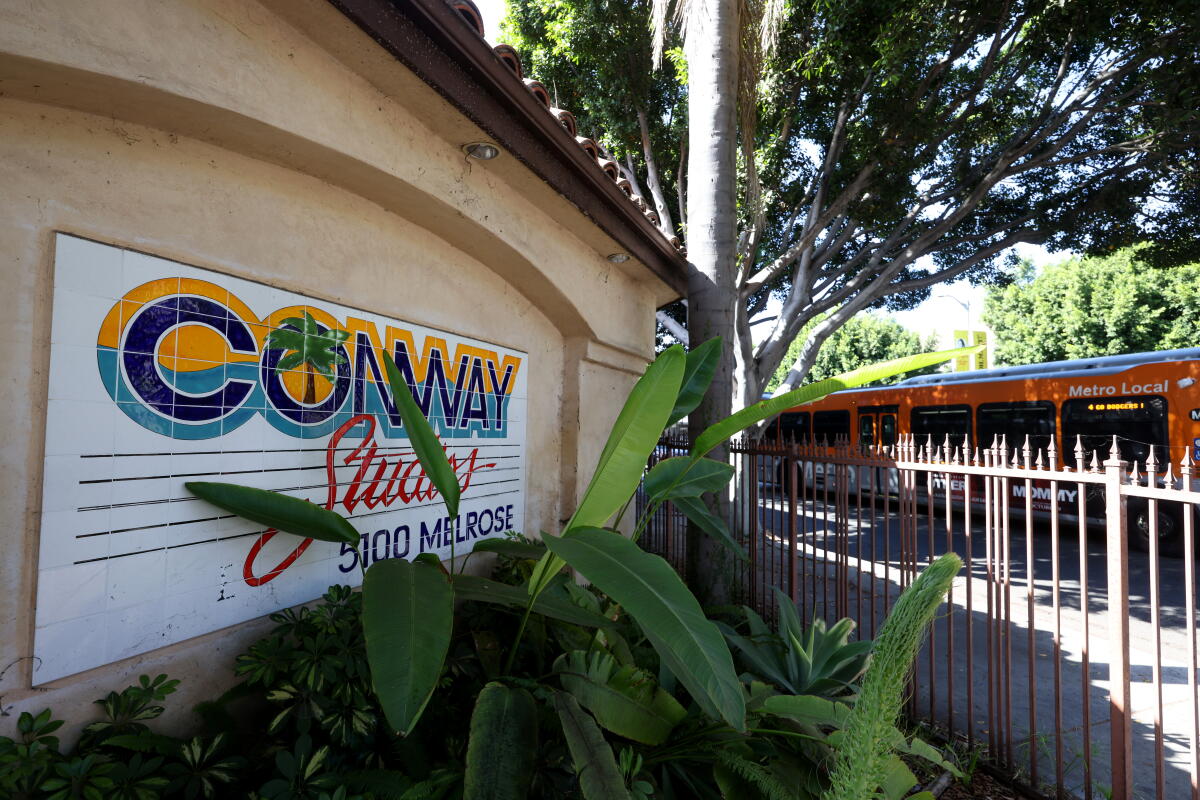
It’s unclear whether Paramount would sell the historic Melrose Avenue lot or simply centralize the sprawling operations onto the Warner Bros. and Paramount lots in Burbank and Hollywood.

Workers are scattered throughout the region.

HBO, owned by Warner Bros. Discovery, maintains its West Coast headquarters in Culver City; CBS television stations operate from CBS’ former lot off Radford Avenue in Studio City; and CBS Entertainment and Paramount cable channels executive teams are located in a high-rise off Gower Street and Sunset Boulevard, blocks from the Paramount movie studio lot.

“The combination of PSKY and WBD could create a materially stronger business than either individual entity,” Standard & Poor’s said in its note to investors. “However, this transaction presents unique challenges because it would involve the combination of three companies, with the smallest, Skydance, being the controlling entity.”

David Ellison’s production firm, Skydance Media, was the entity that bought Paramount, creating Paramount Skydance.

Ellison has not announced what the combined company will be called.

Paramount shares closed down more than 6% Tuesday to $12.45.

Warner Bros. Discovery fell 1% to $28.20. Netflix added less than 1% to close at $97.70.

Source link

Ulysses Jenkins, L.A.-born godfather of video art, dies at 79

Ulysses Jenkins, the pioneering Los Angeles-born video artist whose avant-garde compositions embodied Black experimentalism, has died. He was 79.

Jenkins’ death was confirmed by his alma mater Otis College, where he studied under renowned painter and printmaker Charles White in the late 1970s and returned as an instructor years later. The Los Angeles art and design school shared a statement from the Charles White Archive, which said, “Jenkins had a profound impact on contemporary art and media practices.”

“A trailblazing figure in Black experimental video, he was widely recognized for works that used image, sound, and cultural iconography to examine representation, race, gender, ritual, history, and power,” the statement said.

A self-proclaimed “griot,” Jenkins throughout his decades-spanning career maintained an art practice grounded in the tradition of those West African oral historians who came before him. Through archival documentaries like “The Nomadics” and surrealist murals like “1848: Bandaide,” he leveraged alternative media to challenge Eurocentric representations of Black Americans in popular culture.

He was both an artist and a storyteller who sought to “reassert the history and the culture,” he told The Times in 2022. That year, the Hammer Museum presented Jenkins’ first major retrospective, “Ulysses Jenkins: Without Your Interpretation.”

“Early video art was about the problems with the media that we are still having today: the notions of truth,” Jenkins said. “To that extent, early video art was a construct that was anti-media … a critical analysis of the media that we were viewing every night.”

Born in 1946 to Los Angeles transplants from the South, Jenkins was ambivalent about the city, which offered his parents some refuge from the blatant systemic racism they encountered in their hometowns, but housed an entertainment industry that had long perpetuated anti-Black sentiment.

“What Hollywood represents, especially in my work, is the classic plantation mentality,” Jenkins told The Times in 1986. “Although people aren’t necessarily enslaved by it, people enslave themselves to it because they’re told how fantastic it is to help manifest these illusions for a corporate sponsor.”

Jenkins, who participated in a group of artists committed to spontaneous action called Studio Z, was naturally drawn to video art over Hollywood filmmaking. “I can address any issue and I don’t have to wait for [the studios’] big OK. I thought this was a land of freedom, and video allows me that freedom and opportunity that I can create for myself and at least feel that part of being an American,” he said.

Jenkins went on to deconstruct Hollywood’s vision of the Black diaspora in experimental video compositions including “Mass of Images,” which incorporates clips from D.W. Griffith’s notoriously racist “The Birth of a Nation,” and “Two-Tone Transfer,” which depicts, in Jenkins’ words, a “dreamscape in which the dreamer awakens to a visitation of three minstrels who tell the story of the development of African American stereotypes in the American entertainment industry.”

Jenkins’ legacy is not only artistic but institutional, with the luminary having held teaching appointments at UCSD and UCI, where he co-founded the digital filmmaking minor with fellow Southern California-based artists Bruce Yonemoto and Bryan Jackson.

As artist and educator Suzanne Lacy penned in her social media tribute to Jenkins, which showed him speaking to students at REDCAT in L.A., “he has been an important part of our histories here in Southern California as video and performance artists evolved their practices.”

Source link

High school baseball and softball: Friday’s scores

HIGH SCHOOL BASEBALL AND SOFTBALL

Friday’s Results

BASEBALL

CITY SECTION

Bravo 6, Rancho Dominguez 5

Collins Family 19, Reseda 12

Eagle Rock 6, Glendale 0

El Camino Real 8, Sun Valley Poly 5

Garfield 9, LA Marshall 8

Granada Hills 6, Sylmar 1

Hollywood 16, RFK Community 6

LA Wilson 6, Fairfax 2

Port of Los Angeles 12, Westchester 3

Roybal 20, Mendez 1

SOCES 14, Grant 3

South Gate 7, Granada Hills Kennedy 6

Torres 21, Hawkins 2

Washington Prep 32, Alliance Ouchi 15

SOUTHERN SECTION

Alhambra 4, Pasadena 2

Aliso Niguel 6, San Juan Hills 3

Anaheim 8, Garden Grove 5

Anaheim Canyon 4, Woodcrest Christian 2

Apple Valley 15, Desert Hot Springs 1

Aquinas 4, Grand Terrace 0

Beaumont 6, Orange Vista 1

Bishop Amat 19, St. Paul 11

Bolsa Grande 6, Santa Ana 2

Canyon Springs 6, Big Bear 2

Capistrano Valley Christian 4, Santa Fe 3

Chadwick 11, Downey Calvary Chapel 1

Chaffey 8, Jurupa Valley 5

Channel Islands 11, Del Sol 0

Chino 14, Eastside 0

Chino Hills 11, La Palma Kennedy 2

Costa Mesa 7, Orange County Pacifica Christian 4

Crean Lutheran 16, Patriot 4

Dana Hills 5, Corona Del Mar 1

Diamond Bar 4, Baldwin Park 3

Downey 6, Loara 4

El Modena 1, Palm Desert 0

El Toro 9, Katella 7

Fountain Valley 4, Tesoro 1

Gabrielino 13, Workman 6

Gahr 1, El Dorado 0

Golden Valley 11, Vasquez 9

Hart 4, Alemany 2

Heritage Christian 4, Oak Park 1

Hillcrest 7, Tustin 1

Inglewood 16, Animo Leadership 12

Jurupa Hills 6, Shadow Hills 3

La Canada 9, Arcadia 2

La Salle 8, St. Bernard 7

Los Alamitos 8, Yucaipa 1

Los Altos 3, Ontario Christian 2

Lucerne Valley 14, Mojave 2

Mission Viejo 1, Woodbridge 0

Montclair 5, Covina 4

Montebello 4, West Covina 3

Moorpark 7, Rio Mesa 3

Murrieta Mesa 11, Rancho Buena Vista 1

Newbury Park 11, Hueneme 3

Newport Harbor 6, Santa Ana Foothill 1

Northwood 12, Laguna Hills 6

Oaks Christian 10, Calabasas 4

Ontario 10, Nogales 7

Orange 4, Buena Park 2

Orange Lutheran 10, Crespi 0

Palm Springs 7, San Gorgonio 1

Paloma Valley 10, Santa Ana Calvary Chapel 4

Placentia Valencia 13 Esperanza 10

Rancho Cucamonga 3, Don Lugo 2

Redondo Union 3, Millikan 0

Rosemead 5, Pioneer 1

Rubidoux 10, Bethel Christian 3

San Clemente 5, La Habra 1

Santa Ana Valley 12, Whitney 5

Santa Barbara 4, Arroyo Grande 2

Santa Margarita 4, Loyola 3

Savanna 14, Magnolia 4

Sherman Oaks Notre Dame 2, Servite 0

Sierra Canyon 3, West Ranch 1

Sonora 6, California 3

South Hills 4, Bonita 0

St. Bonaventure 7, Malibu 0

St. John Bosco 8, La Serna 0

Sultana 9, Palmdale 3

Sunny Hills 3, El Rancho 0

Twentynine Palms 23, Cathedral City 4

United Christian Academy 12, Pacific 12

University Prep 8, CIMSA 3

Valley View 10, Tahquitz 9

Villa Park 6, Corona Santiago 5

Western 4, Lynwood 3

Western Christian 12, Serrano 9

Westlake 6, Highland 1

Westminster La Quinta 16, Westminster 0

Whittier 8, Rowland 2

Yorba Linda 16, Lakewood 0

INTERSECTIONAL

Anza Hamilton 13, Bonsall 4

Bell 10, South El Monte 1

Birmingham 4, San Marcos 2

Carson 5, West Torrance 0

Environmental Charter 8, Gardena 8

JSerra 17, Prosper (TX) 9

Legacy 3, Salesian 1

Leuzinger 11, King/Drew 0

Murrieta Valley 7, Wilmington Banning 4

Oakwood 10, North Hollywood 5

Williams Field (AZ) 5, Warren 4

SOFTBALL

CITY SECTION

Maywood Academy 24, Santee 5

Maywood CES 17, Diego Rivera 3

Monroe 21, Grant 18

Narbonne 10, Bell 3

Northridge Academy 8, Cleveland 5

Reseda 16, Bernstein 6

SOCES 20, Hollywood 9

South Gate 14, LA Wilson 13

Torres 22, Hawkins 10

Van Nuys 18, Vaughn 8

SOUTHERN SECTION

AAE 12, Arroyo Valley 9

Antelope Valley 15, Santa Clarita Christian 8

Arroyo Valley 9, Rim of the World 4

Bethel Christian 7, Rubidoux 6

Bishop Montgomery 18, Bellflower 5

Bonita 11, Maui 1

Bolsa Grande 22, Century 8

Calvary Baptist 18, Pomona 7

Citrus Valley 15, Laguna Hills 0

Corona Centennial 13, Dana Hills 1

Costa Mesa 10, Westminster La Quinta 4

Crean Lutheran 18, Artesia 1

Flintridge Sacred Heart 7, San Marino 2

Garey 4, Adelanto 3

Grand Terrace 4, Aquinas 1

Hemet 15, Temecula Valley 5

Heritage 12, Bloomington 6

Hesperia 14, Palm Springs 0

Hesperia Christian 16, Barstow 0

Hesperia Christian 8, Riverside Notre Dame 4

HMSA 18, Compton 6

JSerra 3, El Modena 0

Jurupa Hills 13, Twentynine Palms 2

Jurupa Hills 9, Santa Monica 6

Laguna Hills 10, Palm Springs 5

Lakewood St. Joseph 8, Cerritos 3

La Quinta 14, San Gorgonio 1

Leuzinger 10, Brentwood 0

Los Amigos 22, Estancia 2

Mojave 16, Lucerne Valley 1

Murrieta Mesa 10, Linfield Christian 0

Orange Vista 8, Apple Valley 4

Palm Desert 10, San Bernardino 7

Patriot 17, Ontario 7

Placentia Valencia 16, Santa Ana Calvary Chapel 4

Rialto 22, Public Safety Academy 0

Riverside North 14, Yucca Valley 0

Riverside Prep 22, Rim of the World 0

San Jacinto 16, San Gorgonio 0

Santa Ana Valley 2, Orange 1

Santa Monica 11, Eisenhower 2

Santa Paula 8, Castaic 6

Simi Valley 4, Rio Mesa 4

St. Genevieve 14, Faith Baptist 0

Sultana 2, Canyon Springs 1

University Prep 14, Barstow 0

West Covina 15, Arroyo 13

Western Christian 7, San Jacinto 1

Woodcrest Christian 20, Vista del Lago 0

Yucca Valley 8, San Bernardino 5

INTERSECTIONAL

Animo Venice 13, Lennox Academy 2

Bonita 13, Kauai (HI) 0

Modesto 24, Portola 1

North Torrance 7, San Pedro 2

Rancho Dominguez 16, Long Beach Jordan 0

Sierra Canyon 4, Chatsworth 0

Taft 14, Calabasas 3

Trabuco Hills 20, Modesto 1

Wilmington Banning 6, South Torrance 4

Workman 10, Baldwin Park 9

Source link

Hollywood legend, 63, looks unrecognisable in sexy all-leather look at Milan Fashion Week

A HOLLYWOOD beauty whose resurgent career saw her bag a Golden Globe last year looked unrecognisable at Milan Fashion Week today.

The 80s and 90s pin-up wowed in a sexy all-leather look with an on-trend short hairdo and oversized shades.

This Hollywood beauty has transformed her lookCredit: Getty
The actress looked much younger than her 63 yearsCredit: Getty

She sat on the front row of a star-studded Gucci show and held her tiny pet chihuahua on her lap.

On the catwalk itself, Kate Moss and Emily Ratajkowski led the glam, while Brit actor Bobby Brazier also modelled.

Joining the Hollywood star on the sidelines was Romeo Beckham, Donatella Versace and Paris Hilton.

So who is the rock chick turning heads in Italy?

LESS IS MOORE

Age-defying Demi Moore wows in plunging see-through playsuit at TV premiere


GIMME MOORE

Demi Moore’s X-rated sex confessions, from pre-wedding romp to celeb threesome

Well it’s age-defying Demi Moore, 63.

Just months ago, Demi capped off a stellar career comeback by being named Glamour’s Woman of the Year.

She was interviewed by her Substance co-star Margaret Qualley for the mag and said: “With everything I’ve been through, which has been a lot, I wouldn’t trade where I am today.”

She added a difference with her younger self is the “freedom to know I don’t have to have the answer, and life is not going to be completely stolen from me if I somehow don’t know”.

During Demi’s emotional Golden Globes acceptance speech last year, she spoke of having been at a “low point” and not thinking she was “enough”.

The actress has battled countless traumas and rejections during her life – including her biological dad leaving before she was born, saving her drug addicted mum from suicide, two spells in rehab and being raped aged 15. 

The star of Ghost, Indecent Proposal and A Few Good Men’s return to form in the satirical horror movie The Substance is one of the greatest Hollywood comebacks of all time.

Having struggled to land a hit movie over the past couple of decades, Demi thought “this was it.”

In her speech, Demi said: “In those moments when we don’t think we’re smart enough, or pretty enough, or skinny enough, or are basically just not enough, I had a woman say to me, ‘Just know you will never be enough but you can know the value of your worth if you just put down the measuring stick.’”

Demi didn’t follow up her win by bagging an Oscar, that award went to Mikey Madison, however she wasn’t upset by it.

She told Time: “I didn’t feel gutted.

“I didn’t feel any of those kinds of things.

“I just trusted, and am in trust of, whatever is going to unfold.”

She is set to present an award at this year’s ceremony on March 15 in LA, alongside other A-list talent lie Javier Bardem, Adrien Brody and Zoe Saldaña.

Demi Moore held her pet chihuahua at the fashion showCredit: Getty
She wore her shorter hair in a wet look styleCredit: Getty
Demi is flying high after her Golden Globes win last yearCredit: Getty
Demi in 1996 cult flick StripteaseCredit: Alamy

Source link

What to know about Vinyl Room at the Hollywood Palladium

Now you can pair your big show with dinner and a more intimate listening experience. The Hollywood Palladium, an Art Deco music venue graced by performers like Frank Sinatra, Richard Pryor, Jimi Hendrix, Lady Gaga and Jay-Z since 1940, has debuted a swanky lounge known as Vinyl Room.

Inspired by 1970s Japanese high-fidelity (hi-fi for short) listening rooms and operated by entertainment company Live Nation, it’s a space where concertgoers can have dinner, grab drinks and catch a vinyl DJ set before or after their ticketed event in the same venue.

With a name like Vinyl Room, you can expect to see vinyl records everywhere.

With a name like Vinyl Room, you can expect to see vinyl records everywhere.

“You’re in [for] a whole night of music,” says Geni Lincoln, president of the California region for Live Nation, adding that her team put “so much thought” into the sound and design of the space, which was in development for more than two years.

“I’ve been coming to the Palladium since I was a teenager, so it’s really special to see,” she says.

Entering Vinyl Room feels like you’re stepping into a secret speakeasy for music lovers, one with iconic music memorabilia, a thoughtful food menu and premium sound quality. Want to check it out? Here are five things to know.

Two people play cards at Vinyl Room.

Everything inside of Vinyl Room is inspired by the sounds and the musicians who’ve played at the Hollywood Palladium since 1940.

1. Vinyl Room is exclusively open to members and concertgoers with an upgraded ticket

Vinyl Room is open only on Hollywood Palladium show nights, starting 90 minutes before doors open, and remains open one hour after the concert. Admission is limited to concertgoers who purchase a ticket upgrade, which starts at $35. Early reservations are recommended.

Vinyl Room also offers annual membership packages, which start at $2,000 and come with various benefits such as complimentary guest passes to Vinyl Room, access to an exclusive menu, valet parking, table reservations inside the lounge, a dedicated private entry, complimentary coat check and concert ticket credits.

Tip Dunn, also known as DJ tenSpeed, plays music at Vinyl Room.

Tip Dunn, also known as DJ tenSpeed, played records during opening night at Vinyl Room at the Hollywood Palladium.

2. Hi-fi is having a moment in Los Angeles — and Vinyl Room delivers on sound quality

From Common Wave Hi-Fi in Boyle Heights to Slow Jamz Gallery in the Arts District and Gold Line bar in Highland Park, hi-fi — a 1950s term used to describe the high-quality reproduction of sound — venues and experiences have been slowly popping up around L.A. over the last few years. Vinyl Room joins a short list of places where audiophiles can go to listen to music on hi-fi equipment, which many argue is the best way to experience it.

Much like the Hollywood Palladium, which is known for its top-tier sound, Vinyl Room also makes sound a priority. The lounge utilizes hi-fi sound equipment including Master Sounds Clarity-M speakers to ensure that the records sound as crisp as possible. Live DJs spin records on a set of turntables, which helps to create a richer and more analog sound that is closer to the original track than compressed versions such as MP3s.

Vintage concert posters decorate the walls at Vinyl Room.

Ruthie Embry, vice president of architecture and design at Live Nation, says the records and other memorabilia inside the space “connects you directly to the venue’s history the second you walk in the door.”

3. All of the decor ties back to music and the Hollywood Palladium’s rich history

With a name like Vinyl Room, you can expect to see vinyls everywhere. Records line most of the walls and shelves, drinks are served on vinyl-shaped coasters and tables and light fixtures are designed to the theme. There’s even vinyl wallpaper in the photo booth. In one corner of the lounge, you can dig through records under a neon sign that reads, “But have you heard it on vinyl?”

Ruthie Embry, vice president of architecture and design at Live Nation, says the records and other memorabilia inside the space “connects you directly to the venue’s history the second you walk in the door.”

Some standout items include a Red Hot Chili Peppers show flier, a Hollywood Palladium postcard signed by late musician and host Lawrence Welk and a photo of late singers Bonnie Baker and Orrin Tucker at the venue. Even the bathroom creates a memorable photo moment: The stalls are filled with photos of musicians and an “on air” studio sign lights up when a stall is occupied.

Food served at Vinyl Room in Hollywood.

Vinyl Room’s menu, created by Chef Ryan DeRieux, is inspired by Asian flavors and includes items like the “Vinyl Roll,” which is made with spicy tuna.

4. Don’t worry about dinner plans before or after the show. Vinyl Room has got you covered

Eliminating the need to find a pre- or post-show restaurant, Vinyl Room has a full Asian-inspired menu created by Chef Ryan DeRieux.

Think sushi tots (like crispy tuna but with tater tots instead of rice), tuna poke nachos, chili crunch chicken wings and shiitake tempura burgers. There’s also a mouth-watering 100-ounce American wagyu skirt steak served with shishito peppers, pickles and charred carrots. For dessert, try the taiyaki, a popular fish-shaped Japanese street food, which is served with a delicious passion fruit cream that I wanted to take to go because I liked it so much.

Cocktails at Vinyl Room

Signature cocktails at Vinyl Room, inspired by popular songs, include the Superfly, Escape (if you like piña coladas) and Smoke on the Water.

5. The craft cocktails aren’t just delicious — they each have a story

Vinyl Room's old-fashioned is made with Nikka Yoichi whisky, which is made in Japan.

Vinyl Room’s old-fashioned is made with Nikka Yoichi whisky, which is made in Japan.

The cocktail program, developed by third-generation bartender Sean Kenyon, is inspired by the songs created by musicians who’ve graced the Hollywood Palladium stage. A nod to the 1970s, the Superfly is a fizzy, citrus-forward play on Curtis Mayfield’s 1972 track and is made with Roku Gin and yuzu and sencha syrup. Other signature drinks include the rum-based Escape (if you like piña coladas) with coconut oolong syrup, pineapple juice and miso, and the tart yet sweet Smoke on the Water, which is reminiscent of Deep Purple’s 1972 song. The bar also offers an espresso martini (called the MT Joy), a signature old-fashioned (made with Nikka Yoichi whisky) and a Japanese whiskey highball (made with Hibiki Harmony whisky). The bar offers a number of non-alcoholic options as well.


Source link

Warner Bros. Discovery shifts gears, says it now favors Paramount deal over Netflix

Warner Bros. Discovery is switching gears, announcing Thursday that Paramount Skydance’s revised bid tops the one on the table from Netflix.

The move is the latest twist in Hollywood’s biggest auction in years — and five months after Paramount Chairman David Ellison began his dogged pursuit of the larger media company. Netflix now has four business days to regroup and potentially submit a higher offer.

Warner Bros. Discovery said its board, in consultation with its bankers and lawyers, determined Paramount’s most recent offer constitutes a “superior proposal,” compared to the Netflix deal.

Paramount on late Monday bid to buy all of Warner Bros. Discovery for $31 a share in cash. Paramount had previously offered $30 a share.

Netflix has offered $27.75 a share — but the streaming giant only wants Warner’s HBO, HBO Max and the Warner Bros. film and television studios in Burbank. Concerns have been growing that Netflix would face push-back from regulators as it seeks to swallow one of Hollywood’s historic film studios behind “Superman,” “Casablanca” and “The Matrix.”

Paramount’s offer includes acquiring Warner’s cable television channels like CNN and HGTV.

“We are pleased WBD’s Board has unanimously affirmed the superior value of our offer, which delivers to WBD shareholders superior value, certainty and speed to closing,” said David Ellison, the chairman and chief executive of Paramount.

The new wrinkle comes as Netflix Co-CEO Ted Sarandos met with White House staffers on Thursday at a pivotal moment for the streaming giant, which has been navigating the high-stakes bidding war to acquire Warner Bros. Discovery.

Sarandos met with White House staff members and Justice Department officials, according to two people familiar with the meeting. The visit was arranged more than two weeks ago and President Trump was not scheduled to attend.

The White House and Netflix declined to comment on the substance of the meeting, but it comes as the media giant has come under pressure by the president to fire board member Susan Rice, a former Biden administration adviser that Trump recently called a “political hack.”

Trump warned that if Netflix did not fire Rice, the company would “pay the consequences.”

The president’s demands to fire Rice marked a shift in the president’s involvement with Netflix’s business as it seek to acquire Warner Bros — a bid that is being countered by Paramount.

In December, Netflix won the bidding for the storied studio and HBO, prompting Paramount executives to launch a multi-pronged strategy to scuttle the Netflix deal.

The Department of Justice has since opened an investigation to determine whether to try to block Netflix’s proposed $82.7-billion deal to take over Warner Bros. Discovery. Netflix has more than 300 million subscribers worldwide, and the addition of Warner’s HBO Max would make the streaming giant even more dominant.

Sarandos’ trek to the White House comes as the auction has taken on political dimensions. Paramount has refused to abandon its campaign to buy Warner, which owns HBO and such popular franchises as Harry Potter, Superman and “Game of Thrones.”

Paramount — which is controlled by the family of billionaire Larry Ellison, a Trump friend — has been angling to thwart Netflix.

During a Senate hearing this month, some Republican lawmakers blasted Sarandos, raising questions about potential antitrust concerns and some of Netflix’s programming. Paramount Chief Executive David Ellison declined an invitation to participate in the Feb. 3 hearing.

This week, he was at the Capitol as a guest of Sen. Lindsey Graham (R-SC) for Trump’s State of the Union address. The two men were pictured giving a thumbs-up in a photo circulating on social media.

Trump has said he would stay out of the Netflix-versus-Paramount battle, but over the weekend he demanded, in a social media post, that Netflix “IMMEDIATELY” fire Rice from its board.

It was not known if the topic of Rice came up Thursday.

Sarandos has sought to downplay the controversy, saying during a BBC interview: “This is a business deal, it’s not a political deal.”
Paramount has enlisted a former Trump administration official, the lawyer Makan Delrahim, who served as Trump’s antitrust chief during the president’s first term.

Source link

The Witch’s Cottage is a new fantasy cafe in North Hollywood

Hear the name the Witch’s Cottage and you might conjure a mystical vision. And inside the new North Hollywood space, here there be witches, yes. But that’s just the start of it.

In one area of the two-story cafe, restaurant and bar, constellations beckon. A guide to crystals calls forth in another. An azure booth is flanked by an abstracted mermaid sculpture, and elsewhere howling wolves are engraved into the bar tops.

Celina Lee Surniak, Ana Lovelis, and Danielle Ozymandias

Witch’s Cottage co-founder Celina Lee Surniak, left, with investor/partner Ana Lovelis and co-founder Danielle Ozymandias. The three envisioned a welcoming space that views the world through a magical lens.

Hidden wonders are everywhere. Circle the cottage’s hand-constructed tree trunks, and maybe, if you’re lucky, you’ll spy a tiny door hiding a little witch. Sit at one of the tables, and don’t be surprised to hear the sounds of birds chirping from the man-made trees. Branches spring forth from paintings and every nook is a nod to something born of a fable.

A decade-long vision of the founders, the Witch’s Cottage has transformed the old Federal Bar into a colorful, whimsical fairy-tale-like forest of a gathering spot. A place where one can come for the fantasy, and stay for the chicken etouffee and the Hex Breaker, a tiki-style, rum-heavy drink for grown-up sorcerers.

“I wanted this to feel lived in,” says Danielle Ozymandias, who dreamed up the space with business partner Celina Lee Surniak, a fellow creative who like Ozymandias very much identifies as a witch. “I wanted this to be a visual feast because I think maximalism is just so interesting. That may be the ADHD talking, but I knew I wanted a lot.

The dining room of the Witch's Cottage aims for a fantasy forest-inspired look.

The dining room of the Witch’s Cottage aims for a fantasy forest-inspired look.

LOS ANGELES, CA -- FEBRUARY, 2026: The Witch's Cottage in North Hollywood, California on Friday, February 20, 2026. (Jennifer McCord / For The Times)

While they certainly designed the Witch’s Cottage to be family-friendly, Surniak and Ozymandias say part of their creative intent was to bring joy to adults.

“Everybody tries to shame you,” Surniak says. “Like, ‘You can’t buy that coffee. Save your money.’ No, let them have the coffee they really love. Let them get that annual pass to Disneyland. Let them have a weekly night at the movies, even if they go alone. The world is so weird right now. What we can do is find joy in tiny things.

A fairy at a media preview for North Hollywood's new Witch's Cottage.

A fairy at a media preview for North Hollywood’s new Witch’s Cottage.

“Being able to give adults the opportunity to say ‘I’m a fairy,’ is the best feeling ever,” Surniak continues. “And it’s not just at Renaissance fairs. Be a fairy here.”

Or be anyone. A sign near one of the restaurant’s restrooms makes it clear it doesn’t matter which one guests use. It asks that they simply wash their hands. “You can walk in as a witch, or a dragon, or just a FedEx worker,” Ozymandias says. “There’s no judgment.”

The Witch’s Cottage had its grand opening this weekend, and the community immediately responded with lines out the door. That wasn’t entirely surprising — the project was built by a collective. More than 200 volunteers donated more than 3,000 hours to bring the space to life, and the two founders attracted more than 100 investors via an online crowd-funding campaign that raised more than $167,000.

“We’re regular people,” Surniak says. “We don’t have a lot of money. We don’t have a nest egg. We don’t own property. If we were going to do anything, we would need help.”

Surniak says within three days of creating their campaign, they found an angel investor who offered them the funds to secure the building. Other investors followed, including Ana Lovelis and her husband Kenny Enea, known in the area for the elaborate haunted houses they have hosted at their home. The two joined as creative partners and helped with construction. Lovelis says she recognized in the Witch’s Cottage a similar outlook on life as hers. She recalled once years ago dating someone who had a skeptical and practical view of the world.

“And then there was me, being like, ‘That butterfly is a sign from my grandma,’” Lovelis says. The Witch’s Cottage, she says, is reflective of viewing the world through a magical lens. At a time of much stress for many, such a place may be needed. As Lovelis says, “What’s the harm?”

The Witch's Cottage is a two-story space that serves as a cafe during the day and a restaurant at night.

The Witch’s Cottage is a two-story space that serves as a cafe during the day and a restaurant at night. Dinner service begins at 5 p.m.

Surniak still has a day job, working as a stunt and intimacy coordinator on theatrical and Hollywood productions. Ozymandias, who previously worked in the local theater world, is focusing primarily on the Witch’s Cottage at the moment, helping to devise recipes and ensure the bakery can accommodate as many dietary restrictions as possible.

Beyond new menu items, there’s more in the works, including community events like sound baths, comedy nights and classes on composting, native plants and parenting. Or even some workshops that are more lighthearted, such as a hoped-for night on how to make a broom.

Hidden behind the upstairs bar is what’s called the Tempered Flask Tavern, and it’s an elaborate tabletop role-playing game room. Here, one will find a smoke-puffing dragon, but also digital windows that game masters can use to trigger various effects. A long table sits at its center, flanked by a knight, a digital fireplace and weaponry. Not open yet, the plan is for the room to be rented out by the hour.

A group playing 'Dungeons & Dragons.'

Tabletop games at The Witch's Cottage's

The Tempered Flask Tavern is a hidden room dedicated to tabletop games inside the Witch’s Cottage. It will be available soon for guests to rent out.

Though Surniak and Ozymandias say they’ve been building vision boards for more than a decade of what the spot could look like, recent cultural shifts gave them the confidence that the timing was right. They point to “Stranger Things” and how it spawned a conversation around “Dungeons & Dragons,” or the success of Disney+ series “Agatha All Along.” More locally, they watched the rise of a game-focused bar such as the Roguelike Tavern, which is relocating to Studio City, as well as the news that experiential art firm Meow Wolf would be building an exposition in the city.

Taken as a whole, they felt bolstered that North Hollywood could support a heavily themed cafe, a home for those who have rolled a 20-sided die, once looked up the meaning of the Tower card or just enjoyed a viewing of “The Lord of the Rings.”

But one need not know the inner workings of RPGs, tarot or Middle-earth to feel at home in the Witch’s Cottage. This is a space, after all, for anyone who has ever been touched by a fairy tale, dreamed of the fantastical or wanted to believe in the power of wishing upon a star.

LOS ANGELES, CA -- FEBRUARY, 2026: The Witch's Cottage in North Hollywood, California on Friday, February 20, 2026. (Jennifer McCord / For The Times)
LOS ANGELES, CA -- FEBRUARY, 2026: The spread at The Witch's Cottage in North Hollywood, California on Friday, February 20, 2026. (Jennifer McCord / For The Times)
Views from inside North Hollywood's the Witch's Cottage.

Views from inside North Hollywood’s the Witch’s Cottage.

So spend a little time in the Witch’s Cottage, and maybe you’ll start to imagine that cocktail is a potion, and those deviled eggs did in fact hatch from a dragon. Diners may debate between the “iron forged fondue melt” (a patty melt) or the “meze heartwich” (a white bean purée on sourdough), but childlike wonder is the specialty of the house.

“Everybody is somebody’s kid,” Ozymandias says. “And I just want a safe space for people’s kids. Even if you’re 50, or 80, you’re my kid. I want you to feel loved, and to have a cup of something warm or magical. I want you to know that whatever is outside those doors, when you’re in here, I got you.”

Source link

How the Warner Bros. deal has divided Hollywood

The pitched battle for Warner Bros. took yet another turn Monday night as Paramount Skydance enhanced its bid for the storied studio.

The decision by Warner Bros. Discovery to leave the door slightly ajar for Paramount came after weeks of pressure from its leader, tech scion David Ellison, and his billionaire father, Oracle co-founder Larry Ellison.

The media company has been vying to acquire Warner since late last year, and that fight only increased after the “Casablanca” and “Harry Potter” studio chose Netflix as the winning bidder back in December.

The bidding war has divided Hollywood’s creative community, with filmmakers, producers and unions all staking positions on the deal.

You’re reading the Wide Shot

Samantha Masunaga delivers the latest news, analysis and insights on everything from streaming wars to production — and what it all means for the future.

By continuing, you agree to our Terms of Service and our Privacy Policy.

The latest to weigh in was “Avatar” and “Titanic” director James Cameron, who reportedly described Warner’s sale to Netflix as “disastrous for the theatrical motion picture business” in a Feb. 10 letter to Sen. Mike Lee (R-Utah), chair of the Senate subcommittee on antitrust, competition policy and consumer rights.

“I am very familiar not only with ships that sail, but also those that sink,” he wrote. “And the theatrical experience of movies could become a sinking ship.”

Actor Mark Ruffalo shot back at Cameron: “Are you also against the monopolization that a Paramount acquisition would create? Or is it just that of Netflix?” he posted on Threads over the weekend, adding that he was “speaking on behalf of hundreds of thousands of filmmakers worldwide.”

Regardless of which bidder prevails, consolidation in the industry is a major fear, particularly after waves of job cuts due to the pandemic and pullbacks in production spending amid streaming losses. And for the theatrical exhibition business, any merger revives concerns about an even greater decrease in films headed to theaters — particularly if the winning bidder is Netflix.

The health and future of cinemas is an especially sensitive topic in Hollywood. Box office revenue still has not returned to pre-pandemic levels, and some fear it never will, leaving theaters scrambling for alternative ways to fill their auditoriums.

Paramount has positioned itself as a champion for theatrical films, and David Ellison has said a combined Paramount and Warner Bros. would release 30 films a year.

But theater owner trade group Cinema United and the Writers Guild of America have warned that further consolidation would further concentrate the entertainment business, bringing more layoffs and theater closures.

Netflix co-Chief Executive Ted Sarandos has since tried to temper these concerns.

In a recent Senate subcommittee hearing, he pledged to maintain a 45-day theatrical window for Warner Bros. films, while also saying the deal would increase production investments going forward. In a recent letter to Lee responding to Cameron’s missive, Sarandos said he had previously spoken with the director in December about Netflix’s plans for Warner Bros., and that he had been “very supportive.”

Then there’s the politics of it all.

My colleague Meg James has written about Paramount’s efforts to use its political influence with the Trump administration to push its deal — and undermine Netflix’s. Paramount has declined to comment on the matter.

To put it mildly, Trump is a deeply unpopular figure in liberal-leaning Hollywood.

Creatives have feared a chilling effect on speech, particularly after Federal Communications Commission Chair Brendan Carr has aggressively tried to enforce long-dormant rules that require broadcast TV stations to give equal time to opposing candidates. The free-speech matter came to a head last year, when Carr warned that ABC could lose its TV station licenses after late-night host Jimmy Kimmel made a remark about slain conservative activist Charlie Kirk.

More recently, the equal-time rules resurfaced when CBS late-night host Stephen Colbert blasted his own network over its handling of his interview with Democratic Senate candidate James Talarico. Colbert said that CBS told him he could not air the interview because it would require giving equal time to Talarico’s opponents in the Senate primary and that he was instructed not to talk about the issue on the air, which he refused. CBS has disputed Colbert’s comments, saying he was not prohibited from airing the interview.

News industry insiders also raised concerns after the installation of Bari Weiss as editor in chief of CBS News. Two months into her tenure, she made the decision to pull a “60 Minutes” episode that investigated the alleged abuse of detainees sent from the U.S. to an El Salvador prison, a highly unusual step that critics interpreted as a decision to placate the Trump administration.

CBS News, which aired the episode in January, denied the claim, saying the piece had only been held for additional reporting.

On the film side, Paramount continues to make deals with creatives, including the irreverent South Park creators, who have churned out parodies of the Trump administration, “Wicked” director Jon M. Chu and writer, producer and actor Issa Rae, who in a statement earlier this year vowed to “tell stories for and by the diverse communities that have supported my work over the years.”

As the Warner Bros. deal drama unfolds, we’ll see how the lines continue to form in Hollywood’s creative class.

Stuff We Wrote

Film shoots

Number of the week

seventeen million dollars

Sony Pictures Animation’s “Goat” led the domestic box office this weekend with an estimated three-day total of $17 million, beating out the Margot Robbie and Jacob Elordi-led “Wuthering Heights.”

The film, which was also produced by Warriors star Stephen Curry’s production company, has bucked the trend for original animated movies, which have largely faltered at theaters in recent years.

What I’m watching

Last week, I watched more Olympic figure skating (who didn’t watch Alysa Liu’s joyful, gold medal-winning performance?), but I’m also now re-watching 2000s teen detective drama “Veronica Mars.” I’m not Gen Z, but my newfound zeal for comfort TV is not unlike the story my colleague Stephen Battaglio wrote last year about young people’s interest in nostalgic shows.

Source link

Warner Bros. Discovery says its reviewing Paramount’s new bid

Warner Bros. Discovery said Tuesday that it was “reviewing” a revised offer from Paramount Skydance — the latest twist in the high-profile auction to claim one of Hollywood’s corporate jewels.

The company did not provide any details of Paramount’s bid. Paramount separately confirmed that it submitted a revised offer.

In a short statement, Warner acknowledged that Paramount had submitted a modified proposal to buy all of the company’s outstanding shares and that board members were evaluating the offer “in consultation with our financial and legal advisors.”

“We will update our shareholders following the Board’s review,” Warner said.

The Larry Ellison-backed Paramount had been facing a late Monday night deadline to boost its bid to claim the company that owns CNN, HBO, TBS and the storied Warner Bros. movie and film studios. Last week, the auction’s winning bidder — Netflix — agreed to allow Warner Bros. Discovery to reopen talks with Paramount for seven days to determine whether Paramount would bring more money to the table.

Warner instructed Paramount to present its “best and final” offer.

Netflix has matching rights should Warner Bros. Discovery reverse course and accept the Paramount bid.

The move comes nearly three months after Warner’s board unanimously agreed to sell HBO and studio assets, including its deep library that includes Superman, Harry Potter, Scooby-Doo, “Game of Thrones,” and “The Big Bang Theory,” to Netflix for $27.75 a share.

Netflix’s deal, valued at $82.7 billion, does not include Warner’s basic cable channels, including CNN, TBS and HGTV.

Those channels are slated to be spun off to a new company later this year.

But Paramount, managed by scion David Ellison, has repeatedly cried foul, saying its cash bid for all of Warner Bros. Discovery, including the Warner cable channels, would be more lucrative for shareholders. Paramount, which enjoys friendly relations with President Trump, has also boasted that it has a more certain path to win U.S. regulatory approval compared to Netflix.

But Warner Bros.’ board has stuck with Netflix’s bid, saying the streaming giant’s financing was more secure.

“The Netflix merger agreement remains in effect, and the Board continues to recommend in favor of the Netflix transaction,” Warner said in its Tuesday statement.

Warner Bros. Discovery told Paramount last week that it expected the billionaire Ellison to put more money into the deal.

Paramount has previously said that the tech billionaire would guarantee more than $41 billion in equity financing that was needed to pull of the more than $108-billion take-over.

Under Paramount’s previous offer, the Ellison family was planning to contribute about $12 billion. Another $24 billion was expected to come from the royal families from Saudi Arabia, Qatar and Abu Dhabi.

In recent weeks, Paramount agreed to cover a $2.8 billion break-up fee that Warner would owe Netflix should Warner walk away from the Netflix deal. Paramount also suggested that it would increase its offer to at least $31 a share.

The move comes amid heightened political interest in the monumental deal that would reshape Hollywood.

The Department of Justice is investigating whether a Netflix takeover, or Paramount’s alternative bid, would harm competition.

Republican lawmakers have been critical of the Netflix deal, saying it would blunt competition.

President Trump has said he didn’t plan to get involved in the investigation, but over the weekend he threatened Netflix, writing on social media that Netflix must fire Susan Rice, a former high-level Obama and Biden administration official, from its board or “pay the consequences.”

Warner Bros. Discovery is consulting with investment bankers from Allen & Company, J.P. Morgan and Evercore and the law firms Wachtell Lipton and Debevoise & Plimpton.

Source link

‘Baywatch’ casting call brings back ’90s with in-person auditions

Despite the string of storms that have hit the Los Angeles region in recent days, the skies cleared up long enough on Wednesday for thousands of aspiring actors to swarm a beachfront in Marina del Rey and take their shot at landing a role in the upcoming “Baywatch” reboot.

The open casting call brought old Hollywood magic to Los Angeles, as the show intensified its search for raw and local talent, reminiscent of how original “Baywatch” stars were discovered, said Brittainy Roberts, the vice president of casting at Fox.

The soapy drama series, which premiered in 1989 and ran for 11 seasons, followed the lives and relationships of lifeguards who patrolled L.A. County beaches (and later Hawaii). It was not only a hit stateside — internationally it was a success, becoming the most-watched show in the world at the time. A film adaptation starring Dwayne Johnson and Zac Efron was released in 2017, and despite negative reviews, it was considered a commercial success, signaling an appetite for more.

  • Share via

The casting team has “big bathing suits to fill,” Roberts said. The show famously created a slew of stars, including Pamela Anderson and Carmen Electra, who got their start on the show, and catapulted David Hasselhoff to new heights of fame.

Uncommon in a post-pandemic era of self-tape auditions, the open and in-person auditions attracted actors hungry for their big break and locals hoping to leave with a fun story to tell. Many donned “Baywatch” visors and sweaters while others sported bright red bathing suits, popularized by the original show. It was “an opportunity to really get people in the room in a large-scale way,” and allow “people an opportunity that maybe they aren’t getting in this new landscape of auditioning,” Roberts said.

The casting team saw live auditions from about 2,000 “Baywatch” hopefuls, and about 14,000 applications were submitted, said Joseph McGinty Nichol, known as McG, the reboot’s executive producer who will direct the first episode. His past projects include the “Charlie’s Angels” movie and “The O.C.”

A muscular man flexing on a red carpet with a banner that says Baywatch across it.

Pat “The Jaguar” Uland, 31, of San Francisco, on the red carpet at the “Baywatch” open casting call.

(Allen J. Schaben / Los Angeles Times)

Beach-ready candidates filed in and out of a Marriott hotel in Marina del Rey for the in-person auditions. The casting call, which ran late into the night, embodied the joy of Hollywood, McG said.

Bri Ana Wagner, a 29-year-old living in Los Angeles, has been pursuing acting for around a decade. The open casting call was a reminder that the Hollywood “dream is alive,” she said.

“It’s like the way it used to be and the way it should be,” McG said. “You can come to a Marriott in Marina del Rey and change your life and blow it wide open.”

Hopefuls try to catch a break

David Chokachi hadn’t acted much before auditioning for “Baywatch” in the 1990s. Douglas Schwartz, one of the show’s original creators, and his wife, Deborah, had seen just about a thousand auditions for the role of Cody Madison. None of the actors matched the couple’s vision for the character, until Chokachi strolled in.

“It’s one of the most surreal things that’s ever happened in my life,” said Chokachi, the only actor from the original series confirmed for the reboot.

A man in a dark shirt and pants points at a Baywatch surfboard.

David Chokachi, who was on the original “Baywatch,” is reprising his role as Cody Madison.

(Allen J. Schaben / Los Angeles Times)

The aspiring actors who auditioned Wednesday hoped to get their chance at a big break similar to the one Chokachi got decades ago. Casting for the reboot began late last year, Roberts said, and people “have come out of the woodwork” since, with some messaging her directly on social media.

“The fact that we’re shooting in L.A., it’s certainly ignited a flame for a lot of agents and managers in town hoping to get their clients working here,” Roberts said.

The casting executive was hopeful that Wednesday’s auditions would bring together a talented pool of actors that the show can continue to pull from.

A woman in a red top and leggings leans against a red truck with her hand and leg in the air.

Massiel Taveras was among the many in attendance at the casting call: “I belong to this group. I belong to the show. I just feel it.”

(Allen J. Schaben / Los Angeles Times)

Massiel Taveras was crowned Miss Dominican Republic in 2007 and has pursued acting since, finding success in the Latino market. She arrived to the Marriott hotel sporting a bright red sports bra and leggings, paired with a large fur coat to shield her from the beach chill.

“I just love the show so much … It’s iconic. It’s something that everybody loves,” Taveras said. “I belong to this group. I belong to the show. I just feel it.”

Meanwhile, Dominique Lopez, a broadcast student from Monrovia, had never been to an audition before her boyfriend Colin Bolick, an actor, convinced her to attend the casting call together. The experience was “super easygoing” and intimate, she said as she walked out of the audition room.

“It’s making the industry exciting again. It’s putting people in the mind space of … ‘Let me put myself out there,’” said Lopez, 25. “Just for that, I feel like a better person, that I went and did something new.”

Could ‘Baywatch’ could help revive Hollywood?

Marko Dobrasinovic, 24, who made the trek from Chicago to audition, bumped into an old high school classmate, Alyssa Frey, while in line to check in. The pair attended the same high school as Hasselhoff, who played Mitch Buchannon on “Baywatch,” one of the actor’s best-known roles.

The impromptu reunion felt like a full-circle moment, said Frey, who moved to Los Angeles to pursue acting about two years ago. She landed in the city just as the actors’ and writers’ strikes froze Hollywood. Wednesday’s casting call was “one of the few opportunities to get in front of someone,” she said.

It was one that almost slipped away from the city. Showrunners were eyeing Australia as an alternative to filming in L.A., until Gov. Gavin Newsom and state legislators granted the production, along with 16 others, California’s film and TV tax incentive in November. Hollywood has struggled to return to its former status as a production mecca after the COVID-19 pandemic and 2023’s dual strikes. The wildfires early last year, coupled with studio spending cuts, added another blow to L.A.‘s waning film and TV industry.

A crowd of people standing together behind some barricades.

The open casting call was a rare event in Los Angeles, as the TV and film industry struggles to recover.

(Allen J. Schaben / Los Angeles Times)

Chantal Groves left a stable job in international relations around two years ago, setting her sights set on Los Angeles. The 25-year-old, originally from the Dominican Republic, said acting was always her true passion. The career change has been fulfilling, but navigating such a fraught industry is difficult, she said.

“It’s basic laws of supply and demand,” Groves said. “There’s not a lot out there. There’s not a lot casting, and so just in general, it’s a really hard time to start in the industry.”

The “Baywatch” reboot received a $21-million credit, aimed at revamping the state’s entertainment industry.

“This was about keeping an iconic, world-famous brand right here in L.A.,” said Traci Park, a councilmember for District 11 who helped lead efforts to secure the tax incentive and attended the event. “We have the talent, we have the resources, we have the sets … it is exactly why we are fighting so hard to keep these productions in Los Angeles.”

A love letter to Los Angeles

“Baywatch” showrunner Matt Nix was in the middle of fighting off the wildfire that ravaged his Altadena neighborhood and got dangerously close to his home when he first got the call to lead the reboot. His house survived the fires, and he says a show like “Baywatch” felt like exactly what the city needed after such tragedy.

“This is a show about paradise and the people who keep it that way,” Nix said. “There’s something fundamentally earnest and positive about ‘Baywatch,’ the idea of heroes on the beach taking care of each other and the people that they protect.”

Others can relate to that sentiment. “Baywatch” was “right up my alley,” said Ava Cherlyn, a 19-year-old from Newport Beach. The aspiring actor, who moved to Hollywood six months ago, was a lifeguard growing up and played water polo competitively.

“I’m surprised that I haven’t been nervous,” Cherlyn said as she posed for photos in a red bathing suit.

A woman in red swimsuit lifts her tattooed arms above her head.

Aspiring actor Ava Cherlyn, 19, in a red swimsuit made iconic in “Baywatch.”

(Allen J. Schaben / Los Angeles Times)

The original show attracted a worldwide audience because of its focus on “heroic people with complicated and interesting lives” while still feeling like an easygoing “hour-long vacation,” Nix said.

That nostalgic magic won’t be lost in the upcoming season, which Nix said is more of a continuation rather than a reboot. It will follow Hobie Buchannon, Mitch’s son, a character featured in the original series, played by “Arrow” protagonist Stephen Amell.

Hobie’s life will be derailed when he meets Charlie, a 21-year-old daughter he never knew he had who’s eager to continue the family’s legacy by becoming a Baywatch lifeguard. Hobie, now a Baywatch captain, will navigate the familial troubles throughout the season, Nix said.

“I don’t want to imply that ‘Baywatch’ is going to save the world or save America,” Nix said. “But, at the same time, I think it’s a good time for an unapologetically heroic show about people who care about each other and the people that they’re trying to save.”

Source link

From ‘Bonnie and Clyde’ to ‘Star Wars’: The real history of New Hollywood

Book Review

If you buy books linked on our site, The Times may earn a commission from Bookshop.org, whose fees support independent bookstores.

“That’s my pot dealer!” exclaimed Michelle Phillips in a crowded movie theater in 1977. Months earlier, the Mamas & the Papas singer had only known Harrison Ford as a stoner-carpenter with a few bit parts to his credit. Now he was Han Solo in “Star Wars,” directed by a young upstart, George Lucas. Clearly the world was changing.

How much, though? Conventional wisdom about the Hollywood renaissance of the ‘60s and ‘70s suggests that starting with “Bonnie and Clyde” and “Easy Rider,” a batch of emerging auteurs shook the studios out of a rut and transformed American film. There’s plenty of truth to that: Francis Ford Coppola’s shift in 10 years from a director-for-hire on an old-hat musical, “Finian’s Rainbow,” to the auteur behind “Apocalypse Now” is just one of the era’s most remarkable achievements.

A pair of new books, though, suggest that the overall shift was only so modest, ultimately shoring up not just the old-school studio system but the social norms the interlopers were supposed to be upending.

"The Last Kings of Hollywood: Coppola, Lucas, Spielberg and the Battle for the Soul of American Cinema" book cover

Paul Fischer’s lively history of the new wave of California directors, “The Last Kings of Hollywood,” concentrates on Lucas, Coppola and Steven Spielberg. (New York contemporaries like Martin Scorsese and Brian De Palma are present but relatively off-screen.) Fischer has a gift for highlighting the ways that moments that we now accept as inevitable were often the product of dumb luck, pyrrhic victories and tough decisions. Coppola made “The Godfather” out of financial desperation, averse to adapting a mob novel; Spielberg’s “Jaws” was beset with mishaps, from a foolhardy attempt to train a real shark to its malfunctioning mechanical one; only when Lucas learned that the rights to Flash Gordon were unavailable did he pursue a space-opera concept all his own.

Their brashness and can-do spirit were worth cheering for: As the trio delivered films that broke box office records — ”The Godfather,” “American Graffiti,” “Jaws” and more — there were reasons to believe that big-budget films could operate outside the studio system. Lucas in particular was driven as much by resentment of the old as passion for the new. He never forgot how Warner Bros. manhandled his debut feature, “THX 1138” and was driven to muscle “Graffiti” into existence to spite the suits who said he couldn’t. In 1969, Coppola and Lucas launched their own studio, American Zoetrope, in San Francisco, with a passel of scripts in progress (including “Apocalypse Now” and “The Conversation”) and a $300,000 investment from Warner Bros. But Coppola wasn’t much of a businessman, and he had an easier time putting the office’s fancy espresso machine to work than the suite of state-of-the-art editing bays: “He ran his business like he ran a film set — on vibes,” Fischer writes.

A decade later, both Coppola and Zoetrope would declare bankruptcy, and he would split with Lucas, who’d used the success of “Star Wars” to cut his own path as a Hollywood kingmaker via his own production company, Lucasfilm. It allowed him to indulge his love of classic cliffhanger serials, and he tapped Spielberg to direct “Raiders of the Lost Ark.” But Fischer frames Lucas’ career arc as a disappointment, despite all those dollar figures — Lucas wanted to return to artsier “THX”-style fare, but needed cash flow. “If George was ever going to be independent from Hollywood, he thought he wouldn’t get there by making abstract mood poems,” Fischer writes. By the ‘80s, with two “Star Wars” sequels done, Lucas was out of the mood-poem business entirely.

"They Kill People: Bonnie and Clyde, a Hollywood Revolution, and America's Obsession with Guns and Outlaws" book cover

While “Last Kings” focuses exclusively on directors’ relationship to movie economics, Kirk Ellis’ “They Kill People” considers “Bonnie and Clyde” and the New Hollywood from a variety of angles — filmmaking, the social turmoil of the ‘60s, America’s complex relationship with outlaws in general and guns in particular. It’s a meaty yet accessible book that captures the lightning-in-a-bottle nature of the generation’s ur-text, capturing the unlikely nature of its creation and the somewhat dodgy nature of its legacy.

“Bonnie” was such a provocation — nakedly, almost giddily violent — that its studio, Warner Bros, all but willed it not to exist. It was given a shoestring budget, was mocked by studio chief Jack Warner (who sarcastically referred to director Arthur Penn and producer-star Warren Beatty as “the geniuses”), and initially released largely in Southern drive-ins. “They figured the redneck kids would like the guns,” Penn said.

Everybody liked the guns. A few scolding critics lamented the film’s violence, especially its then-shocking bloody finale, but Beatty and co-star Faye Dunaway were deeply seductive onscreen. (Ellis notes that the two are always the best-dressed characters in the film.) And its outlaw sensibility resonated with young audiences in the late‘60s. Moreover, writes Ellis (a historical-drama screenwriter best known for “John Adams”), it represented the culmination of decades of American culture that equated American gun culture with freedom — a notion that would’ve baffled the founding fathers, who dwelled little on gun-rights matters in the Federalist Papers and other constitutional drafting documents, but gained traction thanks to gun manufacturers. “In the printed legend of American history, guns and freedom have become synonymous,” Ellis writes, but it was a new legend — stoked in part by “Bonnie and Clyde” — not America’s origin story.

It’d be a mistake to reduce the New Hollywood to the filmmakers highlighted by these two books — though, focused as they are on white men, they echo the way women and people of color were largely shut out of the system, or relegated to more marginal blaxploitation work. Artists looking to operate outside the system have plenty of inspiration to draw from in the ‘70s. Yet the books also expose how commerce does what it always does — take provocations and sand the edges off of them, then look for ways to make them profitable. In the early ‘80s, a decade after Coppola and company stormed the barricades, Paramount chief Michael Eisner shared a fresh and contradictory vision, such as it was: “We have no obligation to make history. We have no obligation to make art. We have no obligation to make a statement. To make money is our only objective.”

It would take another decade — and auteurs on the East Coast — to launch another attack on that sensibility, via films like “Do the Right Thing” and “sex, lies, and videotape.” They would help usher in the Miramax era — but that’s another story, with its own problematic twists.

Athitakis is a writer in Phoenix and author of “The New Midwest.”

Source link

‘The Last Kings of Hollywood’: How Coppola, Lucas and Spielberg changed cinema

On the Shelf

The Last Kings of Hollywood: Coppola, Lucas, Spielberg—and the Battle for the Soul of American Cinema

By Paul Fischer
Celadon Books: 480 pages, $32

If you buy books linked on our site, The Times may earn a commission from Bookshop.org, whose fees support independent bookstores.

Paul Fischer showed “Jaws” to his daughter when she was 10. She wasn’t scared. In fact, she loved it so much that she dressed as Richard Dreyfuss’ Hooper for Halloween. To Fischer, who watched “Raiders of the Lost Ark” at age 4 (“I remember the melting heads but I don’t think I was traumatized”), it shows the staying power of some of the ’70s blockbusters.

“It’s the flip side of how these franchises became so massive and had such a long tail,” he said in a recent video call with The Times, discussing how each generation still finds “Star Wars,” “Raiders,” “E.T.,” “Jaws” and “The Godfather.” “They’ve created films that endured and that overshadow others.”

That is part of the impetus behind his new book, “The Last Kings of Hollywood: Coppola, Lucas, Spielberg—and the Battle for the Soul of American Cinema.” The book, Fischer’s third about film history, starts before the trio were “big mythical names” and instead were just a bunch of guys setting out to fulfill their dreams.

The narrative then follows their journeys from the late ’60s through the early ’80s, filling in the “ecosystem” the trio came up in and how they wanted to change the system to gain creative autonomy. Spielberg worked within the system, Coppola spent lavishly and even ostentatiously to build his own studio and Lucas found his independence through a quieter, more conservative and technology-driven route.

(Martin Scorsese, who was friends with the three and “the most interesting human being of that generation of filmmakers,” gets plenty of ink but was not a titular character, Fischer said, because he remained an outsider who just wanted to make movies, not change the system.)

“I’m not going to pretend I can tell you what was going on in their heads but I tried to make people feel like they were there when it happened,” Fischer said.

While none of the three men would be interviewed, Fischer had decades of quotes and conducted his own interviews with hundreds of people in the filmmakers’ orbits to get a fuller and more honest story. (He added that their representatives were uniformly helpful with fact-checking and providing photos. “There was never a door closed on me,” he said in an accidental reference to the final scene of “The Godfather.”)

Coppola, “who changed quite a bit, was the hardest one for me to pin down,” Fischer said. “There are layers of complexity to him and his willingness to treat the creative life as if it’s an experiment.” Blending that with his self-indulgent philandering and spending of money, he added, “you can change your mind about that guy every five minutes.”

During that era at least, Fischer said Lucas and Coppola seemed ”completely devoid of any self-awareness.” He chronicles how Coppola pressured Lucas to accept changes to his first feature, “THX 1138,” so the studio would release it while Lucas viewed that as Coppola pushing him to sell out. Meanwhile, Lucas was pushing Coppola to do a studio film for hire to keep his fledgling Zoetrope Studio afloat, making Coppola feel pressured to sell out. (That movie was “The Godfather,” so it worked out OK for Coppola.)

“They keep giving each other advice about how to do things and then betray that same advice when it applies themselves,” he said, although he added that he doesn’t “whip them for 300 pages for having giant egos,” and said it’s part of the recipe to be a visionary filmmaker, especially in the Hollywood studio system.

Ultimately, the book depicts Lucas as more of a sellout, acting like the studio suits he once detested as he pressures “The Empire Strikes Back” director Irvin Kershner to make changes, often based on budget and then focusing more on profitability as he conjured up characters like the Ewoks for “Return of the Jedi.” Fischer doesn’t believe Lucas would recognize that version of himself in the book. “He’s someone who lost his BS detector and has drunk his own Kool-Aid.”

In Fischer’s telling, the creative and business sides are interwoven and inseparable from each other and from the personal relationships — their friendships and rivalries with each other but also their relationships with those who worked for them or loved them.

“They were all able to do what they did because of wives or partners or friends or college classmates, who did a lot of the work without being household names,” he said. To fully tell the story, he devotes plenty of narrative space to Coppola’s wife Eleanor, and his most prominent mistress, Melissa Mathison, who later wrote “E.T.,” producer Kathleen Kennedy, who co-founded Amblin Entertainment with Spielberg, and Lucas’ wife, Marcia, who edited the first “Star Wars” trilogy (and Scorsese’s “Taxi Driver”).

“How did these guys break through? Well, they were middle-class white dudes and these women looked after some of this stuff they couldn’t,” Fischer said. “Those aren’t the only reasons these guys became who they did but without that, they probably [wouldn’t have].”

Fischer celebrates the three men’s vision and talents — he calls “The Godfather” “a perfect film” and says Spielberg “speaks the language of a camera better than anybody else”— but the book makes clear how often they got lucky or were saved from themselves.

If Coppola had spent his money more judiciously, he might not have done “The Godfather;” Lucas resisted hiring Harrison Ford to play Han Solo as well as Ford’s creative contributions; and if someone had bankrolled the first feature film Spielberg pitched before latching onto “Jaws” — “a sex comedy San Francisco Chinese laundry riff on Snow White” — it could have sunk his career.

Additionally, Lucas and Coppola’s friendship frayed when the latter snatched back the directing gig for a film he had long ago promised to his buddy. “But imagine George Lucas making some weird low-budget, ‘Battle of Algiers’ version of ‘Apocalypse Now’ in the back streets of Sacramento,” Fischer said. “That sounds pretty crappy. And we would have lost one of the great, novelistic experiential movies that we have.”

Lucas, meanwhile, dangled his idea for “Raiders of the Lost Ark” before Spielberg’s eyes, then told him that Philip Kaufman had dibs. “He’s a fine director but we would have lost something there too,” Fischer said. “There are these crossroads there but still there has got to be something special about these three or they couldn’t have had repeated successes like they did.”

Writing about their failures, foibles and frustrations did not lessen the hold that these three men and their movie magic have on Fischer. He recounts a story of his own connection to one film with undisguised delight and enthusiasm. After graduating film school at USC, he was producing a documentary (“Radioman”) in New York when he learned that “Indiana Jones and the Kingdom of the Crystal Skull” was doing some filming in Connecticut. “Obsessed,” he finagled his way onto the set and into a job. “All I did was turn off the air conditioning,” he said. “‘Roll camera,’ I flip it off. ‘Cut,’ I turn it on. I did that for four days. But when Harrison Ford walked by wearing that jacket, I was 5-years-old again. That was cool.”

Miller is a freelance writer in Brooklyn who frequently writes about movies.

Source link

Mid AI scandal, Hollywood studios threaten ByteDance with legal action

After the fake video of Tom Cruise and Brad Pitt fighting went viral, a surge of AI-generated content from Seedance 2.0 flooded the internet.

Some fans were using the new AI video generator, backed by ByteDance, to refashion the finales for shows like “Game of Thrones” and “Stranger Things.” Others created battle scenes between iconic superheroes like Wolverine and Superman or between a Transformer and Godzilla.

As these Seedance videos amassed millions of views on social media, industry guilds like SAG-AFTRA and the Motion Picture Assn. have criticized the AI platform that was launched last week. Now, many major Hollywood studios are threatening to take legal action against ByteDance, the same Chinese parent that oversees TikTok.

Netflix, Warner Bros. Discovery, Paramount and Disney have all sent individual cease and desist letters, detailing the unauthorized reproduction of each of the studios’ copyrighted intellectual property.

Netflix and Warner Bros. Discovery were the latest studios to send cease and desists letter to ByteDance on Tuesday.

Netflix calls Seedance “a high-speed privacy engine” and says that they “will not stand by and watch ByteDance treat our valued IP as free, public domain clip art,” as stated in the letter. The streamer also cites the illegal use of sets derived from “Squid Game,” costumes from “Bridgerton” and character design from “KPop Demon Hunters.”

Warner Bros. Discovery looks to repurposed content, including characters from the “Harry Potter” and “Lord of the Rings” franchises, as well as superheroes like Batman, as “ blatant infringement” by ByteDance. The studio argues that it’s clear that their AI technology was trained on Warner Bros. copyrighted material “without authorization.”

“But the users are not the ones at the root cause of the infringement; they are merely building on the foundation of infringement already laid by ByteDance as Seedance comes pre-loaded with Warner Bros. Discovery’s copyrighted characters,” wrote the studios’ legal executive vice president Wayne Smith. “That was a deliberate design choice by ByteDance.”

Disney and Paramount were the first of the studios to call out ByteDance, sending their letters last Friday and Saturday. Disney accuses ByteDance of loading its Seedance service “with a pirated library of Disney’s copyrighted characters from Star Wars, Marvel, and other Disney franchises.”

“Over Disney’s well-publicized objections, ByteDance is hijacking Disney’s characters by reproducing, distributing, and creating derivative works featuring those characters. ByteDance’s virtual smash-and-grab of Disney’s IP is willful, pervasive, and totally unacceptable,” Disney’s attorney David Singer wrote, per Axios.

Paramount’s cease and desist letter was reviewed by The Times and makes similar assertions about ByteDance’s unapproved use of copyrighted material.

ByteDance has since pledged to implement more safeguards to protect copyrighted material in response to these letters.

“ByteDance respects intellectual property rights and we have heard the concerns regarding Seedance 2.0,” a company spokesperson said in a statement shared with CNBC. “We are taking steps to strengthen current safeguards as we work to prevent the unauthorized use of intellectual property and likeness by users.”

But with or without the safeguards, Dan Purcell, chief executive of Midnight Labs, an AI-powered company that specializes in IP protection for high-value entertainment, said these letters might be a bit of a delayed reaction from the studios.

“Once synthetic content is generated, it spreads instantly and at a massive scale. By the time lawyers engage, the damage is done,” said Purcell in a statement. “The only path forward is strict licensing, real-time enforcement, and consequences that actually hurt. Reactive letters won’t fix this. The industry needs to move at the speed of AI — not the speed of litigation.”

Source link

Jesse Jackson once waged war on Hollywood, with few results

In 1994, the Rev. Jesse Jackson declared war on Hollywood.

The civil rights leader, who died Tuesday, set his sights on the entertainment industry, accusing it of “institutional racism” and calling out what he called the lack of representation of people of color and women, an issue that reverberates today.

Jackson aimed his trademark fiery dynamism at studio and network executives, forming the Rainbow Coalition on Fairness in the Media — an offshoot of his Rainbow Coalition that focused on social justice and economic equality — and threatening boycotts against projects that excluded minorities.

Comparing his campaign to the historic march in Selma, Ala., and other civil rights demonstrations during a news conference, Jackson said, “They think they have the right to not include us in recruitment, hiring, promotion, projection, decision making. But we have consumer power, we have viewer power, we have the power to change dials. … The networks have time now to get their house in order. They can begin to change now.”

The pronouncement was a dramatic contrast to Jackson’s 1984 hosting gig on “Saturday Night Live” and his memorable reading of “Green Eggs and Ham” during a 1991 appearance on the sketch variety series.

But despite his characteristic command and media savvy, Jackson’s campaign never gained true momentum, scoring mixed results. Black actors and creators within Hollywood for the most part failed to rally around him, and leaders of some advocacy groups accused him of losing focus. Whoopi Goldberg made fun of him while hosting the 1996 Oscars.

By 1997, the battle had fizzled out and Jackson had moved on to more political concerns.

The clash with Hollywood was first sparked after several Black-oriented shows on Fox, including “South Central,” “Roc,” “In Living Color” and “The Sinbad Show” were canceled in the July 1994. Jackson felt there would not be much improvement in the diversity on the shows in the upcoming fall season.

“We know that significant shows were cut off from Fox this season, and that is of great concern to us,” Jackson said at a news conference at the African American Community Unity Center where he was accompanied by Brotherhood Crusade founder Danny Bakewell and comedian Sinbad, who starred in his own eponymous sitcom.

And Jackson said it wasn’t the only TV network with this problem. “We look at the data we have on NBC. It is substantial. It is ugly. We look at the projected format for CBS this fall. In the real sense, all of them are recycling racist practices. It is called institutional racism. It is manifest not only in their hiring, but in their priorities.”

He added that he was also concerned about what he claimed was poor representation of people of color and women among network news anchors and on writing staffs on prime-time network series. He criticized the prominence of Black actors having major roles that often involved criminal activity.

A boy and a man dressed as clowns.

Jameel Hasan as Homey Jr., left, and Damon Wayans as Homey D. Clown on Fox’s “In Living Color,” which was canceled in 1994.

(Nicola Goode / Fox)

“We have written the networks letters, and the response, by and large, has been defensive as they attempt to justify what is unjustifiable,” Jackson said at the news conference. “While we’re willing to talk, we’re also willing to walk. It’s now time for aggressive direct action.”

In a separate interview, he targeted politically oriented Sunday news shows, saying they excluded Black journalists and news figures: “Those all-white hosts determine their guests and set the political agenda for public policy for Monday morning. That’s not America.”

His newly formed commission was researching network hiring practices and minority images. He vowed that boycotts and other actions would take place if there was not significant change.

But those demonstrations never materialized, and no boycotts were called. Roughly a year after his initial declaration, observers inside and outside the industry said networks had mostly ignored Jackson, and that little had changed.

Some leaders at the time questioned his commitment, saying he did not seem truly dedicated to aggressive action.

Sonny Skyhawk, founder and president of American Indians in Film, one of the organizations that had joined forces with Jackson, said the campaign against the networks should have been stronger.

“I would hate to criticize him for not being more diligent, but it is frustrating,” said Skyhawk in a 1995 interview about the initiative. “I don’t know where (the issue) is or why he is not continuing on this. But I think he got sidetracked on a lot of other things.”

Sherrie Mazingo, who was then head of broadcast journalism at USC, said she was not surprised that the Jackson campaign had lost steam: “What happened last season isn’t new, it’s perennial, and may even be cyclical. Protests and accusations and talk like this goes on all the time, and nothing ever happens. Nothing.”

Mazingo cited similar efforts by the National Assn. for the Advancement of Colored People in the early 1980s that had attacked Hollywood’s hiring practices. A boycott of films that failed to use Black artists in front of or behind the camera was proposed but never materialized.

“I believe what happens when these things start is that an individual in the organization who is pushing forward on these issues gets tired of banging their head against a brick wall,” Mazingo said. “They make an all-out assault, exhaust a lot of energy and money, and nothing ever significantly changes, except for a token gesture here and there.”

Sumi Haru, who was president of the Assn. of Asian Pacific Artists, said Jackson had been sidetracked by more topical issues such as a conservative power grab in Washington, D.C., and calls for abolishing affirmative action programs.

“He needed to focus his energy on the civil rights initiative, and affirmative action was a much bigger deal,” said Haru.

But Billie Green, president of the Beverly Hills/Hollywood branch of the NAACP, said Jackson’s campaign would have been more effective if it had joined forces with other organizations that had members within the television industry.

Jackson pushed back against the criticism, insisting that the fight against Hollywood “is still very high on our agenda.” He pointed out that he had worked to continue government funding for the Public Broadcasting Service, protested the cancellation of the Nickelodeon series about two Black brothers, “My Brother and Me,” picketed conservative “hate radio” programs and sent out a fax to 8,000 supporters asking them to rally CBS to bring back the family drama “Under One Roof.”

“It’s going to get more intense,” Jackson said.

In 1996, Jackson turned his attention to the Academy Awards, angered that there was only one Black nominee among the 166 artists nominated. He called for picketing in major cities and and said Black people attending the Oscar ceremony should wear a symbol expressing solidarity against what he called Hollywood’s “race exclusion and cultural violence.”

But during the Oscars, which was produced by Quincy Jones, Goldberg, who was hosting, took a swipe at the civil rights leader who was picketing across town.

“Jesse Jackson asked me to wear a ribbon. I got it,” Goldberg said during her opening. “But I had something I want to say to Jesse right here, but he’s not watching, so why bother?” The remark drew applause and laughter from the black-tie audience.

Some leaders, producers and directors were not amused by Goldberg, saying her remarks were insulting and dismissive of a serious fight to gain diversity within the motion picture industry. But others criticized Jackson, calling his action ill-timed and ill-advised. Several of the most prominent African Americans present, including Oprah Winfrey, Sidney Poitier and Laurence Fishburne, did not wear rainbow-colored ribbons as a sign of solidarity with Jackson and his Rainbow Coalition.

Even though he concentrated on other endeavors, Jackson was not totally done with Hollywood. He and the Rev. Al Sharpton spearheaded a protest in 2002 against the comedy “Barbershop” and its jokes about Jackson and ciivil rights icons Rosa Parks and Martin Luther King Jr. The two leaders also threatened a boycott against the 2004 comedy “Soul Plane.”


Source link

Hollywood A-lister stuns locals as he’s spotted at cricket supplies shop

A HOLLYWOOD A-lister stunned locals when he was spotted shopping at a cricket supplies store.

This twice Oscar-winning actor, 69, was seen browsing a store in Australia, with staff at the shop admitting that they “didn’t recognise him” at first.

This Hollywood A-lister stunned locals when he was seen browsing a cricket shopCredit: instagram/@gccricketcentre
Fans are used to seeing actor Tom Hanks on red carpetsCredit: Getty

The star in question is movie megastar, Tom Hanks.

The much-loved actor looked worlds away from his famous film roles as he browsed a cricket shop in Sydney.

The Forrest Gump star looked happy and relaxed as he posed for a photo with the delighted shop staff, who couldn’t believe their eyes.

Tom was dressed casually in just a grey T-shirt and black trousers, and was stood with his son Truman, 29.

BIG CHANGE

80s child star now 50 who appeared in Tom Hanks film resurfaces in LA


NO WOKE FOR TOM

Tom Hanks says he would boycott woke versions of classic books

The gob-smacked shop workers shared the picture on Instagram of them with Tom, and penned: “Not your usual walk-in customer…

“We’re used to serving cricket royalty, but yesterday at GCCC North Sydney, we welcomed Hollywood royalty, with Tom Hanks and his son Truman stopping by the store.

“From Baggy Greens to big screens, you never know who’ll walk through the doors at GCCC.”

The shop’s followers went wild for the pic, with one person writing: “How exciting – well done for capturing the moment.

Tom is often spotted out and about with the general public, despite his star status.

Last autumn he was spotted taking a subway train in New York.

Tom is known for films like the 1994 flick Forrest GumpCredit: Alamy
Tom seen here in the 90s war epic movie, Saving Private RyanCredit: Alamy

He even slipped a few dollars to a street musician before heading off into the crowd.

Tom shot to fame in the 80s and was known for comedies like Big, Splash and Turner & Hooch.

In the 90s he became well known for romantic comedies like Sleepless in Seattle and You’ve Got Mail, both of which he starred alongside Meg Ryan.

However, he went on to win two Oscars when he switched to more serious roles.

Tom starred alongside Meg Ryan in Sleepless In SeattleCredit: Alamy

Tom won his first Academy Award for Philadelphia in 1994, and then for Forrest Gump the year after.

The star’s other big roles include Saving Private Ryan and Cast Away.

Despite being known as one of the kindest actors in Hollywood, fans will be surprised to hear that Mr Hanks previously admitted to being a diva on set.

He even compared himself to the stroppy character in his 2023 movie The Making of Another Major Motion Picture Masterpiece.

Tom said: “I’ve had my tough days trying to be a professional when my life has been falling apart in more ways than one and the requirement for me that day is to be funny, charming and loving – and it’s the last way I feel.”

Away from the cameras, Tom is happily married to wife Rita Wilson, who he shares his son Truman with.

Tom seen here with his wife Rita WilsonCredit: AFP

Source link

Hollywood groups condemn ByteDance’s AI video generator

A new artificial intelligence video generator from Beijing-based ByteDance, the creator of TikTok, is drawing the ire of Hollywood organizations that say Seedance 2.0 “blatantly” violates copyright and uses the likeness of actors and others without permission.

Seedance 2.0, which is available only in China for now, lets users generate high-quality AI videos using simple text prompts. The tool quickly gained condemnation from the movie and TV industry.

The Motion Picture Assn. said Seedance 2.0 “has engaged in unauthorized use of U.S. copyrighted works on a massive scale.”

“By launching a service that operates without meaningful safeguards against infringement, ByteDance is disregarding well-established copyright law that protects the rights of creators and underpins millions of American jobs. ByteDance should immediately cease its infringing activity,” Charles Rivkin, chairman and chief executive of the MPA, said in a statement Tuesday.

Screenwriter Rhett Rheese, who wrote the “Deadpool” movies, said on social media last week that “I hate to say it. It’s likely over for us.” His post was in response to Irish director Ruairí Robinson’s post of a Seedance 2.0 video that shows AI versions of Tom Cruise and Brad Pitt fighting in a post-apocalyptic wasteland.

Actors union SAG-AFTRA said Friday it “stands with the studios in condemning the blatant infringement” enabled by Seedance 2.0.

“The infringement includes the unauthorized use of our members’ voices and likenesses. This is unacceptable and undercuts the ability of human talent to earn a livelihood,” SAG-AFTRA said in a statement. “Seedance 2.0 disregards law, ethics, industry standards and basic principles of consent. Responsible AI development demands responsibility, and that is nonexistent here.”

ByteDance said in a statement Sunday that it respects intellectual property rights.

“[We] have heard the concerns regarding Seedance 2.0. We are taking steps to strengthen current safeguards as we work to prevent the unauthorized use of intellectual property and likeness by users,” the company said.

The dispute comes a month after ByteDance finalized a deal to secure TikTok’s future in America. ByteDance agreed to divest majority ownership of U.S. operations to an American-led investor group, averting a shutdown of the hugely popular social media app.

President Trump during his first term sought to ban the platform, citing national security concerns, but he shifted his views after ByteDance agreed to the new joint venture.

The venture now has three managing investors: Silver Lake, Oracle and Emirati investment firm MGX, each holding 15%, with ByteDance retaining 19.9% of investments.

Ortutay writes for the Associated Press. Times Staff writer Cerys Davies contributed to this report.

Source link