AS the train rumbles out of the station, our heads turn to admire the stunning views from the dining car’s windows.
When the conductor announces each new destination, a feast of flavours is served up while we admire the changing landscapes.
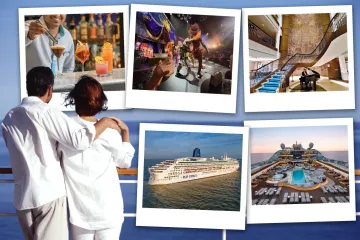
I stayed on the world’s biggest cruise shipCredit: UnknownThe ship’s interior is a riot of colourCredit: Supplied
But what’s even more incredible is the fact I am currently on board the largest cruise ship in the world — and sailing the calm blue waters of the Mediterranean.
The Royal Railway is the latest immersive dining experience to be savoured on board Legend Of The Seas.
Sign up for the Travel newsletter
Thank you!
You’ll begin your journey at the station — with the chance to pick up a cocktail or two from the bar — before entering an authentic train carriage and sitting down to a five-course feast as the train travels along Marco Polo’s ancient Silk Route including China, India, Turkey and Italy.
With some culinary corkers on the menu such as butter chicken, grilled lamb chops and Silk Road Shrimp, plus to-die-for Italian desserts, it’s a world away from a soggy sarnie on platform three at Clapham Junction.
Like everything on this gargantuan ship — the third Icon-class vessel from Royal Caribbean — the attention to detail is staggering.
With 28 restaurants, eight neighbourhoods, six waterslides and room for 5,610 passengers, the multi-billion-dollar floating city certainly made an entrance in Malaga earlier this month. And I was one of the first on board the largest cruise ship in the world.
Billed as the ultimate family vacation, this next-generation newcomer is a riot of colour and energy from dawn to dusk, and there is something to float everyone’s boat, from lazy beach retreats to thrilling theme parks.
Holidaymakers of all ages will easily keep hunger pangs at bay grazing on food from 28 venues — the most you’ll find at sea — with every neighbourhood bringing something to the table.
Other new eateries include Hollywoodland Supper Club. Inspired by old Hollywood, this multi-course dinner is accompanied by live jazz and craft cocktails, giving guests the chance to get glam.
Hooked is a New England-style seafood restaurantCredit: SuppliedRebecca admires the waterslidesCredit: Supplied
While this and the Royal Railway come at quite a hefty extra cost — around £144pp — there are a staggering 13 complimentary eateries included in the price of your cruise.
In the AquaDome Market you can take another global foodie tour with stalls serving up everything from Korean rice bowls to tapas bites and crepes, plus a new juice and smoothie bar for health-conscious sailors.
I also worked my way around some of the bars including 1400 Lobby Bar, which is inspired by the history of shipbuilding, and Lou’s, which evokes moody New Orleans and New York jazz bars with live performances and cocktails.
Those wanting a livelier tipple should head to the brilliant Dueling Pianos, which buzzes well into the early hours.
Outside, the mega resort facilities are designed for non-stop family fun — minigolf, rock-climbing and a surf simulator can all be found on decks 16 and 17 — and thrillseekers can dangle daringly over the water on Crown’s Edge, a part skywalk, part zipline experience 154ft above the ocean.
This playful ship is certainly making a splash, with Category 6 holding the crown as the largest waterpark at sea, while Royal Bay is the largest pool on the waves.
Splashaway Bay and Baby Bay are nestled in the purpose-built Surfside family neighbourhood, while it’s strictly adults-only at The Hideaway with its suspended infinity pool and DJ, and Swim & Tonic swim-up bar.
Early nights are out — the last thing you’ll want to do is sleep for fear of serious FOMO.
The ship’s entertainment offering is next level and I was captivated by everything I watched. This included Roald Dahl’s West End-worthy Charlie And The Chocolate Factory complete with a 15-strong live orchestra, AquaTheater’s Shockwave, where synchronised swimmers, high divers and aerialists highlight the power of water, and the ice-skating spectacle with drones at Absolute Zero’s show, Fusion.
Alongside live music and tribute bands, there are themed parties including a Y2K dance party, karaoke sessions, live trivia and silent discos.
Those familiar with Royal Caribbean’s Icon Class ships will be pleased to see the return of well loved spaces including Royal Promenade with its floor-to-ceiling ocean views.
There’s also the Pearl — the world’s largest kinetic art sculpture — weighing as much as a Boeing 747 — and the open-air Central Park, with over 30,500 lush plants as well as restaurants, live music, and pick-up windows for sushi and champagne.
The liner has its own fun railwayCredit: SuppliedTuck into a delightful salmon dish like this oneCredit: supplied
With 29 types of accommodation, when it comes to hitting the sack, you and your tribe will slumber in style. On Legend Of The Seas, there are more rooms with ocean views and for groups of three, four, five and more.
The Surfside Family Suites are ideal for two adults and two kids, with the Family Infinite Ocean View Balcony cabins accommodating six, and Surfside Family View Balcony cabins sleeping three or four.
To really push the boat out, check into the exclusive four-deck Suite Neighbourhood or the Ultimate Family Townhouse, a three- storey pad that can sleep up to eight people.
Inside there’s a slide, dedicated entertainment spaces, and three balconies — lucky residents even get a money-can’t-buy experience with Royal Caribbean’s second Chief Dog Officer, a playful golden retriever pup named Skipper.
This showstopper of a ship is truly the stuff of Legends.
GO:LEGEND OF THE SEAS
SAILING THERE: A seven-night Western Mediterranean cruise on board Legend Of The Seas is from £1,245 per person.
A round trip sailing from Barcelona calls at Palma de Mallorca, Provence (Marseille), Florence/Pisa (La Spezia), Rome (Civitavecchia), and Naples.
Travellers must take extra when packing their suitcases as certain items are not allowed in hold luggage, especially this device would could cause more disruption than usual
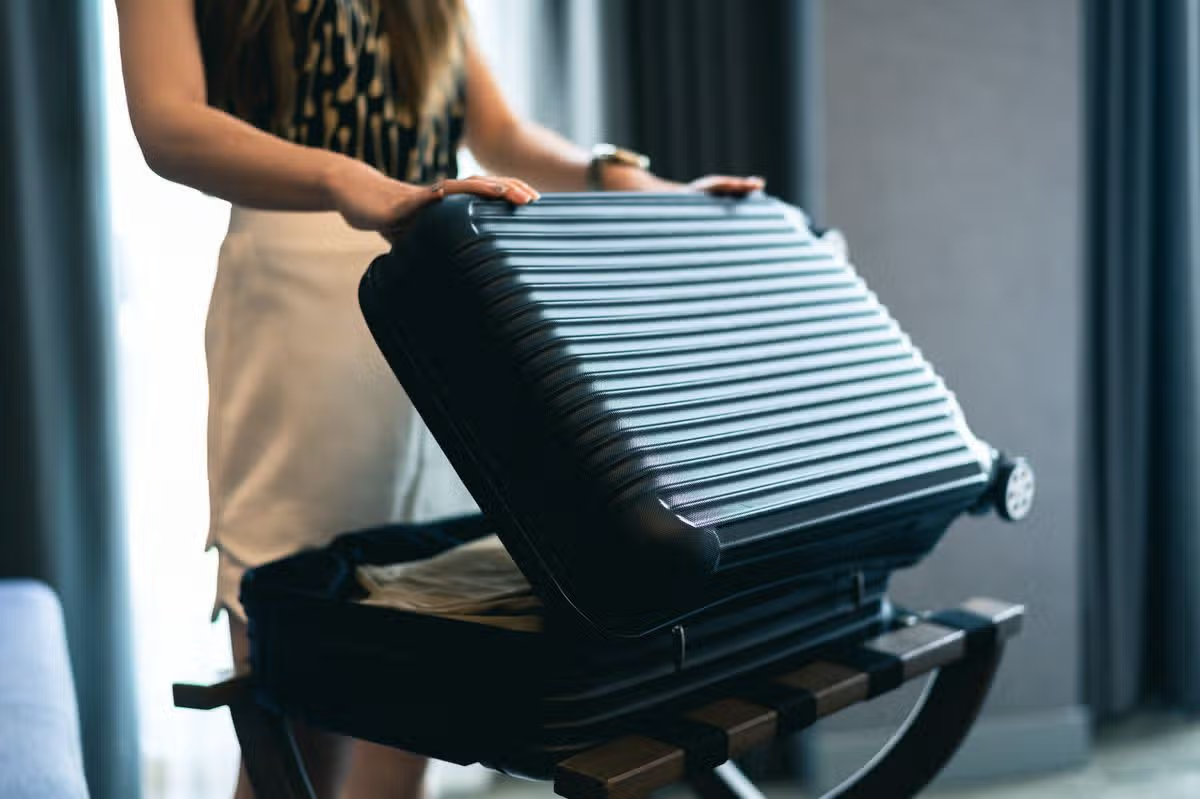
Many people might find packing their suitcase quite stressful(Image: Getty Images)
Packing for a holiday can be both exciting and nerve-wracking in equal measure. Most airlines enforce strict restrictions on weight and size, which can prove incredibly stressful for travellers.
Certain items have long been forbidden during air travel, but what about storing them in your suitcase? According to recent findings, vapes and powerbanks rank among the greatest fire hazards on aircraft. As a result, many holidaymakers remain unsure about the correct procedures when flying with these devices.
To shed some light on the matter, Markus Lindblad, Head of Legal & External Affairs for Northerner, has set out the key guidelines for storing your vape.
He warned that despite safety notices, many travellers are still mistakenly packing vape devices in their hold luggage, when airlines actually require these to be switched off and kept solely in cabin baggage.
Content cannot be displayed without consent
Why lithium batteries and vapes are banned in checked luggage
This comes down to the considerable fire risk posed by lithium batteries. In the past, airlines have been forced to divert flights after a lithium battery caught fire, making it absolutely vital to thoroughly check your bags.
If you’re caught vaping on board, this can set off smoke alarms and alert cabin crew. Depending on the airline and the circumstances involved, failing to cooperate with staff or disregarding safety instructions could land you with a hefty fine.
This could also result in police getting involved once the aircraft touches down, or even a lifetime ban from travelling with that carrier. But if you spot another traveller vaping mid-flight, it’s recommended to quietly alert a member of the cabin crew.
Getting through an entire journey without nicotine can prove challenging for some, but Markus recommends smokers bring patches on board to tide them over until they reach their destination.
They can be stored in both hand luggage and hold baggage, are subtle to apply and don’t produce vapour, making them appropriate for use while airborne.
As with any product, travellers should always verify the regulations of their airline and destination country before departure, as requirements can differ.
France, for instance, has outlawed nicotine pouches. Taking a brief moment to familiarise yourself with the airline’s regulations and pack appropriately can help prevent hold-ups, seized items or fines, ensuring your trip begins smoothly.
Airline vape policies and the UK disposable vape ban
According to the UK Civil Aviation Authority, all vapes and e-cigarettes must be carried in cabin luggage and never in hold baggage.
This is compulsory to avoid lithium battery fires. Furthermore, all e-liquids must adhere to the standard 100ml liquid restriction in a transparent resealable bag.
You should also drain your refillable tanks prior to flying, as changes in cabin pressure often cause e-liquid to seep out through the airflow openings. For more comprehensive policies on precise battery quantities, it’s worth checking your specific airline’s guidelines via British Airways, easyJet, or Ryanair.
It is also worth noting that selling single-use disposable vapes is completely prohibited in the UK. While you are still permitted to travel with ones you already own, purchasing them at UK airports is not allowed.
Jill Robinson visited San Marino, one of the smallest nations in the worldCredit: GettyRimini has 15km of beachesCredit: Getty
I’m in San Marino — the tiny, landlocked microstate completely surrounded by its famous neighbour, and officially the fifth-smallest country on the planet.
Set atop Mount Titano, 700 metres above sea level, San Marino is the oldest republic in the world but is still relatively undiscovered by British tourists who remain in the surrounding regions of its bigger neighbour instead.
Sign up for the Travel newsletter
Thank you!
One of the easiest ways to reach the centre is via cable car and once you step out you’re welcomed by centuries-old streets, the Basilica of Saint Marinus and the incredible Three Towers of Mount Titano.
Built in the 11th century, the towers formed the medieval defences and while the steep incline to get to them is not for the faint-hearted, it’s worth it.
You can visit the two main towers — Guaita and Cesta — linked by a 13th century stone walkway the locals nicknamed The Witches Path.
But there’s another reason to visit.
San Marino is virtually a duty-free haven with taxes around five percentage points lower than in Italy.
I had to be dragged away from all the beautiful handbags and shoes in the cute boutiques dotted throughout the city.
San Marino also produces an array of products including olive oil and wine, which I had a chance to sample over lunch at Ristorante Titano.
The stunning main square in RavennaCredit: GettyTuck into a delicious bowl of cappellacciCredit: Getty
Alongside the light and fresh local wine, I devoured a bowl of cappellacci; the traditional stuffed pasta with a distinctive “big hat” shape originating from the Emilia-Romagna region that San Marino sits within.
While San Marino is landlocked, it is only 30 minutes drive from Rimini’s wide, 15km-long beaches, so close it is visible from the top of the city on a clear day.
Rimini has been a popular seaside destination for decades and I could see why as I gazed out of my balcony room at the 4* Hotel Savoia across the golden sandy beach and the newly redeveloped waterfront.
The hotel itself has the celeb factor — it featured in Italian classic La Dolce Vita and the film’s director Federico Fellini was born in Rimini.
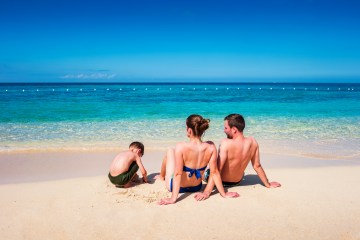
Dramatic Cesta towerCredit: GettyKick your feet up on the golden sandy beachCredit: Getty
But the hotel isn’t the only place where the famous director has left his mark.
There is a museum dedicated to his work split across three spaces, one of which is housed in Castel Sismondo, a medieval castle.
He and his most famous characters are also immortalised in a mural in Borgo San Giuliano, an ancient fisherman district full of pastel-coloured little houses.
And it was history that had me star-struck when I moved on to another Italian city, ravishing Ravenna.
Stunning mosaics from the early Christian and Byzantine periods can be found in Basilica of San Vitale and the Mausoleum of Galla Placidia.
Ravenna is also home to Dante’s Tomb, the resting place of Dante Alighieri, the famous poet known for Dante’s Inferno and as the father of the Italian language.
Another bard with links to the city is Lord Byron, and the Byron Museum is housed in Palazzo Guiccioli, where he pursued an intense love affair with the wife of aristocrat Alessandro Guiccioli in 1819.
After exploring the brilliant interactive displays, I enjoyed an incredible alfresco lunch of lasagne at Taverna Byron at the Palazzo.
All these attractions were just a short walk from my cosy, family-run hotel, Villa Noctis, which has its own peaceful courtyard overlooked by the traditional-style breakfast room.
Ravenna has its own glorious stretch of golden sand and selection of beach clubs to enjoy.
I settled on Singita Marina Beach and I have to say, a cocktail, sun lounger and a delicious plate of tuna tartare on potato croquettes — they don’t scrimp on the portions either — was the perfect way to end the day.
Now that’s La Dolce Vita.
Ravenna is also home to Dante’s Tomb, the resting place of Dante AlighieriCredit: Getty
There’s also a handy hack you should try – and it involves socks
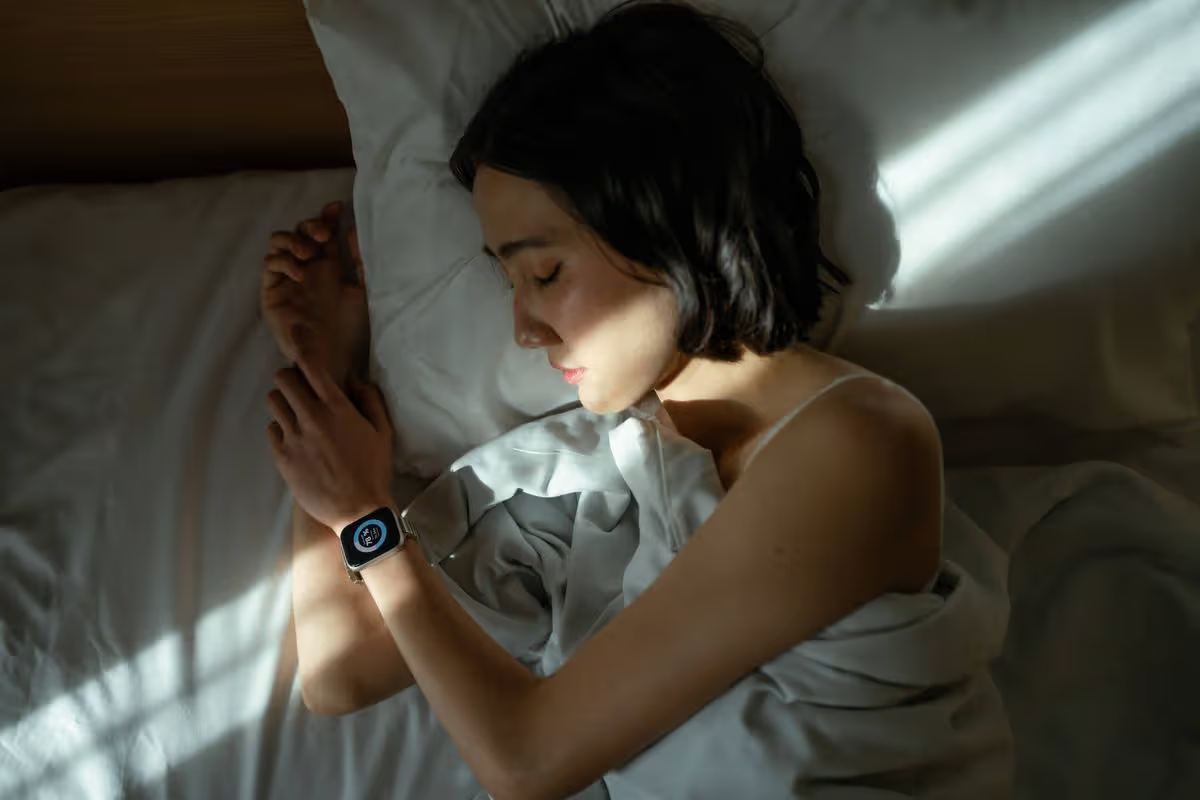
People should visit their GP if they are worried(Image: whitebalance.space via Getty Images)
The British Red Cross has highlighted something many of us already know: “it can be difficult to sleep in a heatwave”.
However, what fewer people realise is that the amount of sleep you get can influence how your body copes with the heat – and we’re not just talking about your mood.
It explains: “If it’s too hot or too cold, your internal body temperature may be affected, disrupting your ability to fall asleep and stay asleep. This is important as getting good-quality sleep during a heatwave helps your body recover, stay cool, and maintain overall physical and mental health.
For people in vulnerable groups, getting sufficient rest is especially important. Good-quality rest can help support the immune system, improve energy levels, promote heart health, and help the body manage the additional strain caused by extreme heat.
How can I sleep during a heatwave?
Discussing how to sleep during a heatwave and periods of high temperatures, it is important to aim for the recommended seven to nine hours of sleep each night. With temperatures expected to rise across the UK this week, this is a timely reminder of the importance of prioritising rest during hot weather.
It explains: “According to the NHS, an adult usually needs between seven to nine hours sleep a night. However, this will change depending on age, health and personal circumstances. Teenagers, children and babies need more sleep than others.”
In fact, a lack of sleep, even for one night, can impact your health and may negatively affect your:
immune system
alertness and reaction times
attention
cognitive ability
mood changes and irritability
anxiety and depression
quality of life and social activity
The NHS notes that there are signs and symptoms of sleep problems you should keep an eye out for.
You may:
find it difficult to fall asleep
lie awake for long periods at night
wake up several times during the night
wake up early and be unable to get back to sleep
feel down or have a lower mood
have difficulty concentrating
be more irritable than usual
It adds: “Longer-term sleep problems can affect our relationships and social life, and leave us feeling tired all the time, eating more and not able to do daily tasks.”
If you regularly struggle to sleep and find it difficult to get at least seven hours of rest, consider speaking to your GP. This is particularly important if poor sleep is starting to affect your daily life and wellbeing.
Did you know that cooling your feet may help you feel cooler overall? The Red Cross suggests placing a pair of socks in the fridge during the day and putting them on before bed to create a refreshing cooling effect as you wind down for the night.
You can read more about how to stay cool and sleep during a heatwave here.
The Money Saving Expert says one thing that is ‘totally free’ could save holidaymakers loads of money
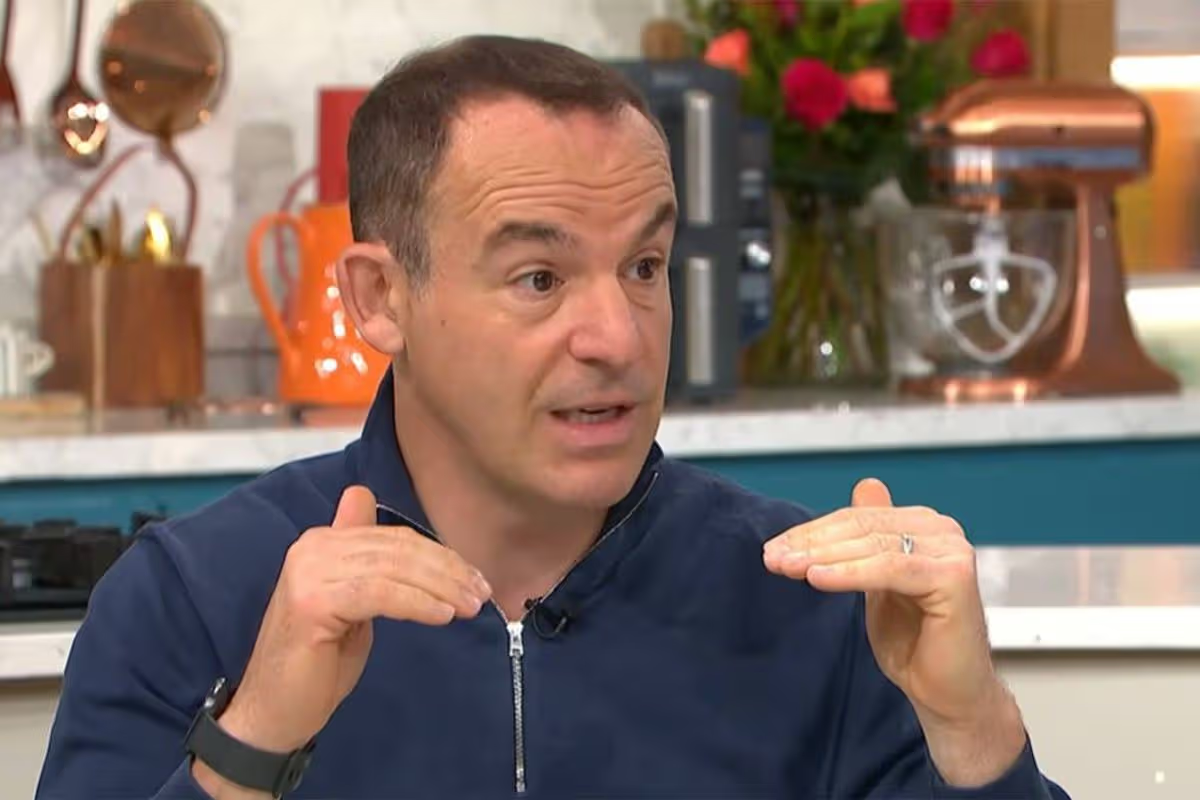
Martin Lewis has shared his holiday advice (file image)(Image: ITV)
Heading to Europe this summer? Before you jet off, Money Saving Expert says there’s one free card every holidaymaker should have in their wallet – and it could save them money.
The Money Saving Expert has issued a reminder to travellers to get the UK Global Health Insurance Card (GHIC) just in case of an emergency. It can help you access state healthcare in many European countries, however he stresses this shouldn’t be a replacement for travel insurance.
Speaking as part of the National Money Assembly held at St Charles 6th Form College in London, Lewis urged anyone heading to the continent to apply for a GHIC before leaving the UK. He explained how the card is “totally free”, and warned people to never pay a third-party website to apply for one.
“First of all, if you’re going to Europe, you always get your GHIC card, your Global Health Insurance Card,” he said. “That’s totally free, never pay for it. This gives you treatment in a state-run hospital in a European Union country or equivalent at the same cost as a local – so if it’s free for them, it’s free for you.
“If you need to go and see the doctor when you’re abroad and local people don’t pay for the GP, you can go to the GP with your GHIC card. So you should make sure that you have one of those.”
The NHS says the GHIC covers medically necessary healthcare during a temporary stay in the EU and certain other countries. However, it does not cover private medical treatment, mountain rescue, being flown back to the UK or costs such as lost or stolen belongings.
For that reason, Martin Lewis says holidaymakers should never rely on the GHIC alone. He urged travellers to arrange travel insurance as soon as they book a holiday, explaining that it protects them both before and during their trip.
Content cannot be displayed without consent
He said basic travel insurance for a young person spending a week in Europe can often cost as little as £7 to £10. Martin added: “If you can afford the holiday, you can afford travel insurance.”
His long-standing rule is to buy travel insurance “ASAB” – as soon as you book. That’s because policies can protect you if illness, injury or another unforeseen event forces you to cancel your holiday before you even leave home.
Applications for a GHIC are free through the official NHS website, and most people can apply online. Anyone using a website that charges a fee is paying for a service they do not need, as the card itself is available free of charge.
A man claims an airline tried to pressure him into giving up his business class seat so a parent could sit with their child – but he refused to play along and the youngster ended up sitting alone
He refused to swap plane seats (stock)(Image: Getty Images)
But after a flight attendant noticed a child sitting alone in economy while their parent was in business class, they reportedly made it their mission to reunite the pair. Taking to Reddit, he said: “I was asked to move from a row of two so a parent and child could sit together, and I don’t feel guilty for declining, no matter how much the flight attendant and the parent tried to guilt me.
“I wasn’t going to take a downgrade to economy. But even if I was asked to change to a seat in the same class, I would refuse. When I have to fly, I choose the seat that I want. Or, in rare cases when there are no assigned seats, I choose the best seat that’s available.”
He argued that parents should pay the extra cost to ensure they are seated with their children, rather than relying on strangers to swap seats at the last minute.
He added: “I’m not moving just because someone else is a parent. If someone is travelling with a small child, they need to plan better.”
The man also criticised the airline’s handling of the situation, claiming staff tried to pressure him into giving up his seat without offering any compensation.
He said: “While I did complain to the airline about 1) being asked to downgrade to economy without a refund or any compensation – I still wouldn’t have moved, but being told I should help without getting a refund was upsetting – and 2) being guilted by the flight attendants because I refused, I don’t expect a response.
“In Canada, the airline is legally required to give a refund if you are downgraded, so being told I wouldn’t be compensated at all if I changed seats was wrong.
“I don’t know what ended up happening, but the seat next to me was empty during the flight and I got to sit alone.
“Just because I’m not a parent doesn’t mean I should have to move. I don’t care if not moving makes me a bad person.”
Commenting on the post, one user said: “I’m surprised you weren’t offered booze by the flight attendant.”
Another added: “Why didn’t they ask the person next to the child to upgrade so the parent could move to economy instead?”
A third wrote: “So the parent booked business class for themselves and economy for the child, hoping they could guilt someone into upgrading the child for free at their own expense. You did the right thing.”
Home Bargains shoppers can improve their packing technique with the retailer’s travel set
The travel set could be ideal for the summer holidays (Image: Getty)
Many families are getting their luggage ready for the upcoming holidays. For those who struggle to keep their suitcases tidy, Home Bargains could have just what they need. Known for selling seasonal products, the retailer is stocking travel accessories.
The latest range includes the multipack of Travel Lightweight Travel Cubes. Priced at £4.99, Home Bargains said the set is designed to help customers enjoy “hassle-free packing.” The pack is available to buy online now, with three “lightweight travel cubes” included in each set.
The product description states: “Keep your luggage organised with this simple family three-pack of lightweight travel cubes, featuring durable double zips and breathable mesh panels for easy packing on the go.” The retailer added that the set is “perfect for hassle-free packing on the go.”
Home Bargains sells a range of travel accessories, including the £1.99 Let’s Travel Lightweight Folding Rucksack. The retailer wrote: “The Let’s Travel Lightweight Folding Rucksack is a durable, compact 15-litre bag that folds into its own pocket, with a black design and adjustable straps.”
The description added: “Designed for convenience and versatility, this lightweight folding rucksack is the perfect companion for travel, day trips, and everyday use. Despite its compact design, it offers a surprisingly spacious interior—ideal for carrying your essentials on the go.
“Crafted from durable yet lightweight materials, the rucksack is built to withstand regular use while remaining easy to carry. It features adjustable shoulder straps for comfort and multiple zipped compartments to keep your belongings organised and secure. One of its standout features is its foldable design.
“The bag conveniently packs down into its own compact pocket, making it easy to store in your suitcase, handbag, or luggage when not in use. Simply unfold it whenever you need extra storage space.
“With an approximate 15-litre capacity, it provides ample room for essentials such as clothing, snacks, travel documents, or daily items—without adding bulk or weight.” For £4.99, Home Bargains sells the Travel Adjustable Travel Pillow.
The retailer said: “Stay comfy on the go with this adjustable travel pillow made from soft memory foam, complete with a handy carry bag. Perfect for short trips or long-haul flights, it’s your simple travel essential.”
There’s also the £3.99 Travel Hanging Organiser. The description read: “Stay organised on the go with the Travel Hanging Organiser from the Simple family, featuring 24 mesh pockets and four hooks for versatile storage wherever you are. Compact and practical for hassle-free holidays.”
EXCLUSIVE: After Sarah-Jane Doherty found out she had a brain tumour the size of a golf ball in her brain, she got in touch with loveholidays to cancel a £1,100 upcoming trip – but claims they initially ‘didn’t want to know’
09:02, 11 Jul 2026Updated 09:03, 11 Jul 2026
‘I was misdiagnosed – it took doctors a year to find out what was really wrong’
A young woman who is awaiting brain surgery for a tumour the size of a golf ball watched her mum sob while fighting for her holiday to be refunded after being told she was unfit to fly. Sarah-Jane Doherty, 24, from Doncaster in Yorkshire, was told she had a brain tumour in June 2026 after one year of being misdiagnosed.
She first noticed she was ill in July 2025 when she found herself being overly exhausted, to the point where she could not stand up for long periods of time. Other symptoms included depressive episodes, psychosis, hallucinations, manic episodes, and issues with her mood being up and down, which led professionals to believe she was displaying symptoms of bipolar disorder.
This meant she was put onto anti-psychotic medications which masked what would have been one of her major symptoms, seizures, as an electric shock-type of feeling down her left side. She also suffered issues with her vision before being rushed to A&E after having a severe headache that caused her so much pain that she sobbed on her bed.
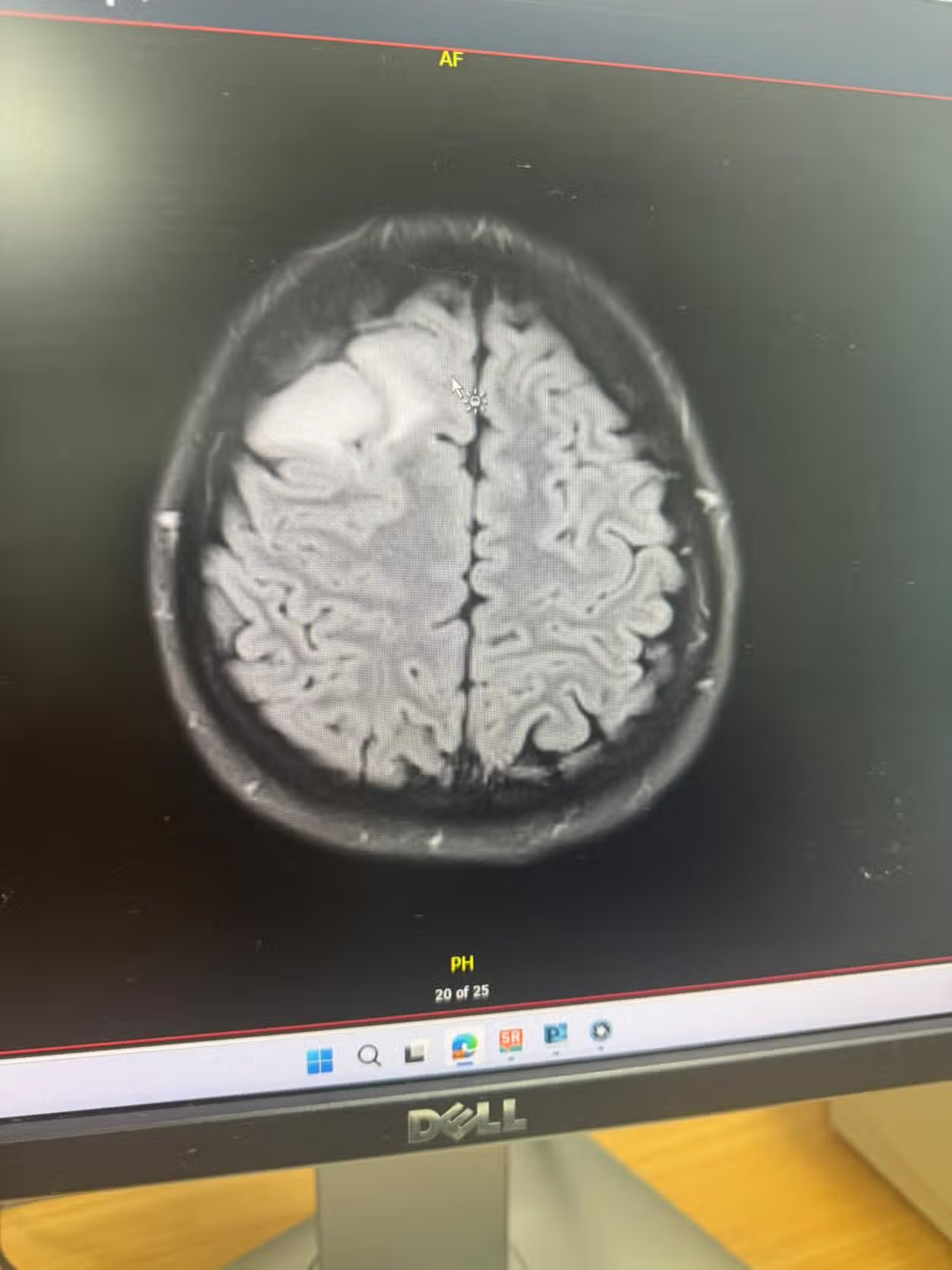
After having a CT scan at Doncaster Royal Infirmary, Sarah-Jane was told doctors thought she had a bleed on her brain, and that she would need to be admitted and have an MRI scan. The next morning, Sarah-Jane’s life changed forever after being told she had a brain tumour around the size of a golf ball.
Medication masked a golf ball-sized brain tumour
She said: “They told me in a bay of four people by myself that I had a brain tumour, and that they think is a glioma. I was just distraught, I was absolutely hysterical.
“I rang my mum straight away, and she came into the hospital. She rang my dad and he came home from work to see me. I feel a bit like I’m in an episode of Grey’s Anatomy, like it just doesn’t feel like it’s actually me.
“I was upset, I was stressed thinking, ‘what if it’s not removable?’ I didn’t know what grade it was. What if it’s spread somewhere else in my body? And I just had so many what-ifs in my mind that I just kept crying.”
Before being diagnosed with a suspected grade 2 glioma, Sarah-Jane had booked a £1,100 holiday to Ayia Napa with one of her friends through loveholidays, with flight bookings through British Airways.
Loveholidays booking dispute after Sarah-Jane’s cancer diagnosis
Sarah-Jane said: “I went to Ayia Napa last year and it was really good so we were set on [going] there. But it was last minute because it’s just finding time for us to be together and book holiday.
“I hadn’t been on holiday this year yet, we just wanted to get away so I’d not really had any annual leave or anything like that.
“Just wanted a break and plus because I would be starting a new training programme in September. I wanted to find a decompress before that.”
The day Sarah-Jane was diagnosed with cancer, she contacted loveholidays to make them aware and asked for a refund of her package. At the same time she realised her yearly travel insurance cover had not renewed as she thought it had.
She said: “The first time that we called they didn’t want to know at all. They didn’t even express empathy or anything like that. And then I got an email just saying I can get £62 back.”
Sarah-Jane then sent two letters from medical professionals, one from a consultant at the hospital, and a second from her GP, which were both rejected by loveholidays due to her first letter being a “statement for fitness for Work (SSP)” and the second being a letter that “outlined that it had been issued to support a travel insurance claim”.
Sarah-Jane’s TikTok video prompts action from loveholidays CEO office
After receiving pushback from loveholidays the 24-year-old made a video about her experience on TikTok, with a member of the CEO office at the company reaching out shortly after.
Sarah-Jane continued: “So it was just calls back and forth. They said you need to get in touch with British Airways. British Airways said it has to all be done through loveholidays.
“I asked them to speak to my mum, I just couldn’t deal with speaking to them. I couldn’t keep hearing no and saying, ‘there’s nothing we can do’.
“Then the person from the CEO office said ‘we wish Sarah the best and stuff’ which just shows that there’s no compassion.”
The company then offered Sarah-Jane a £300 refund, which her mum refused, before offering £600, which they also rejected. The following day, however, the loveholiday’s team confirmed they would offer Sarah-Jane a full refund.
She said: “She spent over eight hours on the phone, backwards and forwards, to loveholidays and British Airways because they just kept sending each other to each other. She started crying on the phone because the way people were speaking to her was just… It’s not what she needed to hear.
“She was unnecessarily sent between two different companies that both didn’t want to know. I think that just shows that more protection is needed in the event of major health diagnoses, because if it wasn’t for the TikTok then nothing would have been done.”
Loveholidays and British Airways issue official statements
A loveholidays spokesperson said: “We are deeply sorry to hear about Sarah’s diagnosis and the difficult circumstances she is facing. We wish her all the very best with her treatment and recovery.
“To support Sarah during this difficult time, we have refunded her in full for her holiday, and we have also explained how she can request a refund for the seat purchase she made directly with her airline.
“While we always do everything we can to support customers in difficult circumstances, as a travel agent we are bound by the cancellation policies of our airline and hotel partners, many of which do not provide refunds when customers are unable to travel due to illness.
“For this reason, we always strongly recommend that customers take out travel insurance to help protect them if unforeseen circumstances prevent them from travelling.”
A spokesperson from British Airways said: “We’re very sorry to hear of our customer’s experience and our teams have been in touch.”
The spokesperson also said that the airline had “resolved this matter”, however Sarah-Jane told us that she has yet to receive the refund or, indeed, any further communication from British Airways customer service.
The carriage also has a kitchen so you can rustle up your evening meals and breakfast.
And then in the other carriage – Penzance – you’ll find a sofa bed, as well as more original seats and tables.
The carriage also has a lounge area with wood flooring and a Smart TV.
Other original features have been kept across the carriages too such as the windows, classic glass sliding doors and even safety signs.
One carriage is called Paddington and the other is called PenzanceCredit: Coolstays.comInside there are still some original features such as tables and chairsCredit: Coolstays.com
And for those who have always had the urge to push a big red button in their life, they can do so by pulling the original red emergency lever.
Outside of the carriage there is a small garden with a fire pit and patio.
There’s even a hot tub for the ultimate relaxation.
And if you really want to amplify your train experience, you can order an afternoon tea to be delivered to you, with scones, jam, cream, cakes and several sandwiches – all served with a big pot of English Breakfast of course.
It costs from £180 per night to stay in the carriage, with a minimum stay of two nights.
One recent visitor said: “Just WOW, just as expected lovely location, great accommodation, friendly owners.
“We had the afternoon tea on arrival – excellent. Will definitely stay again.”
Another visitor added: “Fantastic place to stay, so different and such a tranquil setting, loved the hot tub, plus all the little touches, dressing gowns, slippers, biscuits, chocolates, canned drinks plus fresh milk.”
Stays cost from £180 per nightCredit: Coolstays.comAnd outside on the patio, there is even a hot tubCredit: Coolstays.com
The carriage is also only a five-minute drive from the city of Ely, where you can head to the cathedral or even Oliver Cromwell’s House.
If you want to spend even more time outdoors, head to The Fens where there are a number of walking and cycling trails.
The Which? survey has uncovered plenty of hidden gems to explore this summer, as well as revealing some surprises at the bottom of the rankings including some stylish seaside towns that failed to impress
The winning seaside town grabbed the title for the sixth year in a row(Image: Owen Humphreys/PA Wire)
Nothing beats a day at the seaside. A combination of heatwaves and the school summer holidays means the resorts are likely to be packed over the coming weeks.
That’s why consumer magazine Which? has run a survey on the best and worst seaside destinations, surveying over 5,300 people about their experiences in the past year. It quizzed visitors on everything from the quality of beaches and scenery, to the food and drink on offer, accommodation, tourist attractions, and value for money.
The results have yielded a number of surprises, but the town taking the top spot has remained the same for the sixth year in a row.
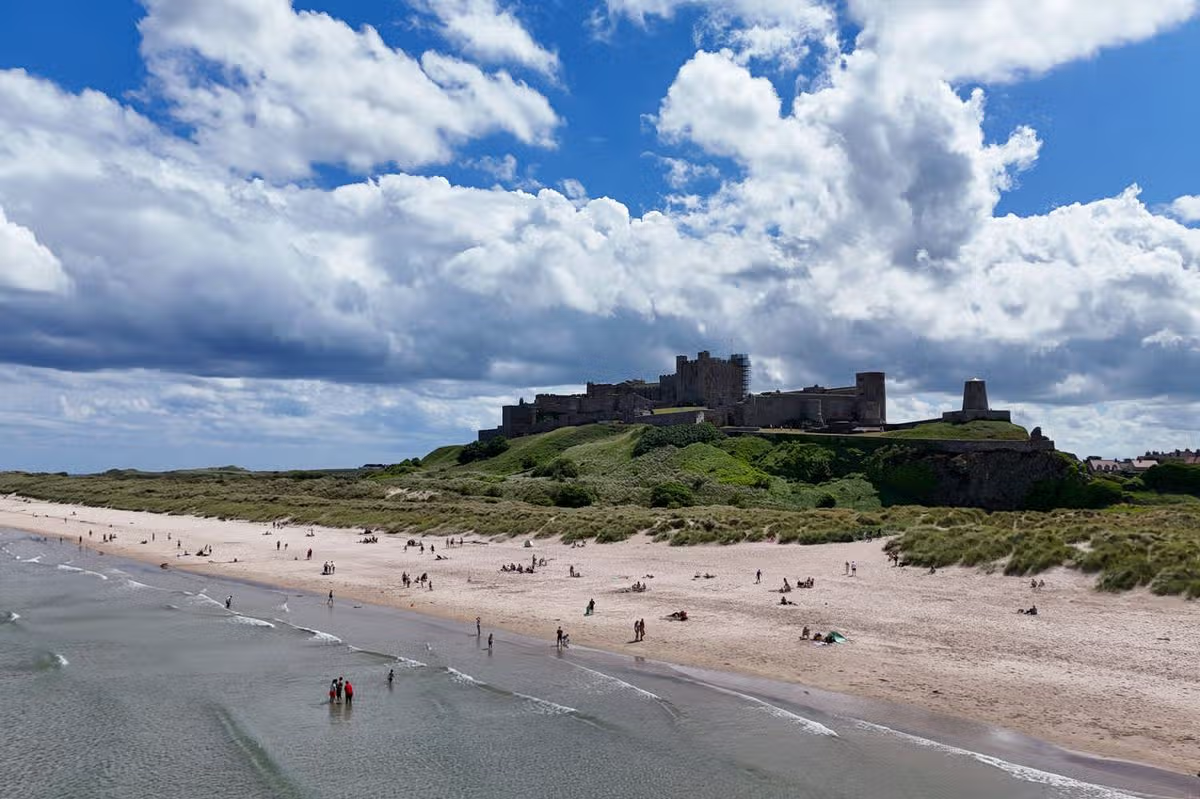
Bamburgh in Northumberland, famous for its vast coastline and beach featuring a castle, yet again came number one with an overall score of 84%. One visitor said: “It’s just gorgeous and is as good now as it was years ago; it’s not been spoiled by commercialisation. What made it successful then has been retained.”
The North East had a strong showing in the rankings, with Tynemouth in Tyne and Wear coming in second at 82%, making it a close competitor for Bamburgh. Its score included five stars for its seafront and food and drink including “wonderful fish and chips” according to one reviewer. Another said: “Tynemouth has a fantastic high street with a range of cafés, restaurants and shops complemented by historic buildings and a fabulous beach.”
Coming in third was St Andrews in Scotland with 81%, and Fife also scored another top ten place with Crail at number five. Known as the home of golf, St Andrews was praised for being a “lovely town with plenty of amenities. It does not feel overcrowded despite having many tourists.”
Many classic seaside towns in Norfolk, Suffolk, and Sussex came in at the bottom of the list, and there were some surprisingly low scores for the gentrified towns of Margate and Newquay, which failed to impress. Margate scored just 53%, its overall percentage brought down by getting one star for peace and quiet, while Newquay in Cornwall scored 55% and got only two stars for value for money.
One visitor said: “Newquay feels like it has seen better days. Apart from the beaches and pubs, it has relatively little to offer a tourist. It perhaps serves better as a base to experience other parts of Cornwall.” Another explained: “There are lovely bits and unlovely bits of Newquay. The beaches are wonderful but the town is a bit shabby and run down.” Its beaches still managed to score four stars in the survey.
Close to the bottom were Great Yarmouth in Norfolk, with 46%, and nearby Lowestoft in Suffolk, with the same score. However, the dubious honour of worst seaside town went to Bognor Regis in West Sussex on the south coast.
Scoring just 41% overall, Bognor got one star for most categories. One visitor said it was: “Lacking investment, slow to supply tourists what they need.”, and another wrote: “The place is run down and feels neglected.”
Rory Boland, Editor of Which? Travel said: “The North East has emerged as this year’s favourite seaside spot, a reflection of its outstanding beaches and the fact that holidays here can be fantastic value for money.
“It also shows that there are special seaside towns in every corner of the UK. From Swanage to Plockton, Southwold to Conwy, you’ll have a great time in many of the country’s lesser-known destinations, and should save some money too.”
Top 30 seaside towns and villages
Bamburgh — 84%
Tynemouth — 82%
St Andrews — 81%
Aldeburgh — 80%
Crail — 80%
Frinton-on-Sea — 80%
Portmeirion — 80%
St Davids — 79%
Bude — 78%
Southwold — 78%
North Berwick — 77%
Plockton — 77%
St Ives — 77%
Swanage — 77%
Lyme Regis — 76%
Lytham St Annes — 76%
Portstewart — 76%
Conwy — 75%
Dornoch — 75%
Filey — 75%
Lynmouth — 75%
Sidmouth — 75%
St Mawes — 75%
Tenby — 75%
Tobermory — 75%
Wells-next-the-Sea — 75%
Whitley Bay — 75%
Broadstairs — 74%
Falmouth — 74%
Llandudno — 74%
Bottom 30 seaside towns and villages
Ilfracombe — 57%
Minehead — 57%
Bridlington — 56%
Cleethorpes — 56%
Fishguard — 56%
Seaton — 56%
Torquay — 56%
Abersoch — 55%
Colwyn Bay — 55%
Morecambe — 55%
Newquay — 55%
Barry Island — 54%
Skegness — 54%
Mablethorpe — 53%
Margate — 53%
Paignton — 53%
Southport — 53%
Herne Bay — 52%
Littlehampton — 51%
New Brighton — 51%
Weston-super-Mare — 50%
Burnham-on-Sea — 48%
Clacton-on-Sea — 48%
Southend-on-Sea — 47%
Bangor — 46%
Blackpool — 46%
Fleetwood — 46%
Great Yarmouth — 46%
Lowestoft — 46%
Bognor Regis — 41%
Have a story you want to share? Email us at webtravel@reachplc.com
It is easy to see why people love the Northumberland village so much. The centre is quaint and pretty, the beach sandy and impressive, and the castle perfectly preserved and towering
Bamburgh has won, yet again(Image: TimMcGuinness/ChronicleLive)
Has there been a run as dominant as this in the history of British seasides?
Once again, Bamburgh has been named the best coastal town or village the UK has to offer, bringing the run of victory to six in a row in the Which? annual survey.
It is easy to see why people love the Northumberland village so much. The centre is quaint and pretty, the beach sandy and impressive, and the castle perfectly preserved and towering.
In a gushing show, 5,320 Which? readers handed Bamburgh perfect marks for its seafront, scenery and beach. “It is a wonderful historic village with miles of sand and glorious views,” one happy visitor enthused.
Another said: “Bamburgh Castle, a stunning building, is the core of the village and leads through the sand dunes to an extraordinary beach, which never fails to captivate us.”
And a third agreed: “It’s just gorgeous and is as good now as it was years ago; it’s not been spoiled by commercialisation. What made it successful then has been retained.”
But amid all of the enthusiasm for the settlement of 300 people, not everyone is convinced by its dominance of the Which? survey. In fact, a number of locals are fed up with the limelight that is being cast on Bamburgh.
“I wish they wouldn’t do things like this. All it does is make rich southerners read it and then decide to buy a holiday house there, pushing up house prices and pushing out actual locals,” one irked person wrote online.
Another chimed in: “Peace and quiet?! Not on a sunny summer’s day. The village (it is not a Town) is rammed with vehicles and visitors.”
The gripes are consistent. Back in 2022, when Bamburgh’s reputation as the best of the best was still being forged, resident John Graham shared his frustrations. He said: “When the sun is out the place can be overrun. In the day, you get the ice-cream brigade leaving their rubbish everywhere and in the evenings the drunken louts have their fun.
“On an average morning in the summer, I pick up five or six burnt-out disposable barbecues and half a dozen or so bin bags full of bottles and cans.”
One business owner said it is really sad to see a big increase in litter being dumped in the sand dunes below the castle. They added: “A friend of mine summed up the problem quite well the other day when he said it’s like over-fishing.
“Pubs and hotel owners might be enjoying the money rolling in, but the more people who come here, the more damage is done to the environment.”
I visited last summer and was not overly impressed by what I found. One major issue was the cars. On a hot June day, the stream of traffic on the arterial road that runs through Bamburgh’s centre is relentless. The closest train station is seven miles away in Chathill, and the buses are sporadic, so any hopes of embarking on a relaxing, car-free day trip will prove difficult.
For me, the real issue with Bamburgh is its vibe. Central to the charm of Britain’s great seaside towns is a slightly edgy, salty quality in some way connected to large quantities of sailors. Bamburgh, with its Farrow and Ball doors and memorial benches, has none of this.
The stars of the show in Bamburgh are the beach and the castle. It is undeniable that the combination of the two — how the 1,400-year-old fort hangs above the broad, sandy shore — is magnificent. You won’t find me criticising Bamburgh Castle.
The beach, however, is arguably a little one-note. Once you’ve waded out half a mile to get to a patch of water deep enough to paddle in, you’ll be frozen by a North Sea that rarely swells itself into anything remotely as interesting as what you’d find on the UK’s Atlantic coast.
If you’re in search of a very long beach, Camber Sands near Rye in East Sussex not only enjoys a lot more sunshine — as one of the sunniest places in the country — it also has superior sand dunes, particularly so if you’re a teenager interested in launching yourself off their summits.
Epic food, amazing shows, museums you won’t find anywhere else and a helicopter ride down the famous strip – here’s my ultimate Las Vegas itinerary
Niamh Kirk Features Writer and Octavia Lillywhite Acting beauty and wellness editor
07:00, 11 Jul 2026
This article contains affiliate links, we will receive a commission on any sales we generate from it. Learn more
Neon capital of the world – Las Vegas is a larger than life destination(Image: Getty)
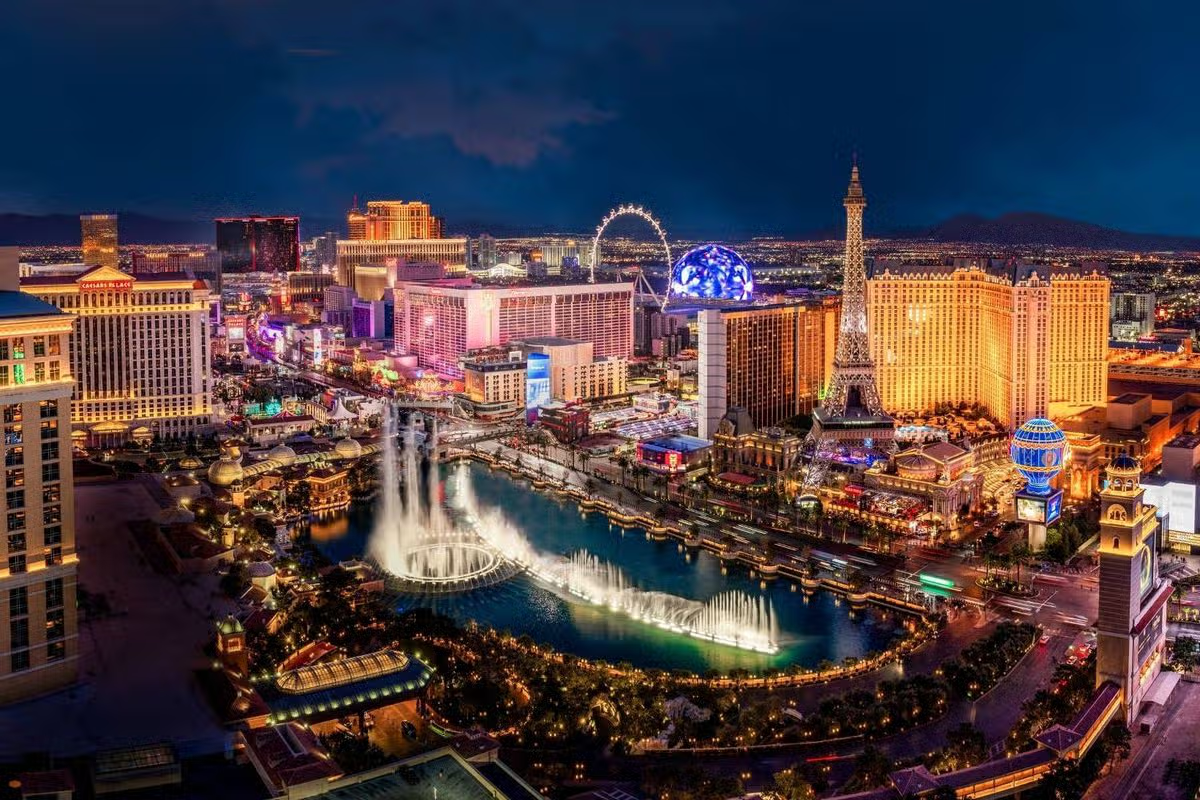
The glitz, the glam, those unforgettable “wow” moments – it’s easy to see why Las Vegas remains the ultimate bucket-list destination. Whether you’re marveling at the neon skyline from 1,000 feet up or walking the Strip to soak in the music and eclectic fashion, this town is a sensory explosion that demands to be experienced at least once.
The home of the famous strip, countless wedding chapels and its own Eiffel Tower and Statue of Liberty, this place almost doesn’t feel real. It’s defined by vintage camp, 24-hour casinos, more buffet restaurants than you can possibly imagine, and high-class dining eateries. Welcome to Vegas, baby.
I arrived via a direct flight from Heathrow, checking into The Cosmopolitan of Las Vegas. Arguably the best-positioned hotel on the Strip, it offers the perfect paradox: you are in the heart of the action, yet the rooms are a sanctuary of total silence.
My suite featured a private balcony overlooking the city’s glowing landmarks and the iconic choreography of the Bellagio fountains. Watching the water dance from my room, the excitement for my desert escape truly set in.
Where to find the best places to eat in Las Vegas
Food is central to the Vegas experience, so first on the agenda once we’d dropped our bags was brunch at Alexxa’s – situated on the Strip, right in the thick of the action. In the spirit of a true American getaway, we went straight for the classics, ordering a spread of fried chicken and waffles, fluffy American-style pancakes and steak and eggs.
Of course, no Vegas brunch is complete without a little “hair of the dog.” I washed it all down with the most gargantuan Bloody Mary I’ve ever seen, complete with a slice of bacon. Nothing here is small-scale – it was the perfect, over-the-top introduction to the local food scene.
But don’t miss breakfast at the hotel either. The Cosmopolitan‘s Wicked Spoon is a brilliant buffet, with pretty much everything you could possibly think of… I even had a few sushi rolls on the side.
For dinner, we feasted at Mayfair Supper Club inside the Bellagio (yes, the one from Ocean’s Eleven), where live dancers perform around diners as they tuck into all-American classics.
But the highlight was dinner at Vanderpump Paris – and as a Real Housewives of Beverly Hills fan, it was the dream. Lisa Vanderpump knows how to put together a menu. Curated with Parisian themes embellished with Vegas flair and eclectic cocktails, I felt like a total superstar eating here.
Experiences you must not miss while you’re there
I could have filled the days just walking up and down the infamous strip. With buskers, magicians, show girls (and show boys) I spotted the Eiffel Tower, the Luxor pyramid, the Empire State Building, the Paris globe and the iconic casinos – which were already getting busy, despite it being barely two in the afternoon.
But there are so many bucket list experiences to try, too. We started with an ice hockey Game: Golden Knights vs. Edmonton Oilers (tickets around £55). I was pretty much an ice hockey novice, but that doesn’t matter a jot. American sport is packed with entertainment, and it didn’t take me long to soak up the atmosphere and join in with the chants. Why can’t this be a thing in the UK?
As if that wasn’t enough excitement for one night, we then ticked off another iconic moment – a helicopter ride down the Strip.
Now, I’m no daredevil (I was slightly apprehensive), but as soon as we got up into the sky it was magical. We were given a 10-minute tour by our pilot, taking off at 10:30pm, just as Vegas was truly coming alive for the night.
We also checked out The Sphere, which I’d like to call an immersive cinema but it’s so much more than that. It’s a one of a kind, multi-sensory show with holograms and AI. With tickets for the classic The Wizard of Oz, I was expecting a cinematic experience. In fact, it was fully immersive, to the point it made us feel like we were actually in the storm with Dorothy.
Another recommendation is the Neon Sign Museum. The bright lights of the signs are what makes Vegas so magical, so what happens to the signs when they are no longer in use? They go to the Neon Sign Museum – and it’s nearly as impressive as the Strip itself.
I loved seeing the ‘old’ Vegas here, bringing history to light – literally – and for the best experience I recommend the illuminated evening tours (from £26) but there are also self-guided daytime options (from £19).
Finally, in dedication to the stars of all the shows, we couldn’t miss a stop at the Show Girl Museum – the home of all the iconic showgirl costumes. But what makes this museum one of a kind? It’s inside Grant Philipo’s house – a former showgirl costume designer. Tickets are $33 each and Grant has nearly 300 mannequins in his home as he led us around the impressive pad, paying homage to the glamour and beauty of Las Vegas.
And if the brunch and dinner performances weren’t enough, we topped the day off by going to watch Jennifer Lopez perform at her residency in The Colosseum theatre – part of Caesar’s Palace Hotel.
You’d think with all that I wouldn’t have found time to have a little flutter on the tables, but this is a 24-hour city – there’s always time to squeeze something else in, if you can just stay awake.
Stays at he Cosmopolitan of Las Vegas start at $189.35 / approx. £142 per night including resort fee and taxes. Stays in the Terrace One Bedroom Suites with Fountain View starts from $246.49 / approx. £185 per night, including resort fee and taxes.
Vegas Views helicopter tour by Maverick Helicopters start at £75 per person, see maverickhelicopter.com
Virgin Atlantic offers daily direct flights to Las Vegas from London Heathrow starting from £512*, and seasonal flights from Manchester Airport. *Prices subject to change.
I’m riding a salt-coloured horse through the Dragonja valley, deep in the green hills of Slovenian Istria. Electric-blue dragonflies zip over the river as we gallop past olive trees and vineyards. The landscape rises steeply in a series of grassy terraces, and at the top of the hill we rein in the sweating horses to take in the view. Far below, the huge grids of solinas (salt pans), glittery and light-blue in the early morning light, look strange and somehow elegant against the wild, expansive sea beyond.
The Istrian peninsula is the largest in the Adriatic Sea, with 90% of it in Croatia and smaller portions in Slovenia and Italy. I’ve come to explore the Slovenian section. At just 29 miles (47km), the country’s coastline is one of the shortest in Europe, from the Italian city of Trieste down to the Croatian border, but it boasts colourful seaside towns, hilltop villages and an emerging gastronomy scene.
We ride back to Kmetija Medljan, the farm where I’m staying, in time for breakfast – served at long communal tables under the shade of a mulberry tree – with freshly laid eggs, strawberries from the garden and homemade bread. The Kodarin family bought the land in the 1980s and today the farm is run by Marina, Marko and their son Tilen. There are simple rooms near the stables, rustic apartments in the old farmhouse and plans to build treehouses in the future. For now, it feels much as it must have done 250 years ago. House martins flit through the air hunting insects, chickens cluck in the orchard, and horses graze among the olive trees. The coast is just a 10-minute drive away, but the peace of the Istrian hills is what guests come for – along with Marina’s delicious home cooking (her take on traditional Slovenian noodle soup is a favourite).
Not far from the farm is the Saltworks Museum, where I learn more about the Sečovlje salt pans I glimpsed from the hillside. Housed in three former salt-workers’ houses, the museum has interactive displays and abandoned pans you can visit. Salt is still harvested by hand in the working part of the salt pans, historian Prof Flavio Bonin explains as we walk around large crystallisation basins where sea water once ran through a series of shallow pools with the salt becoming increasingly concentrated. Istrian salt is prized for its quality and whiteness, the solni cvet, or salt flower, having a delicate, slightly sweet taste.
There’s a stark beauty to this empty landscape, and the solinas are also an important haven for wildlife. A black-winged stilt with bright orange legs stalks slowly through the pans in search of lunch, and snow-white egrets rise up from the marshlands into the azure sky as I watch.
My next stop is medieval Piran, a little way up the coast towards Italy, perhaps the most beautiful of Slovenia’s seaside towns. The Venetian Republic ruled Istria for five centuries and took one-fifth of the salt produced in tax, while a seventh went to Piran, which became wealthy as a result. The Venetian influence is everywhere, from the elegant painted houses in shades of lemon, orange and coral, to the Italian-inspired culinary scene. Rostelin is known for its handmade pasta, though for me a dish of delicate raw scallops, served with thin slices of black truffle, steals the show.
Moon Bay in Strunjan landscape park is one of Slovenia’s loveliest beaches. Photograph: Giuseppe Anello/Alamy
I’m staying in Benečanka Casa Veneziana in Tartini Square, which is the finest example of Venetian gothic architecture in the town. Legend has it that, in the 15th century, a Venetian merchant fell in love with a beautiful girl from Piran and built her the prettiest house in the city. But their relationship scandalised the town’s gossips, since he had a family back in Venice. So he defiantly had the inscription Lasa pur dir (let them talk) engraved on the front wall.
The water surrounding Piran is a protected marine area, and in the afternoon I go scuba diving, hoping to spot sea horses, which live in the sea grass meadows close to shore. The shallow reef runs close to the promenade, so I can walk straight into the water with my instructor. The sea horses prove elusive, but there is plenty of other marine life, including a jaunty, hairy crab wearing a bright orange marine sponge as a cap. There are no sandy beaches here, but people swim from the rocky waterfront, which has ladders down into the water.
Ljubljanska Ulica, an arty street in Izola. Photograph: Laura Coffey
From Piran, it’s an easy walk along the coastal path to Izola, 7 miles to the east. The trail cuts through the Strunjan landscape park and passes one of Slovenia’s loveliest beaches, Moon Bay. I stop for lunch on the breezy terrace of the Belvedere hotel. Located at the top of a hill, it offers excellent seafood and sweeping views to Trieste.
Izola manages to be laid-back and vibrant at the same time. From my base at the supremely comfortable DeGrassi hotel, I stroll to Ljubljanska Ulica, a street bursting with artists’ workshops, pink and peach houses and colourful bunting. Music is playing, old men drink coffee and kids play in the street.
Along from here is a tiny museum, where cultural heritage expert Gregor Benčina tells me the history of the place. Izola was originally a poor fishing village. “Piran was our mortal enemy,” Gregor says solemnly. “In medieval times, there was a law that when an Izolan died, they could leave their wealth to anyone local or international, but it was forbidden to leave anything to people from Piran.”
The next day, local guide Matic Horvat takes me on an ebike tour of the surrounding countryside. We zip effortlessly through the Šavrini hills, planted with vines, as well as olive, cherry, fig and almond trees, and swoop down the endless descent from Gažon to Koper, which makes me whoop like a child. In the port city, we stop for a zingy orange and ginger ice-cream, before a leisurely return to Izola.
At Medljan farm, breakfast is served at communal tables under the shade of trees
As the heat of the afternoon cools into one of those long, languid evenings, I stop by Manzioli wine bar, on the main square, for an aperitivo of fresh rosé from local winemaker Zaro. The bar’s owner, Marko, explains that his family’s vineyards are located very close to the water and the salt informs the minerality, which gives this wine its depth of flavour. Across the square, Bujol is one of superstar Slovene chef Ana Roš’s favourite places to eat on the coast, and I feast on plump mussels and fritto misto (mixed fry) with a killer homemade tabasco sauce.
The next day, teenagers belt out punk rock from the bandstand, and Istrian food producers set out their wares at the Pier of Tastes food market, which is held monthly from April to October (except in July and August).
Keen to learn more about the local produce and award-winning wines, I join Nina Golob, from the tourist board, to visit some artisan producers in nearby villages (she’s launching her own tours soon). Tilen Praprotnik is dedicated to reviving indigenous grape varieties and produces an extraordinary malvasia wine, while at Korenika & Moškon we taste different varieties of olive oil, including belica, which has a powerful kick. We finish up at Gostilna Korte, where Lejla, the owner, brings out dish after dish of delights, including steak served with a wild asparagus sauce that has me practically licking the plate.
On my final morning in Izola, I wake early. The sea is warm as I slip in and swim past the lighthouse as the sun rises higher. Summertime on the Slovenian Riviera – it may not be big, but it hits the spot for a different kind of seaside break.
Laura Coffey’s book, Enchanted Islands: Travels Through Myth & Magic, Love & Loss, is published by Summersdale at £10.99. To support the Guardian, order your copy atguardianbookshop.com. Delivery charges may apply
If you’re looking for a crowd-free holiday, this island is the perfect option.
03:14, 11 Jul 2026Updated 08:18, 11 Jul 2026
This beautiful island is in the UK(Image: Daily Record)
As the summer holidays approach, the excitement of planning a getaway often comes with the puzzle of picking the perfect spot. Luckily, being in Britain puts the diverse beauty of Europe just a stone’s throw away.
Navigating the sheer volume of stunning destinations on our doorstep can be quite the task. For those who crave peace and quiet, the secret is finding those hidden gems tucked away from the main tourist paths that still promise a sun-soaked, relaxing experience. To help you out, the travel pros at Solmar Villas analysed over 160 locations to pinpoint the absolute best spots for a crowd-free break.
Whilst most of the destinations are overseas, there is one place right here in the UK that made the list.
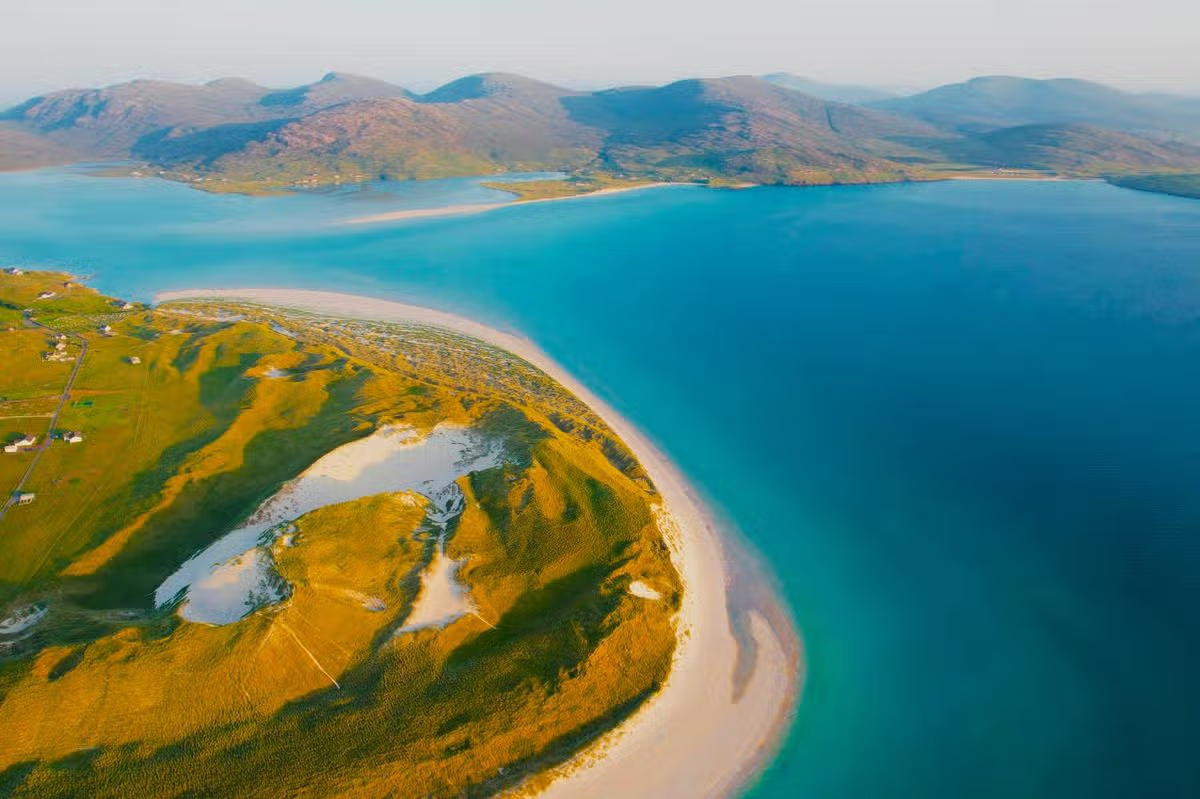
The Isle of Harris in Scotland came in at sixth place on the list of the quietest places to enjoy a summer holiday. Harris is the southern island of Harris and Lewis which are in Scotland’s Outer Hebrides.
Despite being the third biggest island on the British Isles, Harris and Lewis has a population of just 20,500 people. Known for its white-sand beaches, dramatic landscapes and low population density, it remains one of the UK’s quietest summer staycation escapes.
One of the most famous sights on the island is Luskentyre Beach which is frequently mentioned on lists of the most beautiful beaches in the world.
This long stretch of bright white sand looks as if it’s been plucked straight from the Caribbean — although the water is likely a little bit colder.
Luskentyre Beach sits on the north coast of South Harris and is protected by the island of Taransay, which you can see across the water.
Taking a wander down the white sand you can spot dolphins, seals, otters, eagles and sometimes even whales. The Isle of Harris is a gorgeous spot for a relaxed summer holiday without having to bother about airport security or expensive international flights.
To get to the island, ferries go daily from the Scottish mainland and you can take a car with you too so you can better explore what the island has to offer.
Sharon Bradbury, a travel expert at Solmar Villas , said: “Many families don’t have the option of travelling outside the school holidays, so choosing the right destination becomes even more important.
“What stands out from this research is that some of the world’s most enjoyable summer destinations don’t necessarily attract the biggest crowds. For families looking to make the most of their summer break, it can be worth looking beyond the usual hotspots.
“A quieter destination often means a more relaxed experience from the moment you arrive.”
The 20 quietest places to visit on school holidays
A money-saving expert has shared a simple two-minute Ryanair middle seat hack that could help you avoid being assigned the worst seats on your flight – and it won’t cost you a penny
A Ryanair passenger has shared how he’s avoided the middle seat through random seat allocation (stock image)(Image: Getty Images)
A savvy deals expert has revealed his top trick for dodging extra seat selection charges on a Ryanair flight with a straightforward two-minute technique. Ryanair is frequently praised by travellers for its budget-friendly fares, as tickets to destinations across Europe can often be snapped up for less than €20.
However, costs can rapidly mount up if you’re not clued up on Ryanair’s various add-on charges, such as bringing additional baggage on board, or opting to check in at the airport rather than online. The fee that frustrates passengers the most, though, is forking out anywhere between €4.50 to €36.50 just to select a specific seat. Prices differ depending on which seat you’re after, and whether you’re keen on extra legroom.
And while the airline recently updated its Family Seating Policy following an investigation by the Competition and Markets Authority (CMA), you’ll still need to pay if you wish to sit alongside someone aged over 11 — or simply want to steer clear of a middle seat.
Now, money-saving guru Jordon Cox, who has featured on ITV’s This Morning and is widely known online as The Coupon King, has unveiled a nifty two-minute hack that stops the airline from lumping you with a middle seat — without spending a single penny.
“Never sit in the middle seat again with this easy trick!” Jordon said at the start of his TikTok video. “There is a way to avoid those awful middle seats on Ryanair without paying for it.”
Content cannot be displayed without consent
For the initial stage of his trick, Jordon advises checking the seating chart to identify which seats remain unoccupied roughly five to six hours before the flight’s scheduled departure, and pinpointing those you’d rather avoid. For most travellers, these could be middle seats, or ones close to the toilets.
After you’ve identified your least desirable seats, Jordon proposes opening a second tab on your laptop or phone and creating a fresh booking on the same flight you’re travelling on.
Next, enter some fictitious passenger names, matching the number of seats you’re trying to dodge, and assign the imaginary travellers to those particular seats.
“These seats are then frozen for a few minutes while they’re in someone else’s basket,” Jordon explained.
He noted in the post’s caption: “Hopefully the only ones left are the aisle and the window.”
Following this, simply return to your original booking and opt for random seat allocation. “And boom, you’ve avoided the middle seat for free!” Jordon declared.
Folk quickly flocked to the comments section to express their views on the trick, with one person noting: “Only works if the flight isn’t full.”
Another remarked: “They’ll cop on to this and we won’t be able to do it.”
A cabin crew instructor has revealed where he would choose to sit on the plane
16:40, 10 Jul 2026Updated 16:40, 10 Jul 2026
Some seats offer plane passengers more legroom (stock photo)(Image: Getty)
A cabin crew member has shared what he claims is the best seat on the plane. The regular flyer dished out advice for passengers looking to make the most of their journey. Wizz Air Cabin Crew Instructor Gabriel Randone shared his favourite seat. He also revealed the best seat for ‘free perks’ – if you’re lucky enough to get it.
Talking to the Mirror, Gabriel shared his preferred seat as a passenger. He said: “I absolutely love the front. Row one gives you extra legroom. There are some perks to staying there as well.
“For example, you would be the first one to disembark. Sometimes you’ll be the first one to come in as well. You have a reserved overhead compartment for yourself.
“So, yeah, row one is absolutely amazing. But to be honest, when I do travel, and I can choose to book a seat, I will book any window seat.
“I just love staring outside during the flight and enjoying the views.” According to Wizz Air’s website, front-row seats are classified as premium seats.
However, it’s not the only good option. Other premium seats include upfront seats at the front of the aircraft and extra-legroom seats in the emergency exit rows. Usually, passengers need to pay more for these seats, but sometimes they strike it lucky and get asked to move to emergency exit rows.
Gabriel explained that customers sometimes get ‘upgraded’ to these seats and get to enjoy the perks for free when the flight is not fully booked. “Sometimes, because the flights might not be fully booked, there would be no one close to the emergency exits”, Gabriel said.
“So what we need to do is to select someone who we call an ABP, an able-bodied person, and select them and to move them close to the emergency exits so that they can help out in case of an emergency”. He added: “Now, statistically, emergencies are quite rare, so that is basically an upgrade.”
Not everyone is eligible for these unofficial ‘upgrades’. The Wizz Air website explains: “For safety purposes, regulations prohibit passengers under 16 years old, overweight passengers, individuals with special needs, expectant mothers, and those travelling with infants (under 2 years old) from occupying Extra Legroom or Front Row seats.”
As Gabriel explained, these policies are implemented to ensure the safety of everyone onboard. In case of an emergency evacuation, passengers seated in the emergency rows will be instructed to open the doors. Any passengers seated in these rows will be briefed at the beginning of their flight.
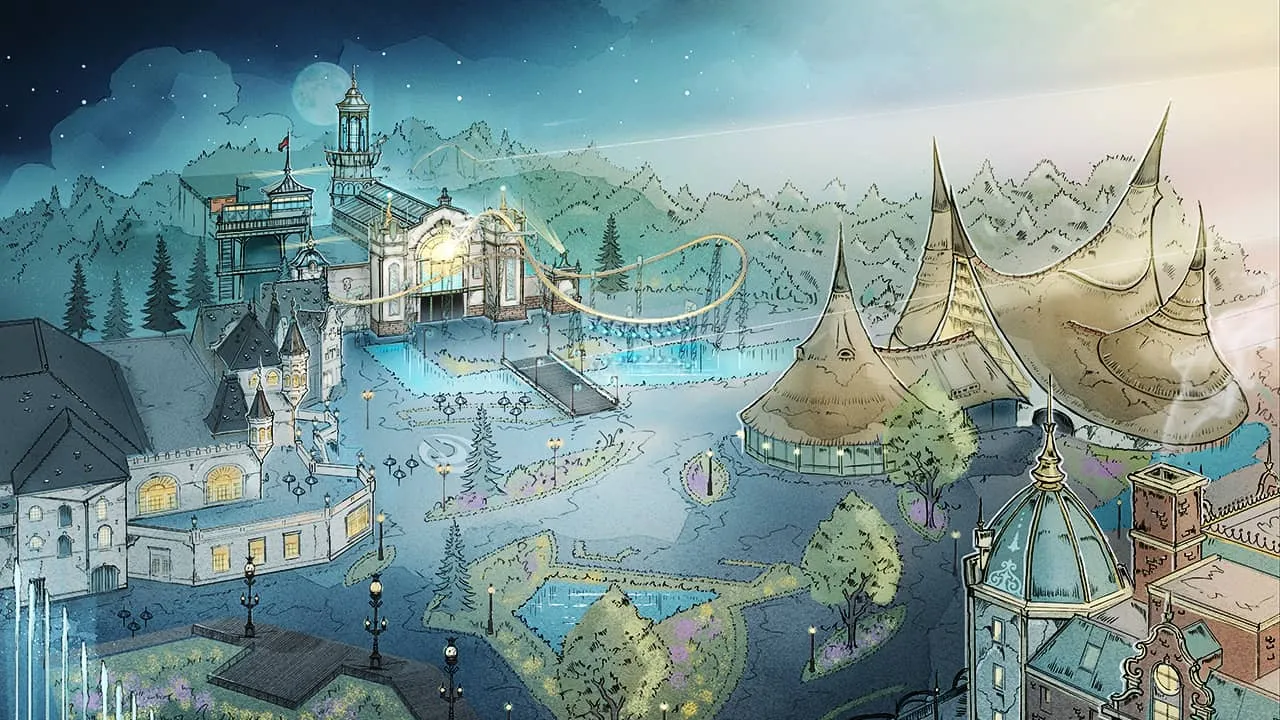
A EUROPEAN theme park that mums have compared to Disneyland is getting a new ride that will be the first of its kind at the park.
Efteling theme park in Kaatsheuvel, Netherlands is getting a €50million (£42.6million) new ride in 2029.
Efteling theme park has announced it will open a new rollercoasterCredit: Efteling
The new ride, called Missie Luminar, is themed around the challenge of travelling at the speed of light and will be the theme park’s first suspended launch rollercoaster.
This means all the seats will hang beneath the track.
Sign up for the Travel newsletter
Thank you!
The rollercoaster will start by launching passengers out of a ‘science lab,’ before they go on a mission with a goal of breaking through the light barrier.
The ride will last two minutes, with parts of the ride focusing on science experiments and discoveries from the 19th century.
Fons Jurgens, CEO of Efteling, said: “Missie Luminar will be a fantastic addition to our collection of thrill rides. This type of roller coaster is new to Efteling.
“The top speed reaches 80 km/h, but it may feel even faster. All of this creates excitement from start to finish.
“It will be a truly unique and distinctive experience, even more so because of its location.
“Missie Luminar completes the Island of the Five Senses themed area.
The ride will be the park’s first suspended launch coasterCredit: Efteling
“Visitors will see the vehicles racing past as soon as they enter Efteling, setting the tone for their day at the park.
“We still have a little while to wait, but we’re looking forward to seeing our visitors’ first reactions.”
Guests have previously compared Efteling to Disneyland, with one saying: “If you are travelling to the Netherlands, we highly encourage visiting Efteling. I prefer it now to Disney because of the variety it offers.”
Another said it was a “European twist” on Disneyland.
SEASIDE towns – the UK sure does have a fair few, but with so many stunning spots, it is easy for others to be forgotten about or even bashed.
This is the case for Bognor Regis this week, as it has been named the WORST seaside town in the UK.
Bognor Regis was recently named the worst seaside town in the UK – but I don’t agreeCredit: Alamy
If you really want to see some of the UK’s best beaches, check out some of our best £9.50 Holidays.
In research carried out by Which?, towns were voted on by more than 5,300 people focusing on a range of criteria including the quality of the beaches, scenery, food and drink, accommodation, tourist attractions, shopping and value for money.
Sign up for the Travel newsletter
Thank you!
Bognor Regis scored just 41 per cent overall, achieving one star in all categories, bar one.
Having visited just last week, and on a number of occasions before, I think (or rather, I know) they’ve got it wrong.
Bognor Regis is actually the sunniest spot in the UK – and what is not to love about that?
Tie this in with its long-stretching beach with miles of sea views and it’s hard not to love.
The main beach (known as East Beach) is unbeatable. While it is a pebble beach, there is plenty of space to put up a deck chair and enjoy the waves crashing on the stones.
Though, if you do want to go on a walk but avoid the pebbles, running along the beach is a nice flat esplanade.
You can head to the long pebble beach and soak up the sunshineCredit: Cyann FieldingAlong the beach you will find Luna Hut Sauna and the pierCredit: Cyann Fielding
Sat at the edge of the beach you will also find a number of things to do.
For example, you can head to the pier which is full of arcade machines and instead of your usual keyring prizes, you can bag a Jellycat (I tried and failed to get the seagull).
Also along the beach you will find Luna Hut Sauna Bognor Regis where you can head straight from the sea to the sauna and then sit looking out at the ocean.
You can choose between a half-an-hour session and an hour-and-a-half session, costing from £8 per person.
You can also pick up an ice cream for a couple of quid, or fish and chips for under a tenner – prices that are getting harder to find these days.
Alternatively, you can head to West Beach, which is west of the town centre and is normally less crowded.
For something free to do, visit the Bognor Regis Museum which has lots of exhibits on local history, fossils, vintage cameras and even an extensive radio collection.
And would it even be a proper trip to Bognor Regis if you didn’t go to Butlin’s?
You can head to Butlin’s even just for a dayCredit: Cyann FieldingAt the park, there is a huge swimming complex as well as soft play for little onesCredit: Cyann Fielding
Butlin’s Bognor Regis is home to a wealth of things to do – with the most recent experience being a claw machine which claimed the Guinness World Record title for the biggest in the world.
For little ones, there are soft play areas, fairground rides and a tonne of shows.
Bigger kids can also enjoy PlayXperience, can only be found at Butlin’s Bognor Regis and boasts escape rooms, crazy golf, VR games and more.
On my last visit, I spent hours jumping between the different experiences, getting competitive at interactive darts and losing the crazy golf game along the way.
Another great attraction at the resort is the Splash Waterworld, which has a splash area with tipping buckets for little ones and slides for older kids.
What makes this all even better is that you don’t have to stay to enjoy all of this – you could just book a day ticket.
These tickets will be 15 per cent cheaper from July 17 until September 1 as well, thanks to the Government’s Great British Summer Savings scheme.
It takes less than two hours to reach Bognor Regis on the train from LondonCredit: GettyAnd while there make sure to check out the station bookshopCredit: Refer to source
As for the town centre, which admittedly it is a little run down in places and with a horde of chain stores, there are still some gems including places for a good bite to eat and others for a cheap pint.
For example, you could go to The Hatter’s Inn, a Wetherspoons pub with pints of Worthington’s creamflow for just £1.99.
And for a bite to eat, check out Bonito Lounge which serves a range of feel-good, comfort dishes including fish and chips with a drink for £12.09 and bottomless coffee refills for £1.89.
The building is covered in plants and it has some lovely outdoor seating to ensure you’re making the most of being in the sunniest spot in the UK.
It doesn’t take long to reach the seaside destination from London either – it takes under two hours on the train, direct.
And if you do happen to be coming by train, make sure to head into the station’s bookshop for a tonne of cheap, second hand books.
So ignore the ‘stats’ that say its the worst town – it has all the charm of seaside towns gone by, with cheap prices, great pubs, and fantastic holiday parks to boot.
DUA Lipa has been all over the world – according to her Instagram posts, from Italy to France, and of course, Albania.
In fact Dua’s love of the Albanian Riviera has resulted in soaring popularity – and for good reason.
Ksamil on the Albanian Riviera has Maldives-looking beachesCredit: Alamy
It might not be the first place that comes to your mind when looking for a holiday – but parts of Albania have incredible beaches with beautiful seaside towns.
And it’s getting more popular too with statistics revealing that tourists visiting Albania nearly doubled from 6.4million in 2019 to 11.7million in 2024.
Sign up for the Travel newsletter
Thank you!
It’s no surprise that certain destinations have become more popular – some look like they belong in the Maldives.
One spot that has featured on Dua Lipa‘s social media is the pretty village Ksamil which is made up of four islands.
The village is in the south of Albania very close to Corfu – in fact on a clear day you can see across to the island.
Ksamil has white-sand beaches, turquoise waters, and offshore islands that you can swim to from the mainland.
There are more private rentals than big hotels in Ksamil – and on Booking.com they start from as little as £51 per night in September.
The easiest way to get to Ksamil is actually to fly into Corfu Airport and take a quick ferry crossing across.
Another spot that Dua Lipa has highlighted is the seaside village, Dhermi, which in the summertime is called a ‘bustling seaside paradise’.
It has pebbled beaches, beach clubs, a historic old town, and one of the biggest attractions is Pirates’ Cave.
Albania is much easier to visit from the UK – and fights take as little as three hoursCredit: AlamyDua Lipa has been highlighting Albania on social mediaCredit: Alamy
Visitors can explore the natural sea cave by boat – and as the name suggests, it was used by pirates.
They used the sea cave to store stolen goods and hide their ships in the 17th and 18th centuries.
For larger resort towns, Sarandë is a popular one, and known as the ‘city’ of the Riviera.
It’s surrounded by the blue waters of the Ionian Sea with seafood restaurants and cheap beer, with pints as little as £1.30.
Popular coastal spots in the area include Pulebardha Beach which visitors have described as “magnificent”.
Another is Plazhi Pasqyra or Mirror Beach, which one local called their “favourite beach in the area” with “beautiful underwater reefs.”
Lots of beaches on the Riviera have white sand and bright blue watersCredit: AlamyPints in certain spots are under £2Credit: Alamy
It’s cheap too, for example, a room at Kalemi’s Beachside Hotel in Sarandë can be book for as little as £45 per night in September.
Albania is hot during the summer months too with July and August temperatures reaching highs of 38C.
Getting there doesn’t take long either, flights from the UK to Tirana are just over three hours.
Or if you fancy getting to Ksamil, a flight to Corfu takes three hours 10-minutes followed by an hour sailing.
BOOKING something to look forward to doesn’t have to mean breaking the bank.
In fact, you can jet off to trendy European capitals or unwind at a spa hotel in the British countryside for less than you’d think.
From European holidays to mystery breaks and spa staycations, here’s Wowcher’s top travel dealsCredit: Getty
We’ve rounded up a selection of the best Wowcher travel deals on offer right now, starting from £89 with options both in the UK and abroad.
Whether you want to hop on the Eurostar to the canals of Amsterdam, pop over to Paris for a 4* getaway, or take the ultimate £99 gamble on a mystery holiday, we’ve got you covered.
Sign up for the Travel newsletter
Thank you!
Wowcher Mystery Holiday – £99
With a Wowcher mystery holiday you could land anywhere from Disneyland Paris to MiamiCredit: Alamy
This famous travel gamble lands you return flights and a minimum 3-star hotel stay for £99pp, with 100+ worldwide destinations in the mix.
While you could bag a sunny beach escape to Ibiza or a chic city break to Rome, the real jackpot is landing a long-haul trip to New York, Bali or the Maldives.
Other destinations where you could land a mystery holiday include Disneyland Paris, Thailand and Miami.
Book a £99 Wowcher Mystery Holiday
4* Peak District Countryside Spa Stay – £89
Take a relaxing trip to the Peak District and stay in a spa hotel for £89ppCredit: Alamy
Escape to the spectacular hills of the Peak District with this four-star spa staycation for two.
Situated on the edge of Staffordshire, this bargain break at The Three Horseshoes Country Inn includes a cosy overnight stay, a cooked breakfast, and access to the spa.
Nearvy, explore rock formations at The Roaches, go paddle-boarding at Rudyard Lake, or visit Alton Towers Resort, which is a 20-minute drive away.
Book a 4* Peak District Countryside Spa Stay from £89pp
4* Paris Getaway with Hotel, Flights, and Breakfast – £119
Stay two nights in Paris with return flights included for £119ppCredit: Getty
Whisk yourself away to Paris on a stylish, four-star city break from £119pp which includes return flights from your pick of nine UK airports, plus a two night stay and a delicious daily breakfast to fuel your sightseeing.
Stay at the sleek 4* Best Western Plus Suitcase Paris – La Défense, which has beautifully-designed contemporary rooms and a relaxing lounge bar.
Ticking off landmarks like the Eiffel Tower and the Louvre is totally effortless too, thanks to a metro station just 300 meters from the hotel door with direct routes straight into the city centre.
Book a two-night city break to Paris from £119
Northampton Stay at Staverton Park Hotel & Golf Club – £104
This package Wowcher deal at a country club includes a two-course dinner, breakfast and a glass of wineCredit: Wowcher
Treat yourself to a countryside retreat with a stay at the Staverton Park Hotel & Golf Club, starting from just£104 for two people which includes delicious two-course dinner or buffet access, a complimentary glass of wine each, and a full breakfast.
You’ll also enjoy unlimited access to the on-site gym and sauna, plus handy perks like a 2pm early check-in and an 11am late check-out to stretch your relaxation time.
Golf fans can even tee off on the PGA European-tour standard course, while the hotel sits just a short drive away from the beautiful Daventry Country Park and the iconic Silverstone Circuit.
Book a stay at Staverton Park Hotel & Golf Club for £104
Amsterdam Eurostar Break with Hotel Stay – £139
Book a two-night city break in Amsterdam for £139 with WowcherCredit: Getty
Hop aboard the Eurostar for a seamless two-night city break to Amsterdam, with return Eurostar tickets plus a stay at the modern ibis Amsterdam City West, which places you close to the vibrant Westerpark.
Getting around the capital will be easy, too, with a metro station a five-minute stroll from the hotel door.
From there, a quick ride drops you right at Amsterdam Centraal, putting bucket-list attractions like the Van Gogh Museum and beautiful canal cruises within easy reach.
The UK is home to some of the most beautiful beaches in the world, but if you’re looking for a quieter spot to soak up the sun, these twin villages are hidden gems well worth a visit
These quiet twin villages are a beautiful part of the country(Image: ianwool via Getty Images)
When the sun makes an appearance across the UK, the nation boasts plenty of remarkable attractions, from beautiful white sandy shores kissed by sparkling waters to quaint cobblestone lanes and idyllic villages. The summer break provides the perfect opportunity to explore some of Britain’s most popular seaside towns and countryside escapes.
Whether you’re drawn to the enduring allure of the Cotswolds or the seaside appeal of places like Weymouth, Scarborough, St Ives or Whitby, one thing is certain – these well-loved destinations will be packed with visitors.
However, if you’d prefer to enjoy the splendour of the British Isles without wrestling through crowds of tourists and social media fans, there’s a secret gem in Cornwall that offers breathtaking views, tranquil shores and a completely peaceful environment.
Nestled on the South-east coastline, the twin villages of Cawsand and Kingsand have everything you could want for a fantastic staycation and more.
Located on the less busy Rame Peninsula, often called Cornwall’s ‘forgotten corner’, these delightful villages are officially recognised as areas of outstanding natural beauty (AONB).
This pristine part of the country serves as a natural sanctuary that somehow avoids the summer throngs.
The scenic villages have maintained their peaceful atmosphere despite being encircled by bustling tourist hotspots. These delightful fishing settlements, with their winding lanes and sandy beaches, remain a well-kept secret away from the usual tourist trail.
And they’re steeped in heritage that encompasses the ancestral homes of Mount Edgcumbe, Port Eliot, and Antony House. Intriguingly, these two villages once formed part of different counties, renowned for their historic rivalry and as a refuge for smugglers.
Today, Cawsand Bay provides a sanctuary for families, walkers, swimmers, and kayakers, with its east-facing shingle-and-sand shore peppered with rock pools and inlets. Its sheltered waters make it a safe and stunning spot for all.
Tourists coming to enjoy the beaches are always close to authentic Cornish cuisine, with local pubs and shops just moments from the sandy expanse.
Kingsand, the adjacent village, is a concealed gem with cottage-lined lanes that rival the charm of Polperro and Port Isaac. Retaining much of its genuine character, Kingsand was formerly a flourishing fishing village, and traces of the old pilchard cellars and boat stores can still be discovered along the seafront.
This peaceful part of the peninsula, nestled beneath the coastal path, is a popular spot for walkers and birdwatchers, stretching all the way to the striking Rame Head, topped with a 14th-century chapel. Seafood lovers should make a beeline for the Devonport Inn in Kingsand, while The Bay Bar in Cawsand provides a peaceful setting for a drink, boasting a view that simply can’t be beaten.
The trip to these twin villages is a delightful experience in itself. As you wind your way for miles alongside sand and sea, the breathtaking views across Whitsand Bay offer a glimpse of the spectacular scenery that awaits.