The advent of the 1990s saw big political changes in Niger. The decade brought multi-party democracy for the first time, but also saw rebellions by the Tuareg and Toubou people, leading to conflict in the northern part of the country. The rebels formed two umbrella organisations called the Organisation of Armed Resistance (Organisation de Résistance Armée, ORA), and the Coordinated Armed resistance (Coordination de Résistance Armée, CRA).
A truce was agreed in 1994, which led to talks between the government and rebels. This eventually led to the signing of the April 24th 1995 Peace Accord, negotiated in Ouagadougou, the capital of Burkina Faso.
While it wasn’t until 1998 that the last armed group signed up to the accord and sporadic fighting continued until 1999, the accord was seen as marking the end of the fighting and the end of the rebellion.
The final peace agreement was celebrated with a “Flame of Peace” in which weapons were burned in Agadez on September 25th 2000.
It has been a public holiday since 1995. Businesses and government offices will be closed.
MORE than three decades after London helped launch her career, Tori Amos is back in the city, headlining the Royal Albert Hall for a tenth time.
The US singer is chatty and upbeat despite staying up until 5am, still riding the high of her gig the night before.
Sign up for the Showbiz newsletter
Thank you!
Tori Amos is back with her 18th album, In Dragon TimesCredit: Kasia Wozniak.Tori playing London’s Albert Hall on TuesdayCredit: Getty
With her striking red hair falling in waves and her vivid green eye make-up, Maryland-raised Tori, who has called Cornwall home since the late Nineties, looks every inch the star.
“London was the place that gave me my big exposure explosion,” she says.
“It really did shake my life up. And here we are again.
“London broke Silent All These Years in the autumn of 1991, and then launched [debut album] Little Earthquakes, which rippled out to the States and the rest of the world.
“America really discovered me through London, and then the UK did, too. From there, it just kept rippling outwards.”
On her forthcoming 18th album, In Times Of Dragons, Amos turns political dread, female resistance and personal storytelling into something unique and mythic.
She says: “I’m very reclusive at home and I’m not very sociable there so when I’m on tour I go from this insular life, where I do a lot of reading, music and writing, and step into this much more exposed life.”
The contrast between Amos’s secluded home life and her role as a performer feeds directly into an album shaped by both personal reflection and political unease.
The record is a response to the current political climate in America because, as a songwriter “a lot of my work is documenting time,” she tells me.
“That’s what I did with Little Earthquakes, which followed my time of failure after [her synth band] Y Kant Tori Read when I had to go back to play piano bars.
“I have a history of documenting things — my miscarriage in 1998 and that journey, then my 2002 album Scarlet’s Walk which documented 9/11 when I actually wrote some of it on the tour bus.”
The idea for In Times Of Dragons came through the muses — otherworldly entities — that Amos believes bring her music.
She has spoken widely about these guiding forces, which she says have inspired her songwriting since childhood.
And last year she published children’s book Tori And The Muses, all about them.
She says: “This message came to me through the muses that I needed to document America at this pivotal time in history.
“And I had to personalise this.
“It came to me a year ago that I needed to be me in the story and be closely connected to one of these people, and what that would look like, because they are personally affecting us.
“I had to turn the volume on that to create this narrative, whatever turning into a dragon looks like.”
The album follows the story of Tori trapped in a world run by billionaire tech moguls and lizard dragons, who threaten democracy through corporate greed and authoritarianism.
Amos says: “Jane Mayer writes about the genesis of this in Dark Money, which is one of the most important books people need to read if they’re asking, ‘How did we get here?’.
“This has been going on since the Seventies.
“As Mayer documents, figures like the Koch brothers — and I use that as an umbrella term for a wider movement — helped shape it, along with super PACs [organisations that spend millions supporting political candidates] and all the rest.
“It seems there was an understanding that progressive teaching in universities had to be excavated, cut back and penetrated by a very tight right-wing philosophy that is now upon us.
“And I’m not just talking about Republicans and Democrats. I’m talking about tyranny versus democracy.
“If you had asked me about this even around the Scarlet’s Walk era, I was already going after it through that record, and then through [2007 album] American Doll Posse during the Bush-Cheney administration with the wars, the manipulation, all of that.
“Then there was a period of relief, when a different, more inclusive philosophy came in, whatever your politics are.
“For me, it’s about the philosophy.
“As a songwriter, I’ve been tracking that through my career.
“On this record, I had to take a personal journey and look at the effects of what this very small cabal of men is doing — and there are women involved too, we can’t get confused about that.
“There’s Cambridge Analytica, the involvements of the Mercers, Rebekah Mercer [the right-wing US heiress and political donor] and all those interconnections.”
The album’s story sees Amos’s character flee and reunite with her daughter.
This part is played by her real-life daughter Natashya, who co-wrote tracks Veins, Strawberry Moon and Stronger Together — the latter of which she also sings backing vocals on, and is one of the most emotional songs on the record.
“She was in DC at the time, in law school, and she graduates in a few weeks,” says Amos proudly.
“She’s going into criminal law and really had her finger on the pulse.
“On a daily basis she’s seeing things that the wider public probably isn’t, unless you’re a political journalist.
Tori in a shoot for the new album. An actress portrays her daughter, who co-wrote three songs and sings backing vocalsCredit: Unknown
“We’re so inundated that the little freedoms being quietly taken away can be missed.
“Criminal law is her calling.
“So, writing these songs with her, with her understanding of what’s happening in the field she’s chosen, and her exposure to the shock of what is being torn to pieces, was hugely important.
“She says we are past constitutional crisis and what’s going on is absolutely shocking.”
The final song, written last- minute for the album, is Ode To Minnesota — a response to the deaths caused by ICE agents there.
She says: “Heinous, atrocious crimes are being committed and so this is the world of the record.”
Amos, 62, has a long history of addressing America in song, and In Times Of Dragons continues that while exploring wider patterns of male power.
It’s also a reminder of her role as a feminist icon and the influence she’s had on artists such as Lady Gaga, Florence Welch and St Vincent (real name Annie Clark).
“Annie’s one of my dear friends,” she says of St Vincent.
“She’s fabulous. We have a giggle and I’m thrilled for her, for her art, and for the way she’s balancing motherhood so beautifully.
“It’s lovely to see people who came to my shows when they were younger.
“She’s talked to me about Choirgirl [Tori’s 1988 album From The Choirgirl Hotel] and what it meant to her when she first heard it, and we’ve had laughs about that.
“And it’s the same with the guys too.
“I’m off to an event later and the guy doing the Q&A used to stand by the stage door as a teenage gay kid.
“To see these people grow up, and to still be able to bask in their creativity and development, is a beautiful thing to witness.”
But while Amos is moved by the artists and fans who have grown up with her work, she is hesitant to define her own feminist legacy.
She says: “It’s not for me to say, that’s more for other people to decide.
“Believe it or not, I’m a bit introverted about that.
“What I think I’ve tried to do, and what I have done, is there for those who know it.
“What’s important to remember is that there was no social media then.
“When people ask, ‘Was it easier back then?’, well, in some ways no, and in others yes.
“We did have a music business with a few women in record companies, though only a few in executive positions.
“One or two could balls their way through, but you really had to.
“And if you didn’t have that tenacity in the Nineties — especially to get played on radio — it was tough.
“At an alternative station in the States, they might add two women out of 64 slots, and the other 62 would be men.
“I’ve spoken about that with some of my contemporaries over the years, Alanis [Morissette] being one of them, and it was not a good feeling — knowing that talented women with very good records were simply not being added to the station.
“And touring took money.
“That’s why I never had tour support.
“In the early days, I went out with just a piano, my tour manager and a sound guy. That was it.
“We kept the costs down, and luckily the shows sold out, because the Press had really got behind me.”
Today, Amos points to Dolly Parton as proof that women can keep evolving, performing and owning the stage on their own terms as they get older.
“She is fantastic and she’s aware we are a different generation that played this game and played it well,” says Amos.
“There are women who are still playing the game beautifully, and they still have the physicality and the health to do it.
“I used to have a three-and-a-half octave range when I was doing those one-woman shows.
“But with the change of life — becoming a dragon, if that’s the menopause analogy — you adapt or you collapse.
“For me, it wasn’t a crisis in the way it has been for some women we’ve read about in the Press, and I have huge empathy for that.
“But vocally, I did have to make changes.
“I didn’t want to alter the top lines of songs with those very high, wide-ranging melodies, so on the last tour I simply didn’t play them.
“Then I thought, ‘No, that isn’t what I want.
“I want the whole catalogue available to me as a storyteller’.
“So, I decided to bring in backing singers who could hit those notes.
“It was a strategic, compositional choice.
“I didn’t want to be in a position where I could only perform 40 per cent of my catalogue because of range.
Tori at the 1992 MTV Video Music Awards in Los AngelesCredit: Getty
“And we’re having a blast.
“They’re amazing singers.
“I’ve gained four notes at the lower end and I feel like I’m down there rocking with Nick Cave, but that’s the trade-off.
“I gained more on the lower end, while recognising that if I want to play those songs, you can only transpose them down so far before they lose their essence.
“I have so much respect for Nick Cave.
“I used to run into him in the early Nineties.
“His work has always been a beacon of beauty and darkness — expansive work that makes you think.”
Like Cave, Amos remains restlessly creative, and she is already thinking about where to go next.
“After something as demanding as this, I’m doing a prequel to children’s book Tori And The Muses — that will be out next year,” she says.
“Her journey as a little girl with her muses.
“It’s due next April — and there may be music to go with it too.”
In Times Of Dragons is out on May 1.
Tori Amos’ In Times Of Dragons is out on May 1Credit: Kasia Wozniak.
WASHINGTON — Reporters assigned to travel aboard Air Force Two were told to prepare for an early morning departure on Tuesday for Islamabad until an unexplained delay — followed by a detour by Vice President JD Vance to the White House — revealed clues that something was wrong.
Iranian diplomats had not yet responded to U.S. proposals intended to form the basis of a new round of talks. Some were questioning whether they would attend at all. Had he departed as planned, Vance risked a humiliation, spending hours flying to Pakistan only to be stood up on arrival.
A crisis meeting at the White House led President Trump to announce an indefinite extension to a ceasefire deadline that had been set as a pressure tactic. Now, unable to bring the Iranians to heel, that pressure was suddenly off.
It was an early lesson for Vance in the many ways high-stakes diplomacy can veer off-course.
“There are obvious risks for Vance,” said Chester Crocker, who served as an assistant secretary of State in the Reagan administration, “being associated with failure or with a dubious deal.”
Trump’s aides are clear on the stakes in negotiations with Iran over its nuclear program and an end to the war. Control of the Strait of Hormuz could determine global oil prices for years. Any final deal will shape whether Americans ultimately conclude the fight was worth it — and could sway the outcome of the midterm elections.
But for America’s lead negotiator, the stakes are also personal.
Vance, a diplomatic novice, has found himself at the helm of an effort rife with political risk that has stymied seasoned diplomats ahead of an anticipated run for president.
You’re reading the L.A. Times Politics newsletter
George Skelton and Michael Wilner cover the insights, legislation, players and politics you need to know. In your inbox Monday and Thursday mornings.
By continuing, you agree to our Terms of Service, which include arbitration and a class action waiver. You agree that we and our third-party vendors may collect and use your information, including through cookies, pixels and similar technologies, for the purposes set forth in our Privacy Policy such as personalizing your experience and ads.
The potential payoff is substantial, placing Vance at the center of an international stage with the power to end a historically unpopular war.
But he also may be forced to attach his name to a nuclear deal that provides Tehran access to billions of dollars in sanctions relief, in exchange for limits on its nuclear work that will ultimately expire over time, under conditional monitoring access for international inspectors — an agreement with striking echoes to a 2015 nuclear deal negotiated by a Democratic administration that was disparaged by his party for over a decade.
Vance is negotiating not on his own terms, but on behalf of a mercurial president whose decisions will ultimately determine whether an agreement can be reached. And the Iranians know that Trump’s days in office are numbered, with Vance, a war skeptic, possibly in line to succeed him.
One U.S. official familiar with the negotiations said the vice president is “a pragmatist,” realistic about the prospects of a deal.
“What he has to gain is an image that he can operate effectively on the world stage on a fraught issue. Even if he will give credit to the president, he will be seen as capable of resolving really hard, security-related problems,” said Dennis Ross, a veteran diplomat on the Israeli-Palestinian conflict who served in the George H.W. Bush, Clinton and Obama administrations. “What he has to lose is that he was given the role and did not succeed.”
Failure could raise doubts about his statecraft. But even success at the negotiating table could result in an agreement that turns off Republican voters he may need in a 2028 presidential bid.
“Vance is put in an impossible position,” said Arne Westad, a professor of history at Yale.
“Any deal with the current Iranian regime will be seen as problematic by many Republicans,” Westad said. “If he fails to secure a deal, he will be attacked by those who want an end to the U.S. war — and be seen as ineffective by the president.”
Reputation ‘on the line’
Trump has publicly acknowledged that Vance, a Marine Corps veteran who has consistently opposed U.S. military engagements in the Middle East, had reservations over launching the Iran war in the first place. “He was, I would say, philosophically a little bit different than me,” the president told reporters in March. “I think he was maybe less enthusiastic.”
For that reason, according to Iranian state media reports, Vance was seen by Tehran as their preferred interlocutor in negotiations. Iranian officials expressed gratitude when, during fevered talks ahead of the initial announcement of a ceasefire, they learned that Steve Witkoff, the president’s roving negotiator, had recommended that the vice president be included in the delegation — an exceptional gesture that marked Washington’s highest-level engagement with the Islamic Republic in history.
Republican strategists said Vance’s participation is a demonstration that Trump trusts him, an essential trait for any future Republican presidential nominee and aspiring heir to the MAGA movement.
“It’s rare that a vice president has been put in the position of directly negotiating with a foreign adversary,” said Terry Nelson, a longtime Republican media strategist. “We are engaging a very senior political leader in negotiations with a country that has killed U.S. soldiers and sown chaos in the region. I do think it’s an indication of our resolution and seriousness.”
Whit Ayres, a veteran Republican pollster who has consulted Republican senators and governors for more than three decades, said the vice president’s appointment as lead negotiator “elevates Vance as Trump’s heir-apparent even more than before.”
“Whether that becomes a plus or a minus depends on the outcome of the negotiations,” Ayres added, “and Trump’s ultimate standing with the Republican electorate, both of which are unknowns.”
Talks are currently deadlocked over long-standing demands from Tehran that its leadership has held since the early 2000s, when previously undisclosed nuclear activities first triggered international alarm over Iran’s expanding program.
Iran has periodically accepted temporary limits on its nuclear work — pausing uranium enrichment during talks and, under the 2015 deal, committing to a prolonged cap on enrichment at levels beyond any clear civilian need. But it has always insisted on a “right to enrich” on its own soil, rejecting U.S. attempts to permanently end the program as a foreign attempt to thwart Iran’s scientific progress.
Returning from the first round of ceasefire negotiations, Vance dismissed that position, articulated to him in Islamabad by the speaker of Iran’s Parliament.
“He said, ‘We refuse to give up the right to enrichment,’” Vance said. “And I thought to myself, you know what, my wife has the right to skydive, but she doesn’t jump out of an airplane, because she and I have an agreement that she’s not going to do that, because I don’t want my wife jumping out of an airplane.”
Echoes of a broken deal
The 2015 deal known as the Joint Comprehensive Plan of Action — negotiated by veteran, nonpolitical U.S. diplomats and nuclear scientists over two years of near-constant negotiations — removed roughly 98% of Iran’s nuclear stockpile from the country, while keeping the country’s nuclear infrastructure largely in place, save for the decommissioning of a heavy-water plutonium reactor that could have provided Tehran with a second path to a nuclear bomb.
Under the agreement, Iran consented to limit its use of advanced centrifuges for 10 years, and to restrict uranium enrichment to below weapons-grade levels for 15 years. Inspectors from the U.N.’s International Atomic Energy Agency were granted unprecedented access to monitor the program, though some of these enhanced inspection measures were set to expire after roughly two decades.
In exchange, Iran regained access to tens of billions of dollars of its frozen assets, and settled a long-standing legal dispute with Washington that led the Obama administration to transfer $400 million in cash to Tehran. The episode prompted scandal on the political right, which accused Democrats of fueling terrorism through the funding of Iran’s proxy militias.
Now, after just two weeks of negotiations, the Trump administration is already acknowledging that a final deal with Iran would rely on a familiar formula: temporary caps on Iran’s nuclear work in exchange for substantial sanctions relief. Trump withdrew from the JCPOA in 2018.
Iran comes to the talks with added leverage today, able and willing to disrupt the flow of 20% of the world’s energy through the Strait of Hormuz. And the United States is negotiating alone, without its former partners in the “P5+1” — Russia, China, France, the United Kingdom and Germany — at its side.
Anna Kelly, principal deputy press secretary at the White House, told The Times that “after Democrats like Joe Biden and Barack Hussein Obama weakened our country on the world stage, President Trump has effectively restored American strength with the help of Vice President Vance, who is doing a great job leading the United States in negotiations with Iran.”
“The president and his entire national security team have an incredible track record in making good deals for our country, and the American people can rest assured that the United States will not enter any agreement that does not put our national security interests first,” Kelly said.
Matt Gorman, a longtime Republican strategist and chief communications officer at Targeted Victory, said the JCPOA was viewed particularly critically because it “was negotiated in peacetime.”
“Vance would essentially be ending a war, if successful, and that allows him to make a very different argument,” Gorman said.
The vice president is currently polling as the front-runner for the 2028 Republican presidential nomination, ahead of Marco Rubio, who — despite serving as Trump’s secretary of State and national security advisor — is not directly involved in the Iran talks.
Vance’s role at the negotiating table could help position him as a peacemaker, Crocker noted, distinguishing him from advocates of the war entering the presidential primaries.
But Vance “has been tasked by a president incapable of staying on message, with limited stores of credibility with adversaries as well as allies and a disregard for the complexities of the issues,” said Barbara Bodine, former U.S. ambassador to Yemen. “His task? A credible end to the war without clear objectives.”
“At best, this will be a faux-gilded JCPOA 2.0. Victory will be declared to no applause. On the line is not just Vance’s own reputation, but a demerit in his run for the 2028 presidency,” Bodine added. “The Iran portfolio was no gift.”
Given the climate in Iceland, it might seem strange that summer comes so early to Iceland. However, in Iceland, the old Norse calendar was in use by the first settlers to Iceland in the 9th century and it divided the year into only two seasons, vetur (winter) and (sumar) summer.
The first day of summer was traditionally celebrated on the first day of Harpa, the first of the six summer months. It may also be called ‘Girl Day’ or ‘Maiden Day’ as the month of Harpa was associated with Girls.
If it doesn’t feel like summer in Iceland in mid-April, don’t worry too much – a local tradition is that if the temperature on the night before the First Day of Summer falls below zero degrees centigrade, then it will be a long and warm summer.
While it is unclear whether the Norse considered the first day of Summer or the first day of Winter to be the start of the year, it is likely that the date in April was the start of the year. This would link with similar traditions of April being the start of the year in other parts of Europe. Ancient Icelanders calculated people’s age by the number of winters they had lived through, a practice that is still upheld in the countryside with horses and other domestic animals.
The first day of Harpa corresponded to April 14th in the modern calendar. The current date for the First Day of Summer was determined by the church as it is technically deemed to be the second Thursday after the Saint’s Day of Pope Leo I (April 11th).
Yom Ha’atzma’ut, Israeli Independence Day, commemorates the declaration of independence of Israel in 1948 and is the official national holiday of the state and the only official non-working day in Israel.
The holiday is celebrated on the fifth day of the Hebrew month of Iyar. The holiday is transferred to the preceding Thursday if 5 Iyar falls on Friday or Saturday.
The Gregorian date for the day on which Israel’s independence was proclaimed is May 14th, 1948 when David ben Gurion publicly read the Proclamation of the Establishment of the State of Israel, and the end of the British Mandate in Israel.
It is also known as Radunitsa orRadonitsaand is a festival amongst many eastern Slavs, though Belarus is the only country where it is a state holiday.
Despite its date being dependent on Easter and it being observed as an Orthodox Christian holiday, the origins of Radunitsa are pagan rather than Christian with its roots based on an ancestor festival.
On Radonitsa, families go to church and then on to the cemetery. At the family tomb, a meal is eaten and any leftovers are offered to dead relatives. In pagan times, families would have left eggs on the graves of the dead, symbolising rebirth.
When Christianity arrived in the region, rather than suppress the older traditions, the church simply absorbed the rituals into Christian festivals. The egg was an easy one as the date of spring for the ancestor worship festival fell close to Easter and the use of the egg as a symbol of rebirth fitted well with the Easter message of resurrection.
Despite honouring and remembering the dead, Radonitsa is a day of celebration not one of mourning. Indeed, in Slavic languages, Radonitsa means ‘Joy Day’.
For disputed reasons, April 20, abbreviated to 420, has become a day to celebrate marijuana; even if this is nothing you mark on your calendar, the collective culture is bound to remind you.
Weed is not what it used to be, which is to say illegal everywhere. (State laws may differ, but the federal government still disapproves.) Stoners are no longer useful as a comedy device, while pot’s countercultural meaning has dissipated as it’s been absorbed into the mainstream. According to the CDC, some 60 million American reported using it in 2022. Snoop Dogg is a beloved media figure (and, somehow, an Olympics commentator). Seth Rogen co-owns a cannabis company, Houseplant, that also sells coffee, furniture and incense. The paper you are reading has published weed-themed gift guides.
Now, Hulu, wholly owned by the Walt Disney Company, is marking the day (Monday) with “4×20: Quick Hits,” a frisky anthology comprising four 20-minute documentaries on pot-related subjects, with family-friendly figure Jimmy Kimmel as an executive producer. It’s less about the drug itself than the arts, crafts and enterprises it has inspired. Given where we are now, it’s not surprising that there’s a historical bent to the films, a look back to earlier times — certainly worse for some of the people profiled, who were targeted by and battled with the law in pursuit of their businesses and dreams — but one they regard with a kind of amused nostalgia.
All the films are affectionate, most are light-hearted and often comical. One, Todd Kapostasy’s “Bong Voyage,” about the rise and fall and rise of artisanal glassblower Jason Harris, is narrated by one of his creations and includes such dumb puns as “fine piece of glass.” Directed by Brent Hodge, “Highly Unlikely” is an entertaining, straightforward reminiscence of the making of “Harold & Kumar Go to White Castle,” though it is less about the stoner themes than how the film broke stereotypes in making two little-known Asian actors, John Cho and Kal Penn, the film’s stars. The adorable “The Legend of Ganjasaurus Rex,” directed by Alex Ross Perry, and nearly the premise for a Christopher Guest movie, recounts an act of community filmmaking in the late ‘80s in pot-growing Humboldt County, wherein locals created a monster movie in a proxy war with the authorities, and its inspirational afterlife.
More serious in tone is Kyle Thrash‘s “High Times,” which looks at the history of the pot-centric magazine, its drug smuggling founder Tom Forçade and his suicide. More compelling perhaps is his friend, Yippie co-founder and lifelong cannabis activist Dana Beal, who frames the film; we see him in the nearly present day on trial for drug trafficking, having been stopped in Idaho with 56 pounds of raw marijuana, and also on the streets of New York leafleting passersby with his daughter to “help us legalize weed worldwide.”
Whether or not cannabis itself interests you, each of these mini-docs is capable of holding your attention for 20 minutes — assuming you’re capable from your end — and, being as brief as they are, may well send you to learn more. (I don’t imagine they will send you to smoke pot if you don’t — they didn’t work on me, anyway — and, who knows, might even make one less inclined.) You might finally watch “Harold & Kumar,” or find Garberville on a map, or look to see how things are going for Beal, or discover whether the same John Holmstrom who once edited High Times is the same person who founded Punk magazine and drew covers for the Ramones’ “Rocket to Russia” and “Road to Ruin” albums. (He is.) “Ganjasaurus Rex,” in its 90-minute full length, is itself online to see, and, for those who celebrate, I don’t suppose there’s a better day to watch it.
Just think of the Democratic debacle that could have occurred.
What if the accusations of sexual misconduct, including alleged rape, had come to light after the gubernatorial candidate had triumphed in the June 2 primary and qualified for the November ballot?
Under California law, it would have been impossible to remove him from the ballot and insert a Democratic replacement.
“It would have been pretty devastating,” notes Assemblywoman Gail Pellerin (D-Santa Cruz), who heads the Assembly Elections Committee.
“It has given us a lot to think about.”
There’s a glaring flaw in California’s election system that should be fixed for the future. But exactly how is trickier than it might seem.
A survey conducted by the independent Public Policy Institute of California just before Swalwell’s accusers went public showed him leading all candidates — Democrats and Republicans — with 18% support among likely voters.
He was closely trailed by Republican Steve Hilton, a former Fox News host, with 17%. Another Republican and a Democrat — Riverside County Sheriff Chad Bianco and billionaire climate activist Tom Steyer respectively — were tied for third at 14% each. Democratic former Orange County Rep. Katie Porter followed at 10%.
You can now toss all those numbers in the trash. But the point is that Swalwell was headed for victory in the primary. His next stop was the governor’s mansion because no Republican has won a statewide race in California in two decades.
The Democratic front-runner was raking in endorsements from interest groups and democratic politicians. He was considered the safest bet in a generally unimpressive field, a regular middle-class guy — and a white male, the only ethnicity and gender that has ever been elected governor in California.
Former state Controller Betty Yee, a Democratic darkhorse candidate for governor, was pretty much on target when she observed after Swalwell’s campaign collapsed:
“The obsession with who looks the part [of governor] almost got us an alleged sexual predator in Sacramento — ignoring the reality we need to actually fix our fraught state.”
But what if the victims of Swalwell’s alleged sexual improprieties — five women at last count — had waited a few more months to go public? And that’s conceivable. After all, they had remained silent for years. Apparently the nightmare of their alleged assailant becoming governor inspired them to talk now.
Although Swalwell quickly dropped out of the race, there’s no way to erase his name from the primary ballot. But at least voters can choose among seven other “major” Democratic contenders.
Presumably no sane person, no matter how partisan, would vote to elect an alleged rapist as governor. But the only other choice would have been a Republican lackey of President Trump. He’d undoubtedly win by default in a landslide.
“If Democrats had been stupid enough to nominate Swalwell, they’d have been stuck with him,” says Tony Quinn, a Republican elections analyst.
“Even dying doesn’t get you off the ballot. You don’t want to be the party nominee? So what, you are.”
No write-in candidacies are allowed in California’s general elections, although they are in the primary. That’s an inexplicable flaw.
“I’ve thought for years there should be a write-in option to deal with such a problem,” says UCLA law professor Rick Hasen, an expert on elections law.
Also, he points out, California’s top-two primary system — which advances only the top two vote-getters regardless of party — “cuts out minor parties from being relevant. You ought to be able to write in a minor party candidate.”
One reason a candidate can’t be removed from the ballot, election officials claim, is that tens of millions ballots have to be printed early enough to mail to every registered voter one month before election day.
Nonsense. In this era of rapidly expanding technology, you’d think that dilemma could be resolved even within snail-paced government bureaucracies. If nothing else, mail out a supplemental ballot just for the governor’s race.
But a bigger question is exactly who would choose the replacement for a departed candidate.
In a presidential election, the party hierarchy — a convention or national committee — would choose another nominee.
But there are no party nominees in California’s top-two open primary system. Parties don’t choose candidates for the November election. Voters regardless of their party do. So, in Swalwell’s case, the Democratic Party alone wouldn’t be entitled to select his substitute — unless the law were changed.
Or, perhaps the No. 3 vote-getter in the primary could automatically be elevated to the general election. We then could wind up with two candidates from the same party. But at least there’d be a better choice than an alleged sexual predator.
“I kind of miss those days” when parties nominated, says Pellerin, who was Santa Cruz County’s chief elections official for 27 years. “It’s something I’ve been thinking about — whether this is the best primary system.”
As I recently wrote, my vote would be to junk the top-two system and return to pre-”reform” party-nominating primaries.
Advocates of the top two primary — including myself — thought it would produce more centrist officeholders. It really hasn’t. It has just caused additional problems — like occasionally sending two candidates of the same party to the November runoff.
Meanwhile, all California voters should be grateful that Swalwell’s accusers courageously went public in April, not August.
You’re reading the L.A. Times Politics newsletter
George Skelton and Michael Wilner cover the insights, legislation, players and politics you need to know. In your inbox Monday and Thursday mornings.
By continuing, you agree to our Terms of Service, which include arbitration and a class action waiver. You agree that we and our third-party vendors may collect and use your information, including through cookies, pixels and similar technologies, for the purposes set forth in our Privacy Policy such as personalizing your experience and ads.
Victor Wembanyama set a new San Antonio record for the most points in an NBA playoff debut as the Spurs outlast Portland.
Published On 20 Apr 202620 Apr 2026
Victor Wembanyama scored 35 points in his postseason debut as the host San Antonio Spurs used a fourth quarter run to create separation in a 111-98 win over the Portland Trail Blazers on Sunday in Game 1 of their Western Conference first-round playoff series.
The Spurs took a 1-0 lead in the best-of-seven series with Game 2 on Tuesday in the Alamo City before switching to Portland for Games 3 and 4.
Recommended Stories
list of 4 itemsend of list
Wembanyama broke Tim Duncan’s franchise record (32 in 1998) for most points in a playoff debut. He led all first-half scorers with 21 points – a league record for most in the first half of an NBA playoff debut going back to 1997, the start of the play-by-play era.
“It’s good to get this one out of the way,” Wembanyama said. “We just tried to do the things we’ve been doing all year and stay solid. There was pressure on us to win the first game, but it wasn’t that much pressure if we just stayed to the plan.”
San Antonio, the second seed in the West, led by 10 at halftime and by 15 after three quarters before all but cementing the win by scoring the first six points of the fourth quarter to go up 93-72.
The seventh-seeded Trail Blazers clawed their way back to within 11 via a 13-3 run capped by Deni Avdija’s dunk with 4:27 to play, but San Antonio held strong down the stretch.
“Something that we learned is that every possession matters,” Scoot Henderson said. “Next game I think we are all gonna be more aggressive defensively. I feel like I could be more aggressive. Defensively I think there could be something more in the tank.”
Stephon Castle and De’Aaron Fox added 17 points apiece for the Spurs, with Devin Vassell scoring 15 and Luke Kornet hitting for 10.
Avdija racked up 30 points and 10 rebounds to lead the Trail Blazers. Henderson scored 18, Robert Williams III had 11, Shaedon Sharpe hit for 10 and Jrue Holiday distributed 11 assists along with nine points.
Wembanyama #1 drives to the basket during the playoff game against Portland [Jesse D. Garrabrant/Getty Images via AFP]
The Spurs jumped to the front in the game’s early moments, building a nine- point lead on Fox’s stepback 3-pointer at the 2:35 mark of the first quarter and jumping out to a 30-21 advantage after 12 minutes of play.
San Antonio stoked the margin to 50-34 when Kornet threw down an alley-oop dunk from Castle with 5:24 to play in the second quarter. Avdija’s three-point play with 2:28 left culled the deficit to seven points before Wembanyama poured in a layup and then a 3-pointer on back-to-back possessions to push the lead back to a dozen points. The Spurs led 59-49 at the break.
“(Wembanyama) has lofty expectations and goals for himself, and being in the playoffs is squarely a part of a lot of that,” Spurs coach Mitch Johnson said. “So it’s good to get the first one and kind of get that experience under your belt.”
Avdija paced the Trail Blazers with 19 points over the opening two periods.
The Trail Blazers reeled off the first eight points of the third quarter and had four chances to tie the game or go in front but committed three turnovers and missed a shot over that stretch.
“It’s hard to say,” said Portland coach Tiago Splitter when asked if the team’s lack of playoff experience played a role in the loss. “It’s the first time we’ve played against Wemby this season so there’s a lot to learn. It wasn’t our best night. It’s really hard to take him out of the paint. Those five threes really hurt us.”
San Antonio regained its stride and built the lead to a game-high 17 points on Julian Champagnie’s 3-pointer with 53 seconds to play in the period before settling for an 87-72 lead heading into the final 12 minutes.
“Our first timeout, in the first quarter, I think it took everybody a minute to kind of settle in,” Vassell said. “Even in the second half, it took a minute when (Portland) went on a run. Basketball is a game of runs, so if we can withstand that, get some stops and start getting some good looks we knew we’d be all right.”
Despite its date being dependent on Easter and it being observed as an Orthodox Christian holiday, the origins of this festival are pagan rather than Christian with its roots based on an ancestor festival.
On Memorial Easter, families go to church and then on to the cemetery. There, the family graves are cleaned and a meal is eaten with some food intentionally let to fall on the ground as an offering to dead relatives.
In pagan times, families would have left eggs on the graves of the dead, symbolising rebirth. When Christianity arrived in the region, rather than suppress the older traditions, the church simply absorbed the rituals into Christian festivals. The egg was an easy one as the date of spring for the ancestor worship festival fell close to Easter and the use of the egg as a symbol of rebirth fitted well with the Easter message of resurrection.
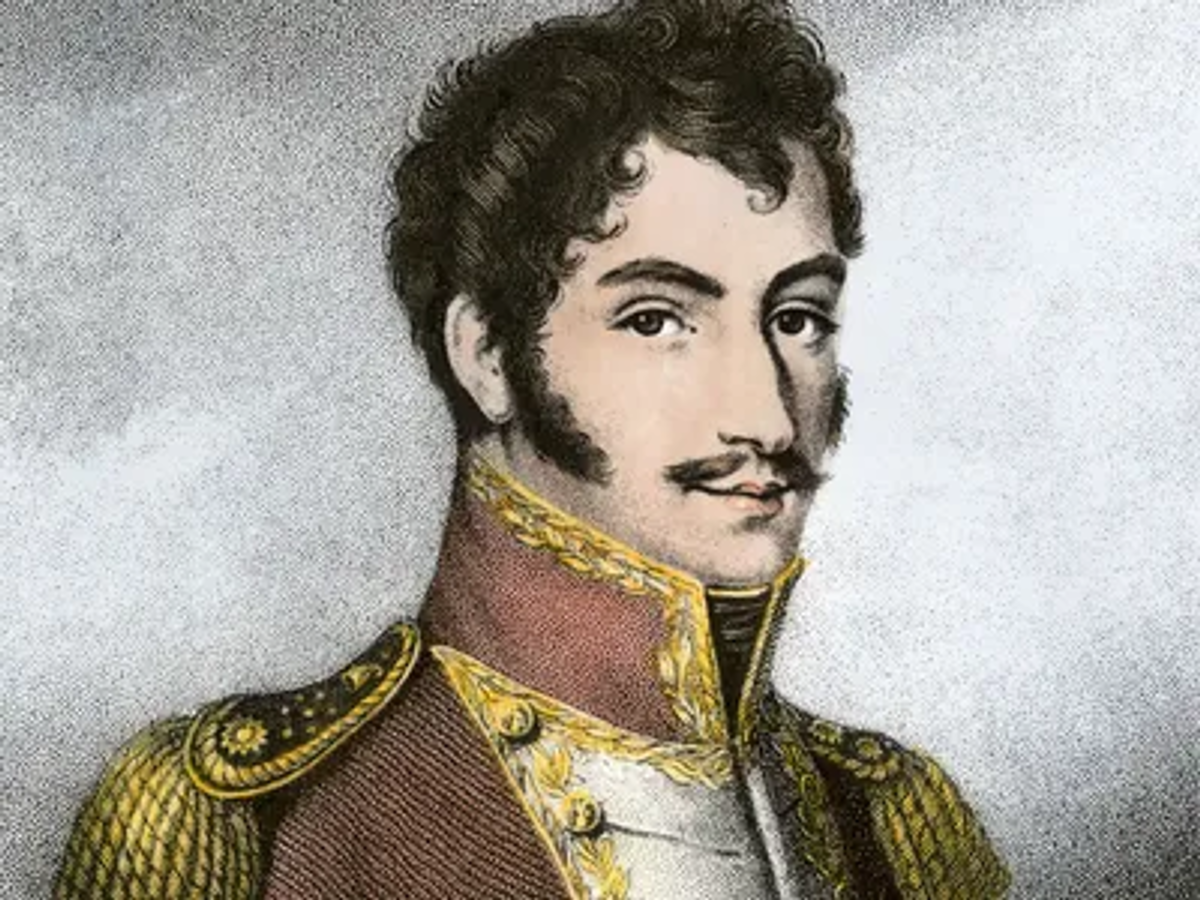
As one of the first countries to take steps along the long revolutionary road to the end of European rule of Latin America, Venezuela can be excused for effectively having two independence days.
In 1806, there had been a failed attempt to start a revolution in Venezuela by Francsico de Miranda. Despite the failure, the attempt had sowed the seed of insurrection and a few years later, events in Europe would gave the independence movement further impetuous.
In 1808, Napoleon Bonaparte invaded Spain and put his brother Joseph on the throne. Many of the Spanish colonies in Latin America remained loyal to the deposed King Ferdinand. On 17 April 1810, news that Ferdinand had been finally defeated by Napoleon reached Caracas, where the people decided independence was better than French rule.
On 19 April 1810 (Maundy Thursday, the day before Good Friday) Vicente Emparan, the Captain General of Venezuela, was dismissed, giving way to the formation of the Supreme Junta of Caracas, one of the first to form an autonomous government in Latin America.
The Junta governed until 2 March 1811, when the First National Congress was installed, which appointed a triumvirate composed of Cristóbal Mendoza, Juan Escalona and Baltasar Padrón.
Francsico de Miranda returned from exile, and pushed further for independence. A few months later, on 5 July 1811, the Declaration of Independence was finally signed, creating the First Republic of Venezuela. The Spanish resisted this movement for independence and the revolution and republic was quashed in 1812.
However, this first declaration of independence meant that full independence was only a matter of time indeed nine years later Venezuela became independent under the leadership of Simon Bolivar in 1821.
Zimbabwe was first influenced by Europeans with the arrival of The British South Africa Company in the 1890s. The company had been founded by Cecil Rhodes in 1889 to colonise the region.
The area became known as Southern Rhodesia (in honour of Cecil Rhodes) in 1895 and was governed by the British South Africa Company until 1922 when the European settlers voted to become a British Colony.
In 1953, Britain created the Central African Federation, made up of Southern Rhodesia (Zimbabwe), Northern Rhodesia (Zambia) and Nyasaland (Malawi).
Following the breakup of the Federation in 1964, when Zambia and Malawi gained independence, Ian Smith became Prime Minister of the country (now called Rhodesia). Smith began a campaign for independence from Britain, with the government being run by the white minority. Independence was declared in 1965, but was not recognised internationally and led to sanctions against the country. This also led to an extensive campaign of guerilla warfare within Rhodesia and the rise of the Zanu and Zapu organisations.
Under this pressure, the white minority finally consented to multiracial elections in 1980. Robert Mugabe and his Zanu party won the independence elections, with Mugabe becoming Prime Minister and Zimbabwe’s independence being formally recognised on April 18th 1980.
Rose Francine Rogombé was a Gabonese politician who became the Acting President of Gabon in June 2009 after President Omar Bongo Ondimba, who had led Gabon for 42 years, passed away after a heart attack.
Rogombé was a lawyer by profession and a member of the Gabonese Democratic Party. She was elected as President of the Senate in February 2009 and as such constitutionally succeeded Bongo.
Rogombé’s interim presidency ended in October 2009 when Ali Bongo, the son of the late President, won the presidential elections. She then returned to her post as President of the Senate.
Rogombé died, aged 72, on April 10th 2015 at a hospital in Paris, where she had gone for medical treatment a few days prior.
History textbooks often include the story of the Underground Railroad, an organized network of secret routes, places and people that guided enslaved populations from the South to abolitionist Northern states.
However, less is known about the underground railroad that ran southbound to Mexico. But one live-looped musical is unearthing that hidden history, one beat at a time.
Co-created and performed by Brian Quijada and Nygel D. Robinson, “Mexodus” tells the fictional story of Henry, who evades his capture by fleeing Texas across the Rio Grande. After a near fatality, he is saved by Carlos, a farmer and former combat medic battling his own trauma from the Mexican-American War. Together they form solidarity, despite social, racial and political strains plaguing both sides of the border.
Following its off-Broadway run at the Daryl Roth Theatre in New York City, the hip-hop and bolero-infused musical directed by David Mendizábal will open at the Pasadena Playhouse stage July 8 and run until Aug. 2. But for history buffs and musical enthusiasts alike, a sonically richer version filled with sound effects of the musical airs exclusively on Audible today, April 16.
The idea for “Mexodus” first came to Brian Quijada — playwright, actor and composer behind “Where Did We Sit on the Bus?,” “Kid Prince and Pablo” and “Somewhere Over the Border” — when reading a 2018 article on History.com about the estimated 5,000 to 10,000 enslaved individuals that escaped the American South for freedom in Mexico, though some researchers estimate that number to be higher.
“My parents crossed the border undocumented in the late 1970s, so I think I’ve always been fascinated with writing immigration stories,” Quijada said. “The reason that this story attracted me was because it’s like a reverse border story, but I also knew that it wasn’t my story to tell so I sat on it for a long time.”
Quijada bookmarked the article until he met Robinson — a performer at Berkeley Rep, Baltimore Center Stage, Shakespeare Theater Company, Mosaic Theater and writer and composer of “Santa Claus Is Comin’: A Motown Christmas Revue” and “R&J: Fire on the Bayou” — at an actor-musician conference weeks before the start of the COVID-19 pandemic. They were the only actors-musicians of color in the room, listening in on conversations about how one should audition for musicals like “Once,” “Million Dollar Quartet,” which typically center white storylines.
“We kind of looked at each other and we’re like, ‘we don’t really belong here,’” said Quijada, who invited Robinson to take part in “Mexodus” during the pandemic shutdown. The first iteration of the project was as a mixtape.
The musical edge of “Mexodus” hinges on live looping, a recording and playback technique where a sound is repeated and then layered (think Justin Bieber’s solo performance of “Yukon” at the 2026 Grammy Awards). Physically, both Quijada and Robinson’s characters have to pick up a guitar, record it, then play the drum set and run to the bass. “ It’s pretty labor-intensive,” Quijada said.
“I think Brian and I are artists in this way, like various people of color, where it’s like, no one else is gonna do it for me, so I can do it all by myself,” Robinson said.
There’s also a more dramaturgical, meta reason for the loop, which follows a four chord structure throughout the piece, set in both 1851 and present day.
“The looping shows you that there’s not much difference between 1851 and 2026,” Robinson said. “We just keep finding ourselves in a loop and like maybe a sound is in that wasn’t there before. Maybe another sound is added, but it’s still the same four chord structure that has been happening in this country for all existence.”
In 2010, the U.S. National Park Service outlined a possible runaway route stretching on the Camino Real de la Tejas between Natchitoches, La., to Monclova, Mexico. Still, it is unclear how organized the underground railroad heading to Mexico truly was, the Associated Press reported in 2020, with archives destroyed in a fire and sites along the path abandoned.
In 2024 the Jackson Ranch Church and Martin Jackson Cemetery in San Juan, Texas — which are part of a ranch owned by interracial couple Nathaniel Jackson and Matilda Hicks — were recognized by the U.S. National Park Service for serving as a gateway to freedom in Mexico.
Other Texas couples alongside the border— including interracial abolitionist couple Ferdinand Webber and Silvia Hector — aided enslaved people in their pursuits to reach Mexico, which had abolished slavery in 1829, while Texas was still part of the country.
Fears surrounding the Mexican government’s attempts to abolish slavery led to the formation of the Republic of Texas in 1836 and its eventual annexation to the United States by 1845; records also show that American slave owners would head down to Mexico to kidnap formerly enslaved individuals, according to USC historian Alice Baumgartner, who wrote about it in her 2020 book “South to Freedom: Runaway Slaves to Mexico and the Road to the Civil War.”
A database by the Texas Runaway Slave Project, which found listings for 2,500 runaways across various Texas newspapers from the 1840s through the 1860s, also documents the frequented journey to Mexico.
Slavery in the U.S. wouldn’t be officially abolished until 1865 with the ratification of the 13th Amendment to the Constitution.
“I was also really intimidated by the amount of research that I would have to do to write this piece because at the time back [between 2017 and 2020], [researchers] were just beginning to uncover a lot of this,” Quijada said.
Themes of racism — including anti-Blackness in the Latino community — oppression and resistance are woven throughout “Mexodus,” which since its debut in 2023 at the Baltimore Center Stage/Mosaic Theater Company in Washington, D.C., has been making viewers aware of the little-known history.
Robinson recalled how one Black woman came up to him after the show to let him know she believed in Trump’s border wall.
“I got nervous, but she was like, ‘after seeing this, I’m realizing that there’s something trying to convince me of that.’ And I’m like, yes!” said Robinson. “I’m like, this is good. This is good. We started you somewhere. Wow.”
The pair hope that amid all the dark news circulating around the world — and the traumatic, historical themes interlaced in “Mexodus” — the existence of this piece of art can be a glimmer of hope and joy for the future of both Black and brown communities.
“ I need you all to see the truth, but we’re gonna try and dance anyway,” Robinson said.
It seems like a simple ask that male politicians don’t sexually harass or even rape women, but also, it seems like an open secret in Congress that sexual misconduct is too common.
Take Eric Swalwell, whose epic political immolation has captivated this week’s national political news, including a TMZ-obtained video of the then-congressman bleary-eyed in a bathrobe on a yacht that was literally the least-worst revelation.
For years “there were swirling rumors about Eric,” former Rep. Jackie Speier told me. Speier in 2018 thought she’d put in place tough new rules to stop sexual misconduct among her former colleagues, and the type of backroom shrugs that allowed men to prowl unchecked.
But despite her efforts, Speier, who represented a part of the Bay Area near Swalwell’s district until 2023, said the problem remains Congress itself, and the “crippling” power that elected officials have over their staffs. Don’t get her started on how that power imbalance is even worse for young lobbyists.
“I’ve always said that Congress is Hollywood for ugly people,” she said. “It’s a whole environment that becomes, I think, toxic.”
But also one that, she added, isn’t inevitable.
The 2018 change
In 2017, the #MeToo movement had swept into the public consciousness and ignited calls for change.
Armed with that outrage and the roiling fire of public opinion, Speier set out to change archaic rules that governed how sexual misconduct was handled in Congress.
“I’ll just run through what it was like,” she told me. “If you wanted to file a complaint, you had to be prepared to go through some period of counseling; to have a cooling off period; to participate in mandatory mediation; and sign an NDA, and then the taxpayers picked up the tab if there was a settlement. It was kind of jaw dropping to think that that was the policy.”
It wasn’t just policy, it was culture. Speier herself had been the victim of an assault when she was a young staffer — a senior staffer pushing her against a wall and forcibly kissing her. And like so many women, she put the episode aside and went on with her career because speaking out would have likely brought her more grief than justice.
But by 2017, she realized the public was at a “tipping point,” and, as she said then, “Congress has been a breeding ground for a hostile work environment for far too long.”
It did away with the weird and coercive requirement for counseling and a cooling off period and most significantly, forced sexual harassers to pay for their own settlements instead of pinning the cost on taxpayers.
But even with the new rules, some colleagues didn’t seem to get it. Speier recalled one man who, informed of possibility he would have to pay sexual harassment settlements out of his own pocket, asked if he could purchase insurance to cover those costs.
“How about you keep your zipper up?” Speier wondered.
The bigger problem
Still, Speier said she thought the law made a difference not just in how claims of misconduct were handled, but in the culture of Capitol Hill.
But, “over time it just was relaxed,” she said.
When Speier left office in 2023, Rep. George Santos (R-N.Y.) was under investigation for sexual harassment — a claim Congress deemed unfounded, but bounced Santos from its ranks for a bunch of other misconduct.
Let’s be real — Congress has never been without scandal.
But Speier said that doesn’t mean sexual abuse can’t be stopped. She just thinks the rules she put in place need to be even tougher: A zero-tolerance approach similar to what corporate America often enforces.
“I’m thinking now that the way to fix this may be something more direct and straightforward and simple, much like they do in the private sector,” she said.
“When the CEO is having an affair with a subordinate and it becomes known, he’s history. He’s relieved of his duties, and if we made it clear that if you sexually harass a staff member, or you have an affair with a staff member, you will be expelled, or you will be subject to expulsion of Congress, that will change their behavior.”
I love her enthusiasm and I support tossing out miscreant members, but I’m not sure even that will keep the zippers up. But there is always hope.
And something has to be done.
“These cases underscore the fact that these women do not feel comfortable coming forward,” she pointed out. “So we’ve got to figure out why and close that hole.
“Is it because they’re fearful that they’ll be retaliated against or that they’ll be ostracized or blackballed? I don’t know the answer, but I’m really urging my colleagues on both sides of the aisle to fix this, and part of fixing it is talking to these women who were, in fact, sexually harassed and assaulted and find out why they didn’t feel comfortable coming forward.”
That’s the real issue, and the real demand we should be making. From the Oval Office to district offices, too many elected leaders have proven they’ll use their power to obtain sex — by coercion or even force.
And too many women remain afraid to speak out because they still suffer both career and social consequences — a realistic fear that coming forward could end their own ambitions, or at least leave them battling to not be defined by the abuse.
Yes, Swalwell and others have been shamed into resigning.
But it’s past time to make sexual abuse a one-strike-you’re-out offense — for the perpetrator, not the survivor.
You’re reading the L.A. Times Politics newsletter
George Skelton and Michael Wilner cover the insights, legislation, players and politics you need to know. In your inbox Monday and Thursday mornings.
By continuing, you agree to our Terms of Service, which include arbitration and a class action waiver. You agree that we and our third-party vendors may collect and use your information, including through cookies, pixels and similar technologies, for the purposes set forth in our Privacy Policy such as personalizing your experience and ads.
New Year celebrations in Lao last for four days, though the traditions and customs are similar to Songkran, Thai New Year. This is the most important festival of the year in Laos.
Day one
This is the last day of the old year. Statues of Buddha images are cleaned with water and people throw water at each other, to ‘wash away’ any bad will that related to the past year.
Day two
The second day is known as the ‘day of no day”, a day that falls in neither the old year or the new year. People parade to the local monasteries to hear services from the monks. A popular highlight of the day is the parade featuring the winner of the Miss New Year beauty pageant.
Day three
This is the first day of the New Year. Begins with an early morning procession of monks and almsgiving (‘tak bat’).
Many people in Lao believe in kwan (spirits that live inside humans, animals, plants and inanimate objects). On the first day of the new year, the tradition is that the kwan might leave the body and be exposed to bad omens for the coming year. To make sure the kwan return to the body, a ceremony called Baci is performed. Chants are made by a village elder to make the kwan return to the body, then white thread is tied around wrists to keep the kwan inside and wish the kwan good luck for the year ahead.
Day four
The most sacred images of Buddha images are put on temporary display and people will dress in their finest traditional clothes and make offerings to ask for good luck in the coming year.
Tarija in southern Bolivia is one of Bolivia’s oldest settlements. It was founded on July 4th 1574 by the conquistador Luis de Fuentes and was named in honour of Francisco de Tarija, who was the first Spaniard to visit the valley. At the forefront of nationalism in the region, Tarija declared independence from the Spanish rule in 1810.
While such declarations were ignored by the Spanish, this act of insurrection would lead to conflict, when on April 15th, 1817 at the Batalla de la Tablada, Tarija’s citizens won a major victory over the Spanish forces. The 1817 victory at Tarija is seen as an important milestone in the country’s history and is commemorated in the city with this public holiday.
After the War of Independence and despite interest from Argentina, Tarija opted to become part of Bolivia, which won its independence and formally established itself as a Republic in 1825.
Interestingly for the first 100 years after the battle, the battle was commemorated on May 4th. It was only when a historian made the correction that it was moved to April 15th.
Cultural festivals take place in Tarija during the entire month of April in what has come to be called the April Days of Tarija (“Los Abriles de Tarija”). The festival revolves around the La Tablada anniversary celebrations and the central event is held on April 15th and 16th.
Cultural events include concerts, dance and theatre. Other events throughout the month also include fairs and handcrafts as well as the traditional Livestock Show and Rodeo Chapaco.