hiding

Exhausted Brits left hiding in room after taking care of everything on holiday

A new study shows that the pressure of organising everything on holiday leaves trip leaders needing another holiday just to recover.

Planning and booking a holiday is supposed to be the ultimate escape, but new research reveals that many of those who organise trips end up worn out by the burden of responsibility.

According to the findings, six in 10 people have arrived home from a break only to feel they need another one. A poll of 2,000 adults found that for 35%, the most draining aspect is having to plan the trip in the first place, while for 30%, it’s taking the lead on arrangements once they’ve actually arrived.

Despite their best efforts to switch off, 32% can’t stop checking whether everyone around them is having a good time. Meanwhile, 30% spend their precious downtime hunting out restaurants, and 25% find themselves putting together the day’s itinerary.

In a bid to escape the constant pressure of being in charge, 22% sneak off for a quiet coffee, 17% retreat to the sanctuary of their hotel room, and 11% resort to pretending to be asleep.

IHG Hotels & Resorts (IHG) commissioned the research and has teamed up with TV presenter Josie Gibson to launch its ‘When the Host Needs Hosting’ campaign.

“I’m that person who’s always making sure everyone’s glass is full and having the best time,” Josie admits. “So, when I’m away, I absolutely love being the one who gets looked after for a change.

“Whether it’s a big holiday, travelling for work or just a little night away, for me it’s about being able to switch off, relax and let someone else take care of things.”

The research revealed 54% of adults regularly take on caring responsibilities for others in day-to-day life, while 57% often find themselves arranging group activities. Meanwhile, 49% typically feel it falls to them to ensure everyone is enjoying themselves.

So much so that 64% of those surveyed by OnePoll.com have come back from a break feeling as though they required another holiday just to recuperate.

Yet despite finding organisational duties exhausting while away, 28% do actually enjoy the role. And 31% believe they are the most suitable person to take control within their friendship circle, family or amongst work colleagues.

Nevertheless, for a trip to genuinely feel like a proper escape, over a third (34%) said it’s being able to simply turn up and enjoy themselves. For 33%, not having to cook or clean helps them properly switch off while 32% value having a comfortable room ready for them when they arrive.

Neetu Mistry, managing director of UK & Ireland at IHG Hotels & Resorts, which is launching ‘When the Host Needs Hosting’ experiences through its One Rewards Access platform, said: “The people who bring everyone together are often the ones who find it hardest to switch off.

“And our research shows that even when they’re away, many are still thinking about everyone else.

“For us, great hospitality is about creating the space for people to step back, relax and feel genuinely looked after.

“We’re celebrating the people who do so much for others and reminding them that sometimes, it’s their turn to be the guest.”

TOP 10 HOLIDAY TASKS BRITS WOULD LOVE TAKEN OFF THEIR HANDS:

  1. Cooking
  2. Cleaning
  3. Resolving problems
  4. Managing timings and schedules
  5. Coordinating transport
  6. Planning the itinerary
  7. Organising activities
  8. Making reservations
  9. Making sure everyone else is happy
  10. Deciding where everyone eats

Source link

What is Liam hiding in Emmerdale? Fans ‘rumble secret past’ and why Dave recognised him

Emmerdale fans were left questioning how Dr Liam Cavanagh and newcomer Dave knew each other, after a link was teased in an episode that also a wedding date confirmed

How does Liam on Emmerdale know new character Dave?

A link is clear, given Dave, who said his name was David Thistlethwaite, clearly knew Liam from his past. Dave commented how he’d seen him before but that he didn’t know anyone by the surname Cavanagh, which is Liam’s surname.

When Dave asked Liam about where he was from and how they knew each other, Liam shut it down. The thing is, he didn’t recognise Dave or his name, so he doesn’t seem to know him.

But it’s when Dave started probing about where he grew up and that he’d seen him close to where he was from at some point, that Liam started to panic.

Dave had been drafted in to take part in a murder mystery organised by Chas Dingle, Liam’s fiancée. At first it seemed Dave was an actual criminal, and he had hijacked the murder game to get revenge on Dylan Penders.

Everyone played along until the end, when Liam unlocked a safe, only to find a piece of paper. On the paper, the date January 29th was written down.

As Liam asked what this meant, they all dropped the act, including Dave, as Chas admitted it was all to announce their wedding date. Dave was actually new at the brewery, helping Chas with deliveries at the pub.

Liam thanked him for taking part, calling him a good sport. It was clear he didn’t know Dave, but it’s then that Dave made a point of knowing where Liam was originally from.

Dave told him: “You do seem quite familiar, although I’m not sure I knew an Cavanaghs.” Liam told him, nervously: “No, it wouldn’t have been me.”

Dave replied: “Are you sure? You do seem very familiar.” Liam started stuttering, trying to suggest he wasn’t there for long before Dave interrupted.

Liam interrupted back though, and bluntly told him: “It wasn’t me.” Dave apologised for asking, and later, we saw an anxious Liam staring at Dave from afar.

Fans began speculating how the men knew each other, and what Liam was hiding about his past. They were convinced that Liam had done something or was running away from something.

Another theory was that he wasn’t he who said he was or had perhaps changed his name. Dave clearly knew Liam by a different surname, and Liam is clearly trying to cover up this link.

One fan said: “I think Liam killed his 1st wife,” as a second said: “I wonder if Liam has a secret family?” A third fan said: “Ooh, who is Liam really?”

Another theory read: “Bigamy so he cant marry Chas,” as one said: “I think it’s going to turn out all this time he has been a bigamist and still has a wife down south.” A final post said: “Wonder if he’s changed his name for some reason ie medical misconduct or immunity from something.”

Emmerdale airs weeknights at 8pm on ITV1 and ITVX. * Follow Mirror Celebs and TV on TikTok , Snapchat , Instagram , Twitter , Facebook , YouTube and Threads .


Source link

Lawsuit seeks to block ICE from hiding locations of detainees with final removal orders

Groups that provide legal services to immigrants filed a lawsuit Wednesday seeking to stop the Trump administration’s new policy of hiding the locations of tens of thousands of detainees with final deportation orders.

The policy, adopted suddenly last month to expedite deportations, interferes with immigration lawyers’ rights by making it difficult, and sometimes impossible, to locate their clients, according to the lawsuit filed in federal court in Boston. It asks a judge to issue an order blocking the “unlawful and inhumane” change.

“No one should be denied a meaningful opportunity to defend their rights because the government has made it impossible for their lawyer to find them,” said Jacquelynne Bowman, executive director of Greater Boston Legal Services, one of the four groups listed as plaintiffs. “This arbitrary new administrative change leaves hundreds of thousands of people at risk of potentially life-altering consequences without essential legal help.”

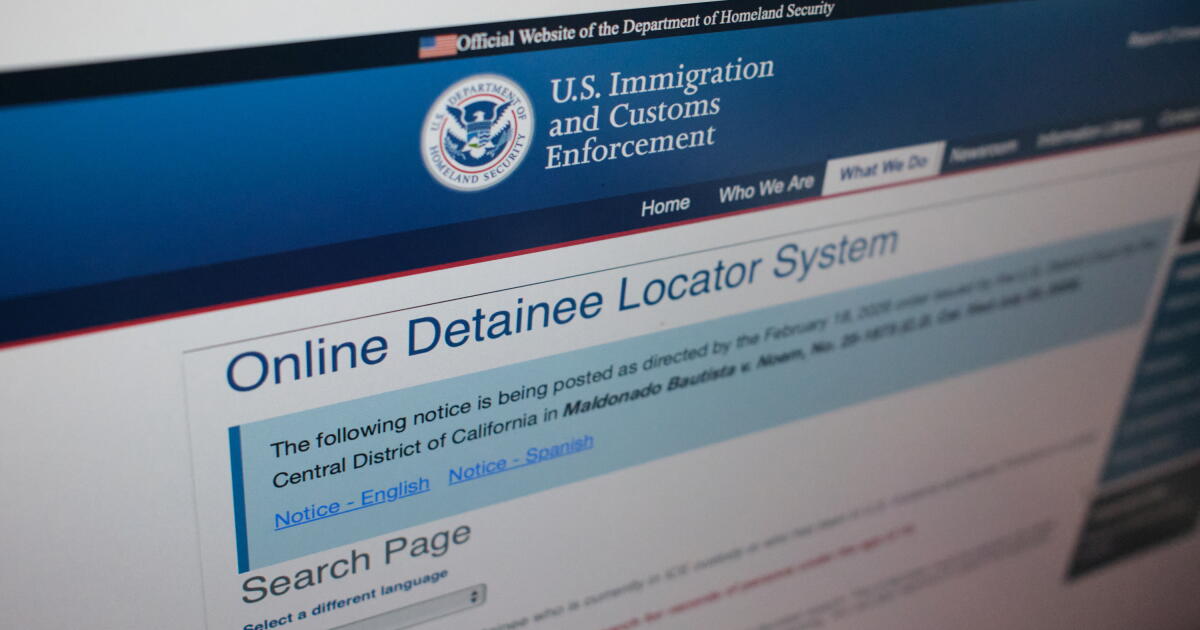
The lawsuit challenges U.S. Immigration and Customs Enforcement’s decision, first reported by the Associated Press, to remove the locations of people facing final removal orders from its Online Detainee Locator System and to instruct staff not to reveal their whereabouts. As of last month, the move affected more than 16,000 of the nearly 69,000 detainees who were in ICE custody.

ICE and its parent agency, the Department of Homeland Security, didn’t immediately respond to a message seeking comment on the lawsuit.

The agencies have not publicly confirmed the change, but have said they are prioritizing people with final removal orders for deportation. They have also said they are facing a “historic number of injunctions” from courts blocking their efforts. The agencies have denied that they are disappearing detainees, saying they remain free to make phone calls.

Since 2010, lawyers and family members have used the online system to track detainees as they get moved from facility to facility through ICE’s sprawling detention network.

Approximately 1.4 million people living in the U.S. are subject to final orders of removal, which means an immigration judge has ruled they should be deported and the decision has been upheld on appeal or not appealed.

Those individuals still have several options to challenge the conditions of their detention and looming deportations, including asking to reopen proceedings, seeking relief from removal to third countries and challenging violations of their rights. Federal judges have ruled thousands of times that detainees should be released or granted bond hearings.

Since the change went into effect, lawyers have been unable to find clients and potential clients and have spent “significantly more time” tracking down others, the lawsuit says. Calls to ICE, including to its Detention and Removal Information Line, “lead to long wait times on hold, sudden hang-ups, a general lack of information or no answer at all,” it says.

As a workaround, some lawyers have tried to find their clients through an ICE program that schedules legal calls, but only a small percentage of detention centers use it, the lawsuit says. The result has been delayed or missed legal filings and fewer cases taken, according to the organizations.

The lawsuit argues the change violates the Administrative Procedure Act because it was adopted without explanation and the First Amendment, which protects lawyers’ ability to advise people of their legal rights and seek prospective clients.

Foley writes for the Associated Press.

Source link

The French government is hiding behind a ‘riots’ narrative | Protests

Images from the violent unrest in France have travelled around the world. Smashed shop windows, destroyed property, acts of looting and raging fires have rightly caused outrage and condemnation.

There is no single explanation of the motives of the perpetrators. There are certainly opportunistic “criminal elements” who take advantage of such situations. But there is also a lot of public anger that has boiled over after it had simmered for years as living conditions have deteriorated and demands for changes have been left unanswered.

The French government has taken full advantage of these violent acts, using them to justify the overly securitised response to the protests and to avoid public scrutiny for the failure to address its own failures. The images of chaos allow those in power to pose as the defenders of a public order they have actively helped undermine.

These acts of violence, however, cannot delegitimise the reasons behind the mass mobilisation of students across France. They also must not distract from the brutal police violence that has unfolded.

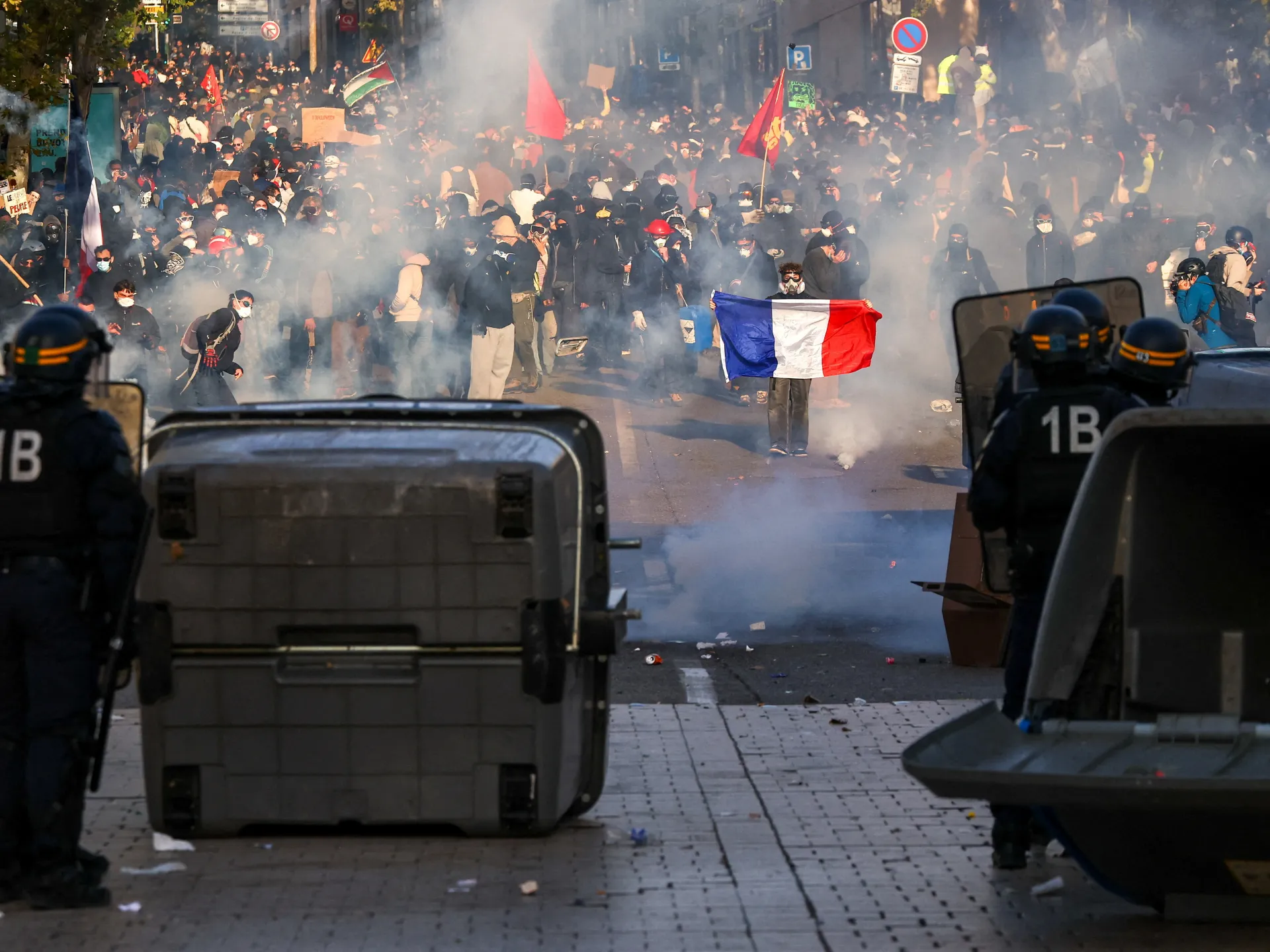
Fourteen-year-old Eden suffered a fractured jaw and had teeth knocked out by a tear gas grenade fired from a police launcher. Sixteen-year-old Mael lost the sight in one eye after a suspected hit from a police rubber bullet. Fifteen-year-old Evan had a hand blown off by a police stun grenade.

By October 14, 7,950 people had been placed in police custody since the protests began in September, 85 percent of them minors. A further 2,700 were taken into custody following the October 17 protests. Yesterday, police made another 1,000 arrests.

The staggering scale of detention and the mobilisation of tens of thousands of police officers make this one of the most heavily repressed protest movements of this century.

But there is also the quieter violence of social deprivation that the students are protesting and that has largely been ignored in the public narrative.

Across France, the sense of growing impoverishment deepens year after year. Poverty rates are the highest they have been since the 1990s, with 9.8 million people living under the official poverty line. Meanwhile, 53 French billionaires own as much wealth as nearly half of the French population, according to Oxfam.

Deteriorating socioeconomic conditions have hit the French educational system hard.

In Acoua, on the island of Mayotte, the Cite du Nord secondary school was blockaded as early as August 31. Long before protests in the Paris region attracted attention, parents and staff came out in protest to demand better learning and teaching conditions.

Built for 900 pupils, this school accommodates 2,300 in cramped, poorly ventilated classrooms. Alongside staff shortages, the school also struggles with water supply failures and unsanitary conditions in toilets.

In Sevran, a suburb of Paris, pupils and teachers at Blaise-Cendrars secondary school have complained since 2024 about water leaks, mould, unusable toilets, and shortages of tables and chairs.

At Marcelin-Berthelot secondary school in Pantin, another Parisian suburb, windows no longer open at a time when heatwaves can bring temperatures as high as 40C.

At Politzer secondary school in Bagnolet, also a Parisian suburb, staff, pupils and parents learnt in late September that the water was unsafe to drink, although it had been tested in June.

These are just a few examples of a countrywide trend of an educational infrastructure that is fast deteriorating, especially in impoverished areas.

This is compounded by the erosion of the level of education pupils actually receive. According to the education ministry’s own figures, 20.2 million teaching hours were not delivered in state secondary schools in 2024–25, excluding Mayotte: almost one in 10 scheduled hours. Of these, 15 million were lost because absent teachers were not replaced.

According to French economist Lucas Chancel, since 2017, when Emmanuel Macron came to power, government spending per student has declined by 20 percent.

This is the structural violence French students are asking those in power to end. Instead of listening, the government has responded with repressive tactics and narrative spin.

In his address to the public, Macron said he understood the students, but he did not express support for them the way he did for police officers. A meeting with 20 students on Friday resulted in a promise to reform the university entrance platform – not to address the students’ key demands.

Macron has doubled down on the security “solution”, deploying 70,000 police officers and pledging to ban protests. He has accused the “far left” of seeking to “bring down the republic”.

Meanwhile, Prime Minister Sebastien Lecornu has called on the left to “choose a side”: the Republic equated with the police, or the rioters and their “violent agenda”. As if taking part in a protest amounted to an attack on the state.

Unsurprisingly, the far right is revelling in the chaos that appears to be engulfing the country, obscuring these needs by focusing on the presumed origins of people filmed committing acts of violence. Some far-right politicians have denounced the “hordes of thugs of foreign origin”, others have called for broader powers to strip people of their citizenship.

This rhetoric serves Macron’s political camp well as it allows it to present itself once again as the last defence against the far right, asking the general population to rally behind out of fear rather than because of its governance record. Voters are offered an increasingly bleak choice between those who have fuelled their anger and those seeking to turn it into racial hatred.

At this point, it is clear the government does not seem interested in genuinely addressing the demands of the students is in the cards. Doing so would mean confronting the priorities of Macron’s presidency: protecting the wealth of the few and abandoning the many.

Instead, the government will wait for the movement to exhaust itself, be weakened by fear or be discredited by unrest, until it dies out on its own.

This strategy, however, is a failed one. Even if this protest movement fizzles out, a new one will soon replace it. The French people cannot be scared into complacency forever while their living conditions continue to deteriorate.

The views expressed in this article are the author’s own and do not necessarily reflect Al Jazeera’s editorial stance.

Source link