A child eats a snow cone Monday at the Great American State Fair on the National Mall in Washington. As the nation moves into the holiday weekend, a record-setting heat wave has settled over parts of the Northeast, including Washington. Photo by Bonnie Cash/UPI | License Photo
July 2 (UPI) — As the United States heads into a milestone July 4 holiday this weekend, parts of the Northeast are preparing for hazardous levels of heat and humidity, with a heat index of more than 110 possible in some places.
“‘It’s summer, it’s hot,’ ” the National Weather Service posted on social media this week. “We hear ya, but this is no ordinary heat.”
“Numerous daily temperature records are possible, while warm overnight lows in the 70s and 80s will provide little relief,” the NWS said.
Major to extreme heat risk conditions will prevail across the Midwest — where temperatures soared mid-week — into the East Coast, with the “extreme” zone centered around portions of the Northeast including New York City, Washington and Philadelphia. About 160 million people are in this zone.
Roughly 180 million Americans are in the grip of a life-threatening heat wave impacting almost the entire eastern half of the country.
“Extreme” heat conditions are defined by the weather service as “rare and/or long-duration heat with little to no overnight relief.”
The heat index, which combines temperature and humidity readings to show how hot it feels out, could reach 110 to 115. High humidity compounds the health risks from high temperatures, as it prevents sweat from evaporating efficiently, CNN reported.
This comes as the United States prepares for milestone 250th anniversary Independence Day celebrations Saturday. The weekend marks one of the busiest travel and outdoor-activity times of the year, but many local officials have urged people to stay inside in air-conditioning and to check on neighbors, The New York Times reported.
Many cities and smaller municipalities are opening cooling centers and adapting holiday plans. The federal Department of Energy declared an emergency and directed the PJM Interconnections electrical grid in the Mid-Atlantic region to “take action” to avoid power outages, ABC News reported.
“It’s really going to strain the grid,” Ramanan Krishnamoorti, vice president of energy and innovation at the University of Houston, said to ABC News. “I think we’re going to see peak demand that is going to be a record across different geographical areas.”
An intense heatwave is set to blanket much of the central and eastern United States this week as a “heat dome” settles over the region, bringing days of oppressively high temperatures and humidity ahead of the Fourth of July weekend and FIFA World Cup matches in several US cities.
Forecasters say in some places it could feel as hot as 46 degrees Celsius (115 degrees Fahrenheit). Dozens of temperature records could be broken, according to the National Weather Service (NWS), which called the conditions “dangerous”. More than 60 million people are currently under heat alerts.
Recommended Stories
list of 4 itemsend of list
At the centre of this week’s forecast is a weather phenomenon known as a heat dome. What is it, and why does it make heatwaves even more intense and unbearable?
What is a heat dome?
A heat dome is a large area of high pressure, formed when warm air flows northward, that acts like a lid over the atmosphere, trapping hot air close to the ground.
As the air sinks, it compresses and warms even more. At the same time, the pressure system helps prevent cooler air and storms from moving in, allowing heat to build at the surface and remain trapped there. With few clouds and little wind, the sun has more direct access to the ground, creating a heat feedback loop.
Heat domes are linked to prolonged heatwaves that can last for days.
How long will it last?
The heat dome is already building and is expected to strengthen over the coming days, spreading from the central US towards the east coast, with dangerous heat lasting several days into early July.
The hottest conditions are expected Thursday and Friday, according to the NWS, and are set to continue through the Fourth of July weekend, which marks the 250th anniversary year of the US, and forecasters say some areas across the Great Plains, the southeast, and the mid-Atlantic are likely to remain unusually hot into next weekend.
What will the highest temperatures be?
Many places are expected to see daytime temperatures in the high 30s Celsius (low 100s Fahrenheit), but humidity will make it feel much hotter. In parts of the central and eastern US, the heat index – a measure of how hot it feels when humidity is factored in – could climb between 40C and 46C (100F and 115F).
“That’s heat that’s impactful to anyone,” said NWS meteorologist Bryan Putnam. “It’s not just older adults or younger children or people who are spending a ton of time outdoors, maybe straining themselves a little more than normal. This is heat that really could impact everyone, especially with people outdoors going into the holiday weekend.”
The nights won’t bring much relief either, with temperatures expected to stay in the 20s Celsius (70s Fahrenheit) overnight, creating potentially miserable sleep conditions for those without air conditioning and making it harder for people to cool down.
“Even after the sun goes down, it’s still going to be very hot,” said AccuWeather senior meteorologist Alan Reppert. “We’re at a pattern that’s really going to be hot during the good portion of the afternoon and even into the evening hours.”
Which parts of the US will be hit the hardest?
The most dangerous conditions are expected in a broad corridor stretching from the Great Lakes to the East Coast, where several cities could experience their hottest day of the year so far. New York City, Philadelphia, Washington, Baltimore, Chicago, Indianapolis, Detroit and St Louis are all expected to be affected, with temperatures also soaring farther south in Dallas, Little Rock and Memphis.
Several of those cities are also hosting FIFA World Cup events. In Philadelphia, organisers have already changed Fan Festival hours to start later in the day.
Cities across the US are rolling out emergency measures as temperatures climb.
Chicago said it would open cooling centres and send city workers to check on vulnerable residents.
In New York City, Mayor Zohran Mamdani’s office announced what it called an “unprecedented” response to the heat, including hydration vans and pop-up cooling stations equipped with misting fans and cooling towels.
Washington, DC, where temperatures are expected to exceed 38C (100F) from Thursday through Saturday, the heat will coincide with Fourth of July celebrations, including what organisers say will be the largest fireworks display ever held on the National Mall.
What are some ways to stay cool?
The NWS says people should stay hydrated, avoid strenuous outdoor activity during the hottest part of the day and seek air conditioning or cooling centres where possible. If you’re spending time outside, wear loose, lightweight clothing and stay near shady areas.
Experts say one of the biggest risks during a prolonged heatwave is that the body doesn’t have time to cool down overnight, which can make the effects of the heat build up from one day to the next. They also recommend drinking water before you feel thirsty and limiting alcohol, which can increase the risk of dehydration.
“If somebody realises that they’re hot, but they’re not sweating, or if they begin to feel a little bit dizzy, those are some signs that they really need to take a break, get inside, find some cooling, and drink plenty of water,” said Geoff Cornish, assistant chief video meteorologist for the weather forecasting company AccuWeather. “And if they really begin to experience significant symptoms, they need to seek medical attention right away.”
When summer hits the San Fernando Valley, finding ways to cool off is a must, which is why my kids grew up swimming at the Verdugo Aquatic Facility in Burbank.
(When it closed for upgrades, the kids on our street were so bereft that they set up a lemonade stand, hoping it would help expedite the pool’s reopening.)
The pool is open year-round, but it’s especially popular in the summer, when it offers recreational swimming, swim lessons starting at 6 months old, a junior lifeguard program, lap swimming and other sports.
There’s a fun activity pool for kids ages 4 and under, with waterslides, dumping water buckets, a play area and a shallow wading pool with a beach-style entry. Chaise longues, picnic tables with umbrellas, and multiple lifeguards give the public pool a resort feel.
On a recent Friday, the main Olympic-sized pool was busy with families, but there were still plenty of lanes open for lap swimming. I tried a Monday evening Aquatic NoodleFit class, where you use a pool noodle for low-impact resistance training while standing in the center of the pool. The instructor, Karen Eldridge, was warm and welcoming and gave clear instructions, even working up a sweat herself as we followed her moves on the pool deck. The workout was challenging and fun, but not overwhelming for students of all levels, body types and ages, thanks to the water’s support.
During the week, the activity pool is usually not crowded, but on weekends, staff closely monitor capacity as it can get busy. Burbank residents get priority and can buy presale wristbands online at BurbankParks.com from Monday to Friday between 9 and 10 a.m. If you can’t get into the activity pool, don’t worry. The recreational pool is a fun and easy backup option.
Size: 50 by 18 meters Temperature: 80 to 82 Swim lanes: 7 Depth: 2.5 feet to 8 feet and a 12-foot diving well Admission: Lap swimming, $5 to $9. Monthly membership, $41 to $96. Activity pool, $4. Water fitness classes are subscription-based and range from $99 to $110, depending on the class. (My Aquatic NoodleFit class costs $109 as a nonresident for an 11-class series). Parking: Free. Hours: Lap swimming, 5:30 a.m. to 8:30 a.m. Monday through Thursday; 5:30 p.m. to 7:30 p.m. Friday; 7 a.m. to 7 p.m. Saturday and Sunday. Recreational swimming, 11:45 a.m. to 3 p.m. daily. Extras: Activity pool, snack bar, vending machines.
Reasons for the Clippers to trade Kawhi Leonard are apparent. So are reasons to keep the seven-time All-Pro forward who turned 35 on Monday.
For now, the team is engaged in discussions and entertaining offers for Leonard, who is highly regarded despite being central to a league investigation into allegations of salary-cap intervention.
Representatives for Leonard, who has one year remaining on a three-year, $152.4 million contract, have informed other teams he prefers to remain with the Clippers and would only sign an extension with the Toronto Raptors or San Antonio Spurs if the Clippers trade him, ESPN reported. Leonard helped both of those teams to NBA titles, the Raptors in 2019 and the Spurs in 2014. He was Finals MVP both years.
However, the Athletic reported that the Dallas Mavericks offered to trade power forward P.J. Washington, shooting guard Klay Thompson and draft picks for Leonard. Mavericks president Masai Ujiri held the same position with the Raptors when they won the 2019 championship.
If Leonard doesn’t agree to a contract extension with Dallas, he essentially would be a one-year rental and not worth as much in trade capital. Ujiri engineered the trade in 2018 that brought Leonard to the Raptors without the player agreeing to an extension, and the result was a championship followed by Leonard bolting to the Clippers.
Another factor in assessing Leonard’s trade value and the Clippers’ motivation to move him is the ongoing NBA investigation involving team owner Steve Ballmer, Leonard and the now-bankrupt sustainable financial technology firm Aspiration.
Triggered in October when the “Pablo Torre Finds Out” podcast detailed a $28 million endorsement contract Leonard received from Aspiration, the NBA hired a prominent law firm to conduct the probe. Findings could be announced soon because NBA commissioner Adam Silver said June 2 that it was time to “wrap it up.”
Aspiration had a $300 million, 23-year endorsement deal with the Clippers and Ballmer personally invested $60 million into the company, whose co-founder Joseph Sanberg was convicted of two counts of wire fraud and sentenced to 14 years in federal prison. Ballmer admits introducing Leonard to Aspiration executives but has denied that he knew details of the endorsement deal that Leonard never fulfilled.
Silver has not stated that the NBA would hold up any trade involving Leonard because of the investigation. Still, the Clippers expressed at the end of the regular season that keeping the 14-year veteran was a priority.
“Our plan is to win with Kawhi,” Clippers president Lawrence Frank said.
Leonard is coming off his best season of six with the Clippers, averaging a career-high 27.9 points over 65 games. He has averaged 20.7 points a game during his career.
The Raptors are rumored to be dangling former Lakers forward Brandon Ingram and first-round draft picks
A dog called Minou stands in the water of the Lustgarten fountain in front of Berlin Cathedral during the historic heatwave that has seen nations across Europe break temperature records for this time of year — including Germany, which set a record two days in a row. Photo by Clemens Bilan/EPA
June 27 (UPI) — Europe may have to brace for even broken records as the historic heat wave that has roasted the continent over the last week is unlikely to let up.
Temperatures in Germany, Belgium and the Netherlands all set heat records on Friday, and events in both Spain and France were cancelled, while most of central Europe issued the latest in days of warnings about the dangerous temperatures, The BBC and The Washington Post reported.
Although some meteorologists, including those in the United Kingdom, have said that temperatures in some areas will start cooling off, forecasters in Czechia, Austria and some Balkan nations are bracing for their own broken heat records this weekend.
The heat wave, which experts at the World Meteorological Organization have called the worst in Europe since the mid-1970s, reinforces what the organization has called “the world’s most rapidly warming continent.”
“In the 50 years since the historic heatwave of 1976, Europe as a whole has warmed by around two degrees,” John Kennedy, head of climate information at WMO, said in a press release.
“It’s the fastest warming continent, and extremes of temperature have increased, too,” Kennedy said.
France this week recorded it’s hottest June temperature three days in a row, the United Kingdom and Spain set records two days in a row, and Germany, Belgium and the Netherlands all saw historic June heat records fall.
The WMO said on Friday that it expects the heatwave to keep spreading cross large swaths of Western, Central and Southern Europe during the next two weeks, with a significant focus of the heat expected to blast the Balkans.
WMO said that Portugal, Spain, France, Belgium, Luxembourg, the Netherlands, the United Kingdom, Germany, Switzerland, Austria, Italy, Czechia, Slovakia, Hungary, Slovenia, Croatia, Bosnia and Herzegovina, Serbia, Montenegro, Albania, North Macedonia, Greece, Bulgaria and Romania all should expect heat that is 3 degrees Celsius to 10 degrees Celsius above weekly June averages.
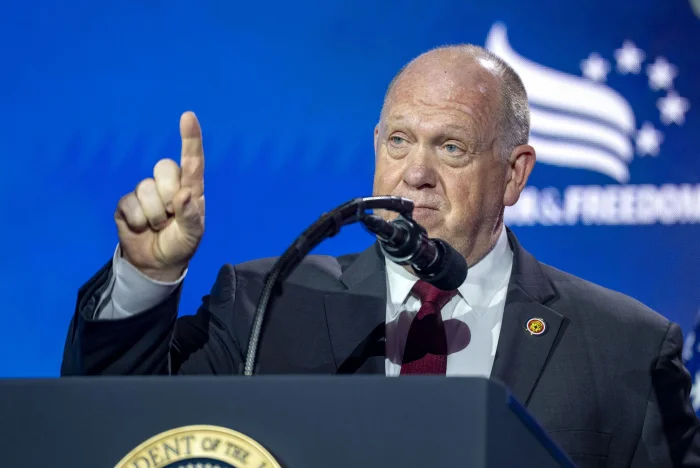
White House Border Czar Tom Homan speaks during the Faith and Freedom Coalition 2026 Road to Majority Policy Conference at the Washington Hilton on Friday. Photo by Bonnie Cash/UPI | License Photo
A young man dives from a bridge over the Saint-Martin Canal in Paris on Thursday amid a searing heat wave that prompted authorites in the capital to impose restrictions on drinking alcohol in public and takeout sales for the second time in five days. Photo by Yoan Valet/EPA
June 26 (UPI) — Authorities in Paris implemented restrictions on drinking in public and takeout alcohol sales on Friday for the second time in five days, amid one of the most severe June heat waves on record.
In an effort to reduce stress on the capital’s hospitals, public consumption of alcohol will be banned from noon through 7 a.m. Saturday, local time, and from noon on Saturday through 7 a.m. on Sunday, and can only be sold in bars and restaurants between 6 p.m. and 7 a.m on both days.
Prime Minister Sebastien Lecornu said the health alert level was being raised to its highest, to boost hospital staffing and protect the vulnerable while Paris police chief Patrice Faure said the the capacity of hospitals to cope was “reaching a saturation point.”
“As you know, drinking alcohol with the sun beating down can have a devastating effect,” said Faure.
The bans coincided with a France-Norway game at the FIFA World Cup in Boston, due to kick off in the early hours of Saturday, local time.
Paris Pride, which was due to run Thursday through Sunday, was moved to September, and the Solidays music festival, scheduled to be held over the same period, was canceled because police felt going ahead with either amid the searing temperatures posed a major public health risk.
On Thursday, a three-year-old child died in a hot car in Saint-Gratien in the northern Paris suburbs.
As Paris baked in record temperatures that peaked at 40.9 degrees Celsius earlier in the week, Health Minister Stephanie Rist warned the health impacts of the heat were not restricted to the elderly, infants and other vulnerable groups.
“Even if you are young and in good health with no underlying medical issues, this heat will affect you too. Young people are also suffering from cardiac arrests,” she said, explaining that the Paris ambulance responded to a four-fold jump in cardiac arrests, compared with normal, during a 24-hour period.
Paris mayor Emmanuel Gregoire said the mortality rate was on the increase and urged people, especially the young, to suspend normal physical activity such as jogging.
“We must not believe we are invulnerable. It’s fine to take a couple of days off from exercising,” he said.
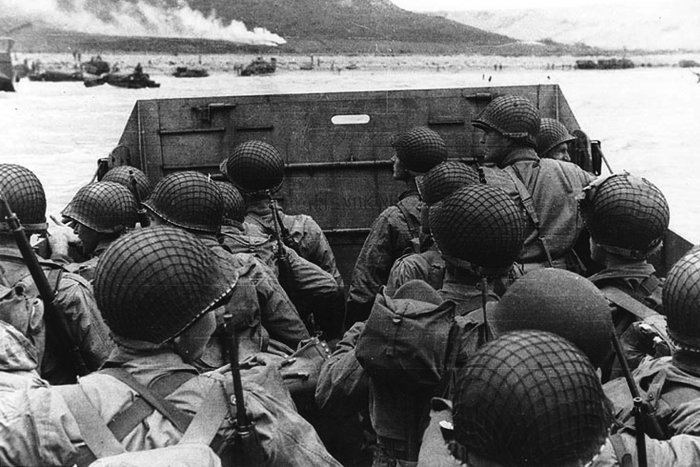
Troops in landing craft approach Omaha Beach on D-Day in Normandy, France, on June 6, 1944. D-Day was the largest seaborne invasion in history and turned the tide of World War II. Photo by UPI | License Photo
Activists have used thermal cameras to show the extreme temperatures outdoor workers are facing during Europe’s summer heatwaves, with one construction worker shown enduring surface temperatures above 65°C.
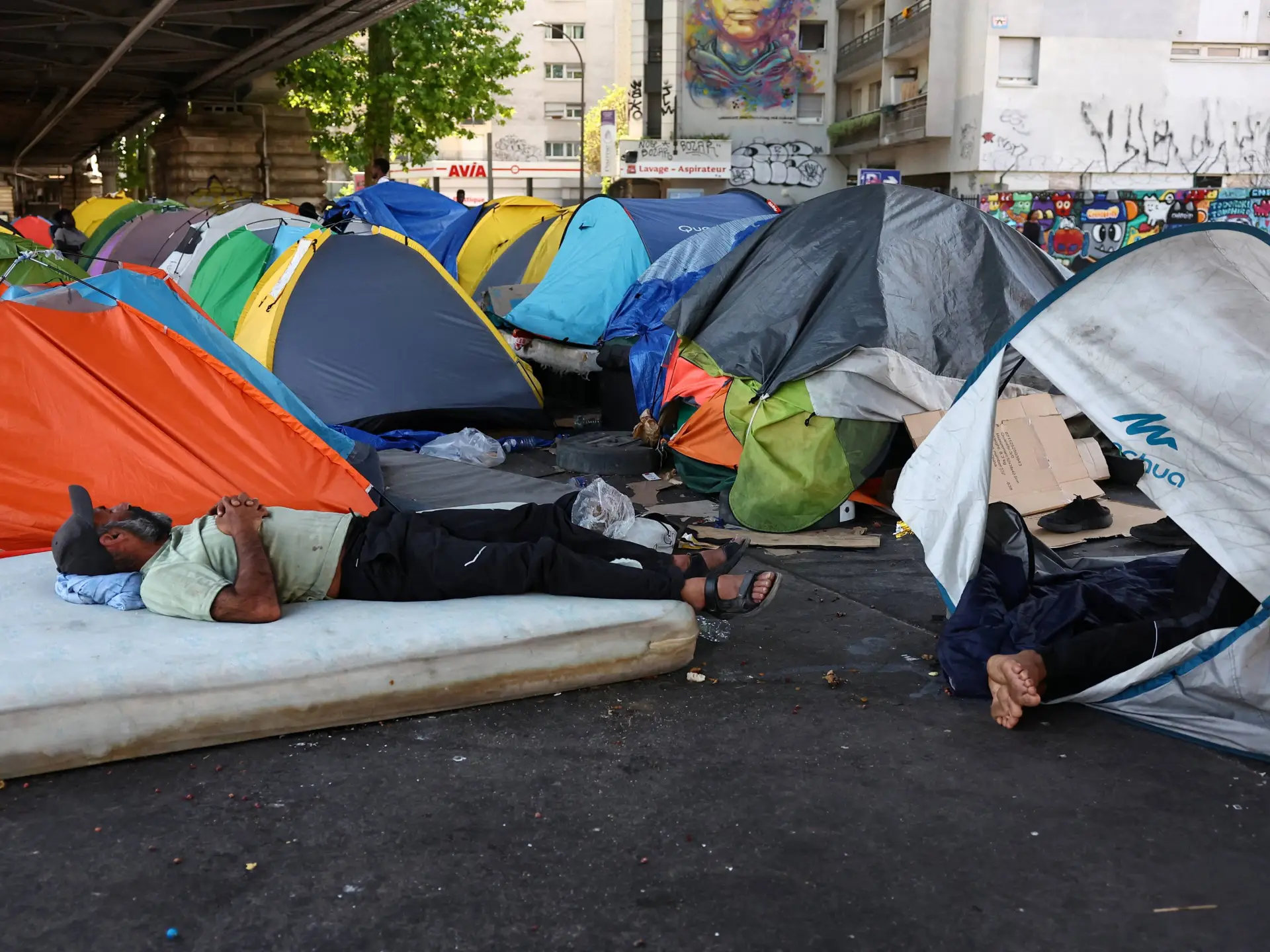
Hundreds of migrants in Paris are left exposed as a heatwave sweeps Europe. Some have taken to unsafe swimming to cope with the record-breaking temperatures.
For dry activities, you can go climbing or have a spin at the roller disco.
A three-night stay from June 26 to 29 costs from £215, working out at £17.92 per person per night, based on a family of four – book it here.
Appletree Holiday Park has a nine-hole golf course as well as a splash padCredit: Away Resorts
Appletree Holiday Park, Lincolnshire
Found in Boston, Lincolnshire, Appletree Holiday Park sits in the countryside, with a nine-hole golf course and a splash pad for little ones.
While at the park, you can also have a go at the driving range or even explore by hiring a bike.
Little ones needing to burn off steam can also drop by the play area.
Guests can choose to stay in either a lodge or caravan, with the premium lodges boasting hot tubs as well.
A two-night stay from June 26 to 28 costs from £189.60, working out at £23.70 per person per night, based on a family of four – book it here.
Glendale Holiday Park has easy beach accessCredit: Glendale
Glendale Holiday Park, Cumbria
In Cumbria, you could stay at Glendale Holiday Park, which overlooks the Solway Firth – an Area of Outstanding Natural Beauty.
The park has both the countryside and coast to explore.
At the site itself, there is a swimming pool, an entertainment bar and an onsite restaurant as well.
There is also easy beach access.
A three-night stay from June 26 to 29 costs from £139, working out at £11.59 per person per night, based on a family of four – book it here.
At Broadland Sands, you can head to the indoor heated swimming poolCredit: Park Holidays
Broadland Sands, Suffolk
For a Suffolk break, you can head to Broadland Sands Holiday Park, sitting on the East Coast border.
Near Lowestoft, the holiday park is home to a heated indoor swimming pool with its own water flume.
There’s also a dinosaur-themed adventure golf course, as well as more sporty activities including a climbing wall.
For those wanting to spend some time outdoors, you can also head on a nature trail.
Then in the evening, sit back and enjoy some of the entertainment, including cabaret and live bingo.
A three-night stay from June 26 to 29 costs from £179, working out at £14.92 per person per night, based on a family of four – book it here.
Tarka Holiday Park Devon is just a short walk from the beach tooCredit: Tarka
Tarka, Devon
Tarka Holiday Park is less than five miles from the popular Devonshire town of Barnstaple.
The holiday park focuses on being a more peaceful retreat, so instead of pools, you’ll find a paddock and children’s play area.
Ideal for enjoying the warm weather, there is also an onsite picnic spot.
And for adventures outside of the park, you can head to the Tarka Trail, which stretches 180 miles and follows the steps of Henry Williamson’s Tarka the Otter.
A three-night stay from June 26 to 29 costs from £159, working out at £13.25 per person per night, based on a family of four – book it here.
South Bay Holiday Park in Devon is about 10 minutes from the beachCredit: South Bay
South Bay Holiday Park, Devon
Set on the English Riviera in Devon, you can head to South Bay Holiday Park.
The Brixham-based holiday park is home to an indoor pool, an outdoor pool and even a toddler pool.
There’s also a host of entertainment at the park, including a kids’ club and evening shows.
From the park, there is a direct path to the beach, which takes about 10 minutes to walk.
A three-night stay from June 26 to 29 costs from £199, working out at £16.58 per person per night, based on a family of four – book it here.
Summerfields Holiday Park in Great Yarmouth has a soft play area for little onesCredit: Summerfields
Summerfields Holiday Park, Great Yarmouth
Close to Norfolk Broads National Park, you could stay at Summerfields Holiday Park in Great Yarmouth.
The holiday park boasts a heated indoor pool along with a sauna and for a bite to eat, you can head to The Boathouse.
If it gets too hot outside for the little ones, inside you’ll also find a soft play area, as well as arcades.
A three-night stay from June 26 to 29 costs from £160, working out at £13.34 per person per night, based on a family of four – book it here.
Tattershall Lakes in Lincolnshire is a great spot for water sport-loving familiesCredit: Supplied
Tattershall Lakes, Lincolnshire
Set across 360 acres, Tattershall Lakes Country Park features woodlands and lakes.
The holiday park is a great spot for water sport-loving families, with activities including jet-skiing, water-skiing, wakeboarding and even an inflatable Aqua Park.
If that wasn’t enough water-based activities, there is also an indoor and outdoor pool and spa.
In the evening, you can head to the clubhouse as well for entertainment.
A two-night stay from June 26 to 28 costs from £199.20, working out at £24.90 per person per night, based on a family of four – book it here.
Lower Hyde Holiday Park has both an indoor and outdoor poolCredit: Parkdean Resorts
Lower Hyde Holiday Park, Isle of Wight
Lower Hyde Holiday Park in Shanklin on the Isle of Wight is a great spot if you want to feel like you are travelling abroad but without the long-haul flight.
At the Parkdean site, you can head to the outdoor pool, which has its own flume, as well as another pool inside.
For some entertainment, there’s Squires Showbar.
And if that all wasn’t enough, the park is also only a 20-minute walk from Shanklin Beach.
A three-night stay from June 26 to 29 costs from £189, working out at £15.75 per person per night, based on a family of four – book it here.
In contrast to heat pumps, continuing record sales of electric cars indicate they are all but set to replace their petrol and diesel counterparts in the coming years on UK roads.
Emma Pinchbeck, CEO of the Climate Change Committee, praised the improvement in greener transport.
“We’ve made big progress on things like electric vehicles, where one in four cars being bought in the UK today is now an EV.”
She said the growth had been accelerated by the Iran fuel crisis, which has seen significant increases in petrol and diesel prices at the pump pushing people to seek out other options.
“We can see in the numbers what people want – cheap cars and cars that will save them money, particularly as fossil fuels are volatile,” she said.
But the industry body, Society of Motor Manufacturers (SMMT), said most of this demand had been brought about by huge discounts offered by car manufacturers.
“This has cost the industry more than £10 billion since 2024 – an unsustainable amount when that money should be going into R&D, manufacturing and the workforce,” said Mike Hawes, CEO of SMMT.
It supported the government’s plan to weaken its Zero Emission Vehicles (ZEV) mandate – which sets a target for number of EVs manufacturers produce and a penalty for failing to meet that target.
The UKCCC disagreed and urged the government to keep the policy.
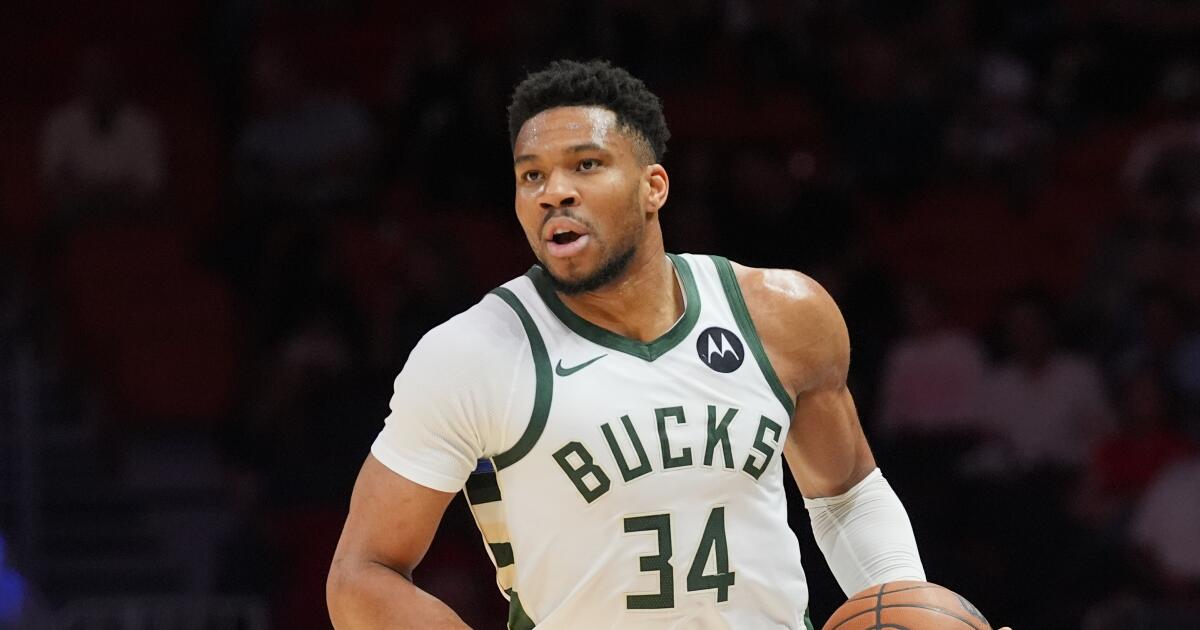
Ending a marathon watch for the next great Miami get, the Heat landed Antetokounmpo — a two-time NBA MVP and 10-time All-Star — from the Milwaukee Bucks on Monday night in exchange for a massive haul of players and draft picks.
The terms, according to a person who spoke to the Associated Press on condition of anonymity because the move has yet to receive the required league approval: Antetokounmpo and Bobby Portis are heading to Miami for Wisconsin native Tyler Herro, Jaime Jaquez Jr., Kel’el Ware and Kasparas Jakucionis. Milwaukee also gets at least four picks, including the No. 13 selection that will be made in Tuesday night’s NBA draft.
It ends a wild back-and-forth in the final days of the saga, with the Bucks considering offers from both Miami and Boston for Antetokounmpo — who led Milwaukee to the 2021 NBA title, was on the NBA’s 75th anniversary list of its greatest players ever, is a nine-time All-NBA selection and is coming off an injury-shortened season where he averaged 27.6 points per game.
There has been no secret that this is what Miami has sought, because this is what Miami usually seeks. The Heat pulled off similar moves by landing Shaquille O’Neal in 2004 (helping lead to the 2006 NBA title) and by getting LeBron James and Chris Bosh to play alongside Dwyane Wade in 2010 (leading to four NBA Finals runs in four seasons together, along with the 2012 and 2013 NBA titles).
Now, it’s Antetokounmpo’s turn. At 31, the Heat clearly believe he still has many good years left — and it’s generally presumed that by making this deal they’ll give the Greek superstar a massive extension later this year.
He was a perennial MVP candidate in Milwaukee, getting votes for that award in nine consecutive seasons before 2025-26, when too many missed games left him ineligible.
He has averaged 24.1 points and 9.9 rebounds per game in his career, with 10 consecutive seasons of averaging at least 22.9 points — with three years in there of averaging more than 30 points per game.
Only seven current players have more points in their careers than Antetokounmpo, who has totaled 21,531 to this point.
Antetokounmpo had been mentioned in trade talks countless times in recent years, with the Bucks always insisting — with words and actions — that they had no interest in trading their best player and one of the best players in the history of their franchise.
But this time, it seemed different.
The Bucks, who fired Doc Rivers as coach after the season, don’t have a roster that would be considered a championship contender. By trading Antetokounmpo, they can essentially start over with four players (and the Heat were high on all of them) along with draft capital.
“I just think before the draft is a natural time, right, because if Giannis does play somewhere else we’re going to get a lot of assets. … You’ve got to get it right,” Bucks co-owner Jimmy Haslam said in May, when the team introduced new coach Taylor Jenkins — who was told that Antetokounmpo may or may not be with the franchise when next season starts.
Jenkins and the rest of the NBA now has the answer: Antetokounmpo won’t be there.
Antetokounmpo had spoken highly of Miami many times over the years, even when the Heat and Bucks were going head-to-head in the playoffs. He also shares an agent with Heat star center Bam Adebayo, who was the only player that Miami clearly was not willing to part with in order to make this deal happen.
“They’re going to play tough and they’re not going to stop playing,” Antetokounmpo said after Milwaukee played Miami on March 12. “That’s the Miami Heat culture.”
Little did anyone know that night that those words were coming after what would be the next-to-last game for Antetokounmpo in a Bucks uniform. He played three nights later against Indiana, then was held out of Milwaukee’s final 15 games of the season.
The Bucks said that was for injury-related reasons. Antetokounmpo said he wanted to play.
He had some bouts with injury this past season: Antetokounmpo missed four games in late November with a left adductor strain and sat out eight games in December with a right calf strain, then he injured the right calf again in January.
He landed awkwardly on a dunk in that March 15 victory over Indiana and didn’t play again because of what team officials had labeled as a left knee hyperextension and bone bruise. Antetokounmpo said the last few weeks of the season that he was healthy and wanted to play, a dispute that resulted in an investigation by the league office.
WASHINGTON — Bobby Ray Inman’s bizarre withdrawal as the defense secretary nominee provides a glimpse into a peculiar Washington phenomenon–the insider who has spent so long behind the scenes that he is unprepared for the glare of the public limelight.
For more than 20 years, first as a Navy admiral and later as director of the National Security Agency and then deputy CIA director, Inman was part of a cadre of people who exercise great power in government but are insulated from the give-and-take of daily political life.
Inman’s remarks in announcing his withdrawal Tuesday and interviews with some of his friends suggest that the retired admiral was unequipped to step into the public arena. Despite his stated reasons, that lack of exposure to public life has emerged as the most plausible explanation for Inman’s abrupt turnabout.
“We thought: ‘He’s an insider–he probably knows the rules of the game.’ But he didn’t,” said Stephen H. Hess, a Brookings Institution political analyst. “We were all caught off guard by that.”
William Safire, the New York Times columnist accused by Inman of mounting unfair attacks, said Wednesday that he suspects Inman withdrew because he and other journalists were working on stories that might have damaged Inman’s chances for winning confirmation.
In his column appearing today, Safire wrote that Inman might have been worried by probes into reports that Inman had used a source on the Senate Intelligence Committee staff to help “manipulate” unsuspecting senators during Inman’s time at the CIA.
Inman had blamed a “new McCarthyism” in the press and the threat of a “partisan attack” by Republicans for his decision, but the media coverage and the GOP were overwhelmingly favorable toward him.
There were other ingredients as well: By Inman’s own admission, he did not thirst for the post. “I did not want a job in Washington,” he said in an interview.
He said he accepted Clinton’s offer because, as a career military officer, he found it difficult to refuse a presidential request.
Friends suggest that Inman’s longtime insecurities, apparently stemming from his days as a clumsy, bespectacled youngster, may have played a part by prompting him to overreact to fears that his reputation was being besmirched.
Inman’s experience is not unique in Washington politics. Others who have made the transition–notably Dwight D. Eisenhower, who went from five-star general to President, have had similar adjustments to make, although Eisenhower managed it more deftly.
Being an admiral or general provides a degree of insulation that often is a handicap for a would-be politician. Few are willing to criticize a senior military officer, especially in public.
And someone who has spent the bulk of his career as an intelligence officer is even more protected. By nature, the chiefs of the nation’s intelligence agencies stay in the background, even while advising presidents, briefing congressional leaders and influencing policies.
Especially during the Cold War, the bulk of their contact with the outside was behind closed doors–with lawmakers or reporters respectfully grateful for any morsel of information they were given.
Inman’s circumstances, and his own talents, accustomed him to receiving nothing but plaudits. Presidents, lawmakers and even the press praised him lavishly, extolling his brilliance and wisdom. Hardly an unkind word was to be found.
What Inman actually had to face during his few short weeks as defense secretary-designate was mild:
* A potential flap over his failure to pay Social Security taxes for a housekeeper peaked a few hours after it was announced, leaked by the White House to head off any serious brouhaha. The issue had been a major element in toppling two candidates for top Justice Department posts.
* News stories, backed up by bankruptcy records, noted his mixed performance in various business ventures. The articles were brought on mainly by Inman’s statements that he planned to bring more business techniques to government.
As Inman eventually admitted, the only real criticism came from a handful of columnists. News coverage and most editorials were heavy with praise; Inman said Tuesday that the working press had treated him fairly.
Inman did “more to besmirch his own reputation in his press conference than the press or the Republicans ever did,” Hess said. “Most people think his response bordered on the bizarre.”
Senate Minority Leader Bob Dole (R-Kan.), whom Inman accused–apparently without foundation–of spearheading a GOP attack against him, offered perhaps the unkindest cut of all:
“I think it’s probably a break for President Clinton that he didn’t get the job, the way he carried on yesterday,” the senator said Wednesday on CBS-TV’s “This Morning” program, in a view shared by some White House aides.
Times staff writer James Risen contributed to this story.
Sweaty, shirtless football players lying on the pitch have seldom raised eyebrows as they did last week when photographs of European players struggling to train in the heat sparked concerns over sweltering US summer temperatures at the World Cup.
Scientists have long cautioned that extreme heat could disrupt sporting events. Last month, climate experts warned that one in four World Cup games could be played in very hot conditions, affecting fans and players alike.
Recommended Stories
list of 4 itemsend of list
Those warnings materialised last week; social media was abuzz with sunburnt players — mostly from European teams used to cooler climates — dousing themselves with water to cool off. Norway’s team even opted to wear ice collars around their necks during the friendly against Morocco.
But England captain Harry Kane quickly dismissed speculation over how much the heat would affect players, saying it “won’t be a factor”, thanks to his team’s World Cup training regimen.
So, how much will higher temperatures actually affect players at the World Cup? Al Jazeera takes a look.
What have experts said about heat during World Cup matches?
Th 2026 World Cup could be the hottest on record since the tournament began in 1930 due to a sharp rise in global temperatures, explained Al Jazeera weather presenter Everton Fox.
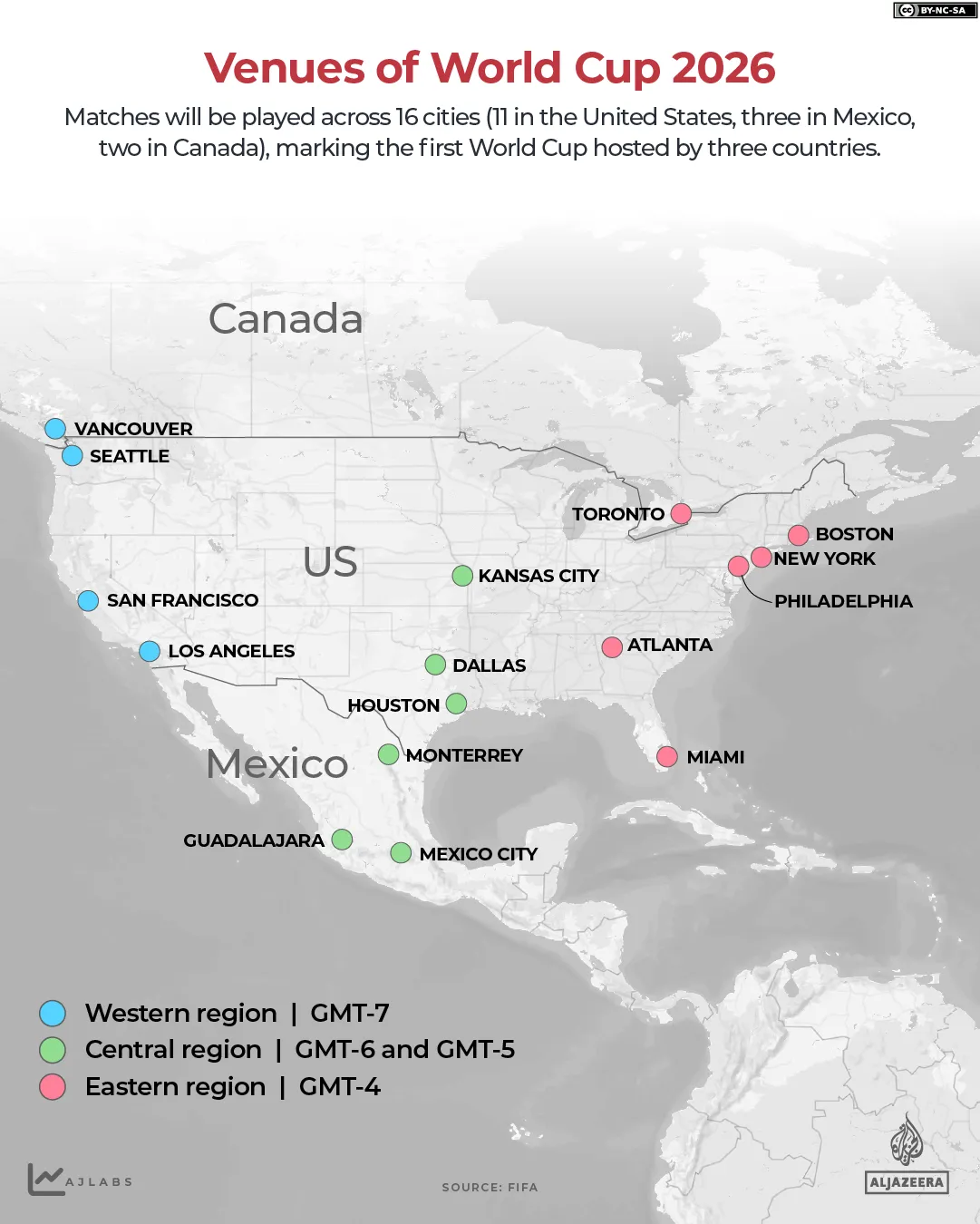
“Around half a dozen of the venues are prone to extreme heat; places like Dallas, Houston, Miami and the Mexican venues are all likely to swelter,” Fox said.
Daytime temperatures there are expected to average 28C, though the stadiums in Dallas, Houston and Atlanta have air conditioning.
Approximately 26 of the 104 matches could reach at least 26C in the Wet Bulb Globe Temperature (WBGT) index — which measures how effectively the body can cool itself — while five games are expected to be played in conditions of 28C WB or higher, according to World Weather Attribution (WWA), a network of climate scientists.
Of those 26 matches, 17 will be played in stadiums with cooling systems, reducing risks for players and fans.
But more than a third of the games with a one in 10 chance of exceeding 26C will be in venues without air conditioning.
How do hotter temperatures impact athletes’ performance?
Heat stress due to increased humidity, exposure to solar radiation and the effects of wind speed will impact players running around in direct sunlight, Fox said.
“All this makes it harder for the body to cool down as it becomes harder for sweat to evaporate as quickly,” said Fox, a senior meteorologist with more than 30 years of experience.
Physical performance coach Raiyan Abbasi explained that, although the body sweats to achieve thermoregulation – a process that allows the body to maintain its core internal temperature – excessive sweating due to heat could lead to dehydration, cramps and increased fatigue.
Are athletes used to such high temperatures?
“Yes, the majority of athletes will know how to deal with this kind of heat since they’re elite players training and competing in various conditions,” said Abbasi, who has worked as a physical performance coach for British clubs Swansea and West Ham, as well as the Pakistan national side.
Teams will have a performance coach and medical staff to make sure players are ready for the tournament, including through acclimatisation, Abbasi explained – echoing what Kane said over the weekend after his side beat New Zealand 1-0 in Tampa, Florida, where temperatures soared beyond 30C.
Do athletes from hotter nations have an advantage?
World Cup nations whose players train in hotter climates may have a slight advantage when it comes to adjusting to high temperatures in the US.
“But essentially, countries that prepare and perform well can minimise that difference,” Abbasi said, adding that heat can be used positively too.
“Heat is a significant factor in creating good athletes; one way to improve athletic capabilities is to train in the heat.
“It can make big adaptations in your body to improve body temperature.”
Could the World Cup have been held before or after summer in the US?
Fox noted that international tournaments are traditionally in the European domestic off season, which is when the 2026 World Cup is being held.
“Ideally, US weather is most conducive in the spring and autumn, but you’d then be looking at the tornado season in spring and hurricane late summer through autumn before you even begin to think about their domestic sports which locals have more interest in,” Fox said.
What measures has FIFA taken for players and fans?
FIFA said it has carried out heat-risk planning, with measures including three-minute hydration breaks in each half of games, cooling infrastructure for fans and players, adapted work-rest cycles, and enhanced medical readiness that scale according to real-time conditions.
“The hydration breaks probably need to be longer to gain full benefit, but then you risk turning it into a game of four quarters,” Fox said jokingly, although he argued that FIFA could have confined games to northern parts of the US and Canada.
FIFA has also delayed kickoff times for some matches to start outside the hottest afternoon hours.
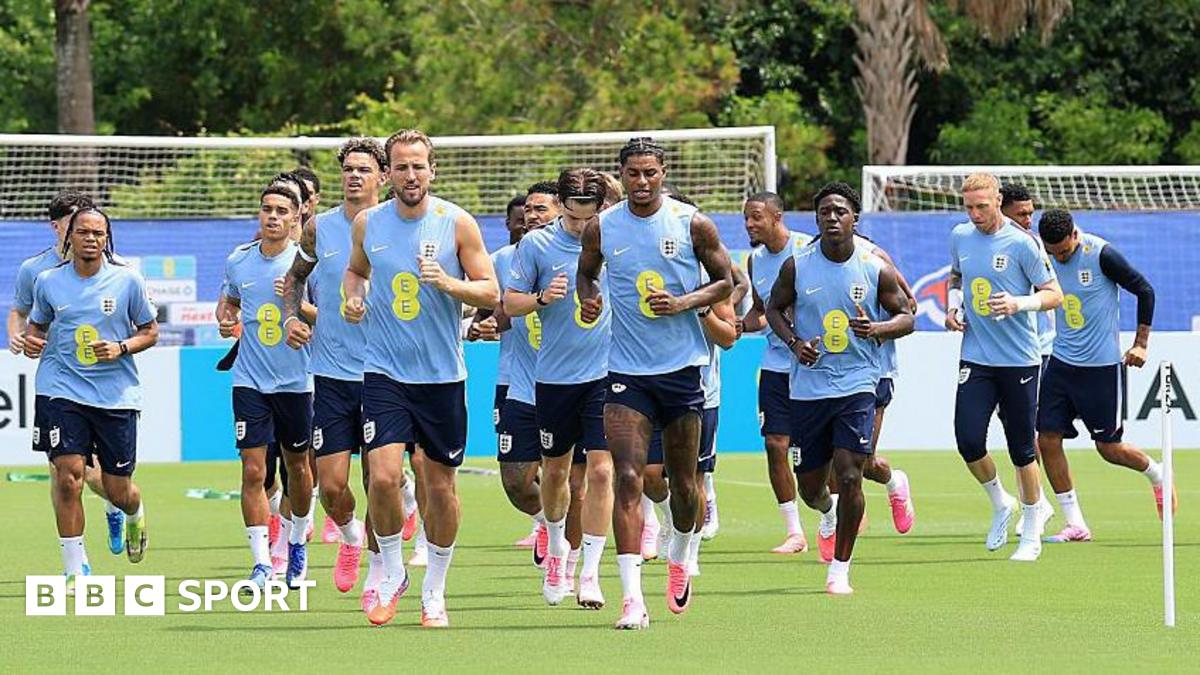
England players are set to use high-tech palm-cooling devices in the United States to help combat the heat during the World Cup.
The expected hot and humid conditions during the tournament will be a crucial factor with studies showing that at least a third of the games during the World Cup will be played in temperatures higher than 26C.
On Tuesday, temperatures reached 32C during England’s opening training session in West Palm Beach, Florida.
The use of palm-cooling equipment is becoming popular among professional athletes, with Manchester United known to use the technology.
Research shows that cooling the palms can significantly lower core body temperature which can prove vital for in-game recovery and ultimately enhance performance.
It is understood England will use them in training sessions and during the planned water breaks during World Cup matches.
When asked about the importance of acclimatising, Jordan Henderson said that this first week was being used to “build capacity to the conditions”, adding “the warm-up games will be good for that”.
The Brentford midfielder praised the “team behind the team” for the “top level research” that has been done on “cool down and recovery”.
“Hopefully that can give us a little edge when we get into the tournament,” he added.
England play friendly matches against New Zealand on Saturday, 6 June (21:00 BST) and Costa Rica on Wednesday, 10 June (21:00).
Thomas Tuchel’s side start their World Cup campaign against Croatia on Wednesday, 17 June (21:00) before playing Ghana on 23 June (21:00) and Panama on 27 June (22:00).
They call this place the Sunshine State for a reason. It beats down with a fierce intensity, allowing little air to puncture it… until a fierce thunderstorm hits.
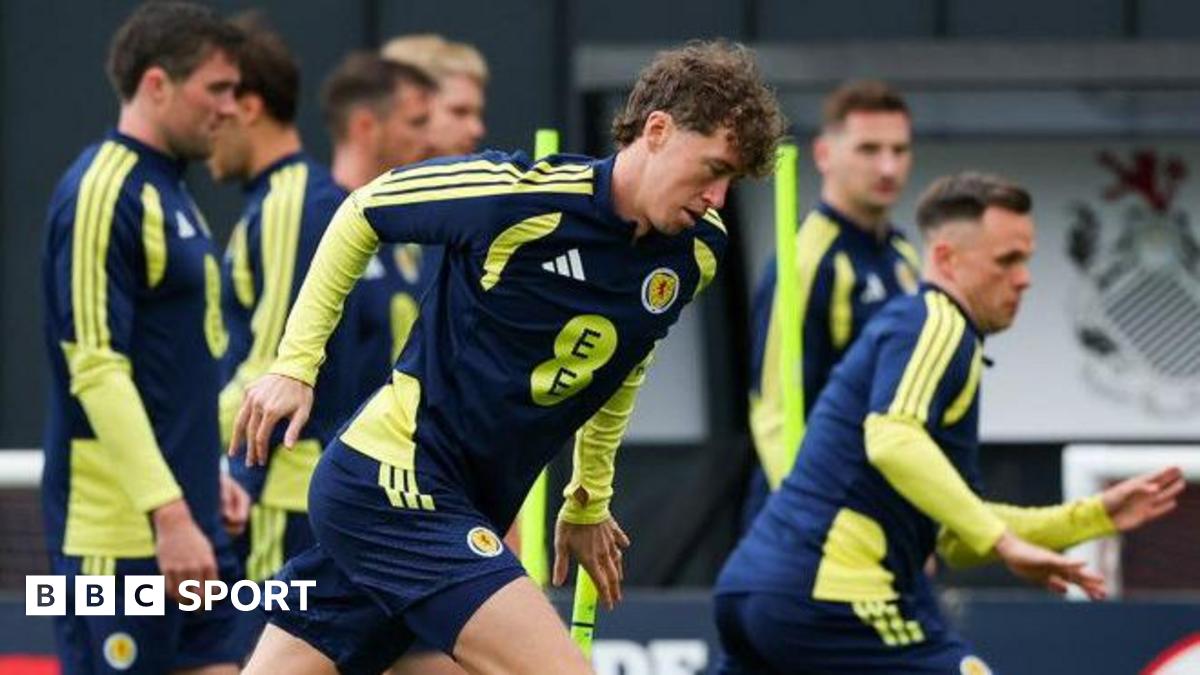
Such sweltering conditions were exactly what Clarke wanted, though, as he stressed the importance of “acclimatising” this week to the conditions his squad will face throughout their tournament.
The Scots start against Haiti (Sunday, 14 June, 02:00 BST) – live across the BBC – and also play Morocco in Boston, before returning to Miami to face Brazil on Wednesday, 24 June (23:00).
“It maybe would have been a shock if we had came out to the Miami game because it hits you as soon as you come off the plane, the humidity and the heat,” Hendry told BBC Scotland at the team’s hotel in Fort Lauderdale.
“So it’s good that we can come out here for this week, prepare and get used to it and I’m sure that will put us in really good stead going into the game.”
Water breaks will be in operation, and Hendry stressed the importance of “using them efficiently”.
“They’re certainly going to help us from a recovery point of view, but maybe tactical. as well,” he said.
“I’m accustomed to it in Saudi; we have these water breaks and it might disrupt the rhythm of the game a wee bit, but from the players’ point of view it definitely helps.”
By the time the Scots return south following back-to-back games in Boston, it could be they have already done what no other Scotland side have by reaching the knockout stages of a World Cup.
It’s undoubtedly the aim for this talented, together squad, but they’re not looking too far ahead. They’re still Scottish after all.
“It’s just trying to get as far as possible, I think,” Hendry said of what success for the country looks like this summer.
“It’s difficult to look too far ahead. The main ambition is going to be trying to get out of the group. Then we see where we can go afterwards.
“We can’t look too far ahead, just take it game by game and if we do that, enjoy it and play the best we can, then we should be able to achieve that.
“We’ve got to make the most of it and make sure we don’t come out of this with any regrets.”
“Hell’s Kitchen,” the Alicia Keys musical that has landed at the Hollywood Pantages Theatre in a blaze of rousing sound, deploys the R&B star’s glorious treasure trove of work in the service of a semi-autobiographical version of her coming-of-age story in the Manhattan neighborhood that gives the show its title.
The Hell’s Kitchen of Alicia Keys’ story, set in the 1990s, isn’t the gang-ridden Hell’s Kitchen of West Side Story, set in the 1950s. Keys grew up in Manhattan Plaza, a federally subsidized residential complex that provides affordable housing for artists. But for a teenager in rebellion from her watchful mother, the vibrant, music-filled street life comes with its share of dangers.
Kennedy Caughell as Jersey and Maya Drake as Ali in the North American Tour of Alicia Keys’ “Hell’s Kitchen” at the Hollywood Pantages Theatre.
(Marc J. Franklin)
Ali (Maya Drake, who’s making her professional debut in this North American tour production) is a 17-year-old ready to break out of the cage her mother, Jersey (Kennedy Caughell), has placed her in. Jersey, a single mom, isn’t a tyrant. She just doesn’t want to see her daughter make the same mistakes that she did, namely get pregnant at a young age before she’s had a chance to realize her own dreams.
The book by playwright Kristoffer Diaz (“The Elaborate Entrance of Chad Deity”) is structured around a loving but combustible mother-daughter relationship amid the creative ferment of New York. This artistic neverland is crystallized in the apartment building that has music pouring out of every floor when Ali rides the elevator.
Maya Drake as Ali and the company of the North American Tour of Alicia Keys’ “Hell’s Kitchen” at the Hollywood Pantages Theatre.
(Marc J. Franklin)
The story isn’t the strong suit of “Hell’s Kitchen,” which is powered by Alicia Keys’ versatile catalog, which has been supplemented with original material. The hits — “You Don’t Know My Name,” “Girl on Fire,” “Fallin’,” “If I Ain’t Got You,” “Like You’ll Never See Me Again,” “No One” and “Empire State of Mind,” among them — reverberate inside the Pantages with a thrilling exuberance.
What’s most impressive, however, is the way these tracks have been arranged both musically and dramatically. Jukebox musicals are notorious for shoe-horning in beloved songs without regard for storytelling integrity. “Mamma Mia!,” which crammed in as many ABBA hits as possible, hardly even bothered to find pretext for their inclusion. The lucrative example paved the way for more than two decades of musical theater shamelessness.
The company of the North American Tour of Alicia Keys’ “Hell’s Kitchen” at the Hollywood Pantages Theatre.
(Marc J. Franklin)
“Hell’s Kitchen,” directed by Michael Greif, takes a more dignified approach, raiding Keys’ greatest hits in a way that doesn’t cause dramatic offense and better yet, adds a layer of surprise to music that is so well known.
The songs are allocated in unexpected ways. Numbers that you might think belong to Ali are divided among the company. Jersey is first in line, and Caughell makes the most of her opportunities. But sharing in the bounty are Davis (Desmond Sean Ellington), Ali’s mostly absent and chronically unreliable father; Knuck (Jonavery Worrell), Ali’s forbidden love interest; or Miss Liza Jane (Roz White), a pianist who lives in the building and becomes Ali’s formidable mentor.
There are other characters who offer luminous assistance, but these are the principals in a musical tale built around Ali’s central relationships. Keys’ origin story is more dynamic on an atmospheric than dramatic level. A mother having difficulty with her boy-crazy teenage daughter isn’t exactly breaking any ground, and Diaz avoids venturing into more turbulent territory. Ali’s divided identity, stemming in part from an all-too-present white mother and all-too-missing Black father, sets up issues that are touched on but never deeply engaged.
Desmond Sean Ellington as Davis and Kennedy Caughell as Jersey and the company of the North American Tour of Alicia Keys’ “Hell’s Kitchen” at the Hollywood Pantages Theatre.
(Marc J. Franklin)
Miss Liza Jane spots Ali’s musical gift right away and fills her with a sense of pride and responsibility in her Black heritage. But her character’s role is somewhat earnestly compartmentalized. Knuck recognizes that Ali’s fascination with him stems in part from the way she sees him, much as her mother does, as a “thug.” But their tentative affair is secondary to the complex bond between Ali and Jersey, whose troubled connection with Davis helps Ali understand why her mother is so paranoid about her romantic choices.
But these concerns fall away when the performers start singing. Drake has a beautiful voice, but her Ali is slighter than that of Maleah Joi Moon, who won a Tony for her Broadway debut performance. I didn’t mind that Davis sings “Fallin’,” as Ellington has a voice of luscious thunder. Worrell’s Knuck more than holds his own with his duets with Ali. (In fact, I was more taken by his velvety interpretation of “Like You’ll Never See Me Again” than Ali’s more straightforwardly pretty version.) White’s Miss Liza Jane takes the Pantages audience to church in her numbers. And when Caughell magnificently directs “No One” to Ali, I can’t imagine there’s a dry eye in the house.
Desmond Sean Ellington as Davis and Maya Drake as Ali in the North American Tour of Alicia Keys’ “Hell’s Kitchen” at the Hollywood Pantages Theatre.
(Marc J. Franklin)
This tour production isn’t crisp in all areas. The dancing isn’t always smooth, the costumes struck me as a road show idea of New York cool, and the acting didn’t do much to compensate for some of the book’s less subtle moments.
But the energy of the production is infectious. “Hell’s Kitchen,” a New York story of a wunderkind discovering her gift, helped me get over my allergy to the jukebox genre. The soaring quality of the orchestra and the delectable company of voices pay exhilarating homage to a singular artist, who seems right at home at the Pantages.
‘Hell’s Kitchen’
Where: Hollywood Pantages Theatre, 6233 Hollywood Blvd., Los Angeles
When: 7:30 p.m. Tuesdays-Thursdays, 8 p.m. Fridays, 2 and 8 p.m. Saturdays, 1 and 6:30 p.m. Sundays. (Check for exceptions.) Ends June 21
Tickets: Start at $57
Contact:BroadwayInHollywood.com or Ticketmaster.com
Rosary Academy sprint coach Jon Gilmer was worried 4×100-meter relayers Tra’via Flournoy, Justine Wilson, Pfeiffer Lee and Maliyah Collins might get complacent at prelims, but the Royals were the top qualifiers in 45.13 seconds — nearly a full second faster than Canyon Country Canyon (46.07) — at Buchanan High School.
“It’s different not having Calabasas here,” Gilmer said. “Now we’ve got to push ourselves.”
Rosary set a state record (44.23) at the Arcadia Invitational on April 11, but lost to the Coyotes one week later at the Mt. SAC Relays. However, the anticipated state finals clash was not to be as Calabasas dropped the baton in the Southern Section finals and failed to advance.
Collins had a huge lead by the time she received the stick for the anchor leg Friday.
“This is maybe our fourth- or fifth-fastest time but we just wanted to make finals,” said Wilson, who ran the second leg before handing off to Lee. “We want to run faster tomorrow when we go for a PR, the meet and the state record.”
Calabasas might be out of the relay, but three Coyotes remain in contention in the 100, led by Malia Rainey (the top qualifier in 11.54), Marley Scoggins (11.63) and Olivia Kirk (11.63).
Calabasas sprinter Marley Scoggins, center, wins her 100-meter heat at the CIF state track and field preliminaries on Friday.
(Steve Galluzzo / For The Times)
Collins won her heat in 11.62, the third-fastest time.
Servite won the first heat in the boys 4×100 relay in 40.29 — two hundredths off its winning time at last year’s state finals — and is primed to defend its title in the event. Concord De La Salle (40.81) was the second-fastest qualifier, followed by the other heat winners, Rancho Cucamonga (40.87) and Loyola (40.93).
“We got the stick around pretty good today,” said Jorden Wells, who ran the first leg Friday instead of his customary second leg, which was run by Jaelen Hunter. “Did it feel different? Not really, I’ve done it before.”
Wells said his twin brother Jace will run the first leg Saturday, he will run the second while Kamil Pelovello and Benjamin Harris will stay in the third and fourth positions.
Harris, the favorite to win the 100 meters, won his heat in a wind-legal 10.36, but three others were fractions faster in wind-aided times — Elk Grove’s Cy Lugo (10.20), Will Wood’s Deshawn Seymour (10.34) and De La Salle’s Damari Dean (10.34). Newbury Park’s Jaden Griffin won the last heat in 10.37, setting the stage for an exciting finals sprint as all nine qualifiers ran under 10.48.
Harris put himself in position for a Saturday double by winning his 200 heat in 21.10 but as he did in the 100, Lugo (the Sac-Joaquin Section record holder) had the fastest time (20.73), followed by Seymour (20.88), Camren Hughes (20.93) of Palos Verdes and Jace Wells (21.02). Jordan Wells (21.11) also made the cut.
Newbury Park’s Jaden Griffin, center, shouts after winning his heat in the 100 meters at the CIF state track and field preliminaries on Friday.
(Steve Galluzzo / For The Times)
Servite (3:15.43) had the second-fastest qualifying time in the 4×400-meter relay behind only El Cerrito (3:14.96) of the North Coast Section.
Coming off a state-record 3:33.83 at the Masters Meet in Moorpark, Long Beach Wilson’s 4×400 girls relay had the fourth-fastest qualifying time (3:46.73) without two out of its best runners (Clara Adams and Saniah Varnado), taking second in the first heat behind San Luis Obispo (3:45.85) and safely advancing to the finals along with Heat 2 runner-up Rosary (3:45.08) and Heat 3 winner Canyon Country Canyon (3:46.77).
Having broken the Southern Section record in the 400 meters six days earlier in 51.98, Adams put it in cruise control to win her heat in 53.53, the fastest qualifying mark. Joining her in the final will be her three relay teammates Varnado (54.42), Wilson (54.57) and Fowler (54.62). Adams later won her 200 heat in 23.60, a tenth of a second behind fastest qualifier Naiaja Sizemore of Vanden.
San Jacinto Valley Academy’s Kaahliyah Lacy ran a wind-legal 13.59 for the top qualifying spot in the girls 100 hurdles and Varnado (40.85) was the top qualifier in the 300 hurdles.
Another showdown is brewing in the boys 400, where Loyola’s Ejam Yohannes (47.08) and Hunter (47.21) won their heats in the two fastest times Friday. Hunter clocked 46.32 to set a California freshman record last spring, but lost to Yohannes by 11 hundredths of a second at the Masters Meet.
City Section champion Jayden Rendon showed good form in his bid to defend the state 300 hurdles crown, posting the fastest prelims time (36.80). He also advanced to the finals in the 110 hurdles with a 13.83 effort. Moorpark’s Davis Benson (14.03) nabbed the last spot.
Corona Santiago’s Braelyn Combe, right, wins the first heat of the 800 meters at the CIF state track and field preliminaries on Friday.
(Steve Galluzzo / For The Times)
Corona Santiago senior Braelyn Combe won her 1,600 heat in 4:46.88 and is set for a four-lap battle with San Diego Section champion Chiara Dailey of La Jolla, who won the second heat in 4:46.00. Combe is the defending champion, having edged Hanne Thomsen of Santa Rosa Montgomery by five hundredths of a second in the finals last year.
“I just wanted to advance with as little effort as possible,” Combe said. “It was not as hard as I expected. I don’t want to leave any regrets. I’m taking it one race at a time.”
Combe also had the fastest time (2:08:25) of three heats in the 800 meters.
Venice senior Lawrence Kensinger, who set the City Section shot put record with a state-leading throw of 65 feet 11 inches last week, had the third-best mark at prelims (59-6¾) and easily advanced to the finals. Defending state high jump champion JJ Harel of Sherman Oaks Notre Dame tied nine others for the second-best mark (6-6) heading into the second day.
Aliso Niguel senior Jaslene Massey had the top marks in the girls shot put (51-3¾) and discus (175-6) and transgender athlete AB Hernandez from Jurupa Valley was the leading qualifier in the girls long jump (20-5½) and triple jump (41-8½) and was one of 13 qualifiers in the high jump.
AB Hernandez competes at the CIF state track and field preliminaries at Buchanan High School on Friday.