Travellers have shared frustration online after being left stuck in overcrowded terminals while trying to enter or leave countries within the Schengen zone
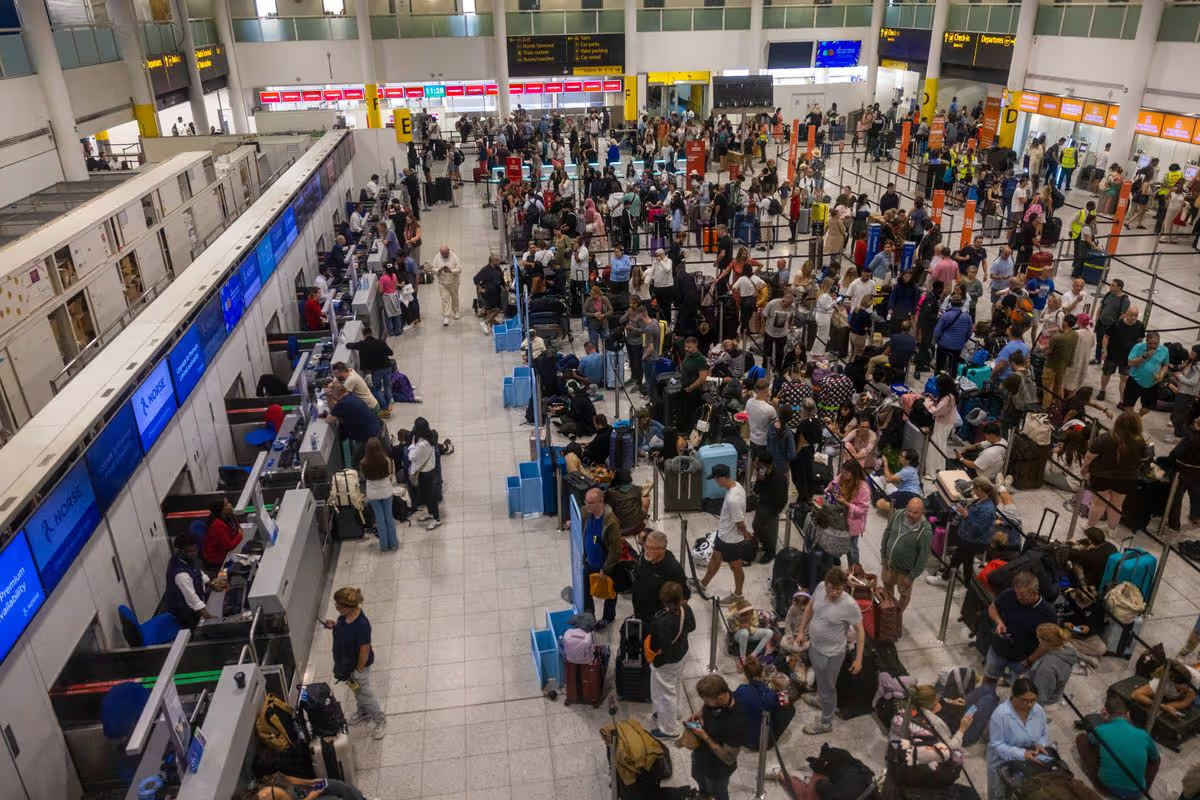
The delays come following the rollout of the EU’s Entry/Exit System (EES)(Image: Bloomberg via Getty Images)
Brits heading to Europe have been caught in hours-long airport queues, with some passengers reportedly missing flights as new border checks continue to cause disruption across the EU.
Travellers have shared frustration online after being left stuck in overcrowded terminals while trying to enter or leave countries within the Schengen zone. Turning what was meant to be a relaxing getaway quickly turned stressful due to lengthy waits at passport control.
A Facebook user, Clarissa Ward, took to Facebook today after waiting in the “longest line” she’s seen in her life saying: “I saw lots of elderly people and families with small children. People who missed connections. Others who missed flights. Me included.”
“Airport staff only let TAP (Portugal’s main airline) passengers cut the line if they were seconds away from missing their flight. Everyone else? Good luck. Since the much delayed rollout began in October there have been similar scenes in many European cities.”
Another Facebook user, Craig Hackett, explained he arrived three hours ahead of departure and checked their bag at the earliest opportunity, however was met with a “enormous” queue just to reach the boarding gate.
“As a result, we and at least 15 other passengers missed our flight through no fault of our own. There was no prioritisation for passengers at risk of missing flights, no fast tracking, and no meaningful help from airport staff or easyJet representatives”
“What makes this even worse is watching flights take off without passengers who were already inside the airport and trying to reach the gate. How is this acceptable operationally, economically, or environmentally? Where is the customer care for passengers doing everything right and still being left stranded?”
Content cannot be displayed without consent
The delays come following the rollout of the EU’s Entry/Exit System (EES), which officially launched on October 12, 2025. Under the new system, non-EU travellers including Brits are required to register fingerprints and have their photograph taken when entering or leaving the Schengen area.
The Schengen zone, which includes 29 European countries, is the world’s largest free-travel area. EU officials say the new checks are designed to strengthen border security, and reduce illegal migration.
Since the heavy delays, Airlines have taken to social media to urge governments to suspend the new Entry/Exit system (ESS). Ryanair posted on Facebook sharing: “Portuguese Government needs to suspend new Entry/Exit System (EES) until after the peak summer season. Average Ryanair flight time is 1 hour 15 minutes. Lisbon border control wait time is up to 2.5 hours. Portuguese Government must suspend EES to avoid excessive border control queue times at Portuguese airports during peak summer season”
Weekly insights and analysis on the latest developments in military technology, strategy, and foreign policy.
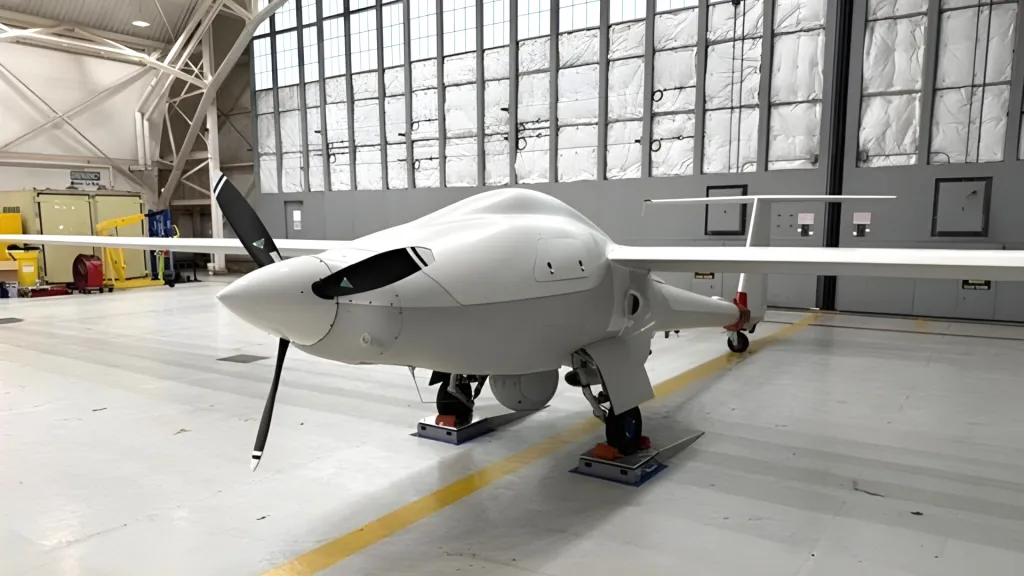
The U.S. Air Force plans to send a new version of the glider-like Unmanned Long-endurance Tactical Reconnaissance Aircraft (ULTRA) drone with a turbocharged engine to the Middle East for an operational evaluation. The ULTRA Turbo can fly faster and higher than the original design, while still being able to stay aloft for multiple days at a time.
A stock picture of an ULTRA drone. DZYNE Technologies
The Air Force’s 2027 Fiscal Year budget request includes details about the new planned operational evaluation and other plans for the ULTRA program. In April, DZYNE announced that it had secured a new contract to supply additional ULTRA Turbo aircraft to AFRL.
“FY26 [Fiscal Year 2026] funding will support an OCONUS OA [operational assessment outside of the continental United States] in CENTCOM’s [U.S. Central Command] Area of Responsibility (AOR), which is the next step (operational testing and evaluation) in developing the ULTRA system,” according to the Air Force’s budget documents. “This assessment will begin with the OCONUS OA in FY26. FY27 funding will continue the OA and fund needed capability improvements to meet user requirements.”
The Air Force’s ULTRA drones have a so-called “Multi-INT” configuration, according to the service’s budget documents, but no further specifics are provided. This term is generally used to refer to a mixture of sensors that could include electro-optical, infrared, or hyperspectral cameras; radars with synthetic aperture imaging and ground moving-target indicator modes; and/or signals intelligence suites. ULTRA drones have been seen previously at least with sensor turrets under their fuselages.
A look at an ULTRA drone at Al Dhafra Air Base in the United Arab Emirates in 2024, offering a look at its sensor turret. USAF
The budget documents also note that the new version of the drone is powered by a Rotax 916, a four-cylinder piston aircraft engine. The Rotax 916 is also used on a number of civilian ultralight aircraft, as well as other drones designed for military use, including the Hermes 900 from Elbit in Israel.
“The new engine unlocks power and operational capability at altitudes above 25,000 feet which enhances ULTRA’s mission flexibility and improves resilience in adverse weather,” DZYNE said in a press release announcing the new version’s first flight last year.
In February, DZYNE announced that the ULTRA Turbo had “completed a mission-representative flight achieving 60 hours at 25,000 feet altitude and 100 knots true airspeed (KTAS).”
At the time of writing, the company’s website says the baseline ULTRA design can stay in the air for more than 70 hours, fly at altitudes up to 25,000 feet and speeds up to 96 knots, and carry a payload weighing 450 pounds. ULTRA Turbo looks to trade some endurance (maximum flight time stated to be more than 60 hours) for increased speed and operational ceiling (120 knots and up to 30,000 feet).
An ULTRA drone in flight. DZYNE Technologies
A boost in speed would reduce the time needed to get to and from a designated operating area, especially one that is very far from the point of launch. This could also increase on-station time.
Especially for a glide-like design, being able to fly at higher altitudes can offer benefits when it comes to fuel economy. It also expands the available field of view for sensors, including when using a slanted flight pattern to peer deeper into a target area from a stand-off distance. As DYZNE has noted in past press releases, being able to operate at a higher ceiling offers benefits when it comes to getting above bad weather, as well.
DYZNE has also described the ULTRA family, the core design of which is based on a commercial sport glider, as being relatively cheap to acquire and operate, though the exact unit cost and cost per hour to fly are unclear. The drones are also said to have a small deployed footprint. The Air Force is currently asking for $16.57 million to continue work on the entire ULTRA program in the 2027 Fiscal Year.
What we know about the 2024 operational evaluation provides a more practical sense of the capabilities the ULTRA design offered even before getting a new turbocharged engine. There were indications that it involved drones flying sorties from Al Dhafra Air Base in the United Arab Emirates to Afghanistan, thousands of miles away, and back again. At the time, the Air Force was also using MQ-9 Reapers for these missions, but those drones offered only limited time on station after transiting from the Persian Gulf via the Arabian Sea and Pakistan.
A map giving a general sense of the distance between Al Dhafra Air Base, marked in red, and Afghanistan to the northeast. Google Maps
As an aside, lower-flying MQ-9s have continued to be a key element of the U.S. military aerial ISR ecosystem in the Middle East since the ULTRA operational evaluation in 2024. At a hearing last week, Air Force Chief of Staff Gen. Kenneth Wilsbach said the Reaper had been “perhaps the most valuable player” in the latest conflict with Iran, despite dozens of reported losses. The continued demand for MQ-9 coverage, but also the growing vulnerability of those drones, had already been highlighted during previous operations targeting Houthi militants in Yemen.
MQ-9 Reapers appear do be doing a LOT of the heavy lifting against mobile ground targets and vessels in Epic Fury.
As noted, active combat operations against Iran and the continued blockade of the country’s ports have only underscored the U.S. military’s immense appetite for persistent ISR coverage. In April, TWZ explored these demands in great detail in the context of the emergence of a very stealthy, extremely long-endurance, very high-altitude ISR drone commonly (but unofficially) referred to as the RQ-180, or an evolution thereof, in Greece. The RQ-180 and related designs are, of course, in an entirely different class from the ULTRA family.
As mentioned, ULTRA is also not the only effort the Air Force and other branches of the U.S. military have pursued in recent years to help provide more persistent ISR coverage in environments that do not require a highly exquisite asset like the RQ-180. Drones and balloons designed to operate in the stratosphere have also been major areas of interest, including for use in and around the Middle East and the Pacific. These are platforms that can be used as high-altitude communications nodes and even potentially for launching smaller payloads, including drones or munitions.
The continued work on ULTRA comes at a time when the Air Force is looking again at what might succeed the MQ-9. The requirements the service has put forward publicly so far, including a range of up to 932 miles and a 20-hour endurance, point to a design that would have less reach than ULTRA or ULTRA Turbo. The service also wants the Reaper replacement to be lower-cost and readily producible, allowing for greater “mass” to be committed more freely in higher-risk environments. This might leave open an operational space that an enlarged fleet of ULTRA drones could slot into as part of a larger mix of capabilities.
USAF
Altogether, though the ULTRA program is still relatively small, it does continue to expand in scale and scope, with the drones now heading back to the Middle East with new turbocharged engines.
Ruben Chorlton-Owen says lots of people are being caught out and paying a heavy price for it
Ruben Chorlton-Owen gave the advice for anyone heading to Tenerife(Image: Jam Press)
A British traveller is warning anyone heading to Tenerife this half-term to watch out for several “tourist traps” that ensnare visitors every year. Ruben Chorlton-Owen frequently posts his travel advice and tips with his 105,000 followers on Instagram (@rube).
The 24-year-old, from Abersoch, North Wales, has recently been to the popular Canary Island destination. However, while there, he noticed a few things that raised concerns. And now, he is alerting people to several common “tourist traps” that catch holidaymakers out annually, as detailed in a video amassing more than 8,000 views.
If you find yourself requiring a pharmacy, watch out for “fake” establishments selling the same product at inflated prices. He said: “They’re real shops, but they have the same LED signage (as a pharmacy) but in blue colour (rather than green).
“So it’s not entirely illegal and many tourists fall for it. People later find out the product hasn’t worked as it’s not an actual medical product.
“It’s important to find a proper ‘farmacia’ that sells actual drugs to help with any pains or issues. Fake ones also don’t really have a lot in there and also heavily charge way too much for things like sun cream or paracetamol. They’re just tourist shops really.” He also advised Brits to be careful about how they withdraw money once they arrive.
“Make sure you try and get your cash before you come here,” Ruben told creatorzine.com. “Because the local currency exchanges or these ATMs will charge you a high markup and you’ll be getting a very bad deal for your money.”
While he praises the destination for being “affordable” and “friendly”, there are still risks to be mindful of. He said: “Make sure you use the licensed taxis.
“Not only are they genuine, but they’re also much more affordable than the Uber app. And you’ll also get charged four times the price that it should be.”
Ruben also issued a stark warning for anyone heading back to their accommodation late at night or after a day of drinking in the sun. He recommends giving a wide berth to any shabby-looking areas and narrow alleyways. He said: “It’s full of pickpockets.
“It can be quite dangerous, so just make sure you stay vigilant and you’re not having too much – or use the licensed taxi to get home when it’s late at night.”
And for those fancying a cold beer or cocktail on the beach, Ruben suggests thinking twice, as it could land you with a whopping fine. He said: “If you do like to drink, make sure you don’t do it down the beach. The fines are now a minimum of €750 to €3,000.
“Make sure you just stick to the bars, your hotel room, your Airbnb. Don’t be taking any glass bottles at all down the beach, it really isn’t worth the risk.”
WASHINGTON — Seeking to reassure U.S. allies, a bipartisan group of senators is departing for a tour of Arctic nations. And this time they’re leaving the men behind.
From the eight senators to their staff and military liaison officers, the all-female group will pay diplomatic visits to government officials in four Arctic nations, witness the challenges for militaries in the region and visit a Norwegian archipelago so remote they will need escorts to avoid run-ins with polar bears.
“I want them to experience, first of all, the awesomeness of the Arctic,” said Republican Sen. Lisa Murkowski of Alaska, who is leading the trip alongside Democratic Sen. Jeanne Shaheen of New Hampshire, the top Democrat on the Senate Foreign Relations Committee.
The trip was born out of both senators’ work to stabilize relations with U.S. allies in North America and northern Europe at a time when President Trump has taken an aggressive, go-it-alone stance in the region. Just this week, the Pentagon announced that the U.S. would pause participation on a joint board with Canada for continental defense that dates back to World War II.
Murkowski and Shaheen said that is the wrong approach in an Arctic region that has increasing strategic value and unique challenges.
“We will reassure our allies that we recognize and appreciate the importance of our allies and partners in the Arctic as in so many other areas,” Shaheen told the Associated Press, adding that she expected the group to discuss “what more we can do as members of Congress to support those relationships.”
The group is split evenly between Democrats and Republicans, with Sens. Cindy Hyde Smith, Katie Britt and Cynthia Lummis making up the Republican side, and Sens. Maggie Hassan, Kirsten Gillibrand and Catherine Cortez Masto from the Democrats. Departing Friday, they will visit Arctic or sub-Arctic regions in Canada; Greenland, which is an autonomous territory of Denmark; Svalbard, a Norwegian archipelago that is one of the northernmost inhabited areas on Earth; and Iceland.
Understanding the Arctic
Murkowski and Shaheen said they want the group to come away with a deeper understanding and appreciation for Arctic communities that are experiencing the effects of climate change, as well as the unique challenges of conducting military operations in the region.
“It’s to understand what it means to go into a remote, isolated community that has no access by road,” Murkowski said, adding that the group would see how military sites need airplane hangars because aircraft cannot be kept outside overnight in the Arctic cold.
NATO has recently tried to foster cooperation in the High North through a series of joint military exercises, especially as nations like China and Russia increase their activities there.
As climate change thins the Arctic ice, it could potentially create a northwest passage for international trade as well as reignite competition with Russia, China and other countries over access to the region’s mineral resources. The region is also host to a number of undersea cable projects that hold strategic value.
The group will also visit Indigenous communities that have lived in the region for generations and understand the environment. Murkowski said she hopes the senators come away from the trip “excited and intrigued and hopefully inspired.”
As Trump threatened to take Greenland earlier this year, Shaheen and Murkowski also teamed up to push for legislation that would prevent the U.S. from attacking any fellow NATO member. They are among the lawmakers pushing to include language in this year’s defense legislation that would prevent the Trump administration from withdrawing military commitments to NATO allies.
Shaheen said, “I also want to know if there are policy directives that we should be thinking about. And it will be great to have a strong bipartisan group there to discuss what we might want to do when we get back.”
How an all-female trip will be different
For some of the nations the group will be visiting, a high representation of women is nothing new. Iceland’s parliamentary body is comprised of roughly 46% women, one of the top ranking countries globally for female political representation.
Shaheen said that research suggests that “when women are the negotiating table, that agreements that are made have a much better chance of lasting for a longer period of time.”
She added that data show that representation of women in government leads to more stable societies, as well as investments back into their communities.
“There are very real reasons why we need to make sure that women are at the table,” she added.
Current events are causing all sorts of problems, according to a currency exchange expert
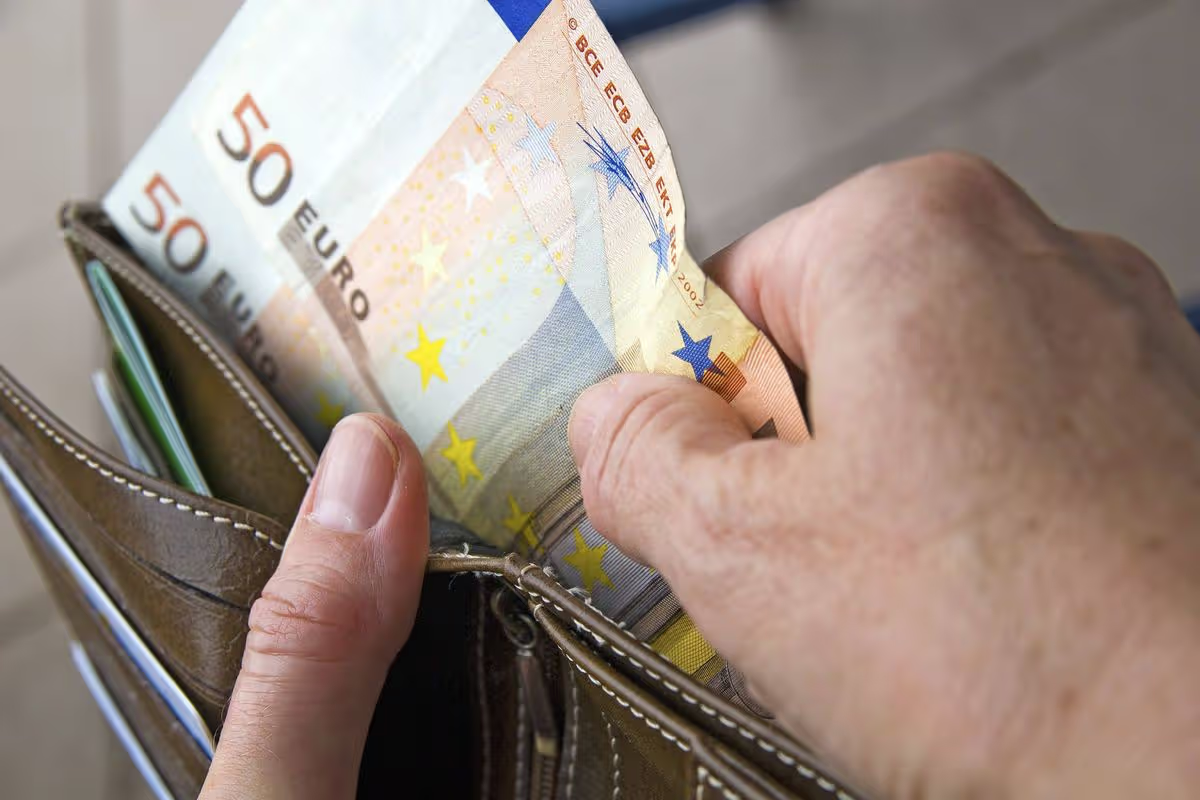
Euros could cost more(Image: imageBROKER/Frank Roeder via Getty Images)
Brits heading abroad this summer are being given a new warning.
Towards the close of last week, Sterling dropped to a three-week low against the Euro and a five-week low against the US Dollar, spelling trouble for Britons travelling overseas. The decline, according to a foreign exchange expert, stems from two key factors.
Tony Redondo, founder of Newquay-based Cosmos Currency Exchange, explained: “Firstly, markets are worried that Britain is heading towards a period of political instability. Secondly, they are worried about how the UK economy will cope with an expected rise in inflation.
“Though inflation fell to 2.8% today, it is expected to rise, potentially sharply, in the months ahead as the impact of rising oil prices due to the conflict in the Middle East hits the UK economy in full. If markets believe higher inflation makes UK gilts a not–so-safe bet, that will apply further downward pressure on Sterling.”
Tony noted the weakened Pound was hammering holidaymakers venturing abroad, as their money was now “plummeting” in value against currencies like the Euro and Dollar – a situation that “could get worse in the weeks and months ahead”.
However, he highlighted that a struggling domestic economy and Sterling’s persistent fragility was prompting an increasing number of businesses to fundamentally reconsider how and where they sell their services.
Tony added: “If they’re anything, the UK’s businesses are resilient and proving they can adapt. During 2026 to date, we’ve seen a sharp rise in UK businesses moving away from difficult domestic conditions and looking for customers overseas.
“Rather than having all their eggs in one UK economic basket, a growing percentage of UK firms are now marketing and selling their products and services online to customers in Europe, America, Canada, Australia and even Singapore and Hong Kong.
“If there’s one silver lining to the weak UK economy, it’s that many traditionally domestic UK small businesses have become international ones, as they cast their nets ever wider in search of customers and profit.
“The ability to ply your trade internationally has never been easier and it can massively boost a company’s bottom line.”