Gulf

Rubio: US ‘completely aligned’ with Gulf allies on Iran | Politics

NewsFeed

US Secretary of State Marco Rubio said Washington will be “completely aligned” with Gulf allies in Iran peace talks. Rubio met Kuwait’s Crown Prince Sheikh Sabah Al Khalid Al Sabah during a visit to the region after the US and Iran signed an MoU.

Source link

China, Egypt, and Iran: Challenging U.S. Military Presence in the Gulf

The Chinese strategy employs research and intelligence institutions working to foster closer ties between Iranian national security institutions and the Egyptian military, aiming to undermine the American presence in the Middle East. Prominent among these institutions are the Middle East Studies Institute at Shanghai International Studies University, the China Institute of International Studies, and the Center for West Asian and African Studies. These Chinese research centers, which shape China’s relations with countries in the region and the Gulf, include the Middle East Studies Institute at Shanghai International Studies University (SISU), which directs studies related to security and defense issues and facilitates direct dialogue between think tanks in Iran and research centers in Egypt. Another example is the China Institute of International Studies (CIIS), which reports directly to the Chinese Ministry of Foreign Affairs and works to engineer diplomatic plans that align Egypt’s strategic interests with the objectives of Tehran and resistance movements in the region. Chinese think tanks and intelligence agencies also rely on a number of People’s Liberation Army-backed space intelligence companies, such as MizarVision and EarthEye. These Chinese companies have provided high-resolution satellite imagery and intelligence data to support operations targeting US bases in the Gulf and the Middle East. These Chinese entities coordinate and plan operations through various mechanisms and initiatives officially launched by China, most notably the Global Security Initiative (GSI). Beijing also uses forums, such as the China-Arab Cooperation Forum, to pressure Middle Eastern and Gulf countries to withdraw foreign forces and end US hegemony in the Gulf and the Middle East. This is framed as ending direct interference in the internal affairs of countries in the region. Beijing is also seeking to establish permanent overseas bases, most prominently the Djibouti naval base in East Africa, to support its regional alliances and ensure the continuity of global supply lines for Chinese interests and investments within the framework of the Belt and Road Initiative.

The relationship between Chinese military and intelligence think tanks and the Egyptian army is highlighted by their shared goal of countering American hegemony and expelling US military bases from the Gulf and the Middle East. China is strengthening its strategic cooperation with the Egyptian army as part of the Djibouti-UAE-Egypt axis, with Beijing relying on Cairo as a key launching pad to secure maritime navigation and reduce American military influence. Beijing is utilizing its strategic institutions and think tanks to provide technological and logistical support to the Egyptian army, aiming to create a regional power capable of maintaining strategic balance in the region against American hegemony and interventions. This escalating security and strategic relationship between the Egyptian and Chinese armies rests on several key pillars, most notably intelligence and military partnership. China aims to train the Egyptian military elite through Egyptian military academies and coordinate threat assessments and mutual monitoring of the military movements of the United States and its allies in the Gulf and the wider region. With the implementation of several joint exercises between the two sides, the Chinese vision crystallized in the (Civilization Eagles maneuvers), which brought together the air forces of China and Egypt. This paves the way for the transfer of military technology and the integration of Chinese systems with Egyptian defenses independent of the West, along with the localization of Chinese military industries in the heart of Cairo. China is negotiating with the Egyptian Ministry of Defense to develop local manufacturing capabilities and transfer defense technology. There are also reports of integrating Chinese systems into Egyptian systems to reduce Egypt’s dependence on American-supplied weaponry. Beijing seeks to create a counterweight to American hegemony in the Middle East and the Gulf. China sees Egypt’s refusal to host any American military bases as a cornerstone of its strategy, relying on the Egyptian and Emirati armies to guarantee regional security as an alternative to the traditional American presence in the Gulf and the Middle East.

Chinese research, military, and intelligence think tanks are working to engineer an asymmetric strategic partnership to end American hegemony in the Middle East and the Gulf. Chinese think tanks, military research centers, and intelligence agencies are operating according to a clear strategic vision aimed at building asymmetrical partnerships in the Middle East and the Arabian Gulf to reduce American influence and establish a multipolar world order. Beijing provides Tehran with technical and intelligence support to deter Washington, while simultaneously seeking to strengthen military cooperation with Egypt as a pivotal regional power. This strategy aims to diminish American influence and secure China’s vital economic interests. The Chinese strategy in the region rests on several pillars, most notably its strategy toward Iran and its technical and intelligence support for the country. China has secretly supplied Iran with advanced satellite technology from its BeiDou satellite system, bypassing Western and American GPS systems, as well as sophisticated air defense systems. This has significantly enhanced the Iranian Revolutionary Guard’s ability to monitor and target American military bases in the region and the Gulf.

The objectives of Chinese think tanks, political, strategic, military, and intelligence research centers become apparent here, as they attempt to plan a path to link Iran to China’s Belt and Road Initiative and transform Iranian military pressure into a tool for destabilizing the US bases deployed in the region and the Gulf. The convergence between China and the Egyptian military is highlighted through the comprehensive strategic partnership between the two countries. Beijing is inclined to strengthen military cooperation with Egypt, capitalizing on its political stability and its geographic location controlling vital maritime trade routes, and to transfer advanced Chinese military technology to Egypt. Beijing has revealed its desire to be a major supplier of equipment to the Egyptian army, such as the J-10 aircraft. This aims to increase Egypt’s strategic maneuvering room and reduce the dominance of Western weaponry.

The stability achieved by the Egyptian leadership is a fundamental pillar supporting the comprehensive strategic partnership, as Beijing seeks to secure its economic and military interests with a stable and influential regional power. Therefore, China is investing in the Belt and Road Initiative, for which the Suez Canal is a vital artery in the Middle East. Cooperation extends to the exchange and transfer of military technology, joint military manufacturing, advanced air defense systems, and the evaluation of potential acquisitions of modern Chinese fighter jets. Furthermore, joint air exercises have been conducted, with the Egyptian Armed Forces carrying out their first-ever joint air exercise, dubbed Eagles of Civilization with China, involving multi-role fighter aircraft from both countries, underscoring the deepening defense partnership between them.

In this context, China relies on the Egyptian military within the framework of its strategic and African axis to counter American influence. For China, Egypt represents its strategic gateway to the African continent and a cornerstone in its maneuvers against the US Africa Command (USAFRICOM). In addition to joint military exercises, China and Egypt have conducted joint air force drills, a clear indication of an unprecedented military rapprochement that has drawn close American scrutiny. With China’s move to transfer technology and arms deals to Cairo, it is positioning itself to support the Egyptian army with advanced air defense systems, such as the HQ-9B. This enhances Egypt’s air deterrence capabilities and forms part of strategic military deals aimed at reducing dependence on the United States and its Western allies. On the other hand, China relies on Iran as a deterrent and direct driver, exerting pressure on American bases in the region. Iran represents the spearhead of China’s brinkmanship policy against American military bases in the Gulf, Iraq, and Syria, with Tehran threatening to strike them should any regional conflict erupt. In conjunction with the economic and diplomatic alliance between Beijing and Tehran, China uses emerging alliances, such as the BRICS group and the Shanghai Cooperation Organisation (SCO), to establish Iran’s political foothold. It sometimes resorts to mediation policies as a tool to reduce the likelihood of a direct confrontation with Iran, which could harm its commercial interests, such as China’s sponsorship of Pakistani mediation efforts between Iran and the United States to stop the war against Iran and allow the Strait of Hormuz to be opened to global trade and navigation.

China’s major objectives in the Middle East lie in a strategy of attrition against the United States. China uses Iranian actions as a clever pressure tactic to test and deplete American military technology without direct involvement in wars of attrition, while simultaneously attempting to create a new regional order. Here, Chinese intelligence agencies coordinate networks of overlapping interests to push countries toward understandings that transcend the American security umbrella, paving the way for the future withdrawal of foreign military bases. The pillars of China’s strategy for alternative hegemony are based on asymmetric partnerships. Beijing focuses on presenting itself as a reliable economic and technological partner without political conditions or interference in internal affairs, unlike the American model based on conditionality and direct military alliances. With China’s emphasis on the economy as a gateway to security, it utilizes the Belt and Road Initiative and its massive investments in infrastructure and ports, such as the Khalifa Port in the UAE and the Port of Duqm in Oman, to solidify its strategic presence and transform economic dependence into long-term geopolitical influence. With Beijing’s use of security diplomacy and mediation, Chinese decision-making centers have adopted a common security approach and offered political mediation, such as sponsoring the Saudi-Iranian agreement, to solidify Beijing’s role as an international peacemaker and portray the United States as a destabilizing force through the militarization of the region. This is coupled with China’s technological and intelligence penetration of the region and the Gulf, where Chinese partnerships focus on transferring 5G technologies, artificial intelligence, and space cooperation with Gulf states. This grants Beijing intelligence-gathering capabilities and allows it to connect the region’s vital systems to the Chinese technological infrastructure. Chinese think tanks and intelligence agencies are planning to cautiously fill the void, as China avoids direct military confrontation with Washington in the region and prefers to capitalize on the Gulf states’ desire to diversify their partnerships and hedge against the gradual decline of American interest in the Middle East.

Accordingly, we analyze that China’s military strategy in the Middle East and Africa relies on building defense partnerships with diverse objectives. It utilizes the Egyptian army as a pivotal regional power to bolster its influence and counterbalance the American presence through advanced training cooperation while simultaneously leveraging its relationship with Iran to exert pressure on American bases, particularly in the Gulf, and secure its oil interests all within a comprehensive policy aimed at dismantling American hegemony in the region.

Source link

Expert issues ‘stand by’ warning as Foreign Office eases Gulf travel warnings

The Foreign Office has lifted its no-go travel warning after Iran and the US signed a deal

A travel expert has provided an update on journeys to and from the Gulf region following the US and Iran reaching an agreement to cease hostilities between the two nations. Speaking outside the Foreign, Commonwealth & Development Office (FCDO), Simon Calder confirmed that travel insurance was ‘once again valid’ after both the Iranian and American presidents put pen to paper on a deal to end the conflict.

This prompted the FCDO to lift its advice against travelling to several Gulf States. Nevertheless, it cautioned that the ‘situation remains unpredictable’ amid ongoing regional tensions.

Mr Calder stated that those wishing to visit the region could now do so ‘with some confidence’. He said: “I’m at the Foreign Office which has just changed its advice for travellers going to the Gulf region, in particular Dubai, which last year was visited by 1.4 million British travellers.

“As from now, the no-go warning which prevailed for the whole of the UAE, including Dubai and Abu Dhabi, as well as to the countries of Qatar, Bahrain and Kuwait, has been lifted. The Foreign Office still warns that you need to be ready for trouble to resume at any time, but it means that travel insurance is once again valid and anybody planning a trip to the UAE or Qatar or elsewhere in the region can do so with some confidence.

“The immediate effect, I think, is going to be a big marketing campaign by the giant airlines: Emirates of Dubai, Etihad of Abu Dhabi, and Qatar Airways based in Doha. They will be wanting to get people to both connect through their hubs, but also to take summer holidays. Be warned, it is extremely hot with average daily highs around 40°C.”

Content cannot be displayed without consent

Not only do millions of holidaymakers head to the Gulf states, but countless others use them as a stopover for journeys to Asia and Australia. That meant the tourism industry took a particularly severe blow when the US and Israel launched strikes on Iran in late February.

The FCDO decision means tourists can now return without putting their travel insurance at risk. But that doesn’t mean flights will restart straight away.

Virgin Atlantic halted flights until winter 2027 after the conflict began, and a spokesperson confirmed on Thursday that this ‘remains the case’.

British Airways announced earlier in June that it wouldn’t restart flights to the UAE until October 2026. Emirates has maintained flights to and from the region throughout the hostilities.

Mr Calder continued: “The immediate effect, I think, is going to be a big marketing campaign by the giant airlines: Emirates of Dubai, Etihad of Abu Dhabi, and Qatar Airways based in Doha. They will be wanting to get people to both connect through their hubs, but also to take summer holidays. Be warned, it is extremely hot with average daily highs around 40°C.”

“But it means that anybody who’s planning to travel perhaps to Asia or to Australia now will be able to travel with confidence through one of the Gulf hubs. In addition, I imagine that airfares will fall because the Asian carriers will not be able to command such a premium.

“Stand by for some really good holiday offers, but I personally won’t be seeing you on the beach in Dubai until about November.”

Source link

U.S. military lifts naval blockade in Strait of Hormuz, Gulf of Oman

June 18 (UPI) — The U.S. military on Thursday lifted naval blockades in the Persian Gulf and Gulf of Oman, with reports showing that shipping vessels have departed the region through the Strait of Hormuz.

U.S. Central Command said in a series of posts on X that, following direction from President Donald Trump, blockades on maritime traffic along the coasts of Iran have ended.

Centcom noted, however, that the U.S. Navy will stay in the “general area” to be sure that “all aspects” of the peace agreement signed by the United States and Iran “are adhered to, obeyed and in full force and effect.”

Trump signed the agreement Wednesday at the Palace of Versailles in France after the G7 Summit wrapped up, which included among its 14 points reopening the Strait of Hormuz, which is a vital shipping route for the region and much of the world.

Iranian President Masoud Pezeshkian had signed the deal earlier in the day.

“American forces are not impeding the transit of vessels to or from Iranian ports,” Centcom said in one of the posts on X on Thursday.

“All U.S. military blockade efforts have ceased,” it said.

At least 12 energy tankers transited the Strait on Thursday, reopening a sailing route through which roughly 20% of the world’s oil supply is shipped around the globe, CNBC and the New York Post reported.

Among the vessels that transited the Strait were three Saudi Arabian supertankers, which together are carrying six million barrels of crude oil and are the kingdom’s first tankers to sail the shipping route since before the three-month-long U.S.-Iran war launched in February.

Vice President JD Vance also told reporters that more than 12 million barrels of oil had shipped through the Strait overnight Wednesday after the deal had been signed.

Source link

How the Gulf will manage collective security after the Iran war ends | US-Israel war on Iran News

As Washington and Tehran move towards a long-term ceasefire agreement, Gulf states will likely look for new long-term security solutions when a war in their region – which they did not start – finally ends.

It comes as United States President Donald Trump cancelled new strikes on Iran saying that a deal with Tehran was imminent, and that a “time” and “place” for signing would soon be announced.

Recommended Stories

list of 4 itemsend of list

In Tehran, officials appeared more cautious with one senior Iranian official telling Al Jazeera that the government was still reviewing a proposed Memorandum of Understanding with Washington.

Subsequent comments by Pakistan Prime Minister Shehbaz Sharif point to a deal being made, and what follows in the coming days could have important implications for collective regional security.

Attacks on the Gulf

The United States operates military facilities in at least 19 locations across the MENA region, including permanent bases in Bahrain, Egypt, Iraq, Jordan, Kuwait, Qatar, Saudi Arabia and the United Arab Emirates, according to the Council on Foreign Relations. Between 40,000 and 50,000 US troops were stationed across the region before the war on Iran started.

This US-Gulf nexus appeared to insulate states from conflicts engulfing other parts of the region, but over the past four months, Gulf states hosting US military facilities have been targeted by Iran.

“If there is a way to describe the prevailing security model in the region since the 1980s, the concept of security partnerships best encapsulates it,” said Mahjoub Al-Zuwairi, an academic and expert on Middle East politics.

“The countries of the region have chosen to align their security with broad international alliances. For decades, this model has provided a reasonable deterrent and logistical and intelligence depth that is difficult to replace.”

Iranians attend the funerals of Iran's Revolutionary Guards
Iranians in Tehran at the funerals of Iran’s Revolutionary Guards Corps (IRGC) commanders, army officers and others killed in the early days of the United States and Israeli strikes on Iran, March 11, 2026 [AFP]

A security umbrella with holes

The war on Iran has exposed a paradox – while Iranian officials have repeatedly referred to their Gulf neighbours as “brothers”, they have also repeatedly targeted them during the war.

Despite the protestations of Gulf states that no attacks on Iran were launched from their soil, they have been repeatedly targeted.

At least 28 people have been killed across the six Gulf Cooperation Council (GCC) states in suspected Iranian drone and rocket attacks, since the US and Israel launched their offensive on Iran on 28 February. This has led to questions about the US-Gulf security arrangement.

“Just the war itself has pierced that sense of security, the US security umbrella is moribund at worst, or ineffective at best,” Simon Mabon, professor of international relations at Lancaster University, told Al Jazeera.

“They’ve long relied on it for their own security. Yet the presence of US forces on their territory directly meant they became targets. They can’t escape their geography [and] despite the tensions, despite the hostilities, despite the attacks, Iran isn’t going away. They have to find a way of dealing with this reality.”

The economic cost of war

The closure of the Strait of Hormuz has proven be a setback for some Gulf states working to diversify their energy-reliant economies towards tourism, services and finance, but not all have been affected equally.

Saudi Arabia was able to redirect some oil exports through its East-West pipeline to the Red Sea, while Oman – whose main ports are outside the Strait of Hormuz – has also benefited from rising energy prices.

The UAE, Bahrain, Kuwait and Qatar have been more heavily affected due to their dependence on the waterway for their energy exports, but the war has encouraged new thinking on long-standing security and economic arrangements.

“There are new pipelines being set up, but the capacity of these alternatives is infinitely smaller than the Strait itself,” said Mabon. “It will take enormous investment and years of development before they can come close to replacing it.”

Moving closer to Iran?

One possible lesson from the conflict is that Gulf states may seek engagement with Iran rather than confrontation, something that Gulf states had already made some groundwork on before the US-Israel war began.

The UAE restored diplomatic ties with Tehran in 2022, and a year later, Saudi Arabia and Iran agreed to normalise relations in a deal brokered by China.

Al-Zuwairi says that the conflict could revive plans for MENA-led regional security arrangements, as envisioned in the 2019 Hormuz Peace Initiative, which proposed a Gulf security framework involving Iran, Iraq and the six GCC states.

But the distrust fostered since then – notably Tehran’s strikes on its Gulf neighbours – would make such a formation unlikely in the near future. 

“The recent war has opened the door wide to reconsidering the Gulf security system with its neighbours,” Al-Zuwairi said.

“How can Tehran propose a non-aggression pact while raining missiles on neighbouring cities? The initiative appears theoretically sound but practically bankrupt unless Iranian behaviour changes.”

Looking beyond Washington?

The solution for the Gulf could be a hybrid arrangement where ties with Washington are maintained, but other regional and domestic options are explored, including greater investment in local defence industries.

A possible blueprint for this could be the mutual defence agreement between Saudi Arabia and Pakistan last September, stating that an attack on one country would be considered an attack on both.

Yet previous instances when Gulf states felt abandoned by the US have led to divergent responses, with the UAE and Bahrain deepening ties with Israel, but a new paradigm means that a more collective action to the issue of security might be considered.

“The war has demonstrated that every guarantor, no matter how many banners it flies, primarily protects its own interests,” said Al-Zuwairi.

“The region ends up paying the price for a war it did not choose … The security of the Gulf will not be created in Washington … It will be created when Gulf countries recognise that they must build it themselves, because when fires start, it is always those closest to the flames who pay the price.”

Source link

This Is The Corsair Drone Boat That Plucked The Downed Apache Crew Out Of The Gulf Of Oman

U.S. Central Command (CENTCOM) has confirmed a Saronic Corsair was the uncrewed surface vessel (USV) that rescued the crew of a U.S. Army AH-64 Apache out of the Gulf of Oman overnight. President Donald Trump has also now said Iranian forces downed the attack helicopter, and promised a response. This is the first known instance of a drone boat being used to recover personnel as part of a search and rescue mission, and has major implications for these operations going forward. Readers can otherwise get up to speed on what is already known about this incident in our initial reporting here.

“The surface drone that assisted in last night’s rescue of the Apache crew off the coast of Oman was a U.S. Navy Corsair unmanned surface vessel operated by U.S. 5th Fleet’s Task Force 59,” U.S. Navy Capt. Tim Hawkins, a CENTCOM spokesman, told TWZ. “The task force began fielding these drones in theater in late March.”

A top-down look at a Saronic Corsair USV. Saronic

The Navy confirmed last December that it had signed an Other Transaction Authority (OTA) deal with Saronic, valued at $392 million, for the production of Corsair USVs. The Corsair, which the manufacturer also calls an autonomous surface vessel (ASV), is a 24-foot-long drone boat with a speedboat-like design that was first unveiled in 2024. The manufacturer says it has a maximum range of 1,000 nautical miles, a top speed of 35 knots, and a 1,000-pound payload capacity.

The Corsair “picked them [the Apache crew] up and transported them to another location on the water where they were then hoisted up to a helicopter for further transport,” Capt. Hawkins, the CENTCOM spokesperson, added.

CENTCOM had already confirmed to TWZ and others that an unspecified USV found and rescued the two aircrew from the downed Apache. The Wall Street Journal was first to report the specific type of drone boat employed.

The Army aviators spent approximately two hours in the water before being recovered safely, according to a previous CENTCOM statement. As mentioned, President Donald Trump has also now separately said that Iranian forces were responsible for bringing down the Apache, and that a U.S. response will be forthcoming.

Since its establishment in 2021, the Navy’s Task Force 59 has been charged with helping expand the service’s operational use of uncrewed platforms, as well as artificial intelligence (AI) and machine learning-driven capabilities, across the Middle East. It has operated an array of different types of USVs, as well as uncrewed aerial systems, over the years.

How many Corsairs Task Force 59 has currently, as well as their exact configuration, is unclear. Pictures and videos that Saronic has released to date have shown Corsairs fitted out primarily for surveillance and reconnaissance missions, with a camera turret on top of a central mast-like frame. A commercial navigation radar, additional cameras to help provide extra situational awareness, and various other antennas have also been seen fitted to that frame. Saronic has talked about integrating other capabilities to enable additional mission sets, including launchers for loitering munitions, in the past.

A picture showing the most typical configuration of the Corsair USV that has been seen to date. Saronic

Saronic also says Corsair has a high degree of autonomy, with the type having logged more than 100,000 nautical miles of total travel to date, including multi-day missions. The SUV is designed to be employed independently or in networked swarms, according to the company. Human operators are in the loop during these operations via datalink.

“Corsair can be given a mission, alone or as part of a collaborative swarm, and execute with minimal human interaction to deter or counter adversarial threats at a range of 1,000 nautical miles,” Saronic said in a press release back in 2024. “Employing redundant communications and passive perception capabilities, Corsair can autonomously identify, track, follow, and intercept targets in contested and communications denied environments.”

These are all capabilities well suited to the U.S. Navy’s immediate needs in the Middle East, especially in support of the current blockade of Iranian ports. Corsair would notably offer a lower-risk way to closely shadow vessels that might be attempting a run into or out of the area. Corsair’s ability to automatically spot and track objects of interest would have helped in finding and rescuing the downed Apache crew, too. It is worth noting here that automated target detection is also a key part of Corsair’s ability to safely navigate autonomously, day or night, especially in congested waterways, as seen in the video below.

Corsair’s overall performance in the Middle East could easily translate to further operational use of this USV by the Navy globally. The service has particularly significant demands for persistent maritime surveillance and reconnaissance capacity, as well as just general presence, across the broad expanses of the Pacific. One of the key benefits that USVs offer is the ability to provide additional distributed ‘mass’ at relatively low cost. This can help bolster the capabilities of crewed platforms they are networked together with or just ease the operational strain on those assets.

The Navy has now also clearly demonstrated how valuable USVs could be in future maritime search-and-rescue operations worldwide. This, in turn, underscores the benefits uncrewed platforms bring to these missions, especially in the face of growing anti-air and other threats.

As we already wrote today:

“As TWZ regularly highlights, search and rescue operations present inherent complexities and risks, especially when conducted in or near hostile territory. The F-15E rescue effort in Iran put a particular spotlight on the immense risks that combat search and rescue (CSAR) forces take, with helicopters and C-130 variants sent into areas where even a high-end fighter aircraft didn’t survive.”

“Open-water recoveries can present distinct additional challenges. There is always the possibility of the loss of additional assets and personnel in the process, no matter where a CSAR mission occurs.”

US Air Force HH-60W Jolly Green II search-and-rescue helicopters refuel from an HC-130J Combat King II aircraft. USAF

The use of a Navy drone boat in the rescue overnight highlights a new dimension for maritime CSAR going forward. These uncrewed assets can be more readily pre-positioned in a distributed manner. For example, in the broad expanse of the Pacific, USVs could be forward-deployed at multiple points along certain flight paths for this exact purpose. USVs could offer other distinct advantages in certain scenarios where they might be able to get into areas where traditional assets cannot and without risking additional personnel. These realities extend well beyond the maritime domain, and we are only likely to see uncrewed platforms of all kinds increasingly taking part in rescue efforts, especially in denied areas. The U.S. military is coming to terms with just how vulnerable their CSAR assets are and the ranges that would be needed to access highly defended areas, especially during a peer fight. Using drones to execute personnel recovery is being viewed as one part of a larger set of solutions to this pressing problem.

The additional detail we have now that the Corsair USV brought the downed aircraft to a territorial location, where they were then hoisted into a helicopter, is notable, too. This further shows how uncrewed platforms could be used as part of a distributed hub-and-spoke-style concept of operations for future rescue missions, which could increase flexibility and total area covered. USVs could be used to penetrate into especially high-threat areas, recover personnel, and then bring them to crewed assets at safer locations to the rear, as well.

“When it comes to search and rescue, you utilize the best asset that is the closest and the quickest, and that was the case in this instance,” CENTCOM’s Hawkins also told The Wall Street Journal today. “We’ve practiced this scenario in exercises, but not quite necessarily like this.”

Corsair’s now very public use in the Middle East could be a boon for Saronic when it comes to future sales opportunities with the U.S. military and foreign customers, as well. Corsair, by itself, has already been at least evaluated by the Pentagon’s Defense Innovation Unit (DIU) under its Production-Ready, Inexpensive, Maritime Expeditionary (PRIME) effort. It was also a finalist in the Army’s xTechPacific 2025 innovation challenge.

Saronic has multiple larger USV offerings beyond Corsair, and the company just recently launched the first example of the largest type it has in development now, the Marauder. This drone boat is 180 feet long and is designed to be able to travel up to 4,100 nautical miles while carrying 150 metric tons of containerized payloads, or even further with a lighter load.

The first Marauder prototype seen being launched earlier this year. Saronic

The Navy is already set to evaluate Marauder, as well as designs from six other companies, as part of the first round of prototyping under its latest Medium Unmanned Surface Vessel (MUSV) effort. This is part of a larger strategy the service rolled out in March to try to field more USVs and do so faster, as you can read more about here.

In the meantime, Saronic’s Corsair is already being employed operationally in the Middle East and demonstrating its ability to perform complex missions.

Contact the author: joe@twz.com

Joseph has been a member of The War Zone team since early 2017. Prior to that, he was an Associate Editor at War Is Boring, and his byline has appeared in other publications, including Small Arms Review, Small Arms Defense Journal, Reuters, We Are the Mighty, and Task & Purpose.


Source link

US-Iran ceasefire under strain as Gulf states report drone attacks | US-Israel war on Iran News

A fragile ceasefire in the US-Israel war on Iran is coming under growing strain as several Gulf countries have reported drone attacks.

Qatar said on Sunday that a drone struck a cargo ship in Qatari waters, sparking a fire, while Kuwait and the United Arab Emirates said they repelled drone attacks.

Recommended Stories

list of 3 itemsend of list

Though no Gulf country reported casualties in the latest attacks, they have put pressure on the fragile ceasefire, which took effect on April 8.

Qatar’s Ministry of Defence said the freighter had been arriving in the country’s waters from the UAE capital, Abu Dhabi, and was hit by a drone northeast of the port of Mesaieed.

“The vessel continued its journey toward Mesaieed Port after the fire was brought under control,” the ministry said.

The United Kingdom Maritime Trade Operations (UKMTO) said a bulk carrier reported being struck by an “unknown projectile”, and a small fire had been extinguished, but there were no casualties from the incident. “There is no reported environmental impact,” it said.

Kuwait’s Defence Ministry said a “number of hostile drones” were detected in the country’s airspace at dawn. In a post on X, a spokesperson said the drones were dealt with “in accordance with established procedures”, but did not specify where the drones were launched from.

The UAE Defence Ministry said two Iranian drones were intercepted.

“UAE air defence systems successfully engaged two UAVs launched from Iran,” the ministry said in a statement on X.

Ceasefire tested

The Trump administration has said the truce is still in effect, but a naval battle has been taking place in the Gulf region, with Iran restricting traffic through the Strait of Hormuz, a strategic waterway through which a fifth of traded oil transited before the war, and the United States imposing a blockade of Iranian ports.

Several attacks have been reported on ships in the Gulf and the countries in the region over the past week.

On Friday, the US struck two Iranian oil tankers, saying they were trying to breach its blockade of Iran’s ports.

On Tuesday, the UAE said it came under attack from Iranian missiles and drones for the second day in a row. Iran’s Islamic Revolutionary Guard Corps (IRGC), however, denied the claim.

The IRGC Navy on Sunday reiterated its warning that any attack on Iranian oil tankers or commercial vessels would be met with a “heavy assault” on one of the bases in the region used by US forces and enemy ships.

The spokesperson for the Iranian parliament’s foreign policy and security committee, Ebrahim Rezaei, said Tehran’s “restraint is over”.

“Any aggression against our vessels will be met with a heavy and decisive Iranian response against American vessels and bases,” Rezaei wrote on X.

“The clock is ticking against the Americans’ interests; it is to their benefit not to act foolishly and sink themselves deeper into the quagmire they have fallen into. The best course is to surrender and concede concessions. You must get used to the new regional order,” he added.

Talks to end the war

While the truce remains in effect, President Donald Trump has repeatedly threatened to resume the US bombardment if Iran does not accept a deal which includes reopening the Strait of Hormuz and rolling back its nuclear programme.

Iran is still mulling its response to a 14-point proposal by Washington, with Iranian frozen assets and war reparations among other main sticking points.

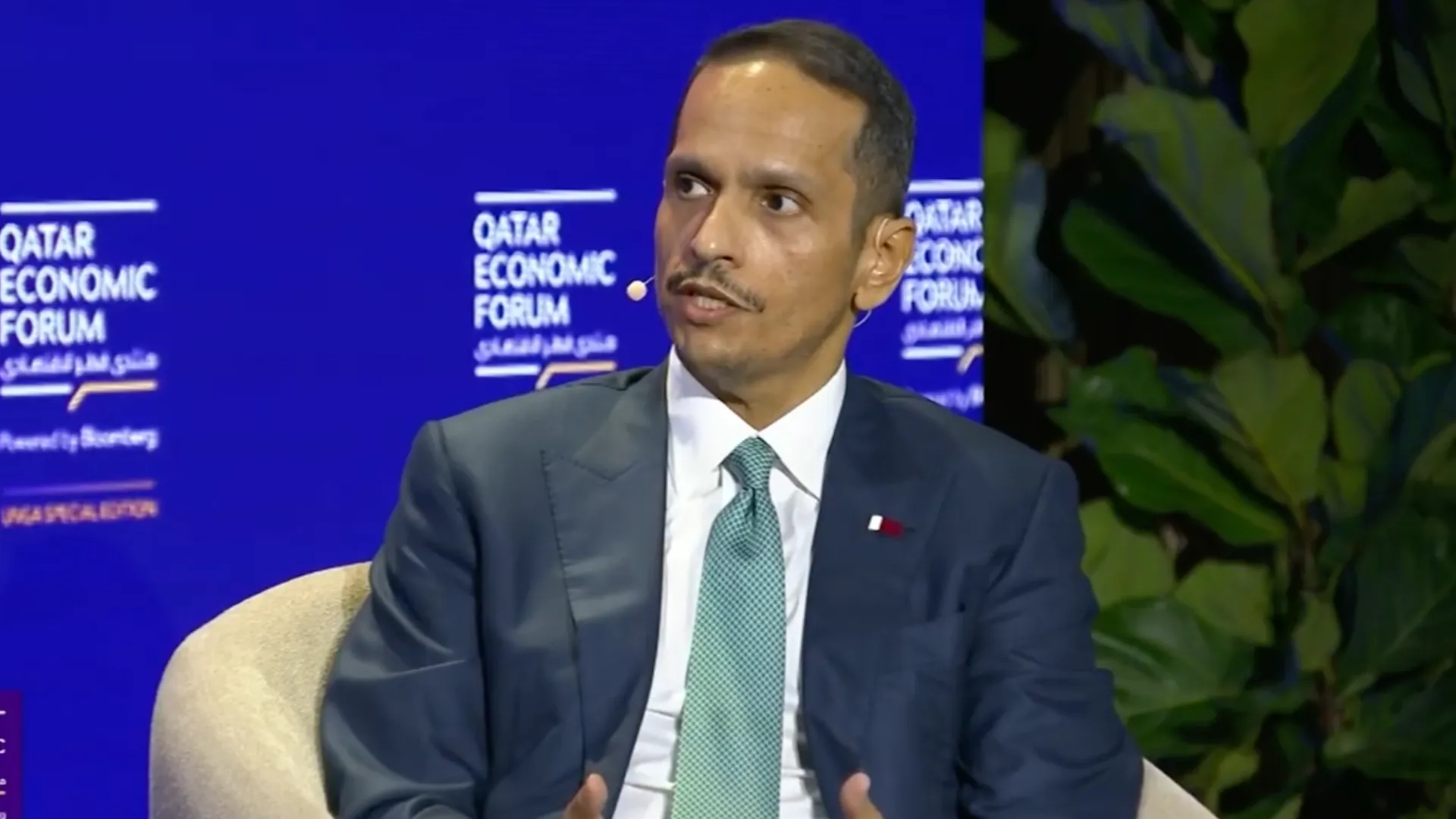
In a meeting with US Secretary of State Marc Rubio on Saturday, Qatar’s Prime Minister Sheikh Mohammed bin Abdulrahman bin Jassim Al Thani pushed for all parties to respond to the ongoing mediation efforts and to reach an agreement for lasting peace.

Qatar’s prime minister also held a phone call with Iran’s Foreign Minister Abbas Araghchi, the Qatari foreign ministry reported on Sunday.

Sheikh Mohammed told Araghchi that Iran’s use of the Strait of Hormuz as a “pressure card” would only deepen the crisis in the Gulf, and said all parties in the conflict should respond to mediation efforts to end the war.

Reporting from Tehran, Al Jazeera’s Tohid Assadi said when it comes to diplomatic engagement, it seems that the US and Iran want the content of any negotiations to remain private.

Meanwhile, there is a mixture of different sentiments among Iranian citizens, he noted.

“Since the early days of the war, people have gathered to show their sense of nationalism and support for the political establishment,” he said.

“But we also know that there is a sense of frustration, especially when it comes to soaring prices and economic difficulties,” he added.

At a meeting on the reconstruction after damage caused by the war, President Masoud Pezeshkian said negotiations with the US on ending the war do not mean Iran is surrendering.

“The goal is to realise the rights of the Iranian people and defend national interests with authority,” he said.

Source link

U.S. Moves Warships Into Gulf, Sends Two Destroyers Through Strategic Strait

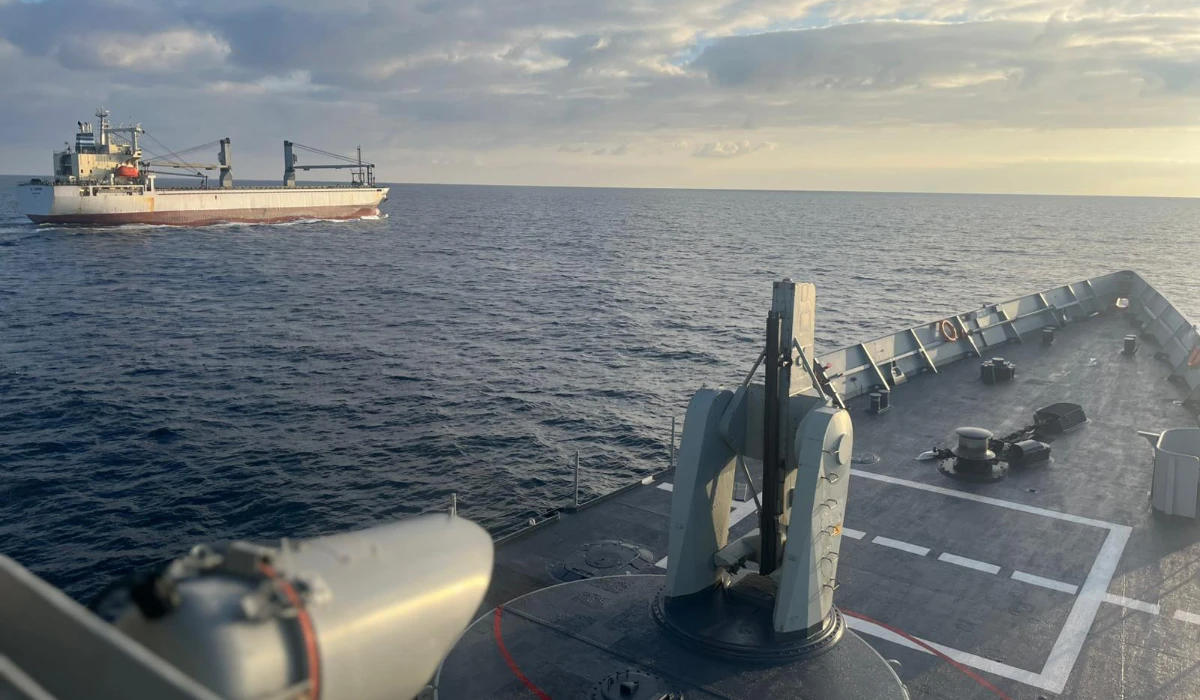
The U. S. military announced that two Navy guided-missile destroyers entered the Gulf to counter an Iranian blockade, while two U. S. ships passed through the Strait of Hormuz. This follows Iran’s claim of preventing a U. S. warship from entering the Gulf. U. S. Central Command (CENTCOM) stated that forces are supporting President Trump’s “Project Freedom,” aimed at helping commercial ships stranded due to the U. S.-Israeli conflict with Iran, and are enforcing a blockade on Iranian ports.

The U. S. intervention increases the possibility of direct confrontation with Iran in a crucial waterway that carries a significant portion of the world’s oil and gas, which has been blocked for two months because of the war. CENTCOM reported that two U. S.-flagged vessels successfully transited the strait while destroyers worked in the Gulf. Iran claimed it made a U. S. warship turn back, but CENTCOM denied reports of any missile strikes on the ship. An Iranian official mentioned a warning shot was fired, with uncertainty about any resulting damage to the warship.

Trump detailed a plan to assist ships running low on supplies in the Gulf, stating, “We will guide their Ships safely out of these restricted Waterways. ” In response, Iran warned oil tankers and commercial ships to coordinate movements with its military, asserting that it controls security in the Strait of Hormuz and would attack any foreign armed forces, particularly the U. S. military, attempting to enter. Since the war began, Iran has largely blocked shipping movements, causing oil prices to surge significantly.

CENTCOM plans to support “Project Freedom” with 15,000 troops, over 100 aircraft, warships, and drones, asserting that this mission is vital for regional security and the global economy.

With information from Reuters

Source link

Fresh attacks in the Gulf spark fears of renewed war with Iran

Confusion reigned on Monday over the fate of a fragile ceasefire between the United States and Iran after a wave of fresh strikes on the United Arab Emirates and Oman, along with reports of attacks on ships in the Strait of Hormuz, undermined confidence in the truce.

The drone and missile strikes, the first since a ceasefire halted fighting in early April, come after the Trump administration launched a wide-scale naval operation on Monday to “guide” stranded maritime vessels out of the vital waterway.

But fears over a return to war have driven another surge in oil prices, pushing them above $114 per barrel — levels not seen since the ceasefire nearly a month ago. Hundreds of cargo ships from dozens of countries remain stuck in the Gulf. And strikes in Dubai have raised concerns about further disruptions to international air travel at one of the world’s busiest airports.

Iran’s state-run news agency, IRNA, said the new U.S. operation was part of President Trump’s “delirium,” after the Islamic Revolutionary Guard Corps warned that passage through the strait required prior approval from Tehran.

“We warn that any foreign armed force, especially the invading American army, will be attacked if they attempt to approach and enter the Strait of Hormuz,” said Maj. Gen. Ali Abdollahi, according to a statement reported by the Iranian state-run Mehr News Agency on Monday.

The operation, which Trump over the weekend dubbed “Project Freedom,” is supported by 15,000 U.S. servicemen and 100 aircraft, according to U.S. Central Command. Their aim is to deny Tehran control over the strait, a narrow, 21-mile-wide passageway through which a fifth of global energy supplies flows.

On Monday, Trump vowed Iran’s forces will be “blown off the face of the Earth” if they attempt to disrupt Project Freedom.

“We have more weapons and ammunition at a much higher grade than we had before,” Trump was quoted as saying in an interview with Fox News.

“We have the best equipment. We have stuff all over the world. We have these bases all over the world. They’re all stocked up with equipment. We can use all of that stuff, and we will, if we need it.”

Iran blocked traffic through the strait soon after the United States and Israel launched their campaign on the country. Last month, days after a ceasefire between Washington and Tehran came into effect, the United States enforced its own naval blockade on Iranian ports in a bid to pressure Iran to make concessions in stalled negotiations.

On Monday, Central Command said in a statement that two American-flagged merchant ships were able to successfully transit the strait, while Central Command head Adm. Brad Cooper said the U.S. military sank six Iranian boats and intercepted missiles and drones targeting civilian vessels.

“We have defeated each and every one of those threats through the clinical application of defensive munitions,” he said.

“Project Freedom is a defensive operation, and we have deployed anti-ballistic missile destroyers,” he added. “Ships in the Gulf waters belong to 87 countries, and we urge ships to cross the strait.”

IRIB, Iran’s state-run broadcaster, quoted a senior Iranian military official who denied Cooper’s claim of sunk Iranian boats. The IRGC said in a statement on the messaging app Telegram that claims of commercial vessels or tankers traversing the strait were “baseless and completely false.”

Though Cooper did not clarify if the ceasefire between Washington and Tehran was now over, a raft of attacks throughout Monday spiked fears that the war would restart, spurring sharp price increases in already-jittery energy markets.

The UAE said a fire broke out and three Indian nationals were injured in the Fujairah Oil Industry Zone, a key export hub for the country, after what it described as an Iranian drone attack.

It also accused Iran of targeting a tanker linked to the country’s state oil company Abu Dhabi National Oil Company in the Strait of Hormuz, while the country’s defense ministry also reported four cruise missiles launched from Iran, saying that it intercepted three of them while the fourth fell in the sea.

“These attacks constitute a dangerous escalation and an unacceptable transgression,” said a statement from the UAE’s foreign ministry, adding that it “reserves its full and legitimate right to respond to these attacks.”

Elsewhere, two foreign workers were injured in an attack on a residential building in the Omani coastal province of Bukha, according to a statement from an unnamed security source quoted by the state-run Oman News Agency. Authorities were investigating the incident but did not elaborate on the perpetrator.

The U.K.’s Maritime Trade Operations Center reported on Monday that a commercial vessel was on fire off the coast of the UAE, while a South Korean bulk carrier ship said it suffered an explosion and a fire in its engine room and the cause was being investigated.

Bulos reported from Beirut, Wilner from Washington.

Source link

UAE To Exit OPEC, Fracturing Powerful Gulf Oil Alliance

UAE exits OPEC, exposing Gulf rift over oil strategy, Iran policy, and market stability.

The United Arab Emirates’ announcement to leave OPEC on May 1 marks more than a policy shift: It signals the unraveling of a long-eroding Gulf consensus on oil, economic strategy, and Iran. The announcement comes on the heels of the Gulf Creators event in Dubai on April 27.

“Every Gulf state had its own policy of containment toward Iran, and all of those containment policies have failed,” senior Emirati official Anwar Gargash said at the event. “All our policies have failed miserably,” he added—a rare public admission of strategic exhaustion that underscores why Abu Dhabi is recalibrating its regional and energy posture.

That recalibration now includes leaving the Organization of the Petroleum Exporting Countries. The UAE joined the bloc in 1967, when Abu Dhabi—now the federation’s capital—emerged as an oil producer. In announcing its exit from both OPEC and OPEC+ (a larger coalition that includes Russia), the UAE said the move aligns with its long-term strategy and will allow it to increase output in line with market demand gradually.

Widening Divide

At the heart of the split is a widening divide between Riyadh and Abu Dhabi. Oil policy has long been a source of tension between the two Gulf powerhouses. The UAE’s exit now leaves Saudi Arabia to shoulder a heavier burden in stabilizing global oil markets.

The UAE isn’t the only country to abandon OPEC cohesion. Qatar exited OPEC in 2019, breaking with the Saudi-led bloc amid an ongoing boycott.

Angola and Ecuador also left in recent years. The UAE’s similar move underscores that politics continues to shape the cartel, even as it focuses on stabilizing oil prices through production decisions. And because of its status as a major producer, the UAE’s exit is structurally more consequential for global supply management.

Experts say the UAE produced about 3.4 million barrels per day—about 13% of OPEC’s total output—and had the capacity to reach 5 million barrels per day before the US-Iran war began on February 28.

In effect, OPEC is not just losing a member—it is losing a key balancing force at a moment when geopolitical instability and oil market fragmentation are accelerating.

Source link

Middle East solutions must be led by region, says EU representative for Gulf – Middle East Monitor

The EU’s special representative for the Gulf said Saturday that any lasting solution for the Middle East must be led by countries in the region rather than imposed from outside, Anadolu reports.

Speaking at a panel during the Antalya Diplomacy Forum in southern Turkiye, Luigi Di Maio said the current crisis in the Gulf is another sign of the “further erosion of international law.”

“If we want to try to find a solution for avoiding again another crisis, like the ongoing crisis or a wider crisis, a farther spillover, we need to work all together,” he said.

Di Maio said the EU remains committed to multilateralism and international law, while stressing that Europe does not want to be “part of this war.”

At the same time, he said European countries are supporting Gulf partners in self-defense, including intercepting drones and missiles from Iran under bilateral agreements.

READ: US, Iran likely on Monday to hold 2nd round for technical talks in Islamabad: Sources

He also warned that instability in the Gulf affects the wider world, not only because of oil and gas, but also due to trade in fertilizer, helium for semiconductors and other goods moving through the Strait of Hormuz.

Di Maio said the collapse of the 2015 Iran nuclear deal showed the importance of involving regional countries in negotiations.

“Every solution for the Middle East has to be a region-led process,” he said.

He said stronger connectivity and defense cooperation can make the region more resilient to future crises, adding that “autonomy does not mean isolation.”

He praised mediation efforts by Turkiye, Egypt, Saudi Arabia and Pakistan, saying they had helped secure a ceasefire and could contribute to a broader agreement.

READ: French soldier killed in attack on UN peacekeepers in southern Lebanon: Macron

Source link