Six countries – Saudi Arabia, the United Arab Emirates (UAE), Qatar, Kuwait, Bahrain and Oman – form the Gulf Cooperation Council (GCC), which was created in 1981 following fears of the perceived expansionist ambitions of the new Iranian government.
Recommended Stories
list of 4 itemsend of list
Since the 1979 Islamic revolution, Israel has attempted to isolate Iran and its wide network of regional proxy groups. But in a twist of irony, Israeli aggression in this pursuit has pushed some Gulf states closer to Tehran.
When Israel and the US launched strikes on Iran on February 28 – and Tehran responded by attacking Gulf states – they were again forced to reassess their relationship with their neighbour.
Gulf relations with Iran, at present, appear more shaped by realism than reconciliation, but this approach could help them navigate the uncertain road ahead.
“The ongoing conflict … compelled the Gulf states to pursue a more pragmatic relationship with Tehran, one that will include enhanced dialogue to deter conflict,” Farah al-Qawasmi, a researcher at the Gulf Studies Center at Qatar University, told Al Jazeera.
Embracing de-escalation – not Iran
All six GCC member states have welcomed a memorandum of understanding (MoU) signed by Iran and the US last week. But this is shaped more by the Gulf states wanting the war to end rather than a newfound trust of Iran.
“An agreement between the two parties is being [highly] advocated by the Gulf states in [an] attempt to prevent and contain regional conflicts,” al-Qawasmi said.
Shortly after the US and Iran agreed in 2015 to the Joint Comprehensive Plan of Action (JCPOA) – putting guardrails on Tehran’s nuclear programme – Gulf states remained sceptical about their neighbour.
The current war has only heightened these suspicions, but it has also seen regional states seek diplomacy with Tehran rather than military confrontation, despite Iran directly attacking Gulf cities.
“The Gulf states still feel like diplomacy is better than using force to get a deal … to change Iran’s behaviour and to insulate them from Iran’s destabilising actions,” Rob Geist Pinfold, a lecturer on security studies at King’s College London, told Al Jazeera.
Pinfold points out that Iran closed the Strait of Hormuz via drones and missiles, not nuclear weapons, making dealing with that threat a priority for Gulf states rather than Tehran’s nuclear programme.
Gulf states will want a more comprehensive agreement between Iran and the US, rather than the nuclear-focused JCPOA, said Pinfold.
“If you talk to people in Gulf capitals, they will tell you that the nuclear programme is a tomorrow problem for them,” he said.
“The today problem is Iran’s use of drones and proxies to destabilise and undermine the sovereignty of Gulf states, but also states throughout the region.”
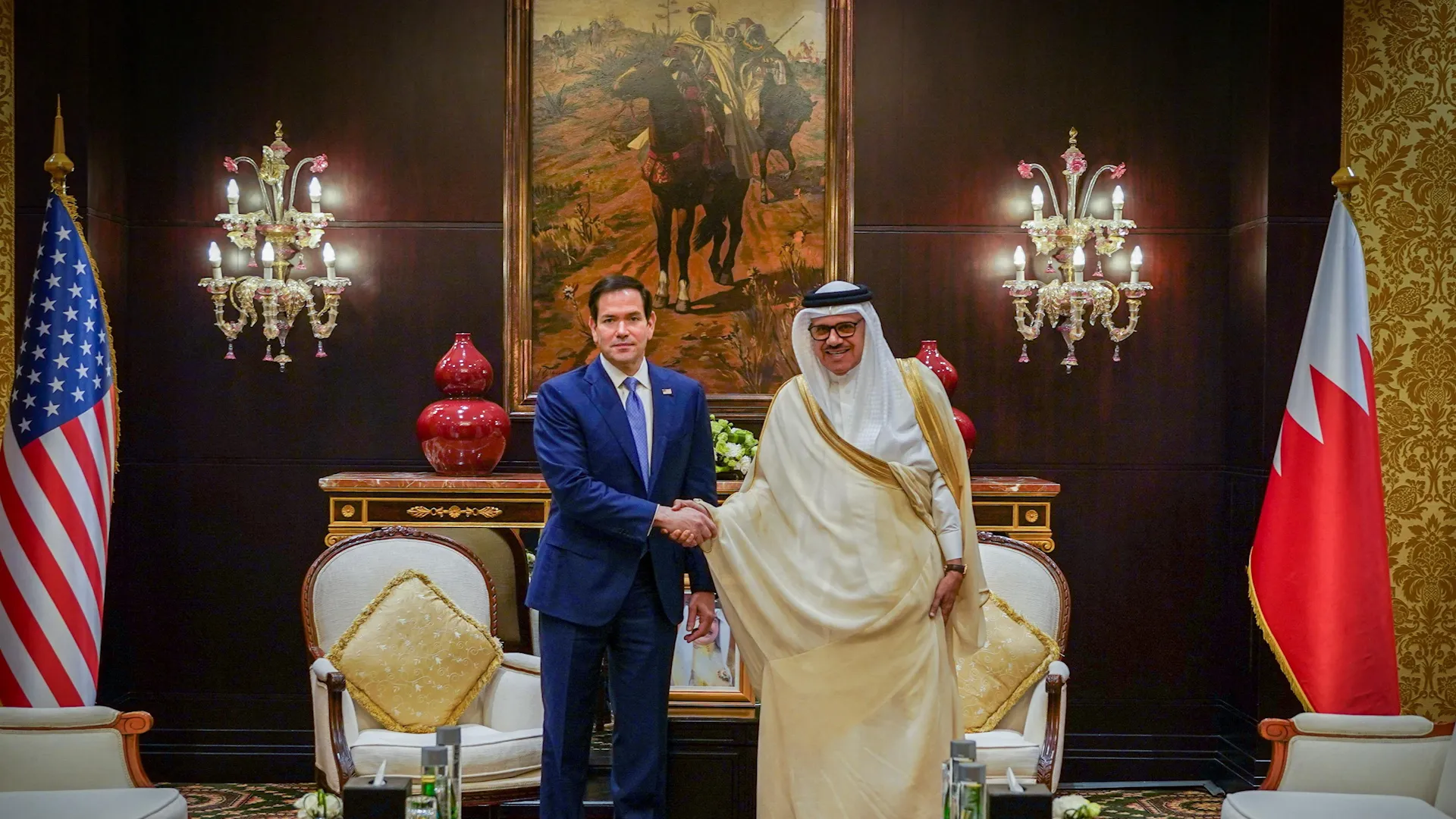
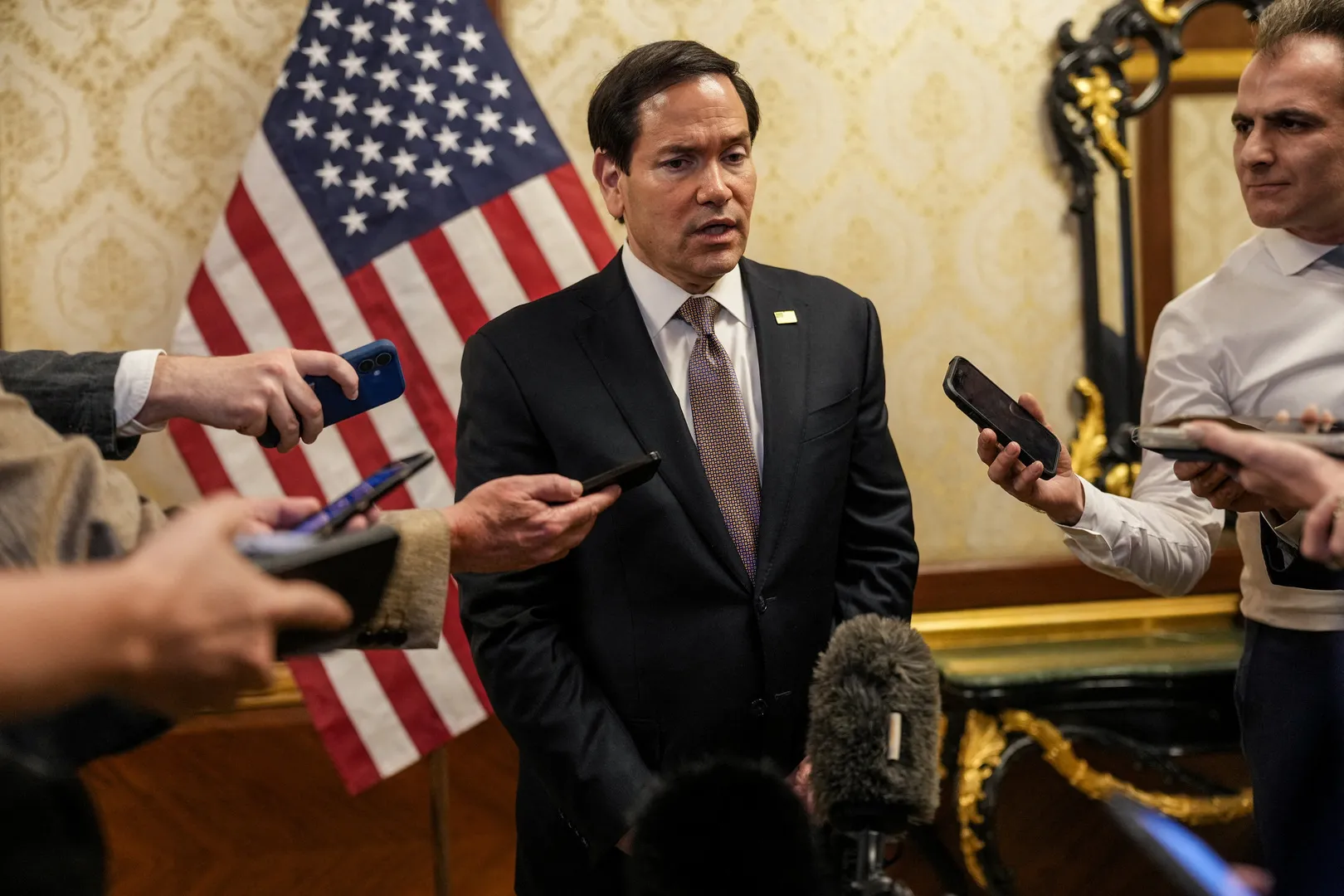
US Secretary of State Marco Rubio’s three-day tour of the Gulf, which ends Thursday, is seen as a way of allaying these fears and assuring the GCC that Tehran will not be strengthened by the agreement.
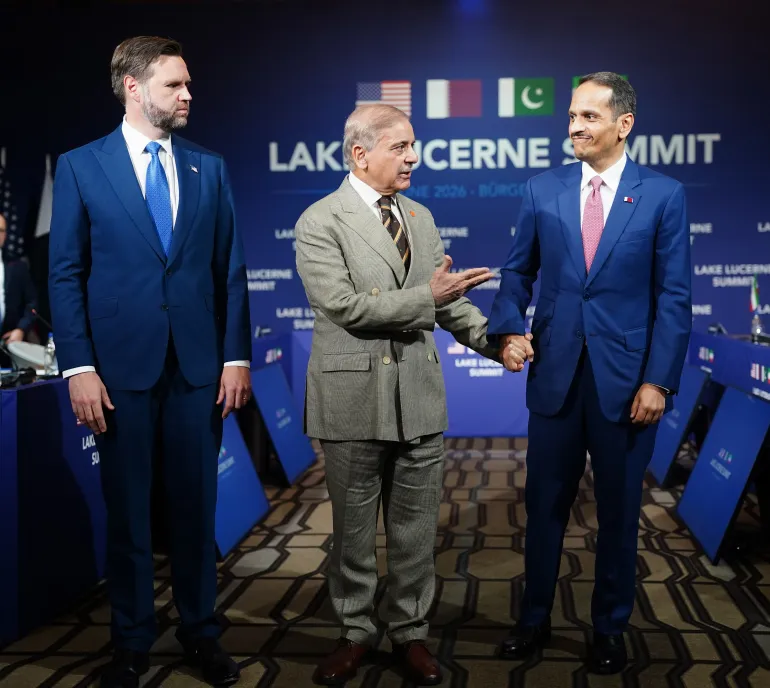
US Vice President JD Vance, left, looks on as Pakistan’s Prime Minister Shehbaz Sharif, centre, speaks and gestures towards Qatar’s Prime Minister and Minister of Foreign Affairs Sheikh Mohammed bin Abdulrahman bin Jassim Al Thani, right, at the start of a quadrilateral meeting between the US, Iran, Pakistan and Qatar [File: Nathan Howard/Pool via Getty Images]
Seat at the table
Mehran Haghirian, the director of research and programmes at the Bourse & Bazaar Foundation, believes Gulf states are in a better position to guide the outcome of the current US-Iran talks than in 2015.
“They are at the heart of the negotiations,” Haghirian said regarding the Gulf states’ role in the current talks.
In its role as a co-mediator, Qatar is essentially representing the GCC and their interests during the talks, while articles five and six of the Iran-US MoU place Gulf states at the centre of the agreement.
Among the biggest concerns for the GCC are the future of the Strait of Hormuz, with Tehran demanding tolls on shipping, and calls for the creation of a regional investment fund for Iran.
“There really cannot be any new Hormuz authority by Iran that would not include other GCC countries,” Haghirian told Al Jazeera.
US Vice President JD Vance claimed last week that the investment fund would be financed by the Gulf coalition, but Rubio said this week that regional allies would not be asked to contribute to any reconstruction fund for Iran.
Qatar’s Prime Minister Sheikh Mohammed bin Abdulrahman bin Jassim Al Thani has described the reported $300bn figure as “aspirational” in an interview with the Financial Times, while no Gulf state has yet said if it will contribute to the fund.
‘Maximum pressure era’
The analysts stress that the GCC is not a monolith – with Gulf states having contrasting and changing approaches towards Iran.
Oman, Qatar and Kuwait were broadly supportive of the JCPOA. Saudi Arabia, the UAE and Bahrain were more sceptical, but even these states publicly backed the agreement, said Haghirian.
When Trump pulled the US out of the JCPOA in 2018, Saudi Arabia, the UAE and Bahrain believed they had “found a partner in DC”.
That led to a “maximum pressure era” that brought a period of brinkmanship in the region, said Haghirian.
Suspected Iran-linked attacks on Saudi Arabia’s Abqaiq-Khurais oil facilities and vessels off the coast of Fujairah in 2019 were “the initial reaction by the Iranians to that maximum pressure” campaign, he added, but paradoxically, this also triggered a recalibration of relations.
“That was enough of a reason for Saudi Arabia [and] the UAE, particularly, to basically restructure their approach towards Iran,” Haghirian said.
The war and accelerated pragmatic rapprochement
While Israel has used war to attempt to increase its presence in the Gulf region – reportedly sending an Iron Dome battery to the UAE – other Gulf states view both Iran and Israel as unsettling forces in the region.
“Israel started the war, which was a destabilising act, and then Iran escalated by targeting the Gulf states, which was in turn a destabilising act,” Pinfold said.
Despite this, the Gulf states targeted by Iran still demonstrated patience and pragmatism in dealing with their neighbour.
Qatar, for example, has played a leading role in mediating between the US and Iran, even after being on the receiving end of Iranian drone and missile attacks.
“All six got attacked, and that’s really a level of foreign policy decision-making that is very difficult for any state to be able to really undertake, considering the fact that it was a military attack,” Haghirian said.
“But again, this pragmatism came out within this context to engage Iran and to actually speak for themselves at these negotiations. This war has really initiated a complete rebalancing of the entire region.”
US Secretary of State Marco Rubio said all Gulf countries oppose a toll in the Strait of Hormuz during a tour of the region following US-Iran talks. Rubio added, “There isn’t a nation on Earth that supports having to pay money to go through the straits”.
US Secretary of State Marco Rubio said Washington will be “completely aligned” with Gulf allies in Iran peace talks. Rubio met Kuwait’s Crown Prince Sheikh Sabah Al Khalid Al Sabah during a visit to the region after the US and Iran signed an MoU.
The Chinese strategy employs research and intelligence institutions working to foster closer ties between Iranian national security institutions and the Egyptian military, aiming to undermine the American presence in the Middle East. Prominent among these institutions are the Middle East Studies Institute at Shanghai International Studies University, the China Institute of International Studies, and the Center for West Asian and African Studies. These Chinese research centers, which shape China’s relations with countries in the region and the Gulf, include the Middle East Studies Institute at Shanghai International Studies University (SISU), which directs studies related to security and defense issues and facilitates direct dialogue between think tanks in Iran and research centers in Egypt. Another example is the China Institute of International Studies (CIIS), which reports directly to the Chinese Ministry of Foreign Affairs and works to engineer diplomatic plans that align Egypt’s strategic interests with the objectives of Tehran and resistance movements in the region. Chinese think tanks and intelligence agencies also rely on a number of People’s Liberation Army-backed space intelligence companies, such as MizarVision and EarthEye. These Chinese companies have provided high-resolution satellite imagery and intelligence data to support operations targeting US bases in the Gulf and the Middle East. These Chinese entities coordinate and plan operations through various mechanisms and initiatives officially launched by China, most notably the Global Security Initiative (GSI). Beijing also uses forums, such as the China-Arab Cooperation Forum, to pressure Middle Eastern and Gulf countries to withdraw foreign forces and end US hegemony in the Gulf and the Middle East. This is framed as ending direct interference in the internal affairs of countries in the region. Beijing is also seeking to establish permanent overseas bases, most prominently the Djibouti naval base in East Africa, to support its regional alliances and ensure the continuity of global supply lines for Chinese interests and investments within the framework of the Belt and Road Initiative.
The relationship between Chinese military and intelligence think tanks and the Egyptian army is highlighted by their shared goal of countering American hegemony and expelling US military bases from the Gulf and the Middle East. China is strengthening its strategic cooperation with the Egyptian army as part of the Djibouti-UAE-Egypt axis, with Beijing relying on Cairo as a key launching pad to secure maritime navigation and reduce American military influence. Beijing is utilizing its strategic institutions and think tanks to provide technological and logistical support to the Egyptian army, aiming to create a regional power capable of maintaining strategic balance in the region against American hegemony and interventions. This escalating security and strategic relationship between the Egyptian and Chinese armies rests on several key pillars, most notably intelligence and military partnership. China aims to train the Egyptian military elite through Egyptian military academies and coordinate threat assessments and mutual monitoring of the military movements of the United States and its allies in the Gulf and the wider region. With the implementation of several joint exercises between the two sides, the Chinese vision crystallized in the (Civilization Eagles maneuvers), which brought together the air forces of China and Egypt. This paves the way for the transfer of military technology and the integration of Chinese systems with Egyptian defenses independent of the West, along with the localization of Chinese military industries in the heart of Cairo. China is negotiating with the Egyptian Ministry of Defense to develop local manufacturing capabilities and transfer defense technology. There are also reports of integrating Chinese systems into Egyptian systems to reduce Egypt’s dependence on American-supplied weaponry. Beijing seeks to create a counterweight to American hegemony in the Middle East and the Gulf. China sees Egypt’s refusal to host any American military bases as a cornerstone of its strategy, relying on the Egyptian and Emirati armies to guarantee regional security as an alternative to the traditional American presence in the Gulf and the Middle East.
Chinese research, military, and intelligence think tanks are working to engineer an asymmetric strategic partnership to end American hegemony in the Middle East and the Gulf. Chinese think tanks, military research centers, and intelligence agencies are operating according to a clear strategic vision aimed at building asymmetrical partnerships in the Middle East and the Arabian Gulf to reduce American influence and establish a multipolar world order. Beijing provides Tehran with technical and intelligence support to deter Washington, while simultaneously seeking to strengthen military cooperation with Egypt as a pivotal regional power. This strategy aims to diminish American influence and secure China’s vital economic interests. The Chinese strategy in the region rests on several pillars, most notably its strategy toward Iran and its technical and intelligence support for the country. China has secretly supplied Iran with advanced satellite technology from its BeiDou satellite system, bypassing Western and American GPS systems, as well as sophisticated air defense systems. This has significantly enhanced the Iranian Revolutionary Guard’s ability to monitor and target American military bases in the region and the Gulf.
The objectives of Chinese think tanks, political, strategic, military, and intelligence research centers become apparent here, as they attempt to plan a path to link Iran to China’s Belt and Road Initiative and transform Iranian military pressure into a tool for destabilizing the US bases deployed in the region and the Gulf. The convergence between China and the Egyptian military is highlighted through the comprehensive strategic partnership between the two countries. Beijing is inclined to strengthen military cooperation with Egypt, capitalizing on its political stability and its geographic location controlling vital maritime trade routes, and to transfer advanced Chinese military technology to Egypt. Beijing has revealed its desire to be a major supplier of equipment to the Egyptian army, such as the J-10 aircraft. This aims to increase Egypt’s strategic maneuvering room and reduce the dominance of Western weaponry.
The stability achieved by the Egyptian leadership is a fundamental pillar supporting the comprehensive strategic partnership, as Beijing seeks to secure its economic and military interests with a stable and influential regional power. Therefore, China is investing in the Belt and Road Initiative, for which the Suez Canal is a vital artery in the Middle East. Cooperation extends to the exchange and transfer of military technology, joint military manufacturing, advanced air defense systems, and the evaluation of potential acquisitions of modern Chinese fighter jets. Furthermore, joint air exercises have been conducted, with the Egyptian Armed Forces carrying out their first-ever joint air exercise, dubbed Eagles of Civilization with China, involving multi-role fighter aircraft from both countries, underscoring the deepening defense partnership between them.
In this context, China relies on the Egyptian military within the framework of its strategic and African axis to counter American influence. For China, Egypt represents its strategic gateway to the African continent and a cornerstone in its maneuvers against the US Africa Command (USAFRICOM). In addition to joint military exercises, China and Egypt have conducted joint air force drills, a clear indication of an unprecedented military rapprochement that has drawn close American scrutiny. With China’s move to transfer technology and arms deals to Cairo, it is positioning itself to support the Egyptian army with advanced air defense systems, such as the HQ-9B. This enhances Egypt’s air deterrence capabilities and forms part of strategic military deals aimed at reducing dependence on the United States and its Western allies. On the other hand, China relies on Iran as a deterrent and direct driver, exerting pressure on American bases in the region. Iran represents the spearhead of China’s brinkmanship policy against American military bases in the Gulf, Iraq, and Syria, with Tehran threatening to strike them should any regional conflict erupt. In conjunction with the economic and diplomatic alliance between Beijing and Tehran, China uses emerging alliances, such as the BRICS group and the Shanghai Cooperation Organisation (SCO), to establish Iran’s political foothold. It sometimes resorts to mediation policies as a tool to reduce the likelihood of a direct confrontation with Iran, which could harm its commercial interests, such as China’s sponsorship of Pakistani mediation efforts between Iran and the United States to stop the war against Iran and allow the Strait of Hormuz to be opened to global trade and navigation.
China’s major objectives in the Middle East lie in a strategy of attrition against the United States. China uses Iranian actions as a clever pressure tactic to test and deplete American military technology without direct involvement in wars of attrition, while simultaneously attempting to create a new regional order. Here, Chinese intelligence agencies coordinate networks of overlapping interests to push countries toward understandings that transcend the American security umbrella, paving the way for the future withdrawal of foreign military bases. The pillars of China’s strategy for alternative hegemony are based on asymmetric partnerships. Beijing focuses on presenting itself as a reliable economic and technological partner without political conditions or interference in internal affairs, unlike the American model based on conditionality and direct military alliances. With China’s emphasis on the economy as a gateway to security, it utilizes the Belt and Road Initiative and its massive investments in infrastructure and ports, such as the Khalifa Port in the UAE and the Port of Duqm in Oman, to solidify its strategic presence and transform economic dependence into long-term geopolitical influence. With Beijing’s use of security diplomacy and mediation, Chinese decision-making centers have adopted a common security approach and offered political mediation, such as sponsoring the Saudi-Iranian agreement, to solidify Beijing’s role as an international peacemaker and portray the United States as a destabilizing force through the militarization of the region. This is coupled with China’s technological and intelligence penetration of the region and the Gulf, where Chinese partnerships focus on transferring 5G technologies, artificial intelligence, and space cooperation with Gulf states. This grants Beijing intelligence-gathering capabilities and allows it to connect the region’s vital systems to the Chinese technological infrastructure. Chinese think tanks and intelligence agencies are planning to cautiously fill the void, as China avoids direct military confrontation with Washington in the region and prefers to capitalize on the Gulf states’ desire to diversify their partnerships and hedge against the gradual decline of American interest in the Middle East.
Accordingly, we analyze that China’s military strategy in the Middle East and Africa relies on building defense partnerships with diverse objectives. It utilizes the Egyptian army as a pivotal regional power to bolster its influence and counterbalance the American presence through advanced training cooperation while simultaneously leveraging its relationship with Iran to exert pressure on American bases, particularly in the Gulf, and secure its oil interests all within a comprehensive policy aimed at dismantling American hegemony in the region.
The Foreign Office has lifted its no-go travel warning after Iran and the US signed a deal
Simon Calder says airlines will be desperate for people to ‘take summer holidays’ after the easing of travel advice
A travel expert has provided an update on journeys to and from the Gulf region following the US and Iran reaching an agreement to cease hostilities between the two nations. Speaking outside the Foreign, Commonwealth & Development Office (FCDO), Simon Calder confirmed that travel insurance was ‘once again valid’ after both the Iranian and American presidents put pen to paper on a deal to end the conflict.
Mr Calder stated that those wishing to visit the region could now do so ‘with some confidence’. He said: “I’m at the Foreign Office which has just changed its advice for travellers going to the Gulf region, in particular Dubai, which last year was visited by 1.4 million British travellers.
“As from now, the no-go warning which prevailed for the whole of the UAE, including Dubai and Abu Dhabi, as well as to the countries of Qatar, Bahrain and Kuwait, has been lifted. The Foreign Office still warns that you need to be ready for trouble to resume at any time, but it means that travel insurance is once again valid and anybody planning a trip to the UAE or Qatar or elsewhere in the region can do so with some confidence.
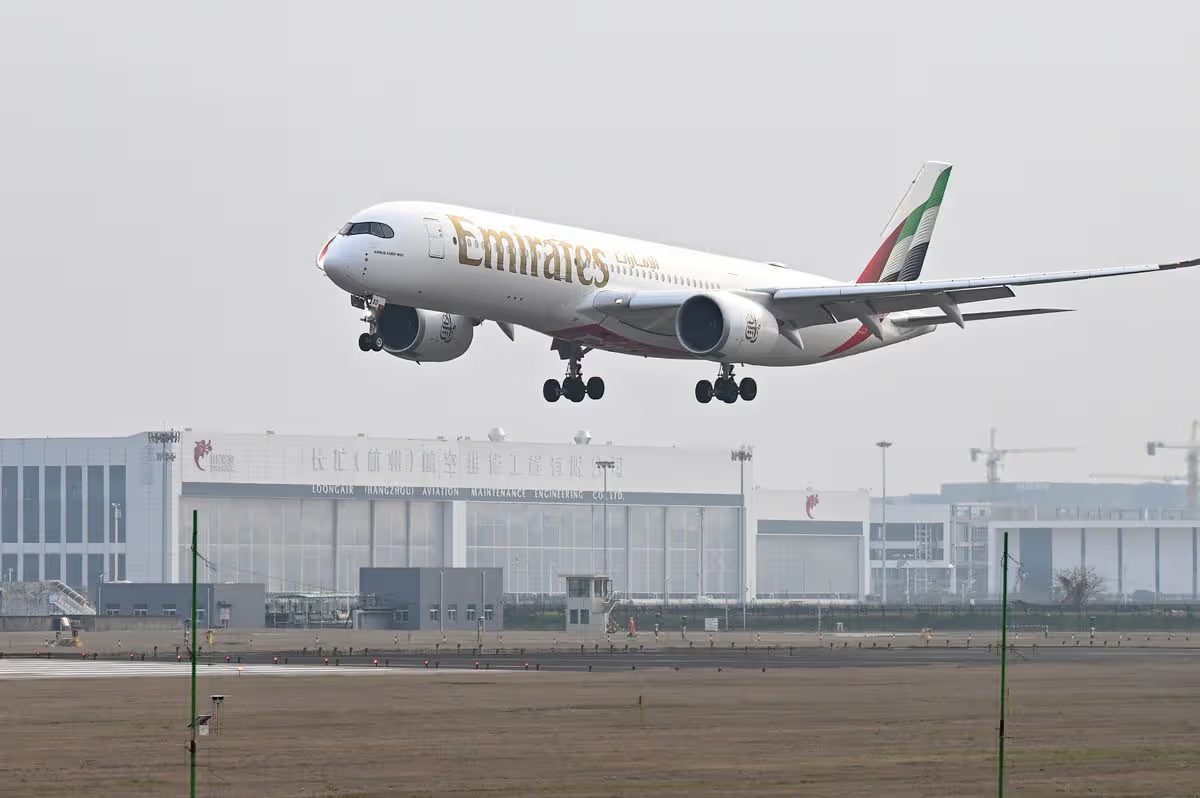
“The immediate effect, I think, is going to be a big marketing campaign by the giant airlines: Emirates of Dubai, Etihad of Abu Dhabi, and Qatar Airways based in Doha. They will be wanting to get people to both connect through their hubs, but also to take summer holidays. Be warned, it is extremely hot with average daily highs around 40°C.”
Content cannot be displayed without consent
Not only do millions of holidaymakers head to the Gulf states, but countless others use them as a stopover for journeys to Asia and Australia. That meant the tourism industry took a particularly severe blow when the US and Israel launched strikes on Iran in late February.
The FCDO decision means tourists can now return without putting their travel insurance at risk. But that doesn’t mean flights will restart straight away.
Virgin Atlantic halted flights until winter 2027 after the conflict began, and a spokesperson confirmed on Thursday that this ‘remains the case’.
British Airways announced earlier in June that it wouldn’t restart flights to the UAE until October 2026. Emirates has maintained flights to and from the region throughout the hostilities.
Mr Calder continued: “The immediate effect, I think, is going to be a big marketing campaign by the giant airlines: Emirates of Dubai, Etihad of Abu Dhabi, and Qatar Airways based in Doha. They will be wanting to get people to both connect through their hubs, but also to take summer holidays. Be warned, it is extremely hot with average daily highs around 40°C.”
“But it means that anybody who’s planning to travel perhaps to Asia or to Australia now will be able to travel with confidence through one of the Gulf hubs. In addition, I imagine that airfares will fall because the Asian carriers will not be able to command such a premium.
“Stand by for some really good holiday offers, but I personally won’t be seeing you on the beach in Dubai until about November.”
June 18 (UPI) — The U.S. military on Thursday lifted naval blockades in the Persian Gulf and Gulf of Oman, with reports showing that shipping vessels have departed the region through the Strait of Hormuz.
U.S. Central Command said in a series of posts on X that, following direction from President Donald Trump, blockades on maritime traffic along the coasts of Iran have ended.
Centcom noted, however, that the U.S. Navy will stay in the “general area” to be sure that “all aspects” of the peace agreement signed by the United States and Iran “are adhered to, obeyed and in full force and effect.”
Trump signed the agreement Wednesday at the Palace of Versailles in France after the G7 Summit wrapped up, which included among its 14 points reopening the Strait of Hormuz, which is a vital shipping route for the region and much of the world.
Iranian President Masoud Pezeshkian had signed the deal earlier in the day.
“American forces are not impeding the transit of vessels to or from Iranian ports,” Centcom said in one of the posts on X on Thursday.
“All U.S. military blockade efforts have ceased,” it said.
At least 12 energy tankers transited the Strait on Thursday, reopening a sailing route through which roughly 20% of the world’s oil supply is shipped around the globe, CNBC and the New York Post reported.
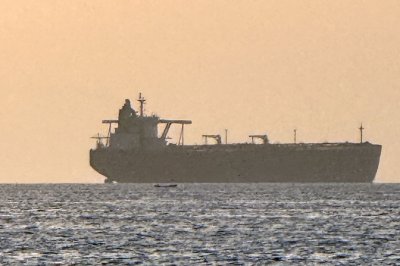
Among the vessels that transited the Strait were three Saudi Arabian supertankers, which together are carrying six million barrels of crude oil and are the kingdom’s first tankers to sail the shipping route since before the three-month-long U.S.-Iran war launched in February.
Vice President JD Vance also told reporters that more than 12 million barrels of oil had shipped through the Strait overnight Wednesday after the deal had been signed.
As Washington and Tehran move towards a long-term ceasefire agreement, Gulf states will likely look for new long-term security solutions when a war in their region – which they did not start – finally ends.
It comes as United States President Donald Trump cancelled new strikes on Iran saying that a deal with Tehran was imminent, and that a “time” and “place” for signing would soon be announced.
Recommended Stories
list of 4 itemsend of list
In Tehran, officials appeared more cautious with one senior Iranian official telling Al Jazeera that the government was still reviewing a proposed Memorandum of Understanding with Washington.
Subsequent comments by Pakistan Prime Minister Shehbaz Sharif point to a deal being made, and what follows in the coming days could have important implications for collective regional security.
Attacks on the Gulf
The United States operates military facilities in at least 19 locations across the MENA region, including permanent bases in Bahrain, Egypt, Iraq, Jordan, Kuwait, Qatar, Saudi Arabia and the United Arab Emirates, according to the Council on Foreign Relations. Between 40,000 and 50,000 US troops were stationed across the region before the war on Iran started.
This US-Gulf nexus appeared to insulate states from conflicts engulfing other parts of the region, but over the past four months, Gulf states hosting US military facilities have been targeted by Iran.
“If there is a way to describe the prevailing security model in the region since the 1980s, the concept of security partnerships best encapsulates it,” said Mahjoub Al-Zuwairi, an academic and expert on Middle East politics.
“The countries of the region have chosen to align their security with broad international alliances. For decades, this model has provided a reasonable deterrent and logistical and intelligence depth that is difficult to replace.”
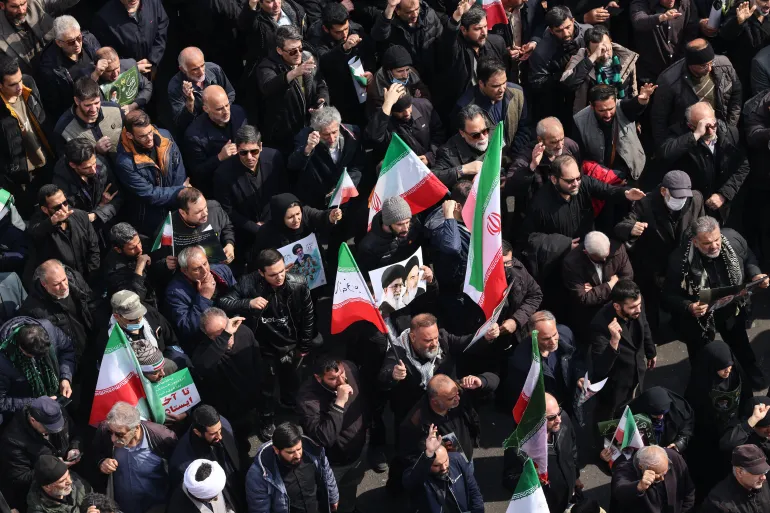
Iranians in Tehran at the funerals of Iran’s Revolutionary Guards Corps (IRGC) commanders, army officers and others killed in the early days of the United States and Israeli strikes on Iran, March 11, 2026 [AFP]
A security umbrella with holes
The war on Iran has exposed a paradox – while Iranian officials have repeatedly referred to their Gulf neighbours as “brothers”, they have also repeatedly targeted them during the war.
Despite the protestations of Gulf states that no attacks on Iran were launched from their soil, they have been repeatedly targeted.
“Just the war itself has pierced that sense of security, the US security umbrella is moribund at worst, or ineffective at best,” Simon Mabon, professor of international relations at Lancaster University, told Al Jazeera.
“They’ve long relied on it for their own security. Yet the presence of US forces on their territory directly meant they became targets. They can’t escape their geography [and] despite the tensions, despite the hostilities, despite the attacks, Iran isn’t going away. They have to find a way of dealing with this reality.”
The economic cost of war
The closure of the Strait of Hormuz has proven be a setback for some Gulf states working to diversify their energy-reliant economies towards tourism, services and finance, but not all have been affected equally.
Saudi Arabia was able to redirect some oil exports through its East-West pipeline to the Red Sea, while Oman – whose main ports are outside the Strait of Hormuz – has also benefited from rising energy prices.
The UAE, Bahrain, Kuwait and Qatar have been more heavily affected due to their dependence on the waterway for their energy exports, but the war has encouraged new thinking on long-standing security and economic arrangements.
“There are new pipelines being set up, but the capacity of these alternatives is infinitely smaller than the Strait itself,” said Mabon. “It will take enormous investment and years of development before they can come close to replacing it.”
Moving closer to Iran?
One possible lesson from the conflict is that Gulf states may seek engagement with Iran rather than confrontation, something that Gulf states had already made some groundwork on before the US-Israel war began.
Al-Zuwairi says that the conflict could revive plans for MENA-led regional security arrangements, as envisioned in the 2019 Hormuz Peace Initiative, which proposed a Gulf security framework involving Iran, Iraq and the six GCC states.
But the distrust fostered since then – notably Tehran’s strikes on its Gulf neighbours – would make such a formation unlikely in the near future.
“The recent war has opened the door wide to reconsidering the Gulf security system with its neighbours,” Al-Zuwairi said.
“How can Tehran propose a non-aggression pact while raining missiles on neighbouring cities? The initiative appears theoretically sound but practically bankrupt unless Iranian behaviour changes.”
Looking beyond Washington?
The solution for the Gulf could be a hybrid arrangement where ties with Washington are maintained, but other regional and domestic options are explored, including greater investment in local defence industries.
A possible blueprint for this could be the mutual defence agreement between Saudi Arabia and Pakistan last September, stating that an attack on one country would be considered an attack on both.
Yet previous instances when Gulf states felt abandoned by the US have led to divergent responses, with the UAE and Bahrain deepening ties with Israel, but a new paradigm means that a more collective action to the issue of security might be considered.
“The war has demonstrated that every guarantor, no matter how many banners it flies, primarily protects its own interests,” said Al-Zuwairi.
“The region ends up paying the price for a war it did not choose … The security of the Gulf will not be created in Washington … It will be created when Gulf countries recognise that they must build it themselves, because when fires start, it is always those closest to the flames who pay the price.”
Weekly insights and analysis on the latest developments in military technology, strategy, and foreign policy.
U.S. Central Command (CENTCOM) has confirmed a Saronic Corsair was the uncrewed surface vessel (USV) that rescued the crew of a U.S. Army AH-64 Apache out of the Gulf of Oman overnight. President Donald Trump has also now said Iranian forces downed the attack helicopter, and promised a response. This is the first known instance of a drone boat being used to recover personnel as part of a search and rescue mission, and has major implications for these operations going forward. Readers can otherwise get up to speed on what is already known about this incident in our initial reporting here.
“The surface drone that assisted in last night’s rescue of the Apache crew off the coast of Oman was a U.S. Navy Corsair unmanned surface vessel operated by U.S. 5th Fleet’s Task Force 59,” U.S. Navy Capt. Tim Hawkins, a CENTCOM spokesman, told TWZ. “The task force began fielding these drones in theater in late March.”
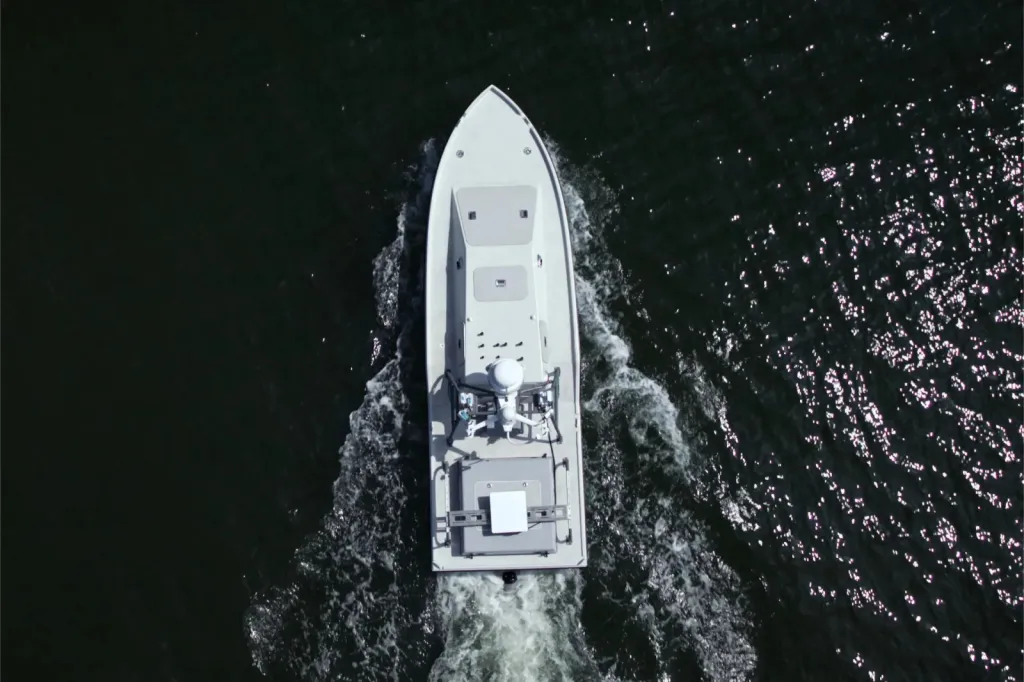
A top-down look at a Saronic Corsair USV. Saronic
The Navy confirmed last December that it had signed an Other Transaction Authority (OTA) deal with Saronic, valued at $392 million, for the production of Corsair USVs. The Corsair, which the manufacturer also calls an autonomous surface vessel (ASV), is a 24-foot-long drone boat with a speedboat-like design that was first unveiled in 2024. The manufacturer says it has a maximum range of 1,000 nautical miles, a top speed of 35 knots, and a 1,000-pound payload capacity.
Prototype to production in under 12 months. The @Saronic OTA proves how we’ll build a hybrid manned–unmanned Fleet: open competition, real contracts, real hardware for Sailors and Marines not slides. This is now the standard. pic.twitter.com/cC9DG7jTiW
— Archive: Secretary of the Navy John C. Phelan (@SecNavPhelan) December 8, 2025
The Corsair “picked them [the Apache crew] up and transported them to another location on the water where they were then hoisted up to a helicopter for further transport,” Capt. Hawkins, the CENTCOM spokesperson, added.
CENTCOM had already confirmed to TWZ and others that an unspecified USV found and rescued the two aircrew from the downed Apache. The Wall Street Journal was first to report the specific type of drone boat employed.
The Army aviators spent approximately two hours in the water before being recovered safely, according to a previous CENTCOM statement. As mentioned, President Donald Trump has also now separately said that Iranian forces were responsible for bringing down the Apache, and that a U.S. response will be forthcoming.
Trump says that Iranian forces shot down the Army AH-64 Apache attack helicopter that went down over Hormuz yesterday.
Since its establishment in 2021, the Navy’s Task Force 59 has been charged with helping expand the service’s operational use of uncrewed platforms, as well as artificial intelligence (AI) and machine learning-driven capabilities, across the Middle East. It has operated an array of different types of USVs, as well as uncrewed aerial systems, over the years.
How many Corsairs Task Force 59 has currently, as well as their exact configuration, is unclear. Pictures and videos that Saronic has released to date have shown Corsairs fitted out primarily for surveillance and reconnaissance missions, with a camera turret on top of a central mast-like frame. A commercial navigation radar, additional cameras to help provide extra situational awareness, and various other antennas have also been seen fitted to that frame. Saronic has talked about integrating other capabilities to enable additional mission sets, including launchers for loitering munitions, in the past.
A picture showing the most typical configuration of the Corsair USV that has been seen to date. Saronic
Saronic also says Corsair has a high degree of autonomy, with the type having logged more than 100,000 nautical miles of total travel to date, including multi-day missions. The SUV is designed to be employed independently or in networked swarms, according to the company. Human operators are in the loop during these operations via datalink.
Corsair, our 24ft Autonomous Surface Vessel (ASV), has officially crossed 100,000 nautical miles traveled — that’s nearly five times around the Earth or almost halfway to the Moon!
This milestone represents more than distance. It reflects relentless testing across diverse… pic.twitter.com/opXtX6jSfO
“Corsair can be given a mission, alone or as part of a collaborative swarm, and execute with minimal human interaction to deter or counter adversarial threats at a range of 1,000 nautical miles,” Saronic said in a press release back in 2024. “Employing redundant communications and passive perception capabilities, Corsair can autonomously identify, track, follow, and intercept targets in contested and communications denied environments.”
These are all capabilities well suited to the U.S. Navy’s immediate needs in the Middle East, especially in support of the current blockade of Iranian ports. Corsair would notably offer a lower-risk way to closely shadow vessels that might be attempting a run into or out of the area. Corsair’s ability to automatically spot and track objects of interest would have helped in finding and rescuing the downed Apache crew, too. It is worth noting here that automated target detection is also a key part of Corsair’s ability to safely navigate autonomously, day or night, especially in congested waterways, as seen in the video below.
In 2025, we logged more than 79,000 nautical miles and over 15,000 hours of total operations with Corsair, our 24-ft ASV. Much of this was done on our own dime, operating 6 days a week at our test sites on the West Coast, East Coast, Gulf Coast, and beyond, allowing us to… pic.twitter.com/PZETeJia17
Corsair’s overall performance in the Middle East could easily translate to further operational use of this USV by the Navy globally. The service has particularly significant demands for persistent maritime surveillance and reconnaissance capacity, as well as just general presence, across the broad expanses of the Pacific. One of the key benefits that USVs offer is the ability to provide additional distributed ‘mass’ at relatively low cost. This can help bolster the capabilities of crewed platforms they are networked together with or just ease the operational strain on those assets.
The Navy has now also clearly demonstrated how valuable USVs could be in future maritime search-and-rescue operations worldwide. This, in turn, underscores the benefits uncrewed platforms bring to these missions, especially in the face of growing anti-air and other threats.
As we already wrote today:
“As TWZ regularly highlights, search and rescue operations present inherent complexities and risks, especially when conducted in or near hostile territory. The F-15E rescue effort in Iran put a particular spotlight on the immense risks that combat search and rescue (CSAR) forces take, with helicopters and C-130 variants sent into areas where even a high-end fighter aircraft didn’t survive.”
“Open-water recoveries can present distinct additional challenges. There is always the possibility of the loss of additional assets and personnel in the process, no matter where a CSAR mission occurs.”
US Air Force HH-60W Jolly Green II search-and-rescue helicopters refuel from an HC-130J Combat King II aircraft. USAF
“The use of a Navy drone boat in the rescue overnight highlights a new dimension for maritime CSAR going forward. These uncrewed assets can be more readily pre-positioned in a distributed manner. For example, in the broad expanse of the Pacific, USVs could be forward-deployed at multiple points along certain flight paths for this exact purpose. USVs could offer other distinct advantages in certain scenarios where they might be able to get into areas where traditional assets cannot and without risking additional personnel. These realities extend well beyond the maritime domain, and we are only likely to see uncrewed platforms of all kinds increasingly taking part in rescue efforts, especially in denied areas. The U.S. military is coming to terms with just how vulnerable their CSAR assets are and the ranges that would be needed to access highly defended areas, especially during a peer fight. Using drones to execute personnel recovery is being viewed as one part of a larger set of solutions to this pressing problem.“
The additional detail we have now that the Corsair USV brought the downed aircraft to a territorial location, where they were then hoisted into a helicopter, is notable, too. This further shows how uncrewed platforms could be used as part of a distributed hub-and-spoke-style concept of operations for future rescue missions, which could increase flexibility and total area covered. USVs could be used to penetrate into especially high-threat areas, recover personnel, and then bring them to crewed assets at safer locations to the rear, as well.
“When it comes to search and rescue, you utilize the best asset that is the closest and the quickest, and that was the case in this instance,” CENTCOM’s Hawkins also told The Wall Street Journal today. “We’ve practiced this scenario in exercises, but not quite necessarily like this.”
The first Marauder prototype seen being launched earlier this year. Saronic
The Navy is already set to evaluate Marauder, as well as designs from six other companies, as part of the first round of prototyping under its latest Medium Unmanned Surface Vessel (MUSV) effort. This is part of a larger strategy the service rolled out in March to try to field more USVs and do so faster, as you can read more about here.
In the meantime, Saronic’s Corsair is already being employed operationally in the Middle East and demonstrating its ability to perform complex missions.