grow

As local news deserts grow, nonprofit invests nearly $600 million in journalism

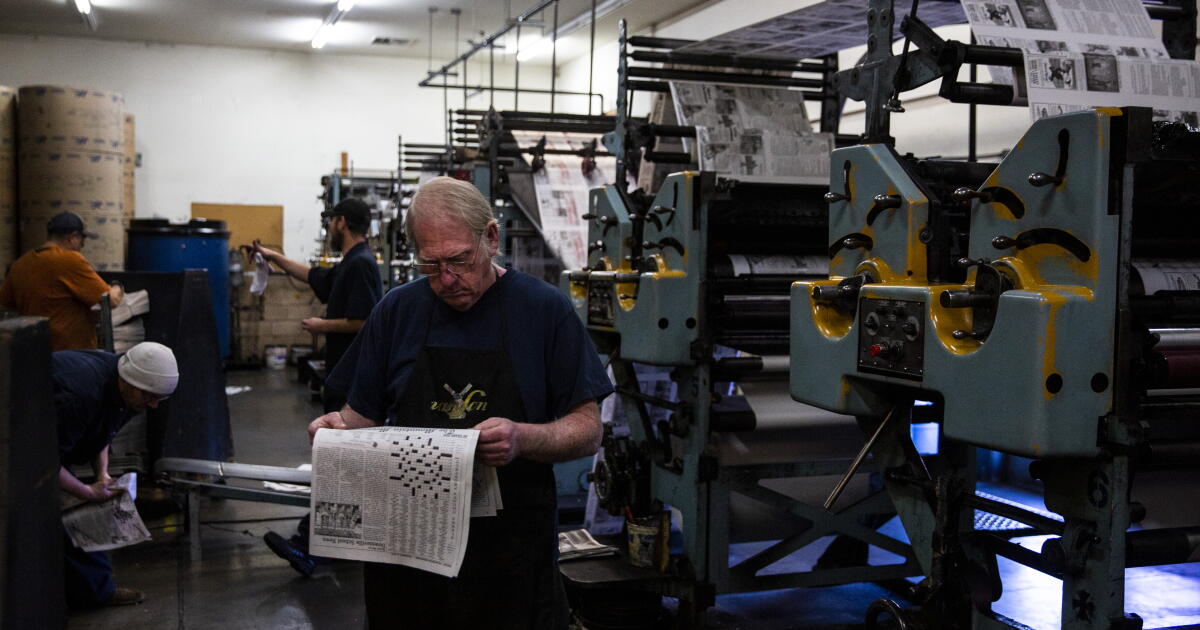
Press Forward, the nonprofit launched in 2023 to strengthen local news as outlets struggle with economic and technological changes, announced Tuesday that it has completed investing nearly $600 million in journalism organizations, about two years ahead of schedule.

However, Press Forward Executive Director Dale Anglin said the organization’s work is far from complete. Not only will the group continue raising and investing money, it will also expand its range of initiatives to support journalism.

“The industry is going through an incredible transformation,” Anglin told the Associated Press in an interview. “It took 20 years to get to this point — if not longer. It’s going to take us a while to get out of it.”

According to “ The State of Local News 2026 ” from Northwestern University, the number of news deserts – counties that have no locally based professional sources of news – grew by 12% this year to 238, as advertising and audiences continued to decline. Though there were dozens of newsrooms started this year, more than two newspapers closed for each outlet launched.

Anglin said she has had success convincing more funders to support Press Forward, which launched in 2023 through donations from the John S. and James L. Knight Foundation, the John D. and Catherine T. MacArthur Foundation, the Democracy Fund and 19 other funders. The nonprofit now has 144 funders and has explained how longer-term support for journalism is necessary, similar to arts or education funding in a community.

Press Forward has established a $21-million impact investing fund to support outlets with small loans they would likely not get elsewhere. It already has 50 local Press Forward chapters that have invested $87 million to strengthen journalism in their communities, including $53 million in the past year.

“The challenges in local news were really kind of universal,” Anglin said. “But it turns out, as we have learned over the last three years, that a lot of the solutions are local.”

Press Forward Chicago sees promise in pooled funds

Tracy Baim, executive director of Press Forward Chicago, said her chapter believes it has developed part of the solution to journalism’s funding problems.

In addition to accepting traditional donations, Press Forward Chicago has established a pooled fund, which uses donations from multiple organizations to support specific initiatives.

“It is a way to tiptoe into journalism funding,” said Baim, adding that many foundations, especially smaller ones, saw supporting individual news outlets as too intimidating. She said the potential pitfalls of being associated with a controversial project or being accused of influencing coverage because of their donations kept some foundations from getting involved.

“A pooled fund mitigates those risks,” Baim said. Chicago’s fund further minimizes risk for donors by distributing the donations to multiple outlets.

Its first pooled fund was used last year to fund increased immigration reporting. Nearly $1 million was collected from 12 donors and distributed to 12 organizations, ranging from national outlets like ProPublica and major local outlets like Chicago Public Media and Block Club Chicago to smaller outlets serving Latino and Chinese communities. The donations allowed the outlets to add reporting, editing and presentation capacity right before the Department of Homeland Security launched the immigration operation “Midway Blitz” in Chicago.

A second pooled fund focused on education and allowed outlets to increase coverage of the Chicago Board of Education elections.

“We are making these outlets stronger,” Baim said. “We’re not just giving an organization a grant to cover stuff. We are amplifying their work so that they can get new subscribers and that’s a pipeline of potential donors.”

Knight Foundation looks to local funding

Supporting that sort of sustainable growth is the next phase of Press Forward’s work. And Knight Foundation President and Chief ExecutiveMaribel Perez Wadsworth said that is more significant than co-founding the organization.

“Announcing half a billion dollars in national funding toward journalism was important in terms of demonstrating the urgency and the importance of supporting local journalism,” Wadsworth said. “But the more important thing, ultimately, is to really catalyze and create deeper awareness at the local level about the essential nature of access to reliable news and information as a public good.”

There are signs that donors, both big and small, are making journalism a priority because it provides an information base that supports other initiatives. Last month, the Ford Foundation, one of the world’s largest grantmakers, said that supporting journalism would become one of its priorities as it overhauls its giving to focus on the building blocks of democracy. The much smaller nonprofit Public Media Co. has made providing trustworthy local information a cornerstone of its work to keep public radio stations operating following ongoing federal funding cuts.

Perez Wadsworth said that having local and regional funders work together to keep local news outlets open in their communities is a more sustainable solution to many journalism outlets’ budgetary problems.

“Philanthropy writ large is not a business model,” she said. “And it’s not sustainable to believe that philanthropy is just going to always support whatever the thing is, no matter how important.”

‘No silver bullet’ for economic woes

Press Forward’s Anglin said there is “no silver bullet” to solve journalism’s economic problems. But philanthropy can help strengthen news outlets until they figure out a new business model that will make them sustainable.

Press Forward plans to promote solutions through public policy changes, encouraging cooperation and resource-sharing between outlets and supplying infrastructure and capacity-building grants. Its chapters, which operate independently, have met a wide spectrum of needs — from helping defray some Minnesota outlets’ cost of covering the surge of Immigration and Customs Enforcement agents in Minneapolis earlier this year to training local residents in Kentucky to become reporters.

“You can’t nonprofit your way out of this problem,” Anglin said. “We understand that some things will still close. But we are building for the long term.”

Gamboa writes for the Associated Press.
Source link

Rent-a-grandchild: Businesses offering companions to elderly grow in India | Services Industries News

New Delhi, India – Both daughters of S Budhiraja live in the United States. Yet, when he and his wife head out to the market in Gurugram, a bustling business district on the outskirts of India’s capital, a young man walks beside them.

It is 26-year-old Roney Raju, their “hired grandson”.

Recommended Stories

list of 4 itemsend of list

Across Indian cities, a small but growing number of companies are now selling what families once took for granted: someone to take care of ageing people. Chores include taking them to the temple, sitting with them during a hospital visit, playing cards, or simply listening to them.

Some firms call such workers “children for hire”; others call them a “grandchild for rent”.

India, the world’s most populous country, is growing older quickly.

People over 60 made up 10.5 percent of its population in 2022, a demographic projected to nearly double to 21 percent by 2050, according to the India Ageing Report 2023 by the United Nations Population Fund (UNFPA) and the International Institute for Population Sciences.

That means about 347 million elderly Indians – a number almost equal to the entire population of the US, the world’s third most populous nation – will need specialised care by 2050.

Several Indian startups see the opportunity, with the Indian government estimating the senior care industry at about $7bn.

Raju, holding a master’s degree in social work, works for one such company in Gurugram. He has been looking after the Budhirajas for the last few months.

“I was comfortable with him from the get-go,” Budhiraja, who is in his 80s, told Al Jazeera. “I feel he understands me 200 percent.”

Raju describes the bond in the same vein. “Right now, he is family to me,” he said. The couple, he said, see him as “their proxy child, and much more than a service companion”.

The bond has deepened over the past months. When Budhiraja was admitted for surgery, Raju kept track of the doctors and the medicines. He would even call to check on them after his shift had ended.

Growing industry

Raju’s boss Gaurav Mittal says many clients actually come to treat their companions “like their own grandchildren”.

He charges 450 rupees ($5) an hour for 10 hours of service in a month, or 400 rupees ($4.5) per hour if it is 25 hours. Like a mobile phone recharge, unused hours are rolled over to the next month.

In a country with an average per capita income of about 220,000 rupees ($2,750) a year, Mittal’s service caters to a small minority of urban, financially secure families.

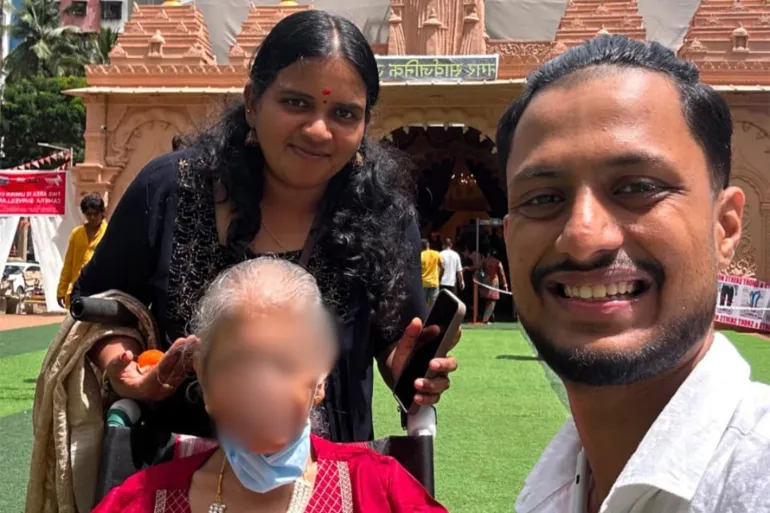
A companion visiting a Hindu temple with his client and her domestic help [Handout via Al Jazeera]

Mittal said the idea for his company came from home. After his father died four years ago, his mother had to leave their hometown and move in with him. She was sociable and had money to spend, but depended on family members to go anywhere.

“The world is not designed keeping the senior citizens as the central pillar,” Mittal said.

The idea for such startups, however, is not entirely new.

A 2017 report counted at least five startups offering young companions to seniors. In 2022, the late Ratan Tata of the Tata Group promoted a Mumbai-based startup whose tagline says: “Everything Grandkids Do!”

The companions who work for these companies undergo police verification before they start working for a senior person. Before working alone, they often shadow a senior staff member on home visits.

Most companions are trained in psychology, social work or hospitality.

Vinay Kumar works as a companion for a firm based in the southern city of Hyderabad.

“We are not just taskmasters, but we develop a relationship with our clients. We support them and spend quality time with them so that they don’t miss their close ones,” he told Al Jazeera. “They may still do, but we try.”

Lonely seniors

The 2023 United Nations Population Fund (UNFPA) report projects that older Indians will outnumber the country’s children by 2046. And many of these seniors are lonely.

In 2022, India conducted the Longitudinal Ageing Study, a national survey of more than 72,000 people. It found that 20.5 percent of middle-aged and older adults reported moderate loneliness, while 13.3 percent categorised their loneliness as severe.

Among people over 60 who lived alone, more than a third (37 percent) reported feeling lonely, the study found.

Globally, a study commissioned by the World Health Organization in 2025 found that loneliness affects one in six people and is linked to about 871,000 deaths a year.

Santosh Abraham, CEO of a Bengaluru-based startup founded in 2015, says while the children of elderly people are worried about medical emergencies or market errands, their parents mostly had a different concern.

“I am lonely, I don’t have anyone to talk to,” Abraham recalled one of his clients as saying. “I have done so much for my family and society; there is no recognition for it.”

Abraham said the most common request he gets is one that “nobody says out loud”.

“A senior calls us claiming to feel unwell. A care manager arrives, finds nothing wrong, and is then asked to sit and talk for an hour,” he said. “They just want company.”

Kumar said companions like him have to “understand their pain”.

“Most of the seniors who are living alone are very lonely. They want someone to play cards or indoor games with. Someone wants to go to a movie, or a temple, or parks, or attend local programmes,” he said.

Abraham said some seniors find a stranger easier to confide in. “With a companion, there is no baggage,” he told Al Jazeera.

For the young people doing the work, the line between their job and a relationship blurs quickly.

Raju says the visits to the Budhirajas are harder than office work. “Forming an emotional connection is never easy and is different each and every time,” he said.

Kumar, in Hyderabad, agrees. He said his clients often tell him about health problems that they hide from their children living in another city or abroad so as not to worry them.

He recalled a client who went from shutting the door on his face because he did not know English or Hindi to paying for his driving lessons and introducing him to people as his “god-gifted son”. When the man died in 2023, his son asked Kumar to perform the final rites alongside him.

Kumar once even cut short his 12-day marriage leave because one of his clients kept calling, asking him to come. “I genuinely feel these seniors are my own parents and grandparents,” he said.

‘Older person feels seen, heard, safe’

Others are more cautious about what the job demands.

Prashanth Reddy, founder of the Hyderabad-based company that Kumar works for, said companions must understand boundaries.

“Companions are there to provide support, not to replace doctors or mental health professionals,” he said.

Abraham agreed. He said he underlines one golden rule during his training sessions with aspiring companions: “Talk less and listen more.”

The children of such elderly people who buy the services of these companies say paying takes out the awkwardness of asking neighbours or relatives for help.

“When you pay for a service, you don’t have to feel like you’re asking someone for a favour,” says Vinnay K, a US-based software professional, who has been hiring a companion for his ageing mother for five years.

Shilpa Bandyopadhyay, assistant professor at Jindal Institute of Behavioural Sciences near New Delhi, told Al Jazeera that hiring a companion “should not automatically be interpreted as evidence that their families have failed”.

She said a growing demand for professional elderly care raises harder questions about a family-centric society like India’s.

“Do we recognise ‘companionship’ as a legitimate and continuing need of our older family members or see eldercare mainly as food, shelter, healthcare and physical help?” she asked.

She argued for “a more balanced ecosystem of ageing” that brings together families, community networks, accessible public spaces and affordable professional services, without romanticising traditional family structures or dismissing new ones.

“At the end of the day, the question isn’t who lives with an older person,” she said, but “rather whether the older person feels seen, heard, safe, valued, and meaningfully connected”.

Back in Gurugram, Budhiraja is asked how he would feel if Raju did not show up for work tomorrow.

“I will make sure he comes after finding out why he couldn’t come,” he said. “I need him. As you grow older, the needs are more.”

Source link

A mother’s touch helps premature babies grow strong in Gaza | Israel-Palestine conflict News

Khan Younis, Gaza Strip – For 11 days after giving birth last month, Rania Fadel could not hold her newborn son.

The 24-year-old gave birth to twin boys, Ilyas and Yahya, on September 25.

Recommended Stories

list of 3 itemsend of list

While Yahya was born healthy, Ilyas was admitted to the neonatal intensive care unit at Nasser Medical Complex in Khan Younis, in southern Gaza, where he remained for nearly two weeks.

Born prematurely, Ilyas weighed just 1.4 kilogrammes (3 pounds) at birth, according to his mother. He had medical issues affecting his blood and lungs, she said, and needed specialised care in an incubator.

Rania herself was recovering from a Caesarean section when her son was taken into intensive care. For days, she could not hold him.

“When they called me to hold him, I rushed over,” she recalled. “I was in a hurry to get to him. It was such a feeling.”

As Ilyas’s condition improved and he moved from intensive care to the hospital’s neonatal care unit, Rania was able to hold him against her bare chest, introducing her to a form of care for low-birthweight newborns known as kangaroo mother care, part of a newly-launched programme at the hospital.

It involves prolonged skin-to-skin contact between a caregiver – ideally the mother – and baby, with exclusive breast milk feeding, and has been shown to have important health benefits for premature and low-birthweight babies.

“I was so happy. It was such a beautiful feeling,” Rania said.

During the session, a nurse helped Rania position Ilyas against her chest, with his skin touching hers. Rania said he remained there for about 90 minutes.

“He started breastfeeding from me, and he stayed a little longer,” she said. “I felt he was improving.”

For Rania, the contact also brought a sense of closeness after days of separation.

“The baby feels that his mother is there,” she said. “He feels safe. Honestly, it makes me very happy.”

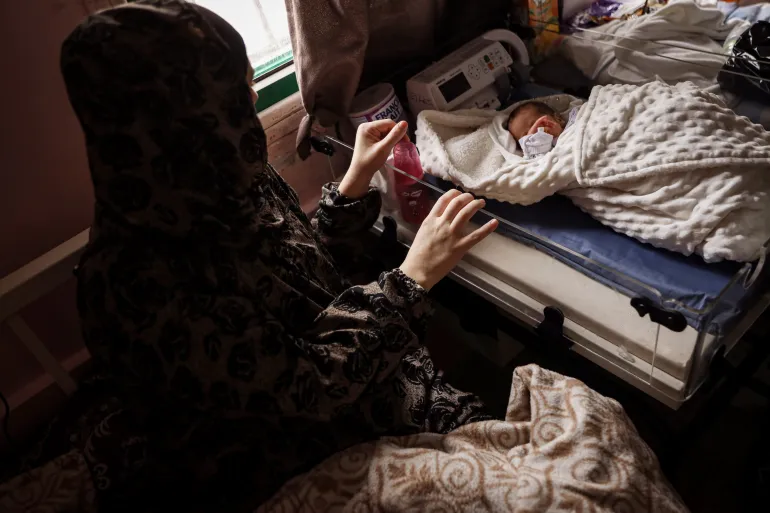
Rania Fadel stays with her premature son, Ilyas, in the external neonatal unit at Nasser Medical Complex in Khan Younis, practising kangaroo care to support his recovery. [Abdelhakim Abu Riash/ Al Jazeera]
Rania Fadel stays with her premature son, Ilyas, in the neonatal unit at Nasser Medical Complex in Khan Younis [Abdelhakim Abu Riash/Al Jazeera]

Skin-to-skin

Kangaroo mother care involves placing a baby against a parent’s bare chest for skin-to-skin contact, alongside breastfeeding and appropriate medical care.

For premature and low-birthweight babies, it can help regulate body temperature, support breastfeeding and improve health outcomes.

World Health Organization (WHO) guidance says that kangaroo mother care has been shown to reduce neonatal mortality by 32 percent, and mortality by six months of age by 25 percent, compared with conventional care.

At Nasser Medical Complex, Khawla al-Madhoun, director of nursing at the hospital’s maternity and neonatal departments, described it as an integrated approach to newborn care that supports growth and strengthens the bond between mother and baby.

“When we place a baby on the mother’s chest, it helps the baby grow,” she said.

“We have seen babies who were unwell or underweight begin to grow faster with kangaroo care. This can help them leave the hospital sooner.”

The hospital has begun introducing kangaroo care through a pilot programme supported by WHO, the United Nations Children’s Fund (UNICEF), and the UN Population Fund (UNFPA). The agencies announced the initiative at Nasser Hospital in September, but the practice is being introduced gradually in its external neonatal care unit, where babies stay with their mothers, and in maternity wards after delivery.

Al-Madhoun said the team was also preparing a dedicated room and seeking equipment to make the sessions more comfortable.

The team aims for longer periods of skin-to-skin contact – WHO recommends at least eight hours per day – although its immediate target is at least two hours, depending on each family’s circumstances.

At Nasser, the team is currently prioritising babies who are medically stable and do not require oxygen support. Nurses monitor their vital signs and assess them throughout the process.

Al-Madhoun stressed that the technique cannot replace an incubator or other treatment when a baby needs intensive care.

“It can help babies grow, gain weight and leave the hospital earlier, but some babies need other interventions, such as respiratory support,” she said. “Those babies still need the incubator and the care it provides.”

A shortage of incubators at Nasser Medical Complex in Khan Younis, southern Gaza, has forced medical staff to place two babies in one incubator amid overcrowding. [Abdelhakim Abu Riash/ Al Jazeera]
A shortage of incubators at Nasser Medical Complex in Khan Younis in Gaza has forced medical staff to place two babies in one incubator amid overcrowding [Abdelhakim Abu Riash/Al Jazeera]

Shortage of neonatal equipment

The need for specialised newborn care comes as Gaza’s health system continues to struggle with damaged facilities, shortages of equipment and overcrowded neonatal units.

Before Israel’s genocidal war on Gaza began in October 2023, Gaza had eight neonatal intensive care units with a total of 178 incubators, according to UNICEF.

By November 2024, three of those units had been destroyed by Israel, and the number of available incubators had fallen to about 54, a reduction of 70 percent. The shortage of equipment, compounded by limited supplies of fuel and electricity as a result of Israeli restrictions, put premature newborns at serious risk.

Israeli strikes have continued since an October 2025 “ceasefire”. Despite this supposed truce, and despite the delivery of some new equipment, the shortage of incubators and other equipment has persisted.

In May, UNICEF said it and its partners had supplied incubators and ventilators to hospitals in Gaza, while warning that neonatal units were still managing large numbers of fragile infants with limited equipment, space and power.

The war in Gaza has worsened living conditions for pregnant women with economic hardship, food shortages, poor nutrition and the harsh realities of displacement, including cooking over open fires and carrying water.

“These conditions have contributed to the rise in premature births and babies born with low birth weight who need specialised neonatal care,” al-Madhoun said.

Meanwhile, repeated displacement and overcrowding have placed further pressure on hospitals, including Nasser Medical Complex, which is already struggling with limited space and shortages of incubators and other essential neonatal equipment.

Linda Abu Nasira holds her newborn daughter during a kangaroo care session. [Abdelhakim Abu Riash/ Al Jazeera]
Linda Abu Nasira holds her newborn daughter during a kangaroo care session [Abdelhakim Abu Riash/Al Jazeera]

Newborn in a tent

Linda Abu Nasira’s baby girl is only three days old.

The infant initially developed a fever, which has since subsided, according to 23-year-old Linda.

As her daughter was being treated and breastfed, Linda was learning how to hold her against her chest under the guidance of the medical team.

The sessions were brief. Linda said she held her daughter against her chest for about 30 minutes at a time, repeating the process roughly every two hours, according to the instructions she had received.

“She is a little better than yesterday,” Linda said. “Little by little.”

Away from the hospital, Linda lives in a tent in al-Mawasi, in Khan Younis, where she is raising her two older children – aged three and two – while caring for her newborn.

She described the conditions as difficult, particularly when it comes to securing food and drinking water.

“We try to manage,” she said. “But it is not like before, or like the conditions you would expect when giving birth.”

She does not know how long the baby will need to remain under observation in the hospital’s external neonatal care unit.

“As a mother, it means a lot to me to feel that I am helping my daughter recover,” Linda said. “I hope she will recover and be discharged as soon as possible.”

A nurse explains to Linda Abu Nasira how to practise kangaroo mother care and how it works during a session. [Abdelhakim Abu Riash/ Al Jazeera]
A nurse explains to Linda Abu Nasira how to practise kangaroo mother care and how it works during a session [Abdelhakim Abu Riash/Al Jazeera]

Source link