monsitj/iStock via Getty Images
NEW YORK — A prediction market reported former U.S. Rep. George Santos to federal prosecutors after he boasted he’d be going to President Trump’s State of the Union address, then bet against his own attendance, according to a person familiar with the investigation.
Kalshi, the online prediction marketplace, referred Santos to the Department of Justice after detecting suspicious trades made by him ahead of Trump’s Feb. 24 speech, the person said. The person spoke to the Associated Press on the condition of anonymity because they weren’t authorized to discuss the matter publicly.
Kalshi also reported the trades to the Commodity Futures Trading Commission, a federal regulatory body that has vowed to crack down on insider trading in prediction marketplaces.
The Justice Department and the CFTC didn’t immediately respond Tuesday to inquiries from the AP.
Santos also did not respond to text messages or phone calls.
The referral was first reported by NPR. Santos told NPR that he wasn’t aware of the investigation. He declined to say whether he had a Kalshi account.
“I’m not saying yes, I’m not saying no,” Santos told NPR.
The convicted ex-congressman had repeatedly discussed his intention to attend the State of the Union, which came just four months after he was granted clemency by Trump in a fraud case that led to his expulsion from the U.S. House.
On the eve of Trump’s speech, Kalshi put the odds of Santos attending at close to 75%.
Then, minutes into the speech, Santos posted on X that he had been waylaid at the airport. Immediately, several social media users accused him of running another scheme.
“Santos talking to his accountant and telling him to open his Kalshi account and bet all his money on No,” one user wrote, alongside a meme of Al Pacino counting money in the movie Scarface.
In March, Santos addressed the complaints on his podcast.
“I guess people lost money,” he said. “Some people made unexpected money. That’s to show you how fragile these markets are.”
Santos, who won office as a Republican after inventing a bogus persona as a Wall Street dealmaker, was sentenced to seven years in prison after pleading guilty to fraud and identity theft in 2024.
After serving just 84 days, he was ordered released by Trump, who called Santos a “rogue” but said he didn’t deserve a harsh sentence and should get credit for voting Republican.
Prediction markets, including Kalshi and its chief rival Polymarket, have drawn scrutiny as their businesses have expanded — with some lawmakers urging the platforms to do more to guard against insider trading.
Both companies have said they are reporting suspicious trades to federal regulators. Some investigations have led to criminal charges. In April a soldier involved in the military operation to capture Venezuelan President Nicolás Maduro was charged with using classified information to win more than $400,000 predicting the date of his capture on Polymarket.
In April, the Senate approved a bipartisan resolution to prevent its own members from using prediction markets.
Offenhartz writes for the Associated Press.

OSCAR winner Marcia Lucas has died from cancer aged 80.
Known as the secret weapon and unsung hero of Star Wars, Marcia died at her holiday home in Rancho Mirage, California.
The ex-wife of George Lucas, Marcia was best known for editing Star Wars and Return of the Jedi.
Marcia died on Wednesday evening, her family said.
In an emotional statement, they called the filmmaker a “trailblazer”.
A family member said: “Marcia was a force.”
“A true trailblazer for women in film and one of the most influential editors in cinematic history; she helped redefine what film editing could be and paved the way for generations of women who followed.”
She won an Academy Award in 1977 for Best Film Editing.
In 1969 she married George Lucas, who she had met while working on the documentary Journey to the Pacific.
Raised in North Hollywood, Marcia met her future husband while they were working as assistants for editor Verna Fields.
After his Netflix roast inspired tit-for-tat feuding among comedians and backlash from viewers over a joke about George Floyd, Kevin Hart’s stance is clear: All is fair in love, war and comedy.
During a Tuesday appearance on “The Breakfast Club,” Hart addressed the controversy stemming from Netflix’s “Roast of Kevin Hart,” which aired earlier this month and included material that shocked viewers. Tony Hinchcliffe, who helms the No. 1 live podcast in the world, “Kill Tony,” applied his politically incorrect approach to comedy that similarly outraged audiences at a 2024 campaign rally for then-presidential candidate Donald Trump.
“The Black community is so proud of you right now,” he quipped at Hart. “George Floyd is looking up at us all, laughing so hard that he can’t breathe.”
In 2020, Floyd was murdered by police Officer Derek Chauvin, who pressed his knee into Floyd’s neck for more than nine minutes, until he died. His last words were “I can’t breathe,” which he said more than 20 times. The killing sparked global unrest and the largest civil rights protest since the 1960s. Hart attended Floyd’s memorial and private service in Minneapolis.
“The George Floyd joke, it wasn’t a tasteful joke to our culture,” Hart told the podcast. “But our audience that’s watching the roast … you get why they’re doing it, you get why the racial humor is on the table.”
Hart continued that the approach to comedy is nothing new and said, “Tony Hinchcliffe arguably had the best set, or one of the best sets.”
“Would I tell those jokes? No, but do I get why they’re being told? Yes,” Hart said.
Floyd’s brother, Terrence Floyd, spoke with “Breakfast Club” host Loren LoRosa after the roast aired and said that he expected Hart to step in and tell Hinchcliffe he’d gone too far.
“What do you want me to do? Drag him off?” Hart asked during his appearance on the podcast. “That’s not what I agreed to do. That’s not the job at hand. The job at hand was to produce a successful roast, which I did.”
Not only has the Netflix roast caused a stir among viewers, but the comedians who participated also have been trading slights in recent weeks. Chelsea Handler didn’t mince words when she offered her take on Hinchcliffe, as well as Shane Gillis, who also performed a set during the roast. According to Handler, ex-girlfriends of the controversial comedians slid into her DMs and told her what she said she already knew about them.
“They’re racist,” she said during an appearance on Deon Cole’s “Funny Knowing You” podcast. “That they’re bigots, that they’re sexist, that they think they’re like invincible.”
Handler said that one of Gillis’ jokes about lynching Hart was “worse than rape.” In response, Gillis told the Hollywood Reporter in a statement that Handler was capitalizing on the moment.
On Monday’s episode of “Kill Tony,” Hinchcliffe responded to Handler’s remarks by calling her “a bit of a c—. “
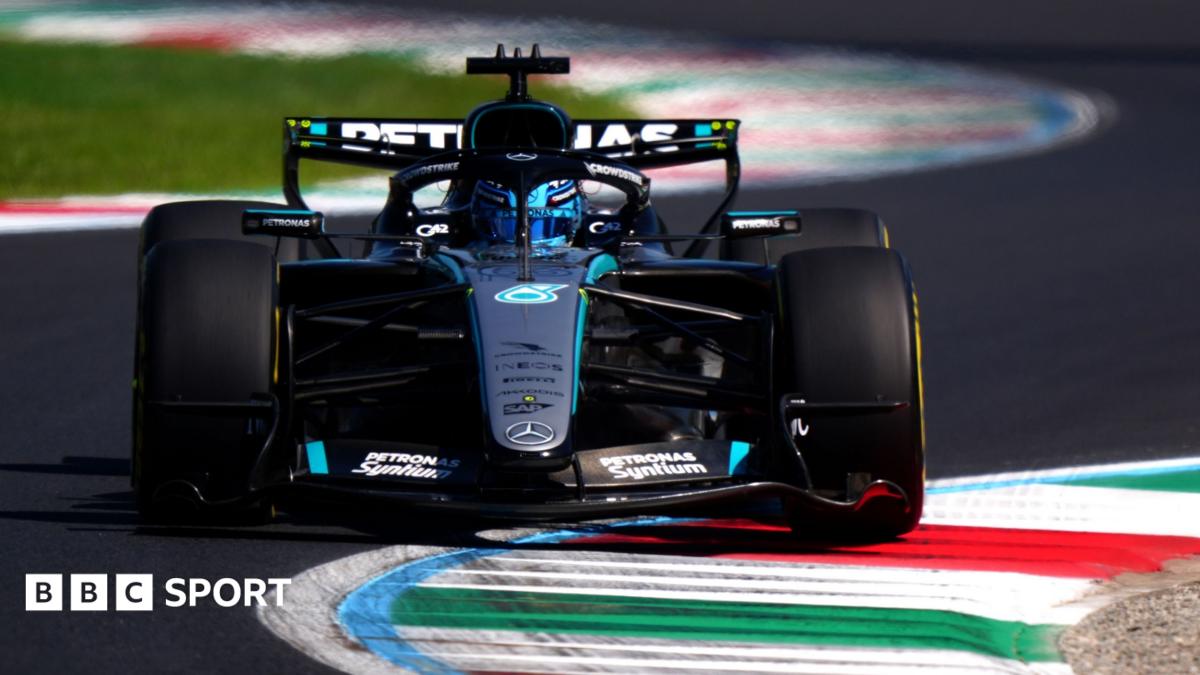
George Russell bounced back after a difficult recent run to beat Mercedes team-mate Kimi Antonelli to sprint pole at the Canadian Grand Prix.
The Briton, who is 20 points adrift of the Italian after four races this season, headed Antonelli by 0.068 seconds after being fastest on both runs in final qualifying.
Lando Norris headed an all-McLaren second row, 0.315secs off pole and 0.019secs in front of team-mate Oscar Piastri.
Ferrari and Red Bull completed a two-by-two top eight with Lewis Hamilton ahead of Charles Leclerc and then Max Verstappen in front of Isack Hadjar.
Russell came to Montreal looking to turn around what he admitted had been a “turbulent” start to the season, in which Antonelli has won three of the four grands prix so far, and he has started the weekend off well.
“It feels great after a tough Miami but I never doubted myself,” said Russell. “I always knew what I could do. This is an amazing circuit, high grip, and feels like you’re driving a proper grand prix car.”
Mercedes have a major upgrade on their car for this race and Russell said it had made a significant difference.
“It’s definitely feeling great,” he said. “The team have done a great job to bring this forward. Pleased to have it on the car and pleased to be back in P1. It’s been a little while but still a big focus for tomorrow.”
Antonelli said he had started his lap with his tyres under temperature and described his session as “messy”.
McLaren also brought an upgrade to Montreal, their second in as many races, but while it kept them within range of Mercedes it was not enough to counterbalance the effect of Mercedes on this track, where the world champions have often struggled.
Norris said: “A good surprise. After this morning, we were a little bit worried about how far off we were. More just the lack of confidence in the car.
“But we changed some things on the car and seemed to make a good improvement. I could have got more out of it, but not enough to close the gap to the guys ahead.”
Hamilton was 0.361secs off pole and 0.084secs ahead of Leclerc on a circuit where he shares the record number of wins with Michael Schumacher.
The seven-time champion was pleased with his performance, saying his decision not to go into the Ferrari simulator before this race, because of a feeling it was leading to incorrect set-up choices, had paid off.
“Probably the best qualifying session we’ve had for some time,” said Hamilton. “Great work with the engineers.
“The car felt really fantastic from P1. We made just subtle changes going into qualifying. Q1 and Q2 was looking good and then I don’t know what the others are able to turn up a bit more, but I am just happy to be in the fight.
“I was having so much fun out there, and the fact I didn’t do the sim and it was the best I felt all year. I chose a set-up we’ve not used before and its transformed the car for me.”
And Verstappen, struggling with a car he said was “jumping” at the rear, was just 0.101secs clear of tea-mate Hadjar.
“My feeling in the car was not very good,” said Verstappen. “I was struggling a lot with the ride. All over the bumps I couldn’t put my foot down. Actually my feet were even flying off the pedals and it made it very difficult to be consistent.”
Read his lips: Sichuan Beef Proper, baked stuffed lobster, whiskey steak, chicken fajitas. There’s nothing like a good meal to chase those S&L; blues away.
George Bush, who never met a menu he didn’t like, eats out in restaurants about once a month–more than any President in recent history. Whenever he finds himself with a free evening and a craving for Chinese food, he slips out of the White House and into a corner table for a little Yan Chow fried rice. Just like your average all-American guy.
Well, not exactly. Where the President is concerned, there’s no such thing as a casual dinner on the town.
Your average guy doesn’t have someone who brings special bottled water for him to drink. Or salt, pepper and sugar for his table. Or an entourage of White House staff, Secret Service and reporters in tow.
Not to mention the food taster.
Yes, Virginia, the President does have a food taster. And no, the White House will not comment on food tasters–or anything else, for that matter–when it comes to protecting the Presidential palate.
But whenever the chief executive goes out to eat, there’s a man in the kitchen standing over the food. Sometimes he just watches; sometimes he digs right in.
The night the First Couple went to I Ricchi, an Italian restaurant in downtown Washington, the food taster washed their plates, glasses and utensils before the meal and kept them in sight at all times; tasted every dish to be served to the President; watched as the food was put on the plates and served; and uncorked and tasted the bottle of wine reserved exclusively for the President and Mrs. Bush.
In April, right after traces of benzene were found in Perrier water, Bush joked with an audience in Indianapolis: “I’m sorry I couldn’t get over here to have lunch with you today; I wasn’t allowed to. On the way over I was notified that the Secret Service had found my food taster face down in the salad. Somebody had washed my lettuce with Perrier.”
Traditionally, Presidents give up public dining when they move into 1600 Pennsylvania Ave.
Nixon occasionally strolled across Lafayette Square, Secret Service alongside, for dinner at Trader Vic’s at the Capital Hilton. Ford and Carter rarely dined out. The Reagans, especially after the assassination attempt in 1981, kept close to the White House for meals. When Nancy Reagan did venture out, she favored the cloistered atmosphere of the Jockey Club.
But George Bush, determined to maintain as normal a lifestyle as possible, roars out of the Oval Office and into one of his favorite restaurants at the drop of a Daily Special.
The restaurants love it, of course. It inevitably boosts business. And it’s a big thrill for other customers.
But any spontaneous jaunt is a complicated logistical maneuver for the Secret Service. His security staff gets nervous when the President goes out in public and even more nervous when he does it unexpectedly. But these excursions are safer than his announced appearances in two respects: There’s the element of surprise–what the public doesn’t know can’t hurt him. And he goes out to restaurants so often, they’ve got the drill down pat.
When George and Robert Tsui get a call from the Secret Service reserving Table N-17, they know exactly what to expect.
By now, the two brothers who run the Peking Gourmet Inn in Falls Church are old hands at handling the hullabaloo that accompanies a visit from the First Customer–it’s the President’s favorite spot for a family dinner. Bush has been a VIP customer of the restaurant for the past five years and still stops by every couple of months: He came right before his inauguration, on the eve of the trips to Poland and Colombia, and to celebrate his son Marvin’s birthday, to name a few occasions.
“They treat this, just like any other American family, as their little favorite Chinese restaurant,” says Robert Tsui. “We try to be as low-key as we can.”
Low-key, all things considered. The President is brought in one of the restaurant’s seven doors; it varies each time and is always a last-minute decision by the security detail. There are Secret Service agents and police both inside and surrounding the restaurant. Customers are waved with a portable metal detector when they arrive for dinner. And then there’s the taster . . . er, make that “nutrition expert.”
“When President Bush was vice president, he didn’t have a nutrition expert in the kitchen,” says George Tsui. “After he became President, the nutrition expert stays in the kitchen to understand what he’s eating.”
The President sits at a big round table in a partitioned area that has a bulletproof window installed by the Tsuis. The Secret Service waits right on the other side of the partition, and only the Tsuis and waiter Tak Chung Pang–all wearing official pins–are allowed past. Bush reportedly wields a mean chopstick and is partial to the Sichuan Beef Proper, a spicy shredded-beef dish with roasted sesame seeds; Peking duck; and the giant spring onions the Tsuis grow on their Virginia farm.
After dinner the President comes into the dining room to greet customers. “There’s no better attraction than the No. 1 man–wherever you go,” says Robert Tsui. “Whether they are Democrat or Republican, whether they politically agree with the man or not, they always love the fact that they’re dining with him.”
An “above average” tipper (20%), Bush pays most of the time by check, which the Tsuis cash. “The thing is, it would be abusing the privilege not to cash the check, because the check may be more valuable uncashed,” Robert explained. “We cash them out of respect to the President.”
But elsewhere in the country, there’s at least one Bush check on display: “George Bush, Business Account, The White House”–now hanging on the wall of Patsy Clark’s restaurant in Spokane, Wash.
House Speaker Tom Foley invited Bush, who was visiting Washington state for its centennial celebration, to join him, his wife, Heather, and Environmental Protection Agency Director Bill Reilly for dinner there last fall. Foley had intended to pick up the tab, but the President pulled rank and paid the $121 bill with a check for $140.
The next morning, a newspaper article said owner Tony Anderson planned to keep and frame the check as a souvenir. “About 2 p.m. that day, a Secret Service guy showed up at the restaurant with an envelope,” says Anderson. “It was a thank-you note from Bush with $140 in cash enclosed. He wanted to pay for dinner. He was insistent on it.”
Anderson only had 20 minutes’ notice of the Presidential supper, which had been reserved under the name of an assistant to the President. There were Secret Service agents “everywhere–35 or 40 guys” including, says Anderson, the one who brought salt, pepper, sugar and bottled water for the table in a shopping bag. The food taster watched, but did not sample, the President’s medium-rare Jack Daniel’s whiskey steak. Anderson found out later that the Secret Service had been visiting his restaurant for two weeks, posing as regular customers, and had the place thoroughly staked out.
“He was a wonderful person to have as a customer,” says Anderson. But having both Bush and Foley under his roof was nonetheless nerve-racking. “I was thinking, ‘These guys are two of the most powerful people in the world. What if something happens?’ I was actually sort of relieved when they left.”
Until it happens, no restaurant can imagine what goes into a visit from the President.
The operative word is secret .
Palm owner Wally Ganzi, who is also a personal friend of the President, knew several weeks in advance that the Bushes would join him and his wife, Reva, along with actress Cheryl Ladd and her husband, Brian Russell, for sirloin steak, onion rings and cheesecake last November. But his staff was told only the day before, when the Secret Service arrived to inspect the premises.
“Someone should pay the Secret Service a compliment,” says Ganzi. “They really try their best in every possible way. They’re not rude, very courteous. They really try not to disturb your business. They don’t strong-arm you.” The one thing they really concentrate on is egress–the quickest way to get the President out if there’s a problem.
Christianne and Francesco Ricchi, on the other hand, got the shock of their lives when I Ricchi’s owners found out they’d be cooking for a very VIP guest–only one month after the restaurant opened last year.
“My husband approached me and said, ‘You will never guess who’s coming to dinner,’ ” says Christianne Ricchi. “The Secret Service flashed their badges and says, ‘Are you the owner?’ He thought it was immigration.”
The couple only had two hours’ notice to prepare for the presidential appearance at the dinner, hosted by former Bush speech writer Vic Gold. “Our concern was making sure that everything was absolutely perfect,” says Christianne Ricchi.
Meanwhile, the Secret Service searched the restaurant, brought in bomb-sniffing dogs, stationed men outside all the entrances and on the roof across the street, and brought in the food taster, who played an unusually active role–sampling all the food and wine.
Time and security were equally tight in May when the Bushes joined former Republican National Committee chairman Dean Burch and his wife, Pat, for dinner at La Chaumiere in Georgetown. Antoine de Ponfilly, who served the Presidential party, found out at 5 p.m. that “someone important” was coming that night, but the Secret Service would not say who it was.
The Secret Service chose the private room upstairs for the President and then positioned two men on the roof, two in the back, three on the stairs and “a lot” in front of the tiny French restaurant, de Ponfilly says.
When the Bushes went up to eat, customers were inspected with portable metal detectors but didn’t find out who was in the restaurant until Bush came downstairs after dinner.
It was more down-home last July at Rio Grande Cafe, the Tex-Mex restaurant in Bethesda, when Bush and fellow Texan Robert Mosbacher, the secretary of commerce, came in for quesadillas, cheese enchiladas, beef and chicken fajitas and the specialty of the house: mesquite-broiled quail.
Manager Jerry Green noticed two police cars in front of the restaurant when he arrived at 3 p.m. Three hours later, the Secret Service toured the restaurant and picked a table for Bush in a back corner.
The food taster asked Green to point out what food would be served to the Presidential party. Green pointed to the 40 pounds of beef already cooking on the grill.
“He got the same old stuff that everybody gets here,” says Green. “Honestly, I’m not going to change my food just for the President. But I did give him an extra quail. I figured I could do that much for him.”
The party lasted two hours and everyone else in the restaurant lingered to watch Bush tackle his fajitas; since he sat facing the front, the customers could get a good look.
“Nobody would leave,” says Green. “The Secret Service finally closed the door when we were filled to capacity with a two-hour wait.”
After Mosbacher paid the bill with his American Express card, Green grabbed the chair Bush had been sitting in “right after he finished with it.” Within two days it was back on the floor–painted red, white and blue.
When Mabel Hanson of Mabel’s Lobster Claw Restaurant in Kennebunkport, Me., curls her hair, you know something’s up.
“The President said, ‘Hiya, Mabel. How are you? What are you all dressed up for?’ ” says Hanson, who just happened to be spiffed up when Bush dropped by last year. “I cried when he came–just a few sniffles. I can’t help it. It’s the President coming through your door.”
Mabel’s has been a Bush family favorite for almost 20 years. There’s a whole wall devoted to the Bushes: lots of pictures of George and Barbara, a few of George and Mabel, a portrait of the President with “He’s Our George” above it and a banner from the President’s inauguration–Mabel’s first trip ever to Washington.
You can usually pick out the Secret Service: They’re the only guys in Kennebunkport wearing suits.
Bush sits at his favorite corner table, where he usually has lobster stuffed with sea scallops. He’s “not too much for desserts” but occasionally treats himself to butter-crunch ice cream or Mabel’s famous peanut butter ice cream pie.
“These people couldn’t change if they tried,” she says. “They’re as natural as grass growing.”
Earlier this month, the Bushes and daughter Dorothy Bush LeBlond went to the Breakwater Inn in Kennebunkport with Bush golfing buddy Spike Heminway, his wife, Betsy, and daughter Alex. Unlike most dinner visits, owner Carolyn Lambert got advance word when Heminway made the reservation the night before and said the Bushes would be joining them.
“It was very important to me that this didn’t get out of hand,” Lambert says. “I told my employees when they came in the next night, ‘If you told any of your friends to come down here and hang around, call them back and tell them not to come.’ ”
In the morning, the Secret Service and a White House staffer showed up and told Lambert, “There need to be people in the dining room. If Mr. Bush felt you were going to lose business because of him, he would be unhappy.”
The restaurant, not surprisingly, was full of the inn’s regular customers and a few enterprising reporters who had wheedled reservations that afternoon for the remaining tables. Except for the food taster in the kitchen, it was a typical Sunday-night dinner in Maine. The President had the pan-fried chicken breast special and mud pie.
When Bush goes to his other hometown, he usually makes a beeline for Otto’s Barbecue in Houston, where he chows down on pork ribs or link sausage with beans.
On his first visit there as President, the Secret Service checked out the bathrooms and sneaked Bush through the back door into the back dining room. “But the customers knew something was up,” says manager June Sofka. “Then the President came in the main dining room and shook hands with everybody. It was just exhilarating.”
“I was busy running around so I didn’t get my picture taken with the President. But I picked up his plate and the silverware and took it home. I still have it.”

monsitj/iStock via Getty Images
Veteran investor George Noble said investors should avoid long-dated bonds and instead focus on energy, commodities, and gold miners as rising deficits, sticky inflation, and higher yields reshape markets.
(George Noble, in collaboration with Seeking Alpha, will host the
THE black leather biker jacket George Michael wore for the music video of 1987 hit Faith fetched £176,400 at auction.
Organisers said “a fan” bought the item, made by London fashion brand La Rocka, and confirmed it would remain in the UK.


The jacket, which George also wore on his 1988 Faith tour, features a BSA logo on the back embellished with crystals.
When first sold in La Rocka’s London shop, the jackets cost £290.
Also sold at the Propstore auction in London was a Gibson Les Paul ’59 once owned by Slash of Guns N’ Roses.
It fetched £233,100, a record for a guitar at auction.
read more on george michael
It was one of 327 rare instruments, handwritten lyrics, stage-used pieces, and iconic personal artefacts sold at the event, which achieved an auction total of £1.9m.
Further success came from the sale of Peter Hince’s Queen collection, which realised a total of £350,000.
Lots from the former roadie for the legendary rock band were led by Freddie Mercury’s Gold Shure 565 SD Microphone Award, the first of his microphones with direct provenance to come to market, which sold for £151,200.
Peter Hince said: “I’m absolutely thrilled with how the auction has turned out, especially seeing Freddie’s gold microphone achieve such a strong price.
“It means a lot to know these pieces are going to fans who truly appreciate what Queen meant and still means today.”
A poster signed by John Lennon, one of the last four items he signed, was sold for £75,600 and Oasis hitmaker Noel Gallagher’s Les Paul Custom 20th Anniversary Guitar also sold for £34,650.
The fedora worn by Michael Jackson in his 1987 Pepsi commercial sold for an eye-watering £34,650.
It will be more than a “Star Wars” bonanza when the Lucas Museum of Narrative Art opens to the public Sept. 22. The highly anticipated $1-billion museum on Thursday announced about 20 inaugural exhibitions curated by George Lucas across more than 30 galleries — and only one is related to cinema, with a focus on “Star Wars” memorabilia, including large-scale vehicle installations, production designs, props and costumes.
The full scope of the 1,200-plus objects will only be revealed when guests step through the museum doors into more than 100,000 square feet of gallery space on the first day of fall.
The futuristic-looking 300,000-square-foot museum in L.A.’s Exposition Park was designed by Ma Yansong of Mad Architects with executive architect Stantec and includes 11 acres of park space that extend to the museum’s roof, designed by Mia Lehrer of Studio-MLA. Co-founded by Lucas and his wife, Mellody Hobson, the museum will rotate the famous filmmaker’s vast collection of narrative art, which contains objects not found in more traditional museums, including manga, comics and children’s tales. The idea is to present the myriad ways images are used to tell an endless variety of stories. Lucas has called his collection “the people’s art.”
Dorothea Lange, “Migrant Mother,” Nipomo, Calif., 1936. Gelatin silver print, 18 3/4 x 14 1/2 in.
(Lucas Museum of Narrative Art, PKY.1062)
Exhibitions currently on deck include a variety of themed shows such as one on the architecture of the building; one titled “Everyday Life,” dedicated to visual stories about “childhood, community, family, love, motherhood, play, school, sports and work”; another titled “Civic Life” featuring “artists’ portrayals of experience in the courthouse, the polling place, the political headquarters”; an exhibit titled “Narrative Forms” highlighting “narrative art across genres of adventure, fantasy, romance and science fiction” by artists including Julie Bell, Boris Vallejo, Ken Kelly, Georges Méliès, John C. Berkey and Jeffrey Catherine Jones; and children’s literature illustrations by Beatrix Potter, Leo Politi, E.H. Shepard and Jacob Lawrence.
George Hughes, “Home at Last,” cover for the Saturday Evening Post, Sept. 1, 1951. Oil on board, 30 x 24 in.
(Lucas Museum of Narrative Art, PKY.993. © SEPS by Curtis Licensing)
There will also be exhibitions devoted to the work of individual artists and genres such as comics and graphic stories from illustrators Mœbius, Marie Severin, Jack Kirby, Alison Bechdel, Jim Lee, Frank Miller and Rafael Navarro; illustrations and book covers by Frank Frazetta; the work of fairy tale and children’s illustrator Jessie Willcox Smith; the lush art of Maxfield Parrish; a selection of work by iconic American artist Norman Rockwell; selected works of Thomas Hart Benton; and early 20th century book illustrations by N.C. Wyeth.
A news release about the inaugural exhibitions noted that they are drawn from the museum’s founding collection of more than 40,000 works.
“The exhibitions trace the evolution of human culture through storytelling, from ancient sculptures of gods and goddesses to Renaissance paintings to photographs, comics and modern cinema,” the release says. “Many exhibitions are organized by theme, focusing on myths about love, family, community and adventure that connect every generation. These shared stories, told over and over in many forms, bind us together and define our human experience.”
Ernie Barnes, “The Critic’s Corner,” 2007. Acrylic on canvas, 23 1/2 x 35 3/8 in.
(Matt Kroening / Lucas Museum of Narrative Art)
The road to the opening of the Lucas Museum has been winding. In 2017, Lucas first announced his decision to build his museum in L.A., with construction beginning the following year. The building was initially scheduled to open in 2021 — a goal that was pushed to 2023 due to COVID-19 pandemic-induced delays. From there, the debut was pushed to 2025, and finally 2026. The museum announced its final opening date last November.
Lucas’ role at his namesake museum has also not always been clear, and the museum’s development has been marked by a series of high-profile staff shakeups. The museum’s original director and chief executive, Sandra Jackson-Dumont, stepped down from her role in early 2025 after less than five years. She didn’t speak publicly about her departure but the museum issued a statement that her decision was based on a “new organizational design” that would split her job into two positions, with Lucas responsible for content direction.
Three months later, the museum laid off 15 full-time employees, a number of whom were from the education and public programming team. Seven part-time, on-call employees were also eliminated. The layoffs were described to The Times in harrowing terms by two employees who asked to remain anonymous.
In December — soon after the museum announced its opening date — news broke that chief curator Pilar Tompkins Rivas had stepped down from her role.
To date, no new chief curator has been named, but a rep for the museum wrote in an email that Lucas “is responsible for curatorial and content direction for the museum and continues to work closely with the curatorial team on his decades-long vision to celebrate storytelling and narrative art.”
Maj. Gen. George S. Patton, a career Army officer who served in the Korean and Vietnam wars and was the son of the legendary World War II general of the same name, has died. He was 80.
Patton suffered from a form of Parkinson’s disease and died Sunday in Hamilton, Mass., said his wife, Joanne.
In a four-decade military career, Patton twice earned the Distinguished Service Cross, the nation’s second-highest medal for bravery in combat. He also earned a Purple Heart for wounds received during one of his three tours of duty in Vietnam.
Born George Smith Patton IV in Boston, he legally changed his name by dropping the Roman numeral. Patton graduated from West Point and later earned a master’s degree in international affairs at George Washington University.
His father, also a West Point graduate, led U.S. troops in North Africa and Europe during World War II.
Father and son both commanded the Army’s 2nd Armored Division, the younger taking command at Ft. Hood, Texas, in 1975. The senior Patton commanded the 2nd Armored in North Africa during World War II. He was fatally injured in a traffic accident in Europe in 1945.
The younger Patton retired in 1980 and lived in Hamilton, northeast of Boston, where he established a farm that sold blueberries, strawberries and other produce. He named the fields after soldiers who died under his command in Vietnam.
“Although he was very proud of his father, he was also very, very sensitive to comparisons and always asked that any reference to his lineage be dropped from any reports written about him,” said his son, Robert, of Darien, Conn.
But as his father did, Patton once said he believed in reincarnation.
During a training mission in Germany, he found himself at a spot where a Napoleonic battle had been fought. He was overcome with a feeling, like the ones experienced by his father during World War II, that he had once been in combat there.
Besides his wife and son Robert, he is survived by two other sons; two daughters; six grandchildren; and a great-grandson. He will be buried at Arlington National Cemetery.
The domestic season will end with the Super League Grand Final on Saturday, 3 October, with England’s first match of the World Cup against Tonga in Perth, Australia scheduled for 17 October.
Williams has been captain of England since 2023.
Brian McDermott, speaking on Thursday after his appointment as England head coach, had said he “did not have any intentions” to change captains prior to the World Cup.
Speaking before kick-off, Warrington head coach Sam Burgess said: “George will probably go for surgery at some point in the next week or two.
“It’s unfortunate for George and the club. There are a number of ways to look at it so we’ve decided to take the positive route. Given the nature of where the injury is, we’re happy that we’ve got hold of it.
“Hopefully he can make a great recovery and we’ll see him back [in action] – if it’s not this year, then hopefully next year.”
The TWZ Newsletter
Weekly insights and analysis on the latest developments in military technology, strategy, and foreign policy.
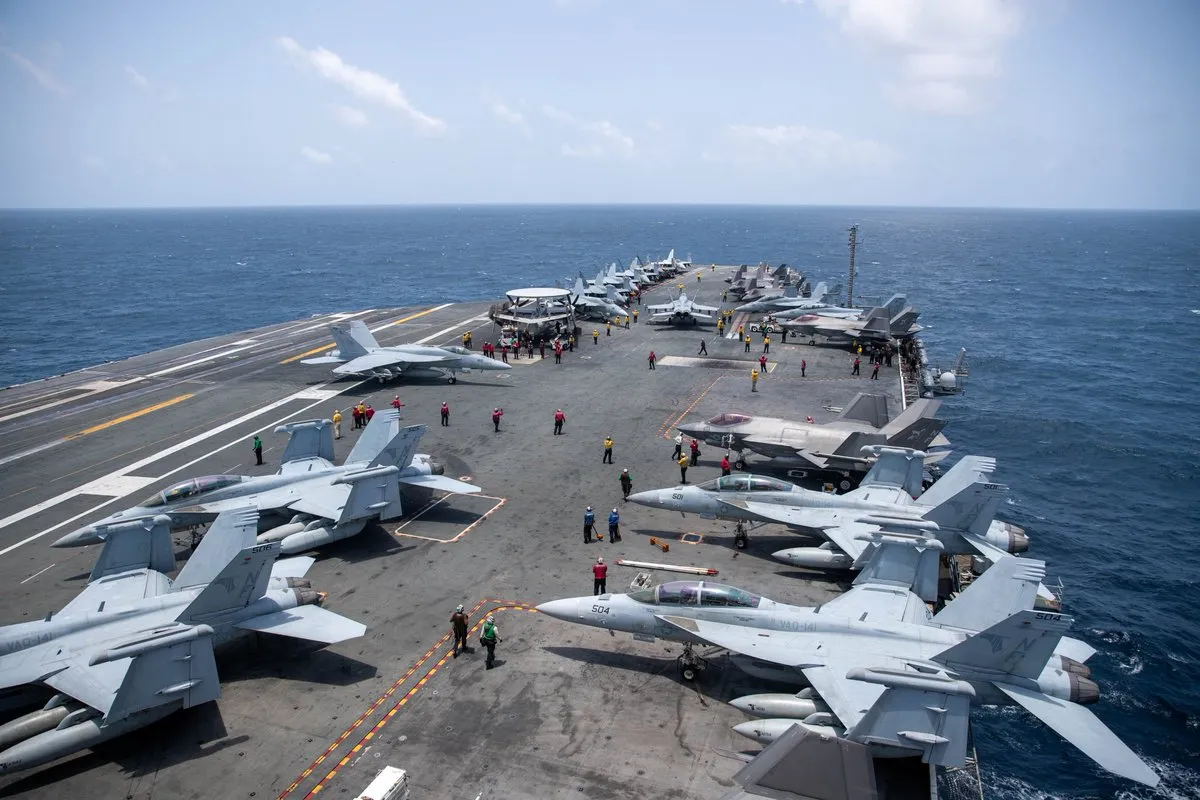
The U.S. Navy has disclosed the test of an AeroVironment LOCUST laser counter-drone system, which has been in the news recently, aboard the Nimitz class aircraft carrier USS George H.W. Bush. As far as TWZ is aware, this looks to be the first time a laser weapon has been fitted to a carrier. Earlier this year, Chief of Naval Operations Adm. Daryl Caudle, the Navy’s top officer, said his goal was for directed energy weapons to eventually be the go-to choice for the crews of American warships when facing close-in threats.
The Navy has shared three pictures of the LOCUST system onboard USS George H.W. Bush, seen at the top of this story and below. They were all taken on October 5, 2025, but released today. This coincides with the start of the Navy League’s annual Sea-Air-Space exposition, at which TWZ is in attendance.

The captions to each of the images include the following: “During the live-fire event, [the] LOCUST LWS [laser weapon system] effectively detected, tracked, engaged, and neutralized multiple unmanned aerial vehicles marking a milestone toward fielding operational directed energy capabilities.”
TWZ has reached out to the Navy for more information.

“The successful demonstration of its palletized LOCUST Laser Weapon System (LWS) aboard the USS George H.W. Bush (CVN-77) in October 2025″ was conducted “in collaboration with the U.S. Navy and the U.S. Army Rapid Capabilities and Critical Technologies Office (RCCTO),” according to a press release from AeroVironment.

“During the live-fire event, the Palletized High Energy Laser (P-HEL) system tracked, engaged, and neutralized multiple target drones – marking a major milestone toward fielding operational directed energy capabilities across all domains and platforms,” the release adds. “This achievement validates that the LOCUST LWS is truly platform-agnostic, seamlessly transitioning from fixed-site and land-based mobile platforms, such as the Joint Light Tactical Vehicle (JLTV) and Infantry Squad Vehicle (ISV), to the dynamic and demanding environment of a maneuvering aircraft carrier.”

The central element of LOCUST is a laser directed energy weapon in a turret, which also includes built-in electro-optical and infrared video cameras for target acquisition and tracking. Tertiary sensors, including small-form-factor high-frequency radars and passive radio frequency signal detection systems, can also be used to cue the laser. The JLTV and ISV-based configurations mentioned in AeroVironment’s release both feature small radars.


LOCUST’s power rating is generally understood to be in the 20-kilowatt range at present. When it comes to laser directed energy weapons, this is at the lower end of the power spectrum, fully in line with a system intended to defeat smaller drones. LOCUST has also been demonstrated with a 26-kilowatt power rating, but how much more it could be scaled within the existing form factor is unclear.
As of December 2025, the U.S. Army was known to have taken delivery of palletized LOCUST systems, as well as ones mounted on JLTVs and ISVs. The Army has at least deployed the palletized versions overseas operationally in the past. One of the service’s LOCUST systems was also at the center of a widely criticized and controversial shutdown of airspace around El Paso, Texas, in February of this year, as you can read more about here. The system had been on loan to U.S. Customs and Border Protection (CBP) at the time. Earlier this month, the Pentagon signed an agreement with the Federal Aviation Administration (FAA) regarding the continued use of anti-drone laser systems along the southern border with Mexico.
The U.S. Marine Corps has also moved to acquire JLTV-based LOCUST systems in the past. In addition to appearing to be the first instance of a laser-directed energy weapon going aboard a carrier, last year’s test aboard USS George H.W. Bush also looks to be the first known instance of the Navy even evaluating LOCUST for use on ships or in any other context.

Navy interest in using LOCUST to defend ships, especially very high-value ones like aircraft carriers, is not surprising. For years now, the service has been very active in pursuing shipboard laser and microwave directed energy weapons with a particular eye toward providing additional layers of counter-drone defense.
Experience gained in recent years from operations in and around the Red Sea, as well as against Iran, has only underscored the critical importance of bolstering the ability of U.S. warships to protect themselves against uncrewed aerial threats. The Navy has also been adding counter-drone systems that use physical interceptors as their effectors to a growing number of ships to help address this reality.
In general, lasers like LOCUST offer the promise of functionally unlimited magazine depth, which could be exceptionally valuable in the counter-drone role when faced with large volumes of incoming threats. The dangers that uncrewed aerial systems pose are only set to increase as artificial intelligence and machine learning-driven capabilities, including automated targeting and fully networked swarming, continue to improve while the barrier to entry steadily drops.
Palletized and containerized systems like the P-HEL version of LOCUST can also be employed with more flexibility on a wide variety of ships, as long as sufficient deck space and available power. The test aboard USS George H.W. Bush involved simply lashing the system to the flight deck. This also means the systems can be installed and/or removed more readily depending on mission requirements. The Navy also has a demand for counter-drone capability on land to protect key facilities and assets abroad and at home, where LOCUST would also be relevant.
LOCUST Laser Weapon System
At the same time, especially when it comes to employing lasers on ships, there are also potential pitfalls. As TWZ has previously written:
“A single laser can only engage one target at once. As the beam gets further away from the source, its power also drops, just as a result of it having to propagate through the atmosphere. This can be further compounded by the weather and other environmental factors like smoke and dust. More power is then needed to produce suitable effects at appreciable distances. Adaptive optics are used to help overcome atmospheric distortion to a degree. Altogether, laser directed energy weapons generally remain relatively short-range systems.”
“In addition, laser directed energy weapons, especially sensitive optics, present inherent reliability challenges for use in real-world military operations. Shipboard use adds rough sea states and saltwater exposure to the equation. There is also the matter of needing to keep everything properly cooled, which creates additional power generation and other demands.”
Over the years, the Navy has faced continued and significant hurdles in attempting to field operational laser weapon systems more broadly across its fleets. U.S. military officials have often sought to temper expectations, while also being open about their frustrations with the lack of greater progress, in recent years.
Still, the Navy, in particular, has persisted in its pursuit of these capabilities, given the benefits mentioned earlier. Lasers are set to be a particularly important component of the full arsenal aboard the future Trump class “battleships.”

“My thesis research at [the] Naval Post Graduate School was on directed energy and nuclear weapons,” Adm. Caudle told TWZ and other outlets at a roundtable back in January. “This is my goal, if it’s in line of sight of a ship, that the first solution that we’re using is directed energy.”
In particular, “point defense needs to shift to directed energy,” the admiral added, emphasizing that “it has an infinite magazine.”
“What that does for me is it improves my loadout optimization, so that my loadout, my payload volume is optimized for offensive weapons,” Caudle added at the time. Furthermore, “as you increase power, the actual ability to actually engage and keep power on target, and the effectiveness of a laser just goes up.”
Laser directed energy weapons with higher power ratings could potentially defend ships against other threats, including certain types of incoming missiles.
Whether or not the Navy decides to acquire and field LOCUST operationally on its ships, the service’s general demand for more counter-drone capabilities across the board does not look set to decrease any time soon.
Contact the author: joe@twz.com