Self-Management in Cota 905: From the Most Dangerous Barrio to an Open Air Art Gallery
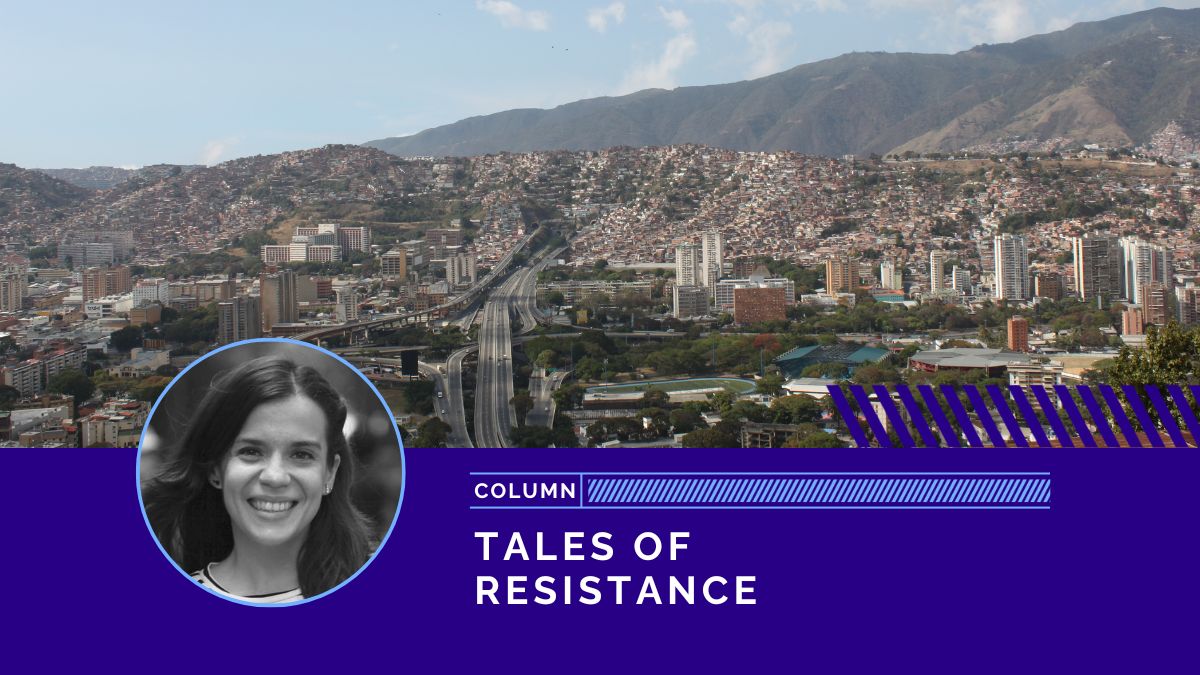
Cota 905 offers breathtaking views of Caracas. (Photo by Jessica Dos Santos)
Caracas has two avenues known as “Cotas”: Cota Mil, also known as Boyacá Avenue, which borders the Waraira Repano national park from East to West on the North edge of the capital. And Cota 905, or Guzmán Blanco Avenue, which heads south. In both cases, the name refers to their altitude above sea level.
Cota 905 was inaugurated by Marcos Pérez Jiménez in 1953. Years later, Venezuelan families began building informal settlements around it. By the late 1970s, it had become a complex area, with difficult access that to some extent isolated it from the rest of the city.
Between 2014 and 2021, armed gangs took control of the area, turning it into the city’s most dangerous barrio, terrorizing 300,000 residents and ensuring that not even the garbage collection service dared to enter. Every day we heard news of clashes with police forces or even of the “occupied territory” expanding into nearby areas.
Over these years, the government alternated between attempts to negotiate with the gangs –in an effort to turn the neighborhood into a “peace zone” –and a “heavy-handed” crackdown on crime. There were police operations as part of the so-called “Operation Liberation of the People” (OLP), followed by raids by the elite FAES unit. Finally, the massive “Operation Gran Cacique Indio Guaicaipuro” was launched in 2021, with the establishment of 34 checkpoints in what appeared to be an invasion of enemy territory by security forces.
Although no one questioned the need for the government to regain control of Cota 905, Operation Cacique Guaicaipuro sparked strong criticism of police actions, including the arrest of dozens of young people who were later proven to have no connection to criminal gangs. The barrio’s kingpin, Carlos Luis Revete, alias “El Koki,” escaped the operation but was killed months later in a shootout near Caracas.
Since then, residents of the area have noted a decline in crime and drug trafficking. However, they complain that the government should follow up its intervention by addressing other basic needs: street cleaning, improving services, replacing damaged roofs, creating decent spaces for education, culture, sports, and recreation, generating local employment. Above all, there was also the issue of lifting the stigma after all those years. Making people understand that Cota 905 produces more than just criminals.
Still, in Venezuela, whenever the state takes a step back, organized communities step forward. One initiative I had the chance to get to know was “The Cota 905 Tour: A Thousand Stories, Over a Hundred Murals, One Route,” a community-led cultural tour that transforms the neighborhood into an open-air art gallery.
This project was conceived by Jefferson Cárdenas, a young man known as “Gorra,” who spent a couple of years in prison for theft and weapons possession until another group came to his rescue: Free Convict, a Venezuelan hip-hop group made up of former inmates and prisoners who use music as a tool for social reintegration and personal transformation. In fact, many of these rappers have joined him in this new social initiative.
Jefferson recruited a couple of neighbors and began taking out trash, clearing brush, sweeping, and installing light bulbs. Little by little, other neighbors started donating small amounts of cement or paint they had stored at home. Some neighbors –who are currently out of the country –also did their part. So did some small business owners in the neighborhood: from the owner of a 30-year-old bodega that is a neighborhood institution, to newer ventures like a pizzeria (which I highly recommend!) and a bakery. Meanwhile, graffiti artists and muralists also decided to contribute their art for free.
To begin the tour, it takes some effort to go up an endless amount of painted staircases that are a testament to urban creativity. Then, amid its labyrinthine streets, we witness murals on walls and house façades. Over a dozen artists and collectives contributed more than 100 artworks.
The key word if self-management. The initiative has relied on grassroots organizations in the barrio and also helped them reactivate.
But the tour isn’t just about taking in the views. Visitors are joined by local historians, and there are impromptu concerts, theater plays designed to raise awareness, traditional games, local cuisine, and even souvenirs for sale featuring positive messages about Cota 905. Given its success, the organizers are considering new possibilities, such as tours at sunrise or sunset.
The Venezuelan government, which in recent years has launched various initiatives in Cota 905 but without much consistency, has acknowledged the tour success. The Ministry of Tourism has officially recognized it, and even groups of foreign tourists have come to experience it.
Jefferson’s team has helped redefine the Cota 905 territory. Artists and musicians now come here to shoot music videos, taking advantage of the incredible views. The most breathtaking photos are taken from the so-called “Eye of God,” a spot that lives up to its name, reaching a height of 1,200 meters. Once used by criminals to maintain control over the city, it is now a local attraction.
To those who might be reluctant to visit Cota 905, Jefferson responds clearly: “I didn’t agree with the police operations –there were too many clashes between law enforcement and gangs. It was a war, but ultimately the state had to do something. This neighborhood was a problem for all of Venezuela, but today we want to be part of the solution. We need these initiatives to work because there are still many kids waiting for opportunities: before, they were given radios, drugs, and weapons; today we want to give them paint, balls, and microphones, so they’re seen in the media as an example and not as a tragedy.”
The group, which tries to stay away from strong political or religious stances, wants to grow food, introduce horseback rides, and more. “This mountain was hurt,” Jefferson continues. “My brother was killed but my son was born here. We have plenty of reasons to commit to this barrio. Hopefully authorities could give us a helicopter ride so we could point out from above everything that needs fixing. But until then, we’ll continue with our work.”
The story of Cota 905 is not unique, nor is it a novelty. The barrios in the major Venezuelan cities, Caracas above all, have always had to overcome marginalization. When Chávez came to power, many of them remained as “green spaces” in local maps, even though they were home to hundreds of thousands of families in piled-up hillside houses. And if they were classified as green areas, it meant they had no public services nor were they part of public policies. But that never stopped the people from organizing to defend their rights, resist against state violence, and build a future together.Venezuelan barrios can be precarious, hostile, violent. But if we are willing to walk and listen to them, we realize that they are also spaces of profound beauty and solidarity. The struggle continues.