fuel

Major airline cuts flights to and from UK as fuel crisis bites ahead of busy summer period

NINTCHDBPICT001068125239

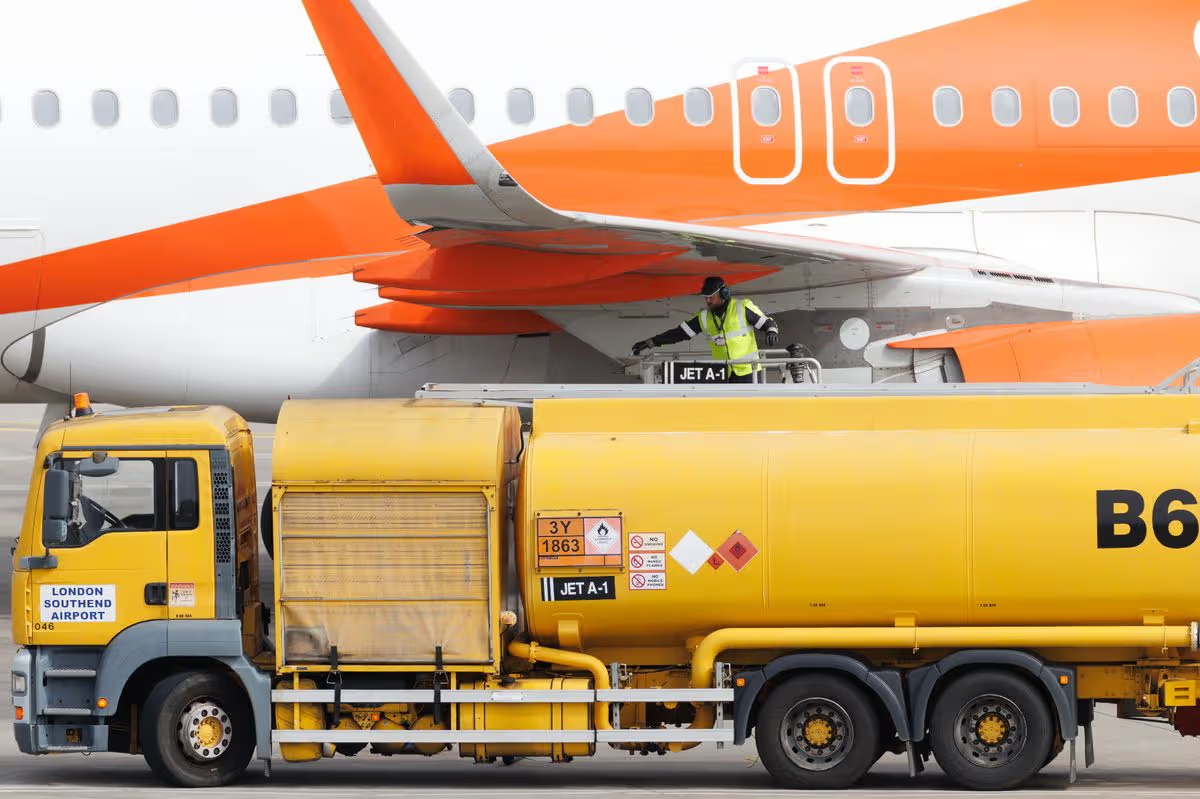
RISING fuel costs linked to the war in Iran have forced a major airline to slash more than 100 flights – including services to and from London.

Dutch company KLM is axing 160 flights across Europe over the next month as soaring fuel prices pile pressure on the industry ahead of the busy summer period.

KLM is set to cancel more than 100 flights due to the fuel crisis sparked by the war in Iran Credit: Alamy
Flight cancellations are coming if the Strait of Hormuz remains closed Credit: Reuters

The cuts will hit routes in and out of Amsterdam’s Schiphol Airport, with departures and arrivals split evenly .

Despite the disruption, the airline insists there is no shortage of jet fuel, saying the move is purely down to spiralling costs.

A KLM spokesperson said: “Passengers affected by these changes will be rebooked onto the next available flight.

“As these are destinations KLM serves multiple times a day, such as London and Düsseldorf, travellers can usually be accommodated quickly.

MAJ-ESTIC

Play Majorca’s iconic golf course on budget-friendly 7-night break for under £600


HOLS HORROR

Jet2 holiday flight forced to make emergency landing after ‘smoke filled cabin’

“KLM expects a busy May holiday period and is making sure passengers can travel to their holiday destinations as planned.”

KLM’s flight cancellations comes after the head of the International Energy Agency Fatih Birol said mass flight cancellations will begin “soon” if the Strait of Hormuz remains closed.

“In the past there was a group called ‘Dire Straits.’ It’s a dire strait now, and it is going to have major implications for the global economy”, Birol told AP.

Adding: “And the longer it goes, the worse it will be for the economic growth and inflation around the world.”

Birol’s deadline means airports could face critical fuel shortages by May, causing travel chaos for Brits heading abroad during the school May half-term holidays.

Oil prices have soared since the start of March after Iran closed off the Strait in response to US-Israeli forces bombing.

The Persian Gulf chokehold sees around 40 per cent of the world’s jet fuel supply pass through.

It comes after ACI Europe, which represents European airports, said the key trade route must open within three weeks or fuel reserves will run drastically low on Friday.

A number of airports in Italy have already warned that they were running out of fuel.

According to local reports earlier this week, Brindisi-Casale Airport confirmed that Jet A1 fuel was not available for a short period of time.

And British Airways has announced it will permanently axe its service from London Heathrow to Jeddah in Saudi Arabia from April 24.

The airline had been operating a four flights a week service since November 2024.

But a shift in demand, due to the conflict in the Middle East, has led to the airline terminating the service.

KLM stressed the cancellations make up just one per cent of its European schedule.

But the move will still spark concern for Brits planning trips abroad as airlines battle rising operating costs.

It comes as carriers across Europe scramble to balance the books amid the fuel crisis.

Earlier this month, UK airline Skybus pulled the plug on all future flights between London Gatwick and Newquay.

The route, which launched in November 2025, had been backed by Cornwall Council and the Department for Transport under a public service scheme due to run until the end of May.

However, a slump in passenger numbers combined with higher fuel costs forced the airline to ground the service early, with its final flights taking off on April 2.

The latest cuts raise fresh fears of further disruption for holidaymakers as the peak summer season approaches.

Meanwhile other vital UK services could also face shortages if a deal to end the Middle East war is not struck soon.

Medicines UK, which represents companies making 85 per cent of NHS prescriptions, said NHS patients could face prescription shortages within weeks.

This could place “significant pressure for the NHS as early as June”, the organisation warned.

And Brits could even face shortages of supermarket staples such as beer and meat as officials fear the blockade of the Strait could cut vital carbon dioxide supplies.

CO2 is used in food packaging to improve the shelf life of salad, packaged meats and baked goods – and also slaughtering nearly all pigs and most chickens.

Tim Lang, professor of food policy at the University of London, who has been a member of several government bodies including the UK Council of Food Policy Advisors, told The Sun that the UK has “next to no food storage”.

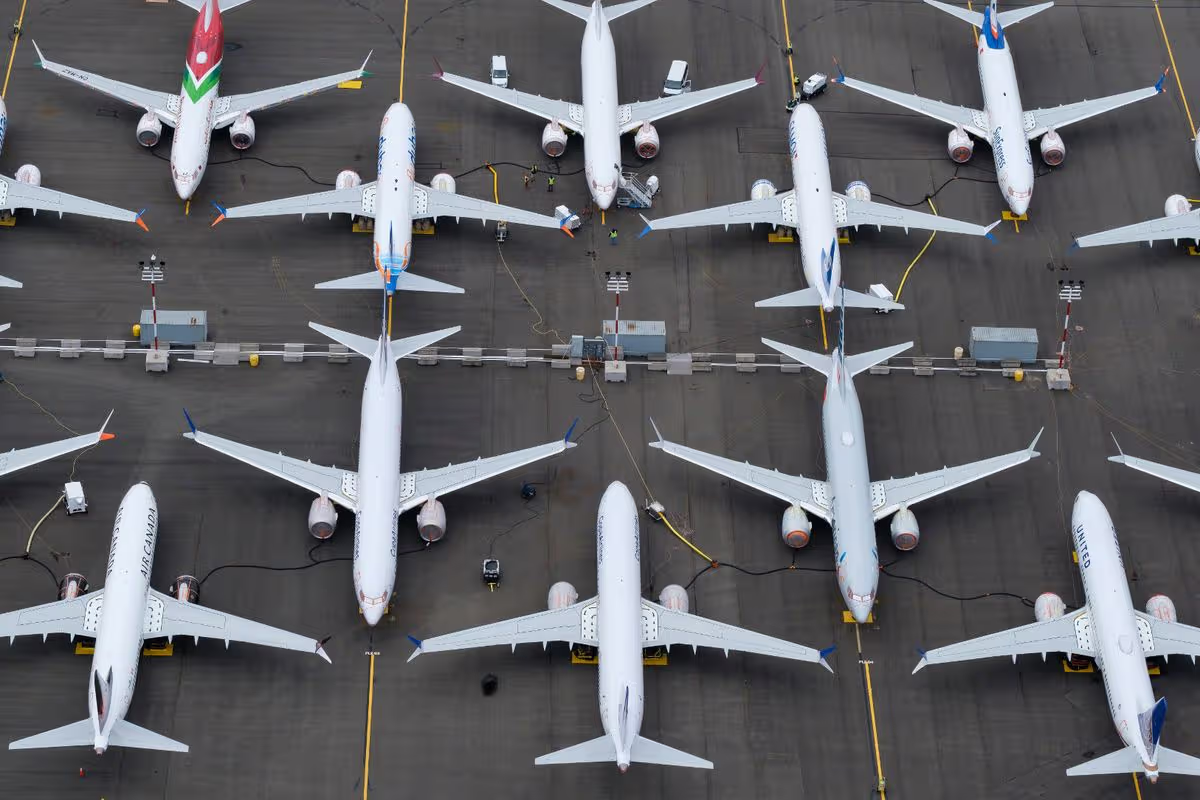
The cuts will hit routes in and out of Amsterdam’s Schiphol Airport Credit: Alamy
The blockade of the Strait of Hormuz is holding up major supply chains Credit: AFP

Source link

Everything you need to know about the 2026 Long Beach Grand Prix

p]:text-cms-story-body-color-text clearfix”>

The high-powered Indy cars that will be racing in Sunday’s Grand Prix of Long Beach will burn about two gallons of fuel on each of their 90 trips around the tight 1.968-mile street course.

So if all 27 cars that start the race also finish it, the field will use 4,860 gallons of fuel. And that doesn’t include the fuel used in qualifying or in the other five classifications of cars that will be participating in the three days of racing in Long Beach.

That’s a lot of fuel for drivers who will end up in the same place they started, especially when seven weeks of war in the Middle East has driven the price of gasoline to record highs. However, the fuel the IndyCar series uses differs significantly from what that comes out of the pump at the gas station.

“This year marks the fourth season that IndyCar has used 100% renewable race fuel for the NTT IndyCar Series — the first motorsport series in North America to utilize this type of fuel,” an IndyCar spokesperson wrote in a statement. “Developed through a collaboration with Shell, this innovative fuel consists of a blend of second-generation ethanol derived from sugarcane waste and other biofuels mainly derived from animal waste. The use of this renewable race fuel enables a 60% reduction in life cycle greenhouse gas emissions.”

So while driving Indy cars 177 miles in a circle may seem wasteful during a gas crunch, Sunday’s race will have a negligible affect on the price and availability of fuel at service stations. The greater impact will be made by fans driving to Long Beach; last year’s three-day race weekend drew more than 200,000 people.

Source link

Two more major airlines forced to increase flight prices by £86 due to fuel crisis

As airlines grapple with the soaring jet fuel prices and global shortage due to the closure of the Strait of Hormuz, two more have been forced to increase their prices for passengers

Due to the escalating fuel crisis sparked by the Middle East conflict, two more airlines have been forced to raise their prices.

Air travel has been severely disrupted with cancelled routes and a sharp rise in jet fuel prices since US-Israeli strikes erupted on February 28, 2026. The situation was further heightened by Iran’s blockade of the Strait of Hormuz, through which approximately 20 per cent of the world’s oil and gas passes, triggering a global shortage.

As a result, airlines have been grappling with rising jet fuel costs and have been forced to raise prices. Air France and KLM are the latest airlines to confirm they’ve had to increase ticket prices as a result.

READ MORE: Major European airport issues ‘arrive early’ alert for all passengers amid delaysREAD MORE: EasyJet boss warns of summer price hike after £25million hit from jet fuel costs

The airlines, which are part of the same company Air France–KLM, had previously added a surcharge last month to offset soaring jet fuel prices. At the time, economy fares were bumped up by an extra €50 (£43.47) for a round trip, reported The Sun.

Now, with another increase announced, a long-haul round trip with Air France or KLM could cost an additional €50, bringing the fuel surcharge to €100 (£86.98) on top of the standard fare. Meanwhile, flights to the United States, Canada and Mexico could increase by €70 (£60.89), and an economy round-trip could cost an extra €10 (£8.70).

The Mirror has contacted Air France and KLM for comment.

Air France and KLM aren’t the only airlines to raise prices amid the ongoing fuel crisis. Just this week, it emerged that Virgin Atlantic had increased some flight costs with an extra £50 fuel surcharge on economy-class tickets, while premium economy fares are climbing by £180 and business class by £360.

Virgin Atlantic Chief Executive, Corneel Koster, warned travellers that flight prices could climb in the coming months and potentially throughout the remainder of the year. He said: “We have never seen jet fuel at this level and airlines cannot sustain those sorts of high costs.”

“If the fuel price goes much higher, I think the surcharges may go higher. If they go up in a week and you book in two weeks’ time, you’ll be paying higher.”

While there are no fuel shortages at present, Koster acknowledged it was impossible to guarantee supplies in the months ahead. “We have contracts with multiple suppliers who have a wide range of diversity of where the jet fuel comes from,” he explained.

“We have good visibility and no concern for the coming one to two months – certainly for the remainder of April and May. Beyond that I have less visibility, but that is quite normal.”

Meanwhile, it’s also been reported that airlines, such as JetBlue, have increased luggage fees in a bid to offset the soaring fuel costs. For off-peak economy fares, bags are expected to cost $4 more (£2.95), jumping to $39 (£28.79), while peak economy fares are set to be $49 (£36.17).

Do you have a travel story to share? Email webtravel@reachplc.com

Source link