France

The return of France’s train of marvels: from the Côte d’Azur to the Southern French Alps | France holidays

Nine-thirty on a sunny Tuesday morning, and the platforms at Nice-Ville station are buzzing. Office workers nudge their way past backpackers, passengers clamber on to trains heading east to Monaco and Italy, or west to Antibes and Cannes. My husband and I, however, are heading away from the glittering coastline and boarding the Train des Merveilles (Train of Wonders) into the Alpes-Azur mountains.

Back on track last December after a programme of major works closed the line for a year, it’s one of the most spectacular train routes in Europe, a two-hour journey that climbs 1,000 metres in 100km, linking Nice with the medieval town of Tende, surrounded by the soaring peaks of the Mercantour national park.

Illustration: Guardian Graphics

It’s barely 10 minutes before the suburbs of Nice begin to melt into low hills, scattered with auburn-roofed villas and copses of chestnut trees. Once the ascent begins, it’s easy to see why maintaining the line, begun in 1883, is a serious task. More than 100 bridges and viaducts – and almost as many tunnels and retaining walls – stitch the track together, along with ingenious helical loop tunnels, which gain altitude by following a series of bends inside the mountain itself.

It’s a breathtaking ride, the hills gaining height and heft, until a great mountainscape begins to unfold before us; jagged peaks that make the valley road below seem little more than a thin sliver of ribbon.

Gare de Nice-Ville. Photograph: Cosmo Condina/Alamy

Many passengers ride straight up to Tende and set off to hike the mountain trails that lead off from the town. But we want to see a little more, and disembark first at Sospel, a medieval town where the 13th-century Pont-Vieux straddles the Bévéra River. It’s market day and, even in such a small town, there are flower and vegetable stalls, great wheels of cheese and delicious looking breads. We stroll the quiet streets, past crumbling baroque churches and gothic-style houses. It’s amazing to think we are barely an hour from Nice – it feels like we’ve been transported to an entirely different region of France.

The higher we go, the more the feeling of stepping back in time grows. At La Brigue, the gateway to the Mercantour national park, the tangle of medieval streets feel barely raised from their winter sleep; the town only really comes alive in summer, when the hikers arrive. La Brigue’s claim to fame is the Chapel of our Lady of Fountains, a couple of miles outside the town. Named for the seven springs that trickle through the rocks nearby, parts of the church date back to the 13th century, when, legend has it, villagers built it as a sign of gratitude to the Virgin Mary after prayers for a new water source for La Brigue were answered. While the facade is unassuming, the interior is truly extraordinary; its walls and ceiling are covered in 15th-century frescoes by Giovanni Canavesio that are so vivid the church is sometimes called the Sistine Chapel of the Southern Alps.

The Train des Merveilles passes over the Roya River. Photograph: Hemis/Alamy

By the time we arrive in Tende, where the houses cling to the mountainside, we are 800 metres above sea level and there is nothing but wooded slopes leading to high peaks and a crisp, clear silence. We follow the modern main street through the clustered, medieval houses of the old town up to the ruins of Chateau Lascaris, where the views stretch to the distant peaks of the Marguareis massif, the last mountains before Italy. It’s quite a pull, and afterwards we reward ourselves with mammoth croque monsieurs at Stella Alpina – part outdoor equipment shop, part rustic eaterie. Around us, hearty looking chaps in Lycra cycling tops are tucking into pints of lager and platters of local cheese and cured meats.

Much restored, we dip into the Musée des Merveilles, where we learn (through our fractured French) that the area is home to one of Europe’s largest Neolithic and Bronze Age rock-engraving sites. The town’s more recent (relatively speaking) history is tied to the Salt Road, a mule train route between the Piedmontese Alps and the Ligurian coast, used from the middle ages until the 18th century. Built as the last French stop-off along the trade route, it partly explains why a town of such a size was located in such an isolated, mountainous location.

Next morning, we’re back in Nice, from where we head along the coast to Antibes. It’s such a bonus, being able to explore so easily; 40 minutes later, we’re strolling past gleaming yachts in the marina and on to the 16th-century ramparts, to sit in the sunshine and watch the kitesurfers whisk across the bay. We head to a restaurant on the Place Nationale, where I eat crispy fritto misto (mixed fried seafood) and try to ignore my husband tucking into buttery, garlicky snails. The following day we take the 10-minute hop east for lunch in Beaulieu-sur-Mer, where the streets ooze belle epoque glamour, and the Plage de la Petite Afrique makes the perfect spot for a paddle and a pile of mussels, thick with cream and garlic.

The historic centre of Antibes. Photograph: Licht Wolke/Alamy

Food, inevitably, plays a big part in our time in Nice too. As touristy as the old town is, we find two absolute gems; a recommendation sends us to Acchiardo (on Facebook), where the fourth generation of the Acchiardo family serves up classic local dishes such as daube Nicoise – a rich, slow-cooked beef stew and duck breast with fig sauce. The second, Les Bar Des Oiseaux (on Instagram), we simply stumble across. It’s a classic bistro, with wood panelling painted with flawless reproductions of artworks by everyone from Joan Miró to Paul Klee and Roy Lichtenstein. My bourride (a traditional Provençal fish stew) was one of the most delicious things I’ve ever eaten.

And that’s the beauty of Nice. It’s both a destination itself and a gateway to very different worlds, all of them just a train ride away. The Train des Merveilles is unarguably the highlight; those extraordinary twists and turns, the grandiose scenery, wild and untouched, so different from the busy streets of Nice. But to pack all of it into one short trip is to make the very most of this diversely beautiful region; a trip des merveilles indeed.

The trip was provided by Mama Shelter hotels and the Nice Côte d’Azur tourist board. Doubles at Mama Shelter Nice from £114 B&B. The Train des Merveilles runs daily from June-September, with an onboard guide on the 9.30 departure. A regional rail day pass with Ter Zou!, including the Train des Merveilles, is €20


Source link

‘Fjord’ by Romania’s Cristian Mungiu wins Cannes top film prize | Cinema News

This marks the second time that Romanian director Cristian Mungiu has won the prestigious Palme d’Or prize.

Fjord, a thought-provoking drama about a Christian family in Norway from Romanian director Cristian Mungiu, has won the best film prize at the Cannes Film Festival.

Mungiu won his second Palme d’Or at a star-packed closing ceremony at the festival on Saturday.

Recommended Stories

list of 3 itemsend of list

The ⁠drama starring Sebastian Stan and Renate ⁠Reinsve is centred around ⁠the clash ⁠of values that ensues when a religious family ‌relocates from Romania to a Norwegian ‌village.

It tells the story of evangelicals who move to Norway, but soon after have their children taken from them by child services for spanking them. Mungiu has called it a tale of “left-wing fundamentalism.”

The movie is based on true events and is notable for how it questions the supposedly progressive values of the Norwegians depicted in the film, as well as the child welfare system.

“This is a message about tolerance, inclusion, and empathy. These are wonderful values that we all cherish, but we need to put them into practice more often,” Mungiu told the audience.

Mungiu becomes just the 10th filmmaker to win the Palme d’Or twice. His, 4 Months, 3 Weeks and 2 Days, a Romanian abortion drama, won the award in 2007.

Russian war drama Minotaur, by Andrey Zvyagintsev, which depicts a callous businessman caught up in Russia’s invasion of Ukraine, won the Grand Prix second prize.

“Put an end to the carnage, the whole world is waiting for it,” Zvyagintsev, who now lives in exile in France, told the audience in a message addressed to Russian leader Vladimir Putin.

Belgium’s Virginie Efira and Japanese actor Tao Okamoto shared the best female performance award for their roles in nursing home drama, All of a Sudden, by Japan’s Ryusuke Hamaguchi.

Belgian duo Emmanuel Macchia and Valentin Campagne from gay World War I drama, Coward, also shared the male best actor award for their roles in the Lukas Dhont-directed movie.

Rwandan filmmaker Marie-Clementine Dusabejambo won the Camera d’Or for best first film for her genocide drama, Ben’Imana, which she dedicated to “the women of my country”.

Source link

Monfils warms up for final French Open with star-studded farewell party | Tennis News

The evening blended tennis, ​music and tributes to celebrate his two-decade journey on the professional tour.

Gael Monfils brought ‌the party to Roland Garros on Thursday, teaming up with his ⁠wife Elina Svitolina ⁠to win a lively, star-studded exhibition match as he prepared for his final appearance at his home Grand Slam.

The popular Frenchman took ⁠centre stage on Court Philippe-Chatrier for “Gael & Friends”, an evening that blended tennis, music and tributes to celebrate his two-decade journey on the professional tour.

The former ⁠world number six was joined by an array of leading players, including Novak Djokovic, Jannik Sinner, Alexander Zverev and Stefanos Tsitsipas.

Recommended Stories

list of 4 itemsend of list

Four-time Grand Slam champion Naomi Osaka also featured, alongside Maria Sakkari and rising American talent Iva Jovic, while his former Davis ‌Cup teammates Jo-Wilfried Tsonga and Richard Gasquet added a nostalgic touch to the occasion.

Monfils and Svitolina capped the night by winning the exhibition event, delighting the Paris crowd in an event filled with laughter, trick shots and playful exchanges replacing the usual tension of a competition.

Monfils won 13 ATP titles and enjoyed memorable runs in Paris, including a semifinal appearance in ⁠2008. He helped France to Davis Cup finals in ⁠2010 and 2014.

While a Grand Slam title eluded him, his impact extended far beyond results and his on-court charisma made him a major drawcard wherever he played.

“Thanks to you all for ⁠everything you’ve given me over the years,” the 39-year-old showman said after the exhibition match.

“It’s been a dream of ⁠my life. I’ve always given my absolute most. ⁠I was never quite good enough to win a Grand Slam. But maybe I won something more important than that — a tennis career I’m proud of.”

Svitolina, who had earlier called her husband “a magician” ‌in a note written to their daughter, was reduced to tears as Monfils lingered on court, soaking up one final ovation.

Monfils will play 25-year-old compatriot ‌Hugo ‌Gaston in the first round at Roland Garros next week, his 19th appearance in the main draw at the French Open.

Source link

‘Most important spa town in Europe’ is a ‘hidden gem’ which ‘most people skip’

Situated in the south west of Germany, on the border of the iconic Black Forest mountain range, the city has jointly been designated a UNESCO World Heritage Site

If you’re thinking about a trip to Europe, but want something a bit off the beaten track, one “hidden gem” with historic spas, Roman ruins, and incredible museums could be just the ticket. Situated in the south west of Germany, on the border of the iconic Black Forest mountain range, the city has, along with Bath in Somerset and nine other locations, jointly been designated a UNESCO World Heritage Site as one of ‘The Great Spa Towns of Europe’.

Travel influencer Katherine McQueen, who has 685,000 followers on Instagram, where she is known as vineyardsandvoyages, posted a look into everything the city has to offer. She said: “This is one of Europe’s most elegant hidden gems… and most people skip it.”

Describing the city as “polished, romantic, and completely different from the bigger stops most travellers add to their itineraries”, she hailed its “pastel streets, grand architecture, thermal baths, elegant cafés, beautiful gardens, and old-world glamour around every corner”. But it was the history which she hailed as its most important element.

“People have been coming here for the thermal waters since Roman times, and wellness is still one of the biggest reasons to visit today,” she said. “You can soak in mineral-rich baths, wander through historic spa buildings, and experience a side of Germany that feels slow, refined, and deeply relaxing.”

Katherine also praised the city’s glittering casino, food – including, of course, the iconic Black Forest gateau – and location, calling it “one of the most unexpectedly charming places I’ve visited in Germany”.

The city in question is Baden-Baden, located around 15 miles east of the French border, and 42 miles west of Stuttgart.

In the post Katherine explained more about what the city has to offer. “Some of the bathhouses here feel more like palaces than spas, with mineral pools, grand domes, and centuries of wellness history,” she said. “But it’s not just a spa town. It’s also filled with elegant architecture, gardens, colonnades, and beautiful places to wander.”

She added: “The whole city has this refined, romantic atmosphere. Long covered walkways, grand buildings, art, gardens, and peaceful corners everywhere.”

Concluding, she said: “It has that rare mix of history, wellness, food, architecture, and nature, all in one very walkable little city. Everywhere you look, there are details that make it feel grand without feeling overwhelming. This town rewards slow wandering. Hidden side streets, stairways, dreamy corners, and beautiful views around every turn.”

The city’s official tourism website says: “Baden-Baden was founded 2,000 years ago to do people good. Thermal water at temperatures of up to 68 degrees gushes out of the earth from 12 thermal springs in Baden-Baden. Even today, our spa town at the foot of the Black Forest is the perfect place to enjoy spa tradition – whether in the Caracalla Spa or in the historic Friedrichsbad Spa.”

Content cannot be displayed without consent

How can I get to Baden-Baden?

By air: Direct flights to Baden-Baden are available from London Stansted Airport. Indirect flights are also available from most other UK airports.

By train: You can take the Eurostar to Paris or Brussels, with various connecting routes available.

By car: You can drive by taking the Eurostar and then heading south east through France, or east into Belgium before crossing, into Germany. Once arriving in France, the route is between 400 and 450 miles, taking between six and seven hours.

Source link

Lucy Packer: Red Roses scrum-half on beating nerves & France in Grand Slam decider

During this tournament, she has been able to lean on Meg Jones a little more to lift her mood.

Like the new England skipper, Packer was born and raised in Wales. The pair will occasionally swap a word or two of Welsh, a reminder of home and family.

“We have just some funny phrases that no-one else really understands, but it really makes us laugh,” says Packer.

“She’s very good at making things quite light and I’m probably the opposite – I make it quite serious.”

There is plenty to be serious about when they face France in Bordeaux.

Given England’s home run at the 2025 Rugby World Cup, WXV’s sparse crowds and an expected record attendance at the 42,000-capacity Stade Atlantique, it is likely to be the most hostile environment the Red Roses have played in since that fateful defeat in Eden Park in 2022.

The streak of 37 straight wins England have put together since is in definite peril.

But, beyond her notes and focus points, there is something else, less easily defined, that bolsters Packer amid the stress.

“As a team we are all overly critical of ourselves, but there is a bond that’s really important to us,” she says.

“The biggest thing is how tight we are as a group – and that just really carries us through.”

Packer, her team and that togetherness will be tested.

But the scrum-half, book smart, street smart and quick smart at the breakdown, can pass most things.

Source link

2026 World Cup: Mbappe and Dembele lead 26-man France squad

Goalkeepers: Mike Maignan (AC Milan), Robin Risser (Lens), Brice Samba (Rennes)

Defenders: Lucas Digne (Aston Villa), Malo Gusto (Chelsea), Lucas Hernandez (Paris St-Germain), Theo Hernandez (Al Hilal), Ibrahima Konate (Liverpool), Maxence Lacroix (Crystal Palace), Jules Kounde (Barcelona), William Saliba (Arsenal), Dayot Upamenaco (Bayern Munich)

Midfielders: N’Golo Kante (Fenerbache), Manu Kone (Roma), Adrien Rabiot (AC Milan), Aurelien Tchouameni (Real Madrid), Warren Zaire-Emery (Paris St-Germain)

Forwards: Maghnes Akliouche (Monaco), Bradley Barcola (Paris St-Germain), Rayan Cherki (Man City), Ousmane Dembele (Paris St-Germain), Desire Doue (Paris St-Germain), Michael Olise (Bayern Munich), Kylian Mbappe (Real Madrid), Jean-Phillipe Mateta (Crystal Palace), Marcus Thuram (Inter Milan)

Source link

France allows asymptomatic passengers off new cruise ship struck by stomach bug outbreak

Passengers unaffected by an illness outbreak on a British cruise ship have been allowed off the ship in Bordeaux, while authorities confirmed the cause of the outbreak is norovirus, a nasty stomach bug that spreads easily.

French authorities had initially ordered over 1,700 passengers and crew on The Ambition cruise ship to remain on board, but then decided late Wednesday to let those unaffected disembark. One passenger was spotted raising his arms in triumph while leaving the vessel.

It was not immediately clear how many left the ship.

French authorities said there is no link to a deadly hantavirus outbreak on a Dutch vessel that has put European health authorities on alert in recent weeks.

The Ambition was midway through a 14-night cruise from Belfast and Liverpool, with scheduled stops in northern Spain and along France’s Atlantic coast when it was struck by the outbreak. It reached Bordeaux on Tuesday evening, according to the operator, Ambassador Cruise Line. It was not immediately clear if or when it would resume its journey.

Samples analyzed at Bordeaux University Hospital confirmed an outbreak of norovirus. Local authorities said at this stage no serious cases have been reported and that sick passengers were cared for onboard by the ship’s medical team.

The U.S. Centers for Disease Control and Prevention, which tracks outbreaks on voyages that call on U.S. and foreign ports, recorded 23 gastrointestinal outbreaks on cruise ships last year. Most were caused by norovirus, including a new strain.

Ambassador Cruise Line, a British operator catering to passengers over 50, was founded in 2021.

Source link

Women’s Six Nations: England forward trio return for France decider

Burton, who switched to number eight after Feaunati pulled out of the line-up in Parma, partners the Exeter star in the back row, with Kabeya, who won player of the match in the September’s World Cup final, at open-side flanker.

Liz Crake, who won her most recent cap in 2023 and has returned to working as a dentist alongside her rugby, has been named on the bench after Saracens team-mate Kelsey Clifford suffered a leg injury.

England have won their past 17 meetings with France in all competitions, but were pushed to within a point in a 43-42 victory in last year’s Six Nations finale.

France, who have grown into the tournament as a new-look backline have found their feet, will be roared on by a crowd that is expected to set a new record for a Women’s Six Nations match in France at the 42,000-capacity Stade Atlantique.

England: Kildunne; Breach, Jones (c), Rowland, Moloney-MacDonald; Harrison, L Packer; Carson, Cokayne, Bern, Ives Campion, Burns, Burton, Kabeya, Feaunati

Replacements: Powell, Crake, Muir, Short, M Packer, Robinson, Aitchison, Sing.

Source link

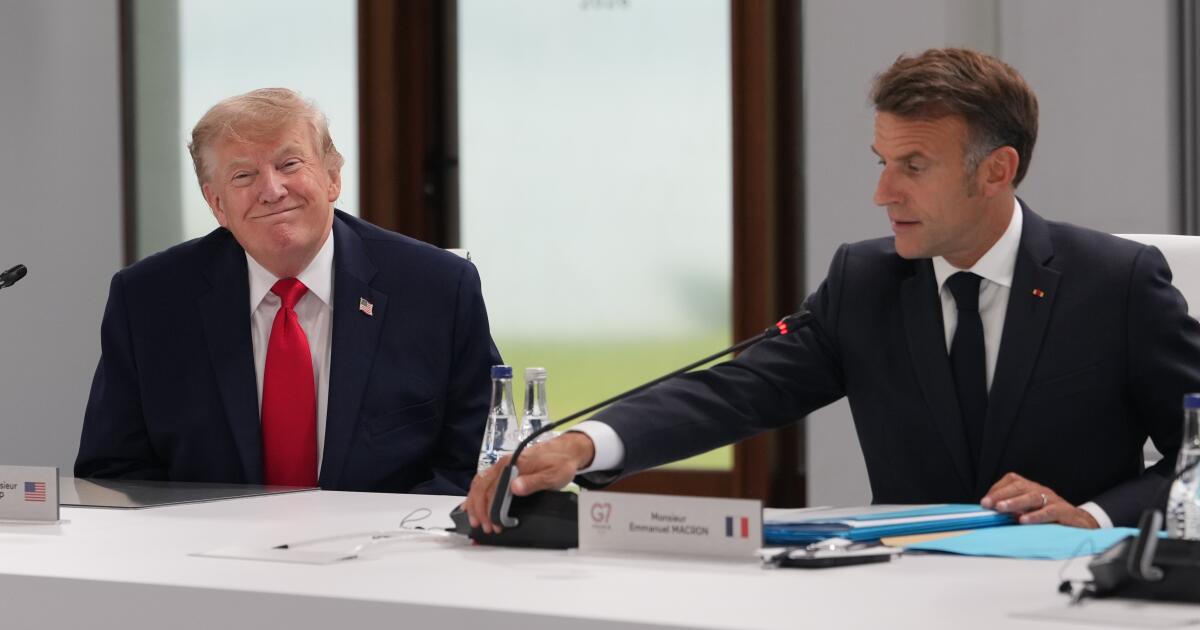
Macron and Ruto Strengthen Ties at Nairobi Africa-France Summit

The 2026 Africa France summit in Nairobi marks a significant diplomatic moment in the evolving relationship between Europe and Africa. For the first time, the summit is being held in an African country with no colonial history under France, signaling an intentional shift in symbolism and geopolitical messaging. It is also taking place against a backdrop of deteriorating French influence in parts of West Africa, where countries such as Mali, Burkina Faso, and Niger have sharply reduced engagement with Paris.

The summit reflects a broader attempt to redefine France’s role in Africa under President Emmanuel Macron and to reposition France within a more competitive global environment. At the same time, it highlights Kenya’s growing ambition under President William Ruto to present itself as a continental diplomatic hub and an economic gateway between Africa and global powers.

The convergence of these ambitions has produced a summit agenda focused on innovation, entrepreneurship, climate finance, artificial intelligence, and security cooperation. However, beneath this forward looking framing lies a more complex continuity of historical relationships, economic interests, and strategic recalibration between Africa and Europe.

Macron’s Repositioning of French Africa Policy

The summit reflects the long term evolution of Macron’s Africa strategy, which has sought to move away from traditional post colonial frameworks toward a more diversified and economically oriented engagement model. This approach emphasizes partnerships in innovation, private sector development, and strategic cooperation beyond France’s former colonial sphere.

A central feature of this policy has been an attempt to reduce France’s reliance on its traditional West African alliances while expanding diplomatic and economic ties across the broader African continent. This includes engagement with non Francophone countries and regional institutions, reflecting a recognition that France’s historical influence in West Africa is increasingly contested.

The emphasis on entrepreneurship and innovation, particularly through small business development and technology partnerships, reflects a shift toward a neoliberal development model. This model prioritizes private sector growth, investment facilitation, and startup ecosystems as drivers of economic transformation.

The Nairobi summit continues this trajectory by framing Africa France relations around innovation and growth rather than historical legacy or development aid dependency.

Kenya’s Strategic Diplomatic Positioning

For Kenya, the summit represents an opportunity to consolidate its position as a leading diplomatic and economic actor in Africa. By hosting a major international summit outside the traditional Francophone sphere, Kenya is signaling its ambition to transcend linguistic and colonial regional divisions and present itself as a neutral platform for continental and global engagement.

Under Ruto’s leadership, Kenya has increasingly adopted a development narrative centered on entrepreneurship and economic empowerment. This aligns with the broader summit theme of innovation driven growth and private sector expansion. Kenya’s domestic economic discourse, often framed around the concept of a “hustler economy,” mirrors the emphasis on small business development and market based solutions promoted in France’s external engagement strategy.

The convergence of these narratives allows both countries to present their partnership as forward looking and economically dynamic, rather than historically constrained.

Shared Policy Frameworks and Economic Priorities

A key reason the Nairobi summit bears the imprint of both Macron and Ruto is the overlap in their policy priorities. Both leaders emphasize climate finance, technological innovation, security cooperation, and private sector led development as central pillars of modern governance and international partnership.

This shared framework is particularly visible in discussions around artificial intelligence, climate initiatives, and industrial development. These sectors are presented as areas of mutual benefit, offering opportunities for investment, technological transfer, and economic growth.

However, this alignment is also strategic. It allows both sides to redefine their relationship in terms of future oriented sectors rather than historically sensitive areas such as colonial legacy or aid dependency. By focusing on emerging industries, both France and Kenya seek to establish a partnership narrative that is less politically contentious and more economically aspirational.

Historical Continuities Behind the New Partnership

Despite its modern framing, the France Kenya relationship is rooted in long standing historical interactions dating back to the post independence period. France’s early engagement with Kenya and the wider East African region was partly motivated by its broader strategy to balance British influence in Africa while expanding its own role within European and global institutions.

Kenya, in turn, has historically sought to diversify its international partnerships beyond the Commonwealth framework. Engagement with European economic structures in the early post independence period reflected a desire for greater autonomy in trade and development policy.

The current summit therefore reflects not a break from history, but a continuation of evolving pragmatic cooperation shaped by shifting global power dynamics.

Tensions Beneath Strategic Alignment

Despite the apparent convergence of interests, significant structural tensions remain between France and Kenya in areas such as climate policy, global security, and technological labor markets.

On climate change, both countries acknowledge the urgency of environmental action, but differ in priorities and implementation strategies. Kenya, highly vulnerable to droughts and environmental stress, seeks substantial climate finance and structural adaptation support. France and the broader European Union, however, often balance climate commitments with domestic energy and industrial policy considerations.

Similarly, in the field of artificial intelligence, cooperation masks underlying asymmetries. Much of the data processing and content moderation work that supports global AI systems is conducted in lower wage labor markets, including Kenya. This raises questions about value distribution and economic equity within the emerging digital economy.

In global security, divisions are also evident. Diverging responses to international conflicts, including voting patterns in global institutions, highlight differences in geopolitical alignment between African states and Western partners.

The Geopolitical Logic of the Summit

The Nairobi summit reflects a broader shift in international relations, where traditional post colonial hierarchies are being replaced by more transactional and issue based partnerships. Europe’s search for reliable global partners amid geopolitical uncertainty, combined with Africa’s growing strategic autonomy, is reshaping diplomatic engagement.

For France, Africa represents both an economic opportunity and a strategic necessity in an increasingly multipolar world. For Kenya, engagement with France offers access to investment, technology, and diplomatic visibility within global governance structures.

The summit therefore functions as both a symbolic and practical platform for redefining bilateral relations in a rapidly changing global order.

Analysis

The Nairobi Africa France summit illustrates the transformation of international partnerships from historically anchored relationships into forward looking economic and strategic arrangements. While the rhetoric emphasizes innovation, climate action, and entrepreneurship, the underlying dynamics remain shaped by long standing patterns of influence, economic asymmetry, and geopolitical repositioning.

The convergence between Macron’s and Ruto’s priorities reflects a pragmatic alignment rather than a fully equal partnership. Both sides benefit from framing cooperation in terms of emerging sectors such as artificial intelligence and green development, which carry fewer historical burdens and greater political flexibility.

However, the sustainability of this model depends on whether it can deliver inclusive economic outcomes rather than concentrating benefits among narrow elite and corporate actors. Without broader distribution of gains, the partnership risks reproducing familiar inequalities under a modern technological and developmental narrative.

Ultimately, the summit represents a transitional moment in Africa Europe relations, where historical legacies, contemporary economic interests, and future oriented strategic ambitions intersect in a rapidly evolving global system.

With information from Reuters.

Source link

Key new jet fuel supply update for travellers to Spain, Italy and France

An important update for family holiday plans

Holidaymakers planning trips to Mediterranean hotspots are being met with an enticing development as airlines grapple with concerns over possible jet fuel shortages this summer.

Ticket prices on major routes to destinations across Spain, Italy and France have tumbled by double digits – and in some instances drastically – as carriers attempt to entice hesitant travellers into making bookings. Costs have declined by 10% or more on 15 sought-after routes, including flights from Heathrow Airport to Nice, Manchester to Palma, and Gatwick Airport to Barcelona.

In the most striking case, fares between Milan and Madrid have nosedived by as much as 44%, according to analysis by the Financial Times.

The unexpected price cuts arrive as airlines wrestle with a decline in bookings, with numerous travellers postponing holiday arrangements amid warnings that jet fuel supplies could face disruption following tensions related to the closure of the Strait of Hormuz.

Industry insiders say consumers are holding fire, creating a high-stakes “confidence game” as airlines cut prices aggressively to fill seats before the peak summer holiday period.

One airline boss compared the present climate to the uncertainty experienced during the Covid pandemic, cautioning there remains “a lack of visibility” over how the situation will develop.

Analysis of fares between early April and early May reveals prices dropping on more than half of the busiest routes to southern Europe, particularly to seaside destinations around the Mediterranean. Significantly for families, the steepest reductions are being witnessed on traditional summer routes, with eight of the top 50 routes recording decreases of 20% or more. In contrast, only a small number of routes have experienced similarly sharp rises.

Travel industry insiders told the FT that holidaymakers were “freezing in the headlights”, resulting in them making reservations later than normal or opting for UK getaways instead.

READ MORE: UK officials issue 2026 Summer holiday fuel shortage update for families

Research indicates one in five Britons has already switched an overseas holiday for a domestic break this year, with another fifth contemplating doing likewise.

Airlines are now being compelled to boost demand through reduced fares even as fuel expenses climb and timetables are scaled back. Approximately two million seats have already been removed globally from May timetables, reflecting both elevated costs and weaker demand.

Low-cost carriers including easyJet and Wizz Air have acknowledged that passengers are making bookings later, while also seeking to reassure travellers.

EasyJet has committed not to impose fuel surcharges on existing package reservations, while British Airways has guaranteed prices will not increase after holidays are settled.

Despite the unpredictability, industry insiders emphasise the overwhelming majority of flights are still anticipated to run. Even in a worst-case scenario, only approximately 5% to 15% of flights could be axed and passengers would probably be transferred onto alternative services.

Source link

Can central banks curb inflation as energy costs rise? | Business and Economy

Central banks hold rates steady as energy shock tests inflation fight.

Caught between rising inflation and slowing growth, the United States Federal Reserve, the European Central Bank and the Bank of England are keeping interest rates and borrowing costs steady.

That’s despite rising energy bills, fuel and food costs squeezing businesses and households worldwide.

The International Monetary Fund is warning of a global slowdown, and no one knows how long the energy shock set off by the US-Israel war on Iran will last.

The impact will be felt hardest in emerging markets and developing nations. Central banks face a tough choice: fight rising prices or support a weakening economy.

Source link

Macron tours East Africa amid push to redefine France’s role in Africa | Emmanuel Macron News

Paris seeks to repair economic and security ties while countering rising anti-French sentiment across Africa.

French President Emmanuel Macron has started a tour of East Africa as Paris seeks to rebuild its influence on the continent after a series of setbacks, especially in its former West African colonies.

Macron began the three-country tour in Egypt on Saturday, which will also take him to Kenya and Ethiopia.

He will cohost a summit in English-speaking Kenya on Monday and Tuesday as France seeks to redefine its role in Africa, moving away from its postcolonial role towards closer cooperation.

The summit will bring together African leaders and business executives, with several agreements between French and Kenyan companies set to be signed during the visit to boost economic and commercial cooperation.

The “Africa Forward” summit will be the first in an Anglophone country attended by Macron since he took office in 2017.

The French president will wrap up his tour in Addis Ababa on Wednesday, where he will hold meetings with Ethiopian officials and take part in talks at the African Union headquarters on peace and security in Africa.

The tour is widely seen as a bid by Paris to repair economic and security ties and counter rising anti-French sentiment across parts of Africa.

Africa’s changing balance

France colonised large parts of West and Central Africa, and maintained excessive political and economic influence long after independence.

France, once widely accused of supporting unpopular leaders for strategic gain, is no longer the dominant foreign power it once was in Francophone Africa.

Across the continent, there is a growing push for more equal, win-win partnerships, tighter control over natural resources and broader alliances beyond traditional Western partners.

Sahel turning point

Anti-French sentiment has generally grown alongside political instability, military coups and rising competition from other international powers.

The sharpest rupture has come in the Sahel region, where Mali, Burkina Faso and Niger have seen coups followed by rapidly deteriorating relations with France.

French forces were subsequently expelled after years of military operations against armed groups that many local governments and segments of the public viewed as ineffective.

In the vacuum, the region’s military rulers have turned to new security partners, particularly Russia, highlighting France’s declining influence in the region.

Russian influence, including through the Wagner Group and its successor networks, expanded in part by exploiting anti-French sentiment.

Can Macron succeed in reshaping France’s Africa policy?

Macron is seeking to reshape France’s Africa policy, replacing traditional influence with what he calls partnerships.

He is also pushing for deeper cultural and educational cooperation focused on entrepreneurship, climate and youth engagement.

Emmanuel Macron began his three-country tour with a visit to Egypt
Emmanuel Macron began his three-country tour with a visit to Egypt [EPA]

Such efforts are seen as France’s attempt to reinvent its postcolonial relationship with African states and compete with powers like China and Russia.

Paris is, in fact, trying to shift its Africa policy; questions over its influence on the continent, however, persist.

Source link

Niger suspends nine French media bodies: Watchdog slams ‘abusive’ decision | Censorship News

Niger’s military government has banned many local and foreign reporters since seizing power in 2023.

Media watchdog Reporters Without Borders (RSF) has condemned Niger’s suspension of nine French media publications as the military government continues to crack down on journalists.

Niger announced the suspension on Friday, citing “repeated dissemination of content likely to seriously jeopardise public order, national unity, social cohesion, and the stability of the institutions of the Republic”.

Recommended Stories

list of 3 itemsend of list

The suspended organisations are France 24, RFI (Radio France Internationale), France Afrique Media, LSI Africa, AFP (Agence France-Presse), TV5 Monde, TF1 Info, Jeune Afrique and Mediapart, according to a TV statement from the National Communication Observatory (ONC).

It added that the decision was “immediate” and it included “satellite packages, cable networks, digital platforms, websites and mobile applications”.

RSF described the decision as “abusive”.

“RSF condemns a coordinated strategy to repress press freedom within the AES [Alliance of Sahel States] and calls for the immediate reversal of this abusive decision,” said a statement posted on X, referring to Niger and allies Mali and Burkina Faso, all ruled by military governments.

Niger’s military seized power in July 2023, toppling the democratically elected government of President Mohamed Bazoum and detaining him.

The government has since targeted local and foreign media outlets, particularly those critical of its policies, by issuing bans or suspensions.

RFI and France 24 were suspended a few days after the coup, and the BBC from Britain was suspended in December 2024.

The targeting of French and other foreign media comes as Niger’s military government has largely severed ties with its former colonial power, France, and turned away from Western allies.

In late 2023, Niger asked leaders in Paris to withdraw thousands of troops involved in missions against armed groups operating in Niger, neighbouring Mali and Burkina Faso.

The three AES states have since secured defence partnerships with other countries, notably Russia.

All three have regularly denounced France’s “imperialism”, saying they want to assert their “sovereignty”. French media and other foreign outlets have similarly been suspended or banned by the governments in Bamako and Ouagadougou.

Local journalists have also been affected. Two Nigerien journalists, Gazali Abdou, a correspondent for German broadcaster Deutsche Welle, and Hassane Zada, a regional newspaper editor, were released this week after being detained for months.

In 2024, leaders in the capital Niamey strengthened a law that criminalises the digital dissemination of “data likely to disturb public order”.

The United Nations said in November that 13 journalists were arrested in Niger and urged the government to release them. Local media organisations say six journalists are detained for allegedly “undermining national defence” and for “conspiracy against the authority of the state”.

According to AFP, Niger suspended nearly 3,000 local and foreign NGOs in 2025, accusing them of lacking transparency and supporting “terrorists” and armed groups.

Niger dropped 37 places in this year’s RSF World Press Freedom Index and now ranks 120th out of 180 countries. RSF and Amnesty International have repeatedly voiced concerns about the “decline” in press freedom in Niger.

Source link

Spain, Portugal, Italy and France tourists need to budget for this tax

These fees are legally required, and few people are exempt from paying up

Holidaymakers planning a trip abroad in 2026 should ensure they set aside funds for an additional levy that visitors are anticipated to pay when travelling to parts of Europe. Certain popular cities could hit travellers with an extra €16 per night during their stay.

Dozens of destinations across the globe already impose a ‘tourist tax’ to help maintain the areas that both residents and visitors enjoy. These charges are typically applied on a nightly per-person basis, or as a percentage of the overall accommodation costs.

Such taxes are generally settled at check-in or checkout directly with the accommodation provider. The majority of tourists are legally required to pay these charges (children and those with disabilities are ordinarily exempt) or risk having their hotel reservations cancelled.

Consumer group Which? has recently published a summary of sought-after holiday destinations that people commonly flock to throughout the summer months. Some opt for short city breaks, while others may spend longer periods at holiday resorts, but most will need to factor in an arrival tax when budgeting.

READ MORE: ‘I was sick of paying rent every week – so I sold everything and live out of a van’READ MORE: Ryanair passengers with flights booked to Portugal issued EES update

Spain and Portugal have charges ranging from €2 to €25, while certain locations in France could levy up to €16 per night at some accommodation providers. Italy remains a firm favourite for those seeking a quick city break, yet hotels in some areas could charge as much as €10 per night, reports the Mirror.

Popular EU cities and what they charge in tourist taxes: From July 2026, tourists visiting Edinburgh, Scotland, will be required to pay a levy of “5% of the cost of the accommodation of [the] first five nights’ stay”. Wales is set to follow in 2027 with a charge of £1.30 “per night” in areas where local councils opt to bring it in.

While it’s not officially classed as a ‘tourist tax’, UK visitors will need to fork out a £17 visa fee from late 2026 to enter 30 European countries. This would come on top of any local tourist levies.

The European Travel Information and Authorisation System (ETIAS) is a compulsory digital travel authorisation launching in late 2026 for visa-exempt nationals (including UK, US, Canada, Australia) visiting 30 European countries. The ETIAS is a one-off, separate payment needed to enter the Schengen Area of Europe. Once purchased, it remains valid for three years. The countries that will require this ‘e-visa’ include:

Source link

FIFPRO in ‘landmark’ win as European body admits football calendar failings | Football News

Players’ union challenge French state’s failure to protect professional footballers from the health and safety risks.

Football players’ union ‌FIFPRO is hailing a “landmark” legal win after a European rights ⁠body agreed to ⁠investigate whether the French state failed to uphold labour standards for professional footballers.

The unanimous decision by the European Committee of Social Rights in March marks the first time a players’ union has successfully advanced a collective complaint under the European Social Charter. It paves the way for ⁠an investigation into whether France has failed to ensure proper working conditions for professional players, including minors.

Recommended Stories

list of 4 itemsend of list

FIFPRO described the heart of the dispute as the French state’s failure to protect professional footballers from the health and safety risks posed ‌by a congested and expanding international match calendar, which it argues is driven by FIFA’s unilateral decisions on competition formats.

The inaugural edition of a rebranded and expanded FIFA Club World Cup came in for particular criticism from across the game when it was staged last year.

The French government had sought to have the case dismissed, arguing that any alleged labour violations were the responsibility of private sports bodies, such as FIFA or the French Football Federation, rather than the state.

The Committee rejected that objection, ⁠affirming that national governments remain legally responsible for ensuring ⁠fundamental workers’ rights are upheld within their jurisdictions, regardless of whether a private entity manages the industry.

FIFPRO Europe, which is supporting the French National Union of Professional Footballers (UNFP) in the ⁠case, described the decision as a “signal case” for the industry.

It added that the complaint highlights how global governing ⁠bodies “frequently bypass national labour standards regarding rest periods ⁠and collective bargaining.”

FIFPRO Europe confirmed it would provide full support to the UNFP during the upcoming proceedings and called on other European states to hold football authorities accountable for “systemic failures” that ‌it said prioritise commercial interests over player safety.

“France is not alone: many other states are in a comparable situation, with minimum standards for working time, ‌rest ‌periods, occupational health and collective bargaining structurally undermined by decisions taken at global level,” its statement said.

Source link