Football

DR Congo fans celebrate reaching World Cup knockout stage | World Cup 2026

NewsFeed

Democratic Republic of Congo fans erupted in celebration after their team secured a historic place in the World Cup knockout stage with victory over Uzbekistan. The Leopards will now face England in the Round of 32, their first-ever appearance beyond the group stage.

Source link

Colombia top World Cup 2026 group after breathless 0-0 draw with Portugal | World Cup 2026 News

Colombia and Portugal played out a breathless 0-0 draw to a wall of sound at Miami Stadium, with both teams advancing to the last 32 ⁠of the 2026 FIFA World Cup as the top two in Group K.

The Colombians will rue their profligacy in front of goal on Saturday, but take encouragement from dominating quality European opposition for large periods as they head off to Kansas City as group winners to take on Ghana ⁠on Friday.

Recommended Stories

list of 4 itemsend of list

Portugal, who needed to win to top the group, go north to Toronto to play Croatia on Thursday, knowing they have not quite yet found a way to blend all the talent in their squad into an effective team.

The match started to a cacophony of noise from the massed ranks of yellow-shirted South Americans, and the decibel levels went up a notch when striker Jhon Cordoba headed the ball over ‌the bar in the first minute.

Jhon Arias caused Portugal problems every time he ran at them, and he set Cordoba free in the 17th minute, the big target man unleashing a rocket of a shot that keeper Diogo Costa did well to stop.

After a lovely flowing move five minutes later, winger Arias took the shot himself and screwed the ball towards the far corner of the net, only for Ruben Neves to arrive just in time to flick it off the line.

Colombia struggled to clear their lines cleanly sometimes, however, and it was this frailty that allowed Portugal their best chances towards the end of the first ⁠half.

Bruno Fernandes found himself free in front of goal in the 39th minute, with ⁠his shot bringing a fine point-blank save out of Camilo Vargas in the Colombia goal.

Three minutes before half-time, Joao Felix cleverly chested the ball over a defender and flashed an acrobatic volley over the bar.

Colombia pressed forward, looking for the goal their dominance deserved, and both Gustavo Puerta and playmaker James Rodriguez troubled the ⁠goalkeeper with shots before the break.

Portugal attacked more after the break, but it was Colombia who continued to carve out the best chances, with Arias setting up substitute Richard Rios for a shot that ⁠went wide.

Arias curled a shot at goal, which was well saved by Costa, and ⁠Puerta drilled another chance wide just before the hydration break.

A Rodriguez volley was deflected away from its target in the 73rd minute, just before he and Arias were substituted, but Colombia continued to tear forward at every opportunity.

Davinson Sanchez thought he had scored the winner with a far-post header a minute from time, but it ‌was called back for a very tight offside after a VAR check.

Rafael Leao went close to winning it for Portugal in stoppage time with a shot that flashed across goal, before the referee finally called time on the entertaining match, played out in front of ‌a ‌crowd of 64,478 sweltering in the Miami evening heat.

Portugal’s totem Cristiano Ronaldo, booed every time he touched the ball and starved of service, had barely a sniff of a chance, his one shot on target a long-range free kick that went straight to the goalkeeper.

Wissa sends DR Congo into last-32 clash with England

In the group’s other game, Yoane Wissa scored twice as the Democratic Republic of the Congo beat Uzbekistan 3-1 and qualified for the last 32 of the World Cup for the first time in their history on Saturday.

They will meet England after registering their first-ever World Cup win.

Eldor Shomurodov’s lob over Lionel Mpasi gave Uzbekistan a perfect start in Atlanta.

But Newcastle striker Wissa levelled from the penalty spot, before Fiston Mayele’s goal sent the mainly Congolese crowd into a frenzy.

Wissa rounded off a historic night for the Africans with a fine strike in stoppage time for his third goal of the tournament.

Earlier on Saturday, Jude Bellingham dragged England through a stubborn Panama test, scoring and setting up Harry Kane in a 2-0 ⁠win that sent them into the World Cup round of 32 as Group L winners.

England were made to work for more than an hour in rainy New Jersey, before Bellingham broke the deadlock, crossing for Kane to head in his 11th World Cup goal, lifting ‌him above Gary Lineker as England’s all-time leading scorer at the tournament.

Meanwhile, Nikola Vlasic headed in Luka Modric’s 83rd-minute ‌corner to lift Croatia to a 2-1 victory over Ghana on Saturday and a second-place finish in ⁠World Cup Group L.

Vlasic’s ⁠perfect finish off the inside of the left post came 10 minutes after Derrick Luckassen had pulled Ghana level on his international debut, with half the time in between spent ⁠on a VAR review determining whether he was onside.

Petar Sucic scored early for Croatia, who needed only a draw to reach the last 32. Claiming the second-place spot guaranteed the 2022 third-place finishers a meeting ⁠with Portugal, the second-placed team in Group K, on Thursday in Toronto.

Source link

How Football Reveals Morocco’s Rise as a Connective Power

When Morocco reached the semi-finals of the 2022 FIFA World Cup, the achievement immediately transcended the boundaries of sport. It was the first time an African and Arab national team had reached that stage of the tournament. Yet what drew the greatest attention from international observers was not simply the result itself, but the way it confirmed changes that had already been unfolding elsewhere.

Football rarely exists in isolation. The fortunes of a national team often reflect deeper developments in governance, investment, youth development, and a country’s capacity to pursue long-term objectives. Morocco’s World Cup campaign brought into focus the broader transformation of a nation whose international profile has steadily expanded through diplomacy, infrastructure development, strategic investment, and regional cooperation.

That distinction matters. The World Cup did not create a new geopolitical reality for Morocco; it revealed one that had already taken shape. For several weeks, hundreds of millions of viewers encountered a Morocco that differed from the image long associated with the Kingdom. To many, Morocco had primarily been known as a tourist destination, a close European partner, or a North African state. Qatar 2022 introduced another image: a country capable of competing with football’s traditional powers, rallying a global diaspora, and projecting ambitions that extend well beyond its immediate neighborhood.

The scale of that exposure helps explain why the tournament proved so consequential. The 2022 FIFA World Cup reached an estimated audience of more than five billion people across television and digital platforms, giving Morocco a level of global visibility that few international events could ever provide.

Stay ahead of the geopolitical week.

MD Briefing delivers expert analysis across five global fronts — the Indo-Pacific, energy, geoeconomics, European security, and the Middle East — every Monday morning. Free.

This evolution reflects broader changes in the international system. Throughout much of the twentieth century, a state’s influence was measured primarily through military capabilities, economic strength, and diplomatic reach. While these pillars remain essential, they cannot fully explain how a country’s international image is shaped. In an era shaped by digital communication and instantaneous information flows, the ability to capture global attention, generate narratives, and engage international audiences has become another source of influence.

Football occupies a unique position within that landscape. No other sport crosses cultural, linguistic, and geographic boundaries with comparable ease. A World Cup captures the attention of governments, businesses, media organizations, and public opinion all at once. For several weeks, it places a country under a level of global scrutiny that no public diplomacy campaign could realistically achieve.

Morocco benefited from that exposure in remarkable fashion. Victories over Belgium, Spain, and Portugal naturally attracted worldwide attention. Yet the significance of Morocco’s campaign also lay in what it revealed about the Kingdom’s distinctive position at the intersection of multiple geopolitical spaces. Throughout the tournament, the Atlas Lions received support far beyond their domestic fan base. Celebrations unfolded across cities in Africa, the Arab world, and Europe. Those scenes illustrated something analysts had long observed but rarely witnessed so vividly: Morocco simultaneously belongs to several geopolitical spheres.

The team’s appeal was not built on sporting success alone. It also rested on a moral and ethical capital that substantially strengthened its international standing. Across much of the Global South, Morocco came to embody the possibility that a nation operating outside football’s traditional centers of power could challenge the established hierarchy without abandoning values deeply rooted in its own identity. Images of players embracing their mothers after victories, the importance given to family, and the respect shown toward opponents throughout the tournament resonated in ways that athletic performance alone rarely achieves.

Competitiveness, humility, and attachment to deeply held values combined to create a powerful sense of identification. That helps explain why Morocco inspired support far beyond its own borders.

Looking back, the 2022 World Cup stands out as a genuine turning point. It did not, by itself, redefine Morocco’s place in the world. What it did accomplish was introducing much of international public opinion to a modern Morocco—confident in its identity, proud of its history, and already engaged in a far-reaching process of transformation.

When Performance Becomes an International Language

Morocco’s 1–1 draw with Brazil at the 2026 FIFA World Cup lends itself to a reading that reaches well beyond football. For decades, African national teams were largely viewed through the prism of isolated upsets against the sport’s established powers. Morocco now appears to have moved beyond that perception. Consistent results over several years have established the image of a team capable of competing regularly with the world’s elite.

This evolution reflects a broader pattern often found in international affairs. A country’s status rarely changes because of a single success. It changes when success ceases to be viewed as exceptional. The result against Brazil therefore says less about an unexpected sporting achievement than about Morocco’s growing place within world football’s established hierarchy.

The real shift is not that Morocco earned a result against Brazil. It is that such a result has become part of normal expectations.

The Foundations of Influence

Morocco’s growing stature on the football field is also the product of sustained investment in talent development. The Mohammed VI Football Academy has become one of the clearest expressions of that long-term strategy. With some of Africa’s most advanced training facilities, an integrated sports medicine center, and highly qualified coaching staff, the academy has helped build a generation of players capable of competing in the world’s leading leagues. The objective has never been limited to short-term success. It has been to establish the conditions for Moroccan football to remain competitive over time.

The success of this development model now extends well beyond the senior national team. Morocco won its first FIFA U-20 World Cup by defeating Argentina 2–0 in the final of the 2025 tournament in Chile. This dynamic illustrates the depth of the country’s football structure and suggests that recent achievements are part of a broader trajectory rather than an isolated cycle. The ability to produce successive generations of highly competitive players has become one of the defining features of Moroccan football.

Few countries possess the ability to inspire such diverse audiences. Morocco’s history, geography, and human ties connect it simultaneously to Africa, Europe, the Arab world, the Mediterranean basin, and, increasingly, the Atlantic community. Football has made that distinctive position visible in a way that few other instruments could.

A broader picture also emerges. Morocco’s achievements on the pitch have encouraged many foreign observers to look beyond football and discover a country they previously understood only in part. Behind the national team stands a state investing heavily in modern infrastructure, expanding its international partnerships, and strengthening its role across Africa while deepening its engagement throughout the Mediterranean.

Football has become one of the clearest expressions of that broader trajectory. It has drawn international attention to developments that were already reshaping the country.

It likewise strengthens one of Morocco’s most effective sources of soft power. Without replacing diplomacy, economic policy, or cultural outreach, football helps shape how the Kingdom is perceived abroad. Sporting success, world-class infrastructure, the organization of international competitions, and the presence of Moroccan players in Europe’s leading clubs all enhance the country’s visibility among audiences that may have little direct interest in political or economic affairs. Football has therefore become another instrument through which Morocco projects influence beyond its borders.

In today’s international environment, influence is measured not only by the ability to deter, but also by the capacity to inspire, attract, and unite. A successful national team can sometimes do more to strengthen a country’s international standing than demonstrations of hard power that no one hopes to witness.

Football, however, does not operate in a strategic vacuum. Its impact forms part of a broader national trajectory in which diplomacy, economic policy, institutional reform, and international partnerships reinforce one another.

Morocco’s return to the African Union in 2017, the expansion of its economic engagement across Sub-Saharan Africa, the implementation of major strategic infrastructure projects, and the consolidation of its diplomatic position on several regional issues all reflect a broader transformation whose significance extends far beyond sport.

The same pattern is evident in Morocco’s ability to organize major sporting events. The Africa Cup of Nations confirmed the results of years of investment in stadiums, transportation networks, and supporting infrastructure. Tournament management, logistical coordination, hospitality, and operational efficiency demonstrated capabilities already visible in other sectors of national development. The experience further strengthened Morocco’s credibility within international sporting institutions while reinforcing its reputation as a country capable of hosting events of global significance.

From Recognition to Projection

Against this backdrop, the decision to award the 2030 FIFA World Cup jointly to Morocco, Spain, and Portugal carries particular importance. Beyond its symbolic value, the decision reflects confidence in Morocco’s organizational capacity and in the institutional ecosystem that has been developed over many years.

In addition, the tournament carries a broader civilizational meaning. Its Moroccan, Spanish, and Portuguese framework creates a new narrative connecting Africa, Europe, the Mediterranean, and the Atlantic. For Morocco, this configuration reinforces the image of a country located at the intersection of these spaces and capable of transforming geography, history, and culture into instruments of dialogue, visibility, and influence.

Hosting one of the world’s most watched events requires more than modern stadiums. It demands political stability, efficient institutions, and the ability to coordinate complex operations over an extended period.

For that reason, the 2030 World Cup represents far more than another sporting milestone.  It will serve as a large-scale test of credibility as well. For several weeks, Morocco will be observed by billions of viewers, thousands of businesses, and hundreds of official delegations. Few international events offer such an opportunity to showcase a country’s transformation before a truly global audience.

Morocco’s experience reflects another broader international trend. An increasing number of states now use major sporting events to support their integration into global political and economic networks. China’s Olympic Games, Qatar’s hosting of the 2022 FIFA World Cup, and Saudi Arabia’s expanding sports strategy all illustrate this evolution. Sport has become a platform through which countries project national ambition and shape how they are perceived abroad.

Morocco’s trajectory nevertheless stands apart. Unlike countries whose sporting influence depends primarily on financial resources, Morocco benefits from a combination of history, geography, and culture that allows it to engage multiple regions simultaneously. Few countries occupy such a position. At a time when the international system is increasingly fragmented by geopolitical rivalries, economic competition, and identity politics, that characteristic has acquired growing strategic value.

Football ultimately raises a broader question about the changing nature of power itself. For decades, influence was measured largely through military capabilities, economic resources, and demographic weight. Those factors remain fundamental, yet they cannot fully account for how countries are perceived today. The emerging international landscape increasingly rewards countries able to connect regions, facilitate exchanges, and build relationships across political, economic, and cultural divides.

From that standpoint, Morocco’s evolution may signal the emergence of what could be described as a connective power. Unlike traditional middle powers, a connective power derives its influence less from the resources it controls than from its ability to connect regions, facilitate exchanges, and create strategic interfaces between political, economic, and cultural spaces. Its comparative advantage lies not in domination, but in connectivity.

Football represents only one expression of that broader transformation. Infrastructure development, Atlantic initiatives, expanding African economic partnerships, growing human mobility, and the country’s capacity to host major international events all reinforce the same strategic trajectory. Taken together, they point toward a distinctive role for Morocco within the emerging international order.

Football, then, accompanies a much deeper national transformation. It reflects Morocco’s gradual evolution from a respected regional partner into a country whose initiatives and ambitions increasingly attract attention well beyond its immediate neighborhood. The Kingdom’s Atlantic vision, its expanding role across Africa, continuing investment in infrastructure, and ability to host major international gatherings all belong to the same strategic narrative.

The geopolitical importance of football lies precisely in its ability to make visible changes that often develop far from public attention. Sporting achievements can reveal broader shifts in economic development, diplomatic influence, and a country’s strategic positioning.

For Morocco, football has become one of the clearest mirrors of a broader national ambition. It is neither the source nor the principal driver of the Kingdom’s rise. Rather, it provides one of its most visible expressions. As Morocco strengthens its position between Africa, Europe, and the Atlantic, football continues to reflect changes that extend well beyond the sporting arena.

Behind the achievements of the Atlas Lions lies a Royal Vision that places human development at the center of national progress while pursuing a broader ambition: establishing Morocco as a connective power capable of linking Africa, Europe, the Mediterranean, and the Atlantic.

Football did not transform Morocco’s place in the world. It simply made that transformation impossible to ignore.

Source link

Cape Verde break record as smallest nation to reach World Cup knockouts | World Cup 2026 News

Tiny Cape Verde have become the history makers of World Cup 2026 by defying all odds to become the smallest country to earn a spot in the knockout stages of the competition.

Their improbable run through the group stage, with a third straight World Cup draw, was completed with a 0-0 draw against Saudi Arabia on Friday night to advance in the tournament.

Recommended Stories

list of 4 itemsend of list

Keeping goal for Cape Verde throughout has been Vozinha, 40, who has embodied the grit of his nation.

“We are small, but we have big hearts and we are fighters,” said the goalkeeper, who last season played for Chaves in Portugal’s second tier.

The island nation off the western coast of Africa, which is making its debut on football’s grandest stage, already held 2010 champion Spain to a 0-0 draw – a shock in itself to begin their campaign.

They then came from behind to get a 2-2 result against Uruguay – the winners of the inaugural World Cup in 1930.

“The team was very eager to show this to the whole world,” Cape Verde coach Bubista said while draped in his country’s flag after the Saudi Arabia game.

“We are proud of having arrived at this stage. We have shown that we are a small country, but that we fight for the things that we want to achieve.”

Cape Verde’s three points put the team in second place behind Spain, which beat Uruguay on Friday night and won the group.

Cape Verde will play reigning World Cup champion Argentina in Miami on July 3.

Drawing all three group matches doesn’t guarantee advancement at major football tournaments, but several teams have done it in the past. Those include: Wales in 1958, Ireland and the Netherlands in 1990, and Chile in 1998. New Zealand, however, also got three draws at the 2010 World Cup and were eliminated.

On the eve of the match, Bubista mused, “Everyone is entitled to dream and nothing is impossible.”

The Blue Sharks proved him right, overcoming seemingly insurmountable odds as this country of just  530,000 reached the round of 32.

A woman, her face painted with a flag of the archipelago, held a sign that read: “Small Islands, Big Dreams,” a dream that these underdogs have made reality as they continue their charmed run on the world stage.

They did it with another strong game from Vozinha, whose tournament success has helped him amass more than 16 million Instagram followers.

He had a save in first-half stoppage time, grabbing a header from Mohamed Kanno to keep Saudi Arabia scoreless. Another save came in the 66th minute when he leaped to deflect a shot from Mohammed Abu al-Shamat.

A third came in the 92nd minute when he stopped a shot by Abdullah al-Hamdan.

Cape Verde players and staff celebrate after the Saudi Arabia match match as Cape Verde qualify for the knockout stages of the World Cup
Cape Verde players and staff celebrate after the Saudi Arabia match [Phil Noble/Reuters]

“There is a lot of quality in our national team,” Vozinha said. “Maybe for many of you, you think the Cape Verdean player is not good enough. But we came here to show that we have a lot of quality and we are here to compete and our players can play everywhere in the big competition, in the big leagues.”

A group of shirtless men in the crowd each painted one letter of his name on their chests as they cheered Cape Verde.

But Vozinha had a much bigger fan among the crowd of 68,278 as his mother Ana Candida Evora watched from a luxury suite, waving a tiny Cape Verde flag. It was her second match of the tournament after missing Vozinha’s epic seven-save performance against Spain because of visa issues.

Cape Verde had a chance to score in the 50th minute, but Kevin Pina’s shot from distance was just above the crossbar. Another chance came in the 74th minute when Laros Duarte’s shot from the middle of the box was stopped by goalkeeper Mohammed al-Owais.

A last chance to score came in the final seconds when Nuno da Costa sent a shot from the middle of the box wide left.

But it didn’t matter because a couple of minutes after the final whistle, Spain completed its victory over Uruguay and set off a joyous celebration among Cape Verde’s players and fans, many of whom cried as they rejoiced.

Having led his squad to new heights, Bubista was asked if he could have imagined such a run entering the tournament.

“I’ve always said that sooner or later Cape Verde would be on such a stage,” he said. “Of course, it’s hard to have such a forecast, but I always knew.”

Saudi Arabia were eliminated after finishing with two points in the group stage.

“We were very poor in terms of creating things, controlling the game and creating actions,” coach Georgios Donis said. “And one cannot win a game this way. It would be very difficult.”

Source link

Ronaldo, Portugal play Colombia in World Cup: Prediction, kickoff, schedule | World Cup 2026 News

The 2026 World Cup will have 13 different kickoff times. You can use the Al Jazeera Sport widget to find out exactly when your team is playing in your local time.

Who: Colombia vs Portugal
WhatFIFA World Cup 2026 Group K match
Where: Hard Rock Stadium, Miami
When: Saturday, 7:30pm local time (23:30 GMT)
How to follow: We’ll have all the build-up on Al Jazeera Sport from 20:30 GMT ahead of our live text commentary stream.

Recommended Stories

list of 4 itemsend of list

One of the biggest group games of the 2026 World Cup takes place in Miami on Saturday when Colombia face Portugal in a battle of Group K’s top two.

Colombia, powered by Luis Diaz and Daniel Munoz, have already booked their ticket to the round of 32 as the current table-toppers, while Cristiano Ronaldo-led Portugal, who are second, are also assured of a knockout berth.

Those standings could change after Saturday’s fixture at Hard Rock Stadium, where a capacity crowd is expected after tickets reportedly sold for thousands of dollars.

Al Jazeera tells you everything you need to know about Colombia vs Portugal:

Portugal expect ‘away’ atmosphere in Miami

Spearheaded by the larger-than-life presence of superstar Ronaldo, Portugal are a huge and popular draw globally – but for this match, Colombia will hold the spectator edge at Hard Rock Stadium.

With hundreds of thousands of Colombian Americans living in ‌the Miami metropolitan area, the Colombian team has a partisan crowd behind them. In the lead-up, Portugal coach Roberto Martinez remarked that his side would be playing “away from home” while acknowledging the enormous hype around the final matchday for both teams.

Colombia vs Portugal is the most in-demand fixture of all 72 group-stage games, according to The Athletic, with five million ticket requests made in the first 24 hours of the Random Selection Draw in December.

“It means I had to buy tickets for my family in November,” Martinez quipped when asked about the fan dedication. “That’s what it means, because I knew it was going to be difficult to get tickets.”

“I think it’s fascinating. The passion of the game in a difficult moment in the world. Football still brings unity, it brings passion, it brings inspiration for the kids … So I hope football wins and inspiration of anyone that watches the game.”

While Colombia have reached ⁠the knockout stages with six points from two games, Portugal sit second on four points and are all but through. Finishing second could give them a tougher path in the knockout stage, with England or Croatia potential opponents.

PALM BEACH, FLORIDA - JUNE 22: Ruben Dias #3, Cristiano Ronaldo #7 of Portugal speak with Head Coach Roberto Martinez of Portugal during the training of Portugal one day ahead of the FIFA World Cup 2026 Group K match between Portugal and Uzbekistan at Palm Beach Gardens Tennis & Pickleball Center on June 22, 2026 in Palm Beach, Florida. Leonardo Fernandez/Getty Images/AFP (Photo by Leonardo Fernandez / GETTY IMAGES NORTH AMERICA / Getty Images via AFP)
Portugal train ahead of their game against Colombia, where they’ll be aiming to earn the top spot [Leonardo Fernandez/Getty Images via AFP]

Colombia coach warns team against Ronaldo, Vitinha

Colombia coach Nestor Lorenzo said his team will need “special tactical discipline” against Portugal, whom he considers one of the favourites to win the tournament. The Colombians need to avoid defeat to advance as group winners, but Lorenzo was taking nothing for granted against the No 5 side in the FIFA world rankings.

“We’ll try to maintain our style and our footballing identity,” he said.

“But without a doubt, we have to pay attention to the other characteristics and strengths [that Portugal] has. It’s a very well-coached team. They have a coach and players who are at the elite level of world football … and ‌that shows in their game.”

Lorenzo also said Colombia will be wary of the threat posed by Ronaldo, who scored twice in the last match, and Vitinha, the defensive midfielder known for his ball control, work rate and playmaking abilities.

“Both Vitinha and Ronaldo are decisive players. One in the organisation of the game and the quality of his playmaking, and the other in finishing,” he added. “So we absolutely cannot leave them alone or neglect them. Hopefully, the team collective will be well-oiled.”

Colombia are set to feature in the World Cup knockouts for the first time since 2018, having failed to qualify for the 2022 World Cup in Qatar.

Colombia's defender #02 Daniel Munoz celebrates scoring his team's first goal during the 2026 World Cup Group K football match between Colombia and Democratic Republic of Congo at the Guadalajara Stadium in Zapopan on June 23, 2026. (Photo by Ulises RUIZ / AFP)
Wing-back Daniel Munoz has been a standout player in the Colombia squad, with two goals in two games [Ulises Ruiz/AFP]

Colombia vs Portugal prediction

Opta’s supercomputer has calculated a 48.9 percent probability of Portugal winning this fixture, while Colombia is assessed a 26 percent chance of victory. There is a 25.1 percent probability of the game ending in a draw.

Overall, Colombia are favourites to finish on top of Group G, with a 53.32 percent probability, according to Opta.

Colombia vs Portugal: Kickoff time, TV channel

  • Colombia: DSPORTS, RCN TELEVISION SA, CARACOL, DGO (6:30pm Colombia Standard Time)
  • Portugal: RTP 1, RTP Play, LiveModeTV, SPORT.TV5 (00:30am on Sunday, Western European Summer Time)
  • United Kingdom: BBC iPlayer, BBC One, Red Button 1 (00:30 am on Sunday, British Summer Time)
  • USA: FOX, FOX One, Telemundo App, Telemundo Network, Peacock, (7:30pm, Eastern Daylight Time)

To check the TV listings for your country, head to FIFA’s TV listing schedule here.

What’s the scenario in Group K?

Colombia (six points) and Portugal (four points) are assured of a round of 32 berth each as the top two teams. The Democratic Republic of the Congo are third with one point, and Uzbekistan bottom with zero.

The top two teams from each of the 12 groups, along with the eight best third-placed teams, will proceed to the round of 32.

DR Congo have to beat Uzbekistan to stand a chance of advancing via the third-place team route.

Can Portugal finish on top of Group K?

Yes, Portugal can topple Colombia from first place in Group K if they beat the South Americans. Currently, they have a two-point difference.

If Portugal draw with Colombia or lose to them, Ronaldo’s side will remain second.

What’s the benefit of winning a group?

Group winners start their knockout campaign against a third-placed team from another group.

In this case, the Group G winner will face a third-placed team from Group D, E, I, J or L in the round of 32 in Kansas City on July 3.

Form guide

(Last five games, latest first)

Colombia: W-W-W-W-L

Portugal: W-D-W-W-W

Both teams have a solid record over the last five matches, with Portugal edging Colombia with an unbeaten streak over that period.

Portugal thrashed Uzbekistan 5-0 and were held to a 1-1 draw by DR Congo in the first game of the World Cup. They defeated Nigeria and Chile in pre-World Cup friendlies and beat the USA in a March friendly.

Colombia defeated DR Congo 1-0 and Uzbekistan 3-1 at the tournament. Before that, they beat Jordan and Costa Rica in June friendlies but lost to France in a March exhibition fixture.

Portugal's forward #07 Cristiano Ronaldo (C) celebrates after his team's fourth goal during the 2026 World Cup Group K football match between Portugal and Uzbekistan at the Houston Stadium in Houston on June 23, 2026. (Photo by RONALDO SCHEMIDT / AFP)
Portugal have scored six goals across two matches at the tournament, including a double from Cristiano Ronaldo [Ronaldo Schemidt/AFP]

Colombia vs Portugal: Team news

No injuries have been reported by either Colombia or Portugal.

Colombia predicted lineup

(4-3-3): Vargas (goalkeeper); Munoz, Sanchez, Lucumi, Mojica; Puerta, Lerma, Arias; Rodriguez, Suarez, Diaz

Portugal predicted lineup

(4-2-3-1): Costa (goalkeeper); Cancelo, Dias, Veiga, Mendes; Neves, Vitinha; Neto, Fernandes, Felix, Ronaldo

The Colombian winger celebrates on the pitch after scoring their second goal
Luis Diaz is one of Colombia’s most lethal attackers [Eloisa Sanchez/Reuters]

Source link

Joy, disappointment, protests: A view from Egypt-Iran World Cup tie | World Cup 2026 News

Seattle, United States – There were goals. There were jubilations and heartbreak. There were raucous crowds, confrontations and comradery. There were protests, politics and Palestinian flags. There was a missed penalty. There was joy. There was disappointment.

Egypt’s 1-1 draw with Iran in Seattle at the FIFA World Cup on Friday had it all. Iran is still in contention to qualify as one of the eight best third-place finishers, depending on Saturday’s results.

Recommended Stories

list of 4 itemsend of list

Wild celebrations among the Egyptian fans erupted outside the stadium after the match, as the country proceeded past the World Cup group stages for the first time.

“The feeling is outstanding,” Daniel Salib, who was draped with an Egyptian flag, told Al Jazeera.

“After this game, and the game we played against New Zealand, and how we played against Belgium, we absolutely deserve it. So, I couldn’t be more proud of this country and this team.”

Egypt survived a late Iranian onslaught that saw Team Melli, as the Iran team is known, hit the woodwork and have a goal chalked off by VAR for offside.

Iran also had a penalty saved in the first half, but the entire match was action-packed, going blow-for-blow.

Iran supporter Saeed Nassef said he was disappointed with Friday’s result but hopeful that Iran would still make it through to the round of 32, all depending on the results of Sunday night’s games.

“The Iranian team did a beautiful job. They faced a lot of hardship, but we’re really happy how they played,” Nassef told Al Jazeera.

Protests

Protesters against the Iranian government had gathered outside the stadium, waving US and Israeli flags and holding up photos of Iranian opposition figure Reza Pahlavi.

Nassef, who carried the official Iranian flag, which features the name of God, was one of several fans who told Al Jazeera they faced harassment from opposition activists.

“We’re here to support the team. We’re here to support sports… It’s not cool for people to come here and say bad things because we are here to support the players. We want some happiness,” he said.

After the match, Al Jazeera witnessed a confrontation between antigovernment activists and a supporter carrying an Iranian flag.

The protesters hurled insults at the fan, calling him a “terrorist” and saying he should leave the country. They also engaged in expletive-laden Islamophobic chants.

The fan, who identified himself by his first name only as Milad, approached a man leading the chants on a megaphone and criticising Team Melli fans. He stood inches away from the protester before police officers intervened to pull them apart.

“My issue is not political. My issue is: Players, they play for the country, they play for the people. I support the people. That’s it,” Milad said.

“Good or bad, it doesn’t matter. Our people went and they tried to create joy for other people, and that’s all that matters,” he added.

But the commotion did little to overshadow the nearby festivities where Egyptians had gathered, singing and dancing at their country’s historic moment.

Israeli flag
Protesters against the Iranian government outside the Seattle Stadium, June 26 [Ali Harb/Al Jazeera]

Electric atmosphere

Inside the stadium, the atmosphere was electric throughout the match – not an empty seat, not a quiet moment.

When the first half concluded, several sets of Iranian and Egyptian fans started taking pictures together.

The players also showed support for each other. After the final whistle, several Egyptian players consoled their Iranian counterparts, who were visibly upset with the result.

Throughout the 90 minutes, spectators appeared to be alternating in their chants between “Iran, Iran” and “Misr, Misr”, Arabic for Egypt, rather than chanting over each other.

There were a few pre-Islamic revolution Iranian flags in the crowd – featuring a regal lion and sun – but they were far outnumbered by the country’s official flag.

Some people waved LGBTQ+ pride flags and rainbow paraphernalia, due to the game being designated the World Cup’s “Pride Match”. But there did not appear to be any problems in the stadium, despite the hype around the issue.

The Egypt supporters boasted their ancient heritage with pharaohs’ headdresses and outfits.

“We’re so proud to be Egyptian and so proud of our national team,” said Karim Elshabini, who was sporting a gold and black pharaoh’s headpiece and a red Egypt football top.

“It feels amazing. Everybody’s vibing really well. People are really cool. The Egyptian fans, the Iranian fans, we’re all having a really good time.”

There were numerous Palestinian flags at the match, including a couple that were prominently displayed behind the goals.

Egypt fan Bilal Ali, who brought a Palestinian flag to the stadium, told Al Jazeera he would like to keep politics out of football, but with Israeli atrocities continuing in Gaza and elsewhere, he could not remain silent.

“I feel guilty sometimes when I get to [see] the game and our people in Palestine just get bombed and killed,” Ali added.

Several Egyptian and Iranian fans shouted “Free Palestine” as they walked past Ali with his flag.

Hameed
Iranian fan Hameed with his children outside the Seattle Stadium, June 26 [Ali Harb/Al Jazeera]

‘Minab 168’

There was more than football at the game.

Hameed, an Iranian fan who wished to be identified by his first name only, wore a shirt that said Minab 168.

The message is meant to honour the victims of the school in southern Iran that was bombed on the first day of the US-Israel war on the country.

“I just want to remind the world that the plight of these kids who were bombed, either intentionally or not intentionally, should not be forgotten,” Hameed told Al Jazeera.

“This is why we should not have wars.”

He added that there must be a credible investigation into the incident.

“Politics aside, humanity needs to survive, and the only way to do it, whether the kids are being blown up in Palestine, in Lebanon, in Iran, in Sudan, in Congo, we’ve got to protect them,” Hameed said.

Political statements, flags and protests aside, at the final whistle, the moment belonged to Egypt with a historic sporting achievement.

“Seeing your country after all these years of cheering them, all the highs and lows, finally putting in all the high, good effort and getting good results is a surreal feeling,” said Rafael Youssef, who had the colours of the Egyptian flag painted on his cheek.

“I’m very happy for them, very happy to be here with them.”

Source link

Belgium reach World Cup knockouts as New Zealand exit tournament | World Cup 2026 News

A double strike from Arsenal’s Leandro Trossard against New Zealand carried Belgium to top of Group G, ahead of Egypt on goal difference.

Belgium defeated New Zealand 5-1 to book their place in the knockout rounds of the 2026 World Cup on Friday, eliminating the All Whites from the tournament. The result secured the European nation’s first win of the World Cup, as they finished on top of Group G in Vancouver.

A double strike from Arsenal’s Leandro Trossard and goals from Kevin De Bruyne, Romelu Lukaku and Alexis Saelemaekers carried Belgium into the last 32 in first place ahead of Egypt on goal difference.

Recommended Stories

list of 4 itemsend of list

Egypt claimed the runners-up spot after a 1-1 draw with Iran in Seattle. The Iranians finished third in the group and face an anxious wait to know about their knockout fate.

Belgium dominated a lopsided first half and had alarm bells ringing in the New Zealand defence early on when Trossard’s angled shot cannoned off the inside of the upright only to be cleared off the line by Tyler Bindon.

Belgium looked poised to take the lead moments later when Jordanian referee Adham Makhadmeh pointed to the penalty spot after Trossard’s shot hit the arm of covering defender Finn Surman.

But VAR sent Makhadmeh to the monitor to take another look at the decision, which was subsequently overturned and New Zealand breathed again.

Yet Belgium did not have long to wait before the breakthrough and again it was Trossard who proved to be in the right place at the right time, bundling home from close range after De Bruyne’s corner sowed panic in the six-yard box.

Trossard effectively made the game safe five minutes into the second half, controlling a rebound in a crowded area to volley home past New Zealand goalkeeper Max Crocombe at the near post.

VANCOUVER, BRITISH COLUMBIA - JUNE 26: Kevin De Bruyne #7 of Belgium celebrates after scoring his team's third goal during the FIFA World Cup 2026 Group G match between New Zealand and Belgium at BC Place Vancouver on June 26, 2026 in Vancouver, British Columbia. Emilee Chinn/Getty Images/AFP (Photo by Emilee Chinn / GETTY IMAGES NORTH AMERICA / Getty Images via AFP)
Kevin De Bruyne #7 of Belgium celebrates after scoring his team’s third goal [Emilee Chinn/Getty Images via AFP]

De Bruyne then stroked home an elegant low finish in the 66th minute to make it 3-0, a crucial goal which saw the Belgians leapfrog over Egypt into first place on goal difference.

Yet there was to be a dramatic end when New Zealand’s Elijah Just volleyed home a consolation strike from the edge of the area to make it 3-1.

That could have been potentially costly, with the goal suddenly bumping Belgium down into second place.

But Lukaku nodded home his team’s fourth in the 86th minute with his first touch just a minute after coming on as a substitute to return Belgium to the top of the table.

Saelemaekers completed the scoring with a shot from the edge of the area.

Source link

Which teams are in the World Cup round of 32, and what’s the schedule? | World Cup 2026

Cape Verde’s stunning debut headlines the team list for the World Cup knockouts, which begin on Sunday in Los Angeles.

The 48-team FIFA World Cup is nearing the end of the group stage matches and moving towards the knockout stages, beginning on Sunday.

Only 32 teams will advance to the next round of football’s most prestigious tournament. The 2026 iteration in North America is the first time 48 teams have featured, and some debutants have already left their mark.

Here’s what you need to know about the round of 32:

HOUSTON, TEXAS - JUNE 26: Cabo Verde players celebrate after the 0-0 draw during the FIFA World Cup 2026 Group H match between Cabo Verde and Saudi Arabia at Houston Stadium on June 26, 2026 in Houston, Texas. Michael Steele/Getty Images/AFP (Photo by MICHAEL STEELE / GETTY IMAGES NORTH AMERICA / Getty Images via AFP)
Cape Verde players celebrate after the 0-0 draw during the FIFA World Cup 2026 Group H match with Saudi Arabia at Houston Stadium on June 26, 2026 in Houston, Texas [Michael Steele/Getty Images/AFP]

What is the format of the World Cup knockouts?

The top two teams in each of the 12 groups, along with the eight best third-place finishers, advance to the knockouts.

The knockout phase begins with the round of 32, introduced at the World Cup following the tournament’s expansion from 32 to 48 teams.

Then comes the round of 16, followed by the quarterfinals, semifinals and a playoff for third place. The final is on July 19.

The stage-wise breakdown of the tournament’s knockout schedule is:

Round of 32: June 28 to July 3

Round of 16: July 4–7

Quarterfinals: July 9–11

Semifinals: July 14–15

Bronze medal match: July 18

Final: July 19

Soccer Football - FIFA World Cup 2026 - Group A - South Africa v South Korea - Estadio Monterrey, Monterrey, Mexico - June 24, 2026 South Africa players celebrate after the match REUTERS/Daniel Becerril
South Africa players celebrate after the match at Estadio Monterrey, Mexico on June 24, 2026 [Daniel Becerril/Reuters]

Which teams have qualified for the round of 32?

So far, 26 teams have punched their ticket to the knockouts. They include:

⚽️ Colombia

⚽️ Argentina

⚽️ France

⚽️ Norway

⚽️ Germany

⚽️ USA

⚽️ Mexico

⚽️ Switzerland

⚽️ Canada

⚽️ Brazil

⚽️ Morocco

⚽️ South Africa

⚽️ Ivory Coast

⚽️ Bosnia and Herzegovina

⚽️ Ecuador

⚽️ Netherlands

⚽️ Japan

⚽️ Sweden

⚽️ Australia

⚽️ Spain

⚽️ Cape Verde

⚽️ Paraguay

⚽️ Egypt

⚽️ England

⚽️ Ghana

⚽️ Portugal

FIFA World Cup 2026: Round of 32 full schedule

Sunday, June 28

  • South Africa vs Canada, 12pm (19:00 GMT) — Los Angeles Stadium, USA

Monday, June 29

  • Brazil vs Japan, 12pm (17:00 GMT) — Houston Stadium, USA
  • Germany vs Paraguay, 4:30pm (20:30 GMT) — Boston Stadium, USA
  • Netherlands vs Morocco, 7pm (01:00 GMT+1) — Estadio Monterrey, Mexico

Tuesday, June 30

  • Ivory Coast vs Norway, 12pm (17:00 GMT) — Dallas Stadium, USA
  • France vs Sweden, 5pm (22:00 GMT) — New York New Jersey Stadium, USA
  • Mexico vs 3C/3E/3F/3H/3I, 7pm (02:00 GMT+1) — Mexico City Stadium, Mexico

Wednesday, July 1

  • USA vs Bosnia and Herzegovina, 5pm (01:00 GMT+1) — San Francisco Stadium, USA
  • 1L vs 3EHIJK, 12pm (16:00 GMT) — Atlanta Stadium, USA
  • 1G vs 3AEHIJ, 1pm (20:00 GMT)— Seattle Stadium, USA

Thursday, July 2

  • Spain vs 2J, 12pm (19:00 GMT) — Los Angeles Stadium, USA
  • 2K vs 2L, 7pm (23:00 GMT) — Toronto Stadium, Canada
  • Switzerland vs 3EFGIJ, 8pm (03:00 GMT+1) — Vancouver Stadium, Canada

Friday, July 3

  • Australia vs 2G, 1pm (18:00 GMT) — Dallas Stadium, USA
  • Argentina vs Cape Verde, 6pm (22:00 GMT) — Miami Stadium, USA
  • 1K vs 3DEIJL, 8:30pm (01:30 GMT+1) — Kansas City Stadium, USA

Source link

Pilot program allowing boys flag football will have second season in City Section

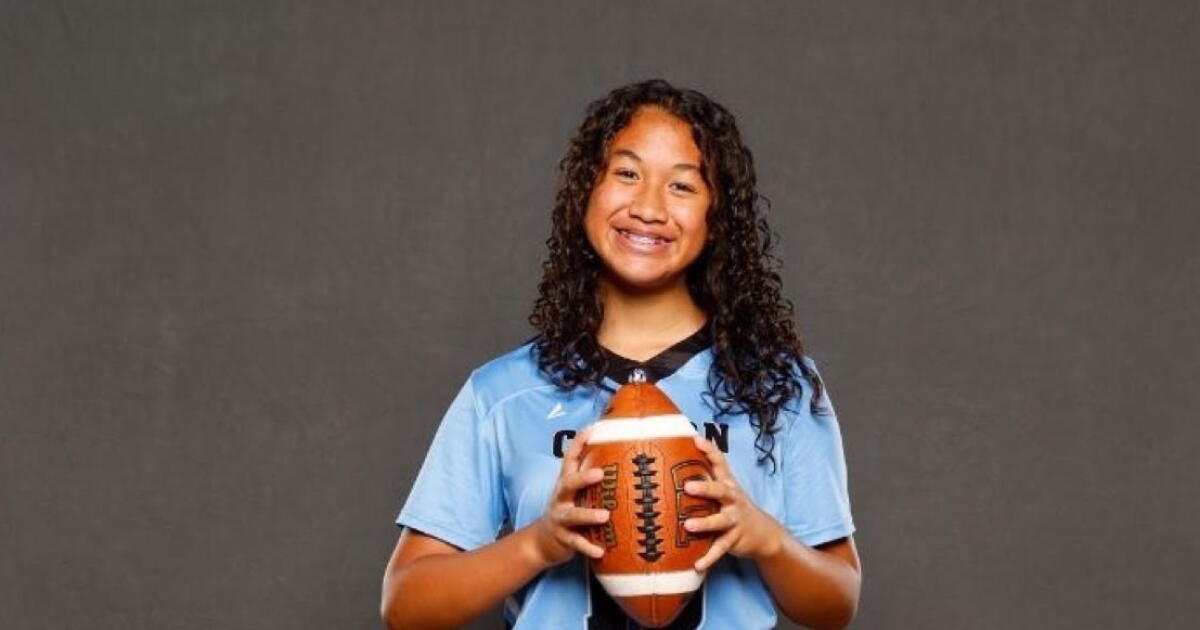
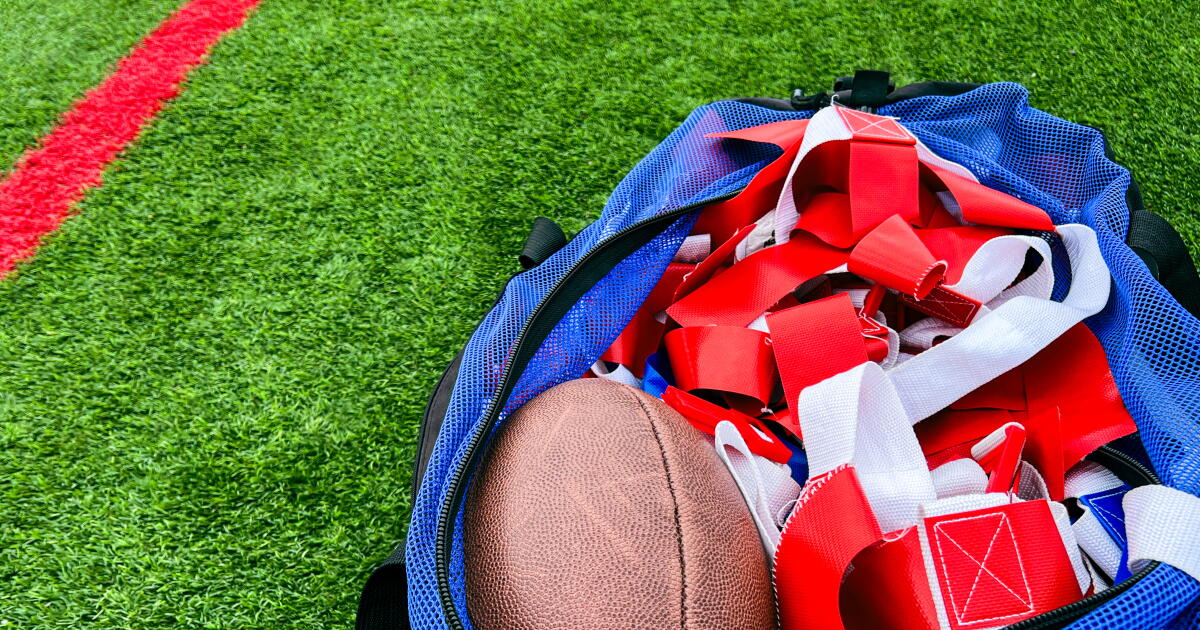
For the second straight year, the City Section is allowing a pilot program of high schools forming a boys flag football league as its popularity grows.

This year’s group of high school participants is expected to double in size between eight and 16 teams, City Section commissioner Vicky Lagos said. All will be small charter schools. Last year, several teams that temporarily dropped 11-man football, Sotomayor and Torres, had flag teams in a league that was played in the fall. Sotomayor and Torres will have 11-man teams this season.

When Lagos mentioned the pilot boys flag football league at an 11-man coaches meeting this month, there was clear skepticism voiced by coaches. If boys flag football ever gets approved, Lagos said schools would have to choose between having an 11-man team or a flag team. When Lagos mentioned having the flag season in the spring, there was concern it would take away participants from track and field teams.

This issue figures to come up around the state as schools in the California Interscholastic Federation have similar discussions. Flag football is likely to gain a boost in exposure when it is played at the 2028 Olympic Games in Los Angeles.

Lagos points out that boys flag football participants would be different than 11-man. Middle school students engage in flag football and attract students whose parents don’t want them to play 11-man tackle football for fear of head injuries.

Girls flag football is in its fourth year and rising fast. Adding boys flag football is a debate and issue that will need to be addressed in the future.

Ron Nocetti, executive director of the CIF, said a section must first bring up adding boys flag football as a sport before real discussions can begin.

Source link

‘This time’: The World Cup commercials capturing Egypt’s soaring hopes | World Cup 2026 News

The advertisements all start the same way. It could be a barber, an aunt or a family member in discussion with others about the FIFA World Cup, but in each case, they assume Egypt will be heading home after the group stage.

Then an Egyptian footballer pushes back: “To all the doubters, this time we’re staying longer.”

It’s a line that’s resonating like never before in the nation of 120 million people, as Egyptian football fans wait with bated breath for the final round of group stage matches that could send The Pharaohs, as the national team are known, into uncharted territory: the knockout stages.

Here’s why these commercials have captured the zeitgeist in Egypt:

Egypt’s poor World Cup track record

Egypt was the first African and Arab nation ever to play in a World Cup, back in 1934. It has won the Africa Cup of Nations a record seven times. Football in Egypt isn’t just a sport, it’s a national identity, and The Pharaohs have long been a source of genuine pride and belief.

But the World Cup has always told a different story. Before this tournament, Egypt had qualified just three times — in 1934, 1990 and 2018.

It had never won a single match. Fans still carry the painful memories of a penalty shootout loss to Senegal that kept Egypt out of the Qatar World Cup 2022 entirely.

Egyptian children play soccer in front of the Giza Pyramids in Giza Friday, May 17, 2002 ahead of the World Cup soccer tournament which kicks off May 31 in Korea. Egypt has qualified twice for the World Cup in the last 60 years, 1934 and 1990. (AP Photo/Amr Nabil)
Egyptian children play football in front of the Giza Pyramids in Giza, on Friday, May 17, 2002 [Amr Nabil/ AP Photo]

What’s different this time?

Everything — at least, so it seems.

After two games at the World Cup, Egypt sits at the top of Group G, above Iran, Belgium and New Zealand.

The 26th ranked Egypt drew 1-1 with Belgium — ranked 10 in the world — in its first match. Then, it beat lower-ranked New Zealand 3-1.

Its four points are the most Egypt has ever earned at a World Cup. Its four goals are the most Egypt has ever scored at a World Cup.

Now, on Friday night in Seattle — early Saturday morning in Egypt — the team faces Iran in their final group game. A win or a draw would guarantee that Egypt’s national team goes into the knockout stages for the first time.

If Egypt loses to Iran, they might still make it to the round of 32, but their fate will depend on what happens in the Belgium-New Zealand match that will be held at the same time, and potentially, on the outcomes of matches in other groups. Eight of the 12 teams places third in their groups will also move into the next round.

So in a nutshell, Egypt is on the cusp of going where it never has before — and only a rare set of permutations can deny it that chance.

Egyptian striker Hossam Hassan maneuvers the ball during a friendly international match against Zambia in Cairo January 9, 2001.
Hossam Hassan, now the Egyptian coach, seen here manoeuvring the ball during a friendly international match against Zambia in Cairo January 9, 2001 [Reuters]

But it isn’t just the performances. Part of what makes this year feel different, to many fans, is the identity of the main man standing outside the pitch, next to the Egyptian dugout.

Hossam Hassan is Egypt’s all-time top scorer and one of the most iconic figures in the country’s football history. In 1990, he scored the goal that ended a 56-year wait and sent Egypt to the World Cup in Italy. Now, more than three decades later, he is the national team’s coach, making him the first Egyptian ever to reach the World Cup as both player and manager.

For older fans, his presence carries the memory of a time when Egypt genuinely believed it could make its mark on the world stage.

Jun 21, 2026; Vancouver, British Columbia, CAN; Egypt forward Mohamed Salah goal scoring during the second half against New Zealand during a Group G match in the 2026 FIFA World Cup at BC Place Vancouver. Credit: Anne-Marie Sorvin-Imagn Images
Mohamed Salah scored during the second half against New Zealand in the 2026 FIFA World Cup in Vancouver on June 21, 2026, as Egypt registered its first-ever win at the tournament [Anne-Marie Sorvin /Reuters]

So what are the advertisements really about?

They aren’t really making fun of the team. They’re making fun of the deeply ingrained expectation that Egypt won’t go very far. And that expectation, many argue, goes beyond football. Years of economic hardship and political uncertainty have made expecting the worst feel like common sense for many Egyptians. They protect themselves from disappointment. They assume it won’t work out before it doesn’t.

That’s what has also made the campaigns somewhat divisive. For some viewers, the humour felt honest — a reflection of a habit fans know they have. It prompted real questions about why low expectations have become so normal. Others argued the advertisements risked making those same low expectations feel permanent, even acceptable.

Either way, they underscore how the 2026 World Cup has reignited faith among Egyptian fans, as they wait for the Iran match. An advertisement campaign challenging doubters has come to reflect the broader hopes, doubts and debates surrounding The Pharaohs.

Source link

Ivory Coast coach Fae saddened by Schweinsteiger’s ‘African football’ jab | World Cup 2026

Former German player’s comments that ‘African football’ is ‘a bit unorthodox sometimes, a bit wild’ sparked controversy.

Even in one of the most joyous moments in his country’s footballing history, Ivory Coast manager Emerse Fae found himself managing sadness over the remarks of a former role model that have sparked debate about potential racist connotations.

Nicolas Pepe’s brace guided the Ivory Coast to a 2-0 win over Curacao and took his nation to their first-ever World Cup knockout phase on Thursday.

Recommended Stories

list of 4 itemsend of list

But afterwards, Fae was asked to respond to analysis given by former German midfielder Bastian Schweinsteiger on German public TV ahead of Germany’s 2-1 win over the Ivorians in both teams’ second Group E match in Toronto.

Here is how DW.com characterised what Schweinsteiger said: “Ahead of the Group E clash in Toronto, which Germany won 2-1, Schweinsteiger said in his role as a pundit for German public broadcaster ARD that the Ivorians played ‘African football’, which he characterised as ‘a bit unorthodox sometimes, a bit wild, not quite as tactical.’”

In his response, Fae noted how he once admired the former Bayern Munich man so much that he sometimes was called “Bastian” by his friends.

“I think it’s sad,” said the 42-year-old Fae, who is only several months older than the 41-year-old Schweinsteiger. “He was a very, very good player; a great player.

“I’ve always loved him, personally. As a midfielder, I’ve always liked the way he played, the way he understood football. … So when I heard his comments, I was disappointed, disappointed in the man.

“Because when you know football the way he knows it, it’s odd that you would speak that way, which we could call racist if we were calling a spade a spade, but that’s the way it is.”

Schweinsteiger played parts of 13 seasons for Bayern Munich, helping the German club giants win eight league titles and one UEFA Champions League crown. Internationally, he was a key contributor to Germany’s 2014 World Cup-winning squad.

He has not publicly commented on the remarks in the days since.

On Thursday, Fae’s side got the better of one of the game’s most famous managers, the 78-year-old Dick Advocaat, who, in guiding Curacao, was managing in his third World Cup.

Fae’s group also earned a 1-0 victory to open the tournament against Ecuador, a team that came into this World Cup unbeaten in 19 matches and hailed for its defensive solidity.

“I can’t change the way he talks,” Fae said of Schweinsteiger.

“But all I can do is show on the pitch that Africa is not just the physical game. We are very technical as well, very tactical. And all I can hope is that this was just a clumsy statement, that it wasn’t particularly reflective of what’s in his mind.”

Source link

Russia set to return to FIFA competition at inaugural U-15 World Cup | Football News

FIFA’s inaugural U-15 World Cup in October has been opened to all of its member associates, paving way for Russia’s return.

A ‌Russian team may be allowed to participate ⁠in ⁠a FIFA event for the first time since Moscow’s 2022 invasion of Ukraine after ⁠football’s global authority said its inaugural U-15 World Cup and Festival, set to be ⁠held in Azerbaijan in October, is open to all FIFA member associations.

FIFA banned Russia from international competition in February 2022 after it invaded ‌Ukraine, but it lifted the suspension from the country’s U-17 boys’ and girls’ teams the next year.

Recommended Stories

list of 4 itemsend of list

However, Russian teams have remained absent from U-17 tournaments organised by FIFA and UEFA as several European countries, including Ukraine ⁠and England, continue to boycott ⁠Russia over its ongoing invasion of its neighbour.

“The first edition will be open to boys’ teams from all FIFA ⁠member associations, the second instalment in 2027 will feature girls’ ⁠teams only,” FIFA said on ⁠Wednesday about the U-15 World Cup and Festival.

“From 2028 onwards, all member associations will be invited to participate with ‌both their boys’ and girls’ U-15 teams in two separate competitions.”

The U-15 event will kick ‌off ‌on October 22 and conclude nine days later.

Source link

Mexico triumph 3-0 to eliminate Czechia and win all three World Cup matches | World Cup 2026

Mateo Chavez opened the scoring in the 55th minute, and Julian Quinones scored his second goal of the tournament in the 61st.

Mateo Chavez and Julian Quinones scored goals in the span of six minutes early in the second half, and Mexico beat Czechia 3-0 to win all three of its World Cup group-stage matches for the first time.

The 22-year-old Chavez, in his first World Cup, opened the scoring in the 55th minute, and Quinones scored his second goal of the tournament in the 61st. Alvaro Fidalgo added a goal in second-half stoppage time on Wednesday night.

Recommended Stories

list of 4 itemsend of list

Mexico’s previous best group-stage performance was two wins and one draw, achieved in 1986 and 2002, both featuring Javier Aguirre, the first as a midfielder and the second as El Tri’s coach.

Already the winner of Group A, Mexico will play again at Azteca Stadium on Tuesday in a round-of-32 match against an opponent to be determined.

Czechia were eliminated, finishing with one point in three games.

The match included nods to Mexico’s past and future. Gilberto Mora became the youngest Mexico player to start in a World Cup at age 17.

And 40-year-old goalkeeper Guillermo “Memo” Ochoa entered in the 77th minute, joining Argentina’s Lionel Messi and Portugal’s Cristiano Ronaldo as one of the only players to appear in six World Cups.

Mexico goalkeeper Guillermo Ochoa (13) is celebrated by his team after the World Cup Group A soccer match between Czechia and Mexico in Mexico City, Wednesday, June 24, 2026. (AP Photo/Natacha Pisarenko )
Mexico goalkeeper Guillermo Ochoa is celebrated by his team after the World Cup Group A match between Czechia and Mexico in Mexico City, June 24, 2026 [Natacha Pisarenko/AP]

Homophobic chant returns in Azteca Stadium

Fans at the game chanted a slur that has previously led to fines and other sanctions against Mexico’s Football Federation.

The slur, which literally means “male prostitute” in Spanish, could be heard at the Azteca Stadium towards the end of the first half when Czech goalkeeper Matej Kovar took a goal kick, according to The Associated Press news agency.

The chant has cost Mexico hundreds of thousands of dollars in fines levied by FIFA. It rose to popularity roughly 25 years ago and is used to intimidate goalkeepers when they take goal kicks.

It went viral in the 2014 World Cup in Brazil, and was heard again in Russia during the 2018 World Cup, and then again four years later in Qatar. It has persisted despite attempts by the Mexican Football Federation to stop it.

Source link

Morocco come back after historic Haiti goals to reach World Cup last 32 | World Cup 2026

Despite bowing out without a point in their first World Cup since 1974, Haiti twice led against 2022 semifinalists Morocco.

Morocco twice overcame the shock of conceding to Haiti to win a World Cup thriller 4-2 in Atlanta, but missed out on the top spot in Group C to Brazil.

Haiti bowed out with their first World Cup goals in 52 years, as a Yassine Bounou own goal and Wilson Isidor’s stunning strike twice gave them the lead on Wednesday.

Recommended Stories

list of 4 itemsend of list

Achraf Hakimi and Ismael Saibari, with his third goal in as many games at the World Cup, levelled before half-time.

Soufiane Rahimi was nearly brought to tears when the 30-year-old’s deflected effort found the top corner to give Morocco the lead, before Gessime Yassine rounded off the scoring.

ATLANTA, GEORGIA - JUNE 24: Soufiane Rahimi #9 of Morocco celebrates scoring his team's third goal during the FIFA World Cup 2026 Group C match between Morocco and Haiti at Atlanta Stadium on June 24, 2026 in Atlanta, Georgia. Kevin C. Cox/Getty Images/AFP (Photo by Kevin C. Cox / GETTY IMAGES NORTH AMERICA / Getty Images via AFP)
Soufiane Rahimi of Morocco celebrates scoring his team’s third goal [Kevin C. Cox/Getty Images/AFP]

But Morocco missed out on the top spot in the group to Brazil on goal difference, meaning they will head to Monterrey for a likely meeting against the Netherlands or Japan on Monday.

Despite bowing out without a point, Haiti’s performances at their first World Cup since 1974 have done a nation gripped by poverty proud.

Les Grenadiers were already eliminated after losing to Scotland and Brazil, but the thousands of Haitian expats in the stands in Atlanta were undeterred as every attack was met with deafening cheers.

Morocco boss Mohamed Ouahbi made four changes to the side that had impressed in holding Brazil and beating Scotland in their opening two games, and the Atlas Lions started sloppily.

Haiti’s long wait for a goal on the global stage was ended after just 10 minutes, when Jean-Kevin Duverne got to the byline, and Lenny Joseph flicked the resulting cross into the net via a deflection off Bounou.

Hakimi has continued to captain Morocco despite learning mid-tournament that he is to face a trial on rape charges in France.

The reigning African footballer of the year stormed forward from right-back at every opportunity and was in the right place to equalise on 39 minutes.

In his final game for Haiti, 38-year-old goalkeeper Johny Placide could only parry Bilal El Khannouss’s strike, and Hakimi had a simple task to force the ball over the line.

Within four minutes, though, Haiti had restored their lead in far more spectacular fashion.

Sunderland striker Isidor pounced on a loose ball and let fly from outside the area with a shot that arrowed into the top corner.

Hakimi and Ouahbi were visibly angered by conceding for a second time, but the 2022 World Cup semifinalists responded before half-time.

Saibari stroked home his third goal of the tournament with a cool finish from Hakimi’s low cross.

Brahim Diaz nearly gave Morocco a half-time lead when his curling effort shaved the post to end a thrilling first half.

With Brazil cruising to victory over Scotland in Miami, Morocco knew that only a comprehensive victory would secure them the top spot in Group C.

Ouahbi began turning his attention to the last 32, as Bayern Munich-bound Saibari and Real Madrid’s Diaz were replaced with more than 20 minutes remaining.

But two of his substitutes came on to win the game for Morocco.

Rahimi’s powerful strike from a corner flew into the top corner via a deflection off a desperate Haiti defender.

He then turned provider by robbing possession on the Haiti byline and crossing for Yassine to roll into an empty net.

Source link

Bosnia win 3-2, knock out Qatar to keep alive hopes of World Cup round of 32 | World Cup 2026

Bosnia and Herzegovina are on the verge of reaching the knockout stages of the World Cup for the first time after beating Qatar 3-1 in their final Group B match.

Bosnia move on to four points and are in a strong position to be one of the best eight third-placed teams to progress to the last 32.

Recommended Stories

list of 4 itemsend of list

Qatar, meanwhile, exit at the group stage, just as they did four years ago when they hosted the World Cup.

Goals from Bosnia’s youngest-ever World Cup player, 18-year-old Kerim Alajbegovic, and an own goal by Qatar goalkeeper Mahmoud Abunada looked to have put the European side in the box seat.

However, Qatar made a game of it when 35-year-old Hassan Alhaydos, their most capped player, pulled one back late in the first half.

Ermin Mahmic then put the game beyond the Qataris when he scored for the second successive match in the 80th minute.

Bosnia flew out of the blocks as soon as the whistle went, testing Abunada twice inside the first four minutes.

First, Abunada denied Ermedin Demirovic’s fierce drive, and then he tipped away Ivan Sunjic’s shot.

Bosnia’s dominance finally paid off, but it was not the 40-year-old talisman Edin Dzeko who broke the deadlock, but the sublimely talented teenage left-wing.

epa13061742 Edin Dzeko of Bosnia and Herzegovina (R) and his teammates celebrate the 2-0 goal during the FIFA World Cup 2026 group stage match Bosnia and Herzegovina against Qatar, in Seattle, Washington, USA, 24 June 2026. EPA/STEPHAN BRASHEAR
Edin Dzeko of Bosnia and Herzegovina and his teammates celebrate the second goal [Stephen Buddhist/EPA]

Abunada was unable to do anything about Alajbegovic’s screamer from outside the area, after he had beaten two players.

The youngster was mobbed by his teammates, and once they had trotted back to the halfway line, he stood and milked the moment, putting a finger to his lips.

Dzeko, winning his 150th cap, came more and more into the game, and not wishing to have his thunder stolen by the new kid on the block, he played an integral role in their second five minutes later.

His shot took a wicked deflection off Sultan Albrake and then Abunada on its way into the net.

Dzeko was well into his stride now, and he broke clear a few minutes later, his shot beating Abunada but rebounding off the post.

Bosnia’s earlier sprightliness dipped in the heat, and it was the doyen of Qatari football, Alhaydos, who repaid coach Julen Lopetegui’s faith by slotting home in the 42nd minute.

The Bosnian defence failed to learn from that, and in time added on, they had the far post to thank for keeping their noses in front as Pedro Miguel’s shot came back off it.

Alhaydos’s World Cup, and perhaps his distinguished international career, ended in tears as he trudged disconsolately off the pitch, injured in the 55th minute.

Chances were few and far between until Esmir Bajraktarevic stole in from the right wing and came close to emulating Alajbegovic’s effort, but Abunada turned it away for a corner.

Bosnian frustration gave way to ecstasy when Mahmic prodded the ball home – the scorer ripping his shirt off in celebration, and the 21-year-old paid little notice to being booked for it.

Source link

‘One of the best football films’ has Netflix fans hooked 22 years after release

The 2004 drama balances comedy with timely social commentary

Netflix fans are completely hooked on a gritty sports drama that came out over 22 years ago.

The streaming giant’s most-watched charts are currently dominated by recent releases, including hit romcom Voicemails for Isabelle and chilling documentary Maternal Instinct.

But UK viewers are also streaming 2004 sports drama The Football Factory, which is no surprise considering all eyes are on the FIFA World Cup.

Directed by Nick Love, the film is presently sitting at Number 9 on the trending list. It focuses on a devoted Chelsea football hooligan called Tommy Johnson (played by Danny Dyer).

Tommy and his friends spend their days drinking, womanising, using drugs and “occasionally kicking the f*** out of someone”.

But the sports fan is forced to reconsider his violent lifestyle when one of his football-fuelled fights leads to serious consequences.

Adapted from John King’s 1997 novel, the story touches on important themes such as young men’s search for belonging, as well as their frustration with unfair socio-economic systems. It also offers insight into escapism through drug and alcohol abuse.

While Dyer is the face of this film, he is joined by other recognisable stars. One of his most notable co-stars is Tamer Hassan, who Love Island fans will know as recent All Stars contestant Belle Hassan’s dad.

He plays Fred, a Milwall hooligan and arch enemy of the Chelsea club.

Fans have been raving about the noughties drama for years. “One of the best football films,” said one Rotten Tomatoes user.

Someone else praised: “10/10 – Brilliant film! Easily in my top 5 favourite movies. A must see for football fans.”

While another said: “One of the best English films you will ever see for sure, got everything in it! now this is funny and gripping!”

Yet another film fanatic shared their verdict on IMDb: “It’s top drawer entertainment and better than most of the garbage that fills your DVD store. I would highly recommend this to anyone who likes realistic and gritty films, and doesn’t mind occasional stomach turning violence.”

And a final moviegoer insisted: “I can honestly say this is by far the best British film I’ve ever seen.”

The Football Factory is now on Netflix

Source link

World Cup 2026: Full group schedule and top third-round matches to watch | World Cup 2026 News

Remaining group schedule, teams, as well as the best third-round group fixtures at the tournament in North America.

After 48 matches in North America, it’s time for the final round of games in the group stage at World Cup 2026.

Sixteen teams will be eliminated after these fixtures, with 32 nations heading through to the knockout stages.

Recommended Stories

list of 4 itemsend of list

The top two teams from each of the 12 groups – along with the eight best third-placed teams – will proceed to the next phase.

Here are the top five “must-watch” matches in the second round of fixtures from June 24 until June 27.

Neymar
Neymar could return for Brazil against Scotland [Reuters]

⚽️ Scotland vs Brazil

Miami Stadium – Wednesday, 6pm (22:00 GMT)

These two sides will meet at the World Cup for the fifth time and there’s plenty to play for in an intriguing encounter in Miami.

Brazil are looking to secure their place in the knockout stages as group winners and are currently tied with Morocco on four points at the top of Group C.

Scotland are aiming to escape the group for the first time at a major international tournament and know that a point will almost certainly guarantee a spot in the round of 32.

Expect Group C to change a lot during these final fixtures, with Morocco taking on Haiti at the same time.

If that isn’t enough, Brazil’s Neymar is also set to make his first appearance at this World Cup.

Sweden players celebrate together
Sweden have been unpredictable at this tournament [Raquel Cunha/Reuters]

⚽️ Japan vs Sweden

Dallas Stadium – Thursday, 6pm (23:00 GMT)

It’s difficult to predict which Sweden will turn up in Dallas on Thursday.

Graham Potter’s side beat Tunisia 5-1 in their opening match of the World Cup, before losing by the same score to the Netherlands.

Japan have been entertaining to watch at this tournament and were in fine form during their 4-0 win over Tunisia at the weekend.

Expect plenty of goals in this match and plenty of drama. The winner will secure a top-two finish in Group F, so there is a lot to play for.

Kylian Mbappe
France’s Kylian Mbappe has scored four goals so far [Kyle Ross/Reuters]

⚽️ Norway vs France

Boston Stadium – Friday, 3pm (19:00 GMT)

Norway and France are already through to the knockout stages, but this game looks set to be a blockbuster affair with both sides looking to top Group I.

Erling Haaland and Kylian Mbappe have both scored four goals so far and they’ll be desperate to add to their tally as they chase down Lionel Messi.

France are one of the favourites to lift the World Cup next month and are looking to end the group stage with three wins from three.

But Norway have the opportunity to prove that they truly are dark horses in this tournament and can compete with elite international sides.

Buckle in for a big one in Boston.

Spain's Lamine Yamal, Nico Williams and Victor Munoz celebrate
Spain’s Lamine Yamal, Nico Williams and Victor Munoz celebrate after the match against Saudi Arabia [Claudia Greco/Reuters]

⚽️ Uruguay vs Spain

Seattle Stadium – Friday, 6pm (00:00 GMT on Saturday)

Group H has been a tight affair following some surprise results in the opening round of fixtures.

Uruguay drew with Saudi Arabia, while Cape Verde shocked the world with a goalless draw against Spain.

La Roja bounced back by thrashing Saudi Arabia and they go into their final game as group leaders, with Uruguay two points behind in second.

Spain will secure top spot with a win in Seattle, ensuring that they avoid Argentina in the round of 32.

Mo Salah
Egypt are looking to reach the knockout stages at the World Cup for the first time [Anne-Marie Sorvin/Reuters]

⚽️ Egypt vs Iran

Seattle Stadium – Friday, 8pm (04:00 GMT on Saturday)

Neither of these sides have ever made it out of the group at a World Cup, but on Friday, at least one of them will achieve that feat.

Group G is closely bunched after a number of drawn matches and it sets things up nicely for an intriguing final round of fixtures.

Victory for either Egypt or Iran will guarantee them a spot in the knockout phase, so expect both sides to be up for this one.

Iran have faced numerous challenges at this World Cup, with restrictions on travel and visa issues before the tournament even began.

If Iran progress, there’s also still a chance that they will face the US in the knockout stages.

World Cup 2026: Remaining group-stage full schedule

Wednesday, June 24

  • Switzerland vs Canada at 12pm PT (19:00 GMT) – BC Place, Vancouver, Canada
  • Bosnia vs Qatar at 12pm PT (19:00 GMT) – Seattle Stadium, Seattle, US
  • Scotland vs Brazil at 6pm ET (22:00 GMT) – Miami Stadium, Miami, US
  • Morocco vs Haiti at 6pm ET (22:00 GMT) – Atlanta Stadium, Atlanta, US
  • Czechia vs Mexico at 7pm CST (01:00 GMT on Thursday) – Mexico City Stadium, Mexico City, Mexico
  • South Africa vs South Korea at 7pm CST (01:00 GMT on Thursday) – Estadio Monterrey, Guadalupe, Mexico

Thursday, June 25

  • Ecuador vs Germany at 4pm ET (20:00 GMT) – New York New Jersey Stadium, New Jersey, US
  • Curacao vs Ivory Coast at 4pm ET (20:00 GMT) – Philadelphia Stadium, Philadelphia, US
  • Japan vs Sweden at 6pm CDT (23:00 GMT) – Dallas Stadium, Dallas, US
  • Tunisia vs Netherlands at 6pm CDT (23:00 GMT) – Kansas City Stadium, Kansas City, US,
  • Turkiye vs USA at 7pm PT (02:00 GMT on Friday) – Los Angeles Stadium, Los Angeles, US
  • Paraguay vs Australia at 7pm PT (02:00 GMT on Friday) – San Francisco Bay Area Stadium, San Francisco, US

Friday, June 26

  • Norway vs France at 3pm ET (19:00 GMT) – Boston Stadium, Boston, US
  • Senegal vs Iraq at 3pm ET (19:00 GMT) – Toronto Stadium, Toronto, Canada
  • Cape Verde vs Saudi Arabia at 7pm CDT (00:00 GMT on Saturday) – Houston Stadium, Houston, US
  • Uruguay vs Spain at 6pm CST (00:00 GMT on Saturday) – Estadio Guadalajara, Zapopan, Mexico
  • Egypt vs Iran at 8pm PT (03:00 GMT on Saturday) – Seattle Stadium, Seattle, US
  • New Zealand vs Belgium at 8pm PT (03:00 GMT on Saturday) – BC Place, Vancouver, Canada

Saturday, June 27

  • Panama vs England at 5pm ET (21:00 GMT) – New York New Jersey Stadium, New Jersey, US
  • Croatia vs Ghana at 5pm ET (21:00 GMT) – Philadelphia Stadium, Philadelphia, US
  • Colombia vs Portugal at 7:30pm ET (23:30 GMT) – Miami Stadium, Miami, US
  • DRC vs Uzbekistan at 7:30pm ET (23:30 GMT) – Atlanta Stadium, Atlanta, US
  • Algeria vs Austria at 9pm CDT (02:00 GMT on Sunday) – Kansas City Stadium, Kansas City, US
  • Jordan vs Argentina at 9pm CDT (02:00 GMT on Sunday) – Dallas Stadium, Dallas, US

Source link

World Cup 2026: Messi, Mbappe, Haaland contest best ever Golden Boot race? | World Cup 2026 News

The race for the Golden Boot at World Cup 2026 is shaping up to be one for the history books.

After just two games, Argentina talisman Lionel Messi leads the way with five goals, followed by France’s Kylian Mbappe and Erling Haaland of Norway with four goals each.

Recommended Stories

list of 4 itemsend of list

Germany’s Deniz Undav has three with Jonathan David of Canada on the same mark after a hat-trick against Qatar.

A further 20 players have scored twice in their opening two games, including 2018 Golden Boot winner Harry Kane of England, Cristiano Ronaldo of Portugal, Vinicius Jr of Brazil and Mikel Oyarzabal of Spain.

The stars are all shining and, given the rate of scoring so far, it seems possible double figures might be needed to win the Golden Boot, something done only three times in history – by Hungary’s Sandor Kocsis in 1954, Just Fontaine of France four years later and Gerd Muller of Germany in 1970.

Fontaine holds the record of 13 goals in one World Cup in just six matches in Sweden, but the expanded 48-team format in 2026 means the nations qualifying for the semifinals in July will play an unprecedented eight games in this edition.

At the 2006 World Cup in Germany and in South Africa four years later, only five goals were needed to claim the Golden Boot while nobody has scored more than eight in the past 13 editions, a feat achieved only by Brazil’s Ronaldo in 2002 and Mbappe four years ago in Qatar.

Kylian Mbappe scored twice against Iraq and claps France fans.
Kylian Mbappe followed his double against Senegal with another against Iraq in this year’s World Cup [Siphiwe Sibeko/Reuters]

Why have so many goals been scored at World Cup 2026?

It took just 33 matches for a century of goals to be racked up in this edition, second only to 1954 in terms of pace.

After Portugal’s 5-0 win over Uzbekistan on Tuesday, 139 goals had been scored across the first 45 games – the most in the group stages of a single edition of the finals, overtaking the 136 scored in 2014 in three fewer matches.

The record number of goals in one edition came in Qatar 2022 with 172 from 64 games. With an extra 40 matches in the new expanded format that went into effect this year, it was always likely to be broken, but the rate of scoring suggests the old mark will be obliterated.

The Adidas Trionda ball used at the World Cup 2026.
The Adidas Trionda ball used in World Cup 2026 [Simon Fearn/Imagn Images]

One reason for the increase in goals might be the Adidas Trionda ball, which FIFA commissioned for this World Cup.

Before the tournament, FIFA said it boasts several key performance innovations, including intentionally deep seams designed to produce optimal in-flight stability by ensuring sufficient and evenly distributed drag as the ball travels through the air – in short, it flies through the air – while the surface of the ball is designed to increase grip when striking or dribbling in wet or humid conditions, which we have seen plenty of in the opening matches.

Austria head coach Ralf Rangnick said: “This ball is as fast as a cannonball. If you kick the ball in the right position, it’s extremely difficult to save.”

The controversial addition of hydration breaks to each half may also mean players are performing at their peak for longer, leading to the glut of late goals so far. Of course, the fact that 48 teams are taking part, drawn from the world’s leading 85 teams in the rankings, means there are some mismatches in the first phase.

Colombia coach Nestor Lorenzo also said attackers are more protected by officials than they used to be, which may contribute to the increased scoring, adding: “They didn’t have this protection some 20, 30 years ago when they were hit a lot more, when rough play was a lot more common.

“Today, any team that defends well and uses counterattacks and tries to play can manage to do well.”

Erling Haaland celebrates a goal against Senegal.
Erling Haaland has scored two goals in each of his first two World Cup appearances. [John Sibley/Reuters]

Who is likely to win the Golden Boot?

Much will depend on fitness and, of course, how deep a country goes in the tournament, but Messi has to be considered the favourite to win his first accolade.

The 38-year-old scored seven goals at the last World Cup and has now scored in six straight tournament matches, having netted in every knockout round in Qatar and the first two games of this edition. He even missed a penalty against Austria, which would have made it back-to-back hat-tricks.

Argentina’s final group game on Sunday is against already eliminated Jordan although Messi’s inclusion from the start in that one is by no means a given as his side have already secured the top spot in Group J.

They look set for favourable knockout fixtures, though, with the potential for Uruguay or Cape Verde in the last 32, potentially Australia or Iran in the round of 16 and the possibility of Croatia or Colombia in the quarterfinals, should they make it.

Only in the semifinal might they come up against a powerhouse nation, likely in the form of England or Brazil or dark horses Japan, Norway or Mexico.

Mbappe also looks likely to have a favourable run and is likely to feature against Norway on Friday in the group finale, which will decide the top spot in Group I.

Winning the group could mean a round of 32 meeting with Sweden, Germany the potential opponents in the last 16 and the Netherlands or Morocco awaiting in the last eight.

Whoever finishes second out of France and Norway could face a tricky task against the Ivory Coast in the last 32 with Brazil or Japan awaiting the winners and the possibility of England lurking in the quarterfinals, which might put a ceiling on Haaland’s prospects, despite having scored 59 goals in 52 international games for Norway.

Kane will seek to enter the conversation with England facing a must-win Group L finale on Sunday against Panama with the prospect of a last-32 meeting with Cape Verde to follow and Mexico likely lying in wait in the Azteca (known during the World Cup as Mexico City Stadium) in the round of 16.

Cristiano Ronaldo may have left it too late to begin a real quest, given Portugal face Colombia on Sunday in their final Group K game and could face resolute Ghana in the last 32 with Spain potential opponents in the last 16.

But Vinicius Jr could add to his two goals when Brazil face Scotland on Thursday in their final Group C game although the knockout rounds would appear a stiffer test.

Source link

World Cup 2026: Key takeaways from the second round of group stage matches | World Cup 2026 News

Here’s a look at the viral moments and on-field controversies as well as the biggest players, best performances, goals and more.

Cristiano Ronaldo joined the party, Lionel Messi set a new record, Iran once again displayed their fighting spirit and Turkiye were shown the door.

The second round of the 2026 World Cup group stage had a fair amount of drama.

Recommended Stories

list of 4 itemsend of list

Al Jazeera breaks down the key moments:

Better late than never: Ronaldo strikes for Portugal

Unlike other high-profile strikers at the tournament who came out all guns blazing from the get-go, Ronaldo needed some time to open his account. But his two goals in Portugal’s 5-0 thrashing of Uzbekistan on Tuesday were enough to silence the critics as the 41-year-old became the first player in history to score in six World Cups.

Messi is saving his best for last

Age is just a number for Messi, who is celebrating his 39th birthday on Wednesday. His apparent last dance is bringing out the best in him as the Argentinian has set a new record for the most World Cup goals at 18 – a figure that is sure to increase with La Albiceleste now the number one favourites to add back-to-back World Cups to their trophy cabinet.

Is Messi “Mr Argentina”? It’s hard to argue otherwise with all five of the team’s goals scored by him. That also makes him the leading Golden Boot contender with one goal more than France’s Kylian Mbappe.

Soccer Football - FIFA World Cup 2026 - Group J - Argentina v Austria - Dallas Stadium, Arlington, Texas, U.S. - June 22, 2026 Argentina's Lionel Messi celebrates scoring their second goal REUTERS/Kai Pfaffenbach
At this point in the tournament, Messi is the 2026 World Cup’s Golden Boot leader [Kai Pfaffenbach/Reuters]

Triple treat: Messi, Mbappe, Haaland score on same day, again

FIFA has come under criticism for a series of issues this tournament, but one thing it’s got spot on is the scheduling of Argentina, France and Norway games on the same day. For the second time in a row, fans were treated to back-to-back goals galore on Monday as Messi started the party with a brace before Mbappe did the same, and Erling Haaland topped it off with another double.

Norway’s ‘Viking row’ goes viral

Back at the World Cup after 28 years, Norway celebrated their round of 32 qualification in typical fashion: bringing out the famous “Viking row”. With the squad sitting in rows resembling those of a Viking longboat, captain Martin Odegaard began beating the drum to a joyous climax as thousands of Norwegians in the stadium also joined the fun.

Salah, Egypt celebrate on streets of Vancouver

It took Egypt an incredible 92 years to register their first World Cup win, so it wasn’t a surprise that they celebrated in style. Shortly after beating New Zealand 3-1 on Sunday, the Egypt squad was pictured on the streets of Vancouver with fans, singing and dancing to music blaring from a huge speaker. Mohamed Salah, nicknamed the “Egyptian King”, was the centre of attention yet again, held up on the shoulders of a teammate, as he grooved to the tunes.

Japan are Asia’s best hope at the tournament

While Asian teams enjoyed a great run during the first round of the group games, only one team – Japan – built on the momentum. After a 2-2 draw with the Netherlands in the first match, Japan thrashed Tunisia 4-0 in the next fixture on Saturday, collecting four points – the highest by an Asian team so far. According to Opta’s supercomputer, Japan have a 20.8 percent chance of reaching the quarterfinals and 9.41 percent probability of making the semifinals.

Persistent Iran fight hard to stay in contention

Despite travel restrictions imposed on them by the United States for their first two World Cup games, Iran have remained unbeaten with two draws. That keeps them alive in the knockout race, and with the squad now allowed to fly into the US from Mexico  two days before their next match instead of one as was the case earlier, Iran can better prepare for their final group game on Saturday against Egypt in Seattle. A win would see them through while a draw might also suffice, depending on other results.

Turkiye’s talented team disappoints

From Arda Guler and Kenan Yildiz to Hakan Calhanoglu and Merih Demiral, Turkiye is filled with talent across all departments. But none of them could turn around Turkiye’s fortunes as they crashed out of the tournament after losing to Paraguay on Saturday. The early exit crushed the hopes of millions of Turkish fans, who waited 24 years to see their team return to the World Cup.

Soccer Football - FIFA World Cup 2026 - Group D - Turkey v Paraguay - San Francisco Bay Area Stadium, Santa Clara, California, U.S. - June 19, 2026 Turkey's Can Uzun and Kenan Yildiz look dejected after the match REUTERS/Luisa Gonzalez
Turkiye’s Can Uzun and Kenan Yildiz look dejected after they were knocked out of the World Cup [Luisa Gonzalez/Reuters]

No Pulisic, no problem for USA

For years, Christian Pulisic has been the poster boy of the USA team, but the cohost nation proved that they can get the job done even in the influential winger’s absence. With Pulisic ruled out with a calf injury, Alex Freeman scored one, and the USA benefitted from a Cameron Burgess own goal as they sailed into the knockouts with a 2-0 victory on Friday against Australia.

Red-carded Almiron to go down in history

Paraguay midfielder Miguel Almiron made history, albeit for the wrong reasons, when he became the first player to be sent off at the 2026 World Cup for covering his mouth. Almiron – also handed a one-match ban – covered his mouth during a confrontation with Turkiye’s Mert Muldur. The straight red handed to him follows a new rule under which players are not allowed to cover their mouths to disguise what they are saying during confrontations with infringements leading to instant dismissals.

Source link

Budimir gives Croatia a 1-0 win to eliminate Panama from the World Cup | World Cup 2026

Croatia are third in Group L, with England and Ghana on four points each, heading into the last round of matches.

Half-time substitute Ante Budimir scored in the 54th minute as Croatia eliminated Panama from World Cup contention with a tightly fought 1-0 victory at Toronto Stadium.

The Group L clash on Tuesday saw 34-year-old Budimir score his first World Cup goal and fifth in a competitive fixture for his country.

Recommended Stories

list of 4 itemsend of list

Croatia remain third in the group with three points heading into the final match day, but they can guarantee a top-two finish with a victory over Ghana in their final match on Saturday in Philadelphia.

Panama are still seeking their first point, five matches into their World Cup history, having also lost 1-0 to Ghana in their 2026 opener in Toronto last week.

However, despite playing the first two matches without injured talisman Adalberto Carrasquilla, Los Canaleros have a goal difference six better than at this stage in their first World Cup appearance in 2018.

Budimir put Croatia in front on what was easily their best attack of the match to that point on Tuesday.

Soccer Football - FIFA World Cup 2026 - Group L - Panama v Croatia - Toronto Stadium, Toronto, Canada - June 23, 2026 Croatia's Ante Budimir celebrates scoring their first goal IMAGN IMAGES via Reuters/Kevin Sousa
Croatia’s Ante Budimir celebrates scoring their first goal [Kevin Sousa/Reuters]

Josip Stanisic combined with Marco Pasalic to get down the right, and then struck a well-weighted cross to the top of the 6-yard box.

Panama goalkeeper Orlando Mosquera dived to try and intercept the service but couldn’t reach it, and Budimir showed up at the back post to guide in a composed finish into an open goal.

With that, the match erupted for about 15 minutes.

Three minutes after the goal, Croatia captain Luka Modric played Pasalic in alone on goal from his own half. Mosquera sized up Pasalic and charged from his line at the right time to smother the initial attempt, and Pasalic fired wide from a poor angle on the rebound.

Panama responded to force Dominik Livakovic into three stops inside of a minute. The third was probably the best, as Livakovic leapt to deny Carlos Harvey’s header from a corner lofted to the back post.

The second-half hydration break followed that sequence, and perhaps disrupted Panama’s momentum, with Livakovic unthreatened in the final stages.

The Central Americans will now look to play spoilers against England in their finale on Saturday in East Rutherford, New Jersey.

Earlier on Tuesday, England and Ghana settled for a 0-0 draw, with both having four points.

Source link