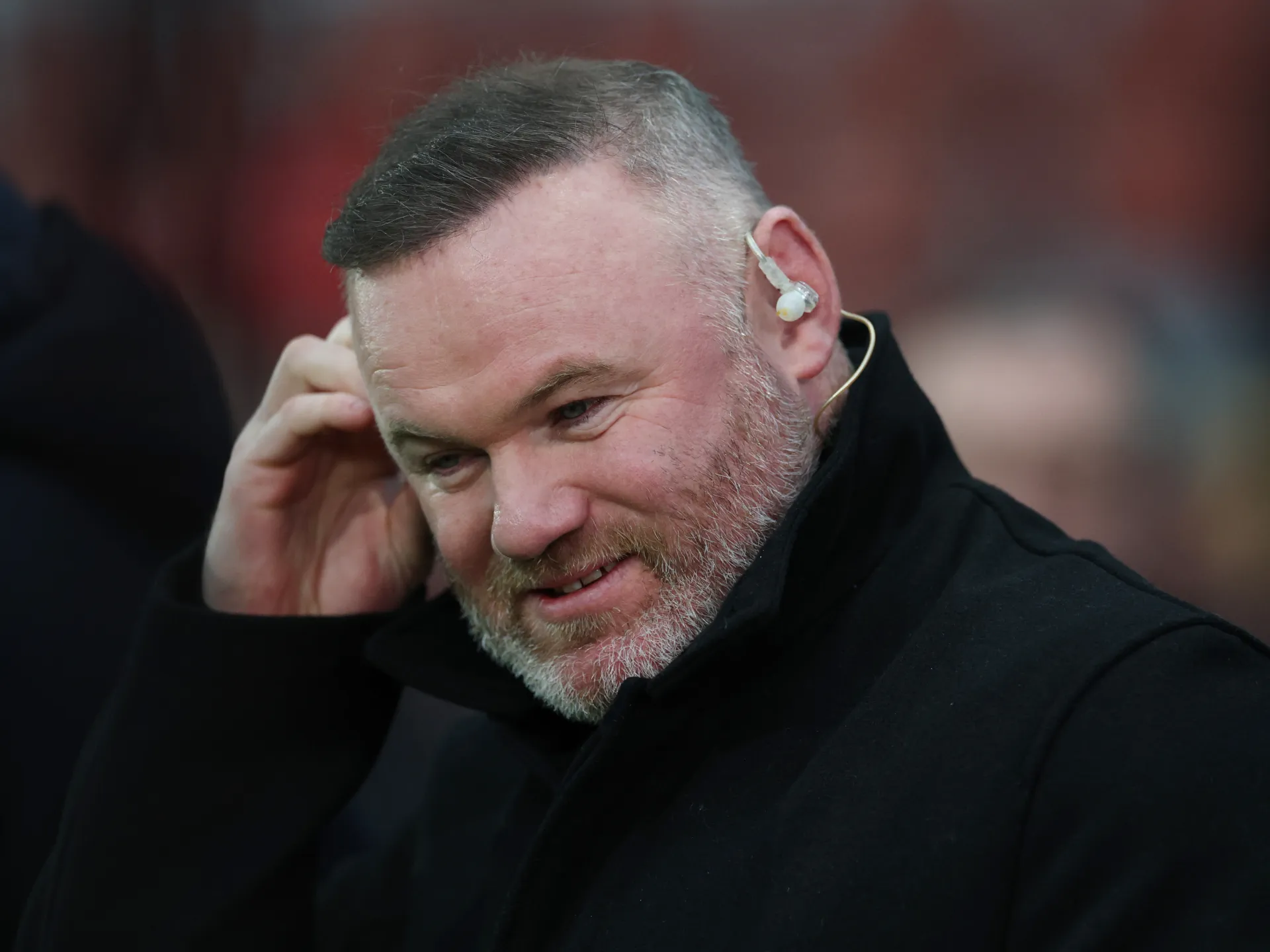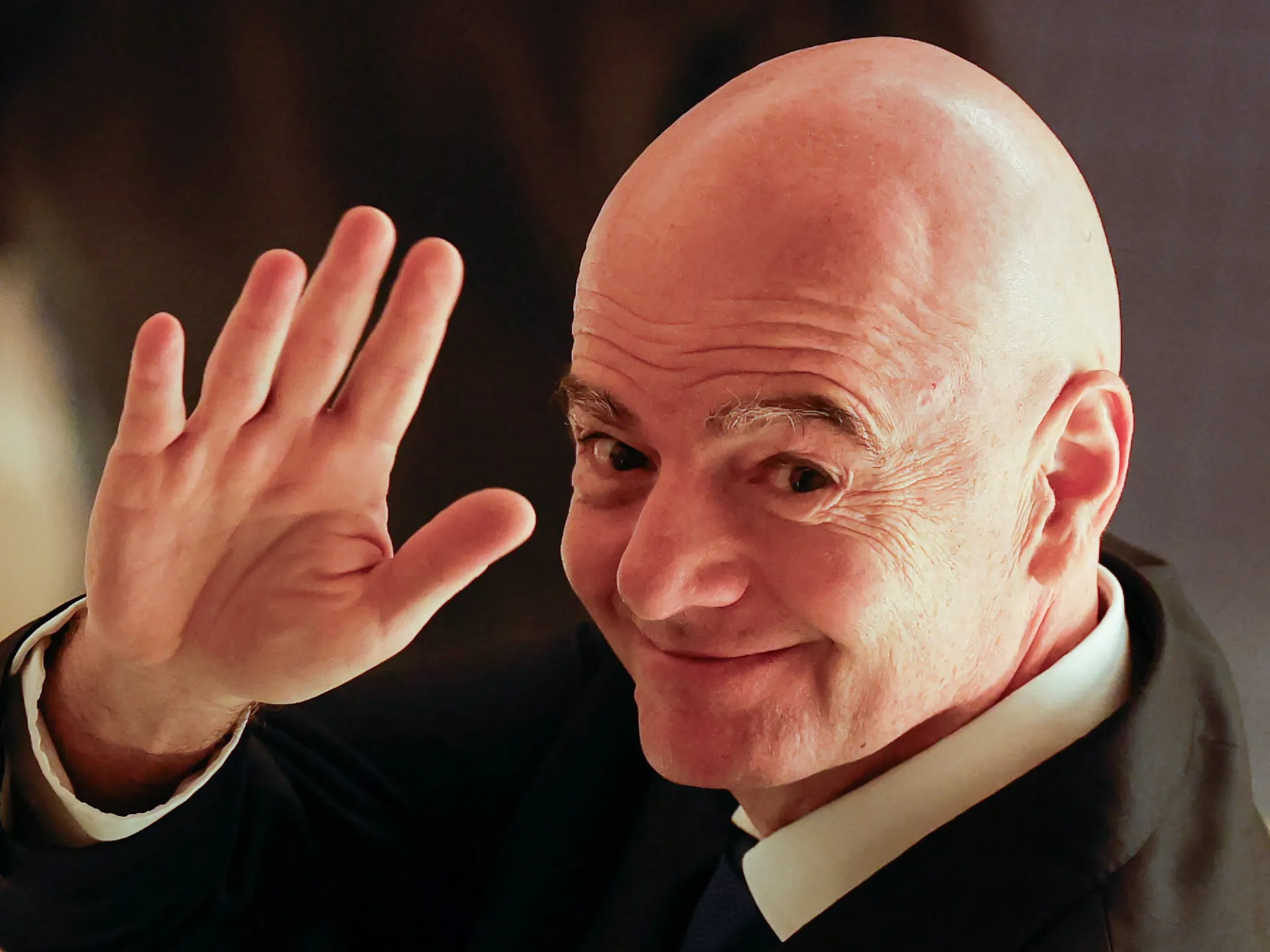
The striker says FIFA’s decision to suspend his one-match ban led to ‘a lot of outside noise’ before USA’s knockout match.
Published On 15 Jul 202615 Jul 2026
US striker Folarin Balogun says he expected “a lot of controversy” after FIFA suspended his one-game ban at the World Cup following United States President Donald Trump’s request to review the decision.
Balogun was sent off during his team’s 2-0 win over Bosnia and Herzegovina in the last 32, but FIFA controversially suspended his ban for a one-year probationary period. The striker has spoken about the incident for the first time in an interview with CBS Mornings on Tuesday.
Recommended Stories
list of 4 itemsend of list
“My initial reaction was I was happy to be back in the team. But when I kind of started to reflect, I knew it was going to cause a lot of controversy,” he said.
“I could almost see within my teammates a bit of nerves because it was something that’s so unique.
“But the closer we got to the game, I tried to just focus as best as I could. But it was difficult – a lot of outside noise, and that’s hard to avoid.”
Balogun received the red card for stepping awkwardly on the right ankle of Bosnia’s Tarik Muharemovic in a 2-0 win for the USA in their round-of-32 match, triggering an automatic one-game suspension.
FIFA’s decision to suspend that ban – leading to Falogun playing in the game against Belgium – caused a furore in the football world, and accusations that the body bent its rules to please Trump.
The global football body announced that it had suspended the red card after the US president urged FIFA chief Gianni Infantino to review the case.
The decision prompted criticism from Belgium’s football association, Europe’s top football body, a former FIFA boss, multiple top former players, and many others. Critics argued that overturning a red card suspension after direct political intervention undermined the integrity of the tournament and set a dangerous precedent.
Balogun conceded that the saga led to a confusing few days for him. After the red card, he took on a supporting role in training to try to keep the team’s morale high before finding out he was cleared to play.
“We found out on the team bus. Everybody was like screaming and shouting,” Balogun said. “It was a pretty intense bus ride to the practice field.”
The US striker said it was not hard to separate “the emotion from the job at hand” ahead of the match against Belgium.
“We’re all professionals, so it’s not something I think was too difficult to be able to separate once we kind of got over the initial announcement that I’d be back in the team,” Balogun added.
The USA lost 1-4 to Belgium, with Balogun struggling to influence the game, following a fine overall tournament in which he scored three goals.
European champions Spain beat France with controlled display to book final against Argentina or England.
Published On 14 Jul 202614 Jul 2026
Spain snuffed out France’s dream of a third World Cup triumph, taming their galaxy of forwards to win 2-0 and progress to a final against England or Argentina.
Didier Deschamps’ men were hot favourites for the trophy after a string of breathtaking displays in the United States but they met their match against the slick European champions at the semifinal stage on Tuesday.
Mikel Oyarzabal opened the scoring for the 2010 winners with an emphatic penalty in the first half in Arlington, Texas, and Pedro Porro doubled their lead in the second half.
Shell-shocked France could not find a way back into the match despite their wealth of attacking riches.
The game at the Dallas Stadium caught fire midway through the first half when Salvadoran referee Ivan Barton pointed to the penalty spot after a reckless challenge by France left-back Lucas Digne on Spain winger Lamine Yamal.
Oyarzabal hammered the ball past France goalkeeper Mike Maignan for his fifth goal of the World Cup to leave France trailing for the first time in the tournament.
Oyarzabal scores from the penalty spot [Hannah Mckay/Reuters]
Minutes later they suffered another blow when centre-back William Saliba had to leave the pitch after a recurrence of his lower back injury, replaced by Crystal Palace defender Maxence Lacroix.
Spain went agonisingly close to extending their lead after some dazzling one-touch football but Dayot Upamecano’s challenge denied Fabian Ruiz.
France finished the half without a single shot on target, and just two attempts overall.
Deschamps threw on Desire Doue for Bradley Barcola in the 57th minute in a bid to supercharge his attack but a minute later they were 2-0 down after a stunning team goal for Luis de la Fuente’s men.
Defender Porro delivered a sharp pass to the feet of Dani Olmo on the edge of the box and collected the return ball before coolly slotting past Maignan.
Deschamps threw on Theo Hernandez and Rayan Cherki after the second hydration break in a desperate bid to get back into the match.
But France could not find a way back into the game against solid opponents who refused to yield.
Spain have conceded just once in the entire tournament, combining defensive steel with the trickery of winger Yamal in attack.
They are now just 90 minutes away from winning the first-ever 48-team World Cup as they seek to match the achievement of Vicente del Bosque’s team 16 years ago.
Defeat in Texas is a bitter blow for a France team that has enthralled fans at the World Cup in Canada, Mexico and the United States.
France had reached the past two World Cup finals, winning in 2018 in Russia and losing on penalties to Lionel Messi’s Argentina four years ago in Qatar in an epic final despite a hat-trick from Mbappe.
Real Madrid forward Mbappe was just one cog in a star-studded attack that also included Ballon d’Or winner Ousmane Dembele and the elegant Michael Olise.
Defeat leaves just the third-place playoff for France coach Didier Deschamps, who is stepping down after the tournament following 14 years in charge.
Meanwhile, Porro told Television Espanola that the victory was a “dream come true”/
“This is all down to the team, I can’t take credit. I just congratulate everyone as they played great games,” he said.
“We knew that to get close to the final we needed to have the ball. We knew that to counter their strengths was key. And we did that. So we’re really happy.”
NOT ready for the World Cup to end? Well, why don’t you book into a football-themed hotel?
With England heading to the semi-final and the final less than a week away, there could be no better time to book yourself into a football-themed hotel – so here are four of the best themed football hotels in the UK.
There are a number of hotels with either football activities or a football theme across the UK you can stay atCredit: Refer to source
The Grove, Hertfordshire
The Grove in Hertfordshire runs football campsCredit: Refer to sourceThe next one takes place between August 25 and 27Credit: Refer to source
This five-star hotel sits on a 300-acre estate in the countryside and as well luxury rooms, there’s also a spa and walled garden.
The hotel offers its own football escapes, with a coach course led by former Premier League players and UEFA coaches.
Sign up for the Travel newsletter
Thank you!
The next camp takes place between August 25 and 27.
Each football escape includes a two-night stay in the West Wing of the hotel, breakfast at The Glasshouse, a number of outdoor activities, access to the spa and kids club as well as the football camp.
The hotel’s ’99 rooms’ celebrate the 1998 to 1999 football season where Manchester United won three major trophies.
Each room has football-themed artwork, framed shirts and memorabilia from the season.
A one-night stay for a family of four between July 25 and 26 costs from £250.
Hilton at St George’s Park
Hilton at St George’s Park sits in the grounds of The Football Association’s National Football CentreCredit: Refer to sourceWhen families stay, you even get exclusive use of the football pitch for an hour, with training gear and a £10 voucher to spend on merchCredit: Refer to source
The four-star Hilton at St George’s Park is in The National Forest, Staffordshire.
It sits in the grounds of The Football Association’s National Football Centre.
The hotel boasts 228 rooms in total, as well as a spa, pool and even a Starbucks.
When families stay, you even get exclusive use of the football pitch for an hour, with training gear and a £10 voucher to spend on merch.
A one-night stay for a family of four between August 5 and 6, costs from £281.
Blackpool FC Hotel
Blackpool FC Hotel has rooms looking onto Bloomfield Road StadiumCredit: Refer to sourceThough, you’ll have to close your curtains for the duration of a matchCredit: Refer to source
This four-star hotel is located directly inside the Bloomfield Road Stadium in Blackpool.
Inside, there are 66 rooms with pitch views – but there is a catch.
Due to FA rules, you will have close your curtains 90 minutes before a match starts and keep them closed for the duration of the game. So unless you have a ticket to the game, you’re likely to miss out.
The hotel also boasts a fitness centre, spa and restaurant.
A one-night stay for a family of four between July 25 and 26, costs from £338.
A station in southeast London has been temporarily renamed Jude Bellingham Station before England faces off with Argentina in a seismic semi-final World Cup showdown. Fans hope the star midfielder can help England through to their first World Cup final since 1966.
When Kylian Mbappé and Lamine Yamal lead their sides out at AT&T Stadium in Arlington, Texas, on Tuesday evening, they will be doing more than chasing a place in Sunday’s final, they will be fronting the priciest collection of talent ever assembled for a men’s World Cup semi-final.
ADVERTISEMENT
ADVERTISEMENT
Transfermarkt’s latest figures value France’s squad at roughly $1.78 billion (€1.56bn) and Spain’s at $1.43 billion (€1.25bn), a combined total of around $3.2 billion (€2.8bn), which outstrips any previous last-four meeting in the tournament’s history.
Much of that financial weight is concentrated in a handful of individuals.
Barcelona’s Yamal, who turned 19 the day before kick-off, is the most expensive player left in the competition at around $234 million (€205m), with Mbappé close behind at roughly $211 million (€185m).
Michael Olise and Pedri follow, both valued at around $176 million (€154m).
Between them, the quartet accounts for four of the five costliest footballers in the world, with the fifth being Norway’s Erling Haaland, whose side did not reach this stage after losing to England.
France’s edge is starkest in attack, where forwards including Ousmane Dembélé and Désiré Doué push the unit’s combined worth to roughly $878 million (€770m), well ahead of Spain’s $489 million (€428m) attacking line, even with Yamal in its ranks.
France also lead in defence, valued at $473 million (€414m) to Spain’s $337 million (€295m), while Spain have the edge in goal, their goalkeepers are worth a combined $113 million (€99m), against France’s $67 million (€58m).
Market value has not dictated ticket demand
Market value has seemingly has not dictated demand for tickets at World Cup matches.
Resale prices for Wednesday’s second semi-final between England and Argentina in Atlanta have been running around $1,000 higher on average than for Tuesday’s tie, even though that fixture’s combined squad value, at roughly $2.5 billion (€2.2bn), trails France and Spain’s total.
Demand there is being driven largely by Lionel Messi’s possible farewell World Cup appearance.
As for the match itself, recent history offers Spain some reassurance against what the figures suggest.
La Roja have won six of the last 10 meetings between the sides, including victories at Euro 2024 and in last year’s Nations League, both by narrow margins.
Kick-off is at 2pm local time, 8pm in the UK and 9pm in Paris and Madrid, with the match falling, fittingly for the French camp, on Bastille Day.
Lamine Yamal insists he would take no fear into Spain’s World Cup semifinal against France when both sides meet after he celebrated his 19th birthday.
The Barcelona prodigy raised eyebrows following Spain’s 2-1 quarterfinal defeat of Belgium last week after being quoted as saying that France rather than Spain ought to be “afraid” given recent defeats against La Roja.
A relaxed-looking Yamal addressed those comments as he spoke to reporters on Monday at a press conference.
“I was asked if I was afraid of France, and I said no,” Yamal explained. “We are European champions. It’s simply football,” the teenager explained.
Yamal said he had marked his 19th birthday by buying a chunky jewel-encrusted necklace he wore to his press conference. The real birthday present, though, would be a place in Sunday’s World Cup final.
“I haven’t received many gifts yet. The best gift would be a win on Tuesday and a trip to New York,” he said.
While other stars at this World Cup have been in blistering goal-scoring form, Yamal so far has only found the net once during the tournament – but is ready to add to his tally against France.
“I don’t focus on goals, but it’s always special to score in a match like this. I accept the challenge. That’s why I came here,” Yamal said, promising a “beautiful match for the spectators”.
“It’s the game everyone was waiting for,” he added.
While acknowledging the momentous nature of Tuesday’s game, Yamal remained laid-back in his approach.
“There are far more difficult situations in life than a football match, so I’m calm,” he said. “I don’t feel any extra pressure; I’ll go out and play like always and give my all for the team.”
Spain’s players formed a guard of honour for Yamal to celebrate his birthday [Maurio Pimentel/AFP]
‘We’ve known each other for a while’
Spain coach Luis de la Fuente says his team plan to go on the “front foot” against tournament favourites France when they face off in a heavyweight semifinal showdown.
De la Fuente’s Spain will attempt to impose their possession-based game on France in what is shaping up as a gripping clash of styles.
While France coach Didier Deschamps insists Spain remain favourites for the World Cup, betting markets overwhelmingly back France to clinch a second title in three attempts.
Les Bleus have powered into the last four with a scintillating brand of attacking football based around such talents as Kylian Mbappe, Michael Olise and Ousmane Dembele.
But De la Fuente, whose team have beaten France in their last two meetings, is quietly plotting another ambush at the AT&T Stadium in Arlington, Texas on Tuesday.
“We’ve already analysed France in great detail; we’ve known each other for a while now,” De la Fuente said.
“We faced each other for a few years now, and they have great players, but so do we. We have to put all of our virtues on the table and try to counteract the strengths of the opponent.
“And that’s what football is about – the team that strikes a better balance is usually closer to getting the victory.
“We’ll have to think about their players. We’ll try to win those duels and will try to be on the front foot during the game, imposing our style.”
Spain’s players train at Cotton Bowl Stadium, in Dallas, Texas, US on July 13, 2026 [Albert Gea/Reuters]
France ‘far better’
De la Fuente, though, is under no illusions about the difficulty of the task facing his side.
France, he said, have improved significantly since Spain defeated them 5-4 in a hectic UEFA Nations League semifinal in Stuttgart last year, when the Spaniards led 5-1 before a late French rally. That encounter would bear no resemblance to Tuesday’s game, De la Fuente said.
“We’re talking about two very different matches,” he admitted.
“Tomorrow is another semifinal. I will just try to repeat the positive scenarios, but there were other details where things weren’t that positive.
“We were winning 5-1, and in a few minutes they managed to make it 5-4. So we’re trying to repeat what we did well and the opposite of what we didn’t do well.
“We need to try and impose our game. We have completely antagonistic playing styles, so we’ll try to be on the front foot and take the initiative.”
De la Fuente also believes a maturing France squad will be a tougher proposition.
“I think they are a better team, far better, because those players have grown, and what they are doing now is better than what they were doing then,” he said.
“So they’ve improved their skills in the past two years, and that’s the reality.”
While controlling possession and tempo will be key, De la Fuente will also tell his players to savour the challenge. Asked what his final message to his team would be, he replied: “Let’s get out there and enjoy it.
“We are in a unique setting. Who knows whether we will come back? We must be the team that we know that we can be. We must be strong and try to counter the strength of the opponent.”
Inter Milan have given up on signing England defender Trevoh Chalobah as they cannot afford Chelsea‘s asking price of £30m, but Como are still interested in the 27-year-old. (Corriere dello Sport – in Italian), external
Sporting, Wolves and Southampton have all had approaches turned down for Tottenham‘s 21-year-old striker Will Lankshear. He has represented England at youth level and spent last season on loan at Oxford United. (Football.London), external
France will not willingly surrender possession to Spain in their World Cup semifinal, coach Didier Deschamps said while confirming Kylian Mbappe’s full availability for the crucial fixture.
“Spain can apply a lot of pressure, but we are also a team who need the ball,” Deschamps told reporters on Monday. “There will be a battle for control.”
Spain have built their run to the last four around their ability to dominate the ball, press opponents deep into their own half and control the rhythm of matches.
France possess the pace to hurt them on the break, but Deschamps rejected the idea that his side would be content merely to defend and wait for transitions.
Midfielder Warren Zaire-Emery said France’s range of qualities gave them several ways to approach the contest.
“Spain have great quality on the ball,” he said. “We have the qualities to attack quickly on the counter, to keep possession ourselves and to defend well.
“The course of the game will dictate things. I cannot say now exactly how the match will unfold.”
Tchouameni available to play
France’s prospects of competing in the central areas have been strengthened by the return of Aurelien Tchouameni, who last played in the 3-0 round of 32 victory over Sweden on June 30.
Deschamps said the 26-year-old Real Madrid midfielder had not yet fully recovered but was available for selection after being left out of the previous game as a precaution.
“For the last match, the risk was too high,” he said. “He is better today, although we cannot say he is 100% recovered.
“His last game was two weeks ago, but that is not prohibitive. The important thing is that he is available.”
Tchouameni’s presence would give France a natural holding midfielder capable of protecting the defence, competing physically and helping the team play through Spain’s pressure.
Mbappe skips part of France training, set to play against Spain
France captain Kylian Mbappe did not complete Monday’s final training session after suffering a minor ankle injury during Les Bleus’ quarterfinal win over Morocco.
Mbappe, who was substituted late in France’s 2-0 victory last Thursday, was partly rested during Monday’s session.
The injury is not expected to prevent him from playing on Tuesday.
“Kylian is fine,” Deschamps said.
Asked if Mbappe had trained, he added: “Yes, he trained. He is allowed to do 10 minutes in one drill instead of 15.”
France forward Kylian Mbappe takes part in an MD-1 training session at the Southern Methodist University (SMU) in University Park, Texas on July 13, 2026, on the eve of the 2026 World Cup football tournament semifinal match between France and Spain [Franck Fife/AFP]
Midfield configuration
Deschamps could also retain the midfield configuration that carried France past Morocco, with Manu Kone alongside Adrien Rabiot. Zaire-Emery provides another option in an area likely to determine whether Spain can impose their familiar rhythm.
Spain’s possession game is designed not only to create openings but also to exhaust opponents by shifting the ball repeatedly from one side to the other.
Full-back Jules Kounde said on Monday that France would need possession of their own to disrupt that pattern rather than allow Spain to settle into prolonged spells of control.
Deschamps believes France’s experience of recent major tournaments will help them manage those different phases, although he insisted past meetings with Spain offered no guarantee of how Tuesday’s match would develop.
Spain eliminated France in the Euro 2024 semifinals before beating them again in the Nations League last four in 2025.
“There are no particular lessons,” Deschamps said. “There was one truth in those matches, with the players who were present on both sides at that time.
“The players are different now, and they are not necessarily at the same level of form.
“Spain won those two matches, so congratulations to them, but what interests me is tomorrow’s game.”
Adaptation central to France consistency
The France coach said adaptation had been central to his side’s consistency, with Les Bleus now seeking to reach a third successive World Cup final.
“When you are a coach, the key word is adaptation,” explained Deschamps.
“Football is not an exact science, but preparation and planning are always important, right down to the smallest detail.”
France’s attacking threat has been led by Mbappe, the tournament’s top scorer.
However, the semifinal may hinge on whether Deschamps’ midfield can prevent Spain from monopolising the ball and still provide the forwards with enough service.
A crowd of more than 100,000, an open-top bus parade and a royal reception welcomed back the Norwegian World Cup squad.
Published On 13 Jul 202613 Jul 2026
More than 100,000 fans flooded the streets of the Norwegian capital, Oslo, to give their football team a heroes’ welcome, turning the heartbreak of their FIFA World Cup exit into a huge national celebration.
A 2-1 extra-time defeat by England on Saturday brought Norway’s historic run to an end in the quarterfinals, shattering the Nordics’ dreams of a semifinal berth. However, it did not stop the country from celebrating its heroes.
Massive crowds under the Norwegian summer sun filled the grounds of the Royal Palace early on Monday afternoon, with an unofficial turnout estimated at more than 100,000 people.
The Norway squad touched down to a traditional water cannon salute before commencing their homecoming parade in the capital.
The line of supporters quickly packed the palace square before stretching far down the main street, Karl Johans gate, as the squad first attended an audience with King Harald.
The team then stepped out to greet the fans, with the Royal Guard standing at attention behind them.
Striker Erling Haaland was noticeably absent from the final stage of the celebrations, having left early.
His departure meant he missed joining his teammates on the palace steps for one last “Viking row” with the tens of thousands of fans gathered below, which was led by Crown Prince Haakon on the drums.
“Erling and Sander [Berge] had to catch their plane as our trip from the US was delayed four hours,” coach Stale Solbakken said, as the squad prepared to continue the celebrations in an open bus parade around Oslo.
Spain-France clash is filled with superstars like Kylian Mbappe, Ousmane Dembele and Lamine Yamal, among others.
European giants France and Spain will compete for a place in the World Cup final on Tuesday, as the first semifinal kicks off in Dallas.
Both sides have some star names among their ranks, with the likes of Kylian Mbappe, Michael Olise and Lamine Yamal set to play a key role in securing their country’s place in Sunday’s final.
Recommended Stories
list of 4 itemsend of list
Here’s a closer look at some of the key players who will decide Tuesday’s first semifinal.
Kylian Mbappe in action against Paraguay during their round of 16 match [Bill Streicher/Reuters]
Kylian Mbappe
World Cup 2026 statistics:
Goals: 8
Assists: 3
Minutes played: 563
The French captain has been in remarkable form at this World Cup, breaking numerous records along the way.
After bagging four goals in the group stages, Mbappe has now scored in every knockout round so far, and he has also provided a number of assists.
The Real Madrid forward is in the form of his life and is the biggest threat in a star-studded Les Bleus XI.
After scoring a hat-trick in a World Cup final loss to Argentina in Qatar, Mbappe will be determined to go one step further this year.
Michael Olise in action against Paraguay [Bill Streicher/Reuters]
Michael Olise
World Cup 2026 statistics:
Goals: 0
Assists: 5
Minutes played: 488
Michael Olise may not have got himself on the scoresheet at this World Cup so far, but he is the player that has provided the most assists.
He has set up five goals for France, and his partnership with Mbappe has been a highlight of the tournament.
The Bayern Munich midfielder has the technical ability to unlock defences, and he will be a key attacking threat in the semifinal with Spain.
France’s Ousmane Dembele celebrates scoring their second goal against Morocco [Mike Segar/Reuters]
Ousmane Dembele
World Cup 2026 statistics:
Goals: 5
Assists: 2
Minutes played: 492
The dynamic Paris-Saint Germain (PSG) forward came into this tournament looking for his first-ever World Cup goal. He now has five of them.
He scored a first-half hat-trick in a group game with Norway and also bagged the second in France’s 2-0 win over Morocco in the quarterfinals.
Les Bleus have been having their own Golden Boot competition, with Dembele pushing Mbappe all the way.
The pair have now scored 13 goals between them at this World Cup, a feat that has not been achieved by two players from the same country since Brazil’s Ronaldo and Rivaldo in 2002.
Spain’s Lamine Yamal celebrates after the match as Spain qualify for the semifinals [Gary Vasquez/Reuters]
Lamine Yamal
World Cup 2026 statistics:
Goals: 1
Assists: 0
Minutes played: 405
At a tournament where stars like Lionel Messi, Kylian Mbappe and Harry Kane have been prolific, 18-year-old Lamine Yamal has just one goal to date, in a routine 4-0 group drubbing of Saudi Arabia.
Despite this, the Barcelona teenage sensation remains a key attacking threat for La Roja and scored against France in the semifinals of Euro 2024.
He was awarded player of the match for his performance in Spain’s quarterfinal win over Belgium, and he has also recorded the most successful dribbles at the tournament so far.
“I know I can contribute even if I don’t score. I know my movements draw in many opponents, so I do everything I can to help the team,” Yamal said after Spain’s victory over Belgium.
Mikel Oyarzabal, left, celebrates scoring his team’s first goal during the round of 32 match between Spain and Austria [Etienne Laurent/AFP]
Mikel Oyarzabal
World Cup 2026 statistics:
Goals: 4
Assists: 1
Minutes played: 519
The Real Sociedad forward is Spain’s top scorer at this World Cup, and he will be La Roja’s biggest hope for goals in Tuesday’s semifinal.
He scored six goals in six games during World Cup qualification and has followed that up with four goals at the tournament proper.
Oyarzabal also has experience of scoring crucial goals at the business end of tournaments. He bagged an 86th-minute winner against England in the Euro 2024 final, proving he can perform under pressure on the biggest stage.
La Roja will hope for more of the same this week.
Mikel Merino celebrates scoring his team’s second goal against Belgium in the quarterfinals [Paul Ellis/AFP]
Mikel Merino
World Cup 2026 statistics:
Goals: 2
Assists: 0
Minutes played: 180
If Spain need a goal against France in the closing stages of the semifinal, then Luis de la Fuente will be turning to one man on his bench.
Mikel Merino has twice played the role of super-sub at this World Cup, coming off the bench to score late winners against Portugal and Belgium.
The Arsenal midfielder is unlikely to start against Les Bleus on Tuesday, but he remains a key part of Spain’s squad and will pose a real threat against tired legs towards the end of the match.
The two finalists from Qatar 2022 could well be on course for a rerun as the FIFA World Cup 2026 draws to a close.
Lionel Messi led Argentina to glory four years ago against a France side that were defending the title they won at Russia 2018.
Recommended Stories
list of 4 itemsend of list
Argentina and France overcame Croatia and Morocco, respectively, in the semifinals, both surpassing expectations to reach that stage.
This time, however, both teams will face sides considered serious contenders for the title.
Al Jazeera takes a look at whether we are witnessing the best last-four lineup in World Cup history, and with it, potentially, the beautiful game’s greatest finale.
France forward Kylian Mbappe (left) stands next to Argentina forward Lionel Messi during the 2022 World Cup final [Yukihito Taguchi/Reuters]
The class of 2026 – France, Spain, England, Argentina
The lineup for the 2026 semifinals marks the first time since FIFA rankings began – in 1992 – that the current top four sides in the world have made it to this stage.
France currently hold the number one spot, and are led by one of the most feared strikers in the world, Kylian Mbappe, while also boasting the reigning Ballon d’Or winner, Ousmane Dembele.
Argentina are ranked second and led by a player in Lionel Messi who, after having helped his side become only the third to defend a World Cup, may well be acknowledged as the greatest of all time.
Spain are ranked third and boast La Liga starlet Lamine Yamal of Barcelona. The Spanish have reached the semis with a miserly defence, but the stage may now be set for Yamal to fully shake off the memory of the calf injury that forced him to miss the end of the domestic season and shine much as he did in helping the Spanish to the Euro 2024 title.
England are the lowest-ranked of the remaining teams but considered the second favourites to lift the title behind France. This is mainly based on the incredible talents of not only Harry Kane, but also Jude Bellingham, who some suggest may be regarded as the greatest player to emerge from England, should he continue to drag the side all the way.
There is also a feeling, though, that England’s wide players may now be allowed to come to the fore with the game set to open up against more attack-minded opponents.
France’s Hugo Lloris lifts the trophy as they celebrate winning the 2018 World Cup [Kai Pfaffenbach/Reuters]
Russia 2018 – France, Croatia, Belgium and England
France lifted their second World Cup when they beat final debutants Croatia to seal the crown. Croatia were the heavy underdogs, and they themselves beat an England side seen as surprise semifinalists.
Belgium enjoyed a long run as the number one side in the world through the period, although their star-studded squad failed to fulfil their potential at major tournaments.
Brazil 2014 – Germany, Argentina, Brazil and Netherlands
The Germans claimed their fourth title in South America after stunning the tournament hosts, Brazil, with a 7-1 demolition in their last-four clash.
Lionel Messi was named player of the tournament, but could do little to inspire insipid matches against the Netherlands and Germany. Both matches went to extra time: Argentina sealed a 1-0 win in the semifinal before losing on penalties after a 0-0 draw against the Germans in the final.
Germany’s Manuel Neuer was named the goalkeeper of the tournament, which perhaps said it all about the German efficiency that year, which saw the semifinal mauling regarded as more of a blip than the result of free-flowing football. Much of the headline-grabbing scoreline was down to Brazil’s underwhelming squad.
Referee Horacio Elizondo, right, of Argentina shows France’s Zinedine Zidane a red card during their World Cup 2006 final [Jerry Lampen/Reuters]
Germany 2006 – Italy, France, Netherlands and Portugal
The final was marred by Zinedine Zidane’s head-butt that resulted in the red card that would end his playing career, but overall, it was two sides in decline following golden generations, and ended with Italy claiming their fourth title after penalties.
A young Ronaldo was to be spotted for the first time at the global showpiece, but better days were to come for Portugal, while Germany were heavily reliant on Bastian Schweinsteiger and Miroslav Klose in an otherwise average side.
England’s Paul Gascoigne is tackled during a match against Egypt at the 1990 World Cup [Reuters]
Italy 1990 – West Germany, Argentina, Italy and England
The football was bleak, but the names were legendary. Regarded as one of the poorest World Cups of modern times, the football was conservative, and the day-and-age of lumping anyone with any skill still reigned over the game.
Germany were led and marshalled by Lothar Matthaus, while Jurgen Klinsmann and Rudi Voller were the dead-eye duo in attack that seemed to find a way to the end of every cross and through ball. The pair were enough to see off one of England’s finest generations – with Paul Gascoigne and Gary Lineker the standouts – in the semifinals, and Diego Maradona and the defending champions Argentina in the final.
Italy’s Salvatore Schillaci etched his name into World Cup folklore as an iconic player when he stole the show from some of the bigger and more glamorous players to seal the Golden Boot with six goals.
The football was brutal throughout, and the most romantic part of the tournament was the wonder of the Italian cities and their history, as well as the tournament’s theme tune: Nessun Dorma, sung by Luciano Pavarotti. If only the football had hit the same notes.
Diego Maradona scores for Argentina against England in the 1986 quarterfinals [Juha Tamminen/Reuters]
Mexico 1986 – Argentina, West Germany, France and Belgium
Argentina and, in particular, Diego Maradona lit up the finals. Mainly due to Maradona’s brilliant second goal in his side’s 3-2 win against England in the quarterfinals, which also saw him net the infamous “Hand of God” goal as the diminutive forward challenged English keeper Peter Shilton for a ball in the air.
It was otherwise mostly blood and thunder at the tournament, and neither West Germany, France, nor Belgium particularly illuminated, but it was a worthy mention for Maradona’s emergence. His five goals were only pipped for the Golden Boot by Lineker’s six strikes.
German captain Franz Beckenbauer, third from left; and behind him, Dutch captain Johan Cruyff, the team’s out for the 1974 final [Peter Hillebrecht/AP]
West Germany 1974 – West Germany, Netherlands, Brazil and Poland
The world was introduced to “Total Football” at the 1974 edition, with Johan Cruyff setting the tone for the sharp passing and movement of the Dutch. It was not enough to topple the hosts, however, who claimed their second crown.
Brazil, meanwhile, were beginning their decline, which would last nearly 20 years, following the retirement of Pele at the previous edition.
Brazil’s Pele is hoisted on the shoulders of his teammates after Brazil won the 1970 World Cup final against Italy [AP]
Mexico 1970 – Brazil, Italy, West Germany and Uruguay
The world got its first glimpse at a new way of playing football: the Brazilian way. Pele debuted at the 1958 edition and was the solitary target of the boot boys – the players that spent the whole match kicking opponents as high as they could – until the 1970 edition, when he was joined by the first great international side of superstars.
England had the timeless talent of Bobby Charlton when they won it in 1966, but it was overwhelmingly a tournament of bullies. Indeed, Pele was given the full treatment by England in the quarterfinals, where the Brazilians’ attempt at a third straight title ended.
In 1970, however, it was nearly impossible to get near the pace and play of the Brazilians, as well as the power.
They were well ahead of their time and remain one of the greatest to grace the game. They were also furlongs ahead of any opposition.
The verdict: Is the class of 2026 the best semifinal lineup in World Cup history?
It is very hard to see past the array of talent on display across all four of the sides; so much so that Messi and the defending champions are now seen as the outsiders in this stage.
The answer will truly lie in the football, and the teams that have had to endure not only the rise of the professional and tactical standard across the globe, but also the emergence of so many new nations that will hope to hold their own for years to come.
DR Congo and Cape Verde delighted, and have given the world a taste of things to come, especially with a 64-team tournament mooted for the 2030 edition.
For now, however, all eyes are on four nations, who could produce the global game’s most beautiful moment.
Arsenal want to sign Atletico Madrid’s Julian Alvarez, Aston Villa hijack Newcastle‘s move for Johan Manzambi, and Pep Guardiola is on the shortlist to become Italy manager
Arsenalare attempting to sign Atletico Madrid and Argentina striker Julian Alvarez, 26, before pre-season begins. (Independent), external
Bayern Munich remain confident they will tie England striker Harry Kane, 32, down to a new long-term contract despite growing interest from some of Europe’s biggest clubs including Real Madrid. (TeamTalk), external
Sunderland are aiming to make Roma’s 23-year-old Argentinian winger Matias Soule their first signing of the summer. He is valued at around €35m (£30m) (Northern Echo), external
Four former champions have qualified for the FIFA World Cup semifinals for the first time since 1990. Argentina, England, France and Spain capitalised on the inexperience of lesser-pedigreed foes to reach the final four.
For the Albiceleste, it was an unwise Swiss dive.
For the Three Lions and La Roja, opposing goalkeepers spilled rebounds.
And Les Bleus benefited from an inexplicable, forward-less, Morocco lineup.
Here are the key takeaways from the quarterfinals:
France too good for Morocco in 2-0 route in Boston
What we learned:Nothing works against France, so far.
Morocco tried a unique approach to unsettling the French. Mohamed Ouahbi went with a striker-less lineup, which, predictably failed to threaten.
Post-match, France’s coach Didier Deschamps said what everyone else in the room was thinking: “I was quite surprised by the starting 11. I tried to understand why [Ouahbi] made these choices, no real forwards.”
Part of the reason would have been the absence of injured forward Ismael Saibari, who had a breakout tournament, though the Morocco roster included three other forwards, including Soufiane Rahimi, who entered in the 60th minute. That was just after Kylian Mbappe’s dipping right-footer inside the far post the opened the scoring for Les Bleus.
Ouahbi’s reasoning remains a mystery.
He might have been hoping for a France own goal, which was narrowly avoided as a Dayot Upamecano shank landed on top of the net. Or perhaps the game strategy was that goalkeeper Yassine Bounou would continue to bail out Morocco, as he did earlier in the quarterfinal tie when he saved Mbappe’s first-half penalty kick, following a two-minute-plus VAR review.
France’s Kylian Mbappe celebrates after winning the 2026 World Cup quarterfinal against Morocco at Boston Stadium on July 9, 2026 [Franck Fife/AFP]
Spain snatch late winner to see off Belgium 2-1 in Los Angeles
What we learned:Pau Cubarsi is not in over his head.
A Barcelona teenager’s shot led to the deciding goal for Spain against Belgium – but no, it wasn’t wonderkid Lamine Yamal, who was held to a single score in the tournament.
With the score even, and superb Belgium goalkeeper Thibaut Courtois on the bench injured, Cubarsi advanced and unexpectedly fired from close to 30 metres out.
Reserve keeper Senne Lammens could have been taken by surprise – this was Cubarsi’s first attempt since the first half of Spain’s opening 0-0 draw with Cape Verde on June 15.
In any case, the shot handcuffed Lammens (actually, Lammens handcuffed himself), leaving the rebound for Mikel Merino, who converted from close range to score the game winner in the 88th minute.
So, no, Cubarsi is not there to generate offense. But the fact a 19-year-old is starting on the Spain back line is significant. Few successful World Cup teams have gone with youthful centre backs, an exception being Italy’s Giuseppe Bergomi, who was 18 when he played in 1982, as a substitute for injured Fulvio Collovati.
Cubarsi struggled at times against the Belgians, but was not troubled by imposing substitute forward Romelo Lukaku. Belgium became the first team to score against La Roja in the tournament but the key to Spain’s defending is much less battening it down, but rather Barcelona-style keep-away, and that’s where Cubarsi is most comfortable.
Meanwhile, substitute forward Merino is providing close to instant offense, scoring two minutes after entering against Belgium, and five minutes in against Portugal in their 1-0 last-16 victory.
What we, and France, also learned is that Jeremy Doku’s double-teaming easily shut down 18-year-old Yamal, which means expect more of the same from Desire Doue in the semifinals.
Spain’s Mikel Merino, second from right, scores the match winner against Belgium keeper Senne Lammens in the quarterfinal in Inglewood on July 10, 2026 [Paul Ellis/AFP]
England defeats Norway 2-1 in Miami
What we learned:First off, Norway still has a lot to learn. Also, don’t believe your eyes when it comes to the World Cup “connected” ball, whose “heartbeat” insisted a Orjan Nyland goal kick did not strike a TV camera cable.
During the first round, Norway coach Stale Solbakken let everyone know that his nation was not some “naive country, playing for fun,” when he rested everyone before a 4-1 loss to France.
The idea was to keep stars Erling Haaland and Martin Odegaard in the tournament into the elimination stages. Solbakken’s strategy worked well, until the quarterfinals, when the Norwegians were exposed.
Sure, England’s Elliot Anderson went down as if he had taken a Zinedine Zidane circa 2006 head-butt. But, no, it was only a Haaland shove, leading to a Norway goal being disallowed, following a VAR replay. That would not be the only moment of Norwegian naivety.
Late in the first half, a 2-on-1 ended with Alexander Sorloth failing to square for Haaland, and unable to get past John Stones.
Then, instead of milking stoppage time to protect a 1-0 lead, Nyland sent a long goal kick that appeared to suddenly change trajectory and land at the feet of Anderson, triggering the TV cable-gate accusation from Solbakken to the match officials. Nothing to see here – that’s the FIFA version, anyway. Anderson quickly found Anthony Gordon, on to Jude Bellingham, and an England equaliser ensued before halftime.
It didn’t help Norway’s defending on the wings when Julian Ryerson went out injured. But it took until the third minute of extra time before Bukayo Saka earned a corner against Marcus Holmgren Pedersen. Nyland tipped away Harry Kane’s chip for another corner – and there was Bellingham, again, this time to convert the rebound of a Morgan Rogers shot.
Then, with Haaland on the bench, Norway had a final chance. At least, that is what lanky Norway defender Kristoffer Ajer thought, after England goalkeeper Jordan Pickford and a defender collided, leaving an open goal. Not so, French referee Clement Turpin, who stopped play, and cautioned Ajer for dissent.
Thomas Tuchel said his team got “lucky.” But evidence, and experience, points to the Three Lions making their own luck.
England’s Harry Kane, left, Jude Bellingham, centre, and Morgan Rogers celebrate after winning their quarterfinal match against Norway at Miami Stadium on July 11, 2026 [Patricia de Melo Moreira/AFP]
Defending champions Argentina eliminate Switzerland 3-1 in Kansas City
What we learned:Don’t dive.
Switzerland appeared to have momentum against Argentina when Bree Embolo went down near the halfway line just before a drinks break.
Joao Pinheiro cautioned Leandro Paredes, then switched the call to an Embolo yellow card for simulation, following a VAR review. The official call was “mistaken identity,” for the first time VAR invoking a directive to intervene in case of a “potential” red card.
Whatever the justification, the result was Embolo – earlier cautioned for taking down Paredes – was ejected. Embolo’s flop seemed out of character – this was his first red card with the national team, second at the senior level, and first since a 2015-16 Europa League match with FC Basel.
We also learned Argentina doesn’t need Lionel Messi to score.
But it helps when Messi is taking corners – he pinpointed one for Alexis Mac Allister to head in for the opening goal on 10 minutes. The Albiceleste coaching staff celebrated by congratulating assistant Walter Samuel, who, possibly, figured out Mac Allister could find space in the midst of a Swiss team whose shortest player is four centimetres (an inch and a half) taller than him.
Argentina’s Lautaro Martinez, right, scores the match winner against Switzerland in their quarterfinal at the Kansas City Stadium on July 11, 2026 [Odd Andersen/AFP]
Was this the moment the footballing rivalry between the two sides really developed? Possibly. Probably.
The two teams met in the quarter-finals in a match Argentina, to this day, insist they were robbed in, claiming Geoff Hurst’s winning goal was offside.
That was just the tip of the iceberg when it came to controversy though, with Argentina captain Antonio Rattin sent off after just 33 minutes for two offences in the space of three minutes.
The first was for a trip on Bobby Charlton, the second was for continuing to argue with German referee Rudolf Kreitlein.
The match was delayed for almost eight minutes as Rattin refused to leave the pitch.
England held on, in an incredibly ill-tempered affair, with Three Lions boss Alf Ramsey describing the Argentine side as ‘animals’ and insisting that his players did not swap shirts.
England’s 1966 World Cup-winning defender George Cohen reflected on the match in the Guardian in 2009.
“Tackling is fine,” he said. “But it was some of the snidey things, the spitting and pulling the short hairs on your neck, pulling your ear. They were trying to intimidate us. The trouble was when they found out they weren’t going to get their way they fell into some of the worst excesses I’ve ever seen.
“I just consider it the greatest shame that they didn’t play the game they were capable of. We might even have got beaten but they just should have got on and shown what they could do.
“There was a lot of commotion in the tunnel after the game. Nobody was allowed out so we didn’t see it.”
The match is also believed to have led to the introduction of red and yellow cards, which were first used in the 1970 World Cup in Mexico. Previously, referees had to rely on verbal warnings.
A thick early morning marine layer on Saturday in Huntington Beach left players, coaches and fans arriving for the Battle at the Beach seven-on-seven passing tournament feeling cool and energized. New Servite coach Rick Garretson later joked that back at his former home in Arizona, the temperature was over 100 degrees.
Ray Fenton, the new head coach at Orange Lutheran after earning coach of the year honors at Los Alamitos, didn’t have to wear a hat to cover his shaved head. Neither sun nor one of the most talent-laden group of teams in the tournament history could disrupt where Fenton appears to be taking the Lancers.
“Are we playing selflessly or selfishly? Are we good teammates or not?” Fenton said about what he wanted to learn in the Lancers’ only appearance this summer in a passing competition.
Let’s just say the progress is impressive. Fenton brought along his up-tempo, no-huddle offense from Los Alamitos, and quarterbacks Ezrah Brown and Reagan Toki were executing it in midseason form. Looking on in street clothes was 6-foot-5, 305-pound offensive tackle Lucas Rhoa, a Texas commit who can’t wait to throw his weight around when the pads come on. The Lancers won their first four matches, including an opening win over two-time defending champion Mission Viejo.
They made it to the semifinals until a roadblock sent the Lancers home. St. John Bosco came in as the tournament favorite, and from start to finish, the Braves looked better than each opponent. It was only a matter whether coach Jason Negro was going to use his backups to spread playing time.
The Braves knocked off Corona Centennial in the championship game. Tustin won the other division title.
Junior quarterback Koa Malau’ulu, in his third year as a St. John Bosco starter, has new bulging biceps from his many hours in the weight room. The hard work shows. The ball is coming out quicker from his hand. His priority this summer has been trying to build chemistry with a new group of receivers.
“They’re all coachable,” Malau’ulu said.
Junior DJ Tubbs, one of the few returnees, remains a go-to target. “He may not be big but plays big,” Malau’ulu said.
St. John Bosco has six top defensive backs, giving the Braves options for the coming season.
One of the best players in California and the nation, Cathedral Catholic’s Honor Fa’alave-Johnson, a USC commit, got to show off his speed.
Corona Centennial, which doesn’t usually perform well in passing competitions (the Huskies like to let their running game set up the pass), started the morning 4-0 and didn’t lose until its final game. Making the final means the Huskies could be very good this fall. The only other times they reached the Edison final was in 2015 when they won the Division 1 title and 2008 when they were undefeated state champs.
New quarterback Jaden Jefferson has lots of weapons at the receiver position, including his former Cathedral teammate Quentin Hale. Sophomore defensive back Koti Fultz had a big day on defense.
Hayden Koo of Tustin makes catch between two St. John Bosco defenders.
(Steve Galluzzo / For The Times)
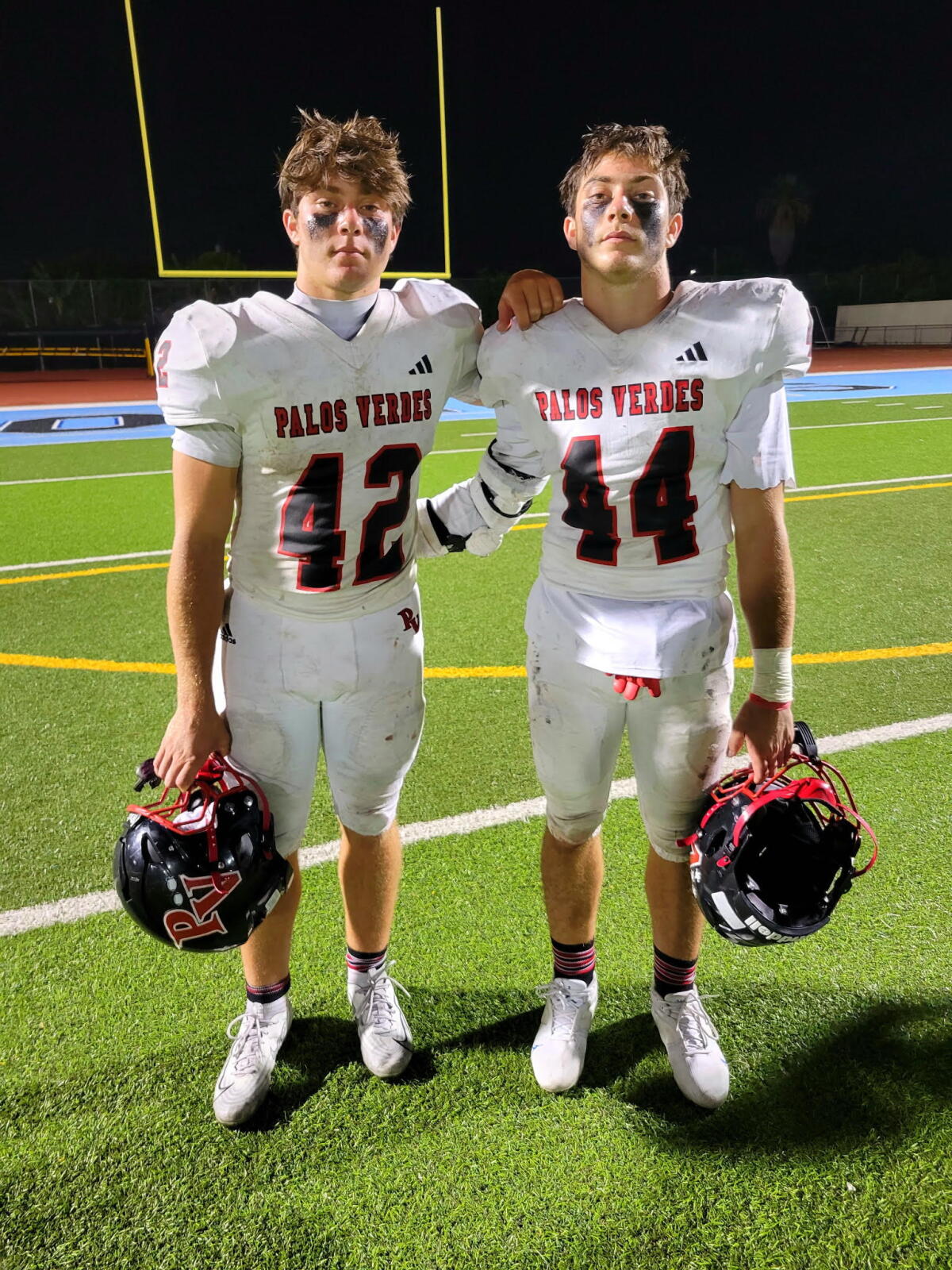
Palos Verdes has a four-year starter at quarterback, Ryan Rakowski, and he’s going to cause many problems for defenses this fall with his knowledge and accuracy.
Long Beach Poly, making its debut under first-year coach Travon Patterson, will have lots of options on defense because of its standout cornerbacks in Donte Wright and JuJu Johnson.
Tustin is loaded with skill-position players.
San Clemente won the Ocean View tournament. Culver City took its own tournament championship.
Jude Bellingham was England’s hero once more by scoring twice as the Three Lions came from behind to end Norway’s historic run and reach the World Cup semifinals with a 2-1 win after extra-time.
In their first ever quarterfinal, Andreas Schjelderup fired Norway into a shock lead in the searing Miami heat on Saturday.
Recommended Stories
list of 4 itemsend of list
But Bellingham, who also netted a double in a memorable 3-2 over Mexico in the last 16, produced a moment of magic to equalise just before half-time.
Norway had a second goal controversially disallowed after a VAR review in the second half for a foul by Erling Haaland as both sets of players were pushed to their physical limits by going to extra-time.
Bellingham came up with another big moment for the winner as he pounced on an error by Orjan Nyland to sweep in his sixth goal of the tournament.
England will face Argentina or Switzerland on Wednesday for the chance to reach a first World Cup final in 60 years.
Haaland’s spectacular run of scoring in his last 14 competitive matches for Norway came to an end against the land of his birth with Norway’s exhausted talisman replaced at half-time of extra-time.
Having failed to win a World Cup knockout game after conceding first since the final of 1966 before this tournament, England have now done so twice in three matches.
Energy-sapping heat
Harry Kane’s heroics prevented an embarrassing early exit to the Democratic Republic of the Congo in the last 32.
But it is Bellingham who has stood up in the past two matches to keep England in the hunt to end their long wait for major tournament glory despite far from flawless performances.
The 5pm local time (21:00 GMT) kickoff in Florida meant that temperatures remained above 30 degrees Celsius (86 Fahrenheit) throughout, with intense humidity making for draining conditions for the players.
The heat looked as if it would spoil the spectacle in the first half.
Thomas Tuchel’s men were rattled as England goalkeeper Jordan Pickford saved low from Martin Odegaard before Alexander Sorloth wasted a glorious chance when he failed to feed Haaland and instead went for goal himself.
Almost immediately Bellingham pulled his team out of the mire once more.
Bellingham had been well marshalled until he collected Anthony Gordon’s pass, burst into the box at speed and then slotted home on his weaker left foot.
Momentum was suddenly in England’s favour and they nearly went into the break ahead.
Bellingham was this time the creator for Kane, who dinked the ball coolly over Nyland, but had just drifted offside.
Tuchel introduced Bukayo Saka and Eberechi Eze at the break for the ineffective Noni Madueke and Declan Rice – the Arsenal midfielder had been suffering with illness earlier in the week.
But those changes left England light in midfield and they were left hanging on at spells in the second half.
Torbjorn Heggem made the most of some sloppy defending to turn in at the back post, but Haaland was penalised for a push on new Manchester City teammate Elliott Anderson before the corner had been taken, and the goal was disallowed.
Norway were inches away from a winner again when Kristoffer Ajer hit the bar after England fail to deal with another dangerous corner.
Both sides visibly wilted in the energy-sapping conditions late on but were forced to endure an extra 30 minutes.
Nyland had been Norway’s supporting act in the last 16 win over Brazil with a series of saves before Haaland struck twice late on for a landmark victory.
This time the Sevilla goalkeeper was the villain as he spilled substitute Morgan Rogers’ shot from distance and Bellingham pounced and scored.
England were awarded a penalty moments later, but this time VAR intervened in Norway’s favour to deem Djed Spence had initiated contact inside the box.
Yet, Norway’s spirit was already crushed, epitomised by a slouched Haaland watching on from the bench with nothing more to give.
Tuchel said his side was “lucky” to emerge with the win.
“We made life very, very difficult for ourselves today. The result is fantastic. We are in the last four. It’s amazing but not happy with the performance,” he told ITV.
“The commitment is there but we made life difficult for ourselves in the way we played – sloppy, a lot of technical mistakes, not fast enough, not repetitive enough. We were lucky today.
“It’s about the quality – we need to play better. We will get better [in the semifinal]. We need to.”
Pieces from the turf used at the stadium will go on sale as memorabilia and will be priced from $450 to $1,200.
By Reuters and The Associated Press
Published On 11 Jul 202611 Jul 2026
FIFA is hoping to make money off the World Cup final even after the match is finished and the tournament is wrapped up.
Segments of the pitch for the World Cup final will be up for sale starting at $450 per piece, football’s governing body announced on Saturday.
Players and coaches have criticised the quality of the field at New Jersey’s MetLife, which usually uses an artificial surface for NFL games of the New York Giants and Jets. FIFA renamed the venue to New Jersey New York Stadium for the World Cup.
FIFA, accused of charging high prices for this year’s tournament in the United States, will earn more than $11m from the sale, according to a report in The Athletic.
“Own a genuine piece of football history with an authentic 2026 FIFA World Cup Piece of the pitch, permanently preserved in a premium acrylic with a USB keepsake,” the website says. “Each piece contains an original fragment of the iconic Final playing surface, making it a unique collectable that celebrates one of the world’s greatest sporting events.”
The official store says each segment of turf is 17.5 by 17.5 by 17.5, although it doesn’t specify whether that figure is inches, centimetres or millimetres.
FIFA said “the acrylic USB features an authenticity film, while offering a sleek, contemporary display piece. Presented in a premium hinged shoulder box with striking spot UV detailing, this exclusive item is designed for collectors, fans, and football enthusiasts alike”.
FIFA is making the turf available to send only to addresses in the United States and Europe.
“Orders will not be shipped until after the FIFA World Cup 2026 Final,” the governing body said.
In addition to the high-priced tickets and memorabilia for the tournament, it will cost $3,000 for the highest-priced tier of souvenir turf. The three-by-three-inch (7.6-by-7.6-centimetre) piece of grass comes with a gold-etched replica ticket, a miniature replica World Cup ball and a crystal-cut World Cup trophy.
The three other tiers of souvenir turf will sell for $450, $900 and $1,200.
There will be no more than 2,026 pieces available in any one tier.
FIFA is selling regular tickets for the final at up to $32,970 for the final and is asking $34,500 and $32,500 for hospitality tickets that include food and drinks.
The report indicated that the turf which will be used for the World Cup final was grown at a turf farm in North Carolina.
For consistency, new turf fields were installed at all World Cup venues, including those that typically have artificial surfaces like the stadiums in Seattle, Washington; Atlanta, Georgia; East Rutherford, New Jersey; Vancouver, Canada; Arlington, Texas; and Inglewood, California.
There is no indication of what will happen to the turf fields that are not being used for the final.
Three wins to go. How can your team reach the final and win the World Cup 2026? Click here to find out.
Who: Argentina vs Switzerland What: FIFA World Cup 2026 – Quarterfinal Where: Kansas City Stadium in Kansas City, Missouri, the United States When: Saturday at 8pm (01:00 GMT on Sunday) How to follow: We will have all the build-up on Al Jazeera Sport from 22:00 GMT before our live text commentary stream.
Recommended Stories
list of 3 itemsend of list
After two gruelling knockout contests, defined by controversies more than goals, Argentina enter the business end of the World Cup.
The reigning champions outclassed most title contenders in the group stage, thanks to the unstoppable striking force of Lionel Messi.
But their unconvincing, stuttering run in the knockout phase – where they were pitted against far inferior opponents – has raised a question: Can Argentina really retain their title?
Up next for the two-time world champions is Switzerland, who have quietly made a remarkable return to the quarterfinals for the first time in 72 years.
The impressive duo of Breel Embolo and Johan Manzambi has won Swiss hearts, and Saturday’s clash offers them a chance to seek revenge for a World Cup defeat by Argentina in 2014.
How did Argentina and Switzerland reach the quarterfinals?
Argentina had a strong showing in the first round, topping Group J by beating Austria, Jordan and Algeria. In the round of 32, they were pushed to their limits by Cape Verde before squeezing past 3-2 in extra time, and came from two goals down to beat Egypt 3-2 in a controversial last-16 contest which drew allegations of officiating bias.
Switzerland topped Group B with an unbeaten record, winning against Canada and Bosnia and Herzegovina, and drawing with Qatar. They beat Algeria 2-0 in the round of 32 and beat Colombia 4-3 on penalties to reach the quarterfinals for the first time in 72 years.
Argentina’s fans celebrate after their team reached the quarterfinals [Thomas Coex/AFP]
‘Argentina are not invincible’: Swiss coach
What started out as a confident campaign has slowly turned into a shaky title defence for Argentina.
Tournament debutants Cape Verde – the smallest nation to play in the World Cup knockouts – gave Argentina a wake-up call, forcing the reigning champions to dig deep for victory.
The Argentinian suffering continued in the next game, where they trailed 2-0 against Egypt before turning it around in stoppage time – in a contest where the opposition accused the referee of favouring the title holders.
These performances have pushed Argentina down to fourth in the pecking order of the favourites, while they’ve also slipped from the top spot to number two in the FIFA rankings.
It has instilled the belief in the Swiss camp that beating Argentina is not out of reach.
“We’re up against the defending champions, which is a unique opportunity. At the same time, we’ve realised that Argentina are not invincible,” Switzerland coach Murat Yakin said.
“It should be an interesting match from a tactical point of view.”
Can ageing Messi keep up with the demands of the World Cup?
At 39, when most players’ careers are long behind them, Messi is proving that age is just a number.
In his sixth and possibly last World Cup, Messi has maintained a perfect record, scoring in each of Argentina’s five matches so far. His eight goals keep him second in the Golden Boot race, only behind France’s Kylian Mbappe, who has also scored eight goals but has played a game more, on account of assists.
Although no longer at his athletic peak, Messi is still very much carrying the burden of the goal-scoring duties for his national team – and rescued them from early elimination in the round of 16 with a goal and assist.
In a rare show of emotion, he even broke down after that game, saying he was desperate for his World Cup journey to continue.
But after his own admission of fatigue after playing 120 minutes against Cape Verde and pushing hard against a resilient Egypt, Messi’s ageing body is fighting to keep up with the gruelling demands of tournament football.
As the stakes get higher and the margins for error reduce, it begs the question: Will age finally catch up with him?
Argentina’s forward #10 Lionel Messi is lifted by teammates as they celebrate a come-from-behind victory against Egypt in the round of 16 [Odd Andersen/AFP]
Argentina vs Switzerland predictions
The Opta supercomputer gives Argentina a 57.1 percent likelihood of winning in regulation time, while Switzerland’s chances of winning are 18.7 percent.
The model estimated a 24.2 percent probability of the game going to extra time.
Argentina vs Switzerland: TV schedule, kickoff
Argentina: TyC Sports, TyC Sports Play (10pm, Argentina Time)
Switzerland: SRF, RSI, RTS (3am on Sunday, Central European Summer Time)
United Kingdom: ITV1, ITVX, STV (2am on Sunday, British Summer Time)
To check the TV listings for your country, head to FIFA’s TV listing schedule here.
Who will the winner face in the semifinals?
The winner of the Argentina vs Switzerland match will face either Norway or England in the semifinals in Atlanta on Wednesday.
Argentina vs Switzerland: Head-to-head
The two countries have met seven times, with Argentina winning five of those matches, while two ended in a draw.
Argentina have also won both of their World Cup games against Switzerland: 2-0 in a group game in 1966 and 1-0 in the round of 16 in 2014, which was also the last meeting between the sides in any competition.
Only three players remain from the 2014 meeting: Messi, Swiss captain Granit Xhaka, and defender Ricardo Rodriguez.
Argentina vs Switzerland: Team news
While no injuries are reported in the Argentina camp, Switzerland’s Manzambi and Jaquez are out with knee and muscle injuries, respectively, while Aebischer is doubtful.
Manzambi, Switzerland’s 20-year-old breakout star, also missed the last game.
Argentina’s predicted lineup
(4-1-3-2): Martinez (goalkeeper); Molina, Romero, Lisandro, Tagliafico; Paredes; De Paul, Enzo, Mac Allister; Messi, Lautaro
When the World Cup ends, regardless of who wins, we’ll still have loads of great content every day as we build up to the new football season.
As well as all the fall-out and reaction to the tournament, we’ll quickly shift back in the club football with pre-season coverage and all the latest transfer gossip and stories.
BBC Sport and teams across BBC Nations and Regions cover every club in the Premier League, WSL, EFL, Scotland, Wales and Northern Ireland.
We have dedicated club reporters, who will be travelling to bring you behind-the-scenes insights from pre-season tours.
We’ll also have live pages for selected pre-season matches as well as in-depth features and storytelling, giving you the latest updates before the new campaign.
Once the World Cup ends, some of the standout players will be hot property in the transfer market, with top clubs chasing their signatures.
Our reporters, including senior football correspondent Sami Mokbel, will be breaking the big transfer stories on our website and app.
We’ll also have our daily transfer gossip column, wrapping up all the rumours from across the football world.
For fans of World Cup Predictor, a brand new weekly Predictor game will be launching immediately after the tournament with five fixtures a week to predict the outcomes of.
You’ll be able to build up your streaks and share your results with friends and family.
Our quizzes will also continue to be available to play so you can test your knowledge of the beautiful game.