Fleet

UK airline’s rescue deal COLLAPSES as bidder pulls out with entire fleet sold

A UK airline has lost its last chance at a rescue deal – more than eight months after entering administration.

The firm had suffered financial difficulties after the loss of a contract with KLM.

Eastern Airways Jetstream 41 aircraft on a runway.
The airliner collapsed into administration in November last year Credit: Alamy Stock Photo

A potential rescue deal for Eastern Airlines, and its affiliated company Air Kilroe, has fallen through – leaving administrators unable to save the regional airline.

As a result, administrators RSM UK, are set to break up and sell the businesses’ assets separately, as revealed in new documents filed by the company.

A joint sale of Eastern and Air Kilroe was initially pursued as the companies had operated under a single business – before entering into administration in November last year.

The North Lincolnshire-based airline had flown routes across the UK, Ireland and Europe, and had been operating four aircraft for KLM Cityhopper in Europe.

ALL SORTED

I stayed at the central London hotel in a former Royal Mail office


SPLASH OUT

Brand new £60m aquadrome with water slides and party rooms is confirmed for UK

However, the abrupt loss of this contract in October last year plunged the company into severe financial difficulties.

At the time of collapse, RSM said “high fixed overheads” and its staff base had “ultimately proved too high to be sustainable”.

Jamie Miller, partner at RSM UK and joint administrator, added: “The unexpected and sudden termination of Eastern’s KLM contract, along with other economic factors, unfortunately left the directors with no choice but to appoint administrators.

Now, all nine of the company’s aircraft fleet have been sold off to private buyers, as well as associated plane parts and components.

At its peak, the airliner provided 200 flights per day and employed around 330 staff members, the majority of which have now been made redundant.

Now just 16 employees remain, and are expected to stay on until the administration process is completed.

Known as one of the UK’s last regional airlines, the firm had run a weekday service between Wick John O’Groats Airport and Aberdeen, which was seen as an essential link for those living in the most northerly point on mainland UK.

Launched in 1997, the airliner also flew from bases in East Midlands, Jersey, Manchester, Southampton and Denmark – and even held eight summer slots at London Gatwick.

RSM has declined to comment.

Source link

Pocket Fleet Of Unseen MQ-1 Predators Still Flying In Specialized Role

The U.S. Navy continues to make use of MQ-1 Predators as test and training assets, eight years after the U.S. Air Force retired the iconic drones. TWZ was first to report that the Air Force was looking at transferring some of its remaining Predators to the Navy back in 2019, but it was unclear what came of those discussions in the end. Now we know.

The Air Force officially retired the MQ-1 in 2018. At that time, the service still had dozens of these drones in its inventory. More than 50 Predators were heavily cannibalized for parts they shared with their newer cousin, the MQ-9 Reaper. A number of demilitarized examples were also put on display. Today, 15 MQ-1s remain in storage at the boneyard at Davis-Monthan Air Force Base in Arizona, and are technically the property of the National Museum of the U.S. Air Force. Then there’s the matter of the MQ-1s that went to the Navy.

A US Air Force MQ-1 Predator, at right, and an MQ-9 Reaper, at left, seen taxiing at Kandahar Airfield in Afghanistan in 2014. USAF

“In 2019, Naval Air Warfare Center Weapons Division (NAWCWD) received 20 MQ-1 aircraft from the U.S. Air Force,” a spokesperson for NAWCWD, part of the Navy’s Naval Air Systems Command (NAVAIR), confirmed to TWZ. “These aircraft were redesignated as NMQ-1Bs to support our mission.”

The new nomenclature here is notable. In the U.S. military’s joint service designation system for aircraft and missiles, the prefix “N” refers to platforms that have been modified in some way, typically for testing purposes, that are not readily reversible. One of the better-known examples of this is the Air Force’s secretive NT-43A radar cross-section measurement platform, a heavily modified Boeing 737-200 with a completely new and enlarged nose, as well as a huge radome extending from the tail. Other “N” aircraft that various branches of the U.S. military have operated over the years have had far less dramatic modifications. How exactly the NMQ-1B configuration differs from a typical MQ-1B is unclear.

A stock picture of an MQ-1 Predator in US Air Force service. USAF

“NAWCWD is an RDT&E [research, development, test and evaluation] command and the platforms were acquired to support our targets department,” they added when asked for more information. “The NMQ-1B platform is being used for test and training. We have nothing further to provide at this time.”

TWZ had reached out to the Navy for more details after the Air Force had also confirmed the transfer of the MQ-1s. We had asked the Air Force about the status of any Predators still in its inventory after U.S. Central Command (CENTCOM) confirmed the loss of an “MQ-1” to Iranian fire at the end of May. By all indications, what Iran shot down was actually a U.S. Army MQ-1C Gray Eagle, a design that evolved from the Predator, but that is distinctly different.

When the Air Force retired the MQ-1, the service still had dozens of airworthy examples. TWZ pointed out at the time that at least a portion of them could end up as targets for air-to-air and surface-to-air weapons, as well as sensor testing and other weapons testing. The fact that NAWCWD says it is still using the drones today would seem to point more to the latter than the former, though anti-air missile testing does not necessarily have to entail the destruction of the target.

For instance, certain kinds of testing of some missile seekers can be done without it ever leaving a rail on an aircraft or a launcher on the ground. The Navy and Air Force test communities also use specialized podded systems to support the development and evaluation of new and improved seekers for anti-air missiles, something we have explored in detail in the past. Even live fire tests do not always result in the target being destroyed if that is not the intended outcome. Just by removing the warhead, missiles will still pass within lethal distance with their proximity fuzes being triggered to confirm a simulated kill. The missile will fly on, and the target will survive to live another day.

As noted, at least based on the NMQ-1B designation, the Navy’s Predators have been altered in some significant way. One possibility is that they have been modified to be able to mimic an array of different radar, infrared, and/or other signatures. In this way, a Predator could offer a lower-cost and long-endurance flying asset capable of replicating a variety of aerial threats to support testing and training requirements. The U.S. military already uses smaller crewed aircraft as surrogates for cruise missiles and long-range kamikaze drones, as can be seen in the TWZ video below. This is in addition to target drones specifically built for this purpose.

These aircraft masquerade as enemy Shahed-136 drones during U.S. military war games thumbnail

These aircraft masquerade as enemy Shahed-136 drones during U.S. military war games


The NMQ-1Bs could also be modified in a variety of other ways to support more specific NAWCWD requirements, or to make them more adaptable to meet changing demands. The standard MQ-1B variant also features two underwing hardpoints that could be used to carry various stores, such as countermeasures and small munitions. This would further expand the Predator’s flexibility as a test and training asset from one sortie to the next. Being able to more readily modify or swap out the drone’s internal systems, as well as the software running them, would also be a boon for its current role.

Despite being housed within NAWCWD’s targets department, depending on their current configuration, the NMQ-1Bs could also help monitor missile and other test activities, or even act as signal relays. Before armed MQ-1 versions arrived, RQ-1 Predators were already flying surveillance and reconnaissance missions using infrared and electro-optical full-motion video cameras in turrets under their noses. The drones could also be fitted with small radars with synthetic aperture modes capable of capturing still imagery, even through cloud cover, smoke, and dust, and at night.

An early variant of the Predator drone flies near the U.S. Navy’s Nimitz class aircraft carrier USS Carl Vinson during a test in 1995. U.S. military

News that the Navy is still using Predators for testing and training purposes certainly comes at a time when drone threats at home and abroad have become firmly top of mind for the U.S. military. For American authorities, the ability of long-range kamikaze drones, in particular, to hold prized assets at risk was just highlighted by the latest conflict with Iran. Russia’s ongoing war against Ukraine, as well as other conflicts globally in recent years, have also underscored this reality. For years now, TWZ has been calling attention to the dangers that various tiers of uncrewed aerial systems pose, which are only set to continue to expand in scale and scope.

Confirmation that NAWCWD continues to operate a fleet of NMQ-1Bs also comes amid a surge in U.S. military flight testing activities, and commensurate demand for supporting test assets. This is being driven heavily by a flurry of next-generation aircraft and missile developments, as well as efforts to modernize existing platforms to keep pace.

Around their retirement, there were rumors that the remaining MQ-1 fleet could be used to test cooperative swarming capabilities, including hardware, software, and communications networks. There is no hard proof that this occurred, but it seems quite plausible considering the timing and how well-known and adaptable the Predator was at the time.

Using surrogate drones in the development of autonomy agents, teaming architectures, and swarming capabilities is now a very well-established practice. The big question is that if these Predators are still flying, or at least have been since their retirement, how is it that we have not caught a glimpse of them? One answer would be that this work was done at clandestine test facilities like Area 51 or even less secretive but still somewhat remote locales. If this is the case, these aircraft likely have historic significance, paving the way to the autonomous air combat revolution currently underway.

Overall, how much longer the Navy might continue to make use of the NMQ-1Bs remains to be seen. The service’s test community has already given the iconic Predator nearly a decade of extra life.

Contact the author: joe@twz.com

Joseph is TWZ’s Deputy Editor, helping to oversee the site’s highly experienced and dedicated team, while also writing informative and impactful defense and national security content. He lives right in the thick of it in the Washington, D.C. area.


Howard is a Senior Staff Writer for TWZ. He writes frequently about conflict, focusing heavily on the Middle East and Ukraine, and interviews with military and intelligence officials and industry leaders from around the globe. He lives near Tampa, Florida, home of U.S. Central Command, U.S. Special Operations Command.


Source link

Four U-2S Spy Planes Would Be Restored In Bill That Would Save The Dragon Lady Fleet

Members of Congress are again moving to block the U.S. Air Force from retiring all of its U-2S Dragon Lady spy planes. This time, legislators also want to compel the service to “fully restore” four of the iconic aircraft through heavy depot maintenance, which would bolster the fleet’s operational capacity. The Air Force continues to argue that the high-flying Cold War-era jets are too vulnerable to support future high-end fights and should be supplanted by a mix of space-based and other capabilities. This would presumably include a classified stealthy high-altitude drone, commonly (and unofficially) referred to as the RQ-180, or an evolution thereof, which first emerged publicly just earlier this year.

Yesterday, the House Appropriations Committee released a draft defense spending bill for the 2027 Fiscal Year. It includes a provision that would prevent the Air Force from retiring more than two U-2Ss in that fiscal cycle. The Air Force currently has 23 of these aircraft in inventory, including three two-seat TU-2S trainers.

One of the Air Force’s three TU-2S trainers. USAF

A summary of the proposed legislation also says it includes “$81 million for U-2 programmed depot maintenance to fully restore four aircraft.” The current operational status of the aircraft in question is unclear. This is included under the umbrella of $335.3 billion in total funding for operation and maintenance (O&M) accounts across the services that the draft bill would appropriate for Fiscal Year 2027.

Programmed depot maintenance for any aircraft is an intensive process that essentially involves a full tear-down and detailed inspection. Paint and other coatings are typically stripped and reapplied. Upgrades and modifications are often worked into depot maintenance cycles given the extensive work already being done.

U-2 Dragon Lady Maintenance thumbnail

U-2 Dragon Lady Maintenance


The Air Force’s proposed budget for the 2027 Fiscal Year completely zeroes out the line for U-2 O&M, to include depot maintenance, reflecting the service’s desire to retire the fleet. An annual force structure report the Pentagon released in May concisely outlines the current argument for retiring the remaining U-2Ss.

“The Air Force will retire the entire 23-ship U-2 fleet, as the platform is no longer viable for future high-end conflicts,” the force structure report says. “Continued operation presents significant safety, logistical, and financial risks that outweigh the platform’s remaining utility in contested environments.”

“This decision allows for the strategic reallocation of fiscal resources to fund more critical, high-priority service requirements and accelerate modernization efforts in other key areas,” it adds. “Continuing to operate the U-2 fleet would require a significant investment to address systemic issues, including diminishing manufacturing capacity, material shortages, and safety risks inherent in the aging platform.”

A U-2 seen taking off from an undisclosed location in the Middle East in 2010. USAF

Questions about the continued relevance of the U-2 in the face of an ever-expanding global air defense threat ecosystem are not new. Near-peer competitors like China and Russia, as well as lower-tier potential adversaries like Iran, continue to develop and field more capable air defense systems and expand their anti-access and area denial bubbles. This, in turn, has threatened to push the U-2 further and further from the areas where it would be tasked to collect.

On top of all this, the U-2s are aging and becoming more costly to operate and maintain. The U-2S models in service today were upgraded from earlier variants that began their service careers in the 1980s.

As noted, this is not the first time the Air Force has tried to retire its remaining U-2s, citing operational and sustainment-related factors. In response, Congress has repeatedly intervened in the past few years to at least block full divestment of the fleet over persistent concerns about the aerial intelligence, surveillance, and reconnaissance (ISR) capability and capacity gap that might result.

The Dragon Lady continues to offer a unique ISR platform that can fly higher than any other operational non-orbital platform, crewed or uncrewed, the U.S. military has, at least from what we know today. This, in turn, means that the aircraft can bring imaging, signals intelligence, communications payloads, and other sensors up to those altitudes, giving them particularly good fields of view. From this perch, aircraft can use a slant angle to peer deep into denied areas while still flying international airspace and further away from potential threats. The use of the U-2 to gather intelligence about a Chinese spy balloon that soared over parts of the United States and Canada in 2023, which involved flying above it, offered a particularly public demonstration of the value of the aircraft’s high-altitude capabilities.

A view of the Chinese spy balloon soaring over the United States in 2023, as seen from the cockpit of a U-2. USAF

Each Dragon Lady can also carry a wide array of different sensor systems simultaneously, as well as communications packages, further increasing its flexibility. The U-2Ss have the ability to be readily deployed to forward locations globally and conduct long-duration sorties, as well. The latter points have been especially relevant in comparison to known existing ISR satellite constellations that are constrained by their orbits and can only offer relatively short-term coverage over a specific area. We will come back to this in a moment.

A now-dated graphic that still gives a good sense of the array of different sensors the U-2 can carry. US Military

It is worth noting here that the Air Force’s Dragon Lady fleet also has a long history now of providing valuable ISR support outside of traditional combat operations. Last year, the service confirmed U-2Ss were supporting the enhanced border security mission along the United States’ southern boundary with Mexico. The aircraft have been used to support counter-narcotics operations over the years, as well as humanitarian assistance and disaster relief missions. NASA also operates a pair of ER-2 aircraft, another version of the Dragon Lady, as high-flying scientific research platforms.

A U-2 collected this image of wildfires in California in 2007. National Guard Bureau

The Air Force has been hinting for years now at the existence of advanced aircraft in the classified realm that could help fill gaps left by the retirement of the U-2, and also be more survivable in very high-threat environments. This has now been further underscored by the emergence of the ‘RQ-180,’ or a related stealthy design, in Greece earlier this year, the likely capabilities and roles of which TWZ explored in a detailed feature in April. At the same time, we have raised still unanswered questions in the past about how many of any such drones might actually be in service and what kind of operational capacity those fleets might provide.

The U.S. military is also pushing ahead with the development and fielding of new space-based ground and air surveillance capabilities. This includes work toward the fielding of new satellite constellations that could provide game-changing persistent coverage globally, as you can read more about here. Despite steady progress, including on-orbit testing of prototypes, there are still questions about when any of these new assets in orbit will be fully operational. The U.S. Space Force recently announced it is now targeting 2028 for the “early” fielding of at least some of these new space-based surveillance capabilities.

The draft defense spending bill from the House Appropriations Committee does still have to be finalized, and then brought in line with companion legislation in the Senate. Both chambers of Congress then need to pass the bill before it can be sent to the President’s desk to be signed into law. There are many opportunities along the way for major changes to be made to the bill.

That being said, Congress has consistently blocked Air Force efforts to fully retire the U-2 in recent years. Another potential reprieve, which would also demand the service take steps to bolster the operational capacity of the remaining fleet, has now appeared on the horizon.

Contact the author: joe@twz.com

Joseph is TWZ’s Deputy Editor, helping to oversee the site’s highly experienced and dedicated team, while also writing informative and impactful defense and national security content. He lives right in the thick of it in the Washington, D.C. area.


Source link

Air Force One plane retired from fleet as Saudi gift plane joins

June 19 (UPI) — A Boeing 747-200 made its last flight as Air Force One after it brought President Donald Trump home from Europe this week.

“Well done, good and faithful servant,” White House Communications Director Steven Cheung posted Thursday on X. “The Last Ride.”

White House Deputy Chief of Staff Dan Scavino also posted a tribute with a video on X.

“I have been fortunate to fly around the world on this iconic plane for 5½ years – of the 35 years it has been serving the U.S. Presidents…THANK YOU… .”

There are two 747-200s working as Air Force One, designated VC-25A by the Air Force. The two have tail numbers 28000 and 29000. The latter is retiring.

The plane has been in operation since 1990, with President George H.W. Bush as its first presidential passenger.

“The VC-25B Bridge aircraft will soon join the active executive airlift fleet alongside the VC-25A and C-32,” an Air Force spokesperson said.

Three 747-800s are being prepared to step in, including the luxury jet donated by the Qatari government. Officials have said it should be ready for use this summer and that the Air Force had finished its modifications and testing of the craft.

Gen. Dale White, the Department of Defense’s direct reporting portfolio manager for critical major weapons systems, said in a May statement that the Qatari plane will “relieve pressure on the aging VC-25A fleet.”

“Ultimately, the Bridge aircraft fulfills a critical short-term requirement, guaranteeing the Air Force continues to execute its no-fail mission for the commander in chief while laying a rock-solid foundation for the future,” the release said.

The new planes will have Trump’s preferred color scheme of red, white, gold and dark blue. He proposed the change while in office for his first term, but President Joe Biden reversed the plan back to the traditional colors. When Trump was re-elected, the new color scheme was once again adopted.

President Donald Trump presents a Medal of Honor to Tom Ripley on behalf of his father, John W. Ripley, during a Medal of Honor award ceremony in the East Room of the White House on Thursday. Photo by Aaron Schwartz/UPI | License Photo

Source link

Russia’s Baltic Fleet Successfully Attacked By Ukrainian Drones

The prestigious Russian Navy base at Kronstadt, near St. Petersburg, came under Ukrainian drone attack overnight, in what may well be the first strike of its kind against the Baltic Fleet. Ukrainian drones targeted the naval base, including the Project 20380 Steregushchiy class corvette Boikiy, highlighting the fact that Russian warships are vulnerable even when hundreds of miles from Ukraine’s borders.

According to the official account of the Ukrainian 414th Separate Unmanned Strike Aviation System Brigade on X, the corvette was set ablaze while in the Veleshchynskyi dry dock in Kronstadt, where it is said to have entered scheduled maintenance in February of this year. The same account posted a video showing the attack. While we are used to kamikaze drone video feeds cutting out just before detonation, the fact that multiple drones were involved means we can see the burning vessel from several angles.

Reportedly, the drones that hit the corvette were from the 1st Separate Center of Ukraine’s Unmanned Systems Forces. Considering the long distance to the target, it is interesting to note that video from the seekers was available. This indicates that either a local operator on the ground was involved in targeting and recording the feed, or otherwise a satcom link was used to do the same. While it is conceivable that the drones used autonomous guidance, they would still have needed someone nearby or connected via satcom to record the seeker’s view. Another possibility is that shorter-range drones were used for the attack, something that Ukraine has done before for attacks deep in Russia, although this seems less likely here.

A drone’s eye view of the Russian corvette Boikiy ablaze in the Veleshchynskyi dry dock in Kronstadt. Ukrainian Ministry of Defense screencap

Ukraine’s Unmanned Systems Forces stated that the Boikiy was involved in escorting ships associated with Russia’s so-called shadow fleet, the collection of older tankers operating under foreign flags that Moscow relies on to export oil despite Western sanctions. According to Ukrainian officials, Russia has increasingly tasked Baltic Fleet vessels with escort, monitoring, and security missions for these tankers as they transit the Baltic Sea carrying sanctioned Russian oil to markets prepared to bypass Western restrictions.

The Steregushchiy class ships are among Russia’s more modern corvettes. With a standard displacement of 1,800 tons, a length of 343 feet, and a flight deck for a helicopter, the corvettes are closer to frigates, according to some classification systems. Their primary armament consists of two quadruple launchers for Uran anti-ship missiles, a 12-cell Redut vertical launch system for various air defense missiles, and two quadruple tubes for Paket-NK anti-torpedo/anti-submarine torpedoes.

The British offshore patrol vessels HMS Mersey and HMS Severn shadow the Russian corvette Boikiy in the English Channel in 2017.

The attack on the naval base was part of a wider Ukrainian drone barrage directed against other military and energy sites in and around St. Petersburg early on Wednesday. Footage of the attacks showed drones, reportedly FP-1/2 types, low over the Gulf of Finland and in the skies above the city.

The attacks occurred just hours before international guests gathered for the city’s flagship economic forum. “The Petersburg forum is opening with a nice plume of black smoke in the background after Ukrainian strikes,” posted Serhiy Sternenko, an adviser to the Ukrainian defence minister.

Several long-range drones also crashed into oil storage facilities in St. Petersburg after Russian air defenses reportedly tried unsuccessfully to shoot them down. Loud explosions were heard, and black smoke could be seen rising from the blazing oil terminal, one of the largest on Russia’s Baltic Sea coast.

Russian authorities confirmed that the attacks had taken place, with St. Petersburg’s governor, Alexander Beglov, saying that the Kirovsky and Krasnoselsky districts had been targeted.

Ukrainian President Volodymyr Zelensky, writing on social media, said that drones had hit “important facilities on Russian territory,” including the St. Petersburg oil terminal, the Kronstadt base, and a weapons factory in the Tambov region.

“I thank our warriors for their precision. Ukraine’s plan for long-range sanctions is being implemented exactly as needed to bring peace closer,” Zelensky said.

The significance of the strikes is manifold.

First off, the drone strikes have a highly symbolic value, and will be especially embarrassing for the Kremlin, since they come immediately in advance of the three-day annual summit being held in St. Petersburg, and billed as Russia’s answer to Davos.

Guests arrived for today’s opening ceremony under a pall of thick smoke, and Russian President Vladimir Putin is due to make a keynote speech at the event on Friday. There was further disruption for arriving guests as St. Petersburg’s airport was temporarily closed.

Secondly, the drone strikes underscore Ukraine’s ability to strike targets deep within Russia, using a growing array of long-range one-way attack drones and cruise missiles. The targets are around 680 miles from the nearest Ukrainian border.

The approximate location of Kronstadt and St. Petersburg in relation to Ukraine. Google Earth

Finally, by targeting Kronstadt, the attacks also signify the opening up of a new front in the drone war, namely against the Baltic Fleet while it is in port.

Located on Kotlin Island in the Gulf of Finland, about 18 miles west of St. Petersburg, Kronstadt is one of the principal bases associated with the Baltic Fleet. Today, it primarily hosts corvettes and patrol vessels, naval support ships, training units, as well as repair and maintenance facilities. Since any naval threat approaching St. Petersburg from the Gulf of Finland must pass near Kronstadt, the base effectively acts as the maritime gateway to Russia’s second-largest city.

The approximate location of Kronstadt, at the gateway to St. Petersburg, and at the far east end of the Baltic. Google Earth

There have been very few confirmed Ukrainian attacks of any kind on the Baltic Fleet compared with the extensive campaign waged against Russia’s Black Sea Fleet.

In April 2024, there was a fire on a Russian warship at Baltiysk in Kaliningrad. The fire damaged communications and electronic systems aboard the Buyan class corvette Serpukhov. A Ukrainian military intelligence official subsequently claimed that this was the result of a covert joint operation conducted by his GUR agency and a pro-Kyiv Russian military group.

So far, of course, Ukraine’s naval campaign has focused overwhelmingly on the Russian Black Sea Fleet. Many successful attacks have been recorded against Black Sea Fleet vessels and facilities, forcing the general evacuation of Russian naval assets from occupied Crimea and to bases in Russia proper.

In recent months, Ukraine has waged an aerial campaign to disrupt Russia’s economy. Long-range drones have hit ports and oil storage facilities, military factories, and airbases. There has also been an uptick in attacks against tankers and trucks moving between occupied southern Ukraine and Crimea, leading to fuel shortages across the peninsula.

Meanwhile, the scale of Russian missile and drone attacks on Ukraine remains undiminished. On Monday, a barrage of Russian strikes killed 23 people across Ukraine and injured many more. This led Zelenskyy to renew his plea for the U.S. government to provide Kyiv with more Patriot missiles. Today, he said that “an agreement at the highest political level on the purchase of Patriot systems […] is awaiting implementation at the financial, legal, and technical levels.”

Whether or not the overnight strike caused significant damage, its strategic message was unmistakable. By reaching Kronstadt, one of Russia’s most historic naval bases, Ukraine demonstrated that even the Baltic Fleet is no longer beyond its reach. The attack highlights Kyiv’s growing long-range capabilities and signals that Russia’s efforts to protect both its regular fleet and its shadow oil-export network may face increasing pressure, even far from the front lines.

Contact the author: thomas@thewarzone.com

Thomas is a defense writer and editor with over 20 years of experience covering military aerospace topics and conflicts. He’s written a number of books, edited many more, and has contributed to many of the world’s leading aviation publications. Before joining The War Zone in 2020, he was the editor of AirForces Monthly.


Source link

Tracking the shadow fleet: How Iran evaded the US naval blockade in Hormuz | Investigation

On March 11, the Thai cargo ship Mayuree Naree was struck by two projectiles while crossing the Strait of Hormuz, one of the world’s most important waterways located between Iran and Oman. A fire broke out in the engine room, and while 20 sailors were rescued, three remained trapped inside the stricken vessel. Their remains were found weeks later when a specialised rescue team boarded the vessel, which had run aground on the shores of Iran’s Qeshm island.

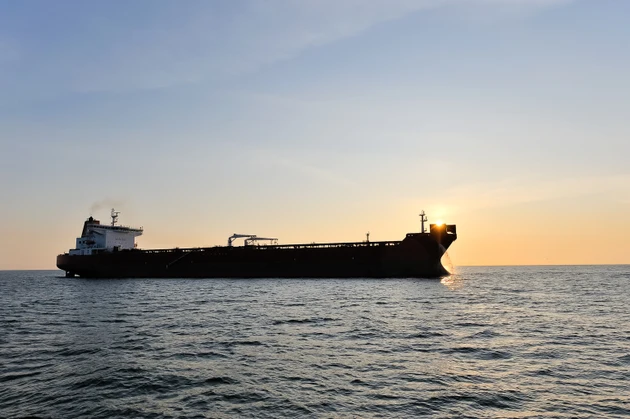
At about the same time, a “shadow fleet” of tankers continued to navigate the very same waters safely. Operating with fake flags, disabled signals and unspecified destinations, this covert armada survived because it operates outside the traditional rules of maritime trade.

Recommended Stories

list of 4 itemsend of list

Iran threatened to block “enemy” ships passing through the Strait of Hormuz – a crucial chokepoint for a fifth of the world’s oil – in the wake of the United States-Israeli war launched on February 28. Soon, navigation through the strait was disrupted amid fears of attacks.

Following a temporary ceasefire on April 8, the United States imposed a full naval blockade on Iranian ports on April 13. Theoretically, traffic through the strait should have come to a complete halt.

However, tracking data reveals a remarkably different reality.

INTERACTIVE - Strait of Hormuz - March 2, 2026-1772714221
(Al Jazeera)

An exclusive Al Jazeera open-source investigation tracked 202 voyages made by 185 vessels through the strait between March 1 and April 15, navigating both under fire and across blockade lines.

The numbers behind the shadows

To understand how the strait operated under extreme pressure, Al Jazeera’s Digital Investigative Unit monitored the waterway daily, cross-referencing vessel International Maritime Organization (IMO) numbers with international sanction lists from the US Office of Foreign Assets Control (OFAC), the European Union, the United Kingdom and the United Nations. An IMO number is a unique seven-digit figure assigned to commercial ships.

Of the tracked voyages, 77 (38.5 percent) were directly or indirectly linked to Iran. Notably, 61 of the ships transiting the strait were explicitly listed on international sanctions lists.

INTERACTIVE-Vessel Traffic Through the Strait of Hormuz between March 1 and April 15-1777534474
(Al Jazeera)

The investigation divided the conflict into three distinct phases to map the fleet’s behaviour:

  • Phase 1: Open War (March 1 – April 6): 126 ships crossed the strait, peaking at 30 vessels on March 1. Among these, 46 were linked to Iran.
  • Phase 2: The Truce (April 7 – 13): 49 ships crossed during this fragile pause. More than 40 percent of these vessels were tied to Iran, including the US-sanctioned, Iranian-flagged Roshak, which successfully exited the Gulf.
  • Phase 3: The US Blockade (April 13 – 15): Despite the explicit naval blockade, 25 ships crossed the strait.

Breaking the blockade

When the US blockade took effect, the shadow fleet adapted immediately.

The Iranian cargo ship “13448” successfully broke the blockade. Because it is a smaller vessel operating in coastal waters, it lacks an official IMO number, allowing it to evade traditional sanction-monitoring tools. The vessel departed Iran’s Al Hamriya port and reached Karachi, Pakistan.

Similarly, the Panama-flagged Manali broke the blockade, crossing on April 14 and penetrating the cordon again on April 17 en route to Mumbai, India.

The investigation uncovered widespread manipulation of Automatic Identification System (AIS) trackers. Vessels such as the US-sanctioned Flora, Genoa and Skywave deliberately disabled or jammed their signals to hide their identities and destinations.

Fake flags and shell companies

To obscure ultimate ownership, the shadow fleet heavily relies on a complex web of “false flags” and shell companies. The investigation identified 16 ships operating under fake flags, including registries from landlocked nations like Botswana and San Marino, as well as others from Madagascar, Guinea, Haiti and Comoros.

INTERACTIVE- Strait of Hormuz AJA Vessel registry breakdown by flag state-1777534470
(Al Jazeera)
INTERACTIVE-Commercial managers behind vessels-1777534468
(Al Jazeera)

The operational network managing these ships spans the globe. Operating firms were primarily based in Iran (15.7 percent), China (13 percent), Greece (more than 11 percent) and the United Arab Emirates (9.7 percent). Notably, the operators of nearly 19 percent of the observed vessels remain unknown.

The toll of a parallel system

Despite the intense military pressure, energy carriers dominated the traffic, with 68 ships (36.2 percent) transporting crude oil, petroleum products and gas. Ten of these tankers were directly linked to Iran. Non-oil trade also persisted, with 57 bulk and general cargo ships crossing during the open war phase, 41 of which were tied to Tehran.

INTERACTIVE-Strait of Hormuz traffic by vessel type-1777534472
(Al Jazeera)

Before the war, at least 100 ships crossed the Strait of Hormuz daily. Today, a staggering 20,000 sailors are trapped on 2,000 ships across the Gulf – a crisis the International Maritime Organization described as unprecedented since World War II.

A shadow Iranian fleet, meanwhile, has been navigating seamlessly as part of a parallel maritime system born from 47 years of US sanctions on Tehran. Washington slapped sanctions on Tehran following the 1979 Islamic revolution that toppled the pro-Washington ruler Shah Mohammad Reza Pahlavi. The two countries have had no diplomatic ties since 1980.

Source link