finance

Why Bank of America’s AML Failure Is a Wall Street Warning

Experts warn Bank of America’s hefty AML fine signals a reckoning for aging banking compliance.

When Bank of America released third-quarter financials on Oct. 14, shareholders took note of a $1.2 billion non-tax-deductible blow to earnings. The anti-money laundering, or AML, and sanctions penalty shaved 17 cents off its per-share net income.

But the fine itself may be the least of the bank’s worries.

Financial crime and AML experts told Global Finance that this penalty was not an outlier but a warning to the rest of the industry.

“If you looked at every bank in detail, you’d find problems,” ThetaRay CEO Brad Levy said in an interview. “It’s kind of like every house — when the inspector comes, there’s something wrong.”

What Happened

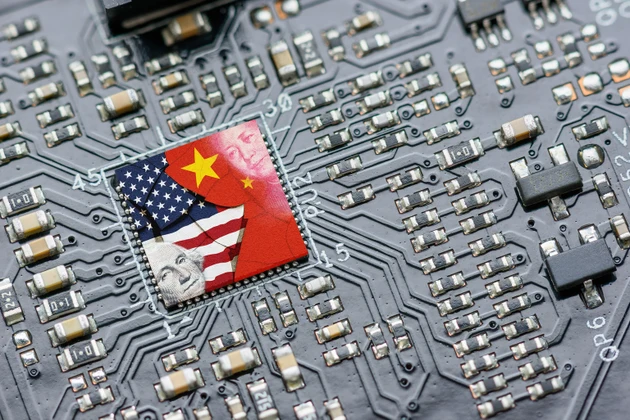
The Treasury Department’s Financial Crimes Enforcement Network (FinCEN) addressed the penalty. The segment cited Bank of America’s “failure to mitigate and report priority national security risks, including Chinese Money Laundering Networks and illicit finance along the southwest border.”

The fine is the third-largest in the department’s history, behind a roughly $4 billion settlement with Binance in 2023 and an approximately $3 billion settlement with TD Bank in 2024.

This particular cost includes $750 million that goes to the Office of the Comptroller of the Currency — the largest fine that regulator has ever imposed— plus $11.6 million to the Treasury’s Office of Foreign Assets Control over apparent violations of sanctions programs covering Iran, Russia, narcotics and global terrorism.

A Bank of America spokesperson issued the following statement to Global Finance: “Financial crime compliance is serious, and we are responsible for getting it right. We worked with regulators to reach these penalty resolutions stemming from violations cited in the previously reported 2024 OCC Consent Order and FinCEN’s investigation. We have invested billions of dollars in technology and dedicated thousands of employees to combat financial crime, and our team is far along with and committed to completing the work required to address the issues raised by our regulators.”

Fallout Extends Beyond Government Agencies

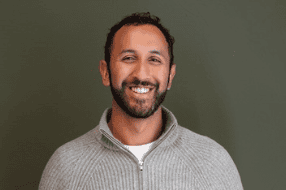
For Nikhil Raghuveera, CEO of Predicate, a startup that uses blockchain technology for AML enforcement, the real government-inflicted damage is not to Bank of America’s coffers but to its goodwill.

“The bank faces business and reputational damage with counterparties,” Raghuveera said. Partner institutions, clearing banks, and corporate clients typically tighten their own risk thresholds to protect themselves from secondary liability and run their own risk assessments. And a Bank Secrecy Act violation feeds directly into them, he explained.

“A large bank doesn’t lose its ability to operate, but it does face greater scrutiny and the potential loss of business opportunities,” Raghuveera added. “The regulator now sees the bank as unable to fix things itself. As a result, every new product or expansion gets reviewed through that lens.”

Regulatory Trust Broken

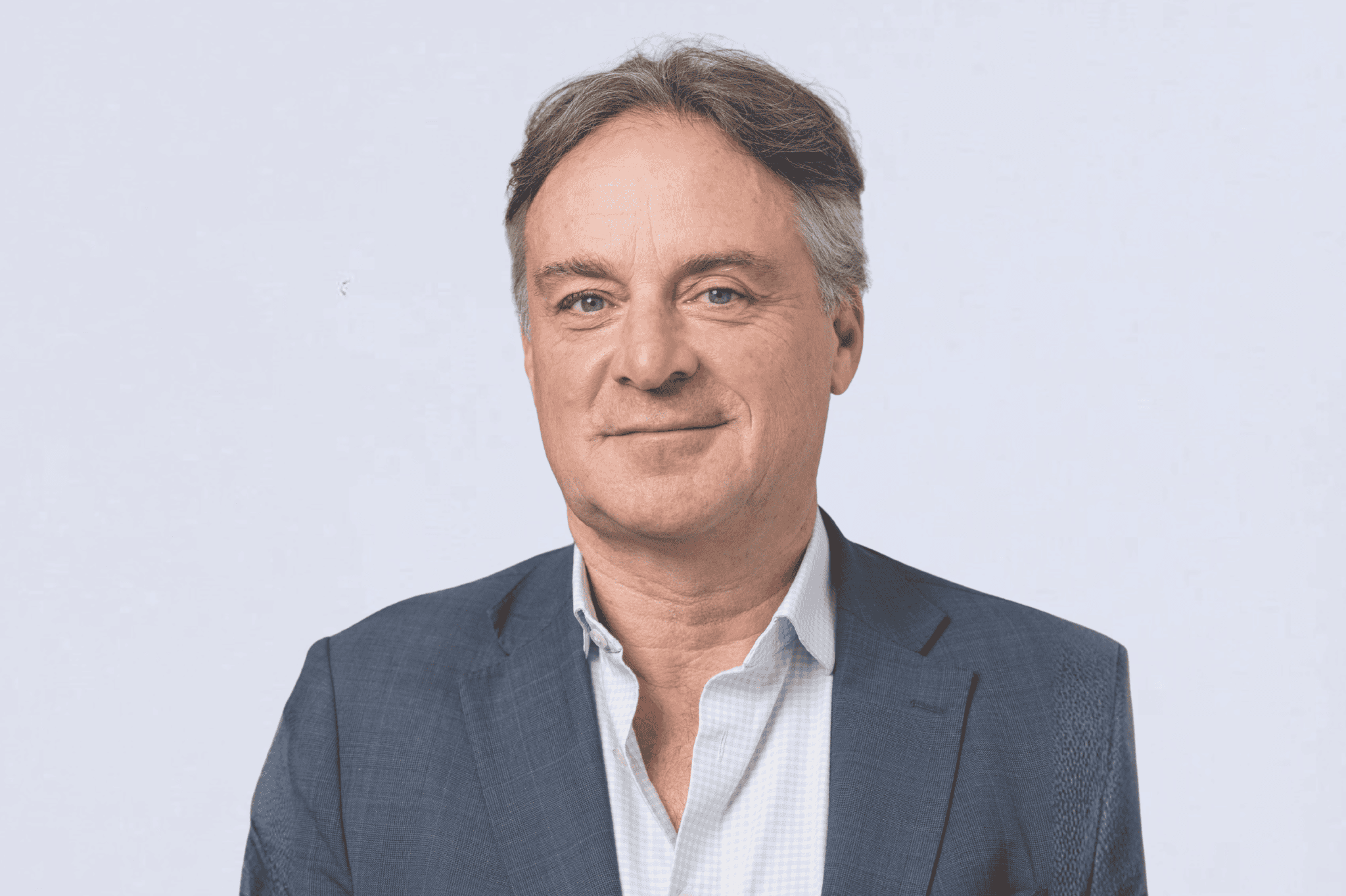
The hefty fine grabbed headlines, but according to Will Lawrence, CEO of San Francisco-based AML software maker Bretton AI Inc., the money matters less than what the bank has lost in regulatory trust.

Will Lawrence,
Bretton AI
Will Lawrence,
Bretton AI

“For a large bank, even a significant financial penalty may be manageable,” Lawrence said in an email. “What’s much harder is operating once regulators lose confidence in the institution’s ability to manage risk.”

That can mean independent monitoring, more board scrutiny and limits on growth.

“Even without formal restrictions on growth or acquisitions, unresolved compliance issues can complicate a bank’s expansion plans,” he said. “The financial penalty may be immediate, but remediation can take years.”

Big-name banks are also vulnerable if their methods for flagging suspicious activity remain outdated.

For example, when a typical analyst pulls data from different systems, reconstructs transactions, and documents the findings, that approach often falls short against sophisticated laundering networks, Lawrence explained.

“These are not necessarily risks you can understand by looking at one transaction or one customer in isolation,” he said. “You need to connect activity across accounts, counterparties and payment channels to identify broader patterns.”

Large penalties are rarely a one-time blip, Raghuveera said. “They tend to reflect patterns: transaction monitoring that’s poorly calibrated, SARs filed late or not at all, watchlists that aren’t kept current, and compliance teams lacking the staff, tools or authority to escalate.”

24/7 Reality Check

For Lawrence, true accountability raises certain questions: Who knew about the risks? Who had the authority to address them? Was appropriate action taken?

“A bank can have sophisticated monitoring systems, but if serious issues aren’t escalated or leadership doesn’t respond, the program isn’t working,” he added.

Also, Lawrence said, a bank can’t spend its way out of the problem. Regulators want evidence that changes are working, not just new policies or software.

“A bank can hire more analysts, purchase new technology, and rewrite its policies without fundamentally improving its ability to identify financial crime,” Lawrence said. Banks have also long tracked activity counts, such as the number of alerts reviewed or cases closed. “Those numbers tell you something about workload, but not necessarily whether you’re managing risk effectively.”

Levy, who spent nearly 20 years at Goldman Sachs before joining ThetaRay, expressed a similar sentiment. To put it plainly, legacy technology hasn’t kept pace.

“Most of these systems and processes are 10 to 30 years old,” he said, stressing the need for serious internal audits to accommodate the 24/7 banking world.

“Ten years ago, you could get away with it,” he said. “In the next five, you actually can’t… the speed-up in technology is going to be breathtaking.”

Anthony Noto covers corporate finance and private credit. Contact him at anoto@gfmag.com

Source link

Global Salon: Building the Rails for a $3.5 Trillion Empire

Apex Group’s Peter Hughes on AI hype, tokenization, private credit and what Jeff Bezos got wrong.

Peter Hughes founded Apex Group Ltd. in Bermuda in 2003. Today, it manages more than $3.5 trillion in assets across 52 countries, with 100-plus offices, 13,000 employees, and 90 regulatory licenses—growth built on more than 50 acquisitions over eight years and a bet Hughes made roughly five years ago that traditional finance and decentralized finance, or DeFi, were headed for convergence, not collision.

In this conversation with Global Finance, Hughes—who spent time at KPMG and Hemisphere Management before founding Apex—traces that bet from BlackRock Inc.’s decision to add bitcoin to its balance sheet to Apex’s enabling the development of the compliance-focused Layer 2 blockchain initiative, T-Rex. He pushes back on Jeff Bezos’s prediction of an artificial intelligence-driven labor shortage, defends private credit against claims that it’s a broken asset class, and argues that traditional exchanges and crypto-native platforms are racing toward the same end state.

Global Finance: Was there a critical moment or aha moment that sparked a major change in your firm?

Peter Hughes: Absolutely. Bridging traditional finance and DeFi has been my focus for five years. Before that, we serviced crypto funds investing in bitcoin, working strictly with regulated partners to manage risk. I wasn’t sure if crypto would go mainstream, but seeing BlackRock put bitcoin on its balance sheet five years ago proved it was here to stay. That was the turning point.

We later ran a project with a client, lowering a fund’s subscription minimum in Luxembourg from 1 million Swiss francs to 1,000 so more people could access it. That was great, but our real value proposition lay in our scale—we operate across 50 countries under 35 regulators.

So you take something that’s high risk, like crypto, and then you say, “Well, actually, if it’s regulated and you’ve got clean AML around it, it’s a digital asset, and then it becomes accessible for everyone.” From there, I focused on building the distribution rails. We are now approved in 20 jurisdictions for on-chain transfer agency, enabling seamless settlement of digital securities. Our target by next year is a platform giving funds access to 50 new distribution channels across wealth, retirement, retail, and crypto-native channels. As tokenized money market funds transition to a 24/7/365 operational model, the broader asset world will inevitably follow. Building these locked-in distribution rails today ensures a highly valuable position for the future.

GF: Has blockchain changed the way your business operates, and do you see it likely becoming more integral in the future?

Hughes: Blockchain is the end state for how everything ends up; crypto is just a small piece of what we service. We focus on the regulated side—digital assets backed by clean AML.

My view is that everything will move on-chain, creating cheaper fund structures and frictionless finance. But that only works in a regulated environment. We favor public, permissioned chains because you know where the money is coming from, where it’s going, and that it’s clean. We supported the launch of the Layer 2 compliance initiative, T-Rex, which is operated by an independent foundation, to validate that every transaction moving across chains is fully verified.

I’m looking toward a world where custody, administration, transfer agency, and distribution all sit on-chain and interlink seamlessly—yielding faster speeds, higher volumes, and lower costs. So we’re all-in on blockchain. Crypto is part of it, but the core focus is digital assets: regulated securities that trade 24/7/365 like crypto, but with the institutional guardrails built in.

GF: Do you expect any relaxation for crypto in China?

Hughes: It’s difficult to tell, but stablecoins will eventually replace fiat on corporate balance sheets because they function as both payment tools and yield-bearing instruments. Their growth is currently limited by regulation—like MiCA in Europe and the Genius Act and Clarity Act in the US—designed to protect traditional bank deposits. But tokenized money market funds already offer the same yield without the payment functionality. It’s only a matter of time before yield- bearing stablecoins gain widespread adoption.

GF: Will Apex pursue any more acquisitions in the near future?

Hughes: We don’t need any new acquisitions. I bought 50 businesses over an eight-year period, each designed to add a new technology, open a new geography, or add a new product set. Every one is handpicked to complement what’s already there, so you can cross-sell both ways. People look at that from the out- side and say we just buy businesses—but for the last three years, it’s really been distribution businesses and technology businesses, aimed at building the technology rails to be the distribution leg for asset managers globally. That’s the direction I’ve always been moving in not just being good infrastructure and doing a good job for clients like other asset servicers but layering in and distributing their products to help them get bigger. That’s when you go from being a vendor to a real partner—when you’re shifting their P&L upwards. In September, I announced we’ve brought in a head of product from Revolut, because I want us building products and releasing them in eight-week sprints. If you’re not moving that fast in a tech evolution like this, you get left behind. So now it’s about building the technology of the future ourselves, rather than buying it in. We’re already servicing tokenized money market funds that run 24/7/365, fully on our own tech stack—and we want to keep enhancing that.

GF: Will there be fewer workers in the future due to AI or tech innovation?

Hughes: I hosted a conference for our clients in London and told them people are running an AI race that ends in a trap—you embed AI across everything, decide you don’t need people any- more, and suddenly your AI costs go up tenfold. That kills businesses. I’m not rushing into that trap. I’m adding AI thoughtfully, so data flows seamlessly end to end instead of being pushed and pulled by people, and I’m using it to build incremental products that add value for clients. I don’t think we’ll have fewer people, and I don’t think our salary costs go down—I think the same people will service more revenue. What it does change is who we hire. Instead of people doing manual work in Excel, we can bring in people who add real thought leadership, PhDs who help us think about how to value funds for the future. It doesn’t get cheaper for us. We just get better talent.

GF: Jeff Bezos insists AI will cause a labor shortage.

Hughes: I don’t see how it leads to a shortage. In places like India, where 18 million people enter the workforce every month, it’s exactly those keying-into-dashboards, keying-into-keyboards jobs that a lot of that workforce would traditionally have done—and a lot of people there see AI as a real threat because of it. So no, I don’t agree. When the manual layer goes, even my son—he’s at university in the UK—asks me, well, what job is he going to do when he leaves? He’s not going to start as an accountant, not going to start as a lawyer, because the bottom rungs of the ladder are being taken out. Firms are only hiring the top 10% into those entry positions now, whether that’s investment banking or what- ever else. So I don’t see it. Bezos is obviously very successful, but I don’t see how he’s right on this.

GF: What’s your view of the turbulent private credit space?

Hughes: The turbulence comes from growth—the volume of investor capital coming in but coming into a format that doesn’t work: a mismatch in liquidity. If you want to get out, you can’t, and that’s a structuring problem, not a problem with underly- ing returns. I still think private credit is a great asset class—10% annualized returns with low volatility. The friction came from structuring it into interval funds, which isn’t the right structure for private credit. When people raised concerns, the response was “wait for the next valuation, in four months you’ll see there’s no problem”—but the technology exists for weekly or daily valuation. If that information had come through faster, people wouldn’t have panicked. Instead, redemptions piled up and it became a vicious circle. The asset class itself is as strong as it always was—it was the structure, and the slow information flow, that caused the problem. And there’s no real slow down here: Revolut recently announced that Ares and Apollo are making their private credit funds available on the platform, with a €1 minimum investment. That’s not just a headline—it shows both the confi- dence in the asset class and what’s now possible in terms of democratizing it.

GF: Can we say that there is also an element of democratization of finance in what you do?

Hughes: That’s been a theme for the last three or four years — democratization, giving more access. But I think the way access happens will get more appropriate and more sophisticated going forward. People talk about interval funds in the U.S. as democratizing private markets, but for me that’s the wrong structure — it’s exactly why you saw noise around private credit funds: they were structured for retail, but there was a mismatch in liquidity. I think democratization gets broader and more sophisticated from here. It started with high-net-worth and wealth; as regulators get more comfortable, it’ll extend into wealth, retirement and retail. Think about why a private equity fund is high risk: it’s illiquid, you’re locked in for seven to ten years, it has a big ticket size, and it’s valued infrequently. Take away those three barriers and it trades like a normal equity, with a normal equity’s risk profile — which means it should be accessible to retail. Regulators are starting to understand that, though it’ll take time.

Anthony Noto covers corporate finance and private credit. Contact him at anoto@gfmag.com

Source link

U.S. to allow ‘dark fleet’ tankers to ship oil legally

Crude oil tanker in the sea at sunset.

Alexey Bakharev

The U.S. government will authorize the sale of sanctioned oil tankers, allowing these vessels to ship crude legally to help rein in soaring shipping costs, Energy Secretary Chris Wright said during a Citadel Securities event on Monday.

He noted that “a

Source link

Global Economy Struggles to Achieve Balance in Divided Times

As leaders gathered in Bangkok, discussions highlighted the fractures between economic winners and losers.

The global economy appears to be on a fragile foundation, and the finance ministers of Argentina, Greece, Nigeria, and Thailand agree that all economies should get their houses in order.

“Ideally, when you put your fiscal house in order, it shouldn’t be because of experience,” said Kyriakos Pierrakakis, the Minister of Economy and Finance for Greece and President of the Eurogroup, during a panel discussion that took place at the annual International Monetary Fund (IMF) and World Bank meetings in Bangkok. “It should be because of inspiration.”

Although the IMF projects global economic growth at 3.1% throughout 2026, its composition has changed.

The global economy is increasingly split between a handful of nations with AI-driven economies and those without. The IMF has upgraded AI-driven economies while it downgraded many fuel-importing nations and those affected by war. 

However, AI may be a curse and a blessing.

“The global economy’s dependence on AI investment enthusiasm creates a vulnerability, with risks of disappointment cycles, as per Amara’s Law, and the potential loss of human control over AI systems,” said fellow panelist Kristalina Georgieva, IMF Managing Director.

Exacerbating the situation are growing excessive export-import imbalances. Developing countries struggle to compete with export-oriented countries that have built their manufacturing base over decades. At the same time, developing economies struggle to compete for capital against an economy that takes in capital for productive use but leaves little for the rest of the world.

“The biggest source of imbalance comes from the two largest economies, China and the United States: China not having enough domestic consumption, exporting a lot, and the U.S. the opposite, not saving enough, having a high level of debt and deficit,” she said. 

Achieving Resiliency

It’s best for a country to put its fiscal house in order during periods of economic calm, but human nature tends to act only amid a crisis, said Georgieva. “Nonetheless, we have excellent examples of countries that have brought back fiscal discipline. They have taken the reforms, structural reforms that promote growth.”

The formula for building a resilient economy is discipline, transparency, and consistency, which, according to Olayemi Cardoso, Governor of the Central Bank of Nigeria, build credibility, said Cardoso, who spoke on the panel.

To address a persistent currency crisis and the loss of investor confidence, Nigeria eliminated its fuel subsidy in 2023 and, in June 2024, implemented multiple foreign exchange rates.

“These should have been done a long time ago, but they were not done,” he said.

The central bank also enacted an aggressive 800-basis-point (bp) increase in 2024, including a single 400-bp increase. As a result, the central bank brought inflation down by about 20 percentage points, to about 15%, and raised foreign reserves to their highest level in 18 years.

“Painful though they were, it brought back credibility because we were consistent in saying certain things and doing them,” said Cardoso.

In Argentina, the government eliminated its fiscal deficit, which was 5% of GDP, by cutting spending by 30% and growing the economy for the third consecutive year through increased exports. These measures helped bring inflation down to approximately 30% today from 211% in 2023.

“We have a fiscal surplus, a commercial surplus, and a current account surplus,” said panelist Luis Caputo, Argentina’s Minister of Economy. “The way we will continue in the following years will be by fulfilling our goal of reducing the weight of the state in the economy.”

Thailand aims to maintain macroeconomic stability amid an energy shock and a few years of supply-chain fragmentation. Even as part of the AI value chain, it has kept sovereign bond yields low. 

“Our government 10-year yield is around 2.3%, so much lower than the U.S. and Europe, thanks to fiscal discipline,” said Ekniti Nitithanprapas, Thailand’s Deputy Prime Minister and Finance Minister.

The Thai government has also made structural changes to turn these economic shocks into opportunities for low-income small and mid-sized enterprises by helping them adapt to current shocks and prepare for future ones.

It also expects to work more closely with its ASEAN partners to expand trade and investment opportunities to establish a resilient economy.

“For example, 22% of our trade is with ASEAN countries compared to 60% for the E.U.,” he said. “So, we could do more trade together.”

In Europe, the EU is working to close gaps in its pan-European reforms, which each member state must implement.

“Fragmentation in Europe is a strategic tax,” said Greece’s Pierrakakis. “The IMF has made a calculation that the barriers that exist in services or in manufacturing are equivalent to having a 40%-44% tariff for manufacturing.”

Shocks Happen

Even if countries can build a resilient economy, Argentina’s Caputo was skeptical that it would withstand future shocks.

“It looks like these shocks are going to take longer than anyone of us would have anticipated or hoped,” he said. “If that is the case, resilience by definition will have to last longer. And we don’t want to rely that much on that because resilience is there until it is not anymore.”

Caputo also noted that the whole world wouldn’t need to collapse to create a need for resilience. “Just one important country getting into trouble could probably generate systemic risk and affect us all.”

When questioned about France’s current economic distress, Greece’s Pierrakakis responded, “Well, I would say first we’re mindful, but we’re not alert. And we’re not alert in the sense that we know the fundamentals are there and they’re strong. If there’s one key word about Europe, it’s resilience.”

Rob Daly covers the economy and fintech. He can be reached at rdaly@gfmag.com

Source link

The S&P 500 had its largest ever put volume day on Friday (SP500:)

Oct 19, 2026, 2:40 PM ETS&P 500 Index (SP500), , , , , , , , , , , , By: Monica L. Correa, SA News Editor
stock exchange graph background

primeimages/iStock via Getty Images

The S&P 500 (SP500) recorded its largest-ever single-day put options trading volume by dollar notional value last Friday.

The index reached an estimated $3.3T-$3.4T, according to market data.

The surge represented roughly a 330% increase above the 2024 average, with approximately 4.1M

Source link

FX weekly: Dollar weakens against major peers (DXY:)

The dollar index (DXY), which measures the greenback against a basket of major currencies, was last up 0.10% at $101.93 and remains up over 3.8% for the year to date.

Dollar weekly moves and key drivers:

Over the past week, the

Source link

Standard Bank’s Rajesh Ramsundhar on Africa’s Growth in Payments and Trade

Produced in partnership with Standard Bank, this video features Rajesh Ramsundhar, Head of Investor Services & Financial Institutions, Corporate and Investment Banking at Standard Bank, speaking with Global Finance at Sibos.

Rajesh Ramsundhar, Head of Investor Services & Financial Institutions, Corporate and Investment Banking at Standard Bank, speaks with Global Finance at Sibos. Content produced in partnership with Standard Bank.

Ramsundhar explains why Standard Bank is firmly bullish on Africa’s long-term growth runway; how payments and trade sit as the bank’s core transaction banking priorities; and how its technology agenda — building on the bank’s legacy of innovation, deploying technology to enter new markets, and applying data and AI to sharpen efficiency and client service — is positioning the bank for what comes next.

Source link