Algoma Steel (ASTL) fell 2.4% post-market Thursday after warning it expects to report a sharp decline in Q3 steel shipments due to the impact on production caused by a turbine outage.
The Canadian steel producer guided for Q3 steel shipments of ~145K
ChronoScale (CHRN) announced on Thursday that it signed an expansion with an existing AI infrastructure customer and a separate agreement with a new customer.
Combined with existing contracts, the deals now support a $1B annualized revenue run rate by Q3 2027.
AI is rapidly changing banking. What are the biggest challenges and opportunities for clients and financial institutions?
Elitza Kavrakova: The biggest question for organisations today is no longer whether they should adopt AI, but rather how to do so responsibly and effectively.
Elitza Kavrakova, Group Head Institutional Clients
Financial institutions and corporates face multiple challenges. They need to strike the right balance between innovation, regulatory compliance, cybersecurity and data governance. At the same time, there is a genuine risk of becoming overly reliant on AI.
While AI can significantly improve efficiency and decision making, it should remain a co-pilot rather than an autopilot. Human judgment, accountability and critical thinking remain indispensable, especially in areas such as risk management and compliance.
Clients also continue to value human interaction. Technology can enhance the client experience, but trust-based relationships remain at the core of banking.
How are client expectations changing and what does this mean for relationship banking?
Elitza Kavrakova: Clients increasingly expect real-time access to information, faster execution, greater transparency and more proactive services from their banking partners.
They are also looking for actionable intelligence that helps them anticipate developments and make better decisions. This is where AI has the potential to fundamentally change the role of relationship managers. AI will elevate relationship managers from being information providers to becoming strategic advisors.
At RBI, we already use data-driven insights to support client engagement. AI can help relationship managers better interpret and understand client needs, identify opportunities earlier and provide more relevant solutions to navigate increasingly complex environments. This can include next-best-offer recommendations, data-driven pricing decisions, more effective meeting preparation and stronger post-sales engagement.
AI can also help identify relevant developments earlier, enabling relationship managers to engage with clients in a more informed and meaningful way.
Sabine Zucker, Head of Group Transaction Banking
How is technology transforming transaction banking and client connectivity?
Sabine Zucker: Customers are increasingly interested in a smooth and seamless interaction with their bank. This requires strong connectivity between banking platforms and clients’ treasury or bookkeeping systems. APIs play a major role here, as they provide the basis for straight-through connectivity and support increasingly tailored client experiences.
Looking ahead, the integration of AI into transaction banking could drive a new wave of innovation, including smarter liquidity management, predictive cash-flow forecasting and advanced fraud prevention capabilities.
This will help banks meet rapidly changing client expectations. For example, a few years ago, corporates rarely used instant payments. Today, companies expect instant information on their liquidity position at any point in time, enabling them to make faster and better-informed decisions.
What will define successful AI adoption in the years ahead?
Sabine Zucker: There is no doubt AI will change the way we work and support us a lot day-to-day.
The challenge will be to use all the benefits AI offers without losing sight of the importance of maintaining personal relationships and human judgment.
Elitza Kavrakova: Successful adoption requires robust governance frameworks that address transparency, accountability, data protection, model validation and human oversight. AI can support decision-making, but responsibility must always remain with people.
We are particularly excited about developments in generative AI, predictive analytics, ecosystem banking through APIs and the continued digitisation of trade finance and cross-border transactions. These technologies are helping institutions move from reactive to predictive service models.
Ultimately, the institutions which will be most successful are those able to combine innovation with trust, responsible leadership and a strong understanding of clients’ needs. The winning model will blend human judgment, trusted relationships and AI-powered intelligence.
Discover practical insights and solutions for streamlining payment processes and driving operational efficiency. Click on the logo below
A U.S. district court in Delaware overturned a jury decision to award $22.7M to the plaintiffs in a case against Gogo Inc. (GOGO), ruling that SmartSky Networks failed to present sufficient evidence that it suffered legally recoverable damages and
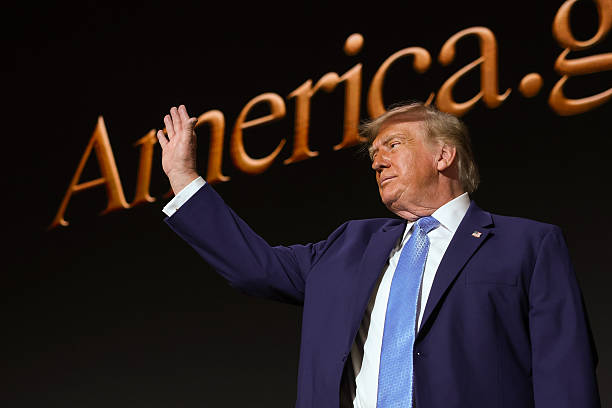
Two Democratic lawmakers are said to have called for independent probes into taxpayer-funded TV ads featuring President Donald Trump running ahead of the November midterm elections.
Representative Jamie Raskin, the top Democrat on the House Judiciary Committee, and Representative George Whitesides, asked the Government
As CBDCs struggle with low adoption, the Caribbean is pivoting to instant payment systems to boost trade and financial integration.
This article appears in the October issue of Global Finance Magazine.
The Caribbean was at the vanguard of adopting central bank digital currencies with the Bahamas’ SandDollar, one of the world’s earliest retail pilots in 2020. A year later, the Eastern Caribbean Central Bank followed suit with its DCash.
With take-up rates low, DCash has since been discontinued as central banks pivot to instant payment systems. The aim is to provide a resilient and flexible system in an area prone to natural disasters and reliant on tourism and remittances as economic drivers.
“These central bank digital currencies had quite poor uptakes. They never really took off,” said Caribbean economist Dalano DaSouza. “Barbados went the route of doing a fast payment system [BiMPay launched on June 12] and the ECCB is embarking on the same journey because they believe that’s where the transformation lies in terms of digital payments.”
The fact that DCash had an outage in 2022 that stopped new transactions for two months did not help consumer confidence and the project was discontinued in February. Jamaica’s Jam-Dex gave the first 100,000 users who signed up a J$2,500 bonus ($15.69), which accounted for about 0.09% of currency in circulation. The 310,443 registered users represent approximately 11% of Jamaica’s population.
“The lessons learned are that full integration with the banking system is vital. A fast payment system will still be sending and accepting digital payments, but it will be done from the client’s bank account,” DaSouza said.
WiPay, Lynk and Trinidad and Tobago adopting India’s UIP interface shows a region keen on integrating and expanding its trade opportunities. This includes the possibility of being incorporated into the African Continental Free Trade Area. This would be accomplished via the Caribbean Community’s CAPSS payment system, which is itself based on Africa’s Pan African Payment System platform.
Dalano DaSouza, Economist
A pilot scheme to harness the Caribbean and African payment systems is underway, involving Barbados, ECCB and the Trinidad and Tobago central banks. The African Export-Import Bank (Afreximbank has been at the forefront of moves to bring the two regions together. The idea that Caribbean countries can join AfCFTA opens a market of 54 countries with 1.3 to 1.4 billion consumers with a combined GDP of approximately $3.4 trillion.
“Potentially, by using the system to make an instant payment from the Caribbean to a vendor in Africa, you would be bypassing correspondent banks, and you would be bypassing the U.S. and their banks,” DaSouza said.
This removes a barrier to African integration, which is the current issue in the history of payments and having to use correspondent banks in the U.S., England, or Europe.
Digital trade and paperless trade systems reached 73% implementation in 2025, according to the United Nations Economic Commission for Latin America and the Caribbean.
With the Caribbean piloting the next stage of instant payments, the hope is that this can lead to greater business opportunities, not just regionally but globally. CBDCs arguably started the digitalization of the Caribbean financial system, but now it seems time for instant payments.
“Digital payments will be critical to opening new markets and streamlining old ones,” DaSouza said.
Nic Wirtz is a contributing writer based in Guatemala.
“Micron delivered an exceptional fiscal Q4 with significant records in revenue, gross margin and EPS, each exceeding the high end of our guidance.” (CEO & Chairman Sanjay Mehrotra)
“We
Seeking Alpha’s Disclaimer:This article was automatically generated by an AI tool based on content available on the Seeking Alpha website, and has not been curated or reviewed by humans. Due to inherent limitations in using AI-based tools, the accuracy, completeness, or timeliness of such articles cannot be guaranteed. This article is intended for informational purposes only. Seeking Alpha does not take account of your objectives or your financial situation and does not offer any personalized investment advice. Seeking Alpha is not a licensed securities dealer, broker or US investment adviser or investment bank.
Agentic AI has a toehold in B2C transactions, but has a way to go to capture B2B transactions, Waller said at the Sibos conference.
Artificial intelligence and autonomous AI agents will fuel the next evolutionary leap in global and cross-border payments, Federal Reserve Board Gov. Christopher Waller said during a speech at Sibos 2026 in Miami.
The payment industry’s early adoption of machine learning and large language models has helped combat payment fraud and quicken reconciliation and similar tasks, said Waller.
“Now it is helping build the foundation infrastructure for AI agents to operate more broadly in the economy,” he added. “These agents can plan and execute multistep processes using LLMs, enabling those agents to transact autonomously.”
Waller separated agentic commerce into two models: agentic-assisted and agentic-delegated. In the agentic-assisted model, the agent is primarily for product search and discovery, while the buyer remains in control. In the agentic-delegated model, “a buyer grants authority to an AI agent to shop and make payments on their behalf. The buyer may specify some constraints and set up guardrails, but the agent operates autonomously.”
Because agentic-delegated commerce could increase the risk of unintended purchases, Waller suggested deploying more extensive trust mechanisms and guardrails.
Agentic B2BPayments
Although agentic commerce has gained traction in consumer-to-business transactions with personal AI assistants, Waller said that business-to-business purchases would be fertile ground for agentic-delegated commerce.
“The purchases are often recurring and abide by a set of rules, such as approved suppliers and budget limits, which create natural guidelines for agents,” he said. “Agents could also potentially negotiate terms with suppliers and develop payment strategies to optimize working capital.”
However, the industry would need to develop and deploy robust controls and monitoring capabilities since B2B transactions typically carry a higher value than their consumer counterparts.
Also, unlike consumer-to-business transactions, AI agents executing B2B transactions will need to support a broad range of payment rails, including the Automated Clearing House, wire transfers, instant payments, and credit cards.
The biggest barrier to agentic commerce adoption is building trust mechanisms between buyers and sellers, which changes the payment authentication paradigm, said Waller. “The question shifts from proving that a buyer is an authorized payer to proving that an agent has the authority to pay on the buyer’s behalf. Capturing this will require new authentication approaches.”
He also noted two key questions about the future of agentic commerce: whether it will migrate toward platform-specific or interoperable standards. The latter would work across ecommerce systems, agent interfaces, and payment methods. “In this sense, they could help to level the playing field for smaller merchants and payment providers seeking to operate in this space.”
The payment industry still needs to take significant steps before it can bring agentic commerce to fruition, including developing standards for how agents can “carry identity, consent, and payment credentials across the full ecommerce stack,” as well as striking the proper balance between convenience and friction regarding agent authorization, Waller said.
These steps will require the payments industry to balance innovation with the safety, integrity, and stability that underpin trust in payments, he concluded.
Republican Senator Rand Paul is standing in the way of the bipartisan Connected Vehicle Security Act of 2026, sponsored by Senators Bernie Moreno of Ohio and Elissa Slotkin of Michigan, from passing through the Senate. The legislation aims to prohibit the import, manufacture, and sale
Energy market disruptions and regional uncertainty are pushing GCC countries to boost North Africa investments.
This article appears in the October issue of Global Finance Magazine.
In July, Qatar’s UCC Holding signed a $1 billion deal with Libya’s National Oil Corp. and the Libyan Investment Authority to increase output at the Ghadames Basin from 33,000 to 80,000 barrels a day.
A few weeks earlier, Oman’s OQEP signed a similar contract to explore investment opportunities in Libya, “so our production will not rely only on exports from the Strait [of Hormuz],” OQEP Board Chairman Ashraf Al Mamari told Arabian Gulf Business Insight in July. That same month, Libyan Prime Minister Abdul Hamid Dbeibah visited the United Arab Emirates and Qatar to encourage new partnerships.
Disruptions in energy markets at home are pushing Gulf countries to scale overseas investments and increase involvement in riskier destinations. With its large oil reserves, Libya is an attractive opportunity; but for years, it has been a headache for foreign investors. After Muammar Gaddafi’s fall in 2011, the country split between rival governments and became a playground for militias. Yet, despite instability, Gulf states—led by the UAE, and to a lesser extent Qatar—developed relationships with both capitals: Tripoli and Benghazi.
“Gulf states have been navigating this landscape for some time,” said Mohamed Dorda, head of business intelligence at Libya Desk, a consulting firm that advises businesses looking to enter Libya. “It’s really a matter of, first, having a foot in the door; and then, knowing where to put your feet. In Libya, they’ve been investing in the necessary political capital for quite some time now.”
Signs of Improvement
Today, the situation is showing signs of improvement. Both sides have taken steps toward greater stability, including the reunification of the central bank in 2023 and the approval of a common state budget in April of this year. Libyan authorities are now looking to reopen the energy sector to foreign investors. In February, the country resumed licensing for the first time since 2007, attracting oil majors like Italy’s Eni SpA, France’s TotalEnergies SE, Spain’s Repsol SA, and U.S.-based Chevron Corp.
The renewed interest extends beyond Libya. In recent months, the U.S. administration has stepped up engagement with North Africa, with Middle East adviser Massad Boulos visiting several countries. European nations, including Turkey, as well as China, are also moving to secure market shares.
“North Africa is becoming increasingly important in global trade because of its proximity to Europe and its capacity to help fill supply gaps created by the wars in Ukraine and the Middle East,” Dorda said. “People see that Libya and Algeria are among the strongest candidates to help meet global energy needs, and that creates opportunities.”
Algeria has drawn around $9 billion in Gulf-backed projects over the past 18 months, led by Saudi Arabia’s Midad Energy’s $5.4 billion oil and gas deal in October 2025 and by Qatar’s $3.5 billion Baladna dairy venture, now in its second phase.
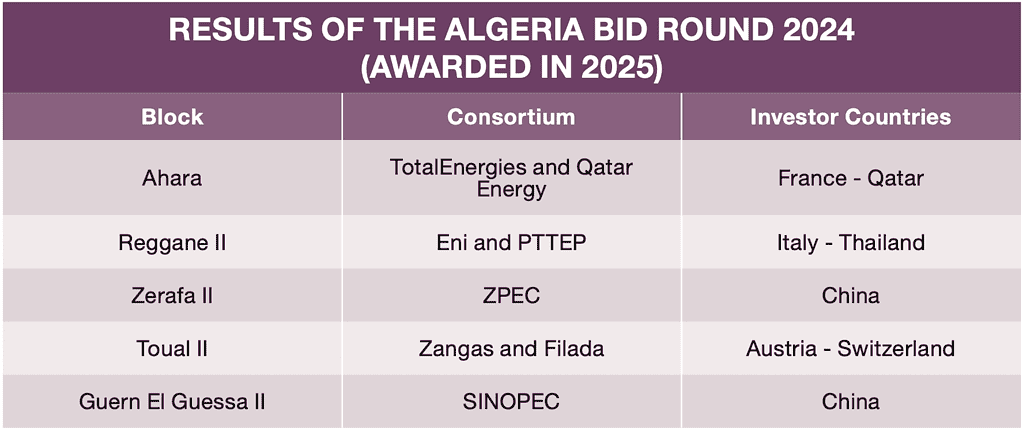
Algerian state-owned hydrocarbon company Sonatrach plans to increase production and drill 1,450 wells by 2030, but it needs foreign know-how and capital to modernize infrastructure. In April, Algiers opened a new licensing round for seven oil and gas blocks. Bids are underway, and contracts are expected to be signed in January.
Chloe Domat is a contributing writer based in France.
Shell (SHEL) and its partners announced on Tuesday a final investment decision on LNG Canada Phase 2, which will double production capacity at the facility in Kitimat, British Columbia, and place Canada on a trajectory to become one of the world’s largest exporters of
“This quarter, we crossed the mark that 50% of our revenue now comes from businesses that we generated in the last 3 years that is very different than our traditional business.” (President, CEO & Director Christopher Caldwell)
Seeking Alpha’s Disclaimer:This article was automatically generated by an AI tool based on content available on the Seeking Alpha website, and has not been curated or reviewed by humans. Due to inherent limitations in using AI-based tools, the accuracy, completeness, or timeliness of such articles cannot be guaranteed. This article is intended for informational purposes only. Seeking Alpha does not take account of your objectives or your financial situation and does not offer any personalized investment advice. Seeking Alpha is not a licensed securities dealer, broker or US investment adviser or investment bank.
Anthropic’s (ANTHRO) confidential initial public offering prospectus has revealed its heavy dependence on a small group of big tech partners and clients, according to Reuters.
The hyperscalers Amazon (AMZN) and Google (GOOG)(GOOGL) have benefited. Anthropic routed
Market expectations for an October Federal Reserve rate hike tumbled to just over 50% on Tuesday after New York Fed President John Williams indicated he is in no rush to increase borrowing costs next month.