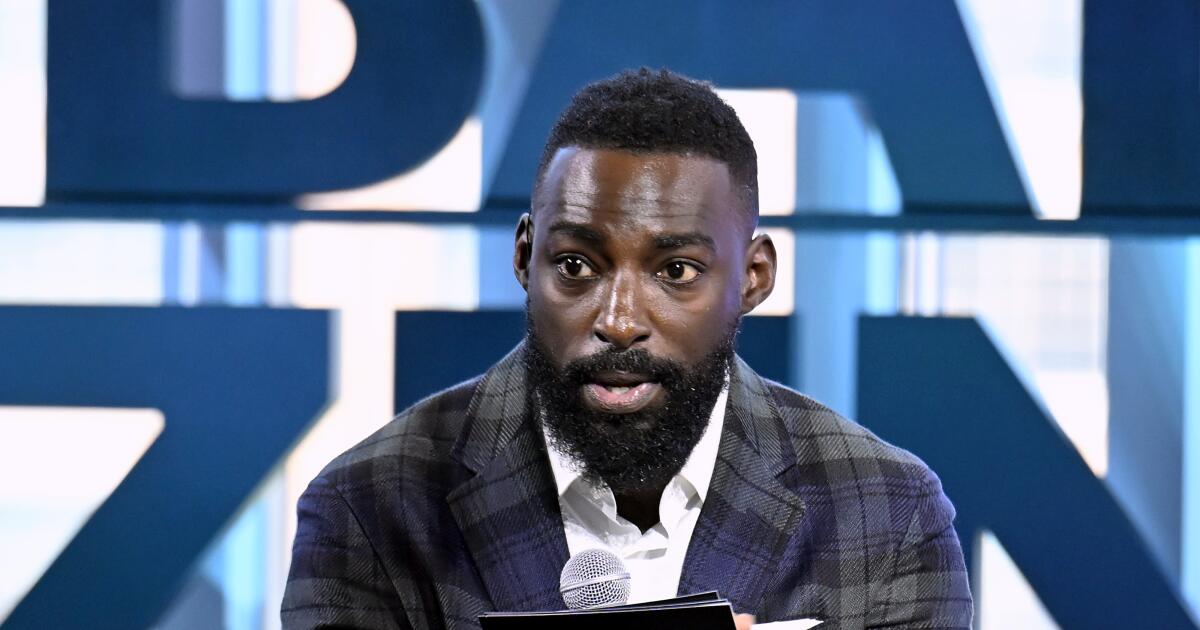
“Top Chef” alum and popular Food Network host Eric Adjepong has been ordered to stay away from his 7-year-old daughter following an investigation into abuse claims.
According to the Washington Post, a Maryland judge found that “there is a preponderance” of evidence to believe Adjepong physically abused his daughter, leading to a protective order that bars the celebrity chef from contacting or being alone with his daughter until he completes parenting courses and reunification therapy with the child.
Adjepong’s former wife, Janell Davis-Mack, posted a screenshot of the case information on Instagram last week, writing that she and her daughter had been quiet long enough.
“My daughter has watched me rebuild our life focused on our safety after I divorced her father four years ago,” she wrote. “I’ve also taught her about body autonomy, consent, boundaries, and to tell the trusted adults around her when she feels unsafe.
“My daughter was just granted a protective order against her father because she was brave enough to speak up against who should have been one of the most trusted adults in her life.
“Unfortunately for him — I’ll never stop believing her, protecting her, or reminding her that her voice matters.”
Judge Maurice C. Frazier issued the protective order against Adjepong on July 10; it will remain in place until July 10, 2027. The James Beard-nominated chef is mandated not to contact, harass, abuse or threaten to abuse his daughter or former wife. While the order is in place, Adjepong can have supervised visits with his daughter.
In May, Davis-Mack filed a petition in Howard County, Maryland, seeking protection for her daughter from Adjepong, citing alleged child abuse. Per the Washington Post, Davis-Mack claimed that a nurse who examined their daughter filed a report with the D.C. Child and Family Services Agency, which launched an investigation by D.C. police.
A spokesman for D.C. police told the Washington Post that its Youth Investigations Branch was prompted to investigate claims of “sexual abuse” but that detectives found no probable cause that sexual abuse had taken place and referred the case back to Child and Family Services. On Wednesday, Adjepong posted what appeared to be a screenshot of email correspondence from the D.C. Child and Family Services Agency stating that, on April 29, they received a report of potential neglect or abuse, investigated the claims and found sexual abuse claims “unfounded.”
“I am aware of recent media inquiries concerning a protective order entered on July 10, 2026,” the chef wrote alongside the screenshot. “Because this matter involves my young daughter, whom I love deeply, I intend to protect her privacy and will not discuss the underlying allegations or other sensitive family matters publicly other than to say that these allegations arose in the context of a long running divorce and custody proceeding, which finally concluded on June 2, 2026.
“The Court’s protective order followed careful reviews by law enforcement and the District of Columbia Child and Family Services Agency (‘CFSA’). The District of Columbia Metropolitan Police Department closed its investigation without filing charges. CFSA concluded its investigation with an ‘unfounded’ disposition, which its report defines as not true.
“I have the utmost respect for the Circuit Court that issued the protective order and am strictly complying with every facet of the order, which is designed to ensure that my daughter is safe and treated respectfully, and to ensure her reunification with her father. The Judge eloquently described the nature of my relationship with her at the hearing. My foremost concern is my daughter’s well-being. It is my fervent hope that in the future my ex-wife and I can resolve these matters privately and through the proper legal channels, rather than in the press, if only for the well-being of our daughter.”
Winning streaks bring a life of their own to a clubhouse, each day presenting another opportunity to extend the joy and methodically build a feeling of invincibility.
Inevitably the streak ends and everyone sighs, reflects and returns to work. The Boston Red Sox lost the second game of a doubleheader Wednesday to end a win streak that tied an 80-year-old club record when it reached 15 in the opener.
Boston interim manager Chad Tracy stepped into the clubhouse to say a few words afterward but saw veteran players Willson Contreras and Sonny Gray speaking to the team and allowed them the moment.
“We just won 15 games in a row, and I think all of us knew it was going to end at some point,” Tracy said.
Call it the “Tracy Turnaround” redux.
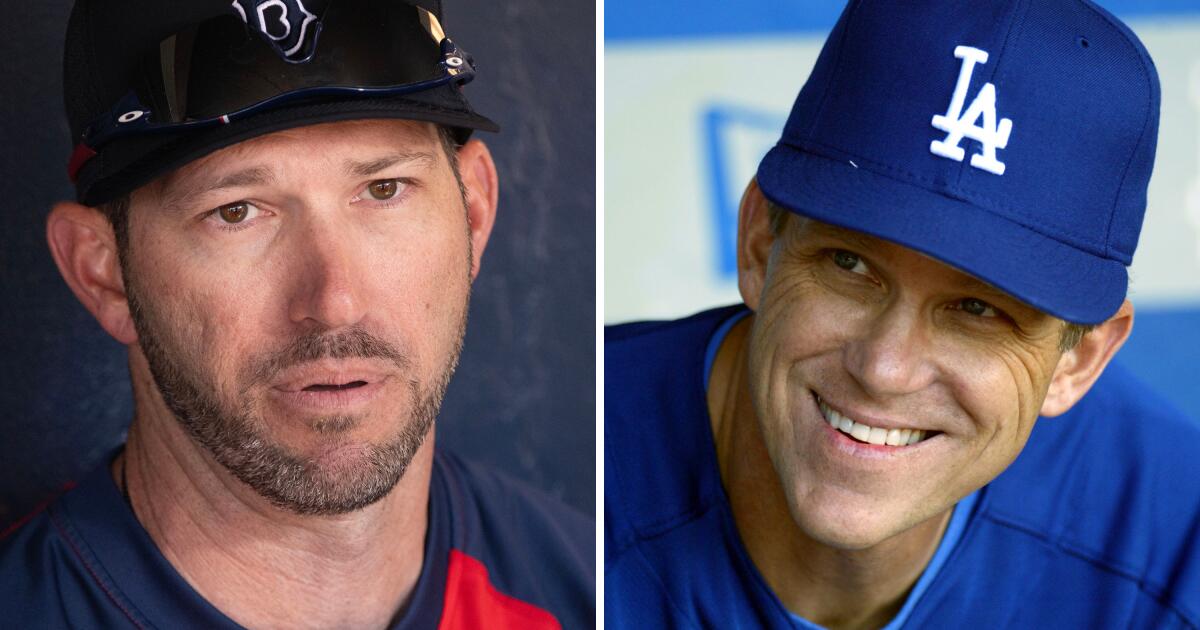
Tracy had never managed, coached or played at the major league level before replacing Alex Cora on April 25, but he was well-versed in experiencing the glorious ride of a winning streak and its abrupt end. His father, Jim Tracy, managed the Dodgers, Pittsburgh Pirates and Colorado Rockies from 2001-2012.
Like his son, Jim Tracy was given an interim manager title when he replaced Clint Hurdle in May 2009 after Colorado’s poor start. It took only a few weeks before the Rockies won 11 games in a row, 17 of 18 and finished 74-42 to make the playoffs.
This year’s Red Sox can only hope their U-turn under Chad Tracy mirrors his dad’s. Boston was 32-46 before winning 20 of 23, including the 15-game win streak.
No surprise that father and son discussed the similarities. Chad was a double-A first baseman with the Texas Rangers in 2009 and closely followed his dad’s fortunes.
“I remember the [Rockies’] run,” Chad said. “You know, we talk very basically about just, he’s excited [about the Red Sox]. He’s a baseball fan. He’s watching constantly, and he’s fired up for it. So, like, we haven’t done a whole lot of comparing to that, but he’s just — he’s a Boston Red Sox fan.”
Jim was rewarded by becoming the second interim manager in MLB history to win the Manager of the Year award. Chad could be in the running to be the third, especially if the Red Sox make the playoffs.
They already are only the sixth father-son combo to manage in the major leagues, following Bob and Aaron Boone, George and Dick Sisler, Bob and Joel Skinner, Buddy and David Bell, and Felipe Alou and Luis Rojas.
The achievement isn’t lost on Jim Tracy, who became so emotional upon learning his son was named interim Red Sox manager he pulled his car to the side of the road. He attended Chad’s first game, a victory over the Baltimore Orioles, on the top step of the dugout.
“One thing that jumped out at me,” Jim Tracy said, “was that when he was presented to the media, his body language in the dugout…. he was not overwhelmed or fazed with anything that was going on. He was ready to do whatever was asked of him.”
That Chad replaced Cora, who led the Red Sox to the 2018 World Series title in his first season, elicited mixed feelings. Cora played with the Dodgers from 1998-2004, including four seasons under Jim.
“It’s a wonderful day, but in some respects, it’s bittersweet,” Jim said the day of Chad’s managerial debut. “I’m proud of [Chad], but the Tracy family loves and respects Alex Cora.
“You have to go back with some special years I had in Los Angeles and Alex was very much a part of that. Bittersweet is the right word because Alex was so good to my son and took such good care of him. But it was reciprocated.”
Actor Kaylee Hottle, best known for her portrayal of a young deaf orphan who shares a special bond with the giant guardian ape in “Godzilla vs. Kong” and “Godzilla x Kong: The New Empire,” has died. She was 18.
Hottle died Tuesday morning after the car she was a passenger in crashed into a culvert off the side of the road in Ijamsville, Md., the Frederick County Sheriff’s Office said in a news release. Her father, Joshua Hottle, confirmed her death in a video on Facebook.
“I am taking a flight that I never would like to take,” he wrote in the caption of the video post, in which he explained the situation in American Sign Language. He was on his way from Texas to claim her body, according to TMZ.
The Texas School for the Deaf also addressed the actor’s death on social media.
“It is with profound sadness that we share the heartbreaking news that one of our TSD seniors, Kaylee Hottle, tragically passed away yesterday in a car accident in Frederick, Maryland,” read the Instagram post. “Our hearts are with Kaylee’s family, friends, classmates and everyone who knew and loved her during this incredibly difficult time.”
Hottle’s breakout role was in the 2021 MonsterVerse crossover “Godzilla vs. Kong,” which marked her big-screen debut as the young orphan Jia. Jia is the last remaining survivor of the Iwi tribe on Skull Island who shares a connection with Kong, the island’s protector. Her adoptive parent, Dr. Ilene Andrews, is a linguistics expert and Kong researcher, played by Rebecca Hall. Hottle reprised the role in the 2024 follow-up, “Godzilla x Kong: The New Empire.”
“After I watched the movie, I thought, ‘Wow, this is going to make such a big impact,’” Hottle said in a 2024 interview with New York’s WABC. “I was so excited. She’s a young deaf girl, just like many others out there. And this journey that she’s going on is just going to be so amazing.”
The actor, who was born in Atlanta, was from an all-deaf family, which included four generations of deaf relatives on her father’s side, according to IMDb.
Authorities said Hottle was one of two passengers in the 1995 Honda Accord that was involved in the crash. While the incident is still being investigated, the Sheriff’s Office said in its news release that “excessive speed is believed to be a contributing factor in the collision.”
Millie Bobby Brown, who also appeared in “Godzilla vs. Kong,” was among those who shared tributes to Hottle following the news of her death.
“I’m so devastated to hear this,” she wrote in her Instagram story, which included a black-and-white photo of Hottle as Jia. “You will be deeply missed Kaylee.”
“I am absolutely gutted about the passing of sweet Kaylee Hottle,” Oscar winner Marlee Matlin wrote on Instagram. “May her beauty and talent be a memory for eternity. … Such a privilege to have met Kaylee last year. Please be kind to one another. Take the time to listen to your child. Say 🤟🏼 each time you part. 🩵”
July 21 (UPI) — A father and son have been arraigned on charges for kidnapping two federal biologists at gunpoint in California.
Joseph Charles Henrichsen, 49, and his son Phoenix Henrichsen, 23, were in federal court in Sacramento, Calif., on Monday when they were charged with kidnapping a federal employee and aiding and abetting.
The charges stem from the Henrichsens allegedly confronting two female U.S. Forest Service staff biologists last week at Gumboot Lake Campground in the Shasta-Trinity National Forest in California. Joseph was armed with a rifle when he approached the biologists in a remote area of the forest. He zip-tied their hands behind their backs and ordered them to a trailer nearby where they were held.
When they arrived at the trailer, Phoenix joined them, court documents say.
At one point, Joseph took one of the biologists in the Forest Service Nissan that they were using before the kidnapping and drove her several miles away where he used her phone to call a federal forest ranger. He left a message for the ranger informing them that he had taken two hostages and was armed.
“I’ve taken two fed biologists hostage from the Forest Service,” Joseph said, the affidavit reads. “I’m driving in the ranger vehicle right now. Her hands are behind her [expletive] back, and I’ve got live rounds ready.”
Law enforcement officials responded after the message was received, beginning an hourslong standoff on Friday. The Henrichsens surrendered and were arrested that day after hostage negotiations.
The victims were released safely.
The affidavit accuses Phoenix of aiding and abetting for keeping “watch” of the trailer when his father was not around.
The Henrichsens face a maximum penalty of life in prison and a $250,000 fine if convicted. A preliminary examination is scheduled for Aug. 3.
President Donald Trump delivers a prime-time address to the nation from the East Room of the White House on Thursday. Pool photo by Saul Loeb/UPI | License Photo
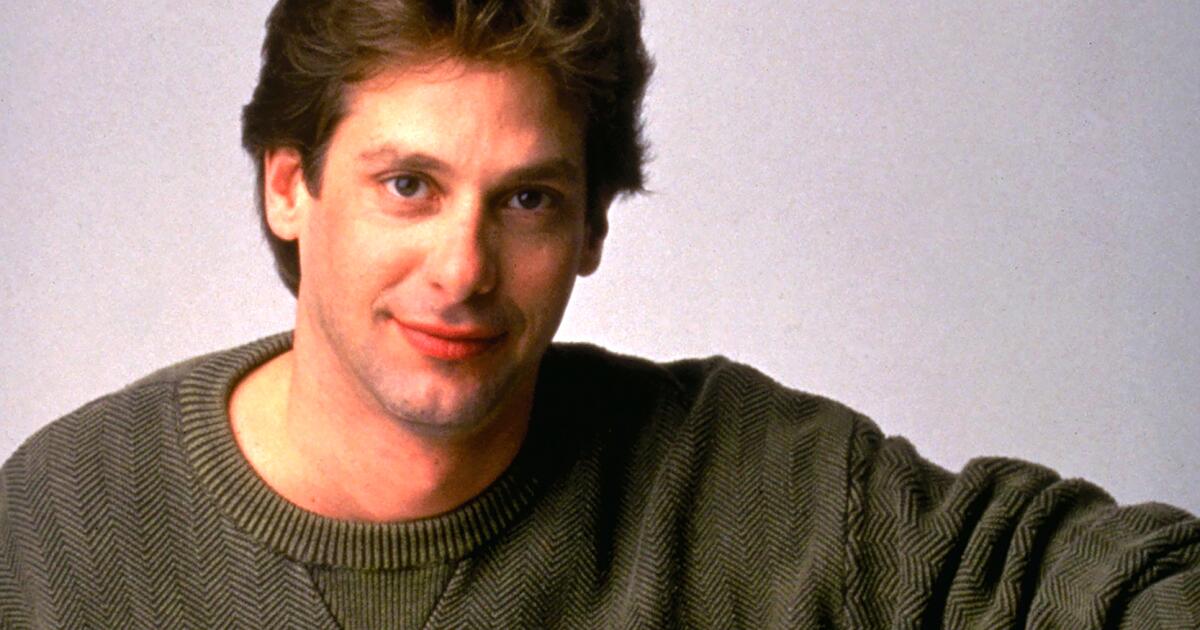
Scott Bryce, the actor best known for originating the role of Craig Montgomery on the soap opera “As the World Turns,” has died. He was 68.
Bryce died Sunday evening “surrounded by his loving wife Jodi Stevens-Bryce and loving son Jackson Bryce,” his agent Ken Melamed told The Times by email on Tuesday. “He was beloved by all!”
The actor revealed last year that he had been diagnosed with Stage 3 esophageal and stomach cancer in 2024.
“This evening my father lost his long-fought battle with cancer. What began as stage three esophageal cancer eventually spread and became brain tumors that took his life away from him,” Bryce’s son, Jackson, wrote in a tribute posted Sunday to Instagram. He said his father approached his treatments with “pride and courage, and an unshakable belief that somehow, everything would work out.”
“May his strength and relentless belief forever live within me,” he added. “He fought the hardest and most honorable fight I have ever witnessed.”
Born Jan. 6, 1958, in New York, Bryce followed in the footsteps of his actor parents. His father, Ed, portrayed Bill Bauer on the daytime drama “Guiding Light” for years, while his mother, Dorothy, was known for her role on the hospital soap “The Doctors.”
Bryce made his television debut as Craig Montgomery on CBS’ long-running soap “As the World Turns” in 1982. He received two Daytime Emmy nominations for his portrayal of the charming but ruthless businessman, whom he portrayed off and on from 1982 to 2008. The character was known for his ambition and mysterious business dealings but also had a reputation for being unlucky in love. One early romantic interest was Betsy Stewart, who was portrayed by Meg Ryan from 1982 to 1984.
Finn Carter, who played Montgomery’s wife, Sierra Esteban, on the show, shared a tribute to Bryce on Instagram Monday.
“My sadness knows no bounds. My gratitude for Scott knows even fewer,” Carter wrote. “Scott was the best husband a woman could ask for. As an actor he was fearless, kind, generous and forever looking for ways to grow. And what a sense of humor!”
Over the course of his decades-long career, Bryce appeared on shows such as “The Facts of Life,” “The Golden Girls,” “Murphy Brown,” “L.A. Law,” “The Good Fight,” “Law & Order” and “Law & Order: Special Victims Unit.”
He also portrayed Mike McQueen, the father of a cheerleader (Leslie Bibb) on the millennial teen drama “Popular.” McQueen marries the mother of his daughter’s high school rival (Carly Pope) in the series, which ended on a cliffhanger in 2001 after its cancellation.
“When asked what he wanted people to remember about him, he said, ‘I was a one-take actor. Two takes, max,’” Jackson Bryce wrote in his tribute. “In working with Dick Wolf on NBC, directors would schedule him at the end of the day because they knew it wouldn’t take long.”
In addition to his onscreen work, Scott Bryce was a theater actor as well as a director and a producer, with credits including the 2010 television movie “Frederick Douglass, From Slavery to Freedom” and the satirical web series “Steamboat.”
“My dad also made sure I knew his greatest accomplishment that came at 50 years old, becoming a Dad,” son Jackson said in his tribute. “He is a part of everything I’ve done and everything I will do.”
The story of Dan Tana’s, in many ways, is the story of Los Angeles.
In 1980, Dan Tana’s burst into flames. At the time, the Tana family was vacationing on a remote Yugoslav island when a telegram arrived: “The restaurant burned down. Call me, Pearl,” recalls Katerina Tana, one of Dan Tana’s daughters.
On the Shelf
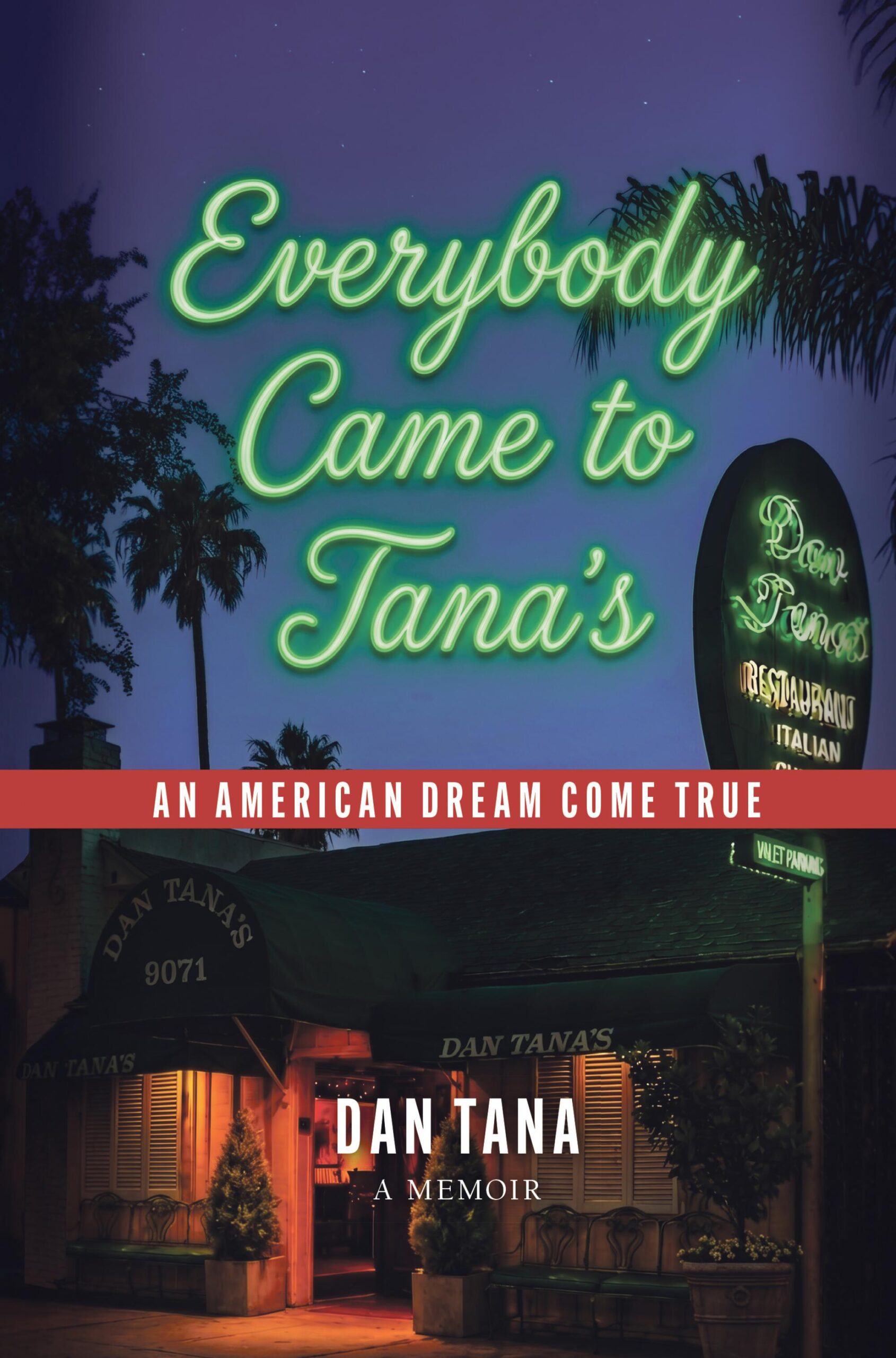
Everybody Came to Tana’s: An American Dream Come True
By Dan Tana Radius Book Group: 384 pages, $30
If you buy books linked on our site, The Times may earn a commission from Bookshop.org, whose fees support independent bookstores.
Dan Tana flew back to Los Angeles, expecting charred remains. Instead, he found handwritten signs taped to the restaurant’s door: “Rebuild it. This is our home. Don’t change a thing,” recounts Katerina.
News of the fire reached musician Linda Ronstadt, who swore that Dan Tana’s served the best plate of spaghetti in the world. The rock star became the immigrant-run restaurant’s unlikely patron saint, calling on her relationship with then-Gov. Jerry Brown to help clear the way for its reopening. Just six weeks after the fire, Dan Tana’s welcomed customers again, even without a roof.
“They open up the restaurant with no roof on it. There’s no air conditioning unit. It was the hottest day,” says Katerina.
Oddly, the fire ushered in a new era for Dan Tana’s — a rebirth, even. Like Los Angeles, the restaurant endured by reinventing itself. “In a weird way, he rebuilt better than he ever could have, because if the restaurant hadn’t burned down, it might not have lasted this long,” Katerina says.
Stories like these fill the pages of “Everybody Came to Tana’s,” the late restaurateur’s memoir, which chronicles the outlandish journey that carried a young immigrant from communist then-Yugoslavia to the helm of one of Los Angeles’ most adored dining institutions. Dan Tana died last year at age 90, but his legacy lives on — inside the restaurant and now in his own words.
On a summer afternoon, his daughters, Gabrielle and Katerina, sit at the Sunset Marquis bar, recounting their father’s remarkable life — particularly his championing of soccer and his contributions to the sport. With the World Cup now unfolding across Los Angeles, the sisters say they can’t help but feel his presence. “One of his big wishes was to be here for this year’s World Cup. That’s why I know he’s here,” Gabrielle Tana says. “He was very instrumental in L.A. getting the World Cup. Our father was constantly helping connect people,” says Katerina.
In the final years of his life, Tana became determined to tell that story, working with writers in Serbia and eventually a ghostwriter, Todd Gold, who requested no credit; the resulting memoir feels wholly told in Tana’s voice. “Our father, for years, was talking about how he wanted to tell his story,” says Gabrielle. “He was always pinching himself about the life that he had — the stories, the adventures, and his luck.”
Tana had an unusual path to becoming the restaurant owner of the renowned Hollywood red-sauce hideout. Born in present-day Serbia, Tana’s early life was marked by political oppression under Communist rule. His father, a restaurateur, spent years as a political prisoner.
Gabrielle and Katerina Tana with their dad at Dan Tana’s, circa 2001.
(Suzette Van Bylevelt)
“When you live in a country where political powers are constantly in play, when you own a restaurant, you’re the person who’s hosting somebody who’s having a dangerous conversation,” explains Katerina. From an early age, Dan Tana’s mother made Dan promise not to end up in the restaurant business.
Instead, Dan Tana became a soccer star, touring Europe with Red Star Belgrade before eventually escaping to Belgium — a decision that would set him on the unbelievable path to Canada and then Los Angeles, where he would serve a stint managing a nightclub called Peppermint West and even launch a modest acting career with the help of Natalie Wood.
The chapters follow the restaurant’s improbable success, offering extraordinary anecdotes, such as how a Yugoslavian immigrant happened to open a red-booth, comfort-food Italian restaurant. The answer? Hiring Mussolini’s private chef. “It was one of two chef options that he was given by his partners: Dan Reeves and Clarence Dan Martin, who funded the soccer league. [Dan Reeves] also bought the restaurant,” says Katerina.
Beyond dispatches from his red-and-white-checkered tablecloth joint and name-dropping, Dan Tana’s memoir outlines his significant contributions to soccer. Throughout his life, he maintained deep ties to the international soccer community, supporting Red Star Belgrade long after he retired from the sport. “He became an evangelist for the game because he thought it was a game that this country would appreciate,” says Katerina. “Football was always the biggest love of his life.”
Craig Susser, left in black, has been greeting patrons at Dan Tana’s for decades.
(Stephen Osman / Los Angeles Times)
Last November, when England faced off with Serbia for the World Cup qualifying games, the stadium held a moment of silence for Dan Tana’s passing. “There were people within the game who really wanted to acknowledge his contribution to the game,” says Katerina.
“A good restaurant has a good bar, and a good bar has ghosts,” reads the introduction. For Dan Tana’s, as far as ghosts go, they comprise a who’s who of Hollywood royalty. Johnny Carson once called it his favorite restaurant. Elizabeth Taylor, Richard Burton, Marilyn Monroe and other A-list stars were known to haunt the bar.
Even with its reputation as a watering hole for Hollywood’s biggest names, Dan Tana refused to pander to celebrities. “Everybody was treated the same. He never wanted the restaurant to be full of celebrities. He wanted to make sure that there were doctors, lawyers and teachers,” Gabrielle says. “He was almost a democratic socialist in that way.”
A revealing anecdote from the early pages of the book: Tana turned away Barbara Sinatra’s offer to buy out the restaurant for a night for Frank Sinatra’s birthday at $25,000. Tana refused. It wouldn’t be fair to his regulars. Frank Sinatra never set foot in the restaurant again.
Sonja Perencevic and Dan Tana attend the restaurant’s 50th anniversary party in Los Angeles in 2014.
(Alberto E. Rodriguez / Getty Images)
In many ways, Tana was one of Hollywood’s quiet power brokers, earning influence through humility and respect rather than status. In 1972, mysterious mafia members came into the restaurant to ask Tana to procure early-screening tickets for “The Godfather.” Naturally, Tana obliged. The mafia returned to report they loved the now-classic film.
The proximity to the Troubadour also made the restaurant a hangout for up-and-coming names in rock music. “He fed so many of those musicians. He wouldn’t charge them. These were kids that had nothing,” says Gabrielle. She recounts a night when musicians from the Troubadour celebrated the end of the Vietnam War at Dan Tana’s; the event went undocumented, lost to history.
Rock stars aside, the place is a writer’s joint too. Eve Babitz — who was a close friend of 93-year-old Deanne Mencher, who still makes the cheesecakes at Dan Tana’s — was known for socializing at the restaurant. “If you got hungry, you had to walk over to Dan Tana’s. Tana’s was delicious and evil — all that garlic,” Babitz once wrote in her semi-autobiographical novel, “L.A. Woman.” Screenwriters, journalists and famed L.A. writers Joan Didion and John Gregory Dunne were also known to frequent the restaurant.
In fact, Gabrielle and Katerina attribute the restaurant’s early colossal success to a Los Angeles Times review. It was 1966, and the restaurant was struggling. Art Ryon, a columnist at The Times, happened to stop at the restaurant before a screening at the Writers Guild of America and ordered mushrooms. “The L.A. Times made the restaurant,” Katerina says. “The next day there’s a line around the block, and my father has no idea what happened.” Tana was informed that he received a rave five-star review in The Times. Success soon followed.
Chicken Parmesan from Dan Tana’s.
(Jakob Layman)
The next generation of Hollywood — including comedy stars like Adam Sandler, Ben Stiller and Chris Rock — has continued the tradition. “SNL” cast member James Austin Johnson expresses his fondness for the restaurant. He discovered the restaurant after hearing Ed Begley Jr. rhapsodize about it. “The first intrigue is finding out who Dan Tana is,” says Johnson. “It has a West Hollywood mystique, like Chateau Marmont — like when Hollywood, the place and the business were all the same.”
Johnson loves restaurants that feel preserved in time. “It’s the idea that you can build something right the first time and then preserve it, so that people can be a part of your good idea when it happens,” says Austin Johnson.
Gabrielle and Katerina credit the enduring appeal of Dan Tana’s to its persistent lack of pretentiousness. The atmosphere evokes a Sinatra-era simplicity. “I think celebrities felt safe. They weren’t photographed, and they would be left alone,” says Gabrielle. The restaurant has kept its dim pink lights, which Gabrielle notes, “made everybody look good.”
The food has also remained consistent, with large portions and comfort food. “It’s not fancy, but it’s the best chicken Parmesan,” says Gabrielle. Over the decades, Dan Tana was approached about expanding the restaurant and opening second locations. He always refused, the restaurant’s humility always mirroring the man behind it. The restaurant, which felt like an anomaly, could not be replicated. “He always said: if I knew what I did right, I would do it again,” says Katerina.
Dan Tana’s originality continues to capture the city’s attention, its legacy now preserved in a memoir and carried on by its new owners, Mihajlo and Sonja Perenčević, who were friends of Dan Tana. Within its pages, the reader becomes one of Dan Tana’s beloved ghosts. “In a town that’s always trying to be something that’s not, it’s not trying to be anything,” says Katerina. “Dan Tana’s is longevity in the midst of ephemera.”
Connors is a culture journalist in L.A. She covers books, food, entertainment and offbeat Los Angeles. She’s currently at work on a book of essays about tourism in all its forms.
They came to this country without papers as teenagers. Lack of legal status didn’t stop them from building beautiful lives — a wife, a home, a loving dog. A blue-collar job that paid the bills, weekend carne asadas with friends and family, children who followed their father’s example of hard work.
The Lorenzos enjoyed the fruits of their labor in their adopted land, even as they battled to become American citizens while politicians demonized immigrants as invaders and worse.
Lorenzo Arellano arrived in the United States in 1968 and didn’t get his citizenship until nearly 30 years later. Back then, the path to naturalization was far easier.
Lorenzo Salgado Araujo arrived in the early 1990s, when those opportunities were becoming severely limited.
Lorenzo Salgado Araujo, 52, who ran his own construction crew, was on his way to a job with his brother and two other men when an Immigration and Customs Enforcement agent shot him dead on July 7 in Houston.
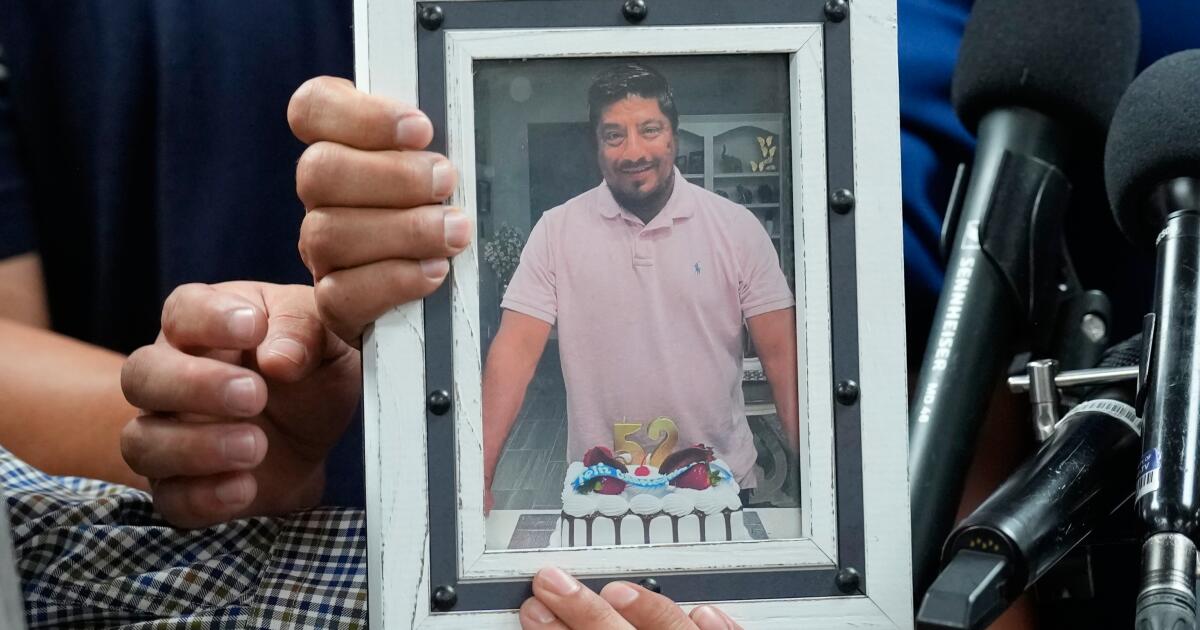
When I see a photo of Salgado Araujo beaming in front of a cake with the number 52 on it at the well-kept home he built with his own hands, I’m reminded that we’ll be celebrating my father’s 75th birthday next month. When I see video of Salgado Araujo’s feet twitching on the ground with two ICE agents next to him as he bleeds out and moans for help, I weep.
Only geography, age and Donald Trump separated the Lorenzos. Even their children — he had three boys, while my father had two boys and two girls — are similar. The Salgado Araujos, like the Arellanos, are college-educated. The eldest son, Ronaldo, is a teacher like my sisters. He wears glasses like me and is now telling the story of his father to the nation, as I have for decades.
I write about my Papi as the puckish personification of immigrant America.
Ronaldo is eulogizing his dad way too soon.
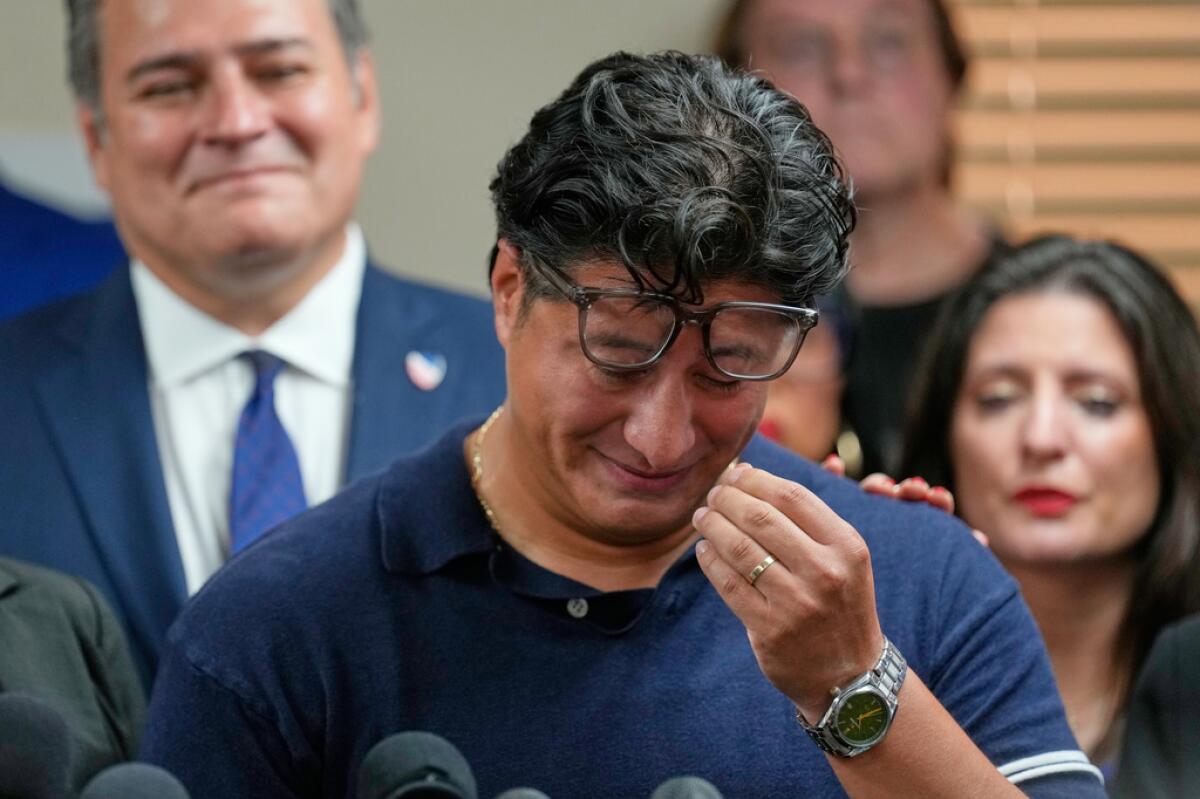
“He wanted nothing else in life but to provide for his wife and see his sons become great people,” Ronaldo said proudly at a news conference the day after his father’s death — words I’ve always said about my Papi. “He did not deserve to be reduced to a headline of ‘Mexican man shot and killed by ICE’” — words I hope to never utter but can sadly see as a possibility given la migra’s unapologetic shoot-first approach and indiscriminate targeting of anyone brown.
Salgado Araujo’s killing came as part of the Trump administration’s newest deportation surge — the New York Times reported that the feds have arrested nearly 2,000 people a day since the end of June. The rate is higher than ICE’s campaign of terror last summer, yet it hasn’t drawn the same attention, fulfilling the promise of newish Homeland Security Secretary Markwayne Mullin that la migra would operate far more quietly and efficiently than under his reckless predecessor, Kristi Noem.
Those quiet times are over.
Ronaldo Salgado, son of Lorenzo Salgado Araujo, dries his tears while talking at a news conference on July 8 in Houston. His father was shot and killed by ICE agents the day before.
(David J. Phillip / Associated Press)
Vigils are popping up across the country in Salgado Araujo’s name. Stories about his life and death have replaced those about Mexico’s World Cup run on my social media timelines. They are heartbreaking, infuriating and a baleful reminder for Mexican Americans that these last five weeks of soccer, as joyful as they were, didn’t change our precarious status in this country under President Trump.
“He deserved to live a quiet life as a husband, a father and a job creator for dozens of men who also wanted the American dream,” Ronaldo said at the news conference through tears as his younger brother, Lorenzo Jr., comforted him. That their father never will — that the Department of Homeland Security is now smearing his name by claiming he “weaponized” his van by trying to run over an agent, even though video evidence proves no such thing — is the latest indictment against the Trump administration’s cruelty toward the undocumented.
Salgado Araujo wasn’t even the target of ICE’s operation. His family said he had applied for a work permit and was on his way toward finally obtaining legal status.
We should heed Ronaldo’s words about his father. As people protest and seek justice, we should also hail the life of Lorenzo Salgado Araujo the way we one day will hail the life of Lorenzo Arellano — as Mexicans who made it, challenges be damned. And we should continue to fight for immigrants who remain in legal limbo, afraid for their lives more than ever.
I called my father to ask how he felt about a tocayo — someone with the same first name — losing his life to la migra.
“I put myself in his place and lament that ese [that] Lorenzo couldn’t get the citizenship that I could,” Papi said in Spanish.
He remembered how immigration agents “did it with respect” when they caught him living in this country illegally in the 1970s and 1980s.
“They asked you for your papers, and if you didn’t have them, they put handcuffs on you, you got deported and that was that. None of these beatings or shootings that are happening now under Trump,” he said. The worst it ever got was when he said he was going to Los Angeles, and an agent snapped that he was going to L.A. but now had to return to Mexico.
Papi asked me what justification ICE has offered for killing Salgado Araujo.
“I hope they put those people who killed him in prison for many years,” he said with disgust. “Will they?”
I replied that probably wasn’t going to happen. ICE has shot and killed 11 people during Trump’s second term, both citizens and noncitizens, and scores more have died in immigration detention. No agents have faced charges for any of these deaths. The agents involved in Salgado Araujo’s killing didn’t even have dashboard cameras or body cameras, a convenient oversight that a Department of Homeland Security spokesperson blamed on “multiple government shutdowns.”
“Pues, Dios sabe que todo se paga en la vida,” my dad responded. Well, God knows you reap what you sow.
Ronaldo Salgado and Lorenzo Jr., sons of Lorenzo Salgado Araujo, hold a photograph of their father during a news conference July 8 in Houston.
(David J. Phillip / Associated Press)
Nothing can bring Lorenzo Salgado Araujo back to his loved ones. But I hope they find solace in his namesake, St. Lawrence. Tradition has it that Roman authorities roasted the Spanish deacon to death after Emperor Valerian demanded that he turn over the treasures of the Church. Instead, Lawrence presented the emperor with the city’s poor and maligned, insisting that he confront the oppression he had forced on them.
May we remember Lorenzo Salgado Araujo as a modern-day martyr, killed because our government refused to give him and so many others a chance at living in this country without fear.
May his name resonate through the ages as embodying the promise and tragedy of the American dream.
The Major League Baseball draft is filled with unfamiliar names. Even the most knowledgeable fans have difficulty knowing much about the mostly anonymous high school and college players taken by the 30 teams through 20 rounds.
Every year, however, a handful of names ring a bell. This year’s draft, held the last two days in Philadelphia ahead of Tuesday’s All-Star Game, was no exception.
Bonds. Thome. Pettitte. Sabathia.
The accomplishments of the fathers or uncles of those draftees loom large. Other high picks hope to eclipse the accomplishments of relatives who had brief MLB or long minor league careers: No. 1 overall pick Roch Cholowsky out of UCLA is a prime example.
And draft picks whose relatives have ties to the Dodgers or Angels draw interest: Salmon, Ebel, Gasparino, Willits and Bard qualify.
No player wants to be branded as a “nepo pick” — taken as a favor to a relative. But even those can turn out to be brilliant. The Dodgers took Mike Piazza in the 62nd round of the 1988 draft largely because his father, Vince Piazza, was a childhood friend of manager Tommy Lasorda. Piazza, of course, became a Hall of Fame catcher with the Dodgers and New York Mets.
A brisk walk through this year’s picks with intriguing bloodlines:
— Roch Cholowsky, SS, UCLA. First overall pick by the Chicago White Sox. His father, Dan Cholowsky, was the 39th pick in 1991 by the St. Louis Cardinals and played eight minor league seasons. He’s now a scout for the Cincinnati Reds. To focus on baseball, Roch gave up a scholarship offer to play quarterback at Notre Dame. He is the Bruins’ first No. 1 pick since Gerrit Cole in 2011.
— Jacob Lombard, SS, Gulliver Prep (Fla.). No. 14 pick by the Miami Marlins His father, George Lombard, played parts of six seasons with four MLB teams from 1998 to 2006 and is the Detroit Tigers’ bench coach. Jacob’s brother, George Lombard Jr., was the 26th pick in the 2023 draft. Jacob was one of 11 shortstops taken in the first 40 picks this year.
— Trey Ebel, SS, Corona High. No. 25 pick by the Milwaukee Brewers Milwaukee made his brother, Brady, the No. 32 pick a year ago. Their father, Dino Ebel, has been the Dodgers’ third base coach since 2019 and spent the previous 13 years as a coach for the Angels. Strength and conditioning training with MW Athletix’s Keith Coury helped lift Trey into the first round.
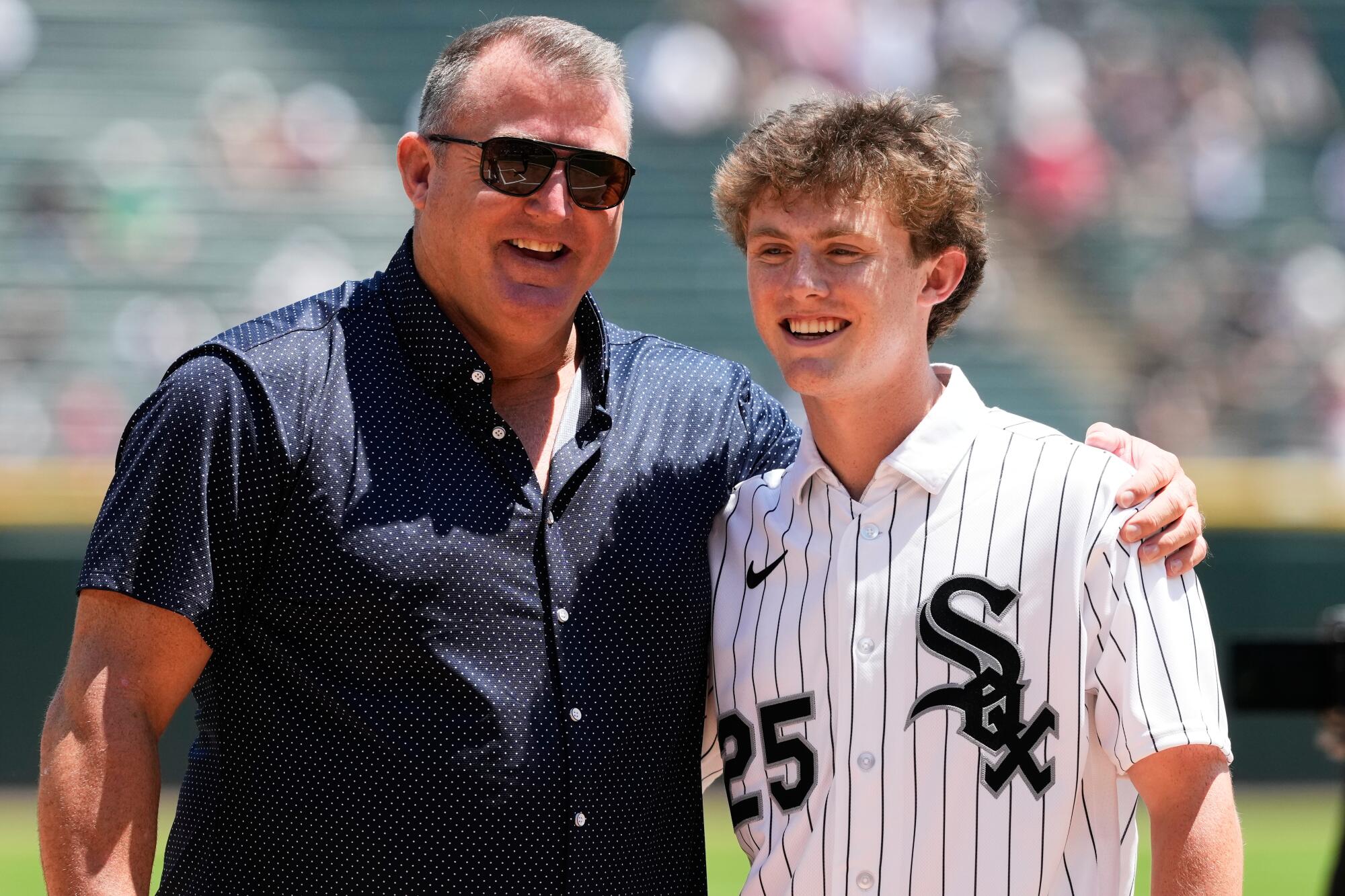
Landon Thome, the 34th pick in the MLB draft, and his father, Hall of Famer Jim Thome.
(Nam Y. Huh/AP Photo/Nam Y. Huh)
— Landon Thome, 2B/3B, Nazareth Academy (Ill.). No. 34 pick by the White Sox. His father, Jim Thome, ranks eighth on the career home run list with 612 and was a first-ballot Hall of Famer in 2018. Like his dad, Landon is a left-handed hitter with a sweet swing. He also has something his dad lacked: speed. Landon stole 54 bases this spring.
— Gavin Grahovac, 1B, Texas A&M. No. 81 pick by the Angels. His cousin Garrett Mitchell was the No. 20 pick out of UCLA in 2020 and is in his fifth MLB season with the Brewers. His father, Mike Grahovac, was a fourth-round pick in 1989 but topped out in class A. Scouts project Gavin as having the potential to hit 30 homers a year.
— Peyton Bonds, OF, Rutgers. No. 90 pick by the San Francisco Giants. His uncle, Barry Bonds, is a seven-time MVP who holds the MLB record with 762 home runs. His grandfather Bobby Bonds hit 332 homers during a 14-year career that ended in 1981. And his father, Bobby Bonds Jr., played 11 seasons in the minor leagues. Peyton is a 6-foot-5, 230-pound center fielder with speed and improving power.
— Rylan Lujo, OF, Georgia. No. 109 pick by the Angels. His grandfather is Rennie Stennett, a versatile player whose nine seasons with the Pittsburgh Pirates were bracketed by World Series titles in his 1971 rookie season and 1979 finale. Lujo converted from the infield to center field at Georgia and has plus speed.
— Jaxon Willits, SS, Oklahoma. No. 141 pick by the Angels. His brother Eli was the first pick in last year’s draft, going to the Washington Nationals. Their father, Reggie, played parts of six seasons with the Angels and is now a coach at Oklahoma. Jaxon, 21, is older than Eli, who was the youngest player to go No. 1 overall at 17 years 216 days. Both are switch-hitters.
— Will Gasparino, OF, UCLA and Harvard-Westlake High. No. 161 overall to the Phillies. His father, Billy Gasparino, has been a Dodgers executive for 11 years. He is the vice president of baseball operations after being promoted in 2024 from vice president of amateur scouting. Will, a 6-6 right-handed power hitter, transferred from Texas to UCLA before the 2026 season.
— Luke Pettitte, RHP/DH, Dallas Baptist. No. 248 to the New York Yankees. His father, Andy Pettitte, won five World Series pitching for the Yankees. While Andy remains on the Hall of Fame ballot the next two years, his son will be working through the minor leagues, perhaps as a two-way player. Luke had Tommy John surgery after two years pitching for Dallas Baptist, then batted .337 with 16 home runs as a designated hitter last spring.
— Jack Salmon, OF, Nevada Las Vegas and Corona del Mar High. No. 559 by the Angels. His uncle Tim Salmon is an Angels legend, a key component of their 2002 World Series championship team who played his entire 14-year career in Anaheim. His father, Mike, had a short stint in the NFL with the San Francisco 49ers and played football at USC.
— Luke Bard, C, Houston Christian. No. 583 by the Dodgers. His father, Josh Bard, spent 10 seasons in the majors with five teams and is the Dodgers’ bullpen coach. Luke batted .345 last season at Houston Christian.
— Carsten Sabathia III, 1B, Houston. No. 611 by the Brewers. His father, CC Sabathia, was a first-ballot Hall of Famer last year who finished his 19-year career with 251 wins and 3,093 strikeouts. He spent one memorable half-season with the Brewers, going 11-2 with a 1.65 ERA to help them to the playoffs in 2008. Carsten played two years at Georgia Tech before transferring to Houston. He was the third-to-last pick in the draft.
Don Iwerks, an Academy Award-winning special effects pioneer whose innovations transformed film and Disney theme parks, died peacefully Thursday at the age of 96, the Walt Disney Co. announced.
For Disney and his own studio, Iwerks Entertainment, Iwerks helped develop technologies and techniques like Circle-Vision, the 360-degree camera behind “America the Beautiful” and other early Disney attractions, and the 3-D effects used in attractions like Captain EO and the Star Tours ride.
“There was a ‘can-do’ attitude I learned from Walt and my father,” Iwerks said, according to a statement shared by the Disney Co. “Walt gave everyone a feeling that they were creating things that others had never thought of before, of being a part of history.”
Born July 24, 1929, Iwerks received his first camera at age 14 as a gift from his father, animator Ub Iwerks.
The elder Iwerks met fellow artist Walt Disney when both men were teenagers working at a Kansas City, Mo., art studio. They would go on to work together at the Disney Brothers Cartoon Studio, where Iwerks designed and animated “Plane Crazy,” the first Mickey Mouse cartoon.
After a stint at his own animation studio, Ub returned to Disney as a special effects engineer, pioneering techniques like the 360-degree motion-picture camera.
“He was absolutely my inspiration because he was technically minded. He made my childhood and formative years one of the greatest times of my life,” Don Iwerks told The Times in 1998.
The Iwerks family moved to the San Fernando Valley in 1936, where Don graduated from Van Nuys High School in 1947.
He served as a photographer in Germany during the Korean War and joined his father at Disney following his 1952 discharge from the U.S. Army. An allergic reaction to chemicals used to develop film led to his transfer to the company’s Studio Machine Shop, where he spent the next 34 years.
Don spent three months in the Bahamas manning underwater cameras for the 1954 Disney film “20,000 Leagues Under the Sea.” He then worked as the camera technician on “A Tour of the West,” an original Tomorrowland attraction at the soon-to-be opened Disneyland. The immersive 360-degree film was shot on the Circarama camera system his father invented.
Together, Don and Ub developed technologies like the “endless loop” system that enabled a single film print to run for up to 10,000 performances with minimal intervention and refinements to the photography processes used in “Mary Poppins” (his favorite of the Disney films) and other movies.
His own hands were used as the model for those of the Abraham Lincoln Audio-Animatronics figure in “Great Moments with Mr. Lincoln,” which opened at Disneyland in 1965. The “Iwerks Hands” now appear on similar figures at Disney parks around the world, according to his family.
In 1986, he co-founded Iwerks Entertainment, which soon became a major player in the film and theme park industries. The company specialized in large-format films and created the 3-D projection system used in the Terminator rides at Universal Studios parks in Hollywood and Florida.
His innovations were honored with the Academy of Motion Picture Arts and Sciences’ honorary Gordon E. Sawyer Award and an Academy Scientific and Technical Award, among other prizes.
“It’s very obvious that computers are playing a big role in motion pictures today. The digital technology in film is able to put elements of scenes together on a film and have them look lifelike. It’s hard to know where that will go,” Iwerks said in a 1998 interview.
“My view is that technology should support a good story and add to it. Technology for technology’s sake?” he said with a shrug. “You still need good films.”
Iwerks is survived by his wife of 54 years, Betty; his sons, Larry and John; John’s wife, Chris; his daughter Leslie, and great-nephew,Mike, both of whom have also worked for Disney, according to an obituary shared by his family. His daughter Tamara preceded him in death.
“Like his father, he was a humble genius, a consummate problem solver, and delighted in sharing knowledge, encouraging others, and approaching every challenge with confidence and grace,” his family said in the statement from Conejo Mountain Funeral Home in Ventura.
Both Don and Ub Iwerks are commemorated in a storefront window on Main Street U.S.A. in Disney World’s Magic Kingdom. Located above the Main Street Bakery, the window is a lasting tribute to a family who made some of the park’s magic possible.
“Iwerks-Iwerks Stereoscopic Cameras,” the lettering reads. “No Two Exactly Alike.”
Funeral prayers have been held for the Father Emir, Sheikh Hamad bin Khalifa Al Thani, at Qatar’s national mosque, attended by dignitaries, members of the ruling family and citizens, ahead of his burial at Lusail Cemetery.
Thousands gathered in Doha to bid farewell to Qatar’s Father Emir, Sheikh Hamad bin Khalifa Al Thani, whose 18 years as emir reshaped Qatar into a global diplomatic, economic and media power. Al Jazeera’s Mohammad Saleh reports.
Qatar’s Father Emir Sheikh Hamad bin Khalifa Al Thani has died at the age of 74. During his 18 years in power, he transformed Qatar into a global energy, diplomatic and media powerhouse, overseeing the expansion of its LNG industry, the founding of Al Jazeera, and the country’s rise on the world stage.
He stepped down voluntarily in 2013, handing power to his son, Emir Sheikh Tamim bin Hamad Al Thani. Mohammed Jamjoom looks back at his life and legacy.
The builder got up every morning long before dawn, left home to pick up his construction crew and then headed out to work on yet another house somewhere across the sprawl of Houston.
Fourteen hours later, Lorenzo Salgado Araujo would return to the wife he’d met as a teenager in Mexico and the modest house he’d built for his family on the city’s east side.
It’s what he’d done for decades, according to Ronaldo Salgado, his oldest son. He said his father built hundreds of houses over 35 years, creating a life for his family and watching as his three sons headed off to college.
On Tuesday, a U.S. Immigration and Customs Enforcement officer fatally shot Salgado Araujo, 52, after he was pursued by federal agents driving unmarked vehicles while he was taking his crew to their latest job site. The shooting has outraged Houston leaders and renewed public scrutiny over ICE and Trump’s immigration crackdown.
Four Democratic members of Congress who represent the Houston area said at a vigil Saturday that they would push for an independent investigation into the shooting.
“We are never going to forget that his blood is on Donald Trump’s hands,” Rep. Christian Menefee said. “We are not at war. Lorenzo Salgado Araujo was not a casualty. He was a human being who was murdered by our government.”
ICE was looking for someone else
Federal agents were looking for someone else when they tried to stop Salgado Araujo’s white van, Garcia said, citing a briefing she received from ICE’s acting director. The Department of Homeland Security has said an ICE officer fired at the van in self-defense after Salgado Araujo, whom officials described as an “illegal alien,” rammed an ICE vehicle. They have provided no evidence.
After some previous shootings by federal immigration agents, Homeland Security authorities have given accounts that were contradicted by video evidence. No video showing the moment of the shooting this time has emerged, and the agents at the scene were not wearing body cameras.
The three men that Salgado Araujo was driving said he was shot through a passenger window and that the ICE officer who fired was not in front of the van or even in danger, a lawyer who has spoken with them said Friday.
His family has also disputed the account from ICE. They said lawyers, who were helping him apply for a work permit, had explained how he should behave if immigration agents stopped him. Salgado Araujo was close to obtaining legal status when he was killed, they said.
“He knew what to do,” Ronaldo Salgado told reporters this week. “He knew not to sign anything. He knew that the first phone call he should make should be either to myself or to my mom. So that way we can get the process started of getting him out.”
He believes his father may have been scared that he was being followed by unmarked vehicles, worried someone was planning to steal his van or his tools.
The shooting in the largely Latino neighborhood is at least the eighth death connected to the Trump administration’s immigration enforcement campaign.
A kind, present husband and father
Salgado Araujo entered the U.S. more than 30 years ago, settling in Houston with his wife where they raised their three children.
Education was a constant focus in the house, said Ronaldo Salgado, who is now a teacher. One of his brothers is an engineer. The other is in college studying engineering.
Several childhood friends of Salgado recalled that his father was kind and soft-spoken, always inquiring after a long workday about his wife’s day and how his sons’ friends were doing.
“We didn’t really see him until the end of the day when he came home to have dinner, but that just shows how much of a hard worker he was,” said neighbor Jessica Alanis Magdaleno. “Everything they have now is thanks to the dedication to that.”
Josué Flores, a friend of Ronaldo Salgado since their freshman year of high school, said he first saw Lorenzo Salgado Araujo at his son’s football game.
“I think it speaks volumes of the kind of person that he was,” Flores said, recalling how Salgado Araujo showed up for his son even after an arduous day of work.
Salgado Araujo’s wife, a relative said, is “inconsolable.”
“She is very upset … angry, sad, disoriented,” Jose Torres Ramon, a nephew who lives in Mexico, told the Associated Press in a Facebook message.
Ronald Salgado, his oldest son, said at the Saturday vigil that he hoped he was making his father proud.
“I’ll keep fighting for him,” he said.
His brother Lorenzo Salgado Jr. said the shooting of his father was “a hard moment to be an American.”
“Even though my government, my federal government took away my father, we the people will bring justice,” he said. “We the people are America.”
After coming home in the evening, Salgado Araujo liked to listen to music on the porch and pet the family dog. His family has described him as a simple man of routine.
“He did not deserve to die,” Ronaldo Salgado said. “He dedicated his life in the United States to giving his family the American dream.”
Sullivan writes for the Associated Press. AP reporters Jack Brook in New Orleans, Valerie Gonzalez in McAllen, Texas, and Scott Bauer in Madison, Wis., contributed to this report.
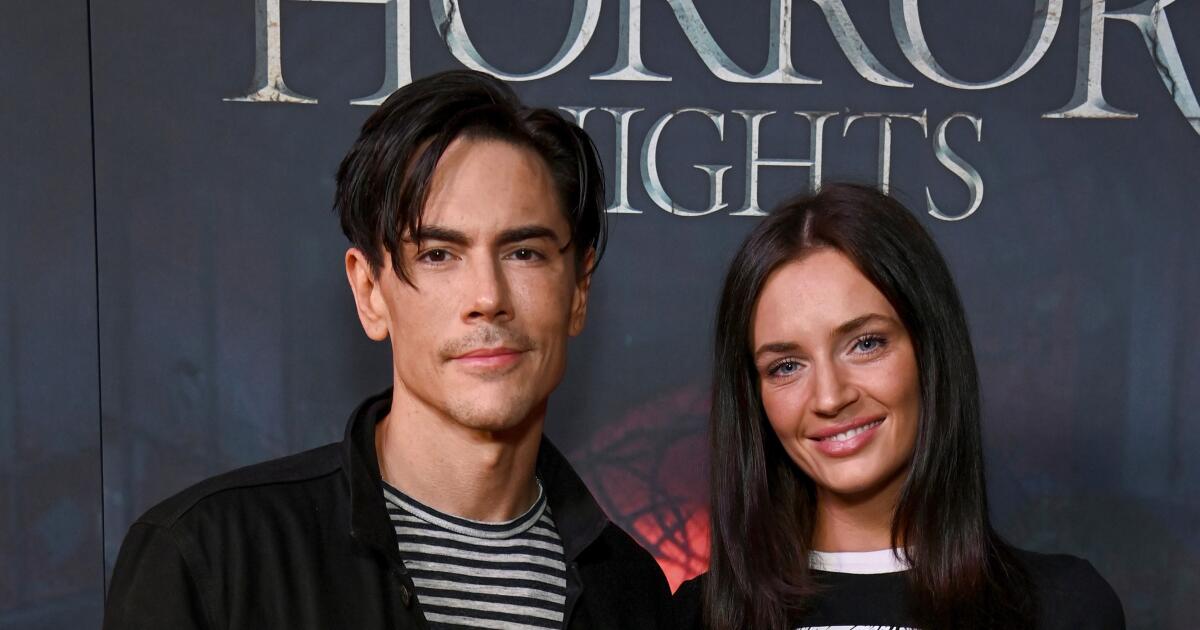
Tom Sandoval’s former girlfriend Victoria Lee Robinson has filed a dueling restraining order against the reality TV star.
Reality TV star Tom Sandoval’s former girlfriend Victoria Lee Robinson has filed a dueling restraining order after she was arrested in June following an altercation that involved her father being pushed into a lit fire pit.
In the petition, filed Thursday in a Los Angeles court, Robinson claims that over the course of the former couple’s 2.5-year relationship, the former “Vanderpump Rules” star “routinely physically and verbally abused” her.
According to court documents reviewed by The Times, the model alleges that Sandoval shoved her down a flight of stairs in his home, pushed her to the ground at a hotel in Nashville, and attacked her and her father on June 3.
On Monday, a Los Angeles Superior Court judge denied Victoria Robinson’s request for the temporary domestic violence restraining order because Sandoval’s existing temporary restraining order requires a hearing (which was set for July 16) before Robinson’s could be granted.
Representatives for Sandoval told The Times in a statement, “It’s no surprise that Victoria’s request for a restraining order was immediately denied.”
Sandoval, known for the Scandoval cheating scandal that erupted on the hit Bravo series “Vanderpump Rules” in 2023, filed a temporary restraining order against Robinson and her father J. Will Robinson on June 25. In Sandoval’s petition, he claimed that since the two became a couple in February 2024, Victoria Robinson has been violent and attacked him physically.
Sandoval was granted a temporary restraining order which required Robinson and her father to vacate the Los Angeles rental the three had shared. According to Sandoval, he’d left the house and stayed in hotels and with friends following the June 3 incident.
“This is my home. We are both on the lease, but I paid the first month’s rent and deposit, surprised him with the keys and virtually every item in it is mine,” Victoria Robinson said in a statement shared with The Times. “I have filed my own legal action because I have my own account of what happened and it’s very different from what has been said publicly.”
Robinson said that while her father has been under media scrutiny, he was trying to protect her.
“My relationship with Tom has already controlled the past two years of my life,” she said. “I cannot allow a false narrative to control my future.”
The altercation involving Sandoval, Robinson and her father happened in the early morning hours after the couple returned home from a night out at a bar, according to both accounts.
In a video of the June 3 incident, obtained by TMZ, Robinson and her father are seen sitting next to a lit fire pit on the patio when Sandoval and the elder Robinson begin arguing. Sandoval is heard yelling at Will Robinson before he asks his girlfriend if she is recording and approaches her. Will Robinson stands up and wraps his arms around Sandoval, seemingly to get him to back away from Victoria Robinson. Sandoval turns and pushes Will Robinson, who falls backward into the lit fire pit.
After Will Robinson gets back up, he rushes after Sandoval into the home while Victoria Robinson screams for the men to stop.
According to Victoria Robinson’s petition, when Sandoval noticed she was recording his exchange with her father, he twisted her arm while trying to gain control of her phone.
Will Robinson allegedly suffered a thumb fracture and elbow and back injuries.
Victoria Robinson was arrested after police responded on June 3 and released on bond the same day. On June 4, Sandoval returned to their L.A. house to collect his things and Victoria Robinson called police, who escorted Sandoval from the home, according to the filing.
The Los Angeles Police Department declined to comment on the reason for Robinson’s arrest.
Will Robinson told TMZ last month, “The DA did not file the case for a reason. I lifted Tom off of my daughter because he was overpowering and twisting her arm and trying to take her phone aggressively after yelling at us in a very aggressive and threatening manner.”
“This is my daughter’s home and we just want Tom as far away from us as possible and to keep his lies and drunken abuse away,” Robinson said.
This isn’t the first time their fights have turned physical, according to both accounts. Victoria Robinson‘s petition claims that in August 2025, Sandoval shoved her down their hardwood stairs and she suffered knee injuries. She said she reported the incident to police but ultimately recanted her statements to protect Sandoval from being arrested. “In hindsight, I deeply regret this decision,” reads the suit.
Weeks before the fire pit incident, Robinson alleges that during a trip to Nashville to visit her grandfather who was in hospice care and has since died, Sandoval pushed her to the floor of their hotel and locked her out of their shared room.
“During their 2½-year relationship, Tom has made it clear he never physically harmed Victoria,” representatives for Sandoval said. “Instead, he lived in fear of her repeated physical attacks and unpredictable behavior. He will show he was the victim of ongoing physical and emotional abuse, and has substantial evidence documenting what he endured, which will be presented through the legal process.”
At first, Jesus did not believe it was possible, but then he heard his father shouting out from the rubble, saying: “Don’t leave me here.”
“I said, ‘Trust me: Stay calm. Keep the kids calm over there. I’m not leaving here without you,'” Jesus recalled.
Jose had been trapped for more than an hour by that point, unsure of his fate. He and his two younger sons had survived the collapse with relatively minor injuries, but dangers remained. The debris could still shift and crush them.
“The first thing I thought of was my children. I had the little one right here,” Jose recalled, lifting his hands to his chest. “And I still had the other one. He was right next to me but buried. I couldn’t see his face; I could only see one foot and one hand.”
Still, Jose put on a brave face for his boys. A friendly voice had pierced the rubble: Jesus’s friend, the firefighter.
He had been shouting for survivors. He had also brought Jesus’s old firefighting equipment to the site.
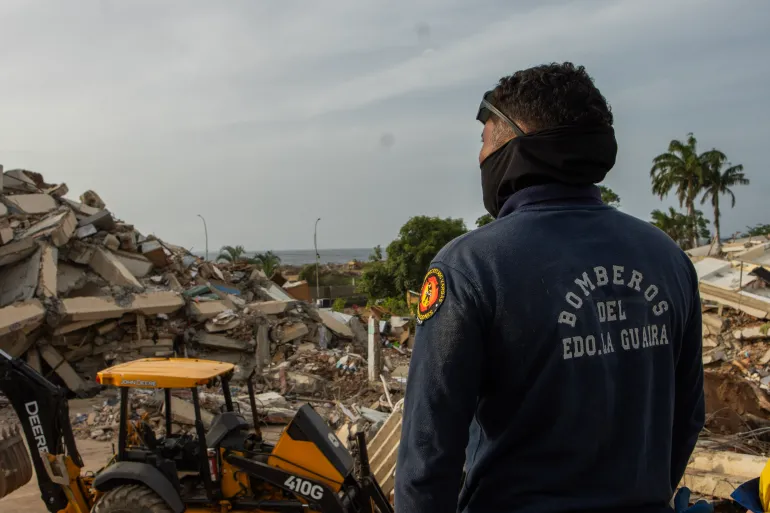
Jesus Garcia looks at the remains of the Ritasol Palace apartment complex [Alfie Pannell]
After finding out his father and brothers were alive, Jesus began desperately trying to get them out. But he realised he would have to wait until the next day for the sun to come up and, crucially, to get his hands on a jackhammer that could drill through the floors of rubble separating him from his family.
Finally, the next morning, a specialist squad from the police arrived with the gear they needed to carry out the rescue.
With the help of his firefighting team from La Guaira, who showed up to help their old comrade, Jesus was able to pull his father and two younger brothers from the rubble at about 3:30pm on June 25, more than 20 hours after the earthquakes.
He quickly swept Diego and Santiago into his arms.
“When I saw them, I hugged them, gave them a kiss, and said, ‘I love you, brother,'” Jesus recalled. “Then I stepped away for a moment and started crying.”
Jose is still shaken from the experience, which has changed his life forever. “I am someone who will be grateful for the rest of my life that I was given this opportunity. Not just me, but my two young children.”
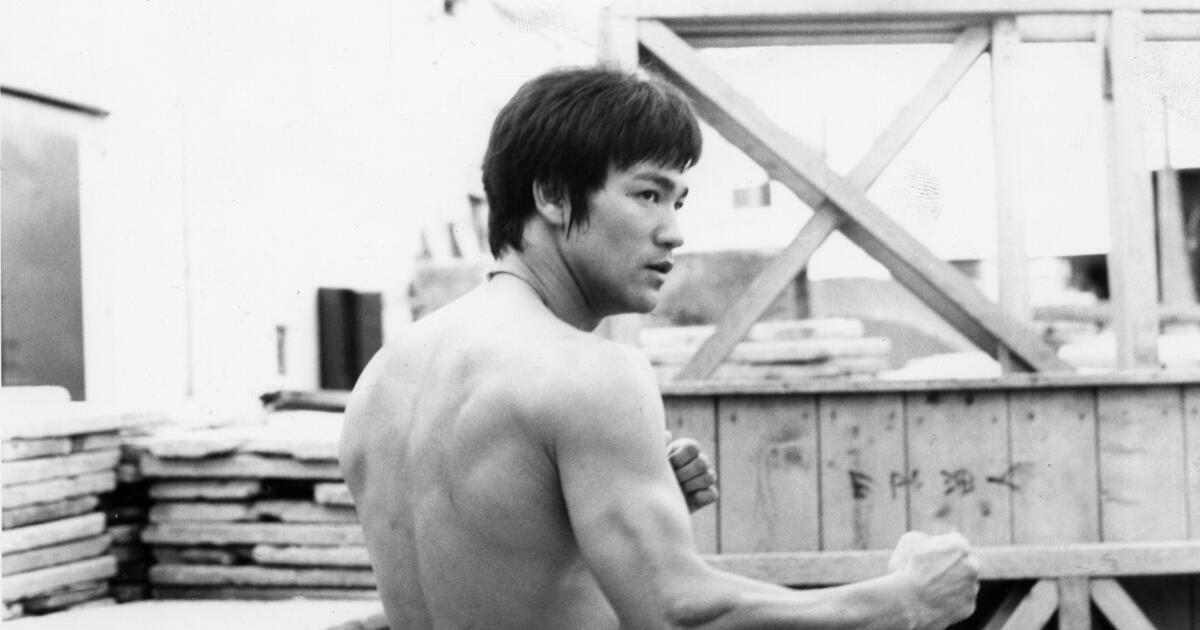
Cut to a seedy alley behind a Chinese restaurant in Rome: A dozen mobsters menace a slight young man who suddenly pulls out a pair of nunchucks. He swings the traditional stick-and-chain weapons and makes quick work of his enemies, who fall one by one, groaning in pain.
The comedic, legendary action scene is from the 1972 film “The Way of the Dragon,” written, directed and starring Bruce Lee. The martial arts star was a trailblazer, allowing Asian Americans to see themselves represented in a strong, positive light on-screen.
And now he has secured a place in California history, becoming the first Chinese American in state history to have a day designated in his honor.
Lee was born in 1940 in San Francisco. His mother was of European descent and his father was a Cantonese opera star who was on tour in the city, affording his son birthright citizenship.
Lee grew up in Hong Kong, where he followed his father’s path as a performer, acting in more than a dozen films as a child and studying the close-quarters southern Chinese martial art Wing Chun.
On May 17, 1959, an 18-year-old Lee returned to San Francisco and eventually made his way to Hollywood. He went on to influence an industry that was at the time bereft of Asian American talent, and helped to popularize the genre of martial arts films and ignite Western interest in Hong Kong action cinema.
In recognition of his contributions, state Assemblymember Matt Haney (D-San Francisco) introduced a bill designating May 17 as “Bruce Lee Day” in California. The bill, signed into law Tuesday by Gov. Gavin Newsom, encourages schools and communities to honor Lee’s life and cultural impact.
Haney has described Lee as a “symbol of pride, resilience and possibility for generations who rarely saw themselves reflected with strength and dignity.”
Lee, who saw himself not only as an actor but also as a poet and philosopher, encountered repeated barriers. Up for the main role in the 1970s television series “Kung Fu,” for example, he was rejected in favor of white actor David Carradine.
In 2020, filmmaker Bao Nguyen sought to show how Lee dispelled anti-Asian sentiment and long-held stereotypes of emasculated Asian men in his ESPN documentary “Be Water.”
“The Asian male was the face of the enemy to many Americans,” Nguyen told The Times in 2020. “It was this vicious cycle of society reflecting media and culture, and media and culture reflecting society. There had to be some kind of intervention there and Bruce, in a way, was that intervention. He was the hero that we hadn’t seen before.”
Lee learned much about the systemic oppression that Black Americans faced from his first student, Jesse Glover, who had been a victim of police brutality.
And scholars have pointed out that, although his films had far-from-perfect politics, they touched on themes of fighting oppression. The 1971 movie “The Big Boss” showed Lee battling alongside laborers. “Fist of Fury” saw him opposing Japanese colonialism and discrimination.
Lee died young in 1973, at age 32 — before he was able to witness the full extent of his stardom. He died just one month before the release of “Enter the Dragon,” which was a box-office sensation and is considered a masterpiece of martial arts filmmaking.
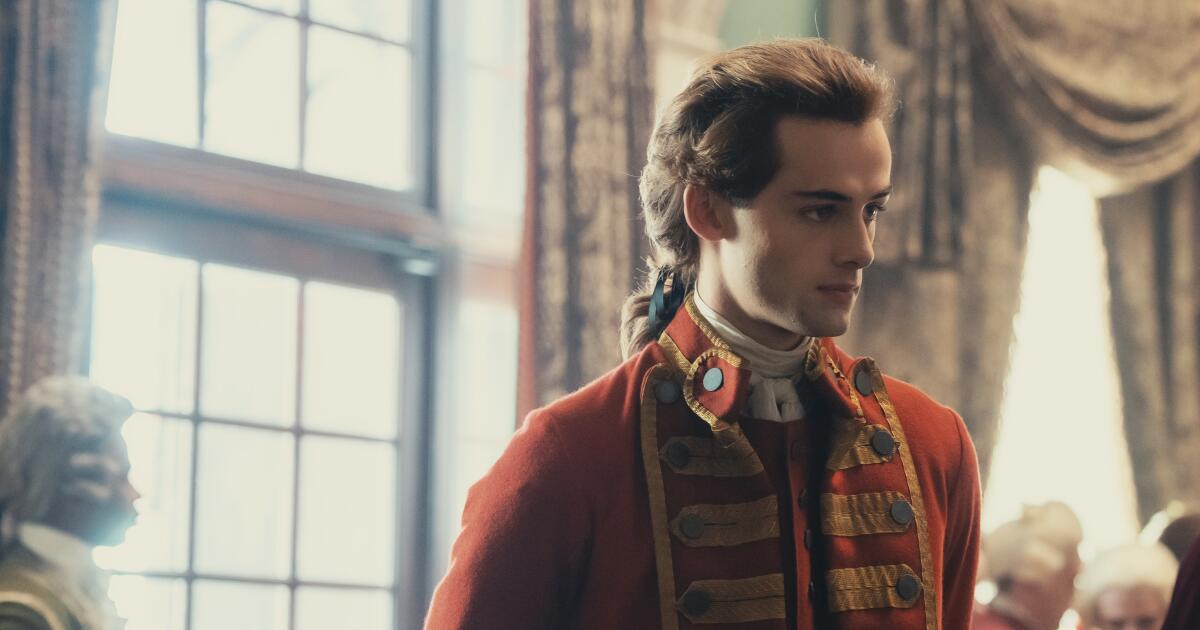
It’s the 250th birthday of the United States of America and how better to celebrate than with a big-screen hagiography of America’s first president, George Washington? “Young Washington” arrives in theaters just in time for the Fourth of July with a chiseled, hot young actor in the lead role and the sheen of a prestige HBO drama, though the result isn’t really big-screen spectacle or appointment television. It feels more like something to be watched on the AV rig in a middle school social studies class. At least there won’t be a quiz at the end.
But there could be, because the plot of “Young Washington” plays out with all the thrill of a textbook chapter. It takes place mostly around 1753-55, at the advent of the French and Indian War. We open in medias res when the 23-year-old Col. Washington (William Franklyn-Miller) lurches from a dysentery-riddled nap directly into battle in the Pennsylvania woods, his battalion on the back foot, surrounded by gore and gunpowder. Another officer describes how dire the situation is while George ponders saving his men and asks, “What could be worth the risk?” Washington steels his gaze and we cut to black. You can almost hear the eagles scream, guitars riff and engines rev.
“Young Washington” is produced and distributed by Angel Studios, the faith-based movie studio that churns out films based on true stories that either feature freak accidents, strange illnesses or, more recently, unique stories from the past in which faith in God is a factor. Apparently, our nation’s founding also falls under this umbrella.
The film is directed by Jon Erwin, one of the in-house Angel Studios mainstays, who also helmed “Jesus Revolution,”“I Still Believe” and “I Can Only Imagine.” Erwin gives the whole project a kind of gritty, visceral approach — very “Game of Thrones” in red coats. It’s violent, muddy, the contrast is high and too many drone shots soar over the forest treetops.
Though it opens with a bang, this 1755 battle framing device gives way to the George origin story, starting with his father’s death 12 years earlier, when the 11-year-old George is bereft that he’ll have to sacrifice his education in order to become a tenant farmer and provide for his family including his mother, Mary (Mary-Louise Parker, doing a bizarre accent).
His older half-brother Lawrence (John Foss) takes him under his wing and teaches him, and the young George grows into a smart, bright, ambitious young man, whose dreams of becoming a British officer are dashed because he doesn’t have formal education, a fortuitous marriage or his own land. But he’s bootstrapped himself into intelligence and with savvy networking and know-how, he becomes indispensable to the British, volunteering as a major to survey land and negotiate treaties with the Native tribes and French army. It’s all a bunch of politicking and petty disputes until it escalates into all-out war thanks to an ill-advised ambush.
Sir Ben Kingsley, Kelsey Grammar (who starred in “Jesus Revolution”) and Andy Serkis play the British officers who begrudgingly, at times, believe in George and his capabilities, though a lot of the film is about a young man getting rebuffed by snobbish British officers.
He’s the kind of character who always makes the noble choice, does and says what’s right, and sees everyone as equals (including enslaved African men and Native American allies). He inspires his brother and others that the world can change and takes inspiration from his mother, who encourages him to continue his path and do it as God’s servant.
Unfortunately, this doesn’t make for a character that’s in any way complex or interesting at all. Franklyn-Miller is certainly pretty, serving as a fine face for this story, but the screenplay (by Erwin, Diederik Hoogstraten and Tom Provost) flattens his character into a basic cookie-cutter hero. Audiences, including the middle school social studies students, deserve better and more nuanced stories about this country and the values it was built upon.
“Young Washington” is propaganda in the form of a history lesson wrapped in a summer blockbuster. If only it were even slightly entertaining — maybe they’ll tackle that in the inevitable sequel.
‘Young Washington’
Rated: PG-13, for sequences of strong war violence and some bloody images
In 1913, Antonino Alati left southern Italy to find a better life in a land where many people regarded him as little better than scum.
He joined millions of his fellow countrymen in the United States, where the press vilified Italians as poor, dirty, violent Catholics who had too many babies, refused to assimilate and could never possibly be considered “white.”
Politicians were already working to shut the door on them. A congressional report released two years before Alati’s arrival cited southern Italians as evidence that “the new immigration as a class is far less intelligent than the old.” They came to the U.S., the report asserted, “with the intention of profiting, in a pecuniary way, by the superior advantages of the new world and then returning to the old country.”
Alati wouldn’t let bigotry win. He soon sent for his wife and children, including his infant son Salvatore. Alati turned to Alito, Salvatore became Samuel. A generation later, the family had a Supreme Court justice in Samuel A. Alito Jr. — the second Italian American, after Antonin Scalia, to sit on the highest court in the land.
During his 2005 confirmation hearings, Alito praised his father as an “extraordinary man who came to the United States as a young child and overcame many difficulties” to ensure a better life for him and his sister. By then, Italian Americans were established as an essential part of this country’s fabric, from music to politics to food.
If there’s one constant in this country besides death and taxes, it’s how quickly descendants of immigrants, and sometimes immigrants themselves, forget how loathed their ethnic group was and how they proved the haters wrong. Too many become uncharitable to the policies that helped them and the immigrants who followed.
But Alito’s stance against birthright citizenship goes beyond just forgetting his roots. His 39-page opinion describes the supposed impact of undocumented migrants on the U.S., using words — “overran,” “soared,” “exploded,” “massive,” “a stream,” “huge” — that read like the same invective used against Italians in his grandfather and father’s time.
The justice channels anti-Italian conspiracies of the past by casting doubt on the national allegiances of the U.S.-born children of Mexican, Guatemalan and Salvadoran immigrants — the same patriotism test that Italian Americans faced generations ago when xenophobes questioned their Catholicism. Alito claims without evidence that millions of agricultural workers were able to apply for American citizenship after President Reagan’s 1986 amnesty “at least in part because of fraud” — a charge also leveled against Italians who sought to naturalize back in the day.
And so it goes, each passage a jumbled argument dressed up in judicial interpretations largely rejected by his fellow Catholic Supreme Court justices John Roberts, Amy Coney Barrett and Brett Kavanaugh. Coney Barrett signed on to the majority opinion that Roberts wrote, and Kavanaugh concurred.
Rev. William Barber II speaks during a rally outside the U.S. Supreme Court on April 1 while justices heard oral arguments on birthright citizenship.
(Al Drago / Getty Images)
I know how quickly families forget their own immigrant histories. Yet I look at people like Alito and wonder how they ended up thinking the way they do, because I could never imagine doing the same.
Like Alito’s paisanes, my Mexican family was also demonized for supposedly being insufficiently American and posing a threat to national unity. They also sacrificed their own dreams so their children and grandchildren could achieve theirs.
And just like Alito, some members of my family have forgotten our history and support Trump or favor some of his immigration policies, dismissing new arrivals as criminals or lazy. That’s why I will always side with undocumented people and welcome anyone who gives birth in this country with the hope that their newborn finds a better life.
It seems from his dissent that Alito somewhat agrees with me. He posits that millions of Americans who were born in this country to parents without papers “have a strong moral claim to be able to remain in the land where they grew up.” Congress “can and should address their situation,” he writes.
The justice blasts birth tourism, where women from China and other countries travel to the U.S. to have a baby, then return home, benefiting from our generosity and offering nothing in return.
I agree that’s a mockery of what being an American should be and ruins it for people who want to contribute to building a better nation. But Alito throws out the baby with the bathwater by failing to recognize that Trump’s attempt to erase birthright citizenship via executive order is presidential overreach based on bigotry, not rule of law. He’d rather cut up the Constitution to spite something he doesn’t like. Thank God his side lost, yet it’s sad that Trump’s pathetic attempt to define who can be an American went as far as it did.
Alito concludes by stating that the court’s decision to uphold the 14th Amendment is “a mistake that will seriously affect the country’s future.”
What new immigrants might inflict on this country is the perpetual worry of immigration restrictionists — and yet history keeps proving them wrong. Alito’s family did; so did mine. Only in these United States can the progeny of people once portrayed as parasites and invaders side with those making the same argument about the latest batch of newcomers.
History will see Alito’s vote for what it is: a forsaking of the promise his family once fulfilled, to support the people who never wanted them here in the first place.
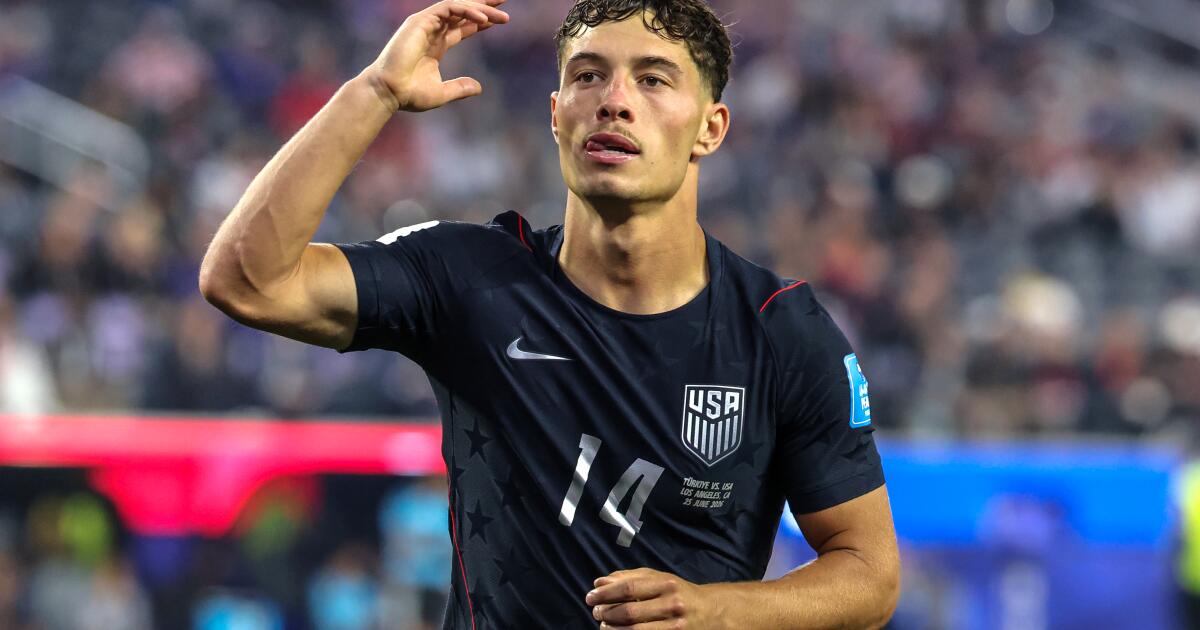
Some kids grow up with video games and summer camp. Sebastian Berhalter grew up with the World Cup.
He was 13 months old when his father, Gregg, played in the tournament for the first time and 5 when his dad was called back. And four years ago, when Sebastian was already a professional in his own right, he went to Qatar to watch his father coach the U.S. to the round of 16.
Yet none of that prepared the younger Berhalter for his own World Cup debut earlier this month.
“It’s ridiculous,” Sebastian said. “Before the game, I just kept chuckling to myself, like, ‘What the hell is going on?’ Literally I couldn’t believe it. Playing for my country, it’s the best feeling in the world.
“I just can’t believe that happened.”
Nor could he believe what happened next. Because after making appearances off the bench in the team’s first two group-play games — both of which ended in U.S. victories — Berhalter started the third game. And with a goal and an assist in a loss to Turkey, he already has more World Cup goals and assists than his dad.
In fact, he’s the only American with a goal and assist in the same World Cup game in the last 96 years. Not bad for your first start in the tournament.
His father still has bragging rights in one category, however, since the 2002 team he played for is still the only American team to win a knockout game in a World Cup. Sebastian can match that Wednesday in Santa Clara when the U.S. plays Bosnia and Herzegovina in the round of 32 of this summer’s expanded tournament.
“They’re a good team,” Sebastian said of the Bosnians. “It’s a round of 32, so do or die. I think you play every game like it’s a knockout game. For us it’s, it’s keep doing what we’ve been doing.”
If Gregg provided the inspiration and the road map that guided his son to the World Cup team, the younger Berhalter had to wait for Mauricio Pochettino before he could take his first steps on that road. That came in the spring of 2025, about 11 months after his dad had been sacked as coach, when Pochettino, the new manager, gave the younger Berhalter his first national team call-up.
He’s gone on to make 16 appearances for the U.S., including three in the World Cup. And that’s something Gregg is convinced couldn’t have happened as long as he was coach.
“I think about it all the time,” he recently told ESPN. “I never could have picked him.”
The scrutiny would have been too fierce, he feared, the whispers of nepotism too loud. Sure, Michael Bradley played more than 50 internationals games for his father Bob, including four in the 2010 World Cup. But he was already on the team when his father took over from Bruce Arena, who gave Michael his first call-up.
So, Sebastian had to wait. He had to play for three MLS teams, win an MLS Cup and three Canadian Championships and become too good to ignore in order to get his first shot with the national team — one which came from Pochettino, not his father.
Neither Berhalter has regrets.
“What I know,” Gregg, now coach and sporting director of the Chicago Fire, told ESPN, “is that everything is in the place it’s supposed to be. This is how life is. It’s his turn. It’s his time now.”
And he’s playing as if there’s no time to waste.
After making his international debut in a friendly with Switzerland last May, Sebastian played five full games in the Gold Cup last summer, then scored his first international goal in a friendly with Uruguay less than three weeks before leading the Vancouver Whitecaps into the MLS Cup against Inter Miami.
So, when the time came for Pochettino to name his World Cup roster last month, it was clear Sebastian, 25, had earned a spot.
“He’s a monster. He’s a monster, in the way of how professional he is,” the coach said. “He’s the type of player who’s going to train, going to train, going to train. I mean, sometimes I have to say [to him], ‘Go inside, no?’“
After stumbling in the group-play final, which Turkey won with a goal deep in stoppage time, the U.S. will have no room for error in its first elimination game. It’s a game in which history may — or may not — be on the Americans’ side.
On one side, the U.S. is winless in its last 13 games against European opponents. On the other, its last win over a UEFA team came in December 2021, in California, over Bosnia and Herzegovina, a team to which it has never lost.
There’s an omen in there somewhere.
“Our goal is to win the World Cup,” Sebastian said. “That’s what we want to do. It’s always been our mission and we’re still taking it one game at a time.”
There’s also the family record book to think about. One more victory and Sebastian will have more World Cup wins than his dad. Two more and he’ll be in the tournament quarterfinals, which is as far as his father went in his first World Cup.
In Qatar, Sebastian was the one in stands, cheering on his dad. In this tournament, the roles have been reversed. And Gregg told his son he couldn’t be happier about or prouder of how things have worked out.
“Four years ago, I was waiting for him to come up in the stands. Now, he was waiting for me to come up in the stands,” Sebastian said. “That was special.
“When you hear words that your dad is proud of you, that’s a cool moment.”
NBA mock drafts projected Cameron Carr getting selected somewhere between 15 and 20 in the first round on Tuesday night.
Ending up with the Lakers later in the draft, however, was more than Carr could have asked for.
The Lakers acquired his draft rights from the New York Knicks, who took the 6-foot-5 Baylor guard with the 24th pick, in a multiple-team deal in which L.A. sent the draft rights to Spanish guard Sergio De Larrea, who was taken 25th, and cash considerations to New York.
As he sat for his introductory news conference Friday, dressed in all black, Carr shared what his thoughts were when he found out he would be playing for the Lakers.
“I’m going to the Lakers! It was more of an exciting thing,” he said. “It felt surreal. It didn’t feel real for the first couple minutes when I found out. It was trying to get my head around, ‘Man, I’m about to walk across the stage and be an NBA player.’ I’ve dreamed of this my whole life, especially since I was a kid. So it took a second. Still trying to get my head wrapped around it, but nothing but excitement and happiness. I feel more motivated to work.”
Rob Pelinka, the Lakers’ president of basketball operations, met Carr at the facility on Friday but didn’t speak with the media during the news conference.
It meant Pelinka couldn’t be asked about Austin Reaves agreeing to re-sign with the Lakers on a four-year, $185-million deal, or about how conversations are going with free agent LeBron James.
But NBA rules prohibit team officials from commenting on anything during the free agency moratorium, which won’t be lifted until July 6.
So, this day was all about the 21-year-old Carr and how impressed he was being in the Lakers’ building.
“Walking in the building, first thing you notice is the rich tradition of the people that have been here before you,” Carr said. “It’s a moment of happiness. As a kid, you always dreamed of walking across that stage and accomplishing everything you wanted to. Man, it just felt good to walk in the gym and look at the people that came before me. Now I’m in their shoes.”
Carr was viewed by NBA scouts as athletic with his 42½-inch vertical leap and as having a good jump shot.
During his sophomore season at Baylor, Carr averaged 18.9 points, 5.8 rebounds, 2.6 assists and 1.3 blocks in 34 games. He shot 49.4% from the field, 37.4% from three-point range and 80.1% from the free-throw line.
But Carr quickly talked about how playing defense will be his calling card with the Lakers.
“Stepping into an organization with people with the same type of mindset and abilities, it only makes my job easier,” Carr said. “I’ve just got to cut and dunk the ball for them, and run in transition. But first things first is establishing a defensive consistency and showing I can be dominant or a plus on the defensive end as someone they would like to guard the best player.”
Carr always had his dad, Chris Carr, to lean on during his journey as a basketball player. Having him as a mentor was so beneficial because his father spent six seasons in the NBA. His most famous moment came in 1997, when he became the runner-up to Kobe Bryant in the slam dunk contest.
Now father and son have something else in common: making the NBA.
“I’ve always wanted to be better than him,” Carr said. “I’ve always been behind, so I want to show he’s put a lot of work in me becoming a better man. So I feel the only way I can credit him and show I’m thankful for him is by putting in the work and using it every single day. He was a heck of a player, so it’s some big footsteps I’ve got to follow and a long journey.
“It’s good motivation. My ‘why’ is just to be better and show people I’m better than a lot of people that are put in front of me. I feel like that’s the chip on my shoulder, or the fire under my feet.”
At only 24, Samuel Kim Arredondo, better known as Samuel, has lived through nearly every iteration possible in a K-pop idol’s career.
As a child growing up in L.A.’s Koreatown, he attended Wilshire Park Elementary School — but by the fifth grade he had moved to South Korea with his mother, Kyung-ju, with dreams of K-pop stardom. There, he became a trainee under Pledis Entertainment.
Now a subsidiary label of Hybe — parent company of K-pop superstars BTS — Pledis was forming what became one of the most successful “third generation” K-pop groups of all time: Seventeen. Samuel, who was in the running to debut with the group, is even captured in early footage from their “Seventeen TV” variety show.
Though he didn’t make the cut, he remained close with the members and helped write lyrics for their 10-year anniversary album. Just last week, he filmed a dance challenge with singer-MC Mingyu for the reggaeton-infused pop number “Zigi Zigi Zigi” — the lead single off of his new EP, “Samuelito,” which dropped June 8.
After leaving Pledis, Samuel — who is fluent in both English and Korean — signed to a new agency, Brave Entertainment, then formed one half of a short-lived hip-hop duo, 1Punch. (He was Punch, the other kid was One.)
In 2017 he competed on the second season of Produce 101, a globally popular Korean competition franchise, where he made it to the penultimate episode before the debut of the group Wanna One. That same year, he released his first solo album, “Sixteen,” fully showcasing his outstanding dance ability, youthful swagger and velvety tenor.
Yet before he could finally make headway, he suffered a devastating loss.
Samuel’s father, José Arredondo, who came to the U.S. from Michoacán as a child, died tragically in a 2019 case that made national and local headlines. After having spent years apart from his father while living in Korea, Samuel spent quality time with him shortly before his death.
José was a pillar of his community; he rose from washing cars to owning his own car dealership, alongside other businesses in Bakersfield. A precocious young Samuel can still be found showing off his dance and Spanish skills in an old commercial for the dealership. (“Volkswagen me hace bailar,” he says before busting a move.)
The loss of his father was made more harrowing when the news went public, Samuel recalls over a Zoom interview from Seoul, where he is promoting his new album.
“The articles went out first,” he explains. “It was everywhere before I even wanted to talk about it, so I had no choice to keep it private … of course it’s definitely hard for me.”
In the aftermath, Samuel went under the radar — but after a year or two, he started to pave a way forward. After getting out of the contract with his former label, and with the support of his mother, he launched his own company, Samuel Music Group.
“If I kept on staying in the past, I think no one would like it — even my dad wouldn’t like it,” he says. “I learned a lot through that emotion as well. Always be grateful, always be thankful every time, and try to say ‘thank you’ always, especially to parents.”
Composed of three songs and one interlude, “Samuelito” takes its name from the childhood moniker some know him by today. As the follow-up to his 2024 EP, “Now,” it is his second record release since he became independent. It’s also his first record sung predominantly in Spanish — along with the occasional sprinkle of English and Korean. (Take the onomatopoeic “Ddook Ddak,” which is Korean slang for “just like that.”)
Singing in Spanish for the first time, he tells me, to music he created himself, made his “heart race.”
“Samuelito” is not so much an exploration of Mexican musical traditions, but of Latin-influenced rhythms and sounds filtered through his uniquely multicultural lens. In the future, he dreams of working with genre-spanning Latino pop artists who crossed over culturally, like Selena Gomez, Camila Cabello and Rauw Alejandro.
In an Instagram reel from earlier this year he described his efforts as “K-tone” — a Latin and reggaeton fusion, powered by K-pop discipline. The comments below were peppered with encouraging responses from fans in multiple languages.
Wrote Liz Zeledon, from Oceanside: “As a Korean-Nicaraguan who grew up with exposure to both cultures, I love hearing Latin influences in K-pop… Korean Latines are so underrepresented in the Korean music industry.”
Reached by phone, Zeledon is a K-pop fan who has kept tabs on Samuel since his Seventeen trainee days; she is also a child of immigrant parents.”Representation is so important, because existence and visibility are not the same thing,” she says.
In the lead-up to the album’s release, Samuel posted photos and videos of himself as a young child. In one, his dad holds him up as a baby, dressed in all-white with a tam hat. Though Samuel says the EP is not an on-the-nose tribute to the elder Arredondo, his spirit resonates through the lyrics of the poignant downtempo track, “Never Say Goodbye.”
“Gritos que yo sé/Que llegan hasta El Cielo/Gotitas en el suelo/Y se me cae el mundo entero,” he sings. (“Cries that I know/Reach all the way to Heaven/Little drops on the ground/And my whole world comes crashing down.”)
“I used to listen to a lot of Spanish music while I was growing up … I used to eat a lot of Mexican food too,” he says. “While I was in the studio last year, I had [this] big vision: [‘What if] I bring back my roots and just be the true me and call this album “Samuelito?”’ It just felt fresh.”
Samuel started songwriting and producing for himself in the making of “Now.” On his new album, only three writers are credited, including himself — which is somewhat of a rarity these days in K-pop. One of them is Canadian Mexican singer-songwriter Andrea Rocha.
From her new home in L.A., Rocha said the main goal was to seamlessly blend two distinct musical cultures. Although Samuel came to the studio with the structure for his songs already in place, they worked on melodies and writing in Spanish together, since this was his first time penning lyrics in the language.
Rocha says she was taken aback by Samuel’s professionalism. “I’d be like, ‘Oh, what about this melody?’ And then he would sing it perfectly,” she says. “I did ask him about his K-pop training, because it sounds really intense. I think it shows how hard he’s worked in those years because he’s got all the star qualities. Compared to a lot of newer artists that I work with, I’m like, ‘Ooh, they’ve [done] a lot of work to get to that level.’”
These days, Samuel splits his time between Seoul and Los Angeles — once again calling Koreatown his permanent home. He also continues to spend time with his dad’s side of the family in Bakersfield.
“I think the biggest thing that I am happy about is getting back to my roots, where I started,” says Samuel.