execution

Manet’s ‘Execution of Maximilian’ arrives at Norton Simon Museum

Édouard Manet’s “Execution of Maximilian” will go on view at Pasadena’s Norton Simon Museum next week, marking the first time the painting has been exhibited on the West Coast. The historic canvas, on loan from London’s National Gallery, has a fascinating backstory and represents a key moment in French political history, making its arrival shortly after this country’s stunning midterm election particularly auspicious.

The painting is the second of five versions Manet created (circa 1867-68) shortly after the shocking execution of Austrian archduke Ferdinand Maximilian, who briefly served as the emperor of Mexico after being encouraged to do so by the French emperor Napoleon III. In 1867, Maximilian — along with his generals Tomás Mejía and Miguel Miramón — faced a firing squad made up of soldiers loyal to former Mexican President Benito Juárez, who had been forced out of Mexico City in 1863 when French forces descended on the capital. Maximilian’s ouster and death stunned many Europeans, who blamed Napoleon III for the bloodshed.

Manet’s monumental canvas is cold and unyielding in its impersonal depiction of the violent episode, and in many ways helped birth the modern historical political painting. Through Manet’s eyes, political violence is not heroic, but pedestrian, benign even. It contains echoes of another famous political painting: Francisco de Goya’s “The Third of May, 1808,” which also depicts death by firing squad — this time the execution of civilians by French troops during Napoleon’s notorious occupation of Spain.

The canvas coming to the Norton Simon was long neglected and is thought to have been discarded by Manet when he became dissatisfied by discrepancies in the size of the figures he painted. His family cut the canvas into four pieces after his death and sold them separately. It was saved from oblivion by Manet’s friend Edgar Degas, who managed to get a hold of all the fragments. The painting was acquired by the National Gallery in 1918 at Degas’ studio sale, and the painting was pieced together again in the late 1970s.

“Manet’s Execution of Maximilian is not only an icon within the history of nineteenth-century art, but also a profound reflection on the ways in which images shape our understanding of political events and collective memory,” said Emily Talbot, vice president of collections and chief curator at the Norton Simon in a news release. “By bringing this extraordinary painting together with historical materials that document the French intervention in Mexico, we invite visitors to consider how history is constructed in visual form.”

The painting will be on view at the Norton Simon from Nov. 14 to March 1, 2027.

I’m Arts editor Jessica Gelt ready for a jubilant walk through a museum on the heels of a roller coaster of an election. This is your arts and culture news for the week.

[Update: A previous version of this story said Manet’s “Execution of Maximilian” had not been shown in the U.S. for 20 years. It has not been shown on the West Coast before, but was shown in New York in 2024.]

You’re reading Essential Arts

Our critics and reporters guide you through events and happenings in the SoCal arts scene. In your inbox every Friday.

The week ahead: A curated calendar

FRIDAY

LA Phil's incoming music director Daniel Harding conducting at the Hollywood Bowl in 2025.

LA Phil’s incoming music director Daniel Harding conducting at the Hollywood Bowl in 2025.

(Etienne Laurent/For The Times)

Daniel Harding Leads Bernstein & Brahms
The Los Angeles Philharmonic’s incoming music director leads the orchestra for Leonard Bernstein’s “Symphony No. 1,” with mezzo-soprano Avery Amereau, and is joined by Norwegian pianist Leif Ove Andsnes for Johannes Brahms’ “Second Piano Concerto.”
8 p.m. Friday-Saturday, 2 p.m. Sunday. Walt Disney Concert Hall, 111 S. Grand Ave., downtown L.A. laphil.com

Idina Menzel
The Broadway star joins with the Pacific Symphony, led by conductor Enrico Lopez-Yañez, for a night of hits.
8 p.m. Friday-Saturday. Renée and Henry Segerstrom Concert Hall, Segerstrom Center for the Arts, 300 Town Center Drive, Costa Mesa. scfta.org

NOW 2026
REDCAT’s New Original Works Festival features a different program each week over three weekends. First up, Alfonso Abraham Cervera and Irvin Manuel Gonzalez’s “las cosas que enter(r)amos,” a mix of Latinx American social and folk dance, storytelling, and contemporary dance; Scottie Harvey’s “Hole Gazers,” a comedic satire about fantasy, surveillance and life online; and Jeonghyeon Joo’s “how to bathe properly,” a solo work for haegeum, a two-string instrument, performed in a staged Korean sauna.
8 p.m. Thursday-Saturday, through Nov. 21. REDCAT, 631 W. 2nd St., downtown L.A. redcat.org

Radio Galaxy
Joey McIntyre, Lesli Margherita, Sendhil Ramamurthy, Meera Simhan, Rishi Golani and Jordyn Rahman star in a new play by Michèle Aldin Kushner about a New Jersey teen who dreams of becoming an astronomer. Directed by Kimberly Senior.
Through Nov. 22. The Wallis, 9390 N. Santa Monica Blvd., Beverly Hills. thewallis.org

Sable Elyse Smith
“Sky Fence Ground” features new woven works on paper, a recent video work and a monumental kinetic sculpture by the multimedia artist.
Opening reception, 6-8 p.m. Friday, exhibit runs through Dec. 19. Regen Projects, 6750 Santa Monica Blvd., Los Angeles. regenprojects.com

SATURDAY

Angela Anh Nguyen
Los Angeles Nomadic Division (LAND) presents the artist’s “Entropy,” a site-specific installation that addresses the collective experience of the 2025 Eaton and Palisades fires through social media, monitoring apps, and other forms of digital communication.
Opening reception, 1-4 p.m., exhibit runs through Dec. 13. Old Fire Station No. 6, 534 E. Edgeware Road, Angelino Heights. nomadicdivision.org

Takes Care of Them
Four large-scale prints by artist Dyani White Hawk (Sicangu Lakota) each depict a dress adorned differently to reflect on the roles of Lakota women in four areas: Wówahokuŋkiya (Lead); Wókaǧe (Create); Nakíčižiŋ (Protect); and Wačháŋtognaka (Nurture).
Autry Museum of the American West, 4700 Western Heritage Way, Griffith Park. theautry.org

SUNDAY

Billie Holiday and The Blues
L.A.’s Marlonius Jazz Orchestra, led by virtuoso bassist and composer Marlon Martinez, is joined by Brooklyn vocalist Mara Kaye for this tribute to Holiday and deep blues cuts.
8 p.m. Sierra Madre Playhouse, 87 W. Sierra Madre Blvd. sierramadreplayhouse.org

Camerata Pacifica
The November program includes a world premiere by Niloufar Nourbakhsh, Mozart’s “Quintet for Piano and Winds in E-flat Major,” alongside contemporary chamber works by Michael Daugherty, Missy Mazzoli and the late Sarah Gibson.
3 p.m. Sunday. Bank of America Performing Arts Center, Janet & Ray Scherr Forum Theatre, 2100 Thousand Oaks Blvd., Thousand Oaks; 7:30 p.m. Tuesday. The Huntington, Rothenberg Hall, 1151 Oxford Road, San Marino; 8 p.m. Thursday. The Colburn School, Zipper Hall, 200 S. Grand Ave., downtown L.A.; and 7 p.m. Friday. Music Academy of the West, Hahn Hall, 1070 Fairway Road, Santa Barbara. cameratapacifica.org

Romeo and Juliet: Time Enough for Love
Open Fist Theatre Company presents a new age-reversed adaptation conceived and directed by Christian Lebano.
Previews, 7:30 Sunday, Wednesday and Thursday, play runs Nov. 13-Dec. 19. Atwater Village Theatre, 3269 Casitas Ave. openfist.org

Sage Ni’Ja Whitson: Revival_ _Revival
A free processional performance across the once predominantly Black community of Santa Monica, visiting sacred historic sites lost to time and gentrification, with a live score of gospel, house, hip hop, and voice. Audience members are invited to wear white clothing and white masks, and the procession closes with a fellowship meal at Ocean Bay Beach.
2 p.m. First AME Church, 1823 Michigan Ave., Santa Monica. 18thstreet.org

WEDNESDAY

Destiny of Desire
Karen Zacarías’ smart and fearless homage to telenovelas yields an epic, twisting yarn, full of coincidences and cliff-hangers, mistaken identities and gobsmacking revelations. It’s invigorating fun but also radiant with insight into the age-old debate between nature and nurture. When I first saw the play at South Coast Repertory in 2016, I was seduced by the production’s Brechtian energy. And I’m eager to see what fresh light director Marcela Lorca sheds on a play that my students at CalArts one year claimed as their favorite of the semester — and they have excellent taste. (Charles McNulty)
Through Dec. 20. Mark Taper Forum, 135 N. Grand Ave., downtown L.A. centertheatregroup.org

LaTanya Richardson Jackson, from left, Kara Young, Glenn Davis and Jon Michael Hill in "Purpose."

LaTanya Richardson Jackson, from left, Kara Young, Glenn Davis and Jon Michael Hill in the Broadway/Steppenwolf Theatre Company production of “Purpose.”

(Marc J. Franklin)

Purpose
The original Steppenwolf Theatre Company cast of the Broadway production of Branden Jacobs-Jenkins’ Pulitzer Prize- and Tony-winning drama reassembles at the Geffen Playhouse for the most anticipated dramatic event of the season. The play, about a prominent Black Chicago family headed by a civil rights icon with skeletons in his closet, has the scope, heft and flamboyant idiosyncrasy of the landmark American domestic dramas of the past. Under the assured direction of Phylicia Rashad, the actors brought the characters so richly to life in New York that I can’t wait to experience their ensemble alchemy in L.A. (Charles McNulty)
Through Dec. 13. Geffen Playhouse, 10886 Le Conte Ave., Westwood. geffenplayhouse.org

THURSDAY
The Heiress
Theater 40 presents the classic American romantic drama, adapted by Ruth Goetz and Augustus Goetz from Henry James’ novel “Washington Square.” Directed by Ann Hearn Tobolowsky.
Through Dec. 13. Beverly Hills High School, Mary Levin Cutler Theatre, 241 S. Moreno Drive. theatre40.org

Kafka’s Letter to His Father
Keeping things in weird perspective, CAP UCLA, in collaboration with Brightwork Ensemble, presents a production of Czech composer Jiri Trtik’s opera “Letter to His Father.” About Kafka’s artistic liberation from paternal authority, it is produced by and stars the most transformative tenor of our time, Timur. (Mark Swed)
8 p.m. Thursday-Nov. 14. UCLA Nimoy 1262 Westwood Blvd. cap.ucla.edu

Las Migas
The Spanish Latin Grammy-winning all-women quartet melds traditional flamenco with contemporary stylings to reimagine the classic art form.
7:30 p.m. The Wallis, 9390 N. Santa Monica Blvd., Beverly Hills. thewallis.org

Orpheus Chamber Orchestra with Isata Kanneh-Mason
The New York-based classical ensemble is joined by the British pianist for a program featuring Mozart, Handel, Haydn and Welsh composer (and New York transplant) Katie Jenkins.
7:30 p.m. Broad Stage at Santa Monica College Performing Arts Center, 1310 11th St., Santa Monica. broadstage.org

Dispatch: A harrowing exhibition of Iranian art in Chinatown

"Lunch," by BSisters (Behnaz and Baharak Khaleghi), on view at the Fellows of Contemporary Art gallery in Chinatown.

“Lunch,” by BSisters (Behnaz and Baharak Khaleghi), on view at the Fellows of Contemporary Art gallery in Chinatown.

(Fellows of Contemporary Art)

“Lunch,” a centerpiece installation at Fellows of Contemporary Art’s new exhibition centered on the works of Iranian-born women artists in California, is an upsetting sculpture that’s as soft and intimate as a pillow.

The piece, by the Bay Area duo BSisters (Behnaz and Baharak Khaleghi), riffs on the myth of Zahāk — a vain tyrant with snakes around his head that eat human brains to keep him alive. It’s a tale from the Shahnameh, a 1,000-year-old Persian epic poem. BSisters have rendered it here in cozy pastel fabrics and gauzy spilled cotton, materials that speak to how women activists in Iran have been brutalized and consumed by the fundamentalist regime there. The sculpture — very funny and unnerving at once — also evokes the strange mix of distance and intimacy of Iranian immigrants to the U.S., watching the current conflict curdle their hopes for change into deeper worry.

It’s one of several affecting pieces on display at FOCA’s Chinatown gallery as part of “I Saw a Woman, Pounding Light into Mortar,” an exhibition in which six California-based Iranian women artists grapple with distance and helplessness, amid a conflict where both governments seem driven by an almost cannibalistic consumption of people and resources.

“Growing up in Iran, political repression was never something distant from our everyday lives. It shaped our childhood, our experiences as women, and the ways we learned to express ourselves,” said Katayoun Bahrami, the exhibit’s curator. “Living in the United States now, I feel a constant tension between building a life here and remaining deeply connected to what is happening back home. This past year has been especially painful. After the deadly crackdown on protesters in January and the war that followed, hope and anger have been hard to separate. Watching from thousands of miles away, unable to do much, has brought a sense of helplessness that is difficult to describe.”

Much of the work here is quietly devastating in evoking absence, fear and exile. Shaghayegh Cyrous’s video installation “Reenacting the Future” is a mirror image of a mother and daughter, filmed over 12 years in the U.S. and Iran, a visual echo cleaved by exile. Narges Poursadeqi’s sculpture “Between Dots of Blindness” could fit in a desk drawer, but the braille poem it spools through a music box feels like the last thing you would shove in a suitcase, fleeing for a new country.

“This exhibition was born during the internet and phone shutdowns in Iran, when we had no way to reach our families or know whether they were safe. That silence was terrifying,” Bahrami said. “Bringing these artists together became deeply personal for me. I recognize parts of my own fears, memories, and longing in their work. Through their art and our conversations, I’ve found ways to process feelings that are difficult to carry alone. Curating this exhibition has helped me turn some of that helplessness into something meaningful. It has also reminded me how much we need one another, especially when we feel powerless to change what is happening.”

“I Saw a Woman, Pounding Light into Mortar” at FOCA-LA through Nov. 28; 970 N. Broadway, Suite 208, Los Angeles 90012.

— August Brown

Culture news and the SoCal scene

A man sits for a portrait outside a theater.

Director Zhailon Levingston sits outside before the rehersal of “Passing Strange” at the Pasadena Playhouse.

(Carlin Stiehl / For The Times)

“Passing Strange,” a 20-year-old musical that takes place in downtown L.A. and went to Broadway, has never been performed here — until now. Pasadena Playhouse hosts its SoCal premiere.

The Los Angeles Philharmonic is shaking things up. This week it announced a slew of new leadership positions that will go into effect alongside incoming music director Daniel Harding. The orchestra’s post-Dudamel future is shaping up to be quite interesting.

Times contributor Shana Nys Dambrot immersed herself in the world of L.A. galleries to prove that although many high-profile galleries have closed, plenty of new ones are also opening. Here is a handy guide for your next art adventure.

On election day we ran a piece about the possibility of patriotic orchestral music in deeply divided times. Martin Sheen told us why hope is more important than ever.

Former Times classical music critic Mark Swed returned for the first in an ongoing series of monthly columns. Up first: A look at orchestral democracy session across the globe, including one in Boston aided by AI.

The most anticipated play of the season is about to open as “Oh Mary!” heads for the Ahmanson. Ticket sales have been so brisk that Center Theatre Group has already booked the show again for next season.

“Richard Avedon: Hollywood” opens at Gagosian featuring more than 120 iconic photos of of celebrities and other cultural power brokers.

Enjoying this newsletter? Consider subscribing to the Los Angeles Times

Your support helps us deliver the news that matters most. Become a subscriber.

A "Do Not Enter" sign is pictured on the fence at the John F. Kennedy Center for the Performing Arts.

A “Do Not Enter” sign hangs on the fence at the John F. Kennedy Center for the Performing Arts on Sept. 25 in Washington.

(Manuel Balce Ceneta / AP photo)

The Kennedy Center may be closed indefinitely for renovations, but that did not stop its Trump-anointed leaders from announcing who would be recognized at this year’s Kennedy Center Honors — to be held by necessity at the Capital One Arena in Washington, D.C., on Dec. 7. Honorees include singer-songwriter Paul Anka, music producer David Foster, actor Andy Garcia, playwright David Mamet and country singer Barbara Mandrell.

— Jessica Gelt

And last but not least

It’s always fun with Times columnist Mary McNamara writes about Holland Taylor.

Source link

With death sentence clemency, Newsom takes another big political risk

While running for California governor in 2018, Gavin Newsom declared that he would rather be bold and fail than retreat to the safety of mediocrity.

The two-term governor known for taking big political risks once again made good on that vow Thursday when he moved to offer clemency to every inmate sentenced to death in California.

Amid a hum of speculation about how the mass commutation could help or hurt his presidential prospects in 2028, the Democratic politician sent a clear, defining message to Americans about where he stands and the type of leader they could expect.

“If my job is just to read the polls, you can have an AI chatbot as governor,” Newsom said in an interview Friday. “I was hired for my judgment, and like it or hate it, that was why I think I was given this privilege, and that’s the responsibility of a leader. My job’s leadership, not stewardship. It’s not management. It’s to lead.

“I’m here to change polls, change minds.”

The sweeping decision comes more than 20 years after Newsom emerged in the national consciousness when, as mayor of San Francisco, he defied federal law and allowed same-sex marriages in the City by the Bay.

California Gov. Gavin Newsom speaks at a rally with a huge U.S. flag behind him

California Gov. Gavin Newsom speaks at the “Stop the Power Grab rally” at the Hollywood Palladium in Los Angeles on Nov. 1, 2026.

(Ariana Drehsler / For The Times)

Bold moves that test the limits of his power, such as a controversial, first-in-the-nation stay-at-home order during the early days of the COVID-19 pandemic and spearheading Proposition 50 last year to redraw California’s congressional districts to offset Republican attempts to gerrymander red states, have defined his leadership, for good or bad.

The Democratic governor said those kinds of decisions are “sort of embedded in my DNA.” About a decade ago he said he was pushed to describe his core motivation. Though he admits it sounds trite, the governor said: “It’s to stand up for ideals and strike out against injustice.”

The death penalty, he said, is not handed out equally. He quoted Bryan Stevenson, the founder of Equal Justice Initiative, who said you’re better off being rich and guilty than poor and innocent.

“I couldn’t not have done this,” Newsom said. “There was an easy out, but … I would the rest of my life felt, you know, ashamed of myself.”

Commuting the death sentences of all 548 state prisoners awaiting execution pushes the bounds of his authority once again. California voters have twice rejected ballot measures to abolish the death penalty, first in 2012 and again in 2016, and Newsom’s decision overrides the will of the courts and state laws that permit capital punishment.

Under the state Constitution, Newsom has the power to commute about 40% of the death sentences on his own. The rest of the cases, which involve prisoners who had a felony conviction on their record prior to receiving a death sentence, or racked up additional crimes while awaiting execution, require approval from the California Supreme Court — a constitutional check to ensure the governor’s actions are not an abuse of power.

The court rejected 10 commutations handed out by Gov. Jerry Brown in his last full month in office — all of which involved people convicted of multiple felonies — and did not provide an explanation for the action.

Despite Newsom’s push to commute all death sentences, capital punishment remains legal in California and prosecutors can continue seeking that punishment.

Los Angeles County Dist. Atty. Nathan Hochman speaks during a news conference at the Hall of Justice

Los Angeles County Dist. Atty. Nathan Hochman speaks during a news conference at the Hall of Justice last month.

(Ronaldo Bolaños / Los Angeles Times)

Los Angeles County Dist. Atty. Nathan Hochman said until the law is changed, his office “will continue to evaluate every death penalty-eligible case with the rigor, care and restraint these decisions demand.”

Sacramento County Sheriff Jim Cooper urged Newsom to reconsider the commutations.

He said he remembers watching Luis Bracamontes, who was sentenced to death for killing Sacramento County Sheriff’s Deputy Danny Oliver and Placer County Sheriff’s Detective Michael Davis Jr. in 2014, “laugh in court while their families, including Danny’s two young daughters, had to sit and watch.

“Deputy Danny Oliver and Detective Michael Davis Jr. should be alive today, enjoying long and healthy lives with their families,” Cooper said in a statement. “Instead, the man who murdered them has now escaped his sentence.”

Others accused the governor of reducing the death penalty sentences to seek an advantage in the 2028 presidential election.

“The people of California deserve leaders who put politics and personal ambition aside and pursue truth, accountability, and justice with courage, integrity, and transparency,” said Michael Hestrin, Riverside County district attorney, in a statement. “Instead they have been presented with a decision that demonstrates a profound disregard for the victims, their families, and the prosecutors who dedicated themselves to seeking justice on their behalf.”

Luis Bracamontes looks up as the verdict was read in the killing of two law enforcement officers.

Luis Bracamontes looks up in Sacramento Superior Court in 2018 as the verdict is read in the killing of two law enforcement officers. Bracamontes was found guilty.

(Rich Pedroncelli / Associated Press)

A poll conducted in August by the Pew Research Center found that about two-thirds of voters nationally favor the death penalty for people convicted of murder.

Political analysts suggest that reducing the sentences adds to Newsom’s credentials as a progressive leader and aligns him with Democratic primary voters on the issue if he runs for president. Republicans, however, could take advantage of Newsom’s action and cast him as a soft-on-crime liberal who is out of touch with most Americans, which risks turning away moderate voters.

But others cautioned that national political elections are hard to predict.

Gar Culbert, chair of the political science department at Cal State Los Angeles, said it would be politically advantageous for Newsom to try to appeal to the Democratic Party’s base as he considers a run for president. Culbert said he doesn’t believe the death penalty will be a substantial issue in a general election when, if Newsom becomes the Democratic presidential nominee, his Republican challenger would attack his record as California governor regardless.

“It’s possible he’s not being strategic,” Culbert said. “Maybe he doesn’t have to be strategic because he just might think it’s the right thing to do.”

The governor first issued a moratorium on executions about two months after he took office in 2019, saying capital punishment is discriminatory and unjust. Without the moratorium, 45 people would be subject to execution now, according to his office.

Daniel Zingale worked for Newsom as a senior advisor in the governor’s office at the start of his first term. Part of Zingale’s job at the time was to consider how the governor’s actions would be received by the public.

“The only piece of data he was not interested in in that process were the polls,” Zingale said. “His view, and I agree with this, is this is not an issue that you can leverage politically.”

Newsom’s decision to commute the sentences won’t have much practical effect in a state that has not executed a prisoner since 2006. At Newsom’s command, the death chamber was dismantled at San Quentin State Prison, now San Quentin Rehabilitation Center, after he issued his moratorium.

His successor, Gov.-elect Xavier Becerra, has also said he will continue the pause on executions.

There was no immediate need to offer commutations to save the lives of the inmates.

Taking no action would have been the safe bet, Newsom said in an interview about his decision a day after he made the announcement. Many people around him, he said, advised him to do nothing.

He also understands that commuting the sentences could make him vulnerable if he runs for president.

“I’m not an idiot. The ads write themselves,” Newsom said. “But I just also would be fake. I wouldn’t be myself and if I’m going to be up there and not be myself, I couldn’t do that.”

With the clock ticking on his time in office, the governor said he also doesn’t want to leave with regrets.

“I don’t want to be one of the elders on some panel talking about what I would have, could have, should have done,” Newsom said. “I’ve spent my life trying not to be that person. I’ve been willing to take risks. I’ve been willing to go first on so many issues.

“If others aren’t willing to do it, you know what? I’ll raise my hand, and I’m happy, honestly, to take the hits.”

Source link

Newsom moves to commute California death sentences to life in prison

Gov. Gavin Newsom told the California Supreme Court Thursday that he will commute the death sentences of all 548 state prisoners awaiting execution, reducing their punishments to life in prison without parole.

Newsom can commute about 40% of the death sentences with the stroke of a pen, but the rest will require the high court’s approval in order to be finalized.

The mass commutation would apply to inmates convicted of some of the most heinous acts in the state’s history. Newsom and other opponents of capital punishment have long argued that the process is costly, cruel and discriminatory, with death sentences disproportionately handed down to defendants of color.

“I take this action because I firmly believe that state-sanctioned killing is incompatible with California’s values, undermines the foundation of our legal system, and diminishes each of us,” Newsom wrote in a letter to Californians explaining his decision. “I know we cannot execute people in our imperfect legal system and remain true to our core values, first among them justice and human decency.”

The move comes in Newsom’s final months as governor and as he considers a run for president. Reducing the death sentences could help him in a primary with a Democratic base of like-minded liberal voters, but potentially hurt him in a general election with a national electorate that supports capital punishment.

The decision to officially spare the condemned inmates is largely symbolic in a state that has not executed a prisoner since 2006, though experts say it could save millions of dollars in court costs every year. Only 13 inmates have been killed since voters reinstated the death penalty in 1978. The state’s electorate reaffirmed its support a decade ago, voting down a ballot initiative that would have abolished capital punishment. Polls show its popularity has waned in the years since.

Despite his outspoken opposition to state-sanctioned executions, the governor has declined to use his political influence with voters to pursue a ballot measure that would amend the state Constitution to align with his position and officially end the death penalty. Without changing state law, criminals can continue to be sentenced to death in California.

“California voters have voted to keep the death penalty on the books and I respect that,” Newsom wrote in the letter to Californians. “But the constitution also gave every governor clemency authority, and that power exists for moments when law as applied cannot be squared with justice. For me, this is that moment.”

Newsom made national headlines two months after his inauguration in 2019 when he issued a temporary moratorium on executions and vowed to dismantle the death chamber at San Quentin State Prison, now called San Quentin Rehabilitation Center.

Calling the death penalty system a “failure,” Newsom said the punishment is also often reserved for poor people who cannot afford expensive legal representation, fails to deter crime and wastes taxpayer money.

Careful to avoid elevating a death penalty debate in the midterm elections, Newsom intentionally waited until after the general election on Tuesday to go a step further and launch the process of commuting all California death penalty sentences.

The decision is another bold signature Newsom move that sits well with his base of support in California and wealthy, white and college-educated national voters who would be crucial to his success in a Democratic presidential primary, said Mike Madrid, a Republican political consultant.

However, his liberal stance on government executions could also create a vulnerability for him if he advances in the 2028 presidential election as the party’s nominee.

“Gavin’s exactly right with that base Democratic voter on that position,” Madrid said. “One hundred percent. It makes him a champion.”

But more moderate blue-collar voters who helped the party flip Congress in the midterms, Madrid added, are “not in line with him on this.”

A poll conducted in August by the Pew Research Center found that about two-thirds of voters nationally favor the death penalty for people convicted or murder.

Those numbers could shift following the botched lethal injection of Christa Pike in Tennessee in September and Defense Secretary Pete Hegseth’s now-scuttled plan to livestream the execution of Ft. Hood shooter Nidal Hasan by firing squad.

“Those events have really ripped the veneer off the death penalty in this country,” said attorney Natasha Minsker of the California Anti-Death Penalty Coalition. “The death penalty is an act of violence. It’s taking another life. I think that’s become clear to the entire country.”

The state spends more than $200 million a year to adjudicate automatic death penalty appeals and habeas corpus petitions for inmates who, in all likelihood, will never be executed, according to a 2025 report by the Habeas Corpus Resource Center.

The case of Clarence Ray Allen, the last inmate killed by lethal injection in California 20 years ago, is emblematic of how the law has failed, death penalty opponents say.

Allen was 76, making him the second-oldest person ever executed in the United States. He had been on death row for 23 years and his appeals cost the state more than $750,000. Many current condemned inmates are even older — some in their 80s and 90s — and their appeals even more drawn out and expensive.

“It’s just a broken system,” said Michael Hersek, former executive director of Habeas Corpus Resource Center and an ex-state public defender.

Taxpayers foot the bill for both the defense and the prosecution in post-conviction capital cases, as well as the administrative judicial costs associated with years of complicated appeals in state and federal court.

The existing appeal requirements were instituted to counter long-standing racial bias in capital sentencing. Attempts to reform and expedite the appeals process over the years have further gummed up the system.

“There is no indication that the situation has improved, and … [there are] data indicating that it has worsened,” Justice Leondra R. Kruger wrote for the California Supreme Court in 2024.

It’s estimated that death penalty appeals alone constitute about a quarter of the work of the California Supreme Court.

“It’s ludicrous, the amount of time, resources and energy put into these cases,” Hersek said.

Some victims’ families agree.

“The death penalty is this promise to people who are angry and broken that you’re somehow going to make them feel better by executing this person,” said Bethany Webb, whose sister Laura was among eight people killed in a mass shooting in Seal Beach in 2011.

Their mother was also shot and badly injured in the attack.

“It is brutalizing to family members, the whole system,” Webb said.

Others say Newsom’s latest move is a betrayal of the justice they were promised.

“It’s total disrespect for the victims. It’s a slap in the face,” said Sandy Friend, whose 8-year-old son Michael Lyons was abducted, raped and murdered in 1996.

She and other relatives stressed the unique brutality of many capital crimes, saying Newsom did not consider victims’ suffering when commuting their killers’ sentences.

The commutations would go to inmates such as Charles Ng, who was convicted of killing six men, three women and two infant boys in Northern California in 1984 and 1985. Also in line to benefit is Richard Allen Davis, who abducted and murdered 12-year-old Polly Klaas of Petaluma in 1993, sparking a months-long search that gripped the nation. Another condemned inmate, Christopher Cheary, was convicted of murdering, raping and torturing his girlfriend’s 3-year-old daughter, Sophia Acosta, in Tulare County.

Gov.-elect Xavier Becerra also opposes the death penalty. If state leaders wanted to resume executions, experts say it would take the better part of a decade and millions of dollars in new spending for the state to design and approve a workable protocol for lethal injections, rebuild a death chamber and secure the gray-market drugs necessary to perform executions.

Legal experts believe the end of the death penalty is likely inevitable in California, with or without Newsom’s involvement.

In 2024, the Office of the State Public Defender sued California Atty. Gen. Rob Bonta’s office, arguing “persistent and pervasive racial disparities infect California’s death penalty system.”

This spring, the California Supreme Court ordered Bonta’s California Department of Justice to show cause why it should not declare the death penalty unconstitutional — a move widely read as signaling the justices’ ultimate intent to end it.

“The statistical findings in the studies invoked by petitioners are extraordinarily disturbing,” Bonta wrote in his reply to the order in August. “Evidence of pervasive racial disparities in the administration of the death penalty could show that California’s capital punishment system gives rise to a constitutionally intolerable risk of arbitrariness.”

Around 60% of the inmates in line for commutations would require review and approval by the California Supreme Court before Newsom’s term ends in January. Those cases involve prisoners who had a felony conviction on their record prior to receiving a death sentence, or racked up additional crimes while awaiting execution.

The high court previously rejected 10 clemency cases without much clarification when Gov. Jerry Brown submitted them in 2018 months before he left office.

If approved by the California Supreme Court, the immediate effect could be relatively muted. The death chamber was taken down and all but a handful of the remaining condemned inmates were relocated from segregated housing in San Quentin to other facilities across the state after Newsom’s 2019 moratorium.

The decision to formally pause executions drew support from the late Pope Francis during Newsom’s 2024 trip to the Vatican, according to the governor’s retelling of a brief conversation between the two men.

In a subsequent interview, the governor said his Catholic background and the inequities in the criminal justice system influenced his refusal to sign off on executions. His father, the late William Newsom, also opposed the death penalty.

His father and grandfather were involved in the case of Pete Pianezzi, a friend who was wrongfully convicted of first-degree murder in the shooting and killing of a gambler and busboy in Los Angeles in 1937.

Pianezzi escaped the death penalty by a single vote and served 13 years in prison. He was later exonerated.

Even if it were possible to limit inequity and wrongful convictions in the criminal justice system, Newsom has said he would still be against the death penalty.

“The decision is among the most difficult in my career, not because I doubt its necessity for our state but because I know its announcement may surface excruciating memories for victims’ families,” Newsom wrote in the letter to Californians. “Today I am acting on my long and deeply held conviction that individually and collectively we are stronger as a society when we reject state-sanctioned killing.”

Source link

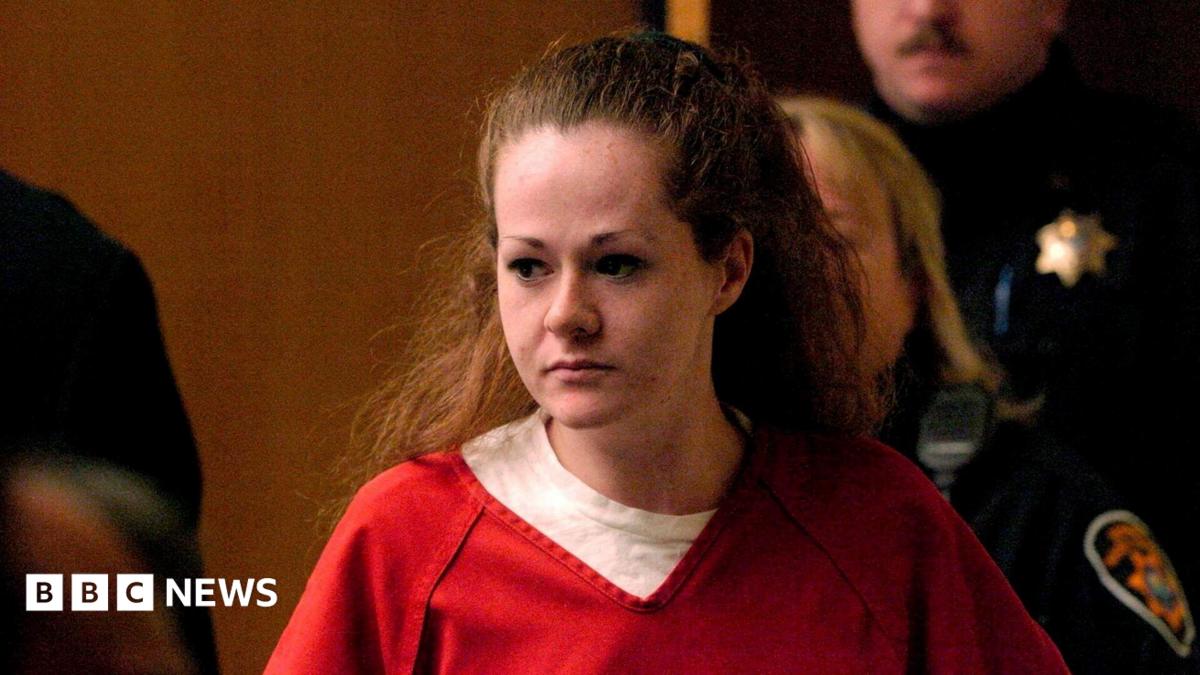
US inmate Christa Pike says she woke up ‘confused and in pain’ after failed execution

Tennessee Governor Bill Lee paused all executions for the remainder of the year and ordered an independent review to “determine exactly what occurred”.

Lee was asked by reporters this week about a potential second execution attempt. “I suspect her sentence will be the same as before unless determined otherwise by the courts,” he responded.

Speaking about the state’s response to what happened to Pike, Mann said: “I find it deeply troubling that, even after what Christa endured, Governor Lee has shown little public willingness to reconsider the death penalty itself, rather than simply the procedures used to carry it out.”

She added: “What happened to Christa is not an isolated tragedy, nor should this conversation begin and end with her.”

The Tennessee Department of Correction has not explained why the execution did not go as planned, though it has defended the method it used.

It declined comment on Pike’s statement when contacted by the BBC.

Slemmer’s mother, May Martinez, was among those pushing for Pike to be put to death and attended the botched execution, later calling it a “mess”.

She told a local ABC News affiliate in Florida, where she lives, that she thinks the state owes her an apology.

“All I wanted was justice,” Martinez said.

Pike was the first woman scheduled to be executed in the state of Tennessee in over 200 years.

Her lawyers have spent decades appealing her case. In the days leading up to her scheduled execution, both the US Supreme Court and Lee declined to block the execution.

The attempted execution of Pike was not the first in Tennessee in 2026 that did not go to plan.

The execution of Tony Carruthers, who was convicted of kidnapping and murdering three people in 1994, was postponed in May after staff were unable to find a vein for a lethal injection. He was granted a year’s reprieve by the governor.

In 2022, more than a third of executions across the US were botched or highly problematic, according to the Death Penalty Information Center, which does not take an ethical stance on the penalty.

Source link