European

European city with £28 UK flights and 20c temperatures in April dubbed ‘capital of cool’

A city nestled in the south of France has seen a major transformation over the last 13 years, ditching its reputation and seeing a major investment, bringing in ‘chic’ and ‘hip’ food spots

A stunning European city with UK flights and 20C temperatures in April has been branded the “capital of cool”. Marseille in the south of France secured half a billion euros of investment after being crowned the European Capital of Culture in 2013.

Since then the world famous port has become known for being “chic” and “hip”. It blends a mix of history thanks to the bustling Vieux-Port, which sits at the bottom of the Canebière, a kilometre-long main street in the city.

Visitors can take a selfie under the Ombrière – a giant umbrella at the port – and a stroll along the quayside before watching the fishing boats head out to sea. Towering above the port is the historic Notre-Dame de la Garde basilica, which offers 360 degree views of the stunning city.

The port however blends history with modern, boasting a range of “cutting-edge museums,” reports the Daily Mail, along with “foodie-approved restaurants” and “trendy bars”. The paper, which describes the city as the “capital of cool”, reports: “Marseille is wonderful for a short break at this time of year, with average daily highs of around 19C-20C – and the seafood is second to none.”

One popular dish in the city in particular is bouillabaisse, an “iconic” fish soup that is served in two dishes. One contains the fish and the other a broth on a stove, with the fish itself traditionally cut up in front of diners.

Bouillabaisse is then served with rouille or aioli sauces with croutons for dipping. The influence of the Mediterranean is also evident in the local cuisine, with anchoïade, a traditional dish made with anchovies, capers, olive oil and garlic, said to contain the “iodine taste of the sea” in “every bite,” reports Ville De Marseille.

Away from the food scene, visitors to Marseille can visit the Le Panier, the oldest district of the city which now boasts small café terraces, street-art coloured facades, and designer shops. Having now become an “open-air museum” the area was first inhabited by the Greeks in 600BC.

It developed a reputation for violence and prostitution in the 20th century but has seen a massive overhaul in the past 13 years. It is now described as one of Marseille’s “must-see districts”.

For nature lovers, the cliffs of the Calanques have been described as a “natural wonder”. The Calanques boast fine sandy beaches, miniature fjords and turquoise waters.

It is the perfect area for people who want to sun-bathe or enjoy a spot of kayaking. YouTuber Nathan Frank, who posts as On World Travel, described Marseille as a “city that doesn’t care if you like it or not”.

He said: “We’ve been here for three days now and I’ve spoken to quite a few locals and they’ve been so friendly. Like more friendly than a lot of places we’ve been to and super down to earth and friendly. Our first impressions of Marseille have been really positive, we have some really good food on the agenda.”

Marseille boasts average temperatures of around 19 to 20C in April. And according to Skyscanner, prices from Manchester Airport start from around £28.

Source link

Beautiful European town is ‘like mini Amalfi Coast’ but cheaper – and less crowded

This destination is a ‘like for like’ alternative to pricey Italian hotspots with beer under £2

While a trip to the Amalfi Coast might seem like the ideal getaway, it’s one that can prove rather pricey, particularly once you account for spending money while you’re there. Yet elsewhere across Europe, there’s another breathtaking coastal spot that serves as an excellent alternative.

Laura Evans-Fisk, head of digital and engagement at Eurochange, has noted a substantial rise in British tourists visiting Bulgaria, with Sozopol emerging as a fantastic alternative to the Amalfi Coast.

Laura says: “Although Bulgaria has joined the euro, prices for things like food, accommodation and drinks are still particularly low compared to other popular holiday destinations like Greece, Spain and Italy.”

For example, you can expect to pay less than €2 (£1.7) for a beer and around €10 (£8.7) for a meal.

“And, Brits don’t need to compromise on the beautiful scenery and beaches these popular hotspots offer. In fact, there are plenty of destinations in Bulgaria that are almost a ‘like for like’ but at a fraction of the cost.”

Championing Sozopol specifically, she added: “This gorgeous coastal town has a really similar feel to the likes of Positano and Cinque Terre, in Italy’s famous Riviera.

“Sozopol’s old town is dotted with quaint wooden houses and cobbled streets that overlook the stunning coastline and bright blue waters.” Stunning Sozopol ranks among Bulgaria’s most ancient coastal towns and remains far less crowded than many other European hotspots.

Sozopol boasts Kavastie and Harmani beaches, along with several beach bars, ensuring that whether you’re after a family outing or an evening of drinks, you’ll find exactly what you need.

And if you fancy a change from lounging on the sandy coastline, there’s no shortage of alternative activities, from discovering the town’s historic churches, to soaking up some culture at Ravadinovo Castle or Sozopol Archaeological Museum, or enjoying a fun-packed day at Aquapark Neptun.

A recent visitor to Kavastie Beach posted on Tripadvisor: “Fantastic beach, one of the very best that I’ve ever been to. Extremely clean, wonderful sand and safe sea ideal for children. Decent bars and restaurants. We’ll definitely be back next year.”

Meanwhile, a tourist who explored Ravadinovo Castle wrote: “A very eclectic castle, but a marvel to behold. A place of wonder. Around every corner was an amazing sight and a surprise. The floors inside the chapel and the ceiling were incredible. A stunning day out.”

And a visitor to the Sozopol Archaeological Museum added: “We spent a few hours at the museum this summer. Although it’s not a huge museum, they have interesting exhibitions. The lady who was in charge of the museum was very nice and told us some peculiar facts about the history of Apolonia. Recommend taking a look at the second floor, where you can find an ancient ‘vampire’ skeleton.”

Source link

Uncrowded European island with charming fishing villages is perfect for summer

The laid-back, authentic island is packed with charming fishing villages, family-run tavernas and stunning underground caves

Summer is just around the corner, and millions of Brits are probably already mapping out their sunshine escapes. If that sounds like you, then Greece offers the perfect combination of sun and sea. But with countless islands on offer, deciding where to go can feel overwhelming.

Through examining search data, TripAdvisor reviews and geological information, yacht charter firm Sunsail has uncovered some of Greece’s hidden treasures where you can dodge the masses.

Among these islands is Meganisi – a relaxed, authentic Greek destination brimming with picturesque fishing villages, family-run tavernas and spectacular underground caves.

The island boasts a fascinating history, ideal for discovery.

Among the unmissable attractions is Papanikolis cave, one of the largest and most renowned sea caves in Greece, reports the Express.

Previously used as a submarine hideout during WWII, this enormous cave extends 120 metres in length and 60 metres in width.

Visitors can join one of the numerous boat excursions and take a refreshing dip in the crystal clear waters inside the cave.

There’s also a secret beach within that you can reach by swimming. One TripAdvisor review stated: “You cannot realise how huge it is until you actually get in there, then you feel so small… an interesting natural wonder.”

On dry land, Meganisi offers plenty to discover. Spanning just 20 square kilometres, it’s compact yet impressive.

Frequently overlooked in favour of its bigger neighbour Lefkada, the island remains wonderfully untouched by overtourism.

Vathi, the island’s largest of two ports, is a delightful, traditional fishing village bookended by two churches, built to bestow blessings upon every vessel arriving and departing the island.

A handful of waterfront tavernas and cafés line the harbour, serving up freshly caught seafood.

The smaller port of Spilia is equally charming, with fewer tavernas but just as much beauty to offer.

A brief stroll around the bay brings you to a lengthy sandy beach, complete with a further selection of snack bars.

Source link

Ten amazing European city or beach holidays for under £100pp INCLUDING flights and hotel

FANCY a weekend exploring a new city in Europe?

You don’t have to spend a fortune or hours flying to have an amazing holiday.

Take a short break to Madrid for tapas, local wine and plenty of free and cheap art attractionsCredit: Getty

Luckily there’s loads of amazing and affordable European cities right on our doorstep – and with cheap and speedy flights, you can tick them off more easily than you’d think.

With delicious street food, cheap beers and plenty of local history, these European city breaks will give you a short haul holiday to look forward to – all for less than £100 per person.

We’ve found destinations you can visit for two nights from £99 or under, including popular capital cities you can tick off your bucket list – plus all of the best things to see and do there.

So whether you want to explore hidden ruin bars in Budapest, catch sunsets at the beach in the Algarve, or visit quirky art galleries in Madrid, these breaks have something for everyone.

Here are 10 European gems where £99 covers both your flights and hotel, leaving you with more to spend when you land.

Prices were correct at time of publication.

Madrid – £99pp

Madrid has masses of world-class art and architecture to exploreCredit: Alexander Spatari

For a sunny city break that’s big on style but easy on the wallet, Madrid is a total winner.

Spain‘s capital has masses of world-class art and architecture to explore.

To tick off some of the top sights, take in the regal beauty of the grand Palacio Real (The Royal Palace of Madrid), or visit the 15th-century Plaza Mayor to get into the real heart of Madrid.

The magnificent views don’t stop there. Make sure to take a visit to the 125 hectare El Retiro Park, where a visit to the stunning glass Crystal Palace won’t cost you a penny.

Art lovers can also hit the so-called Golden Triangle of galleries for free if they time it right.

The world-famous Prado offers free entry from 6 – 8pm from Monday – Saturday, whilst the Reina Sofía opens for free from 7pm Monday – Saturday (excluding Tuesdays).

The Thyssen-Bornemisza completes the trio, with free entry on Mondays and on Saturdays from 9pm.

Then, when hunger hits, skip the tourist traps and join the locals on Calle de la Cava Baja – one of the area’s most lively streets – for a tapas crawl, or grab a legendary calamari sandwich at La Campana for around €4.

Getting around is a breeze, too. While the city is incredibly walkable, the speedy Metro offers a 10-trip pass for just €7.30 (£6.36), plus kids under four travel for free.

Book Your Stay

Loveholidays offer a 2-night room-only stay at the Cuatro Caños hotel from May 18, including return flights from Bristol, from £99pp.

*If you click on a link in this boxout, we will earn affiliate revenue.

Berlin – £89pp

You could go on a city break to the artsy and affordable Berlin from just £89ppCredit: Alamy

Effortlessly cool and cost-friendly, Berlin is packed with things to see and do that won’t cost you a penny.

You can walk through the giant monument Brandenburg Gate, walk the 1,316 metre-long open-air East Side Gallery, or catch a free lunchtime concert at the Berlin Philharmonie at 1pm on Wednesdays.

For the largest open space in the city, head to Tempelhofer Feld. It’s a massive former airport where locals enjoy cycling, skating, jogging and cooking together in the BBQ zone. It’s the ultimate free hangout in the heart of the city.

Going for a night out in Berlin is a must. If you like your music loud and your beer cheap, go to Clash in Kreuzberg. It’s a legendary gritty spot with alternative music and affordable pints.

Book Your Stay

Loveholidays offer a 2-night stay with breakfast at the Mercure Hotel & Residenz Checkpoint Charlie from 27 April, including return flights from East Midlands airport, from £89pp.

*If you click on a link in this boxout, we will earn affiliate revenue.

Prague – £99pp

Visit Prague for a city with a fairytale feel that won’t blow your budget.

To see the city at its best, set an early alarm to walk Charles Bridge at sunrise before the crowds arrive, or wander the sprawling Prague Castle courtyards and the peacock-filled Wallenstein Palace Gardens for free.

To sample some of Prague‘s best budget-friendly food, hunt down a deli for a traditional open-faced chlebíček sandwich for about CZK 30 (£1.09) or grab a massive slab of smažený sýr (fried cheese) from a street stall for around CZK 135 (£4.80).

One of the best ways to see the city is to hop on Tram 22. It’s essentially a sightseeing tour that goes past the National Theatre and right up to the gates of Prague Castle.

A standard 30-minute ticket costs 36 CZK (£1.28).

Book Your Stay

Loveholidays offer a 2-night room-only stay at the Plus Prague Hostel from 26 April, including return flights from London Stansted, from £99pp.

*If you click on a link in this boxout, we will earn affiliate revenue.

Budapest – £99pp

Visit the Charles Bridge across the Vltava River early in the morning for unbeatable viewsCredit: Getty – Contributor

If you’re after a holiday with a high-end feel that won’t break the bank, Budapest is for you.

Hike up Gellért Hill for a panoramic sunset, or explore the fairytale lower turrets of Fisherman’s Bastion for free.

You’re not short of options when it comes to street food in Budapest. Head to the Great Market Hall to grab a massive, garlic-rubbed lángos (deep-fried flatbread) from 900 HUF (£2.04).

Plus no visit to Budapest is complete without trying a cylinder-shaped chimney cake, which you can buy from vendors across the city for around 1,000 HUF (£2.27).

A relaxing trip to the thermal baths is another must when in Budapest. Dandar is the cheapest option, and even cheaper if you visit on a weekday. An adult ticket costs 3,500 HUF (£8.08) during the week compared to 4,000 HUF (£9.23) on weekends and public holidays.

When night falls, dive into the legendary Jewish Quarter ruin pubs like Szimpla Kert, where you can grab a local pint amidst a maze of quirky, recycled decor.

Book Your Stay

Loveholidays offer a 2-night stay with breakfast at the Easy Star Hotel from 26 April, including return flights from London Stansted, from £99pp.

*If you click on a link in this boxout, we will earn affiliate revenue.

Krakow – £99pp

Wawel Castle has historical courtyards with a dragon statue that are free to visitCredit: Getty

Krakow is a European city that’s known for its affordability and great nights out – what more could you want from a city break?

Head to Wawel Royal Hill, where the castle courtyards and the fire-breathing dragon statue are free to visit, before crossing into the Kazimierz district to see its bohemian courtyard cafes and street art.

Plus you can visit the Rynek Underground Museum on a Tuesday for free entry, or take a walk through the Planty Park, a belt of vibrant green that surrounds the Old Town where the medieval defensive walls used to be.

For a lunch that costs less than a coffee back at home, hit a Milk Bar like Pod Temidą for a huge plate of pierogi for 29 zł (under £5.89), or grab a zapiekanka (a pizza-like giant baguette) in Plac Nowy for around £3.

Drinks are a steal too, with local beers in the city’s famous cellar bars still priced around £2.20.

Book Your Stay

Loveholidays offer a 2-night room-only stay at the Hotel Daisy Budget from 27 April, including return flights from Manchester, from £99pp.

*If you click on a link in this boxout, we will earn affiliate revenue.

Lloret de Mar, Spain – £77pp

Take a scenic coastal cruise to Tossa de Mar, where a castle overlooks the beachCredit: Alamy

Who can say no to a sun-soaked weekend away in Spain from just £77pp?

Follow the Camino de Ronda coastal path for a cliffside trail that leads to hidden, turquoise coves like Trons Bay and the peaceful Fenals Beach.

For even more beautiful views, explore the Santa Clotilde Gardens, where Renaissance-style terraces overlook the sea, or visit the colourful Sant Romà Church in the town centre.

When you get hungry, avoid the beachfront tourist traps and look for a Menu del Día in the backstreets, where you can get three courses and authentic dishes including seafood or paella from just €10 (£8.71).

The nightlife here is legendary for a reason – you can find bars offering cocktails for £5 and beers for under £3 at your pick of spots along the strip.

And if you’ve got time after all of those adventures, take the local Dolfi boat taxi to the nearby medieval town of Tossa de Mar for €30.40 (£26.46) return. It’s a scenic coastal cruise and a day trip to a castle overlooking the beach all in one.

Book Your Stay

Lastminute.com offer a 2-night stay with breakfast at the BLUESEA Montevista Hawai, including return flights from London from £77pp.

*If you click on a link in this boxout, we will earn affiliate revenue.

Salou, Spain – £92pp

Salou makes for an ideal short break for families, with Port Aventura World nearby

Big on thrills and little on costs, Salou is the crown jewel of Spain’s Costa Dorada.

For the best coastal views, walk the Camí de Ronda and dip into glimmering turquoise coves like Cala Crancs.

For an exciting day out, PortAventura World is renowned for its theme parks with rollercoasters and water parks with giant slides all in one place. You can grab a day pass from TUI for £37 per adult and £32 per child.

For a spectacular and free evening activity, head to the Jaume I Promenade to catch the Cybernetic Fountains – a vibrant display of water, music, and laser lights.

The nightlife here is famous for its value, with bars along the Carrer de Saragossa offering pints for €2 (£1.74) and free shots to get the party started.

For a slice of history, take a short bus ride to the nearby city of Tarragona where you can explore its UNESCO-listed Roman amphitheatre by the sea, and cool off with a gelato in the historic Old Town.

Book Your Stay

Lastminute.com offer a 2-night stay at Hotel Best Da Vinci, including return flights from London Stansted, for £92pp.

*If you click on a link in this boxout, we will earn affiliate revenue.

Le Raincy, France – £96pp

Le Raincy is a lesser-known French destination just 30 minutes from the Gare du Nord in Paris.

Its crown jewel is the Notre-Dame du Raincy – a modern church built entirely of concrete that shines with light thanks to its stunning floor-to-ceiling stained glass. Plus it’s completely free to visit.

Here you can wander the leafy, tranquil streets of this so-called garden city, a slice of peace and quiet away from the pace of central Paris.

For an authentic and affordable lunch, grab a freshly-baked baguette and some local cheese from a boulangerie on Avenue de la Résistance.

In the evenings there are plenty of cosy bars to dip into, like Le 40, where you can enjoy a glass of French wine and some charcuterie without the “tourist tax” of the city centre.

Lastminute.com offer a 2-night stay at Zenao Appart’hôtels Le Raincy Thiers, including return flights from Birmingham, for £96pp.

San Antonio, Ibiza – £95pp

We found 2-night breaks to sunny San Antonio in Ibiza from just £95ppCredit: supplied

If you want the White Isle experience without the price tag, San Antonio is the way to go.

Start evenings on the legendary Sunset Strip, where crowds gather on the rocks to watch everything from the sun dipping into the Mediterranean to a world-class DJ.

Or head to the Kumharas beach bar and market for a hippy vibe with live music, again perfect for watching the sunset.

Cocktails here will set you back €14 (around £12), but for the stunning views and beach club atmosphere, it’s very affordable compared to elsewhere in Ibiza.

To get your steps in and culture fix at the same time, follow a free street art tour through the town’s backstreets.

The nightlife in the West End is where the real savings are, with many bars offering “pre-club” drink deals that are a fraction of the £15+ you’d pay for inside the big venues.

Book Your Stay

On the Beach offer a 2-night stay at the adults-only Brisa hotel, including return flights from London Stansted, for £95pp.

*If you click on a link in this boxout, we will earn affiliate revenue.

Albufeira, Portugal – £95pp

You could be topping up your tan on the beaches of Portugal’s Algarve on a break from £95ppCredit: Getty

Albufeira is one of the most affordable holiday destinations in the Algarve, and it’s equally as beautiful as it is budget-friendly.

Spend days exploring the whitewashed alleys of the Old Town, or wandering through rock tunnels to reach the golden sands of Praia dos Pescadores.

Plus the Pau da Bandeira viewpoint makes for the ultimate postcard-like photo of the coastline.

When night falls, the neon-lit strip in Montechoro is the place for bargain hunters, with happy hour pints at spots like Rock Time starting from just €1.95 (£1.70).

When it comes to transport, avoid the pricey taxi ranks and use the Giro local bus network to reach spots like the spectacular Praia da Falésia, with its red cliffs and endless golden sands.

Book Your Stay

On the Beach offer a 2-night stay at the 16+ Areias Senses hotel, including return flights from Glasgow Prestwick, for £95pp.

*If you click on a link in this boxout, we will earn affiliate revenue.

Source link

European Union travel rules could slow tourists without EU passports

New rules for entry into the European Union might slow down people without EU passports. File Photo by Patrick Seeger/EPA

April 10 (UPI) — The European Union has implemented a new digital border system for those traveling without an EU passport, and it’s likely to cause long lines at airports and border crossings.

The new Entry/Exit System requires non-EU passport holders who don’t need a visa to enter — including Americans — to present their passports, give fingerprints and take a photo when entering their first EU country if they are staying up to 90 days.

Ireland and Cyprus are not participating.

They will also have to answer a few questions about their visit, such as how long they’re staying, where and if they will have enough money.

People with a United States passport would have to do this upon landing at their first EU airport. After that, their passport will be enough for entry around Europe for three years, but they’ll have to answer questions on each trip.

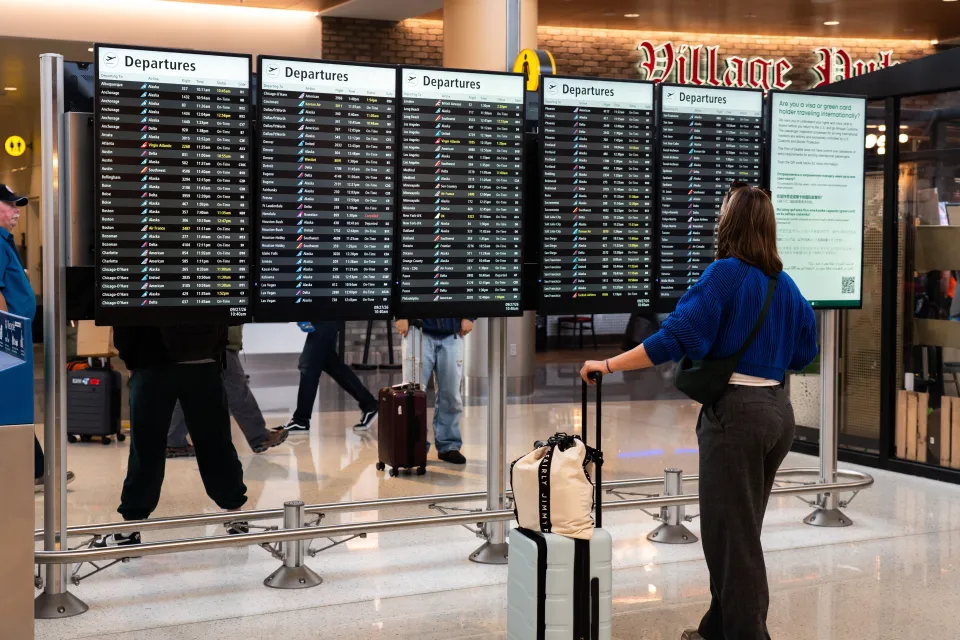
Many airports and border crossings have set up electronic kiosks that allow users to scan themselves in, but the wait could be long. Before this, non-EU members could move freely across borders without stopping.

A new visa-waiver system called European Travel Information and Authorization System is coming at the end of 2026. No date has been announced yet. This will allow travelers to apply to register their information before their trips and link it to their passports.

ETIAS will cost $23.44 per person and will also last three years. Those under 18 and over 70 will not have to pay.

At Dover, England, ferry passengers have had to use the kiosks a mile away from the ferry, the BBC reported. People will have to take buses that will drive them to the ferry.

Eurostar, which runs trains through the English Channel Tunnel, has installed 49 EES kiosks in its London St. Pancras terminal. But right now border police are doing the checks, BBC reported.

Eurostar said it will use the kiosks “once the operational software and the activation timetable are confirmed and approved by the French Ministry of Interior.”

The Channel Tunnel has installed more than a hundred kiosks on each side of the Channel.

John and his wife Phil, a married couple from Motherwell, Scotland, said they stood in line for five hours in Pisa Airport after flying in from Glasgow.

John, with an Irish passport, was in line for an hour, but Phil has a British passport and had to wait.

“When I came through, all the planes which had arrived in the hours before had all their suitcases unloaded from the carousel, left stacked on the concourse floor,” John told the BBC.

“There were several elderly people in those queues and, as you can imagine at this time, lots of children. Our government must do something about this,” he said.

Children race to push colored eggs across the grass during the annual Easter Egg Roll event on the South Lawn of the White House in Washington on April 21, 2025. Easter this year takes place on April 5. Photo by Samuel Corum/UPI | License Photo

Source link

European airports could run out of jet fuel in WEEKS with half-term holidays in jeopardy as Iran war sparks more chaos

AIRPORTS in Europe are at risk of running out of fuel in just weeks, experts have warned, sparking fears for half term holidays.

The conflict in Iran continues to cause chaos across the world, with the latest seeing President Donald Trump slam the regime for breaking the short-lived ceasefire.

Brits could face flight cancellations and prices rises for the upcoming May half-term school holidaysCredit: Zenpix
Cancellations have already left thousands without flights in recent weeks, and it could soon get even worseCredit: Getty

This came after Iran closed the Strait of Hormuz just hours into a two-week ceasefire agreement.

Travellers are now being warned that flights could be cancelled and prices could soon rise as fuel reserves are expected to run out due to ongoing closure.

And it could mean chaos for Brits heading abroad for the school May half-term holidays.

According to ACI Europe (the lobby group for airports in Europe), fuel reserves are expected to run out in less than three weeks unless the Middle East increases supplies.

SI YA

Can I cancel my Spain holiday? Latest Canaries advice after snow & cancelled flights


GROUNDED

Another European airline cancels all flights to Dubai until summer

ACI Europe warns: “If the passage through the Strait of Hormuz does not resume in any significant and stable way within the next three weeks, systemic jet fuel shortage is set to become a reality.”

It added that the shortage of fuel supply is likely to “severely disrupt airport operations and air connectivity”.

Around 140 ships usually pass through the Strait of Hormuz – yet has dropped to just seven ships today.

For Brits, this could mean travel chaos for May half-term getaways including popular destinations such as Spain, Italy and France.

The announcement comes as a number of airports in Italy already warned that they were running out of fuel.

According to local reports earlier this week, Brindisi-Casale Airport confirmed that Jet A1 fuel was not available for a short period of time.

While this didn’t result in any flight cancellations, airlines were warned to fly with enough fuel for the return journey.

This is because any remaining fuel was being reserved for emergency situations including medical flights.

A statement said at the time: “Jet A1 fuel is temporarily unavailable at Brindisi Airport.

“Refueling is permitted only for state, emergency medical services, and medical flights.

“Pilots are advised to refuel at previous stopovers to cover subsequent flights.”

Restrictions were also in place at other airports in Italy including Milan Linate, Venice, Bologna and Venice temporarily.

Despite this, Antonio Maria Vasile, president of Aeroporti di Puglia, commented regarding the news of the alleged fuel shortage.

He said at the time: “Fuel supplies continue regularly, and there is no risk of an imminent shortage.”

The Iran conflict has seen strikes across the Middle East, including Beirut (pictured)Credit: AFP via Getty Images
Fuel prices have surged in recent weeks due to the reduction of shipments via the Strait of Hormuz
SAS has already cancelled more than 1,000 flightsCredit: Reuters

And it isn’t just Italian airports being hit by the fuel crisis.

The Australian government has warned that the country only has around 30 days of jet fuel left.

The announcements also come as some Asian countries are grounding flights and European airlines are making plans to deal with shortages.

Back in March, United Airlines CEO Scott Kirby said: “It’s entirely possible that parts of Asia are just going to run out of fuel.”

Both Scandinavia’s SAS and Poland’s Lot have already cancelled flights.

Air New Zealand has cancelled thousands of flights due to fears of fuel shortages.

And UK airline Skybus announced that it was stopping all flights between Cornwall and London due to a huge rise in fuel costs and a drop in new passenger bookings.

The Sun’s Head of Travel explains more…

Lisa Minot, the Sun’s Head of Travel, has weighed in on what this could mean for you holiday

Fears of fuel shortages at European airports could lead to a disastrous start to summer putting holidays and flights at risk in the popular half term week.

Ryanair boss Michael O’Leary had already started to raise his concerns – saying last week that if the war continues beyond the end of April it could impact between ten and 25per cent of the low cost giant’s fuel supplies.

But the fresh warning from European airports is a step up in the crisis.

Unless ships start to pass through the Strait of Hormuz with increased regularity, we could see fuel shortages at airports across the globe.

We’ve already started to see cancellations, with flights to Guernsey operated by Aurigny and to Newquay by Skybus axed in concerns over fuel shortages.

Further afield, Vietnam and Pakistan have warned of fuel shortages and Air New Zealand has begun cancelling some domestic flights.

The lack of clarity as to when the situation will improve will do nothing to calm fears and it is unsurprising that travel companies and airlines have seen demand dip as worried holidaymakers await better news.

The longer the situation remains uncertain, the more damage is done.

Even Michael O’Leary, chief executive of Ryanair, has also warned of “the risk of supply disruptions in Europe in May and June” unless the war ends quickly.

Fuel prices have soared compared to what they were before the war in the Middle East broke out.

Last week, the cost of filling up an average diesel tank broke through the £100 mark for the first time since December 2022.

And the Iran conflict has taken Dubai off the holiday list, with the UK Foreign Office still warning against non-essential travel.

Hundreds of thousands of travellers were left stranded abroad when the conflict resulted in airspace closures and Dubai Airport closing.

While limited flights have returned, most airlines are still axing flights to Dubai, as well as other destinations in the Middle East.

This has also had a knock-on effect of airlines that travel via the Middle East, such as Thailand, Vietnam and Australia.

British Airways has axed more flights to the Middle East this week as the crisis continues.

And some airlines are even hiking the cost of baggage due to rising fuel costs.

Some airlines have already cancelled flights as a result of the shortagesCredit: Reuters

Source link

Full list of 29 European countries being hit by new travel rules tomorrow

BRITS visiting Europe will be hit with new travel rules from tomorrow, but there are still some exceptions.

A total of 29 countries are set to implement the EU’s Entry/Exit System (EES) from Friday, April 10.

The new Entry/Exit System is set to be implemented tomorrow, however some areas are reporting issuesCredit: Reuters
British passport holders traveling to Europe will face new entry rules from Friday, April 10Credit: Getty

The EES will replace passport stamping for all non-EU citizens this week, after an initial rollout in October 2025.

This new entry system will use machines across airports, ferry terminals, and the Eurostar to log fingerprints and facial images and scan passports.

These machines will be in place at destination airporta when arriving into the EU and before departure for rail and ferry trips from the Port of Dover, Folkestone, and St Pancras International.

All “third-country nationals”, including Brits, will be required to register their details on these machines during their first visit to a Schengen area country, as well as in Iceland, Lichtenstein, Norway, and Switzerland.

QUEUE UP

Travel chaos is coming and it will affect EVERYONE – here are our 7 tips for EES


EU-R ON

What’s the difference between EES and ETIAS? New travel rules this year explained

Meanwhile, manual passport stamping will continue to be used in Ireland and Cyprus.

Initially scheduled to become fully operational across all Schengen area border crossing points from Friday, the new process doesn’t appear to be ready in some countries.

Reports suggest that some crossing points are not prepared to start processing non-EU nationals via the new EES machines.

Technical issues in France are having a knock-on effect for the system’s rollout at the Eurostar, as well as at the Eurotunnel Le Shuttle and on cross-channel services between the Port of Dover and Calais.

French authorities confirmed travellers using these services will not be asked to provide fingerprints or facial images as the technology is not yet in place.

Only lorry drivers and coach and foot passengers will be required to register with EES at the Port of Dover.

Chaos is also anticipated for air passengers, with some airports preparing to open Brit-only border control queues in the hope of easing wait times.

The Spanish operator, Aena, said it would adapt security and border control for Brits at Ibiza, Menorca, Malaga and Palma, Majorca airports.

Digital EES records will be valid for three years, with non-EU nationals who return during this time only required to provide a fingerprint or photo at the border, when entering or exiting.

29 countries implementing the Entry/Exit System

  • Austria
  • Belgium
  • Bulgaria
  • Croatia
  • Czech Republic
  • Denmark
  • Estonia
  • Finland
  • France
  • Germany
  • Greece
  • Hungary
  • Iceland
  • Italy
  • Latvia
  • Liechtenstein
  • Lithuania
  • Luxembourg
  • Malta
  • Netherlands
  • Norway
  • Poland
  • Portugal
  • Romania
  • Slovakia
  • Slovenia
  • Spain
  • Sweden
  • Switzerland

The introduction of EES will be fully rolled out tomorrow, with 29 countries included on the listCredit: Reuters

Source link

Inside the little-known European theme park named the best in the world that’s getting a new £87million waterpark

A EUROPEAN theme park less than two hours from the UK has been named the best in the world.

Liseberg in Gothenburg, Sweden is home to Europe‘s longest dive coaster and highest free-fall ride – and will soon be getting a new waterpark.

Liseberg theme park in Gothenburg, Sweden, has been named the best theme park in the worldCredit: Alamy
Liseberg theme park is getting a new waterpark which could open this yearCredit: Lisberg
Inside, it will feature 19 water slides and a “dynamic river”Credit: Lisberg

Follow The Sun’s award-winning travel team on Instagram and Tiktok for top holiday tips and inspiration.

Named the top theme park by Blooloop, Liseberg has over 40 rides and attractions which include the new £87million Oceana waterpark.

Following a fire in 2024, plans for the waterpark were revised and now the attraction is expected to open either this year or next year.

The Oceana waterpark will feature 6,000-square-metre of indoor pools and 4,000-square-metres of outdoor water attractions.

Read more on travel inspo

GO ON

All the little-known websites for cheap or FREE tickets to gigs, theatre & festivals


SANDS GREAT

Our favourite seaside towns to visit as temps hit 25C – with breaks from £13pp

There will be 19 water slides, a 244-metre “dynamic river” and water go-karts.

There will also be an indoor and outdoor bathing area.

The new attraction will be able to host up to 1,750 guests at any one time, across both the indoor and outdoor areas.

A café, a shop and a restaurant will be on-site as well.

Last year, the theme park revealed a new family attraction called Stormvåg (Storm Wave) which will open this summer.

The new Stormvåg (Storm Wave) ride will be a family swing ride, with a boatyard theme.

Liseberg can be found on a forested hillside and has a number of different areas including Rabbit Land which is dedicated to the park’s green rabbit mascots and features gentle rides for little kids.

The park has a number of different areas including Luna Park which is a retro space themed area and another area is themed around Nordic mythology.

Thrill rides include a wooden rollercoaster called Balder and a launch rollercoaster called Helix.

There will be both indoor and outdoor attractions at the waterparkCredit: Lisberg
The new attraction will be able to host up to 1,750 guests at any one timeCredit: Lisberg
There will also be a café, a shop and a restaurantCredit: Lisberg

Unlike other theme parks in Europe, visitors have to navigate around the theme park using escalators due to its hillside location.

Tickets to the park cost £29.30 per person, and that includes unlimited goes on the rides.

For those wanting to extend their time at the park, there is a hotel as well – The Grand Curiosa Hotel.

The hotel can be found at the park’s entrance and boasts 457 rooms.

Inside, there is an 18th century whimsical and ‘curiosity’ theme with a slide in the lobby and even a carousel in the restaurant.

Each floor has its own theme ranging from the ocean to mythical creatures and is meant to reflect the curiosity of explorers from the 18th century.

There will also be a new family attraction called Stormvåg (Storm Wave) which will open this summerCredit: Lisberg
The theme park features over 40 rides and attractions in totalCredit: Alamy

There is also a cinema room in the hotel, as well as playrooms.

Rooms at the hotel cost from £107.97 per night.

The easiest way to get to Liseberg is by flying to Gothenburg, which takes just under two hours and costs as little as £13 per way for a one-way flight in April from either London or Edinburgh.

Then from the airport it is about 20 minutes on public transport to the park, or if you are travelling to the park from central Gothenburg it takes only 10 minutes via public transport.

You can even stay at The Grand Curiosa Hotel without going to the theme park, so it makes the ideal base for exploring the city of Gothenburg as well.

In other attraction news, the UK’s best theme park’s £12million Viking-themed land to open next month.

Plus, a popular seaside amusement park that’s FREE to visit is getting new rides.

And it is just a 10 minute journey from the city centreCredit: Alamy


Source link

The new European travel rules starting TOMORROW as experts and airlines warn of chaos 

NEW travel rules for Brits visiting Europe are being rolled out tomorrow, and it includes everything from airports to ferry ports.

The new rules require all non-EU nationals to register their details like fingerprints and facial images before going abroad – but it’s set to cause chaos as some countries aren’t ready.

The deadline for EES is set to be fully operational is tomorrowCredit: Alamy
If you’re heading to the beach this summer you could experience delays at the airportCredit: Alamy

The EU’s Entry/Exit System (EES) started a phased rollout on October 12, 2025 in 29 European countries and will be fully operational as of tomorrow – April 10, 2026.

EES is replacing the need for a passport stamp by automatically checking when a person enters and exits an EU country.

Non-EU nationals – which includes Brits – will be required to register their details on their first visit to a Schengen area country.

This is done by using the EES machines at airports, ferry terminals and the Eurostar to log fingerprints, facial images and scan passports.

TRIP UP

The Sun’s travel experts reveal their best EVER holidays & how you can do them too


DIG IN

We found 20 of the cheapest all-inclusive hotels for summer… with breaks from £349pp

Up until now, not every traveller has had to register with EES, but from tomorrow, that will change.

Even through the phased process, it hasn’t been smooth, and there have been reports of long queues across Europe with travellers at airports waiting for hours to register with EES.

Travel Reporter Alice Penwill spent three hours getting through the arrivals hall at Lanzarote Airport last month.

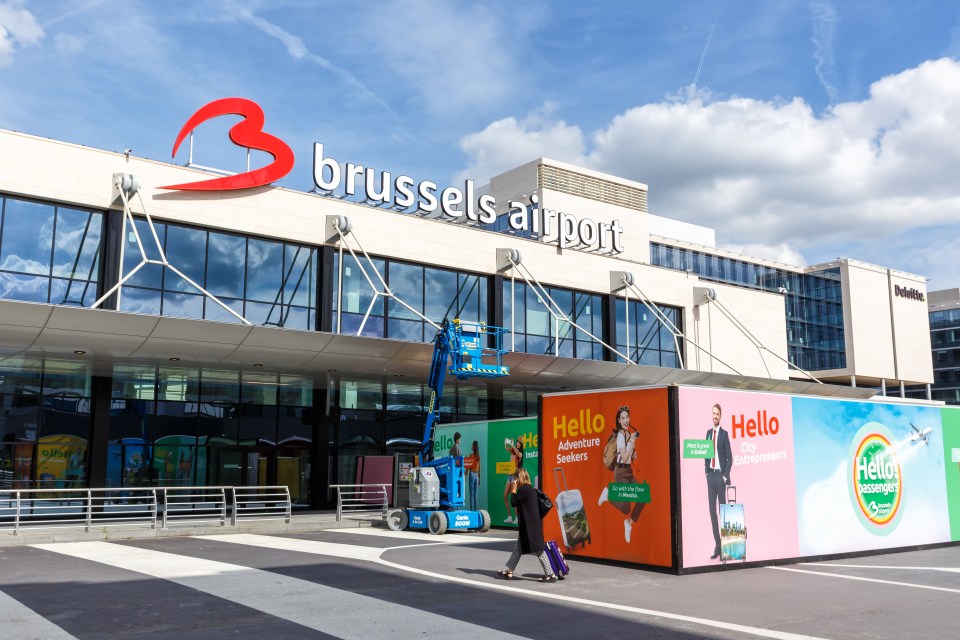
And delays have been reported at other airports like BrusselsLisbon and Prague.

With summer holidays on the horizon and lots more Brits going abroad than off-peak season, officials have even called for the EES to be delayed until later in the year.

Airports Council International, Airlines for Europe and Iata, the airline trade body, have warned about further delays of “four hours or more” during the summer.

Advantage Travel Partnership chief executive Julia Lo Bue-Said told Travel Weekly just two days ago that there are still “significant issues” with EES.

She added: “While we understand the importance of modernising border processes, a smooth rollout must be prioritised in order to avoid major travel chaos at peak periods.

“With very high demand for travel over the upcoming summer holiday period, we are deeply concerned about the impact delays could have at a time when it is vital we maintain high consumer confidence within a travel sector facing global uncertainty and rising costs.”

Reporter Alice Penwill queued for three hours in Lanzarote Airport

Ryanair boss Michael O’Leary called EES “a shambles” and called for EES to be delayed “for five months” until the end of September to ease congestion.

To avoid the predicted travel chaos, some airports are preparing to open Brit-only border control queues in the hope of easing wait times.

The Spanish operator, Aena, said it would adapt security and border control for Brits at Ibiza, Menorca, Malaga and Palma, Majorca airports.

It’s not just airports, ferry terminals and the Eurostar using EES – but reports state that these will actually miss tomorrow’s deadline.

Visa HQ reported that France’s Ministry of the Interior has postponed full EES checks at border points like the Eurostar terminal in St Pancras and the ports of Dover and Calais.

French authorities said that travellers on Eurostar, Eurotunnel Le Shuttle and cross-Channel ferries will not be asked to provide fingerprints or facial images as the technology is not yet in place.

At the Port of Dover, only lorry drivers, coach and foot passengers are registering with EES.

The EES system has been “paused for several weeks” because reportedly, ‘software integration tests failed and physical booth space is still inadequate’.

Here are Sun Travel’s top tips for those heading on holiday this summer and are likely to be caught up in EES chaos…

You might not be able to beat the EES queues – but here are our seven ways to make it a little easier

  1.  Book a seat at the front of the plane. If you want to get to border control before the rest of the passengers on your flight, then by being at the front, you’ll be able to get off first.
  2. When you’re booking, it might ease wait times if you go head out on one of the first flights of the day There are generally fewer scheduled flights and they experience less disruption. So if you get an early flight, there’s less likely to be a backlog.
  3. If you are taking a connecting flight, we’d advise to anticipate delays Of course this varies from airport to airport, but some travellers might find it will take longer to get through because of the EES requirements.
  4. If you can go to a bigger airport and take a longer road transfer, it could be worth it. At a larger airport there’s likely to be more EES machines than at one of the smaller ones.
  5. If you have children, or are generally just bored of queues (and who can blame you?) – think about entertainment. It could be worth setting the kids up with an iPad or something that will keep them occupied.
  6. For those who are disabled, make sure to let the airline know in advance as you would usually. After landing, staff should escort you straight through to the front of border control queues.
  7. Quite simply, if you are going to be waiting in line for hours, then you want to be comfortable. So before landing, go to the toilet on the plane.

For more on EES and what to expect – hear from our travel expert who will guide you through the registering process.

And one of the world’s best airlines becomes latest to introduce strict new rules on travel item.

The introduction of EES will be fully rolled out tomorrow – but experts warn of ‘chaos’Credit: Alamy

Source link

European Challenge Cup: Zebre v Dragons – Wales hooker Brodie Coghlan’s pride in European journey

It has been a breakthrough season for Coghlan who was named in Wales’ autumn squad and won his first cap as a replacement in the 73-0 defeat against South Africa in November 2025.

The former Wales U19 international was left out of the Six Nations squad but wants a Test return.

“It was incredible,” said Coghlan.

“When I did get my chance to get my cap, it was a special feeling, hard to explain, a lot of emotions and just felt incredibly proud.

“Growing up it’s your dream goal and that feeling is something now I want to keep chasing.

“I want to do everything I can to get back in there and represent my country, so hopefully I can get more caps in the future.”

Coghlan is being inspired by Dragons and Wales hooker Elliot Dee, who he is currently keeping out of the starting side.

“Elliot’s a legend and so supportive of me,” said Coghlan.

“He’s given me lots of tips over the last few years.

“He’s really competitive as well, so it’s what drives me to train harder. I want to try to push myself to do what he’s done.

“The amount of caps he’s had for Wales, the games he’s had for the Dragons, to have him in the group and to learn so much off him is class.”

Source link

Eurostar launches flash sale across ALL its destinations with £35 tickets to 5 European cities – but they sell out quick


EUROSTAR has launched another huge flash sale with tickets starting at just £35 – but you’ll have to be quick. If you’re looking for your next European getaway, now’s the perfect time to book. The flash sale is across all Eurostar destinations, but the reduced tickets are only too five specific European cities. Travellers can…

Source link

I found a weird European ski resort where you can ski at midnight in the sunshine

The ski resort of Riksgränsen is the most northerly in the world, sitting way into the Arctic Circle. It is treated to regularly displays of the Northern Lights and delivers midnight skiing at middsummer

‘I found an odd European ski resort where you can ski at midnight in the sunshine’

If you think that you’ve missed your chance to go skiing in Europe this year, then you’d be wrong.

There is a resort where the slopes remain open not just through April and into May, but in the high summer days of June.

Riksgränsen, a small ski resort in Arctic Sweden, is the most northerly in the world. It’s 94 miles further up the road from the famous ICEHOTEL, which has melted away into the river by this time of the year.

By June 21, the snow farmers of Riksgränsen have been hard at work for weeks, making sure there’s enough coverage on the 909m tall mountain for the Midsommar downhill jamboree. They’ve dug, they’ve blanketed and they’ve cornered off sections of the mountain.

The reward is three hours of skiing, unlike anything you’ll find elsewhere in the world. From 10pm to 1am, T-shirt-clad skiers whizz down Riksgränsen’s 21km of pistes, basking in the strange phenomenon of bright sun and blue skies throughout the night. At 68.4266°N, the sun won’t disappear again for another month.

When I visited the Swedish resort, it wasn’t nighttime and the sun was nowhere to be seen. Instead, a heavy cloud hung over the mountain, the wind whipping my face as I sat shivering on the ski lift. Skiing in Sweden in March hits a little differently.

READ MORE: Beautiful pub island that’s ‘frozen in time’ with secret nightclub run by OAPsREAD MORE: I stayed in the new ice hotel – it’s not the cold that some guests can’t handle

Unlike the Alpine ski season, where the temperature hangs around the 0 °C mark and there’s a 10 euro hot chocolate to warm your cockles at the bottom of every piste, Sweden’s resorts get really, really cold. -20C cold. Cold enough that after a few trips down Riksgränsen’s jump-littered slopes, you need to retreat to one of two food huts for a finger-thawing plate of meatballs or a veggie hot dog loaded with crispy onions.

The resort also stands out from others I’ve been to in terms of vibe. Gone are the Dior all-in-one après-skiers of the French Alps, replaced with gnarly 20-something youth hostellers who all seem to know how to backflip.

Riksgränsen is known as a paradise of off-piste skiing, and it does not disappoint. Either side of every piste is acres of mazy terrain, perfect for exploring and throwing yourself down. The resort also specialises in heli-skiing and snowmobile tours. You can even book yourself a caving tour at the nearby Kåppasjåkkagrottan, the largest cave in Sweden.

Riksgränsen translates as national border. Its area extends into Norway, meaning when you ski down the “Gränsleden” (border run), you swing into a different country at every corner.

This boundary-hopping continues with the Arctic ski pass required to access Riksgränsen’s slopes. Starting from about £140, it also gets you onto the lifts of Björkliden, Fjällby and Narvikfjellet.

The two other resorts offer very different skiing experiences.

Björkliden is perfect for families, with a gentle mountain criss-crossed with runs through the pine trees ideally suited to beginners. Hotell Fjället sits metres from its bottom ski lift and is an excellent place to stay. Comfy, staffed by friendly ski enthusiasts from across Sweden, and boasting a dramatic view of Lapporten from its breakfast room. The U-shaped valley is known as ‘the gateway of Lapland’ and for providing a framing of the Northern Lights, which I was lucky enough to witness twice during a three-day trip. The 11-year solar cycle recently peaked, meaning the Arctic was doused in glorious streaks of green on a near-nightly basis.

A little further north is Narvik, where the mountains are higher and the slopes more intense. The resort is currently undergoing a major upgrade ahead of the FIS Alpine World Ski Championship arriving in 2029.

The warming effect of the Gulf Stream means the port does not freeze. The view along the deep blue Ofotfjorden that treats skiers as they descend down the biggest drop in northern Europe is simply breathtaking.

Book it

The Arctic ski pass costs from £140

Chalets at Björkliden’s Hotell Fjället cost from £166 a night.

Flights to Kiruna (a short train ride away from Björkliden, Fjällby and Narvikfjellet) cost from £96 in June.

Source link

Beautiful European train journey that’s half the price of a plane ticket

A scenic train journey from London to Geneva via Paris offers some of Europe’s best views – and can cost half the price of a plane ticket at around £135 return

A rail journey linking three capital cities boasts some of Europe’s most breathtaking scenery—and could set you back half the price of a flight.

The Eurostar and France’s TGV whisk passengers from London to Geneva, making the very most of a trip that spans three nations. The train departs from St Pancras with a change in Paris before heading onwards to the Swiss capital.

It’s a nearly six-hour journey in total, passing through Montbard, Dijon and Bourg-en-Bresse, offering stunning vistas of national parks and rolling countryside. Passengers can hop off in Paris to discover the city—with landmarks including the Eiffel Tower, Notre-Dame, the Champs-Élysées, Sacré-Cœur and the Louvre.

Once the train pulls into Geneva, visitors can take in Lake Geneva, Cathédrale de Saint-Pierre, the Palais des Nations, the botanical gardens and the Brunswick Monument.

From there, it’s also a brief trip to the nearby Alps, with day excursions available from the city to ski or snowboard on the slopes and savour the local restaurants. The train can be half the price of a plane ticket. According to Skyscanner, return flights this month cost up to £394.

During the same period, return train tickets cost around £135, half the price of a flight, according to Trainline.

Families can also cut costs by purchasing Interrail passes—£482 for a family of four to travel on four days within one month, plus seat reservation charges. And expense isn’t the sole advantage.

According to the Times, four passengers journeying from London to Geneva and back by rail produce approximately 44kg of carbon emissions, compared with 108kg by car and 1,608kg by plane. The Intergovernmental Panel on Climate Change states that, to maintain climate change within sustainable limits, each person has a carbon “budget” of 1,500kg of carbon emissions per year.

Although there are a number of factors that determine how polluting different forms of travel are, such as the type of electricity production used to power trains, riding the rails is typically greener than flying.

Back in 2023, carbon calculations made by the Rail Delivery Group found that travelling by rail from London to Edinburgh creates 10 times fewer carbon emissions than by car and 13 times fewer than by plane.

One of the tricky considerations for passengers is generally cost, with budget airlines such as Ryanair, easyJet and Wizz Air typically offering cheaper plane tickets than the equivalent train tickets.

The route from London to Geneva shows that it is not always the case. The price gap between the two forms of transport may also be getting smaller.

Travellers are facing rising airfare costs and reductions in flight schedules as the conflict in the Middle East causes oil prices to soar, with concerns that ticket prices could remain elevated for months even if the war de-escalates. Cathay Pacific, AirAsia and Thai Airways are among a growing number of airlines increasing fares to offset the hikes.

While train services are also impacted by rising oil prices, fuel tends to be a much smaller proportion of their operating margins than with airlines.

Source link

Stunning European seaside resort ‘left to rot’ now attracts dark tourism

The once-bustling holiday resort – popular with the likes of Elizabeth Taylor – was abandoned in the 1970s but has since become a haven for one niche but growing tourist market

Once a playground for Hollywood’s elite, this coastal resort has transformed into an unsettling ghost town. Yet this Cypriot location has found new purpose amongst travellers, emerging as a destination for ‘dark tourism’.

A short distance from well-known Cyprus holiday spots such as Paphos and Limassol lies Varosha. Varosha was formerly a glamorous getaway destination in its own right, attracting Elizabeth Taylor and other luminaries of the 1960s.

However, when Turkish forces invaded Cyprus’s northern territory on July 20, 1974, the seaside resort was altered forever. Five days earlier, there had been a coup attempt backed by the Greek junta. The 15,000 inhabitants of Varosha were compelled to evacuate en masse following the military incursion, leaving behind their homes, businesses and pristine beaches.

READ MORE: Jet2 update for passengers booking holidays to Greece this spring

Consequently, the district became a ghost town with structures left predominantly vacant. Even now, the neighbourhood remains frozen in time under Northern Cyprus’s jurisdiction. Unsurprisingly, the area lost all attraction for holidaymakers, as vegetation began reclaiming the pavements and sea turtles made nests on Varosha’s formerly sunbather-packed beaches.

Yet in October 2020, a decision was taken by Turkish President Recep Tayyip Erdogan and the then prime minister of Northern Cyprus, Ersin Tatar, to reopen the district to visitors. Varosha has since begun drawing a markedly different type of tourist than it did during its 1960s golden era.

More than 1.8 million tourists have descended on the ghost town over the past four years, according to figures published in 2024. Visitors appear to be drawn in by the town’s chilling historical significance and its crumbling, derelict landscape.

Speaking to the Daily Express, Hubert Faustmann, a professor at the University of Nicosia, said: “The section found itself in the top tourist sites in terms of dark tourism, so they started to open up certain parts of Varosha, and it’s now a tourist destination with guided tours, with e-bikes, vehicles and coffee shops.”

Faustmann continues: “Varosha is being used as a tourist destination, as a tourist attraction, without a single inhabitant prior to 1974 returning. It’s changed in the sense that it’s open to the public, but it’s not open for return.”

In a bid to shed its decaying reputation, Varosha has undertaken clean-up efforts ahead of its reopening. The town now boasts a range of amenities catering to all types of visitors, from beach umbrellas to canteens.

Just days after its tourism figures were made public, Varosha’s troubled situation was brought to the table in Oslo at the Parliamentary Assembly of the Council of Europe (PACE).

PACE rapporteur for Varosha Piero Fassino, who had visited the ghost town in mid-May, presented his findings to the assembly during the gathering. The Italian senator expressed his hopes that Varosha could be transformed back into a “living town” following his visit.

That being said, dark tourism has been a longstanding element of the travel sector, achieving widespread attention through the Netflix programme, Dark Tourist. The series explores the bizarre, eerie and superstitious customs and folklore connected to numerous locations across the globe.

Speaking to The Mirror, dark tourism enthusiast Louise Joy explained: “Traditionally, dark tourism is visiting places associated with death and tragedy.” Joy is a blogger and founder of The Morbid Tourist and reveals she routinely seeks out “spooky” locations when travelling.

Joy suggests TikTok has also made a substantial impact on the dark tourism sector in recent years. “The individuality on TikTok [helps] people seeing stuff that is different and you don’t necessarily see that out there offline, like in books,” says Joy.

Source link

MQ-28 Ghost Bat Gains Major European Foothold As Rheinmetall Joins Forces With Boeing

Boeing Australia has teamed up with Rheinmetall, the largest arms manufacturer in Germany, to offer the MQ-28 Ghost Bat drone to the German military. The Ghost Bat collaborative combat aircraft (CCA) is the latest contender for a German requirement, and is likely to face competition from the XQ-58A Valkyrie drone and potentially the homegrown Airbus Wingman.

In a statement today, Rheinmetall said that the plan was to pitch the MQ-28 as “a mature solution for the Bundeswehr’s procurement of collaborative combat aircraft (CCA) into Germany by 2029.” Describing the Ghost Bat as “a world-leading, proven CCA,” Rheinmetall noted that the drone “can be modified to meet Germany’s sovereign requirements” — as we have discussed before, the highly modular nature of the MQ-28 is a key part of its design.

An MQ-28A Ghost Bat taxis prior to flight at Woomera, South Australia, in September 2025. Australian Department of Defense

Should Germany select the MQ-28 for its CCA requirement, Rheinmetall would serve as the system manager for the aircraft in Germany, overseeing system integration into the country’s existing and future command and weapon systems, and adaptation to national requirements. The company would also provide operational, maintenance, and logistical support. A major benefit of the platform is the fact that much of the development has already been paid for by Australia, and the resulting drone is more mature than anything else in Europe.

“With Boeing Defense Australia as a partner, we are laying the groundwork to optimally tailor the MQ-28 to the Bundeswehr’s requirements,” said Armin Papperger, CEO of Rheinmetall AG. “As a system integrator, we ensure that integration, operation, and further development come from a single source while simultaneously strengthening industrial value creation in the form of an industrial hub in Germany and Europe. We see revenue potential for Rheinmetall in the range of three-digit millions of euros.”

At this point, the MQ-28 has completed more than 150 test flights, including high-profile trials in which one of the drones completed a first live-fire weapons shot, launching an AIM-120 Advanced Medium-Range Air-to-Air Missile (AMRAAM) against a target over a range in Australia.

An AIM-120 is launched from an MQ-28A Ghost Bat during Trial Kareela at RAAF Base Woomera, South Australia. Australian Department of Defense

The Royal Australian Air Force is the Ghost Bat’s launch customer.

Australia has already acquired eight Block 1 MQ-28s, which are configured as pre-production prototypes.

The first nine Block 2 drones, now in production, are seen as a pathway to an operational capability, although when that might actually materialize remains unclear.

Australia has also contracted for the development of the enhanced Block 3 MQ-28, which will include an internal weapons bay. This will be scaled to accommodate one AMRAAM or two GBU-39/B Small Diameter Bombs (SDB) or equivalents, in terms of size. A pair of SDB IIs, also known as the GBU-53/B StormBreaker glide bomb, would be another option.

An AIM-120 AMRAAM loaded on an MQ-28A Ghost Bat. Australian Department of Defense

The next big milestones for the Royal Australian Air Force should come in 2028, with the planned service introduction of the Block 2 aircraft and the initial production of the Block 3 aircraft.

Interestingly, the Rheinmetall press release describes the MQ-28 being “ready to deliver air-to-ground capability to Germany by 2029.” It’s unclear at this point if this reflects Berlin’s requirement for an exclusive air-to-ground CCA platform, or if an air-to-air capability will be added at a later point.

In terms of sensors, some Block 2 aircraft have already been seen sporting an infrared search and track (IRST) sensor fitted in the nose. This is understood to be a Selex system.

A quartet of MQ-28s, the two in the middle having IRST sensors on top of their noses. Boeing

For Block 3, Boeing is working on three or four alternative sensor payloads, too. Integration of these would be facilitated by the fact that the entire nose can be swapped out to accommodate different payloads.

Speaking earlier this year to journalists, including from TWZ, Glen Ferguson, MQ-28 program director at Boeing, said he was unable to talk about any potential future customers other than Japan, but noted that the company was pursuing sales elsewhere in the Indo-Pacific region, specifically.

Meanwhile, in 2022, the Pentagon confirmed that it had acquired at least one MQ-28 to be used to support the U.S. Air Force’s advanced uncrewed aircraft and autonomy efforts. Meanwhile, the U.S. Navy has deployed a test and evaluation squadron to Australia to work on the aircraft, and an MQ-28 has also been operating out of Naval Air Station Point Mugu, California.

As we have discussed in the past, the MQ-28 seems uniquely suited for a cooperative production and operation program across multiple allied nations, and it’s perhaps not a coincidence that the Bundeswehr is increasingly looking at future operations in the Indo-Pacific region, something that has seen recent deployments of Luftwaffe Eurofighters, for example.

Ein Kampfjet vom Typ F-18 von der Royal Australian Air Force und der Eurofighter "Air Ambassador" vom Taktischen Luftwaffengeschwader 74 fliegen gemeinsam während der Übung Pitch Black 2022 über die Royal Australian Air Force Base in Darwin/Australien im Rahmen von Rapid Pacific 2022, am 05.09.2022. ©Bundeswehr/Christian Timmig
A Luftwaffe Eurofighter flies alongside an F/A-18F from the Royal Australian Air Force over Darwin, Australia, during the Pitch Black 2022 exercise. Bundeswehr/Christian Timmig

The Luftwaffe has long been seen as a candidate for a CCA-type drone. In the medium term, this would involve an uncrewed companion to work alongside the Eurofighter, which would be especially relevant for its forthcoming Eurofighter EK electronic warfare jets.

A rendering of a Typhoon EK for the German Air Force. Airbus

A drone of this kind could also be harnessed by other German Eurofighters, which undertake a range of air defense and air-to-ground missions, as well as the F-35A stealth fighters it also has on order. The F-35 is designed very much with CCAs in mind, with the combination of the stealth jet and complementary drones being a key part of the planned future U.S. Air Force force posture.

A CCA could be even more important for Germany depending on the fate of the pan-European Future Combat Air System (FCAS) program, at the heart of which will be the crewed New Generation Fighter (NGF). Both are expected to be in service by 2035, although that target is looking increasingly unlikely.

Concept artwork of the NGF fighter that is the centerpiece of the pan-European FCAS. Dassault Aviation

In fact, there is a good chance that rifts between France and Germany on the course that FCAS should take, especially when it comes to workshare, could see Germany walk away from the program entirely.

That would leave a significant gap in combat air ‘mass’ that a CCA could help mitigate.

With Germany in the market for a drone in this class, another partnership, announced last year, sees Airbus Defense and Space team up with Kratos Defense and Security Solutions to provide the stealthy XQ-58A to the German Luftwaffe.

Kratos says the new version of the Valkyrie would be “tuned” for the European mission, suggesting that it will feature specific modifications for operators in the region. New versions of the XQ-58 will be capable of runway launch, and the platform can be scaled to a degree, too.

A U.S. Marine Corps XQ-58A Valkyrie conducts a test flight with a U.S. Air Force F-16. U.S. Air Force photo

The same would likely apply to the MQ-28, which Rheinmetall could potentially offer to a range of other European nations, alongside Germany, potentially filling an emerging niche for ‘loyal wingman’-type drones, along with other roles, with several air forces. Again, depending on the fate of FCAS, that requirement could become even greater, and the new partnership gives the MQ-28 an anchor in Europe and an increasingly lucrative market.

Last year also saw the emergence of another possible contender for the Luftwaffe CCA, when German defense startup Helsing unveiled its CA-1 Europa. The company is targeting a first flight in 2027 for the drone, which looks very similar to the MQ-28.

CA-1 Europa: Autonomous Air Dominance


Meanwhile, in 2024, Airbus unveiled a stealthy CCA-like concept of its own, known as Wingman. At the time, the company said that the Luftwaffe had “expressed a clear need” for a drone that would be able to operate in conjunction with crewed fighters before the arrival in service of the FCAS. Airbus says the Wingman should provide a unit cost that’s equivalent to one-third that of a modern crewed fighter.

The Airbus Wingman concept aircraft at the Berlin Airshow in 2024. Thomas Newdick 

Somewhat larger than the XQ-58A, the Wingman currently exists only as a concept aircraft, and its future is less certain now that Airbus is collaborating with Kratos on the Valkyrie.

Drones of the kind that are now referred to as CCAs are not entirely new territory for Germany.

Before the Wingman concept, Airbus worked on other advanced uncrewed aircraft programs, including the Barracuda, work on which began in 2003, initially as a ‘black program.’ The Barracuda was retired after six test campaigns. Experience and data from the drone have been fed into FCAS, which is also planned to include interaction of crewed and uncrewed aircraft, with “remote carrier” drones of different sizes being among the latter.

Ground crew working on the Barracuda technology demonstrator. Airbus

Whether Germany opts for the MQ-28 Ghost Bat or another rival solution, if current plans materialize, the Luftwaffe looks set to be operating some kind of advanced collaborative combat aircraft before the end of the decade.

Contact the author: thomas@thewarzone.com

Thomas is a defense writer and editor with over 20 years of experience covering military aerospace topics and conflicts. He’s written a number of books, edited many more, and has contributed to many of the world’s leading aviation publications. Before joining The War Zone in 2020, he was the editor of AirForces Monthly.


Source link

Beautiful European city with over 300 days of sunshine gets new flights from the UK

IF YOU are looking for your next holiday spot, then you could head to a European city two hours from the UK that has just got new flights from a major airport.

Budget airline easyJet has launched flights from Manchester Airport to Montpellier in France.

easyJet has launched new flights to Montpellier in FranceCredit: Getty
The flights to the French city will operate twice a week on Mondays and FridaysCredit: Getty – Contributor

The flights will operate twice a week on Mondays and Fridays, throughout the summer season and cost as little as £26.99 per way.

The historic city of Montpellier is found in southern France, around six miles from the Mediterranean Sea.

The city is often dubbed one of the sunniest in France thanks to boasting an average of 300 days of sunshine per year.

The city’s Mediterranean climate means that it has mild winters and hot, dry summers.

Read more on travel inspo

GO ON

All the little-known websites for cheap or FREE tickets to gigs, theatre & festivals


BUNNY WELL SPENT

Cheapest Easter days out whatever the weather & FREE kids activities

Because the city has a lot of sunshine, there is a lot to do outdoors in Montpellier including heading to the medieval Old Town where you will find narrow, winding streets with historic townhouses and a number of independent boutiques.

Another highlight of the Old Town is heading to Place de la Comédie, which is a lively square with the Three Graces fountain.

You can also head to Saint-Pierre Cathedral which dates back to the 14th century and has a fortress-like appearance.

In the Antigone district, which is mostly pedestrianised, has lots of fascinating architecture to explore, including copies of famous Greco-Roman sculptures.

For a mix of nature and history, venture to the Botanical Garden, which is the oldest one in France, founded back in 1593.

The garden features a bamboo forest, orange trees, a lotus pond where you might spot some carp and a greenhouse with a myriad of cacti.

You can even make a wish in the wishing tree called Phallaire.

If you fancy a nice walk, head to the Saint-Clément aqueduct.

Built in the 18th century, the dual-level aqueduct is responsible for the fountains littered across the city.

The city benefits from over 300 days of sunshine a yearCredit: Getty

Each Tuesday and Saturday, you will also be able to catch a market at the foot of the aqueduct.

If you don’t mind heading slightly out of the city, then there are a number of chateaux you can explore, including Château De Flaugergues – a 19th-century chateau with Flemish tapestries and pretty gardens.

It costs £9.98 per person to visit.

The city has a number of hotels to choose from, including Pullman La Pléiade Montpellier Centre, which costs from £166 per night.

The hotel can be found in the centre of the city and features a panoramic rooftop pool and restaurant.

Alternatively, you could head to the Radisson Blu Hotel for £107 per night, which also boasts an outdoor pool as well.

When out and about in the city, you can expect to spend about €55 (£47.75) on a mid-range three course meal for two and between €4 (£3.47) and €5 (£4.34) for a beer.

The flights cost from just £26.99 per wayCredit: Getty

Kevin Doyle, easyJet’s UK Country Manager, said: “We are really pleased to be celebrating our inaugural flights to the fantastic city of Montpellier, just a stone’s throw from the Mediterranean coast.

“By introducing new connections from Manchester on our unrivalled leisure network, customers from across the northwest can now enjoy even more choice this summer to book and travel with ease.”

Stephen Turner, Chief Commercial Officer at Manchester Airport, said: “Montpellier is not currently served by any other airline so passengers planning a holiday to the south of France this summer will have even more choice of destinations when flying from Manchester.

“We’re sure this new route will prove extremely popular.”

In other flight news, an airline has launched its first flights in two years from UK airport to one of the world’s best food destinations.

Plus, a major airline is set to launch new flights from a London airport – it will be its first in nearly 20 years.

The flights will run seasonally until SeptemberCredit: Getty

Source link

EES system: Warning Brits face two-hour queues at European airports this Easter

All passengers without EU passports will be required to have their fingerprints registered and their pictures taken under new rules, and this is likely to cause bottlenecks

Brits travelling to Europe over Easter face long delays — up to two hours at times — at border control as strict new entry rules come into effect.

Bottlenecks are expected due to the EU’s new entry/exit system (EES), airports and airlines are warning. Under the rules, all passengers without EU passports will be required to have their fingerprints registered and their pictures taken. These will be captured on first entry into the Schengen zone and then checked at every subsequent entry and exit.

The system, which comes into effect today, requires all non-EU arrivals to undergo the checks. Until now, only 50 per cent of passengers had to be processed at each border point.

Airports Council International (ACI), a trade body, said the latest data from across Europe “shows a continued deterioration in waiting times at border crossing points”. It said waiting times were “regularly reaching up to two hours at peak traffic times, with some airports reporting even longer queues”.

READ MORE: Spain airport strikes update as first action set to begin in less than 24 hoursREAD MORE: Holidaymakers ‘cancelling Tenerife breaks’ amid wild weather and ‘airport chaos’

Data released last week showed at least 4,000 holidaymakers have been caught out by the new rule since it was soft-launched in October, after successive delays. During this six-month period, the number of passengers required to undergo checks increased in stages and EU members were able to suspend the system in the event of “operational pressures”.

But now the transition period is ending and passenger processing times is set to increase at border crossings. At larger airports, passengers are directed to kiosks to have their picture and fingerprints taken, although at smaller airports the process is done by an officer.

Speaking to The Times, Olivier Jankovec, the directorgeneral of ACI, and Ourania Georgoutsakou, the managing director of Airlines for Europe, said: “Passengers entering the Schengen area are likely to wait even longer at border control during Easter due to the persisting operational challenges around the EES rollout.

“We reiterate our call on the European Commission and member states to extend the possibility to fully or partially suspend EES —where operationally necessary — during the entirety of the 2026 summer season.

“This flexibility has proven vital in preventing catastrophic operational disruptions during the progressive rollout of the system. If the technical and operational issues with EES are not resolved, this flexibility should remain available during future peak travel periods, such as winter 2026-27.”

EasyJet, the UK’s biggest airline, is planning for its busiest Easter on record, handling more than a quarter more travellers than last year’s Easter weekend. It expects to operate 16,000 flights from the UK over the school holidays, with 5,000 departing during the Easter weekend.

Last week ministers warned that the introduction of EES would present a “significant change for Brits travelling this Easter”. Alex Norris, the minister for border security, said “extra time may be needed, both for your return to the UK and travelling to the EU” and advised passengers to check with their carrier.

Source link

European city with 6 of the best restaurants and the biggest theme park — not Paris

The city has seen a huge influx of new restaurants open in the first few months of 2026. From street food to Michelin-starred dining, there’s something for every foodie

Some people travel for culture, some for sandy beaches and sunshine, and others for culinary experiences. If you’re passionate about discovering exceptional dining spots, there’s one overlooked destination that deserves a place on your bucket list.

In the first months of the year, this Swedish destination has welcomed 20 new eateries to complement its already celebrated Michelin-starred establishments. Beyond its thriving food scene, this city also boasts a theme park, a warm café culture and genuinely beautiful streets perfect for exploring.

This remarkable city is Gothenburg, Sweden’s second-largest urban centre. Frequently overshadowed by its better-known counterparts Stockholm or Malmö, it absolutely shouldn’t be.

The city boasts five restaurants with a single Michelin star and one holding two stars. These establishments serve everything from Japanese cuisine to spectacular seafood dishes.

If you’re prepared to splash out on a truly memorable dining experience, the two-starred establishment Signum must feature on your itinerary.

The menu concentrates on seafood and fish complemented with produce grown in the on-site gardens.

All the ingredients are from Scandinavia, and a meal here will comprise 18 exquisitely crafted courses, all featuring seasonal produce.

If you’re the type who prefers to meander through the city, sampling local delicacies along the way, then you should schedule your visit for May.

Gothenburg is set to transform its iconic 19th-century fish market into a brand new seafood festival. The entire building, including its floating outdoor terrace, will be converted into a seafood extravaganza, with top-notch vendors showcasing their offerings, reports the Express.

Also launching in May is Vassen Market, a sprawling 6,500 square metre waterfront haven featuring street food, cocktails, live music, art pop-ups and even skateboarding.

Constructed entirely from recycled containers and encircled by verdant pocket parks, it’s the ultimate spot for a leisurely weekend stroll.

Later in the year, the Slakthuset district will play host to a three-day neighbourhood festival brimming with music, food and local beverages. Scheduled for July, this event perfectly encapsulates the relaxed community spirit of the city.

For those who prefer thrill rides over wine tasting, Gothenburg’s Liseberg is a must-visit. Opened in 1923, this theme park is the largest in Scandinavia and draws visitors from far and wide.

Boasting 42 attractions, there’s something to suit everyone’s tastes, promising an exhilarating day out. Just remember to don your most comfortable walking shoes, as the park spans a whopping 42 acres.

Source link

European markets set for lower open as oil prices continue to soar

Published on Updated

European markets are set to open lower on Monday, with futures pointing to declines across major indices as investor sentiment remains cautious amid rising oil prices and geopolitical tensions in the Middle East.


ADVERTISEMENT


ADVERTISEMENT

As of early morning trading, Germany’s DAX was down around 0.5%, the FTSE 100 fell roughly 0.3%, and France’s CAC 40 was also in negative territory, according to IG data.

The weaker outlook follows losses in Asia, where shares mostly dipped overnight as concerns persisted around soaring oil prices and the potential for further escalation in the US war with Iran.

The declines follow steep losses on Wall Street on Friday, marking a fifth consecutive losing week — the longest such streak in nearly four years.

“US equity markets remained under sustained pressure, with the S&P 500 falling 2.1% for the week and the Nasdaq 100 sliding 3.2%. The Dow Jones held up comparatively better, declining 0.9%, owing to its lower technology weighting. Both the Nasdaq 100 and the Dow Jones have now officially entered correction territory after recording drawdowns of more than 10% below their respective peaks,” IG market analyst Fabien Yip said in a commentary note.

Asia-Pacific markets lower overnight

Japan’s benchmark Nikkei 225 fell 4.5% in early trading, Australia’s S&P/ASX 200 dropped 1.2%, and South Korea’s Kospi slid 3.2%. Hong Kong’s Hang Seng declined 1.7%, while the Shanghai Composite edged 0.7% lower.

Investor worries have been particularly acute due to the risk of disrupted access to the Strait of Hormuz, a critical route for global oil shipments.

Benchmark Brent crude rose above $116 a barrel in early trading, marking an increase of more than 50% since the Iran conflict began on 28 February. Prices were just over $70 a barrel when the war started. US benchmark crude was also up, at around $101 a barrel, reflecting continued volatility in global energy markets.

The surge comes as US President Donald Trump raised the possibility of American forces seizing Iran’s Kharg Island, the country’s main oil terminal in the Persian Gulf. He made the comment in an interview published early Monday by the Financial Times.

“Maybe we take Kharg Island, maybe we don’t. We have a lot of options,” Trump told the newspaper. “It would also mean we had to be there (on Kharg Island) for a while.”

Asked about Iranian defences there, he said: “I don’t think they have any defence. We could take it very easily.”

The US has already launched airstrikes it said targeted military positions on the island. Iran has threatened to launch its own ground invasion of Gulf Arab countries and new attacks if US troops land on its territory.

Meanwhile, G7 finance ministers, energy ministers and central bank governors are set to hold an emergency meeting today to discuss the conflict and its consequences. It will mark the fourth time since the start of the war in Iran the G7 has convened at a ministerial level.

Source link

I visited the European island that’s still 20C in winter with cowboy-esque treks and Game of Thrones towns

ON hearing that I was going to Malta, my grandfather insisted I check out a street in Valletta affectionately known as “The Gut”.

A quick Google search revealed that this “historically notorious” alleyway used to be the city’s premier red-light and entertainment district for British and American servicemen.

The cobbled streets in the capital city, VallettaCredit: Getty
The island is part of the Maltese archipelagoCredit: Getty

Given that Grandad was in Malta during his Navy days in the 1950s, I dread to imagine what he had in mind when suggesting I go there above anywhere else in the country.

Nevertheless, I’m glad I followed his advice because, in the 70-odd years since, it has cleaned up its act.

Located at the opening of The Gut at the time of my visit, (but now in St George’s Square) was Fifty Nine Republic, a restaurant that has featured in the Michelin Guide five years in a row.

Its head chef, Maria Sammut, is one of Malta’s greatest culinary assets — named “Best Maltese Chef” in recent years — and serves some of the finest fare in Valletta.

WAIL OF A TIME

I drove Irish Route 66 with deserted golden beaches and pirate-like islands


TEMPTED?

Tiny ‘Bali of Europe’ town with stunning beaches, €3 cocktails and £20 flights

Her prawn tacos perfectly showcase the best of Maltese seafood — giant, juicy prawns fried in a satisfyingly crispy batter, with bright and delicate pickles elevating each mouthful — which you can enjoy in the sun of St George’s Square, opposite the opulence of the Grandmaster’s Palace.

Something I doubt my grandad did too often on his nights in the city.

It was a well-earned meal, too, after a morning spent getting to know Malta’s more adventurous side.

While the stereotypical image of a tourist in Malta may be that of an older person seeking some relaxing winter sun, there is plenty in the way of activities for holidaymakers with a penchant for getting the adrenaline pumping.

I am typically not that type of person, which I realised as I found myself dangling from a cliff face with little more than a bungee cord and a metal hook for safety, doing something called via ferrata.

It involves scrambling along precarious ledges, using fixed steel cables to ensure anyone who falls is just about kept alive.

The quaint Mgarr HarbourCredit: Getty

So, instead of doing the crossword with a cuppa — my normal morning routine — I had to rely on my minimal upper body strength and uncharacteristically delicate footwork to take me from the bottom of a sheer cliff face right to the top.

As a man who struggles with vertigo, this didn’t come easily, but the impressive landscapes — rugged cliff tops and lush greenery stretching out until they met the shimmering blue sea on the horizon — made it more than worthwhile.

What’s more, I was surprised at how quickly I started to enjoy myself.

The combination of warm weather, pushing 20C in February, spectacular scenery and trying something exciting put a spring in my step — ironically, the last thing I needed as I clambered up to the summit.

Delighted to have survived, I tested my resilience further — horse riding through the countryside of Bidnija village.

Yet this turned out to be an altogether more peaceful affair, as my steed — the majestic Romeo — begrudgingly bore me on his back and clip-clopped through some tranquil and verdant scenes.

Ryan Gray abseils down a cliffCredit: Supplied

Aloe plants rose out of the ground, looking like large desert cacti, making me feel like I was in my own John Wayne movie.

I even tipped the brim of my hat to passers-by as I rode towards the sunset, thoroughly enjoying an activity I would never before have thought to try.

The same thing happened on repeat throughout my visit.

Whether it was e-bike riding along the Dingli Cliffs — the highest point on the island, with vistas stretching for miles over sapphire seas — or abseiling on Gozo, the second-largest island in the Maltese archipelago, my perceptions about what I enjoy doing were constantly being challenged.

That’s not to say I didn’t make the most of a chance to relax in the warmth, while thick grey clouds at home were refusing to let any sunlight through.

Staying at the Marriott Resort & Spa meant I could unwind after my exertions and, come early evening, I could be found on a sunbed by the outdoor pool on the 13th floor, overlooking St Julian’s Bay.

Visit the medieval town of Mdina which featured in Game Of ThronesCredit: Getty
Ryan explores the streets of MaltaCredit: Supplied

The hotel also has an indoor pool, a gym better equipped than most actual gyms, and a spa offering a range of treatments and massages, including couples’ options.

After a wind-down by the pool, evenings were spent exploring the extensive selection of bars and restaurants.

Although I couldn’t try all the highly recommended eateries, I was particularly impressed by Trattoria AD 1530.

This charming Michelin Guide restaurant is located in the fortified medieval town of Mdina, which Game Of Thrones fans will recognise as King’s Landing from series one.

It perfectly showcases the Italian influence on Maltese cuisine, with its seafood pastas particularly worth a taste.

Then there was Sole by Tarragon, which offers beautiful harbour views, locally-caught seafood and Mediterranean classics.

My advice — order the sea bass, one of their nautical-themed cocktails and the caramel and banana dessert.

I’ll just have to go back and try all the ones I missed another time. I’ll see if my grandad has any more hot tips.

GO: MALTA

GETTING THERE: Direct flights from London Heathrow and Gatwick with KM Malta Airlines are from £84.

See kmmaltairlines.com

STAYING THERE: Rooms at the Marriott Malta Resort & Spa are from £145 per night.

See marriott.com

OUT & ABOUT: A guided via ferrata experience with MC Adventure is from £39pp.

See mcadventure.com.mt.

Horse riding through Bidnija village is from around £22pp; book by calling +356 7999 2326.

Source link

Ryanair officially axes all flights to and from ‘European Hawaii’ in blow to 400,000 passengers

RYANAIR has scrapped all flights to a popular destination often compared to Hawaii.

The low-cost airline has axed its direct service as a result of soaring airport fees.

Ryanair Boeing 737-800 airplane at Lanzarote airport in Spain
Ryanair has stopped flying to the popular holiday destinationCredit: Getty

From today – March 29, 2026 – all services to and from the Azores – which are famous for their stunning beaches and vibrant greenery – have been stopped.

The move means six different routes have been scrapped, impacting approximately 400,000 passengers who visit the islands annually.

The airline previously pointed to a 120 per cent rise in air traffic control charges and the introduction of a new travel tax as the breaking points.

Ryanair’s CCO Jason McGuinness said: “We are disappointed that the French airport monopoly ANA continues to raise Portuguese airport fees to line its pockets, at the expense of Portuguese tourism and jobs – particularly on the Portuguese islands.”

MAGICAL TIME

I visited fairytale French region with £17 Ryanair flights – my kids loved it


SUIT UP

Tesco is selling £12 cabin case that’s £287 cheaper than Samsonite version

As costs continue to climb, the airline stated it had no choice but to move its planes to cheaper airports elsewhere in Europe.

McGuinness added: “As a direct result of these rising costs, we have been left with no alternative other than to cancel all Azores flights from 29 March 2026 onwards.”

The region – located about 950 miles from mainland Portugal – has lost direct low-fare links to London, Brussels, Lisbon and Porto.

The nine volcanic islands are known for having unspoiled beauty, which includes vibrant green hills and black sandy beaches.

British Airways still flies to the islands seasonally, with direct flights from London Heathrow to Ponta Delgada and Terceira.

A panoramic view of Horta town and harbor from Monte da Guia, with rolling green hills and a bright blue sky.
The Azores is famous for its stunning beaches and vibrant greeneryCredit: Getty

Source link