European Union

British expat in Tenerife says there’s 1 key thing to do before moving there

Tenerife is a top holiday destination for countless Brits and one man, who made a permanent move there, has shared a key step for any Brits considering moving to the Spanish island for good

Any Brits weighing up a move to sunny Tenerife have been advised to do key one thing before committing to a permanent decision. The Spanish island is a hugely popular holiday spot for many UK residents.

As the largest of the beloved Canary Islands, Tenerife is celebrated for its sweeping beaches, extensive resorts, eclectic bars and restaurants, and much more – all of which provide locals and holidaymakers alike with no shortage of things to do.

Additionally, nature enthusiasts can make the most of the island’s breathtaking scenery, which includes volcanic peaks, vast and diverse national parks, dramatic coastal cliffs and even lush forests. Tenerife’s appeal is enhanced by its status as the “Island of Eternal Spring”, earned thanks to its year-round warm and stable temperatures, typically ranging between 20-28 degrees.

The island’s charm has plenty of Brits eager to move there permanently. A man, who posts content online under the username Mattie Baarnett, is currently living in Tenerife and took to TikTok to offer his guidance for those considering a permanent move to the Spanish island.

Speaking directly to the camera, he began: “These would be my tips if you’re wanting to move to Tenerife – before we get the video started, hang on a second.”

He then turned around to capture the sun setting behind him, bathing the evening sky in a warm glow. Mattie went on: “That tip alone is ‘just do it’ because you’ll get sunsets like that.

Content cannot be displayed without consent

“I would always recommend, if you’re wanting to come to Tenerife and you don’t really know if you want to actually live in Tenerife, go on Airbnb, rent an apartment for a month, see if you like it.

“Try and get a job, get all your legal paperwork in order and then, after you’ve done that, then source a long-term rental on one of the Facebook pages for an estate agent and then just go from there.”

Mattie reiterated his advice and continued: “Come for a month, rent an Airbnb, that’s gonna cost you £1,500 to two grand for the month – Airbnb, tourist prices – get here, get a job, see if you like it, get a job contract, make yourself legal then go for the long term, and then that’s it.”

He added: “You can do it in a month. Piece of p**s, mate.”

What Brits need to do if they want to move to Spain

Brits can move to Spain, but post- Brexit regulations have made the process significantly more complex. A visa isn’t required for short visits to the EU or countries in the Schengen area, which is a vast, border-free zone in Europe allowing more than 450 million people to move freely between 29 countries, including Spain, without internal border checks.

If you’re planning to spend 90 days or less in Spain over a 180-day period, a visa isn’t required. You also won’t need one if “you’re visiting as a tourist or for certain other reasons”, or you’re “studying a short course, getting medical treatment, travelling for business for your UK employer, for example to attend a business meeting or conference”, or if you’re visiting for “journalism or other media activities”, according to UK government advice.

Government guidance states: “The type of visa you need depends on the length of time you’re carrying out the work. You need to apply for a:

  • C-type EET visa if you’re working up to 90 days
  • long-term D visa if you’re working for more than 90 days

“If you’re staying for longer than six months, you will need to apply for a residence card once in Spain.”

Countries in the Schengen are include Austria, Belgium, Bulgaria, Croatia, Czechia, Denmark, Estonia, Finland, France, Germany, Greece, Hungary, Iceland, Italy, Latvia, Liechtenstein, Lithuania, Luxembourg, Malta, Netherlands, Norway, Poland, Portugal, Romania, Slovakia, Slovenia, Spain, Sweden, and Switzerland.

Source link

‘I quit UK for Majorca – there’s three things I miss but I’ll never return’

Cheaper school fees and endless sun are part of the reason celebrity stylist Gayle Rinkoff moved to Majorca – but there are some things about the UK she struggles to live without

A British mum who left the UK behind to give her youngest daughter a more balanced life in Spain says she could never go back to the UK – but there are definitely some things that she misses.

Fashion and celebrity stylist Gayle Rinkoff gave up her London home for a remote farmhouse on the island of Majorca. She told the i newspaper: “When friends visited, they were shocked at how remote we are. In London, we lived on a busy street of Victorian terraced houses and a train station at the end of the road. Now, we are up a mountain and a 45-minute walk to the local village, or six minutes by car.”

One of Gayle’s main reasons for leaving the UK, she says, was the way that living in London turned her three daughters into social media addicts. While her two oldest daughters remained in the UK to attend university, Gayle’s 14-year-old daughter Leni is now a “through-and-through island girl”, she says.

The trigger for Gayle’s dramatic move was, she says, the Coronavirus pandemic. During lockdown, her daughters were “glued to their phones” because it was the only way to stay in touch with their friends, and moving to Majorca was, she says, a way to “break the cycle.”

While that aspect of the relocation was a success, with Leni often completely forgetting about her phone, there are definitely a few things that Gayle misses: “I do miss British things like M&S and ManiLife peanut butter, and of course, I miss my oldest girls. I thought they would fly out more,” she says. “But they’re enjoying being young and their lives in the UK.”

Living in Majorca isn’t cheap, Gayle admits: “You’re on an island, so everything has to be imported.” She and her husband treat themselves to a restaurant meal once a week, but says: “In Palma, you pay London prices.”

Gayle has prioritised her daughter’s education, marvelling that she has become almost completely fluent in Spanish in under two years: “Leni’s school fees are about a third of what they would be in London.

“However, it’s not the same level of education, so we top up with a maths tutor and a Spanish tutor. But, for us, the quality of life and everything else offset what she might be lacking in her education.”

Relocating from the UK to Spain isn’t as easy as it was before Brexit. Would-be expats need to demonstrate proof that they’re financially secure, with adequate private healthcare and a clean criminal record.

Spain’s so-called “Digital Nomad Visas” allow non-EU professionals to legally reside in the country while continuing their remote work for foreign companies — giving people who mainly use the internet for work the best of both worlds.

In Gayle’s case, that was ideal. She explains: “My husband has a remote job and I have always worked remotely as a fashion and celebrity stylist. I wasn’t ready to give it up, but I was ready to slow down.”

But there were some tough conversations before they finally pulled the trigger on their move. They finally did so in 2023: “This summer will mark three years since we moved to the magical island,” she says, “and we have never looked back.”

Source link

Six killed in attacks on Ukraine as EU extends sanctions against Russians | Russia-Ukraine war News

EU maintains pressure after slamming US for lifting sanctions on Russian oil exports as Middle East war bites.

The European Union has voted to renew sanctions against individuals and entities supporting Russia’s war on Ukraine, as Russian forces continued to target Ukrainian energy infrastructure, killing six people in the Zaporizhia and Kyiv regions.

The EU Council announced that the bloc’s 27 member states had agreed on Saturday to extend sanctions targeting some 2,600 individuals and entities with measures like travel restrictions and asset freezes until September 15, breaking an earlier deadlock caused by Hungary and Slovakia’s opposition to the move.

Recommended Stories

list of 3 itemsend of list

The extension of sanctions came one day after EU Council chief Antonio Costa slammed the United States for lifting sanctions on Russian oil exports, saying on X that weakening restrictions increased “Russian resources to wage the war of aggression against Ukraine”, with a knock-on impact on European security.

The measure was announced as Russia hammered Ukraine with missiles and drones on Saturday, killing five people and injuring 15 in the Kyiv region surrounding the capital, according to regional military administrator Mykola Kalashnyk.

The city of Zaporizhzhia was also hit by Russian-guided bombs, killing one person and injuring three, said the governor of the southeastern region, Ivan Fedorov. Photos posted online showed parts of buildings reduced to rubble.

Ukraine’s President Volodymyr Zelenskyy said Russia’s main target was energy infrastructure outside the capital Kyiv, but that the Sumy, Kharkiv, Dnipro and Mykolaiv regions were also targeted in an attack that included about 430 drones and 68 missiles, most of which were downed by air defences.

Russia’s winter attacks on Ukraine have left swaths of major cities without power or heating, as Moscow’s troops continue their offensive amid demands Kyiv cede more territory in the east. Ukraine’s Energy Ministry said on Saturday that consumers in six regions were without electricity.

Ukraine’s forces have targeted Russian strategic infrastructure such as oil refineries, depots and terminals in long-range strikes. On Saturday, Ukraine’s military said that it had struck the Afipsky oil refinery and Port Kavkaz in Russia’s southern Krasnodar region.

Putin ‘exploiting’ Middle East distraction

Saturday’s fighting came as the Iran conflict has distracted international attention from a US-backed peace push in the four-year war, which Kyiv says Moscow has no interest in ending.

Belgium’s Prime Minister Bart De Wever called on Saturday for the EU to be mandated by its member states to negotiate with Russia as it became apparent amid spiking oil prices caused by the Iran war that the US was easing pressure on Russian President Vladimir Putin.

“Since we are not capable of threatening Putin by sending weapons to Ukraine, and we cannot choke him economically without the support of the United States, there is only one method left: making a deal,” he told the Belgian newspaper L’Echo.

EU chief diplomat Kaja Kallas has said in the past that the bloc must first reach an agreement on what is expected from Russia before directly approaching Putin, formulating its own “maximalist demands”.

However, the bloc’s inability to reach a common position was highlighted during the EU Council’s recent deliberations on extending sanctions.

Hungary and Slovakia, which have been sparring with Ukraine over blocked Russian oil flows through the Druzhba pipeline, had earlier opposed the extension of the restrictions, reportedly calling for some Russian oligarchs to be removed from the list of offenders.

Reacting earlier this week to soaring oil prices caused by the war in Iran, Hungarian Prime Minister Viktor Orban urged the EU to suspend sanctions on Russian energy.

Posting on X, Zelenskyy said, “Russia will try to exploit the war in the Middle East to cause even greater destruction here in Europe, in Ukraine.”

Source link

European hotspot Greece given UK tourist travel update amid Iran conflict

Brits heading to Greece have been urged to check the latest travel advice as tensions linked to the Iran conflict raise wider security concerns across the region

Brits planning a Mediterranean getaway are being urged to check official travel guidance before heading abroad. Experts say no trip can ever be guaranteed completely safe amid growing tensions linked to the Iran conflict.

The latest reminder comes from the Foreign, Commonwealth & Development Office, which publishes travel advice for British holidaymakers. Its guidance for Greece stresses that travellers should read all advice carefully before departure.

On the UK Government travel advice website, officials warn: “No travel can be guaranteed safe.” It urges visitors to research destinations carefully and make sure they have comprehensive travel insurance before travelling.

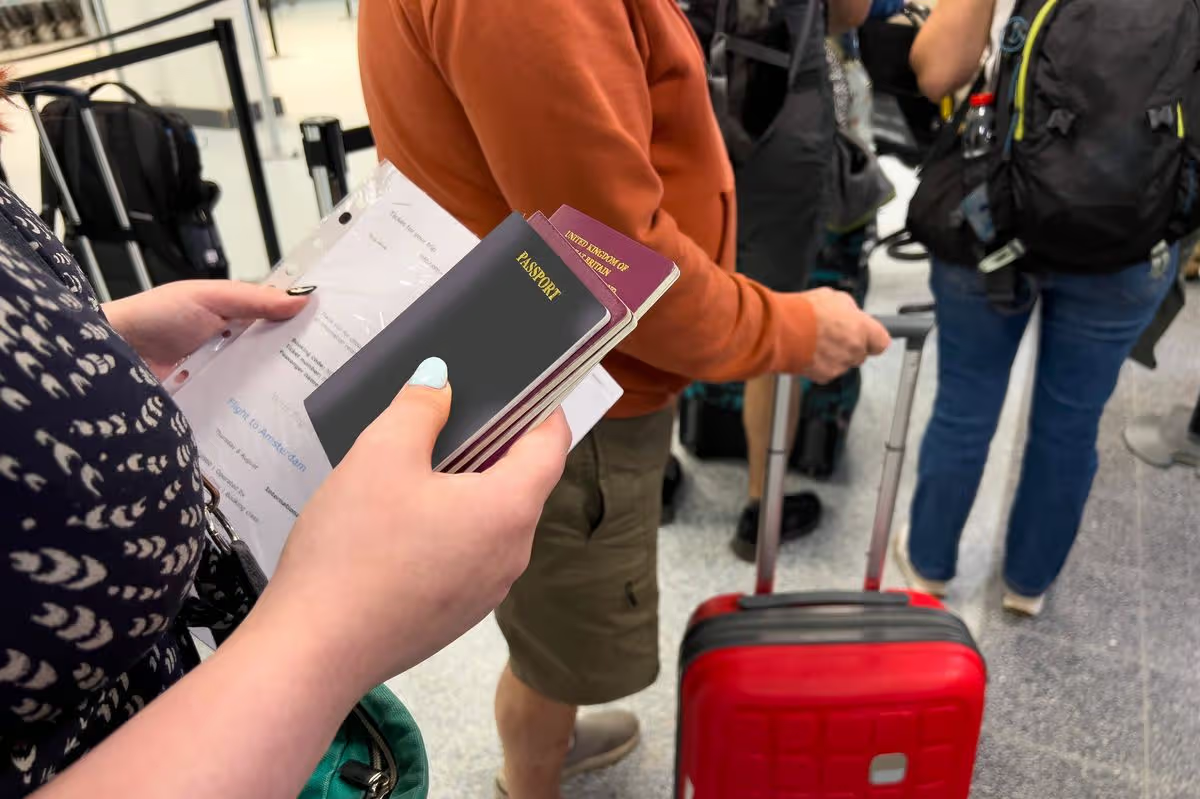
The guidance also highlights passport rules that travellers must meet before entering the country. Greece follows Schengen Area rules, meaning passports must have been issued within the last 10 years and remain valid for at least three months after leaving the region.

British tourists can visit Greece without a visa for short trips. According to the government, travellers can stay in the Schengen area for up to 90 days within any 180-day period for tourism, family visits or business meetings.

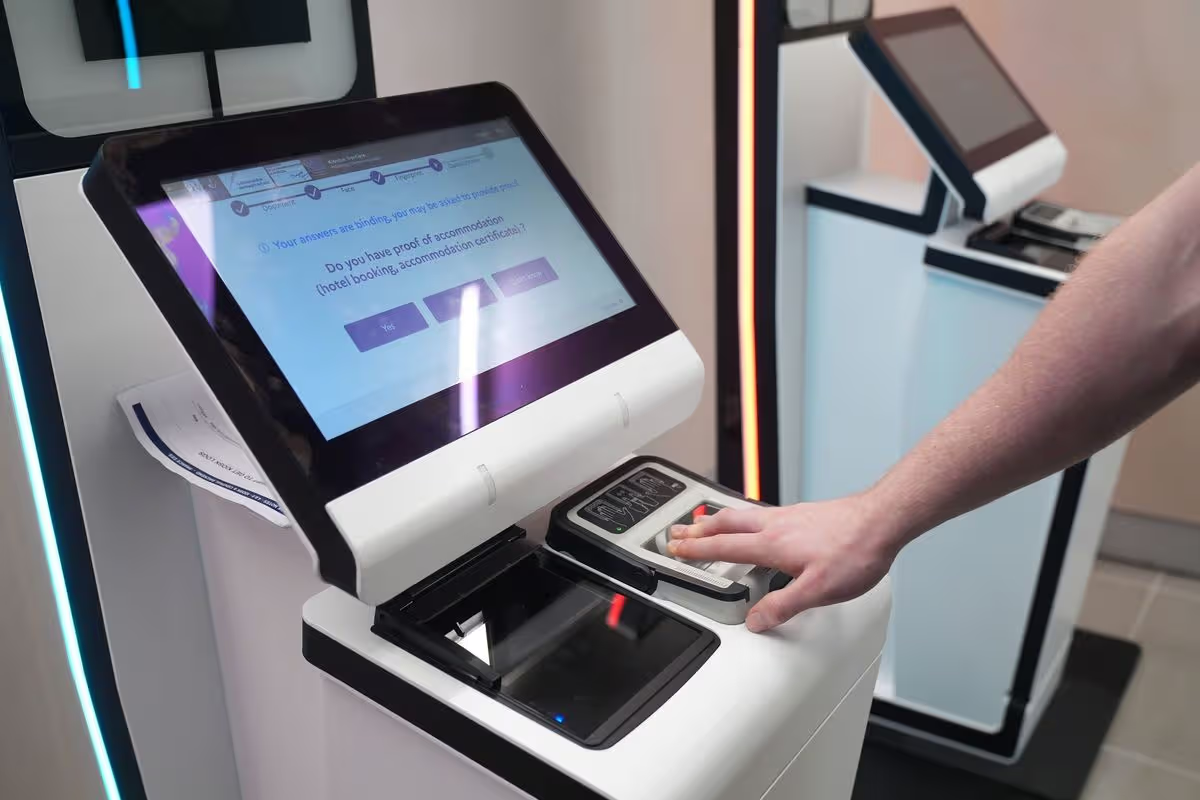
However, new border procedures are also on the horizon for travellers heading to Europe. The European Union is introducing its Entry/Exit System, which will require visitors to register biometric details such as fingerprints or a photo when entering the bloc.

The system is expected to become fully operational from April 10. Officials warn the process could add several minutes to border checks for each passenger.

It comes as tensions continue to grow in the Middle East following the ongoing conflict involving Iran. The crisis has raised wider regional security concerns across parts of the eastern Mediterranean.

Neighbouring Cyprus, which lies roughly 800km from mainland Greece and around 300km from parts of the Middle East, has already been monitoring the situation closely. The island has previously served as an evacuation hub for foreign nationals during regional crises.

According to reports cited by international media and the United Nations, the latest escalation has fuelled fears of broader instability across the region. Military exchanges between Iran and its rivals have already heightened security alerts across several neighbouring countries.

The UK has also stepped up its military presence in the region. The HMS Dragon has been deployed to Cyprus as a precautionary measure. The Royal Navy says vessels may be deployed to support British nationals and regional security as required.

Despite the geopolitical tensions, Greece remains one of Europe’s most popular holiday destinations. Data from the Greek National Tourism Organisation shows the country welcomed more than 36 million international visitors in 2024.

Officials say the key message for travellers is to stay informed. Checking the latest government advice and ensuring documents meet entry requirements can help avoid problems when travelling abroad.

Source link

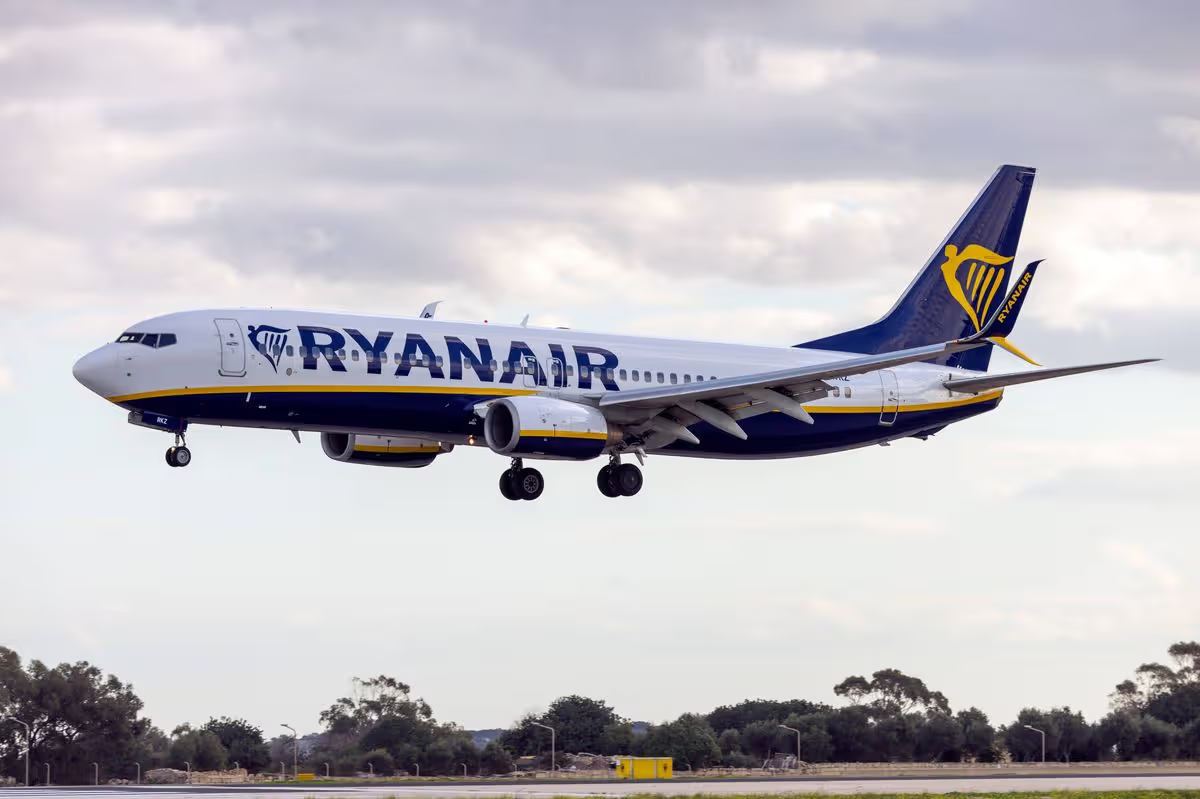
Ryanair passengers queue 90 minutes then look out window and are left horrified

A group of 24 passengers watched in disbelief as their plane took off after spending over an hour navigating airport security delays at Tours Airport in France

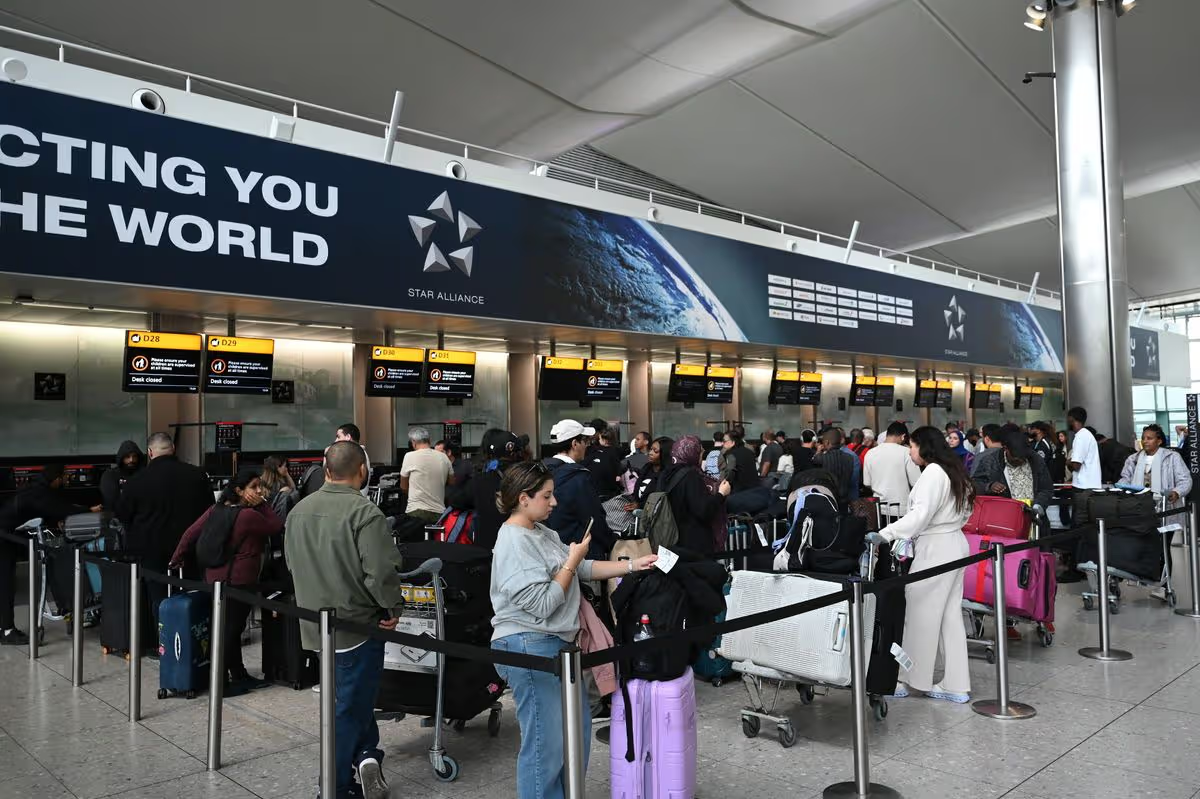
Ryanair passengers were left stunned when they glanced out the window after enduring 90 minutes queuing through security. A group of 24 travellers watched in complete disbelief as the aircraft they were supposed to be boarding departed without them whilst they remained stranded in the terminal.

The service, departing from Tours Airport in France, was scheduled to fly to Marrakech in Morocco at 12.15pm on Wednesday, 11 March. With just 15 minutes remaining before departure, the pilot took the decision to shut the doors and proceed as planned, leaving a quarter of his passengers behind.

According to Ici, the pilot instructed that the passengers’ luggage be offloaded from the aircraft in order to keep to his timetable. And whilst he acknowledges the carrier is perfectly entitled to take such action, French holidaymaker Maxime says he was left absolutely astonished when he discovered what had occurred.

The 37-yea-old maintains he turned up at the airport nearly two hours ahead of his scheduled take-off time. He said: “It’s a completely crazy situation.

“Going through customs and security took ages. We spent over an hour and a half there. At one point, we realised the pilot had decided to take off without us, knowing that our suitcases were already on the Ryanair plane.”

Maxime claims his baggage stayed on the tarmac as the aircraft departed at 12.57pm, 42 minutes beyond its scheduled take-off. He branded it a “completely absurd situation”.

Louis Chaumont, director of Tours Airport, described the circumstances as “regrettable”. He clarified that pilots are permitted to depart during their allocated take-off slot to prevent having to wait for another to become available.

He indicated this was one of three key factors that resulted in the passengers missing their flight. He stated: “The first was an unannounced inspection by the gendarmerie brigade across the entire airport. The second is the introduction of a new measure, the ESS (Entry/Exit System).

“This is a measure introduced by the EU which requires customs checks on all passengers entering and leaving the Schengen area, so passengers travelling to Marrakech are affected.

“Previously, the screening rate was 10%, and it takes time to implement this measure, which takes three to four minutes per passenger. Added to this is the third factor: the pilot of this flight had a designated take-off slot. If he doesn’t comply, he has no idea when he’ll be able to get another one to fly. So he’s perfectly within his rights to close the doors of his plane and take his slot.”

Whilst the director stopped short of promising full refunds for passengers, he confirmed compensation claims will be evaluated individually. He indicated the airport “will investigate what happened and determine who is responsible.”

In a statement to French media outlets, Ryanair maintained its policy is to guarantee a “punctual departure”. The airline asserted the delays within the airport were “entirely beyond our control”.

A spokesman informed ICI: “Had these passengers arrived on time, they would have boarded this Tours–Marrakech flight alongside the 155 other passengers who arrived at the gate on time. We regret that these delays, caused by security checks at Tours Val de Loire Airport-which are entirely beyond our control-resulted in some passengers missing this flight.”

Source link

EU’s largest economies push for faster capitals market integration in joint letter

The EU’s six largest economies are urging Brussels to accelerate the long-awaited integration of capital markets to “strengthen Europe’s growth potential”, according to a letter sent on Tuesday to the Eurogroup boss and several EU commissioners.


ADVERTISEMENT


ADVERTISEMENT

The finance ministers of France, Germany, Italy, the Netherlands, Poland and Spain say that making tangible progress on the rebranded “Savings and Investment Union” has become an “urgent necessity,” pledging to push “this important project forward”, in a letter addressed to EU economy chief Valdis Dombrovskis and Eurogroup President.

“Deeper and more integrated capital markets would strengthen Europe’s growth potential, enhance its economic sovereignty and provide a stronger foundation for financing common priorities,” the letter said.

In particular, the ministers call on EU institutions to reach an agreement among member states by summer on one of the key elements of the capital markets integration agenda: the Market Integration and Supervision Package (MISP).

The MISP is a set of legislative proposals by the European Commission aimed at strengthening the supervision of financial market infrastructures across the bloc and improving how they operate.

“A central purpose of the package is to remove national barriers and to improve cross border distribution of investment funds, so investors have better access to the EU capital markets and companies benefit from deeper pools of capital”, the letter says.

The six countries also ask the EU to advance its digital payments agenda, specifically by promoting private pan-European payment networks that can compete with US-based Visa and Mastercard, and by accelerating the adoption of the digital euro.

Agreement by the summer

Capital markets allow companies and governments to raise funds by selling assets such as shares or bonds to investors.

To strengthen and integrate these markets across the EU, the European Commission has proposed a series of legislative measures under the Savings and Investment Union package.

In recent months, EU countries and institutions have signalled a more ambitious goal, aiming for an agreement among co-legislators on most of the SIU legislation by June.

However, EU countries are not fully aligned on the technical aspects of capital markets integration, causing delays to the broader strategic agenda.

Another key legislative proposal is the revisions of the securitisation framework, which are EU rules introduced in 2019 with the objective of ensuring safer market practices, to avoid other financial crisis such as the 2008 global shock.

The revision, which aims to simplify certain requirements and reduce high operational costs, is to be approved by autumn 2026, according to signatories.

Digital payments

The six EU countries also support the development of additional pan-European private digital payment solutions, viewed as a key pillar of the EU’s strategic autonomy, since most digital payments are currently processed through US-based infrastructures.

According to 2025 European Central Bank data, Mastercard and Visa account for 61% of card payments and nearly 100% of cross-border ones.

In this context, the six countries are also calling for an accelerated rollout of a public digital payment solution: the digital euro. Currently under negotiation, it would be an electronic form of cash issued by the European Central Bank, serving as an additional payment option alongside cash and bank-issued cards.

The project is facing significant delays in the European Parliament. In particular, the leading rapporteur on the file, the Spanish centre-right MEP Fernando Navarrete, is pushing to reduce the scope of the digital euro to offline payments only, in order to avoid competing with other private infrastructure, such as Visa and Mastercard.

“We push for swift conclusions of the legislative process of the digital euro and we invite the European Parliament to follow the Council’s approach to establish the digital euro (in both its online and offline modalities) as a comprehensive, interoperable and sovereign European payment solution for European citizens”, the six countries wrote in the letter.

The co-legislators initially aimed for full adoption of the digital euro by the end of 2026. However, due to delays in the parliament, the six countries have not set a specific adoption deadline.

Source link